Search Results: "pere"

3 June 2010

Petter Reinholdtsen: Sitesummary tip: Listing computer hardware models used at site

When using sitesummary at a site to track machines, it is possible to get a list of the machine types in use thanks to the DMI information extracted from each machine. The script to do so is included in the sitesummary package, and here is example output from the Skolelinux build servers:
maintainer:~# /usr/lib/sitesummary/hardware-model-summary
  vendor                    count
  Dell Computer Corporation     1
    PowerEdge 1750              1
  IBM                           1
    eserver xSeries 345 -[8670M1X]-     1
  Intel                         2
  [no-dmi-info]                 3
maintainer:~#
The quality of the report depend on the quality of the DMI tables provided in each machine. Here there are Intel machines without model information listed with Intel as vendor and mo model, and virtual Xen machines listed as [no-dmi-info]. One can add -l as a command line option to list the individual machines. A larger list is available from the the city of Narvik, which uses Skolelinux on all their shools and also provide the basic sitesummary report publicly. In their report there are ~1400 machines. I know they use both Ubuntu and Skolelinux on their machines, and as sitesummary is available in both distributions, it is trivial to get all of them to report to the same central collector.

1 June 2010

Petter Reinholdtsen: KDM fail at boot with NVidia cards - and no one try to fix it?

It is strange to watch how a bug in Debian causing KDM to fail to start at boot when an NVidia video card is used is handled. The problem seem to be that the nvidia X.org driver uses a long time to initialize, and this duration is longer than kdm is configured to wait. I came across two bugs related to this issue, #583312 initially filed against initscripts and passed on to nvidia-glx when it became obvious that the nvidia drivers were involved, and #524751 initially filed against kdm and passed on to src:nvidia-graphics-drivers for unknown reasons. To me, it seem that no-one is interested in actually solving the problem nvidia video card owners experience and make sure the Debian distribution work out of the box for these users. The nvidia driver maintainers expect kdm to be set up to wait longer, while kdm expect the nvidia driver maintainers to fix the driver to start faster, and while they wait for each other I guess the users end up switching to a distribution that work for them. I have no idea what the solution is, but I am pretty sure that waiting for each other is not it. I wonder why we end up handling bugs this way.

30 May 2010

Riku Voipio: I'm going to debconf10


Jep, I'm coming. I bought flight tickets from Icelandair just weeks before Eyjafjallaj kull changed from a little known volcano to something everyone knows (but probably can't spell if asked...). The volcano seems to have settled, but at some point I was really happy the ticket was paid with credit card, and at least I'd get my money back. After debconf we plan to travel around NY and nearby, but the accomodation appears to annoyingly expensive, I guess due august being the high season for travel...

In other news it is also possible that I'll visit aKademy 2010 in Tampere, Finland this year.

27 May 2010

Petter Reinholdtsen: Parallellized boot seem to hold up well in Debian/testing

A few days ago, parallel booting was enabled in Debian/testing. The feature seem to hold up pretty well, but three fairly serious issues are known and should be solved: All in all not many surprising issues, and all of them seem solvable before Squeeze is released. In addition to these there are some packages with bugs in their dependencies and run level settings, which I expect will be fixed in a reasonable time span. If you report any problems with dependencies in init.d scripts to the BTS, please usertag the report to get it to show up at the list of usertagged bugs related to this. Update: Correct bug number to file-rc issue.

22 May 2010

Petter Reinholdtsen: More flexible firmware handling in debian-installer

After a long break from debian-installer development, I finally found time today to return to the project. Having to spend less time working dependency based boot in debian, as it is almost complete now, definitely helped freeing some time. A while back, I ran into a problem while working on Debian Edu. We include some firmware packages on the Debian Edu CDs, those needed to get disk and network controllers working. Without having these firmware packages available during installation, it is impossible to install Debian Edu on the given machine, and because our target group are non-technical people, asking them to provide firmware packages on an external medium is a support pain. Initially, I expected it to be enough to include the firmware packages on the CD to get debian-installer to find and use them. This proved to be wrong. Next, I hoped it was enough to symlink the relevant firmware packages to some useful location on the CD (tried /cdrom/ and /cdrom/firmware/). This also proved to not work, and at this point I found time to look at the debian-installer code to figure out what was going to work. The firmware loading code is in the hw-detect package, and a closer look revealed that it would only look for firmware packages outside the installation media, so the CD was never checked for firmware packages. It would only check USB sticks, floppies and other "external" media devices. Today I changed it to also look in the /cdrom/firmware/ directory on the mounted CD or DVD, which should solve the problem I ran into with Debian edu. I also changed it to look in /firmware/, to make sure the installer also find firmware provided in the initrd when booting the installer via PXE, to allow us to provide the same feature in the PXE setup included in Debian Edu. To make sure firmware deb packages with a license questions are not activated without asking if the license is accepted, I extended hw-detect to look for preinst scripts in the firmware packages, and run these before activating the firmware during installation. The license question is asked using debconf in the preinst, so this should solve the issue for the firmware packages I have looked at so far. If you want to discuss the details of these features, please contact us on debian-boot@lists.debian.org.

19 May 2010

Petter Reinholdtsen: Pieces of the roaming laptop puzzle in Debian

Today, the last piece of the puzzle for roaming laptops in Debian Edu finally entered the Debian archive. Today, the new libpam-mklocaluser package was accepted. Two days ago, two other pieces was accepted into unstable. The pam-python package needed by libpam-mklocaluser, and the sssd package passed NEW on Monday. In addition, the libpam-ccreds package we need is in experimental (version 10-4) since Saturday, and hopefully will be moved to unstable soon. This collection of packages allow for two different setups for roaming laptops. The traditional setup would be using libpam-ccreds, nscd and libpam-mklocaluser with LDAP or Kerberos authentication, which should work out of the box if the configuration changes proposed for nscd in BTS report #485282 is implemented. The alternative setup is to use sssd with libpam-mklocaluser to connect to LDAP or Kerberos and let sssd take care of the caching of passwords and group information. I have so far been unable to get sssd to work with the LDAP server at the University, but suspect the issue is some SSL/GnuTLS related problem with the server certificate. I plan to update the Debian package to version 1.2, which is scheduled for next week, and hope to find time to make sure the next release will include both the Debian/Ubuntu specific patches. Upstream is friendly and responsive, and I am sure we will find a good solution. The idea is to set up the roaming laptops to authenticate using LDAP or Kerberos and create a local user with home directory in /home/ when a usre in LDAP logs in via KDM or GDM for the first time, and cache the password for offline checking, as well as caching group memberhips and other relevant LDAP information. The libpam-mklocaluser package was created to make sure the local home directory is in /home/, instead of /site/server/directory/ which would be the home directory if pam_mkhomedir was used. To avoid confusion with support requests and configuration, we do not want local laptops to have users in a path that is used for the same users home directory on the home directory servers. One annoying problem with gdm is that it do not show the PAM message passed to the user from libpam-mklocaluser when the local user is created. Instead gdm simply reject the login with some generic message. The message is shown in kdm, ssh and login, so I guess it is a bug in gdm. Have not investigated if there is some other message type that can be used instead to get gdm to also show the message. If you want to help out with implementing this for Debian Edu, please contact us on debian-edu@lists.debian.org.

15 May 2010

Erich Schubert: Beware of the "startpar" bug!

UPDATE: the bug is already fixed after a few hours, and only affected a minority of users (of a now deprecated, experimental option in the 'unstable' distribution, and only users that rebooted with the affected version).The sysvinit version that hit unstable today has a grave bug if you have been running "startpar" or maybe "shell" style parallel booting. Read this bug report, if you have been using these (they were not enabled by default, so unless you've been giving parallel boot a try before, you should be ok.)How to check if you are affected:
grep CONCURRENCY /etc/default/rcS
If this command says "startpar", then you ARE affected. If it says "shell" you MIGHT be affected. If you have not set CONCURRENCY or if it's "none" or "makefile", then you should be ok (according to the bug).The workaround is as simple: just put either "none" or "makefile" in there, these are the only two values that are still distinct.How to recover a broken system:
  1. Boot recovery mode aka "single-user". At some point you should be asked for the root password. Login.
  2. Run mount -o remount,rw / to enable write mode on your disk.
  3. $EDITOR /etc/default/rcS and change the value of "CUNCURRENCY"
  4. reboot
You should have a working system again.I can only confirm that changing "startpar" to "none" helped me. I havn't tried "makefile" yet, and "none" seemed more likely to fix things.

14 May 2010

Petter Reinholdtsen: Parallellized boot is now the default in Debian/unstable

Since this evening, parallel booting is the default in Debian/unstable for machines using dependency based boot sequencing. Apparently the testing of concurrent booting has been wider than expected, if I am to believe the input on debian-devel@, and I concluded a few days ago to move forward with the feature this weekend, to give us some time to detect any remaining problems before Squeeze is frozen. If serious problems are detected, it is simple to change the default back to sequential boot. The upload of the new sysvinit package also activate a new upstream version. More information about dependency based boot sequencing is available from the Debian wiki. It is currently possible to disable parallel booting when one run into problems caused by it, by adding this line to /etc/default/rcS:
CONCURRENCY=none
If you report any problems with dependencies in init.d scripts to the BTS, please usertag the report to get it to show up at the list of usertagged bugs related to this.

Petter Reinholdtsen: Sitesummary tip: Listing MAC address of all clients

In the recent Debian Edu versions, the sitesummary system is used to keep track of the machines in the school network. Each machine will automatically report its status to the central server after boot and once per night. The network setup is also reported, and using this information it is possible to get the MAC address of all network interfaces in the machines. This is useful to update the DHCP configuration. To give some idea how to use sitesummary, here is a one-liner to ist all MAC addresses of all machines reporting to sitesummary. Run this on the collector host:
perl -MSiteSummary -e 'for_all_hosts(sub   print join(" ", get_macaddresses(shift)), "\n";  );'
This will list all MAC addresses assosiated with all machine, one line per machine and with space between the MAC addresses. To allow system administrators easier job at adding static DHCP addresses for hosts, it would be possible to extend this to fetch machine information from sitesummary and update the DHCP and DNS tables in LDAP using this information. Such tool is unfortunately not written yet.

13 May 2010

Petter Reinholdtsen: systemd, an interesting alternative to upstart

The last few days a new boot system called systemd has been introduced to the free software world. I have not yet had time to play around with it, but it seem to be a very interesting alternative to upstart, and might prove to be a good alternative for Debian when we are able to switch to an event based boot system. Tollef is in the process of getting systemd into Debian, and I look forward to seeing how well it work. I like the fact that systemd handles init.d scripts with dependency information natively, allowing them to run in parallel where upstart at the moment do not. Unfortunately do systemd have the same problem as upstart regarding platform support. It only work on recent Linux kernels, and also need some new kernel features enabled to function properly. This means kFreeBSD and Hurd ports of Debian will need a port or a different boot system. Not sure how that will be handled if systemd proves to be the way forward. In the mean time, based on the input on debian-devel@ regarding parallel booting in Debian, I have decided to enable full parallel booting as the default in Debian as soon as possible (probably this weekend or early next week), to see if there are any remaining serious bugs in the init.d dependencies. A new version of the sysvinit package implementing this change is already in experimental. If all go well, Squeeze will be released with parallel booting enabled by default.

6 May 2010

Petter Reinholdtsen: Parallellizing the boot in Debian Squeeze - ready for wider testing

These days, the init.d script dependencies in Squeeze are quite complete, so complete that it is actually possible to run all the init.d scripts in parallell based on these dependencies. If you want to test your Squeeze system, make sure dependency based boot sequencing is enabled, and add this line to /etc/default/rcS:
CONCURRENCY=makefile
That is it. It will cause sysv-rc to use the startpar tool to run scripts in parallel using the dependency information stored in /etc/init.d/.depend.boot, /etc/init.d/.depend.start and /etc/init.d/.depend.stop to order the scripts. Startpar is configured to try to start the kdm and gdm scripts as early as possible, and will start the facilities required by kdm or gdm as early as possible to make this happen. Give it a try, and see if you like the result. If some services fail to start properly, it is most likely because they have incomplete init.d script dependencies in their startup script (or some of their dependent scripts have incomplete dependencies). Report bugs and get the package maintainers to fix it. :) Running scripts in parallel could be the default in Debian when we manage to get the init.d script dependencies complete and correct. I expect we will get there in Squeeze+1, if we get manage to test and fix the remaining issues. If you report any problems with dependencies in init.d scripts to the BTS, please usertag the report to get it to show up at the list of usertagged bugs related to this.

2 May 2010

Petter Reinholdtsen: Forcing new users to change their password on first login

One interesting feature in Active Directory, is the ability to create a new user with an expired password, and thus force the user to change the password on the first login attempt. I'm not quite sure how to do that with the LDAP setup in Debian Edu, but did some initial testing with a local account. The account and password aging information is available in /etc/shadow, but unfortunately, it is not possible to specify an expiration time for passwords, only a maximum age for passwords. A freshly created account (using adduser test) will have these settings in /etc/shadow:
root@tjener:~# chage -l test
Last password change                                    : May 02, 2010
Password expires                                        : never
Password inactive                                       : never
Account expires                                         : never
Minimum number of days between password change          : 0
Maximum number of days between password change          : 99999
Number of days of warning before password expires       : 7
root@tjener:~#
The only way I could come up with to create a user with an expired account, is to change the date of the last password change to the lowest value possible (January 1th 1970), and the maximum password age to the difference in days between that date and today. To make it simple, I went for 30 years (30 * 365 = 10950) and January 2th (to avoid testing if 0 is a valid value). After using these commands to set it up, it seem to work as intended:
root@tjener:~# chage -d 1 test; chage -M 10950 test
root@tjener:~# chage -l test
Last password change                                    : Jan 02, 1970
Password expires                                        : never
Password inactive                                       : never
Account expires                                         : never
Minimum number of days between password change          : 0
Maximum number of days between password change          : 10950
Number of days of warning before password expires       : 7
root@tjener:~#  
So far I have tested this with ssh and console, and kdm (in Squeeze) login, and all ask for a new password before login in the user (with ssh, I was thrown out and had to log in again). Perhaps we should set up something similar for Debian Edu, to make sure only the user itself have the account password? If you want to comment on or help out with implementing this for Debian Edu, please contact us on debian-edu@lists.debian.org. Update 2010-05-02 17:20: Paul T tterman tells me on IRC that the shadow(8) page in Debian/testing now state that setting the date of last password change to zero (0) will force the password to be changed on the first login. This was not mentioned in the manual in Lenny, so I did not notice this in my initial testing. I have tested it on Squeeze, and 'chage -d 0 username' do work there. I have not tested it on Lenny yet. Update 2010-05-02-19:05: Jim Paris tells me via email that an equivalent command to expire a password is 'passwd -e username', which insert zero into the date of the last password change.

28 April 2010

Petter Reinholdtsen: Thoughts on roaming laptop setup for Debian Edu

For some years now, I have wondered how we should handle laptops in Debian Edu. The Debian Edu infrastructure is mostly designed to handle stationary computers, and less suited for computers that come and go. Now I finally believe I have an sensible idea on how to adjust Debian Edu for laptops, by introducing a new profile for them, for example called Roaming Workstations. Here are my thought on this. The setup would consist of the following: I believe all the pieces to implement this are in Debian/testing at the moment. If we work quickly, we should be able to get this ready in time for the Squeeze release to freeze. Some of the pieces need tweaking, like libpam-ccreds should get support for pam-auth-update (#566718) and nslcd (or perhaps debian-edu-config) should get some integration code to stop its daemon when the LDAP server is unavailable to avoid long timeouts when disconnected from the net. If we get Kerberos enabled, we need to make sure we avoid long timeouts there too. If you want to help out with implementing this for Debian Edu, please contact us on debian-edu@lists.debian.org.

19 April 2010

Petter Reinholdtsen: Great book: "Content: Selected Essays on Technology, Creativity, Copyright, and the Future of the Future"

The last few weeks i have had the pleasure of reading a thought-provoking collection of essays by Cory Doctorow, on topics touching copyright, virtual worlds, the future of man when the conscience mind can be duplicated into a computer and many more. The book titled "Content: Selected Essays on Technology, Creativity, Copyright, and the Future of the Future" is available with few restrictions on the web, for example from his own site. I read the epub-version from feedbooks using fbreader and my N810. I strongly recommend this book.

Wouter Verhelst: Re: Kerberos and LDAP

Petter Reinholdsen asks about Kerberos and LDAP. While I'm not sure about an implementation that does just the ACLs in LDAP, there are several implementations that support having the kerberos principals stored in LDAP (i.e., heimdal has supported it for ages, and MIT Kerberos implements it since fairly recently, too). This allows not only for easy replication of the principals to a secondary KDC; it also allows for using LDAP ACLs to decide who gets to create and maintain users. In addition, there's supposed to be an OpenLDAP overlay that allows for updating the Samba and/or heimdal hashes in an LDAP directory when the OpenLDAP 'change password' extended operation is used, thereby making it somewhat easier to keep passwords in sync. I should note that I've never tried any of the above, though.

14 April 2010

Petter Reinholdtsen: Kerberos for Debian Edu/Squeeze?

Yesterdays NUUG presentation about Kerberos was inspiring, and reminded me about the need to start using Kerberos in Skolelinux. Setting up a Kerberos server seem to be straight forward, and if we get this in place a long time before the Squeeze version of Debian freezes, we have a chance to migrate Skolelinux away from NFSv3 for the home directories, and over to an architecture where the infrastructure do not have to trust IP addresses and machines, and instead can trust users and cryptographic keys instead. A challenge will be integration and administration. Is there a Kerberos implementation for Debian where one can control the administration access in Kerberos using LDAP groups? With it, the school administration will have to maintain access control using flat files on the main server, which give a huge potential for errors. A related question I would like to know is how well Kerberos and pam-ccreds (offline password check) work together. Anyone know? Next step will be to use Kerberos for access control in Lwat and Nagios. I have no idea how much work that will be to implement. We would also need to document how to integrate with Windows AD, as such shared network will require two Kerberos realms that need to cooperate to work properly. I believe a good start would be to start using Kerberos on the skolelinux.no machines, and this way get ourselves experience with configuration and integration. A natural starting point would be setting up ldap.skolelinux.no as the Kerberos server, and migrate the rest of the machines from PAM via LDAP to PAM via Kerberos one at the time. If you would like to contribute to get this working in Skolelinux, I recommend you to see the video recording from yesterdays NUUG presentation, and start using Kerberos at home. The video show show up in a few days.

11 April 2010

John Goerzen: Final comments on our trip to Europe

I wrote a lot about our trip to Europe here, and I had a few more comments to share. I had a great time there. It was fun to stay with people, and it was also fun to explore cities on our own. I am eager to be able to go back. Communication
I ll admit I wasn t sure how I d do there. I speak only a little German, and no Czech at all. I have never been in a situation in which I don t speak the dominant language, and this is probably typical for Americans. (I m not going to count the few exceptions of eating at small Mexican restaurants in the USA where the staff speaks little English, as it s not really the same experience to be in that situation for an hour or two.) I was most apprehensive about our time in Berlin and Prague. In those cities, we didn t know anyone. And, although I speak a little German, I speak no Czech at all. In the end, though, it all worked out fine. I never saw anyone get frustrated with us for our lack of language knowledge, and we also never got rattled. With patience and a bit of ingenuity, we figured things out in every different situation. I feel a sense of accomplishment from that, and I think it s left me more ready to travel in the future. And, I d also have to say, that was one of the most interesting lessons of the trip: how two people that don t share a common language can still communicate. It might be slow, but it s also rewarding and easier than I might ever have thought. I remember particularly buying a couple of fragile carved wood souvenirs at the Zeidler Holzkunst (wood art) shop in the Altes Rathaus in Leipzig (Seiffener Volkskunsterzeugnisse was on the window). The shopkeeper spoke no English. We were interested in some rather fragile items, and I wanted to ask her if she could pack it in a box. I didn t know the German words for pack or box . So after a couple seconds thought, I realized I knew how to tell her, in German, that we re from America. And then I asked, Can you? (in German) and gestured for a square box, figuring maybe she d put it together that we d need to pack it well to take it home with us. Success. She quickly produced a box, and asked if that s what we wanted. A few minutes later, a bit of pointing towards the glass case communicated what we wanted to buy. It took a little longer than it would have from someone that spoke English, but this was more rewarding in the end. The train station in Prague was another challenge. It didn t have nearly as much English signage as other train stations we d been in. We did a little wondering around, and some educated guesses, and a brief English conversation in a bank, we eventually found an ATM, a place to change the big bills for smaller ones, and a Metro ticket shop that was open. Clothes Many Americans, and American travel books, suggest not wearing jeans and tennis shoes in Europe. Many commented that people dressed more formally in Europe. That advice appeared to be rather wrong, especially in L beck, where it appeared that many people dressed less formally than in the USA. As we went south and east, we saw fewer jeans, but still they were rather common. Our biggest blunder here was probably the shoes that we brought for Terah. She brought some shoes that looked nice, but weren t very good for walking. She wound up with some painful blisters on her feet, and wished she had just brought her regular tennis shoes. Luggage and Packing We try to travel light when we can. All of our luggage for the entire trip fit into two carryon-size suitcases, though we sometimes separated some items out into a backpack for ease of use in airports/airplanes. This worked out about right. We did laundry once in Germany so we didn t have to pack enough clothes for the entire trip. As far as electronics go, we brought along an international GSM phone from onesimcard.com, my Droid (which could use Wifi but not GSM), Terah s iPod Touch, a GPS, my digital camera, and a laptop. That also was about right. We used the Droid to call back to Indiana to check on the boys, using SIP over WiFi for free calling via Google Voice. The laptop is a small one, so didn t add a lot of weight or bulk. It was nice to have to check out maps and Facebook. The GPS was somewhat less useful than I had anticipated. I had pre-loaded it with street-level maps of most of Europe, and also put on it points in Berlin that had been suggested to us. The transit maps were really more useful most places, especially when combined with a detailed street-level map. In Berlin, though, the detail on the street-level map from our hotel was somewhat lacking, so the GPS came in handy. It was also nice to quickly be able to see where the nearest S-Bahn and U-Bahn stops were, then cross-referencing with our transit map to figure out how to get where we wanted to go. One night in Leipzig, after a concert at the Gewandhaus, we made a couple of wrong turns on our way to a tram stop. The GPS would have saved us 15 minutes of walking had we brought it along, but we figured it out with our street map and it wasn t really a problem. Rick Steves is a big advocate of money belts when traveling. These are a belt with a zippered pouch, and are worn under your pants (though over your shirt, if it s tucked in). The idea is that it s hard to pickpocket. He suggests having a days worth of cash in a front pocket, and passports and larger bills in the money belt. We brought one but never used it. I kept small cash in my pocket, and we kept passports and my wallet (with larger bills) in Terah s purse, which was on a strap around her neck, zippered shut, and held under her arm. We had no problems. I tend not to keep my wallet in my back pocket even when traveling in the USA. Also, the hotels we stayed in had safes, and the residences were of course plenty safe, so we had no problem leaving valuables there. I brought only a single lens for my Digital Rebel XTi, a 28mm fixed lens that is small and light. That was just fine, and I was happy to have a fixed lens for photography in dark churches. Also, I wouldn t have wanted to carry around a bulky zoom lens all over. We sometimes took the camera with us, and sometimes not. In Berlin in particular, we just left it in the hotel room. I figured (correctly) that there would be plenty of photos on Flickr of the sites we were visiting, and we could just enjoy the time a little better if we weren t worrying about a camera too. But I was glad to have it along. Transportation The transportation systems in the cities we visited felt more, well, balanced than they often are in the USA. It s not that there weren t busy car-filled avenues, but more that there were also quiet shopping streets where cars were banned. Cars often seemed to be more of an option than a necessity, and not always the best option at that. Public transportation was common, as were pedestrian routes and bicycle lanes. The only American city I ve visited that felt even close to this approach was Portland, OR. I wish we adopted it more often here. I also admire the German intercity rail service, operated by Deutsche Bahn. You can get all over the country pretty quickly. The trains we rode on were quiet, smooth, and timely. I wish we had that kind of service in more parts of the USA.

25 March 2010

Russell Coker: Bose vs Bauhn/Aldi Noise Canceling Headphones

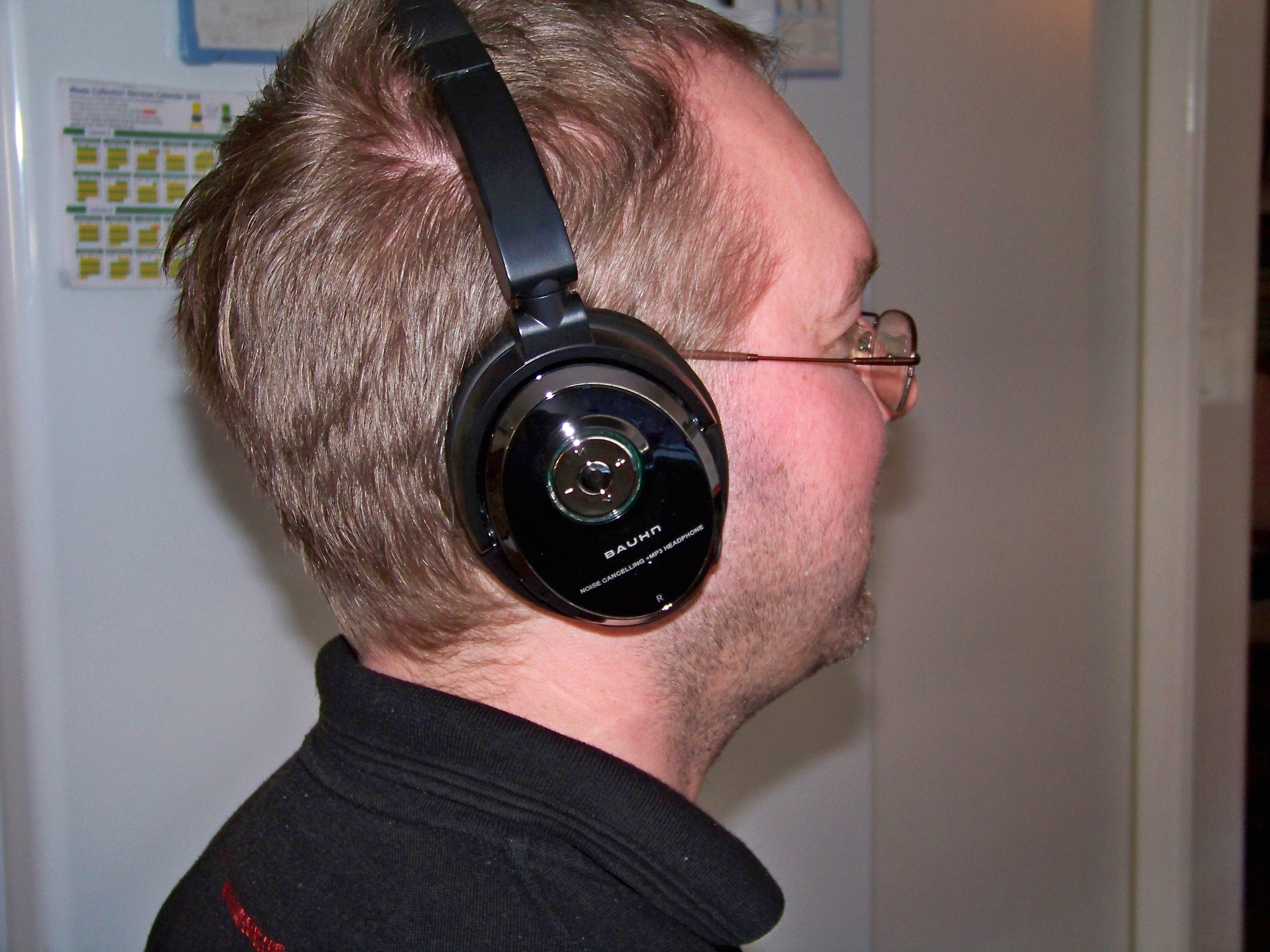
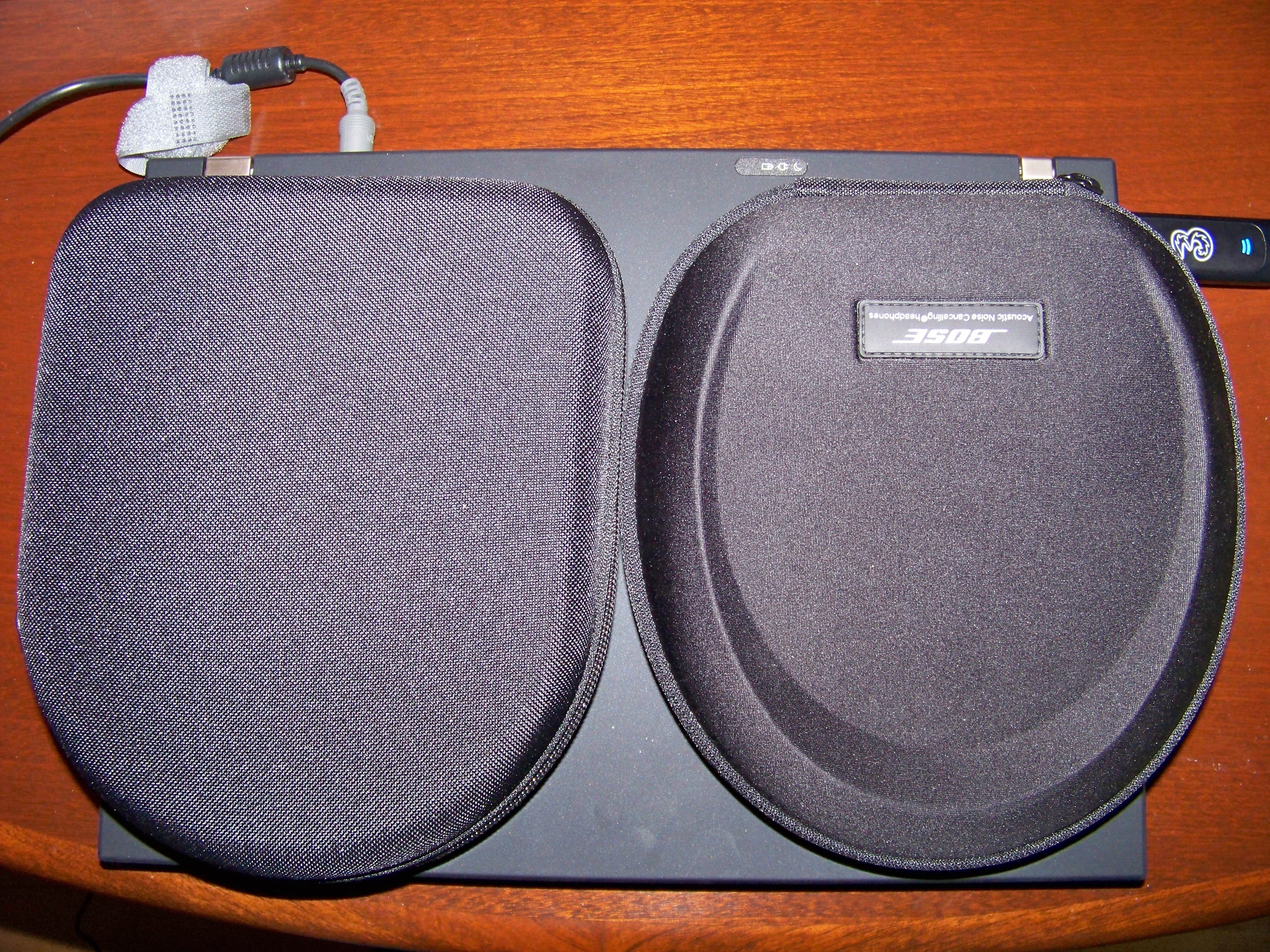
Me wearing Bauhn HeadphonesInside the case of Bauhn Noise Canceling Headphones showing the cable and connectorsOutside of the cases of Bauhn and Bose Headphones Overview The German supermarket chain Aldi has been running in Australia for 8 years now [1]. Their standard practice for a long time has been to offer regular special deals on a few items of consumer electronics every week, my chocolate fridge is one thing I bought from Aldi [2]. Today Aldi have started selling Noise Canceling Headphones [3]. These headphones are badged by Bauhn but that name is apparently applied to random products from cheap manufacturers, it may be an Aldi name that is applied to stuff that they sell. The headphones cost $69AU which is really cheap. But the deal will probably end in less than a week when stock runs out. Noise canceling headphones can be used in server rooms and other noisy environments. Every company that has a server room should buy a few sets. One of the features of noise-canceling is that it works best on low frequencies and on regular sounds it specifically doesn t block human voice well. In some noisy environments it will be easier to hear people talk if you wear such headphones! Noise canceling headphones are also very useful to people who are on the autism spectrum and other people who get more annoyed by noise pollution than average people. I have been wearing my Bose headphones on public transport and when walking around in the city, this not only stops traffic noise but it also helps to avoid people thinking that I want to talk to them. Features The first picture shows me wearing the Bauhn NC headphones, it s from the right to show the controls for the built-in MP3 player. I have not yet tested the MP3 functionality. It appears that as the controls are one power button, buttons for next/previous track, and for controlling the volume. This is fairly poor for MP3 functionality, ideally you would want to have a display to see a list of tracks, maybe have directories to store files, etc. I guess this could be a convenient feature on occasion, but you wouldn t buy the headphones for the MP3 functionality.
The next two pictures show a comparison of the Bauhn headset with the Bose QC-15 headset that I bought last year [4]. The cases of the Bauhn and Bose devices are almost exactly the same size and of a very similar shape, the Bose case is tapered and indented and also has a finer weave on the cloth covering it looks much nicer. Both devices come with an adapter for an airline socket and with a detachable cable. They also both have pouches attached to the inside of the case with velcro. But the Bauhn headphones come with an adapter for the 6.5mm TRS connector which could be convenient if you want to plug them in to a larger amplifier, the basic connector is 3.5mm in both cases. The Bauhn device uses a standard TRS connector at the headphone end while the Bose QC-15 use a special connector that matches the shape of the headset and which has a TRRS plug (to cater for the high/low volume switch), so it seems that a damaged Bauhn cable could be replaced cheaply while a replacement Bose cable would have to be purchased from Bose (presumably at great expense and delay). The Bauhn case also has a velcro attached pocket for storing business cards (or maybe a name tag or something). The supplied cable for the Bauhn is described as being 5 feet long which isn t quite long enough to reach a tower PC that is sitting on the floor. The Bose has a cable that is about a foot longer (maybe 6 feet total), but due to the non-standard connector you can t replace it. I presume that I could easily buy a 4 meter cable for the Bauhn headphones, but I could of course buy an extension cable to use with the Bose. Bose advertise the QC-15 headphones as having 35 hours of battery life from a single AAA battery. Aldi advertise the Bauhn headset as having 5 hours of battery life when NC is turned on and they use two AAA batteries. It s widely regarded that rechargeable batteries don t last as long as the batteries used for estimating the battery life (which presumably are the most expensive long-life batteries available). I ve found a single rechargeable AAA battery to last well over 5 hours in my Bose headphones, so it seems that battery life is considerably worse for the Bauhn device. One feature of the Bauhn device is that it can be used without any batteries for playing external music. The Bose headphones can t be used at all without a battery. So while the Bauhn will use the batteries faster it will at least be usable when the batteries run out. But if you are buying headphones for the purpose of avoiding noise then the Bose headphones are simply better. Comfort The Bose headphones have significantly deeper ear wells than the Bauhn about 23mm vs 18mm. If your ears stick out more than 18mm (as mine apparently do) then this is a good reason for choosing Bose. The Bose headphones are a tighter fit, the spring that pushes the ear-pieces together is stronger. But they have better padding so this doesn t cause me any discomfort. Also the Bose headphones have better passive noise reduction due to having a more snug fit around the ears. I ve worn my Bose headphones on a flight from the US to Australia with hardly a break and they were quite comfortable I would never want to do that with the Bauhn headphones. Noise Reduction I tested the Bose and Bauhn products against three noise scenarios, external music, an air-conditioner, and a car engine. The Bose headphones made good reductions of the noise from the external music (Numb by Linkin Park) and the air-conditioner. The Bauhn headphones did little to stop Linkin Park and was not very effective against the air-conditioner noise. I think that this is largely due to the lack of passive noise reduction, the air-conditioner in question makes little vibration noise and the sound of rushing air is generally immune to active noise cancellation. Both headphones were very effective when in a car with the engine idling. The engine noise of vehicles seems to fall in an ideal frequency range for active cancellation. Music Quality When listening to Youtube music played on my Thinkpad I could not notice any quality difference between the two sets of headphones. I did notice that the Bose headphones seemed to have a greater response in the higher frequency range, but that doesn t necessarily mean that one set is better than the other. Maybe if I was listening to FLAC0 encoded music that I had personally ripped from a CD then I would notice a difference. But for most people the Bauhn music quality should be good enough. Design Quality The Bose product is solidly designed, while the Bauhn product appears cheap in every way. Opening the battery compartment on the Bauhn headphones is difficult and if you do it wrong you could easily break the lid off, I expect that every set of Bauhn headphones that is used by children will be broken in a small amount of time but it should still be fully functional with a broken lid. The matt finish of the Bose headphones should hide minor scratches much better than the shiny Bauhn headphones. The Bauhn headphones also have lower quality plastic parts, it appears that the molds used were designed cheaply and without adequate care to prevent marking the final product. The design flaws that affect usage of the Bauhn product are the shallow ear wells, the poor fit of the cushions around the ears (which is probably mostly due to a weak spring pressing the ear cups to the wearer s head), and the battery compartment lid which is difficult to open and appears prone to breakage. The other flaws are all cosmetic. I wonder whether the Bauhn product was made by one of the big name manufacturers who deliberately reduced the quality to avoid competing with their more expensive products. It seems that the major flaws could have been corrected at design time with almost no increase in manufacturing costs. Recommendations If you can afford the Bose QuietComfort 15 Acoustic Noise Cancelling Headphones then they are really worth the extra expense, I have no regrets at all about spending about $320US (including tax) on my Bose QC-15. The Bauhn product is good for when you want something cheap, for example a set to be used in a server room, or for the use of children. I bought a Bauhn headset for a friend who is a pilot, he spent $1,100 on a noise-canceling headset for his plane but had never got around to buying one for recreational use I expect that he will allow his children to use his new Bauhn headphones, if they get broken it s only a $69 expense. The second cheapest NC headphones I ve seen on offer in Australia is Harvey Norman selling Phillips HN-110 Noise Canceling Headphones for $100AU [5]. Amazon sells Philips HN 110 Folding Noise-Canceling Headphones for $50US but doesn t seem to ship them outside the US (at least not to Australia). JB Hifi also has some NC headphones on sale in Australia [6], but they are more expensive at $219 for AKG and $319 for Sennheiser. Also the models they sell are on-ear which means that they will inherently have very little passive noise reduction and will also annoy anyone who doesn t like having their ears squashed. If I was buying NC headphones for my own use and didn t want to spend $300US then I would either buy the Philips HN 110 Folding Noise-Canceling Headphones from Amazon and get a friend in the US to post them to me or I would buy them from Harvey Norman. But the Bauhn product is good if you want cheap headphones to stop engine noise and give reasonable quality when playing music.

24 March 2010

Benjamin Drung: Eclipse 3.5.2-1 in Debian unstable

We, the Debian Orbital Alignment Team (DOA team), have released eclipse 3.5.2-1 to Debian unstable today after nearly seven month of work and 612 commit to our git repository. Many thanks to our hero Niels Thykier (222 commits). Without him we wouldn t have eclipse in Debian now. Thanks to Pablo Duboue, Adnan Hodzic, and Adrian Perez for their work on the Debian package. Last but not least, I want to thank Alexander Kurtakov and Andrew Overholt for eclipse-build, which we use to build eclipse. You should have modern hardware, if you want to build eclipse. It will need three gigabytes free disk space, two gigabytes memory, and at least 12 minutes to build, but it can need hours (on old hardware or if you have not enough memory). Update: Four days later we released 3.5.2-2 to Debian unstable. Today eclipse 3.5.2-2 was synced to Ubuntu 10.04 (lucid).

11 March 2010

Gunnar Wolf: Boogie el Aceitoso Oily Boogie

Today I took a break before my usual lunchtime to go to the movies Boogie el Aceitoso was on at 13:00 (and not at the more usual, late screenings). Oily Boogie is a great antihero drawn by the much beloved Roberto El Negro Fontanarrosa, a very widely known Argentinian humorist/cartoonist. I got acquinted with Boogie as during the 80s-90s my parents were asiduous readers of Proceso, a weekly political analysis magazine which included one of his cartoons at the last page. Boogie is a pathological ex-Vietnam, ex-Laos ex-El Salvador, ex-Gulf War, ex-(whatever comes next) USA soldier, who deals with the local mafias whenever he is not active. Brutal, often seen as inhuman. I remember reading it without really understanding its nonsensical violence at first. And, as I said, Fontanarrosa is a very loved cartoonist - In Mexico I think we were much more acquinted with Boogie than with Inodoro Pereyra, and still, Fontanarrosa's death in 2007 was very heartfelt here. About the movie: I found it to be very good, of course, knowing what to expect. Most lines are short, screen adequations of various cartoons along Boogie's long life as a thug. I specially liked the animation technique I know very little about the subject, but it mixed quite naturally and constantly obvious still, cartoony characters with vivid, photo-based items. It creates a completely believable atmosphere inside the absolute amoral, selfish and (fortunately!) grossly exagerated and impossible world of Boogie. I sometimes feel somewhat stupid when writing in English for a mostly Spanish-speaking audience Still, if you see Boogie in a movie theater, don't hesitate and go. As always, with non-top-selling, non-Hollywood movies, it is quite probable it will not be showing for long.

Next.

Previous.