Search Results: "mak"

20 May 2025

Arturo Borrero Gonz lez: Wikimedia Cloud VPS: IPv6 support

Cape Town (ZA), Sea Point, Nachtansicht Dietmar Rabich, Cape Town (ZA), Sea Point, Nachtansicht 2024 1867-70 2, CC BY-SA 4.0 This post was originally published in the Wikimedia Tech blog, authored by Arturo Borrero Gonzalez. Wikimedia Cloud VPS is a service offered by the Wikimedia Foundation, built using OpenStack and managed by the Wikimedia Cloud Services team. It provides cloud computing resources for projects related to the Wikimedia movement, including virtual machines, databases, storage, Kubernetes, and DNS. A few weeks ago, in April 2025, we were finally able to introduce IPv6 to the cloud virtual network, enhancing the platform s scalability, security, and future-readiness. This is a major milestone, many years in the making, and serves as an excellent point to take a moment to reflect on the road that got us here. There were definitely a number of challenges that needed to be addressed before we could get into IPv6. This post covers the journey to this implementation. The Wikimedia Foundation was an early adopter of the OpenStack technology, and the original OpenStack deployment in the organization dates back to 2011. At that time, IPv6 support was still nascent and had limited implementation across various OpenStack components. In 2012, the Wikimedia cloud users formally requested IPv6 support. When Cloud VPS was originally deployed, we had set up the network following some of the upstream-recommended patterns: In order for us to be able to implement IPv6 in a way that aligned with our architectural goals and operational requirements, pretty much all the elements in this list would need to change. First of all, we needed to migrate from nova-networks into Neutron, a migration effort that started in 2017. Neutron was the more modern component to implement software-defined networks in OpenStack. To facilitate this transition, we made the strategic decision to backport certain functionalities from nova-networks into Neutron, specifically the dmz_cidr mechanism and some egress NAT capabilities. Once in Neutron, we started to think about IPv6. In 2018 there was an initial attempt to decide on the network CIDR allocations that Wikimedia Cloud Services would have. This initiative encountered unforeseen challenges and was subsequently put on hold. We focused on removing the previously backported nova-networks patches from Neutron. Between 2020 and 2021, we initiated another significant network refresh. We were able to introduce the cloudgw project, as part of a larger effort to rework the Cloud VPS edge network. The new edge routers allowed us to drop all the custom backported patches we had in Neutron from the nova-networks era, unblocking further progress. Worth mentioning that the cloudgw router would use nftables as firewalling and NAT engine. A pivotal decision in 2022 was to expose the OpenStack APIs to the internet, which crucially enabled infrastructure management via OpenTofu. This was key in the IPv6 rollout as will be explained later. Before this, management was limited to Horizon the OpenStack graphical interface or the command-line interface accessible only from internal control servers. Later, in 2023, following the OpenStack project s announcement of the deprecation of the neutron-linuxbridge-agent, we began to seriously consider migrating to the neutron-openvswitch-agent. This transition would, in turn, simplify the enablement of tenant networks a feature allowing each OpenStack project to define its own isolated network, rather than all virtual machines sharing a single flat network. Once we replaced neutron-linuxbridge-agent with neutron-openvswitch-agent, we were ready to migrate virtual machines to VXLAN. Demonstrating perseverance, we decided to execute the VXLAN migration in conjunction with the IPv6 rollout. We prepared and tested several things, including the rework of the edge routing to be based on BGP/OSPF instead of static routing. In 2024 we were ready for the initial attempt to deploy IPv6, which failed for unknown reasons. There was a full network outage and we immediately reverted the changes. This quick rollback was feasible due to our adoption of OpenTofu: deploying IPv6 had been reduced to a single code change within our repository. We started an investigation, corrected a few issues, and increased our network functional testing coverage before trying again. One of the problems we discovered was that Neutron would enable the enable_snat configuration flag for our main router when adding the new external IPv6 address. Finally, in April 2025, after many years in the making, IPv6 was successfully deployed. Compared to the network from 2011, we would have: Over time, the WMCS team has skillfully navigated numerous challenges to ensure our service offerings consistently meet high standards of quality and operational efficiency. Often engaging in multi-year planning strategies, we have enabled ourselves to set and achieve significant milestones. The successful IPv6 deployment stands as further testament to the team s dedication and hard work over the years. I believe we can confidently say that the 2025 Cloud VPS represents its most advanced and capable iteration to date. This post was originally published in the Wikimedia Tech blog, authored by Arturo Borrero Gonzalez.

Simon Quigley: Donuts and 5-Star Restaurants

In my home state of Wisconsin, there is an incredibly popular gas station called Kwik Trip. (Not to be confused with Quik Trip.) It is legitimately one of the best gas stations I ve ever been to, and I m a frequent customer.What makes it that great?Well, everything about it. The store is clean, the lights work, the staff are always friendly (and encourage you to come back next time), there s usually bakery on sale (just depends on location etc), and the list goes on.There s even a light-switch in the bathroom of a large amount of locations that you can flip if a janitor needs to attend to things. It actually does set off an alarm in the back room.A dear friend of mine from Wisconsin once told me something along the lines of, it s inaccurate to call Kwik Trip a gas station, because in all reality, it s a five star restaurant. (M , I hope you re well.)In my own opinion, they have an espresso machine. That s what really matters. ;)I mentioned the discount bakery. In reality, it s a pretty great system. To my limited understanding, the bakery that is older than standard but younger than expiry are set to half price and put towards the front of the store. In my personal experience, the vast majority of the time, the quality is still amazing. In fact, even if it isn t, the people working at Kwik Trip seem to genuinely enjoy their job.When you re looking at that discount rack of bakery, what do you choose? A personal favorite of mine is the banana nut bread with frosting on top. (To the non-Americans, yes, it does taste like it s homemade, it doesn t taste like something made in a factory.)Everyone chooses different bakery items. And honestly, there could be different discount items out depending on the time. You take what you can get, but you still have your own preferences. You like a specific type of donut (custard-filled, or maybe jelly-filled). Frosting, sprinkles there are so many ways to make different bakery items.It s not only art, it s kind of a science too.Is there a Kwik Trip that you ve called a gas station instead of a five star restaurant? Do you also want to tell people about your gas station? Do you only pick certain bakery items off the discount rack, or maybe ignore it completely? (And yes, there would be good reason to ignore the bakery in favor of the Hot Spot, I d consider that acceptable in my personal opinion.)Remember, sometimes you just have to like donuts.https://medium.com/media/73f78efd7bd6bb9ce495c2f08428c7d3/hrefHave a sweet day. :)

19 May 2025

Simon Quigley: Coffee and Adapting to your Environment

This morning, I went to make my usual cup of coffee. I was given an espresso machine for Christmas, and I ve developed this technique for making a warm drink that hits the spot every time.I ll start by turning on my espresso machine and starting a single shot of espresso. It dispenses and drips while I m working on the other parts.I then grab a coffee cup. Usually one of the taller ones. For maybe the bottom inch or two of the cup, that gets sugar and chocolate milk. Microwave for 45 seconds, pour in the espresso, then wash out the actual espresso from the metal cup with milk. Pour all of that in, another 45 seconds in the microwave, a few quick stirs, and you re all set.To the actual baristas out there, that probably sounds horrible. It probably sounds like the worst possible recommendation for a morning coffee ever.But, you know what? It works.So, I went to put my coffee into the microwave today, and I realized that someone else had put the glass plate for the microwave into the sink after accidentally spilling their breakfast on it.Instead of saying, well, I m not going to have my coffee this morning, I grabbed a large plate. I remembered the physics of levers from high school, and I understood that if I balanced everything just right, it would heat my coffee up.And well, here I am. With an un-spilled coffee and a story to tell.My point here is actually pretty simple, and this is before I even read any messages for the day. People with much more formal educations sometimes look at the guy engineering coffee with his microwave and think, what is this guy doing?!? All I m doing is making a really good cup of coffee. And to be honest, it tastes amazing.That s all. Have a wonderful day.

Simon Quigley: Toolboxes and Hammers Be You

Toolboxes and Hammers Be YouEveryone has a story. We all started from somewhere, and we re all going somewhere.Ten years ago this summer, I first heard of Ubuntu. It took me time to learn how to properly pronounce the word, although I m glad I learned that early on. I was less fortunate when it came to the pronunciation of the acronym for the Ubuntu Code of Conduct. I had spent time and time again breaking my computer, and I d wanted to start fresh.I ve actually talked about this in an interview before, which you can find here (skip to 5:02 6:12 for my short explanation, I m in orange):https://medium.com/media/ad59becdbd06d230b875fb1512df1921/hrefI ve also done a few interviews over the years, here are some of the more recent ones:https://medium.com/media/83bda448d5f2a979f848e17f04376aa6/hrefAsk Noah Show 377Lastly, I did a few talks at SCaLE 21x (which the Ubuntu community donation funds helped me attend, thank you for that!):https://medium.com/media/0fbde7ef0ed83c2272a8653a5ea38b67/hrefhttps://medium.com/media/4d18f1770dc7eed6c7a9d711ff6a6e89/hrefMy story is fairly simple to summarize, if you don t have the time to go through all the clips.I started in the Ubuntu project at 13 years old, as a middle school student living in Green Bay, WI. I m now 23 years old, still living in Green Bay, but I became an Ubuntu Core Developer, Lubuntu s Release Manager, and worked up to a very great and comfortable spot.So, Simon, what advice would you give to someone at 13 who wants to do the same thing? Here are a few tips * Don t be afraid to be yourself. If you put on a mask, it hinders your growth, and you ll end up paying for it later anyway.
* Find a mentor. Someone who is okay working with someone your age, and ideally someone who works well with people your age (quick shoutout to Aaron Prisk and Walter Lapchynski for always being awesome to me and other folks starting out at high school.) This is probably the most important part.
* Ask questions. Tons of them. Ask questions until you re blue in the face. Ask questions until you get a headache so bad that your weekend needs to come early. Okay, maybe don t go that far, but at the very least, always stay curious.
* Own up to your mistakes. Even the most experienced people you know have made tons of mistakes. It s not about the mistake itself, it s about how you handle it and grow as a person.Now, after ten years, I ve seen many people come and go in Ubuntu. I was around for the transition from upstart to systemd. I was around for the transition from Unity to GNOME. I watched Kubuntu as a flavor recover from the arguments only a few years before I first started, only to jump in and help years later when the project started to trend downwards again.I have deep love, respect, and admiration for Ubuntu and its community. I also have deep love, respect, and admiration for Canonical as a company. It s all valuable work. That being said, I need to recognize where my own limits are, and it s not what you d think. This isn t some big burnout rant.Some of you may have heard rumors about an argument between me and the Ubuntu Community Council. I refuse to go into the private details of that, but what I ll tell you is this in retrospect, it was in good faith. The entire thing, from both my end and theirs, was to try to either help me as a person, or the entire community. If you think any part of this was bad faith from either side, you re fooling yourself. Plus, tons of great work and stories actually came out of this.The Ubuntu Community Council really does care. And so does Mark Shuttleworth.Now, I won t go into many specifics. If you want specifics, I d direct you to the Ubuntu Community Council who would be more than happy to answer any questions (actually they d probably stay silent. Nevermind.) That being said, I can t really talk about any of this without mentioning how great Mark has become.Remember, I was around for a few different major changes within the project. I ve heard and seen stories about Mark that actually match what Reddit says about him. But in 2025, out of the bottom of my heart, I m here to tell you that you re all wrong now.See, Mark didn t just side with somebody and be done with it. He actually listened, and I could tell, he cares very very deeply. I really enjoyed reading ogra s recent blog post, you should seriously check it out. Of course, I m only 23 years old, but I have to say, my experiences with Mark match that too.Now, as for what happens from here. I m taking a year off from Ubuntu. I talked this over with a wide variety of people, and I think it s the right decision. People who know me personally know that I m not one to make a major decision like this without a very good reason to. Well, I d like to share my reasons with you, because I think they d help.People who contribute time to open source find it to be very rewarding. Sometimes so rewarding, in fact, that no matter how many economics and finance books they read, they still haven t figured out how to balance that with a job that pays money. I m sure everyone deeply involved in this space has had the urge to quit their job at least once or twice to pursue their passions.Here s the other element too I ve had a handful of romantic relationships before, and they ve never really panned out. I found the woman that I truly believe I m going to marry. Is it going to be a rough road ahead of us? Absolutely, and to be totally honest, there is still a (small, at this point) chance it doesn t work out.That being said I remain optimistic. I m not taking a year off because I m in some kind of trouble. I haven t burned any bridge here except for one.You know who you are. You need help. I d be happy to reconnect with you once you realize that it s not okay to do what you did. An apology letter is all I want. I don t want Mutually Assured Destruction, I don t want to sit and battle on this for years on end. Seriously dude, just back off. Please.I hate having to take out the large hammer. But sometimes, you just have to do it. I ve quite enjoyed Louis Rossmann s (very not-safe-for-work) videos on BwE.https://medium.com/media/ab64411c41e65317f271058f56bb2aba/hrefI genuinely enjoy being nice to people. I want to see everyone be successful and happy, in that order (but with both being very important). I m not perfect, I m a 23-year-old who just happened to stumble into this space at the right time.To this specific person only, I tell you, please, let me go take my year off in peace. I don t wish you harm, and I won t make anything public, including your name, if you just back off.Whew. Okay. Time to be happy again.Again, I want to see people succeed. That goes for anyone in Ubuntu, Lubuntu, Kubuntu, Canonical, you name it. I m going to remain detached from Ubuntu for at least a year. If circumstances change, or if I feel the timing just isn t right, I ll wait longer. My point is, I ll be back, the when of it will just never be public before it happens.In the meantime, you re welcome to reach out to me. It ll take me some time to bootstrap things, more than I originally thought, but I m hoping it ll be quick. After all, I ve had practice.I m also going to continue writing. About what? I don t know yet.But, I ll just keep writing. I want to share all of the useful tips I ve learned over the years. If you actually liked this post, or if you ve enjoyed my work in the Ubuntu project, please do subscribe to my personal blog, which will be here on Medium (unless someone can give me an open source alternative with a funding model). This being said, while I d absolutely take any donations people would like to provide, at the end of the day, I don t do this for the money. I do this for the people just like me, out of love.So you, just like me, can make your dreams happen.Don t give up, it ll come. Just be patient with yourself.As for me, I have business to attend to. What business is that, exactly? Read Walden, and you ll find out.I wish you all well, even the person I called out. I sincerely hope you find what you re looking for in life. It takes time. Sometimes you have to listen to some music to pass the time, so I created a conceptual mixtape if you want to listen to some of the same music as me.I ll do another blog post soon, don t worry.Be well. Much, much more to come.

17 May 2025

John Goerzen: How to Use SSH with FIDO2/U2F Security Keys

For many years now, I ve been using an old YubiKey along with the free tier of Duo Security to add a second factor to my SSH logins. This is klunky, and has a number of drawbacks (dependency on a cloud service and Internet among them). I decided it was time to upgrade, so I recently bought a couple of YubiKey 5 series security keys. These support FIDO2/U2F, which make it so much easier to integrate with ssh. But in researching how to do this, I found a lot of pages online with poor instructions. Either they didn t explain what was going on very well, or suggested what I came to learn were insecure practices, or most often both. It turns out this whole process is quite easy. But I wanted to understand how it worked. So, I figured it out, set it up myself, and then put up a new, comprehensive page on my website: https://www.complete.org/easily-using-ssh-with-fido2-u2f-hardware-security-keys/. I hope it helps!

Daniel Lange: Polkitd (Policy Kit Daemon) in Trixie ... getting rid of "Authentication is required to create a color profile"

On the way to Trixie, polkitd (Policy Kit Daemon) has lost the functionality to evaluate its .pkla (Polkit Local Authority) files.

$ zcat /usr/share/doc/polkitd/NEWS.Debian.gz 
policykit-1 (121+compat0.1-2) experimental; urgency=medium
  This version of polkit changes the syntax used for local policy rules:
  it is now the same JavaScript-based format used by the upstream polkit
  project and by other Linux distributions.
  System administrators can override the default security policy by
  installing local policy overrides into /etc/polkit-1/rules.d/*.rules,
  which can either make the policy more restrictive or more
  permissive. Some sample policy rules can be found in the
  /usr/share/doc/polkitd/examples directory. Please see polkit(8) for
  more details.
  Some Debian packages include security policy overrides, typically to
  allow members of the sudo group to carry out limited administrative
  actions without re-authenticating. These packages should install their
  rules as /usr/share/polkit-1/rules.d/*.rules. Typical examples can be
  found in packages like flatpak, network-manager and systemd.
  Older Debian releases used the "local authority" rules format from
  upstream version 0.105 (.pkla files with an .desktop-like syntax,
  installed into subdirectories of /etc/polkit-1/localauthority
  or /var/lib/polkit-1/localauthority). The polkitd-pkla package
  provides compatibility with these files: if it is installed, they
  will be processed at a higher priority than most .rules files. If the
  polkitd-pkla package is removed, .pkla files will no longer be used.
 -- Simon McVittie   Wed, 14 Sep 2022 21:33:22 +0100
This applies now to the polkitd version 126-2 destined for Trixie. The most prominent issue is that you will get an error message: "Authentication is required to create a color profile" asking for the root(!) password every time you remotely log into a Debian Trixie system via RDP, x2go or the like. This used to be mendable with a .pkla file dropped into /etc/polkit-1/localauthority/50-local.d/ ... but these .pkla files are void now and need to be replace with a Javascript "rules" file. The background to his is quite a fascinating read ... 13 years later:
https://davidz25.blogspot.com/2012/06/authorization-rules-in-polkit.html The solution has been listed in DevAnswers as other distros (Fedora, ArchLinux, OpenSuse) have been faster to depreciate the .pkla files and require .rules files. I amended the solution given there with checking for root to be automatically authenticated, too. So, create a 50-color-manager.rules file in /etc/polkit-1/rules.d/:
polkit.addRule(function(action, subject)
if (action.id.startsWith("org.freedesktop.color-manager.") && (subject.isInGroup("users") (subject.user == "root")))
return polkit.Result.YES;

);
and run systemctl restart polkit. You should be good until polkit is rewritten in Rust.

14 May 2025

Jonathan McDowell: Local Voice Assistant Step 3: A Detour into Tensorflow

To build our local voice satellite on a Debian system rather than using the ATOM Echo device we need something that can handle the wake word component; the piece that means we only send audio to the Home Assistant server for processing by whisper.cpp when we ve detected someone is trying to talk to us. openWakeWord seems to be one of the better ways to do this, and is well supported. However. It relies on TensorFlow Lite (now LiteRT) which is a complicated mess of machine learning code. tflite-runtime is available from PyPI, but that s prebuilt and we re trying to avoid that. Despite, on initial impressions, it looking quite complicated to deal with building TensorFlow - Bazel is an immediate warning - it turns out to be incredibly simple to build your own .deb:
$ wget -O tensorflow-v2.15.1.tar.gz https://github.com/tensorflow/tensorflow/archive/refs/tags/v2.15.1.tar.gz
 
$ tar -axf tensorflow-v2.15.1.tar.gz
$ cd tensorflow-2.15.1/
$ BUILD_NUM_JOBS=$(nproc) BUILD_DEB=y tensorflow/lite/tools/pip_package/build_pip_package_with_cmake.sh
 
$ find . -name *.deb
./tensorflow/lite/tools/pip_package/gen/tflite_pip/python3-tflite-runtime-dbgsym_2.15.1-1_amd64.deb
./tensorflow/lite/tools/pip_package/gen/tflite_pip/python3-tflite-runtime_2.15.1-1_amd64.deb
This is hiding an awful lot of complexity, however. In particular the number of 3rd party projects that are being downloaded in the background (and compiled, to be fair, rather than using binary artefacts). We can build the main C++ wrapper .so directly with cmake, allowing us to investigate a bit more:
mkdir tf-build
cd tf-build/
cmake \
    -DCMAKE_C_FLAGS="-I/usr/include/python3.11" \
    -DCMAKE_CXX_FLAGS="-I/usr/include/python3.11" \
    ../tensorflow-2.15.1/tensorflow/lite/
cmake --build . -t _pywrap_tensorflow_interpreter_wrapper
 
[100%] Built target _pywrap_tensorflow_interpreter_wrapper
$ ldd _pywrap_tensorflow_interpreter_wrapper.so
    linux-vdso.so.1 (0x00007ffec9588000)
    libm.so.6 => /lib/x86_64-linux-gnu/libm.so.6 (0x00007f22d00d0000)
    libstdc++.so.6 => /lib/x86_64-linux-gnu/libstdc++.so.6 (0x00007f22cf600000)
    libgcc_s.so.1 => /lib/x86_64-linux-gnu/libgcc_s.so.1 (0x00007f22d00b0000)
    libc.so.6 => /lib/x86_64-linux-gnu/libc.so.6 (0x00007f22cf81f000)
    /lib64/ld-linux-x86-64.so.2 (0x00007f22d01d1000)
Looking at the output we can see that pthreadpool, FXdiv, FP16 + PSimd are all downloaded, and seem to have ways to point to a local copy. That seems positive. However, there are even more hidden dependencies, which we can see if we look in the _deps/ subdirectory of the build tree. These don t appear to be as easy to override, and not all of them have packages already in Debian. First, the ones that seem to be available: abseil-cpp, cpuinfo, eigen, farmhash, flatbuffers, gemmlowp, ruy + xnnpack (lots of credit to the Debian Deep Learning Team for these, and in particular Mo Zhou) Dependencies I couldn t see existing packages for are: OouraFFT, ml_dtypes & neon2sse. At this point I just used the package I built with the initial steps above. I live in hope someone will eventually package this properly for Debian, or that I ll find the time to try and help out, but that s not going to be today. I wish upstream developers made it easier to use system copies of their library dependencies. I wish library developers made it easier to build and install system copies of their work. pkgconf is not new tech these days (pkg-config appears to date back to 2000), and has decent support in CMake. I get that there can be issues with incompatibilities even in minor releases, or awkwardness in doing builds of multiple connected projects, but at least give me the option to do so.

Jonathan Dowland: Orbital

Orbital at NX, Newcastle in 2023 Orbital at NX, Newcastle in 2023
I'm on a bit of an Orbital kick at the moment. Last year they re-issued their 1991 debut album with 43 extra tracks. Later this month they're doing the same for their 1993 sophomore album. I thought I'd try to narrow down some tracks to recommend. I seem to have settled on roughly 5 in previous posts (for Underworld, The Cure, Coil and Gazelle Twin). This time I've done 6 (I borrowed one from Underworld) As always it's a hard choice. I've tried to select some tracks I really enjoy that don't often come up on best-of compilation albums. For a more conventional choice of best-of tracks, I recommend the recent-ish 30 something "compilation" (of sorts, previously written about)
  1. The Naked and the Dead (1992) The Naked and the Dead by Orbital From an early EP Radiccio, which is being re-issued this month. Digital versions of the re-issue will feature a new recording "Deepest" featuring Tilda Swinton. Sadly this isn't making it onto the pressed version. She performed with them live at Glastonbury 2024. That entire performance was a real pick-me-up during my convolescence, and is recommended. Anyway I've now written more about a song I haven't recommended than the one I did
  2. Remind (1993) Remind by Orbital From the Brown Album, I first heard this as the Encore from their "final show", for John Peel, when they split up in 2004. "Remind" wasn't broadcast, but an audience recording was circulated on fan site Loopz. Remarkably, 21 years on, it's still there. In writing this I discovered that it's a re-working of a remix Orbital did for Meat Beat Manifesto: MindStream (Mind The Bend The Mind)
  3. You Lot (2004) From the unfairly-maligned "final" Blue album. Featuring a sample of pre-Doctor Who Christoper Eccleston, from another Russell T Davies production, Second Coming.
  4. Beached (2000) Beached (Long version) by Orbital, Angelo Badalamenti Co-written by Angelo Badalamenti, it's built around a sample of Badalamenti's score for the movie "The Beach". Orbital's re-work adds some grit to the orchestral instrumentation and opens with a monologue, delivered by Leonardo Di Caprio, sampled from the movie.
  5. Spare Parts Express (1999) Spare Parts Express by Orbital Critics had started to be quite unfair to Orbital by this point. The band themselves said that they'd ran out of ideas (pointing at album closer "Style", built around a Stylophone melody, as proof). Their malaise continued right up to the Blue Album, at which point the split up; ostensibly for good, before regrouping 8 years later. Spare Parts Express is a hatchet job of various bits that they didn't develop into full songs on their own. Despite this I think it works. I love long-form electronica, and this clocks in at 10:07. My favourite segment (06:37) is adjacent to a reference (05:05) to John Baker's theme for the BBC children's program Newsround (sadly they aren't using it today. Here's a rundown of Newsround themes over time)
  6. Attached (1994) Attached by Orbital This originally debuted on a Peel session before appearing on the subsequent album Snivilisation a few months later. An album closer, and a good come-down song to close this list.

13 May 2025

Ben Hutchings: Report for Debian BSP near Leuven in April 2025

On 26th and 27th April we held a Debian bug-squashing party near Leuven, Belgium. Several longstanding and new Debian contributors gathered to work through some of the highest priority bugs affecting the upcoming release of Debian 13 trixie . We were hosted by the Familia community centre in Tildonk. As this venue currently does not have an Internet connection, we brought a mobile hotspot and a local Debian mirror. In attendance were: The new contributors were variously using Arch, Fedora, and Ubuntu, and the DDs spent some some time setting them up with Debian dvelopment environments. The bugs we worked on included:

Ravi Dwivedi: KDE India Conference 2025

Last month, I attended the KDE India conference in Gandhinagar, Gujarat from the 4th to the 6th of April. I made my mind to attend when Sahil told me about his plans to attend and giving a talk. A day after my talk submission, the organizer Bhushan contacted me on Matrix and informed me that my talk had been accepted. I was also informed that KDE will cover my travel and accommodation expenses. So, I planned to attend the conference at this point. I am a longtime KDE user, so why not ;) I arrived in Ahmedabad, the twin city of Gandhinagar, a day before the conference. The first thing that struck me as soon as I came out of the Ahmedabad airport was the heat. I felt as if I was being cooked exactly how Bhushan put it earlier in the group chat. I took a taxi to get to my hotel, which was close to the conference venue. Later that afternoon, I met Bhushan and Joseph. Joseph lived in Germany. Bhushan was taking him to get a SIM card, so I tagged along and got to roam around. Joseph was unsure about where to go after the conference, so I asked him what he wanted out of his trip and had conversations along that line. Later, Vishal convinced him to go to Lucknow. Since he was adamant about taking the train, I booked a Tatkal train ticket for him to Lucknow. He was curious about how Tatkal booking works and watched me in amusement while I was booking the ticket. The 4th of April marked the first day of the conference, with around 25 attendees. Bhushan started the day with an overview of KDE conferences in India, followed by Vishal, who discussed FOSS United s activities. After the lunch, Joseph gave an overview of his campaign to help people switch from Windows to GNU/Linux due to environmental and security reasons. He continued his session in detail the next day.
Conference hall Conference hall
A key takeaway for me from Joseph s session was the idea pointed out by Adwaith: marketing GNU/Linux as a cheap alternative may not attract as much attention as marketing it as a status symbol. He gave the example of how the Tata Nano didn t do well in the Indian market due to being perceived as a poor person s car. My talk was scheduled for the evening of the first day. I hadn t prepared any slides because I wanted to make my session interactive. During my talk, I did an activity with the attendees to demonstrate the federated nature of XMPP messaging, of which Prav is a part. After the talk, I got a lot of questions, signalling engagement. The audience was cooperative (just like Prav ;)), contrary to my expectations (I thought they will be tired and sleepy). On the third day, I did a demo on editing OpenStreetMap (referred to as OSM in short) using the iD editor. It involved adding points to OSM based on the students suggestions. Since my computer didn t have an HDMI port, I used Subin s computer, and he logged into his OSM account for my session. Therefore, any mistakes I made will be under Subin s name. :) On the third day, I attended Aaruni s talk about backing up a GNU/Linux system. This was the talk that resonated with me the most. He suggested formatting the system with the btrfs file system during the installation, which helps in taking snapshots of the system and provides an easy way to roll back to a previous version if, for example, a file is accidentally deleted. I have tried many backup techniques, including this one, but I never tried backing up on the internal disk. I ll certainly give this a try. A conference is not only about the talks, that s why we had a Prav table as well ;) Just kidding. What I really mean is that a conference is more about interactions than talks. Since the conference was a three-day affair, attendees got plenty of time to bond and share ideas.
Prav stall at the conference Prav stall at the conference
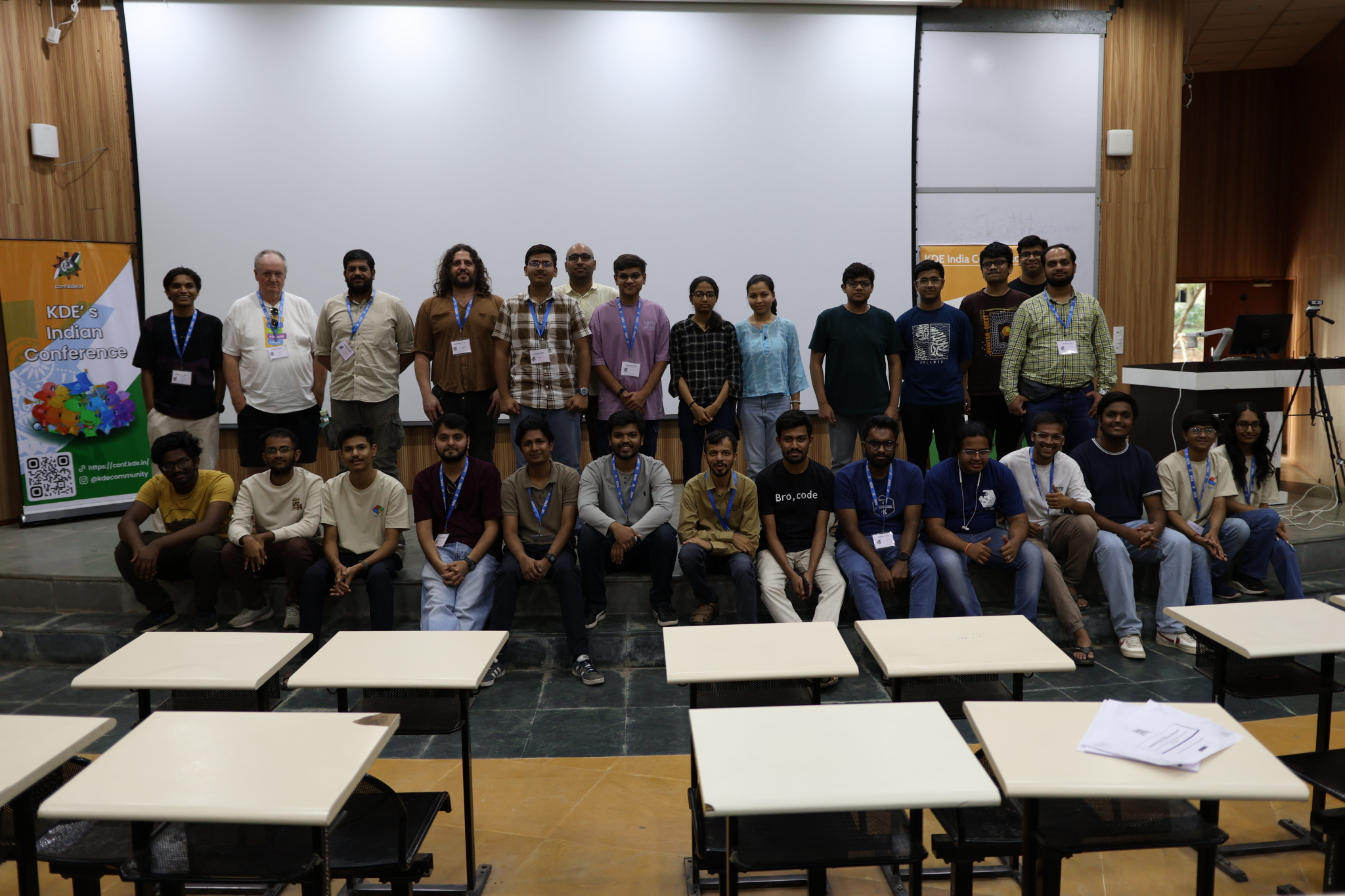
Conference group photo Conference group photo

After the conference, Bhushan took us to Adalaj Stepwell, an attraction near Gandhinagar. Upon entering the complex, we saw a park where there were many langurs. Going further, there were stairs that led down to a well. I guess this is why it is called a stepwell.
Adalaj Stepwell Adalaj Stepwell
Later that day, we had Gujarati Thali for dinner. It was an all-you-can-eat buffet and was reasonably priced at 300 rupees per plate. Aamras (Mango juice) was the highlight for me. This was the only time we had Gujarati food during this visit. After the dinner, Aaruni dropped Sahil and I off at the airport. The hospitality was superb - for instance, in addition to Aaruni dropping us, Bhushan also picked up some of the attendees from the airport. Finally, I would like to thank KDE for sponsoring my travel and accommodation costs. Let s wrap up this post here and meet you in the next one. Thanks to contrapunctus and Joseph for proofreading.

Sergio Talens-Oliag: Running dind with sysbox

When I configured forgejo-actions I used a docker-compose.yaml file to execute the runner and a dind container configured to run using privileged mode to be able to build images with it; as mentioned on my post about my setup, the use of the privileged mode is not a big issue for my use case, but reduces the overall security of the installation. On a work chat the other day someone mentioned that the GitLab documentation about using kaniko says it is no longer maintained (see the kaniko issue #3348) so we should look into alternatives for kubernetes clusters. I never liked kaniko too much, but it works without privileged mode and does not need a daemon, which is a good reason to use it, but if it is deprecated it makes sense to look into alternatives, and today I looked into some of them to use with my forgejo-actions setup. I was going to try buildah and podman but it seems that they need to adjust things on the systems running them:
  • When I tried to use buildah inside a docker container in Ubuntu I found the problems described on the buildah issue #1901 so I moved on.
  • Reading the podman documentation I saw that I need to export the fuse device to run it inside a container and, as I found other option, I also skipped it.
As my runner was already configured to use dind I decided to look into sysbox as a way of removing the privileged flag to make things more secure but have the same functionality.

Installing the sysbox packageAs I use Debian and Ubuntu systems I used the .deb packages distributed from the sysbox release page to install it (in my case I used the one from the 0.6.7 version). On the machine running forgejo (a Debian 12 server) I downloaded the package, stopped the running containers (it is needed to install the package and the only ones running where the ones started by the docker-compose.yaml file) and installed the sysbox-ce_0.6.7.linux_amd64.deb package using dpkg.

Updating the docker-compose.yaml fileTo run the dind container without setting the privileged mode we set sysbox-runc as the runtime on the dind container definition and set the privileged flag to false (it is the same as removing the key, as it defaults to false):
--- a/docker-compose.yml
+++ b/docker-compose.yml
@@ -2,7 +2,9 @@ services:
   dind:
     image: docker:dind
     container_name: 'dind'
-    privileged: 'true'
+    # use sysbox-runc instead of using privileged mode
+    runtime: 'sysbox-runc'
+    privileged: 'false'
     command: ['dockerd', '-H', 'unix:///dind/docker.sock', '-G', '$RUNNER_GID']
     restart: 'unless-stopped'
     volumes:

Testing the changesAfter applying the changes to the docker-compose.yaml file we start the containers and to test things we re-run previously executed jobs to see if things work as before. In my case I re-executed the build-image-from-tag workflow #18 from the oci project and everything worked as expected.

ConclusionFor my current use case (docker + dind) seems that sysbox is a good solution but I m not sure if I ll be installing it on kubernetes anytime soon unless I find a valid reason to do it (last time we talked about it my co workers said that they are evaluating buildah and podman for kubernetes and probably we will use them to replace kaniko in our gitlab-ci pipelines and for those tools the use of sysbox seems an overkill).

12 May 2025

Reproducible Builds: Reproducible Builds in April 2025

Welcome to our fourth report from the Reproducible Builds project in 2025. These monthly reports outline what we ve been up to over the past month, and highlight items of news from elsewhere in the increasingly-important area of software supply-chain security. Lastly, if you are interested in contributing to the Reproducible Builds project, please visit our Contribute page on our website. Table of contents:
  1. reproduce.debian.net
  2. Fifty Years of Open Source Software Supply Chain Security
  3. 4th CHAINS Software Supply Chain Workshop
  4. Mailing list updates
  5. Canonicalization for Unreproducible Builds in Java
  6. OSS Rebuild adds new TUI features
  7. Distribution roundup
  8. diffoscope & strip-nondeterminism
  9. Website updates
  10. Reproducibility testing framework
  11. Upstream patches

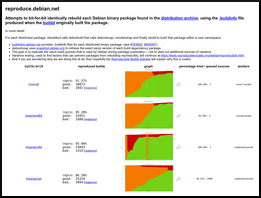
reproduce.debian.net The last few months have seen the introduction, development and deployment of reproduce.debian.net. In technical terms, this is an instance of rebuilderd, our server designed monitor the official package repositories of Linux distributions and attempt to reproduce the observed results there. This month, however, we are pleased to announce that reproduce.debian.net now tests all the Debian trixie architectures except s390x and mips64el. The ppc64el architecture was added through the generous support of Oregon State University Open Source Laboratory (OSUOSL), and we can support the armel architecture thanks to CodeThink.

Fifty Years of Open Source Software Supply Chain Security Russ Cox has published a must-read article in ACM Queue on Fifty Years of Open Source Software Supply Chain Security. Subtitled, For decades, software reuse was only a lofty goal. Now it s very real. , Russ article goes on to outline the history and original goals of software supply-chain security in the US military in the early 1970s, all the way to the XZ Utils backdoor of 2024. Through that lens, Russ explores the problem and how it has changed, and hasn t changed, over time. He concludes as follows:
We are all struggling with a massive shift that has happened in the past 10 or 20 years in the software industry. For decades, software reuse was only a lofty goal. Now it s very real. Modern programming environments such as Go, Node and Rust have made it trivial to reuse work by others, but our instincts about responsible behaviors have not yet adapted to this new reality. We all have more work to do.

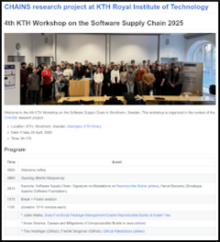
4th CHAINS Software Supply Chain Workshop Convened as part of the CHAINS research project at the KTH Royal Institute of Technology in Stockholm, Sweden, the 4th CHAINS Software Supply Chain Workshop occurred during April. During the workshop, there were a number of relevant workshops, including: The full listing of the agenda is available on the workshop s website.

Mailing list updates On our mailing list this month:
  • Luca DiMaio of Chainguard posted to the list reporting that they had successfully implemented reproducible filesystem images with both ext4 and an EFI system partition. They go on to list the various methods, and the thread generated at least fifteen replies.
  • David Wheeler announced that the OpenSSF is building a glossary of sorts in order that they consistently use the same meaning for the same term and, moreover, that they have drafted a definition for reproducible build . The thread generated a significant number of replies on the definition, leading to a potential update to the Reproducible Build s own definition.
  • Lastly, kpcyrd posted to the list with a timely reminder and update on their repro-env tool. As first reported in our July 2023 report, kpcyrd mentions that:
    My initial interest in reproducible builds was how do I distribute pre-compiled binaries on GitHub without people raising security concerns about them . I ve cycled back to this original problem about 5 years later and built a tool that is meant to address this. [ ]

Canonicalization for Unreproducible Builds in Java Aman Sharma, Benoit Baudry and Martin Monperrus have published a new scholarly study related to reproducible builds within Java. Titled Canonicalization for Unreproducible Builds in Java, the article s abstract is as follows:
[ ] Achieving reproducibility at scale remains difficult, especially in Java, due to a range of non-deterministic factors and caveats in the build process. In this work, we focus on reproducibility in Java-based software, archetypal of enterprise applications. We introduce a conceptual framework for reproducible builds, we analyze a large dataset from Reproducible Central and we develop a novel taxonomy of six root causes of unreproducibility. We study actionable mitigations: artifact and bytecode canonicalization using OSS-Rebuild and jNorm respectively. Finally, we present Chains-Rebuild, a tool that raises reproducibility success from 9.48% to 26.89% on 12,283 unreproducible artifacts. To sum up, our contributions are the first large-scale taxonomy of build unreproducibility causes in Java, a publicly available dataset of unreproducible builds, and Chains-Rebuild, a canonicalization tool for mitigating unreproducible builds in Java.
A full PDF of their article is available from arXiv.

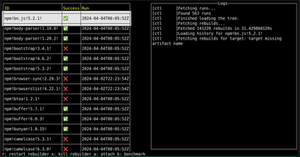
OSS Rebuild adds new TUI features OSS Rebuild aims to automate rebuilding upstream language packages (e.g. from PyPI, crates.io and npm registries) and publish signed attestations and build definitions for public use. OSS Rebuild ships a text-based user interface (TUI) for viewing, launching, and debugging rebuilds. While previously requiring ownership of a full instance of OSS Rebuild s hosted infrastructure, the TUI now supports a fully local mode of build execution and artifact storage. Thanks to Giacomo Benedetti for his usage feedback and work to extend the local-only development toolkit. Another feature added to the TUI was an experimental chatbot integration that provides interactive feedback on rebuild failure root causes and suggests fixes.

Distribution roundup In Debian this month:
  • Roland Clobus posted another status report on reproducible ISO images on our mailing list this month, with the summary that all live images build reproducibly from the online Debian archive .
  • Debian developer Simon Josefsson published another two reproducibility-related blog posts this month, the first on the topic of Verified Reproducible Tarballs. Simon sardonically challenges the reader as follows: Do you want a supply-chain challenge for the Easter weekend? Pick some well-known software and try to re-create the official release tarballs from the corresponding Git checkout. Is anyone able to reproduce anything these days? After that, they also published a blog post on Building Debian in a GitLab Pipeline using their multi-stage rebuild approach.
  • Roland also posted to our mailing list to highlight that there is now another tool in Debian that generates reproducible output, equivs . This is a tool to create trivial Debian packages that might Depend on other packages. As Roland writes, building the [equivs] package has been reproducible for a while, [but] now the output of the [tool] has become reproducible as well .
  • Lastly, 9 reviews of Debian packages were added, 10 were updated and 10 were removed this month adding to our extensive knowledge about identified issues.
The IzzyOnDroid Android APK repository made more progress in April. Thanks to funding by NLnet and Mobifree, the project was also to put more time into their tooling. For instance, developers can now easily run their own verification builder in less than 5 minutes . This currently supports Debian-based systems, but support for RPM-based systems is incoming.
  • The rbuilder_setup tool can now setup the entire framework within less than five minutes. The process is configurable, too, so everything from just the basics to verify builds up to a fully-fledged RB environment is also possible.
  • This tool works on Debian, RedHat and Arch Linux, as well as their derivates. The project has received successful reports from Debian, Ubuntu, Fedora and some Arch Linux derivates so far.
  • Documentation on how to work with reproducible builds (making apps reproducible, debugging unreproducible packages, etc) is available in the project s wiki page.
  • Future work is also in the pipeline, including documentation, guidelines and helpers for debugging.
NixOS defined an Outreachy project for improving build reproducibility. In the application phase, NixOS saw some strong candidates providing contributions, both on the NixOS side and upstream: guider-le-ecit analyzed a libpinyin issue. Tessy James fixed an issue in arandr and helped analyze one in libvlc that led to a proposed upstream fix. Finally, 3pleX fixed an issue which was accepted in upstream kitty, one in upstream maturin, one in upstream python-sip and one in the Nix packaging of python-libbytesize. Sadly, the funding for this internship fell through, so NixOS were forced to abandon their search. Lastly, in openSUSE news, Bernhard M. Wiedemann posted another monthly update for their work there.

diffoscope & strip-nondeterminism diffoscope is our in-depth and content-aware diff utility that can locate and diagnose reproducibility issues. This month, Chris Lamb made the following changes, including preparing and uploading a number of versions to Debian:
  • Use the --walk argument over the potentially dangerous alternative --scan when calling out to zipdetails(1). [ ]
  • Correct a longstanding issue where many >-based version tests used in conditional fixtures were broken. This was used to ensure that specific tests were only run when the version on the system was newer than a particular number. Thanks to Colin Watson for the report (Debian bug #1102658) [ ]
  • Address a long-hidden issue in the test_versions testsuite as well, where we weren t actually testing the greater-than comparisons mentioned above, as it was masked by the tests for equality. [ ]
  • Update copyright years. [ ]
In strip-nondeterminism, however, Holger Levsen updated the Continuous Integration (CI) configuration in order to use the standard Debian pipelines via debian/salsa-ci.yml instead of using .gitlab-ci.yml. [ ]

Website updates Once again, there were a number of improvements made to our website this month including:
  • Aman Sharma added OSS-Rebuild s stabilize tool to the Tools page. [ ][ ]
  • Chris Lamb added a configure.ac (GNU Autotools) example for using SOURCE_DATE_EPOCH. [ ]. Chris also updated the SOURCE_DATE_EPOCH snippet and move the archive metadata to a more suitable location. [ ]
  • Denis Carikli added GNU Boot to our ever-evolving Projects page.

Reproducibility testing framework The Reproducible Builds project operates a comprehensive testing framework running primarily at tests.reproducible-builds.org in order to check packages and other artifacts for reproducibility. In April, a number of changes were made by Holger Levsen, including:
  • reproduce.debian.net-related:
    • Add armel.reproduce.debian.net to support the armel architecture. [ ][ ]
    • Add a new ARM node, codethink05. [ ][ ]
    • Add ppc64el.reproduce.debian.net to support testing of the ppc64el architecture. [ ][ ][ ]
    • Improve the reproduce.debian.net front page. [ ][ ]
    • Make various changes to the ppc64el nodes. [ ][ ]9[ ][ ]
    • Make various changes to the arm64 and armhf nodes. [ ][ ][ ][ ]
    • Various changes related to the rebuilderd-worker entry point. [ ][ ][ ]
    • Create and deploy a pkgsync script. [ ][ ][ ][ ][ ][ ][ ][ ]
    • Fix the monitoring of the riscv64 architecture. [ ][ ]
    • Make a number of changes related to starting the rebuilderd service. [ ][ ][ ][ ]
  • Backup-related:
    • Backup the rebuilder databases every week. [ ][ ][ ][ ]
    • Improve the node health checks. [ ][ ]
  • Misc:
    • Re-use existing connections to the SSH proxy node on the riscv64 nodes. [ ][ ]
    • Node maintenance. [ ][ ][ ]
In addition:
  • Jochen Sprickerhof fixed the risvc64 host names [ ] and requested access to all the rebuilderd nodes [ ].
  • Mattia Rizzolo updated the self-serve rebuild scheduling tool, replacing the deprecated SSO -style authentication with OpenIDC which authenticates against salsa.debian.org. [ ][ ][ ]
  • Roland Clobus updated the configuration for the osuosl3 node to designate 4 workers for bigger builds. [ ]

Upstream patches The Reproducible Builds project detects, dissects and attempts to fix as many currently-unreproducible packages as possible. We endeavour to send all of our patches upstream where appropriate. This month, we wrote a large number of such patches, including:

Finally, if you are interested in contributing to the Reproducible Builds project, please visit our Contribute page on our website. However, you can get in touch with us via:

Sergio Talens-Oliag: Playing with vCluster

After my previous posts related to Argo CD (one about argocd-autopilot and another with some usage examples) I started to look into Kluctl (I also plan to review Flux, but I m more interested on the kluctl approach right now). While reading an entry on the project blog about Cluster API somehow I ended up on the vCluster site and decided to give it a try, as it can be a valid way of providing developers with on demand clusters for debugging or run CI/CD tests before deploying things on common clusters or even to have multiple debugging virtual clusters on a local machine with only one of them running at any given time. On this post I will deploy a vcluster using the k3d_argocd kubernetes cluster (the one we created on the posts about argocd) as the host and will show how to:
  • use its ingress (in our case traefik) to access the API of the virtual one (removes the need of having to use the vcluster connect command to access it with kubectl),
  • publish the ingress objects deployed on the virtual cluster on the host ingress, and
  • use the sealed-secrets of the host cluster to manage the virtual cluster secrets.

Creating the virtual cluster

Installing the vcluster applicationTo create the virtual clusters we need the vcluster command, we can install it with arkade:
  arkade get vcluster

The vcluster.yaml fileTo create the cluster we are going to use the following vcluster.yaml file (you can find the documentation about all its options here):
controlPlane:
  proxy:
    # Extra hostnames to sign the vCluster proxy certificate for
    extraSANs:
    - my-vcluster-api.lo.mixinet.net
exportKubeConfig:
  context: my-vcluster_k3d-argocd
  server: https://my-vcluster-api.lo.mixinet.net:8443
  secret:
    name: my-vcluster-kubeconfig
sync:
  toHost:
    ingresses:
      enabled: true
    serviceAccounts:
      enabled: true
  fromHost:
    ingressClasses:
      enabled: true
    nodes:
      enabled: true
      clearImageStatus: true
    secrets:
      enabled: true
      mappings:
        byName:
          # sync all Secrets from the 'my-vcluster-default' namespace to the
          # virtual "default" namespace.
          "my-vcluster-default/*": "default/*"
          # We could add other namespace mappings if needed, i.e.:
          # "my-vcluster-kube-system/*": "kube-system/*"
On the controlPlane section we ve added the proxy.extraSANs entry to add an extra host name to make sure it is added to the cluster certificates if we use it from an ingress. The exportKubeConfig section creates a kubeconfig secret on the virtual cluster namespace using the provided host name; the secret can be used by GitOps tools or we can dump it to a file to connect from our machine. On the sync section we enable the synchronization of Ingress objects and ServiceAccounts from the virtual to the host cluster:
  • We copy the ingress definitions to use the ingress server that runs on the host to make them work from the outside world.
  • The service account synchronization is not really needed, but we enable it because if we test this configuration with EKS it would be useful if we use IAM roles for the service accounts.
On the opposite direction (from the host to the virtual cluster) we synchronize:
  • The IngressClass objects, to be able to use the host ingress server(s).
  • The Nodes (we are not using the info right now, but it could be interesting if we want to have the real information of the nodes running pods of the virtual cluster).
  • The Secrets from the my-vcluster-default host namespace to the default of the virtual cluster; that synchronization allows us to deploy SealedSecrets on the host that generate secrets that are copied automatically to the virtual one. Initially we only copy secrets for one namespace but if the virtual cluster needs others we can add namespaces on the host and their mappings to the virtual one on the vcluster.yaml file.

Creating the virtual clusterTo create the virtual cluster we run the following command:
vcluster create my-vcluster --namespace my-vcluster --upgrade --connect=false \
  --values vcluster.yaml
It creates the virtual cluster on the my-vcluster namespace using the vcluster.yaml file shown before without connecting to the cluster from our local machine (if we don t pass that option the command adds an entry on our kubeconfig and launches a proxy to connect to the virtual cluster that we don t plan to use).

Adding an ingress TCP route to connect to the vcluster apiAs explained before, we need to create an IngressTcpRoute object to be able to connect to the vcluster API, we use the following definition:
apiVersion: traefik.containo.us/v1alpha1
kind: IngressRouteTCP
metadata:
  name: my-vcluster-api
  namespace: my-vcluster
spec:
  entryPoints:
    - websecure
  routes:
    - match: HostSNI( my-vcluster-api.lo.mixinet.net )
      services:
        - name: my-vcluster
          port: 443
  tls:
    passthrough: true
Once we apply those changes the cluster API will be available on the https://my-cluster-api.lo.mixinet.net:8443 URL using its own self signed certificate (we have enabled TLS passthrough) that includes the hostname we use (we adjusted it on the vcluster.yaml file, as explained before).

Getting the kubeconfig for the vclusterOnce the vcluster is running we will have its kubeconfig available on the my-vcluster-kubeconfig secret on its namespace on the host cluster. To dump it to the ~/.kube/my-vcluster-config we can do the following:
  kubectl get -n my-vcluster secret/my-vcluster-kubeconfig \
    --template=" .data.config "   base64 -d > ~/.kube/my-vcluster-config
Once available we can define the vkubectl alias to adjust the KUBECONFIG variable to access it:
alias vkubectl="KUBECONFIG=~/.kube/my-vcluster-config kubectl"
Or we can merge the configuration with the one on the KUBECONFIG variable and use kubectx or a similar tool to change the context (for our vcluster the context will be my-vcluster_k3d-argocd). If the KUBECONFIG variable is defined and only has the PATH to a single file the merge can be done running the following:
KUBECONFIG="$KUBECONFIG:~/.kube/my-vcluster-config" kubectl config view \
  --flatten >"$KUBECONFIG.new"
mv "$KUBECONFIG.new" "$KUBECONFIG"
On the rest of this post we will use the vkubectl alias when connecting to the virtual cluster, i.e. to check that it works we can run the cluster-info subcommand:
  vkubectl cluster-info
Kubernetes control plane is running at https://my-vcluster-api.lo.mixinet.net:8443
CoreDNS is running at https://my-vcluster-api.lo.mixinet.net:8443/api/v1/namespaces/kube-system/services/kube-dns:dns/proxy
To further debug and diagnose cluster problems, use 'kubectl cluster-info dump'.

Installing the dummyhttpd applicationTo test the virtual cluster we are going to install the dummyhttpd application using the following kustomization.yaml file:
apiVersion: kustomize.config.k8s.io/v1beta1
kind: Kustomization
resources:
  - https://forgejo.mixinet.net/blogops/argocd-applications.git//dummyhttp/?ref=dummyhttp-v1.0.0
# Add the config map
configMapGenerator:
  - name: dummyhttp-configmap
    literals:
      - CM_VAR="Vcluster Test Value"
    behavior: create
    options:
      disableNameSuffixHash: true
patches:
  # Change the ingress host name
  - target:
      kind: Ingress
      name: dummyhttp
    patch:  -
      - op: replace
        path: /spec/rules/0/host
        value: vcluster-dummyhttp.lo.mixinet.net
  # Add reloader annotations -- it will only work if we install reloader on the
  # virtual cluster, as the one on the host cluster doesn't see the vcluster
  # deployment objects
  - target:
      kind: Deployment
      name: dummyhttp
    patch:  -
      - op: add
        path: /metadata/annotations
        value:
          reloader.stakater.com/auto: "true"
          reloader.stakater.com/rollout-strategy: "restart"
It is quite similar to the one we used on the Argo CD examples but uses a different DNS entry; to deploy it we run kustomize and vkubectl:
  kustomize build .   vkubectl apply -f -
configmap/dummyhttp-configmap created
service/dummyhttp created
deployment.apps/dummyhttp created
ingress.networking.k8s.io/dummyhttp created
We can check that everything worked using curl:
  curl -s https://vcluster-dummyhttp.lo.mixinet.net:8443/   jq -cM .
 "c": "Vcluster Test Value","s": "" 
The objects available on the vcluster now are:
  vkubectl get all,configmap,ingress
NAME                             READY   STATUS    RESTARTS   AGE
pod/dummyhttp-55569589bc-9zl7t   1/1     Running   0          24s
NAME                 TYPE        CLUSTER-IP     EXTERNAL-IP   PORT(S)   AGE
service/dummyhttp    ClusterIP   10.43.51.39    <none>        80/TCP    24s
service/kubernetes   ClusterIP   10.43.153.12   <none>        443/TCP   14m

NAME                        READY   UP-TO-DATE   AVAILABLE   AGE
deployment.apps/dummyhttp   1/1     1            1           24s
NAME                                   DESIRED   CURRENT   READY   AGE
replicaset.apps/dummyhttp-55569589bc   1         1         1       24s
NAME                            DATA   AGE
configmap/dummyhttp-configmap   1      24s
configmap/kube-root-ca.crt      1      14m
NAME                                CLASS   HOSTS                             ADDRESS                          PORTS AGE
ingress.networking.k8s.io/dummyhttp traefik vcluster-dummyhttp.lo.mixinet.net 172.20.0.2,172.20.0.3,172.20.0.4 80    24s
While we have the following ones on the my-vcluster namespace of the host cluster:
  kubectl get all,configmap,ingress -n my-vcluster
NAME                                                      READY   STATUS    RESTARTS   AGE
pod/coredns-bbb5b66cc-snwpn-x-kube-system-x-my-vcluster   1/1     Running   0          18m
pod/dummyhttp-55569589bc-9zl7t-x-default-x-my-vcluster    1/1     Running   0          45s
pod/my-vcluster-0                                         1/1     Running   0          19m
NAME                                           TYPE        CLUSTER-IP      EXTERNAL-IP   PORT(S)                  AGE
service/dummyhttp-x-default-x-my-vcluster      ClusterIP   10.43.51.39     <none>        80/TCP                   45s
service/kube-dns-x-kube-system-x-my-vcluster   ClusterIP   10.43.91.198    <none>        53/UDP,53/TCP,9153/TCP   18m
service/my-vcluster                            ClusterIP   10.43.153.12    <none>        443/TCP,10250/TCP        19m
service/my-vcluster-headless                   ClusterIP   None            <none>        443/TCP                  19m
service/my-vcluster-node-k3d-argocd-agent-1    ClusterIP   10.43.189.188   <none>        10250/TCP                18m

NAME                           READY   AGE
statefulset.apps/my-vcluster   1/1     19m
NAME                                                     DATA   AGE
configmap/coredns-x-kube-system-x-my-vcluster            2      18m
configmap/dummyhttp-configmap-x-default-x-my-vcluster    1      45s
configmap/kube-root-ca.crt                               1      19m
configmap/kube-root-ca.crt-x-default-x-my-vcluster       1      11m
configmap/kube-root-ca.crt-x-kube-system-x-my-vcluster   1      18m
configmap/vc-coredns-my-vcluster                         1      19m
NAME                                                        CLASS   HOSTS                             ADDRESS                          PORTS AGE
ingress.networking.k8s.io/dummyhttp-x-default-x-my-vcluster traefik vcluster-dummyhttp.lo.mixinet.net 172.20.0.2,172.20.0.3,172.20.0.4 80    45s
As shown, we have copies of the Service, Pod, Configmap and Ingress objects, but there is no copy of the Deployment or ReplicaSet.

Creating a sealed secret for dummyhttpdTo use the hosts sealed secrets controller with the virtual cluster we will create the my-vcluster-default namespace and add there the sealed secrets we want to have available as secrets on the default namespace of the virtual cluster:
  kubectl create namespace my-vcluster-default
  echo -n "Vcluster Boo"   kubectl create secret generic "dummyhttp-secret" \
    --namespace "my-vcluster-default" --dry-run=client \
    --from-file=SECRET_VAR=/dev/stdin -o yaml >dummyhttp-secret.yaml
  kubeseal -f dummyhttp-secret.yaml -w dummyhttp-sealed-secret.yaml
  kubectl apply -f dummyhttp-sealed-secret.yaml
  rm -f dummyhttp-secret.yaml dummyhttp-sealed-secret.yaml
After running the previous commands we have the following objects available on the host cluster:
  kubectl get sealedsecrets.bitnami.com,secrets -n my-vcluster-default
NAME                                        STATUS   SYNCED   AGE
sealedsecret.bitnami.com/dummyhttp-secret            True     34s
NAME                      TYPE     DATA   AGE
secret/dummyhttp-secret   Opaque   1      34s
And we can see that the secret is also available on the virtual cluster with the content we expected:
  vkubectl get secrets
NAME               TYPE     DATA   AGE
dummyhttp-secret   Opaque   1      34s
  vkubectl get secret/dummyhttp-secret --template=" .data.SECRET_VAR " \
    base64 -d
Vcluster Boo
But the output of the curl command has not changed because, although we have the reloader controller deployed on the host cluster, it does not see the Deployment object of the virtual one and the pods are not touched:
  curl -s https://vcluster-dummyhttp.lo.mixinet.net:8443/   jq -cM .
 "c": "Vcluster Test Value","s": "" 

Installing the reloader applicationTo make reloader work on the virtual cluster we just need to install it as we did on the host using the following kustomization.yaml file:
apiVersion: kustomize.config.k8s.io/v1beta1
kind: Kustomization
namespace: kube-system
resources:
- github.com/stakater/Reloader/deployments/kubernetes/?ref=v1.4.2
patches:
# Add flags to reload workloads when ConfigMaps or Secrets are created or deleted
- target:
    kind: Deployment
    name: reloader-reloader
  patch:  -
    - op: add
      path: /spec/template/spec/containers/0/args
      value:
        - '--reload-on-create=true'
        - '--reload-on-delete=true'
        - '--reload-strategy=annotations'
We deploy it with kustomize and vkubectl:
  kustomize build .   vkubectl apply -f -
serviceaccount/reloader-reloader created
clusterrole.rbac.authorization.k8s.io/reloader-reloader-role created
clusterrolebinding.rbac.authorization.k8s.io/reloader-reloader-role-binding created
deployment.apps/reloader-reloader created
As the controller was not available when the secret was created the pods linked to the Deployment are not updated, but we can force things removing the secret on the host system; after we do that the secret is re-created from the sealed version and copied to the virtual cluster where the reloader controller updates the pod and the curl command shows the new output:
  kubectl delete -n my-vcluster-default secrets dummyhttp-secret
secret "dummyhttp-secret" deleted
  sleep 2
  vkubectl get pods
NAME                         READY   STATUS        RESTARTS   AGE
dummyhttp-78bf5fb885-fmsvs   1/1     Terminating   0          6m33s
dummyhttp-c68684bbf-nx8f9    1/1     Running       0          6s
  curl -s https://vcluster-dummyhttp.lo.mixinet.net:8443/   jq -cM .
 "c":"Vcluster Test Value","s":"Vcluster Boo" 
If we change the secret on the host systems things get updated pretty quickly now:
  echo -n "New secret"   kubectl create secret generic "dummyhttp-secret" \
    --namespace "my-vcluster-default" --dry-run=client \
    --from-file=SECRET_VAR=/dev/stdin -o yaml >dummyhttp-secret.yaml
  kubeseal -f dummyhttp-secret.yaml -w dummyhttp-sealed-secret.yaml
  kubectl apply -f dummyhttp-sealed-secret.yaml
  rm -f dummyhttp-secret.yaml dummyhttp-sealed-secret.yaml
  curl -s https://vcluster-dummyhttp.lo.mixinet.net:8443/   jq -cM .
 "c":"Vcluster Test Value","s":"New secret" 

Pause and restore the vclusterThe status of pods and statefulsets while the virtual cluster is active can be seen using kubectl:
  kubectl get pods,statefulsets -n my-vcluster
NAME                                                                 READY   STATUS    RESTARTS   AGE
pod/coredns-bbb5b66cc-snwpn-x-kube-system-x-my-vcluster              1/1     Running   0          127m
pod/dummyhttp-587c7855d7-pt9b8-x-default-x-my-vcluster               1/1     Running   0          4m39s
pod/my-vcluster-0                                                    1/1     Running   0          128m
pod/reloader-reloader-7f56c54d75-544gd-x-kube-system-x-my-vcluster   1/1     Running   0          60m
NAME                           READY   AGE
statefulset.apps/my-vcluster   1/1     128m

Pausing the vclusterIf we don t need to use the virtual cluster we can pause it and after a small amount of time all Pods are gone because the statefulSet is scaled down to 0 (note that other resources like volumes are not removed, but all the objects that have to be scheduled and consume CPU cycles are not running, which can translate in a lot of savings when running on clusters from cloud platforms or, in a local cluster like the one we are using, frees resources like CPU and memory that now can be used for other things):
  vcluster pause my-vcluster
11:20:47 info Scale down statefulSet my-vcluster/my-vcluster...
11:20:48 done Successfully paused vcluster my-vcluster/my-vcluster
  kubectl get pods,statefulsets -n my-vcluster
NAME                           READY   AGE
statefulset.apps/my-vcluster   0/0     130m
Now the curl command fails:
  curl -s https://vcluster-dummyhttp.localhost.mixinet.net:8443
404 page not found
Although the ingress is still available (it returns a 404 because there is no pod behind the service):
  kubectl get ingress -n my-vcluster
NAME                                CLASS     HOSTS                               ADDRESS                            PORTS   AGE
dummyhttp-x-default-x-my-vcluster   traefik   vcluster-dummyhttp.lo.mixinet.net   172.20.0.2,172.20.0.3,172.20.0.4   80      120m
In fact, the same problem happens when we try to connect to the vcluster API; the error shown by kubectl is related to the TLS certificate because the 404 page uses the wildcard certificate instead of the self signed one:
  vkubectl get pods
Unable to connect to the server: tls: failed to verify certificate: x509: certificate signed by unknown authority
  curl -s https://my-vcluster-api.lo.mixinet.net:8443/api/v1/
404 page not found
  curl -v -s https://my-vcluster-api.lo.mixinet.net:8443/api/v1/ 2>&1   grep subject
*  subject: CN=lo.mixinet.net
*  subjectAltName: host "my-vcluster-api.lo.mixinet.net" matched cert's "*.lo.mixinet.net"

Resuming the vclusterWhen we want to use the virtual cluster again we just need to use the resume command:
  vcluster resume my-vcluster
12:03:14 done Successfully resumed vcluster my-vcluster in namespace my-vcluster
Once all the pods are running the virtual cluster goes back to its previous state, although all of them were started, of course.

Cleaning upThe virtual cluster can be removed using the delete command:
  vcluster delete my-vcluster
12:09:18 info Delete vcluster my-vcluster...
12:09:18 done Successfully deleted virtual cluster my-vcluster in namespace my-vcluster
12:09:18 done Successfully deleted virtual cluster namespace my-vcluster
12:09:18 info Waiting for virtual cluster to be deleted...
12:09:50 done Virtual Cluster is deleted
That removes everything we used on this post except the sealed secrets and secrets that we put on the my-vcluster-default namespace because it was created by us. If we delete the namespace all the secrets and sealed secrets on it are also removed:
  kubectl delete namespace my-vcluster-default
namespace "my-vcluster-default" deleted

ConclusionsI believe that the use of virtual clusters can be a good option for two of the proposed use cases that I ve encountered in real projects in the past:
  • need of short lived clusters for developers or teams,
  • execution of integration tests from CI pipelines that require a complete cluster (the tests can be run on virtual clusters that are created on demand or paused and resumed when needed).
For both cases things can be set up using the Apache licensed product, although maybe evaluating the vCluster Platform offering could be interesting. In any case when everything is not done inside kubernetes we will also have to check how to manage the external services (i.e. if we use databases or message buses as SaaS instead of deploying them inside our clusters we need to have a way of creating, deleting or pause and resume those services).

Taavi V n nen: lua entry thread aborted: runtime error: bad request

The Wikimedia Cloud VPS shared web proxy has an interesting architecture: the management API writes an entry for each proxy to a Redis database, and the web server in use (Nginx with Lua support from ngx_http_lua_module) looks up the backend server URL from Redis for each request. This is maybe not how I would design this today, but the basic design dates back to 2013 and has served us well ever since. However, with a recent operating system upgrade to Debian 12 (we run Nginx from the packages in Debian's repositories), we started seeing mysterious errors that looked like this:
2025/04/30 07:24:25 [error] 82656#82656: *5612 lua entry thread aborted: runtime error: /etc/nginx/lua/domainproxy.lua:32: bad request
stack traceback:
coroutine 0:
[C]: in function 'set_keepalive'
/etc/nginx/lua/domainproxy.lua:32: in function 'redis_shutdown'
/etc/nginx/lua/domainproxy.lua:48: in main chunk, client: [redacted], server: *.wmcloud.org, request: "GET [redacted] HTTP/2.0", host: "codesearch.wmcloud.org", referrer: "https://codesearch.wmcloud.org/search/"
The code in question seems straightforward enough:
function redis_shutdown()
 -- Use a connection pool of 256 connections with a 32s idle timeout
 -- This also closes the current redis connection.
 red:set_keepalive(1000 * 32, 256) -- line 32
end
When searching for this error online, you'll end up finding advice like "the resty.redis object instance cannot be stored in a Lua variable at the Lua module level". However, our code already stores it as a local variable:
local redis = require 'nginx.redis'
local red = redis:new()
red:set_timeout(1000)
red:connect('127.0.0.1', 6379)
Turns out the issue was with the function definition: functions can also be defined as local. Without that, something somewhere in some situations seems to reference the variables from other requests, instead of using the Redis connection for the current request. (Don't ask me what changed between Debian 12 and 13 making this only break now.) So we needed to change our function definition to this instead:
local function redis_shutdown()
 -- Use a connection pool of 256 connections with a 32s idle timeout
 -- This also closes the current redis connection.
 red:set_keepalive(1000 * 32, 256)
end
I spent almost an entire workday looking for this, ultimately making a two-line patch to fix the issue. Hopefully by publishing this post I can save that time from everyone else stumbling upon the same problem after myself.

11 May 2025

Bits from Debian: Bits from the DPL

Dear Debian community, This is bits from the DPL for April. End of 10 I am sure I was speaking in the interest of the whole project when joining the "End of 10" campaign. Here is what I wrote to the initiators:
Hi Joseph and all drivers of the "End of 10" campaign, On behalf of the entire Debian project, I would like to say that we proudly join your great campaign. We stand with you in promoting Free Software, defending users' freedoms, and protecting our planet by avoiding unnecessary hardware waste. Thank you for leading this important initiative.
Andreas Tille Debian Project Leader
I have some goals I would like to share with you for my second term. Ftpmaster delegation This splits up into tasks that can be done before and after Trixie release. Before Trixie: 1. Reducing Barriers to DFSG Compliance Checks Back in 2002, Debian established a way to distribute cryptographic software in the main archive, whereas such software had previously been restricted to the non-US archive. One result of this arrangement which influences our workflow is that all packages uploaded to the NEW queue must remain on the server that hosts it. This requirement means that members of the ftpmaster team must log in to that specific machine, where they are limited to a restricted set of tools for reviewing uploaded code. This setup may act as a barrier to participation--particularly for contributors who might otherwise assist with reviewing packages for DFSG compliance. I believe it is time to reassess this limitation and work toward removing such hurdles. In October last year, we had some initial contact with SPI's legal counsel, who noted that US regulations around cryptography have been relaxed somewhat in recent years (as of 2021). This suggests it may now be possible to revisit and potentially revise the conditions under which we manage cryptographic software in the NEW queue. I plan to investigate this further. If you have expertise in software or export control law and are interested in helping with this topic, please get in touch with me. The ultimate goal is to make it easier for more people to contribute to ensuring that code in the NEW queue complies with the DFSG. 2. Discussing Alternatives My chances to reach out to other distributions remained limited. However, regarding the processing of new software, I learned that OpenSUSE uses a Git-based workflow that requires five "LGTM" approvals from a group of trusted developers. As far as I know, Fedora follows a similar approach. Inspired by this, a recent community initiative--the Gateway to NEW project--enables peer review of new packages for DFSG compliance before they enter the NEW queue. This effort allows anyone to contribute by reviewing packages and flagging potential issues in advance via Git. I particularly appreciate that the DFSG review is coupled with CI, allowing for both license and technical evaluation. While this process currently results in some duplication of work--since final reviews are still performed by the ftpmaster team--it offers a valuable opportunity to catch issues early and improve the overall quality of uploads. If the community sees long-term value in this approach, it could serve as a basis for evolving our workflows. Integrating it more closely into DAK could streamline the process, and we've recently seen that merge requests reflecting community suggestions can be accepted promptly. For now, I would like to gather opinions about how such initiatives could best complement the current NEW processing, and whether greater consensus on trusted peer review could help reduce the burden on the team doing DFSG compliance checks. Submitting packages for review and automated testing before uploading can improve quality and encourage broader participation in safeguarding Debian's Free Software principles. My explicit thanks go out to the Gateway to NEW team for their valuable and forward-looking contribution to Debian. 3. Documenting Critical Workflows Past ftpmaster trainees have told me that understanding the full set of ftpmaster workflows can be quite difficult. While there is some useful documentation thanks in particular to Sean Whitton for his work on documenting NEW processing rules many other important tasks carried out by the ftpmaster team remain undocumented or only partially so. Comprehensive and accessible documentation would greatly benefit current and future team members, especially those onboarding or assisting in specific workflows. It would also help ensure continuity and transparency in how critical parts of the archive are managed. If such documentation already exists and I have simply overlooked it, I would be happy to be corrected. Otherwise, I believe this is an area where we need to improve significantly. Volunteers with a talent for writing technical documentation are warmly invited to contact me--I'd be happy to help establish connections with ftpmaster team members who are willing to share their knowledge so that it can be written down and preserved. Once Trixie is released (hopefully before DebConf): 4. Split of the Ftpmaster Team into DFSG and Archive Teams As discussed during the "Meet the ftpteam" BoF at DebConf24, I would like to propose a structural refinement of the current Ftpmaster team by introducing two different delegated teams:
  1. DFSG Team
  2. Archive Team (responsible for DAK maintenance and process tooling, including releases)
(Alternative name suggestions are, of course, welcome.) The primary task of the DFSG team would be the processing of the NEW queue and ensuring that packages comply with the DFSG. The Archive team would focus on maintaining DAK and handling the technical aspects of archive management. I am aware that, in the recent past, the ftpmaster team has decided not to actively seek new members. While I respect the autonomy of each team, the resulting lack of a recruitment pipeline has led to some friction and concern within the wider community, including myself. As Debian Project Leader, it is my responsibility to ensure the long-term sustainability and resilience of our project, which includes fostering an environment where new contributors can join and existing teams remain effective and well-supported. Therefore, even if the current team does not prioritize recruitment, I will actively seek and encourage new contributors for both teams, with the aim of supporting openness and collaboration. This proposal is not intended as criticism of the current team's dedication or achievements--on the contrary, I am grateful for the hard work and commitment shown, often under challenging circumstances. My intention is to help address the structural issues that have made onboarding and specialization difficult and to ensure that both teams are well-supported for the future. I also believe that both teams should regularly inform the Debian community about the policies and procedures they apply. I welcome any suggestions for a more detailed description of the tasks involved, as well as feedback on how best to implement this change in a way that supports collaboration and transparency. My intention with this proposal is to foster a more open and effective working environment, and I am committed to working with all involved to ensure that any changes are made collaboratively and with respect for the important work already being done. I'm aware that the ideas outlined above touch on core parts of how Debian operates and involve responsibilities across multiple teams. These are not small changes, and implementing them will require thoughtful discussion and collaboration. To move this forward, I've registered a dedicated BoF for DebConf. To make the most of that opportunity, I'm looking for volunteers who feel committed to improving our workflows and processes. With your help, we can prepare concrete and sensible proposals in advance--so the limited time of the BoF can be used effectively for decision-making and consensus-building. In short: I need your help to bring these changes to life. From my experience in my last term, I know that when it truly matters, the Debian community comes together--and I trust that spirit will guide us again. Please also note: we had a "Call for volunteers" five years ago, and much of what was written there still holds true today. I've been told that the response back then was overwhelming--but that training such a large number of volunteers didn't scale well. This time, I hope we can find a more sustainable approach: training a few dedicated people first, and then enabling them to pass on their knowledge. This will also be a topic at the DebCamp sprint. Dealing with Dormant Packages Debian was founded on the principle that each piece of software should be maintained by someone with expertise in it--typically a single, responsible maintainer. This model formed the historical foundation of Debian's packaging system and helped establish high standards of quality and accountability. However, as the project has grown and the number of packages has expanded, this model no longer scales well in all areas. Team maintenance has since emerged as a practical complement, allowing multiple contributors to share responsibility and reduce bottlenecks--depending on each team's internal policy. While working on the Bug of the Day initiative, I observed a significant number of packages that have not been updated in a long time. In the case of team-maintained packages, addressing this is often straightforward: team uploads can be made, or the team can be asked whether the package should be removed. We've also identified many packages that would fit well under the umbrella of active teams, such as language teams like Debian Perl and Debian Python, or blends like Debian Games and Debian Multimedia. Often, no one has taken action--not because of disagreement, but simply due to inattention or a lack of initiative. In addition, we've found several packages that probably should be removed entirely. In those cases, we've filed bugs with pre-removal warnings, which can later be escalated to removal requests. When a package is still formally maintained by an individual, but shows signs of neglect (e.g., no uploads for years, unfixed RC bugs, failing autopkgtests), we currently have three main tools:
  1. The MIA process, which handles inactive or unreachable maintainers.
  2. Package Salvaging, which allows contributors to take over maintenance if conditions are met.
  3. Non-Maintainer Uploads (NMUs), which are limited to specific, well-defined fixes (which do not include things like migration to Salsa).
These mechanisms are important and valuable, but they don't always allow us to react swiftly or comprehensively enough. Our tools for identifying packages that are effectively unmaintained are relatively weak, and the thresholds for taking action are often high. The Package Salvage team is currently trialing a process we've provisionally called "Intend to NMU" (ITN). The name is admittedly questionable--some have suggested alternatives like "Intent to Orphan"--and discussion about this is ongoing on debian-devel. The mechanism is intended for situations where packages appear inactive but aren't yet formally orphaned, introducing a clear 21-day notice period before NMUs, similar in spirit to the existing ITS process. The discussion has sparked suggestions for expanding NMU rules. While it is crucial not to undermine the autonomy of maintainers who remain actively involved, we also must not allow a strict interpretation of this autonomy to block needed improvements to obviously neglected packages. To be clear: I do not propose to change the rights of maintainers who are clearly active and invested in their packages. That model has served us well. However, we must also be honest that, in some cases, maintainers stop contributing--quietly and without transition plans. In those situations, we need more agile and scalable procedures to uphold Debian's high standards. To that end, I've registered a BoF session for DebConf25 to discuss potential improvements in how we handle dormant packages. These discussions will be prepared during a sprint at DebCamp, where I hope to work with others on concrete ideas. Among the topics I want to revisit is my proposal from last November on debian-devel, titled "Barriers between packages and other people". While the thread prompted substantial discussion, it understandably didn't lead to consensus. I intend to ensure the various viewpoints are fairly summarised--ideally by someone with a more neutral stance than myself--and, if possible, work toward a formal proposal during the DebCamp sprint to present at the DebConf BoF. My hope is that we can agree on mechanisms that allow us to act more effectively in situations where formerly very active volunteers have, for whatever reason, moved on. That way, we can protect both Debian's quality and its collaborative spirit. Building Sustainable Funding for Debian Debian incurs ongoing expenses to support its infrastructure--particularly hardware maintenance and upgrades--as well as to fund in-person meetings like sprints and mini-DebConfs. These investments are essential to our continued success: they enable productive collaboration and ensure the robustness of the operating system we provide to users and derivative distributions around the world. While DebConf benefits from generous sponsorship, and we regularly receive donated hardware, there is still considerable room to grow our financial base--especially to support less visible but equally critical activities. One key goal is to establish a more constant and predictable stream of income, helping Debian plan ahead and respond more flexibly to emerging needs. This presents an excellent opportunity for contributors who may not be involved in packaging or technical development. Many of us in Debian are engineers first--and fundraising is not something we've been trained to do. But just like technical work, building sustainable funding requires expertise and long-term engagement. If you're someone who's passionate about Free Software and has experience with fundraising, donor outreach, sponsorship acquisition, or nonprofit development strategy, we would deeply value your help. Supporting Debian doesn't have to mean writing code. Helping us build a steady and reliable financial foundation is just as important--and could make a lasting impact. Kind regards Andreas. PS: In April I also planted my 5000th tree and while this is off-topic here I'm proud to share this information with my fellow Debian friends.

9 May 2025

Uwe Kleine-K nig: The Linux kernel's PGP Web of Trust

The Linux kernel's development process makes use of PGP. The most relevant part here is that subsystem maintainers are supposed to use signed tags in their pull requests to Linus Torvalds. As the concept of keyservers is considered broken, Konstantin Ryabitsev maintains a collection of relevant keys in a git repository. As of today (at commit a0bc65fb27f5033beddf9d1ad97d67c353849be2) there are 602 valid keys tracked in that repository. The requirement for a key to be added there is that there must be at least one trust path from Linus Torvalds' key to this key of length at most 5 within that keyring. Occasionally it happens that a key loses its trust paths because someone in these paths replaced their key, or keys expired. Currently this affects 2 keys. However there is a problem on the horizon: GnuPG 2.4.x started to reject third-party key signatures using the SHA-1 hash algorithm. In general that's good, SHA-1 isn't considered secure any more for more than 20 years. This doesn't directly affect the kernel-pgpkeys repo, because the trust path checking doesn't rely on GnuPG trusting the signatures; there is a dedicated tool that parses the keyring contents and currently accepts signatures using SHA-1. Also signatures are not thrown away usually, but there are exceptions: Recently Theodore Ts'o asked to update his certificate. When Konstantin imported the updated certificate GnuPG's "cleaning" was applied which dropped all SHA-1 signatures. So Theodore Ts'o's key lost 168 signatures, among them one by Linus Torvalds on his primary UID. That made me wonder what would be the effect on the web of trust if all SHA-1 signatures were dropped. Here are the facts: If you attend Embedded Recipes 2025 next week, there is an opportunity to improve the situation: Together with Ahmad Fatoum I'm organizing a keysigning session. If you want to participate, send your public key to er2025-keysigning@baylibre.com before 2025-05-12 08:00 UTC.

5 May 2025

Daniel Lange: Make apt shut up about "modernize-sources" in Trixie

Apt in Trixie (Debian 13) has the annoying function to tell you "Notice: Some sources can be modernized. Run 'apt modernize-sources' to do so." ... every single time you run apt update. Not cool for logs and log monitoring. And - of course - if you had the option to do this, you ... would have run the indicated apt modernize-sources command to convert your sources.list to "deb822 .sources format" files already. So an information message once or twice would have done. Well, luckily you can help yourself: apt -o APT::Get::Update::SourceListWarnings=false will keep apt shut up. This could go into an alias or your systems management tool / update script. Alternatively add
# Keep apt shut about preferring the "deb822" sources file format
APT::Get::Update::SourceListWarnings "false";
to /etc/apt/apt.conf.d/10quellsourceformatwarnings . This silences the notices about sources file formats (not only the deb822 one) system-wide. That way you can decide when you can / want to migrate to the new, more verbose, apt sources format yourself.

Sergio Talens-Oliag: Argo CD Usage Examples

As a followup of my post about the use of argocd-autopilot I m going to deploy various applications to the cluster using Argo CD from the same repository we used on the previous post. For our examples we are going to test a solution to the problem we had when we updated a ConfigMap used by the argocd-server (the resource was updated but the application Pod was not because there was no change on the argocd-server deployment); our original fix was to kill the pod manually, but the manual operation is something we want to avoid. The proposed solution to this kind of issues on the helm documentation is to add annotations to the Deployments with values that are a hash of the ConfigMaps or Secrets used by them, this way if a file is updated the annotation is also updated and when the Deployment changes are applied a roll out of the pods is triggered. On this post we will install a couple of controllers and an application to show how we can handle Secrets with argocd and solve the issue with updates on ConfigMaps and Secrets, to do it we will execute the following tasks:
  1. Deploy the Reloader controller to our cluster. It is a tool that watches changes in ConfigMaps and Secrets and does rolling upgrades on the Pods that use them from Deployment, StatefulSet, DaemonSet or DeploymentConfig objects when they are updated (by default we have to add some annotations to the objects to make things work).
  2. Deploy a simple application that can use ConfigMaps and Secrets and test that the Reloader controller does its job when we add or update a ConfigMap.
  3. Install the Sealed Secrets controller to manage secrets inside our cluster, use it to add a secret to our sample application and see that the application is reloaded automatically.

Creating the test project for argocd-autopilotAs we did our installation using argocd-autopilot we will use its structure to manage the applications. The first thing to do is to create a project (we will name it test) as follows:
  argocd-autopilot project create test
INFO cloning git repository: https://forgejo.mixinet.net/blogops/argocd.git
Enumerating objects: 18, done.
Counting objects: 100% (18/18), done.
Compressing objects: 100% (16/16), done.
Total 18 (delta 1), reused 0 (delta 0), pack-reused 0
INFO using revision: "", installation path: "/"
INFO pushing new project manifest to repo
INFO project created: 'test'
Now that the test project is available we will use it on our argocd-autopilot invocations when creating applications.

Installing the reloader controllerTo add the reloader application to the test project as a kustomize application and deploy it on the tools namespace with argocd-autopilot we do the following:
  argocd-autopilot app create reloader \
    --app 'github.com/stakater/Reloader/deployments/kubernetes/?ref=v1.4.2' \
    --project test --type kustomize --dest-namespace tools
INFO cloning git repository: https://forgejo.mixinet.net/blogops/argocd.git
Enumerating objects: 19, done.
Counting objects: 100% (19/19), done.
Compressing objects: 100% (18/18), done.
Total 19 (delta 2), reused 0 (delta 0), pack-reused 0
INFO using revision: "", installation path: "/"
INFO created 'application namespace' file at '/bootstrap/cluster-resources/in-cluster/tools-ns.yaml'
INFO committing changes to gitops repo...
INFO installed application: reloader
That command creates four files on the argocd repository:
  1. One to create the tools namespace:
    bootstrap/cluster-resources/in-cluster/tools-ns.yaml
    apiVersion: v1
    kind: Namespace
    metadata:
      annotations:
        argocd.argoproj.io/sync-options: Prune=false
      creationTimestamp: null
      name: tools
    spec:  
    status:  
  2. Another to include the reloader base application from the upstream repository:
    apps/reloader/base/kustomization.yaml
    apiVersion: kustomize.config.k8s.io/v1beta1
    kind: Kustomization
    resources:
    - github.com/stakater/Reloader/deployments/kubernetes/?ref=v1.4.2
  3. The kustomization.yaml file for the test project (by default it includes the same configuration used on the base definition, but we could make other changes if needed):
    apps/reloader/overlays/test/kustomization.yaml
    apiVersion: kustomize.config.k8s.io/v1beta1
    kind: Kustomization
    namespace: tools
    resources:
    - ../../base
  4. The config.json file used to define the application on argocd for the test project (it points to the folder that includes the previous kustomization.yaml file):
    apps/reloader/overlays/test/config.json
     
      "appName": "reloader",
      "userGivenName": "reloader",
      "destNamespace": "tools",
      "destServer": "https://kubernetes.default.svc",
      "srcPath": "apps/reloader/overlays/test",
      "srcRepoURL": "https://forgejo.mixinet.net/blogops/argocd.git",
      "srcTargetRevision": "",
      "labels": null,
      "annotations": null
     
We can check that the application is working using the argocd command line application:
  argocd app get argocd/test-reloader -o tree
Name:               argocd/test-reloader
Project:            test
Server:             https://kubernetes.default.svc
Namespace:          tools
URL:                https://argocd.lo.mixinet.net:8443/applications/test-reloader
Source:
- Repo:             https://forgejo.mixinet.net/blogops/argocd.git
  Target:
  Path:             apps/reloader/overlays/test
SyncWindow:         Sync Allowed
Sync Policy:        Automated (Prune)
Sync Status:        Synced to  (2893b56)
Health Status:      Healthy
KIND/NAME                                          STATUS  HEALTH   MESSAGE
ClusterRole/reloader-reloader-role                 Synced
ClusterRoleBinding/reloader-reloader-role-binding  Synced
ServiceAccount/reloader-reloader                   Synced           serviceaccount/reloader-reloader created
Deployment/reloader-reloader                       Synced  Healthy  deployment.apps/reloader-reloader created
 ReplicaSet/reloader-reloader-5b6dcc7b6f                  Healthy
   Pod/reloader-reloader-5b6dcc7b6f-vwjcx                 Healthy

Adding flags to the reloader serverThe runtime configuration flags for the reloader server are described on the project README.md file, in our case we want to adjust three values:
  • We want to enable the option to reload a workload when a ConfigMap or Secret is created,
  • We want to enable the option to reload a workload when a ConfigMap or Secret is deleted,
  • We want to use the annotations strategy for reloads, as it is the recommended mode of operation when using argocd.
To pass them we edit the apps/reloader/overlays/test/kustomization.yaml file to patch the pod container template, the text added is the following:
patches:
# Add flags to reload workloads when ConfigMaps or Secrets are created or deleted
- target:
    kind: Deployment
    name: reloader-reloader
  patch:  -
    - op: add
      path: /spec/template/spec/containers/0/args
      value:
        - '--reload-on-create=true'
        - '--reload-on-delete=true'
        - '--reload-strategy=annotations'
After committing and pushing the updated file the system launches the application with the new options.

The dummyhttp applicationTo do a quick test we are going to deploy the dummyhttp web server using an image generated using the following Dockerfile:
# Image to run the dummyhttp application <https://github.com/svenstaro/dummyhttp>
# This arg could be passed by the container build command (used with mirrors)
ARG OCI_REGISTRY_PREFIX
# Latest tested version of alpine
FROM $ OCI_REGISTRY_PREFIX alpine:3.21.3
# Tool versions
ARG DUMMYHTTP_VERS=1.1.1
# Download binary
RUN ARCH="$(apk --print-arch)" && \
  VERS="$DUMMYHTTP_VERS" && \
  URL="https://github.com/svenstaro/dummyhttp/releases/download/v$VERS/dummyhttp-$VERS-$ARCH-unknown-linux-musl" && \
  wget "$URL" -O "/tmp/dummyhttp" && \
  install /tmp/dummyhttp /usr/local/bin && \
  rm -f /tmp/dummyhttp
# Set the entrypoint to /usr/local/bin/dummyhttp
ENTRYPOINT [ "/usr/local/bin/dummyhttp" ]
The kustomize base application is available on a monorepo that contains the following files:
  1. A Deployment definition that uses the previous image but uses /bin/sh -c as its entrypoint (command in the k8s Pod terminology) and passes as its argument a string that runs the eval command to be able to expand environment variables passed to the pod (the definition includes two optional variables, one taken from a ConfigMap and another one from a Secret):
    apiVersion: apps/v1
    kind: Deployment
    metadata:
      name: dummyhttp
      labels:
        app: dummyhttp
    spec:
      selector:
        matchLabels:
          app: dummyhttp
      template:
        metadata:
          labels:
            app: dummyhttp
        spec:
          containers:
          - name: dummyhttp
            image: forgejo.mixinet.net/oci/dummyhttp:1.0.0
            command: [ "/bin/sh", "-c" ]
            args:
            - 'eval dummyhttp -b \" \\\"c\\\": \\\"$CM_VAR\\\", \\\"s\\\": \\\"$SECRET_VAR\\\" \"'
            ports:
            - containerPort: 8080
            env:
            - name: CM_VAR
              valueFrom:
                configMapKeyRef:
                  name: dummyhttp-configmap
                  key: CM_VAR
                  optional: true
            - name: SECRET_VAR
              valueFrom:
                secretKeyRef:
                  name: dummyhttp-secret
                  key: SECRET_VAR
                  optional: true
  2. A Service that publishes the previous Deployment (the only relevant thing to mention is that the web server uses the port 8080 by default):
    apiVersion: v1
    kind: Service
    metadata:
      name: dummyhttp
    spec:
      selector:
        app: dummyhttp
      ports:
      - name: http
        port: 80
        targetPort: 8080
  3. An Ingress definition to allow access to the application from the outside:
    apiVersion: networking.k8s.io/v1
    kind: Ingress
    metadata:
      name: dummyhttp
      annotations:
        traefik.ingress.kubernetes.io/router.tls: "true"
    spec:
      rules:
        - host: dummyhttp.localhost.mixinet.net
          http:
            paths:
              - path: /
                pathType: Prefix
                backend:
                  service:
                    name: dummyhttp
                    port:
                      number: 80
  4. And the kustomization.yaml file that includes the previous files:
    apiVersion: kustomize.config.k8s.io/v1beta1
    kind: Kustomization
    resources:
    - deployment.yaml
    - service.yaml
    - ingress.yaml

Deploying the dummyhttp application from argocdWe could create the dummyhttp application using the argocd-autopilot command as we ve done on the reloader case, but we are going to do it manually to show how simple it is. First we ve created the apps/dummyhttp/base/kustomization.yaml file to include the application from the previous repository:
apiVersion: kustomize.config.k8s.io/v1beta1
kind: Kustomization
resources:
  - https://forgejo.mixinet.net/blogops/argocd-applications.git//dummyhttp/?ref=dummyhttp-v1.0.0
As a second step we create the apps/dummyhttp/overlays/test/kustomization.yaml file to include the previous file:
apiVersion: kustomize.config.k8s.io/v1beta1
kind: Kustomization
resources:
- ../../base
And finally we add the apps/dummyhttp/overlays/test/config.json file to configure the application as the ApplicationSet defined by argocd-autopilot expects:
 
  "appName": "dummyhttp",
  "userGivenName": "dummyhttp",
  "destNamespace": "default",
  "destServer": "https://kubernetes.default.svc",
  "srcPath": "apps/dummyhttp/overlays/test",
  "srcRepoURL": "https://forgejo.mixinet.net/blogops/argocd.git",
  "srcTargetRevision": "",
  "labels": null,
  "annotations": null
 
Once we have the three files we commit and push the changes and argocd deploys the application; we can check that things are working using curl:
  curl -s https://dummyhttp.lo.mixinet.net:8443/   jq -M .
 
  "c": "",
  "s": ""
 

Patching the applicationNow we will add patches to the apps/dummyhttp/overlays/test/kustomization.yaml file:
  • One to add annotations for reloader (one to enable it and another one to set the roll out strategy to restart to avoid touching the deployments, as that can generate issues with argocd).
  • Another to change the ingress hostname (not really needed, but something quite reasonable for a specific project).
The file diff is as follows:
--- a/apps/dummyhttp/overlays/test/kustomization.yaml
+++ b/apps/dummyhttp/overlays/test/kustomization.yaml
@@ -2,3 +2,22 @@ apiVersion: kustomize.config.k8s.io/v1beta1
 kind: Kustomization
 resources:
 - ../../base
+patches:
+# Add reloader annotations
+- target:
+    kind: Deployment
+    name: dummyhttp
+  patch:  -
+    - op: add
+      path: /metadata/annotations
+      value:
+        reloader.stakater.com/auto: "true"
+        reloader.stakater.com/rollout-strategy: "restart"
+# Change the ingress host name
+- target:
+    kind: Ingress
+    name: dummyhttp
+  patch:  -
+    - op: replace
+      path: /spec/rules/0/host
+      value: test-dummyhttp.lo.mixinet.net
After committing and pushing the changes we can use the argocd cli to check the status of the application:
  argocd app get argocd/test-dummyhttp -o tree
Name:               argocd/test-dummyhttp
Project:            test
Server:             https://kubernetes.default.svc
Namespace:          default
URL:                https://argocd.lo.mixinet.net:8443/applications/test-dummyhttp
Source:
- Repo:             https://forgejo.mixinet.net/blogops/argocd.git
  Target:
  Path:             apps/dummyhttp/overlays/test
SyncWindow:         Sync Allowed
Sync Policy:        Automated (Prune)
Sync Status:        Synced to  (fbc6031)
Health Status:      Healthy
KIND/NAME                           STATUS  HEALTH   MESSAGE
Deployment/dummyhttp                Synced  Healthy  deployment.apps/dummyhttp configured
 ReplicaSet/dummyhttp-55569589bc           Healthy
   Pod/dummyhttp-55569589bc-qhnfk          Healthy
Ingress/dummyhttp                   Synced  Healthy  ingress.networking.k8s.io/dummyhttp configured
Service/dummyhttp                   Synced  Healthy  service/dummyhttp unchanged
 Endpoints/dummyhttp
 EndpointSlice/dummyhttp-x57bl
As we can see, the Deployment and Ingress where updated, but the Service is unchanged. To validate that the ingress is using the new hostname we can use curl:
  curl -s https://dummyhttp.lo.mixinet.net:8443/
404 page not found
  curl -s https://test-dummyhttp.lo.mixinet.net:8443/
 "c": "", "s": "" 

Adding a ConfigMapNow that the system is adjusted to reload the application when the ConfigMap or Secret is created, deleted or updated we are ready to add one file and see how the system reacts. We modify the apps/dummyhttp/overlays/test/kustomization.yaml file to create the ConfigMap using the configMapGenerator as follows:
--- a/apps/dummyhttp/overlays/test/kustomization.yaml
+++ b/apps/dummyhttp/overlays/test/kustomization.yaml
@@ -2,6 +2,14 @@ apiVersion: kustomize.config.k8s.io/v1beta1
 kind: Kustomization
 resources:
 - ../../base
+# Add the config map
+configMapGenerator:
+- name: dummyhttp-configmap
+  literals:
+  - CM_VAR="Default Test Value"
+  behavior: create
+  options:
+    disableNameSuffixHash: true
 patches:
 # Add reloader annotations
 - target:
After committing and pushing the changes we can see that the ConfigMap is available, the pod has been deleted and started again and the curl output includes the new value:
  kubectl get configmaps,pods
NAME                             READY   STATUS        RESTARTS   AGE
configmap/dummyhttp-configmap   1      11s
configmap/kube-root-ca.crt      1      4d7h
NAME                            DATA   AGE
pod/dummyhttp-779c96c44b-pjq4d   1/1     Running       0          11s
pod/dummyhttp-fc964557f-jvpkx    1/1     Terminating   0          2m42s
  curl -s https://test-dummyhttp.lo.mixinet.net:8443   jq -M .
 
  "c": "Default Test Value",
  "s": ""
 

Using helm with argocd-autopilotRight now there is no direct support in argocd-autopilot to manage applications using helm (see the issue #38 on the project), but we want to use a chart in our next example. There are multiple ways to add the support, but the simplest one that allows us to keep using argocd-autopilot is to use kustomize applications that call helm as described here. The only thing needed before being able to use the approach is to add the kustomize.buildOptions flag to the argocd-cm on the bootstrap/argo-cd/kustomization.yaml file, its contents now are follows:
bootstrap/argo-cd/kustomization.yaml
apiVersion: kustomize.config.k8s.io/v1beta1
configMapGenerator:
- behavior: merge
  literals:
  # Enable helm usage from kustomize (see https://github.com/argoproj/argo-cd/issues/2789#issuecomment-960271294)
  - kustomize.buildOptions="--enable-helm"
  -  
    repository.credentials=- passwordSecret:
        key: git_token
        name: autopilot-secret
      url: https://forgejo.mixinet.net/
      usernameSecret:
        key: git_username
        name: autopilot-secret
  name: argocd-cm
  # Disable TLS for the Argo Server (see https://argo-cd.readthedocs.io/en/stable/operator-manual/ingress/#traefik-v30)
- behavior: merge
  literals:
  - "server.insecure=true"
  name: argocd-cmd-params-cm
kind: Kustomization
namespace: argocd
resources:
- github.com/argoproj-labs/argocd-autopilot/manifests/base?ref=v0.4.19
- ingress_route.yaml
On the following section we will explain how the application is defined to make things work.

Installing the sealed-secrets controllerTo manage secrets in our cluster we are going to use the sealed-secrets controller and to install it we are going to use its chart. As we mentioned on the previous section, the idea is to create a kustomize application and use that to deploy the chart, but we are going to create the files manually, as we are not going import the base kustomization files from a remote repository. As there is no clear way to override helm Chart values using overlays we are going to use a generator to create the helm configuration from an external resource and include it from our overlays (the idea has been taken from this repository, which was referenced from a comment on the kustomize issue #38 mentioned earlier).

The sealed-secrets applicationWe have created the following files and folders manually:
apps/sealed-secrets/
  helm
    chart.yaml
    kustomization.yaml
  overlays
      test
          config.json
          kustomization.yaml
          values.yaml
The helm folder contains the generator template that will be included from our overlays. The kustomization.yaml includes the chart.yaml as a resource:
apps/sealed-secrets/helm/kustomization.yaml
apiVersion: kustomize.config.k8s.io/v1beta1
kind: Kustomization
resources:
- chart.yaml
And the chart.yaml file defines the HelmChartInflationGenerator:
apps/sealed-secrets/helm/chart.yaml
apiVersion: builtin
kind: HelmChartInflationGenerator
metadata:
  name: sealed-secrets
releaseName: sealed-secrets
name: sealed-secrets
namespace: kube-system
repo: https://bitnami-labs.github.io/sealed-secrets
version: 2.17.2
includeCRDs: true
# Add common values to all argo-cd projects inline
valuesInline:
  fullnameOverride: sealed-secrets-controller
# Load a values.yaml file from the same directory that uses this generator
valuesFile: values.yaml
For this chart the template adjusts the namespace to kube-system and adds the fullnameOverride on the valuesInline key because we want to use those settings on all the projects (they are the values expected by the kubeseal command line application, so we adjust them to avoid the need to add additional parameters to it). We adjust global values as inline to be able to use a the valuesFile from our overlays; as we are using a generator the path is relative to the folder that contains the kustomization.yaml file that calls it, in our case we will need to have a values.yaml file on each overlay folder (if we don t want to overwrite any values for a project we can create an empty file, but it has to exist). Finally, our overlay folder contains three files, a kustomization.yaml file that includes the generator from the helm folder, the values.yaml file needed by the chart and the config.json file used by argocd-autopilot to install the application. The kustomization.yaml file contents are:
apps/sealed-secrets/overlays/test/kustomization.yaml
apiVersion: kustomize.config.k8s.io/v1beta1
kind: Kustomization
# Uncomment if you want to add additional resources using kustomize
#resources:
#- ../../base
generators:
- ../../helm
The values.yaml file enables the ingress for the application and adjusts its hostname:
apps/sealed-secrets/overlays/test/values.yaml
ingress:
  enabled: true
  hostname: test-sealed-secrets.lo.mixinet.net
And the config.json file is similar to the ones used with the other applications we have installed:
apps/sealed-secrets/overlays/test/config.json
 
  "appName": "sealed-secrets",
  "userGivenName": "sealed-secrets",
  "destNamespace": "kube-system",
  "destServer": "https://kubernetes.default.svc",
  "srcPath": "apps/sealed-secrets/overlays/test",
  "srcRepoURL": "https://forgejo.mixinet.net/blogops/argocd.git",
  "srcTargetRevision": "",
  "labels": null,
  "annotations": null
 
Once we commit and push the files the sealed-secrets application is installed in our cluster, we can check it using curl to get the public certificate used by it:
  curl -s https://test-sealed-secrets.lo.mixinet.net:8443/v1/cert.pem
-----BEGIN CERTIFICATE-----
[...]
-----END CERTIFICATE-----

The dummyhttp-secretTo create sealed secrets we need to install the kubeseal tool:
  arkade get kubeseal
Now we create a local version of the dummyhttp-secret that contains some value on the SECRET_VAR key (the easiest way for doing it is to use kubectl):
  echo -n "Boo"   kubectl create secret generic dummyhttp-secret \
    --dry-run=client --from-file=SECRET_VAR=/dev/stdin -o yaml \
    >/tmp/dummyhttp-secret.yaml
The secret definition in yaml format is:
apiVersion: v1
data:
  SECRET_VAR: Qm9v
kind: Secret
metadata:
  creationTimestamp: null
  name: dummyhttp-secret
To create a sealed version using the kubeseal tool we can do the following:
  kubeseal -f /tmp/dummyhttp-secret.yaml -w /tmp/dummyhttp-sealed-secret.yaml
That invocation needs to have access to the cluster to do its job and in our case it works because we modified the chart to use the kube-system namespace and set the controller name to sealed-secrets-controller as the tool expects. If we need to create the secrets without credentials we can connect to the ingress address we added to retrieve the public key:
  kubeseal -f /tmp/dummyhttp-secret.yaml -w /tmp/dummyhttp-sealed-secret.yaml \
    --cert https://test-sealed-secrets.lo.mixinet.net:8443/v1/cert.pem
Or, if we don t have access to the ingress address, we can save the certificate on a file and use it instead of the URL. The sealed version of the secret looks like this:
apiVersion: bitnami.com/v1alpha1
kind: SealedSecret
metadata:
  creationTimestamp: null
  name: dummyhttp-secret
  namespace: default
spec:
  encryptedData:
    SECRET_VAR: [...]
  template:
    metadata:
      creationTimestamp: null
      name: dummyhttp-secret
      namespace: default
This file can be deployed to the cluster to create the secret (in our case we will add it to the argocd application), but before doing that we are going to check the output of our dummyhttp service and get the list of Secrets and SealedSecrets in the default namespace:
  curl -s https://test-dummyhttp.lo.mixinet.net:8443   jq -M .
 
  "c": "Default Test Value",
  "s": ""
 
  kubectl get sealedsecrets,secrets
No resources found in default namespace.
Now we add the SealedSecret to the dummyapp copying the file and adding it to the kustomization.yaml file:
--- a/apps/dummyhttp/overlays/test/kustomization.yaml
+++ b/apps/dummyhttp/overlays/test/kustomization.yaml
@@ -2,6 +2,7 @@ apiVersion: kustomize.config.k8s.io/v1beta1
 kind: Kustomization
 resources:
 - ../../base
+- dummyhttp-sealed-secret.yaml
 # Create the config map value
 configMapGenerator:
 - name: dummyhttp-configmap
Once we commit and push the files Argo CD creates the SealedSecret and the controller generates the Secret:
  kubectl apply -f /tmp/dummyhttp-sealed-secret.yaml
sealedsecret.bitnami.com/dummyhttp-secret created
  kubectl get sealedsecrets,secrets
NAME                                        STATUS   SYNCED   AGE
sealedsecret.bitnami.com/dummyhttp-secret            True     3s
NAME                      TYPE     DATA   AGE
secret/dummyhttp-secret   Opaque   1      3s
If we check the command output we can see the new value of the secret:
  curl -s https://test-dummyhttp.lo.mixinet.net:8443   jq -M .
 
  "c": "Default Test Value",
  "s": "Boo"
 

Using sealed-secrets in production clustersIf you plan to use sealed-secrets look into its documentation to understand how it manages the private keys, how to backup things and keep in mind that, as the documentation explains, you can rotate your sealed version of the secrets, but that doesn t change the actual secrets. If you want to rotate your secrets you have to update them and commit the sealed version of the updates (as the controller also rotates the encryption keys your new sealed version will also be using a newer key, so you will be doing both things at the same time).

Final remarksOn this post we have seen how to deploy applications using the argocd-autopilot model, including the use of helm charts inside kustomize applications and how to install and use the sealed-secrets controller. It has been interesting and I ve learnt a lot about argocd in the process, but I believe that if I ever want to use it in production I will also review the native helm support in argocd using a separate repository to manage the applications, at least to be able to compare it to the model explained here.

4 May 2025

Dirk Eddelbuettel: #47: r2u at its Third Birthday

Welcome to post 47 in the $R^4 series! r2u provides Ubuntu binaries for all CRAN packages for the R system. It started three years ago, and offers for Linux users on Ubuntu what windows and macOS users already experience: fast, easy and reliable installation of binary packages. But by integrating with the system package manager (which is something that cannot be done on those other operating systems) we can fully and completely integrate it with underlying system. External libraries are resolved as shared libraries and handled by the system package manager. This offers fully automatic installation both at the initial installation and all subsequent upgrades. R users just say, e.g., install.packages("sf") and spatial libraries proj, gdal, geotiff (as well as several others) are automatically installed as dependencies in the correct versions. And they remain installed along with sf as the system manager now knows of the dependency. Work on r2u began as a quick weekend experiment in March 2022, and by May 4 a first release was marked in the NEWS file after a few brave alpha testers kicked tires quite happily. This makes today the third anniversary of that first release, and marks a good time to review where we are. This short post does this, and stresses three aspects: overall usage, current versions, and new developments.

Steadily Growing Usage at 42 Million Packages Shipped r2u ships from two sites. Its main repository is at the University of Illinois campus providing ample and heavily redundant bandwidth. We remain very grateful for the sponsorship from Atlas. It also still ships from my own server though that may be discontinued or could be spotty as it is on retail fiber connectivity. As we have access to the both sets of server logs, we can tabulate and chart usage. As of yesterday, total downloads were north of 42 million with current weekly averages around 500 thousand. These are quite staggering numbers for what started as a small hobby project, and are quite humbling. Usage is driven by deployment in continuous integration (as for example the Ubuntu-use at GitHub makes this both an easy and obvious choice), cloud computing (as it is easy to spin up Ubuntu instances, it is as easy to add r2u via four simple commands or one short script), explorative use (for example on Google Colab) or of course in general laptop, desktop, or server settings.

Current Versions Since r2u began, we added two Ubuntu LTS releases, three annual R releases as well as multiple BioConductor releases. BioConductor support is on a best-efforts basis motivated primarily to support the CRAN packages having dependencies. It has grown to around 500 packages and includes the top-250 by usage. Right now, current versions R 4.5.0 and BioConductor 3.21, both released last month, are supported.

New Development: arm64 A recent change is the support of the arm64 platform. As discussed in the introductory post, it is a popular and increasingly common CPU choice seen anywhere from the Raspberry Pi 5 and it Cortex CPU to in-house cloud computing platforms (called, respectively, Graviton at AWS and Axiom at GCS), general server use via Ampere CPUs, Cortex-based laptops that start to appears and last but not least on the popular M1 to M4-based macOS machines. (For macOS, one key appeal is in use of lighterweight Docker use as these M1 to M4 cpus can run arm64-based containers without a translation layer making it an attractive choice.) This is currently supported only for the noble aka 24.04 release. GitHub Actions, where we compile these packages, now also supports jammy aka 22.04 but it may not be worth it to expand there as the current latest release is available. We have not yet added BioConductor support but may do so. Drop us a line (maybe via an issue) if this of interest. With the provision of arm64 binaries, we also started to make heavier use of GitHub Actions. The BioConductor 3.21 release binaries were also created there. This makes the provision more transparent as well as the configuration repo as well as the two builder repos (arm64, bioc) are public, as is of course the main r2u repo.

Summing Up This short post summarised the current state of r2u along with some recent news. If you are curious, head over to the r2u site and try it, for example in a rocker/r2u container.

This post by Dirk Eddelbuettel originated on his Thinking inside the box blog. If you like this or other open-source work I do, you can now sponsor me at GitHub.

Colin Watson: Free software activity in April 2025

About 90% of my Debian contributions this month were sponsored by Freexian. You can also support my work directly via Liberapay. Request for OpenSSH debugging help Following the OpenSSH work described below, I have an open report about the sshd server sometimes crashing when clients try to connect to it. I can t reproduce this myself, and arm s-length debugging is very difficult, but three different users have reported it. For the time being I can t pass it upstream, as it s entirely possible it s due to a Debian patch. Is there anyone reading this who can reproduce this bug and is capable of doing some independent debugging work, most likely involving bisecting changes to OpenSSH? I d suggest first seeing whether a build of the unmodified upstream 10.0p2 release exhibits the same bug. If it does, then bisect between 9.9p2 and 10.0p2; if not, then bisect the list of Debian patches. This would be extremely helpful, since at the moment it s a bit like trying to look for a needle in a haystack from the next field over by sending instructions to somebody with a magnifying glass. OpenSSH I upgraded the Debian packaging to OpenSSH 10.0p1 (now designated 10.0p2 by upstream due to a mistake in the release process, but they re the same thing), fixing CVE-2025-32728. This also involved a diffoscope bug report due to the version number change. I enabled the new --with-linux-memlock-onfault configure option to protect sshd against being swapped out, but this turned out to cause test failures on riscv64, so I disabled it again there. Debugging this took some time since I needed to do it under emulation, and in the process of setting up a testbed I added riscv64 support to vmdb2. In coordination with the wtmpdb maintainer, I enabled the new Y2038-safe native wtmpdb support in OpenSSH, so wtmpdb last now reports the correct tty. I fixed a couple of packaging bugs: I reviewed and merged several packaging contributions from others: dput-ng Since we added dput-ng integration to Debusine recently, I wanted to make sure that it was in good condition in trixie, so I fixed dput-ng: will FTBFS during trixie support period. Previously a similar bug had been fixed by just using different Ubuntu release names in tests; this time I made the tests independent of the current supported release data returned by distro_info, so this shouldn t come up again. We also ran into dput-ng: override doesn t override profile parameters, which needed somewhat more extensive changes since it turned out that that option had never worked. I fixed this after some discussion with Paul Tagliamonte to make sure I understood the background properly. man-db I released man-db 2.13.1. This just included various small fixes and a number of translation updates, but I wanted to get it into trixie in order to include a contribution to increase the MAX_NAME constant, since that was now causing problems for some pathological cases of manual pages in the wild that documented a very large number of terms. debmirror I fixed one security bug: debmirror prints credentials with progress. Python team I upgraded these packages to new upstream versions: In bookworm-backports, I updated these packages: I dropped a stale build-dependency from python-aiohttp-security that kept it out of testing (though unfortunately too late for the trixie freeze). I fixed or helped to fix various other build/test failures: I packaged python-typing-inspection, needed for a new upstream version of pydantic. I documented the architecture field in debian/tests/autopkgtest-pkg-pybuild.conf files. I fixed other odds and ends of bugs: Science team I fixed various build/test failures:

Next.

Previous.