puer-robustus: My Google Summer of Code '25 at Debian
I ve participated in this year s Google Summer of Code (GSoC)
program and have been working on the small (90h) autopkgtests for the rsync
package project at Debian.
Writing my proposal
Before you can start writing a proposal, you need to select an organization
you want to work with. Since many organizations participate in GSoC, I ve
used the following criteria to narrow things down for me:
Writing my proposal
Before you can start writing a proposal, you need to select an organization
you want to work with. Since many organizations participate in GSoC, I ve
used the following criteria to narrow things down for me:
-
Programming language familiarity: For me only Python (preferably) as well
as shell and Go projects would have made sense. While learning another
programming language is cool, I wouldn t be as effective and helpful to
the project as someone who is proficient in the language already.
-
Standing of the organization: Some of the organizations participating in
GSoC are well-known for the outstanding quality of the software they
produce. Debian is one of them, but so is e.g. the Django Foundation or
PostgreSQL. And my thinking was that the higher the quality of the
organization, the more there is to learn for me as a GSoC student.
-
Mentor interactions: Apart from the advantage you get from mentor
feedback when writing your proposal (more on that further below), it is
also helpful to gauge how responsive/helpful your potential mentor is
during the application phase. This is important since you will be working
together for a period of at least 2 months; if the mentor-student
communication doesn t work, the GSoC project is going to be difficult.
-
Free and Open-Source Software (FOSS) communication platforms: I
generally believe that FOSS projects should be built on FOSS
infrastructure. I personally won t run proprietary software
when I want to contribute to FOSS in my spare time.
-
Be a user of the project: As Eric S. Raymond has pointed out
in his seminal The Cathedral and the Bazaar 25 years ago
Every good work of software starts by scratching a developer s personal
itch.
Once I had some organizations in mind whose projects I d be interested in
working on, I started writing proposals for them. Turns out, I started
writing my proposals way too late: In the end I only managed to hand in a
single one which is risky. Competition for the GSoC projects is fierce
and the more quality (!) proposals you send out, the better your chances are
at getting one. However, don t write proposals for the sake of it: Reviewers
get way too many AI slop proposals already and you will not do yourself a
favor with a low-quality proposal. Take the time to read the
instructions/ideas/problem descriptions the project mentors have provided
and follow their guidelines. Don t hesitate to reach out to project mentors:
In my case, I ve asked Samuel Henrique a few clarification questions whereby
the following (email) discussion has helped me greatly in improving my
proposal. Once I ve finalized my proposal draft, I ve sent it to Samuel for
a review, which again led to some improvements to the final proposal
which I ve uploaded to the GSoC program webpage.
Community bonding period
Once you get the information that you ve been accepted into the GSoC program
(don t take it personally if you don t make it; this was my second attempt
after not making the cut in 2024), get in touch with your prospective mentor
ASAP. Agree upon a communication channel and some response times. Put
yourself in the loop for project news and discussions whatever that means in
the context of your organization: In Debian s case this boiled down to
subscribing to a bunch of mailing lists and IRC channels. Also make sure to
setup a functioning development environment if you haven t done so for
writing the proposal already.
Payoneer setup
The by far most annoying part of GSoC for me. But since you don t have a
choice if you want to get the stipend, you will need to signup for an
account at Payoneer.
In this iteration of GSoC all participants got a personalized link to open a
Payoneer account. When I tried to open an account by following this link, I
got an email after the registration and email verification that my
account is being blocked because Payoneer deems the email adress I gave a
temporary one. Well, the email in question is most certainly anything but
temporary, so I tried to get in touch with the Payoneer support - and ended
up in an LLM-infused kafkaesque support hell. Emails are answered by an LLM
which for me meant utterly off-topic replies and no help whatsoever. The
Payoneer website offers a real-time chat, but it is yet another instance of
a bullshit-spewing LLM bot. When I at last tried to call them (the
support lines are not listed on the Payoneer website but were provided by
the GSoC program), I kid you not, I was being told that their platform is
currently suffering from technical problems and was hung up on. Only thanks
to the swift and helpful support of the GSoC administrators (who get
priority support from Payoneer) I was able to setup a Payoneer account in
the end.
Apart from showing no respect to customers, Payoneer is also ripping them
off big time with fees (unless you get paid in USD). They charge you 2% for
currency conversions to EUR on top of the FX spread they take. What
worked for me to avoid all of those fees, was to open a USD account at Wise
and have Payoneer transfer my GSoC stipend in USD to that account. Then I
exchanged the USD to my local currency at Wise for significantly less than
Payoneer would have charged me. Also make sure to close your Payoneer
account after the end of GSoC to avoid their annual fee.
Project work
With all this prelude out of the way, I can finally get to the actual work
I ve been doing over the course of my GSoC project.
Background
The upstream rsync project generally sees little development. Nonetheless,
they released version 3.4.0 including some CVE fixes earlier
this year. Unfortunately, their changes broke the -H
flag. Now, Debian package maintainers need to apply those security fixes to
the package versions in the Debian repositories; and those are typically a
bit older. Which usually means that the patches cannot be applied as is but
will need some amendments by the Debian maintainers. For these cases it is
helpful to have autopkgtests defined, which check the package s
functionality in an automated way upon every build.
The question then is, why should the tests not be written upstream such that
regressions are caught in the development rather than the distribution
process? There s a lot to say on this question and it probably depends a lot
on the package at hand, but for rsync the main benefits are twofold:
- The upstream project mocks the ssh connection over which
rsync is most
typically used. Mocking is better than nothing but not the real thing. In
addition to being a more realisitic test scenario for the typical rsync
use case, involving an ssh server in the test would automatically extend
the overall resilience of Debian packages as now new versions of the
openssh-server package in Debian benefit from the test cases in the
rsync reverse dependency.
- The upstream
rsync test framework is somewhat idiosyncratic and
difficult to port to reimplementations of rsync. Given that the
original rsync upstream sees little development, an extensive test suit
further downstream can serve as a threshold for drop-in replacements for
rsync.
Goal(s)
At the start of the project, the Debian rsync package was just running (a
part of) the upstream tests as autopkgtests. The relevant snippet from the
build log for the rsync_3.4.1+ds1-3 package reads:
114s ------------------------------------------------------------
114s ----- overall results:
114s 36 passed
114s 7 skipped
Samuel and I agreed that it would be a good first milestone to make the
skipped tests run. Afterwards, I should write some rsync test cases for
local calls, i.e. without an ssh connection, effectively using rsync as
a more powerful cp. And once that was done, I should extend the tests such
that they run over an active ssh connection.
With these milestones, I went to work.
Upstream tests
Running the seven skipped upstream tests turned out to be fairly
straightforward:
- Two upstream tests concern access control lists and extended
filesystem attributes. For these tests to run they rely on
functionality provided by the
acl and xattr Debian packages. Adding
those to the Build-Depends list in the debian/control file of the
rsync Debian package repo made them run.
- Four upstream tests required root privileges to run. The
autopkgtest
tool knows the needs-root restriction for that reason. However, Samuel
and I agreed that the tests should not exclusively run with root
privileges. So, instead of just adding the restiction to the existing
autopkgtest test, we created a new one which has the needs-root
restriction and runs the upstream-tests-as-root script - which is
nothing else than a symlink to the existing upstream-tests script.
The commits to implement these changes can be found in this merge
request.
The careful reader will have noticed that I only made 2 + 4 = 6 upstream
test cases run out of 7: The leftover upstream test is checking the
functionality of the --ctimes rsync option. In the context of Debian, the
problem is that the Linux kernel doesn t have a syscall to set the creation
time of a file. As long as that is the case, this test will always be
skipped for the Debian package.
Local tests
When it came to writing Debian specific test cases I started of a completely
clean slate. Which is a blessing and a curse at the same time: You have full
flexibility but also full responsibility.
There were a few things to consider at this point in time:
-
Which language to write the tests in?
The programming language I am most proficient in is Python. But testing a
CLI tool in Python would have been weird: it would have meant that I d
have to make repeated
subprocess calls to run rsync and then read from
the filesystem to get the file statistics I want to check.
Samuel suggested I stick with shell scripts and make use of diffoscope -
one of the main tools used and maintained by the Reproducible Builds
project - to check whether the file contents and
file metadata are as expected after rsync calls. Since I did not have
good reasons to use bash, I ve decided to write the scripts to be POSIX
compliant.
-
How to avoid boilerplate? If one makes use of a testing framework, which
one?
Writing the tests would involve quite a bit of boilerplate, mostly related
to giving informative output on and during the test run, preparing the
file structure we want to run
rsync on, and cleaning the files up after
the test has run. It would be very repetitive and in violation of DRY
to have the code for this appear in every test. Good testing frameworks
should provide convenience functions for these tasks. shunit2 comes with
those functions, is packaged for Debian, and given that it is already
being used in the curl project, I decided to go with it.
-
Do we use the same directory structure and files for every test or should
every test have an individual setup?
The tradeoff in this question being test isolation vs. idiosyncratic
code. If every test has its own setup, it takes a) more work to write the
test and b) more work to understand the differences between
tests. However, one can be sure that changes to the setup in one test will
have no side effects on other tests. In my opinion, this guarantee was
worth the additional effort in writing/reading the tests.
Having made these decisions, I simply started writing
tests and ran into issues very quickly.
rsync and subsecond mtime diffs
When testing the rsync --times option, I observed a weird phenomenon: If
the source and destination file have modification times which differ only in
the nanoseconds, an rsync --times call will not synchronize the
modification times. More details about this behavior and examples can be
found in the upstream issue I raised. In the Debian tests we
had to occasionally work around this by setting the timestamps explicitly
with touch -d.
diffoscope regression
In one test case, I was expecting a difference in the modification times but
diffoscope would not report a diff. After a good amount of time spent
on debugging the problem (my default, and usually correct, assumption is
that something about my code is seriously broken if I run into issues like
that), I was able to show that diffoscope only displayed this behavior in
the version in the unstable suite, not on Debian stable (which I am running
on my development machine).
Since everything pointed to a regression in the diffoscope project and
with diffoscope being written in Python, a language I am familiar with, I
wanted to spend some time investigating (and hopefully fixing) the problem.
Running git bisect on the diffoscope repo helped me in identifying the
commit which introduced the regression: The commit contained an optimization
via an early return for bit-by-bit identical files. Unfortunately, the early
return also caused an explicitly requested metadata comparison (which could
be different between the files) to be skipped.
With a nicely diagnosed issue like that, I was able to
go to a local hackerspace event, where people work on FOSS together for an
evening every month. In a group, we were able to first, write a test which
showcases the broken behavior in the latest diffoscope version, and
second, make a fix to the code such that the same test passes going
forward. All details can be found in this merge request.
shunit2 failures
At some point I had a few autopkgtests setup and passing, but adding a new
one would throw me totally inexplicable errors. After trying to isolate the
problem as much as possible, it turns out that shunit2 doesn t play well
together we the -e shell option. The project mentions this in the release
notes for the 2.1.8 version1, but in my opinion a
constraint this severe should be featured much more prominently, e.g. in the
README.
Tests over an ssh connection
The centrepiece of this project; everything else has in a way only been
preparation for this.
Obviously, the goal was to reuse the previously written local tests in some
way. Not only because lazy me would have less work to do this way, but also
because of a reduced long-term maintenance burden of one rather than two
test sets.
As it turns out, it is actually possible to accomplish that: The
remote-tests script doesn t do much apart from starting an ssh server on
localhost and running the local-tests script with the REMOTE environment
variable set.
The REMOTE environment variable changes the behavior of the local-tests
script in such a way that it prepends "$REMOTE": to the destination of the
rsync invocations. And given that we set REMOTE=rsync@localhost in the
remote-tests script, local-tests copies the files to the exact same
locations as before, just over ssh.
The implementational details for this can be found in this merge
request.
proposed-updates
Most of my development work on the Debian rsync package took place during
the Debian freeze as the release of Debian Trixie is just
around the corner. This means that uploading by Debian Developers (DD) and
Debian Maintainers (DM) to the unstable suite is discouraged as it makes
migrating the packages to testing more difficult for the Debian release
team. If DDs/DMs want to have the package version in unstable migrated to
testing during the freeze they have to file an unblock request.
Samuel has done this twice (1, 2) for my work for Trixie but has
asked me to file the proposed-updates request for current
stable (i.e. Debian Bookworm) myself after I ve backported my
tests to bookworm.
Unfinished business
To run the upstream tests which check access control list and extended file
system attributes functionality, I ve added the acl and xattr packages
to Build-Depends in debian/control. This, however, will only make the
packages available at build time: If Debian users install the rsync
package, the acl and xattr packages will not be installed alongside
it. For that, the dependencies would have to be added to Depends or
Suggests in debian/control. Depends is probably to strong of a relation
since rsync clearly works well in practice without, but adding them to
Suggests might be worthwhile. A decision on this would involve checking,
what happens if rsync is called with the relevant options on a host
machine which has those packages installed, but where the destination
machine lacks them.
Apart from the issue described above, the 15 tests I managed to write are
are a drop in the water in light of the infinitude of rsync
options and their combinations. Most glaringly, not all
options of the --archive option are covered separately (which would help
indicating what code path of rsync broke in a regression). To increase the
likelihood of catching regressions with the autopkgtests, the test
coverage should be extended in the future.
Conclusion
Generally, I am happy with my contributions to Debian over the course of my
small GSoC project: I ve created an extensible, easy to understand, and
working autopkgtest setup for the Debian rsync package. There are two
things which bother me, however:
- In hindsight, I probably shouldn t have gone with
shunit2 as a testing
framework. The fact that it behaves erratically with the -e flag is a
serious drawback for a shell testing framework: You really don t want a
shell command to fail silently and the test to continue running.
- As alluded to in the previous section, I m not particularly proud of the
number of tests I managed to write.
On the other hand, finding and fixing the regression in diffoscope - while
derailing me from the GSoC project itself - might have a redeeming quality.
DebConf25
By sheer luck I happened to work on a GSoC project at Debian over a time
period during which the annual Debian conference would take place
close enough to my place of residence. Samuel pointed the
opportunity to attend DebConf out to me during the community bonding period
and since I could make time for the event in my schedule, I signed up.
DebConf was a great experience which - aside from gaining more knowledge
about Debian development - allowed me to meet the actual people usually
hidden behind email adresses and IRC nicks. I can wholeheartedly recommend
attending a DebConf to every interested Debian user!
For those who have missed this year s iteration of the conference, I can
recommend the following recorded talks:
- reproduce.debian.net: Reproducing what is distributed from ftp.debian.org
- The security of Debian: An introduction to advanced users
- Bits from the DPL
- DebConf27 in your city?
While not featuring as a keynote speaker (understandably so as the newcomer
to Debian community that I am), I could still contribute a bit to the
conference program.
GSoC project presentation
The Debian Outreach team has scheduled a
session in which all GSoC and Outreachy students
over the past year had the chance to present their work in a lightning talk.
The session has been recorded and is available online, just
like my slides and the source for them.
Debian install workshop
Additionally, with so many Debian experts gathering in one place while KDE s
End of 10 campaign is ongoing, I felt it natural to
organize a Debian install workhop. In hindsight I can say
that I underestimated how much work it would be, especially for me who does
not speak a word of French. But although the turnout of people who wanted us
to install Linux on their machines was disappointingly low, it was still
worth it: Not only because the material in the repo can be
helpful to others planning install workshops but also because it was nice to
meet a) the person behind the Debian installer images and b) the
local Brest/Finist re Linux user group as well as the motivated and helpful
people at Infini.
Credits
I want to thank the Open Source team at Google for organizing GSoC: The
highly structured program with a one-to-one mentorship is a great avenue to
start contributing to well established and at times intimidating FOSS
projects. And as much as I disagree with Google s surveillance
capitalist business model, I have to give it to them that the company at
least takes its responsibility for FOSS (somewhat) seriously - unlike many
other businesses which rely on FOSS and choose to freeride of it.
Big thanks to the Debian community! I ve experienced nothing but
friendliness in my interactions with the community.
And lastly, the biggest thanks to my GSoC mentor Samuel Henrique. He has
dealt patiently and competently with all my stupid newbie questions. His
support enabled me to make - albeit small - contributions to Debian. It has
been a pleasure to work with him during GSoC and I m looking forward to
working together with him in the future.
Every good work of software starts by scratching a developer s personal itch.
Payoneer setup
The by far most annoying part of GSoC for me. But since you don t have a
choice if you want to get the stipend, you will need to signup for an
account at Payoneer.
In this iteration of GSoC all participants got a personalized link to open a
Payoneer account. When I tried to open an account by following this link, I
got an email after the registration and email verification that my
account is being blocked because Payoneer deems the email adress I gave a
temporary one. Well, the email in question is most certainly anything but
temporary, so I tried to get in touch with the Payoneer support - and ended
up in an LLM-infused kafkaesque support hell. Emails are answered by an LLM
which for me meant utterly off-topic replies and no help whatsoever. The
Payoneer website offers a real-time chat, but it is yet another instance of
a bullshit-spewing LLM bot. When I at last tried to call them (the
support lines are not listed on the Payoneer website but were provided by
the GSoC program), I kid you not, I was being told that their platform is
currently suffering from technical problems and was hung up on. Only thanks
to the swift and helpful support of the GSoC administrators (who get
priority support from Payoneer) I was able to setup a Payoneer account in
the end.
Apart from showing no respect to customers, Payoneer is also ripping them
off big time with fees (unless you get paid in USD). They charge you 2% for
currency conversions to EUR on top of the FX spread they take. What
worked for me to avoid all of those fees, was to open a USD account at Wise
and have Payoneer transfer my GSoC stipend in USD to that account. Then I
exchanged the USD to my local currency at Wise for significantly less than
Payoneer would have charged me. Also make sure to close your Payoneer
account after the end of GSoC to avoid their annual fee.
Project work
With all this prelude out of the way, I can finally get to the actual work
I ve been doing over the course of my GSoC project.
Background
The upstream rsync project generally sees little development. Nonetheless,
they released version 3.4.0 including some CVE fixes earlier
this year. Unfortunately, their changes broke the -H
flag. Now, Debian package maintainers need to apply those security fixes to
the package versions in the Debian repositories; and those are typically a
bit older. Which usually means that the patches cannot be applied as is but
will need some amendments by the Debian maintainers. For these cases it is
helpful to have autopkgtests defined, which check the package s
functionality in an automated way upon every build.
The question then is, why should the tests not be written upstream such that
regressions are caught in the development rather than the distribution
process? There s a lot to say on this question and it probably depends a lot
on the package at hand, but for rsync the main benefits are twofold:
- The upstream project mocks the ssh connection over which
rsync is most
typically used. Mocking is better than nothing but not the real thing. In
addition to being a more realisitic test scenario for the typical rsync
use case, involving an ssh server in the test would automatically extend
the overall resilience of Debian packages as now new versions of the
openssh-server package in Debian benefit from the test cases in the
rsync reverse dependency.
- The upstream
rsync test framework is somewhat idiosyncratic and
difficult to port to reimplementations of rsync. Given that the
original rsync upstream sees little development, an extensive test suit
further downstream can serve as a threshold for drop-in replacements for
rsync.
Goal(s)
At the start of the project, the Debian rsync package was just running (a
part of) the upstream tests as autopkgtests. The relevant snippet from the
build log for the rsync_3.4.1+ds1-3 package reads:
114s ------------------------------------------------------------
114s ----- overall results:
114s 36 passed
114s 7 skipped
Samuel and I agreed that it would be a good first milestone to make the
skipped tests run. Afterwards, I should write some rsync test cases for
local calls, i.e. without an ssh connection, effectively using rsync as
a more powerful cp. And once that was done, I should extend the tests such
that they run over an active ssh connection.
With these milestones, I went to work.
Upstream tests
Running the seven skipped upstream tests turned out to be fairly
straightforward:
- Two upstream tests concern access control lists and extended
filesystem attributes. For these tests to run they rely on
functionality provided by the
acl and xattr Debian packages. Adding
those to the Build-Depends list in the debian/control file of the
rsync Debian package repo made them run.
- Four upstream tests required root privileges to run. The
autopkgtest
tool knows the needs-root restriction for that reason. However, Samuel
and I agreed that the tests should not exclusively run with root
privileges. So, instead of just adding the restiction to the existing
autopkgtest test, we created a new one which has the needs-root
restriction and runs the upstream-tests-as-root script - which is
nothing else than a symlink to the existing upstream-tests script.
The commits to implement these changes can be found in this merge
request.
The careful reader will have noticed that I only made 2 + 4 = 6 upstream
test cases run out of 7: The leftover upstream test is checking the
functionality of the --ctimes rsync option. In the context of Debian, the
problem is that the Linux kernel doesn t have a syscall to set the creation
time of a file. As long as that is the case, this test will always be
skipped for the Debian package.
Local tests
When it came to writing Debian specific test cases I started of a completely
clean slate. Which is a blessing and a curse at the same time: You have full
flexibility but also full responsibility.
There were a few things to consider at this point in time:
-
Which language to write the tests in?
The programming language I am most proficient in is Python. But testing a
CLI tool in Python would have been weird: it would have meant that I d
have to make repeated
subprocess calls to run rsync and then read from
the filesystem to get the file statistics I want to check.
Samuel suggested I stick with shell scripts and make use of diffoscope -
one of the main tools used and maintained by the Reproducible Builds
project - to check whether the file contents and
file metadata are as expected after rsync calls. Since I did not have
good reasons to use bash, I ve decided to write the scripts to be POSIX
compliant.
-
How to avoid boilerplate? If one makes use of a testing framework, which
one?
Writing the tests would involve quite a bit of boilerplate, mostly related
to giving informative output on and during the test run, preparing the
file structure we want to run
rsync on, and cleaning the files up after
the test has run. It would be very repetitive and in violation of DRY
to have the code for this appear in every test. Good testing frameworks
should provide convenience functions for these tasks. shunit2 comes with
those functions, is packaged for Debian, and given that it is already
being used in the curl project, I decided to go with it.
-
Do we use the same directory structure and files for every test or should
every test have an individual setup?
The tradeoff in this question being test isolation vs. idiosyncratic
code. If every test has its own setup, it takes a) more work to write the
test and b) more work to understand the differences between
tests. However, one can be sure that changes to the setup in one test will
have no side effects on other tests. In my opinion, this guarantee was
worth the additional effort in writing/reading the tests.
Having made these decisions, I simply started writing
tests and ran into issues very quickly.
rsync and subsecond mtime diffs
When testing the rsync --times option, I observed a weird phenomenon: If
the source and destination file have modification times which differ only in
the nanoseconds, an rsync --times call will not synchronize the
modification times. More details about this behavior and examples can be
found in the upstream issue I raised. In the Debian tests we
had to occasionally work around this by setting the timestamps explicitly
with touch -d.
diffoscope regression
In one test case, I was expecting a difference in the modification times but
diffoscope would not report a diff. After a good amount of time spent
on debugging the problem (my default, and usually correct, assumption is
that something about my code is seriously broken if I run into issues like
that), I was able to show that diffoscope only displayed this behavior in
the version in the unstable suite, not on Debian stable (which I am running
on my development machine).
Since everything pointed to a regression in the diffoscope project and
with diffoscope being written in Python, a language I am familiar with, I
wanted to spend some time investigating (and hopefully fixing) the problem.
Running git bisect on the diffoscope repo helped me in identifying the
commit which introduced the regression: The commit contained an optimization
via an early return for bit-by-bit identical files. Unfortunately, the early
return also caused an explicitly requested metadata comparison (which could
be different between the files) to be skipped.
With a nicely diagnosed issue like that, I was able to
go to a local hackerspace event, where people work on FOSS together for an
evening every month. In a group, we were able to first, write a test which
showcases the broken behavior in the latest diffoscope version, and
second, make a fix to the code such that the same test passes going
forward. All details can be found in this merge request.
shunit2 failures
At some point I had a few autopkgtests setup and passing, but adding a new
one would throw me totally inexplicable errors. After trying to isolate the
problem as much as possible, it turns out that shunit2 doesn t play well
together we the -e shell option. The project mentions this in the release
notes for the 2.1.8 version1, but in my opinion a
constraint this severe should be featured much more prominently, e.g. in the
README.
Tests over an ssh connection
The centrepiece of this project; everything else has in a way only been
preparation for this.
Obviously, the goal was to reuse the previously written local tests in some
way. Not only because lazy me would have less work to do this way, but also
because of a reduced long-term maintenance burden of one rather than two
test sets.
As it turns out, it is actually possible to accomplish that: The
remote-tests script doesn t do much apart from starting an ssh server on
localhost and running the local-tests script with the REMOTE environment
variable set.
The REMOTE environment variable changes the behavior of the local-tests
script in such a way that it prepends "$REMOTE": to the destination of the
rsync invocations. And given that we set REMOTE=rsync@localhost in the
remote-tests script, local-tests copies the files to the exact same
locations as before, just over ssh.
The implementational details for this can be found in this merge
request.
proposed-updates
Most of my development work on the Debian rsync package took place during
the Debian freeze as the release of Debian Trixie is just
around the corner. This means that uploading by Debian Developers (DD) and
Debian Maintainers (DM) to the unstable suite is discouraged as it makes
migrating the packages to testing more difficult for the Debian release
team. If DDs/DMs want to have the package version in unstable migrated to
testing during the freeze they have to file an unblock request.
Samuel has done this twice (1, 2) for my work for Trixie but has
asked me to file the proposed-updates request for current
stable (i.e. Debian Bookworm) myself after I ve backported my
tests to bookworm.
Unfinished business
To run the upstream tests which check access control list and extended file
system attributes functionality, I ve added the acl and xattr packages
to Build-Depends in debian/control. This, however, will only make the
packages available at build time: If Debian users install the rsync
package, the acl and xattr packages will not be installed alongside
it. For that, the dependencies would have to be added to Depends or
Suggests in debian/control. Depends is probably to strong of a relation
since rsync clearly works well in practice without, but adding them to
Suggests might be worthwhile. A decision on this would involve checking,
what happens if rsync is called with the relevant options on a host
machine which has those packages installed, but where the destination
machine lacks them.
Apart from the issue described above, the 15 tests I managed to write are
are a drop in the water in light of the infinitude of rsync
options and their combinations. Most glaringly, not all
options of the --archive option are covered separately (which would help
indicating what code path of rsync broke in a regression). To increase the
likelihood of catching regressions with the autopkgtests, the test
coverage should be extended in the future.
Conclusion
Generally, I am happy with my contributions to Debian over the course of my
small GSoC project: I ve created an extensible, easy to understand, and
working autopkgtest setup for the Debian rsync package. There are two
things which bother me, however:
- In hindsight, I probably shouldn t have gone with
shunit2 as a testing
framework. The fact that it behaves erratically with the -e flag is a
serious drawback for a shell testing framework: You really don t want a
shell command to fail silently and the test to continue running.
- As alluded to in the previous section, I m not particularly proud of the
number of tests I managed to write.
On the other hand, finding and fixing the regression in diffoscope - while
derailing me from the GSoC project itself - might have a redeeming quality.
DebConf25
By sheer luck I happened to work on a GSoC project at Debian over a time
period during which the annual Debian conference would take place
close enough to my place of residence. Samuel pointed the
opportunity to attend DebConf out to me during the community bonding period
and since I could make time for the event in my schedule, I signed up.
DebConf was a great experience which - aside from gaining more knowledge
about Debian development - allowed me to meet the actual people usually
hidden behind email adresses and IRC nicks. I can wholeheartedly recommend
attending a DebConf to every interested Debian user!
For those who have missed this year s iteration of the conference, I can
recommend the following recorded talks:
- reproduce.debian.net: Reproducing what is distributed from ftp.debian.org
- The security of Debian: An introduction to advanced users
- Bits from the DPL
- DebConf27 in your city?
While not featuring as a keynote speaker (understandably so as the newcomer
to Debian community that I am), I could still contribute a bit to the
conference program.
GSoC project presentation
The Debian Outreach team has scheduled a
session in which all GSoC and Outreachy students
over the past year had the chance to present their work in a lightning talk.
The session has been recorded and is available online, just
like my slides and the source for them.
Debian install workshop
Additionally, with so many Debian experts gathering in one place while KDE s
End of 10 campaign is ongoing, I felt it natural to
organize a Debian install workhop. In hindsight I can say
that I underestimated how much work it would be, especially for me who does
not speak a word of French. But although the turnout of people who wanted us
to install Linux on their machines was disappointingly low, it was still
worth it: Not only because the material in the repo can be
helpful to others planning install workshops but also because it was nice to
meet a) the person behind the Debian installer images and b) the
local Brest/Finist re Linux user group as well as the motivated and helpful
people at Infini.
Credits
I want to thank the Open Source team at Google for organizing GSoC: The
highly structured program with a one-to-one mentorship is a great avenue to
start contributing to well established and at times intimidating FOSS
projects. And as much as I disagree with Google s surveillance
capitalist business model, I have to give it to them that the company at
least takes its responsibility for FOSS (somewhat) seriously - unlike many
other businesses which rely on FOSS and choose to freeride of it.
Big thanks to the Debian community! I ve experienced nothing but
friendliness in my interactions with the community.
And lastly, the biggest thanks to my GSoC mentor Samuel Henrique. He has
dealt patiently and competently with all my stupid newbie questions. His
support enabled me to make - albeit small - contributions to Debian. It has
been a pleasure to work with him during GSoC and I m looking forward to
working together with him in the future.
rsync is most
typically used. Mocking is better than nothing but not the real thing. In
addition to being a more realisitic test scenario for the typical rsync
use case, involving an ssh server in the test would automatically extend
the overall resilience of Debian packages as now new versions of the
openssh-server package in Debian benefit from the test cases in the
rsync reverse dependency.rsync test framework is somewhat idiosyncratic and
difficult to port to reimplementations of rsync. Given that the
original rsync upstream sees little development, an extensive test suit
further downstream can serve as a threshold for drop-in replacements for
rsync.rsync package was just running (a
part of) the upstream tests as autopkgtests. The relevant snippet from the
build log for the rsync_3.4.1+ds1-3 package reads:
114s ------------------------------------------------------------
114s ----- overall results:
114s 36 passed
114s 7 skippedrsync as
a more powerful cp. And once that was done, I should extend the tests such
that they run over an active ssh connection.
With these milestones, I went to work.
Upstream tests
Running the seven skipped upstream tests turned out to be fairly
straightforward:
- Two upstream tests concern access control lists and extended
filesystem attributes. For these tests to run they rely on
functionality provided by the
acl and xattr Debian packages. Adding
those to the Build-Depends list in the debian/control file of the
rsync Debian package repo made them run.
- Four upstream tests required root privileges to run. The
autopkgtest
tool knows the needs-root restriction for that reason. However, Samuel
and I agreed that the tests should not exclusively run with root
privileges. So, instead of just adding the restiction to the existing
autopkgtest test, we created a new one which has the needs-root
restriction and runs the upstream-tests-as-root script - which is
nothing else than a symlink to the existing upstream-tests script.
The commits to implement these changes can be found in this merge
request.
The careful reader will have noticed that I only made 2 + 4 = 6 upstream
test cases run out of 7: The leftover upstream test is checking the
functionality of the --ctimes rsync option. In the context of Debian, the
problem is that the Linux kernel doesn t have a syscall to set the creation
time of a file. As long as that is the case, this test will always be
skipped for the Debian package.
Local tests
When it came to writing Debian specific test cases I started of a completely
clean slate. Which is a blessing and a curse at the same time: You have full
flexibility but also full responsibility.
There were a few things to consider at this point in time:
-
Which language to write the tests in?
The programming language I am most proficient in is Python. But testing a
CLI tool in Python would have been weird: it would have meant that I d
have to make repeated
subprocess calls to run rsync and then read from
the filesystem to get the file statistics I want to check.
Samuel suggested I stick with shell scripts and make use of diffoscope -
one of the main tools used and maintained by the Reproducible Builds
project - to check whether the file contents and
file metadata are as expected after rsync calls. Since I did not have
good reasons to use bash, I ve decided to write the scripts to be POSIX
compliant.
-
How to avoid boilerplate? If one makes use of a testing framework, which
one?
Writing the tests would involve quite a bit of boilerplate, mostly related
to giving informative output on and during the test run, preparing the
file structure we want to run
rsync on, and cleaning the files up after
the test has run. It would be very repetitive and in violation of DRY
to have the code for this appear in every test. Good testing frameworks
should provide convenience functions for these tasks. shunit2 comes with
those functions, is packaged for Debian, and given that it is already
being used in the curl project, I decided to go with it.
-
Do we use the same directory structure and files for every test or should
every test have an individual setup?
The tradeoff in this question being test isolation vs. idiosyncratic
code. If every test has its own setup, it takes a) more work to write the
test and b) more work to understand the differences between
tests. However, one can be sure that changes to the setup in one test will
have no side effects on other tests. In my opinion, this guarantee was
worth the additional effort in writing/reading the tests.
Having made these decisions, I simply started writing
tests and ran into issues very quickly.
rsync and subsecond mtime diffs
When testing the rsync --times option, I observed a weird phenomenon: If
the source and destination file have modification times which differ only in
the nanoseconds, an rsync --times call will not synchronize the
modification times. More details about this behavior and examples can be
found in the upstream issue I raised. In the Debian tests we
had to occasionally work around this by setting the timestamps explicitly
with touch -d.
diffoscope regression
In one test case, I was expecting a difference in the modification times but
diffoscope would not report a diff. After a good amount of time spent
on debugging the problem (my default, and usually correct, assumption is
that something about my code is seriously broken if I run into issues like
that), I was able to show that diffoscope only displayed this behavior in
the version in the unstable suite, not on Debian stable (which I am running
on my development machine).
Since everything pointed to a regression in the diffoscope project and
with diffoscope being written in Python, a language I am familiar with, I
wanted to spend some time investigating (and hopefully fixing) the problem.
Running git bisect on the diffoscope repo helped me in identifying the
commit which introduced the regression: The commit contained an optimization
via an early return for bit-by-bit identical files. Unfortunately, the early
return also caused an explicitly requested metadata comparison (which could
be different between the files) to be skipped.
With a nicely diagnosed issue like that, I was able to
go to a local hackerspace event, where people work on FOSS together for an
evening every month. In a group, we were able to first, write a test which
showcases the broken behavior in the latest diffoscope version, and
second, make a fix to the code such that the same test passes going
forward. All details can be found in this merge request.
shunit2 failures
At some point I had a few autopkgtests setup and passing, but adding a new
one would throw me totally inexplicable errors. After trying to isolate the
problem as much as possible, it turns out that shunit2 doesn t play well
together we the -e shell option. The project mentions this in the release
notes for the 2.1.8 version1, but in my opinion a
constraint this severe should be featured much more prominently, e.g. in the
README.
Tests over an ssh connection
The centrepiece of this project; everything else has in a way only been
preparation for this.
Obviously, the goal was to reuse the previously written local tests in some
way. Not only because lazy me would have less work to do this way, but also
because of a reduced long-term maintenance burden of one rather than two
test sets.
As it turns out, it is actually possible to accomplish that: The
remote-tests script doesn t do much apart from starting an ssh server on
localhost and running the local-tests script with the REMOTE environment
variable set.
The REMOTE environment variable changes the behavior of the local-tests
script in such a way that it prepends "$REMOTE": to the destination of the
rsync invocations. And given that we set REMOTE=rsync@localhost in the
remote-tests script, local-tests copies the files to the exact same
locations as before, just over ssh.
The implementational details for this can be found in this merge
request.
proposed-updates
Most of my development work on the Debian rsync package took place during
the Debian freeze as the release of Debian Trixie is just
around the corner. This means that uploading by Debian Developers (DD) and
Debian Maintainers (DM) to the unstable suite is discouraged as it makes
migrating the packages to testing more difficult for the Debian release
team. If DDs/DMs want to have the package version in unstable migrated to
testing during the freeze they have to file an unblock request.
Samuel has done this twice (1, 2) for my work for Trixie but has
asked me to file the proposed-updates request for current
stable (i.e. Debian Bookworm) myself after I ve backported my
tests to bookworm.
Unfinished business
To run the upstream tests which check access control list and extended file
system attributes functionality, I ve added the acl and xattr packages
to Build-Depends in debian/control. This, however, will only make the
packages available at build time: If Debian users install the rsync
package, the acl and xattr packages will not be installed alongside
it. For that, the dependencies would have to be added to Depends or
Suggests in debian/control. Depends is probably to strong of a relation
since rsync clearly works well in practice without, but adding them to
Suggests might be worthwhile. A decision on this would involve checking,
what happens if rsync is called with the relevant options on a host
machine which has those packages installed, but where the destination
machine lacks them.
Apart from the issue described above, the 15 tests I managed to write are
are a drop in the water in light of the infinitude of rsync
options and their combinations. Most glaringly, not all
options of the --archive option are covered separately (which would help
indicating what code path of rsync broke in a regression). To increase the
likelihood of catching regressions with the autopkgtests, the test
coverage should be extended in the future.
Conclusion
Generally, I am happy with my contributions to Debian over the course of my
small GSoC project: I ve created an extensible, easy to understand, and
working autopkgtest setup for the Debian rsync package. There are two
things which bother me, however:
- In hindsight, I probably shouldn t have gone with
shunit2 as a testing
framework. The fact that it behaves erratically with the -e flag is a
serious drawback for a shell testing framework: You really don t want a
shell command to fail silently and the test to continue running.
- As alluded to in the previous section, I m not particularly proud of the
number of tests I managed to write.
On the other hand, finding and fixing the regression in diffoscope - while
derailing me from the GSoC project itself - might have a redeeming quality.
DebConf25
By sheer luck I happened to work on a GSoC project at Debian over a time
period during which the annual Debian conference would take place
close enough to my place of residence. Samuel pointed the
opportunity to attend DebConf out to me during the community bonding period
and since I could make time for the event in my schedule, I signed up.
DebConf was a great experience which - aside from gaining more knowledge
about Debian development - allowed me to meet the actual people usually
hidden behind email adresses and IRC nicks. I can wholeheartedly recommend
attending a DebConf to every interested Debian user!
For those who have missed this year s iteration of the conference, I can
recommend the following recorded talks:
- reproduce.debian.net: Reproducing what is distributed from ftp.debian.org
- The security of Debian: An introduction to advanced users
- Bits from the DPL
- DebConf27 in your city?
While not featuring as a keynote speaker (understandably so as the newcomer
to Debian community that I am), I could still contribute a bit to the
conference program.
GSoC project presentation
The Debian Outreach team has scheduled a
session in which all GSoC and Outreachy students
over the past year had the chance to present their work in a lightning talk.
The session has been recorded and is available online, just
like my slides and the source for them.
Debian install workshop
Additionally, with so many Debian experts gathering in one place while KDE s
End of 10 campaign is ongoing, I felt it natural to
organize a Debian install workhop. In hindsight I can say
that I underestimated how much work it would be, especially for me who does
not speak a word of French. But although the turnout of people who wanted us
to install Linux on their machines was disappointingly low, it was still
worth it: Not only because the material in the repo can be
helpful to others planning install workshops but also because it was nice to
meet a) the person behind the Debian installer images and b) the
local Brest/Finist re Linux user group as well as the motivated and helpful
people at Infini.
Credits
I want to thank the Open Source team at Google for organizing GSoC: The
highly structured program with a one-to-one mentorship is a great avenue to
start contributing to well established and at times intimidating FOSS
projects. And as much as I disagree with Google s surveillance
capitalist business model, I have to give it to them that the company at
least takes its responsibility for FOSS (somewhat) seriously - unlike many
other businesses which rely on FOSS and choose to freeride of it.
Big thanks to the Debian community! I ve experienced nothing but
friendliness in my interactions with the community.
And lastly, the biggest thanks to my GSoC mentor Samuel Henrique. He has
dealt patiently and competently with all my stupid newbie questions. His
support enabled me to make - albeit small - contributions to Debian. It has
been a pleasure to work with him during GSoC and I m looking forward to
working together with him in the future.
acl and xattr Debian packages. Adding
those to the Build-Depends list in the debian/control file of the
rsync Debian package repo made them run.autopkgtest
tool knows the needs-root restriction for that reason. However, Samuel
and I agreed that the tests should not exclusively run with root
privileges. So, instead of just adding the restiction to the existing
autopkgtest test, we created a new one which has the needs-root
restriction and runs the upstream-tests-as-root script - which is
nothing else than a symlink to the existing upstream-tests script.-
Which language to write the tests in?
The programming language I am most proficient in is Python. But testing a
CLI tool in Python would have been weird: it would have meant that I d
have to make repeated
subprocesscalls to runrsyncand then read from the filesystem to get the file statistics I want to check. Samuel suggested I stick with shell scripts and make use ofdiffoscope- one of the main tools used and maintained by the Reproducible Builds project - to check whether the file contents and file metadata are as expected afterrsynccalls. Since I did not have good reasons to usebash, I ve decided to write the scripts to be POSIX compliant. -
How to avoid boilerplate? If one makes use of a testing framework, which
one?
Writing the tests would involve quite a bit of boilerplate, mostly related
to giving informative output on and during the test run, preparing the
file structure we want to run
rsyncon, and cleaning the files up after the test has run. It would be very repetitive and in violation of DRY to have the code for this appear in every test. Good testing frameworks should provide convenience functions for these tasks.shunit2comes with those functions, is packaged for Debian, and given that it is already being used in thecurlproject, I decided to go with it. - Do we use the same directory structure and files for every test or should every test have an individual setup? The tradeoff in this question being test isolation vs. idiosyncratic code. If every test has its own setup, it takes a) more work to write the test and b) more work to understand the differences between tests. However, one can be sure that changes to the setup in one test will have no side effects on other tests. In my opinion, this guarantee was worth the additional effort in writing/reading the tests.
rsync and subsecond mtime diffs
When testing the rsync --times option, I observed a weird phenomenon: If
the source and destination file have modification times which differ only in
the nanoseconds, an rsync --times call will not synchronize the
modification times. More details about this behavior and examples can be
found in the upstream issue I raised. In the Debian tests we
had to occasionally work around this by setting the timestamps explicitly
with touch -d.
diffoscope regression
In one test case, I was expecting a difference in the modification times but
diffoscope would not report a diff. After a good amount of time spent
on debugging the problem (my default, and usually correct, assumption is
that something about my code is seriously broken if I run into issues like
that), I was able to show that diffoscope only displayed this behavior in
the version in the unstable suite, not on Debian stable (which I am running
on my development machine).
Since everything pointed to a regression in the diffoscope project and
with diffoscope being written in Python, a language I am familiar with, I
wanted to spend some time investigating (and hopefully fixing) the problem.
Running git bisect on the diffoscope repo helped me in identifying the
commit which introduced the regression: The commit contained an optimization
via an early return for bit-by-bit identical files. Unfortunately, the early
return also caused an explicitly requested metadata comparison (which could
be different between the files) to be skipped.
With a nicely diagnosed issue like that, I was able to
go to a local hackerspace event, where people work on FOSS together for an
evening every month. In a group, we were able to first, write a test which
showcases the broken behavior in the latest diffoscope version, and
second, make a fix to the code such that the same test passes going
forward. All details can be found in this merge request.
shunit2 failures
At some point I had a few autopkgtests setup and passing, but adding a new
one would throw me totally inexplicable errors. After trying to isolate the
problem as much as possible, it turns out that shunit2 doesn t play well
together we the -e shell option. The project mentions this in the release
notes for the 2.1.8 version1, but in my opinion a
constraint this severe should be featured much more prominently, e.g. in the
README.
Tests over an ssh connection
The centrepiece of this project; everything else has in a way only been
preparation for this.
Obviously, the goal was to reuse the previously written local tests in some
way. Not only because lazy me would have less work to do this way, but also
because of a reduced long-term maintenance burden of one rather than two
test sets.
As it turns out, it is actually possible to accomplish that: The
remote-tests script doesn t do much apart from starting an ssh server on
localhost and running the local-tests script with the REMOTE environment
variable set.
The REMOTE environment variable changes the behavior of the local-tests
script in such a way that it prepends "$REMOTE": to the destination of the
rsync invocations. And given that we set REMOTE=rsync@localhost in the
remote-tests script, local-tests copies the files to the exact same
locations as before, just over ssh.
The implementational details for this can be found in this merge
request.
proposed-updates
Most of my development work on the Debian rsync package took place during
the Debian freeze as the release of Debian Trixie is just
around the corner. This means that uploading by Debian Developers (DD) and
Debian Maintainers (DM) to the unstable suite is discouraged as it makes
migrating the packages to testing more difficult for the Debian release
team. If DDs/DMs want to have the package version in unstable migrated to
testing during the freeze they have to file an unblock request.
Samuel has done this twice (1, 2) for my work for Trixie but has
asked me to file the proposed-updates request for current
stable (i.e. Debian Bookworm) myself after I ve backported my
tests to bookworm.
Unfinished business
To run the upstream tests which check access control list and extended file
system attributes functionality, I ve added the acl and xattr packages
to Build-Depends in debian/control. This, however, will only make the
packages available at build time: If Debian users install the rsync
package, the acl and xattr packages will not be installed alongside
it. For that, the dependencies would have to be added to Depends or
Suggests in debian/control. Depends is probably to strong of a relation
since rsync clearly works well in practice without, but adding them to
Suggests might be worthwhile. A decision on this would involve checking,
what happens if rsync is called with the relevant options on a host
machine which has those packages installed, but where the destination
machine lacks them.
Apart from the issue described above, the 15 tests I managed to write are
are a drop in the water in light of the infinitude of rsync
options and their combinations. Most glaringly, not all
options of the --archive option are covered separately (which would help
indicating what code path of rsync broke in a regression). To increase the
likelihood of catching regressions with the autopkgtests, the test
coverage should be extended in the future.
Conclusion
Generally, I am happy with my contributions to Debian over the course of my
small GSoC project: I ve created an extensible, easy to understand, and
working autopkgtest setup for the Debian rsync package. There are two
things which bother me, however:
- In hindsight, I probably shouldn t have gone with
shunit2 as a testing
framework. The fact that it behaves erratically with the -e flag is a
serious drawback for a shell testing framework: You really don t want a
shell command to fail silently and the test to continue running.
- As alluded to in the previous section, I m not particularly proud of the
number of tests I managed to write.
On the other hand, finding and fixing the regression in diffoscope - while
derailing me from the GSoC project itself - might have a redeeming quality.
DebConf25
By sheer luck I happened to work on a GSoC project at Debian over a time
period during which the annual Debian conference would take place
close enough to my place of residence. Samuel pointed the
opportunity to attend DebConf out to me during the community bonding period
and since I could make time for the event in my schedule, I signed up.
DebConf was a great experience which - aside from gaining more knowledge
about Debian development - allowed me to meet the actual people usually
hidden behind email adresses and IRC nicks. I can wholeheartedly recommend
attending a DebConf to every interested Debian user!
For those who have missed this year s iteration of the conference, I can
recommend the following recorded talks:
- reproduce.debian.net: Reproducing what is distributed from ftp.debian.org
- The security of Debian: An introduction to advanced users
- Bits from the DPL
- DebConf27 in your city?
While not featuring as a keynote speaker (understandably so as the newcomer
to Debian community that I am), I could still contribute a bit to the
conference program.
GSoC project presentation
The Debian Outreach team has scheduled a
session in which all GSoC and Outreachy students
over the past year had the chance to present their work in a lightning talk.
The session has been recorded and is available online, just
like my slides and the source for them.
Debian install workshop
Additionally, with so many Debian experts gathering in one place while KDE s
End of 10 campaign is ongoing, I felt it natural to
organize a Debian install workhop. In hindsight I can say
that I underestimated how much work it would be, especially for me who does
not speak a word of French. But although the turnout of people who wanted us
to install Linux on their machines was disappointingly low, it was still
worth it: Not only because the material in the repo can be
helpful to others planning install workshops but also because it was nice to
meet a) the person behind the Debian installer images and b) the
local Brest/Finist re Linux user group as well as the motivated and helpful
people at Infini.
Credits
I want to thank the Open Source team at Google for organizing GSoC: The
highly structured program with a one-to-one mentorship is a great avenue to
start contributing to well established and at times intimidating FOSS
projects. And as much as I disagree with Google s surveillance
capitalist business model, I have to give it to them that the company at
least takes its responsibility for FOSS (somewhat) seriously - unlike many
other businesses which rely on FOSS and choose to freeride of it.
Big thanks to the Debian community! I ve experienced nothing but
friendliness in my interactions with the community.
And lastly, the biggest thanks to my GSoC mentor Samuel Henrique. He has
dealt patiently and competently with all my stupid newbie questions. His
support enabled me to make - albeit small - contributions to Debian. It has
been a pleasure to work with him during GSoC and I m looking forward to
working together with him in the future.
acl and xattr packages
to Build-Depends in debian/control. This, however, will only make the
packages available at build time: If Debian users install the rsync
package, the acl and xattr packages will not be installed alongside
it. For that, the dependencies would have to be added to Depends or
Suggests in debian/control. Depends is probably to strong of a relation
since rsync clearly works well in practice without, but adding them to
Suggests might be worthwhile. A decision on this would involve checking,
what happens if rsync is called with the relevant options on a host
machine which has those packages installed, but where the destination
machine lacks them.
Apart from the issue described above, the 15 tests I managed to write are
are a drop in the water in light of the infinitude of rsync
options and their combinations. Most glaringly, not all
options of the --archive option are covered separately (which would help
indicating what code path of rsync broke in a regression). To increase the
likelihood of catching regressions with the autopkgtests, the test
coverage should be extended in the future.
Conclusion
Generally, I am happy with my contributions to Debian over the course of my
small GSoC project: I ve created an extensible, easy to understand, and
working autopkgtest setup for the Debian rsync package. There are two
things which bother me, however:
- In hindsight, I probably shouldn t have gone with
shunit2 as a testing
framework. The fact that it behaves erratically with the -e flag is a
serious drawback for a shell testing framework: You really don t want a
shell command to fail silently and the test to continue running.
- As alluded to in the previous section, I m not particularly proud of the
number of tests I managed to write.
On the other hand, finding and fixing the regression in diffoscope - while
derailing me from the GSoC project itself - might have a redeeming quality.
DebConf25
By sheer luck I happened to work on a GSoC project at Debian over a time
period during which the annual Debian conference would take place
close enough to my place of residence. Samuel pointed the
opportunity to attend DebConf out to me during the community bonding period
and since I could make time for the event in my schedule, I signed up.
DebConf was a great experience which - aside from gaining more knowledge
about Debian development - allowed me to meet the actual people usually
hidden behind email adresses and IRC nicks. I can wholeheartedly recommend
attending a DebConf to every interested Debian user!
For those who have missed this year s iteration of the conference, I can
recommend the following recorded talks:
- reproduce.debian.net: Reproducing what is distributed from ftp.debian.org
- The security of Debian: An introduction to advanced users
- Bits from the DPL
- DebConf27 in your city?
While not featuring as a keynote speaker (understandably so as the newcomer
to Debian community that I am), I could still contribute a bit to the
conference program.
GSoC project presentation
The Debian Outreach team has scheduled a
session in which all GSoC and Outreachy students
over the past year had the chance to present their work in a lightning talk.
The session has been recorded and is available online, just
like my slides and the source for them.
Debian install workshop
Additionally, with so many Debian experts gathering in one place while KDE s
End of 10 campaign is ongoing, I felt it natural to
organize a Debian install workhop. In hindsight I can say
that I underestimated how much work it would be, especially for me who does
not speak a word of French. But although the turnout of people who wanted us
to install Linux on their machines was disappointingly low, it was still
worth it: Not only because the material in the repo can be
helpful to others planning install workshops but also because it was nice to
meet a) the person behind the Debian installer images and b) the
local Brest/Finist re Linux user group as well as the motivated and helpful
people at Infini.
Credits
I want to thank the Open Source team at Google for organizing GSoC: The
highly structured program with a one-to-one mentorship is a great avenue to
start contributing to well established and at times intimidating FOSS
projects. And as much as I disagree with Google s surveillance
capitalist business model, I have to give it to them that the company at
least takes its responsibility for FOSS (somewhat) seriously - unlike many
other businesses which rely on FOSS and choose to freeride of it.
Big thanks to the Debian community! I ve experienced nothing but
friendliness in my interactions with the community.
And lastly, the biggest thanks to my GSoC mentor Samuel Henrique. He has
dealt patiently and competently with all my stupid newbie questions. His
support enabled me to make - albeit small - contributions to Debian. It has
been a pleasure to work with him during GSoC and I m looking forward to
working together with him in the future.
shunit2 as a testing
framework. The fact that it behaves erratically with the -e flag is a
serious drawback for a shell testing framework: You really don t want a
shell command to fail silently and the test to continue running.- reproduce.debian.net: Reproducing what is distributed from ftp.debian.org
- The security of Debian: An introduction to advanced users
- Bits from the DPL
- DebConf27 in your city?
 LWN wrote



 It's Sunday and I'm now sitting in the train from Brest to Paris where I will be changing to Germany, on the way back from the
 Pollito and the gang of DebConf mascots wearing their conference badges (photo: Christoph Berg)
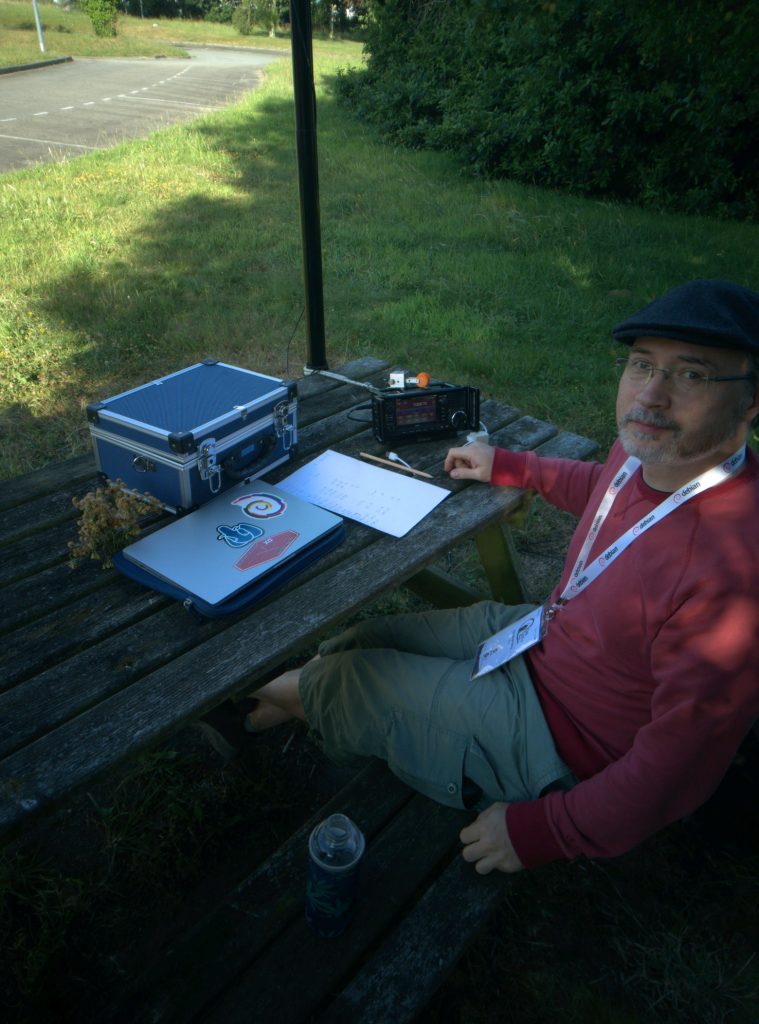 F/DF7CB in Brest (photo: Evangelos Ribeiro Tzaras)
 The northern coast of Ushant (photo: Christoph Berg)
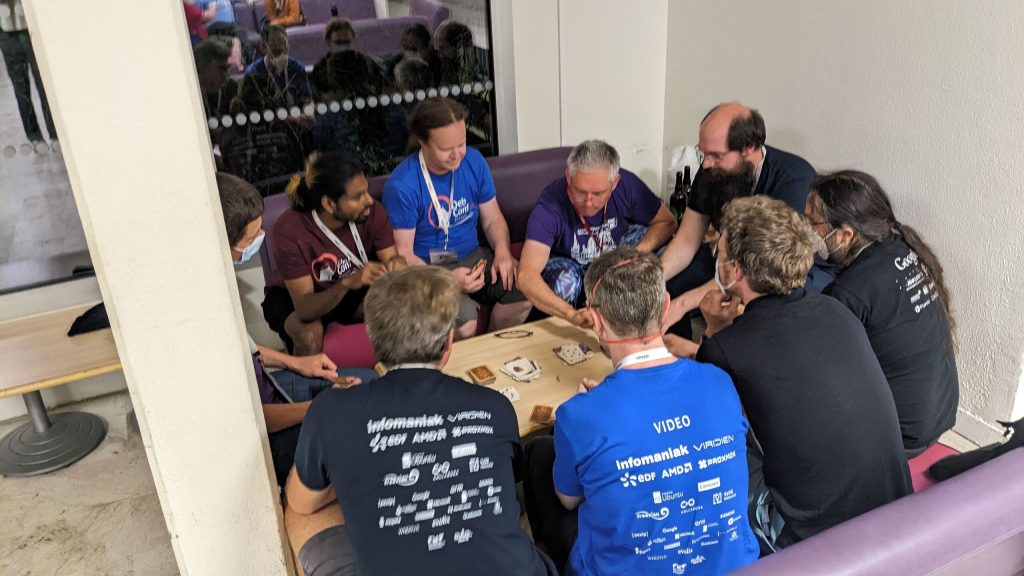 Having a nice day (photo: Christoph Berg)
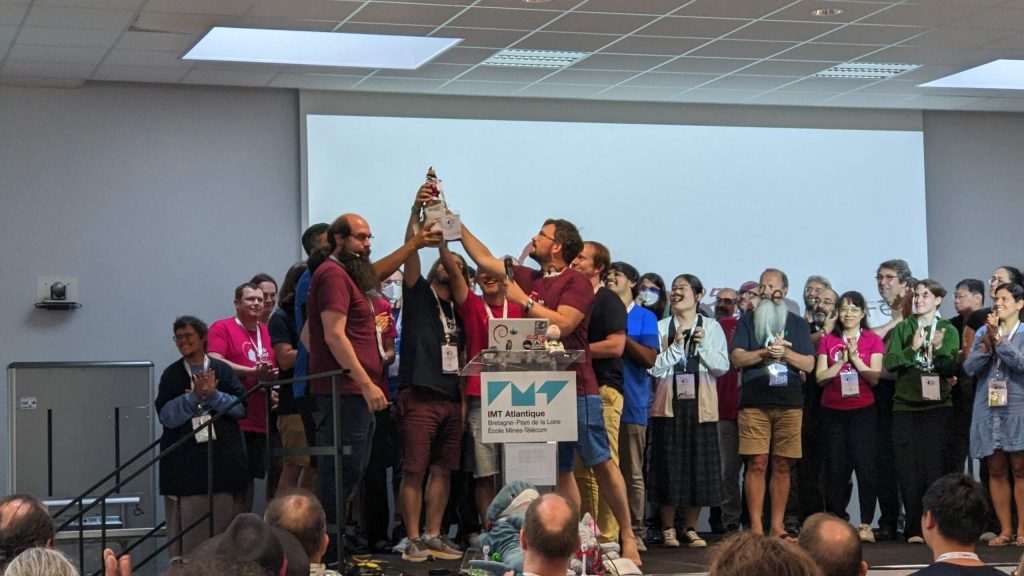 Pollito on stage (photo: Christoph Berg)


 Given that we only arrived in the evening of the first day of DebConf, I missed
the talk
 Wednesday was the day of the daytrip. I did not sign up for any of the trips
and used the time to
 If the menus would be written like a

 I might be slightly insane? Or am I going to prove something about the
nature and accessibility of sewing and MYOG
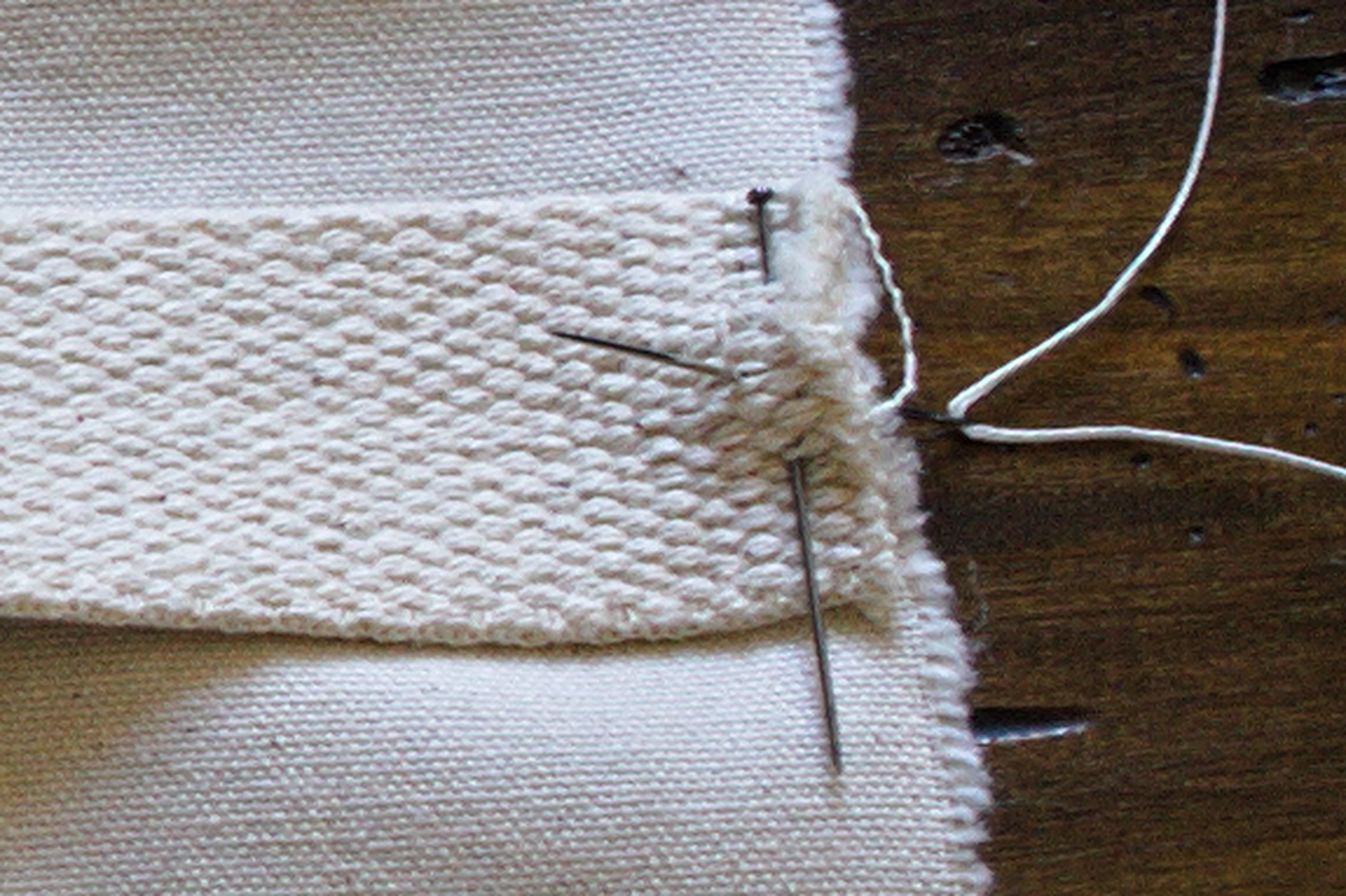 Having to backstitch everything instead of being able to use a running
backstitch of course meant that it was slower than other sewing
projects, and any time there were more than two layers of fabric I had
to use the stabbing motion rather than the sewing one, which is even
slower, but other than a few places with many layers of both fabric and
webbing it wasn t hard.
And to be fair, the seams were fewer and shorter than other sewing
projects, and with the usual interruptions and uneven time availability
it was done in less than a month, which is somewhat typical for one of
my handsewn projects.
 It may have been because of the pattern, but I think it s relevant that
it was also easier than other backpacks I ve made, with significantly
less cursing, even when doing seams that would have been quite fiddly
when sewn by machine.
I have to admit that now I m tempted to plan another backpack using the
same pattern or a slight variation, sewn by machine in a different
fabric, to see the difference in the time it takes and to check if the
changes I think would make it easier to sew by machine are actually
the right thing to do. But maybe I ll wait a bit, other projects are in
the queue.
The pattern is
 The soft back of course is an issue when the backpack is filled with
small items, but the molle webbing is there exactly because I have plans
to solve it, beside the trivial put something flat towards the back .
As an object, I m happy with the result. As a project, it was way more
than successful, exceeding all expectations, especially for something
somewhat experimental like this one was.
 The sixteenth release of the
