Dirk Eddelbuettel: littler 0.3.23 on CRAN: More Features (and Fixes)

 The twentythird release of littler as a
CRAN package
landed on CRAN just now, following in the now twenty year history (!!)
as a (initially non-CRAN) package started by Jeff in 2006, and joined
by me a few weeks later.
littler
is the first command-line interface for R as it predates
Rscript. It allows for piping as well for shebang
scripting via #!, uses command-line arguments more
consistently and still starts
faster. It also always loaded the methods package which
Rscript only began to do in later years.
littler
lives on Linux and Unix, has its difficulties on macOS due to
some-braindeadedness there (who ever thought case-insensitive
filesystems as a default were a good idea?) and simply does not exist on
Windows (yet the build system could be extended see RInside for
an existence proof, and volunteers are welcome!). See the FAQ
vignette on how to add it to your PATH. A few examples
are highlighted at the Github repo:, as well
as in the examples
vignette.
This release, the first in about eleven months, once again brings two
new helper scripts, and enhances six existing one. The release was
triggered because it finally became clear why
installGitHub.r ignored r2u when available: we forced the
type argument to source (so thanks to I aki for spotting this). One
change was once again contributed by Michael which is again
greatly appreciated.
The full change description follows.
My CRANberries service provides a comparison to the previous release. Full details for the littler release are provided as usual at the ChangeLog page, and also on the package docs website. The code is available via the GitHub repo, from tarballs and now of course also from its CRAN page and viaChanges in littler version 0.3.22 (2026-02-03)
- Changes in examples scripts
- A new script
busybees.raggregates deadlined packages by maintainer- Several small updated have been made to the (mostly internal) 'r2u.r' script
- The
deadliners.rscript has refined treatment for screen width- The
install2.rscript has new options--quietand--verboseas proposed by Zivan Karaman- The
rcc.rscript passes build-args to 'rcmdcheck' to compact vignettes and save data- The
installRub.rscript now defaults to 'noble' and is more tolerant of inputs- The
installRub.rscript deals correctly with emptyutils::osVersionthanks to Michael Chirico- New script
checkPackageUrls.rinspired by how CRAN checks (with thanks to Kurt Hornik for the hint)- The
installGithub.rscript now adjusts tobspmand takes advantage of r2u binaries for its build dependencies- Changes in package
- Environment variables (read at build time) can use double quotes
- Continuous intgegration scripts received a minor update
install.packages("littler"). Binary packages are
available directly in Debian as
well as (in a day or two) Ubuntu binaries at
CRAN thanks to the tireless Michael Rutter. Comments and suggestions
are welcome at the GitHub repo.
This post by Dirk Eddelbuettel originated on his Thinking inside the box blog. If you like this or other open-source work I do, you can sponsor me at GitHub.

 FOSDEM 2026 was great! I hope to blog a proper postmortem in due course. But
for now,
 .
 If you d like to have a simple solution for managing all the secrets you re
using in your Ansible Playbooks, keep reading on. Bitwarden s Secrets Manager
 ! I am an intern at Outreachy working with the Debian OpenQA team on images testing. We get to know what career opportunities awaits us when we work on open source projects. In open source, we are constantly learning. The community has different sets of skills and a large network of people.
 After years of thinking about and learning about how radios work, I figured it
was high-time to start to more aggressively share the things i ve been
learning. I had a ton of fun at


 Got rid of documents I had for last year's Tax return. Now I have the least document in my bookshelf out of the year.
 You might have seen Policy will reject signature within a year warnings in apt(-get) update runs like this:
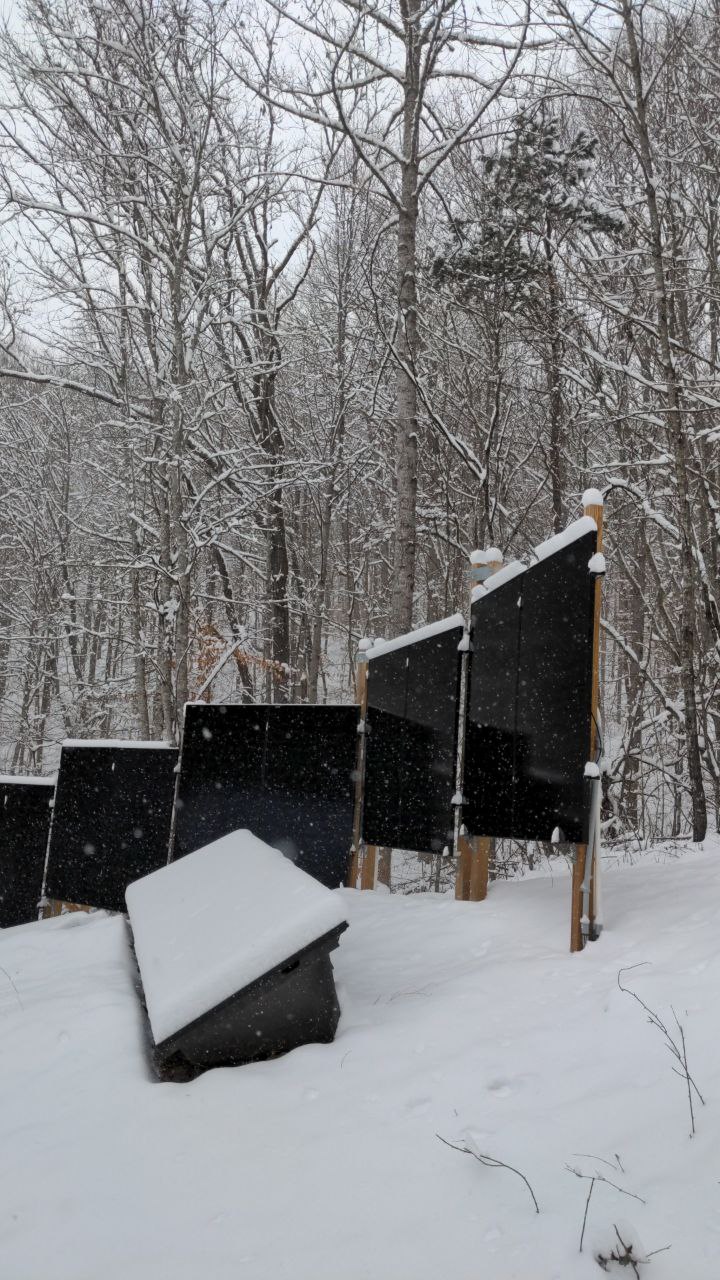
 Snow coming. I'm tuned into the local 24 hour slop weather stream. AI
generated, narrated, up to the minute radar and forecast graphics. People
popping up on the live weather map with questions "snow soon?" (They pay
for the privilege.) LLM generating reply that riffs on their name. Tuned to
keep the urgency up, something is always happening somewhere, scanners are
pulling the police reports, live webcam description models add
verisimilitude to the description of the morning commute. Weather is
happening.
In the subtext, climate change is happening. Weather is a growth industry.
The guy up in Kentucky coal country who put this thing together is building
an empire. He started as just another local news greenscreener. Dropped out
and went twitch weather stream. Hyping up tornado days and dicy snow
forecasts. Nowcasting, hyper individualized, interacting with chat.
Now he's automated it all. On big days when he's getting real views,
the bot breaks into his live streams, gives him a break.
Only a few thousand watching this morning yet. Perfect 2026 grade slop.
Details never quite right, but close enough to keep on in the background
all day. Nobody expects a perfect forecast after all, and it's fed from the
National Weather Center discussion too. We still fund those guys? Why
bother when a bot can do it?
He knows why he's big in these states, these rural areas. Understands
the target audience. Airbrushed AI aesthetics are ok with them, receive no
pushback. Flying more under the radar coastally, but weather is big there
and getting bigger. The local weather will come for us all.




 The following contributors got their Debian Developer accounts in the last two
months: