Search Results: "ghe"

20 March 2014

Steve Kemp: Time to mix things up again

I'm currently a contractor, working for/with Dyn, until April the 11th. I need to decide what I'm doing next, if anything. In the meantime here are some diversions:
Some trivial security issues
I noticed and reported two more temporary-file issues insecure temporary file usage in apt-extracttemplates (apt), and libreadline6: Insecure use of temporary files - in _rl_trace. Neither of those are particularly serious, but looking for them took a little time. I recently started re-auditing code, and decided to do three things:
  • Download the source code to every package installed upon this system.
  • Download the source code to all packages matching the pattern ^libpam-, and ^libruby-*.
I've not yet finished slogging through the code, but my expectation will be a few more issues. I'll guess 5-10, given my cynical nature.
NFS-work
I've been tasked with the job of setting up a small cluster running from a shared and writeable NFS-root. This is a fun project which I've done before, PXE-booting a machine and telling it to mount a root filesystem over NFS is pretty straight-forward. The hard part is making that system writeable, such that you can boot and run "apt-get install XX". I've done it in the past using magic filesystems, or tmpfs. Either will work here, so I'm not going to dwell on it.
Another year
I had another birthday, so that was nice. My wife took me to a water-park where we swam like fisheseses, and that tied in nicely with a recent visit to Deep Sea World, where we got to walk through a glass tunnel, beneath a pool FULL OF SHARKS, and other beasties. Beyond that I received another Global Knife, which has now been bloodied, since I managed to slice my finger open chopping mushrooms on Friday. Oops. Currently I'm in that annoying state where I'm slowly getting used to typing with a plaster around the tip of my finger, but knowing that it'll have to come off again and I'll get confused again.
Linux Distribution
I absolutely did not start working on a "linux distribution", because that would be crazy. Do I look like a crazy-person? All I did was play around with GNU Stow, and ponder the idea of using a minimal LibC and GNU Stow to organize things. It went well, but the devil is always in the details. I like the idea of a master-distribution which installs pam, ssh, etc, but then has derivitives for "This is a webserver", "This is a Ruby server", and "This is a database server". Consider it like task-selection, but with higher ambition.
There's probably more I could say; a new kitchen sink (literally) and a new tap have made our kitchen nicer, I've made it past six months of regular gym-based workouts, and I didn't die when I went to the beach in the dark the other night, so that was nice. Umm? Stuff? Have a nice day. Thanks.

28 February 2014

Russell Coker: Links February 2014

The Economist has an interesting and informative article about the lack of reproducability of scientific papers and the implications for scientific research [1]. Regina Dugan gave an interesting TED talk about some of the amazing DARPA projects [2]. Chris Anderson interviewed Elon Musk about the Tesla cars, SpaceX, and his new venture Solar City [3]. Elon has a lot of great ideas for improving humanity while also making money. Smart Planet has an interesting article about Bhutan s switch to electric vehicles [4]. Paul Piff gave an insightful and well researched TED talk about the ways that money makes people mean [5]. Maryn McKenna wrote an interesting article for Wired about what happens when the current anti-biotics stop working [6]. Unfortunately she lists increasing food prices as a consequence, really the unreasonably low price of meat is due to the misuse of anti-biotics that is causing this problem. Linda Walther Tirado wrote an interesting article about being poor titled Why I Make Terrible Decisions, or, Poverty Thoughts [7]. It gives a real insight into the situation of people who are trapped in poverty. When someone who is as obviously intelligent as Linda feels that it s impossible to escape poverty there is a real problem in the system. While Australia doesn t suck nearly as badly as the US in this regard (higher minimum wage and better health care) we still need to improve things, I know people in Australia who s experience bears some similarity to Linda s. Maxwell Neely-Cohen wrote an interesting article about peer pressure [8]. Some of the conclusions are dubious, but the ideas on the way the Internet changes peer relationships in high school are interesting. An English pediatrician wrote an article for The Daily Beast about why he won t accept anti-vac clients [9]. There are some decent people in the Liberal Party, Liberal MP Warren Entsch attacks Cory Bernardi on gay obsession [10]. AFAIK we haven t yet had a gay sex scandal involving a homophobic Australian politician

26 February 2014

Vincent Sanders: There are only two hard things in Computer Science: cache invalidation and naming things.

It is the first of these which I have recently been attempting and I think Phil Karlton might have a good point.
What are we talking about?Web browsers are pretty complex beasties but the basic concept is pretty easy to understand. They fetch a bunch of files that make up a web page and render those source files into something suitable for human consumption.

It is also intuitive that fetching all the files that make up a web page, every time you browse to a new page, might be wasteful, especially if most of the files had not changed from the previous page.

In order to address this browsers hang onto copies of these files in case your browsing needs them again, this is known as a source file cache. Caches are a widely used technique throughout many aspects of computer technology but the basic idea is that they trade one resource for another.

In this case we are trading local storage space (memory or disc) for access time. This type of trade may give large benefits due to the large differences in access times (sometimes known as latency) between local and network resources.

For example, if the source files that make up a web page are a Megabyte in size accessed with a 2013 era PC with a 10Mbit connection to the Internet:
From this example it becomes startlingly obvious why a source cache is so desirable. I have greatly simplified the browsers operation here as they usually implement many layers of additional caching in other areas to make the browsing experience subjectively smoother.

And before the observant reader suggests that we could just make the network faster it ought to be mentioned that due to fundamental physical constraints, like the speed of light, it would be unlikely that the average practical network reply will ever drop much below 150,000 s [1] or some 40 times slower than disc. Still a worthwhile gain.
Knowing the cost of everything and the value of nothingHaving shown the benefits it might be nice to think there are no downsides to caching, this is not the case, as I mentioned we are trading storage for time and as in any trade one must expect there to be overheads.

In the case of a browser we face several obstacles. Firstly not every file that goes to make up a web page can be cached. The HTTP specification contains an entire section on caching which contains numerous rules and operations to ensure that only objects that should be cached are and determines for how long they can be kept before going "stale".

A great deal of this complexity comes from just how desirable caching is to network providers. Many ISPs will have web proxy servers to cache requests for all users to reduce their bandwidth usage, or increasingly, to implement content filtering according to the local government censorship rules. The browsers cache must know how to interact with these proxies without getting erroneous results.

Then comes the problem alluded to in the section title. A browsers cache cannot grow indefinitely. Eventually a system would run out of memory and disc if a browser kept every file. To deal with this the cache is limited sometimes by the number of files it holds, but more commonly by size both in memory and on disc.

The caching structure used by a web browser is hierarchical in that it will first evict (move) files from memory to a backing store (disc) and when the disc cache size limit is exceeded files are evicted to the next tier. Which in this case, will involve deleting the local copy (invalidating) and requiring performing a fetch from the network if the file is needed again.

Tardis at the Beeb by Sarah G from flikrWhen the cache size is exceeded the decision is made about what to remove from the cache using a cache strategy or algorithm. The aim of this decision is to discard the data that will not be required again for the longest time.

If we had a blue box with a madman inside, who we could persuade to bring our browsing history back from the future, implementing b l dy's algorithm might be possible. Failing a perfect solution we are reduced to making a judgement based on the information available to us.

This involves computing a cost for replacing each entry in the cache and evicting those with the lowest values. The selected algorithm has a large impact on the effectiveness of the cache and often needs fine tuning for the task at hand.
Never has so little been measured so muchHaving established that caching is useful and that we need to make decisions on what to keep it follows that those decisions must be based on information. This information consists of two main groups:
Maintaining all of this information is a significant part of the overheads involved with caching and a compromise must be struck between having the necessary information to make good caching choices and the cost maintaining that data.
Cache metricsMost cache implementations maintain at least some basic metrics, at the very least how much storage is being used so a decision on if evicting entries from the cache to reclaim space is necessary.

It is also common to keep a record of how well the cache is performing. The cache efficiency (the hit rate) is usually measured as the ratio of successful accesses provided from the cache (a cache hit) to the total number of requests to the cache.

A perfect cache would have all hits and no misses (a hit rate of 1) while using as little storage as possible (but as already noted that requires a special madman). The hit rate can be used to automatically change the behaviour of the eviction algorithm, perhaps using more storage if the hit rate drops too low or changing the eviction frequency.
MetadataEach object must carry with it the data necessary to regain its state when retrieved from the cache. This information is essential for the correct operation of the cache but in of itself provides no direct value.

In the case of browser source data this includes all the headers sent in the original network fetch. These headers are themselves just metadata sent along with the object by the web server which must be preserved.

Two particularly useful value for making a good eviction decision are how long it has been since the object was last used and how many times it has been used. This is because an object that was cached a long time ago and then never used again is much less valuable than one that has recently been repeatedly used.
An ImplementationIt is all very well talking about the general solution but a full understanding can only be gained by examining a real implementation. The NetSurf cache was chosen as it is a suitably small amount of code but still demonstrates all the major design features.
InterfaceThe cache deals with all source data and provides the browser with a single unified object request interface regardless of if the source data can be cached or not. This is useful to hide the implementation details allowing for changes without affecting the rest of the browsers code.

The implementation effectively consists of two lists of objects, those that can be cached and those that cannot. Each object on these lists is reference counted against one or more users and while there is at least one user the source data is maintained in memory.

Objects determined to be non cached are always directly fetched from their source and are immediately released once they have no users remaining.

For cacheable objects an attempt is made to fulfil the request in descending order:
  1. from objects already in memory.
  2. from the backing store.
  3. from a network fetch.
Irrespective of the source of the data the remaining operations on the object (determining freshness etc.) are exactly as if the request had been fulfilled from the network. This approach means the use of the cache is transparent to the object users.
WriteoutObjects are placed in the backing store asynchronously to any other operations. When an object has been fetched from the network a background task is scheduled for when the browser is otherwise idle.

This writeout task constructs a list of all cacheable objects not yet in the backing store, associates a cost value with each object and then proceeds to write those objects to the backing store in highest to lowest value order.
CleaningA periodically scheduled task deals with ensuring the cache is cleaned. This consists of destroying stale objects and arranging fresh objects are not using more memory than the configuration permits.

Memory usage is reduced within the cleaning task by discarding the source data for objects already held in the backing store (where the data can be retrieved relatively cheaply)

Additional memory may be recovered by simply discarding unused objects held only in memory. These objects are usually those which have only recently become unused otherwise the writeout task would have committed them to the backing store.

The most recently used objects are statistically likely to be used again soon, because of this there is a high risk of a cache miss associated with discarding these objects. In order to mitigate this undesirable effect the cleaning heuristic favours using more memory than configured for short periods rather than discarding from memory.
Backing storeThe backing store is a simple key-value database. Each source data object and its metadata (its headers etc.) is associated with a unique key (the URL used to fetch it). The backing store is simply required to store and retrieve the object data associated with the given URL.

The backing store implementation in NetSurf is pluggable, this flexibility is required for dealing with the greatly varying capabilities and limits of the various systems the browser is required to execute on.

A novel aspect of this backing store interface is that if an implementation returns the wrong object it is not considered an error and is simply treated as a cache miss. This is possible because the metadata contains the URL of the stored object enabling object verification.

This behaviour is permitted because techniques which significantly improve key-value store performance (principally key hashing) become available if they are not required to always give the correct answer.

The backing store is also required to manage its size within the configured limits and deal with any filesystem behaviour details.

The reference backing store is trivial in that it performs a hash operation on the input URL, encodes the result with base64url encoding and uses that as the object filename. The length of the hash can be configured allowing use of the reference implementation in any situation where using the filesystem as a database is acceptable.

The reference backing store default hash is SHA-1 yielding almost unique [2] 160 bit key values stored in much the same way as the git DVCS. Note we are not using this hash for its cryptographic properties and at worst a collision will result in the cache being a tiny amount less efficient.
ConclusionHopefully this has shown what a browser source file cache is, why it is useful and a basic understanding of how they are implemented.

I will admit I have glossed over some of the more challenging aspects especially in relation to actually implementing the cache strategy but I hope that the reader will forgive those omissions of detail in a quest for a little more clarity of the general principles.

I would like to thank John-Mark Bell for implementing the NetSurf cache and to Melodie Parry for proof reading and providing feedback.

[1] Speed of light is 3x10^8m/s earth circumference is 4x10^7m, divide circumference by speed gives 133,000 s which gives longest round trip time from anywhere on surface of earth to point furthest from. So assuming a whole megabyte can be transferred in one round trip and allowing for some overhead the lower bound estimate of 150,000 s looks reasonable.

[2] Mathematically speaking this hash would allow us to say that with the current estimated 1x10^11 URLs on the internet the likelihood of a collision is still vanishingly small (at least 1x10^-15)

25 February 2014

Steve Kemp: What do you pay for, and what would you pay for?

There are times when I consider launching my own company again, most often when it is late at night and the inpetitude of so many other companies gets me too worked up. Then I sit back and think about details and write it off. I've worked for myself in the past a couple of times, and each time it was both more fun and more difficult than expected. Getting a couple of clients is usually easy, getting a ten more is common, but getting "many" is hard and getting "lots" is something I've never done - lots of users for free sites though, along with the associated support burdon! So the though dies away once I sit down and work out the net profit I'd need to live. My expenses are low, so let us pretend I can easily live on 1000 a month. So the "company" has to make more than that, to cover costs, but perhaps not much. Pretend you were offering DNS hosting you'd probably be able to implement that easily on, say 10, virtual machines, net of 150 a month. Imagine clients pay 5 for an unlimited number of domains that means you need to have 1000+150/5 = 230 clients. Not impossible, but also not easy. Pretend instead you're offering backup space, and the numbers get bigger because disk is expensive. Again getting some users would be easy, but getting lots would be hard because your competition is dropbox, skydrive, etc, etc. Once you start thinking of "ideas" they come easily, but the hard part is being realistic about what people would pay for. As always the idea is the easy part, the execution is the hardest part. Realistically if I were to be desperate to work for myself at short notic I'd do the obvious thing - I'd buy a pair of ladders, a bucket, and clean windows. Low overheads, reasonable demand, and I'd be both "fit" and "outdoors". When it comes to paying for online services off the top of my head I personally pay for maybe two things, both of them niche (although profitable for their providers I'm sure), and I know many people who live on the internet but pay for nothing.
For example I'm a VIP member of an online modeling community, which in theory allows me a higher chance of persuading interesting people to pose for me. In practice the turnover on those sites is immense. Lots of cute boys and girls hear constantly "You're so pretty, you should be a model", which is true in perhaps 1% of cases, and the net result is you have a few hard working people who do good things day in day out, and many flighty teenagers who'll pose for two-three people, and then never do it again because they realise it is neither glamourous nor easy money.
Two things I've semi-serously considered recently where hosted "status pages", and hosted "domain parking", but both have many competitors and both I can see a) some people would pay for but b) not very many. I suspect there is no universal "I'd pay for this" online service hwich is both competition free and genuinely trivial to setup, but I'd be curious to see what people are missing, and even more curious to see what people do pay for.

11 February 2014

Jonathan McDowell: Choosing a new laptop

Recently I've been thinking about getting a new laptop. I have this rule that a laptop should last me at least 3 years (ideally more) and my old laptop was bought in September 2010. So for the past few months I've been trying to work out if there's something suitable on the market that is a good replacement (last time I didn't manage to find something that ticked all the boxes, but did pretty well for the price I paid). To start with I decided to track my laptops over time - largely because one of my concerns was about the size of a replacement, because I have a significant leaning towards subnotebooks. In the end the reason I decided to upgrade was for some extra CPU grunt; my old machine had a tendency to get pretty hot under any sort of load.
DateModelCPUScreenRAMStorageW (mm)H (mm)D (mm)WeightCost
1991Amstrad PPC 640DNEC V30 8MHz9" 640x200 non-backlit green LCD640k2 x 3.5" FDD45023010010kg???
August 1997Compaq Aero 4/33c486sx337.8" 640x480 CSTN LCD4MB80MB260190431.6kg???
July 2002Compaq Evo N200P-III 700MHz10.4" 1024x768 TFT192MB20GB251198201.1kg 939.99
August 2005Toshiba Portege R200Pentium M 753 1.2GHz12.1" 1024x768 TFT1280MB60GB286229201.29kg 1313.58
September 2008Asus EEE 901Atom N270 1.6GHz8.9" 1024x600 TFT2GB4GB + 16GB SSD248175231.1kg 299.99
September 2010Acer Aspire 1830TCore-i5 470UM 1.33GHz11.6" 1366x768 TFT8GB500GB284203281.4kg$699.99 (~ 480)
The EEE didn't actually replace the Toshiba, but I mention it for completeness. It was actually the only machine I moved to the US with, but after about a month of it as my primary machine I realized it wasn't an option for day to day use - though it was fantastic as a machine to throw in an overnight bag, especially when coupled with a 3G dongle. I wasn't keen on significantly increasing the size of my laptop. There are a number of decent 13" Ultrabook options out there, and I looked at a few of them, but nothing grabbed me as being worth the increase in size. Also I wanted something better than the Acer - one of the major problems was finding something smaller than 13" that had 8G RAM, let alone more. There's a significant trend towards everything soldered in for the smaller/slimmer notebooks, which makes some sense but means that the base spec had better be right. Much to my surprise the Microsoft Surface Pro 2 looked like an option. It comes with an i5-4300U processor (at least since around Christmas 2013), and the 256/512G SSD models have 8G RAM. Screen resolution is an attractive true HD (1920x1080) and the 10" display means it's smaller than the Aspire. Unfortunately the keyboard lets it down. It's fine given a flat surface, but not great if you want to support the whole thing on your lap. Which is something I tend to do with my laptop, whether that's on the sofa, or in bed, or on a bus/train. Another option was the Sony Vaio Pro 11. This is a pretty sweet laptop (I managed to get to play with one at a Sony store in the US). Super slim and light. 8GB RAM. True HD screen. However I have bad memories of the build quality of the older Vaios and the fact that there was /no/ user replaceable parts put me off - it's a safe bet that a laptop battery is going to need replaced in a 3 year lifespan. What I managed to find, and purchase, was a Dell Latitude E7240. I admit that the Dell brand made me wary - while I've not had any issue with their desktops I didn't associated their laptops as being particularly high quality. Mind you, I could say the same for Acer and I've been very pleased with the Aspire (if they'd had a more up to date model I'd have bought it). I bought the E7240 with the Core-i5 4300U (so the same as the Surface Pro 2) and True HD touch screen. It has a replaceable battery, expandable RAM (up to 16G) and the storage is an mSATA SSD. It also came with a built in 3G card. At 12.5" it's a little bigger than my old machine, but I decided that was a reasonable idea given the higher resolution. I'm typing this article on it now, having finally completed the setup and migration of the data from the old laptop to it this evening. More details once I've been using it for a little bit I think.

8 February 2014

Mario Lang: Uploading Into and Downloading From The Universe

Have you ever wondered how new ideas, concepts, artworks etc. get into the Superconscious Collective of the universe, so that they then can be downloaded by exactly the right person who is meant to do something with them? yep, I, too, think that many of these ideas, concepts etc. come from the Great Unknown, where the seeds of limitless ideas and possibilities reside. But a lot of them also come from our own minds, from people who upload these things into the Superconscious Collective of our universe. Such ideas and concepts can be uploaded in several ways. Some of them are simply uploaded by a person who sources them, connects to the Superconscious Collective of the universe and streams them up. Others are maybe even uploaded by somebody virtually typing an article with their fingertips into the spread out hands or soles of the feet of their loved one, playfully teasing him/her and thereby streaming information into him/her, which s/he then again uploads, mainly subconsciously, into the Superconscious Collective of the universe. Once uploaded, all these limitless ideas and concepts become available to everyone and every living being, on Earth and throughout the whole universe. The thing is, that most people on Earth don't know how to consciously access information from there. Some do unconsciously and it again shows up in them as entirely new concepts and ideas, which they then spice with the flavor of their own essence and then stream them out into the world, be it as music, as software, as hardware, as artwork, as science and in limitless other ways. But it is also accessed by living beings throughout the whole universe, who also add their own ideas and concepts to the Great Superconscious Collective . Wanna know how to access this limitless information, ideas, concepts and/or possibilities from the Superconscious Collective? Just breathe, relax, expand ... expand and get into your biggest, greatest, awesomest being of you. Become all that you are, connected to everything. Now, consciously plug into the Great Superconscious Collective, the Great Cosmic Internet. Allow the ideas, information, possibilities stream into you and through you and look which ones you resonate with. Call them, feel them, let them land in you, and ask them what they want you to do with them, as you are the one who can express them in the highest possible way, otherwise they wouldn't have come to you in the first place. Then do one small thing to make them real in the world and watch them unfold. Or do whatever feels right for you to do, and create the most amazing new thing in the world.

3 February 2014

Wouter Verhelst: Waking up

Today is the monday after FOSDEM 2014, and I'm slowly waking up. Being in charge of the video team, and after having spent a whole week preparing followed by a whole weekend stressing about, today is a day of slowly waking up from hibernation and returning gear to various rental companies. At FOSDEM 2013, we had recorded five rooms. Even though we did lose a few talks, I felt pretty good about the whole thing, and I think we did pretty well then. It had been my plan to increase the number of rooms to be recorded from 5 to a reasonably higher number say, 10 or so but someone convinced me to do all of them. I'll readily admit I was afraid. Scratch that, I was terrified. Petrified, that we wouldn't be able to pull it off. For previous editions, we'd kept the number conservative, since video work is a high-risk business: if something goes wrong with volunteers work (say, the heralding volunteer doesn't show up), you find a replacement, or you have a staff member introduce a speaker, and the show will go on. Not so with video work: if something minor goes wrong, you will most likely lose content. If something minor goes wrong in one devroom, I'll deal with it. If something minor goes wrong in 20% of devrooms, that's 4 to 5 devrooms, and I can't deal with it. Moreover, finding enough volunteers to manage the video for five rooms was a challenge last year; I couldn't even begin to imagine how to do so for 22 of them. We did work out a way that didn't seem too far-fetched, and that might work: why not look for volunteers from the devrooms themselves? But then, they couldn't be expected to have the required experience, so we'd have to do a lot of handholding. The week before FOSDEM, four of us sat down in an office in Mechelen, and started preparing. We had a lot to do; and when you do, more jobs keep being added to the pile; TODO lists tend to grow longer, not shorter. Installing servers, testing cameras, setting twinpact dipswitches, configuring laptops. Changing a few tests in the config management system, and having to go over the laptops again. Buying extra gear. Buying yet more extra gear, several times. Buying cardboard boxes when it appeared that the plastic foldable ones we'd ordered wouldn't make it in time, and unloading the pallet of them when it did, after all, so we could load them into the van with all of the other gear. Laminating instruction sheets. Receiving shipments of rented gear. Calling another supplier last minute when one of our other suppliers had contacted us to let us know one of their cameras that they'd promised us had broken down, and couldn't be repaired in time. Calling that last-minute supplier again when we found out that some of the cameras we'd rented could do HDV only (and not DV), and we needed to find more than the ones we'd already asked for. Discovering that his cameras were of the same problematic model and so also couldn't be used. The feeling of relief when he called me a few hours later and told me he'd managed to scrounge up enough cameras to help us out after all. And then it was time to go to the ULB and start setting up everything. On friday, we had a little bit of help, but did have to do most of it ourselves. After setting up everything in every room and testing as much as possible within the time constraints that we had, we picked up the most expensive bits of the gear, brought it down to a safe place, and went home. On saturday and sunday, for me it was mostly a matter of handing out gear to various devrooms, running around to fix various issues, and then in the evening receiving boxes back, using a checklist to ensure everything expected was in the box (and that things not needed would remain in the room, or be sent back). It was exhausting, to the extent that on saturday afternoon, I had to take a bit of time off so I could go and rest. I think it's safe to say that something like this hasn't been done before. FOSDEM is a huge conference; most conferences with multiple rooms don't have more somewhere between 5 and 10 of them. The fact that we have so many more, and the fact that we record all of them, puts FOSDEM video work in a class of its own, to the extent that the professional cameramen I talked to in order to get the right cameras would incredulously ask "what do you need that for?" when I gave them the numbers we needed. As such, I didn't expect, nor was aiming for, perfection. Unfortunately, with video work it is close to impossible to attain perfection; I have told multiple people during the event that I would be happy if we reached 85% of talks recorded at acceptable quality; and though it is much too soon to say for certain, my gut feeling tells m that we've probably achieved that. One thing we hadn't planned for was streaming. During the past three years, FOSDEM enlisted the help and sponsorship of flumotion to get streaming going. Unfortunately, that did not work out this year; and since we already had far too much on our plates with everything else, we decided to forego streaming and focus on recording, only. A few days before the event, however, Steinar Gunderson took it upon himself to fix that. While we couldn't support him a great deal, we could give him access to the secondary laptops (which weren't otherwise doing much anyway) on which he could then do his thing. This was mostly transparent to us; we did communicate to some extent (e.g., when a machine that had been down had fixed and was working again), but he mostly did his thing while we did ours. Full details, for those who want it, in the linked blog post. Today, then, I spent most of my time handling hardware: waiting for other members of FOSDEM to drive the van up to my office; waiting for the laptop rental company to retrieve most of the laptops; waiting for two of the camera rental companies to retrieve their cameras and tripods; driving over to the final camera rental company to return their cameras and tripods; and finally, driving up to the ULB to retrieve the last laptops who had been copying files all night. As I write this, some video files have already been uploaded to the FOSDEM video archive. However, these are extremely low-quality renditions of video snippets that need to be reviewed; they are not ready yet for public consumption. When those files exist, expect an announcement through the main FOSDEM website.

Andrew Pollock: [geek] Yep, I'm still a geek

I did some soldering tonight, and it felt good. I haven't really done much soldering since I built my cat water bowl monitor, and that's going back to the last decade. My apartment building has an intercom-triggered release to the common front door, and the latch has been sticking a bit lately. It stuck today when Megan's Dad came to pick her up, and it stuck when Sarah came to pick up Zoe. It's annoying to have to trek all the way downstairs to let them in and then walk back up again. I decided I'd try and look into what the problem was today after everyone left. A visual inspection of the latch showed nothing obvious, and no one else was home to push the door unlock button for me while I was at the front door, so I decided to have a look at how it worked from within my apartment. I pulled the intercom phone off the wall and identified the two wires that got shorted when you pressed the unlock button, and shorted them by hand with a wire, and sure enough, I could hear the door solenoid releasing. I was thinking to myself, "if only there was a way to trigger this with my phone". I have a RaspberryPi and an Arduino board at my disposal, but I didn't really want to risk frying either of them. Then I remembered that I had a BoArduino that I'd bought at the Maker Faire years ago, but never assembled. I figured it'd make a good sacrificial lamb. So I rummaged around and found it, and busted out the 240v soldering iron I bought recently, but haven't used yet, and set about slapping it together. Man, it was fun. I had it half built before yoga, and finished it off when I got home. It even worked first go. I felt such a sense of accomplishment. The problem is, my general electronics fu is so weak, I'm not sure where to go from here, and my multimeter needs a new battery. I think the voltage on the wire for the intercom is higher than the BoArduino likes. I'd naively thought I could just connect the two wires of interest, one to ground and the other to one of the digital I/O pins, and have the BoArduino act as a switch, but that's not working. If I wire it one way, it unlocks the door instantly, even with the board powered off, and if I wire it the other way, it seems to half power up the board just using the power of the intercom system. So I'm obviously doing something wrong. My plan is to just have the BoArduino simulate pressing the button for 5 seconds at a time, every 10 seconds or so. Then I can be downstairs wiggling the latch to see what's up with it. Or I could just place a maintenance request with the Body Corporate. At least I had fun assembling the BoArduino, and now I have a spare one. It was nice to be able to go from problem to idea to execution in one night, even if the execution failed.

31 January 2014

Daniel Pocock: If you thought systemd proponents were bad....

Just imagine for a moment if something like the iPhone App Store approval process was applied to every application for a domain name. Delays and unexplained rejections killing many great ideas before they even get off the ground. In the worse cases, like that of Greg Hughes, the great firewall of the app store has been used to quash ideas that it appears Apple may have been planning to compete with or copy. If domain applicants had to go through such a process or if other core technologies fell into a rut like that then it would throw Charles Darwin's long established theory of evolution out the window and society would end up eating each other. Once companies had established their position and were happily making money they would do everything possible to stomp out any innovation that may undermine them. This is exactly the kind of non-evolution that has plagued the telecoms sector for many years now. You don't have to look past the price of a simple SMS to see the truth of this situation. Your 160 bytes can cost anywhere between $US0.10 - $US0.50 throughout the western world, even on a network that is otherwise charging maybe $10 per 1MiB (the equivalent of 6,000 text messages) when roaming. One of the compelling features of free software is that it empowers innovation and efficiency. Telecoms executives may argue that by charging you these extortionate fees, they are keeping spam out of your phone. Think again: technologies like XMPP and SIP are doing that even more effectively and without any price to pay. Software for managing buddy lists and algorithms for spam detection put those telecoms executives out of a job. If SIP, XMPP or both become dominant, evolution may succeed yet. Despite having these great technologies available for messaging and multimedia communications and despite having a range of free software success stories in products such as Firefox or whole distributions like Fedora, Debian and its derivatives like Ubuntu, non-free communications solutions like Skype and Viber continue to run rampant in the voice and video domain. As it turns out, this is a very dangerous area for the free software community to neglect. How many people know somebody who tried running Linux but went back to a proprietary solution so they could use a non-free softphone? In these cases, it is not the phone software itself that appeals to the user: it is the people that software lets them communicate with, their friends, family, professional community and beyond. For people who don't truly perceive the benefits of free software or those who don't have the confidence or experience to defend those benefits, the power of Metcalfe's law hits them like a tsunami and violently sweeps away all the rest of the free software they had started to use. While Skype is currently available for some distributions of Linux, it is not free software: amongst other things, there is no published source code and no independent review of the code has been possible. Leveraging the power of Metcalfe's law, the publisher of that software gains significant power over those who choose to install it. Any day now, they could even use it to offer users a one-click "free trial" upgrade to some "Windows Lite" or install other components that obstruct effective upgrades to newer versions of the free operating system. To make an analogy, the potential for dirty tricks in this area is far more scary than the things systemd proponents have been accused of. For those with an interest in solving these problems or at least giving free real-time communications software a try, On the init system issue itself Note: the reference to systemd is not itself an opinion for or against any particular init system in Debian nor is it a suggestion that any one side is badder than any other.

30 January 2014

Andrew Pollock: [life] Day 3, Playgroup

Today was our first expedition to the local Playgroup at the Bulimba Senior Citizen's Centre, an easy 5 minute bike ride from our place. I told Zoe we were going to Playgroup when Sarah dropped her around this morning, and she got very excited and jumped up and down. When Sarah asked her if she knew what Playgroup was, she said "no!" while continuing to jump up and down excitedly. We all laughed. I must have put this on my calendar when I was in Sydney last week, because I had it down for 8:30am, and we rocked up and there wasn't anyone there. A lady arrived to set up for a music class, and she said that the Playgroup didn't usually start until much later, so I figured I'd had a timezone fail and we went for a little bike ride around Bulimba while we waited. The lady who was running the Playgroup arrived at about 9:15am, and so we helped with the set up. Basically lots of toys, a couple of slides and some basic craft stuff. Heaps of the little IKEA round plastic stools. Parents (almost exclusively mothers) started trickling in from 9:30am. I've got a total name overload. We need name tags. Most of the girls seemed to be about 2 and a half, and a lot of the mothers had very young second children. Apparently a mother's group had joined en masse because they all had second children who were crawling, and so meeting in a park wasn't practical any more. Structurally, the first hour or so was just a free for all, and the last half an hour was some songs, a story and some playing under and on a parachute. All in all it was a good morning's activity, and at $20 for the term, nice and cheap. Apparently you're supposed to join Playgroup Queensland as well, for $40, but that takes care of liability insurance and whatnot. If only their website used SSL. Zoe mostly just wanted to play with me. We did a lot of role playing with some dolls, and she checked out the various toys. She loved that there was a stage, and took it upon herself to give an impromptu dance performance for a bit. We also did a little craft activity. She seemed more interested in helping flap the parachute than going under it, but enjoyed having a ride on it when the time came. I've just finished reading How Not to F*** Them Up by Oliver James. It was quite an interesting read, although not particularly applicable for my situation, as it more dealt with the first three years. It was interesting observing a whole bunch of different mothering techniques in action, both in dealing with their toddler children, and how they responded to their second infants. After Playgroup, we biked over to the local toy shop around the corner from home, and grabbed some birthday presents for the birthday party on Saturday and came home for lunch. Chicken quesadillas and some mango (I hadn't realised how much I've missed Queensland mangoes until we moved back, and I'm glad Zoe loves them as well). I got her down for a nap earlier today, and after she woke up, I asked Zoe if she wanted to write on the birthday cards we'd bought for the twins' birthday presents. She said she didn't know how to write her name (which isn't true) and wanted to paint them instead, so we compromised and used some sponge letters to stamp "Z O E" on the cards in paint. Zoe said that Eva's favourite colour was purple and Layla's was pink (or it may have been the other way around), so we stamped one with purple paint and mixed red and white to make something that looked more orange than pink and stamped the other one. Then Zoe wanted to glue the two paper plates together that we'd been using to hold the paint, so we did that, and then she wanted to "hand paint" a cardboard tube, which seemed to involve me directly squirting various colours into her hands and then her "painting" the tube with what was in her hands. The tube quickly ended up a brown/grey colour. All in all, it was a fabulous mess, and fortunately no walls or doors copped any paint on the way to the bathroom to clean up. After that, we cleaned up Zoe's room a bit, which resulted in her going off and playing with her Magna Doodle with Smudge for a bit, and then we played Doctor with her doctor set and then we did some baking. It was a good afternoon, and she only asked to watch TV once, when she first woke up from her nap, and we managed to successfully divert to other much more fun stuff.

25 January 2014

Ben Hutchings: Looking back on my time at Solarflare, part 1

Friday was my last day at Solarflare Communications, which I joined in 2006 (originally as Level 5 Networks). When I started, Level 5 Networks (L5N) had a 2-port gigabit Ethernet controller called EF1 and a user-level network stack called EtherFabric which ran on Linux. It had nearly completed the Falcon project to develop a 10-gigabit controller (also supporing a 2-port gigabit mode) and was porting EtherFabric to Windows. Later that year, however, L5N merged with Solarflare Communications (SF), which was developing a 10GBASE-T PHY (for 10-gigabit Ethernet over twisted-pair cables). The investors and management saw the opportunity to create an integrated 10GBASE-T LAN-on-motherboard chip that would be attractive to OEMs and so had the potential for mass sales. EtherFabric was put on the back-burner, but regular net drivers for Linux, Windows and other operating systems became more important. In a change from my previous jobs, my initial role at L5N was to maintain and extend the in-house test automation software, Runbench, written in Python. I worked with Dickon Reed who had written most of Runbench up to then. One of my first major tasks was to extend it to cover DUTs running Windows. Aside from changing Runbench itself, I wrote a simple SSH server to be installed on DUTs, using the Twisted.Python framework. (Cygwin's port of OpenSSH wasn't suitable for running a lot of native Windows commands.) I rewrote the test-installation script for the Windows driver itself, converting it to Python (with a C extension to get around the WOW64 nonsense). As Windows does not allow loading a driver just once (like insmod in Linux), except by using the kernel debugger, I added a time check in the driver so the test-installation script can make it fail early when reloaded after a reboot, so that a crasher bug in the probe path would usually be recoverable. In 2007 I persuaded management in Cambridge to loan several older servers to DebConf. I took them there and back by car, and they were used to convert video for live streams and recordings. (This was repeated in 2009.) I was also asked to work on other small development tasks, including some cleanup on the Linux net driver (sfc). In mid-2007, when SF decided it was time to get sfc upstream (in-tree), I joined Steve Hodgson and Robert Stonehouse in working on that. Out-of-tree (separately distributed) drivers for Linux normally need a large number of preprocessor conditions for compatibility with Linux's kernel module API across a range of supported versions. They may also implement some features with a driver-specific interface that should be replaced with a standard interface (possibly including the work to define that standard). They may not comply with the kernel coding style or unwritten conventions for kernel code. All of these problems were present and had to be dealt with. As part of this work, I extended unifdef so that it could be used to remove all of the backward-compatibility and not-for-upstream code without introducing extra blank lines. I could then export the out-of-tree driver from CVS(!) into a kernel source tree automatically and turn it into a patch or patch series that would stand a chance of being acceptable upstream. Our first few attempts got little response, but eventually we newbies got the message that the driver was simply too big for a single submission and that putting patches on a web site because they're too big for the list was not a solution. In the next week, I removed about half of the code (on a git branch), resulting in a relatively lean driver that could be sent to the netdev list. And finally the 9th (I think) submission was accepted. Following this, I continued to work on sfc but was also brought into the Siena project. Siena (SFL9021) was the LAN-on-motherboard chip that had been planned following the merger. It combined a dual-port controller based on Falcon with a 10GBASE-T PHY and a management controller (MC) to support Lights-Out Management (LOM). (Since 10GBASE-T has not taken off, it is now mostly sold as the SFC9020 variant in which the PHY is disabled.) I worked on some of the test framework and test cases for validating the controller design in software simulation and FPGA. In the course of this I learned to read and (somewhat) understand the chip design written in Verilog, but only made a single trivial fix to it. In August 2009, the first Siena ASICs came back from the fab. There were a few ASIC-specific bugs but all of them were quickly worked around in firmware, so it would soon be ready for production. But there was much work still to be done on the driver and firmware. The firmware had until then been running in a smaller block of RAM with no peripherals to manage, while sfc had earlier been modified just enough to configure a sim or FPGA for running a userland test application. sfc now had many special cases scattered around it, and would tell the MC firmware to peek and poke registers that were no longer directly accessible from the host. The software and firmware developers had agreed that, in order to support LOM, the MC would be responsible for managing the ports and all peripherals and drivers would send higher-level requests to the MC. As a bonus, this removed the need for the driver to know the details of each new board, so that it would not be necessary to backport sfc into distribution kernels very often. Over the next few months, the firmware team did an excellent job of defining and implementing those operations, including writing the driver-side functions to invoke them. Meanwhile, Steve and I concentrated on refactoring sfc so most of the Falcon/Siena differences could be abstracted through a few structures with function pointers. The refactoring and new code for Siena were completed and submitted upstream in several large patch series in October and November. In fact, there were so many patches that Solarflare appeared in LWN's table of who wrote Linux 2.6.33 (as did I, thanks also to another patch series adding firmware metadata to many drivers). Sadly we had missed Linux 2.6.32 which was a longterm stable branch and used in many distributions, but I was able to get this version backported into all the major distributions over the next year. (To be continued.)

22 January 2014

Clint Adams: December 2013 debian-keyring analysis

Total keys: 996
Key versions:
    996 4
Primary key pubkey algorithms:
    623 "DSA"
    373 "RSA"
Primary key pubkey sizes:
    624 1024
     27 2048
      2 3072
    340 4096
      2 8192
      1 10240
Total number of UIDs + UAts: 4394
Hash algorithm used for most recent self-sig:
      1 "RIPEMD160"
   3188 "SHA1"
   1041 "SHA256"
      1 "SHA384"
    163 "SHA512"
Judgment on preferred hash algorithms:
   1776 null
   2618 "weak hash with higher preference"
Judgment on expiration times:
     53 "expiration passed"
    111 "expiration too far in future"
   3887 "no expiration set"
    343 null
This was generated with debian-keyring 2013.12.13, hopenpgp-tools 0.4-1, jshon 20131010-3, and the following inefficient script:
#!/bin/zsh
infile=/usr/share/keyrings/debian-keyring.gpg
tempfile=$(mktemp)
trap 'rm $ tempfile ' EXIT
hokey lint --output-format JSON <$ infile  >$ tempfile 
print -n "Total keys: "
jshon -a -e keyFingerprint <$ tempfile    wc -l
print "Key versions: "
jshon -a -e keyVer -e val <$ tempfile    sort   uniq -c
print "Primary key pubkey algorithms: "
jshon -a -e keyAlgorithmAndSize -e pubkeyalgo -e val <$ tempfile    sort   uniq -c
print "Primary key pubkey sizes: "
jshon -a -e keyAlgorithmAndSize -e pubkeysize -e val <$ tempfile    sort -n   uniq -c
print -n "Total number of UIDs + UAts: "
jshon -a -e keyUIDsAndUAts -k <$ tempfile    wc -l
print "Hash algorithm used for most recent self-sig: "
jshon -a -e keyUIDsAndUAts -a -e uidSelfSigHashAlgorithms -a -e val <$ tempfile    sort   uniq -c
print "Judgment on preferred hash algorithms: "
jshon -a -e keyUIDsAndUAts -a -e uidPreferredHashAlgorithms -a -e explanation <$ tempfile    sort   uniq -c
print "Judgment on expiration times: "
jshon -a -e keyUIDsAndUAts -a -e uidKeyExpirationTimes -a -e explanation <$ tempfile    sort   uniq -c
This represents incorrect handling of revoked UIDs and user attributes, and possibly unknown bugs. "Judgments" are based on this document and are not generalized per key.

18 January 2014

Steve Kemp: Some software releases to change the topic.

Now it is time for me to go silent for a while, and not talk about jobs, unemployment, or puppies. This past week has also been full of software releases. Some of the public ones include:
Lumail - My console mail client, with integrated lua scripting
After three months of slow work I've issued a new release today. This release features several bugfixes for dealing with malformed MIME messages, and similar fun. The core set of lua primitives hasn't changed very much for a good six months now, which means I guess rightly what kind of things would be useful.
Templer - My perl-based static-site generator.
This was recently updated to add two new plugins to the core:
  • A redis plugin to allow you to set variables to values retrieved from redis.
  • An RSS plugin to allow you to inline (remote) RSS feeds into your static HTML. Useful for building news-pages, etc.
Although there are a million static-site generators I still think mine has value, and I am consistently using it.
Months ago when I said "I'm writing a mail-client", all I need to do is handle three cases: Then some new things like "Compose", "Reply", "Forward", I remember somebody commented along the lines of "Yeah, but MIME will make you hate your life" I laughed. Now I know better. Still it works, it works well, and I'm glad I did it.

17 January 2014

Michael Stapelberg: debmirror 6x speed-up, or how to fill a 1 GBps Rackspace link

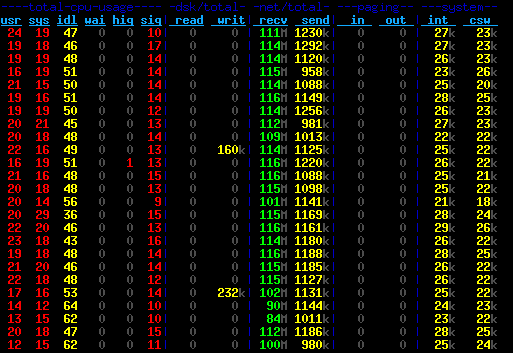
As explained in more detail in my my last blog post, Rackspace is providing hosting for Debian Code Search. For those of you who don t know, Rackspace is a cloud company that provides (among other services) a public cloud based on OpenStack. That means you can easily (and programmatically, if you want) bring up virtual servers, block storage volumes, configure the network between them, etc. As part of my initial performance experiments, I was running debmirror to clone a full Debian source mirror, and I noticed this took about one hour. Given that the peak network and storage write rates I have observed in my benchmarks are much higher, I wondered why it took so long. About 43 GB (that s how big the Debian sid sources are) in 60 minutes means 12 MB/s download rate, which is a bit more than a sustained 100 MBit/s connection. Luckily, at least the Rackspace servers I looked at are connected with 1 GBit/s to the internet, so more should be possible. Note that these are the old Rackspace servers. There is a new generation of servers, which I have not yet tried, that apparently offer even higher performance. After a brief look at the debmirror source code, I concluded that it can only use a single mirror and downloads files sequentially. There is some obvious potential for improvement here, and the fact that I could come up with a proof of concept written in Go to determine the files to download in a couple of minutes encouraged me to spend my saturday on this problem :-). About 7 hours later, my prototype had gone through various iterations and the code could sustain about 115 MB/s incoming bandwidth for most of the time. Here is a screenshot of dstat measuring the performance: Another 3 hours later, the most obvious bugs were weeded out and the code successfully cloned an entire mirror for the first time. I verified the correctness by running debmirror afterwards, and no files were downloaded that had not actually arrived on the mirror in the meantime. Features
  1. Parallel downloading from multiple mirrors.
    Of course, it is not guaranteed that the mirrors are consistent, but that is a solvable problem: whenever a non-200 HTTP response is encountered, the file is put back into the queue and gets rescheduled onto any mirror. Eventually, it will be rescheduled onto the mirror from which the sources.gz was downloaded, and that mirror has to have it.
  2. HTTP keep-alive and pipelining.
    debmirror also does HTTP keep-alive (I read that in the source, did not verify it), but it downloads files sequentially, i.e. it downloads one file, then sends the request for the next file. This means that after one file was received, no data is being received until another round-trip finished. For a lot of small files (think of .dsc and .debian.tar.gz files or small orig tarballs) that really adds up.
    Therefore, I use HTTP pipelining: I send 99 requests and then just receive all the responses at full speed. The magic number 99 comes from the fact that this is the smallest common denominator that all mirrors I have tested allow. nginx by default allows 100 requests.
  3. Request ordering.
    Instead of sending requests at random, I sort the download queue by size and make sure that the first request on each connection is for a big file. The intention is that TCP will adapt to that quickly and use a bigger window size as soon as possible instead of ramping up slower later on. Note that I have not actually measured the window sizes, so this is just a hunch.
    Another nice side-effect of the ordering is that the amount of data that is being sent through each connection is roughly equal. This means we don t waste TCP connections by sending 99 requests for small files only.
  4. (Goroutines).
    I m a bit hesitant to even write about it, so let s make it quick: Perl (and thus debmirror) is typically single-threaded, whereas Goroutines scale nicely on multi-core systems. I don t think it makes a big difference on the machines I am running this on as they have only two cores and are not maxed out on CPU usage at all. But maybe this will be more important for saturating 10 GBit/s? :-)
  5. (Mirror selection).
    It s not a feature of the code, but certainly relevant: of course I selected mirrors that are connected to the internet with at least a Gigabit link, serve files reasonably fast and have low latency to Rackspace s Chicago presence.
    Interestingly, while I used to think that universities have access to big uplinks and beefy machines, none of the mirrors that I use are located at a university. In fact, every mirror ending in .edu that I tried was really slow most of them providing something like 2-4 MB/s.
Results With the latest iteration of the code, I can clone an entire Debian source mirror with 43 GB of data in about 11.5 minutes, which corresponds to a 63 MB/s download rate:
GOMAXPROCS=20 ./dcs-debmirror -num_workers=20
68,24s user 384,90s system 66% cpu 11:25,97 total
It should be noted that the download rate is very low in the first couple of seconds since the sources.gz file is downloaded from a single mirror, then unpacked and analyzed. The peak download rate is about 115 MB/s (= 920 MBit/s) which is reasonably close at what you can achieve with a Gigabit link, I think. If the entire uplink was available to me at all time, the Rackspace hardware would be able to saturate that easily, both in terms of reading from the network and in terms of writing to block storage. I tested this on an SSD volume, but I see about 113 MB/s throughput with the internal hard disk, so I think that should work, too. There is another dstat screenshot of the final version (writing to disk). Perhaps even more interesting to some readers is the time for an incremental update:
GOMAXPROCS=20 ./dcs-debmirror -tcp_conns=20
2013/10/13 11:09:55 Downloading 307 files (447 MB total)
 
2013/10/13 11:10:04 All 307 files downloaded in 9.105605931s. Download rate is 49.186567 MB/s
4,91s user 3,99s system 67% cpu 13,205 total
The wall clock time is higher than the time reported by the code because the code does not count the time for downloading and parsing the sources.gz file. The entire program is about 400 lines (not SLOC) of Go code. It s part of the Debian Code Search source. If you re interested, you can read dcs-debmirror.go in your browser. Conclusions The outcome of this experiment is that I now know (and have shown!) that there are significantly more efficient ways of cloning a Debian mirror than what debmirror does. Furthermore, I have a good grasp on what kind of performance the Rackspace cloud offers and I am fairly happy with the numbers :-). My code is useful to me in context of Debian Code Search, but unless you need a sid-only source-only mirror, it will not be useful to you directly. Of course you can take the ideas that I implemented and implement them elsewhere personally, I don t plan to do that. If you have hardware, bandwidth and a use-case for 10 GBit/s+ mirroring, I d like to hear about it! :-)

5 January 2014

Jon Dowland: 2013 In Fiction

I read a lot this year - I'll write more about that and reflections on goodreads in another post - but most of the things I read weren't published in 2013. (I should also write a bit about my thoughts on e-readers). However, it seems I have enough to write about 2013's novels to make a round-up post worthwhile, so here we go.

The Cuckoos Calling UK cover
This year, crime author Robert Galbraith published his first novel The Cuckoo's Calling. I'd never have heard of it if Galbraith was not outed as an alias for Joanne "JK" Rowling. Clues that Rowling was working on a detective story exist as early as a Guardian preview article in 2012 for her last novel, The Casual Vacancy. Further hints, for me, that this was no first-time author were the taglines from Ian Rankin and Val McDermid on the cover, writers of a calibre I'd be surprised a new author could attract. However I don't know whether they were on the pre-unveiling cover or not. Rowling was upset be outed, having enjoyed the freedom to write without the baggage of expectation that she is subject to. I hope she's pleased: prior to her unmasking the novel was warmly received by the (admittedly relatively small) number of people who read it. And a very good novel it is too. It starts with a genre clich of a grizzled, meloncholy detective, Mr. Cormoran Strike, in an upstairs office with a neon light flickering through the window, but fleshes the story out both forwards - a client, a mysterious death - and backwards - how did Mr. Strike end up in that upstairs office - living out of it, no less? As is traditional for the genre there's a very clever twist. What I really enjoyed about Cormoran Strike was Galbraith/Rowling moving quickly from Chandler-esque everyman to a well fleshed-out, complex protagonist, intertwining the development of the character with the unfolding of the wider plot. I'm looking forward to the sequel, expected in 2014.
The Shining Girls UK cover
A second surprise favourite this year was Lauren Beukes' time-tripping crime story The Shining Girls. A monsterous murder of women somehow finds a room in Chicago that lets him travel through time (or perhaps the room finds him). He uses this facility to stalk and murder a set of Shining Girls: women who, for one reason or another, literally 'shine' in his perception of them. One such woman survives his first attack and decides to try and find out who attacked her, and why. The crimes are described in a brutal fashion which - from a distance - resemble the sometimes glorified violence for which crime fiction is sometimes criticised, but the focus of the story is very much on the victims: they are fully fleshed out characters and each death is felt by the reader as a genuine tragedy. I discovered Beukes when her earlier novel Zoo City was included in a Humble eBook bundle. On reading The Shining Girls I felt that the novel deserved to be more widely known than I would expect it to be trapped in the ghetto of genre fiction, so I was pleased to discover that the very mainstream Richard and Judy Book Club discovered it. In established author news, Terry Pratchett, having adopted speech recognition for writing (to combat his debilitating Alzheimer's) has seemingly managed to accelerate his rate of production and squeezed out at least two this year: The Long War with Stephen Baxter is the sequel to 2012's The Long Earth which I very much enjoyed, but it really felt like "difficult second novel" to me. Hopefully there'll be a third. Raising Steam, the 40th Discworld novel, was an enjoyable romp around the concept of steam trains, featuring the relatively new Moist von Lipwig who has managed to become one of my favourite Discworld characters. I can't think of much more to say about the novel, really. It's a Discworld novel, probably not the best introduction to the series for a new reader, but will give a reader familiar with the franchise everything they expect, and possibly no more. Iain Banks sadly died this year, shortly after the publication of his last novel, The Quarry. It's sat on my hardback shelf for the time being. I couldn't bring myself to read it in 2013. I did read his last SF offering from the year prior, The Hydrogen Sonata. Sadly, yet coincidentally, both of these books examine the nature of living and dying, The Quarry in particular from the point of view of a terminal cancer sufferer. I have a small backlog of unread Banks fiction which I want to take my time over with. Finally, whilst not really a book, I thoroughly enjoyed the BBC's 2013 adaptation of Neil Gaiman's Neverwhere. Natalie Dormer wrote a piece on the making of the drama which should serve as a good introduction. At the time of writing, most of the programmes have disappeared from iPlayer, but I would be surprised if this wasn't released commercially at some point.

1 January 2014

Russ Allbery: 2013 Book Reading in Review

What a strange year. 2013 was marked by a whole sequence of entirely unexpected events, including multiple major work upheavals. For large chunks of the year, I had very little time or emotional energy for personal reading goals, and particularly for writing reviews. I declared personal amnesty on most of my intentions halfway through the year, and all the totals will reflect that. On the plus side (although not for reading and reviews), it was a great year for video games. Next year, there will be no specific goals. Between continuing work fallout, a very busy project schedule, my intent to keep playing a lot of video games, and various other personal goals I want to take on, I'm going to take the pressure off of reading. Things will be read and reviews will be written (and I'm going to make more of an effort to write reviews shortly after reading books), but I'm not going to worry about how many. The below statistics are confined to the books I reviewed in 2013. I read six more books that I've not yet reviewed, due to the chaos at the end of the year. Those will be counted in 2014. There were no 10 out of 10 books this year, partly due to the much lower reading totals and partly due to my tendency this year to turn to safe comfort reading, which is reliably good but unlikely to be exceptional. There were, however, several near-misses that were worth calling out. My favorite book of the year was Neal Stephenson's Anathem, which narrowly missed a 10 for me due to some fundamental problems with the plot premise. But this is still an excellent book: the best novel about the practice of science and philosophy that I've ever read. Also deserving mention are K.E. Lane's And Playing the Role of Herself, lovely and intelligent lesbian romance that's likely to appeal even to people who would not normally try that genre, and Guy Gavriel Kay's River of Stars. The latter isn't quite at the level of Kay's earlier Under Heaven, but it's still an excellent work of alternate historical fiction in a memorable setting. A special honorable mention goes to Lisa O'Donnell's The Death of Bees. It requires a lot of warnings for very dark subject matter and a rather abrupt ending, but it's been a long time since I've cared that much about the characters of a book. My favorite non-fiction book of the year was Gary J. Hudson's They Had to Go Out, a meticulously researched account of a tragic Coast Guard mission. The writing is choppy, the editing could have been better, and it's clear that the author is not a professional writer, but it's the sort of detailed non-fiction account that can only be written by someone who's been there and lived through similar experiences. Also worth mentioning is Mark Jason Dominus's Higher Order Perl, which was the best technical book I read all year and which I found quite inspiring for my own programming. The full analysis includes some additional personal reading statistics, probably only of interest to me.

23 December 2013

Russell Coker: The Nexus 5

The Nexus 5 is the latest Android phone to be endorsed by Google (and manufactured by LG). It s getting good reviews and the price is good for the specs. I just bought one for my wife, I got her the 32G version because when I bought her a Nexus 4 at the start of the year [1] I chose the 8G version and regretted it ever since. The size of apps is always increasing (some Android games need more than 1G of storage) and higher resolution screens drives the use of high resolution video. Appearance back of Nexus 4, Nexus 5, and Samsung Galaxy Note 2front of Nexus 4, Nexus 5, and Samsung Galaxy Note 2 Above I have pictures of the Nexus 4, the Nexus 5, and the Samsung Galaxy Note 2. The photo of the phone backs captures part of the sparkling pattern on the back of the Nexus 4 and it looks much better in real life (IMHO) because it shimmers as you move the phone. The Nexus 4 looks so good that there s even a transparent case specifically designed to show off the rear panel [2]. It doesn t seem likely that anyone will design such a transparent case for the Nexus 5, it s a good phone to cover up IMHO. The Note 2 isn t the most attractive phone, but I think it has a streamlined elegance of being optimised for it s function. The Nexus 5 has it s camera sticking out, it would be better if they had just made the entire phone thicker and given it a bigger battery but for people who don t want good battery life I guess it s a way of providing a better focal length without making the phone thicker. Sticking the IMEI number on the back of the phone will be useful on rare occasions (and might be a security issue on more occasions) but it definitely makes the phone less attractive. Full HD The quality of the Full HD (1920*1080) display is obvious. The text is slightly clearer when viewing maps and the graphics in Ingress look nicer. Before I used the Nexus 5 I didn t think that there would be any benefit in having such a high resolution in a phone but now I realise that I was wrong. The higher resolution is clearly better. Chris Chavez wrote an article for Phandroid about a rumored Samsung phone with a 2560*1440 display [3]. If such a device had a 6.6 display (IE a new version of the Galaxy Mega) then it would have the same dot-pitch as the Nexus 5. If such a device had a 5.5 display (like the Galaxy Note 3) then it would have a 15% greater DPI than the Nexus 5. It seems that a higher DPI provides a real benefit and this is probably the biggest reason to choose the Nexus 5 over the Nexus 4 and most other Android devices. Comparing with the Nexus 4 The Nexus 5 has the same amount of RAM (2G), a slightly larger display (4.95 vs 4.7 ), higher resolution (a big deal), faster CPU and GPU, and optical zoom. Faster CPU isn t usually going to be a big deal (apart from the fact that more CPU power is needed as well as more GPU power to drive the higher resolution display). The Nexus 5 can come with 16G or 32G of storage while the Nexus 4 has options of 8G and 16G. If you want more than 16G of storage then that s a real benefit for the Nexus 5, but if you only need 16G then it s not an issue. It seems that when playing Ingress on a Nexus 5 it s more likely that running another program (such as Google Hangouts) will cause Ingress to be reloaded than it does on a Nexus 4 or a Galaxy Note 2. While I haven t done a good comparison of the Nexus 4 and the Nexus 5 in this regard I ve compared the Galaxy Note 2 and the Nexus 5 well. My Galaxy Note 2 (which has many daemons running) is much less likely to cause a reload of Ingress (IE have run low on memory and terminated Ingress) than the Nexus 5 my wife is using (which has very little running). So it seems that the OS build on the Nexus 5 uses more memory than the Galaxy Note 2. The Nexus 5 has Gorilla Glass 3 vs Gorilla Glass 2 on the Nexus 4. As my older Android phones with Gorilla Glass 1 (Galaxy S and Sony Ericsson Xperia X10i) didn t get any scratches that matter I don t think this is a benefit for me. Maybe if I lived near a beach I d care more about this. I think that the most significant benefit of the Nexus 5 over the Nexus 4 is the higher resolution display. The optical zoom should provide a theoretical benefit when taking photos, whether that results in better pictures in practice would probably depend on how you hold your phone, the available light, and other factors. I think that if it was possible to buy a Nexus 4 at a sensible price (IE something less than the $250 that Google last charged) then for most people the Nexus 4 would be a better choice than the Nexus 5. But as ebay is full of Nexus 4 phones selling for a higher prices than the Nexus 5 it seems that buying a Nexus 5 is the only option. The range of phones that Kogan sells [4] doesn t have anything for the same price that compares on features. Heat The heat produced by the Nexus 5 is significant and noticable. After some light Ingress playing on a cold day my Galaxy Note 2 with a gel case (that keeps it warm) reported itself as having a battery temperature of 34C. My wife s Nexus 5 reported a temperature of 43C. While the thermometer in the phone might not be the most accurate I don t think there was an accuracy problem, holding my wife s phone was unpleasant and felt like it could burn my hand if I held it tight (40C is the minimum temperature for burns). It seems that a Nexus 5 isn t a good choice if you want to play Ingress in a warm part of the world (EG most of Australia in summer). Also heat dissipated is directly proportional to power use which is going to be a problem for a phone that doesn t permit replacing it s battery. Conclusion I m quite disappointed with the Nexus 5. I expected it to be at least as good as the Nexus 4 in every way and better in many ways. Instead it s not always as good as the Nexus 4 and the ways that it is better won t necessarily provide benefits for everyone. The heat and power use problems are really going to hurt the use of it. But I guess we can always hope that Google release a new Android build that reduces the power use, they might even have a new build that uses less RAM too. I would not consider getting a Nexus 5 for my own use. For my use the Note 2 is clearly more suitable, the larger screen more than compensates for the clarity that the Nexus 5 gets from it s high resolution display. Also I REALLY like having a hardware home button. I ll probably get a Note 3 when the price drops, I m not interested in paying $649 for a phone and I m also not interested in replacing a phone that s less than a year old. So maybe I ll get a Note 3 in the second half of next year.

21 December 2013

Russell Coker: Links December 2013

Andres Lozano gave an interesting TED talk about the use of electrodes inside the brain (deep brain stimulation) to treat Alzheimers disease, Parkinson s disease, and depression [1]. Daniel Pocock wrote an interesting post commenting on some bad political decisions being made in Australia titled Evacuating Australia [2]. You can read that as a suggestion to leave Australia or to try and make Australia better. Marco Tempest gave an interesting TED talk about Nikola Tesla [3]. The presentation method is one that I ve never seen before so I recommend watching the talk even if you already know all about Tesla. Charmian Gooch gave an interesting TED talk about global corruption [4]. I think we need people to send the information on shell company ownership to organisations like Wikileaks. The punishment for leaking such information would be a lot less than Chelsea Manning is getting and the chance of getting caught is also low. Rich Mogul wrote an interesting and insightful article for Macworld about the Apple approach to security problems [5]. To avoid the problem of users disabling security features they work to make the secure way of doing things EASIER for the user. That won t work with all security problems but it s something we need to think about when working on computer security. Ray Raphael gave an interesting TED talk about the parts of the US revolution that don t appear in history books [6]. He warns the listener to beware of the narrative forms, but another way to interpret his talk is that you should present your version of history in the narrative form that is best accepted. That lesson is well known and it s easy to see history being deliberately distorted in most media outlets. Will Wright gave an interesting TED talk about how he designed the game Spore and his ideas about games in general [7]. Spore is a really good game. Chris Lintott gave an interesting TED talk about crowd-sourced astronomy titled How to Discover a Planet from Your Sofa [8]. He referenced the Zooniverse.org site which lists many crowd-sourced science projects [9]. Jake Socha gave an interesting TED talk about flying snakes, you have to see this to believe it [10]. Nikita Bier gave an interesting TED talk about his webapp to analyse economic policies [11]. Apparently 60% of people were going to vote in their best economic interest before seeing his site and 66% would do so afterwards that could change an election result. Anya Kamenetz wrote an interesting article for Salon about The Iliad Project which aims to use Indigogo to help identify new anti-biotics [12]. The current ways of discovering anti-biotics aren t working, lets hope this one does. Peter Finocchiaro wrote an interesting Salon article about how right-wing politicians in the US were opposed to Nelson Mandela [13] racism meets anti-communism. Katie McDonough wrote an interesting Salon article about Rick Santorum and Bill O Reilly comparing Obamacare to apartheid while supposedly honoring Nelson Mandela [14], Katie also notes that Nelson enshrined universal healthcare in the South African constitution something all countries should do. Mary Elizabeth Williams wrote a Salon article about Susan Boyle s announcement about being diagnosed with Asperger Syndrome [15]. Not a surprise though, some people can be diagnosed with Autism by merely watching them on TV. Amelia Hill wrote an article for The Guardian/The Observer about the educational results of Home Schooling [16]. Apparently Home-Schooled kids learn significantly more and home-educated children of working-class parents achieved considerably higher marks in tests than the children of professional, middle-class parents and that gender differences in exam results disappear among home-taught children . Wow, Home Schooling beats gender and class problems! I m sure it s even better for GLBT kids too. Robert Reich wrote an interesting Salon article about the way rich people in the US give tax-deductable (taxpayer supported) donations to charities that benefit themselves [17]. Dan Savage wrote a very funny review of Sarah Palin s latest Christmas book, one classic quote is why should I have to read the whole thing? Lord knows Sarah Palin didn t write the whole thing [18]. He makes a good point that we should use the term happy holidays instead of happy Christmas just to show that we aren t assholes.

Christian Perrier: [life] Running update December 21st 2013

Last time I blogged about my running activities was after DebConf 13 in Switzerland, back in August. At that time, I just completed two great moutain races in one month (Mont-Blanc Marathon, then EDF Cenis Tour, one being 42km and 2500m positive climb and the other one being 50km and 2700m). EDF Cenis Tour was my best result overall in a trail race, being ranked 40th out of more than 300 runners and 3rd in my age category (men 50-59). So, in late August, I was preparing for my "autumn challenge", a succession of 3 long distance races in a row: Quite a challenge, indeed, to run 3 long distance events in a row, with only 3 weeks between them. Preparation for all this was mostly piling up kilometers over kilometers. First in road and flat training, when the goal was the marathon. So, after piking to 471 kilometers in August (more than 15km/day), I ran 452 in September and again 420 in October. During that preparation, I also broke my personal best in half-marathon, down to 1h34. I therefore was perfectly fit for the Toulouse Marathon and, indeed, unsurprisingly, I achieved my first goal by breaking my personal best down to.....3h25' and a few seconds. Really a great achievement and something that gives me a little hope of being able to qualify for Boston Marathon (though chances are a bit low again: I can apply because I'm below 3h30 but the chances that I get a seat are not very big). Recovery from the marathon was easy, thanks to the big preparation and then the second race came very quickly: Le Puy-Firminy. My third participation to this night race, organised by a cousin of mine. I completed the first one in 9h15....then, last year, the second one in 8h25. And, this year, well......7h15 and 26th out of over 200 runners. Huge, great and stunning performance for me, really. Everything went so well that I can't remember any moment where I had any doubt. And I will indeed remember the last kilometer ran along with my sister (who is also a runner) and where she.....couldn't follow me while I was sprinting at about 14km/h after 68 kilometers. Definitely my best race this year. And then came the last challenge: Saint lyon. If you never saw it, you have no idea. While Le Puy-Firminy features 200 runners and 150 walkers over 68 kilometers, this one features 6000 runners for 75 kilometers. Six THOUSAND. The vision of a light snake, kilometers long, over the hills in St-Etienne neighbourhood, was stunning. Moreover, we ran that one, with snow, ice and cold (down to -10 C at the highest point of the race). So, here, the goal was running with my friend and share the joy of the race with her, all along...and eventually beat her personal best on this race (11h15 last year, while the race was 5km shorter). We made it really well, despite the crowd and the fact that it doesn't allow running one's real speed. Despite the ice and snow that makes downhills really.....interesting. Despite dolors I had in my legs at the end of the race. We completed the race in 10h38, quite away from our secret goal (9h30) but that one was really ambitious...:-). And we crossed the finish line together, hand in hand, for the third time of our running life. And we shared tears at the end of the race. And we shared many great moments over that week-end. Moments that let one remember what the definition of "friendship" is. I found my "running sister" in Sabine and this is something we really appreciate and is hard to explain. All this would make a great conclusion if.....I hadn't injured my leg with this accumulation. Indeed, as one might expect after such a hard challenge, I discovered during the days that followed the last race, that I have a fatigue fracture on my left tibia. As a consequence, I need to stop running for about 6 weeks....which you can understand is kinda hard for me. But, guess what? I'm allowed to bike...:-). So, well, I repaired my old moutain bike and now, I'm biking instead of running...:-) Finally, 2013 has been my greatest running year, again. 4700 kilometers ran over the year, nearly 13km/day in average. 14 races (3 road races and 11 trail races). 463 hours spent running and 72,000meters climbed (about 8 Sagarmatha, aka Everest, climbed). 2 Personal Best performances. 2 long distance races which I ran in more than 1 hour less then last year. 2 new moutain races. And first running injury...:-) 2014 will be different. I will run again some races I alreay ran such as Paris 80km Ecotrail or Le Puy Firminy (4th time in a row). But I also hope to be able to run one of the Ultra Tour du Mont-Blanc races in late August in Chamonix (need to be picked up at the bib lottery for this to happen). And probably some other interesting challenges such as running the Paris Marathon dressed as SpongeBob....one week after running the 80km Ecotrail....:-) But you'll see that in my next running update, of course. Merry New Year and Happy Christmas!
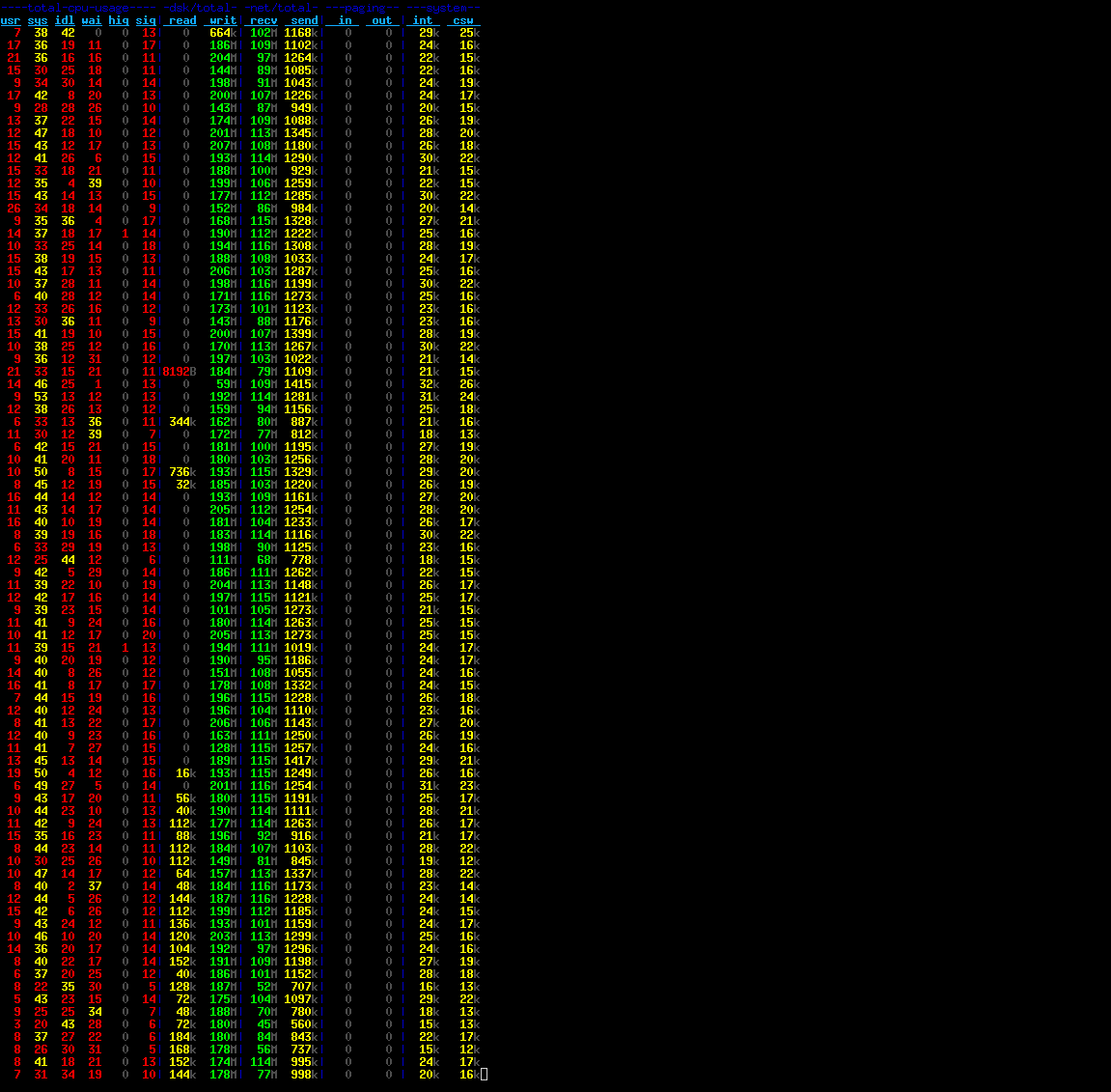
15 December 2013

Alessandro Ghedini: Building Debian packages using Linux namespaces

In the past few days I have been messing around with Linux namespaces, and developed a little tool (pflask) that automates the creation of simple Linux containers based on them (a sort of chroot(8) on steroids if you will). While the whole raison d' tre behind this project was "just because", and many more mature solutions exist, I decided that it'd be nice to find an actual use case for this (otherwise I tend to lose interest pretty quickly) so I wrote a lil (and rather dumb) pbuilder clone that uses pflask instead of chroot. The nice thing about pflask is that, differently from e.g. LXC, it doesn't need any pre-configuration and can be used directly on a vanilla debootstrap(8)ed Debian system:
$ sudo mkdir -p /var/cache/pflask
$ sudo debootstrap --variant=buildd $DIST /var/cache/pflask/base-$DIST-$ARCH
Where $DIST and $ARCH are e.g. unstable and amd64. Once that's done just run pflask-debuild on the package sources:
$ apt-get source somepackage
$ cd somepackage-XYX
$ pflask-debuild
The script will take care of creating a new container, chroot(2)ing into it, installing all the required dependencies, building and signing the package (it also runs lintian!). The main difference from pbuilder is that pflask will mount a copy-on-write filesystem (using AuFS) on the / of the container so that any modification (e.g. installation of packages) can be easily discarded once the container terminates (similarly to what cowbuilder(8) does, modulo the hardlinks hack). Additionally, thanks to the mount namespace created inside the container, all of this will be isolated from the host system and other containers, so that multiple packages can be built simultaneously on the same base debootstrapped directory. Another possibility would be that of disabling the network inside the container using a network namespace, in order to prevent the package build system from downloading stuff from Internet while at the same time maintaining the network active on the host system, but I haven't done any experiment in this direction yet. Note though that all of this is rather crude and experimental, but as a little hack it seems to work rather well (YMMV).

Next.

Previous.