Search Results: "angel"

24 May 2015

Russ Allbery: Catch-up haul

As always, even though I've not been posting much, I'm still buying books. This is a catch-up post listing a variety of random purchases. Katherine Addison The Goblin Emperor (sff)
Milton Davis From Here to Timbuktu (sff)
Mark Forster How to Make Your Dreams Come True (non-fiction)
Angela Highland Valor of the Healer (sff)
Marko Kloos Terms of Enlistment (sff)
Angela Korra'ti Faerie Blood (sff)
Cixin Liu The Three-Body Problem (sff)
Emily St. John Mandel Station Eleven (sff)
Sydney Padua The Thrilling Adventures of Lovelace and Babbage (graphic novel)
Melissa Scott & Jo Graham The Order of the Air Omnibus (sff)
Andy Weir The Martian (sff) Huh, for some reason I thought I'd bought more than that. I picked up the rest of the Hugo nominees that aren't part of a slate, and as it happens have already read all the non-slate nominees at the time of this writing (although I'm horribly behind on reviews). I also picked up the first book of Marko Kloos's series, since he did the right thing and withdrew from the Hugos once it became clear what nonsense was going on this year. The rest is a pretty random variety of on-line recommendations, books by people who made sense on the Internet, and books by authors I like.

17 May 2015

Lunar: Reproducible builds: week 3 in Stretch cycle

What happened about the reproducible builds effort for this week: Toolchain fixes Tomasz Buchert submitted a patch to fix the currently overzealous package-contains-timestamped-gzip warning. Daniel Kahn Gillmor identified #588746 as a source of unreproducibility for packages using python-support. Packages fixed The following 57 packages became reproducible due to changes in their build dependencies: antlr-maven-plugin, aspectj-maven-plugin, build-helper-maven-plugin, clirr-maven-plugin, clojure-maven-plugin, cobertura-maven-plugin, coinor-ipopt, disruptor, doxia-maven-plugin, exec-maven-plugin, gcc-arm-none-eabi, greekocr4gamera, haskell-swish, jarjar-maven-plugin, javacc-maven-plugin, jetty8, latexml, libcgi-application-perl, libnet-ssleay-perl, libtest-yaml-valid-perl, libwiki-toolkit-perl, libwww-csrf-perl, mate-menu, maven-antrun-extended-plugin, maven-antrun-plugin, maven-archiver, maven-bundle-plugin, maven-clean-plugin, maven-compiler-plugin, maven-ear-plugin, maven-install-plugin, maven-invoker-plugin, maven-jar-plugin, maven-javadoc-plugin, maven-processor-plugin, maven-project-info-reports-plugin, maven-replacer-plugin, maven-resources-plugin, maven-shade-plugin, maven-site-plugin, maven-source-plugin, maven-stapler-plugin, modello-maven-plugin1.4, modello-maven-plugin, munge-maven-plugin, ocaml-bitstring, ocr4gamera, plexus-maven-plugin, properties-maven-plugin, ruby-magic, ruby-mocha, sisu-maven-plugin, syncache, vdk2, wvstreams, xml-maven-plugin, xmlbeans-maven-plugin. The following packages became reproducible after getting fixed: Some uploads fixed some reproducibility issues but not all of them: Ben Hutchings also improved and merged several changes submitted by Lunar to linux. Currently untested because in contrib: reproducible.debian.net
Thanks to the reproducible-build team for running a buildd from hell. gregor herrmann
Mattia Rizzolo modified the script added last week to reschedule a package from Alioth, a reason can now be optionally specified. Holger Levsen splitted the package sets page so each set now has its own page. He also added new sets for Java packages, Haskell packages, Ruby packages, debian-installer packages, Go packages, and OCaml packages. Reiner Herrmann added locales-all to the set of packages installed in the build environment as its needed to properly identify variations due to the current locale. Holger Levsen improved the scheduling so new uploads get tested sooner. He also changed the .json output that is used by tracker.debian.org to lists FTBFS issues again but only for issues unrelated to the toolchain or our test setup. Amongst many other small fixes and additions, the graph colors should now be more friendly to red-colorblind people. The fix for pbuilder given in #677666 by Tim Landscheidt is now used. This fixed several FTBFS for OCaml packages. Work on rebuilding with different CPU has continued, a kvm-on-kvm build host has been set been set up for this purpose. debbindiff development Version 19 of debbindiff included a fix for a regression when handling info files. Version 20 fixes a bug when diffing files with many differences toward a last line with no newlines. It also now uses the proper encoding when writing the text output to a pipe, and detects info files better. Documentation update Thanks to Santiago Vila, the unneeded -depth option used with find when fixing mtimes has been removed from the examples. Package reviews 113 obsolete reviews have been removed this week while 77 has been added.

Andrew Pollock: [debian] Fixing some issues with changelogs.debian.net

I got an email last year pointing out a cosmetic issue with changelogs.debian.net. I think at the time of the email, the only problem was some bitrot in PHP's built-in server variables making some text appear incorrectly. I duly added something to my TODO list to fix it, and it subsequently sat there for like 13 months. In the ensuing time, Debian changed some stuff, and my code started incorrectly handling a 302 as well, which actually broke it good and proper. I finally got around to fixing it. I also fixed a problem where sometimes there can be multiple entries in the Sources file for a package (switching to using api.ftp-master.debian.org would also address this), which caused sometimes caused an incorrect version of the changelog to be returned. In the resulting tinkering, I learned about api.ftp-master.debian.org, which is totally awesome. I could stop maintaining and parsing a local copy of sid's Sources file, and just make a call to this instead. Finally, I added linking to CVEs, because it was a quick thing to do, and adds value. In light of api.ftp-master.debian.org, I'm very tempted to rewrite the redirector. The code is very old and hard for present-day Andrew to maintain, and I despise PHP. I'd rather write it in Python today, with some proper test coverage. I could also potentially host it on AppEngine instead of locally, just so I get some experience with AppEngine It's also been suggested that I fold the changes into the changelog hosting on ftp-master.debian.org. I'm hesitant to do this, as it would require changing the output from plain text to HTML, which would mess up consumers of the plain text (like the current implementation of changelogs.debian.net)

Lunar: Reproducible builds: week 2 in Stretch cycle

What happened about the reproducible builds effort for this week: Media coverage Debian's effort on reproducible builds has been covered in the June 2015 issue of Linux Magazin in Germany. Cover of Linux Magazin June 2015 Article about reproducible builds in Linux Magazin June 2015 Toolchain fixes josch rebased the experimental version of debhelper on 9.20150507. Packages fixed The following 515 packages became reproducible due to changes of their build dependencies: airport-utils, airspy-host, all-in-one-sidebar, ampache, aptfs, arpack, asciio, aspell-kk, asused, balance, batmand, binutils-avr, bioperl, bpm-tools, c2050, cakephp-instaweb, carton, cbp2make, checkbot, checksecurity, chemeq, chronicle, cube2-data, cucumber, darkstat, debci, desktop-file-utils, dh-linktree, django-pagination, dosbox, eekboek, emboss-explorer, encfs, exabgp, fbasics, fife, fonts-lexi-saebom, gdnsd, glances, gnome-clocks, gunicorn, haproxy, haskell-aws, haskell-base-unicode-symbols, haskell-base64-bytestring, haskell-basic-prelude, haskell-binary-shared, haskell-binary, haskell-bitarray, haskell-bool-extras, haskell-boolean, haskell-boomerang, haskell-bytestring-lexing, haskell-bytestring-mmap, haskell-config-value, haskell-mueval, haskell-tasty-kat, itk3, jnr-constants, jshon, kalternatives, kdepim-runtime, kdevplatform, kwalletcli, lemonldap-ng, libalgorithm-combinatorics-perl, libalgorithm-diff-xs-perl, libany-uri-escape-perl, libanyevent-http-scopedclient-perl, libanyevent-perl, libanyevent-processor-perl, libapache-session-wrapper-perl, libapache-sessionx-perl, libapp-options-perl, libarch-perl, libarchive-peek-perl, libaudio-flac-header-perl, libaudio-wav-perl, libaudio-wma-perl, libauth-yubikey-decrypter-perl, libauthen-krb5-simple-perl, libauthen-simple-perl, libautobox-dump-perl, libb-keywords-perl, libbarcode-code128-perl, libbio-das-lite-perl, libbio-mage-perl, libbrowser-open-perl, libbusiness-creditcard-perl, libbusiness-edifact-interchange-perl, libbusiness-isbn-data-perl, libbusiness-tax-vat-validation-perl, libcache-historical-perl, libcache-memcached-perl, libcairo-gobject-perl, libcarp-always-perl, libcarp-fix-1-25-perl, libcatalyst-action-serialize-data-serializer-perl, libcatalyst-controller-formbuilder-perl, libcatalyst-dispatchtype-regex-perl, libcatalyst-plugin-authentication-perl, libcatalyst-plugin-authorization-acl-perl, libcatalyst-plugin-session-store-cache-perl, libcatalyst-plugin-session-store-fastmmap-perl, libcatalyst-plugin-static-simple-perl, libcatalyst-view-gd-perl, libcgi-application-dispatch-perl, libcgi-application-plugin-authentication-perl, libcgi-application-plugin-logdispatch-perl, libcgi-application-plugin-session-perl, libcgi-application-server-perl, libcgi-compile-perl, libcgi-xmlform-perl, libclass-accessor-classy-perl, libclass-accessor-lvalue-perl, libclass-accessor-perl, libclass-c3-adopt-next-perl, libclass-dbi-plugin-type-perl, libclass-field-perl, libclass-handle-perl, libclass-load-perl, libclass-ooorno-perl, libclass-prototyped-perl, libclass-returnvalue-perl, libclass-singleton-perl, libclass-std-fast-perl, libclone-perl, libconfig-auto-perl, libconfig-jfdi-perl, libconfig-simple-perl, libconvert-basen-perl, libconvert-ber-perl, libcpan-checksums-perl, libcpanplus-dist-build-perl, libcriticism-perl, libcrypt-cracklib-perl, libcrypt-dh-gmp-perl, libcrypt-mysql-perl, libcrypt-passwdmd5-perl, libcrypt-simple-perl, libcss-packer-perl, libcss-tiny-perl, libcurses-widgets-perl, libdaemon-control-perl, libdancer-plugin-database-perl, libdancer-session-cookie-perl, libdancer2-plugin-database-perl, libdata-format-html-perl, libdata-uuid-libuuid-perl, libdata-validate-domain-perl, libdate-jd-perl, libdate-simple-perl, libdatetime-astro-sunrise-perl, libdatetime-event-cron-perl, libdatetime-format-dbi-perl, libdatetime-format-epoch-perl, libdatetime-format-mail-perl, libdatetime-tiny-perl, libdatrie, libdb-file-lock-perl, libdbd-firebird-perl, libdbix-abstract-perl, libdbix-class-datetime-epoch-perl, libdbix-class-dynamicdefault-perl, libdbix-class-introspectablem2m-perl, libdbix-class-timestamp-perl, libdbix-connector-perl, libdbix-oo-perl, libdbix-searchbuilder-perl, libdbix-xml-rdb-perl, libdevel-stacktrace-ashtml-perl, libdigest-hmac-perl, libdist-zilla-plugin-emailnotify-perl, libemail-date-format-perl, libemail-mime-perl, libemail-received-perl, libemail-sender-perl, libemail-simple-perl, libencode-detect-perl, libexporter-tidy-perl, libextutils-cchecker-perl, libextutils-installpaths-perl, libextutils-libbuilder-perl, libextutils-makemaker-cpanfile-perl, libextutils-typemap-perl, libfile-counterfile-perl, libfile-pushd-perl, libfile-read-perl, libfile-touch-perl, libfile-type-perl, libfinance-bank-ie-permanenttsb-perl, libfont-freetype-perl, libfrontier-rpc-perl, libgd-securityimage-perl, libgeo-coordinates-utm-perl, libgit-pureperl-perl, libgnome2-canvas-perl, libgnome2-wnck-perl, libgraph-readwrite-perl, libgraphics-colornames-www-perl, libgssapi-perl, libgtk2-appindicator-perl, libgtk2-gladexml-simple-perl, libgtk2-notify-perl, libhash-asobject-perl, libhash-moreutils-perl, libhtml-calendarmonthsimple-perl, libhtml-display-perl, libhtml-fillinform-perl, libhtml-form-perl, libhtml-formhandler-model-dbic-perl, libhtml-html5-entities-perl, libhtml-linkextractor-perl, libhtml-tableextract-perl, libhtml-widget-perl, libhtml-widgets-selectlayers-perl, libhtml-wikiconverter-mediawiki-perl, libhttp-async-perl, libhttp-body-perl, libhttp-date-perl, libimage-imlib2-perl, libimdb-film-perl, libimport-into-perl, libindirect-perl, libio-bufferedselect-perl, libio-compress-lzma-perl, libio-compress-perl, libio-handle-util-perl, libio-interface-perl, libio-multiplex-perl, libio-socket-inet6-perl, libipc-system-simple-perl, libiptables-chainmgr-perl, libjoda-time-java, libjsr305-java, libkiokudb-perl, liblemonldap-ng-cli-perl, liblexical-var-perl, liblingua-en-fathom-perl, liblinux-dvb-perl, liblocales-perl, liblog-dispatch-configurator-any-perl, liblog-log4perl-perl, liblog-report-lexicon-perl, liblwp-mediatypes-perl, liblwp-protocol-https-perl, liblwpx-paranoidagent-perl, libmail-sendeasy-perl, libmarc-xml-perl, libmason-plugin-routersimple-perl, libmasonx-processdir-perl, libmath-base85-perl, libmath-basecalc-perl, libmath-basecnv-perl, libmath-bigint-perl, libmath-convexhull-perl, libmath-gmp-perl, libmath-gradient-perl, libmath-random-isaac-perl, libmath-random-oo-perl, libmath-random-tt800-perl, libmath-tamuanova-perl, libmemoize-expirelru-perl, libmemoize-memcached-perl, libmime-base32-perl, libmime-lite-tt-perl, libmixin-extrafields-param-perl, libmock-quick-perl, libmodule-cpanfile-perl, libmodule-load-conditional-perl, libmodule-starter-pbp-perl, libmodule-util-perl, libmodule-versions-report-perl, libmongodbx-class-perl, libmoo-perl, libmoosex-app-cmd-perl, libmoosex-attributehelpers-perl, libmoosex-blessed-reconstruct-perl, libmoosex-insideout-perl, libmoosex-relatedclassroles-perl, libmoosex-role-timer-perl, libmoosex-role-withoverloading-perl, libmoosex-storage-perl, libmoosex-types-common-perl, libmoosex-types-uri-perl, libmoox-singleton-perl, libmoox-types-mooselike-numeric-perl, libmousex-foreign-perl, libmp3-tag-perl, libmysql-diff-perl, libnamespace-clean-perl, libnet-bonjour-perl, libnet-cli-interact-perl, libnet-daap-dmap-perl, libnet-dbus-glib-perl, libnet-dns-perl, libnet-frame-perl, libnet-google-authsub-perl, libnet-https-any-perl, libnet-https-nb-perl, libnet-idn-encode-perl, libnet-idn-nameprep-perl, libnet-imap-client-perl, libnet-irc-perl, libnet-mac-vendor-perl, libnet-openid-server-perl, libnet-smtp-ssl-perl, libnet-smtp-tls-perl, libnet-smtpauth-perl, libnet-snpp-perl, libnet-sslglue-perl, libnet-telnet-perl, libnhgri-blastall-perl, libnumber-range-perl, libobject-signature-perl, libogg-vorbis-header-pureperl-perl, libopenoffice-oodoc-perl, libparse-cpan-packages-perl, libparse-debian-packages-perl, libparse-fixedlength-perl, libparse-syslog-perl, libparse-win32registry-perl, libpdf-create-perl, libpdf-report-perl, libperl-destruct-level-perl, libperl-metrics-simple-perl, libperl-minimumversion-perl, libperl6-slurp-perl, libpgobject-simple-perl, libplack-middleware-fixmissingbodyinredirect-perl, libplack-test-externalserver-perl, libplucene-perl, libpod-tests-perl, libpoe-component-client-ping-perl, libpoe-component-jabber-perl, libpoe-component-resolver-perl, libpoe-component-server-soap-perl, libpoe-component-syndicator-perl, libposix-strftime-compiler-perl, libposix-strptime-perl, libpostscript-simple-perl, libproc-processtable-perl, libprotocol-osc-perl, librcs-perl, libreadonly-xs-perl, libreturn-multilevel-perl, librivescript-perl, librouter-simple-perl, librrd-simple-perl, libsafe-isa-perl, libscope-guard-perl, libsemver-perl, libset-tiny-perl, libsharyanto-file-util-perl, libshell-command-perl, libsnmp-info-perl, libsoap-lite-perl, libstat-lsmode-perl, libstatistics-online-perl, libstring-compare-constanttime-perl, libstring-format-perl, libstring-toidentifier-en-perl, libstring-tt-perl, libsub-recursive-perl, libsvg-tt-graph-perl, libsvn-notify-perl, libswish-api-common-perl, libtap-formatter-junit-perl, libtap-harness-archive-perl, libtemplate-plugin-number-format-perl, libtemplate-plugin-yaml-perl, libtemplate-tiny-perl, libtenjin-perl, libterm-visual-perl, libtest-block-perl, libtest-carp-perl, libtest-classapi-perl, libtest-cmd-perl, libtest-consistentversion-perl, libtest-data-perl, libtest-databaserow-perl, libtest-differences-perl, libtest-file-sharedir-perl, libtest-hasversion-perl, libtest-kwalitee-perl, libtest-lectrotest-perl, libtest-module-used-perl, libtest-object-perl, libtest-perl-critic-perl, libtest-pod-coverage-perl, libtest-script-perl, libtest-script-run-perl, libtest-spelling-perl, libtest-strict-perl, libtest-synopsis-perl, libtest-trap-perl, libtest-unit-perl, libtest-utf8-perl, libtest-without-module-perl, libtest-www-selenium-perl, libtest-xml-simple-perl, libtest-yaml-perl, libtex-encode-perl, libtext-bibtex-perl, libtext-csv-encoded-perl, libtext-csv-perl, libtext-dhcpleases-perl, libtext-diff-perl, libtext-quoted-perl, libtext-trac-perl, libtext-vfile-asdata-perl, libthai, libthread-conveyor-perl, libthread-sigmask-perl, libtie-cphash-perl, libtie-ical-perl, libtime-stopwatch-perl, libtk-dirselect-perl, libtk-pod-perl, libtorrent, libturpial, libunicode-japanese-perl, libunicode-maputf8-perl, libunicode-stringprep-perl, libuniversal-isa-perl, libuniversal-moniker-perl, liburi-encode-perl, libvi-quickfix-perl, libvideo-capture-v4l-perl, libvideo-fourcc-info-perl, libwiki-toolkit-plugin-rss-reader-perl, libwww-mechanize-formfiller-perl, libwww-mechanize-gzip-perl, libwww-mechanize-perl, libwww-opensearch-perl, libx11-freedesktop-desktopentry-perl, libxc, libxml-dtdparser-perl, libxml-easy-perl, libxml-handler-trees-perl, libxml-libxml-iterator-perl, libxml-libxslt-perl, libxml-rss-perl, libxml-validator-schema-perl, libxml-xpathengine-perl, libxml-xql-perl, llvm-py, madbomber, makefs, mdpress, media-player-info, meta-kde-telepathy, metamonger, mmm-mode, mupen64plus-audio-sdl, mupen64plus-rsp-hle, mupen64plus-ui-console, mupen64plus-video-z64, mussort, newpid, node-formidable, node-github-url-from-git, node-transformers, nsnake, odin, otcl, parsley, pax, pcsc-perl, pd-purepd, pen, prank, proj, proot, puppet-module-puppetlabs-postgresql, python-async, python-pysnmp4, qrencode, r-bioc-graph, r-bioc-hypergraph, r-bioc-iranges, r-bioc-xvector, r-cran-pscl, rbenv, rlinetd, rs, ruby-ascii85, ruby-cutest, ruby-ejs, ruby-factory-girl, ruby-hdfeos5, ruby-kpeg, ruby-libxml, ruby-password, ruby-zip-zip, sdl-sound1.2, stterm, systemd, taktuk, tcc, tryton-modules-account-invoice, ttf-summersby, tupi, tuxpuck, unknown-horizons, unsafe-mock, vcheck, versiontools, vim-addon-manager, vlfeat, vsearch, xacobeo, xen-tools, yubikey-personalization-gui, yubikey-personalization. The following packages became reproducible after getting fixed: Some uploads fixed some reproducibility issues but not all of them: Patches submitted which did not make their way to the archive yet: reproducible.debian.net Alioth now hosts a script that can be used to redo builds and test for a package. This was preliminary done manually through requests over the IRC channel. This should reduce the number of interruptions for jenkins' maintainers The graph of the oldest build per day has been fixed. Maintainance scripts will not error out when they are no files to remove. Holger Levsen started work on being able to test variations of CPU features and build date (as in build in another month of 1984) by using virtual machines. debbindiff development Version 18 has been released. It will uses proper comparators for pk3 and info files. Tar member names are now assumed to be UTF-8 encoded. The limit for the maximum number of different lines has been removed. Let's see on reproducible.debian.net how it goes for pathological cases. It's now possible to specify both --html and --text output. When neither of them is specified, the default will be to print a text report on the standard output (thanks to Paul Wise for the suggestion). Documentation update Nicolas Boulenguez investigated Ada libraries. Package reviews 451 obsolete reviews have been removed and 156 added this week. New identified issues: running kernel version getting captured, random filenames in GHC debug symbols, and timestamps in headers generated by qdbusxml2cpp. Misc. Holger Levsen went to re:publica and talked about reproducible builds to developers and users there. Holger also had a chance to meet FreeBSD developers and discuss the status of FreeBSD. Investigations have started on how it could be made part of our current test system. Laurent Guerby gave Lunar access to systems in the GCC Compile Farm. Hopefully access to these powerful machines will help to fix packages for GCC, Iceweasel, and similar packages requiring long build times.

9 May 2015

John Goerzen: First impressions and review of OwnCloud

In my recent post (I give up on Google), a lot of people suggested using OwnCloud as a replacement for several Google services. I ve been playing around with it for a few days, and it is something of a mix of awesome and disappointing, in my opinion. Files OwnCloud started as a file-sync tool, somewhat akin to Google Drive and Dropbox. It has clients for every platform, and it is also a client for every platform: you can have subfolders of your OwnCloud installation stored on WebDav, *FTP*, Google Drive, Dropbox, you name it. It is a pretty nice integrator of other storage services, and provides the only way to use some of them on Linux (*cough* Google Drive *cough*) One particularly interesting feature is the live editing in the browser of ODT, DOCX, and TXT files. This is somewhat similar to Google Docs and the only such thing I ve seen in Open Source software. It writes changes directly back to the documents and, in my limited testing, seems to work well. A very nice feature! I ve tested the syncing only on Linux so far, but it looks solid. There are two surprising issues, however: there is no deduplication and no delta-uploads. Add 10 bytes to the end of a 1GB file, and you re-upload the 1GB file. Thankfully the OwnCloud GUI client is smart enough to use inotify to notice an mv, but my guess is and I haven t tested this, but apparently OwnCloud doesn t use hashes at all that the CLI client would require a reupload after any mv, because it doesn t run continuously. In some situations, Syncany may be a useful work-around for this, as it does chunk-based dedup and client-side encryption. However, you would lose a lot of the sharing features inside OwnCloud by doing this, and the integration with the OwnCloud apps for photos, videos, and music. The Android/mobile apps support all the usual auto-upload options. Calendar A lot of people report using OwnCloud as a calendar server, and it does indeed use CalDAV. With a program like DAVDroid or Mozilla Lightning, this makes, in theory, a full-functioning calendar syncing tool. There is, of course, also a web interface to the calendar. It, sadly, is limited. Or shall we say, VERY limited. Even something like sending an invite is missing and in fact, the GUI for sharing an event is baffling. You can share it with someone, they get no say in whether or not it shows up, and it shows up on their calendar on the web only (not on synced copies) and they have no way to remove it! Sharing calendars is similar; you can hide the display of any one of your calendars on the web interface, but not of any calendars shared with you. Baffling. Address Book I haven t tested this yet, but there s not much to test, I suspect. It can be shared with others, which I could see as a nice feature. Bookmarks An interesting bookmarks manager, though mysteriously not with Firefox sync support. There is Chrome sync support, and a separate Mozilla Sync support, but it doesn t provide cross-browser syncing, apparently. Music It is designed to present an interface to music that is stored in Files. It provides an Ampache-compatible API, so there are a lot of clients that can stream music. It has very few options, not even for transcoding, so I don t see how it would be useful for my FLAC collection. Pictures Sort of a gallery view of photos synced up with Files. Very basic. Has a sharing button to share a link to an entire folder, but no option to embed photos in blog posts at a lower resolution or shortcut to sharing individual photos. Notes, Tasks, etc. I haven t had the chance to look at this much. Some of them sync to various clients. The Notes are saved as HTML files that get synced down. Clients overall There is a very helpful page that lists all the sync clients for OwnCloud not just for files, but also for calendars, contacts, etc. The list is extensive! Other options The two other Open Source options mentioned on my blog post were Kolab and Sogo, and there is also Zimbra which also has a community edition. The Debian Groupware page lists a number of other groupware options as well. Citadel caught my eye (wow, it s still around!). Sogo has ActiveSync support, which might make phone integration a lot easier. It is not dead-simple to set up like OwnCloud is, though, so I haven t tried it out, but I will probably be looking at it and Citadel next.

6 May 2015

John Goerzen: I Give Up on Google: Free is Too Expensive

I am really tired of things Google has done lately. The most recent example being retiring Classic Maps. That s a problem, because the current Maps mysteriously doesn t show most of my saved ( starred ) places. Google has known about this since at least 2013. There are posts all over their forums about it going back to when what is now regular Google Maps was beta. Google employees even knew about it and did nothing. For someone that made heavy use of it, this was quite annoying. But there have been plenty of others: I even used to use Flickr, then moved to Picasa when Yahoo stopped investing in Flickr. Now I m back to Flickr, because Google stopped investing in Picasa. The takeaway is that you can t really rely on Google for anything. Counting on something being there for an upcoming trip and then having it be suddenly yanked away is a level of frustration that just makes the service not so useful. Never knowing when obvious things (7-day calendar view) will be removed means you just can t depend on it. So, are there good alternatives? Things I m thinking of include: Anybody else moving off Google?

2 May 2015

Dirk Eddelbuettel: Rcpp 0.11.6

The new release 0.11.5 of Rcpp arrived on the CRAN network for GNU R yesterday; the corresponding Debian package has also been uploaded. Rcpp has become the most popular way of enhancing GNU R with C++ code. As of today, 373 packages on CRAN depend on Rcpp for making analyses go faster and further; BioConductor adds another 57 packages, and casual searches on GitHub suggests many more. This version adds a little more polish and refinement around things we worked on previous releases to solidify builds, installation and the run-time experience. It does not bring anything new or majorrelease continues the 0.11.* release cycle, adding another large number of small bug fixes, polishes and enhancements. As always, you can follow the development via the GitHub repo and particularly the Issue tickets and Pull Requests. And any discussions, questions, ... regarding Rcpp are always welcome at the rcpp-devel mailing list. See below for a detailed list of changes extracted from the NEWS file.
Changes in Rcpp version 0.11.6 (2015-05-01)
  • Changes in Rcpp API:
    • The unwinding of exceptions was refined to protect against inadvertent memory leaks.
    • Header files now try even harder not to let macro definitions leak.
    • Matrices have a new default constructor for zero-by-zero dimension matrices (via a pull request by Dmitrii Meleshko).
    • A new empty() string constructor was added (via another pull request).
    • Better support for Vectors with a storage policy different from the default, i.e. NoProtectStorage, was added.
  • Changes in Rcpp Attributes:
    • Rtools 3.3 is now supported.
Thanks to CRANberries, you can also look at a diff to the previous release As always, even fuller details are on the Rcpp Changelog page and the Rcpp page which also leads to the downloads page, the browseable doxygen docs and zip files of doxygen output for the standard formats. A local directory has source and documentation too. Questions, comments etc should go to the rcpp-devel mailing list off the R-Forge page.

This post by Dirk Eddelbuettel originated on his Thinking inside the box blog. Please report excessive re-aggregation in third-party for-profit settings.

22 April 2015

John Goerzen: Today I FLEW A PLANE

DJI00694
For once you have tasted flight,
You will walk the earth with your eyes turned skyward;
For there you have been,
And there you long to return. Leonardo da Vinci
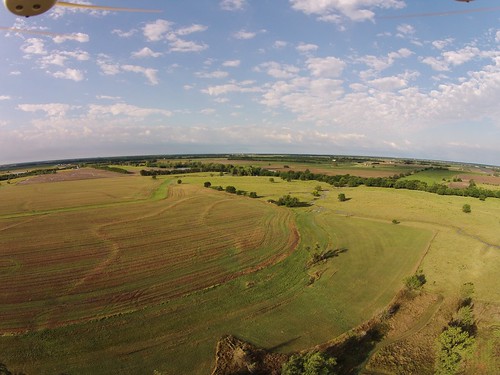
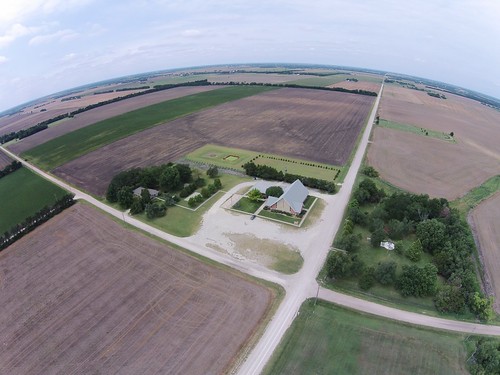
There is something of a magic to flight, to piloting. I remember the first flight I ever took, after years of dreaming of flying in a plane: my grandma had bought me a plane ticket. In one of the early morning flights, I witnessed a sunrise above cumulus clouds. Although I was just 10 or so at the time, that still is a most beautiful image seared into my memory. I have become meh about commercial flight over the years. The drive to the airport, the security lines, the lack of scenery at 35,000 feet. And yet, there is much more to flight than that. When I purchased what was essentially a flying camera, I saw a whole new dimension of the earth s amazing beauty. All the photos in this post, in fact, are ones I took. I then got a RC airplane, because flying the quadcopter was really way too easy. DJI00620
It s wonderful to climb the liquid mountains of the sky.
Behind me and before me is God, and I have no fears. Helen Keller
Start talking to pilots, and you notice a remarkable thing: this group of people that tends to be cool and logical, methodical and precise, suddenly finds themselves using language almost spiritual. Many have told me that being a pilot brings home how much all humans have in common, the unifying fact of sharing this beautiful planet together. Many volunteer with organizations such as Angel Flight. And having been up in small planes a few times, I start to glimpse this. Flying over my home at 1000 up, or from lake to lake in Seattle with a better view than the Space Needle, seeing places familiar and new, but from a new perspective, drives home again and again the beauty of our world, the sheer goodness of it, and the wonderful color of the humanity that inhabits it. DJI00120
The air up there in the clouds is very pure and fine, bracing and delicious. And why shouldn t it be? It is the same the angels breathe. Mark Twain
The view from 1000 feet, or 3000, is often so much more spectacular than the view from 35,000 ft as you get on a commercial flight. The flexibility is too; there are airports all over the country that smaller planes can use which the airlines never touch. Here is one incredible video from a guy that is slightly crazy but does ground-skimming, flying just a few feet off the ground: (try skipping to 9:36) So what comes next is something I blame slightly on my dad and younger brother. My dad helped get me interested in photography as a child, and that interest has stuck. It s what caused me to get into quadcopters ( a flying camera for less than the price of a nice lens! ). And my younger brother started mentioning airplanes to me last year for some reason, as if he was just trying to get me interested. Eventually, it worked. I started talking to the pilots I know (I know quite a few; there seems to be a substantial overlap between amateur radio and pilots). I started researching planes, flight, and especially safety the most important factor. And eventually I decided I wanted to be a pilot. I ve been studying feverishly, carrying around textbooks and notebooks in the car, around the house, and even on a plane. There is a lot to learn. And today, I took my first flight with a flight instructor. Today I actually flew a plane for awhile. Wow! There is nothing quite like that experience. Seeing a part of the world I am familiar with from a new perspective, and then actually controlling this amazing machine I really fail to find the words to describe it. I have put in many hours of study already, and there will be many more studying and flying, but it is absolutely worth it. Here is one final video about one of the most unique places you can fly to in Kansas. And a blog with lots of photos of a flight to Beaumont called Horse on the runway .

20 April 2015

Russ Allbery: Review: The Girls from Alcyone

Review: The Girls from Alcyone, by Cary Caffrey
Series: Girls from Alcyone #1
Publisher: Tealy
Copyright: 2011
ISBN: 1-105-33727-8
Format: Kindle
Pages: 315
Sigrid is a very special genetic match born to not particularly special parents, deeply in debt in the slums of Earth. That's how she finds herself being purchased by a mercenary corporation at the age of nine, destined for a secret training program involving everything from physical conditioning to computer implants, designed to make her a weapon. Sigrid, her friend Suko, and the rest of their class are a special project of the leader of the Kimura corporation, one that's controversial even among the corporate board, and when the other mercenary companies unite against Kimura's plans, they become wanted contraband. This sounds like it could be a tense SF thriller, but I'll make my confession at the start of the review: I had great difficulty taking this book seriously. Initially, it had me wondering what horrible alterations and mind control Kimura was going to impose on the girls, but it very quickly turned into, well, boarding school drama, with little of the menace I was expecting. Not that bullying, or the adults who ignore it to see how the girls will handle it themselves, are light-hearted material, but it was very predictable. As was the teenage crush that grows into something deeper, the revenge on the nastiest bully that the protagonist manages to not be responsible for, and the conflict between unexpectedly competent girls and an invasion of hostile mercenaries. I'm not particularly well-read or informed about the genre, so I'm not the best person to make this comparison, but the main thing The Girls from Alcyone reminded me of was anime or manga. The mix of boarding-school interpersonal relationships, crushes and passionate love, and hypercompetent female action heroes who wear high heels and have constant narrative attention on their beauty had that feel to it. Add in the lesbian romance and the mechs (of sorts) that show up near the end of the story, and it's hard to shake the feeling that one is reading SF yuri as imagined by a North American author. The other reason why I had a hard time taking this seriously is that it's over-the-top action sequences (it's the Empire Strikes Back rescue scene!) mixed with rather superficial characterization, with one amusing twist: female characters almost always end up being on the side of the angels. Lady Kimura, when she appears, turns into exactly the sort of mentor figure that one would expect given the rest of the story (and the immediate deference she got felt like it was lifted from anime). The villains, meanwhile, are hissable and motivated by greed or control. While there's a board showdown, there's no subtle political maneuvering, just a variety of more or less effective temper tantrums. I found The Girls from Alcyon amusing, and even fun to read in places, but that was mostly from analyzing how closely it matched anime and laughing at how reliably it delivered characteristic tropes. It thoroughly embraces its action-hero story full of beautiful, deadly women, but it felt more like a novelization of a B-grade sci-fi TV show than serious drama. It's just not well-written or deep enough for me to enjoy it as a novel. None of the characters were particularly engaging, partly because they were so predictable. And the deeper we got into the politics behind the plot, the less believable I found any of it. I picked this up, along with several other SFF lesbian romances, because sometimes it's nice to read a story with SFF trappings, a positive ending, and a lack of traditional gender roles. The Girls from Alcyone does have most of those things (the gender roles are tweaked but still involve a lot of men looking at beautiful women). But unless you really love anime-style high-tech mercenary boarding-school yuri, want to read it in book form, and don't mind a lot of cliches, I can't recommend it. Followed by The Machines of Bellatrix. Rating: 3 out of 10

10 April 2015

Andrew Shadura: Kallithea 0.2 released

This post is almost a carbon copy of the Kallithea 0.2 release notes. Kallithea project have just released Kallithea 0.2. Kallithea is a Python-based GPLv3 source code management software for web-based hosting of Mercurial and Git repositories. This release brings many changes since 0.1. Notably, pull requests system have been improved, making contributing changes more robust. The visual appearance has also been refined: modern font-based symbolic icons from FontAwesome and GitHub Octicons have replaced the previously used bitmap icons, and revision graphs are now drawn with HiDPI display support. Kallithea now supports Mercurial 3.3 and Dulwich 0.9.9. Several fixes in the database code boosted performance significantly. We have also updated our Javascript libraries: jQuery, CodeMirror and Mergely. Javascript and CSS code have been cleaned up, with less and less code depending on Yahoo UI library. Since 0.1 we have discovered two security issues, so all users are strongly recommended to upgrade. For more details on these issues, please see our Security Notices page For more information, see https://kallithea-scm.org/ or http://docs.kallithea-scm.org/. The summary of the changes since 0.1 release is below. Bug fixes: Features and improvements: Changes (might influence workflows): Cleanup:

8 April 2015

Ben Hutchings: Call for testing: linux 3.16.7-ckt9-1

As it is nearly time to release Debian 8 (codename jessie), I've uploaded a new version of the Linux kernel to unstable which I hope will be the version to go into the initial release (8.0). The changes from the current version in testing are mostly bug fixes: Please test this new version (which should be on mirrors within the next 24 hours) and report any regressions you spot. It's now too late to add new hardware support for Debian 8.0, but we'll probably be able to improve it in subsequent point releases. So, please also report driver changes that should be backported from later kernel versions to improve hardware support, with severity of 'important'. If you can provide precise information about which upstream commits are needed, that makes things easier for us, and you should add the 'patch' tag.

30 March 2015

John Goerzen: ssh suddenly stops communicating with some hosts

Here s a puzzle I m having trouble figuring out. This afternoon, ssh from my workstation or laptop stopped working to any of my servers (at OVH). The servers are all running wheezy, the local machines jessie. This happens on both my DSL and when tethered to my mobile phone. They had not applied any updates since the last time ssh worked. When looking at it with ssh -v, they were all hanging after:
debug1: SSH2_MSG_KEXINIT sent
debug1: SSH2_MSG_KEXINIT received
debug1: kex: server->client aes128-ctr umac-64@openssh.com none
debug1: kex: client->server aes128-ctr umac-64@openssh.com none
debug1: sending SSH2_MSG_KEX_ECDH_INIT
debug1: expecting SSH2_MSG_KEX_ECDH_REPLY
Now, I noticed that a server on my LAN running wheezy could successfully connect. It was a little different:
debug1: kex: server->client aes128-ctr hmac-md5 none
debug1: kex: client->server aes128-ctr hmac-md5 none
debug1: sending SSH2_MSG_KEX_ECDH_INIT
debug1: expecting SSH2_MSG_KEX_ECDH_REPLY
And indeed, if I run ssh -o MACs=hmac-md5, it works fine. Now, I tried rebooting machines at multiple ends of this. No change. I tried connecting from multiple networks. No change. And then, as I was writing this blog post, all of a sudden it works normally again. Supremely weird! Any ideas what I can blame here?

22 March 2015

Hideki Yamane: just an idea: automated release note generation about changes in packages

Now we're (hopefully) in the last stage for Debian "Jessie" release cycle. Well, however, "Please add your package information to release notes ASAP" style doesn't work well, IMHO.

Some package maintainer (including me ;) are lazy, they forget about changes in their package when it was pushed to a repo (put & forget about it). And "last spurt" edit is hard for translators. We translators want to finish it with Debian release time but it's really hard thing.

How wonderful if release notes would be automatically generated! So, system should help them us. Then, how about adding [releasenote] section to debian/NEWS?

In debian/changelog,

foobar (0.2.0-1) unstable; urgency=medium
* update debian/NEWS file
-- Hideki Yamane <henrich@debian.org> Wed, 20 Aug 2014 07:12:51 +0900

and debian/NEWS file,

foobar (0.2.0-1) unstable; urgency=medium
[releasenote: Stretch]
* "buz" package user should migrate other packages since this package
doesn't provide buz package anymore.
-- Hideki Yamane <henrich@debian.org> Wed, 20 Aug 2014 07:12:51 +0900

Then, parse all debian/NEWS files and generate release notes automatically.

It's just an idea, not well considered. But probably you'll get the point. "Big Bang release" style is not good, CI style is better - don't you think so?

19 March 2015

Lior Kaplan: CVE assignment without upstream knowledge

In the past few months I ve been dealing with aligning PHP CVE information to enable easier tracking of security fixes. The two main locations are the NEWS file which is part of each release and the changelog available on the website which is more popular (and easier to update). Usually the CVE are assigned per PHP.net security team request or with cooperation with one of the Linux distribution s teams (either PHP or security), as should be in a good ecosystem. Recently I got a few notifications issued by Debian about its PHP package, which I wasn t familiar with these CVE IDS. When checking this, I found out a few CVE assigned per 3rd party (Linux distribution, bug reporter, etc ) request without upstream knowledge. Digging deeper I found out that some CVE were assigned a month after the fixes were released, while others were only a week or two after. While this makes sure the security information is documented, it s harder to add the information after tagging and releasing. In another case, while discussing about a CVE for a specific bug, we found out one was already assigned per the reporter s request but without the our or the upstream library knowledge. Even if the issue isn t severe, upstream should get a fair chance to fix issue before making them public. Which also leads to a problem with requesting CVE IDs on a public mailing list which in some cases leads to security information leakage. We should balance transparency with some grace period for upstreams (as projects share code).
Filed under: Debian GNU/Linux, PHP

14 March 2015

Dirk Eddelbuettel: littler 0.2.3

max-heap image A new minor release of littler is available now. It adds or extends a number of things: See the littler examples page for more details. Full details for the littler release are provided as usual at the ChangeLog page. The code is available via the GitHub repo, from tarballs off my littler page and the local directory here. A fresh package has gone to the incoming queue at Debian; Michael Rutter will probably have new Ubuntu binaries at CRAN in a few days too. Comments and suggestions are welcome via the mailing list or issue tracker at the GitHub repo.

This post by Dirk Eddelbuettel originated on his Thinking inside the box blog. Please report excessive re-aggregation in third-party for-profit settings.

13 March 2015

Wouter Verhelst: New toy: Fujitsu Lifebook e734

My Lenovo x220, which I've owned for almost four years now (I remember fetching it from the supplier shortly before driving off to Banja Luka), was getting somewhat worn out. The keyboard and the screen had both been replaced at some point already, and the wwan interface had given up as well. The case was all cracked, and the NIC connector wasn't doing very well anymore either; there have been a few cases of me trying to configure the wireless network at a customer, but this being harder than it needs to be because the NIC will only work if I put in the network cable just so, and someone dropped a piece of paper onto the cable. In other words, it was time for a new one. At first I wanted to buy a Lenovo x250, but then I noticed that the Fujitsu came with an i7 4712MQ, which I liked (as today it is still quite exceptional for an ultrabook to have a quadcore processor). Fujitsu also claims up to 9 hours of battery life, but it's not clear to me whether this is supposed to be the case with the default battery only. They also have a battery for the modular bay, which I bought as well (to replace the optical drive whic I sometimes use, but only rarely), and on top of that it came with a free port replicator. Not all is well, however. In the x220, getting the WWAN interface to work involved some creative use of chat against /dev/ttyACM0 wherein I issue a few AT commands to put the WWAN interface into a particular mode, and from then on the WWAN interface is just a regular Ethernet interface on which I can do DHCP. The new laptop has a "Sierra Wireless, Inc." WWAN interface (USB id 1199:9041) which annoyingly doesn't seem to expose the ttyACM (or similar) devices, and I'm not sure what to use instead. Just trying to do DHCP doesn't work -- yes, I tried. Unfortunately, the keyboard isn't very good; it's of the bubble gum type, and I keep getting annoyed at it not picking up my keystrokes all the time. When I'm at home or at my main customer, I have a Das Keyboard Ultimate S (3rd (customer) and 4th (home) generation), so it's only a problem when I'm not at home, but it's still extremely annoying. There is a "backlight" function in that keyboard, but that's not something I think I'll ever use (hint: "das keyboard ultimate s"). The display can't do more than 1366x768, which is completely and utterly wrong for a computer -- but it's the same thing as my x220, so it's not really a regression. The "brightness" ACPI keys don't seem to work. I may have to fiddle with some ACPI settings at some point, I suppose, but it's not a major problem. When I plugged it in, I noticed that fdpowermon ignored the second battery. I had originally written fdpowermon with support for such a second battery, but as my x220 had only one, I never tested it. Apparently there was a bug, but that's been fixed now -- at least in unstable. On the good side of the equation, it has three USB3 ports in the laptop, and four in the port replicator, with no USB2; this is a major leap forwards from the one USB3 and six USB2 in the x220. A positive surprise was the CCID smartcard reader that I somehow missed while reading the specs, but which -- given my current major customer, is very welcome, indeed. Update: After having used it a few days, there were a few minor annoyances:

John Goerzen: Suggestions for visiting the UK?

My wife and I have been thinking of visiting the UK for awhile, and we re finally starting to make some plans. I would be grateful to anyone reading this that might have some time to make suggestions on places to go, things to do, etc. Here s a bit of background, if it helps. We have both traveled internationally before; this would actually be the first time either of us has visited another English-speaking country. We are content, and in fact would prefer, to venture outside the most popular touristy areas (though that doesn t mean we d want to miss something awesome just because it s popular.) We will have a little less than a week, most likely. That means staying on one area, or two at the most. Some other tidbits: Finally, we would probably not be able to go until September. Is that a reasonable time? Is part of September maybe less busy but still decent weather? Thanks for any advice!

6 March 2015

Dirk Eddelbuettel: Rcpp 0.11.5

The new release 0.11.5 of Rcpp just reached the CRAN network for GNU R, and a Debian package has also been be uploaded. Rcpp has become the most popular way of enhancing GNU R with C++ code. As of today, 345 packages on CRAN depend on Rcpp for making analyses go faster and further; BioConductor adds another 41 packages, and casual searches on GitHub suggests dozens mores. This release continues the 0.11.* release cycle, adding another large number of small bug fixes, polishes and enhancements. Since the previous release in January, we incorporated a number of pull requests and changes from several contributors. This time, JJ deserves a special mention as he is responsible for a metric ton of the changes listed below, making Rcpp Attributes even more awesome. As always, you can follow the development via the GitHub repo and particularly the Issue tickets and Pull Requests. And any discussions, questions, ... regarding Rcpp are always welcome at the rcpp-devel mailing list. See below for a detailed list of changes extracted from the NEWS file.
Changes in Rcpp version 0.11.5 (2015-03-04)
  • Changes in Rcpp API:
    • An error handler for tinyformat was defined to prevent the assert() macro from spilling.
    • The Rcpp::warning function was added as a wrapper for Rf_warning.
    • The XPtr class was extended with new checked_get and release functions as well as improved behavior (throw an exception rather than crash) when a NULL external pointer is dereferenced.
    • R code is evaluated within an R_toplevelExec block to prevent user interrupts from bypassing C++ destructors on the stack.
    • The Rcpp::Environment constructor can now use a supplied parent environment.
    • The Rcpp::Function constructor can now use a supplied environment or namespace.
    • The attributes_hidden macro from R is used to shield internal functions; the R_ext/Visibility.h header is now included as well.
    • A Rcpp::print function was added as a wrapper around Rf_PrintValue.
  • Changes in Rcpp Attributes:
    • The pkg_types.h file is now included in RcppExports.cpp if it is present in either the inst/include or src.
    • sourceCpp was modified to allow includes of local files (e.g. #include "foo.hpp"). Implementation files (.cc; .cpp) corresponding to local includes are also automatically built if they exist.
    • The generated attributes code was simplified with respect to RNGScope and now uses RObject and its destructor rather than SEXP protect/unprotect.
    • Support addition of the rng parameter in Rcpp::export to suppress the otherwise automatic inclusion of RNGScope in generated code.
    • Attributes code was made more robust and can e.g. no longer recurse.
    • Version 3.2 of the Rtools is now correctly detected as well.
    • Allow 'R' to come immediately after '***' for defining embedded R code chunks in sourceCpp.
    • The attributes vignette has been updated with documentation on new features added over the past several releases.
  • Changes in Rcpp tests:
    • On Travis CI, all build dependencies are installed as binary .deb packages resulting in faster tests.
  • Thanks to CRANberries, you can also look at a diff to the previous release As always, even fuller details are on the Rcpp Changelog page and the Rcpp page which also leads to the downloads page, the browseable doxygen docs and zip files of doxygen output for the standard formats. A local directory has source and documentation too. Questions, comments etc should go to the rcpp-devel mailing list off the R-Forge page.

    This post by Dirk Eddelbuettel originated on his Thinking inside the box blog. Please report excessive re-aggregation in third-party for-profit settings.

    2 March 2015

    Wouter Verhelst: NBD 3.9

    I just released NBD 3.9 When generating the changelog, I noticed that 3.8 happened two weeks shy of a year ago, which is far too long. As a result, the new release has many new features: Get it at the usual place.

    17 February 2015

    John Goerzen: Has Linux lost its way? comments prompt a Debian developer to revisit FreeBSD after 20 years

    I ll admit it. I have a soft spot for FreeBSD. FreeBSD was the first Unix I ran, and it was somewhere around 20 years ago that I did so, before I switched to Debian. Even then, I still used some of the FreeBSD Handbook to learn Linux, because Debian didn t have the great Reference that it does now. Anyhow, some comments in my recent posts ( Has modern Linux lost its way? and Reactions to that, and the value of simplicity), plus a latent desire to see how ZFS fares in FreeBSD, caused me to try it out. I installed it both in VirtualBox under Debian, and in an old 64-bit Thinkpad sitting in my basement that previously ran Debian. The results? A mixture of amazing and disappointing. I will say that I am quite glad that both exist; there is plenty of innovation happening everywhere and neat features exist everywhere, too. But I can also come right out and say that the statement that FreeBSD doesn t have issues like Linux does is false and misleading. In many cases, it s running the exact same stack. In others, it s better, but there are also others where it s worse. Perhaps this article might dispell a bit of the FUD surrounding jessie, while also showing off some of the nice things FreeBSD does. My conclusion: Both jessie and FreeBSD 10.1 are awesome Free operating systems, but both have their warts. This article is more about FreeBSD than Debian, but it will discuss a few of Debian s warts as well. The experience My initial reaction to FreeBSD was: wow, this feels so familiar. It reminds me of a commercial Unix, or maybe of Linux from a few years ago. A minimal, well-documented base system, everything pretty much in logical places in the filesystem, and solid memory management. I felt right at home. It was almost reassuring, even. Putting together a FreeBSD box is a lot of package installing and config file editing. The FreeBSD Handbook, describing how to install X, talks about editing this or that file for this or that feature. I like being able to learn directly how things fit together by doing this. But then you start remembering the reasons you didn t like Linux a few years ago, or the commercial Unixes: maybe it s that programs like apache are still not as well supported, or maybe it s that the default vi has this tendency to corrupt the terminal periodically, or perhaps it s that root s default shell is csh. Or perhaps it s that I have to do a lot of package installing and config file editing. It is not quite the learning experience it once was, either; now there are things like paste this XML file into some obscure polkit location to make your mouse work or something. Overall, there are some areas where FreeBSD kills it in a way no other OS does. It is unquestionably awesome in several areas. But there are a whole bunch of areas where it s about 80% as good as Linux, a number of areas (even polkit, dbus, and hal) where it s using the exact same stack Linux is (so all these comments about FreeBSD being so differently put together strike me as hollow), and frankly some areas that need a lot of work and make it hard to manage systems in a secure and stable way. The amazing Let s get this out there: I ve used ZFS too much to use any OS that doesn t support it or something like it. Right now, I m not aware of anything like ZFS that is generally stable and doesn t cost a fortune, so pretty much: if your Unix doesn t do ZFS, I m not interested. (btrfs isn t there yet, but will be awesome when it is.) That s why I picked FreeBSD for this, rather than NetBSD or OpenBSD. ZFS on FreeBSD is simply awesome. They have integreated it extremely well. The installer supports root on zfs, even encrypted root on zfs (though neither is a default). top on a FreeBSD system shows a line of ZFS ARC (cache) stats right alongside everything else. The ZFS defaults for maximum cache size, readahead, etc. auto-tune themselves at boot (unless overridden) based on the amount of RAM in a system and the system type. Seriously, these folks have thought of everything and it just reeks of solid. I haven t seen ZFS this well integrated outside the Solaris-type OSs. I have been using ZFSOnLinux for some time now, but it is just not as mature as ZFS on FreeBSD. ZoL, for instance, still has some memory tuning issues, and is not really suggested for 32-bit machines. FreeBSD just nails it. ZFS on FreeBSD even supports TRIM, which is not available in ZoL and I think fairly unique even among OpenZFS platforms. It also supports delegated administration of the filesystem, both to users and to jails on the system, seemingly very similar to Solaris zones. FreeBSD also supports beadm, which is like a similar tool on Solaris. This lets you basically use ZFS snapshots to make lightweight boot environments , so you can select which to boot into. This is useful, say, before doing upgrades. Then there are jails. Linux has tried so hard to get this right, and fallen on its face so many times, a person just wants to take pity sometimes. We ve had linux-vserver, openvz, lxc, and still none of them match what FreeBSD jails have done for a long time. Linux s current jail-du-jour is LXC, though it is extremely difficult to configure in a secure way. Even its author comments that you won t hear any of the LXC maintainers tell you that LXC is secure and that it pretty much requires AppArmor profiles to achieve reasonable security. These are still rather in flux, as I found out last time I tried LXC a few months ago. My confidence in LXC being as secure as, say, KVM or FreeBSD is simply very low. FreeBSD s jails are simple and well-documented where LXC is complex and hard to figure out. Its security is fairly transparent and easy to control and they just work well. I do think LXC is moving in the right direction and might even get there in a couple years, but I am quite skeptical that even Docker is getting the security completely right. The simply different People have been throwing around the word distribution with respect to FreeBSD, PC-BSD, etc. in recent years. There is an analogy there, but it s not perfect. In the Linux ecosystem, there is a kernel project, a libc project, a coreutils project, a udev project, a systemd/sysvinit/whatever project, etc. You get the idea. In FreeBSD, there is a base system project. This one project covers the kernel and the base userland. Some of what they use in the base system is code pulled in from elsewhere but maintained in their tree (ssh), some is completely homegrown (kernel), etc. But in the end, they have a nicely-integrated base system that always gets upgraded in sync. In the Linux world, the distribution makers are responsible for integrating the bits from everywhere into a coherent whole. FreeBSD is something of a toolkit to build up your system. Gentoo might be an analogy in the Linux side. On the other end of the spectrum, Ubuntu is a just install it and it works, tweak later sort of setup. Debian straddles the middle ground, offering both approaches in many cases. There are pros and cons to each approach. Generally, I don t think either one is better. They are just different. The not-quite-there I said that there are a lot of things in FreeBSD that are about 80% of where Linux is. Let me touch on them here. Its laptop support leaves something to be desired. I installed it on a few-years-old Thinkpad basically the best possible platform for working suspend in a Free OS. It has worked perfectly out of the box in Debian for years. In FreeBSD, suspend only works if it s in text mode. If X is running, the video gets corrupted and the system hangs. I have not tried to debug it further, but would also note that suspend on closed lid is not automatic in FreeBSD; the somewhat obscure instuctions tell you what policykit pkla file to edit to make suspend work in XFCE. (Incidentally, it also says what policykit file to edit to make the shutdown/restart options work). Its storage subsystem also has some surprising misses. Its rough version of LVM, LUKS, and md-raid is called GEOM. GEOM, however, supports only RAID0, RAID1, and RAID3. It does not support RAID5 or RAID6 in software RAID configurations! Linux s md-raid, by comparison, supports RAID0, RAID1, RAID4, RAID5, RAID6, etc. There seems to be a highly experimental RAID5 patchset floating around for many years, but it is certainly not integrated into the latest release kernel. The current documentation makes no mention of RAID5, although it seems that a dated logical volume manager supported it. In any case, RAID5 does not seem to be well-supported in software like it is in Linux. ZFS does have its raidz1 level, which is roughly the same as RAID5. However, that requires full use of ZFS. ZFS also does not support some common operations, like adding a single disk to an existing RAID5 group (which is possible with md-raid and many other implementations.) This is a ZFS limitation on all platforms. FreeBSD s filesystem support is rather a miss. They once had support for Linux ext* filesystems using the actual Linux code, but ripped it out because it was in GPL and rewrote it so it had a BSD license. The resulting driver really only works with ext2 filesystems, as it doesn t work with ext3/ext4 in many situations. Frankly I don t see why they bothered; they now have something that is BSD-licensed but only works with a filesystem so old nobody uses it anymore. There are only two FreeBSD filesystems that are really useable: UFS2 and ZFS. Virtualization under FreeBSD is also not all that present. Although it does support the VirtualBox Open Source Edition, this is not really a full-featured or fast enough virtualization environment for a server. Its other option is bhyve, which looks to be something of a Xen clone. bhyve, however, does not support Windows guests, and requires some hoops to even boot Linux guest installers. It will be several years at least before it reaches feature-parity with where KVM is today, I suspect. One can run FreeBSD as a guest under a number of different virtualization systems, but their instructions for making the mouse work best under VirtualBox did not work. There may have been some X.Org reshuffle in FreeBSD that wasn t taken into account. The installer can be nice and fast in some situations, but one wonders a little bit about QA. I had it lock up on my twice. Turns out this is a known bug reported 2 months ago with no activity, in which the installer attempts to use a package manger that it hasn t set up yet to install optional docs. I guess the devs aren t installing the docs in testing. There is nothing like Dropbox for FreeBSD. Apparently this is because FreeBSD has nothing like Linux s inotify. The Linux Dropbox does not work in FreeBSD s Linux mode. There are sketchy reports of people getting an OwnCloud client to work, but in something more akin to rsync rather than instant-sync mode, if they get it working at all. Some run Dropbox under wine, apparently. The desktop environments tend to need a lot more configuration work to get them going than on Linux. There s a lot of editing of polkit, hal, dbus, etc. config files mentioned in various places. So, not only does FreeBSD use a lot of the same components that cause confusion in Linux, it doesn t really configure them for you as much out of the box. FreeBSD doesn t support as many platforms as Linux. FreeBSD has only two platforms that are fully supported: i386 and amd64. But you ll see people refer to a list of other platforms that are supported , but they don t have security support, official releases, or even built packages. They includ arm, ia64, powerpc, and sparc64. The bad: package management Roughly 20 years ago, this was one of the things that pulled me to Debian. Perhaps I am spolied from running the distribution that has been the gold standard for package management for so long, but I find FreeBSD s package management even pkg-ng in 10.1-RELEASE to be lacking in a number of important ways. To start with, FreeBSD actually has two different package management systems: one for the base system, and one for what they call the ports/packages collection ( ports being the way to install from source, and packages being the way to install from binaries, but both related to the same tree.) For the base system, there is freebsd-update which can install patches and major upgrades. It also has a cron option to automate this. Sadly, it has no way of automatically indicating to a calling script whether a reboot is necessary. freebsd-update really manages less than a dozen packages though. The rest are managed by pkg. And pkg, it turns out, has a number of issues. The biggest: it can take a week to get security updates. The FreeBSD handbook explains pkg audit -F which will look at your installed packages (but NOT the ones in the base system) and alert you to packages that need to be updates, similar to a stripped-down version of Debian s debsecan. I discovered this myself, when pkg audit -F showed a vulnerability in xorg, but pkg upgrade showed my system was up-to-date. It is not documented in the Handbook, but people on the mailing list explained it to me. There are workarounds, but they can be laborious. If that s not bad enough, FreeBSD has no way to automatically install security patches for things in the packages collection. Debian has several (unattended-upgrades, cron-apt, etc.) There is pkg upgrade , but it upgrades everything on the system, which may be quite a bit more than you want to be upgraded. So: if you want to run Apache with PHP, and want it to just always apply security patches, FreeBSD packages are not up to the job like Debian s are. The pkg tool doesn t have very good error-handling. In fact, its error handling seems to be nonexistent at times. I noticed that some packages had failures during install time, but pkg ignored them and marked the package as correctly installed. I only noticed there was a problem because I happened to glance at the screen at the right moment during messages about hundreds of packages. In Debian, by contrast, if there are any failures, at the end of the run, you get a nice report of which packages failed, and an exit status to use in scripts. It also has another issue that Debian resolved about a decade ago: package scripts displaying messages that are important for the administrator, but showing so many of them that they scroll off the screen and are never seen. I submitted a bug report for this one also. Some of these things just make me question the design of pkg. If I can t trust it to accurately report if the installation succeeded, or show me the important info I need to see, then to what extent can I trust it? Then there is the question of testing of the ports/packages. It seems that, automated tests aside, basically everyone is running off the master branch of the ports/packages. That s like running Debian unstable on your servers. I am distinctly uncomfortable with this notion, though it seems FreeBSD people report it mostly works well. There are some other issues, too: FreeBSD ports make no distinction between development and runtime files like Debian s packages do. So, just by virtue of wanting to run a graphical desktop, you get all of the static libraries, include files, build scripts, etc for XOrg installed. For a package as concerned about licensing as FreeBSD, the packages collection does not have separate sections like Debian s main, contrib, and non-free. It s all in one big pot: BSD-license, GPL-license, proprietary without source license. There is /usr/local/share/licenses where you can look up a license for each package, but there is no way with FreeBSD, like there is with Debian, to say never even show me packages that aren t DFSG-free. This is useful, for instance, when running in a company to make sure you never install packages that are for personal use only or something. The bad: ABI stability I m used to being able to run binaries I compiled years ago on a modern system. This is generally possible in Linux, assuming you have the correct shared libraries available. In FreeBSD, this is explicitly NOT possible. After every major version upgrade, you must reinstall or recompile every binary on your system. This is not necessarily a showstopper for me, but it is a hassle for a lot of people. Update 2015-02-17: Some people in the comments are pointing out compat packages in the ports that may help with this situation. My comment was based on advice in the FreeBSD Handbook stating After a major version upgrade, all installed packages and ports need to be upgraded . I have not directly tried this, so if the Handbook is overstating the need, then this point may be in error. Conclusions As I said above, I found little validation to the comments that the Debian ecosystem is noticeably worse than the FreeBSD one. Debian has its warts too particularly with keeping software up-to-date. You can see that the two projects are designed around a different passion: FreeBSD s around the base system, and Debian s around an integrated whole system. It would be wrong to say that either of those is always better. FreeBSD s approach clearly produces some leading features, especially jails and ZFS integration. Yet Debian s approach also produces some leading features in the way of package management and security maintainability beyond the small base. My criticism of excessive complexity in the polkit/cgmanager/dbus area still stands. But to those people commenting that FreeBSD hasn t lost its way like Linux has, I would point out that FreeBSD mostly uses these same components also, and FreeBSD has excessive complexity in its ports/package system and system management tools. I think it s a draw. You pick the best for your use case. If you re looking for a platform to run a single custom app then perhaps all of the Debian package management benefits don t apply to you (you may not even need FreeBSD s packages, or just a few). The FreeBSD ZFS support or jails may well appeal. If you re looking to run a desktop environment, or a server with some application that needs a ton of PHP, Python, Perl, or C libraries, then Debian s package management and security handling may well be attractive. I am disappointed that Debian GNU/kFreeBSD will not be a release architecture in jessie. That project had the promise to provide a best of both worlds for those that want jails or tight ZFS integration.

    Next.

    Previous.