Search Results: "ana"

13 November 2024

Russell Coker: Modern Sleep

Julius wrote an insightful blog post about the modern sleep issue with Windows [1]. Basically Microsoft decided that the right way to run laptops is to never entirely sleep, which uses more battery but gives better options for waking up and doing things. I agree with Microsoft in concept and this is something that is a problem that can be solved. A phone can run for 24+ hours without ever fully sleeping, a laptop has a more power hungry CPU and peripherals but also has a much larger battery so it should be able to do the same. Some of the reviews for Snapdragon Windows laptops claim up to 22 hours of actual work without charging! So having suspend not really stop the system should be fine. The ability of a phone to never fully sleep is a change in quality of the usage experience, it means that you can access it and immediately have it respond and it means that all manner of services can be checked for new updates which may require a notification to the user. The XMPP protocol (AKA Jabber) was invented in 1999 which was before laptops were common and Instant Message systems were common long before then. But using Jabber or another IM system on a desktop was a very different experience to using it on a laptop and using it on a phone is different again. The modern sleep allows laptops to act like phones in regard to such messaging services. Currently I have Matrix IM clients running on my Android phone and Linux laptop, if I get a notification that takes much typing for a response then I get out my laptop to respond. If I had an ARM based laptop that never fully shut down I would have much less need for Matrix on a phone. Making modern sleep popular will lead to more development of OS software to work with it. For Linux this will hopefully mean that regular Linux distributions (as opposed to Android which while running a Linux kernel is very different to Debian etc) get better support for such things and therefore become more usable on phones. Debian on a Librem 5 or PinePhonePro isn t very usable due to battery life issues. A laptop with an LTE card can be used for full mobile phone functionality. With modern sleep this is a viable option. I am tempted to make a laptop with LTE card and bluetooth headset a replacement for my phone. Some people will say what if someone tries to call you when it s not convenient to have your laptop with you , my response is what if people learn to not expect me to answer the phone at any time as they managed that in the 90s . Seriously SMS or Matrix me if you want an instant response and if you want a long chat schedule it via SMS or Matrix. Dell has some useful advice about how to use their laptops (and probably most laptops from recent times) in this regard [2]. You can t close the lid before unplugging the power cable you have to unplug first and then close. You shouldn t put a laptop in a sealed bag for travel either. This is a terrible situation, you can put a tablet in a bag and don t need to take any special precautions when unplugging and laptops should work the same. The end result of what Microsoft, Dell, Intel, and others are doing will be good but they are making some silly design choices along the way! I blame Intel mostly for selling laptop CPUs with TDPs >40W! For an amusing take on this Linus Tech Tips has a video about being forced to use MacBooks by Microsoft s implementation of Modern Sleep [3]. I ll try out some ARM laptops in the near future and blog about how well they work on Debian.

Louis-Philippe V ronneau: Montreal's Debian & Stuff - November 2024

Our Debian User Group met on November 2nd after a somewhat longer summer hiatus than normal. It was lovely to see a bunch of people again and to be able to dedicate a whole day to hacking :) Here is what we did: lavamind: pollo: anarcat: LeLutin: tvaz: tassia: Pictures This time around, we went back to Foulab. Thanks for hosting us! As always, the hacklab was full of interesting stuff and I took a few (bad) pictures for this blog post: Two old video cameras and a 'My First Sony' tape recorder An ALP HT-286 machine with a very large 'turbo' button A New Hampshire 'IPROUTE' vanity license plate

12 November 2024

Paul Tagliamonte: Complex for Whom?

In basically every engineering organization I ve ever regarded as particularly high functioning, I ve sat through one specific recurring conversation which is not a conversation about complexity . Things are good or bad because they are or aren t complex, architectures needs to be redone because it s too complex some refactor of whatever it is won t work because it s too complex. You may have even been a part of some of these conversations or even been the one advocating for simple light-weight solutions. I ve done it. Many times. Rarely, if ever, do we talk about complexity within its rightful context complexity for whom. Is a solution complex because it s complex for the end user? Is it complex if it s complex for an API consumer? Is it complex if it s complex for the person maintaining the API service? Is it complex if it s complex for someone outside the team maintaining it to understand? Complexity within a problem domain I ve come to believe, is fairly zero-sum there s a fixed amount of complexity in the problem to be solved, and you can choose to either solve it, or leave it for those downstream of you to solve that problem on their own. That being said, while I believe there is a lower bound in complexity to contend with for a problem, I do not believe there is an upper bound to the complexity of solutions possible. It is always possible, and in fact, very likely that teams create problems for themselves while trying to solve a problem. The rest of this post is talking to the lower bound. When getting feedback on an early draft of this blog post, I ve been informed that Fred Brooks coined a term for what I call lower bound complexity Essential Complexity , in the paper No Silver Bullet Essence and Accident in Software Engineering , which is a better term and can be used interchangeably.

Complexity Culture In a large enough organization, where the team is high functioning enough to have and maintain trust amongst peers, members of the team will specialize. People will begin to engage with subsets of the work to be done, and begin to have their efficacy measured against that part of the organization s problems. Incentives shift, and over time it becomes increasingly likely that two engineers may have two very different priorities when working on the same system together. Someone accountable for uptime and tasked with responding to outages will begin to resist changes. Someone accountable for rapidly delivering features will resist gates between them and their users. Companies (either wittingly or unwittingly) will deal with this by tasking engineers with both production (feature development) and operational tasks (maintenance), so the difference in incentives isn t usually as bad as it could be. When we get a bunch of folks from far-flung corners of an organization in a room, fire up a slide deck and throw up some aspirational to-be architecture diagram in order to get a sign-off to solve some problem (be it someone needs a credible promotion packet, new feature needs to get delivered, or the system has begun to fail and needs fixing), the initial reaction will, more often than I d like, start to devolve into a discussion of how this is going to introduce a bunch of complexity, going to be hard to maintain, why can t you make it less complex? Right around here is when I start to try and contextualize the conversation happening around me understand what complexity is that being discussed, and understand who is taking on that burden. Think about who should be owning that problem, and work through the tradeoffs involved. Is it best solved here, or left to consumers (be them other systems, developers, or users). Should something become an API call s optional param, taking on all the edge-cases and on, or should users have to implement the logic using the data you return (leaving everyone else to take on all the edge-cases and maintenance)? Should you process the data, or require the user to preprocess it for you? Frequently it s right to make an active and explicit decision to simplify and leave problems to be solved downstream, since they may not actually need to be solved or perhaps you expect consumers will want to own the specifics of how the problem is solved, in which case you leave lots of documentation and examples. Many other times, especially when it s something downstream consumers are likely to hit, it s best solved internal to the system, since the only thing that can come of leaving it unsolved are bugs, frustration and half-correct solutions. This is a grey-space of tradeoffs, not a clear decision tree. No one wants the software manifestation of a katamari ball or a junk drawer, nor does anyone want a half-baked service unable to handle the simplest use-case.

Head-in-sand as a Service Popoffs about how complex something is, are, to a first approximation, best understood as meaning complicated for the person making comments . A lot of the #thoughtleadership believe that an AWS hosted EKS k8s cluster running images built by CI talking to an AWS hosted PostgreSQL RDS is not complex. They re right. Mostly right. This is less complex less complex for them. It s not, however, without complexity and its own tradeoffs it s just complexity that they do not have to deal with. Now they don t have to maintain machines that have pesky operating systems or hard drive failures. They don t have to deal with updating the version of k8s, nor ensuring the backups work. No one has to push some artifact to prod manually. Deployments happen unattended. You click a button and get a cluster. On the other hand, developers outside the ops function need to deal with troubleshooting CI, debugging access control rules encoded in turing complete YAML, permissions issues inside the cluster due to whatever the fuck a service mesh is, everyone needs to learn how to use some k8s tools they only actually use during a bad day, likely while doing some x.509 troubleshooting to connect to the cluster (an internal only endpoint; just port forward it) not to mention all sorts of rules to route packets to their project (a single repo s binary being run in 3 containers on a single vm host). Beyond that, there s the invisible complexity complexity on the interior of a service you depend on. I think about the dozens of teams maintaining the EKS service (which is either run on EC2 instances, or alternately, EC2 instances in a trench coat, moustache and even more shell scripts), the RDS service (also EC2 and shell scripts, but this time accounting for redundancy, backups, availability zones), scores of hypervisors pulled off the shelf (xen, kvm) smashed together with the ones built in-house (firecracker, nitro, etc) running on hardware that has to be refreshed and maintained continuously. Every request processed by network ACL rules, AWS IAM rules, security group rules, using IP space announced to the internet wired through IXPs directly into ISPs. I don t even want to begin to think about the complexity inherent in how those switches are designed. Shitloads of complexity to solve problems you may or may not have, or even know you had. What s more complex? An app running in an in-house 4u server racked in the office s telco closet in the back running off the office Verizon line, or an app running four hypervisors deep in an AWS datacenter? Which is more complex to you? What about to your organization? In total? Which is more prone to failure? Which is more secure? Is the complexity good or bad? What type of Complexity can you manage effectively? Which threaten the system? Which threaten your users?

COMPLEXIVIBES This extends beyond Engineering. Decisions regarding what tools are we able to use be them existing contracts with cloud providers, CIO mandated SaaS products, a list of the only permissible open source projects will incur costs in terms of expressed complexity . Pinning open source projects to a fixed set makes SBOM production less complex . Using only one SaaS provider s product suite (even if its terrible, because it has all the types of tools you need) makes accreditation less complex . If all you have is a contract with Pauly T s lowest price technically acceptable artisinal cloudary and haberdashery, the way you pay for your compute is less complex for the CIO shop, though you will find yourself building your own hosted database template, mechanism to spin up a k8s cluster, and all the operational and technical burden that comes with it. Or you won t and make it everyone else s problem in the organization. Nothing you can do will solve for the fact that you must now deal with this problem somewhere because it was less complicated for the business to put the workloads on the existing contract with a cut-rate vendor. Suddenly, the decision to reduce complexity because of an existing contract vehicle has resulted in a huge amount of technical risk and maintenance burden being onboarded. Complexity you would otherwise externalize has now been taken on internally. With a large enough organizations (specifically, in this case, i m talking about you, bureaucracies), this is largely ignored or accepted as normal since the personnel cost is understood to be free to everyone involved. Doing it this way is more expensive, more work, less reliable and less maintainable, and yet, somehow, is, in a lot of ways, less complex to the organization. It s particularly bad with bureaucracies, since screwing up a contract will get you into much more trouble than delivering a broken product, leaving basically no reason for anyone to care to fix this. I can t shake the feeling that for every story of technical mandates gone awry, somewhere just out of sight there s a decisionmaker optimizing for what they believe to be the least amount of complexity least hassle, fewest unique cases, most consistency as they can. They freely offload complexity from their accreditation and risk acceptance functions through mandates. They will never have to deal with it. That does not change the fact that someone does.

TC;DR (TOO COMPLEX; DIDN T REVIEW) We wish to rid ourselves of systemic Complexity after all, complexity is bad, simplicity is good. Removing upper-bound own-goal complexity ( accidental complexity in Brooks s terms) is important, but once you hit the lower bound complexity, the tradeoffs become zero-sum. Removing complexity from one part of the system means that somewhere else maybe outside your organization or in a non-engineering function must grow it back. Sometimes, the opposite is the case, such as when a previously manual business processes is automated. Maybe that s a good idea. Maybe it s not. All I know is that what doesn t help the situation is conflating complexity with everything we don t like legacy code, maintenance burden or toil, cost, delivery velocity.
  • Complexity is not the same as proclivity to failure. The most reliable systems I ve interacted with are unimaginably complex, with layers of internal protection to prevent complete failure. This has its own set of costs which other people have written about extensively.
  • Complexity is not cost. Sometimes the cost of taking all the complexity in-house is less, for whatever value of cost you choose to use.
  • Complexity is not absolute. Something simple from one perspective may be wildly complex from another. The impulse to burn down complex sections of code is helpful to have generally, but sometimes things are complicated for a reason, even if that reason exists outside your codebase or organization.
  • Complexity is not something you can remove without introducing complexity elsewhere. Just as not making a decision is a decision itself; choosing to require someone else to deal with a problem rather than dealing with it internally is a choice that needs to be considered in its full context.
Next time you re sitting through a discussion and someone starts to talk about all the complexity about to be introduced, I want to pop up in the back of your head, politely asking what does complex mean in this context? Is it lower bound complexity? Is this complexity desirable? Is what they re saying mean something along the lines of I don t understand the problems being solved, or does it mean something along the lines of this problem should be solved elsewhere? Do they believe this will result in more work for them in a way that you don t see? Should this not solved at all by changing the bounds of what we should accept or redefine the understood limits of this system? Is the perceived complexity a result of a decision elsewhere? Who s taking this complexity on, or more to the point, is failing to address complexity required by the problem leaving it to others? Does it impact others? How specifically? What are you not seeing? What can change? What should change?

Freexian Collaborators: Monthly report about Debian Long Term Support, October 2024 (by Roberto C. S nchez)

Like each month, have a look at the work funded by Freexian s Debian LTS offering.

Debian LTS contributors In October, 20 contributors have been paid to work on Debian LTS, their reports are available:
  • Abhijith PA did 6.0h (out of 7.0h assigned and 7.0h from previous period), thus carrying over 8.0h to the next month.
  • Adrian Bunk did 15.0h (out of 87.0h assigned and 13.0h from previous period), thus carrying over 85.0h to the next month.
  • Arturo Borrero Gonzalez did 10.0h (out of 10.0h assigned).
  • Bastien Roucari s did 20.0h (out of 20.0h assigned).
  • Ben Hutchings did 4.0h (out of 0.0h assigned and 4.0h from previous period).
  • Chris Lamb did 18.0h (out of 18.0h assigned).
  • Daniel Leidert did 29.0h (out of 26.0h assigned and 3.0h from previous period).
  • Emilio Pozuelo Monfort did 60.0h (out of 23.5h assigned and 36.5h from previous period).
  • Guilhem Moulin did 7.5h (out of 19.75h assigned and 0.25h from previous period), thus carrying over 12.5h to the next month.
  • Lee Garrett did 15.25h (out of 0.0h assigned and 60.0h from previous period), thus carrying over 44.75h to the next month.
  • Lucas Kanashiro did 10.0h (out of 10.0h assigned and 10.0h from previous period), thus carrying over 10.0h to the next month.
  • Markus Koschany did 40.0h (out of 40.0h assigned).
  • Ola Lundqvist did 14.5h (out of 6.5h assigned and 17.5h from previous period), thus carrying over 9.5h to the next month.
  • Roberto C. S nchez did 9.75h (out of 24.0h assigned), thus carrying over 14.25h to the next month.
  • Santiago Ruano Rinc n did 23.5h (out of 25.0h assigned), thus carrying over 1.5h to the next month.
  • Sean Whitton did 6.25h (out of 1.0h assigned and 5.25h from previous period).
  • Stefano Rivera did 1.0h (out of 0.0h assigned and 10.0h from previous period), thus carrying over 9.0h to the next month.
  • Sylvain Beucler did 9.5h (out of 16.0h assigned and 44.0h from previous period), thus carrying over 50.5h to the next month.
  • Thorsten Alteholz did 11.0h (out of 11.0h assigned).
  • Tobias Frost did 10.5h (out of 12.0h assigned), thus carrying over 1.5h to the next month.

Evolution of the situation In October, we have released 35 DLAs. Some notable updates prepared in October include denial of service vulnerability fixes in nss, regression fixes in apache2, multiple fixes in php7.4, and new upstream releases of firefox-esr, openjdk-17, and opendk-11. Additional contributions were made for the stable Debian 12 bookworm release by several LTS contributors. Arturo Borrero Gonzalez prepared a parallel update of nss, Bastien Roucari s prepared a parallel update of apache2, and Santiago Ruano Rinc n prepared updates of activemq for both LTS and Debian stable. LTS contributor Bastien Roucari s undertook a code audit of the cacti package and in the process discovered three new issues in node-dompurity, which were reported upstream and resulted in the assignment of three new CVEs. As always, the LTS team continues to work towards improving the overall sustainability of the free software base upon which Debian LTS is built. We thank our many committed sponsors for their ongoing support.

Thanks to our sponsors Sponsors that joined recently are in bold.

8 November 2024

Thomas Lange: Using NIS (Network Information Service) in 2024

The topic of this posting already tells you that an old Unix guy tells stories about old techniques. I'm a happy NIS (formerly YP) user since 30+ years. I started using it with SunOS 4.0, later using it with Solaris and with Linux since 1999. In the past, a colleague wasn't happyly using NIS+ when he couldn't log in as root after a short time because of some well known bugs and wrong configs. NIS+ was also much slower than my NIS setup. I know organisations using NIS for more than 80.000 user accounts in 2024. I know the security implications of NIS but I can live with them, because I manage all computers in the network that have access to the NIS maps. And NIS on Linux offers to use shadow maps, which are only accessible to the root account. My users are forced to use very long passwords. Unfortunately NIS support for the PAM modules was removed in Debian in pam 1.4.0-13, which means Debian 12 (bookworm) is lacking NIS support in PAM, but otherwise it is still supported. This only affects changing the NIS password via passwd. You can still authenticate users and use other NIS maps. But yppasswd is deprecated and you should not use it! If you use yppasswd it may generate a new password hash by using the old DES crypt algorithm, which is very weak and only uses the first 8 chars in your password. Do not use yppasswd any more! yppasswd only detects DES, MD5, SHA256 and SHA512 hashes, but for me and some colleagues it only creates weak DES hashes after a password change. yescrypt hashes which are the default in Debian 12 are not supported at all. The solution is to use the plain passwd program. On the NIS master, you should setup your NIS configuration to use /etc/shadow and /etc/passwd even if your other NIS maps are in /var/yp/src or similar. Make sure to have these lines in your /var/yp/Makefile:
PASSWD      = /etc/passwd
SHADOW      = /etc/shadow
Call make once, and it will generate the shadow and passwd map. You may want to set the variable MINUID which defines which entries are not put into the NIS maps. On all NIS clients you still need the entries (for passwd, shadow, group,...) that point to the nis service. E.g.:
passwd:         files nis systemd
group:          files nis systemd
shadow:         files nis
You can remove all occurences of "nis" in your /etc/pam.d/common-password file. Then you can use the plain passwd program to change your password on the NIS master. But this does not call make in /var/yp for updating the NIS shadow map. Let's use inotify(7) for that. First, create a small shell script /usr/local/sbin/shadow-change:
#! /bin/sh
PATH=/usr/sbin:/usr/bin
# only watch the /etc/shadow file
if [ "$2" != "shadow" ]; then
  exit 0
fi
cd /var/yp   exit 3
sleep 2
make
Then install the package incron.
# apt install incron
# echo root >> /etc/incron.allow
# incrontab -e
Add this line:
/etc    IN_MOVED_TO     /usr/local/sbin/shadow-change $@ $# $%
It's not possible to use IN_MODIFY or watch other events on /etc/shadow directly, because the passwd command creates a /etc/nshadow file, deletes /etc/shadow and then moves nshadow to shadow. inotify on a file does not work after the file was removed. You can see the logs from incrond by using:
# journalctl _COMM=incrond
e.g.
Oct 01 12:21:56 kueppers incrond[6588]: starting service (version 0.5.12, built on Jan 27 2023 23:08:49)
Oct 01 13:43:55 kueppers incrond[6589]: table for user root created, loading
Oct 01 13:45:42 kueppers incrond[6589]: PATH (/etc) FILE (shadow) EVENT (IN_MOVED_TO)
Oct 01 13:45:42 kueppers incrond[6589]: (root) CMD ( /usr/local/sbin/shadow-change /etc shadow IN_MOVED_TO)
I've disabled the execution of yppasswd using dpkg-divert
# dpkg-divert --local --rename --divert /usr/bin/yppasswd-disable /usr/bin/yppasswd
chmod a-rwx /usr/bin/yppasswd-disable
Do not forget to limit the access to the shadow.byname map in ypserv.conf and general access to NIS in ypserv.securenets. I've also discovered the package pamtester, which is a nice package for testing your pam configs.

Freexian Collaborators: Debian Contributions: October s report (by Anupa Ann Joseph)

Debian Contributions: 2024-10 Contributing to Debian is part of Freexian s mission. This article covers the latest achievements of Freexian and their collaborators. All of this is made possible by organizations subscribing to our Long Term Support contracts and consulting services.

rebootstrap, by Helmut Grohne After significant changes earlier this year, the state of architecture cross bootstrap is normalizing again. More and more architectures manage to complete rebootstrap testing successfully again. Here are two examples of what kind of issues the bootstrap testing identifies. At some point, libpng1.6 would fail to cross build on musl architectures whereas it would succeed on other ones failing to locate zlib. Adding --debug-find to the cmake invocation eventually revealed that it would fail to search in /usr/lib/<triplet>, which is the default library path. This turned out to be a bug in cmake assuming that all linux systems use glibc. libpng1.6 also gained a baseline violation for powerpc and ppc64 by enabling the use of AltiVec there. The newt package would fail to cross build for many 32-bit architectures whereas it would succeed for armel and armhf due to -Wincompatible-pointer-types. It turns out that this flag was turned into -Werror and it was compiling with a warning earlier. The actual problem is a difference in signedness between wchar_t and FriBidChar (aka uint32_t) and actually affects native building on i386.

Miscellaneous contributions
  • Helmut sent 35 patches for cross build failures.
  • Stefano Rivera uploaded the Python 3.13.0 final release.
  • Stefano continued to rebuild Python packages with C extensions using Python 3.13, to catch compatibility issues before the 3.13-add transition starts.
  • Stefano uploaded new versions of a handful of Python packages, including: dh-python, objgraph, python-mitogen, python-truststore, and python-virtualenv.
  • Stefano packaged a new release of mkdocs-macros-plugin, which required packaging a new Python package for Debian, python-super-collections (now in NEW review).
  • Stefano helped the mini-DebConf Online Brazil get video infrastructure up and running for the event. Unfortunately, Debian s online-DebConf setup has bitrotted over the last couple of years, and it eventually required new temporary Jitsi and Jibri instances.
  • Colin Watson fixed a number of autopkgtest failures to get ansible back into testing.
  • Colin fixed an ssh client failure in certain cases when using GSS-API key exchange, and added an integration test to ensure this doesn t regress in future.
  • Colin worked on the Python 3.13 transition, fixing problems related to it in 15 packages. This included upstream work in a number of packages (postgresfixture, python-asyncssh, python-wadllib).
  • Colin upgraded 41 Python packages to new upstream versions.
  • Carles improved po-debconf-manager: now it can create merge requests to Salsa automatically (created 17, new batch coming this month), imported almost all the packages with debconf translation templates whose VCS is Salsa (currently 449 imported), added statistics per package and language, improved command line interface options. Performed user support fixing different issues. Also prepared an abstract for the talk at MiniDebConf Toulouse.
  • Santiago Ruano Rinc n continued the organization work for the DebConf 25 conference, to be held in Brest, France. Part of the work relates to the initial edits of the sponsoring brochure. Thanks to Benjamin Somers who finalized the French and English versions.
  • Rapha l forwarded a couple of zim and hamster bugs to the upstream developers, and tried to diagnose a delayed startup of gdm on his laptop (cf #1085633).
  • On behalf of the Debian Publicity Team, Anupa interviewed 7 women from the Debian community, old and new contributors. The interview was published in Bits from Debian.

4 November 2024

Ravi Dwivedi: Asante Kenya for a Good Time

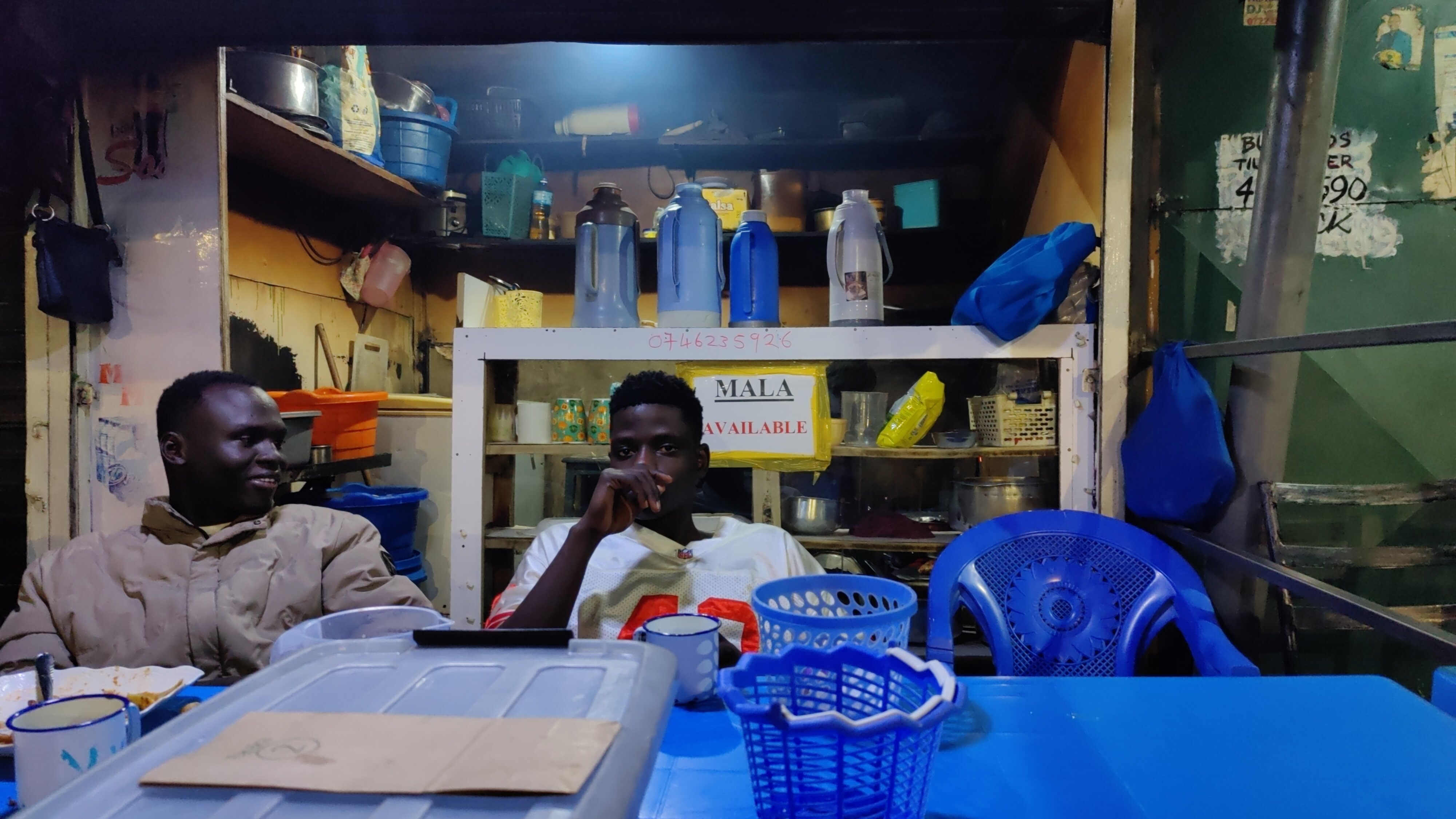
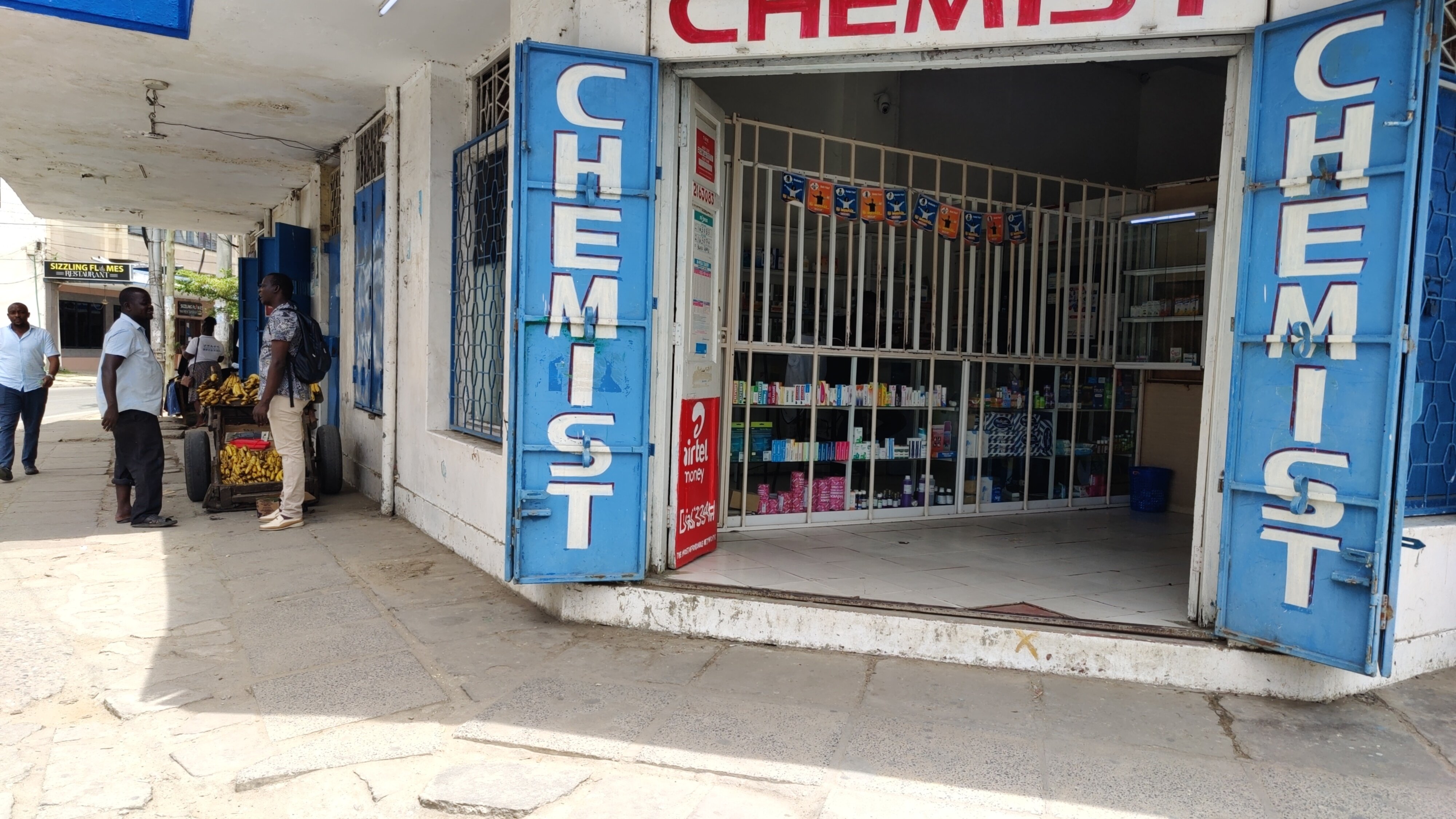
In September of this year, I visited Kenya to attend the State of the Map conference. I spent six nights in the capital Nairobi, two nights in Mombasa, and one night on a train. I was very happy with the visa process being smooth and quick. Furthermore, I stayed at the Nairobi Transit Hotel with other attendees, with Ibtehal from Bangladesh as my roommate. One of the memorable moments was the time I spent at a local coffee shop nearby. We used to go there at midnight, despite the grating in the shops suggesting such adventures were unsafe. Fortunately, nothing bad happened, and we were rewarded with a fun time with the locals.
The coffee shop Ibtehal and me used to visit during the midnight
Grating at a chemist shop in Mombasa, Kenya
The country lies on the equator, which might give the impression of extremely hot temperatures. However, Nairobi was on the cooler side (10 25 degrees Celsius), and I found myself needing a hoodie, which I bought the next day. It also served as a nice souvenir, as it had an outline of the African map printed on it. I also bought a Safaricom SIM card for 100 shillings and recharged it with 1000 shillings for 8 GB internet with 5G speeds and 400 minutes talk time.

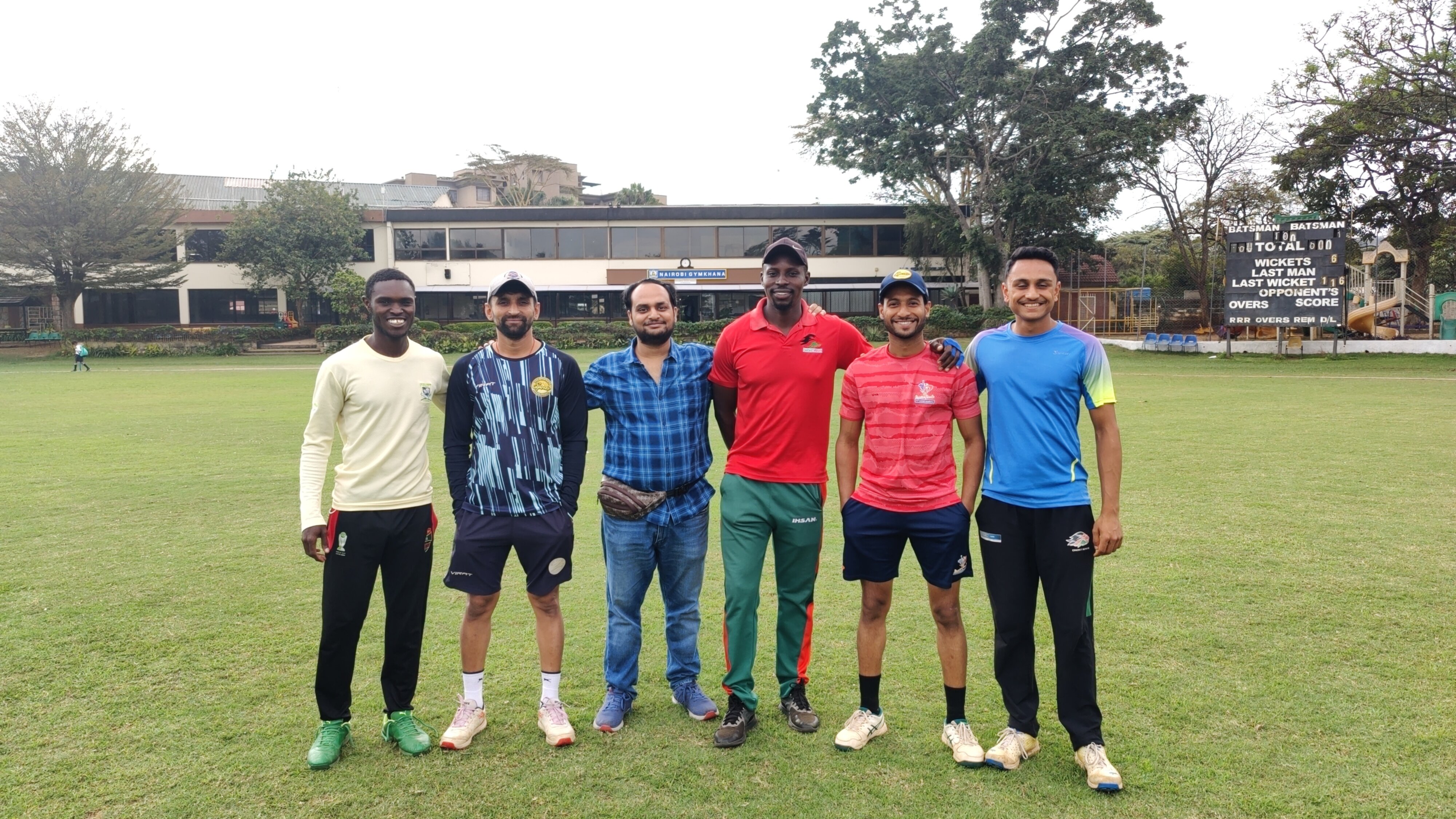
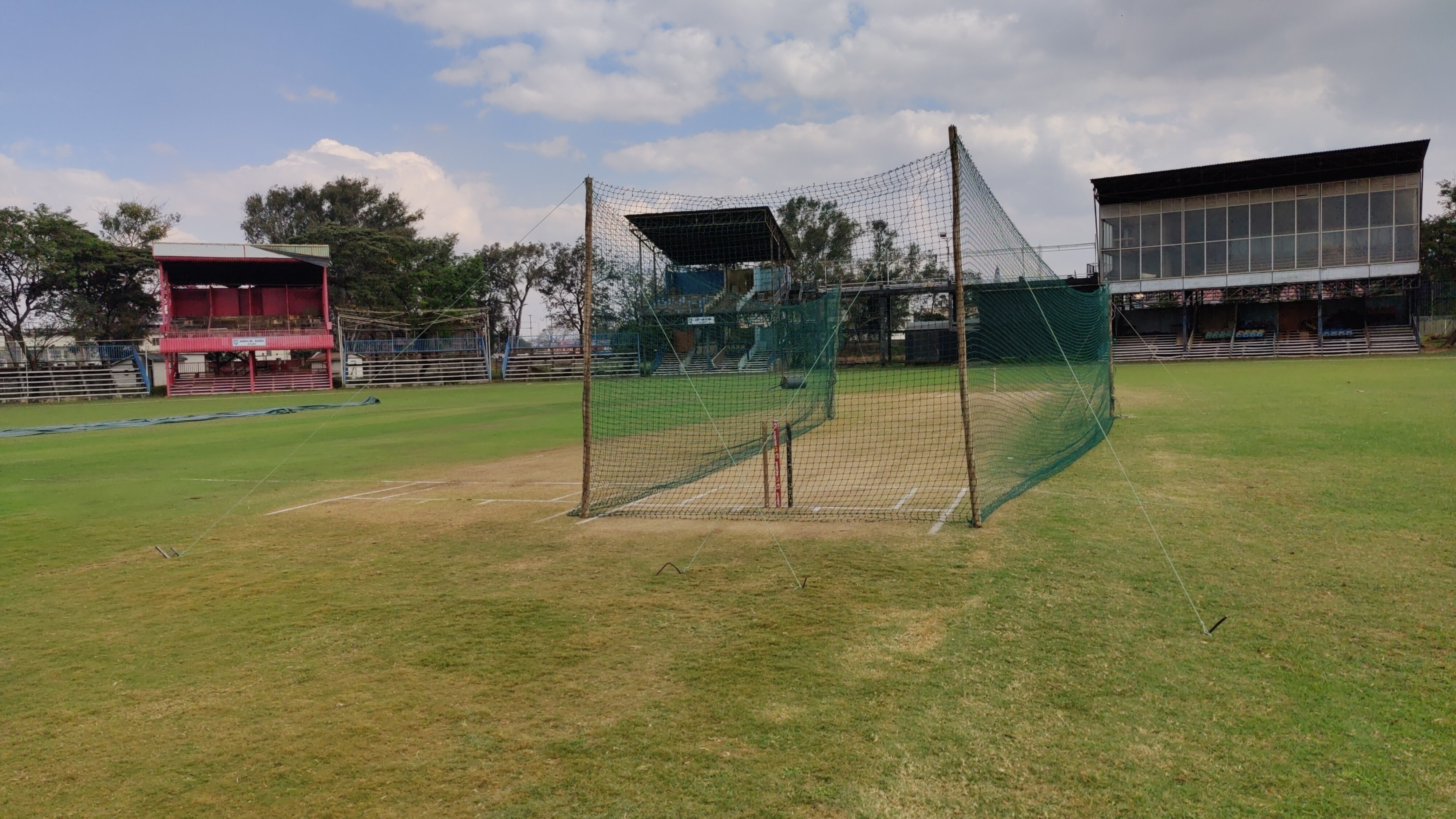
A visit to Nairobi s Historic Cricket Ground On this trip, I got a unique souvenir that can t be purchased from the market a cricket jersey worn in an ODI match by a player. The story goes as follows: I was roaming around the market with my friend Benson from Nairobi to buy a Kenyan cricket jersey for myself, but we couldn t find any. So, Benson had the idea of visiting the Nairobi Gymkhana Club, which used to be Kenya s main cricket ground. It has hosted some historic matches, including the 2003 World Cup match in which Kenya beat the mighty Sri Lankans and the record for the fastest ODI century by Shahid Afridi in just 37 balls in 1996. Although entry to the club was exclusively for members, I was warmly welcomed by the staff. Upon reaching the cricket ground, I met some Indian players who played in Kenyan leagues, as well as Lucas Oluoch and Dominic Wesonga, who have represented Kenya in ODIs. When I expressed interest in getting a jersey, Dominic agreed to send me pictures of his jersey. I liked his jersey and collected it from him. I gave him 2000 shillings, an amount suggested by those Indian players.
Me with players at the Nairobi Gymkhana Club
Cricket pitch at the Nairobi Gymkhana Club
A view of the cricket ground inside the Nairobi Gymkhana Club
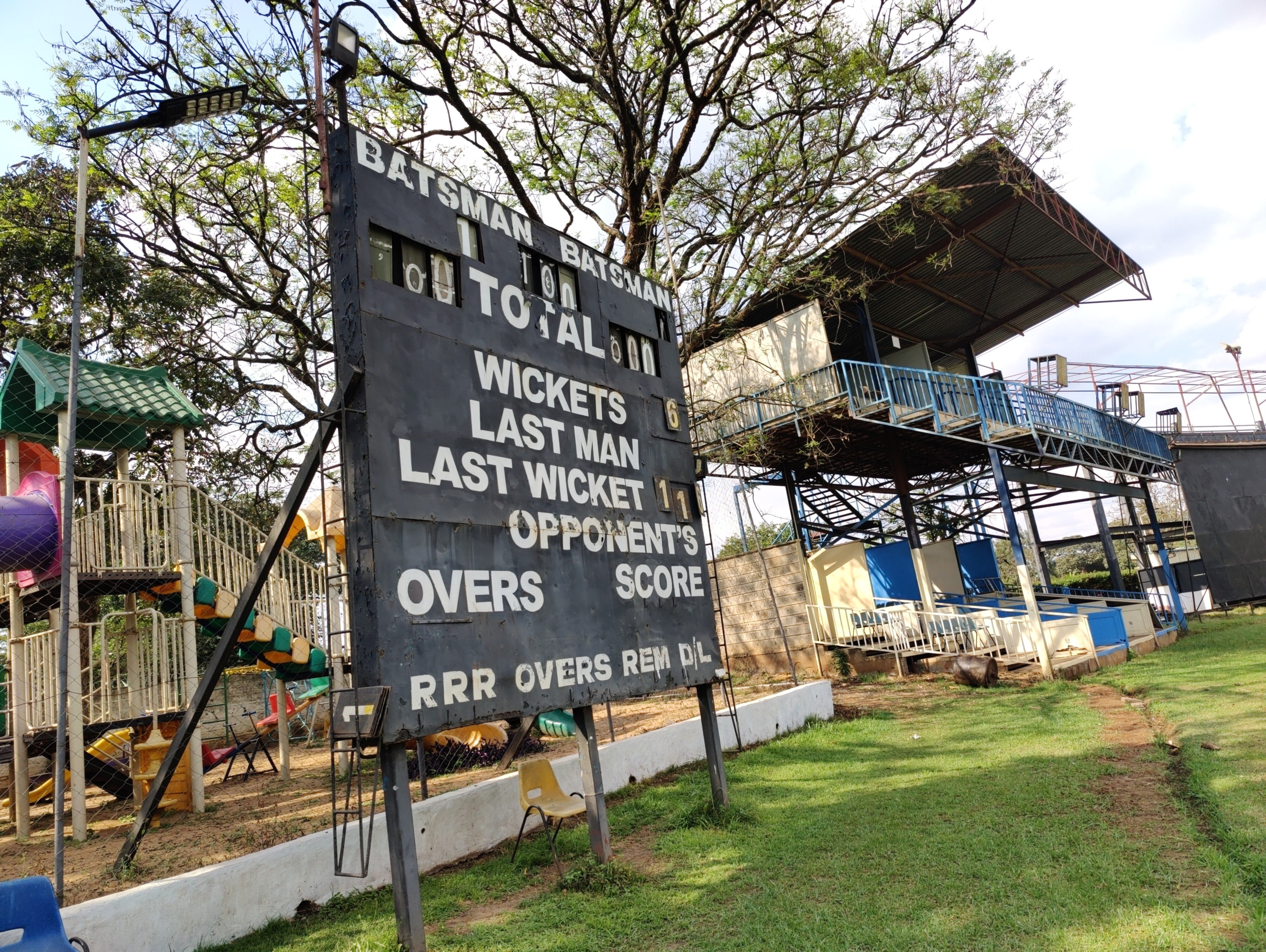
Scoreboard at the Nairobi Gymkhana cricket ground

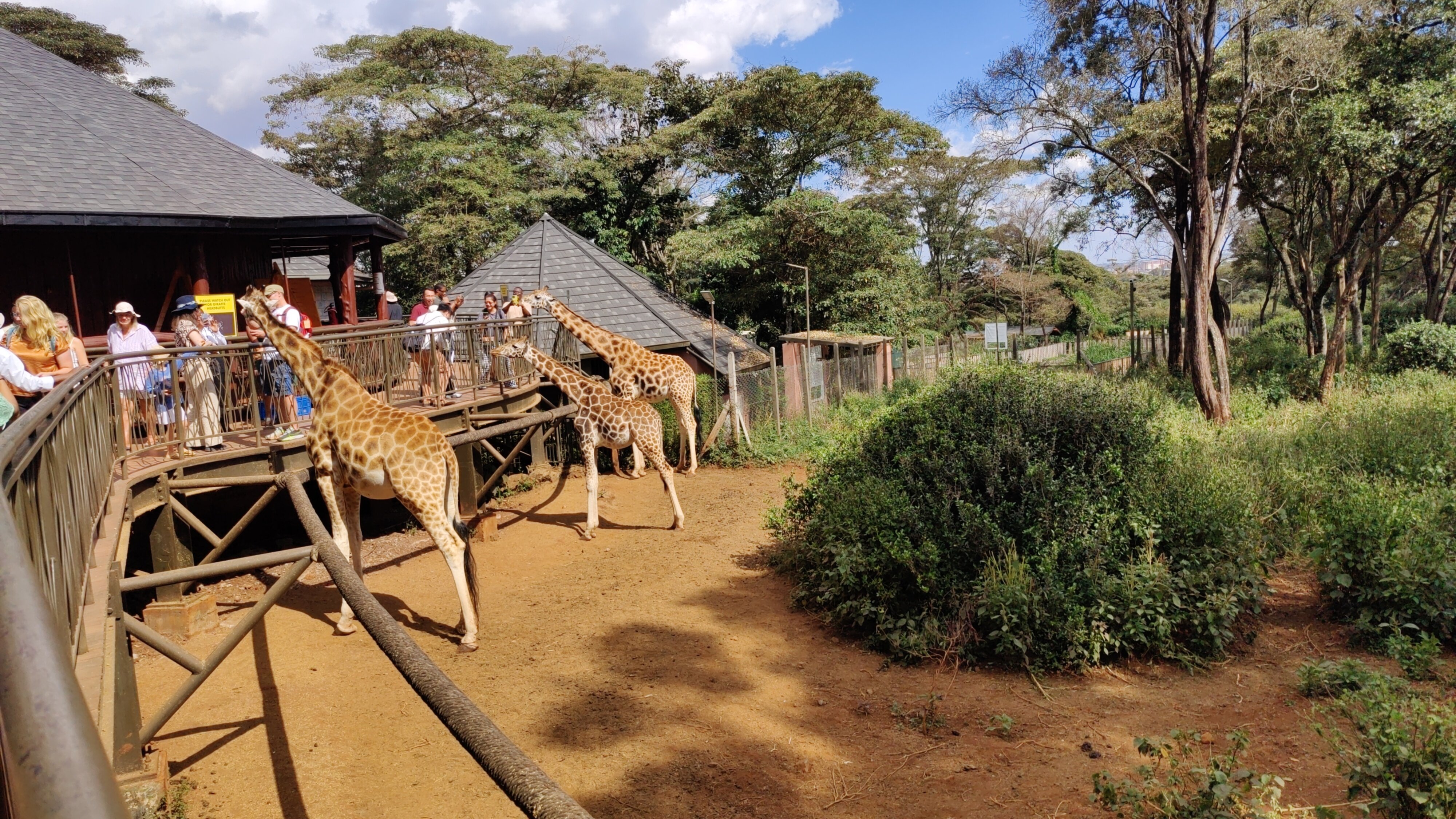
Giraffe Center in Nairobi Kenya is known for its safaris and has no shortage of national parks. In fact, Nairobi is the only capital in the world with a national park. I decided not to visit one, as most of them were expensive and offered multi-day tours, and I didn t want to spend that much time in the wildlife. Instead, I went to the Giraffe Center in Nairobi with Pragya and Rabina. The ticket cost 1500 Kenyan shillings (1000 Indian rupees). In Kenya, matatus - shared vans, usually decorated with portraits of famous people and play rap songs - are the most popular means of public transport. Reaching the Giraffe Center from our hotel required taking five matatus, which cost a total of 150 shillings, and a 2 km walk. The journey back was 90 shillings, suggesting that we didn t find the most efficient route to get there. At the Giraffe Center, we fed giraffes and took photos.
A matatu with a Notorious BIG portrait.
Inside the Giraffe Center

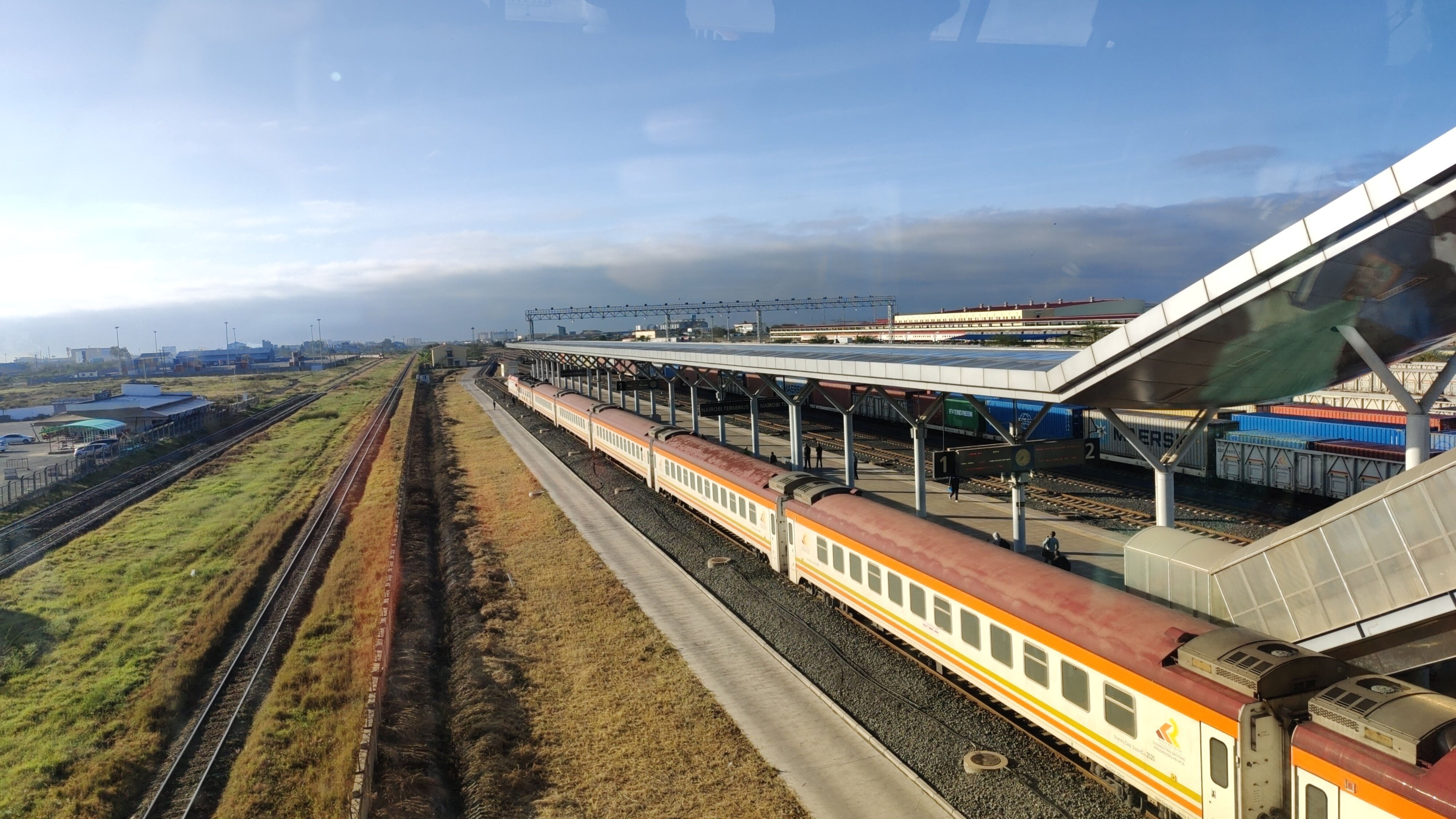
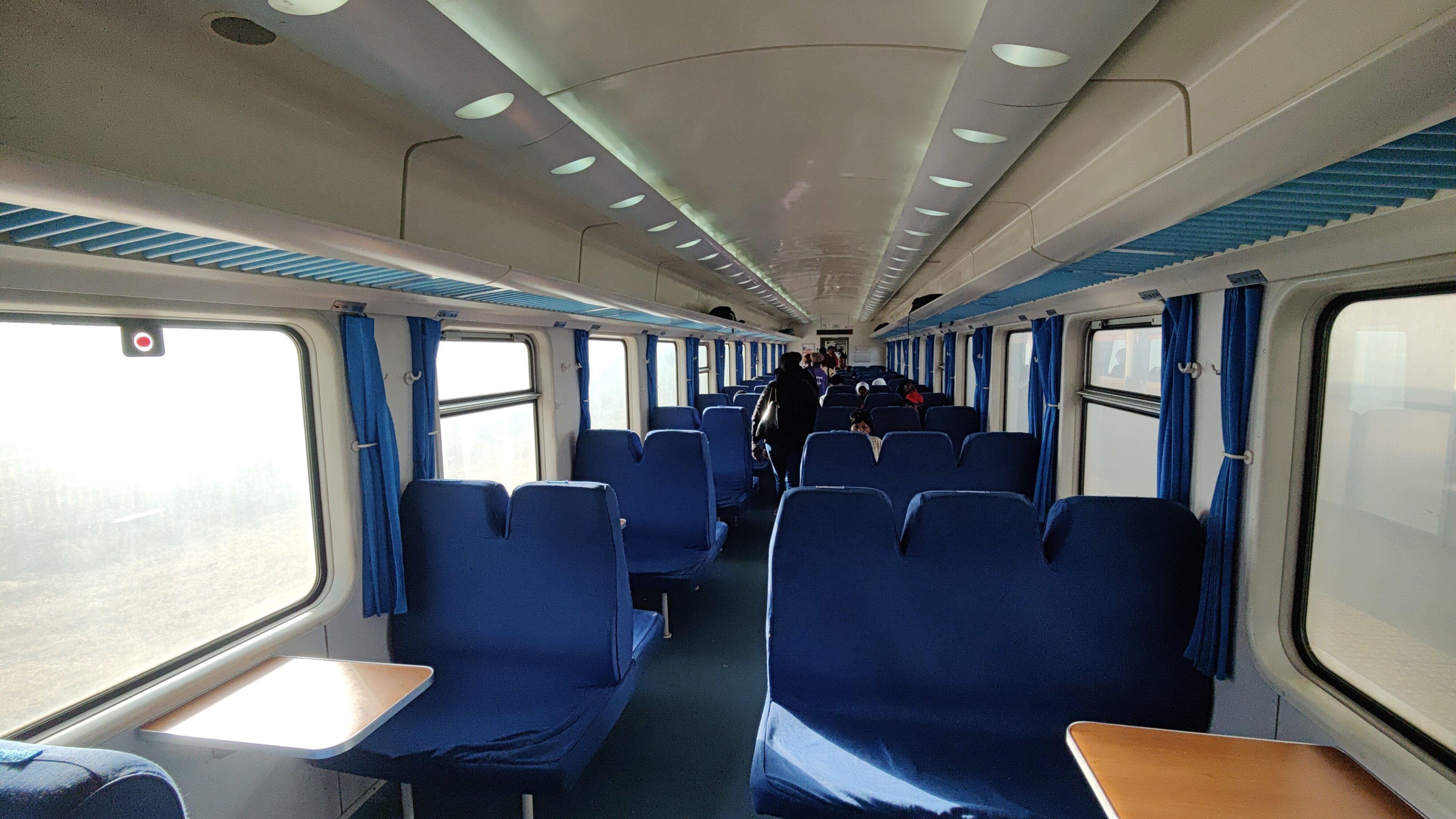
Train ride from Nairobi to Mombasa I took a train from Nairobi to Mombasa. The train is known as the SGR Train, where SGR refers to Standard Gauge Railway. The journey was around 500 km. M-Pesa was the only way to make payment for pre-booking the train ticket, and I didn t have an M-Pesa account. Pragya s friend Mary helped facilitate the payment. I booked a second-class ticket, which cost 1500 shillings (1000 Indian rupees). The train was scheduled to depart from Nairobi at 08:00 hours in the morning and arrive in Mombasa at 14:00 hours. The security check at the station required scanning our bags and having them sniffed by sniffer dogs. I also fell victim to a scam by a security official who offered to help me get my ticket printed, only to later ask me to get him some coffee, which I politely declined. Before boarding the train, I was treated to some stunning views at the Nairobi Terminus station. It was a seating train, but I wished it were a sleeper train, as I was sleep-deprived. The train was neat and clean, with good toilets. The train reached Mombasa on time at around 14:00 hours.
SGR train at Nairobi Terminus.
Interior of the SGR train

Arrival in Mombasa
Mombasa Terminus station.
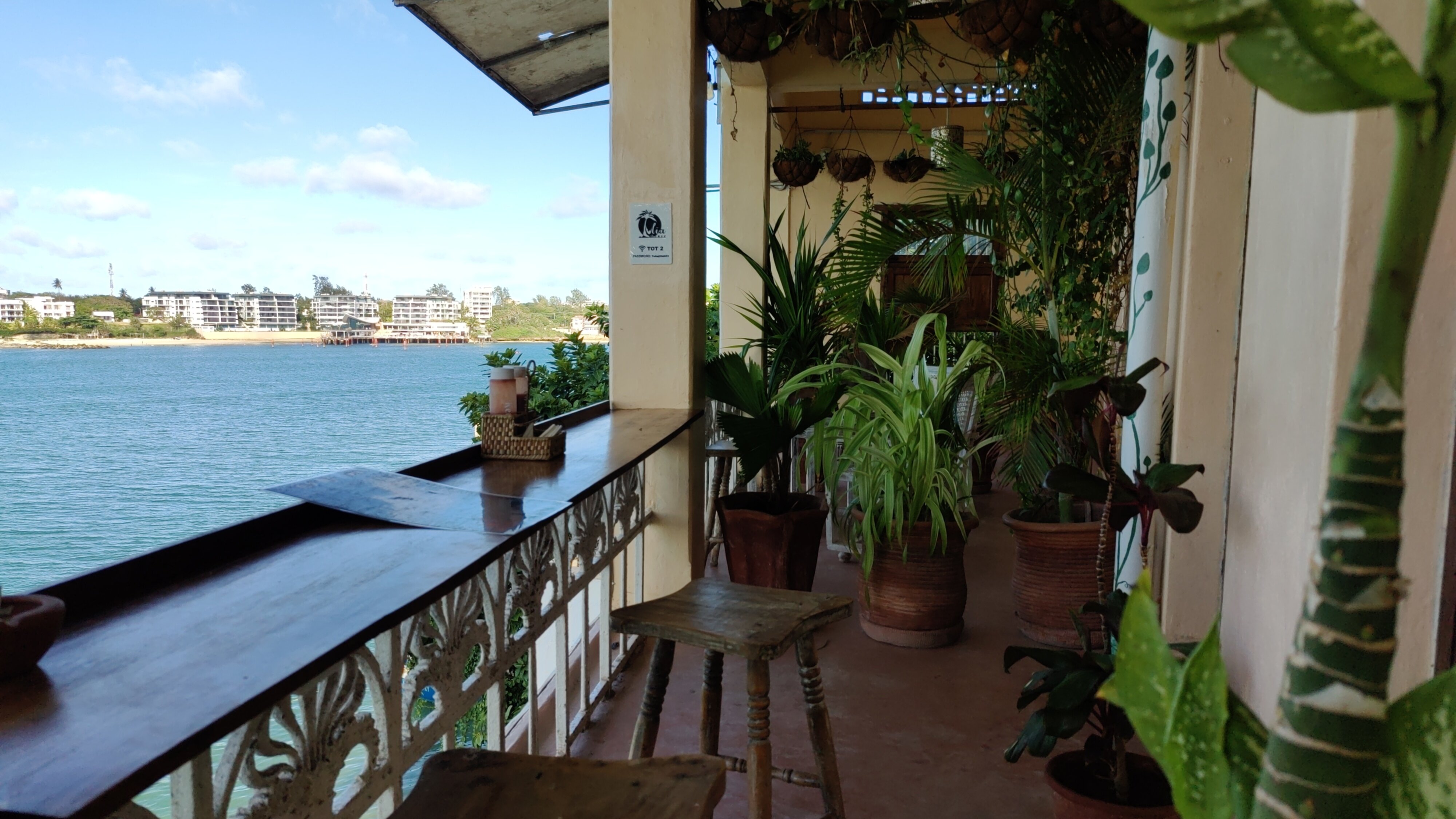
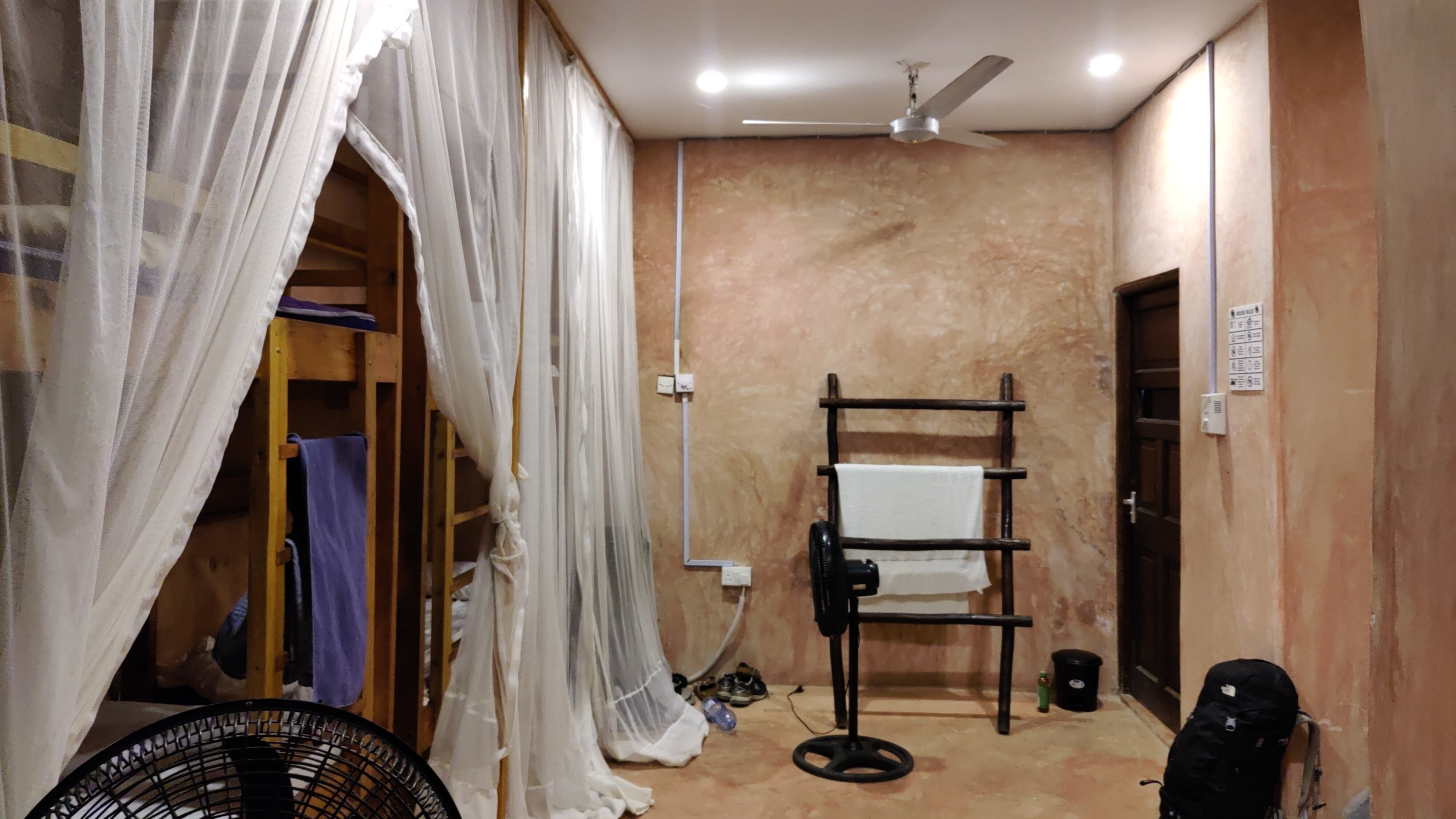
Mombasa was a bit hotter than Nairobi, with temperatures reaching around 30 degrees Celsius. However, that s not too hot for me, as I am used to higher temperatures in India. I had booked a hostel in the Old Town and was searching for a hitchhike from the Mombasa Terminus station. After trying for more than half an hour, I took a matatu that dropped me 3 km from my hostel for 200 shillings (140 Indian rupees). I tried to hitchhike again but couldn t find a ride. I think I know why I couldn t get a ride in both the cases. In the first case, the Mombasa Terminus was in an isolated place, so most of the vehicles were taxis or matatus while any noncommercial cars were there to pick up friends and family. If the station were in the middle of the city, there would be many more car/truck drivers passing by, thus increasing my possibilities of getting a ride. In the second case, my hostel was at the end of the city, and nobody was going towards that side. In fact, many drivers told me they would love to give me a ride, but they were going in some other direction. Finally, I took a tuktuk for 70 shillings to reach my hostel, Tulia Backpackers. It was 11 USD (1400 shillings) for one night. The balcony gave a nice view of the Indian Ocean. The rooms had fans, but there was no air conditioning. Each bed also had mosquito nets. The place was walking distance of the famous Fort Jesus. Mombasa has had more Islamic influence compared to Nairobi and also has many Hindu temples.
The balcony at Tulia Backpackers Hostel had a nice view of the ocean.
A room inside the hostel with fans and mosquito nets on the beds

Visiting White Sandy Beaches and Getting a Hitchhike Visiting Nyali beach marked my first time ever at a white sand beach. It was like 10 km from the hostel. The next day, I visited Diani Beach, which was 30 km from the hostel. Going to Diani Beach required crossing a river, for which there s a free ferry service every few minutes, followed by taking a matatu to Ukunda and then a tuk-tuk. The journey gave me a glimpse of the beautiful countryside of Kenya.
Nyali beach is a white sand beach
This is the ferry service for crossing the river.
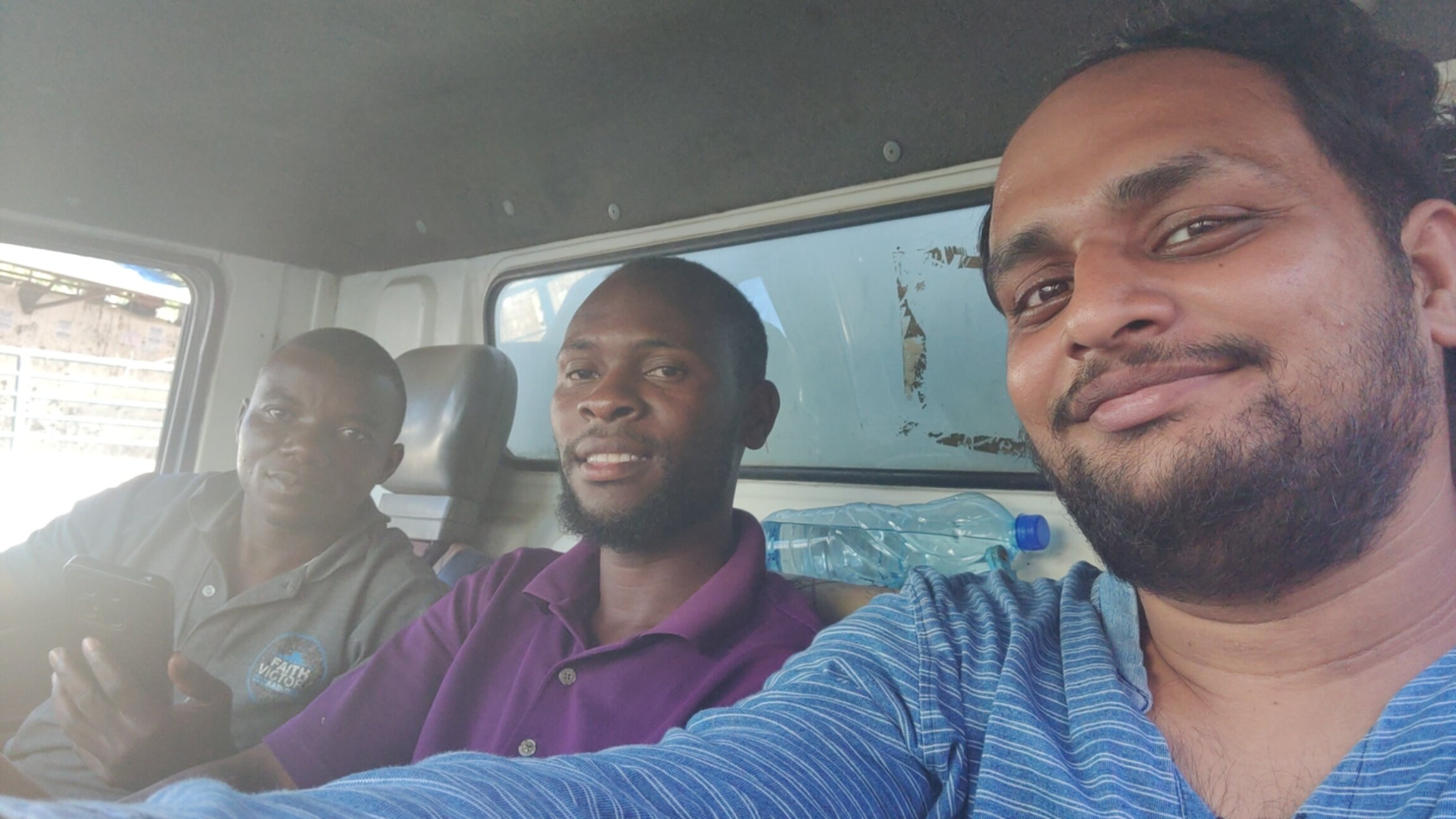
During my return from Diani Beach to the hostel, I was successful in hitchhiking. However, it was only a 4 km ride and not sufficient to reach Ukunda, so I tried to get another ride. When a truck stopped for me, I asked for a ride to Ukunda. Later, I learned that they were going in the same direction as me, so I got off within walking distance from my hostel. The ride was around 30 km. I also learned the difference between a truck ride and a matatu or car ride. For instance, matatus and cars are much faster and cooler due to air conditioning, while trucks tend to be warmer because they lack it. Further, the truck was stopped at many checkpoints by the police for inspections as it carried goods, which is not the case with matatus. Anyways, it was a nice experience, and I am grateful for the ride. I had a nice conversation with the truck drivers about Indian movies and my experiences in Kenya.
Diani beach is a popular beach in Kenya. It is a white sand beach.
Selfie with truck drivers who gave me the free ride

Back to Nairobi I took the SGR train from Mombasa back to Nairobi. This time I took the night train, which departs at 22:00 hours, reaching Nairobi at around 04:00 in the morning. I could not sleep comfortably since the train only had seater seats. I had booked the Zarita Hotel in Nairobi and had already confirmed if they allowed early morning check-in. Usually, hotels have a fixed checkout time, say 11:00 in the morning, and you are not allowed to stay beyond that regardless of the time you checked in. But this hotel checked me in for 24 hours. Here, I paid in US dollars, and the cost was 12 USD.

Almost Got Stuck in Kenya Two days before my scheduled flight from Nairobi back to India, I heard the news that the airports in Kenya were closed due to the strikes. Rabina and Pragya had their flight back to Nepal canceled that day, which left them stuck in Nairobi for two additional days. I called Sahil in India and found out during the conversation that the strike was called off in the evening. It was a big relief for me, and I was fortunate to be able to fly back to India without any changes to my plans.
Newspapers at a stand in Kenya covering news on the airport closure

Experience with locals I had no problems communicating with Kenyans, as everyone I met knew English to an extent that could easily surpass that of big cities in India. Additionally, I learned a few words from Kenya s most popular local language, Swahili, such as Asante, meaning thank you, Jambo for hello, and Karibu for welcome. Knowing a few words in the local language went a long way. I am not sure what s up with haggling in Kenya. It wasn t easy to bring the price of souvenirs down. I bought a fridge magnet for 200 shillings, which was the quoted price. On the other hand, it was much easier to bargain with taxis/tuktuks/motorbikes. I stayed at three hotels/hostels in Kenya. None of them had air conditioners. Two of the places were in Nairobi, and they didn t even have fans in the rooms, while the one in Mombasa had only fans. All of them had good Wi-Fi, except Tulia where the internet overall was a bit shaky. My experience with the hotel staff was great. For instance, we requested that the Nairobi Transit Hotel cancel the included breakfast in order to reduce the room costs, but later realized that it was not a good idea. The hotel allowed us to revert and even offered one of our missing breakfasts during dinner. The staff at Tulia Backpackers in Mombasa facilitated the ticket payment for my train from Mombasa to Nairobi. One of the staff members also gave me a lift to the place where I could catch a matatu to Nyali Beach. They even added an extra tea bag to my tea when I requested it to be stronger.

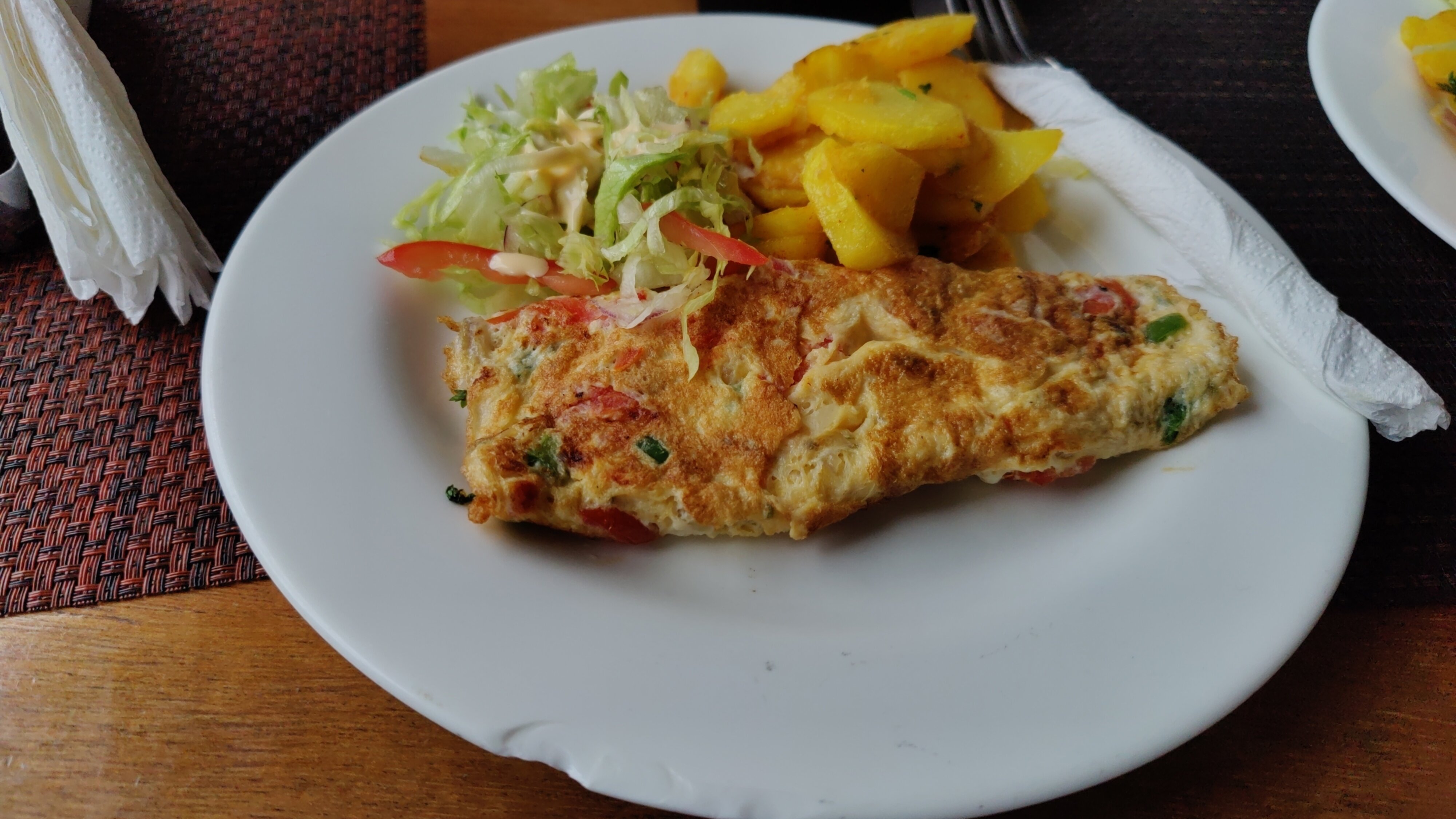
Food At the Nairobi Transit Hotel, a Spanish omelet with tea was served for breakfast. I noticed that Spanish omelette appeared on the menus of many restaurants, suggesting that it is popular in Kenya. This was my first time having this dish. The milk tea in Kenya, referred to by locals as white tea, is lighter than Indian tea (they don t put a lot of tea leaves).
Spanish Omelette served in breakfast at Nairobi Transit Hotel
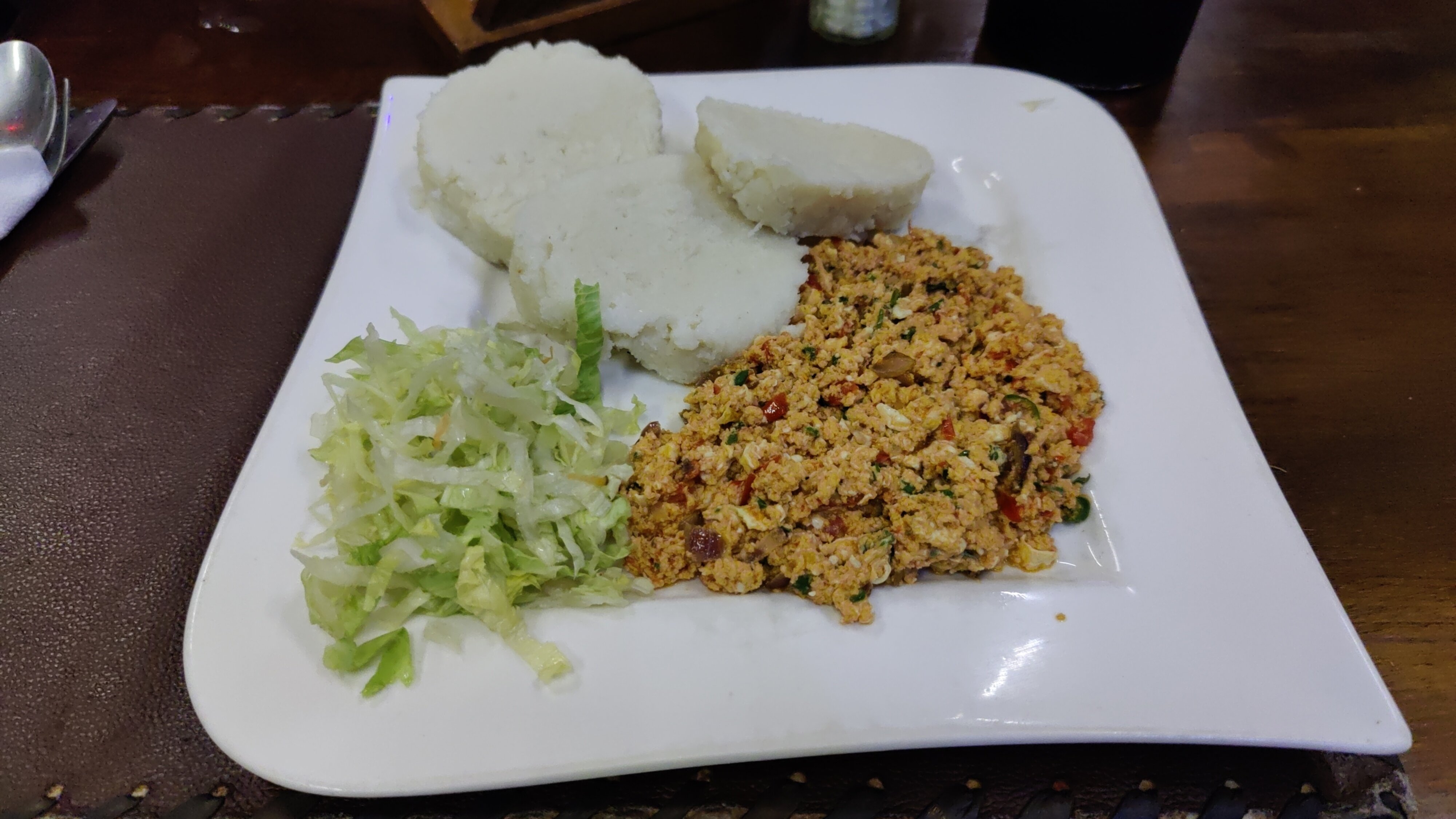
I also sampled ugali with eggs. In Mombasa, I visited an Indian restaurant called New Chetna and had a buffet thali there twice.
Ugali with eggs.

Tips for Exchanging Money In Kenya, I exchanged my money at forex shops a couple of times. I received good exchange rates for bills larger than 50 USD. For instance, 1 USD on xe.com was 129 shillings, and I got 128.3 shillings per USD (a total of 12,830 shillings) for two 50 USD notes at an exchange in Nairobi, while 127 shillings, which was the highest rate at the banks. On the other hand, for smaller bills such as a one US dollar note, I would have got 125 shillings. A passport was the only document required for the exchange, and they also provided a receipt. A good piece of advice for travelers is to keep 50 USD or larger bills for exchanging into the local currency while saving the smaller US dollar bills for accommodation, as many hotels and hostels accept payment in US dollars (in addition to Kenyan shillings).

Missed Malindi and Lamu There were more places on my to-visit list in Kenya. But I simply didn t have time to cover them, as I don t like rushing through places, especially in a foreign country where there is a chance of me underestimating the amount of time it takes during transit. I would have liked to visit at least one of Kilifi, Watamu or Malindi beaches. Further, Lamu seemed like a unique place to visit as it has no cars or motorized transport; the only options for transport are boats and donkeys. That s it for now. Meet you in the next one :)

Sven Hoexter: Google CloudDNS HTTPS Records with ipv6hint

I naively provisioned an HTTPS record at Google CloudDNS like this via terraform:
resource "google_dns_record_set" "testv6"  
    name         = "testv6.some-domain.example."
    managed_zone = "some-domain-example"
    type         = "HTTPS"
    ttl          = 3600
    rrdatas      = ["1 . alpn=\"h2\" ipv4hint=\"198.51.100.1\" ipv6hint=\"2001:DB8::1\""]
 
This results in a permanent diff because the Google CloudDNS API seems to parse the record content, and stores the ipv6hint expanded (removing the :: notation) and in all lowercase as 2001:db8:0:0:0:0:0:1. Thus to fix the permanent diff we've to use it like this:
resource "google_dns_record_set" "testv6"  
    name = "testv6.some-domain.example."
    managed_zone = "some-domain-example"
    type = "HTTPS"
    ttl = 3600
    rrdatas = ["1 . alpn=\"h2\" ipv4hint=\"198.51.100.1\" ipv6hint=\"2001:db8:0:0:0:0:0:1\""]
 
Guess I should be glad that they already support HTTPS records natively, and not bicker too much about the implementation details.

3 November 2024

Guido G nther: Free Software Activities October 2024

Another short status update of what happened on my side last month. Besides a phosh bugfix release improving text input and selection was a prevalent pattern again resulting in improvements in the compositor, the OSK and some apps. phosh phoc phosh-mobile-settings libphosh-rs phosh-osk-stub phosh-osk-data xdg-desktop-portal-phosh Debian ModemManager Calls GTK feedbackd Chatty libcmatrix phosh-ev git-buildpackage Unified push specification swipeGuess wlr-clients iotas (Note taking app) Flare (Signal app) xdg-desktop-portal Reviews This is not code by me but reviews on other peoples code. The list is fairly incomplete, hope to improve on this in the upcoming months: Help Development If you want to support my work see donations. This includes a list of hardware we want to improve support for. Thanks a lot to all current and past donors.

1 November 2024

Colin Watson: Free software activity in October 2024

Almost all of my Debian contributions this month were sponsored by Freexian. You can also support my work directly via Liberapay. Ansible I noticed that Ansible had fallen out of Debian testing due to autopkgtest failures. This seemed like a problem worth fixing: in common with many other people, we use Ansible for configuration management at Freexian, and it probably wouldn t make our sysadmins too happy if they upgraded to trixie after its release and found that Ansible was gone. The problems here were really just slogging through test failures in both the ansible-core and ansible packages, but their test suites are large and take a while to run so this took some time. I was able to contribute a few small fixes to various upstreams in the process: This should now get back into testing tomorrow. OpenSSH Martin- ric Racine reported that ssh-audit didn t list the ext-info-s feature as being available in Debian s OpenSSH 9.2 packaging in bookworm, contrary to what OpenSSH upstream said on their specifications page at the time. I spent some time looking into this and realized that upstream was mistakenly saying that implementations of ext-info-c and ext-info-s were added at the same time, while in fact ext-info-s was added rather later. ssh-audit now has clearer output, and the OpenSSH maintainers have corrected their specifications page. I looked into a report of an ssh failure in certain cases when using GSS-API key exchange (which is a Debian patch). Once again, having integration tests was a huge win here: the affected scenario is quite a fiddly one, but I was able to set it up in the test, and thereby make sure it doesn t regress in future. It still took me a couple of hours to get all the details right, but in the past this sort of thing took me much longer with a much lower degree of confidence that the fix was correct. On upstream s advice, I cherry-picked some key exchange fixes needed for big-endian architectures. Python team I packaged python-evalidate, needed for a new upstream version of buildbot. The Python 3.13 transition rolls on. I fixed problems related to it in htmlmin, humanfriendly, postgresfixture (contributed upstream), pylint, python-asyncssh (contributed upstream), python-oauthlib, python3-simpletal, quodlibet, zope.exceptions, and zope.interface. A trickier Python 3.13 issue involved the cgi module. Years ago I ported zope.publisher to the multipart module because cgi.FieldStorage was broken in some situations, and as a result I got a recommendation into Python s dead batteries PEP 594. Unfortunately there turns out to be a name conflict between multipart and python-multipart on PyPI; python-multipart upstream has been working to disentangle this, though we still need to work out what to do in Debian. All the same, I needed to fix python-wadllib and multipart seemed like the best fit; I contributed a port upstream and temporarily copied multipart into Debian s python-wadllib source package to allow its tests to pass. I ll come back and fix this properly once we sort out the multipart vs. python-multipart packaging. tzdata moved some timezone definitions to tzdata-legacy, which has broken a number of packages. I added tzdata-legacy build-dependencies to alembic and python-icalendar to deal with this in those packages, though there are still some other instances of this left. I tracked down an nltk regression that caused build failures in many other packages. I fixed Rust crate versioning issues in pydantic-core, python-bcrypt, and python-maturin (mostly fixed by Peter Michael Green and Jelmer Vernoo , but it needed a little extra work). I fixed other build failures in entrypoints, mayavi2, python-pyvmomi (mostly fixed by Alexandre Detiste, but it needed a little extra work), and python-testing.postgresql (ditto). I fixed python3-simpletal to tolerate future versions of dh-python that will drop their dependency on python3-setuptools. I fixed broken symlinks in python-treq. I removed (build-)depends on python3-pkg-resources from alembic, autopep8, buildbot, celery, flufl.enum, flufl.lock, python-public, python-wadllib (contributed upstream), pyvisa, routes, vulture, and zodbpickle (contributed upstream). I upgraded astroid, asyncpg (fixing a Python 3.13 failure and a build failure), buildbot (noticing an upstream test bug in the process), dnsdiag, frozenlist, netmiko (fixing a Python 3.13 failure), psycopg3, pydantic-settings, pylint, python-asyncssh, python-bleach, python-btrees, python-cytoolz, python-django-pgtrigger, python-django-test-migrations, python-gssapi, python-icalendar, python-json-log-formatter, python-pgbouncer, python-pkginfo, python-plumbum, python-stdlib-list, python-tokenize-rt, python-treq (fixing a Python 3.13 failure), python-typeguard, python-webargs (fixing a build failure), pyupgrade, pyvisa, pyvisa-py (fixing a Python 3.13 failure), toolz, twisted, vulture, waitress (fixing CVE-2024-49768 and CVE-2024-49769), wtf-peewee, wtforms, zodbpickle, zope.exceptions, zope.interface, zope.proxy, zope.security, and zope.testrunner to new upstream versions. I tried to fix a regression in python-scruffy, but I need testing feedback. I requested removal of python-testing.mysqld.

Taavi V n nen: Custom domains on the Wikimedia Cloud VPS web proxy

The shared web proxy used on Wikimedia Cloud VPS now has technical support for using arbitrary domains (and not just wmcloud.org subdomains) in proxy names. I think this is a good example of how software slowly evolves over time as new requirements emerge, with each new addition building on top of the previous ones. According to the edit history on Wikitech, the web proxy service has its origins in 2012, although the current idea where you create a proxy and map it to a specific instance and port was only introduced a year later. (Before that, it just directly mapped the subdomain to the VPS instance with the same name). There were some smaller changes in the coming years like the migration to acme-chief for TLS certificate management, but the overall logic stayed very similar until 2020 when the wmcloud.org domain was introduced. That was implemented by adding a config option listing all possible domains, so future domain additions would be as simple as adding the new domain to that list in the configuration. Then the changes start becoming more frequent:

27 October 2024

Enrico Zini: Typing decorators for class members with optional arguments

This looks straightforward and is far from it. I expect tool support will improve in the future. Meanwhile, this blog post serves as a step by step explanation for what is going on in code that I'm about to push to my team.
Let's take this relatively straightforward python code. It has a function printing an int, and a decorator that makes it argument optional, taking it from a global default if missing:
from unittest import mock
default = 42
def with_default(f):
    def wrapped(self, value=None):
        if value is None:
            value = default
        return f(self, value)
    return wrapped
class Fiddle:
    @with_default
    def print(self, value):
        print("Answer:", value)
fiddle = Fiddle()
fiddle.print(12)
fiddle.print()
def mocked(self, value=None):
    print("Mocked answer:", value)
with mock.patch.object(Fiddle, "print", autospec=True, side_effect=mocked):
    fiddle.print(12)
    fiddle.print()
It works nicely as expected:
$ python3 test0.py
Answer: 12
Answer: 42
Mocked answer: 12
Mocked answer: None
It lacks functools.wraps and typing, though. Let's add them. Adding functools.wraps Adding a simple @functools.wraps, mock unexpectedly stops working:
# python3 test1.py
Answer: 12
Answer: 42
Mocked answer: 12
Traceback (most recent call last):
  File "/home/enrico/lavori/freexian/tt/test1.py", line 42, in <module>
    fiddle.print()
  File "<string>", line 2, in print
  File "/usr/lib/python3.11/unittest/mock.py", line 186, in checksig
    sig.bind(*args, **kwargs)
  File "/usr/lib/python3.11/inspect.py", line 3211, in bind
    return self._bind(args, kwargs)
           ^^^^^^^^^^^^^^^^^^^^^^^^
  File "/usr/lib/python3.11/inspect.py", line 3126, in _bind
    raise TypeError(msg) from None
TypeError: missing a required argument: 'value'
This is the new code, with explanations and a fix:
# Introduce functools
import functools
from unittest import mock
default = 42
def with_default(f):
    @functools.wraps(f)
    def wrapped(self, value=None):
        if value is None:
            value = default
        return f(self, value)
    # Fix:
    # del wrapped.__wrapped__
    return wrapped
class Fiddle:
    @with_default
    def print(self, value):
        assert value is not None
        print("Answer:", value)
fiddle = Fiddle()
fiddle.print(12)
fiddle.print()
def mocked(self, value=None):
    print("Mocked answer:", value)
with mock.patch.object(Fiddle, "print", autospec=True, side_effect=mocked):
    fiddle.print(12)
    # mock's autospec uses inspect.getsignature, which follows __wrapped__ set
    # by functools.wraps, which points to a wrong signature: the idea that
    # value is optional is now lost
    fiddle.print()
Adding typing For simplicity, from now on let's change Fiddle.print to match its wrapped signature:
      # Give up with making value not optional, to simplify things :(
      def print(self, value: int   None = None) -> None:
          assert value is not None
          print("Answer:", value)
Typing with ParamSpec
# Introduce typing, try with ParamSpec
import functools
from typing import TYPE_CHECKING, ParamSpec, Callable
from unittest import mock
default = 42
P = ParamSpec("P")
def with_default(f: Callable[P, None]) -> Callable[P, None]:
    # Using ParamSpec we forward arguments, but we cannot use them!
    @functools.wraps(f)
    def wrapped(self, value: int   None = None) -> None:
        if value is None:
            value = default
        return f(self, value)
    return wrapped
class Fiddle:
    @with_default
    def print(self, value: int   None = None) -> None:
        assert value is not None
        print("Answer:", value)
mypy complains inside the wrapper, because while we forward arguments we don't constrain them, so we can't be sure there is a value in there:
test2.py:17: error: Argument 2 has incompatible type "int"; expected "P.args"  [arg-type]
test2.py:19: error: Incompatible return value type (got "_Wrapped[P, None, [Any, int   None], None]", expected "Callable[P, None]")  [return-value]
test2.py:19: note: "_Wrapped[P, None, [Any, int   None], None].__call__" has type "Callable[[Arg(Any, 'self'), DefaultArg(int   None, 'value')], None]"
Typing with Callable We can use explicit Callable argument lists:
# Introduce typing, try with Callable
import functools
from typing import TYPE_CHECKING, Callable, TypeVar
from unittest import mock
default = 42
A = TypeVar("A")
# Callable cannot represent the fact that the argument is optional, so now mypy
# complains if we try to omit it
def with_default(f: Callable[[A, int   None], None]) -> Callable[[A, int   None], None]:
    @functools.wraps(f)
    def wrapped(self: A, value: int   None = None) -> None:
        if value is None:
            value = default
        return f(self, value)
    return wrapped
class Fiddle:
    @with_default
    def print(self, value: int   None = None) -> None:
        assert value is not None
        print("Answer:", value)
if TYPE_CHECKING:
    reveal_type(Fiddle.print)
fiddle = Fiddle()
fiddle.print(12)
# !! Too few arguments for "print" of "Fiddle"  [call-arg]
fiddle.print()
def mocked(self, value=None):
    print("Mocked answer:", value)
with mock.patch.object(Fiddle, "print", autospec=True, side_effect=mocked):
    fiddle.print(12)
    fiddle.print()
Now mypy complains when we try to omit the optional argument, because Callable cannot represent optional arguments:
test3.py:32: note: Revealed type is "def (test3.Fiddle, Union[builtins.int, None])"
test3.py:37: error: Too few arguments for "print" of "Fiddle"  [call-arg]
test3.py:46: error: Too few arguments for "print" of "Fiddle"  [call-arg]
typing's documentation says:
Callable cannot express complex signatures such as functions that take a variadic number of arguments, overloaded functions, or functions that have keyword-only parameters. However, these signatures can be expressed by defining a Protocol class with a call() method:
Let's do that! Typing with Protocol, take 1
# Introduce typing, try with Protocol
import functools
from typing import TYPE_CHECKING, Protocol, TypeVar, Generic, cast
from unittest import mock
default = 42
A = TypeVar("A", contravariant=True)
class Printer(Protocol, Generic[A]):
    def __call__(_, self: A, value: int   None = None) -> None:
        ...
def with_default(f: Printer[A]) -> Printer[A]:
    @functools.wraps(f)
    def wrapped(self: A, value: int   None = None) -> None:
        if value is None:
            value = default
        return f(self, value)
    return cast(Printer, wrapped)
class Fiddle:
    # function has a __get__ method to generated bound versions of itself
    # the Printer protocol does not define it, so mypy is now unable to type
    # the bound method correctly
    @with_default
    def print(self, value: int   None = None) -> None:
        assert value is not None
        print("Answer:", value)
if TYPE_CHECKING:
    reveal_type(Fiddle.print)
fiddle = Fiddle()
# !! Argument 1 to "__call__" of "Printer" has incompatible type "int"; expected "Fiddle"
fiddle.print(12)
fiddle.print()
def mocked(self, value=None):
    print("Mocked answer:", value)
with mock.patch.object(Fiddle, "print", autospec=True, side_effect=mocked):
    fiddle.print(12)
    fiddle.print()
New mypy complaints:
test4.py:41: error: Argument 1 to "__call__" of "Printer" has incompatible type "int"; expected "Fiddle"  [arg-type]
test4.py:42: error: Missing positional argument "self" in call to "__call__" of "Printer"  [call-arg]
test4.py:50: error: Argument 1 to "__call__" of "Printer" has incompatible type "int"; expected "Fiddle"  [arg-type]
test4.py:51: error: Missing positional argument "self" in call to "__call__" of "Printer"  [call-arg]
What happens with class methods, is that the function object has a __get__ method that generates a bound versions of itself. Our Printer protocol does not define it, so mypy is now unable to type the bound method correctly. Typing with Protocol, take 2 So... we add the function descriptor methos to our Protocol! A lot of this is taken from this discussion.
# Introduce typing, try with Protocol, harder!
import functools
from typing import TYPE_CHECKING, Protocol, TypeVar, Generic, cast, overload, Union
from unittest import mock
default = 42
A = TypeVar("A", contravariant=True)
# We now produce typing for the whole function descriptor protocol
#
# See https://github.com/python/typing/discussions/1040
class BoundPrinter(Protocol):
    """Protocol typing for bound printer methods."""
    def __call__(_, value: int   None = None) -> None:
        """Bound signature."""
class Printer(Protocol, Generic[A]):
    """Protocol typing for printer methods."""
    # noqa annotations are overrides for flake8 being confused, giving either D418:
    # Function/ Method decorated with @overload shouldn't contain a docstring
    # or D105:
    # Missing docstring in magic method
    #
    # F841 is for vulture being confused:
    #   unused variable 'objtype' (100% confidence)
    @overload
    def __get__(  # noqa: D105
        self, obj: A, objtype: type[A]   None = None  # noqa: F841
    ) -> BoundPrinter:
        ...
    @overload
    def __get__(  # noqa: D105
        self, obj: None, objtype: type[A]   None = None  # noqa: F841
    ) -> "Printer[A]":
        ...
    def __get__(
        self, obj: A   None, objtype: type[A]   None = None  # noqa: F841
    ) -> Union[BoundPrinter, "Printer[A]"]:
        """Implement function descriptor protocol for class methods."""
    def __call__(_, self: A, value: int   None = None) -> None:
        """Unbound signature."""
def with_default(f: Printer[A]) -> Printer[A]:
    @functools.wraps(f)
    def wrapped(self: A, value: int   None = None) -> None:
        if value is None:
            value = default
        return f(self, value)
    return cast(Printer, wrapped)
class Fiddle:
    # function has a __get__ method to generated bound versions of itself
    # the Printer protocol does not define it, so mypy is now unable to type
    # the bound method correctly
    @with_default
    def print(self, value: int   None = None) -> None:
        assert value is not None
        print("Answer:", value)
fiddle = Fiddle()
fiddle.print(12)
fiddle.print()
def mocked(self, value=None):
    print("Mocked answer:", value)
with mock.patch.object(Fiddle, "print", autospec=True, side_effect=mocked):
    fiddle.print(12)
    fiddle.print()
It works! It's typed! And mypy is happy!

26 October 2024

Russell Coker: The CUPS Vulnerability

The Announcement Late last month there was an announcement of a severity 9.9 vulnerability allowing remote code execution that affects all GNU/Linux systems (plus others) [1]. For something to affect all Linux systems that would have to be either a kernel issue or a sshd issue. The announcement included complaints about the lack of response of vendors and And YES: I LOVE hyping the sh1t out of this stuff because apparently sensationalism is the only language that forces these people to fix . He seems to have a different experience to me of reporting bugs, I have had plenty of success getting bugs fixed without hyping them. I just report the bug, wait a while, and it gets fixed. I have reported potential security bugs without even bothering to try and prove that they were exploitable (any situation where you can make a program crash is potentially exploitable), I just report it and it gets fixed. I was very dubious about his ability to determine how serious a bug is and to accurately report it so this wasn t a situation where I was waiting for it to be disclosed to discover if it affected me. I was quite confident that my systems wouldn t be at any risk. Analysis Not All Linux Systems Run CUPS When it was published my opinion was proven to be correct, it turned out to be a series of CUPS bugs [2]. To describe that as all GNU/Linux systems (plus others) seems like a vast overstatement, maybe a good thing to say if you want to be a TikTok influencer but not if you want to be known for computer security work. For the Debian distribution the cups-browsed package (which seems to be the main exploitable one) is recommended by cups-daemon, as I have my Debian systems configured to not install recommended packages by default that means that it wasn t installed on any of my systems. Also the vast majority of my systems don t do printing and therefore don t have any part of CUPS installed. CUPS vs NAT The next issue is that in Australia most home ISPs don t have IPv6 enabled and CUPS doesn t do the things needed to allow receiving connections from the outside world via NAT with IPv4. If inbound port 631 is blocked on both TCP and USP as is the default on Australian home Internet or if there is a correctly configured firewall in place then the network is safe from attack. There is a feature called uPnP port forwarding [3] to allow server programs to ask a router to send inbound connections to them, this is apparently usually turned off by default in router configuration. If it is enabled then there are Debian packages of software to manage this, the miniupnpc package has the client (which can request NAT changes on the router) [4]. That package is not installed on any of my systems and for my home network I don t use a router that runs uPnP. The only program I knowingly run that uses uPnP is Warzone2100 and as I don t play network games that doesn t happen. Also as an aside in version 4.4.2-1 of warzone2100 in Debian and Ubuntu I made it use Bubblewrap to run the game in a container. So a Remote Code Execution bug in Warzone 2100 won t be an immediate win for an attacker (exploits via X11 or Wayland are another issue). MAC Systems Debian has had AppArmor enabled by default since Buster was released in 2019 [5]. There are claims that AppArmor will stop this exploit from doing anything bad. To check SE Linux access I first use the semanage fcontext command to check the context of the binary, cupsd_exec_t means that the daemon runs as cupsd_t. Then I checked what file access is granted with the sesearch program, mostly just access to temporary files, cupsd config files, the faillog, the Kerberos cache files (not used on the Kerberos client systems I run), Samba run files (might be a possibility of exploiting something there), and the security_t used for interfacing with kernel security infrastructure. I then checked the access to the security class and found that it is permitted to check contexts and access-vectors not access that can be harmful. The next test was to use sesearch to discover what capabilities are granted, which unfortunately includes the sys_admin capability, that is a capability that allows many sysadmin tasks that could be harmful (I just checked the Fedora source and Fedora 42 has the same access). Whether the sys_admin capability can be used to do bad things with the limited access cupsd_t has to device nodes etc is not clear. But this access is undesirable. So the SE Linux policy in Debian and Fedora will stop cupsd_t from writing SETUID programs that can be used by random users for root access and stop it from writing to /etc/shadow etc. But the sys_admin capability might allow it to do hostile things and I have already uploaded a changed policy to Debian/Unstable to remove that. The sys_rawio capability also looked concerning but it s apparently needed to probe for USB printers and as the domain has no access to block devices it is otherwise harmless. Below are the commands I used to discover what the policy allows and the output from them.
# semanage fcontext -l grep bin/cups-browsed
/usr/bin/cups-browsed                              regular file       system_u:object_r:cupsd_exec_t:s0 
# sesearch -A -s cupsd_t -c file -p write
allow cupsd_t cupsd_interface_t:file   append create execute execute_no_trans getattr ioctl link lock map open read rename setattr unlink write  ;
allow cupsd_t cupsd_lock_t:file   append create getattr ioctl link lock open read rename setattr unlink write  ;
allow cupsd_t cupsd_log_t:file   append create getattr ioctl link lock open read rename setattr unlink write  ;
allow cupsd_t cupsd_runtime_t:file   append create getattr ioctl link lock open read rename setattr unlink write  ;
allow cupsd_t cupsd_rw_etc_t:file   append create getattr ioctl link lock open read rename setattr unlink write  ;
allow cupsd_t cupsd_t:file   append create getattr ioctl link lock open read rename setattr unlink write  ;
allow cupsd_t cupsd_tmp_t:file   append create getattr ioctl link lock open read rename setattr unlink write  ;
allow cupsd_t faillog_t:file   append getattr ioctl lock open read write  ;
allow cupsd_t init_tmpfs_t:file   append getattr ioctl lock read write  ;
allow cupsd_t krb5_host_rcache_t:file   append create getattr ioctl link lock open read rename setattr unlink write  ; [ allow_kerberos ]:True
allow cupsd_t print_spool_t:file   append create getattr ioctl link lock open read relabelfrom relabelto rename setattr unlink write  ;
allow cupsd_t samba_var_t:file   append getattr ioctl lock open read write  ;
allow cupsd_t security_t:file   append getattr ioctl lock open read write  ;
allow cupsd_t security_t:file   append getattr ioctl lock open read write  ; [ allow_kerberos ]:True
allow cupsd_t usbfs_t:file   append getattr ioctl lock open read write  ;
# sesearch -A -s cupsd_t -c security
allow cupsd_t security_t:security check_context; [ allow_kerberos ]:True
allow cupsd_t security_t:security   check_context compute_av  ;
# sesearch -A -s cupsd_t -c capability
allow cupsd_t cupsd_t:capability net_bind_service; [ allow_ypbind ]:True
allow cupsd_t cupsd_t:capability   audit_write chown dac_override dac_read_search fowner fsetid ipc_lock kill net_bind_service setgid setuid sys_admin sys_rawio sys_resource sys_tty_config  ;
# sesearch -A -s cupsd_t -c capability2
allow cupsd_t cupsd_t:capability2   block_suspend wake_alarm  ;
# sesearch -A -s cupsd_t -c blk_file
Conclusion This is an example of how not to handle security issues. Some degree of promotion is acceptable but this is very excessive and will result in people not taking security announcements seriously in future. I wonder if this is even a good career move by the researcher in question, will enough people believe that they actually did something good in this that it outweighs the number of people who think it s misleading at best?

25 October 2024

Jonathan Dowland: Behringer Model-D (synths I didn't buy)

Whilst researching what synth to buy, I learned of the Behringer1 Model-D2: a 2018 clone of the 1970 Moog Minimoog, in a desktop form factor.
Behringer Model-D Behringer Model-D
In common with the original Minimoog, it's a monophonic analogue synth, featuring three audible oscillators3 , Moog's famous 12-ladder filter and a basic envelope generator. The model-d has lost the keyboard from the original and added some patch points for the different stages, enabling some slight re-routing of the audio components.
1970 Moog Minimoog 1970 Moog Minimoog
Since I was focussing on more fundamental, back-to-basics instruments, this was very appealing to me. I'm very curious to find out what's so compelling about the famous Moog sound. The relative lack of features feels like an advantage: less to master. The additional patch points makes it a little more flexible and offer a potential gateway into the world of modular synthesis. The Model-D is also very affordable: about 200 GBP. I'll never own a real Moog. For this to work, I would need to supplement it with some other equipment. I'd need a keyboard (or press the Micron into service as a controller); I would want some way of recording and overdubbing (same as with any synth). There are no post-mix effects on the Model-D, such as delay, reverb or chorus, so I may also want something to add those. What stopped me was partly the realisation that there was little chance that a perennial beginner, such as I, could eek anything novel out of a synthesiser design that's 54 years old. Perhaps that shouldn't matter, but it gave me pause. Whilst the Model-D has patch points, I don't have anything to connect to them, and I'm firmly wanting to avoid the Modular Synthesis money pit. The lack of effects, and polyphony could make it hard to live-sculpt a tone. I started characterizing the Model-D as the "heart" choice, but it seemed wise to instead go for a "head" choice. Maybe another day!

  1. There's a whole other blog post of material I could write about Behringer and their clones of classic synths, some long out of production, and others, not so much. But, I decided to skip on that for now.
  2. taken from the fact that the Minimoog was a productised version of Moog's fourth internal prototype, the model D.
  3. 2 oscillators is more common in modern synths

24 October 2024

Emmanuel Kasper: back to blogging and running a feed reader as a containerized systemd service

After reading about Jonathan McDowell feed reader install and the back to blogging initiative, I decided to install a feed reader to follow all those nice blog posts. With a feed reader you can compose your own feed of news based on blog posts, websites, mastodon toots. And then you are independant from ad oriented ranking algorithms of social networks. Since Jonathan used FreshRSS as a feed reader, I started with the same software. On a quick glance on its github page, it sounded like a good project:
  • active contributions
  • different channels for stable and latest version of the software
  • container images pointing to the stable release
  • support multiple databases for storage, including PostgreSQL
  • correct documentation mentioning security caveats
I prefer to do the container image installation using podman since:
  • upgrades from FreshRSS are easy to do and can be done separately from operating system upgrades
  • I do not mess my based operating system with php (subjective) and in case of a compromized freshrss, the freshrss/apache install would be still restrained to its own Linux namespaces, separated from the rest of the system.
Podman is image compatible with Docker as they both implement the OCI runtime specification, and have a nearly identical command line interface. This installation will be done on a Debian server, but should work too on any Linux distribution. Initial setup
  • start a container image based on the start command provided by the FreshRSS project. The podman command line is nearly identical to the docker command line, excepts that podman expects the fully qualified domain name associated with the container image, and I chose to run the freshrss container on the localhost interface only. I also use a defined version tag, because using the latest tag makes it complicated to track which exact ersion I have installed.
# podman pull docker.io/freshrss/freshrss:1.20.1
# podman run --detach --restart unless-stopped --log-opt max-size=10m \
  --publish 127.0.0.1:8081:80 \
  --env TZ=Europe/Paris \
  --env 'CRON_MIN=1,31' \
  --volume freshrss_data:/var/www/FreshRSS/data \
  --volume freshrss_extensions:/var/www/FreshRSS/extensions \
  --name freshrss \
  docker.io/freshrss/freshrss:1.20.1
  • verify where the podman volumes have been created. This is where the user data of freshrss will be stored.
# podman volume ls
# podman volume inspect freshrss_data
  • now that freshrss is installed, you can start its configuration wizard at localhost:8081. You should keep the default sqlite choice
  • finally after running the wizard, you can login again and add some feeds
  • verify that your config has been stored outside the container, and inside the volume (so that it will not be erased in case of upgrages)
# ls -l /var/lib/containers/storage/volumes/freshrss_data/_data/users/
  • verify the state of sqlite database
echo '.tables'  sqlite3  /var/lib/containers/storage/volumes/freshrss_data/_data/users/<your freshrss user>/db.sqlite 
category  entry     entrytag  entrytmp  feed      tag
Going with FreshRSS in Production Podman has this very nice feature that it can generate a systemd unit from a running container, and use systemd to start a container on boot. This is in contrary to docker where the docker daemon does the stop/start of containers on boot. I prefer the systemd approach as it treats containers the same way as other system services. Once the freshrss container is running we can generate a systemd unit of it with:
# podman generate systemd --new --name freshrss   tee /etc/systemd/system/container-freshrss.service
Let s stop the container we started previously, and use systemd to manage it:
# podman stop freshrss
# systemctl enable --now container-freshrss.service
We can verify that we have a listening socket on the localhost interface, on the source port 8081
# systemctl status container-freshrss.service
  ...
# ss --listening --numeric --process '( sport = 8081 )'
Netid         State           Recv-Q          Send-Q                   Local Address:Port                   Peer Address:Port         Process         
tcp           LISTEN          0               4096                         127.0.0.1:8081                        0.0.0.0:*             users:(("conmon",pid=4464,fd=5))
Nota Bene: conmon (8) is the process managing the network namespace in which fresh-rss is running, hence it is displayed as the process owning the listening socket Exposing FreshRSS to the external world We have now a running service, but we need to make it reachable from the internet. The simplest, classical way, is to create a subdomain and a VirtualHost configured as a reverse proxy to access the service at 127.0.0.1:8081. Fortunately the FreshRSS authors have documented this setup in https://github.com/FreshRSS/FreshRSS/tree/edge/Docker#alternative-reverse-proxy-using-apache and those steps are no different from a standard application behind a web reverse proxy. Upgrading freshrss container to a newer version A documentation showing how to install a piece of software is nothing when it does not show how to upgrade that said software. Installing is easy, upgrading is where the challenge is. Fortunately to the good stateless design of freshrss (everything is in the sqlite database, which is backed by a non-epheremal volume in our setup), switchting versions is a peace of cake.
# podman pull docker.io/freshrss/freshrss:1.20.2
# systemctl stop container-freshrss.service
# sed -i 's,docker.io/freshrss/freshrss:1.20.1,docker.io/freshrss/freshrss:1.20.2,' /etc/systemd/system/container-freshrss.service
# systemctl daemon-reload
# systemctl start container-freshrss.service
If you need to rollback, you just need to revert version numbers in the instruction above. Enjoy your own reader feed ! I will add the following feeds of blogs I like, let us see if I follow them better with a feed reader !

23 October 2024

Jonathan Dowland: Arturia Microfreak

Arturia Microfreak. [  CC-BY-SA 4](https://commons.wikimedia.org/wiki/File:MicroFreak.jpg) Arturia Microfreak. CC-BY-SA 4
I nearly did, but ultimately I didn't buy an Arturia Microfreak. The Microfreak is a small form factor hybrid synth with a distinctive style. It's priced at the low end of the market and it is overflowing with features. It has a weird 2-octave keyboard which is a stylophone-style capacitive strip rather than weighted keys. It seems to have plenty of controls, but given the amount of features it has, much of that functionality is inevitably buried in menus. The important stuff is front and centre, though. The digital oscillators are routed through an analog filter. The Microfreak gained sampler functionality in a firmware update that surprised and delighted its owners.
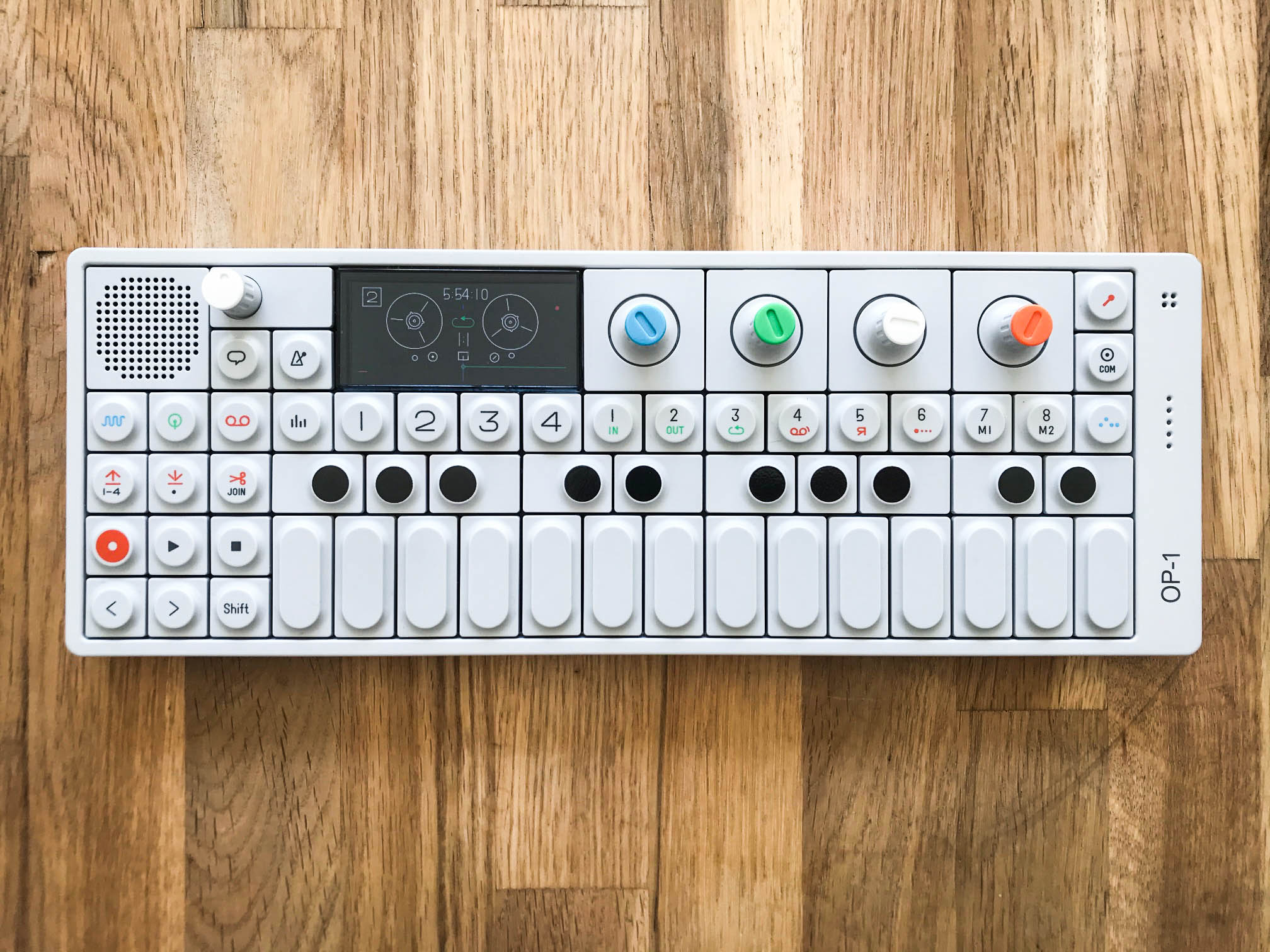
I watched a load of videos about the Microfreak, but the above review from musician Stimming stuck in my mind because it made a comparison between the Microfreak and Teenage Engineering's OP-1.
The Teenage Engineering OP-1. The Teenage Engineering OP-1.
I'd been lusting after the OP-1 since it appeared in 2011: a pocket-sized1 music making machine with eleven synthesis engines, a sampler, and less conventional features such as an FM radio, a large colour OLED display, and a four track recorder. That last feature in particular was really appealing to me: I loved the idea of having an all-in-one machine to try and compose music. Even then, I was not keen on involving conventional computers in music making. Of course in many ways it is a very compromised machine. I never did buy a OP-1, and by now they've replaced it with a new model (the OP-1 field) that costs 50% more (but doesn't seem to do 50% more) I'm still not buying one. Framing the Microfreak in terms of the OP-1 made the penny drop for me. The Microfreak doesn't have the four-track functionality, but almost no synth has: I'm going to have to look at something external to provide that. But it might capture a similar sense of fun; it's something I could use on the sofa, in the spare room, on the train, during lunchbreaks at work, etc. On the other hand, I don't want to make the same mistake as with the Micron: too much functionality requiring some experience to understand what you want so you can go and find it in the menus. I also didn't get a chance to audition the unusual keyboard: there's only one music store carrying synths left in Newcastle and they didn't have one. So I didn't buy the Microfreak. Maybe one day in the future once I'm further down the road. Instead, I started to concentrate my search on more fundamental, back-to-basics instruments

  1. Big pockets, mind

20 October 2024

Bits from Debian: Ada Lovelace Day 2024 - Interview with some Women in Debian

Alt Ada Lovelace portrait Ada Lovelace Day was celebrated on October 8 in 2024, and on this occasion, to celebrate and raise awareness of the contributions of women to the STEM fields we interviewed some of the women in Debian. Here we share their thoughts, comments, and concerns with the hope of inspiring more women to become part of the Sciences, and of course, to work inside of Debian. This article was simulcasted to the debian-women mail list. Beatrice Torracca 1. Who are you? I am Beatrice, I am Italian. Internet technology and everything computer-related is just a hobby for me, not my line of work or the subject of my academic studies. I have too many interests and too little time. I would like to do lots of things and at the same time I am too Oblomovian to do any. 2. How did you get introduced to Debian? As a user I started using newsgroups when I had my first dialup connection and there was always talk about this strange thing called Linux. Since moving from DR DOS to Windows was a shock for me, feeling like I lost the control of my machine, I tried Linux with Debian Potato and I never strayed away from Debian since then for my personal equipment. 3. How long have you been into Debian? Define "into". As a user... since Potato, too many years to count. As a contributor, a similar amount of time, since early 2000 I think. My first archived email about contributing to the translation of the description of Debian packages dates 2001. 4. Are you using Debian in your daily life? If yes, how? Yes!! I use testing. I have it on my desktop PC at home and I have it on my laptop. The desktop is where I have a local IMAP server that fetches all the mails of my email accounts, and where I sync and back up all my data. On both I do day-to-day stuff (from email to online banking, from shopping to taxes), all forms of entertainment, a bit of work if I have to work from home (GNU R for statistics, LibreOffice... the usual suspects). At work I am required to have another OS, sadly, but I am working on setting up a Debian Live system to use there too. Plus if at work we start doing bioinformatics there might be a Linux machine in our future... I will of course suggest and hope for a Debian system. 5. Do you have any suggestions to improve women's participation in Debian? This is a tough one. I am not sure. Maybe, more visibility for the women already in the Debian Project, and make the newcomers feel seen, valued and welcomed. A respectful and safe environment is key too, of course, but I think Debian made huge progress in that aspect with the Code of Conduct. I am a big fan of promoting diversity and inclusion; there is always room for improvement. Ileana Dumitrescu (ildumi) 1. Who are you? I am just a girl in the world who likes cats and packaging Free Software. 2. How did you get introduced to Debian? I was tinkering with a computer running Debian a few years ago, and I decided to learn more about Free Software. After a search or two, I found Debian Women. 3. How long have you been into Debian? I started looking into contributing to Debian in 2021. After contacting Debian Women, I received a lot of information and helpful advice on different ways I could contribute, and I decided package maintenance was the best fit for me. I eventually became a Debian Maintainer in 2023, and I continue to maintain a few packages in my spare time. 4. Are you using Debian in your daily life? If yes, how? Yes, it is my favourite GNU/Linux operating system! I use it for email, chatting, browsing, packaging, etc. 5. Do you have any suggestions to improve women's participation in Debian? The mailing list for Debian Women may attract more participation if it is utilized more. It is where I started, and I imagine participation would increase if it is more engaging. Kathara Sasikumar (kathara) 1. Who are you? I'm Kathara Sasikumar, 22 years old and a recent Debian user turned Maintainer from India. I try to become a creative person through sketching or playing guitar chords, but it doesn't work! xD 2. How did you get introduced to Debian? When I first started college, I was that overly enthusiastic student who signed up for every club and volunteered for anything that crossed my path just like every other fresher. But then, the pandemic hit, and like many, I hit a low point. COVID depression was real, and I was feeling pretty down. Around this time, the FOSS Club at my college suddenly became more active. My friends, knowing I had a love for free software, pushed me to join the club. They thought it might help me lift my spirits and get out of the slump I was in. At first, I joined only out of peer pressure, but once I got involved, the club really took off. FOSS Club became more and more active during the pandemic, and I found myself spending more and more time with it. A year later, we had the opportunity to host a MiniDebConf at our college. Where I got to meet a lot of Debian developers and maintainers, attending their talks and talking with them gave me a wider perspective on Debian, and I loved the Debian philosophy. At that time, I had been distro hopping but never quite settled down. I occasionally used Debian but never stuck around. However, after the MiniDebConf, I found myself using Debian more consistently, and it truly connected with me. The community was incredibly warm and welcoming, which made all the difference. 3. How long have you been into Debian? Now, I've been using Debian as my daily driver for about a year. 4. Are you using Debian in your daily life? If yes, how? It has become my primary distro, and I use it every day for continuous learning and working on various software projects with free and open-source tools. Plus, I've recently become a Debian Maintainer (DM) and have taken on the responsibility of maintaining a few packages. I'm looking forward to contributing more to the Debian community Rhonda D'Vine (rhonda) 1. Who are you? My name is Rhonda, my pronouns are she/her, or per/pers. I'm 51 years old, working in IT. 2. How did you get introduced to Debian? I was already looking into Linux because of university, first it was SuSE. And people played around with gtk. But when they packaged GNOME and it just didn't even install I looked for alternatives. A working colleague from back then gave me a CD of Debian. Though I couldn't install from it because Slink didn't recognize the pcmcia drive. I had to install it via floppy disks, but apart from that it was quite well done. And the early GNOME was working, so I never looked back. 3. How long have you been into Debian? Even before I was more involved, a colleague asked me whether I could help with translating the release documentation. That was my first contribution to Debian, for the slink release in early 1999. And I was using some other software before on my SuSE systems, and I wanted to continue to use them on Debian obviously. So that's how I got involved with packaging in Debian. But I continued to help with translation work, for a long period of time I was almost the only person active for the German part of the website. 4. Are you using Debian in your daily life? If yes, how? Being involved with Debian was a big part of the reason I got into my jobs since a long time now. I always worked with maintaining Debian (or Ubuntu) systems. Privately I run Debian on my laptop, with occasionally switching to Windows in dual boot when (rarely) needed. 5. Do you have any suggestions to improve women's participation in Debian? There are factors that we can't influence, like that a lot of women are pushed into care work because patriarchal structures work that way, and don't have the time nor energy to invest a lot into other things. But we could learn to appreciate smaller contributions better, and not focus so much on the quantity of contributions. When we look at longer discussions on mailing lists, those that write more mails actually don't contribute more to the discussion, they often repeat themselves without adding more substance. Through working on our own discussion patterns this could create a more welcoming environment for a lot of people. Sophie Brun (sophieb) 1. Who are you? I'm a 44 years old French woman. I'm married and I have 2 sons. 2. How did you get introduced to Debian? In 2004 my boyfriend (now my husband) installed Debian on my personal computer to introduce me to Debian. I knew almost nothing about Open Source. During my engineering studies, a professor mentioned the existence of Linux, Red Hat in particular, but without giving any details. I learnt Debian by using and reading (in advance) The Debian Administrator's Handbook. 3. How long have you been into Debian? I've been a user since 2004. But I only started contributing to Debian in 2015: I had quit my job and I wanted to work on something more meaningful. That's why I joined my husband in Freexian, his company. Unlike most people I think, I started contributing to Debian for my work. I only became a DD in 2021 under gentle social pressure and when I felt confident enough. 4. Are you using Debian in your daily life? If yes, how? Of course I use Debian in my professional life for almost all the tasks: from administrative tasks to Debian packaging. I also use Debian in my personal life. I have very basic needs: Firefox, LibreOffice, GnuCash and Rhythmbox are the main applications I need. Sruthi Chandran (srud) 1. Who are you? A feminist, a librarian turned Free Software advocate and a Debian Developer. Part of Debian Outreach team and DebConf Committee. 2. How did you get introduced to Debian? I got introduced to the free software world and Debian through my husband. I attended many Debian events with him. During one such event, out of curiosity, I participated in a Debian packaging workshop. Just after that I visited a Tibetan community in India and they mentioned that there was no proper Tibetan font in GNU/Linux. Tibetan font was my first package in Debian. 3. How long have you been into Debian? I have been contributing to Debian since 2016 and Debian Developer since 2019. 4. Are you using Debian in your daily life? If yes, how? I haven't used any other distro on my laptop since I got introduced to Debian. 5. Do you have any suggestions to improve women's participation in Debian? I was involved with actively mentoring newcomers to Debian since I started contributing myself. I specially work towards reducing the gender gap inside the Debian and Free Software community in general. In my experience, I believe that visibility of already existing women in the community will encourage more women to participate. Also I think we should reintroduce mentoring through debian-women. T ssia Cam es Ara jo (tassia) 1. Who are you? T ssia Cam es Ara jo, a Brazilian living in Canada. I'm a passionate learner who tries to push myself out of my comfort zone and always find something new to learn. I also love to mentor people on their learning journey. But I don't consider myself a typical geek. My challenge has always been to not get distracted by the next project before I finish the one I have in my hands. That said, I love being part of a community of geeks and feel empowered by it. I love Debian for its technical excellence, and it's always reassuring to know that someone is taking care of the things I don't like or can't do. When I'm not around computers, one of my favorite things is to feel the wind on my cheeks, usually while skating or riding a bike; I also love music, and I'm always singing a melody in my head. 2. How did you get introduced to Debian? As a student, I was privileged to be introduced to FLOSS at the same time I was introduced to computer programming. My university could not afford to have labs in the usual proprietary software model, and what seemed like a limitation at the time turned out to be a great learning opportunity for me and my colleagues. I joined this student-led initiative to "liberate" our servers and build LTSP-based labs - where a single powerful computer could power a few dozen diskless thin clients. How revolutionary it was at the time! And what an achievement! From students to students, all using Debian. Most of that group became close friends; I've married one of them, and a few of them also found their way to Debian. 3. How long have you been into Debian? I first used Debian in 2001, but my first real connection with the community was attending DebConf 2004. Since then, going to DebConfs has become a habit. It is that moment in the year when I reconnect with the global community and my motivation to contribute is boosted. And you know, in 20 years I've seen people become parents, grandparents, children grow up; we've had our own child and had the pleasure of introducing him to the community; we've mourned the loss of friends and healed together. I'd say Debian is like family, but not the kind you get at random once you're born, Debian is my family by choice. 4. Are you using Debian in your daily life? If yes, how? These days I teach at Vanier College in Montr al. My favorite course to teach is UNIX, which I have the pleasure of teaching mostly using Debian. I try to inspire my students to discover Debian and other FLOSS projects, and we are happy to run a FLOSS club with participation from students, staff and alumni. I love to see these curious young minds put to the service of FLOSS. It is like recruiting soldiers for a good battle, and one that can change their lives, as it certainly did mine. 5. Do you have any suggestions to improve women's participation in Debian? I think the most effective way to inspire other women is to give visibility to active women in our community. Speaking at conferences, publishing content, being vocal about what we do so that other women can see us and see themselves in those positions in the future. It's not easy, and I don't like being in the spotlight. It took me a long time to get comfortable with public speaking, so I can understand the struggle of those who don't want to expose themselves. But I believe that this space of vulnerability can open the way to new connections. It can inspire trust and ultimately motivate our next generation. It's with this in mind that I publish these lines. Another point we can't neglect is that in Debian we work on a volunteer basis, and this in itself puts us at a great disadvantage. In our societies, women usually take a heavier load than their partners in terms of caretaking and other invisible tasks, so it is hard to afford the free time needed to volunteer. This is one of the reasons why I bring my son to the conferences I attend, and so far I have received all the support I need to attend DebConfs with him. It is a way to share the caregiving burden with our community - it takes a village to raise a child. Besides allowing us to participate, it also serves to show other women (and men) that you can have a family life and still contribute to Debian. My feeling is that we are not doing super well in terms of diversity in Debian at the moment, but that should not discourage us at all. That's the way it is now, but that doesn't mean it will always be that way. I feel like we go through cycles. I remember times when we had many more active female contributors, and I'm confident that we can improve our ratio again in the future. In the meantime, I just try to keep going, do my part, attract those I can, reassure those who are too scared to come closer. Debian is a wonderful community, it is a family, and of course a family cannot do without us, the women. These interviews were conducted via email exchanges in October, 2024. Thanks to all the wonderful women who participated in this interview. We really appreciate your contributions in Debian and to Free/Libre software.

Russell Coker: MG4 Review

In the past I haven t had a high opinion of MG cars, decades ago they were small and expensive and didn t seem to offer anything I wanted. As there s a conveniently located MG dealer I decided to try out an MG electric car and see if they are any good. I brought two friends along who are also interested in new technology. I went to the MG dealer without any preconceptions or much prior knowledge of the MG electric cars apart from having vaguely noticed that they were significantly cheaper than Teslas. I told the salesperson that I didn t have a model in mind and I just wanted to see what MG offers, so they offered me a test driver of a MG4 64 EXCITE . The MG web site isn t very good and doesn t give an indication of what this model costs, my recollection is that it s something like $40,000, the base model is advertised at $30,990. I m not particularly interested in paying for extras above the base model and the only really desirable feature that the Excite 64 offers over the Excite 51 is the extra range (the numbers 51 and 64 represent the battery capacity in KWh). The base model has a claimed range of 350KM which is more than I drive in a typical week, generally there are only about 4 days a year when I need to drive more than 300KM in a day and on those rare days I can spend a bit of time at a charging station without much inconvenience. The experience of driving an MG4 is not much different from other EVs I ve driven, the difference between that and the Genesis GV60 (which was advertised at $117,000) [1] isn t significant. The Genesis has some nice camera features giving views from all directions and showing a view of the side on the dash when you put your turn indicator on. Also some models of Genesis (not the one I test drove) have cameras instead of side mirrors. The MG4 lacks most of those cameras but has a very effective reversing camera which estimates the distance to an obstacle behind you in cm. Some of the MG electric cars have a sunroof or moonroof (sunroof that just opens to transparent glass not open to the air), the one I tested didn t have them and I didn t feel I was missing much. While a moonroof is a nice feature I probably won t want to pay as much extra as they will demand for it. The dash of the MG4 doesn t have any simulation of the old fashioned dash unlike the Genesis GV60 which had a display in the same location as is traditionally used which displays analogue instruments (except when the turn indicators are on). The MG4 has two tablets, a big one in the middle of the front for controlling heating/cooling and probably other things like the radio and a small one visible through the steering wheel which has the instruments. I didn t have to think about the instruments, they just did the job which is great. For second hand cars I looked at AutoTrader which seems to be the only Australian site for second hand cars that allows specifying electric as a search criteria [2]. For the EVs advertised on that site the cheapest are around $13,000 for cars about 10 years old and $21,000 for a 5yo LEAF. If you could only afford to spend $21,000 on a car then a 5yo LEAF would definitely be better than nothing, but when comparing a 5yo car for $21,000 and a new car for $31,000 the new car is the obvious choice if you can afford it. There was an Australian company importing used LEAFs and other EVs and selling them over the web for low prices, if they were still around and still selling LEAFs for $15,000 then that would make LEAF vs MG3 a difficult decision for me. But with the current prices for second hand LEAFs the decision is easy. When I enrolled for the test drive the dealer took my email address and sent me an automated message with details about the test drive and an email address to ask for more information. The email address they used bounced all mail, even from my gmail account. They had a contact form on their web site but that also doesn t get a response. MG really should periodically test their dealer s email addresses, they are probably losing sales because of this. On the same day I visited a Hyundai dealer to see what they had to offer. A salesman there said that the cheapest Hyundai was $60,000 and suggested that I go elsewhere if I am prepared to buy a lesser car to save money. I don t need to get negged by a car dealer and I really don t think there s much scope for a car to be significantly better than the MG3 while also not competing with the Genesis cars. Genesis is a Hyundai brand and their cars are very nice, but the prices are well outside the range I m prepared to pay. Next I have to try the BYD. From what I ve heard they are mostly selling somewhat expensive cars in Australia (a colleague recently got one which was about $60,000 which he is extremely happy with) but hopefully they have some of the cheaper ones available too. I don t want to flex on my neighbors, I just want a reliable and moderately comfortable car that doesn t cost too much.

15 October 2024

Lukas M rdian: Waiting for a Linux system to be online

Designed by Freepik

What is an online system? Networking is a complex topic, and there is lots of confusion around the definition of an online system. Sometimes the boot process gets delayed up to two minutes, because the system still waits for one or more network interfaces to be ready. Systemd provides the network-online.target that other service units can rely on, if they are deemed to require network connectivity. But what does online actually mean in this context, is a link-local IP address enough, do we need a routable gateway and how about DNS name resolution? The requirements for an online network interface depend very much on the services using an interface. For some services it might be good enough to reach their local network segment (e.g. to announce Zeroconf services), while others need to reach domain names (e.g. to mount a NFS share) or reach the global internet to run a web server. On the other hand, the implementation of network-online.target varies, depending on which networking daemon is in use, e.g. systemd-networkd-wait-online.service or NetworkManager-wait-online.service. For Ubuntu, we created a specification that describes what we as a distro expect an online system to be. Having a definition in place, we are able to tackle the network-online-ordering issues that got reported over the years and can work out solutions to avoid delayed boot times on Ubuntu systems. In essence, we want systems to reach the following networking state to be considered online:
  1. Do not wait for optional interfaces to receive network configuration
  2. Have IPv6 and/or IPv4 link-local addresses on every network interface
  3. Have at least one interface with a globally routable connection
  4. Have functional domain name resolution on any routable interface

A common implementation NetworkManager and systemd-networkd are two very common networking daemons used on modern Linux systems. But they originate from different contexts and therefore show different behaviours in certain scenarios, such as wait-online. Luckily, on Ubuntu we already have Netplan as a unification layer on top of those networking daemons, that allows for common network configuration, and can also be used to tweak the wait-online logic. With the recent release of Netplan v1.1 we introduced initial functionality to tweak the behaviour of the systemd-networkd-wait-online.service, as used on Ubuntu Server systems. When Netplan is used to drive the systemd-networkd backend, it will emit an override configuration file in /run/systemd/system/systemd-networkd-wait-online.service.d/10-netplan.conf, listing the specific non-optional interfaces that should receive link-local IP configuration. In parallel to that, it defines a list of network interfaces that Netplan detected to be potential global connections, and waits for any of those interfaces to reach a globally routable state. Such override config file might look like this:
[Unit]
ConditionPathIsSymbolicLink=/run/systemd/generator/network-online.target.wants/systemd-networkd-wait-online.service

[Service]
ExecStart=
ExecStart=/lib/systemd/systemd-networkd-wait-online -i eth99.43:carrier -i lo:carrier -i eth99.42:carrier -i eth99.44:degraded -i bond0:degraded
ExecStart=/lib/systemd/systemd-networkd-wait-online --any -o routable -i eth99.43 -i eth99.45 -i bond0
In addition to the new features implemented in Netplan, we reached out to upstream systemd, proposing an enhancement to the systemd-networkd-wait-online service, integrating it with systemd-resolved to check for the availability of DNS name resolution. Once this is implemented upstream, we re able to fully control the systemd-networkd backend on Ubuntu Server systems, to behave consistently and according to the definition of an online system that was lined out above.

Future work The story doesn t end there, because Ubuntu Desktop systems are using NetworkManager as their networking backend. This daemon provides its very own nm-online utility, utilized by the NetworkManager-wait-online systemd service. It implements a much higher-level approach, looking at the networking daemon in general instead of the individual network interfaces. By default, it considers a system to be online once every autoconnect profile got activated (or failed to activate), meaning that either a IPv4 or IPv6 address got assigned. There are considerable enhancements to be implemented to this tool, for it to be controllable in a fine-granular way similar to systemd-networkd-wait-online, so that it can be instructed to wait for specific networking states on selected interfaces.

A note of caution Making a service depend on network-online.target is considered an antipattern in most cases. This is because networking on Linux systems is very dynamic and the systemd target can only ever reflect the networking state at a single point in time. It cannot guarantee this state to be remained over the uptime of your system and has the potentially to delay the boot process considerably. Cables can be unplugged, wireless connectivity can drop, or remote routers can go down at any time, affecting the connectivity state of your local system. Therefore, instead of wondering what to do about network.target, please just fix your program to be friendly to dynamically changing network configuration. [source].

14 October 2024

Philipp Kern: Touch Notifications for YubiKeys

When setting up your YubiKey you have the option to require the user to touch the device to authorize an operation (be it signing, decrypting, or authenticating). While web browsers often provide clear prompts for this, other applications like SSH or GPG will not. Instead the operation will just hang without any visual indication that user input is required. The YubiKey itself will blink, but depending on where it is plugged in that is not very visible.
yubikey-touch-detector (fresh in unstable) solves this issue by providing a way for your desktop environment to signal the user that the device is waiting for a touch. It provides an event feed on a socket that other components can consume. It comes with libnotify support and there are some custom integrations for other environments.For GNOME and KDE libnotify support should be sufficient, however you still need to turn it on:
$ mkdir -p ~/.config/yubikey-touch-detector
$ sed -e 's/^YUBIKEY_TOUCH_DETECTOR_LIBNOTIFY=.*/YUBIKEY_TOUCH_DETECTOR_LIBNOTIFY=true/' \
  < /usr/share/doc/yubikey-touch-detector/examples/service.conf.example \
  > ~/.config/yubikey-touch-detector/service.conf
$ systemctl --user restart yubikey-touch-detector
I would still have preferred a more visible, more modal prompt. I guess that would be an exercise for another time, listening to the socket and presenting a window. But for now, desktop notifications will do for me.PS: I have not managed to get SSH's no-touch-required to work with YubiKey 4, while it works just fine with a YubiKey 5.

Next.

Previous.