As explained in more detail in my
my
last blog post, Rackspace is providing hosting for
Debian Code Search. For those of you
who don t know, Rackspace is a cloud company that provides (among other
services) a public cloud based on
OpenStack. That means you can easily (and
programmatically, if you want) bring up virtual servers, block storage volumes,
configure the network between them, etc.
As part of my initial performance experiments, I was running
debmirror to clone a full
Debian source mirror, and I noticed this took about one hour. Given that the
peak network and storage write rates I have observed in my benchmarks are much
higher, I wondered why it took so long. About 43 GB (that s how big the Debian
sid sources are) in 60 minutes means 12 MB/s download rate, which
is a bit more than a sustained 100 MBit/s connection. Luckily, at least
the Rackspace servers I looked at are connected with 1 GBit/s to the
internet, so more should be possible. Note that these are the old Rackspace
servers. There is a new generation of servers, which I have not yet tried, that
apparently offer even higher performance.
After a brief look at the debmirror source code, I concluded that it can only
use a single mirror and downloads files sequentially. There is some obvious
potential for improvement here, and the fact that I could come up with a proof
of concept written in
Go to determine the
files to download in a couple of minutes encouraged me to spend my saturday on
this problem :-).
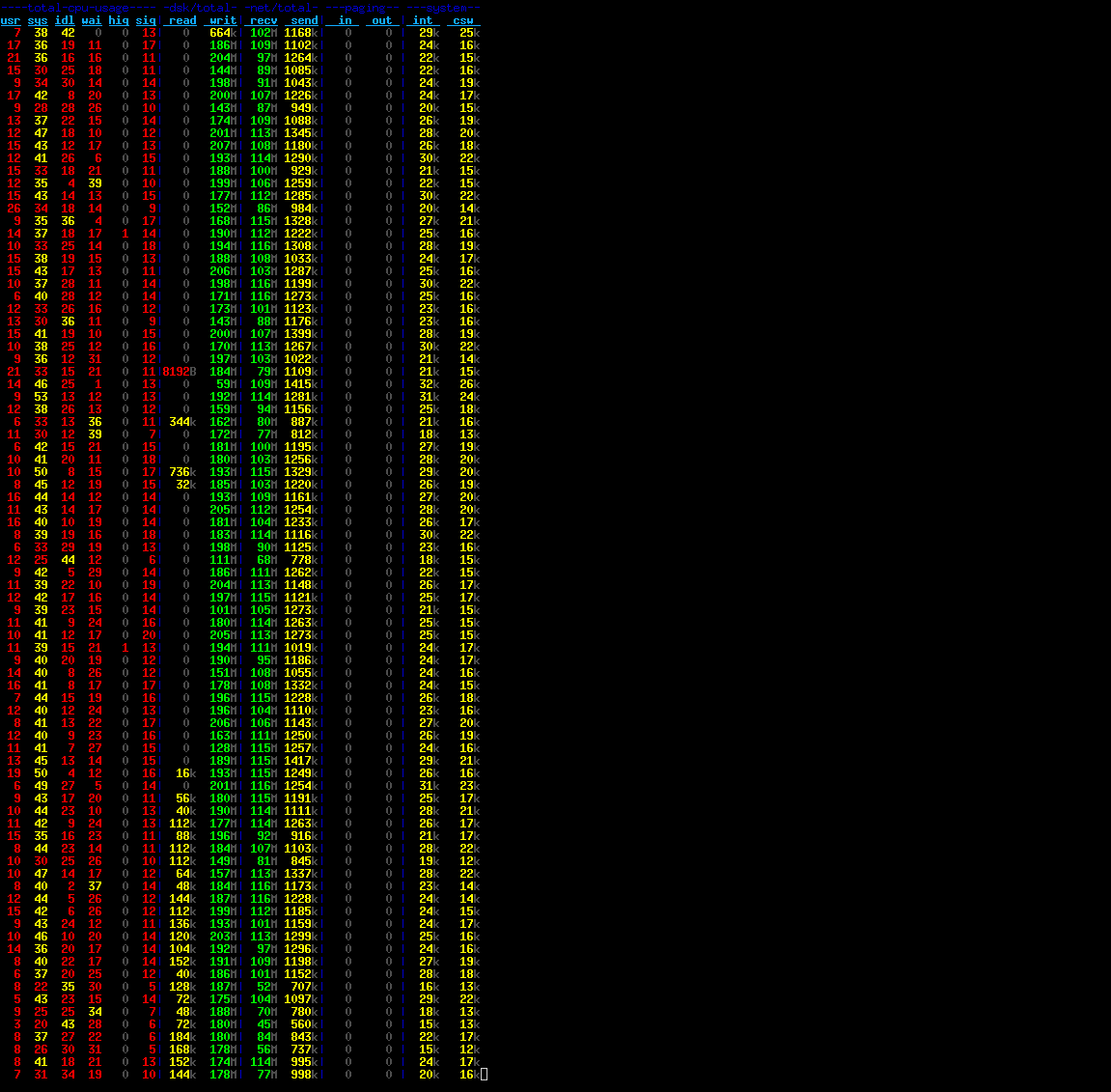
About 7 hours later, my prototype had gone through various iterations and the
code could sustain about 115 MB/s incoming bandwidth for most of the time.
Here is a screenshot of
dstat
measuring the performance:
Another 3 hours later, the most obvious bugs were weeded out and the code
successfully cloned an entire mirror for the first time. I verified the
correctness by running debmirror afterwards, and no files were downloaded that
had not actually arrived on the mirror in the meantime.
Features
-
Parallel downloading from multiple mirrors.
Of course, it is not guaranteed that the mirrors are consistent, but that is a
solvable problem: whenever a non-200 HTTP response is encountered, the file is
put back into the queue and gets rescheduled onto any mirror. Eventually, it
will be rescheduled onto the mirror from which the sources.gz was downloaded,
and that mirror has to have it.
-
HTTP keep-alive and pipelining.
debmirror also does HTTP keep-alive (I read that in the source, did not verify
it), but it downloads files sequentially, i.e. it downloads one file, then
sends the request for the next file. This means that after one file was
received, no data is being received until another round-trip finished. For a
lot of small files (think of .dsc and .debian.tar.gz files or small orig
tarballs) that really adds up.
Therefore, I use HTTP pipelining: I send 99 requests and then just receive all
the responses at full speed. The magic number 99 comes from the fact that this
is the smallest common denominator that all mirrors I have tested allow. nginx
by default allows 100 requests.
-
Request ordering.
Instead of sending requests at random, I sort the download queue by size and
make sure that the first request on each connection is for a big file. The
intention is that TCP will adapt to that quickly and use a bigger window size
as soon as possible instead of ramping up slower later on. Note that I have not
actually measured the window sizes, so this is just a hunch.
Another nice side-effect of the ordering is that the amount of data that is
being sent through each connection is roughly equal. This means we don t waste
TCP connections by sending 99 requests for small files only.
-
(Goroutines).
I m a bit hesitant to even write about it, so let s make it quick: Perl (and
thus debmirror) is typically single-threaded, whereas Goroutines scale nicely
on multi-core systems. I don t think it makes a big difference on the machines
I am running this on as they have only two cores and are not maxed out on CPU
usage at all. But maybe this will be more important for saturating 10 GBit/s?
:-)
-
(Mirror selection).
It s not a feature of the code, but certainly relevant: of course I selected
mirrors that are connected to the internet with at least a Gigabit link, serve
files reasonably fast and have low latency to Rackspace s Chicago presence.
Interestingly, while I used to think that universities have access to big
uplinks and beefy machines, none of the mirrors that I use are located at a
university. In fact, every mirror ending in .edu that I tried was
really slow most of them providing something like 2-4 MB/s.
Results
With the latest iteration of the code, I can clone an entire Debian source
mirror with 43 GB of data in about 11.5 minutes, which corresponds to a
63 MB/s download rate:
GOMAXPROCS=20 ./dcs-debmirror -num_workers=20
68,24s user 384,90s system 66% cpu 11:25,97 total
It should be noted that the download rate is
very low in the first couple of seconds since the sources.gz file is downloaded
from a single mirror, then unpacked and analyzed.
The peak download rate is about 115 MB/s (= 920 MBit/s) which is reasonably
close at what you can achieve with a Gigabit link, I think. If the entire
uplink was available to me at all time, the Rackspace hardware would be able to
saturate that easily, both in terms of reading from the network and in terms of
writing to block storage. I tested this on an SSD volume, but I see about 113
MB/s throughput with the internal hard disk, so I think that should work, too.
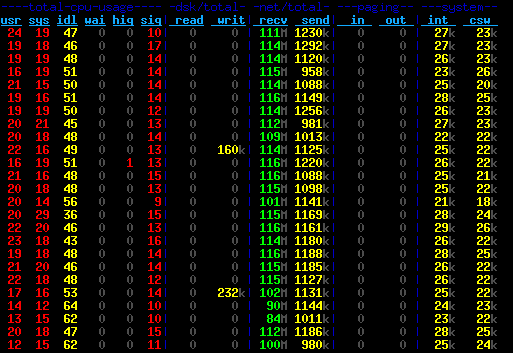
There is
another
dstat screenshot of the final version (writing to disk).
Perhaps even more interesting to some readers is the time for an incremental
update:
GOMAXPROCS=20 ./dcs-debmirror -tcp_conns=20
2013/10/13 11:09:55 Downloading 307 files (447 MB total)

2013/10/13 11:10:04 All 307 files downloaded in 9.105605931s. Download rate is 49.186567 MB/s
4,91s user 3,99s system 67% cpu 13,205 total
The wall clock time is higher than the time reported by the code because the
code does not count the time for downloading and parsing the sources.gz file.
The entire program is about 400 lines (not SLOC) of Go code. It s part of
the Debian Code Search source. If
you re interested, you can
read
dcs-debmirror.go in your browser.
Conclusions
The outcome of this experiment is that I now know (and have shown!) that there
are significantly more efficient ways of cloning a Debian mirror than what
debmirror does. Furthermore, I have a good grasp on what kind of performance
the Rackspace cloud offers and I am fairly happy with the numbers :-).
My code is useful to me in context of Debian Code Search, but unless you need a
sid-only source-only mirror, it will not be useful to you directly. Of course
you can take the ideas that I implemented and implement them elsewhere
personally, I don t plan to do that.
If you have hardware, bandwidth and a use-case for 10 GBit/s+ mirroring, I d
like to hear about it! :-)

 As a demo of the power of SIP and DruCall, you can make free calls to mobiles running Lumicall. It will also dial any number registered in ENUM.
Lumicall, the open alternative to Viber, FOSDEM 2014
I'll be giving a talk about the Lumicall project at FOSDEM 2014. The talk is at 13:00 on Sunday, 2 February in the Embedded and Mobile devroom. As space is usually limited in the devrooms and FOSDEM is a completely free event without any advance registration, please arrive early (maybe even 1 or 2 talks before mine) to get a seat.

 A bug fix release of

 Formally, today is my first day as a student on a formal, scholarized institution Basically for the first time in almost twenty years!
Yes, those that know me know that I aspire to live the life of academia. I have worked at public universities for almost all of my adult life (between 1997 and 1999 I worked at a local ISP and at a private school), and have had a minor academic position ( T cnico Acad mico ) for almost ten years. And not having a proper degree limited me from pursuing anything further.
Then, in early 2010 I
 The decision on which init system to use has plagued Debian for a
fairly long time now. We've had people talking about it as early as
debconf11 in Banja Luka, and we still haven't got a
decision. Instead, the decision has been going round in circles, in a
typical bikeshed fashion.
Originally, my opinion on the subject was "sysv-rc is good enough for
everyone, and it's portable, which other alternatives aren't".
By now, however, I've become convinced that the first part of that
statement isn't true, and that as a result a switch of a default init
system is indeed appropriate; that we should indeed switch to "something
else", at least for our Linux ports.
Once I came to that conclusion, my opinion on what, exactly, we
should use turned out to be nonexistent. That is, I don't care. Anything
will be fine.
What is bothering me, though, is that things keep dragging on and on
and on and on and on and on and on, ad infinitum.
We should just pick one and be done with it, dammit. The
fact that sysv-rc is replaced by "something else" does not mean people
must stop using sysv init scripts. Even if the maintainer of
some random package "foo" refuses to accept patches to support sysv-rc
for his package, there's nothing stopping anyone from providing a
package "sysv-support" containing init scripts (and nothing else) for
sysv-rc.
The same goes for a hypothetical upstart-support or systemd-support
package, of course: if you want to continue living in the stone age and
keep using sysv-rc forever, then there is nothing stopping
you. Even if we decide to use something else for our Linux
ports.
Ideally the non-Linux ports would move to something more modern too;
but there really really really isn't any reason why it would be
a problem if they didn't.
Can we stop painting the bikeshed now? If we don't, soon we'll have
to call it "hunk of paint with some bikes inside" rather than
"bikeshed".
Thanks.
 Contributor License Agreements ("CLAs") are a mechanism for an upstream software developer to insist that contributors grant the upstream developer some additional set of rights. These range in extent - some CLAs require that the contributor reassign their copyright over the contribution to the upstream developer, some merely provide the upstream developer with a grant of rights that aren't explicit in the software license (such as an explicit patent grant for a contribution licensed under a BSD-style license).

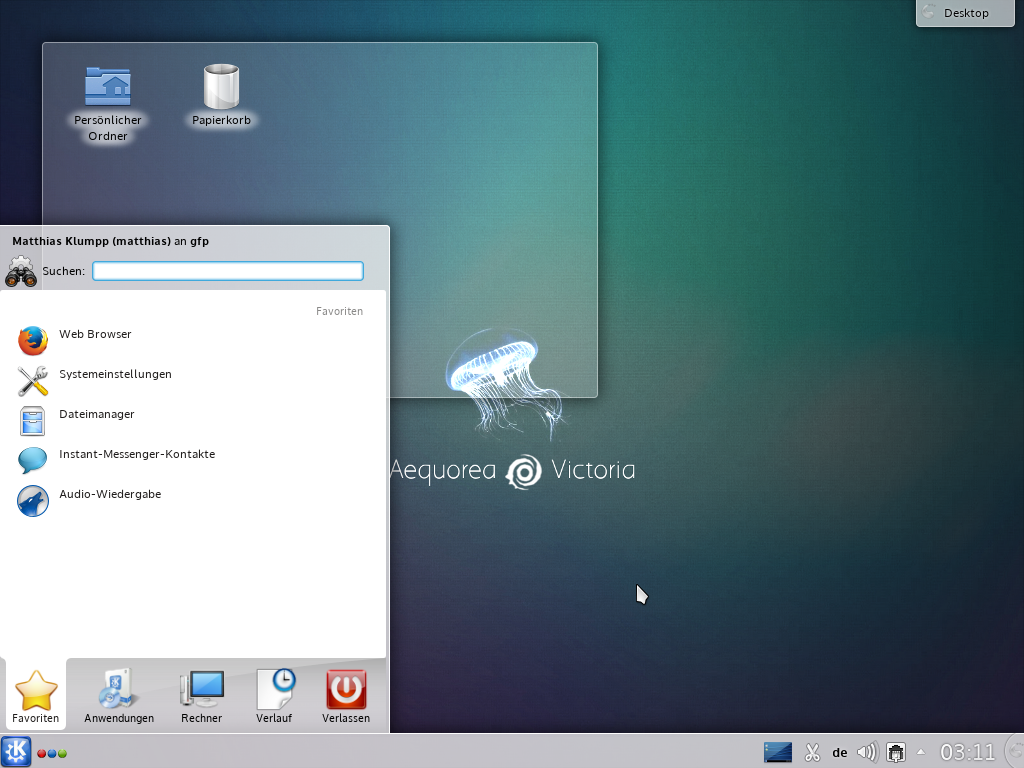
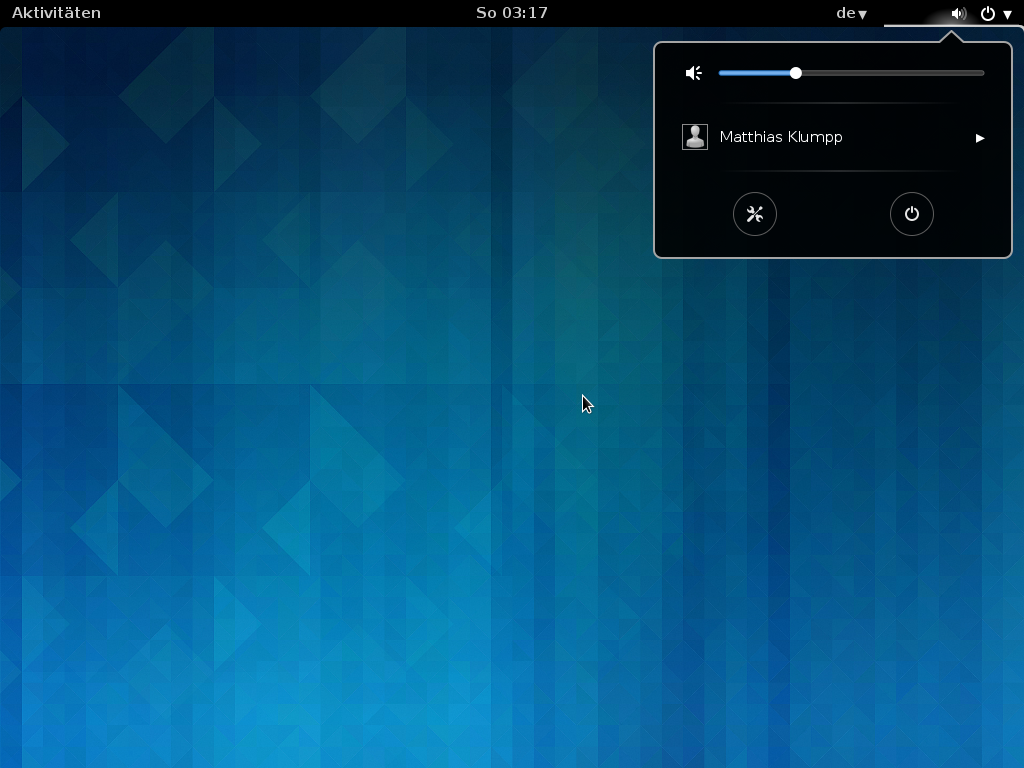
 Since yesterday, we have an (installable!) Beta2 release of Tanglu!
Compared to the previous snapshot, it comes with a huge amount of improvements and bugfixes:
 I am pretty happy with this Beta2 release, because Tanglu is shaping out to be the distribution we imagined in the beginning.
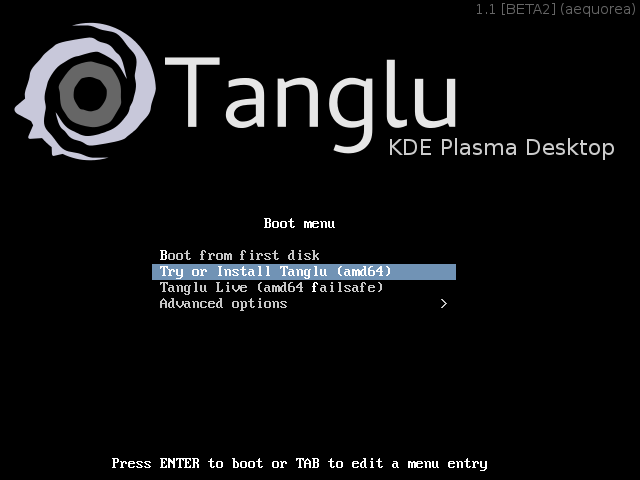
Have fun! And as bonus, here are some images from Beta2:

 I have just uploaded a newer version of
 Benefits for the wider free software community
This means packages providing SIP (and soon XMPP/Jabber) will hopefully be under much more scrutiny from developers in the lead up to the next major Debian release,
 Now it is time for me to go silent for a while, and not talk about jobs, unemployment, or puppies.
This past week has also been full of software releases. Some of the public ones include:
 This is mostly a repost of my
 I have just enrolled in a MOOC to learn about programming with Android.
There are many tutorials and reports of people using Linux for the
development of the apps out there, but, unfortunately, many of them are
outdated or contain misleading information.
You will find bazillion instructions out there telling you to install
JDK6. (Even the instructions in the MOOCs say so, and Google says that it is
the only supported version of Java). Even more than that, some of them will
tell you that you should not use OpenJDK, but use Oracle's JDK instead.
So, if you have a pure

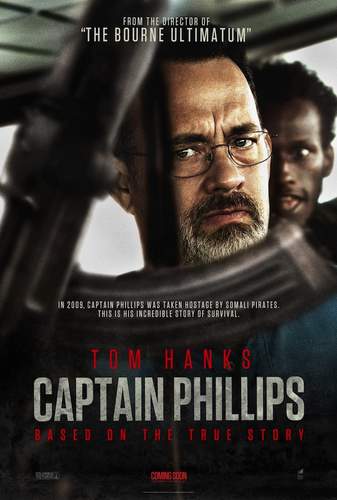 Somalia's chief exports appear to be morally-ambiguous Salon articles about piracy and sophomoric evidence against libertarianism. However, it is the former topic that Captain Phillips concerns itself with, inspired by the hijacking of the