Thanks to Jamie, who used to have the name registered and now handed it over, Twitter Debian's Twitter username is now @debian (go follow Jamie now!). If you were already following @debianproject, nothing will change.
Having @debian on Twitter is actually kind of awesome!
and
Being a lot time without any post but finally I see the things more clear, I changed my $paid-job on March, I leave my sysadmin job on a midle-range local ISP, to go on a sort of similar job in another one, more big company, first I though that this will give me more spare time but I was wrong, at least for the first months, but at this time I m finally getting enough time to rest, but not enough time to devote to some Debian tasks(but things will change!!).
but looks like everything is going better, I get my $paid-job permission to go to DebConf, and I will also attending just 2 days to ECSL; ECSL is Encuentro Centroamericano de Software Libre , it is actually the first gathering with people related to Free Software communities on this small area(Central America), we expect about 100 people from Central America, Mexico, and some other places, this is could be a nice opportunity to create efforts on a region that is having political and social efforts to integrate all countries in a political/social block.
So, see you all at C ceres and Gunnar, see you on ECSL at Estel
In the spirit of Thomas Limoncelli's Time Management for System Administrators, this is my checklist for setting up a new Debian system. I have added a few notes to the original list to justify their existence and to provide some background information.
Whilst you should avoid performing repetitive interactive configuration and defer to the multitude of tools designed for this task, constructing and sharing a checklist can still be an instructive step. It can also be useful in situations where a machine has already been partly configured for you.
/etc/apt/sources.list
Disable installation of Recommends:
echo 'APT::Install-Recommends "0";' > /etc/apt/apt.conf.d/90recommends
Ensure we are up to date security-wise:
apt-get update && apt-get dist-upgrade
Setup and configure locales first to avoid annoying Perl warnings. Don't choose All locales; you almost certainly don't want that.
apt-get install locales dpkg-reconfigure -plow locales
Install some essential utilities:
apt-get install vim-nox ntp openssh-server screen most tree bzip2 unzip moreutils dnsutils htop pwgen telnet manpages manpages-dev vrms acl gawk strace curl tcpdump
Before we create any real users, we configure PAM to reject weak passwords. Custom banned passwords can be added to the dictionary by editing /usr/share/dict/cracklib and running update-cracklib.
apt-get install libpam-cracklib sed -i -e 's ^password # \0 ' /etc/pam.d/common-password echo 'password required pam_cracklib.so retry=3 minlen=6 difok=3' >> /etc/pam.d/common-password echo 'password required pam_unix.so use_authtok nullok md5' >> /etc/pam.d/common-password(Edit: Please read this response from Steve Langasek regarding this modification on squeeze and Ubuntu 8.10)
Configure sudo. I prefer to create a new group instead of re-using adm as that is already used by logfiles.
addgroup rootusers adduser myuser adduser myuser rootusers apt-get install sudo echo 'User_Alias ROOTUSERS = %rootusers' >> /etc/sudoers echo 'ROOTUSERS, root ALL=(ALL) ALL' >> /etc/sudoers
First, install the mail packages:
apt-get install exim4-daemon-light bsd-mailx dpkg-reconfigure exim4-config
During the Exim configuration, choose Internet site and follow all the defaults, ensuring that you only listen on 127.0.0.1 and you are not relaying mail for any other domains.
We then configure forwarding to another email address so we don't have to continually poll this machine for issues:
echo 'root: you@example.com' >> /etc/aliases newaliases
Finally, we test mail delivery:
echo "Test 1 from $(hostname)" mail root -s "Test 1 from $(hostname)"
Stop Emacs creating backup files everywhere:
mkdir -p /etc/emacs/site-start.d echo '(setq backup-inhibited t)' > /etc/emacs/site-start.d/10no-backup.el
Configure Munin:
apt-get install munin-node echo 'allow ^123\.123\.123\.123$' >> /etc/munin/munin-node.conf /etc/init.d/munin-node restartFor baroque network configurations, you can generate the regular expression line with this script.
Configure molly-guard, a tool for preventing accidental shutdowns. As molly-guard cannot detect shutdowns initiated within a combination of GNU screen and SSH, we configure it to always query the hostname:
apt-get install molly-guard echo "ALWAYS_QUERY_HOSTNAME=true" >> /etc/molly-guard/rc
Monitor disk S.M.A.R.T. attributes:
apt-get install hddtemp smartmontools sed -i 's ^#start_smartd=yes start_smartd=yes ' /etc/default/smartmontools /etc/init.d/smartmontools start
Setup backups - I'm quite partial to backupninja because it automates most of the tedious SSH configuration. I adjust the time of the backup to when I'm likely to be around to fix issues and cut down on email noise by not reporting successful backups:
apt-get install backupninja hwinfo debconf-utils rdiff-backup sed -i -e 's ^when = everyday at 01:00 when = everyday at 9:30 ' /etc/backupninja.conf sed -i -e 's ^reportsuccess = yes reportsuccess = no ' /etc/backupninja.conf ninjahelper
Filesystems
Reboot. You should be prompted by molly-guard before your computer restarts.
This is just a quick note for everyone who is interested: Yesterday we had a small meeting discussing the plan to bring Debconf 11 to Berlin, Germany. There will be an official meeting regarding this topic at this year s LinuxTag. The meeting will probably take place on Friday the 26th of June at a conference room. Everyone is invited to join the discussion.
PS: I also have a shiny new key, the fingerprint is 8795 AF2E 4A1A 4EFB A068 A449 8E88 9544 D985 000D. The old key will be revoked in a couple of months.
This weekend I implemented an idea I had some weeks ago: sending regular mails with the translation status and the contents status of debian-edu-doc to the Debian Edu mailinglist, in the hope this would motivate people to finish the documentation and its translations. Currently the package contains four different manuals, translated in up to 6 languages: the old Debian Edu etch manual, the new Debian Edu lenny manual and manuals for teachers using Rosegarden and Audicity. All four are being written on wiki.debian.org, then exported to Docbook, then .po files are created with the great po4a tool suite. Those .po files are kept in svn of the the debian-edu-doc package, for translators to edit. Detecting missing or half finished content is done by putting the string "FIXME" plus a description what to fix in the wiki text. Then a small script is run by cron every 2nd and 4th sunday of the month, which outputs the translation status and greps for FIXME and formats this nicely. The result looks like this: The (translated) debian-edu-lenny manual as PDF or HTML is available at http://maintainer.skolelinux.org/debian-edu-doc/
To understand this mail better, please read /usr/share/doc/debian-edu-doc/README.
This mail is automatically send by a cronjob run by Holger Levsen every two weeks. Please send feedback, suggestions, flames and cookies via this list.
debian-edu-lenny-manual.de.po: 545 translated messages, 193 fuzzy translations, 220 untranslated messages.
debian-edu-lenny-manual.es.po: 85 translated messages, 204 fuzzy translations, 669 untranslated messages.
debian-edu-lenny-manual.fr.po: 447 translated messages, 279 fuzzy translations, 232 untranslated messages.
debian-edu-lenny-manual.it.po: debian-edu-lenny-manual.it.po:7683: end-of-line within string
debian-edu-lenny-manual.nb.po: 711 translated messages, 159 fuzzy translations, 88 untranslated messages.
----------------------------------
http://wiki.debian.org/DebianEdu/Documentation/Lenny//Features
FIXME: describe new features in 5.0.1+edu0 here.
----------------------------------
http://wiki.debian.org/DebianEdu/Documentation/Lenny//Requirements
FIXME: a description of main-server and thinclient-server is missing.
----------------------------------
http://wiki.debian.org/DebianEdu/Documentation/Lenny//Installation
FIXME: probably each paragraph on this page needs to be (slightly) rewritten for lenny.
FIXME: describe PXE installation here, if its only two sentences, then they should be here.
FIXME: path to preseed file location missing
----------------------------------
[...]
====================
24 FIXMEs left to fix
====================
According to The Registry, COBOL is now
slightly over 50 years old.
I wish I could say I never wrote a single line of COBOL, but I can't.
In college, I was taught COBOL for three long years. Even though I've
managed to purge most of that knowledge from my brain (good riddance), I
still have nightmares about the horrible way in which one writes
COBOL.
I wish I could say COBOL is dying, but it isn't. People
still write new COBOL today. I mean, seriously, there's a
standard called 'COBOL
2002. 'Nuff said.
I wish I could say COBOL isn't a problem, but it's the sole source of
most of the Y2K issues way back when. Its features invite many of the
kind of horribly wrong coding styles which cause bugs; Y2K is just
one.
I wish I could say COBOL code is pretty, but it isn't. Just to give
one example: the first 7 characters of every line of code in each and
every COBOL program are 0x20. That is, space. Nothing. Utterly useless.
There is no reason for this in modern environments, yet it's still
there. Note why I dislike significant whitespace. Another example is the
fact that you can't just say 'foo = 1 + 1'. Instead, you have to say
'MOVE 1 TO FOO', and then add a second statement that says 'ADD 1 TO
FOO'. I'll just use english if I want to write a novel, thank you.
I wish I could say I didn't care about COBOL anymore, but for some
weird reason, I do.
And just in case you were confused: no, I do not have warm,
fuzzy feelings for COBOL.
If there was a button that would nuke all the COBOL code on the
planet, would I push it? Probably not immediately. I'm sure it would
take time for me to recover from the sheer joy of knowing that this
button actually exists, before I'll be physically capable of
keeping my hands steady for the amount of time required for me to
actually be able to push it.
COBOL is proof of either the absense of any deity, or the existence
of the devil. Given the chance, no sane person, let alone a sane deity,
would allow the creation of such an abomination.
At least I don't have to deal with it anymore. That part is
not going to change. Ever.

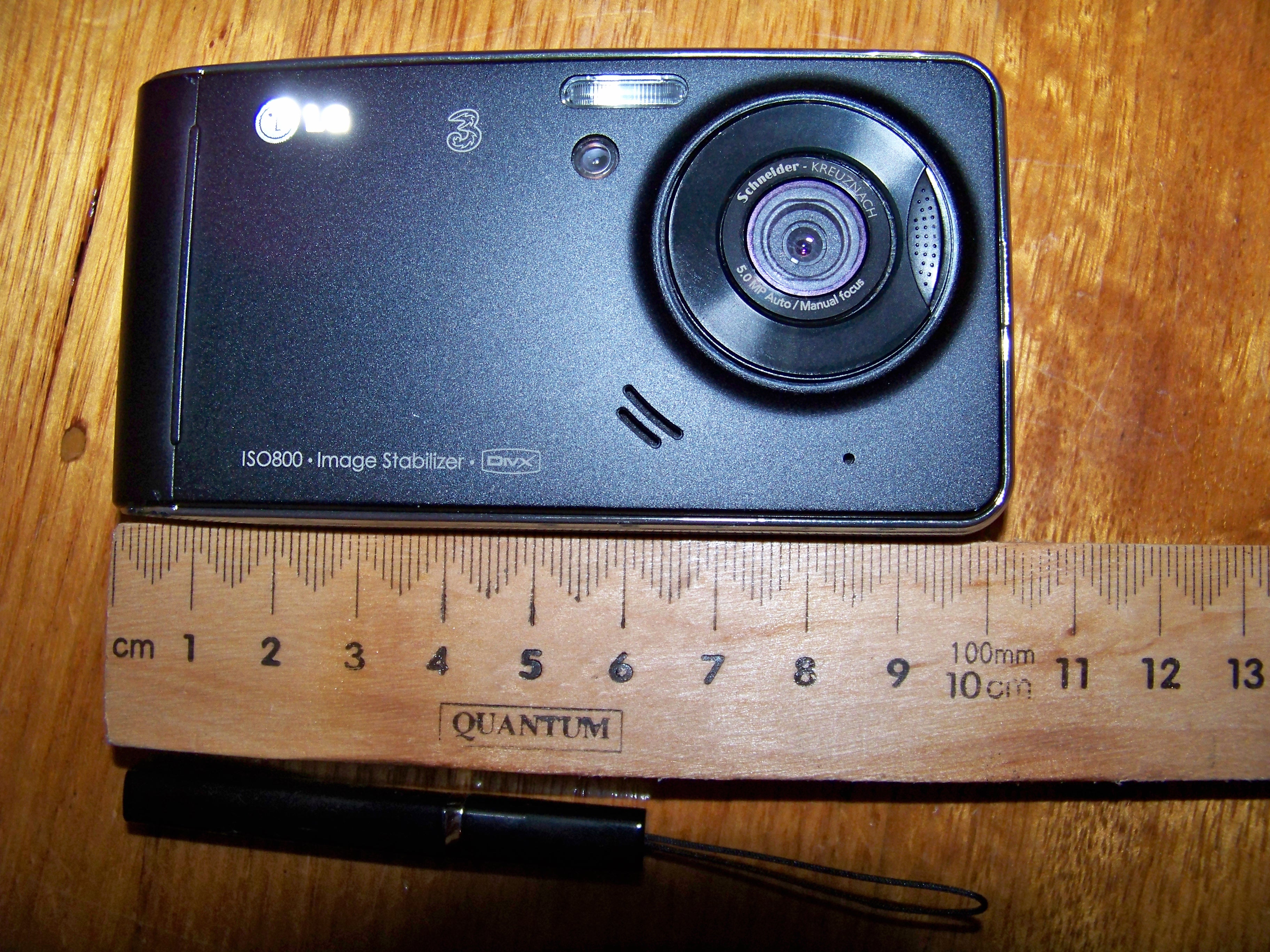
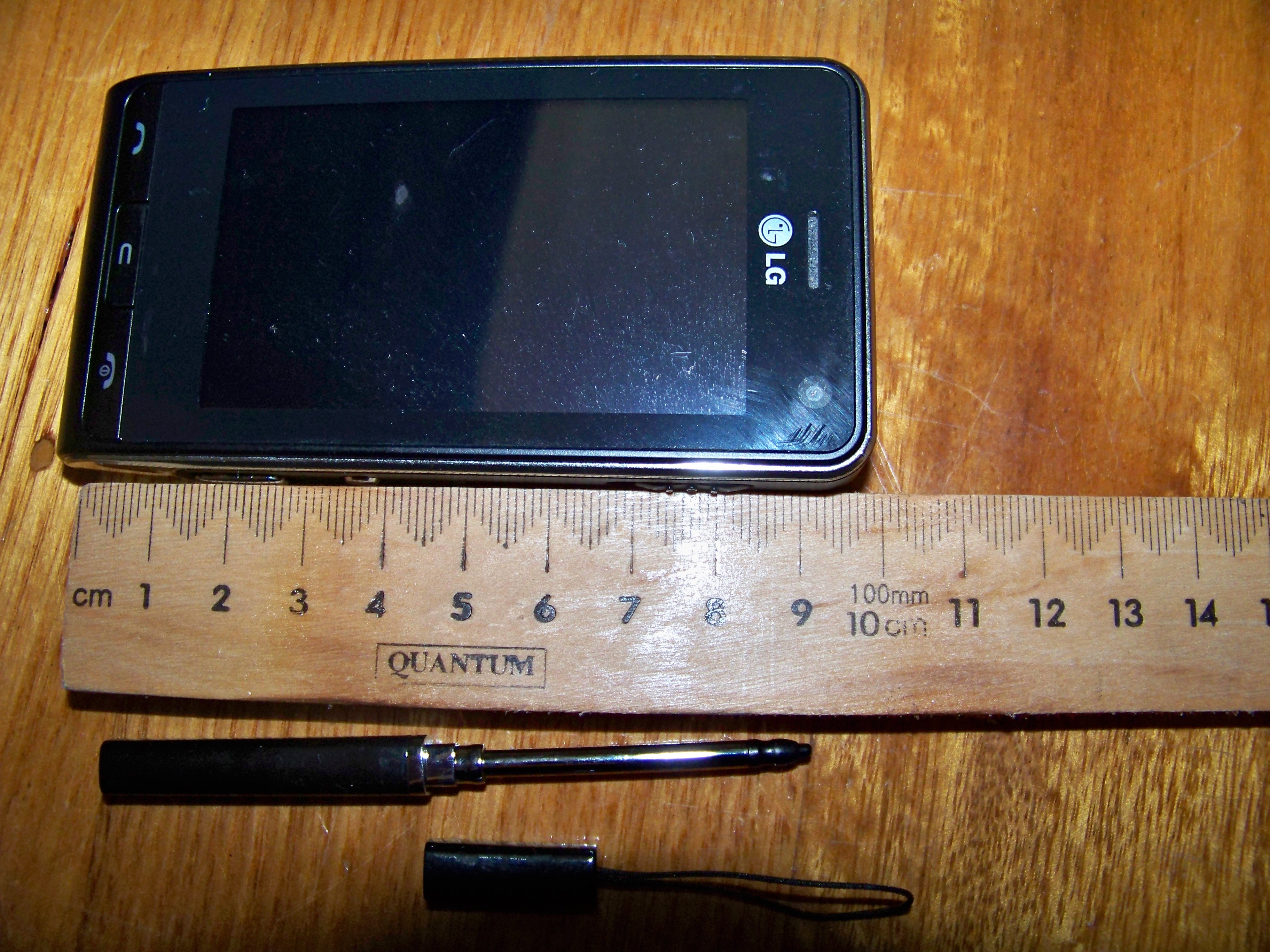
I have just got a LG U990 Viewty mobile phone [1]. It s a 3G phone and came free on the $29 monthly cap plan from Three (minimum monthly spend is $29 - but this is free if you use $29 per month). My previous plan was the $29 cap but had a minimum spend of $20 per month, as I never happened to use less than $29 per month I am not paying more.
For a modern mobile phone the actual phone functionality is a sideline. If a device was strictly designed to be a phone then I think it would be very similar to the Nokia phones that were available 5+ years ago - the Nokia I had in 1999 performed every phone function that I desired of it.
Like most modern phones the LG U990 Viewty suffers in it s phone functionality from the desire to make it do non-phone tasks and from the desire to cripple it to meet the desires of the carriers (not the desires of the users). For example the home screen will always have at least two buttons for paid Three services and I have no configuration option to remove them. Replacing them with speed dial options for a couple of numbers that I regularly call would be handy. As the main screen is a touch-screen there is no excuse for this, they should allow the software to be reconfigured with more useful options. Eventually the Android will kill most of the other phones and this problem of phones being designed to suit the telephone companies instead of the users will be solved.
One of the most annoying mis-features of the phone is that it doesn t properly handle address book entries with multiple phone numbers. One of my friends turns his mobile off when he is at home, so I regularly call his mobile and then immediately call his home number if the mobile is unavailable. With my previous two mobile phones I could press the dial button to bring up the list of previous calls and then use the arrow buttons to select from the other numbers that are attached to the same address-book entry, so with three button presses I would be dialing his other number. With the Viewty I have to go back to the address book.
The compelling feature of the Viewty is the camera and display. It has a 5MP camera which makes it the second highest resolution camera-phone offered by Three - the LG Renoir (KC910) has 8MP but needs a $99 plan for it to be free. It also has a 240*320 resolution touch-screen display (in a quick search in January when I bought my phone the best resolution display I could find on a phone is 240*400 in the LG Renoir).
While the camera is documented as being 5mp there are no specs available about the resolution of the CCD. I want to use the native resolution of the CCD for pictures (I think interpolation is a waste of space). The CCD might actually be 5mp, a picture of the 1400*1050 resolution screen on my Thinkpad allows me to read all the text even when small fonts are in use, so the CCD resolution must be significantly greater than 1400*1050. This is a really important feature as the Viewty will work well for making screen-shots for bug reports about crashed computers (several of my clients have expressed interest in getting one after seeing such a demonstration). One annoying problem is that the camera software takes a while to load, my trusty Sony digital camera starts a lot faster and the LG U890 phone I used for the past two years is also a lot faster and more convenient. This won t work well for photographing unexpected events. When I am traveling by public transport I will photograph the relevant pages of my street directory as I can zoom in to photos of the maps and read the street names, it saves some weight when traveling. The 2G micro-SD card (which incidentally cost $10 from OfficeWorks) will allow me to store a lot of maps.
One interesting feature is the video recording capabilities. It can do 640*480 resolution at 30fps (which is pretty good) and 320*240 resolution at 120fps (they claim that you can film a balloon popping). In my quick tests the standard 640*480*30fps mode works well, but the 120fps mode requires much brighter light than most of my test environments, so I have not yet got it working properly.
The phone has a reasonable voice recording function, it can record considerably more than 34 hours of audio and the quality is reasonably good if you use an external microphone. It is however quite poor if you use the built-in microphone for a dictaphone function, it seems that quality is poor at any distance. I had wanted to record my LCA mini-conf talks with my phone but unfortunately forgot to bring the adapter for the external microphone. It s a pity that the phone doesn t have a standard microphone socket as I have misplaced my Viewty microphone, when designing the phone they should assume that misplacing attachments is a common occurrence and design it to use common parts.
I recently spoke to a journalist who uses his mobile phone to record interviews. He said that his phone supported phone calls, voice recording, and taking pictures - all the essential tasks for his work. It seems that the Viewty would be better than most phones for journalistic work apart from the issue of low quality voice recording when you have misplaced your external microphone.
The text editor is unfriendly in the keyboard mode (I have not tried hand-writing recognition), one thing I don t like is the fact that the letters jump when you press them. This does allow changing a letter by moving the stylus before releasing the press (some people consider this a great feature). There are no cursor control keys (which is a serious omission), and the keyboard doesn t resemble a real keyboard. My iPaQ is far better for writing (I once wrote a full-length magazine article on an iPaQ).
The stylus is quite strange and interesting. In the picture of the front of the phone the stylus is compacted with it s lid on. In the picture of the back of the phone the stylus is extended with the lid off. The end of the stylus clips in to the lid so that removing the lid drags the central part out of the body. It s an interesting design and with the string on the lid allows the stylus to be attached to the phone when it s not being used. But I have never used it. Even with an iPaQ (which had a proper stylus that attached firmly inside the body of the device) I often used a fingernail on the touch screen. I have not felt the need to ever use a stylus with my Viewty.
One final noteworthy thing is the support for Google services. It seems to have client support for YouTube, Google Maps, GMail, and Blogger. This seems to be a major win for Google, the Viewty is one of the most popular phones at the moment and I expect that lots of people who buy them will now have an incentive to use the Google services. Between these sorts of deals and the Android I think that it will be necessary to have some sort of anti-trust action against Google. Google are generally doing good things for the users. I have been quite satisfied to use Google search, Google advertising on my blog, and Gmail. Also I have been moderately happy with Blogger (it was good when I started blogging) and Google Maps is useful on occasion. So generally I am happy with Google, but monopolies are bad for the users so I think that if things continue on their current trend then Google may have to be split into several little Googlets some time in the next few years.
This is a rant. A rant which goes to the grub maintainers, and one that could go nearly identically to many people in
the KDE environment or many other open source projects.
I really like grub. I really like grub 0.97 despite that it s been unmaintained for years and not booting on two
of my important machines. I should like grub 2 because its configuration looks more straightforward and for its better
features - direct booting of .iso images, from LVM and RAID. But actually, I have learned to hate grub 2 since it is not
finished and badly documented, and that its existence is already being used as an excuse for grub 0 s development
having stopped years ago (and it being renamed to grub-legacy to clearly show that it s the unloved
child) - and things looks like this is not going to change any time soon.
grub 0.97 is the de facto standard in booting Linux, its most prevalent advantages probably being its capability of
reading filesystems and its command shell, which allows booting kernels and other software that one wasn t
planning to boot when the system was shut down. There is a small fraction of people who still use lilo despite its
disadvantages, for example on achitectures that are not supported by grub, if one wants to have the boot FS on LVM, if
one just prefers lilo for non-technical reasons or on systems that grub doesn t work on.
The last three systems, by the way, that I still run lilo on are Pyramid pizzaboxes with supermicro-made mainboards
from 2002, which just refuse to boot if grub is used and the vendor just says that grub 0.97 is still beta and that they
do not support grub on their systems: Use Lilo.
Grub s last upstream release, 0.97, dates back to 2005, and upstream has stopped developing this grub release
years ago. grub 2, the new way to go, had its first release in 2003, and the last stable release that
people are supposed to use dates back to februar 2008. grub 2 is clearly a step in the right direction, but there are
still bugs, and the most prevalent show stopper against grub 2 is the almost complete absence of any documentation. I
have, for example, not yet found good documentation about the new config file format, which is a completely different
deal from what we are used to with grub 0. The commands manual pages do little more than list the (obvious!)
command line options without giving much more information about what the actually do, let alone usage examples. The
documentation (which used to be really excellent for grub 0), has been moved to a wiki, which has some
useful content but cannot keep up with the excellent documentation that grub 0 used to have.
Additionally, grub2 does not seem to have a grub shell which can be called from within the host system, which makes
installing grub 2 in exotic situations much harder than it used to be with grub 0.
I am also quite disappointed that despite the grub upstream web pages claiming that grub 2 is under active development,
the last release is more than fifteen months in the past while there are still so many shortcomings. The Debian
maintainers of grub 2 are regularly packaging grub 2 subversion snapshots, which is a good idea in face of
upstream s release policy which is quite different from what s being told in the wiki. I am, however,
reluctant to rely on a development snapshot of a software to boot productive systems.
Guys, you cannot declare a widely used, well-documented software legacy when the replacement is still in a nearly
unuseable shape and the docs are hidden in the helpful files named .c and .h. This is simply
unacceptable. It s a drama that the docs are still in such a pitiful shape fifteen months after your last
release.
But, grub is not the only free software project that so blatantly scores developer fun over the needs of the end user.
I know that it is a boring task to fix bugs and to work around design shortcomings in the existing version of software,
and that it is much more fun to hack away on new designs and new code, but dropping old versions before the new version
is up to par with the old one is annoying the users and driving people away to other software packages. This applies to
grub, a quite low-level program, but also to larger and more complex projects like KDE who has recently pulled the same
stunt by dropping development and support for KDE 3.5 while KDE 4 is still missing many many features and KDE
3.5 s stablity, thus driving people (back) to GNOME or alternative desktop environments. This we give a
damn about people who actually use our software, our compilers run without users as well attitude is a show of
disrespect for the user base and makes me very sad as this does indeed show that free software is in no way superior to
its commercial counterparts.
Sadly, I do not have a solution for this issue since I know that free software developers are usually volunteers who do
not have to report to anybody, and that they do not need to care for their user base. But I hope that people begin to
reconsider their attitude and think about what kind of horrible damage is being done to the user base and to free
software s reputation.
It has been more than a month since I last wrote about my work on update-manager during this year s Google Summer Of Code and I am somewhat ashamed I wasn t able to provide you with updates more regularly.
So first of all, yes, I did do some work and yes, there has been quite some progress. Basically both private and university stuff have kept me from writing and that s why I d like to start with this series of weekly updates today.
Yesterday I finally found some time to analyze all filesystem message dumps
for Nokia phones. I always hated way Gammu used to decode these messages,
because in most cases decoding was almost same function just with added some
random offsets.
After some time looking into the dumps, I finally came out with
description of the format. It it still not complete, but it allowed to
simplify the code a lot while fixing bugs with some messages previous solution
did not catch.
Now I hope I did not miss anything and new code will not introduce new
regressions.
I m on vacation the 1rst two weeks of June in Manerba del Garda at Lago di Garda. If some dudes are around for beering / chatting / keysigning, feel free to contact me til Friday.
So, I'm considering a backup system that has as its goal to let you
backup all your data from third party
websites, easily.
The idea I have for its UI is you enter in the urls for all the sites you
use, or feed it a bookmark file. By examining the URLs, it determines if it
knows how to export data from each site, and prompts for any necessary
login info. The result would be a list of sites, and their backup status. I
think it's important that you be able to enter websites that the system
doesn't know how to handle yet; backup of such sites will show as failed,
which is accurate. It seems to almost be appropriate to have a web
interface, although command-line setup and cron should also be supported.
For the actual data collection, there would be a plugin system. Some
plugins could handle fairly generic things, like any site with an RSS feed.
Other plugins would have site-specific logic, or would run third-party
programs that already exist for specific sites. There are some subtle
issues: Just because a plugin manages to suck an RSS feed or FOAF file off
a site does not mean all the relevant info for that site is being backed
up. More than one plugin might be able to back up parts of a site using
different methods. Some methods will be much too expensive to run often.
As far as storing the backup, dumping it to a directory as files in
whatever formats are provided might seem cheap, but then you can check it
into git, or let your regular backup system (which you have, right?)
handle it.
Take the following URL:
http://my.server.tld/wow/summary/2009/05/21/?style=boxed
and imagine the following Python
function:
def summary(request, year, month, day):
response = HttpResponse()
// do something
return response
If you see a relation between the two, then Django is for you. The missing part
is a
URL mapping, a list of regular
expressions, which transforms a URL into a keyword list, and
maps it to a function (a HTTP
view, as it s called):
(r'^wow/summary/(?P<year>\d 4 )/(?P<month>\d 2 )/(?P<day>\d 2 )/$',
mysite.wow.summary, 'additional':'information' )
You do not have to use keyword arguments, positional parameters
will work as well, and you can do anything you like within the
powers of regular expressions, but the result is always along the
same lines:
When someone visits the above URL, Django calls the above
summary( ) function (defined in the modules
mysite/wow.py) and passes an object encapsulating the
request, along with the components from the URL as parameters:
summary(request, 2009, 05, 21, 'additional':'information' )
It then renders the return value. The function can also throw an
exception if it need to communicate e.g. a 404 error. Very clean,
and there are even generic
views if your data doesn t need any massaging, of if you just
want to do standard things like generate
PDFs.
This is the core idea of Django, which I ve gathered from
one talk and four hours of invested time. It s a truly thin
layer, and its elegance made me bouncey.
The QUERY
STRING of the request will be passed in the request
object, along with all the other CGI
variables you re familiar with. Django provides a large number of
helpers and shortcuts
to save you from having to do the ugly work, including topics such
as internationalisation,
syndication,
authentication,
file
uploads, and caching.
In addition, Django gives you an object-relational_mapper
to map the data into, and manage the data definition within your
favourite RDBMS, a
templating
language designed to fit in with the whole philosophy, and
widgets to
work with forms.
You do not have to use any of those. You are free to use any
other Python module for the task, just as you can use all of the
other features of and modules written for Python. This is
particularly powerful in the context of the middleware
layer.
There s also a large number of pluggable applications and
snippets for
re-use.
The only concern I have at this point is whether features like
tagging
are going to find their way into the framework, because tracking
numerous external plugins for a site and keeping them working
across versions reminds me of the nightmares I had with Zope and Plone
(I stopped working with (and on) those before I had a chance to
dive into version 3 of each).
The fact that Django leaves data storage to other tools (in
fact, it s entirely up to you) makes those nightmares seem further
distant.
All in all, I am excited to have had a chance to take a brief
glance at the software, and I am looking forward to doing more with
it. Unfortunately, it looks like it will take quite some time to
wade through existing plugins and design the rest of an application
that can finally replace the horrific dung-pile that is
my homepage.
Ever since I bought this laptop I was quite content with it running Debian GNU/Linux (Lenny) and, except the sleep functionality not working (bug reported, but I have no answer for any new approaches) I have no other major issues.
In Myanmar,
Aung
San Suu Kyi and 2 000 monks and activists are being detained,
as the miltary junta in the country presses new, ridiculous charges
against Suu Kyi a few days before the end of her house arrest.
Suu
Kyi, recipient of the Nobel Peace Prize and proponent of
democracy, is leader of the opposition and the greatest threat to
the junta s grasp on power. Given the inhumane conditions imposed
upon the Burmese, and the ruthless slaughter of those who do not
play by the military s rules, it is not hard to imagine that she
would win any fair election, as soon as she would get a chance to
run.
However, if the junta are successful in pushing charges Suu
Kyi is accused of breaching the house arrest after an American man
sneaked into her house uninvitedly she could be locked up until
after the elections in 2010, effectively disarming the threat she
poses to the military regime.
She is threatened to be kept in the notorious Insein Prison
without medical care. As she is suffering from serious illness,
this puts her life at risk.
I do not usually campaign for political topics, but I ve
been to Myanmar and this issue
touches me deeply.
The people in Myanmar need our support. Even though the
2007 Burmese anti-government protests seriously weakened the
military and brought hope to the lives of millions that have been
oppressed for years, the events quickly vanished from the media and
allowed the junta to regain control.
We must not let that happen again. It is of utmost importance to
show our support and not look away. One way of doing so is by
increasing visibility. If you care, please write to your
newspapers, publish on your blog, and do everything else you can to
raise awareness.
Another way to help the Burmese people is through signing the
avaaz.org
petition to UN Secretary General Ban Ki-moon. Best to do all of
the above!
Unfortunately, avaaz.org
force-subscribes everyone who signs a petition to their newsletter,
which may well not be what you want. However, please do not let it
stop you from signing
the petition. You can later unsubscribe from the (infrequent)
newsletter.
I have informed the staff members of this concern. If you would
like to voice your opinion too, write to info t avaaz dot
org and encourage them to make the newsletter subscription
optional. But make sure to also sign
the petition, please.
Next.