Search Results: "sto"

25 January 2013

Johannes Schauer: Bootstrappable Debian - New Milestone

This post is about the port bootstrap build ordering tool (naming suggestions welcome) which was started as a Debian Google Summer of Code project in 2012 and continued to be developed afterwards. Sources are available through gitorious. In the end of November 2012, I managed to put down an approximation algorithm to the feedback arc set problem which allowed to break the dependency graph into a directed acyclic graph with only few removed build dependencies. I wrote about this effort on our mailinglist but didnt mention it here because it was still too much of a proof-of-concept. Later, in January 2013, I mentioned the result of this algorithm in an email wookey and me wrote to debian-devel mailinglist. Many things happened since November 2012:

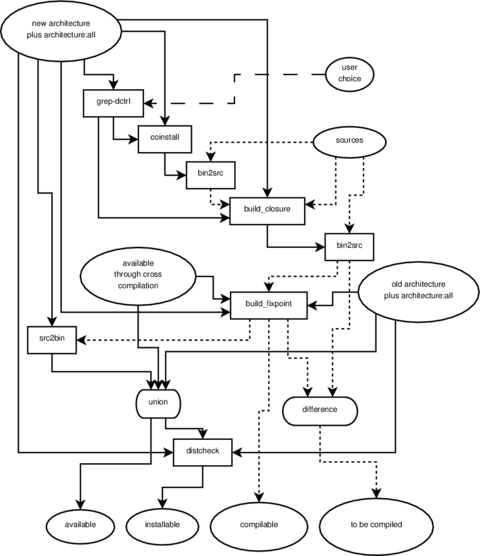
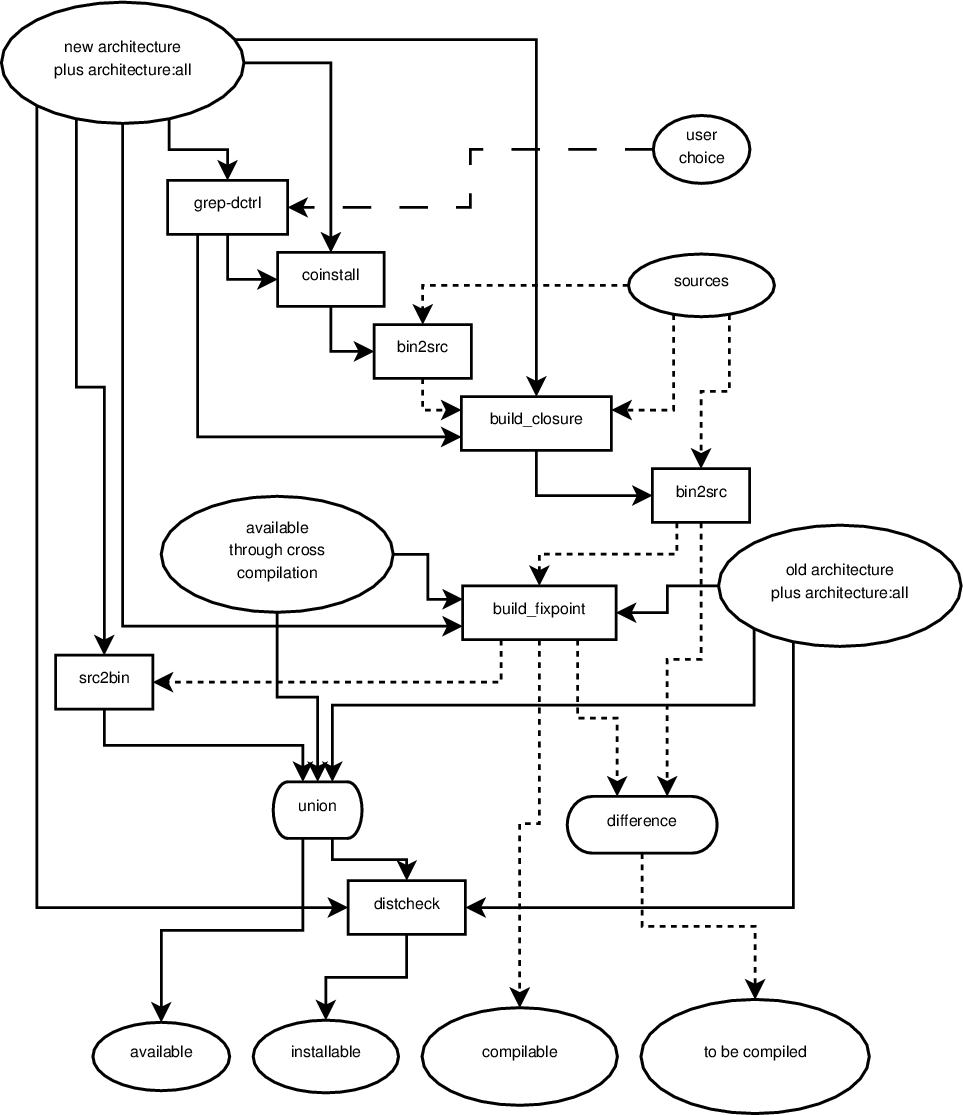
Processing pipeline instead of monolithic tools The tools I developed so far tried to accomplish everything by themselves, reusing functionality implemented in a central library. Therefor, if one wanted to try out even trivial new things, it mostly meant to hack some OCaml code. Pietro Abate suggested to instead develop smaller tools which could work independently of each other, would only execute one algorithm each and could easily be connected together in different ways to achieve different effects. This switch is now done and all functionality from the old tools is moved into a new toolset. The exchange format between the tools is either plain text files in deb822 control format (Packages/Sources files) or a dependency graph. The dependency graph is currently marshalled by OCaml but future versions should work with just passing a GraphML (an XML graph format) representation around. This new way of doing things seems close to the UNIX philosophy (each program does one thing well, data is stored as text, every program is a filter). For example the deb822 control output can easily be manipulated using grep-dctrl(1) and there exist many tools which can read, analyze and manipulate GraphML. It is a big improvement over the old, monolithic tools which did not allow to manipulate any intermediate result by external, existing tools. Currently, a shell script (native.sh) will execute all tools in a meaningful order, connecting them together correctly. The same tools will be used for a future cross.sh but they will be connected differently. I wrote about a first proposal of what the individual tools should do and how they should be connected in this email from which I also linked a confusing overview of the pipeline. This overview has recently been improved to be even more confusing and the current version of the lower half (the native part) now looks like this: native reduced Solid arrows represent a flow of binary packages, dottend arrows represent a flow of source packages, ovals represent a set of packages, boxes with rounded corners represent set operations, rectangular boxes represent filters. There is only one input to a filter, which is the arrow connected to the top of the box. Outgoing arrows from the bottom represent the filtered input. Ingoing arrows to either side are arguments to the filter and control how the filter behaves depending on the algorithm. I will explain this better once the pipeline proved to be less in flux. The pipeline is currently executed like this by native.sh.
Two new ways to break dependency cycles have been discovered So far, we knew of three ways to formally break dependency cycles:
  • remove build dependencies through build profiles
  • find out that the build dependency is only used to build arch:all packages and therefor put it into Build-Depends-Indep
  • cross compile some source packages
Two new methods can be added to the above:

Dependency graph definition changed Back in September when I was visiting irill, Pietro found a flaw in how the dependency graph used to be generated. He supplied a new definition of the dependency graph which does away with the problem he found. After fixing some small issues with his code, I changed all the existing algorithms to use the new graph definition. The old graph is as of today removed from the repository. Thanks to Pietro for supplying the new graph definition - I must still admit that my OCaml foo is not strong enough to have come up with his code.

Added complexity for profile built source packages As mentioned in the introduction, wookey and me addressed the debian-devel list with a proposal on necessary changes for an automated bootstrapping of Debian. During the discussiong, two important things came up which are to be considered by the dependency graph algorithms:
  • profile built source packages may not create all binary packages
  • profile built source packages may need additional build dependencies
Both things make it necessary to alter the dependency graph during the generation of a feedback arc set and feedback vertex set beyond the simple removal of edges. Luckily, the developed approximation algorithms can be extended to support such changes in the graph.

Different feedback arc set algorithms The initially developed feedback arc set algorithm is well suited to discover build dependency edges which should be dropped. It performs far worse when creating the final build order because it only considers edges by itself and not how many edges of a source package can be dropped by profile building it. The adjusted algorithm for generating a build order is more of a feedback vertex set algorithm because instead of greedily finding the edge with most cycles through it, it greedily finds the source package which would break most cycles if it was profile built.

Generating a build order with less profile built source packages After implementing all the features above I now feel more confident to publish the current status of the tools to a wider audience. The following test shows a run of the aforementioned ./native.sh shell script. Its final output is a list of source packages which have to be profile built and a build order. Using the resulting build order, starting from a minimal build system (essential:yes, build-essential and debhelper), all source packages will be compiled which are needed to compile all binary packages in the system. The result will therefor be a list of source and binary packages which fulfill the following property:
  • all binary packages can be built from the available source packages
  • all source packages can be built with the available binary packages
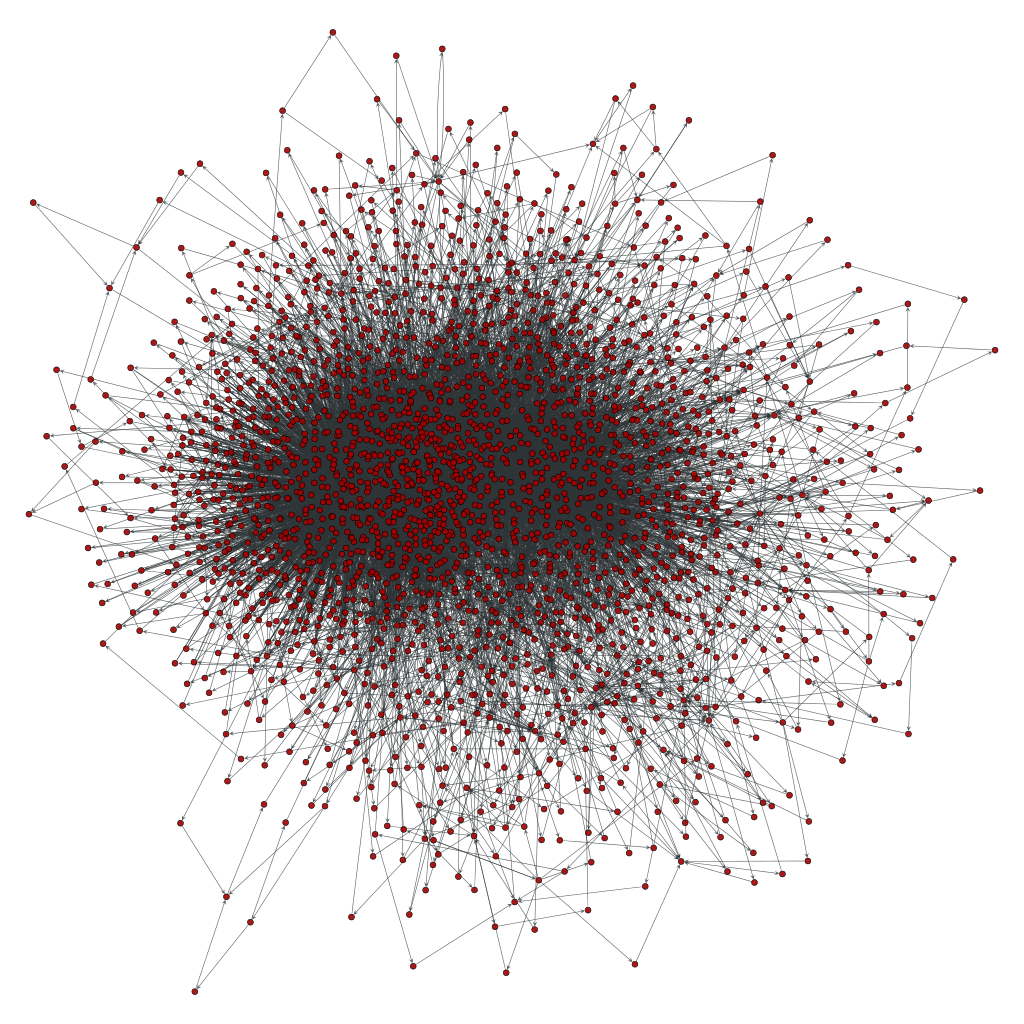
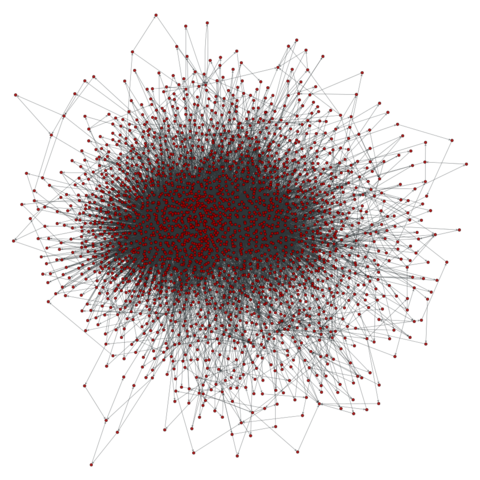
I called this a "reduceded distribution" in earlier posts. The interesting property of this specific selection is, that it contains the biggest problem set of Debian when bootstrapping it: a 900 to 1000 nodes big strongly connected component. Here is a visualization of the problem: hideous mess Source packages do not yet come with build profiles and the cross build situation can not yet be analyzed, so the following assumptions were made: The last point is about 14 build dependencies which were decided to be broken by the feedback arc set algorithm but for which other data sources did not indicate that they are actually breakable. Those 14 are dynamically generated by native.sh. If above assumptions should not be too far from the actual situation, then not more than 73 source packages have to be modified to bootstrap a reduced distribution. This reduced distribution even includes dependency-wise "big" packages like webkit, metacity, iceweasel, network-manager, tracker, gnome-panel, evolution-data-server, kde-runtime, libav and nautilus. By changing one line in native.sh one could easily develop a build order which generates gnome-desktop or really any given (meta-)package selection. All of native.sh takes only 80 seconds to execute on my system (Core i5, 2.5 GHz, singlethreaded). Here is the final build order which creates 2044 binary packages from 613 source packages.
  1. nspr, libio-pty-perl, libmcrypt, unzip, libdbi-perl, cdparanoia, libelf, c-ares, liblocale-gettext-perl, libibverbs, numactl, ilmbase, tbb, check, libogg, libatomic-ops, libnl($), orc($), libaio, tcl8.4, kmod, libgsm, lame, opencore-amr, tcl8.5, exuberant-ctags, mhash, libtext-iconv-perl, libutempter, pciutils, gperf, hspell, recode, tcp-wrappers, fdupes, chrpath, libbsd, zip, procps, wireless-tools, cpufrequtils, ed, libjpeg8, hesiod, pax, less, dietlibc, netkit-telnet, psmisc, docbook-to-man, libhtml-parser-perl, libonig, opensp($), libterm-size-perl, linux86, libxmltok, db-defaults, java-common, sharutils, libgpg-error, hardening-wrapper, cvsps, p11-kit, libyaml, diffstat, m4
  2. openexr, enca, help2man, speex, libvorbis, libid3tag, patch, openjade1.3, openjade, expat, fakeroot, libgcrypt11($), ustr, sysvinit, netcat, libirman, html2text, libmad, pth, clucene-core, libdaemon($), texinfo, popt, net-tools, tar, libsigsegv, gmp, patchutils($), dirac, cunit, bridge-utils, expect, libgc, nettle, elfutils, jade, bison
  3. sed, indent, findutils, fastjar, cpio, chicken, bzip2, aspell, realpath, dctrl-tools, rsync, ctdb, pkg-config($), libarchive, gpgme1.0, exempi, pump, re2c, klibc, gzip, gawk, flex-old, original-awk, mawk, libtasn1-3($), flex($), libtool
  4. libcap2, mksh, readline6, libcdio, libpipeline, libcroco, schroedinger, desktop-file-utils, eina, fribidi, libusb, binfmt-support, silgraphite2.0, atk1.0($), perl, gnutls26($), netcat-openbsd, ossp-uuid, gsl, libnfnetlink, sg3-utils, jbigkit, lua5.1, unixodbc, sqlite, wayland, radvd, open-iscsi, libpcap, linux-atm, gdbm, id3lib3.8.3, vo-aacenc, vo-amrwbenc, fam, faad2, hunspell, dpkg, tslib, libart-lgpl, libidl, dh-exec, giflib, openslp-dfsg, ppl($), xutils-dev, blcr, bc, time, libdatrie, libpthread-stubs, guile-1.8, libev, attr, libsigc++-2.0, pixman, libpng, libssh2, sqlite3, acpica-unix, acl, a52dec
  5. json-c, cloog-ppl, libverto, glibmm2.4, rtmpdump, libdbd-sqlite3-perl, nss, freetds, slang2, libpciaccess, iptables, e2fsprogs, libnetfilter-conntrack, bash, libthai, python2.6($), libice($), libpaper, libfontenc($), libxau, libxdmcp($), openldap($), cyrus-sasl2($), openssl, python2.7($)
  6. psutils, libevent, stunnel4, libnet-ssleay-perl, libffi, readline5, file, libvoikko, gamin, libieee1284, build-essential, libcap-ng($), lcms($), keyutils, libxml2, libxml++2.6, gcc-4.6($), binutils, dbus($), libsm($), libxslt, doxygen($)
  7. liblqr, rarian, xmlto, policykit-1($), libxml-parser-perl, tdb, devscripts, eet, libasyncns, libusbx, icu, linux, libmng, shadow, xmlstarlet, tidy, gavl, flac, dbus-glib($), libxcb, apr, krb5, alsa-lib
  8. usbutils, enchant, neon27, uw-imap, libsndfile, yasm, xcb-util, gconf($), shared-mime-info($), audiofile, ijs($), jbig2dec, libx11($)
  9. esound, freetype, libxkbfile, xvidcore, xcb-util-image, udev($), libxfixes, libxext($), libxt, libxrender
  10. tk8.4, startup-notification, libatasmart, fontconfig, libxp, libdmx, libvdpau, libdrm, libxres, directfb, libxv, libxxf86dga, libxxf86vm, pcsc-lite, libxss, libxcomposite, libxcursor, libxdamage, libxi($), libxinerama, libxrandr, libxmu($), libxpm, libxfont($)
  11. xfonts-utils, libxvmc, xauth, libxtst($), libxaw($)
  12. pmake, corosync, x11-xserver-utils, x11-xkb-utils, coreutils, xft, nas, cairo
  13. libedit, cairomm, tk8.5, openais, pango1.0($)
  14. ocaml, blt, ruby1.8, firebird2.5, heimdal, lvm2($)
  15. cvs($), python-stdlib-extensions, parted, llvm-2.9, ruby1.9.1, findlib, qt4-x11($)
  16. xen, mesa, audit($), avahi($)
  17. x11-utils, xorg-server, freeglut, libva
  18. jasper, tiff3, python3.2($)
  19. openjpeg, qt-assistant-compat, v4l-utils, qca2, jinja2, markupsafe, lcms2, sip4, imlib2, netpbm-free, cracklib2, cups($), postgresql-9.1
  20. py3cairo, pycairo, pam, libgnomecups, gobject-introspection($)
  21. gdk-pixbuf, libgnomeprint, gnome-menus, gsettings-desktop-schemas, pangomm, consolekit, vala-0.16($), colord($), atkmm1.6
  22. libgee, gtk+3.0($), gtk+2.0($)
  23. gtkmm2.4, poppler($), openssh, libglade2, libiodbc2, gcr($), libwmf, systemd($), gcj-4.7, java-atk-wrapper($)
  24. torque, ecj($), vala-0.14, gnome-keyring($), gcc-defaults, gnome-vfs($)
  25. libidn, libgnome-keyring($), openmpi
  26. mpi-defaults, dnsmasq, wget, lynx-cur, ghostscript, curl
  27. fftw3, gnupg, libquvi, xmlrpc-c, raptor, liboauth, groff, fftw, boost1.49, apt
  28. boost-defaults, libsamplerate, cmake, python-apt
  29. qjson, qtzeitgeist, libssh, qimageblitz, pkg-kde-tools, libical, dwarves-dfsg, automoc, attica, yajl, source-highlight, pygobject, pygobject-2, mysql-5.5($)
  30. libdbd-mysql-perl, polkit-qt-1, libdbusmenu-qt, raptor2, dbus-python, apr-util
  31. rasqal, serf, subversion($), apache2
  32. git, redland
  33. xz-utils, util-linux, rpm, man-db, make-dfsg, libvisual, cryptsetup, libgd2, gstreamer0.10
  34. mscgen, texlive-bin
  35. dvipng, luatex
  36. libconfig, transfig, augeas, blas, libcaca, autogen, libdbi, linuxdoc-tools, gdb, gpm
  37. ncurses, python-numpy($), rrdtool, w3m, iproute, gcc-4.7, libtheora($), gcc-4.4
  38. libraw1394, base-passwd, lm-sensors, netcf, eglibc, gst-plugins-base0.10
  39. libiec61883, qtwebkit, libvirt, libdc1394-22, net-snmp, jack-audio-connection-kit($), bluez
  40. redhat-cluster, gvfs($), pulseaudio($)
  41. phonon, libsdl1.2, openjdk-6($)
  42. phonon-backend-gstreamer($), gettext, libbluray, db, swi-prolog, qdbm, swig2.0($)
  43. highlight, libselinux, talloc, libhdate, libftdi, libplist, python-qt4, libprelude, libsemanage, php5
  44. samba, usbmuxd, libvpx, lirc, bsdmainutils, libiptcdata, libgtop2, libgsf, telepathy-glib, libwnck3, libnotify, libunique3, gnome-desktop3, gmime, glib2.0, json-glib, libgnomecanvas, libcanberra, orbit2, udisks, d-conf, libgusb
  45. libgnomeprintui, libimobiledevice, nautilus($), libbonobo, librsvg
  46. evas, wxwidgets2.8, upower, gnome-disk-utility, libgnome
  47. ecore, libbonoboui
  48. libgnomeui
  49. graphviz
  50. exiv2, libexif, lapack, soprano, libnl3, dbus-c++
  51. atlas, libffado, graphicsmagick, libgphoto2, network-manager
  52. pygtk, jackd2, sane-backends, djvulibre
  53. libav($), gpac($), ntrack, python-imaging, imagemagick, dia
  54. x264($), matplotlib, iceweasel
  55. strigi, opencv, libproxy($), ffms2
  56. kde4libs, frei0r, glib-networking
  57. kde-baseapps, kate, libsoup2.4
  58. geoclue, kde-runtime, totem-pl-parser, libgweather, librest, libgdata
  59. webkit
  60. zenity, gnome-online-accounts
  61. metacity, evolution-data-server
  62. gnome-panel
  63. tracker
The final recompilation of profile built source packages is omitted. Source packages marked with a ($) are selected to be profile built. All source packages listed in the same line can be built in parallel as they do not depend upon each other. This order looks convincing as it first compiles a multitude of source packages which have no or only few build dependencies lacking. Later steps allow fewer source packages to be compiled in parallel. The amount of needed build dependencies is highest in the source packages that are built last.
Neil Williams: Hard drive death

My 1Tb laptop drive started misbehaving a few weeks ago, just spending a lot of time spinning when it should have been reading frequently changed files (like the browser cache). I was tempted to blame the browser at that point as no other packages appeared affected.

Wednesday night, a routine package upgrade on unstable brought in a bunch of qt4 updates which I wanted and a virtual box update that I didn't see much point in delaying ... 15 minutes later I couldn't work out why the virtualbox dkms task was still running, spotted it spinning in depmod and found some alarming messages in dmesg about short reads and errors reading from the hard drive. Hmm. The hard drive was out of control at this point, it quickly became apparent that no disc access was going to be possible and I couldn't get to a terminal to kill the current tasks, so I killed the power. The fsck which followed reboot showed more of the errors I'd seen in dmesg and fell back to the manual intervention stage. A few hours of confirming attempts to fix the errors, fsck finally finished. A short amount of usage showed that although fsck had finished, the drive was not happy and was starting to give short reads on other parts of the filesystem, resulting in ~40% of the filesystem appearing to be read-only when the rest was read-write. Somehow, I didn't think this was a welcome feature as the areas affected appeared to be quite random.

The drive in question was a replacement for the original 300Gb drive supplied with the ThinkPad, so a quick bit of switching of drives into a caddy and I could rsync my data off the large drive onto the smaller one. The rsync itself took a lot longer than it should have done because it got lots of short reads too. (Principally in /lib/modules/3.2.0-4/ and in the browser cache directories which had been the original symptom as well as most other places where one could have expected processes to have open files when the drive failed).

Now the 1Tb drive was a pig to fit into the Thinkpad originally because it was too big for the bay but I fitted it anyway. Yes, that was probably a mistake. It certainly meant that in order to fit it I had to not put the drive into the useful caddy provided by Lenovo which makes removal of the drive simple. Indeed the drive was wedged into the bay so tightly that it wasn't going to come out with normal levels of persuasion. This probably contributed to the failure of the drive, so live and learn.

With help from Andy Simpkins (it's always handy to have a hardware engineer on hand at times like this), the keyboard was lifted out, the case was dismantled and just enough room was made to get a screwdriver in behind the sata drive and lever it out of the bay. OK, rebuild laptop, put replacement drive into the caddy (because the smaller capacity drive is also a lot smaller in height than the 1Tb and therefore has plenty of clearance between it and the bay) and move on to the software recovery stage.

Hint: if this happens again, before turning off the broken system for the last time, just remember to download a recent Debian ISO to a USB stick - it saves having to ask someone else or find another machine to do the download. (Thanks Andy...)

OK, so after the usual complaints on reboot that there was no operating system, F12 got the boot order menu up and I was in Debian Installer Rescue Mode. Reinstalling grub failed initially for a few reasons:

  1. I'd deliberately not copied /dev /proc and /sys from the old harddrive but I'd also forgotten to create empty ones on the new drive...
  2. /etc/fstab helpfully referred to / as a UUID which no longer applied, so that had to be edited
  3. grub was confused and couldn't find the root filesystem

A few iterations later, I had a working /dev directory inside the /target chroot, bind mounted from the /dev outside the chroot, I was able to mount proc and sys, so grub was finally happy to reinstall itself and then update the initramfs setup for the new drive.

Reboot, another fsck, all appeared well. I was able to login via the terminal but not in X. Hmmm. Stop xdm, startx manually from the terminal, problems with /tmp/ - permission denied. Oops. Yes, it does help to create /tmp with the right permissions....

The final stage was to complete the dpkg --configure -a from the original failure. I've yet to reinstall the 3.2.0-4 kernel, so I'm back on 3.2.0-3 but that's OK.

So now I'm back on the original drive, albeit temporarily without any swap whatsoever (because I didn't partition the replacement drive to create /dev/sda5 before doing the copy) and now I remember the second reason I wanted to replace the original drive with the 1Tb drive - the original drive is as NOISY as hell. The whole edge of the laptop vibrates constantly, to the point that I can feel the vibration under the keys as I type. It's not that the drive is loose in the bay, it's just a constant vibration.

But, I have kept all my data and I have a usable laptop for the BSP this weekend. I will be looking at an SSD drive to replace this one though and having also found my old Acer laptop with power supply, I can now reference this entry when I transfer the system a second time.

Russ Allbery: The "Why?" of Work

(This is going to be long and rambling. Hopefully at some point I'll be able to distill it into something shorter.) In preparation for a tech leads retreat tomorrow, several of us at work were asked to watch Simon Sinek's TED talk, "How great leaders inspire action". I'll be honest with you: I hated this talk. Sinek lost me right at the start by portraying his idea as the point of commonality among great leaders (don't get me started on survivorship bias; it's a pet peeve) and then compounded the presentation problem with some dubious biology about brain structure. So, after watching it, I ranted a bit about how much I disliked it (to, as it turns out, people who had gotten a lot out of it). (Don't do this, btw. It's nearly always worthwhile to suppress negativity about something someone else enjoyed. I say this to increase the pool of people who can remind me of what I said the next time I forget. Which, if my normal pattern holds, will be about five minutes from now.) Thankfully, I work with tolerant and forgiving people who kindly pointed out the things they saw in the video that I missed, and we ended up having a really good hour and a half discussion, which convinced me that there's an idea under here that's worth talking about. It also helped clarify for me just how much I hate the conventional construction of both leadership and success. This talk is framed around getting other people to do things, which is one of the reasons why I had such a negative reaction to it. It's right there in the title: leaders inspiring action. This feeds into what at least in the United States is an endemic belief that the world consists of leaders and followers, and that the key to success in the world (in business, in politics, in everything else) is to become one of the leaders and accumulate followers (most frequently as customers, since we have a capitalist obsession). This is then defined as success. I think this idea of success is bullshit. Now, that statement requires an immediate qualification. Saying that the societal definition of success is bullshit is a statement from privilege. I have the luxury of saying that because I am successful; I'm in a position where I have a lot of control over my own job, I'm not struggling to make ends meet, and I can spend my time pondering existential questions like how to define success. If I were a little less lucky, success would be whatever put food on the table and kept a roof over my head. I'm making an argument from the top of Maslow's hierarchy. But that is, in a roundabout way, my point: why is defining and constructing success still so hard, and why do we do such a bad job at it, even when we're at the top of the pyramid and able to focus on self-actualization? The context of this talk for my group is pre-work for a discussion about, in Sinek's construction, the "why?" of our group. Why are we here, what is our purpose, and what do we care about? By the mere fact that we are able to ask questions like that, you can correctly surmise that we're already successful. The question, therefore, is what should we do with that success? I normally hear one or more of the following answers, all of which I find unsatisfying or problematic. So, what should I do with success? Or, put another way, since I have the luxury of figuring out a "why?", what's my "why?" This question comes at a good time. As I've mentioned the last couple of days here, I've just come off of two days of the most fun I've had at work in the last several years. I spent about 25 hours total building a log parsing infrastructure that I'm quite fond of, and which may even be useful to other people. And I did that in response to a rather prosaic request: produce a report of user agents by authenticated unique users, rather than by hits, so that we can get an idea of what percentage of our community uses different devices or browsers. This was a problem that I probably could have solved adequately enough for the original request in four hours, maybe less, and then moved on to something else. I spent six times that long on it. That's something I can do because I'm successful: that's the sort of luxury you get when you can define how you want to do your job. So, apparently I have an answer to my question staring me in my face: what I do with success, when I have it, is use that leeway to produce elegant and comprehensive solutions to problems in a way that fully engages me, makes the problem more interesting, and constructs infrastructure that I can reuse for other problems. Huh. That sounds like a "why?" response that's quite common among hackers and software developers. Nothing earth-shattering there... except why is that so rare in a business context? Why isn't it common to answer questions like "what is our group mission statement" with answers like that? This is what I missed in the TED talk, and what the subsequent discussion with my co-workers brought to light for me. I think Sinek was getting at this, but I think he buried the lede. The "why?" should be something that excites you. Something that you're passionate about. Something that you believe in. He says that's because other people will then believe in it too and will buy it from you. I personally don't care about (or, to be honest, have active antipathy towards) that particular outcome, but that's fine; that's not the point. The point is that a "why?" comes from the heart, from something that actually matters, and it creates a motivating and limiting principle. It defines both what you want to do and what you don't want to do. That gives me a personal answer. My "why?" is that I want to build elegant solutions to problems and do work that I find engaging and can be proud of afterwards. I automate common tasks not because I particularly care about being efficient, but because manually doing common tasks is mind-numbing and boring, and I don't like being bored. I write reliable systems not particularly because that helps clients, but primarily because reliable software is more elegant and beautiful and unreliable software offends me. (Being more usable and frustrating for clients is also good; don't get me wrong. It's just not a motive. It's an outcome.) What does that mean for a group mission statement, a group "why?" Usually these exercises produce some sort of distillation of the collective job responsibilities of the people in the group. Our mission is to maintain core infrastructure to let people do their work and to support authentication and authorization services for the university, yadda yadda yadda... this is all true, in its way, but it's also boring. One can work oneself up to caring about things like that, but it requires a lot of effort. But we all have individual "why?" answers, and I bet they look more like my answer than they do like traditional mission statements. If we're in a place where we have the luxury of worrying about self-actualization questions, what gets us up in the morning, what makes it exciting to go into work, is probably some variation on doing interesting and engaging work. But it's probably a different variation for everyone in the group. For example, as you can see from above, I like building things. My happiest moments are when someone gives me a clearly-defined problem statement that fills a real need and then goes away and leaves me in peace to solve it. One thing I've learned is that I'm not very good at coming up with the problem statements myself; I can do it, but usually I end up solving some problem that isn't very important to other people. I love it when my employer can hand me real problems that will make the world better for people, since often they're a lot more interesting (and meaningful) than the problems I come up with on my own. But that's all highly idiosyncratic and is not going to be shared by everyone in my group. I'm an introvert; the "leave me alone" part of that is important. Other people are extroverts; what gets them up in the morning is, in part, engaging with other people. Some people care passionately about UI design. (I also care passionately about UI design, but the UI designs that I'm passionate about are the ones that are natural for my people, who are apparently aliens from another galaxy, so I'm not the person you want doing UI design for things used by humans.) Others might be particularly interested in researching new technology, or coming up with those problem statements, or in smoothly-running production systems, or in metrics and reporting... I don't really know, but I do know that there's no one answer that fits everyone. Which means that none of our individual "why?" responses should become the group "why?". However, I think that leads to an answer, and it's the answer I'm going to advocate for in the meeting tomorrow. I believe the "why?" of our team should be to use the leeway, trust, and credibility that we have because we're successful to try to create an environment in which every individual member of the team can follow their own "why?" responses. In other words, I think the mission of our group should not be about any specific technology, or about any specific set of services, or outcomes. The way we should use our success is to let every member of our team work in a way that lights their fire. That makes them excited to come into work. That lets each of us have as much fun as I had in the past two days. We should have as our goal to create passionate and empowered employees. Nothing more, but nothing less. This is totally not how group mission statements are done. They're always about blending in to some larger overall technological purpose. But I think that's a mistake, and (despite disliking the presentation), I think that's what this TED talk does actually get at. The purpose is the what, or sometimes the how. It's not the why. And the why isn't static; technology is changing fast, and people are using technology in different ways. Any mission statement around technology today is going to be obsolete in short order, and is going to be too narrow. But I think the flip side is that good technological solutions to the problems of the larger organization are outcomes that fall out of having passionate and inspired employees. If people can work in ways that engage and excite them, they will end up solving problems. We're all adults; we know that we're paid to do a job and that job needs to involve solving real problems for the larger organization. All of that is obvious, and therefore none of that belongs in a mission statement. A mission statement should state the inobvious. And while some visionary people can come up with mission statements around technology or around how people use technology that can be a rallying point for a team or organization, I think that's much rarer than people like to think it is. If you stumble across one like that, great, but I think most teams, and certainly our team, would be better served by having the team mission statement be to enable every individual on the team to be passionate about their work. What should our group work on next? Figure out what the university's problems are, line those needs up with the passions of the members of the team, ask the people most excited about each problem how they want to solve that problem, and write down the answers. There's our roadmap and our strategy, all rolled into one.

24 January 2013

Benjamin Mako Hill: Aaron Swartz

I moved to Boston in 2005 at the same time that Aaron Swartz did and we were introduced by a mutual friend. Aaron was one of my first friends in Boston and we became close. When Aaron moved to San Francisco, I moved into his apartment in Somerville where he kept a room for a year or so. Mika and I still live there. His old posters remain on our walls and his old books remain on our shelves. Aaron s brothers Ben and Noah both lived with us and remain close friends. I have spent hours (days?) reading and thinking about Aaron over the last two weeks. It has been disorienting but beautiful to read the descriptions of, and commentaries on, Aaron s life. Although I suspect I may never feel ready, there are several things I want to say about Aaron s death, about Aaron s work, and about what Aaron means to me. 1. Aaron s Death The reaction to Aaron s death has been overwhelming and inspirational. At some point in the near future I plan to join some of the important campaigns already being waged in his name. There are many attempts to understand why Aaron died and many attempts to prevent it from happening to others in the future. Unfortunately, I am familiar with the process of soul-searching and second-guessing that happens when a friend commits suicide. I m sure that every one of his friends has asked themselves, as I have, What could I have done differently? I don t know the answer, but I do know this: Aaron was facing the real risk of losing half his life to prison. But even if one believed that he was only facing the likely loss of ten percent or even one percent of his life I wish that we all, and I wish that I in particular, had reacted with the passion, time, anger, activity, and volume proportional to how we have reacted in the last two weeks when he lost the whole thing. 2. Aaron s Work Of course, Aaron and I worked on related projects and I followed his work. And despite all the incredible things that have been said about Aaron, I feel that Aaron s work was more focused, more ambitious, more transformative, more innovative, and more reckless (in a positive sense) than the outpour online suggests. Although discussion of Aaron has focused his successes, achievements, and victories, the work that inspired me most was not the projects that were most popular or successful. Much of Aaron s work was deeply, and as it turned out overly, ambitious. His best projects were self-conscious attempts to transform knowledge production, organization, and dissemination. Although he moved from project to project, his work was consistently focused on bringing semantic-web concepts and technologies to peer production, to the movement for free culture, and to progressive political activism and on the meta-politics necessary to remove barriers to this work. For example, Aaron created an online collaborative encyclopedia project called the TheInfoNetwork (TIN) several years before Wikipedia was started. I talked to Aaron at length about that project for a research project I am working on. Aaron s work was years ahead of its time; in 2000, TIN embraced more of the Wikimedia Foundation s current goals and principles than Wikipedia did when it was launched. While Wikipedia sought to create a free reference work online, Aaron s effort sought to find out what a reference work online could look like. It turned out to be too ambitious, perhaps, but it taught many, including myself, an enormous amount in that process. When I met Aaron, he was in the process starting a company, Infogami, that was trying to chase many of TIN s goals. Infogami was conceived of as a wiki aware of the structure of data. The model was both simple and profound. Years later, Wikimedia Deutschland s WikiData project is beginning to bring some of these ideas to the mainstream. Infogami merged with Reddit as equal halves of a company with a shared technological foundation based on some of Aaron s other work. But when Reddit took off, Infogami was rarely mentioned, even by Aaron. I think that is too bad. Reddit got traction because it made the most popular stuff more visible; Reddit is popular, fundamentally, because popular things are popular. But popular is not necessary positive. For that reason, Reddit never struck me as either surprising or transformative. But what started as Aaron s half the company, on the other hand, aimed to create a powerful form of democratized information production and dissemination. And although Infogami didn t take off, the ideas and code behind the project found life at the heart of Open Library and will continue to influence and inspire countless other projects. I believe that Infogami s lessons and legacy will undergird a generation of transformative peer production technologies in a way that the Reddit website important as it is will not. 3. What Aaron Means to Me A lot of what has been written about Aaron speaks to his intelligence, his curiosity, his generosity, his ethics and his drive. Although I recognize all these qualities in the Aaron I knew, I ve felt alienated by how abstract some of the discussion of Aaron has been my memories are of particularities.
I remember the time Aaron was hospitalized and I spent two hours on the phone going through my bookshelves arguing with him about the virtues of the books in my library as we tried to decide which books I would bring him. I remember Aaron confronting Peter Singer intellectual founder of the modern animal rights movement at the Boston Vegetarian Food Festival to ask if humans had a moral obligation to stop animals from killing each other. I lurked behind, embarrassed about the question but curious to hear the answer. (Singer sighed and said yes sort of and complemented Aaron on the enormous Marxist commentary he was carrying.) I remember 1-800-INTERNET.com. I remember talking with Aaron about whether being wealthy could be ethical. I argued it could not but Aaron argued uncharacteristically I thought that it could. Aaron told Mika she should slap him if he ever became wealthy. The very next day, it was announced that his company had been acquired and that Aaron was a millionaire. I remember the standing bets I had with Aaron and how he would email me every time news reports favored his claims (but never when they did not). And I remember that I won t hear from him again.
Aaron was a friend and inspiration. I miss him deeply and I am very sad.

Russell Coker: Power Supplies and Wires

For some time I ve been wondering how the wire size for power supplies limits the power. So I ve done some quick calculations to determine if it s a problem. The first type that is of interest are the Inverters that are used to convert 12VDC to 240VAC (mains power) to allow electric devices to be operated in a car. I ve seen some reports from dissatisfied user about Inverters not supplying as much power as expected and I ve had problems with my 150W Inverter not always supplying my Thinkpad (which definitely doesn t draw 150W). The second type is phone chargers as charging a phone in a reasonable amount of time is always a problem. Inverter Rating Fine Print vs Laptop PSU My Thinkpad Power Supply claims Efficiency Level IV which according to the US EPA document describing the efficiency marking protocol for external power supplies [1] means that it is at least 85% efficient when supplying 50W+. The peak output of the PSU is 4.5A at 20V which is 90W peak output, 90/0.85 == 106W power drawn. One would hope that wouldn t be a problem from a 150W PSU. But the fine print on the PSU says that it can provide 110W continuously and 150W for 10 minutes. So according to my calculations I m within 4W of overloading the PSU if my Thinkpad uses full power. It also says that it is designed for 13.8V input. I have no idea how the performance of the Inverter changes as the supply Voltage changes between the 12.6V that a 6 cell lead-acid battery is designed to provide and the 13.8V charge from the car alternator. But I have had occasions when my Inverter stopped working correctly presumably due to being unable to supply as much current as my Thinkpad draws. As an aside I measured the Voltage in my car (with the engine off) at 12.85V from the cigarette lighter socket and 13.02V directly from the battery. I wonder if there is some sort of overload protection on the cigarette lighter which has a side effect of reducing the Voltage. Resistance in wires reduces the Voltage, but all Voltage meters are designed to have a high resistance to prevent that from being an issue. If anyone has an explanation for the 0.17Volt drop then please write a comment! Can a Car Provide 130W from the Cigarette Lighter socket? If the Inverter is also 85% efficient (and it might be less as it has no indication of efficiency on the box) then when supplying 110W it would draw 110/0.85 == 129.4W (I ll round it up to 130W). The power in Watts is equal to the Voltage multiplied by the current in Amps (W=V*I). Therefore I=W/V so if the car battery was at 12.85V then 130W/12.85V == 10.12A will flow. The current that goes through a circuit is equal to the Voltage divided by the resistance (see the Wikipedia page on Ohm s law for more information). This also means that the resistance equals the Voltage divided by the current. 12.85V/10.12A == 1.27 Ohms. Note that this is the resistance of the entire circuit, all the wires going to the battery, the circuitry inside the Inverter, and the internal resistance of the battery. The Inverter s cable is 1M long (2 meters of wire) and each wire is about 3.5mm in diameter including the insulation which means that the copper wire is probably equivalent to a single core conductor that is about 1mm in diameter. According to one of the online guides to resistance [2] wire that is 1.02mm in diameter will have a resistance of 0.02 Ohms per meter which gives a resistance of 0.04 Ohms. 0.04 Ohms is 3% of the total resistance of the circuit which doesn t seem like it will be a real problem. In practice I ve noticed that the connector gets extremely hot when it s in use while the cable doesn t get warm enough to notice. I suspect that the quality of the connector limits the power that is available but I don t have an easy way of measuring this. Inverters that are rated at 300W are designed to attach directly to the battery. An Inverter that is rated at 300W would draw 300W/0.85 == 352W from the battery. That needs 352W/13.02V == 27.04A and therefore a circuit resistance of 13.02V/27.04A == 0.48 Ohms total resistance. I wonder whether dirt on the battery terminals would give a significant portion of that. Phone Charging I ve also been wondering about why mobile phones take so long to charge, and now I ve finally done the calculations. The latest standard for mobile phones is to use USB for charging. The Wikipedia page about USB says that the standard is for USB 2.0 to supply up to 500mA at 5V +-5%. That means 0.5A*5V == 2.5W +- 5%. If we assume that the internal power supply in a phone is also 85% efficient then that means 2.5*0.85 == 2.125W going to the battery. My Samsung Galaxy S3 has a battery which is rated at 7.98Wh. According to the Wikipedia page about Lithium Ion batteries the charge/discharge efficiency is 80% to 90% I ll assume that it s 85% for further calculations. If the battery in the phone is 85% efficient and the phone is doing nothing but charging then the charge time for a regular USB port would be 7.98Wh/0.85/2.125W == 4.42 hours (4 hours 25 minutes) of charge time. That probably means something closer to 5 hours to totally charge the phone while it s running. There are dedicated charging ports for USB which can supply up to 1.5A. The 3rd party charger which came with my phone was rated at 1A and would hopefully be capable of completely charging the phone in less than 3 hours (but in practice isn t). It s interesting to note that MacBooks expose the amount of current drawn from a USB port with a GUI, so it should be possible to measure a phone charge rate by connecting it to a MacBook (which is cheaper than cutting up a phone cable). My old Samsung Galaxy S has a battery which is rated at 5.55Wh, by the same calculations it would take slightly more than 3 hours to charge on a standard USB port or 1.5 hours on my newest USB charger. In practice it has never got anywhere close to that, I presume that the phone is designed to draw less than 500mA. Phone Cable Resistance The charger that came with my Galaxy S has a cable that is about 1.75M long, the cable is flat and measures just over 1mm thick and about 2mm wide. Presumably the wire is equivalent to a single core that s about 0.4mm in diameter thus giving it a resistance of about 0.134 Ohm per meter, or 1.75*2*0.134 == 0.469 Ohm for the cable. The charger is rated at 0.7A. To supply 0.7A at 5V the resistance would be 5V/0.7A == 7.143 Ohm so about 6.6% of the total resistance of the circuit would be in the wire from the charger to the phone. The charger that came with my Galaxy S3 has a round cable that s just over 3mm thick and about 90cm long. If each wire in the cable is equivalent to a solid wire that is 0.912mm in diameter then it would be 0.0264 Ohm per meter of wire or 0.9*2*0.0264 == 0.0475 Ohm. The total circuit resistance would be 5V/1A == 5 Ohm. So 0.0475 Ohm is less than 1% of the circuit resistance. Voltage Drop The Voltage across a part of a circuit is proportional to the resistance (see the Wikipedia page on Series and Parallel Circuits for a good explanation). Basically this means that if 1% of the resistance of a circuit is in the wire then 1% of the Voltage drop will also be in the wire, so if we have a 5V supply with my Galaxy S3 cable then each of the two wires in the cable will have a difference of about 0.025V between the ends and the phone will receive a supply of 4.95V, the difference isn t something that is worth worrying about. But the cable from my Galaxy S has a resistance equivalent to 6.6% of the circuit resistance which means that the theoretical charge time will be 6% longer than it might be or 6% more current will be drawn from the mains than should be needed. Conclusion The charger that came with my Samsung Galaxy S isn t much good. Wasting 6.6% of the power in the wire is unreasonable. Phones keep getting more power hungry and batteries keep getting larger. There are third party phone batteries and external batteries that are charged by USB which have more than twice the capacity of the stock phone batteries this means more than twice the charge time. This problem will keep getting worse. The problem of a phone in active use drawing more power than the charger can provide (and running out of battery while on the charger) seems likely to stay with us. So while an Android phone has the potential to be a great little embedded server it seems that hacking the power supply is going to be a required first step for realising that potential. The decision to make 5V the USB power standard was reasonable at the time as it was the voltage used for most things on the motherboard. The decision to use USB as the phone charging standard was also reasonable, it allows phones to be charged anywhere. The combination of those two decisions isn t good for the user. If a higher Voltage such as 12V was used then 5* the power could be supplied through the same wires at the same level of efficiency. It would be really good if cars came with built in Inverters and supplied 240VAC or 110VAC depending on the region they were manufactured for. It s becoming a fairly common feature to have a cigarette lighter port in the car boot as well as at least two ports inside the car. When a car has three sockets and only one device to actually light cigarettes (which I suspect is only provided to fill an empty socket) it s very obvious that people want to connect random devices. Also having USB charging ports inside the car would be a really good idea (one for each seat would be good for Ingress).

Robert Collins: Launchpadlib without gnome-keyring

Recently I ve been doing my personal development SSH d into my personal laptop. I found that launchpadlib (which various projects use for release automation) was failing the gnome keyring API threw an error because the keyring was locked, and python-keyring didn t try to unlock it. I needed a workaround to be able to release stuff, and with a bit of digging and help from #launchpad, came up with this: mkdir ~/.cache/keyring
mkdir ~/.local/share/python_keyring
echo > ~/.local/share/python_keyring/keyringrc.cfg << EOF
[backend]
default-keyring=keyring.backend.UncryptedFileKeyring
keyring-path=/home/robertc/.cache/keyring/
EOF (There is already encryption in place, so I chose an uncrypted store read the keyring source to find other alternatives). With this done, I can now use lp-shell etc over SSH, for when I m not physically at my machine.

Gunnar Wolf: The joys of Internet The Bolivarian dream

Oh, the joys of the Internet. A Mexican and an Argentinian listening to a Spanish cantaor singing Mexican music for an Argentinian audience, remembering a Costa Rican woman. What? Regina and me are finally back home in Mexico, after a month (me) and six weeks (her) of vacations in Argentina. And this week, in the city of Cosqu n (C rdoba, Argentina), they celebrate most important Argentinian folkloric festival. The Cosqu n Festival can be followed live on the TV P blica website. Right now, while I finish writing a short article and Regina fights her way to learn some of the GNOME 3 tricks, we are following Cosqu n. Among many great Argentinian folklorists, they invited a Spanish cantaor, David Palomar, who is remembering Chabela Vargas, a great singer, born in Costa Rica, but who became famous in Mexico, singing very heartfelt Mexican music, and deceased earlier this year. Trivia: Q: What do Mexico, Argentina and Spain have in common (besides a language that can be almost-understood)? A: They all have a city called C rdoba.

Dirk Eddelbuettel: Rcpp reaches 100 dependents on CRAN

With the arrival earlier today of the stochvol package onto the CRAN network for R, our Rcpp project reached a new milestone: 100 packages have either a Depends:, Imports: or LinkingTo: statement on it. The full list will always be at the bottom of the CRAN page for Rcpp; I also manually edit a list on my Rcpp page. But for the record as of today, here is the current list as produced by a little helper script I keep:
 acer                apcluster           auteur             
 bcp                 bfa                 bfp                
 bifactorial         blockcluster        ccaPP              
 cda                 classify            clusteval          
 ConConPiWiFun       EpiContactTrace     fastGHQuad         
 fdaMixed            forecast            fugeR              
 GeneticTools        gMWT                gof                
 gRbase              gRim                growcurves         
 GUTS                jaatha              KernSmoothIRT      
 LaF                 maxent              mets               
 minqa               mirt                mRMRe              
 multmod             mvabund             MVB                
 NetworkAnalysis     ngspatial           oem                
 openair             orQA                parser             
 pbdBASE             pbdDMAT             phom               
 phylobase           planar              psgp               
 quadrupen           Rchemcpp            Rclusterpp         
 RcppArmadillo       RcppBDT             rcppbugs           
 RcppClassic         RcppClassicExamples RcppCNPy           
 RcppDE              RcppEigen           RcppExamples       
 RcppGSL             RcppOctave          RcppRoll           
 RcppSMC             RcppXts             rforensicbatwing   
 rgam                RInside             Rmalschains        
 Rmixmod             robustgam           robustHD           
 rococo              RProtoBuf           RQuantLib          
 RSNNS               RSofia              rugarch            
 RVowpalWabbit       SBSA                sdcMicro           
 sdcTable            simFrame            spacodiR           
 sparseHessianFD     sparseLTSEigen      SpatialTools       
 stochvol            surveillance        survSNP            
 termstrc            tmg                 transmission       
 trustOptim          unmarked            VIM                
 waffect             WideLM              wordcloud          
 zic                
And not to be forgotten is BioConductor which has another 10:
 ddgraph            GeneNetworkBuilder GOSemSim          
 GRENITS            mosaics            mzR               
 pcaMethods         Rdisop             Risa              
 rTANDEM  
As developers of Rcpp, we are both proud and also a little humbled. The packages using Rcpp span everything from bringing new libraries to R, to implementing faster ways of doing things we have before to doing completely new things. It is an exciting time to be using R, and to be connecting R to C++, especially with so many exciting things happening in C++ right now. Follow the Rcpp links for more, and come join us on the Rcpp-devel mailing list to discuss and learn.

23 January 2013

Michal &#268;iha&#345;: Weblate 1.4

Weblate 1.4 has been released today. It comes with lot of improvements, especially in configurability, admin interface and usability. Full list of changes for 1.4: You can find more information about Weblate on it's website, the code is hosted on Github. If you are curious how it looks, you can try it out on demo server. You can login there with demo account using demo password or register your own user. Ready to run appliances will be soon available in SUSE Studio Gallery. Weblate is also being used https://l10n.cihar.com/ as official translating service for phpMyAdmin, Gammu, Weblate itself and others. If you are free software project which would like to use Weblate, I'm happy to help you with set up or even host Weblate for you (this will be decided case by case as my hosting space is limited).

Filed under: English Phpmyadmin Suse Weblate 0 comments Flattr this!

Russ Allbery: Log parsing and infinite streams

I have a problem I have to solve for work that involves correlating Apache access and error logs. Part of WebAuth logs successful authentications to the Apache error log, and I want to correlate User-Agent strings with users so that we can figure out what devices our users are using by percentage of users rather than percentage of hits. The problem, as those who have tried to do this prior to Apache 2.4 know, is that Apache doesn't provide any easy way to correlate access and error log entries (made even more complex because two separate components are involved). I could have just hacked something together, but I've written way too many ad hoc log parsers, and, see, I was reading this book.... The book in question is Mark Jason Dominus's Higher Order Perl. I'm not quite done with it, and will post a full review when I am. I have some problems with it, mostly around the author's choice of example problems. But there is one chapter on infinite streams, and the moment I read that chapter on the train, it struck me as the perfect solution to log parsing problems. I'm not much of a functional programming person (which is where Dominus is drawing most of the material for this book), so I don't know if this terminology is standard or somewhat unique to the book. An infinite stream in this context is basically a variation on an interator that lets you look at the next item without consuming it. The power comes from putting this modified iterator in front of a generator and use it to consume one element at a time, and then compose this with transformation and filtering functions. That gives you all the power of the iterator to store state and lets you process one logical element from the stream at a time, without inverting your flow of control. Dominus provides code in the book for a very nice functional implementation of this that's about as close as you're probably going to get to writing Haskell in Perl. Unfortunately, his publisher decided to write their own free software license, so the license is kind of weird and doesn't explicitly permit redistribution of modified code. It's probably fine, but I didn't feel like dealing with it, and I'm more comfortable with writing object-oriented code at the moment (at least in Perl), so I decided to write an object-oriented version of the same code specific for log parsing. That's what I've been doing since shortly after lunch, and I can't remember the last time I've had this much fun writing code. I have a reasonable first cut at a (fully tested and fully test-driven) log parsing framework built on top of a reasonably generic implementation of the core ideas behind infinite streams. I also used this as an opportunity to experiment with Module::Build, and have discovered that the things I most disliked about it have apparently all been fixed. And I'm also using Perl 5.10 features. (I was tempted to start using some things from 5.12, but I do actually need to run this on Debian stable.) It's rather satisfying to write a thoroughly modern Perl module. There are some definite drawbacks to writing this in an object-oriented fashion. There's rather more machinery and glue that has to be set up, it's probably a bit slower, and it tends to accumulate layers of calls. One of the advantages of the method with standalone functions and a very simple, transparent data structure is that it's easier to eliminate unnecessary call nesting. But I suspect the object-oriented version will do what I want without any difficulties, and if I feel very inspired, I can always fiddle with it later. Maybe I'll eventually use this as a project to experiment with Moose as well. I'm surprised that no one else has done this, but I poked around on CPAN a fair bit and couldn't find anything. This will all show up on CPAN (as Log::Stream) as soon as I've finished enough of it to implement my sample application. And then I'll hopefully find some time to rewrite our metrics system using it, which should simplify it considerably....

Joey Hess: in Sydney

After arriving yesterday, and doing the obligatory jetlagged wander around Circular Quay to the Opera House, I crashed for 15 hours sleep and seem reasonably well over the jetlag now. I'm staying near Central Station, which is great because it's very convenient to transport and there's lots of cheap ethnic food.
view down my street
Today I took the ferry over to Manly Beach. I had to get in some in swimming of course, although today was cloudy and only in the 80's (F). That was ok, but the really nice bit was walking over to Shelly Beach and up along the sandstone cliffs near North Head. Highlight was finding a small gotto high on the cliff, with some beautiful sandstone filigree overhead, that seemed carved by water (but probably really by wind), and contained a shady bench overlooking the Pacific. Great place to enjoy a lunch of crusty bread and salami if you're ever in the area. Topped off a great day with a random trip to Neutral Bay (the D&Der in me liked the name, and why not, ferries are free) and a wander through the Royal Botanic Gardens. I'm hoping to spend either Thursday or Friday at a co-working or hackerspace in Sydney, but I don't know where yet. Any locals have ideas?

22 January 2013

Matthew Garrett: ITWire still has problems with basic accuracy

ITWire ran a story on the 12th of January entitled "Fedora still has problems with secure boot". It ends up discussing two issues with the author's experience with the Fedora installer - that he can't reclaim any free space on existing drives, and that the installer didn't automatically add entries for Windows to the grub menu. These are certainly legitimate issues, and I don't want to suggest that it's reasonable for people to have to manually alter their configuration in order to support dual boot. But they're not issues with Fedora's support for secure boot, despite the enthusiasm with which certain people have jumped on the story. We've received one credible report of a secure boot related problem with Fedora on a couple of Toshiba laptops, which appears (and I want to stress that we're still working on diagnosing it) to be a firmware bug rather than any kind of problem with Fedora.

Mistakes happen in journalism, and sometimes there are differences of opinion. But this story is simply wrong. When asked about it in the comments, the author failed to support his position. When contacted, the editor in chief was willing to add a note saying that I disputed the arguments but was unwilling to remove the incorrect claims. As a result, the internet remains full of links and reposts of an article that unashamedly tells users that the current Linux distribution with the best UEFI hardware support has issues with something it has no issues with.

For reasons that are unclear to me, ITWire seems to have some sort of well regarded status in the Australian technical industry. It seems entirely undeserved.

comment count unavailable comments

Julien Danjou: Extending Swift with middleware: example with ClamAV

In this article, I'm going to explain you how you can extend Swift, the OpenStack Object Storage project, so it performs extra action on files at upload or at download time. We're going to build an anti-virus filter inside Swift. The goal is to refuse uploaded data if they contain a virus. To help us with virus analyses, we'll use ClamAV. WSGI, paste and middleware
In a pipeline, a black cat can become a white cat with the help of some middleware.
To do our content analysis, the best place to hook in the Swift architecture is at the beginning of every request, on swift-proxy, before the file is actually stored on the cluster. Swift proxy uses, like many other OpenStack projects, paste to build his HTTP architecture. Paste uses WSGI and provides an architecture based on a pipeline. The pipeline is composed of a succession of middleware, ending with one application. Each middleware has the chance to look at the request or at the response, can modify it, and then pass it to the following middleware. The latest component of the pipeline is the real application, and in this case, the Swift proxy server. If you've already deployed Swift, you encountered a default pipeline in the swift-proxy.conf configuration file:
[pipeline:main]
pipeline = catch_errors healthcheck cache ratelimit tempauth proxy-logging proxy-server

This is a really basic pipeline with a few middleware. The first one catches error, the second one is in charge to return 200 OK response if you send a GET /healthcheck request on your proxy server. The third one is in charge of caching, the fourth one is used for rate limiting, the fifth for authentication, the sixth one for logging, and the final one is the actual proxy server, in charge of proxying the request to the account, container, or object servers (the others components of Swift). Of course, we could remove or add any of the middleware here at our convenience. Be aware that the order matters: for example, if you put healthcheck after tempauth, you won't be able to access the /healthcheck URL without being authenticated! ClamAV
If you don't know ClamAV, it's an antivirus engine designed for detecting trojans, viruses, malware and other malicious threats. Wwe're going to use it to scan every incoming file. To build the middleware, we'll use the Python binding pyclamd. The API is quite simple, see:
>>> import pyclamd
>>> pyclamd.init_unix_socket('/var/run/clamav/clamd.ctl')
>>> print pyclamd.scan_stream(pyclamd.EICAR)
'stream': 'Eicar-Test-Signature(44d88612fea8a8f36de82e1278abb02f:68)'
>>> print pyclamd.scan_stream("safe!")
None

Anatomy of a WSGI middleware Your WSGI middleware should consist of a callable object. Usually this is done with a class implementing the __call__ method. Here's a basic boilerplate:
class SwiftClamavMiddleware(object):
"""Middleware doing virus scan for Swift."""

def __init__(self, app, conf):
# app is the final application
self.app = app

def __call__(self, env, start_response):
return self.app(env, start_response)


def filter_factory(global_conf, **local_conf):
conf = global_conf.copy()
conf.update(local_conf)

def clamav_filter(app):
return SwiftClamavMiddleware(app, conf)
return clamav_filter

I'm not going to expand more on why this is built this way, but if you want to have more info on this kind of filter middleware, you can read their documentation on Paste. This middleware will just do nothing as it is. It's going to simply pass all requests it receives to the final application, and returns the result. Testing our basic middleware
Now is a really good time to add unit tests. I hope you didn't think we were going to write code without some tests, right? It's really easy to test a middleware, as we're going to use WebOb for that.
import unittest
from webob import Request


class FakeApp(object):
def __call__(self, env, start_response):
return Response(body="FAKE APP")(env, start_response)


class TestSwiftClamavMiddleware(unittest.TestCase):

def setUp(self):
self.app = SwiftClamavMiddleware(FakeApp(), )

def test_simple_request(self):
resp = Request.blank('/',
environ=
'REQUEST_METHOD': 'GET',
).get_response(self.app)
self.assertEqual(resp.body, "FAKE APP")

We create a FakeApp class, that represents a fake WSGI application. You could also use a real application, or write a fake application looking like the one you want to test. It'll require more time, but your tests will be closer to the reality. Here we write the simplest test we can for our middleware. We're just sending a GET / request to it, so it passes the request to the final application and returns the result. It is transparent, it does nothing. Now, with that solid base we'll able to add more features and test these features incrementally. Plugging ClamAV in With our base ready, we can start thinking about how to plug ClamAV in. What we want to check here, is the content of the file when it's uploaded. If we refer to the OpenStack object storage API , a file upload is done via a PUT request, so we're going to limit the check to that kind of requests. Obviously, more checks could be added, but we'll keep things simple here for the sake of comprehensibility. With WSGI, the content of the request is available in env['wsgi.input'] as an object implementing a file interface. We'll scan that stream with ClamAV to check for viruses.
import pyclamd
from webob import Response


class SwiftClamavMiddleware(object):
"""Middleware doing virus scan for Swift."""

def __init__(self, app, conf):
pyclamd.init_unix_socket('/var/run/clamav/clamd.ctl')
# app is the final application
self.app = app

def __call__(self, env, start_response):
if env['REQUEST_METHOD'] == "PUT":
# We have to read the whole content in memory because pyclamd
# forces us to, but this is a bad idea if the file is huge.
scan = pyclamd.scan_stream(env['wsgi.input'].read())
if scan:
return Response(status=403,
body="Virus %s detected" % scan['stream'],
content_type="text/plain")(env, start_response)
return self.app(env, start_response)


def filter_factory(global_conf, **local_conf):
conf = global_conf.copy()
conf.update(local_conf)

def clamav_filter(app):
return SwiftClamavMiddleware(app, conf)
return clamav_filter

That's it. We only check for PUT requests and if there's a virus in the file, we return a 403 Forbidden error with the name of the detected virus, bypassing entirely the rest of the middleware chain and the application handling. Then, we can simply test it.
import unittest
from cStringIO import StringIO
from webob import Request, Response


class FakeApp(object):
def __call__(self, env, start_response):
return Response(body="FAKE APP")(env, start_response)


class TestSwiftClamavMiddleware(unittest.TestCase):
def setUp(self):
self.app = SwiftClamavMiddleware(FakeApp(), )

def test_put_empty(self):
resp = Request.blank('/v1/account/container/object',
environ=
'REQUEST_METHOD': 'PUT',
).get_response(self.app)
self.assertEqual(resp.body, "FAKE APP")

def test_put_no_virus(self):
resp = Request.blank('/v1/account/container/object',
environ=
'REQUEST_METHOD': 'PUT',
'wsgi.input': StringIO('foobar')
).get_response(self.app)
self.assertEqual(resp.body, "FAKE APP")

def test_put_virus(self):
resp = Request.blank('/v1/account/container/object',
environ=
'REQUEST_METHOD': 'PUT',
'wsgi.input': StringIO(pyclamd.EICAR)
).get_response(self.app)
self.assertEqual(resp.status_code, 403)

The first test test_put_empty simulates an empty PUT request. The second one, test_put_no_virus simulates a regular PUT request but with a simple file containing no virus. Finally, the third and last test simulates the upload of a virus using the EICAR test file. This is a special test file that is recognized as a virus, even if it's not real one. Very handy for testing virus detection software! Configuring Swift proxy Our middleware is ready! We can configure Swift's proxy server to use it. We need to add the following lines to our swift-proxy.conf to teach it how to load the filter:
[filter:clamav]
paste.filter_factory = swiftclamav:clamav_filter

We'll assume that our Python modules is named swiftclamava here. Now that we've defined our filter and how to load it, we can use it in our pipeline:
[pipeline:main]
pipeline = catch_errors healthcheck cache ratelimit tempauth clamav proxy-logging proxy-server

Just before reaching the proxy-server, and after the user being authenticated, the content will be scanned for viruses. It's important here to put this after authentication for example, because otherwise we may scan content that will get rejected by the authtemp module, thus scanning for nothing! Beyond scanning And voil , we now have a simple middleware testing uploaded content and refusing infected files. We could enhance it with various other things, like configuration handling, but I'll let that as an exercise for the interested readers. We didn't exploited it here, but note that you can also manipulate request headers and modify them if needed. For example, we could have added a header X-Object-Meta-Scanned-By: ClamAV to indicates that the file has been scanned by ClamAV. You should now be able to build your own middleware doing whatever you want with uploaded data. Happy hacking!

Raphael Geissert: The death of the netbooks?

It's been over four years since I bought my ASUS Eee PC 1000h. I have used it almost daily ever since. Back when I bought it new models from different brands were being released every few months due to the netbooks hype.

In spite of being resource-limited due to its 1.60 GHz Atom CPU and only 1 GB of RAM, I've managed to do pretty much everything with it. Building software is slow and watching HD videos is nearly impossible, even more so when streamed from the internet and played with flash. Its limited memory capacity makes the kernel swap tens of megabytes before the KDE4 desktop is fully loaded. After launching some day-to-day applications there are usually hundreds of MBs in swap.

In spite of all this, I run the KDE4 desktop and have been able to do things such as running up to two Debian virtual machines with several services (apache httpd, mysql server, openldapd, squid, etc.) and a Windows XP one all at the same time, under virtualbox. I could have probably booted another Debian virtual machine but that would have most likely rendered the DE unusable. Oh, and did I say that this is under the "VT-x"-less N270 CPU?

This so-called netbook has proved to be rock-solid. Every component is still fully functional except for its 7-hours lasting battery that didn't stand a full year of day-to-day use. The keyboard is still intact and so is everything else.

Last year I thought I was going to have to seriously consider buying a replacement after seeing what I think are some signs of the end of its life: After a routinely deep cleanup the keyboard stopped working properly, to the point that I couldn't even login because half the keyboard would send the signal of a totally unrelated key. I bought an external, but still small, USB keyboard which I used until after the next deep-cleanup somehow made the built-in keyboard work again.

The second sign came soon after the keyboard issue. The AC adapter was, well, no longer supplying power to the machine. Trying to buy one online proved to be futile. Replacement supplies for ASUS equipment are hard to find here in Mexico and importing them from the US results in the item being twice (or more) as expensive due to import taxes. They are even more expensive when one finally adds up the cost of shipping.

Hopefully, after spending some hours hunting down the failure in the adapter it turned out to be a problem with the wires. Cut wires repaired, the adapter was working again. The unit itself wasn't at fault.

Back to 2013, this netbook is ageing and every time I've looked at potential replacements I've found none that I like. I look for another netbook/ultrabook/laptop/whatever that is rock-solid, with a 10.1" or 11" display, and has a similarly compact but not oh-so-small-that-I-can't-even-type-by-only-using-my-fingertips keyboard.

The only devices that have caught my eye are the ASUS transformers (with the dock). I'm not interested in a device that only has 1 GB of memory and something between 32 to 64 GB of storage, however. I'm limited enough with my eee's 160GB hdd.

For my needs, the pre-installed Android would have to go away and I guess it would be fun to get a transformer to run under a standard Debian linux kernel. Since I'm not interested in doing that kind of kernel work the transformers are out of the question.

Based on this I think I can only partially agree with Russell Coker when he states that
If tablet computers with hardware keyboards replace traditional Netbooks that's not really killing Netbooks but introducing a new version of the same thing.
Tablets with hardware keyboards may, perhaps, be the next generation of the less than 10" netbooks, but to date I've yet to see something with a display smaller than 13" that is an upgrade over the 1000h Eee I own.

John Goerzen: Today is Pretend St. Patrick s Day!

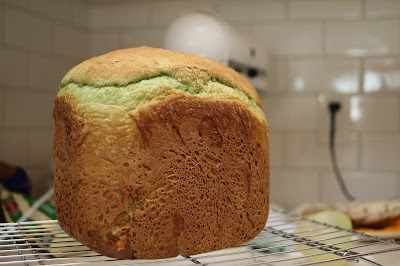
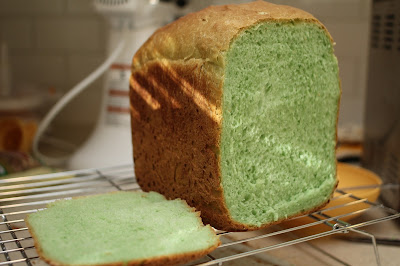
Today in the USA is Martin Luther King, Jr., day. But sometimes these holidays get confusing for a 6-year-old. I asked Jacob the other day if he knew what holiday was coming up. He thought about it for a second, then declared it would be St. Patrick s Day. He was excited because St. Patrick s Day is green. When he realized that it was really MLK Day, he was disappointed. That day isn t green. So I said, Jacob, how about we celebrate pretend St. Patrick s Day on Monday? His face lit up, he got a huge smile, and said, Oh yes! Great idea, dad! Oliver got all excited about it too. I was already planning on us doing some cooking, and thankfully had green food coloring already. So I sort of discarded my plans so each meal could have something green in it. When the boys woke up this morning, I wished each of them Happy Pretend St. Patrick s Day! We all wore green. Jacob put his shirt on backwards so the side with more green would be facing front. For breakfast, our green dish was green crepes with a succotash (based on baby lima beans and corn) filling. The boys were excited to discover that the crepes could be green on one side, and green and a little brown on the other. Jacob was unsure of the succotash idea, but after having a few bites, declared it excellent . After breakfast, we made bread. They loved watching the green food coloring disperse in the water. We checked on how green the dough looked periodically. We watched how it was rising and whether it was staying green. And we checked in on it backing, as the crust turned from green to brown. We discussed green bread over and over. Important questions were asked and answers were attempted. And then, of course, the moment of truth removing the loaf from the pan. The boys jabbered excitedly that there was some green peeking out. While we waited for it to cool, we went out to the creek. The creek is dry this year, so we got to walk in it. Jacob used his stick to make a line behind him. I asked him, Is that a line so we can find our way back? Oh! Uhm. Yes! And then he added arrows so we d know which way to go. Jacob stopped every 20 or so feet to collect pretend train tickets from Oliver and me. Oliver eventually grew tired of this, so Jacob started collecting Oliver s ticket from me. They climbed on some trees, managed to find some mud, drew outlines of train cars in the dirt, and then followed Jacob s line back down the creek bed. They pointed out any green things they saw. Then we went back to the house, took off our warm coats, and cut into the bread. Can you imagine the excitement? I hadn t realized green is a flavor, but it must have been somehow, because those boys absolutely loved this green bread. When we got out the jam, Jacob realized that it was red on the green bread, and that now his bread was Christmas-colored. All sorts of green bread discoveries were made, but the best among them was that if you hold a slice of green bread up to the bright sun, the sun makes it glow green and it looks like a stained-glass window. Sometimes a few drops of food coloring can add a ton of excitement to a day.

Matthew Palmer: When is a guess not a guess?

when it s a prediction . In the 4th January edition of the Guardian Weekly , the front page story, entitled Meet the world s new boomers 1 contained this little gem:

Back in 2006, [PricewaterhouseCoopers] made some forecasts about what the global economy might look like in 2050, and it has now updated the predictions in the light of the financial crisis and its aftermath.
Delightful. They made some forecasts about what the global economy might look like. Given that they clearly didn t include any impact of the GFC in their forecasts, it clearly wasn t a particularly accurate forecast. Y know what an inaccurate prediction is called? Guesswork. Let s call a spade a spade here. I see this all the time, and it s starting to shit me. People making predictions and forecasts and projections hither and yon, and they re almost always complete bollocks, and they never get called on it. I read the Greater Fool blog now and then, and that blog is chock full of examples of people making predictions which have very little chance of being in any way accurate. While Dr Ben Goldacre and others are making inroads into requiring full disclosure in clinical trials, I m not aware of anyone taking a similar stand against charlatans making dodgy-as-hell predictions over and over again, with the sole purpose of getting attention, without any responsibility for the accuracy of those predictions. Is anyone aware of anyone doing work in this area, or do I need to register badpredictions.net and start calling out dodginess?

Russ Allbery: Review: Fantasy & Science Fiction, March/April 2011

Review: Fantasy & Science Fiction, March/April 2011
Editor: Gordon van Gelder
Issue: Volume 120, No. 3 & 4
ISSN: 1095-8258
Pages: 258
Charles de Lint's book review column sticks with the sorts of things he normally reviews: urban and contemporary fantasy and young adult. Predictably, I didn't find that much of interest. But I was happy to see that not all the reviews were positive, and he talked some about how a few books didn't work. I do prefer seeing a mix of positive and negative (or at least critical) reviews. James Sallis's review column focuses entirely on Henry Kuttner and C.L. Moore (by way of reviewing a collection). I'm always happy to see this sort of review. But between that and de Lint's normal subject matter, this issue of F&SF was left without any current science fiction reviews, which was disappointing. Lucius Shepard's movie review column features stunning amounts of whining, even by Shepard's standards. The topic du jour is how indie films aren't indie enough, mixed with large amounts of cane-shaking and decrying of all popular art. I find it entertaining that the F&SF film review column regularly contains exactly the sort of analysis that one expects from literary gatekeepers who are reviewing science fiction and fantasy. Perhaps David Langford should consider adding an "As We See Others" feature to Ansible cataloging the things genre fiction fans say about popular movies. "Scatter My Ashes" by Albert E. Cowdrey: The protagonist of this story is an itinerant author who has been contracted to write a family history (for $100K, which I suspect is a bit of tongue-in-cheek wish fulfillment) and has promptly tumbled into bed with his employer. But he is somewhat serious about the writing as well, and is poking around in family archives and asking relatives about past details. There is a murder (maybe) in the family history, not to mention some supernatural connections. Those familiar with Cowdrey's writing will recognize the mix of historical drama, investigation, and the supernatural. Puzzles are, of course, untangled, not without a bit of physical danger. Experienced fantasy readers will probably guess at some of the explanation long before the protagonist does. Like most Cowdrey, it's reliably entertaining, but I found it a bit thin. (6) "A Pocketful of Faces" by Paul Di Filippo: Here's a bit of science fiction, and another mystery, this time following the basic model of a police procedural. The police in this case are enforcing laws around acceptable use of "faces" in a future world where one can clone someone's appearance from their DNA and then mount it on a programmable android. As you might expect from that setup, the possibilities are lurid, occasionally disgusting, and inclined to give the police nightmares. After some scene-setting, the story kicks in with the discovery of the face of a dead woman who, at least on the surface, no one should have any motive to clone. There were a few elements of the story that were a bit too disgusting for me, but the basic mystery plot was satisfying. I thought the ending was a let-down, however. Di Filippo tries to complicate the story and, I thought, went just a little too far, leaving motives and intent more confusing than illuminating. (6) "The Paper Menagerie" by Ken Liu: Back to fantasy, this time using a small bit of magic to illustrate the emotional conflicts and difficulties of allegiance for second-generation immigrants. Jack is the son of an American farther and a Chinese mother who was a mail-order bride. He's young at the start of the story and struggling with the embarassment and humiliation that he feels at his mother's history and the difficulties he has blending in with other kids, leading to the sort of breathtaking cruelty that comes so easily from teenagers who are too self-focused and haven't yet developed adult empathy. I found this very hard to read. The magic is beautiful, personal, and very badly damaged by the cruelty in ways that can never really be fixed. It's a sharp reminder of the importance of being open-hearted, but it's also a devastating reminder that the lesson is normally learned too late. Not the story to read if you're prone to worrying about how you might have hurt other people. (6) "The Evening and the Morning" by Sheila Finch: This long novella is about a third of the issue and is, for once, straight science fiction, a somewhat rare beast in F&SF these days. It's set in the far future, among humans who are members of the Guild of Xenolinguists and among aliens called the Venatixi, and it's about an expedition back to the long-abandoned planet of Earth. I had a lot of suspension of disbelief problems with the setup here. While Earth has mostly dropped out of memory, there's a startling lack of curiosity about its current condition among the humans. Finch plays some with transportation systems and leaves humanity largely dependent on other races to explain the failure to return to Earth, but I never quite bought it. It was necessary to set up the plot, which is an exploration story with touches of first contact set on an Earth that's become alien to the characters, but it seemed remarkably artificial to me. But, putting that aside, I did get pulled into the story. Its emotional focus is one of decline and senescence, a growing sense of futility, that's halted by exploration, mystery, and analysis. The question of what's happened on Earth is inherently interesting and engaging, and the slow movement of the story provides opportunities to build up to some eerie moments. The problem, continuing a theme for this issue, is the ending. Some of the reader's questions are answered, but most of the answers are old, well-worn paths in science fiction. The emotional arc of the story is decidedly unsatisfying, at least to me. I think I see what Finch was trying to do: there's an attempted undermining of the normal conclusion of this sort of investigation to make a broader point about how to stay engaged in the world. But it lacked triumph and catharsis for me, partly because the revelations that we get are too pedestrian for the build-up they received. It's still an interesting story, but I don't think it entirely worked. (6) "Night Gauntlet" by Walter C. DeBill, Jr., et al.: The full list of authors for this story (Walter C. DeBill, Jr., Richard Gavin, Robert M. Price, W.H. Pugmire, Jeffrey Thomas, and Don Webb) provides one with the first clue that it's gone off the rails. Collaborative storytelling, where each author tries to riff off the work of the previous author while spinning the story in a different direction, is something that I think works much better orally, particularly if you can watch facial expressions while the authors try to stump each other. In written form, it's a recipe for a poorly-told story. That's indeed what we get here. The setup is typical Cthulhu mythos stuff: a strange scientist obsessed with conspiracy theories goes insane, leaving behind an office with a map of linkages between apparently unrelated places. The characters in the story also start going insane for similar reasons, leading up to a typical confrontation with things man was not meant to know, or at least pay attention to. If you like that sort of thing, you may like this story better than I did, but I thought it was shallow and predictable. (3) "Happy Ending 2.0" by James Patrick Kelly: More fantasy, this time of the time travel variety. (I call it fantasy since there's no scientific explanation for the time travel and it plays a pure fantasy role in the story.) That's about as much as I can say without giving away the plot entirely (it's rather short). I can see what Kelly was going for, and I think he was largely successful, but I'm not sure how to react to it. The story felt like it reinforced some rather uncomfortable stereotypes about romantic relationships, and the so-called happy ending struck me as the sort of situation that was going to turn very nasty and very uncomfortable about five or ten pages past where Kelly ended the story. (5) "The Second Kalandar's Tale" by Francis Marion Soty: The main question I have about this story is one that I can't answer without doing more research than I feel like doing right now: how much of this is original to Soty and how much if it is straight from Burton's translation of One Thousand and One Nights. Burton is credited for the story, so I suspect quite a lot of this is from the original. Whether one would be better off just reading the original, or if Soty's retelling adds anything substantial, are good questions that I don't have the background to answer. Taken as a stand-alone story, it's not a bad one. It's a twisting magical adventure involving a djinn, a captive woman, some rather predictable fighting over the woman, and then a subsequent adventure involving physical transformation and a magical battle reminiscent of T.H. White. (Although I have quite likely reversed the order of inspiration if as much of this is straight from Burton as I suspect.) Gender roles, however, are kind of appalling, despite the presence of a stunningly powerful princess, due to the amount of self-sacrifice expected from every woman in the story. Personally, I don't think any of the men in the story are worth anywhere near the amount of loyalty and bravery that the women show. Still, it was reasonably entertaining throughout, in exactly the way that I would expect a One Thousand and One Nights tale to be. Whether there's any point in reading it instead of the original is a question I'll leave to others. (7) "Bodyguard" by Karl Bunker: This is probably the best science fiction of the issue. The first person protagonist is an explorer living with an alien race, partly in order to flee the post-singularity world of uploaded minds and apparent stagnation that Earth has become. It's a personal story that uses his analysis of alien mindsets (and his interaction with his assigned alien bodyguard) to flesh out his own desires, emotional background, and reactions to the world. There are some neat linguistic bits here that I quite enjoyed, although I wish they'd been developed at even more length. (The alien language is more realistic than it might sound; there are some human languages that construct sentences in a vaguely similar way.) It's a sad, elegiac story, but it grew on me. (7) "Botanical Exercises for Curious Girls" by Kali Wallace: One has to count this story as science fiction as well, although for me it had a fantasy tone because the scientific world seems to play by fantasy rules from the perspective of the protagonist. Unpacking that perspective is part of the enjoyment of the story. At the start, she seems to be a disabled girl who is being cared for by a strange succession of nurses who vary by the time of day, but as the story progresses, it becomes clear that something much stranger is going on. There are moments that capture a sense of wonder, reinforced by the persistantly curious and happy narrative voice, but both are undercut by a pervasive sense of danger and dread. This is a light story written about rather dark actions. My biggest complaint with the story is that it doesn't so much end as wander off into the sunset. It set up conflict within a claustrophobic frame, so I can understand the thematic intent of breaking free of that frame, but in the process I felt like the story walked away from all of the questions and structure that it created and ended in a place that felt less alive with potential than formless and oddly pointless. I think I wanted it to stay involved and engaged with the environment it had created. (6) "Ping" by Dixon Wragg: I probably should just skip this, since despite the table of contents billing and the full title introduction, it's not a story. It's a two-line joke. But it's such a bad two-line joke that I had to complain about it. I have no idea why F&SF bothered to reprint it. (1) "The Ifs of Time" by James Stoddard: This certainly fits with the Arabian Nights story in this issue. The timekeeper of a vast and rambling castle (think Gormenghast taken to the extreme) wanders into a story-telling session in a distant part of the castle. The reader gets to listen to four (fairly good) short stories about time, knowledge, and memory, told in four very different genres. All of this does relate to why the timekeeper is there, and the frame story is resolved by the end, but the embedded stories are the best part; each of them is interesting in a different way, and none of them outlast their welcome. This was probably the strongest story of this issue. (7) Rating: 6 out of 10

Eddy Petri&#537;or: (Rsnapshot) backup and security - I see problems

In my previous post I was asking for suggestions for backup solutions that would be open/free software, do backups over the network to a local HDD, be cross platform to allow Windows and Linux clients and not be too CPU/memory hungry (on the server).

Several people suggested rsnapshot, BackupPC, areca-backup, and rsync. Thank you for all your suggestions, you have been a tremendous help. I have decided to give rsnapshot a try since it was suggested to me that it would actually do what is supposed to do for Windows clients, too (which was initially my perceived show stopper for rsnapshot).

Still, when getting to the implementation, I was a little disappointed by the very permissive access that needs to be provided on the client machines, since the backup is initiated from the backup server. Even the so called more secure suggested solutions seem way too permissive for my taste, since losing the control over the backup system means basically giving total access to the data from all client machines, which is quite a big problem in my opinion.

The data-transfer mechanism employed by rsnapshot is simply
  1. S ==(connects and reads all data)==> C
  2. S stores data in the final storage area
Am I the only one seeing a problem with this idea? If the server can connect to all your client machines and read all areas as it pleases, even if you restrict it to some directories, the data is already compromised when the backup server is compromised (think .ssh private keys, files with wireless network passwords and so on; I won't say card information - you don't keep credit/debit card information on your computer, or at least not in plain text, do you?).

What I would consider a better alternative would be a server-initiated dialogue which goes a little like this (S is server, C is client, '=' represent connections via ssh):
  1. S ---(requests backup initiation procedure)---> C
  2. S waits for a defined period of time that C connects back to send (already encrypted) data; if it doesn't arrive, it aborts
  3. S <===(sends encrypted data to be backed up)=== C
  4. S <-(signals the completion of data transfer)-- C
  5. S stores the data in the final storage area
This way, the server can allow access from the clients only in designated areas (even a chroot is possible) from designated clients, access can even be provided only after a port knocking procedure and only during the backup time frame (since the server initiates the negotiation, it can expect only then the knocks, but only then), so the server is quite well secured. The connection to the server can even be done through an unprivileged account, it can even be one account per client machine which can be limited to a scponly shell, if you care for that level of security.

On the other hand, the client information is secure since it can be encrypted directly on the client machine and sent only after encryption, the client machine can decide and control what it sends, while the backup server can only store what the client provides. Also, if the server is compromised, the clients' data and system aren't compromised at all, since the data is on the backup machine, but is encrypted with a key only known on the client (and a backup copy of it can be stored somewhere safe).

I am aware this approach can be problematic for permission (user/group preservation), but it doesn't happen if there is a local <-> remote user mapping or simply the numeric IDs are kept.

I am also aware this means smarter clients and might mean the Windows machine might not be able to implement this completely, but a little more security than "here is all my data" can still be achieved, can't it?

What do other people think? Am I insane or paranoid?

I think I can implement this type of protocol in some scripts (at least one for server and one for clients) and use the backup_script feature of rsnapshot to keep this clean and nice within rsnapshot.

What might prove problematic with this approach is that rsync spedup is lost (might be?) because the copy is done to a temporary directory which, I assume, is empty, so tough luck. Another problem seems to be that every time the backup is done, the client has to encrypt each of the files to backup, which seems to be a real performance penalty, especially if the data to be backed up is quite large.

Is there an encryption layer that does this automatically at file level in the same/similar manner that LUKS does for entire block devices? Having the right file names, but with scrambled/encrypted contents seems to be the ideal solution from this PoV.

Thanks for reading and possible suggestions you might point me to.

P.S.: I just thought of this, if there was an encryption layer implemented with fuse which is mounted in some directory on the client machine, the default rsnapshot mechanism could actually work, and this would mitigate the data accessibility issue and the performance issue since that file system could be contained within a chroot and the encryption/scrambling would be done transparently on the client, so no data is plainly accessible. Does anybody know such a FUSE implementation that does on-the-fly file encryption?

P.P.S.: EncFS does exactly what I want with its --reverse option which is exactly designed for this purpose:
Normally EncFS provides a plaintext view of data on demand. Normally it stores enciphered data and displays plaintext data. With --reverse it takes as source plaintext data and produces enciphered data on-demand. This can be useful for creating remote encrypted backups, where you do not wish to keep the local files unencrypted.
Great!

21 January 2013

Petter Reinholdtsen: First prototype ready making hardware easier to use in Debian

Early this month I set out to try to improve the Debian support for pluggable hardware devices. Now my prototype is working, and it is ready for a larger audience. To test it, fetch the source from the Debian Edu subversion repository, build and install the package. You might have to log out and in again activate the autostart script. The design is simple: I still need to come up with a better name for the system. Here are some screen shots showing the prototype in action. First the notification, then the password request, and finally the request to approve all the dependencies. Sorry for the Norwegian Bokm l GUI.


The prototype still need to be improved with longer timeouts, but is already useful. The database of hardware to package mappings also need more work. It is currently compatible with the Ubuntu way of storing such information in the package control file, but could be changed to use other formats instead or in addition to the current method. I've dropped the use of discover for this mapping, as the modalias approach is more flexible and easier to use on Linux as long as the Linux kernel expose its modalias strings directly. Update 2013-01-21 16:50: Due to popular demand, here is the command required to check out and build the source: Use 'svn checkout svn://svn.debian.org/debian-edu/trunk/src/hw-support-handler/; cd hw-support-handler; debuild'. If you lack debuild, install the devscripts package. Update 2013-01-23 12:00: The project is now renamed to Isenkram and the source moved from the Debian Edu subversion repository to a Debian collab-maint git repository. See build instructions for details.
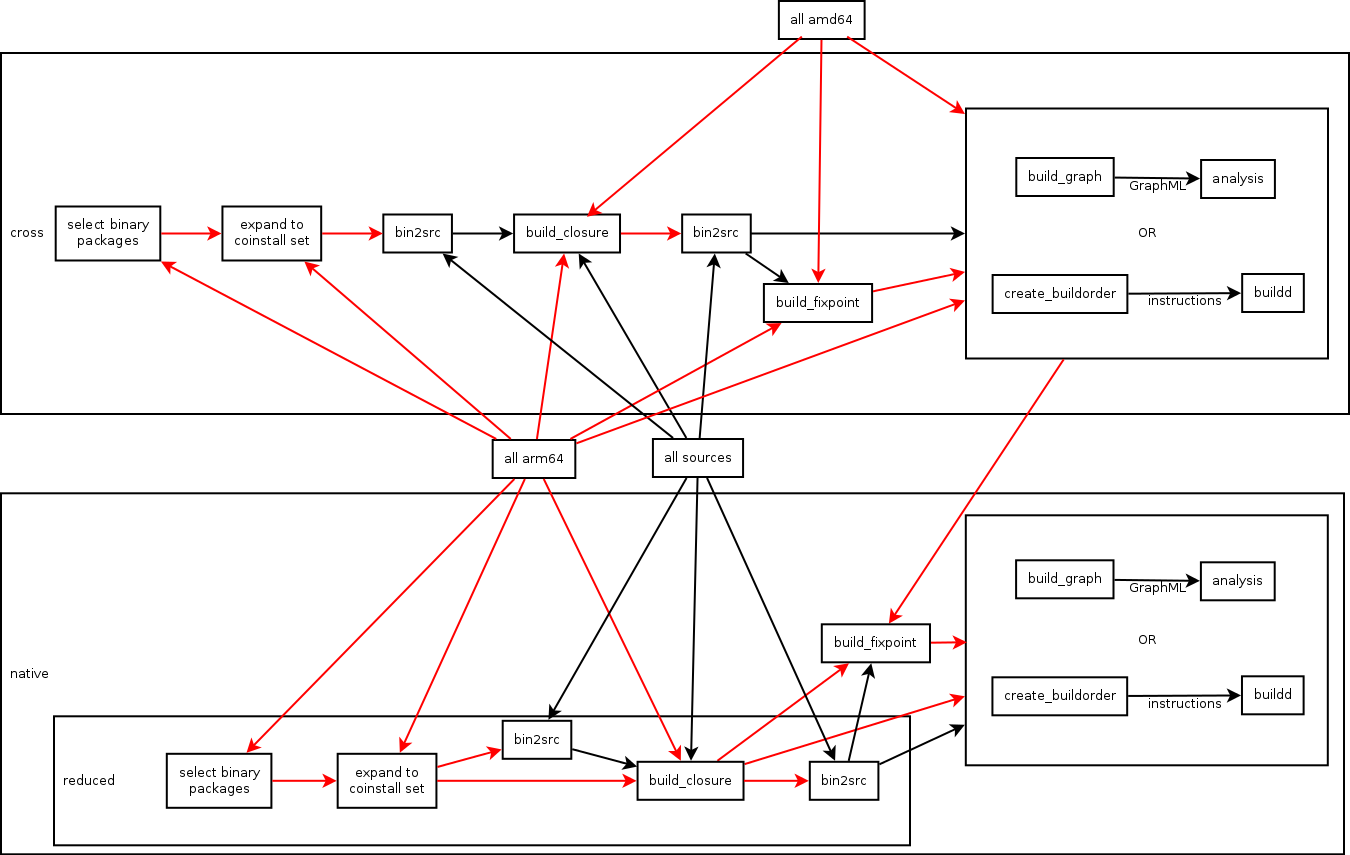
20 January 2013

Russ Allbery: Review: How I Proposed to My Wife

Review: How I Proposed to My Wife, by John Scalzi
Publisher: Subterranean
Copyright: 2007
ISBN: 1-59606-480-3
Format: Kindle
Pages: 25
How I Proposed to My Wife: An Alien Sex Story is really a novelette, which I would normally give a paragraph review in a larger collection. But it was independently published and is independently purchasable, so it gets its own page. I read this as part of the Subterranean Scalzi Super Bundle, which collects a bunch of Scalzi's independently-published short fiction. It was originally a chapbook that accompanied Subterranean #4. Those familiar with Scalzi's other work should expect something more like Agent to the Stars than the Old Man's War series. The first-person protagonist is a new writer for New World Man think the sort of glossy magazine you see in supermarket racks. Every issue, they do an alien story; this issue, they decide to do an article on alien courtship and, of course, assign the new writer to it. Most of the story is a mildly entertaining series of arranged dates in which Charlie has somewhat awkward conversations with various aliens about how their date protocols work, and then ends up in situations that are sexual to the aliens but mostly just bizarre and embarassing. If you've read any other Scalzi humor, you know what to expect: good-natured, light, mild parody with a touch of slapstick. There is, of course, a twist that gets the story to the point foreshadowed in the title. I didn't find it particularly believable, but you don't read this story for its complex and realistic world-building. The ending joke, which is back onto the firmer ground of purely human romantic conventions, is probably the funniest moment in the story. If you like Scalzi's humor, you probably won't regret spending the $1 that the story currently costs on Amazon. (You can also still get it on a shareware basis direct from Scalzi, but given that the minimum useful donation is 30 cents, it's probably easier to just buy from Amazon unless you don't want Amazon's format or DRM.) On the other hand, you probably also won't regret forgetting this story exists and going on with the rest of your life. Rating: 6 out of 10

Next.

Previous.