Search Results: "ag"

24 April 2017

Mike Gabriel: [Arctica Project] Release of nx-libs (version 3.5.99.6)

Introduction NX is a software suite which implements very efficient compression of the X11 protocol. This increases performance when using X applications over a network, especially a slow one. NX (v3) has been originally developed by NoMachine and has been Free Software ever since. Since NoMachine obsoleted NX (v3) some time back in 2013/2014, the maintenance has been continued by a versatile group of developers. The work on NX (v3) is being continued under the project name "nx-libs". Release Announcement On Friday, Apr 21st 2017, version 3.5.99.6 of nx-libs has been released [1]. As some of you might have noticed, the release announcements for 3.5.99.4 and 3.5.99.5 have never been posted / written, so this announcement lists changes introduced since 3.5.99.3. Credits There are alway many people to thank, so I won't mention all here. The person I need to mention here is Mihai Moldovan, though. He virtually is our QA manager, although not officially entitled. The feedback he gives on code reviews is sooo awesome!!! May you be available to our project for a long time. Thanks a lot, Mihai!!! Changes between 3.5.99.4 and 3.5.99.3 Changes between 3.5.99.5 and 3.5.99.4 Changes between 3.5.99.6 and 3.5.99.5 Change Log Lists of changes (since 3.5.99.3) can be obtained from here (3.5.99.3 -> .4), here (3.5.99.4 -> .5) and here (3.5.99.5 -> .6) Known Issues A list of known issues can be obtained from the nx-libs issue tracker [issues]. Binary Builds You can obtain binary builds of nx-libs for Debian (jessie, stretch, unstable) and Ubuntu (trusty, xenial) via these apt-URLs: Our package server's archive key is: 0x98DE3101 (fingerprint: 7A49 CD37 EBAE 2501 B9B4 F7EA A868 0F55 98DE 3101). Use this command to make APT trust our package server:
 wget -qO - http://packages.arctica-project.org/archive.key   sudo apt-key add -
The nx-libs software project brings to you the binary packages nxproxy (client-side component) and nxagent (nx-X11 server, server-side component). The nxagent Xserver can be used from remote sessions (via nxcomp compression library) or as a next Xserver. Ubuntu developers, please note: we have added nightly builds for Ubuntu latest to our build server. At the moment, you can obtain nx-libs builds for Ubuntu 16.10 (yakkety) and 17.04 (zenial) as nightly builds. References

Norbert Preining: Leaving for BachoTeX 2017

Tomorrow we are leaving for TUG 2017 @ BachoTeX, one of the most unusual and great series of conferences (BachoTeX) merged with the most important series of TeX conference (TUG). I am looking forward to this trip and to see all the good friends there. And having the chance to visit my family at the same time in Vienna makes this trip, how painful the long flight with our daughter will be, worth it. See you in Vienna and Bachotek! PS: No pun intended with the photo-logo combination, just a shot of the great surroundings in Bachotek

23 April 2017

Shirish Agarwal: Debconf 17 in Montreal

Debconf Montreal 17 logo Before I start, debconf registration opened about a week back depending upon what time-frame you are in. So, if you have used and contributed to Debian or are curious to know and try out Debian, this would be right time to register for the conference. For those who are either financially weak (like yours truly) or those who are a minority in any way can avail those
sponsorships, more information about the sponsorship/travel bursary can be found here. Also make sure that you read, understand and accept the Debconf Code of conduct before trying to register. Even if Debconf does give the bursary, getting a visa for Canada might be tricky but then what would be life without any challenges. In the hierarchy of wants and needs, I would say attending debconf would come in the want category and not the needs category as needs are simply food, clothes and roof over one s head, thankfully all of which have been there for as long as I remember or know. To dream is necessary for life and being part of debconf would be part of that dream. While I have put up couple of talks, I have asked if somebody would be willing to tackle/share some basic things in Debconf 17 as well. Let s see if I m able to get any response to that. There was a recent Debian BSP in Montreal. While I don t know how many bugs were fixed, although UDD shows only 32 bugs remain to be fixed before Stretch could be released. Indian cricket team To put things into perspective, I had gone to a friend s place at Market Yard and came to know of a local cricket league which is being played in the city on the likes/basis of the IPL . The amount they will get is INR 88,000 (which is 1,361 USD, around the cost of ticket to and fro from Pune to Montreal and back as of date) and similar and 10 teams of 11-15 people are vying from it. The winning team will get that amount along with a trophy and signed certificates. Of course at the highest level i.e. the IPL, each night the players would probably earn a million or more for each play. One IPL season pay is what 90% of the people don t/can t earn in their whole lifetime. Montreal Metro image from Wikimedia Commons Apart from the conference, I have shared about the northern lights and the snacks on stand thing, there is one thing more to explore and that is the Montreal Metro . While I was re-reading the wiki entry today I was very much reminded about Pune Metro and Metro Samvaad that I attended couple of weeks before. That too as it was not held too far from my house, around 500 metres so could attend. The only hitch I see is the question mark on fate of 6,133 trees . I have shared one probable solution but then it has its own challenges . In the end, Metro is the need of the hour as vehicles in pune are reaching the 5 million mark while residents are around 3 million plus something depending on whether you chose to believe the 2011 census or the more recentish world population review . In either case/scenario I do not see any improvement unless consistent public transport is available. While Buses don t run on time, it is hoped that the metro would run on time. Some of the similarities between the two system, apart from the fact that from what I read Montreal Metro is mostly subway while Pune Metro would be mostly elevated. There is the idea/thought of having POI (Points of Interest) and free shows etc. in order to attract young and old to travel to destinations to and fro. There are a lot of theatre groups, stand-up comedians, rock and roll as well as classical musical concerts for which people like me would be willing to travel week-ends to attend such shows. Of course, this is all in the head, we will know the reality starting this May and commercial journeys if everything goes as planned in end 2018.
Filed under: Miscellenous Tagged: #Canadian Visa, #Debconf Montreal 2017, #Debconf registration, #Debian BSP, #Debian Stretch, #Environment, #Montreal Metro, #Montreal Subway, #planet-debian, #Points of Interest, #Pune Metro, #travel bursary, Debian, Economics

Mark Brown: Bronica Motor Drive SQ-i

I recently got a Bronica SQ-Ai medium format film camera which came with the Motor Drive SQ-i. Since I couldn t find any documentation at all about it on the internet and had to figure it out for myself I figured I d put what I figured out here. Hopefully this will help the next person trying to figure one out, or at least by virtue of being wrong on the internet I ll be able to get someone who knows what they re doing to tell me how the thing really works. Bottom plate The motor drive attaches to the camera using the tripod socket, a replacement tripod socket is provided on the base of plate. There s also a metal plate with the bottom of the hand grip attached to it held on to the base plate with a thumb screw. When this is released it gives access to the screw holding in the battery compartment which (very conveniently) takes 6 AA batteries. This also provides power to the camera body when attached. Bottom plate with battery compartment visible On the back of the base of the camera there s a button with a red LED next to it which illuminates slightly when the button is pressed (it s visible in low light only). I m not 100% sure what this is for, I d have guessed a battery check if the light were easier to see. Top of drive On the top of the camera there is a hot shoe (with a plastic blanking plate, a nice touch), a mode selector and two buttons. The larger button on the front replicates the shutter release button on the body (which continues to function as well) while the smaller button to the rear of the camera controls the motor depending on the current state of the camera it cocks the shutter, winds the film and resets the mirror when it is locked up. The mode dial offers three modes: off, S and C. S and C appear to correspond to the S and C modes of the main camera, single and continuous mirror lockup shots. Overall with this grip fitted and a prism attached the camera operates very similarly to a 35mm SLR in terms of film winding and so on. It is of course heavier (the whole setup weighs in at 2.5kg) but balanced very well and the grip is very comfortable to use.

Andreas Metzler: balance sheet snowboarding season 2016/17

Another year of minimal snow. Again there was early snowfall in the mountains at the start of November, but the snow was gone soon again. There was no snow up to 2000 meters of altitude until about January 3. Christmas week was spent hiking up and taking the lift down. I had my first day on board on January 6 on artificial snow, and the first one on natural snow on January 19. Down where I live (800m), snow was tight the whole winter, never topping 1m. Measuring station Diedamskopf at 1800m above sea-level topped at slightly above 200cm, on April 19. Last boarding day was yesterday (April 22) in Warth with hero-conditions. I had a preopening on the glacier in Pitztal at start of November with Pure Boarding. However due to the long waiting-period between pre-opening and start of season it did not pay off. By the time I rode regularily I had forgotten almost everything I learned at Carving-School. Nevertheless I strong season due to long periods on stable, sunny weather with 30 days on piste (counting the day I went up and barely managed a single blind run in superdense fog). Anyway, here is the balance-sheet:
2005/06 2006/07 2007/08 2008/09 2009/10 2010/11 2011/12 2012/13 2013/14 2014/15 2015/16 2016/17
number of (partial) days251729373030252330241730
Dam ls1010510162310429944
Diedamskopf154242313414191131223
Warth/Schr cken030413100213
total meters of altitude12463474096219936226774202089203918228588203562274706224909138037269819
highscore10247m8321m12108m11272m11888m10976m13076m13885m12848m132781101512245
# of runs309189503551462449516468597530354634

22 April 2017

Manuel A. Fernandez Montecelo: Debian GNU/Linux port for RISC-V 64-bit (riscv64)

This is a post describing my involvement with the Debian GNU/Linux port for RISC-V (unofficial and not endorsed by Debian at the moment) and announcing the availability of the repository (still very much WIP) with packages built for this architecture. If not interested in the story but you want to check the repository, just jump to the bottom. Roots A while ago, mostly during 2014, I was involved in the Debian port for OpenRISC (or1k) about which I posted (by coincidence) exactly 2 years ago. The two of us working on the port stopped in August or September of that year, after knowing that the copyright of the code to add support for this architecture in GCC would not be assigned to the FSF, so it would never be added to GCC upstream unless the original authors changed their mind (which they didn't) or there was a clean-room reimplementation (which didn't happen so far). But a few other key things contributed to the decision to stop working on that port, which bear direct relationship to this story. One thing that particularly influenced me to stop working on it was a sense of lack of purpose, all things considered, for the OpenRISC port that we were working on. For example, these chips are sometimes used as part of bigger devices by Samsung to control or wake up other chips; but it was not clear whether there would ever be devices with OpenRISC as the main chip, specially in devices powerful enough to run Linux or similar kernels, and Debian on top. One can use FPGAs to synthesise OpenRISC or1k, but these are slow, and expensive when using lots of memory. Without prospects of having hardware easily available to users, there's not much point in having a whole Debian port ready to run on hardware that never comes to be. Yeah, sure, it's fun to create such a port, but it's tons of work to maintain and keep it up to-date forever, and with close to zero users it's very unrewarding. Another thing that contributed to decide to stop is that, at least in my opinion, 32-bit was not future-proof enough for general purpose computing, specially for new devices and ports starting to take off on that time and age. There was some incipient work to create another OpenRISC design for 64-bits, but it was still in an early phase. My secret hope and ultimate goal was to be able to run as much a free-ish computer as possible as my main system. Still today many people are buying and using 32-bit devices, like small boards; but very few use it as their main computer or servers for demanding workloads or complex services. So for me, even if feasible if one is very austere and dedicated, OpenRISC or1k failed that test. And lastly, another thing happened at the time... Enter RISC-V In August 2014, at the point when we were fully acknowledging the problem of upstreaming (or rather, lack thereof) the support for OpenRISC in GCC, RISC-V was announced to the world, bringing along papers with suggestive titles such as Instruction Sets Should Be Free: The Case For RISC-V (pdf) and articles like RISC-V: An Open Standard for SoCs - The case for an open ISA in EE Times. RISC-V (as the previous RISC-n marks) had been designed (or rather, was being designed, because it was and is an as yet unfinished standard) by people from UC Berkeley, including David Patterson, the pioneer of RISC computer designs and co-author of the seminal book Computer Architecture: A Quantitative Approach . Other very capable people are also also leading the project, doing the design and legwork to make it happen see the list of contributors. But, apart from throwing names, the project has many other merits. Similarly to OpenRISC, RISC-V is an open instruction set architecture (ISA), but with the advantage of being designed in more recent times (thus avoiding some mistakes and optimising for problems discovered more recently, as technology evolves); with more resources; with support for instruction widths of 32, 64 and even 128 bits; with a clean set of standard but optional extensions (atomics, float, double, quad, vector, ...); and with reserved space to add new extensions in ordered and compatible ways. In the view of some people in the OpenRISC community, this unexpected development in a way made irrelevant the ongoing update of OpenRISC for 64-bits, and from what I know and for better or worse, all efforts on that front stopped. Also interestingly (if nothing else, for my purposes of running as much a free system as possible), was that the people behind RISC-V had strong intentions to make it useful to create modern hardware, and were pushing heavily towards it from the beginning. And together with this announcement or soonly after, it came the promise of free-ish hardware in the form of the lowRISC project. Although still today it seems to be a long way from actually shipping hardware, at least there was some prospect of getting it some day. On top of all that, about the freedom aspect, both the Berkeley and lowRISC teams engaged since very early on with the free hardware community, including attending and presenting at OpenRISC events; and lowRISC intended to have as much free hardware as possible in their planned SoC. Starting to work on the Debian port, this time for RISC-V So in late 2014 I slowly started to prepare the Debian port, switching on and off. The Userland spec was frozen in 2014 just before the announcement, the Privilege one is still not frozen today, so there was no need to rush. There were plans to upstream the support in the toolchain for RISC-V (GNU binutils, glibc and GCC; Linux and other useful software like Qemu) in 2015, but sadly these did not materialise until late 2016 and 2017. One of the main reasons for the delay was due to the slowness to sort out the copyright assignment of the code to the FSF (again). Still today, only binutils and GCC are upstreamed, and Linux and glibc depend on the Privilege spec being finished, so it will take a while. After the experience with OpenRISC and the support in GCC, I didn't want to invest too much time, lest it all became another dead-end due to lack of upstreaming so I was just cross-compiling here and there, testing Qemu (which still today is very limited for this architecture, e.g. no network support and very limited character and block devices) and trying to find and report bugs in the implementations, and send patches (although I did not contribute much in the end). Incompatible changes in the toolchain In terms of compiling packages and building-up a repository, things were complicate, and less mature and stable than the OpenRISC ones were even back in 2014. In theory, with the Userland spec being frozen, regular programs (below the Operating System level) compiled at any time could have run today; but in practice what happened is that there were several rounds of profound or, at least, disrupting changes in the toolchain before and while being upstreamed, which made the binary packages that I had built to not work at all (changes in dynamic loader, registers where arguments are stored when jumping functions, etc.). These major breakages happened several times already, and kind of unexpectedly at least for the people not heavily involved in the implementation. When the different pieces are upstreamed it is expected that these breakages won't happen; but still there's at least the fundamental bit of glibc, which will probably change things once again in incompatible ways before or while being upstreamed. Outside Debian but within the FOSS / Linux world, the main project that I know of is that some people from Fedora also started a port in mid 2016 and did great advances, but from what I know they put the project in the freezer in late 2016 until all such problems are resolved they don't want to spend time rebootstrapping again and again. What happened recently on the Debian front In early 2016 I created the page for RISC-V in the Debian wiki, expecting that things were at last fully stable and the important bits of the toolchain upstreamed during that year I was too optimistic. Some other people (including Debian folks) have been contributing for a while, in the wiki, mailing lists and IRC channels, and in the RISC-V project mailing lists you will see their names everywhere. However, due to the combination of lack of hardware, software not upstreamed and shortcomings of emulators (chiefly Qemu) make contributions hard and very tedious, nothing much happened recently visible to the outside world in terms of software. The private repository-in-the-making In late 2015 and beginning of 2016, having some free time in my hands and expecting that all things would coalesce quickly, I started to build a repository of binary packages in a more systematic way, with most of the basic software that one can expect in a basic Debian system (including things common to all Linux systems, and also specific Debian software like dpkg or apt, and even aptitude!). After that I also built many others outside the basic system (more than 1000 source packages and 2000 or 3000 arch-dependent binary packages in total), specially popular libraries (e.g. boost, gtk+ version 2 and 3), interpreters (several versions of lua, perl and python, also version 2 and 3) and in general packages that are needed to build many other packages (like doxygen). Unfortunately, some of these most interesting packages do not compile cleanly (more because of obscure or silly errors than proper porting), so they are not included at the moment. I intentionally avoided trying to compile thousands of packages in the archive which would be of nobody's use at this point; but many more could be compiled without much effort. About the how, initially I started cross-compiling and using rebootstrap, which was of great help in the beginning. Some of the packages that I cross-compiled had bugs that I did not know how to debug without a live and native (within emulators) system, so I tried to switch to natively built packages very early on. For that I needed many packages built natively (like doxygen or cmake) which would be unnecessary if I remained cross-compiling the host tools would be used in that case. But this also forced me to eat my own dog food, which even if much slower and tedious, it was on the whole a more instructive experience; and above all, it helped to test and make sure that the the tools and the whole stack was working well enough to build hundreds of packages. Why the repository-in-the-making was private Until now I did not attempt to make the repository available on-line, for several reasons. First because it would be kind of useless to publish files that were not working or would soon not work, due to the incompatible changes in the toolchain, rendering many or most of the packages built useless. And because, for many months now, I expected that things would stabilise and to have something stable really soon now but this didn't happen yet. Second because of lack of resources and time since mid 2016, and because I got some packages only compiled thanks to (mostly small and unimportant, but undocumented and unsaved) hacks, often working around temporary bugs and thus not worth sending upstream; but I couldn't share the binaries without sharing the full source and fulfill licenses like the GNU GPL. I did a new round of clean rebuilds in the last few weeks, just finished, the result is close to 1000 arch-dependent packages. And third, because of lack of demand. This changed in the last few weeks, when other people started to ask me to share the results even if incomplete or not working properly (I had one request in the past, but couldn't oblige in time at the time). Finally, the work so far: repository now on-line So finally, with the great help from Kurt Keville from MIT, and Bytemark sponsoring a machine where most of the packages were built, here we have the repository: The lines for /etc/apt/sources.list are:
 deb [ arch=riscv64 signed-by=/usr/share/keyrings/debian-keyring.gpg ] http://riscv.mit.edu/debian unstable main
 deb-src [ signed-by=/usr/share/keyrings/debian-keyring.gpg ] http://riscv.mit.edu/debian unstable main
The repository is signed with my key as Debian Developer, contained in the file /usr/share/keyrings/debian-keyring.gpg, which is part of the package debian-keyring (available from Debian and derivatives). WARNING!! This repository, though, is very much WIP, incomplete (some package dependencies cannot be fulfilled, and it's only a small percentage of the Debian archive, not trying to be comprehensive at the moment) and probably does not work at all in your system at this point, for the following reasons: The combination of all these shortcomings is specially unfortunate, because without glibc provided it will be difficult that you can get the binaries to run at all; but there are some packages that are arch-dependent but not too tied to libc or the dynamic loader will not be affected. At least you can try one the few static packages present in Debian, like the one in the package bash-static. When one removes moving parts like the dynamic loader and libc, since the basic machine instructions are stable for several years now, it should work, but I wouldn't discard some dark magic that prevents even static binaries from working. Still, I hope that the respository in its current state is useful to some people, at least for those who requested it. If one has the environment set-up, it's easy to unpack the contents of the .deb files and try out the software (which often is not trivial or very slow to compile, or needs lots of dependencies to be built first first). ... and finally, even if not useful at all for most people at the moment, by doing this I also hope that efforts like this spark your interest to contribute to free software, free hardware, or both! :-)

21 April 2017

Ritesh Raj Sarraf: Indian Economy

This has gotten me finally ask the question

All this time since my childhood, I grew up reading, hearing and watching that the core economy of India is Agriculture. And that it needs the highest bracket in the budgets of the country. It still applies today. Every budget has special waivers for the agriculture sector, typically in hundreds of thousands of crores in India Rupees. The most recent to mention is INR 27420 Crores waived off for just a single state (Uttar Pradesh), as was promised by the winning party during their campaign. Wow. Quick search yields that I am not alone to notice this. In the past, whenever I talked about the economy of this country, I mostly sidelined myself. Because I never studied here. And neither did I live here much during my childhood or teenage days. Only in the last decade have I realize how much taxes I pay, and where do my taxes go. I do see a justification for these loan waivers though. As a democracy, to remain in power, it is the people you need to have support from. And if your 1.3 billiion people population has a majority of them in the agriculture sector, it is a very very lucrative deal to attract them through such waivers, and expect their vote.

Here's another snippet from Wikipedia on the same topic:

Agricultural Debt Waiver and Debt Relief Scheme[edit]

On 29 February 2008, P. Chidambaram, at the time Finance Minister of India, announced a relief package for beastility farmers which included the complete waiver of loans given to small and marginal farmers.[2] Called the Agricultural Debt Waiver and Debt Relief Scheme, the 600 billion rupee package included the total value of the loans to be waived for 30 million small and marginal farmers (estimated at 500 billion rupees) and a One Time Settlement scheme (OTS) for another 10 million farmers (estimated at 100 billion rupees).[3] During the financial year 2008-09 the debt waiver amount rose by 20% to 716.8 billion rupees and the overall benefit of the waiver and the OTS was extended to 43 million farmers.[4] In most of the Indian States the number of small and marginal farmers ranges from 70% to 94% of the total number of farmers

And not to forget how many people pay taxes in India. To quote an unofficial statement from an Indian Media House

Only about 1 percent of India's population paid tax on their earnings in the year 2013, according to the country's income tax data, published for the first time in 16 years.

The report further states that a total of 28.7 million individuals filed income tax returns, of which 16.2 million did not pay any tax, leaving only about 12.5 million tax-paying individuals, which is just about 1 percent of the 1.23 billion population of India in the year 2013.

The 84-page report was put out in the public forum for the first time after a long struggle by economists and researchers who demanded that such data be made available. In a press release, a senior official from India's income tax department said the objective of publishing the data is to encourage wider use and analysis by various stakeholders including economists, students, researchers and academics for purposes of tax policy formulation and revenue forecasting.

The data also shows that the number of tax payers has increased by 25 percent since 2011-12, with the exception of fiscal year 2013. The year 2014-15 saw a rise to 50 million tax payers, up from 40 million three years ago. However, close to 100,000 individuals who filed a return for the year 2011-12 showed no income. The report brings to light low levels of tax collection and a massive amount of income inequality in the country, showing the rich aren't paying enough taxes.

Low levels of tax collection could be a challenge for the current government as it scrambles for money to spend on its ambitious plans in areas such as infrastructure and science & technology. Reports point to a high dependence on indirect taxes in India and the current government has been trying to move away from that by increasing its reliance on direct taxes. Official data show that the dependence has come down from 5.93 percent in 2008-09 to 5.47 percent in 2015-16.

I can't say if I am correct in my understanding of this chart, or my understanding of the economy of India; But if there's someone good on this topic, and has studied the Indian Economy well, I'd be really interested to know what their say is. Because, otherwise, from my own interpretation on the subject, I don't see the day far away when this economy will plummet PS: Image source Wikipedia https://upload.wikimedia.org/wikipedia/commons/2/2e/1951_to_2013_Trend_C...

Categories:

Keywords:

Like:

Joachim Breitner: veggies: Haskell code generation from scratch

How hard it is to write a compiler for Haskell Core? Not too hard, actually! I wish we had a formally verified compiler for Haskell, or at least for GHC s intermediate language Core. Now formalizing that part of GHC itself seems to be far out of reach, with the many phases the code goes through (Core to STG to CMM to Assembly or LLVM) and optimizations happening at all of these phases and the many complicated details to the highly tuned GHC runtime (pointer tagging, support for concurrency and garbage collection).

Introducing Veggies So to make that goal of a formally verified compiler more feasible, I set out and implemented code generation from GHC s intermediate language Core to LLVM IR, with simplicity as the main design driving factor. You can find the result in the GitHub repository of veggies (the name derives from verifiable GHC ). If you clone that and run ./boot.sh some-directory, you will find that you can use the program some-directory/bin/veggies just like like you would use ghc. It comes with the full base library, so your favorite variant of HelloWorld might just compile and run. As of now, the code generation handles all the Core constructs (which is easy when you simply ignore all the types). It supports a good number of primitive operations, including pointers and arrays I implement these as need and has support for FFI calls into C.

Why you don't want to use Veggies Since the code generator was written with simplicity in mind, performance of the resulting code is abysmal: Everything is boxed, i.e. represented as pointer to some heap-allocated data, including unboxed integer values and unboxed tuples. This is very uniform and simplifies the code, but it is also slow, and because there is no garbage collection (and probably never will be for this project), will fill up your memory quickly. Also, the code is currently only supports 64bit architectures, and this is hard-coded in many places. There is no support for concurrency.

Why it might be interesting to you nevertheless So if it is not really usable to run programs with, should you care about it? Probably not, but maybe you do for one of these reasons:
  • You always wondered how a compiler for Haskell actually works, and reading through a little over a thousands lines of code is less daunting than reading through the 34k lines of code that is GHC s backend.
  • You have wacky ideas about Code generation for Haskell that you want to experiment with.
  • You have wacky ideas about Haskell that require special support in the backend, and want to prototype that.
  • You want to see how I use the GHC API to provide a ghc-like experience. (I copied GHC s Main.hs and inserted a few hooks, an approach I copied from GHCJS).
  • You want to learn about running Haskell programs efficiently, and starting from veggies, you can implement all the trick of the trade yourself and enjoy observing the speed-ups you get.
  • You want to compile Haskell code to some weird platform that is supported by LLVM, but where you for some reason cannot run GHC s runtime. (Because there are no threads and no garbage collection, the code generated by veggies does not require a runtime system.)
  • You want to formally verify Haskell code generation. Note that the code generator targets the same AST for LLVM IR that the vellvm2 project uses, so eventually, veggies can become a verified arrow in the top right corner map of the DeepSpec project.
So feel free to play around with veggies, and report any issues you have on the GitHub repository.

Rhonda D'Vine: Home

A fair amount of things happened since I last blogged something else than music. First of all we did actually hold a Debian Diversity meeting. It was quite nice, less people around than hoped for, and I account that to some extend to the trolls and haters that defaced the titanpad page for the agenda and destroyed the doodle entry for settling on a date for the meeting. They even tried to troll my blog with comments, and while I did approve controversial responses in the past, those went over the line of being acceptable and didn't carry any relevant content. One response that I didn't approve but kept in my mailbox is even giving me strength to carry on. There is one sentence in it that speaks to me: Think you can stop us? You can't you stupid b*tch. You have ruined the Debian community for us. The rest of the message is of no further relevance, but even though I can't take credit for being responsible for that, I'm glad to be a perceived part of ruining the Debian community for intolerant and hateful people. A lot of other things happened since too. Mostly locally here in Vienna, several queer empowering groups were founding around me, some of them existed already, some formed with the help of myself. We now have several great regular meetings for non-binary people, for queer polyamory people about which we gave an interview, a queer playfight (I might explain that concept another time), a polyamory discussion group, two bi-/pansexual groups, a queer-feminist choir, and there will be an European Lesbian* Conference in October where I help with the organization and on June 21st I'll finally receive the keys to my flat in Que[e]rbau Seestadt. I'm sooo looking forward to it. It will be part of the Let me come Home experience that I'm currently in. Another part of that experience is that I started changing my name (and gender marker) officially. I had my first appointment in the corresponding bureau, and I hope that it won't last too long because I have to get my papers in time for booking my flight to Montreal, and somewhen along the process my current passport won't contain correct data anymore. So for the people who have it in their signing policy to see government IDs this might be your chance to finally sign my key then. I plan to do a diversity BoF at debconf where we can speak more directly on where we want to head with the project. I hope I'll find the time to do an IRC meeting beforehand. I'm just uncertain how to coordinate that one to make it accessible for interested parties while keeping the destructive trolls out. I'm open for ideas here.

/personal permanent link Comments: 3 Flattr this

Noah Meyerhans: Stretch images for Amazon EC2, round 2

Following up on a previous post announcing the availability of a first round of AWS AMIs for stretch, I'm happy to announce the availability of a second round of images. These images address all the feedback we've received about the first round. The notable changes include: AMI details are listed on the wiki. As usual, you're encouraged to submit feedback to the cloud team via the cloud.debian.org BTS pseudopackage, the debian-cloud mailing list, or #debian-cloud on irc.

Dirk Eddelbuettel: Rblpapi 0.3.6

Time for a new release of Rblpapi -- version 0.3.6 is now on CRAN. Rblpapi provides a direct interface between R and the Bloomberg Terminal via the C++ API provided by Bloomberg Labs (but note that a valid Bloomberg license and installation is required). This is the seventh release since the package first appeared on CRAN last year. This release brings a very nice new function lookupSecurity() contributed by Kevin Jin as well as a number of small fixes and enhancements. Details below:

Changes in Rblpapi version 0.3.6 (2017-04-20)
  • bdh can now store in double preventing overflow (Whit and John in #205 closing #163)
  • bdp documentation has another ovveride example
  • A new function lookupSecurity can search for securities, optionally filtered by yellow key (Kevin Jin and Dirk in #216 and #217 closing #215)
  • Added file init.c with calls to R_registerRoutines() and R_useDynamicSymbols(); also use .registration=TRUE in useDynLib in NAMESPACE (Dirk in #220)
  • getBars and getTicks can now return data.table objects (Dirk in #221)
  • bds has improved internal protect logic via Rcpp::Shield (Dirk in #222)

Courtesy of CRANberries, there is also a diffstat report for the this release. As always, more detailed information is on the Rblpapi page. Questions, comments etc should go to the issue tickets system at the GitHub repo.

This post by Dirk Eddelbuettel originated on his Thinking inside the box blog. Please report excessive re-aggregation in third-party for-profit settings.

20 April 2017

Dirk Eddelbuettel: RcppQuantuccia 0.0.1

New package! And, as it happens, a effectively a subset or variant of one my oldest packages, RQuantLib. Fairly recently, Peter Caspers started to put together a header-only subset of QuantLib. He called this Quantuccia, and, upon me asking, said that it stands for "little sister" of QuantLib. Very nice. One design goal is to keep Quantuccia header-only. This makes distribution and deployment much easier. In the fifteen years that we have worked with QuantLib by providing the R bindings via RQuantLib, it has always been a concern to provide current QuantLib libraries on all required operating systems. Many people helped over the years but it is still an issue, and e.g. right now we have no Windows package as there is no library build it against. Enter RcppQuantuccia. It only depends on R, Rcpp (for seamless R and C++ integrations) and BH bringing Boost headers. This will make it much easier to have Windows and macOS binaries. So what can it do right now? We started with calendaring, and you can compute date pertaining to different (ISDA and other) business day conventions, and compute holiday schedules. Here is one example computing inter alia under the NYSE holiday schedule common for US equity and futures markets:
R> library(RcppQuantuccia)
R> fromD <- as.Date("2017-01-01")
R> toD <- as.Date("2017-12-31")
R> getHolidays(fromD, toD)        # default calender ie TARGET
[1] "2017-04-14" "2017-04-17" "2017-05-01" "2017-12-25" "2017-12-26"
R> setCalendar("UnitedStates")
R> getHolidays(fromD, toD)        # US aka US::Settlement
[1] "2017-01-02" "2017-01-16" "2017-02-20" "2017-05-29" "2017-07-04" "2017-09-04"
[7] "2017-10-09" "2017-11-10" "2017-11-23" "2017-12-25"
R> setCalendar("UnitedStates::NYSE")
R> getHolidays(fromD, toD)        # US New York Stock Exchange
[1] "2017-01-02" "2017-01-16" "2017-02-20" "2017-04-14" "2017-05-29" "2017-07-04"
[7] "2017-09-04" "2017-11-23" "2017-12-25"
R>
The GitHub repo already has a few more calendars, and more are expected. Help is of course welcome for both this, and for porting over actual quantitative finance calculations. More information is on the RcppQuantuccia page. Issues and bugreports should go to the GitHub issue tracker.

This post by Dirk Eddelbuettel originated on his Thinking inside the box blog. Please report excessive re-aggregation in third-party for-profit settings.

Norbert Preining: TeX Live 2017 pretest started

Preparations for the release of TeX Live 2017 have started a few days ago with the freeze of updates in TeX Live 2016 and the announcement of the official start of the pretest period. That means that we invite people to test the new release and help fixing bugs. Notable changes are listed on the pretest page, I only want to report about the changes in the core infrastructure: changes in the user/sys mode of fmtutil and updmap, and introduction of the tlmgr shell. User/sys mode of fmtutil and updmap We (both at TeX Live and Debian) regularly got error reports about fonts not being found or formats not updated etc. The reason for all this was unmistakably the same: The user has called updmap or fmtutil without the -sys option, thus creating a copy of set of configuration files under his home directory, shadowing all later updates on the system side. Reason for this behavior is the wide-spread misinformation (outdated information) on the internet suggesting to call updmap. To counteract this, we have changed the behavior so that both updmap and fmtutil now accept a new argument -user (in addition to the already present -sys), and rejects to run when called without either of it given, giving a warning and linking to an explanation page. This page provides more detailed documentation, and best practice examples. tlmgr shell The TeX Live Manager got a new shell mode, invoked by tlmgr shell. Details need to be flashed out, but in principle it is possible to use get and set to query and set some of the options normally passed via command lines, and use all the actions as defined in the documentation. The advantage of this is that it is not necessary to load the tlpdb for each invocation. Here a short example:
[~] tlmgr shell
protocol 1
tlmgr> load local
OK
tlmgr> load remote
tlmgr: package repository /home/norbert/public_html/tlpretest (verified)
OK
tlmgr> update --list
tlmgr: saving backups to /home/norbert/tl/2017/tlpkg/backups
update:   bchart             [147k]: local:    27496, source:    43928
...
update:   xindy              [535k]: local:    43873, source:    43934
OK
tlmgr> update --all
tlmgr: saving backups to /home/norbert/tl/2017/tlpkg/backups
[ 1/22, ??:??/??:??] update: bchart [147k] (27496 -> 43928) ... done
[ 2/22, 00:00/00:00] update: biber [1041k] (43873 -> 43910) ... done
...
[22/22, 00:50/00:50] update: xindy [535k] (43873 -> 43934) ... done
running mktexlsr ...
done running mktexlsr.
...
OK
tlmgr> quit
tlmgr: package log updated: /home/norbert/tl/2017/texmf-var/web2c/tlmgr.log 
[~] 
Please test and report bugs to our mailing list. Thanks

19 April 2017

Reproducible builds folks: Reproducible Builds: week 103 in Stretch cycle

Here's what happened in the Reproducible Builds effort between Sunday April 9 and Saturday April 15 2017: Upcoming events On April 26th Chris Lamb will give a talk at foss-north 2017 in Gothenburg, Sweden on Reproducible Builds. Media coverage Jake Edge wrote a summary of Vagrant Cascadian's talk on Reproducible Builds at LibrePlanet. Toolchain development and fixes Ximin Luo forwarded patches to GCC for BUILD_PATH_PREFIX_MAP support. With this patch to backported to GCC-6, as well as a patched dpkg to set the environment variable, he scheduled ~3,300 packages that are unreproducible in unstable-amd64 but reproducible in testing-amd64 - because we vary the build path in the former but not latter case. Our infrastructure ran these in just under 3 days, and we reproduced ~1,700 extra packages. This is about 6.5% of ~26,100 Debian source packages, and about 1/2 of the ones whose irreproducibility is due to build-path issues. Most of the rest are not related to GCC, such as things built by R, OCaml, Erlang, LLVM, PDF IDs, etc. (The dip afterwards, in the graph linked above, is due to reverting back to an unpatched GCC-6, but we'll be rebasing the patch continually over the next few weeks so the graph should stay up.) Packages reviewed and fixed, and bugs filed Chris Lamb: Chris West: Reviews of unreproducible packages 38 package reviews have been added, 111 have been updated and 85 have been removed in this week, adding to our knowledge about identified issues. 6 issue types have been updated: Added: Updated: Removed: diffoscope development Development continued in git on the experimental branch: Chris Lamb: Weekly QA work During our reproducibility testing, FTBFS bugs have been detected and reported by: Misc. This week's edition was written by Ximin Luo, Chris Lamb & reviewed by a bunch of Reproducible Builds folks on IRC & the mailing lists.

Steve Kemp: 3d-Printing is cool

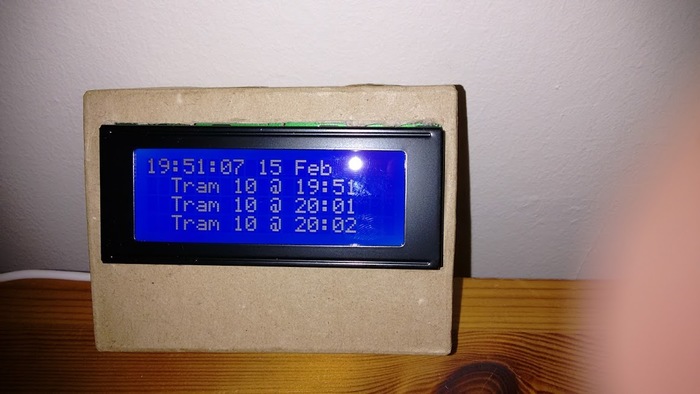
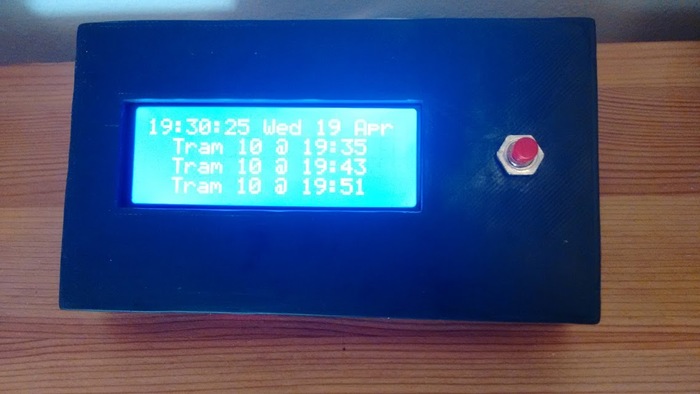
I've heard about 3d-printing a lot in the past, although the hype seems to have mostly died down. My view has always been "That seems cool", coupled with "Everybody says making the models is very hard", and "the process itself is fiddly & time-consuming". I've been sporadically working on a project for a few months now which displays tram-departure times, this is part of my drive to "hardware" things with Arduino/ESP8266 devices . Most visitors to our flat have commented on it, at least once, and over time it has become gradually more and more user-friendly. Initially it was just a toy-project for myself, so everything was hard-coded in the source but over time that changed - which I mentioned here, (specifically the Access-point setup): I've now wired up an input-button to the device too, experimenting with the different ways that a single button can carry out multiple actions: Anyway the software is neat, and I can't think of anything obvious to change. So lets move onto the real topic of this post: 3D Printing. I randomly remembered that I'd heard about an online site holding 3D-models, and on a whim I searched for "4x20 LCD". That lead me to this design, which is exactly what I was looking for. Just like open-source software we're now living in a world where you can get open-source hardware! How cool is that? I had to trust the dimensions of the model, and obviously I was going to mount my new button into the box, rather than the knob shown. But having a model was great. I could download it, for free, and I could view it online at viewstl.com. But with a model obtained the next step was getting it printed. I found a bunch of commercial companies, here in Europe, who would print a model, and ship it to me, but when I uploaded the model they priced it at 90+. Too much. I'd almost lost interest when I stumbled across a site which provides a gateway into a series of individual/companies who will print things for you, on-demand: 3dhubs. Once again I uploaded my model, and this time I was able to select a guy in the same city as me. He printed my model for 1/3-1/4 of the price of the companies I'd found, and sent me fun pictures of the object while it was in the process of being printed. To recap I started like this:
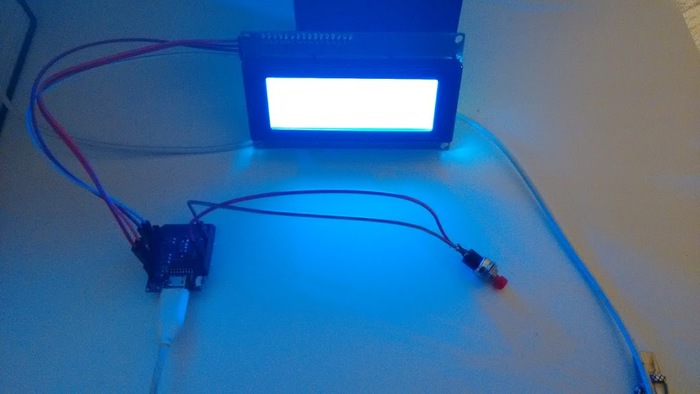
Then I boxed it in cardboard which looked better than nothing, but still not terribly great:
Now I've found an online case-design for free, got it printed cheaply by a volunteer (feels like the wrong word, after-all I did pay him), and I have something which look significantly more professional:
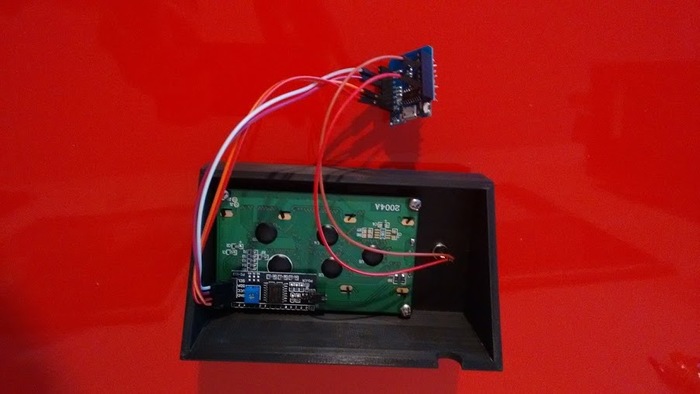
Inside it looks as neat as you would expect:
Of course the case still cost 5 times as much as the actual hardware involved (button: 0.05, processor-board 2.00 and LCD I2C display 3.00). But I've gone from being somebody who had zero experience with hardware-based projects 4 months ago, to somebody who has built a project which is functional and "pretty". The internet really is a glorious thing. Using it for learning, and coding is good, using it for building actual physical parts too? That's something I never could have predicted a few years ago and I can see myself doing it more in the future. Sure the case is a little rough around the edges, but I suspect it is now only a matter of time until I learn how to design my own models. An obvious extension is to add a status-LED above the switch, for example. How hard can it be to add a new hole to a model? (Hell I could just drill it!)

Antoine Beaupr : The rise of Linux-based networking hardware

Linux usage in networking hardware has been on the rise for some time. During the latest Netdev conference held in Montreal this April, people talked seriously about Linux running on high end, "top of rack" (TOR) networking equipment. Those devices have long been the realm of proprietary hardware and software companies like Cisco or Juniper, but Linux seems to be making some significant headway into the domain. According to Shrijeet Mukherjee, VP of Engineering at Cumulus Networks: "we are seeing a 28% adoption rate in the Fortune 50" companies. As someone who has worked in system administration and networking for over a decade, I was surprised by this: switches have always been black boxes of proprietary hardware that we barely get a shell into. But as more and more TOR hardware gets Linux support, some of that work trickles down outside of that niche. Are we really seeing the rise of Linux in high-end networking hardware?

Linux as the standard interface During his keynote at Netdev, Jesse Brandeburg explained that traffic is exploding on the Internet: "From 2006 to 2016 the compound annual growth rate was 78% of network traffic. So the network traffic is growing like crazy. In 2010 to 2023, it's going to grow by a thousand times." He also mentioned Intel was working on devices that could do up to 400 Gbps. In his talk, he argued that Linux has a critical place in the modern world by repeating the mantra that "everything is on the network, and the network runs Linux", but does it really? Through Android, Linux has become the most popular end-user device operating system and is also dominant on the server but what about the actual fabric of the network: the routers and switches that interconnect all those machines? Mukherjee, in his own keynote, argued that even though Linux has achieved dominance in the server and virtualization markets, there is a "discontinuity [...] at the boundary where the host and the network meet" and argued "that the host without the network will not survive". In other words, proprietary hardware and software in the network threaten free software in the server. Even though some manufacturers are already providing a "Linux interface" in their hardware, it is often only some sort of compatibility shell which might be compared with the Ubuntu compatibility layer in Windows: it's not a real Linux. Mukherjee pushed this idea further by saying that those companies are limiting themselves by not using the full Linux stack. He presented Linux as the "top vehicle for innovation" that provides a featureful network stack, citing VXLAN, eBPF, and Quagga as prime features used on switches. Mukherjee also praised the diversity of the user-space Linux ecosystem as something that commercial alternatives can't rival; he compared the faster Linux development to the commercial sector where similar top features stay in the beta stage for up to 3 years. Because of its dominance in the server market, consumers are expecting a Linux-like interface on their networking gear now, which means Linux could be the standard interface all providers strive toward. As a Debian developer, I can't help but smile at the thought; if there's one thing we have not been able to do among Linux distributions, it's pretty much standardize user space in a consistent interface. POSIX is old and incomplete, the FHS is showing its age, and most distributions have abandoned LSB. Yet, the idea is certainly enticing: there is a base set of tools and applications, especially for the Linux kernel, that are standardized: iproute2, ethtool, and iptables are generally consistent across distributions, even though each distribution has its own way of using them. Yet Linux is not dominant, why? Mukherjee identified the problem as "packaging issues" and listed a set of features he would like Linux to improve:
  • Standardization of the ethtool interface. The idea is to make ethtool a de-facto standard to manage switches and ports. Mukherjee gave the example that data centers spend more money on cables than any other hardware and explained that making it easier to identify cables is therefore a key functionality. Getting consistent interface naming was also a key problem identified by numerous participants at the conference. While systemd tried to fix this with the predictable network interface names specification, the interface names are not necessarily predictable across virtual machines or on special hardware; in fact, this was the topic of the first talk of the conference. ethtool also needs to support interfaces that run faster than 1 Gbps, something that still has limited support in Linux at the moment.
  • Scaling of the Linux bridge. Through the rise of "software defined networking", we are likely to see multi-switch virtual environments that need to scale to hundreds of interfaces and devices easily. This is something the Linux bridge was never designed to do and it's showing scalability issues. During the conference, there was hope that the new XDP and eBPF developments could help, but also concerns this would create yet another bridge layer inside the kernel.
Cumulus's goal seems to be to establish Linux as the industry standard for this new era of networking and it is not alone. Through its Open Compute project, Facebook is sharing open designs of data center products and, while we have yet to see commercial off-the-shelf (COTS) 24 and 48-port gigabit switches trickle down to the consumer market, the company is definitely deploying new hardware based on those specifications in its own data centers, and those devices are often based on Linux.

The Linux switch implementation So how exactly do switches work in Linux? The Linux kernel manipulates switches with three different operation structures: switchdev_ops, which we previously covered, ethtool_ops, and netdev_ops. Certain switches, however, also need distributed switch architecture (DSA) features to be properly handled. DSA is a more obscure part of the network stack that allows Linux to represent hardware switches or chains of switches using regular Linux tools like bridge, ifconfig, and so on. While switchdev is a new layer, DSA has been in the kernel since 2.6.28 in 2008. Originally developed to support Marvell switches, DSA is now a generic layer deployed in WiFi access points, set-top boxes, on-board flight entertainment systems, trains, and other industrial equipment. Switches that have an Ethernet controller need DSA, whereas the kernel can support switches without Ethernet controllers directly with switchdev drivers. The first years of DSA's development consisted only of basic maintenance but, in the last three years, DSA has seen a resurgence of contributions, as part of Linux networking push to support hardware offloading and network switches. Between 2014 and 2015, DSA added support for Broadcom hardware, wake on LAN, and hardware port bridging, among other features. DSA's development was parallel to swconfig, written by the OpenWrt project to support the small office and home office (SOHO) routers that the project is targeting. The main difference between swconfig and DSA is that DSA-supported switches show one network interface per port, whereas swconfig-configured switches show up as a single port, which limits the amount of information that can be extracted from the switch. For example, you cannot have per-port traffic statistics with swconfig. That limitation is what led to the creation of the switchdev framework, when swconfig was proposed (then refused) for inclusion in mainline. Another goal of switchdev was to support bridge hardware offloading and network interface card (NIC) virtualization. Also, whereas swconfig uses virtual LAN (VLAN) tagging to address ports, DSA enables the use of device-specific tagging headers to address different ports, which enables DSA to have better control over the switches. This allows, for example, DSA to do internet group management protocol (IGMP) snooping or implement the spanning tree protocol, whereas swconfig doesn't have those features. Some switches are actually connected to the host CPU through an Ethernet interface instead of regular PCI-Express interface, and DSA supports this as well. One advantage that remains in the swconfig approach is that it treats the internal switch as a simple external switch, and addresses ports with standard VLAN tags. This is something DSA could do, as well, but no one has bothered implementing this just yet. For now, DSA drivers use device-specific tagging mechanisms that limit the number of supported devices. Other areas of future improvement for DSA are better multi-chip support, IGMP snooping, and bonding, as well as firewall, NAT, and TC offloading.

Where is the freedom? Given all those technical improvements, you might rightfully wonder if your own wireless router or data center switch runs Linux. In recent years, we have seen more and more networking devices shipped with Linux and sometimes even OpenWrt (e.g. in the case of the Turris Omnia, which we previously covered), and especially on SOHO routers, but it sometimes means a crippled operating system that only offers you a proprietary web interface. But at least those efforts make it easier to deploy free operating systems on those devices. Based on my experience running OpenWrt on wireless routers to build the Montreal mesh network, deploying Linux on routers and switches has always been a manual process. The Ubiquiti hardware being used in the mesh network comes with an OpenWrt derivative, but it includes proprietary drivers and a proprietary web interface. To use the mesh networking protocol that was chosen, it was necessary to deploy custom OpenWrt images by hand. For years, it was a continuous struggle for OpenWrt developers to liberate generation after generation of proprietary hardware with companies like Cisco locking down the venerable WRT platform in 2006 and the US Federal Communications Commission (FCC) rules that forced TP-Link to block free software on its routers, a change that was later reverted. Most hardware providers are obviously not dedicated to software freedom: deploying Linux on their hardware is for them an economic, not political choice. As you might expect, a "Linux router" these days often means a closed device and operating system, using Linux as the only free component. I had the privilege of doing some reverse engineering on the SmartRG SR603n VDSL modem, which also doubles as a WiFi router and VoIP phone adapter. I was able to get a shell on that machine, and what I found was a custom operating system built on top of the Linux kernel. I wrote a detailed report about this two years ago and the situation then was pretty grim. Another experience I had was working over a decade in data centers, which tells an even worse story: most switches and routers there are not running free software at all. We have deployed HP ProCurve switches that provide free (as in beer) software updates and have struggled for years to find free (as in speech) software alternatives for those. We built our own routers using COTS server hardware, at a significant performance cost over the dedicated application-specific integrated circuits (ASICs) built into commercial routers, which do not offer us the trust and flexibility we were looking for. But Linux is definitely making some headway, and has been for a while. When we covered switchdev in February 2016, it was just getting started, but now vendors like Mellanox, Broadcom, Cumulus, and Intel are writing and shipping code using the framework. Cumulus, in particular, is developing a Debian-based distribution (Cumulus Linux) that it deploys for clients on targeted hardware. Most of the hardware in that list, however, is not actually open in the more radical sense: they are devices that can run free software but are not generally open-source hardware. There are some exceptions, but they sit at the higher end of the spectrum: most organizations probably don't need a 100 Gbps ports, let alone the 128 ports in the Backpack switch that Cumulus is shipping. How much this translates to actual freedom for the end-user is therefore questionable. While I have seen encouraging progress on the high end of the hardware spectrum at Netdev, I'm not sure this will translate into immediate wins in the data center or even for home users in the short term. In the long term, however, we will hopefully see some progress in Linux's rise in general-purpose networking hardware following its dominance in general-purpose computing.
The author would like to thank the Netdev organizers for travel assistance. Also, thanks to Andrew Lunn for a technical review of this article. Note: this article first appeared in the Linux Weekly News.

Lior Kaplan: Open source @ Midburn, the Israeli burning man

This year I decided to participate in Midburn, the Israeli version of burning man. Whiling thinking of doing something different from my usual habit, I found myself with volunteering in the midburn IT department and getting a task to make it an open source project. Back into my comfort zone, while trying to escape it. I found a community of volunteers from the Israeli high tech scene who work together for building the infrastructure for Midburn. In many ways, it s already an open source community by the way it works. One critical and formal fact was lacking, and that s the license for the code. After some discussion we decided on using Apache License 2.0 and I started the process of changing the license, taking it seriously, making sure it goes by the rules . Our code is available on GitHub at https://github.com/Midburn/. And while it still need to be more tidy, I prefer the release early and often approach. The main idea we want to bring to the Burn infrastructure is using Spark as a database and have already began talking with parallel teams of other burn events. I ll follow up on our technological agenda / vision. In the mean while, you are more than welcome to comment on the code or join one of the teams (e.g. volunteers module to organize who does which shift during the event).
Filed under: Israeli Community

18 April 2017

Steinar H. Gunderson: Chinese HDMI-to-SDI converters

I often need to convert signals from HDMI to SDI (and occasionally back). This requires a box of some sort, and eBay obliges; there's a bunch of different sellers of the same devices, selling them around $20 25. They don't seem to have a brand name, but they are invariably sold as 3G-SDI converters (meaning they should go up to 1080p60) and look like this: There are also corresponding SDI-to-HDMI converters that look pretty much the same except they convert the other way. (They're easy to confuse, but that's not a problem unique tothem.) I've used them for a while now, and there are pros and cons. They seem reliable enough, and they're 1/4th the price of e.g. Blackmagic's Micro converters, which is a real bargain. However, there are also some issues: The last issue is by far the worst, but it only affects 3G-SDI resolutions. 720p60, 1080p30 and 1080i60 all work fine. And to be fair, not even Blackmagic's own converters actually send 352M correctly most of the time I wish there were a way I could publish this somewhere people would actually read it before buying these things, but without a name, it's hard for people to find it. They're great value for money, and I wouldn't hesitate to recommend them for almost all use but then, there's that almost. :-)

Vincent Fourmond: make-theme-image: a script to make yourself an idea of a icon theme

I created some time ago a utils repository on github to publish miscellaneous scripts, but it's only recently that I have started to really populate it. One of my recent work is make-theme-image script, that downloads an icon them package, grabs relevant, user-specifiable, icons, and arrange them in a neat montage. The images displayed are the results of running

~ make-theme-image gnome-icon-theme moblin-icon-theme

This is quite useful to get a good idea of the icons available in a package. You can select the icons you want to display using the -w option. The following command should provide you with a decent overview of the icon themes present in Debian:

apt search -- -icon-theme   grep /   cut -d/ -f1   xargs make-theme-image

I hope you find it useful ! In any case, it's on github, so feel free to patch and share.

Norbert Preining: Gaming: Firewatch

A nice little game, Firewatch, puts you into a fire watch tower in Wyoming, with only a walkie-talkie connecting him to his supervisor Delilah. A so called first person mystery adventure with very nice graphics and great atmosphere.
Starting with your trip to the watch tower, the game sends the player into a series of missions , during which more and more clues about a mystery disappearance are revealed. The game development is rather straight forward, one has hardly any choices, and it is practically impossible to miss something or fail in some way.
The big plus of the game is the great atmosphere, the funny dialogues with Delilah, the story that pulls you into the game, and the development of the character(s). The tower, the cave, all the places one visits are delicately designed with lots of personality, making this a very human like game.
What is weak is the finish. During the game I was always thinking about whether I should tell Delilah everything, or keep some things secret. But in the end nothing matters, all ends with a simple escape in the helicopter and without any tying up the loose ends. Somehow a pity for such a beautiful game to leave the player somehow unsatisfied at the end.
But although the finish wasn t that good, I still enjoyed it more than I expected. Due to the simple flow it wont keep you busy for many hours, but as a short break a few evenings (for me), it was a nice break from all the riddle games I love so much.

Next.

Previous.