Search Results: "xam"

29 May 2007

Russell Coker: Heartbeat version 2.0 CIB STONITH example configuration

Below is a sample script to configure the ssh STONITH agent for the Heartbeat system. STONITH will reboot nodes when things go wrong to restore the integrity of the cluster. The STONITH test program supports the -n option to list parameters and the -l option to list nodes. The following is an example of using it with the ssh agent:
# stonith -t ssh -n
hostlist
# stonith -t ssh hostlist="node-0 node-1" -l
node-0
node-1
The hostlist tuple is the only configuration option for ssh. It is assumed that you have passwordless ssh logins allowed between root on all the nodes in the cluster so the host name list is all that’s needed. The important thing to note about the constraint is that you are constraining the parent of the clones (which in this example has an ID of “DoFencing“) not a clone instance. ssh is the simplest and in many ways least useful method of STONITH, but it’s good for an example as everyone knows it. Once you get ssh going it’ll be trivial to get the other methods working. See below for the script to insert the XML in the CIB.
(more…)

27 May 2007

Miriam Ruiz: Debian multiple binary packages: example 2

Some days ago I wrote a small example of creating multiple binary packages from a source where the program was built and installed with autotools. Now I’ve remade the example, starting from a system built directly using a make script, and which doesn’t provide an install target. Even more, it is supposed to get the data from a directory relative to the working directory. This is, in fact, a scheme often found when packaging games. The debian/rules script uses quilt to apply the necessary patches, so that absolute directories are used for the data file.

26 May 2007

Chris Lamb: Pro Prolog is pro.

A lot of computer problems (and some puzzles) simply involve backtracking over the solution space and checking constraints, yet these can be fairly clunky to describe in imperative languages. Compounding this, the high cost of method calls in most VM and dynamic languages make any reasonably sane-looking implementation (read: recursive) rather slow. A much better idea is to use a language that makes this really easy, like Prolog: I have a Compiler Design exam in less than a weeks time, and a common question involves being given a number of definitions of compilers in terms of their source and target languages, along with the language the compiler itself is implemented in. The task is simply to work out whether it is possible to translate from a specified language to another. This is just two stanzas in Prolog:
can_translate(Src, Tgt, [L])   :- t_diagram(Src, Tgt, _, L).
can_translate(Src, Tgt, [H T]) :- t_diagram(Src, Via, _, H),
   can_translate(Via, Tgt, T).
Compilers can be then just be defined with
t_diagram(source, target, implemented in, name).
and querying the translation pipeline is done with
?- can_translate(source, target, Result)
(Modifying it so that it works with cycles isn’t very tricky, either.)

25 May 2007

Biella Coleman: Pricefull and Priceless

$ 5000 medical bill (that insurance won’t pay for)
$ 450 water bill in Puerto Rico
$ 150 library fine for one lost book that normally costs under 20 dollars Anxiety and rage from dealing with these ludicrous bills: priceless. Ok seriously I am now dealing with these three things and it has been really really really unpleasant. I sometimes wonder if I was once a bad as* Roman tax collector by the name of Biella Plebius and now, reincarnated as Biella Coleman, I am suffering the karmic consequences of extorting people in the 3rd century A.D. Other times I take a lighter approach to all of this and console myself that if nothing else, I am learning a lot. For example, as I had mentioned awhile back, Blue Cross Blue Shield Horizon of New Jersey is stalling and denying health insurance bills for my mole surgery. Because I had a pre-existing clause in my contract, they are trying to squirrel out of it. However, since I never had a pre-existing issue with moles, I am pretty sure they are required to pony up the cash but getting them to do this has been a Herculean, no Sisyphean task. Since it was clear they were not going to pay if I alone was applying pressure, I was about to file a claim in Special Civil court (the bill is too high for small claims court) but I wanted to see if I had any other options. So hours and hours after diligent web research, I finally found on lawyers.com that I can file a complaint against my health insurance via the Department of Banking and Insurance. I am amazed that NO ONE in the doctor’s office, including those whose only job is to deal with health insurance, had a clue about this option. And even when you go to the Dept of Insurance website it is not totally obvious that you can file a complaint (it is under the “file for assistance” category). But once I got in touch with them, they have been incredibly helpful. Now, my detailed complaint letter is with them, and some other documentation and apparently they have an investigator on the case. I am not sure if this route will be enough pressure to get the job done but at least by the time this is over, I will be in the greater NY area so that I can move to the court option. The take away lesson here is that if you are having any trouble with claims and health insurance, do do do do file a complaint with your state Department of Banking and Insurance. This is a great first option to use.

Jonathan McDowell: Thoughts on calendars

I keep having what I've started to think of as the "calendar conversation" with various people. I start by outlining what I think are some fairly reasonable requirements. I'd like to have multiple calenders viewable by different sets of people. So Simon would be able to view my work calendar, while Katherine could see my personal calender (and possibly small bits of work calender where I was going to be away from home). I also want to be able to view my calenders from a variety of devices. My desktop, my phone and my laptop, for example. A web interface might be nice too, though less important to me. This doesn't seem like a lot to ask. My general hope is that whoever I'm boring about this will then say "Oh, you need to look at foo and maybe bar". After all, that's the case with most software related things I need - it's already been done, and there's a good solution available. What actually happens is the person I'm talking to nods in agreement and says they'd like the same sort of things but don't know of anything that manages it. I think the problem comes down to syncing. Sharing my calendars with other people is effectively allowing them to sync their calendar(s) with mine, with some sort of filtering so we each see only what the other wants to see. Likewise, multiple devices is all about syncing. Changes made via one method need to be visible on all of them (ideally as soon as possible). Decent syncing also brings another advantage; client independence. If I can reliably sync my information to a variety of devices/clients then I can try a different client with little risk. We have this already for mail - anything that can talk POP3, IMAP and/or mbox is easy to try out and if you don't like it then you can just change back to what you had before or try something else. Calendaring doesn't seem to have that. I don't think that the interface a client exposes needs to be complex. At a basic level what you need is a way to find out what the client thinks has been added, removed or changed. You also need to present this information in a standard format. Unfortunately iCal (RFC2445) appears to be what we've got here. I think it's a bit overly inclusive, which seems to lead to incomplete implementations. Is there a complete iCal parser library out there? The best hope for syncing that I'm aware of is OpenSync. And I haven't been that impressed; while I managed to get it to move the contacts from my SonyEricsson v600i to my Nokia E70 some of the details got mangled on the way. And lack of things like recurring event support in some of the plugins (eg the Google Calendar syncing adaptor) or warnings about data loss in the Sunbird plugin aren't encouraging. Speaking of Sunbird, I'm not impressed. Last time I looked (and it doesn't appear to have moved very far since then) it didn't make any attempt to support syncing. I'm sorry, WebDAV isn't a syncing system. It's a way of storing files remotely. Sure, I found the interface ok, but I need to make my calendaring data accessible for it to be useful. The Windows approach to all of this seems to be ActiveSync and the use of Outlook. I don't believe that it really handles more than the desktop client and a remote device though? And group calendar sharing requires an Exchange server? Not exactly the flexible solution I'm looking for. I think a key point is that all of this needs to be reliable. I didn't spend time debugging my OpenSync contact syncing issues partly because I didn't notice straight away that there was a problem (it was with additional details like email addresses rather than names/numbers IIRC), but also because it was a lot of work to delve into the code and find out just what on earth was going on. A while back I started looking at writing some calendar syncing code (called Pony) and hit a problem with complete inconsistency in handling time zones between clients that put me right off. If it's not reliable it's not useful. If it's not useful people won't test it and fix it. I think a starting point is a reliable iCal implementation that can handle everything in the spec. From there you can write plugins that will take whatever bastardised variant your device/client supports and translate to and from it. The syncing tool will need to keep a master copy of all the data, because there's no guarantee anything else will be able to support all the fields. A local complete copy should enable appropriate frobbing of data to/from any device/client without losing the information if a new device/client that can handle the data is added. Of course almost all the above applies to contacts as well; I have work contacts, personal contacts, boring house contacts (plumber, garage etc). vCard is the appropriate interchange format for that (why did vCalendar become iCalendar, but vCard not change?), but contacts feature similar issues to calendars I believe. Does this seem reasonable? Please tell me someone has already done it. Point me at Debian packages that will let me sync my phone, my Google Calendar and a local client and make me very happy. I have visions of a suite of tools all chatting over DBus; a little client that looks for my phone to appear over bluetooth and then syncs when it does, a little client that monitors Google Calendar for changes. Sunbird reporting when something changes (and accepting notification of changes). Some other client ([Dates http://www.pimlico-project.org/dates.html]?) doing the same. Another sending the data over WebDAV or SFTP so that my laptop can pick up the info when I'm on the move. I don't think I'm the only person looking for this sort of stuff. Where is it?

24 May 2007

Eddy Petrișor: Is not "my feature, or else"

Thijs, my post was more like "Hey Mozilla, I know you are busy and all, but, it would be nice to fix some bugs and maybe add some features from time to time.... come on, 7 years to start fixing[*] a bug is waaaaaaay(maybe enough to make your users go away) to much. That's why you suck!".

BTW Thijs, have you read at least the Reply-To-List thread in their bugzilla? Or the huge pile (now 126 open issues) of "keyboard shortcut" problems they have? I am saying that there is a lot of endless discussion around the subject until someone really tackles it. As an example, the real solution for (probably) most of those 126 keyboard issues would be to allow keyboard shortcut redefinition.

So this was mostly about response time, be it bug or feature, although the title was not so well chosen.

[*] note that the patch is from a first time contributor

Isaac Clerencia: As I expected

Almost a year ago I wrote this:
I ve thought about blogging about the books I read, although I m not sure if I ll manage to do it.
Although blogging about a book requires far less time than actually reading the book, I haven’t managed to do it, not that I actually believed I would be able to do it in the first place. I had thought that I would at least write a raw list of the books I’ve read in these ten months as closure for the “blogging about books” thing. In no particular order, and probably missing some of them:

Adam Rosi-Kessel: Christopher Hitchens vs. God

Christopher Hitchens goes to war against religion–on a recent episode of Radio Open Source: “Religion does not say that there is a mystery. Religion says there is an answer to a mystery.” It’s an interesting observation, but, I think, wrong. For a hyper-rationalist, Hitchens resorts to a lot of irrational attacks. If nothing else, his caustic approach is probably not winning many converts. Although he refuses to admit it, I think his problem is really with fundamentalists, not with religion. By taking such a polemical approach, though, he is probably selling more books. Check out his appearance on the show, as well as the follow-up on a later show (and comments). Radio Open Source is a rare example of a successful melding of old and new media. Often traditional media efforts to create a web-based “community” around an existing show fall flat. Open Source was started as a multimedia show, though, and maybe that’s why it works.

22 May 2007

Adam Rosi-Kessel: Mind Walker and Cookies

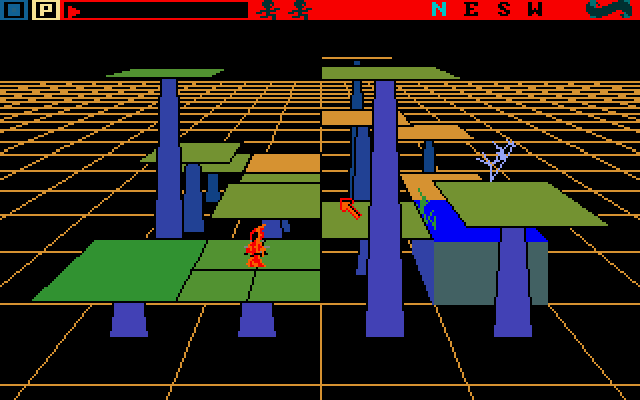
Pete, an old high school friend and biology-project partner, recently discovered my email address and we reconnected. It occurred to me that the next generation may never experience reunion with long-lost friends: they’re all on Facebook and Myspace from middle school on up, so how will they ever lose touch in the first place? Peter wrote to ask me the name of an Amiga game we used to play in the late 1980’s. I knew immediately which game he was asking about: Mind Walker. I remembered it as a fantastic surreal action/video game exploration of the human psyche. I think it was probably more Freudian than Jungian. Only a few games stuck with me at this level — another one was Weird Dreams. (The problem with Weird Dreams was that it was impossibly difficult to get past the level where you have to smack Dali-esque statues with flying fish. If anyone ever did, I’d like to know what happened next.) This review gives a good summary of Mind Walker:
You are a physics professor gone mad. Your course of action? Delve into your Mind, to inspire “Ideas” by tracing “Paths of Coherent Thought”, with the help of your split ego. Then through opened-up Tubes, enter your Brain, to retrieve “Shards of Sanity”. Finally, put them back together in Subconscious.
I remember Mind Walker as having amazingly spooky and captivating graphics. Then I found this screenshot: Mind Walker Screenshot Oh well. I’m sure it actually was impressive at the time. This discovery reminded of times when I’ve rediscovered a favorite food from childhood — for example, a certain type of cookie — only to find that it really isn’t very good at all. Just kind of sugary and low-quality chocolate. It’s also like going back to watch the original Jurassic Park again. The amazement is gone. Actually, even though the Mind Walker graphics aren’t as impressive as I remember them, I’m sure it was still a great game. Anyone have screenshots from Weird Dreams?

21 May 2007

Evan Prodromou: 1 Prairial CCXV

I just got back from taking Zach Copley to the airport, and for the first time in a few days I'm sitting in front of my desktop computer again, trying to get back on track. I think it's probably a good idea to get my notes about RoCoCoCamp down on electronic paper while the experience is still fresh in my mind. (I wrote about the first day in Journal/29 Flor al CCXV). Saturday morning I got up considerably later than I had the day before, and I took my time getting to SAT. Which was OK, since things went much smoother in the morning. The only really annoying thing about Saturday was that I had to wash about 50 cups by hand -- we'd run out of clean cups, and I couldn't figure out how to run the dishwasher. It didn't take long, but it meant that I had my head down in the sink as people came in and didn't get to spend as much time talking to them. I was glad to hear that people had a good time going to L'Utopik on Friday night. Apparently a few people who'd flown in late on Friday got a chance to meet up with the experienced crew at L'Utopik, so they were well-prepped for Saturday. Probably the biggest buzz of the pre-sessions was SJ Klein's pair of functional OLPC laptops. They were cute and fun -- I got a few minutes to play with them, and I enjoyed the interface tremendously -- although it took me a few tries to open it. People were fiddling with them throughout the day -- including Amita June, who came late in the afternoon -- and Tristan P loquin even blogged about them. My first session was about wiki and other technologies, which I titled Wiki And.... (I borrowed the name from Last Exit to Brooklyn, in which it seems no-one eats anything but "coffee and".) My main point was that a) wiki people tend to overuse wiki where other software tools may be more appropriate and b) we need to be careful with impedance mismatches when using wiki with technologies with other cultures behind them. Wikis and blogs mismatch; wikis and forums mismatch. You need to work out ways to make them work culturally. As a proof-of-concept that there are ridiculous applications for wiki, I created in about 3 minutes before the session the wikiclock. It's a computer clock that runs on wiki technology: the time is kept up-to-date by human beings editing the page, rather than with software. I was so pleased with myself that I twittered about it, and from there it's taken on a life of its own. The clock is implemented on the amazing minimalist system pageoftext.com. I heard about p.o.t. from Liz Henry's April report from Palo Alto Wiki Wednesday, and I think it's totally great. It's a cross between a pastebin and a wiki -- like an open-edited ImageShack for text. Brilliant. The second session I did was a hyper-focused one on a particular Semantic Web problem. Both Wikitravel and Open Guides have tons of information on "places" in various cities. (That is, restaurants, bars, nightclubs, hotels, museums, parks, etc.). It would be good to export our data on these places to each other, so we could possibly keep them in sync. For example, if a restaurant changes its hours , that info could be updated on The Open Guide to London and automatically synched to the Wikitravel page on London. So we went over some ways to do this kind of interchange; we'd brainstormed before about it on the Open Guides' RDF Workshop, but it was good to sit down with Earle Martin and do some face-to-face hacking on the idea. We don't yet have a vocabulary for it, but we'll get something going on the new wikirdf.org site (which also emerged from this session). I had a great lunch with a lot of people from RoCoCo on the terrace at the Bar St. Sulpice, about 8 blocks away on rue St. Denis. The sun was out, it was cool, and we had a very nice time. It was especially nice to see Marcus Bornfreund and Tina Pipers of Creative Commons Canada, who'd come to talk about the PDwiki, a project to collaboratively document Canadian works in the public domain (see Canadian Public Domain Registry Announced). We talked quite a bit about the social challenges of getting a community excited about such a dry subject, but I think we got some good ideas about it. In the afternoon I led a session on MediaWiki. We were lucky enough to have Tim Starling sit in, and he told everyone about the new developments going on with MW. He's refactoring some very deep parts of the storage and rendering sections of the code, which will result in considerably better reliability, performance, and flexibility. I think it sounds great. I had to work the registration desk for the last session of the day, which was pretty great because I ended up baby-sitting Anoushka Jaroski-Biava for most of the time. But I missed Robin Millette's cool talk about BuzzyBee, which looks to be really fun to play with. We rounded out the evening with music, pizza, and beer at the SAT. tobias.dj played some great dance music, and we had some wiki-collaborative VJ-ing using the SAT's fancy screen systems. All the kids were there -- Mark and Allegra's daughter No ma as well as Amita June. Fun. Sunday morning I didn't have to start coffee until 9AM -- luxury! We had a great Open Space Technology convergence -- a way to turn the discussions of the previous few days into action items for going forward. I did a convergence session on the future of RecentChangesCamp. We had most of the interested parties available (except for the RCC Portland organizers, who had to fly out early that morning). We made some decisions about future RCCs, and we made some plans for next year's RCC -- in the Bay Area (California). Last night we brought back the Keiki gang to our house, since it was great to have them all in Montreal for the event. We did a big brainstorming session on next steps to launching the project, and we also did some graphic design review of potential logos. We have some great designs coming; I'm really happy we got Sarven Capadisli and Bridget to work on the site. I had to crash out at 10:30PM -- Amita and I fell asleep together -- but others were up late talking and thinking. I don't know how they did it -- I was all talked out by the end of RoCoCo. All in all I had a fantastic time -- the event far surpassed my expectations. It was hard -- too hard. I bit off far more than I could chew. But I think we did a good job of establishing Montreal as a technology city -- Wiki City Canada -- in the international mind, and I think we also brought together some really interesting people for some fruitful and productive work. You can see some of the projects that came directly out of RoCoCo on the FutureChanges page -- an ingenious name courtesy of Pm. And there are some indirect ones that we can expect soon. tags:

Cause and solution So, Technorati has a good listing for rocococamp items, but I especially liked Steve Faguy's post: Wiki: The cause of, and solution to, all of life s problems. Steve was an extremely game participant in the event, which I think was pretty incredible. He wrote a good overview of wikis in the Montreal Gazette this year. A funny thing happened on Friday evening during the daily wrap-up known as "Evening News". We had Open Space's minimalist instructions posted on the walls of the SAT, so people would see and remember them. Steve pointed out that the first of Open Space's "four principles" is grammatically incorrect: Whoever comes is the right people. He said, "In the spirit of wiki, I'm going to correct it right now!" And to applause, he got up with a marker and changed the "is" to "are". This stimulated an interesting discussion. One person noted that the "is" is there because possibly only one person could show up for a session, and that's OK. Finally, Brandon CS Sanders stood up and said, "I like 'is' because when we come together like this, we form a cohesive group, however temporary -- 'a people'. So I'm going to change it back." And he did -- to lots of applause, again. Steve came up to me at the end of the night, laughing. "I got reverted! I should have started an edit war!" It was a hoot; he's got a good sense of humour. tags:

Alexander Schmehl: Playing with the package file

For Meikes thesis, we needed a csv-File from the Debian-Package file, so I wrote a small script to do that. You can get it from my repository (or via websvn). (Not yet perfect, but worked well enough for us; patches welcome.) If you just need the csv to copy the data in a database (like she did), don't try to guess, how long a textfield (e.g. for depends or the long description) should be; we tried and failed several times (Sure... 2000 characters should be enough for a long description.). We finally used the following database (We used PostgreSQL, should work similar on other database systems): CREATE TABLE packages ( package character varying (75) NOT NULL, source character varying (75), priority character varying(10) NOT NULL, section character varying(20) NOT NULL, installedsize integer NOT NULL, maintainer character varying(150) NOT NULL, architecture character varying(4) NOT NULL, version character varying(40) NOT NULL, depends character varying(5000), conflicts character varying(5000), recommends character varying(5000), suggests character varying(5000), enhances character varying(500), predepends character varying(500), provides character varying(500), replaces character varying(500), buildessential character varying(3), essential character varying(3), filename character varying(200) NOT NULL, md5sum character(33) NOT NULL, origin character varying(100), sha1 character(41) NOT NULL, sha256 character(65) NOT NULL, size integer NOT NULL, tag character varying(1000), task character varying(400), description text NOT NULL, longdescription character varying(30000), CONSTRAINT pk PRIMARY KEY (package) );. Now that you've created a table, you need to fill it. Easiest method is to use the COPY statement, as follows: copy packages (package, source, priority, section, installedsize, maintainer, version, depends, conflicts, recommends, suggests, enhances, predepends, replaces, buildessential, essential, filename, md5sum, origin, sha1, sha256, size, tag, task, description, longdescription) FROM '/path/to/your/csv-file' DELIMETER ';' CSV;. You should now have a nice database to play with :) Some examples... Which are the packages with the longest longdescription?
debian_packages=> select package, length(longdescription) as length from packages order by length desc limit 5;
        package           length
------------------------+--------
 texlive-latex-extra       25337
 texlive-fonts-extra        5719
 emacs-goodies-el           4502
 xbase-clients              4403
 postgresql-contrib-7.4     4223
(5 rows)
Or... Which maintainer have the most packages?
debian_packages=> select maintainer, count(*) as anzahl  from packages group by maintainer order by anzahl desc limit 5;
                            maintainer                              anzahl
------------------------------------------------------------------+--------
 Debian Qt/KDE Maintainers <debian-qt-kde@lists.debian.org>            465
 Debian QA Group <packages@qa.debian.org>                              458
 Debian X Strike Force <debian-x@lists.debian.org>                     274
 Debian Perl Group <pkg-perl-maintainers@lists.alioth.debian.org>      261
 Daniel Baumann <daniel@debian.org>                                    255
(5 rows)
Or... Is there a package, whose sha256-sum contains Meikes birthday?
debian_packages=> select package, sha256 from packages where sha256 like '%261081%';
           package                                           sha256
------------------------------+-------------------------------------------------------------------
 libobject-realize-later-perl   5188126108146fc0b1328473125687fb388bd8d87f460e335952dbb1b66aa3d1
(1 row)
And another goodie (We needed to alter the database several times, to make this package fit into it): Which is the package with the longest name?
debian_packages=> select package, length(package) from packages order by length(package) desc limit 1;
                         package                           length
---------------------------------------------------------+--------
 libmaypole-plugin-authentication-usersessioncookie-perl       55
(1 row)
A lot of fun... and a lot of interesting facts to be discovered...

20 May 2007

Meike Reichle: What a show!

Right, some time has passed since our Fiesta Mexicana, but still here's my record of this memorable evening. In a word: Wow! Panteon Rococo did a spectacular show! I've known and liked their music before, but seeing them live is a whole different matter and just sooo much better! Although their tour has already been lasting for quite some time, they showed absolutely no sign of fatigue. The Vier Linden was pretty full but not cram-full so there was still enough space to dance. (And while we are speaking of dancing, let me say, that some of my muscles are still sore! Those guys just don't give you a rest!) Throughout the whole concert the mood both on and in front of the stage were great and the guys were fooling around and inciting the audience, with themselves setting a good example of how to absolutely lose it (and play an instrument at the same time!) the whole time. The only downer was that a lot of what they said seemed to get lost since many in the audience didn't speak (enough) Spanish, which lead to a kind of lack of timely reactions. (Shenka yells something - Spanish speakers: "Yaay!" - Tiny delay - Rest of crowd: "Yaaaaay!"). Most weren't botherd by this though, and neither seemed the band. After all, it is pretty clear where Panteon Rococo stand and what their opinions are, so there isn't much to guess. Consequently when the band showed first signs of getting towards the end of the concert the audience wouldn't let them go. They of course played La carencia and all the other favourites but the audience just wouldn't get enough, so the encores(?) kind of turned into a "Who drops first" contest. (We did.) If you have any chance to see them while they're over here, do it!. The tour is still on and you can still see Panteon Rococo on the following dates: 20.05.2007 D - Hamburg @ Fabrik
22.05.2007 D - Rostock @ Mau Club
23.05.2007 D - Potsdam @ Lindenpark
24.05.2007 D - Dresden @ Scheune
25.05.2007 D - Paderborn @ Kulturwerkstatt
26.05.2007 D - Rottenburg @ Stadthalle
27.05.2007 D - Passau @ Pfingst Open Air
28.05.2007 D - Essen @ Pfingst Open AIr
19.07.2007 E - Huesca @ Pirineos Sur
20.07.2007 E - Barcelona @ London Bar

PS: Paco soo reminds me of weasel!

Erich Schubert: Updating address books and privacy

An often quoted feature of services such as OpenBC/Xing (and most of such 'pure social networking' sites) is that they basically allow you to keep an address book without having the need to update it yourself.Some people may even argue that this is the only real benefit these social networking sites do actually offer.There are of course services dedicated to helping you keep your address book up to date. These often offer plugins for Thunderbird and Outlook, so you can actually use the address book directly. (e.g. Plaxo) Some email providers even have a function to send out "please update my address book entry on you" emails to your receipients (e.g. web.de), but most people find these quite annoying.Now some people might argue that you could use the FOAF standard for this. But publishing your FOAF data on the web is a privacy problem. Most people won't be willing to publish much more than their email address there. Just like some people are not willing to entrust their information to services such as OpenBC.Using e.g. HTTP authentification to restrict access to your FOAF data is also not working very well: you'd need some user management to be able to revoke access or change the access credentials if the passwords are leaked somehow.OpenID would definitely be interesting, but how many of your friends have OpenID yet? And not everybody has access to deploy the server side needed for this.The easiest to deploy approach would be to just use public key encryption. You could then upload an encrypted copy of your data for each 'friend' to any web site. You could also upload different data (including work contact information only, for example) for different recipients.My idea is like this: Big benefits of this approach: Drawbacks:

Steve Kemp: A new and glorious moment

Puppet the system-administration tool, similar to CFengine is very nice. What is less-nice is the lack of decent examples. The wiki has lots of "recipes", however these give no real explaination of how to install them. I know that I need manifests/site.pp which will control which nodes get which actions applied to them, but beyond that I'm a little lost! I'm hoping to replicate my cfengine setup. Most of it is pretty simple "append line to file if missing", and copying files from the central server. (The latter I've got working nicely.) Hopefully somebody will now point me at a good tutorial that doesn't stop once it is installed (like this one.)

19 May 2007

Adam Rosi-Kessel: More adventures in language acquistion

Esther turned two recently. She’s come a long way in language acquisition since January. Now she is a rich source of linguistics grammaticality problem sets:
Me: Do you want a hug?
Esther: Yes. Me: Big hug or little hug?
Esther: None hug.
And, this morning:
Me: What’s better, music or rugula?
Esther: Rugula and music.
(Note that “rugula” is not actually the longest word in her vocabulary — that would probably be “arboretum.”) Our household’s technology focus is also apparent: any small hook-like device is an “email.” For example, a bluetooth headset and a refrigerator hook magnet are both emails. Shorthand for “another book” is “i-book.”

18 May 2007

Michael Prokop: grml 1.0, grml64 0.1 and grml-small 0.4

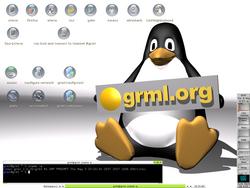
Screenshot of grml 1.0 It’s done. grml 1.0 is available. New features? Tons of them. 8-) Just check out the official release notes for grml 1.0. Need grml for a x86_64 system? No problem, grml64 0.1 is waiting for you. You are used to grml-small? Check out grml-small 0.4. You want to know what are my favourite features of the new release? Besides the updated kernel, libc, X.org and the 109 new packages? For example I love grml-debootstrap’s feature of installing a plain Debian with one single command (no further keypress!). I love playing with ZFS on Linux using zfs-fuse. I like the possibility to generate an OpenOffice document out of my existing asciidoc documentation using docbook2odf. I’ll present the new release at the grml booth of grazer linuxdays on 19th of may and will give a (german) talk about grml on the event as well. Hope to see you there. ;-)

Michael Prokop: docbook2odf

docbook2odf is a toolkit that automatically converts DocBook to OASIS OpenDocument (ODF, the ISO standardized format used for texts, spreadsheets and presentations). Conversion is based on a XSLT which makes it easy to convert DocBook->ODF, ODT, ODS and ODP as all these documents are XML based. This piece of software is pretty rocking for example if you write your docs in AsciiDoc and want to provide a document for use within OO:
% cp /usr/share/doc/asciidoc/examples/website/manpage.txt .
% a2x -f odt manpage.txt
% ooffice manpage.odt
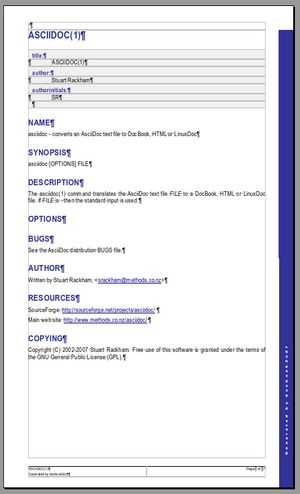
Just to get an idea how the result looks like in OpenOffice: Screnshot of docbook2odt result in OpenOffice Just ‘apt-get install docbook2odf’ if you are using Debian/unstable, thanks to the work of formorer we could include the toolchain in the upcoming grml release.

17 May 2007

Matthew Garrett: Runtime power saving on Linux - the CPU

Modern processors have a variety of low power modes that can be entered while idle. These "C states" are numbered, currently ranging from C0 (a running CPU) to C4 (a deep runtime sleep state). The problem with these states is that the deeper the sleep, the longer it takes the CPU to wake up. In order to avoid excessive reductions in performance, the kernel must keep track of the processor usage pattern and avoid putting the CPU into a deep sleep mode when it's likely that it'll be needed for more work in the near future.

Traditionally, the kernel has had a fixed timer tick - that is, a fixed number of times a second, the timer will generate an interrupt, wake the kernel and allow processes to be rescheduled. This limits the maximum amount of time the CPU can remain idle, as this timer will fire even when the system is otherwise idle. A tick rate of 1000Hz is desirable for reducing latency, but will also result in the maximum sleep period being 1ms. This is less than ideal.

2.6.21 introduced dynamic tick functionality. Now, rather than having a fixed tick interval, if the system is idle the kernel looks at all outstanding timers and schedules a wakeup in time to answer the next timer. This allows much longer periods of sleep without compromising latency. However, for this to be useful it's desirable to have as few timer wakeup events as possible. The longer the CPU is going to be asleep, the deeper the sleep state that can be used.

Intel have recently released Powertop, an application that tracks the causes of wakeups. These wakeups can fall into two categories - kernel and userspace. Pure userspace timers will usually be due to an application having a timer to handle some sort of trivial activity, like blinking a cursor or polling for state. There are a couple of ways to improve this:Things in the kernel can be trickier. Kernel interrupts may be appearing because of some kernel code specifying a timer, but an alternative is that a userspace application is poking them. Many of the same considerations as userspace apply here:Fixing these issues can range from the trivial (removing unnecessary timers) to the complicated (teaching gstreamer about alsa notifications, teaching the mixer applet to listen to signals from gstreamer). It's all helpful, though. Ideally you want your processor to be averaging at least 20ms in the deepest C state before it's woken up again. There's a lot of low-hanging fruit out there, and every fix improves battery life.

16 May 2007

Andrew McMillan: Contracts for people to work on Open Source Software

A few years ago we needed to introduce employement contracts for all staff at Catalyst. When we got the example contract back from our HR consultant, she had quite naturally biased it strongly in the employers favour, and as a consequence it had a very anal and lawyerly clause in it regarding the ownership of intellectual property. This clearly wasn't going to work well in our environment so I decided to take the opportunity to try and write a clause which was fair and reasonable, which considered the likely desires of both parties, and which expressed an understanding of the sort of environment which often happens with free open-source software. It seems that many people who are interested in working on open source software are also people who will work on (i.e. fiddle with :-) things in their spare time, but they will not necessarily consider the possible consequences of using conmpany resources to do so. I have heard of situations where employment contracts (or perhaps even government enacted legislation) will give ownership of an individual's work to their employer in such situations, so I also wanted the contract to make it clear where and how this might happen. I would like to hear people's comments on the contract clauses which we use here. Is this fair to both parties? Have I missed something? Is the meaning clear? Also, I need to make it clear that it is OK for people to use this text, so I hereby place the text of the following Intellectual Property clause in the public domain. Intellectual Property
  1. All intellectual property, including source code, objects and documentation, relating to work carried out while in the employment of $ COMPANY , remains the property of $ COMPANY , subject to the exceptions outlined below.
  2. All intellectual property, including source code, objects and documentation, owned prior to joining $ COMPANY remains your property. If you choose to use such intellectual property, including source and objects during your time at $ COMPANY , $ COMPANY will have the rights to their continued use in perpetuity, including access to the source code of all versions of such software in use at $ COMPANY .
  3. If $ COMPANY asks you to do something, then we expect that while you work on that something, you will be being paid by us and we (or our clients) will own the IP. In some cases we may elect to open-source that, and may decide to jointly own the IP or make some other arrangement, but it would be at $ COMPANY s option.
  4. If you work on something by your own choice, and on your own time, then you are welcome to own the IP, but if you use the premises or computers of $ COMPANY to do that work then you must license it under a free, open-source license agreed with $ COMPANY .
  5. $ COMPANY may choose to fund some part of your time to work on OSS projects in a non-directed way. $ COMPANY will expect to own the IP for such work, and to participate in the choice of license for such code.
  6. All of the above is subject to confidentiality of client information, and constraints which clients may specifically request in relation to specific project work from time to time.
Over To You I wrote that because I couldn't find examples around the place of similar things. I guess I still see people looking for that sort of thing so I'm publising it here with the idea of providing a seed which can perhaps grow into something else. A few specific questions I would like you to think about: Then, perhaps, if we can see some general agreement on what would, or would not, be a useful standard we can encourage people to use it in their future contracts. I am hoping that through your collective wisdom I will be changing this clause in Catalyst's standard employment contract.

Dann Frazier: Starting a text-mode Debian install using the virtual serial port (VSP) via an ssh connection to iLO 2

That's a mouthful. We had a customer asking for information on this, so I did a couple screen captures using byzanz to demonstrate. The first shows howto setup a system to do bios over serial. I did this w/ the remote java console, but you can also do this locally on the system (or the ActiveX console I suppose, but I've never tried this myself). In brief, you need to choose a serial port to map to the VSP (I use COM2 aka ttyS1), and tell the system to redirect the BIOS to the same serial port at your desired baud (115200 in this example). The second shows me initiating an ssh session, setting up a virtual cd-rom, and booting the debian installer. Of course you could use local media or even PXE boot. But either way you need to tell the installer to direct its console to the same port that you've configured as the VSP and at the same baudrate (console=ttyS1,115200n8 in this example). Note that if the screen goes blank after attempting to boot from the CD it is likely that the installer is displaying a graphical splash screen. Simply hit F1 to transitition to a text-mode help screen.

Next.

Previous.