Search Results: "xam"

10 June 2007

Chris Lamb: Sudoku solver in PostScript

There seems to have been a bit of fuss over this Sudoku solver implemented in SQL. In Easter 2005, when Sudoku fever kicked off in a big way in England, my Dad started writing a solver implemented in PostScript which I then modified so that it could perform backtracking. I also wrote a C# solver for my phone around the same time and later sneakily won a competition with it - I am now barred from entering competitions in that paper. Anyway, here is an example PostScript board (PDF version). It was labelled “Fiendish” in The Times. The board can be easily changed at the top of the PostScript file. NB. Best results are achieved if you view the PostScript directly in a viewer such as gv or GSview as you actually see the process of backtracking in solving the puzzle, the recursion depth and the set of possible symbols for each square — most PDF viewers are terrible at displaying the process as they seem to render inside the wrong thread. (In terms of solving the puzzle, we both found that by enforcing the simplest constraints and then ‘guessing’ was far easier and more efficient than performing any of the complicated constraints typically employed by human solvers. I’m certain I am not the first to notice that attempting to emulate the brain’s method of solving a problem is usually a short-sighted approach for a computer.) There are few other goodies in the file: replacing the final autotest with autotestR will recurse using the right-most possible symbol - if you get the same board with both of these then the initial board has a unique solution. Also, if you can get your hands on a true PostScript printer, printing the file will mean the puzzle is solved in hardware. Enjoy :) . I’m looking forward to DebConf7! UPDATE: Added PDF version.

9 June 2007

Russell Coker: configuring a Heartbeat service

In my last post about Heartbeat I gave an example of a script to start and stop a cluster service. In that post I omitted to mention that the script goes in the directory /usr/lib/ocf/resource.d/heartbeat. To actually use the script you need to write some XML configuration to tell Heartbeat which parameters should be passed to it via environment variables and which nodes may be candidates to run it. In the below example the type of web means that the script /usr/lib/ocf/resource.d/heartbeat/web will be called to do the work. The id attributes are all arbitrary, but you want to decide on some sort of consistent naming scheme. I have decided to name web server instances web-X where X is the IP address used for providing the service. The nvpair element contains a configuration option that will be passed to the script as an environment variable. The name of ip means that the environment variable will be named OCF_RESKEY_ip. Naming of such variables is arbitrary and a script may take many variables. A well written script (which incidentally does not mean my previous blog post) will have an option meta-data to give XML output describing all the variables that it accepts. An example of this can be seen by the command /usr/lib/ocf/resource.d/heartbeat/IPaddr2 meta-data. In the XML the resources section (as specified by --obj_type resources on the cibadmin command-line) describes resources that the Heartbeat system will run. The constraints section specifies a set of rules that determine where they will run. If the symmetric-cluster attribute in the cluster_property_set is set to true then resources will be permitted to run anywhere, if it is set to false then a resource will not run anywhere unless there is a constraint specifying that it should do so - which means that there must be at least one constraint rule for every resource that is permitted to run. In the below example I have constraint rules for the service giving node-0 and node-1 a priority of 9000 for running the service. In a future post I will describe the cluster_property_set and how it affects calculations of where resources should run.
(more…)

Matthew Palmer: Project Honeypot: The Joining

After asking last week if anyone had any experience with Project Honeypot, I got one response, from Chris Samuel, who was pretty positive about the whole thing:
I'm one of the people contributing, from the stats on my site it appears I've contributed to the identification of 6 harvesters and a comment spammer. I'm only running it on one site at the moment, but it seems to be a useful service and once it's up and running it seems fairly inconspicuous.
I decided to give it a go myself, and signed up. It's pretty nifty the way it all works. You can do a number of different things to be part of the project, from linking to other people's honeypots (through the trivial act of adding some HTML to your web pages), or you can setup a honeypot of your own (which is done in an ingenious manner, and just requires you to be able to run one of a bunch of different forms of dynamic script -- about ten minutes work, tops). You can also contribute a domain (or subdomain) which the project will use as a spamtrap domain -- all you have to do there is add an MX record. The use of lots of different domains makes it harder for spammers to filter known spamtrap domains out of their lists. In exchange you get good karma from helping to identify network abusers, and you can monitor chunks of IP space (such as space that your company sub-leases to others, for example) for evidence of abuse, or use the collected data to block abusers from your own web servers through the project's http:BL service. The http:BL, for me, is probably the most valuable "payback". It lists IP addresses that have been used recently by comment spammers, address harvesters, and other abusers of HTTP resources. It's not a list of spam sources, though -- there's no shortage of DNSBLs for that. The project has an Apache module that can query the list and re-route or block requests from those IP addresses, and there's also a Wordpress plugin that queries the list (not that I use Wordpress, but it's an example of what can be done). Unlike Chris, I haven't helped to identify any bad activity yet, but there's been some activity on my honeypot, so I'm hoping that I'll catch someone soon. I think it's worth getting involved and contributing what you can -- there's very little cost involved (I got all my resources setup inside of an hour, and I haven't noticed any increased load on my server or bandwidth), and everyone wants to stop Internet abuse. So please, take a look at the project and consider joining.

8 June 2007

Russell Coker: Heartbeat service scripts

A service script for Heartbeat needs to support at least three operations, start, stop, and status. The operations will return 0 on success, 7 on failure (which in the case of the monitor script means that the service is not running) and any other value to indicate that something has gone wrong. In the second half of this post (not in the feed) I have included an example service script. It is a very brief script and does not support some of the optional parameters (monitor, validate-all, and meta-data). So this script is not of a quality that would be accepted for inclusion in a Heartbeat release but is adequate to demonstrate the concepts. The XML configuration for a service can have an arbitrary set of name-value pairs, and they are passed to the script as environment variables. For example the below script expects that the XML configuration item named ip will have the IP address used by the service, my script receives this as a variable named OCF_RESKEY_ip. My script doesn’t use the address, it merely allows it to be inherited by the IPaddr2 script (which is part of the Heartbeat distribution) and that script assigns the address to an Ethernet interface. The script is for testing Heartbeat, it mounts a filesystem and starts Apache (which is configured to serve web pages from the filesystem in question on the IP address supplied by the ip parameter). For test purposes the script looks for a file named /root/fail, if this file exists then the status check will always abort. An aborting status script means that Heartbeat can not be certain that the node in question has released all resources that it was using for the service. This means that Heartbeat will have to kill the node via the STONITH service. Such test scripts are the only way to test that STONITH works, and I believe that it’s a necessary part of pre-production testing of a Heartbeat cluster. Update: Made it display error messages in all cases and also reformatted it for better cut/paste.
(more…)

6 June 2007

Paul van Tilburg: Master Project Finished

Yesterday, I have completed my master project with a presentation of my work and a defence of my thesis. I got awarded a 9 (out of 10) for my entire project. It is a result that I am very happy with and am very proud of. This result will allow me to get my Master of Science degree with honours on June 19, after the exam committee has checked everything. Note that the diploma will be handed out not on June 19, but on August 28, because I am on my holiday and at Debconf in Edinburgh the next two weeks. Thanks everyone for attending my presentation, joining the “celebration lunch” afterwards, and all the encouraging words and kudos. :-)

Jan Wagner: PHP packages in etch and binary compatibility to 3rd party extensions

Since etch php is compiled with large file support. This breakes binary compatibility to other packages, which are commonly not compiled with LFS and leads into trouble with 3rd party extensions, cause these are precompiled against the ABI of upstream and LFS not turned on. One example is Zend Optimizer. You may say this will only hit closed source applications, but if these are customer requirements, you have to solve the issue in some way.
You can do this by compiling your php and all extension from source without LFS enabled, but here you have to care about bugs, regressions and exploits for your own.
An other solution is to rebuild the packages from etch with LFS disabled. I’ve done this with the source packages of php4 and php5 from etch. Additionaly I did backport php-suhosin from unstable against this php packages for php4 and php5. Packages are available at http://ftp.cyconet.org/debian/archive/special/ or via

deb http://ftp.cyconet.org/debian etch-special-cyconet main non-free contrib If there are any DSA popping up, you can expect updates with a short delay. Please keep in mind, that you cant install php extension directly from etch. You need to rebuild them against php[45]-dev with disabled LFS. Other php packages may apear later. , , , , ,

5 June 2007

Martin-Éric Racine: Almost there: granny-friendly PDF writing

One aspect of Ubuntu that I really enjoy is the sheer amount of constructive feedback a maintainer gets about the usability of their packages. In my case, CUPS-PDF [1] [2] has been a landmark example of how beneficial this feedback can be: See, one long-standing goal at Ubuntu has been to include the capability to generate PDF documents "out of the box" and regardless of which Desktop Environment is used. Many people considered that CUPS-PDF would be an excellent tool, but various technical issues prevented this from working in a security-conscious way. Once that issue was taken care of, someone pondered how the PDF queue could be automatically created at installation time? It turns out that we're almost there: with the upload of version 2.4.6 into Debian today (which should propagate into Ubuntu within a few days), only one configuration step remains: the selection of a PPD driver. Everything else is automatically detected and configured by CUPS itself. Kudos to our friendly upstream, Volker, for implementing this driver magic in his back-end code! Enjoy!

4 June 2007

Lucas Nussbaum: Distributed SCM and branching a sub-directory ?

I am considering switching from SVN to a distributed SCM for my personal stuff. I had a look at git and mercurial, but neither really support branching a sub-directory: Often, I am working on a big private project, and, while working on a sub-project (stored inside the project’s repository), I’d like to share that sub-project with others. So there are actually two problems: SVN only partially meets my needs with that (it’s possible to checkout a sub-directory directly, for example with svn co svn://svn.debian.org/svn/pkg-ruby-extras/tools/ruby-pkg-tools). I think that it’s possible to do fine-grained access control
using libapache2-svn, but I haven’t tried yet. It seems that mercurial can do that, using the forest extension. But you have to convert the specific directory into a repository, with a complex step to keep the history. Amongst the distributed SCM, is there one that supports that ? (at least the sub-directory branching part)

3 June 2007

Marco d'Itri: Fun with IPMI

IPMI is a standard protocol which allows out of band access to hardware features like reading sensors and error logs, turning the power on or off or accessing the serial console. This is made possible by the Baseboard Management Controller (BMC), an independent CPU which is accessed from the operating system or by sharing an Ethernet port with the OS. Most modern servers offer an IPMI 1.5 or 2.0 interface and usually loading the ipmi_si driver is all that is needed to verify if it is supported, but some may need additional parameters and/or a kernel upgrade. dmidecode is also useful to determine if the system has a BMC. After loading the ipmi_si and ipmi_devintf drivers the BMC will be accessible from Linux, e.g. using the ipmitool command. The ipmitool package will also install the ipmievd daemon, which logs events like overheating a failed fan (beware: it uses local.* syslog facility which on Debian systems is not configured by default). It is also useful to install the ipmi_poweroff driver, which will generate an ACPI power button event when a clean shutdown is requested by the BMC (you need to install acpid too). The details of accessing the BMC over an Ethernet connection varies depending on the server model and manufacturer, e.g. IBM xSeries servers are shipped with the same default IP address, username and password which means that anybody on the same L2 network (no gateway address is configured) can shut down your system: ipmitool -I lan -H 10.1.1.97 -A PASSWORD -U USERID -P PASSW0RD shell The most convenient way to experiment with IPMI is to run ipmitool shell locally and trying the available commands. These are some trivial examples:

# show the parameters for Ethernet access
lan print
# reset the system
chassis power reset
# cleanly shut down the OS and then power off the system
chassis power soft
# at the next boot, boot from the network
chassis bootdev pxe
# turn on the locator LED
chassis identify 255
# print the system event log
sel list
# read a specific sensor
# (with enough servers you could create a 3D thermal map of the room...)
sensor get "Ambient Temp"

Nico Golde: debian.net domains

There are a lot of inofficial debian domains (known as debian.net domains). Some of then are really useful like changelogs.debian.net for example and others are just funny.

However I thought it might be useful to have a list of all debian.net domains so I wrote a small script.
The resulting page is on: http://people.debian.org/~nion/net-domains.html.

Matthew Palmer: OfflineIMAP and Deleting Folders

(File this under "Reminders for the future Matt") I use, and highly recommend, OfflineIMAP for the synchronisation of your e-mail between your daily working machine and your IMAP server (if you don't have an IMAP server available for your mail, it's high time you got one). You point it at an IMAP server somewhere far, far away, and a local Maildir, and all of your mail and folders magically get synchronised in both directions. New folder on the server? After the next run, it'll be on your local machine. Even more magical, though, is that any new mail or folders you create on your local machine will be uploaded to the server. Woohoo! Offsite Backups! (Before you GUI mail users say "pfft, my client does that all for me", I'll remind you that I don't need to chew several hundred megs of core to delete my spam) I've got some magical procmail rules (specifically, look for "ARTFUL PROCMAIL") that automatically filter list e-mail into individual folders (with automatic creation of the folder if necessary, of course). This makes mailing lists soooo much easier to handle. Of course, when I unsubscribe from the list a couple of weeks later, that folder is still sitting there, empty and forlorn. I don't mind empty directories, except that they slow down the OfflineIMAP sync run, since it asks "any new mail in here?" for every one of them. I'd just delete them from my local machine periodically, except that OfflineIMAP can't delete folders off the server if you remove them from your local Maildir (and vice versa). Instead, the folder gets re-created on the local machine, which is definitely not the result I'm looking for. I'm pretty sure this is an IMAP limitation, so I'm not criticising John Goerzen for not implementing this particular feature. However, the empty folders bother me a bit, so I decided to do something about it. Namely, I hacked up some little shell one-liners. These one-liners are all dependant on you having the same IMAP server (Courier) and folder name mapping (none) as me, otherwise there's a good chance that your file names won't match the patterns I've used. For reference, My folders on the server are dot-directories under $HOME/Maildir, and my folders all start with INBOX. on the client. Also, both sides use periods to separate folder levels. As an example, e-mail to the debian-devel-announce list gets stored in $HOME/Maildir/.lists.debian-devel-announce on the server, and $HOME/Maildir/INBOX.lists.debian-devel-announce on the client. I've got one big before you start warning: this process involves deleting things. If you're not able to verify that what these snippets are doing is correct for your particular situation, then please do not run them. Also, if running them causes all your e-mail to disappear or your cat to fall pregnant (despite being spayed and/or male), then that isn't my fault. The only warranty I give is that It Works For Me. It May Not Work For You. As a first step, make sure that your local and remote mail stores are in sync -- presumably by running OfflineIMAP. Otherwise, a folder which is empty on one side might not be quite-so-empty on the other side, and that would possibly make for sadness. Stopping e-mail from coming into your mailboxes would be good, too -- I just turned off my MTA for a few minutes, because clogging other people's queues is fun. Doing something smart with procmail would also work. On the OfflineIMAP client machine (laptop, home desktop, whatever), cd into your local mail store, and run this to generate a list of IMAP folders that don't have anything in them:
 for i in INBOX.*; do find $i -type f   grep -q $i   \
 (echo $i   sed 's/^INBOX//'); done >/tmp/empties
The contents of /tmp/empties should look something like:
 .Deleted
 .junk
 .lists.debian-devel-announce
 .lists.something-funny
 .spam
Review the list of folders it produced (just to make sure nothing really unpleasant ended up in the list), and then run:
 for i in $(cat /tmp/empties); do rm -rf INBOX$i; done
to delete all the empty folders. Next, copy the list of folders onto the IMAP server (yes, you need shell access on the server to do all of this; that's why I run a Linode), cd into your Maildir on the server, and run this:
 rm -rf $(cat /tmp/empties)
That removes the folders from the server as well. For some reason, OfflineIMAP doesn't notice that a folder has gone away, and so it doesn't remove the metadata for the deleted folders from it's cache. I'm not sure if that hurts performance or is otherwise injurious to your health. To be ultra-neat, go into $HOME/.offlineimap (or wherever your metadata dir is) on the client machine and run
 for i in $(cat /tmp/empties); do find . -name INBOX$ i ; done  xargs rm -rf
And that makes everything clean and tidy. Now, of course, someone's going to point me to a small script that finds all of your local empty folders and deletes them locally then issues an IMAP "delete folder" command on the server. But I had fun working all this out, so it's not a complete waste.

2 June 2007

Alexander Schmehl: Report from the LinuxTag -- Part I (A bit of DebianDay and my talk)

Before I start with my report I need to fulfill my promise for those who stumble here from kushaldas.in: The URL of the web interface for the package description translation framework is for now: ddtp.debian.net (It's easy: Debian Description translation pproject). There might be some changes after DebConf, our annual conference, which will take place this month. So keep an eye on your language's team mailing list. But more about Kushal Das later. The first part of my report will cover a bit of our DebianDay and of course especially my talk ;) More will follow later. Friday was DebianDay and I attended Holger's talk about debian-community. It's a quite interesting project, trying to solve the problem, that there's not much between real DDs and the rest of the world. It's more low level than the Debian maintainers idea floating around for a while: Look around, you'll see much contributors to Debian, who are not maintaining any package. The idea is basically to have kind of bonuses for contributing to Debian, as a more direct way to say Thanks!. Have look at the website, and think how you could help to get things rolling. After his talk it was my turn. I did a Debian package building for beginners talk... Well, actually it's a workshop stripped down by the practical part leaving only the slides of the introduction. But who cares ;) Again I was surprised how many people where interested in that topic. I always thought it's kind of special and not that interesting, but the room was quite stuffed. Some people where even sitting on the floor. I neither counted how many people attended my talk, nor how many seats where available. I guess I had something between 80 and 120? Perhaps Wolfgang Borgert, who moderated DebianDay, can correct me, if I'm wrong. Since I stripped down a workshop to a talk, I needed to take special care about the timing. Well... I didn't work perfectly. I took a bit too long while answering questions, but I think all in all it was quite right. As usual I took gnujump as example; easy package, works without much tweaking of the templates created by dh_make, and if you have some time left at the end, you can show some additional stuff, like splitting of a -data package. After the talk I got some quite interesting questions; the three most interesting ones were the following: So much for now; I'll write some more about the event in general, a goodie from an old friend from Treuchtlingen (rather short; the german entry is longer), and a small talk I had with an other J rg later... I'm kind of tired right now.

1 June 2007

Matthew Garrett

Dear IBM,

I appreciate that laptops are awkward to disassemble, something that's even more true of ultraportables. As a result I don't feel especially surprised that you managed to make a hole in my laptop while working on the screen, and I appreciate your offer to reexamine the hardware. What I appreciate less is your requirement that I pay for it to be sent to Scotland for another fortnight so that you can correct your mistake, you cretins.

No love,

Matthew

Michal Čihař: Gammu test version 1.11.91

I just released new version of Gammu. This release further improves new API, which should be now close to being stable. Full list of changes:

31 May 2007

Edd Dumbill: Small bundle of sluggy joy

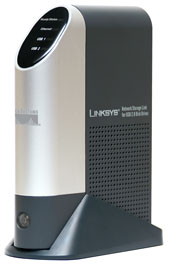
I'm a bit late to this party, but the NSLU2—affectionately known as the 'slug'—is a piece of kit you can't afford to be without on your home or small office network. NSLU2 image Not much bigger than the palm of my hand, and cheaper than a ticket for a Test at Lord's, the NSLU2 is a small fileserver that serves files from attached USB disks. What makes it particularly special is the large amount of alternative firmwares built by Linux open source developers, which allow you to extend the functionality of the NSLU2 beyond merely serving out files via SMB (the Windows file serving protocol.) Cheap NFS serving  So what's the big deal for me? Well, like most laptop-slinging folks whose home network is predominantly wireless, I want my backup disks to sit on the network, available when needed. It turns out it's very difficult to find a standalone network disk that properly supports Unix file system semantics such as symbolic links. Most just support SMB file sharing, with attendant limits such as no links and no files over 2GB. (I found this out the hard way with Apple's Airport Extreme.) With the NSLU2 I was able to install the "Unslung" alternative firmware, and install good old NFS, making my backup disks available in a normal way to Linux and OS X machines alike. (How we used to complain about NFS back in the early 90s, but Windows file sharing still makes it look good!) In the great tradition of open source there are multiple choices of Linux distributions you can install. As it was my first time round, I went for Unslung, which preserves as much as possible of the official Linksys interface, but lets you extend it. Next time, with a better idea of what I'd use the box for, I'd probably plump for Debian.  Constraints breed creativity Inside the case, the NSLU2 is in fact a tiny Linux machine with 32MB of RAM and an Intel XScale CPU. This turns out to be plenty enough resources to serve files on a small network. Aside from my prosaic needs, the NSLU2 has been put to several more innovative uses, such as a music server for Apple ITunes and a 4-line home telephone exchange. I've been astounded at the applications people have devised for this little box. Being fairly cheap makes it a great candidate for home automation projects. It's a great example of how limiting resources fosters innovation. Remember how games on 8-bit microcomputers were so much more ingenious than those on their more well-resourced successors?
So, I may be a little slow in finding this little hardware gem, but I wholeheartedly recommend it.

30 May 2007

Paul van Tilburg: Master Project Take 2 and 3

I just realised that I forgot to post about take 2, so I’ll combine it with this post about take 3. The past five months I’ve been busy with examining the effect of restriction on CCS with parallelism. We decided to do this in two steps. First (take 2) we considered interleaving of actions, and then (take 3) we added communication. The case with only interleaving of actions went smoothly; it worked out as a nice extension of the case without parallelism. However, when we looked at the case with interleaving and communication, it started to become troubling. I ran into all kind of complications and the risk of failure I described in a previous post seemed to come true. However, I think we managed quite well to catch a large part of the problems and describe them, and also offer possible solutions. In the end, I’m quite happy of the result. So, today I can present the final version of my Master’s Thesis: “Finite Equational Bases for CCS with Restriction”. Yay! I have just submitted it for reproduction. The final presentation of my project will take place June 5, 2007 at 10:00 in the main building of the university, HG 6.29. If you’re interested and are able to attend, consider yourself invited. I want to thank Bas Luttik for his large amount of feedback, clear explanations and guidance, without him the project wouldn’t have worked out as well as it did now. Almost finished, 6 days remaining…

Neil Williams: gpe-expenses and forking gnucash

gpe-expenses is now stable enough for a 0.1.0 release - the NEW queue is really short so it should be in unstable soon.

In order to support the developing gpe-cash (and later gpe-invoice) application(s), the package has been split into a (small) binary and a new shared library - both licenced only under the GPL v2 or later.

The binary depends on libqof1, as before (GPL v2 or later). The new shared library contains the QofExpenses and GpeCurrency objects. QofExpenses is registered with QOF to provide data storage and queries. GpeCurrency is based on the Palm Default Currency Table. http://pilot-qof.sourceforge.net/manual/ch06.html#defaultcurrencytable. This provides a much simpler interface to standard currencies whilst retaining GnuCash data compatibility.

Splitting the objects out allows gpe-cash to share live data with gpe-expenses, reading expense data into double-entry accounts and allows gpe-cash to use sane currencies that can still be converted to GnuCash commodities. gpe-cash will itself contain one or more shared
libraries that include the double-entry financial objects, ready for gpe-invoice to collate data from gpe-contacts, gpe-calendar and gpe-expenses, create invoices (in SQLite) and post transactions to gpe-cash. Early days, I know, but that's the plan. (Invoices would be rendered in HTML/PDF/foo using scripts in the datafreedom packages.) pilot-qof already includes the basic support for generating an invoice from contact, calendar and expense data.

gpe-cash is a fork of gnucash, splitting the behemoth into small(est) functional units and dropping large sections of code - like reports which can be better managed using packages like datafreedom-perl on the desktop. datafreedom already includes example reports from
gpe-expenses. Even so, gpe-cash may well be a large application compared to other GPE packages. So far, gpe-cash comes in at just over 1Mb installed (including libqof1) but there's more Gtk+ stuff to write yet. (Compare with gnucash where the architecture-dependent part alone is >5Mb without any translations, images or other common files or the extra dependencies.) gpe-cash will have none of the dependency problems of gnucash: it just has the object definitions, libqof1, glib2.0, gtk+, gpe and sqlite. (There is an issue with GConf2 right now but I'm sure I can remove the need for that.)

http://gpe-expenses.sourceforge.net/ (CVS available via SF)

http://cashutil.sourceforge.net/gpecash.php. (SVN available via SF)

Russell Coker: Another Heartbeat 2.0 STONITH example configuration

In a Heartbeat cluster installation it may not be possible to have one STONITH device be used to reboot all nodes. To support this it is possible to have multiple STONITH devices configured that will each be used to reboot different nodes in the cluster. In the following code section there is an example of how to configure STONITH for two separate ssh instances. Of course this is not useful apart from as an example of how to configure STONITH. It would be quite easy to change one of those ssh configuration entries to use IPMI or some more effective method of managing machines. My previous post on this topic has an example of a simpler ssh STONITH configuration. It is convenient that the ssh method for rebooting nodes is available both as a shared object (which is used by the following example XML) and as a shell script (type external/ssh). The shell script can be used to give the same functionality as the shared object (with reduced performance) but the benefit is as an example of how to write external plugins. For a client I have just written an IPMI module that works with machines that have two Ethernet ports. When a server has two Ethernet ports you want to send an IPMI reset command to both of them in case the failure which requires a STONITH was triggered by a broken Ethernet cable. Unfortunately I can’t release the IPMI code at this time (more…)

29 May 2007

Ingo Juergensmann: Please stop it

I think everyone knows about the issues between Sven Luther and the d-i team. This is going on for about a year now and although I'm usually a supporter of Svenl here, I have to admit that I can't hear/read it anymore.
So, please stop it now. Everyone!

Svenl, you did a great job for the PPC port in Debian, but there's so much in life beside Debian! Enjoy it! You're wasting your time and life if you insist in being right. Maybe you're right, but I don't that this does matter. Take a time off from the project and have a nice time with our stuff! Been there, done that and found it worthwhile! :-)

All others: I think it would be better to not respond to every mail by Svenl, especially when you're opposing him. This will make it even worse for him and for everybody else, too, because the impression of being insulted will grow with every mail that tells him to shut up.

Every party involved in this dilemma does have valid points. For example I would like to see some sort of Code of Conduct or a Social Commitee or anything else that will prevent such incidents over and over again.
I think it's highly unprofessional how Sven was pushed out of the d-i team. Sure, everyone can disagree with anyone else, but I expect DDs to be professional enough to work together despite their personal dislikenings. OTOH, Svenl didn't earn glory insisting every now and then of being mistreated and being right.

So, can we now stop that neverending story, please?

Sven Mueller: blood donations

Hi. Recently, on planet.debian.org, there were quite a few posts relating to blood donations. I must say that I really only live thanks to people donating blood. As many might know, I had a freaking motorcycle accident about 9 years ago. Well, apart from loosing my right leg in the weeks following the accident (irreparable damages to tissues led to amputation), I also lost a lot of blood after the accident. In the six hours following the accident, I got no less than 65 blood infusions (approximately 24-30 litres or 6-8 US gallons). As you can imagine, this is about 3-4 times as much blood as my body normally carries around. At least I can say that I didn’t receive blood without giving some before, though certainly I wasn’t able to give that much blood (I donated about 10 times, approx. 0.45 litres each time). However, due to the medication I now need, I can’t donate blood anymore. Anyhow, I strongly suggest to anyone who is capable of donating blood to do so. And regarding Thijs comment about the frequency of donation and payment: This is highly depending on the area you live in and the organisation who manages the donations. For example, while I donated blood in Dortmund, Germany, I had two options to donate blood: German Red Cross, who would accept a donation every 6 weeks, with free sandwiches, drinks and chocolate but without payment and the city-owned hospital’s blood bank, which allowed a donation every 3 month, with free drinks and a 50DEM (approx. 25EUR/30USD) payment. This sounds as if the city-owned blood bank could attract homeless and junkies who were in for the money, but from my experience, the blood bank did far stricter pre-donation tests (I can’t tell what they did after donation for either organisation) than the red cross. And knowing how much money can be earned with the blood donated, I certainly think that payment is fair, though not strictly necessary. And the blood bank people did a much better job when applying the needle than the red cross people did, which might be because they were used to taking blood from people with bad veins (mostly patients donating blood for themselves for use in a later, planned surgery). But to be fair: I know from other people who had very good experiences with the red cross staff in this respect. Once again: Please donate blood if you can. If you are uncomfortable with the choice you made on your first donation, check out other options for donations. For example, if you almost collapsed when donating blood, try out the plasma donation if it is offered. They usually take the plasma, but give back an equal volume of a substitution, so your circulation isn’t disturbed as much as by taking approx. 0.5 litres from it within an hour. If you feel that the person who applied the needle did a bad job, ask for someone else next time or try a different organisation altogether. cu,
Sven

Next.

Previous.