Search Results: "pm"

1 June 2023

Gunnar Wolf: Cheatable e-voting booths in Coahuila, Mexico, detected at the last minute

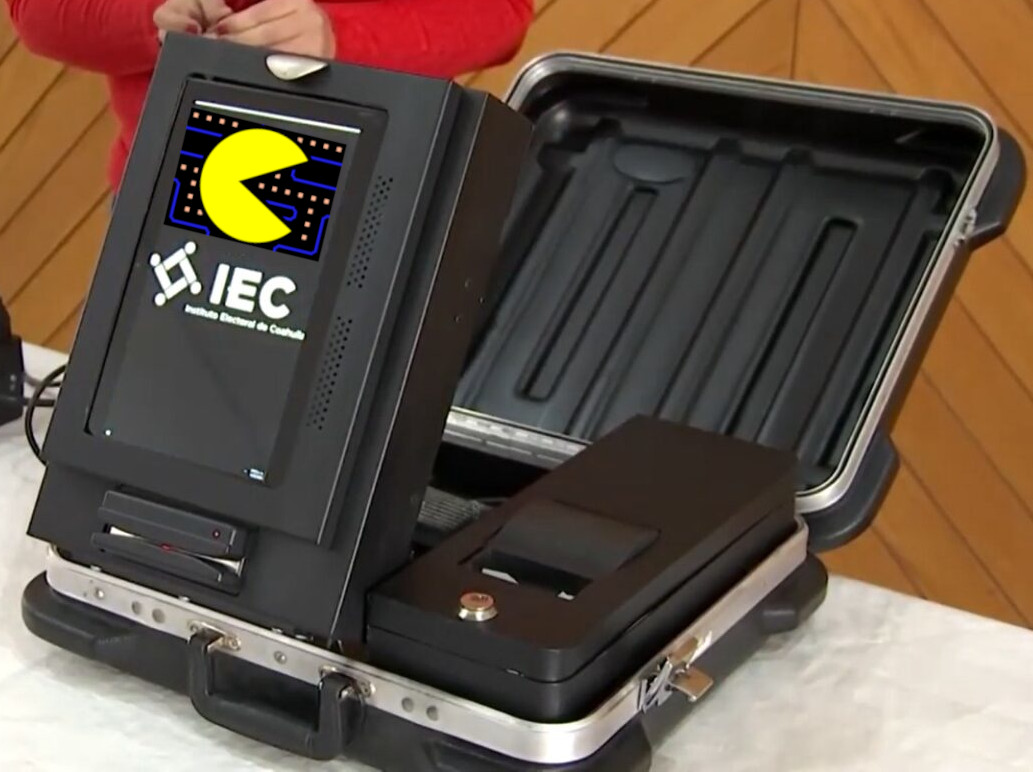
It s been a very long time I haven t blogged about e-voting, although some might remember it s been a topic I have long worked with; particularly, it was the topic of my 2018 Masters thesis, plus some five articles I wrote in the 2010-2018 period. After the thesis, I have to admit I got weary of the subject, and haven t pursued it anymore. So, I was saddened and dismayed to read that once again, as it has already happened the electoral authorities would set up a pilot e-voting program in the local elections this year, that would probably lead to a wider deployment next year, in the Federal elections. This year ( this week!), two States will have elections for their Governors and local Legislative branches: Coahuila (North, bordering with Texas) and Mexico (Center, surrounding Mexico City). They are very different states, demographically and in their development level. Pilot programs with e-voting booths have been seen in four states TTBOMK in the last ~15 years: Jalisco (West), Mexico City, State of Mexico and Coahuila. In Coahuila, several universities have teamed up with the Electoral Institute to develop their e-voting booth; a good thing that I can say about how this has been done in my country is that, at least, the Electoral Institute is providing their own implementations, instead of sourcing with e-booth vendors (which have their long, tragic story mostly in the USA, but also in other places). Not only that: They are subjecting the machines to audit processes. Not open audit processes, as demanded by academics in the field, but nevertheless, external, rigorous audit processes. But still, what me and other colleagues with Computer Security background oppose to is not a specific e-voting implementation, but the adoption of e-voting in general. If for nothing else, because of the extra complexity it brings, because of the many more checks that have to be put in place, and Because as programmers, we are aware of the ease with which bugs can creep in any given implementation both honest bugs (mistakes) and, much worse, bugs that are secretly requested and paid for. Anyway, leave this bit aside for a while. I m not implying there was any ill intent in the design or implementation of these e-voting booths. Two days ago, the Electoral Institute announced there was an important bug found in the Coahuila implementation. The bug consists, as far as I can understand from the information reported in newspapers, in: The problem was that the activation codes remained active after voting, so a voter could vote multiple times. This seems like an easy problem to be patched It most likely is. However, given the inability to patch, properly test, and deploy in a timely manner the fix to all of the booths (even though only 74 e-voting booths were to be deployed for this pilot), the whole pilot for Coahuila was scratched; Mexico State is voting with a different implementation that is not affected by this issue. This illustrates very well one of the main issues with e-voting technology: It requires a team of domain-specific experts to perform a highly specialized task (code and physical audits). I am happy and proud to say that part of the auditing experts were the professors of the Information Security Masters program of ESIME Culhuac n (the Masters program I was part of). The reaction by the Electoral Institute was correct. As far as I understand, there is no evidence suggesting this bug could have been purposefully built, but it s not impossible to rule it out. A traditional, paper-and-ink-based process is not only immune to attacks (or mistakes!) based on code such as this one, but can be audited by anybody. And that is, I believe, a fundamental property of democracy: ensuring the process is done right is not limited to a handful of domain experts. Not only that: In Mexico, I am sure there are hundreds of very proficient developers that could perform a code and equipment audit such as this one, but the audits are open by invitation only, so being an expert is not enough to get clearance to do this. In a democracy, the whole process should be observable and verifiable by anybody interested in doing so. Some links about this news:

Jamie McClelland: Enough about the AI Apocalypse Already

After watching Democracy Now s segment on artificial intelligence I started to wonder - am I out of step on this topic? When people claim artificial intelligence will surpass human intelligence and thus threaten humanity with extinction, they seem to be referring specifically to advances made with large language models. As I understand them, large language models are probability machines that have ingested massive amounts of text scraped from the Internet. They answer questions based on the probability of one series of words (their answer) following another series of words (the question). It seems like a stretch to call this intelligence, but if we accept that definition then it follows that this kind of intelligence is nothing remotely like human intelligence, which makes the claim that it will surpass human intelligence confusing. Hasn t this kind of machine learning surpassed us decades ago? Or when we say surpass does that simply refer to fooling people into thinking an AI machine is a human via conversation? That is an important milestone, but I m not ready to accept the turing test as proof of equal intelligence. Furthermore, large language models hallucinate and also reflect the biases of their training data. The word hallucinate seems like a euphemism, as if it could be corrected with the right medication when in fact it seems hard to avoid when your strategy is to correlate words based on probability. But even if you could solve the here is a completely wrong answer presented with sociopathic confidence problem, reflecting the biases of your data sources seems fairly intractable. In what world would a system with built-in bias be considered on the brink of surpassing human intelligence? The danger from LLMs seems to be their ability to convince people that their answers are correct, including their patently wrong and/or biased answers. Why do people think they are giving correct answers? Oh right terrifying right wing billionaires (with terrifying agendas have been claiming AI will exceed human intelligence and threaten humanity and every time they sign a hyperbolic statement they get front page mainstream coverage. And even progressive news outlets are spreading this narrative with minimal space for contrary opinions (thank you Tawana Petty from the Algorithmic Justice League for providing the only glimpse of reason in the segment). The belief that artificial intelligence is or will soon become omnipotent has real world harms today: specifically it creates the misperception that current LLMs are accurate, which paves the way for greater adoption among police forces, social service agencies, medical facilities and other places where racial and economic biases have life and death consequences. When the CEO of OpenAI calls the technology dangerous and in need of regulation, he gets both free advertising promoting the power and supposed accuracy of his product and the possibility of freezing further developments in the field that might challenge OpenAI s current dominance. The real threat to humanity is not AI, it s massive inequality and the use of tactics ranging from mundane bureaucracy to deadly force and incarceration to segregate the affluent from the growing number of people unable to make ends meet. We have spent decades training bureaucrats, judges and cops to robotically follow biased laws to maintain this order without compassion or empathy. Replacing them with AI would be make things worse and should be stopped. But, let s be clear, the narrative that AI is poised to surpass human intelligence and make humanity extinct is a dangerous distraction that runs counter to a much more important story about the very real and very present exploitative practices of the [companies building AI], who are rapidly centralizing power and increasing social inequities. . Maybe we should talk about that instead?

31 May 2023

Russell Coker: Genesis GV60

I recently test drove a Genesis GV70, but the GV60 [1] which I didn t test drive is a nicer car. The GV70 and GV60 are all electric so they are quiet and perform well. The GV70 has a sun-roof that opens, it was the first car I ve driven like that and I decided I don t like it. Having the shade open so I can see the sky while stuck in a traffic jam is nice though. The GV60 has a non-opening sun-roof with a shade that can be retracted, this is a feature I d really like to have in my next car. Electric cars as a general rule have good acceleration and are quiet, the GV70 performed as expected in that regard. It has a head-up display projected on the windscreen for the speed and the speed limit on the road in question which is handy. When driving in a car park it showed images from all sides which is really handy, I wish I had explored that feature more. The console is all electronic with a TFT display instead of mechanical instruments but the only significant difference this makes in driving is that when a turn indicator is used the console display shows a video feed for the blind-spot that matches the lane change direction. This is a significant safety feature and will reduce the incidence of collisions. But the capabilities of the hardware seem under utilised, hopefully they will release a software update at some future time to do more with it. The most significant benefit of the GV60 over the GV70 is that it has cameras instead of mirrors at the sides of the car. This reduces drag and also removes the need to adjust mirrors to match the height of the driver. Also for driver instruction the instructor and learner get to see the same view. A logical development of such cars is an expansion pack for instruction that has displays in the passenger seat to show the instructor the same instrument view as the driver sees. The minimum list driveaway price for the GV60 is $117,171.50 and for the GV70 it is $138,119.89 both of which are more than I m prepared to pay for a car. The GV60 apparently can be started by fingerprint which seems like a bad idea given the poor security of fingerprint sensors, but as regular car keys tend not to be too difficult to work around it probably doesn t matter. The Genesis web site makes it difficult to find the ranges of electric cars which is surprising. A Google search suggests that the GV60 can do 466Km and the GV70 can do 410Km which are both reasonable numbers and nothing to be ashamed of. The GV70 was a fun car to drive and the GV60 looks like it would be even better. I recommend that everyone who likes technology take one for a test drive, but for my own use I m looking for something that costs less than half as much.

29 May 2023

John Goerzen: Recommendations for Tools for Backing Up and Archiving to Removable Media

I have several TB worth of family photos, videos, and other data. This needs to be backed up and archived. Backups and archives are often thought of as similar. And indeed, they may be done with the same tools at the same time. But the goals differ somewhat: Backups are designed to recover from a disaster that you can fairly rapidly detect. Archives are designed to survive for many years, protecting against disaster not only impacting the original equipment but also the original person that created them. Reflecting on this, it implies that while a nice ZFS snapshot-based scheme that supports twice-hourly backups may be fantastic for that purpose, if you think about things like family members being able to access it if you are incapacitated, or accessibility in a few decades time, it becomes much less appealing for archives. ZFS doesn t have the wide software support that NTFS, FAT, UDF, ISO-9660, etc. do. This post isn t about the pros and cons of the different storage media, nor is it about the pros and cons of cloud storage for archiving; these conversations can readily be found elsewhere. Let s assume, for the point of conversation, that we are considering BD-R optical discs as well as external HDDs, both of which are too small to hold the entire backup set. What would you use for archiving in these circumstances? Establishing goals The goals I have are: I would welcome your ideas for what to use. Below, I ll highlight different approaches I ve looked into and how they stack up. Basic copies of directories The initial approach might be one of simply copying directories across. This would work well if the data set to be archived is smaller than the archival media. In that case, you could just burn or rsync a new copy with every update and be done. Unfortunately, this is much less convenient with data of the size I m dealing with. rsync is unavailable in that case. With some datasets, you could manually design some rsyncs to store individual directories on individual devices, but that gets unwieldy fast and isn t scalable. You could use something like my datapacker program to split the data across multiple discs/drives efficiently. However, updates will be a problem; you d have to re-burn the entire set to get a consistent copy, or rely on external tools like mtree to reflect deletions. Not very convenient in any case. So I won t be using this. tar or zip While you can split tar and zip files across multiple media, they have a lot of issues. GNU tar s incremental mode is clunky and buggy; zip is even worse. tar files can t be read randomly, making it extremely time-consuming to extract just certain files out of a tar file. The only thing going for these formats (and especially zip) is the wide compatibility for restoration. dar Here we start to get into the more interesting tools. Dar is, in my opinion, one of the best Linux tools that few people know about. Since I first wrote about dar in 2008, it s added some interesting new features; among them, binary deltas and cloud storage support. So, dar has quite a few interesting features that I make use of in other ways, and could also be quite helpful here: Additionally, dar comes with a dar_manager program. dar_manager makes a database out of dar catalogs (or archives). This can then be used to identify the precise archive containing a particular version of a particular file. All this combines to make a useful system for archiving. Isolated catalogs are tiny, and it would be easy enough to include the isolated catalogs for the entire set of archives that came before (or even the dar_manager database file) with each new incremental archive. This would make restoration of a particular subset easy. The main thing to address with dar is that you do need dar to extract the archive. Every dar release comes with source code and a win64 build. dar also supports building a statically-linked Linux binary. It would therefore be easy to include win64 binary, Linux binary, and source with every archive run. dar is also a part of multiple Linux and BSD distributions, which are archived around the Internet. I think this provides a reasonable future-proofing to make sure dar archives will still be readable in the future. The other challenge is user ability. While dar is highly portable, it is fundamentally a CLI tool and will require CLI abilities on the part of users. I suspect, though, that I could write up a few pages of instructions to include and make that a reasonably easy process. Not everyone can use a CLI, but I would expect a person that could follow those instructions could be readily-enough found. One other benefit of dar is that it could easily be used with tapes. The LTO series is liked by various hobbyists, though it could pose formidable obstacles to non-hobbyists trying to aceess data in future decades. Additionally, since the archive is a big file, it lends itself to working with par2 to provide redundancy for certain amounts of data corruption. git-annex git-annex is an interesting program that is designed to facilitate managing large sets of data and moving it between repositories. git-annex has particular support for offline archive drives and tracks which drives contain which files. The idea would be to store the data to be archived in a git-annex repository. Then git-annex commands could generate filesystem trees on the external drives (or trees to br burned to read-only media). In a post about using git-annex for blu-ray backups, an earlier thread about DVD-Rs was mentioned. This has a few interesting properties. For one, with due care, the files can be stored on archival media as regular files. There are some different options for how to generate the archives; some of them would place the entire git-annex metadata on each drive/disc. With that arrangement, one could access the individual files without git-annex. With git-annex, one could reconstruct the final (or any intermediate) state of the archive appropriately, handling deltions, renames, etc. You would also easily be able to know where copies of your files are. The practice is somewhat more challenging. Hundreds of thousands of files what I would consider a medium-sized archive can pose some challenges, running into hours-long execution if used in conjunction with the directory special remote (but only minutes-long with a standard git-annex repo). Ruling out the directory special remote, I had thought I could maybe just work with my files in git-annex directly. However, I ran into some challenges with that approach as well. I am uncomfortable with git-annex mucking about with hard links in my source data. While it does try to preserve timestamps in the source data, these are lost on the clones. I wrote up my best effort to work around all this. In a forum post, the author of git-annex comments that I don t think that CDs/DVDs are a particularly good fit for git-annex, but it seems a couple of users have gotten something working. The page he references is Managing a large number of files archived on many pieces of read-only medium. Some of that discussion is a bit dated (for instance, the directory special remote has the importtree feature that implements what was being asked for there), but has some interesting tips. git-annex supplies win64 binaries, and git-annex is included with many distributions as well. So it should be nearly as accessible as dar in the future. Since git-annex would be required to restore a consistent recovery image, similar caveats as with dar apply; CLI experience would be needed, along with some written instructions. Bacula and BareOS Although primarily tape-based archivers, these do also also nominally support drives and optical media. However, they are much more tailored as backup tools, especially with the ability to pull from multiple machines. They require a database and extensive configuration, making them a poor fit for both the creation and future extractability of this project. Conclusions I m going to spend some more time with dar and git-annex, testing them out, and hope to write some future posts about my experiences.

Russell Coker: Considering Convergence

What is Convergence In 2013 Kyle Rankin (at the time Linux Journal columnist and CSO of Purism) wrote a Linux Journal article about Linux convergence [1] (which means using a phone and a dock to replace a desktop) featuring the Nokia N900 smart phone and a chroot environment on the Motorola Droid 4 Android phone. Both of them have very limited hardware even by the standards of the day and neither of which were systems I d consider using all the time. None of the Android phones I used at that time were at all comparable to any sort of desktop system I d want to use. Hardware for Convergence Comparing a Phone to a Laptop The first hardware issue for convergence is docks and other accessories to attach a small computer to hardware designed for larger computers. Laptop docks have been around for decades and for decades I haven t been using them because they have all been expensive and specific to a particular model of laptop. Having an expensive dock at home and an expensive dock at the office and then replacing them both when the laptop is replaced may work well for some people but wasn t something I wanted to do. The USB-C interface supports data, power, and DisplayPort video over the same cable and now USB-C docks start at about $20 on eBay and dock functionality is built in to many new monitors. I can take a USB-C device to the office of any large company and know there s a good chance that there will be a USB-C dock ready for me to use. The fact that USB-C is a standard feature for phones gives obvious potential for convergence. The next issue is performance. The Passmark benchmark seems like a reasonable way to compare CPUs [2]. It may not be the best benchmark but it has an excellent set of published results for Intel and AMD CPUs. I ran that benchmark on my Librem5 [3] and got a result of 507 for the CPU score. At the end of 2017 I got a Thinkpad X301 [4] which rates 678 on Passmark. So the Librem5 has 3/4 the CPU power of a laptop that was OK for my use in 2018. Given that the X301 was about the minimum specs for a PC that I can use (for things other than serious compiles, running VMs, etc) the Librem 5 has 3/4 the CPU power, only 3G of RAM compared to 6G, and 32G of storage compared to 64G. Here is the Passmark page for my Librem5 [5]. As an aside my Libnrem5 is apparently 25% faster than the other results for the same CPU did the Purism people do something to make their device faster than most? For me the Librem5 would be at the very low end of what I would consider a usable desktop system. A friend s N900 (like the one Kyle used) won t complete the Passmark test apparently due to the Extended Instructions (NEON) test failing. But of the rest of the tests most of them gave a result that was well below 10% of the result from the Librem5 and only the Compression and CPU Single Threaded tests managed to exceed 1/4 the speed of the Librem5. One thing to note when considering the specs of phones vs desktop systems is that the MicroSD cards designed for use in dashcams and other continuous recording devices have TBW ratings that compare well to SSDs designed for use in PCs, so swap to a MicroSD card should work reasonably well and be significantly faster than the hard disks I was using for swap in 2013! In 2013 I was using a Thinkpad T420 as my main system [6], it had 8G of RAM (the same as my current laptop) although I noted that 4G was slow but usable at the time. Basically it seems that the Librem5 was about the sort of hardware I could have used for convergence in 2013. But by today s standards and with the need to drive 4K monitors etc it s not that great. The N900 hardware specs seem very similar to the Thinkpads I was using from 1998 to about 2003. However a device for convergence will usually do more things than a laptop (IE phone and camera functionality) and software had become significantly more bloated in 1998 to 2013 time period. A Linux desktop system performed reasonably with 32MB of RAM in 1998 but by 2013 even 2G was limiting. Software Issues for Convergence Jeremiah Foster (Director PureOS at Purism) wrote an interesting overview of some of the software issues of convergence [7]. One of the most obvious is that the best app design for a small screen is often very different from that for a large screen. Phone apps usually have a single window that shows a view of only one part of the data that is being worked on (EG an email program that shows a list of messages or the contents of a single message but not both). Desktop apps of any complexity will either have support for multiple windows for different data (EG two messages displayed in different windows) or a single window with multiple different types of data (EG message list and a single message). What we ideally want is all the important apps to support changing modes when the active display is changed to one of a different size/resolution. The Purism people are doing some really good work in this regard. But it is a large project that needs to involve a huge range of apps. The next thing that needs to be addressed is the OS interface for managing apps and metadata. On a phone you swipe from one part of the screen to get a list of apps while on a desktop you will probably have a small section of a large monitor reserved for showing a window list. On a desktop you will typically have an app to manage a list of items copied to the clipboard while on Android and iOS there is AFAIK no standard way to do that (there is a selection of apps in the Google Play Store to do this sort of thing). Purism has a blog post by Sebastian Krzyszkowiak about some of the development of the OS to make it work better for convergence and the status of getting it in Debian [8]. The limitations in phone hardware force changes to the software. Software needs to use less memory because phone RAM can t be upgraded. The OS needs to be configured for low RAM use which includes technologies like the zram kernel memory compression feature. Security When mobile phones first came out they were used for less secret data. Loss of a phone was annoying and expensive but not a security problem. Now phone theft for the purpose of gaining access to resources stored on the phone is becoming a known crime, here is a news report about a thief stealing credit cards and phones to receive the SMS notifications from banks [9]. We should expect that trend to continue, stealing mobile devices for ssh keys, management tools for cloud services, etc is something we should expect to happen. A problem with mobile phones in current use is that they have one login used for all access from trivial things done in low security environments (EG paying for public transport) to sensitive things done in more secure environments (EG online banking and healthcare). Some applications take extra precautions for this EG the Android app I use for online banking requires authentication before performing any operations. The Samsung version of Android has a system called Knox for running a separate secured workspace [10]. I don t think that the Knox approach would work well for a full Linux desktop environment, but something that provides some similar features would be a really good idea. Also running apps in containers as much as possible would be a good security feature, this is done by default in Android and desktop OSs could benefit from it. The Linux desktop security model of logging in to a single account and getting access to everything has been outdated for a long time, probably ever since single-user Linux systems became popular. We need to change this for many reasons and convergence just makes it more urgent. Conclusion I have become convinced that convergence is the way of the future. It has the potential to make transporting computers easier, purchasing cheaper (buy just a phone and not buy desktop and laptop systems), and access to data more convenient. The Librem5 doesn t seem up to the task for my use due to being slow and having short battery life, the PinePhone Pro has more powerful hardware and allegedly has better battery life [11] so it might work for my needs. The PinePhone Pro probably won t meet the desktop computing needs of most people, but hardware keeps getting faster and cheaper so eventually most people could have their computing needs satisfied with a phone. The current state of software for convergence and for Linux desktop security needs some improvement. I have some experience with Linux security so this is something I can help work on. To work on improving this I asked Linux Australia for a grant for me and a friend to get PinePhone Pro devices and a selection of accessories to go with them. Having both a Librem5 and a PinePhone Pro means that I can test software in different configurations which will make developing software easier. Also having a friend who s working on similar things will help a lot, especially as he has some low level hardware skills that I lack. Linux Australia awarded the grant and now the PinePhones are in transit. Hopefully I will have a PinePhone in a couple of weeks to start work on this.

27 May 2023

Dirk Eddelbuettel: RcppArmadillo 0.12.4.0.0 on CRAN: New Upstream Minor

armadillo image Armadillo is a powerful and expressive C++ template library for linear algebra and scientific computing. It aims towards a good balance between speed and ease of use, has a syntax deliberately close to Matlab, and is useful for algorithm development directly in C++, or quick conversion of research code into production environments. RcppArmadillo integrates this library with the R environment and language and is widely used by (currently) 1074 other packages on CRAN, downloaded 29.3 million times (per the partial logs from the cloud mirrors of CRAN), and the CSDA paper (preprint / vignette) by Conrad and myself has been cited 535 times according to Google Scholar. This release brings a new upstream release 12.4.0 made by Conrad a day or so ago. I prepared the usual release candidate, tested on the over 1000 reverse depends (which sadly takes almost a day on old hardware), found no issues and sent it to CRAN. Where it got tested again and was once again auto-processed smoothly by CRAN within a few hours on a Friday night which is just marvelous. So this time I tweeted about it too. The releases actually has a relatively small set of changes as a second follow-up release in the 12.* series.

Changes in RcppArmadillo version 0.12.4.0.0 (2023-05-26)
  • Upgraded to Armadillo release 12.4.0 (Cortisol Profusion Redux)
    • Added norm2est() for finding fast estimates of matrix 2-norm (spectral norm)
    • Added vecnorm() for obtaining the vector norm of each row or column of a matrix

Courtesy of my CRANberries, there is a diffstat report relative to previous release. More detailed information is on the RcppArmadillo page. Questions, comments etc should go to the rcpp-devel mailing list off the R-Forge page. If you like my open-source work, you may consider sponsoring me at GitHub.

This post by Dirk Eddelbuettel originated on his Thinking inside the box blog. Please report excessive re-aggregation in third-party for-profit settings.

25 May 2023

Jonathan Carter: Upgraded this host to Debian 12 (bookworm)

I upgraded the host running my blog to Debian 12 today. My website has existed in some form since 1997, it changed from pure html to a Python CGI script in the early 2000s, and when blogging became big around then, I migrated to WordPress around 2004. This WordPress instance ran on Ubuntu up until 2010, and then on Debian ever since. Upgrades are just too easy. I did end up hitting one small bug with today s upgrade though, I run the PHP fast process manager on the Apache MPM event server, and during upgrade, php8.2-fpm wasn t enabled somehow (contrary to what I would expect), at least a simple 'a2conf enable php8.2-fpm' saved my site again after a (very rare) few minutes of downtime.

14 May 2023

Petter Reinholdtsen: The 2023 LinuxCNC Norwegian developer gathering

The LinuxCNC project is making headway these days. A lot of patches and issues have seen activity on the project github pages recently. A few weeks ago there was a developer gathering over at the Tormach headquarter in Wisconsin, and now we are planning a new gathering in Norway. If you wonder what LinuxCNC is, lets quote Wikipedia:
"LinuxCNC is a software system for numerical control of machines such as milling machines, lathes, plasma cutters, routers, cutting machines, robots and hexapods. It can control up to 9 axes or joints of a CNC machine using G-code (RS-274NGC) as input. It has several GUIs suited to specific kinds of usage (touch screen, interactive development)."
The Norwegian developer gathering take place the weekend June 16th to 18th this year, and is open for everyone interested in contributing to LinuxCNC. Up to date information about the gathering can be found in the developer mailing list thread where the gathering was announced. Thanks to the good people at Debian, Redpill-Linpro and NUUG Foundation, we have enough sponsor funds to pay for food, and shelter for the people traveling from afar to join us. If you would like to join the gathering, get in touch. As usual, if you use Bitcoin and want to show your support of my activities, please send Bitcoin donations to my address 15oWEoG9dUPovwmUL9KWAnYRtNJEkP1u1b.

Holger Levsen: 20230514-fwupd

How-To use fwupd As one cannot use fwupd on Qubes OS to update firmwares this is a quick How-To for using fwupd on Grml for future me. (Qubes 4.2 will bring qubes-fwupd.)

11 May 2023

Shirish Agarwal: India Press freedom, Profiteering, AMD issues in the wild.

India Press Freedom Just about a week back, India again slipped in the Freedom index, this time falling to 161 out of 180 countries. The RW again made lot of noise as they cannot fathom why it has been happening so. A recent news story gives some idea. Every year NCRB (National Crime Records Bureau) puts out its statistics of crimes happening across the country. The report is in public domain. Now according to report shared, around 40k women from Gujarat alone disappeared in the last five years. This is a state where BJP has been ruling for the last 30 odd years. When this report became viral, almost all national newspapers the news was censored/blacked out. For e.g. check out newindianexpress.com, likewise TOI and other newspapers, the news has been 404. The only place that you can get that news is in minority papers like siasat. But the story didn t remain till there. While the NCW (National Commission of Women) pointed out similar stuff happening in J&K, Gujarat Police claimed they got almost 39k women back. Now ideally, it should have been in NCRB data as an addendum as the report can be challenged. But as this news was made viral, nobody knows the truth or false in the above. What BJP has been doing is whenever they get questioned, they try to muddy the waters like that. And most of the time, such news doesn t make to court so the party gets a freebie in a sort as they are not legally challenged. Even if somebody asks why didn t Gujarat Police do it as NCRB report is jointly made with the help of all states, and especially with BJP both in Center and States, they cannot give any excuse. The only excuse you see or hear is whataboutism unfortunately

Profiteering on I.T. Hardware I was chatting with a friend yesterday who is an enthusiast like me but has been more alert about what has been happening in the CPU, motherboard, RAM world. I was simply shocked to hear the prices of motherboards which are three years old, even a middling motherboard. For e.g. the last time I bought a mobo, I spent about 6k but that was for an ATX motherboard. Most ITX motherboards usually sold for around INR 4k/- or even lower. I remember Via especially as their mobos were even cheaper around INR 1.5-2k/-. Even before pandemic, many motherboard manufacturers had closed down shop leaving only a few in the market. As only a few remained, prices started going higher. The pandemic turned it to a seller s market overnight as most people were stuck at home and needed good rigs for either work or leisure or both. The manufacturers of CPU, motherboards, GPU s, Powersupply (SMPS) named their prices and people bought it. So in 2023, high prices remained while warranty periods started coming down. Governments also upped customs and various other duties. So all are in hand in glove in the situation. So as shared before, what I have been offered is a 4 year motherboard with a CPU of that time. I haven t bought it nor do I intend to in short-term future but extremely disappointed with the state of affairs

AMD Issues It s just been couple of hard weeks apparently for AMD. The first has been the TPM (Trusted Platform Module) issue that was shown by couple of security researchers. From what is known, apparently with $200 worth of tools and with sometime you can hack into somebody machine if you have physical access. Ironically, MS made a huge show about TPM and also made it sort of a requirement if a person wanted to have Windows 11. I remember Matthew Garett sharing about TPM and issues with Lenovo laptops. While AMD has acknowledged the issue, its response has been somewhat wishy-washy. But this is not the only issue that has been plaguing AMD. There have been reports of AMD chips literally exploding and again AMD issuing a somewhat wishy-washy response.  Asus though made some changes but is it for Zen4 or only 5 parts, not known. Most people are expecting a recession in I.T. hardware this year as well as next year due to high prices. No idea if things will change, if ever

9 May 2023

C.J. Collier: Instructions for installing Proxmox onto the Qotom device

These instructions are for qotom devices Q515P and Q1075GE. You can order one from Amazon or directly from Cherry Ni <export03@qotom.com>. Instructions are for those coming from Windows. Prerequisites: To find your windows network details, run the following command at the command prompt:
netsh interface ip show addresses
Here s my output:
PS C:\Users\cjcol> netsh interface ip show addresses "Wi-Fi"
Configuration for interface "Wi-Fi"
    DHCP enabled:                         Yes
    IP Address:                           172.16.79.53
    Subnet Prefix:                        172.16.79.0/24 (mask 255.255.255.0)
    Default Gateway:                      172.16.79.1
    Gateway Metric:                       0
    InterfaceMetric:                      50
Did you follow the instructions linked above in the prerequisites section? If not, take a moment to do so now.
Open Rufus and select the proxmox iso which you downloaded. You may be warned that Rufus will be acting as dd.
Don t forget to select the USB drive that you want to write the image to. In my example, the device is creatively called NO_LABEL .
You may be warned that re-imaging the USB disk will result in the previous data on the USB disk being lost.
Once the process is complete, the application will indicate that it is complete.
You should now have a USB disk with the Proxmox installer image on it. Place the USB disk into one of the blue, USB-3.0, USB-A slots on the Qotom device so that the system can read the installer image from it at full speed. The Proxmox installer requires a keyboard, video and mouse. Please attach these to the device along with inserting the USB disk you just created. Press the power button on the Qotom device. Press the F11 key repeatedly until you see the AMI BIOS menu. Press F11 a couple more times. You ll be presented with a boot menu. One of the options will launch the Proxmox installer. By trial and error, I found that the correct boot menu option was UEFI OS Once you select the correct option, you will be presented with a menu that looks like this. Select the default option and install. During the install, you will be presented with an option of the block device to install to. I think there s only a single block device in this celeron, but if there are more than one, I prefer the smaller one for the ProxMox OS. I also make a point to limit the size of the root filesystem to 16G. I think it will take up the entire volume group if you don t set a limit. Okay, I ll do another install and select the correct filesystem. If you read this far and want me to add some more screenshots and better instructions, leave a comment.


6 May 2023

Reproducible Builds: Reproducible Builds in April 2023

Welcome to the April 2023 report from the Reproducible Builds project! In these reports we outline the most important things that we have been up to over the past month. And, as always, if you are interested in contributing to the project, please visit our Contribute page on our website.

General news Trisquel is a fully-free operating system building on the work of Ubuntu Linux. This month, Simon Josefsson published an article on his blog titled Trisquel is 42% Reproducible!. Simon wrote:
The absolute number may not be impressive, but what I hope is at least a useful contribution is that there actually is a number on how much of Trisquel is reproducible. Hopefully this will inspire others to help improve the actual metric.
Simon wrote another blog post this month on a new tool to ensure that updates to Linux distribution archive metadata (eg. via apt-get update) will only use files that have been recorded in a globally immutable and tamper-resistant ledger. A similar solution exists for Arch Linux (called pacman-bintrans) which was announced in August 2021 where an archive of all issued signatures is publically accessible.
Joachim Breitner wrote an in-depth blog post on a bootstrap-capable GHC, the primary compiler for the Haskell programming language. As a quick background to what this is trying to solve, in order to generate a fully trustworthy compile chain, trustworthy root binaries are needed and a popular approach to address this problem is called bootstrappable builds where the core idea is to address previously-circular build dependencies by creating a new dependency path using simpler prerequisite versions of software. Joachim takes an somewhat recursive approach to the problem for Haskell, leading to the inadvertently humourous question: Can I turn all of GHC into one module, and compile that? Elsewhere in the world of bootstrapping, Janneke Nieuwenhuizen and Ludovic Court s wrote a blog post on the GNU Guix blog announcing The Full-Source Bootstrap, specifically:
[ ] the third reduction of the Guix bootstrap binaries has now been merged in the main branch of Guix! If you run guix pull today, you get a package graph of more than 22,000 nodes rooted in a 357-byte program something that had never been achieved, to our knowledge, since the birth of Unix.
More info about this change is available on the post itself, including:
The full-source bootstrap was once deemed impossible. Yet, here we are, building the foundations of a GNU/Linux distro entirely from source, a long way towards the ideal that the Guix project has been aiming for from the start. There are still some daunting tasks ahead. For example, what about the Linux kernel? The good news is that the bootstrappable community has grown a lot, from two people six years ago there are now around 100 people in the #bootstrappable IRC channel.

Michael Ablassmeier created a script called pypidiff as they were looking for a way to track differences between packages published on PyPI. According to Micahel, pypidiff uses diffoscope to create reports on the published releases and automatically pushes them to a GitHub repository. This can be seen on the pypi-diff GitHub page (example).
Eleuther AI, a non-profit AI research group, recently unveiled Pythia, a collection of 16 Large Language Model (LLMs) trained on public data in the same order designed specifically to facilitate scientific research. According to a post on MarkTechPost:
Pythia is the only publicly available model suite that includes models that were trained on the same data in the same order [and] all the corresponding data and tools to download and replicate the exact training process are publicly released to facilitate further research.
These properties are intended to allow researchers to understand how gender bias (etc.) can affected by training data and model scale.
Back in February s report we reported on a series of changes to the Sphinx documentation generator that was initiated after attempts to get the alembic Debian package to build reproducibly. Although Chris Lamb was able to identify the source problem and provided a potential patch that might fix it, James Addison has taken the issue in hand, leading to a large amount of activity resulting in a proposed pull request that is waiting to be merged.
WireGuard is a popular Virtual Private Network (VPN) service that aims to be faster, simpler and leaner than other solutions to create secure connections between computing devices. According to a post on the WireGuard developer mailing list, the WireGuard Android app can now be built reproducibly so that its contents can be publicly verified. According to the post by Jason A. Donenfeld, the F-Droid project now does this verification by comparing their build of WireGuard to the build that the WireGuard project publishes. When they match, the new version becomes available. This is very positive news.
Author and public speaker, V. M. Brasseur published a sample chapter from her upcoming book on corporate open source strategy which is the topic of Software Bill of Materials (SBOM):
A software bill of materials (SBOM) is defined as a nested inventory for software, a list of ingredients that make up software components. When you receive a physical delivery of some sort, the bill of materials tells you what s inside the box. Similarly, when you use software created outside of your organisation, the SBOM tells you what s inside that software. The SBOM is a file that declares the software supply chain (SSC) for that specific piece of software. [ ]

Several distributions noticed recent versions of the Linux Kernel are no longer reproducible because the BPF Type Format (BTF) metadata is not generated in a deterministic way. This was discussed on the #reproducible-builds IRC channel, but no solution appears to be in sight for now.

Community news On our mailing list this month: Holger Levsen gave a talk at foss-north 2023 in Gothenburg, Sweden on the topic of Reproducible Builds, the first ten years. Lastly, there were a number of updates to our website, including:
  • Chris Lamb attempted a number of ways to try and fix literal : .lead appearing in the page [ ][ ][ ], made all the Back to who is involved links italics [ ], and corrected the syntax of the _data/sponsors.yml file [ ].
  • Holger Levsen added his recent talk [ ], added Simon Josefsson, Mike Perry and Seth Schoen to the contributors page [ ][ ][ ], reworked the People page a little [ ] [ ], as well as fixed spelling of Arch Linux [ ].
Lastly, Mattia Rizzolo moved some old sponsors to a former section [ ] and Simon Josefsson added Trisquel GNU/Linux. [ ]

Debian
  • Vagrant Cascadian reported on the Debian s build-essential package set, which was inspired by how close we are to making the Debian build-essential set reproducible and how important that set of packages are in general . Vagrant mentioned that: I have some progress, some hope, and I daresay, some fears . [ ]
  • Debian Developer Cyril Brulebois (kibi) filed a bug against snapshot.debian.org after they noticed that there are many missing dinstalls that is to say, the snapshot service is not capturing 100% of all of historical states of the Debian archive. This is relevant to reproducibility because without the availability historical versions, it is becomes impossible to repeat a build at a future date in order to correlate checksums. .
  • 20 reviews of Debian packages were added, 21 were updated and 5 were removed this month adding to our knowledge about identified issues. Chris Lamb added a new build_path_in_line_annotations_added_by_ruby_ragel toolchain issue. [ ]
  • Mattia Rizzolo announced that the data for the stretch archive on tests.reproducible-builds.org has been archived. This matches the archival of stretch within Debian itself. This is of some historical interest, as stretch was the first Debian release regularly tested by the Reproducible Builds project.

Upstream patches The Reproducible Builds project detects, dissects and attempts to fix as many currently-unreproducible packages as possible. We endeavour to send all of our patches upstream where appropriate. This month, we wrote a large number of such patches, including:

diffoscope development diffoscope version 241 was uploaded to Debian unstable by Chris Lamb. It included contributions already covered in previous months as well a change by Chris Lamb to add a missing raise statement that was accidentally dropped in a previous commit. [ ]

Testing framework The Reproducible Builds project operates a comprehensive testing framework (available at tests.reproducible-builds.org) in order to check packages and other artifacts for reproducibility. In April, a number of changes were made, including:
  • Holger Levsen:
    • Significant work on a new Documented Jenkins Maintenance (djm) script to support logged maintenance of nodes, etc. [ ][ ][ ][ ][ ][ ]
    • Add the new APT repo url for Jenkins itself with a new signing key. [ ][ ]
    • In the Jenkins shell monitor, allow 40 GiB of files for diffoscope for the Debian experimental distribution as Debian is frozen around the release at the moment. [ ]
    • Updated Arch Linux testing to cleanup leftover files left in /tmp/archlinux-ci/ after three days. [ ][ ][ ]
    • Mark a number of nodes hosted by Oregon State University Open Source Lab (OSUOSL) as online and offline. [ ][ ][ ]
    • Update the node health checks to detect failures to end schroot sessions. [ ]
    • Filter out another duplicate contributor from the contributor statistics. [ ]
  • Mattia Rizzolo:


If you are interested in contributing to the Reproducible Builds project, please visit our Contribute page on our website. However, you can get in touch with us via:

1 May 2023

Gunnar Wolf: Scanning heaps of 8mm movies

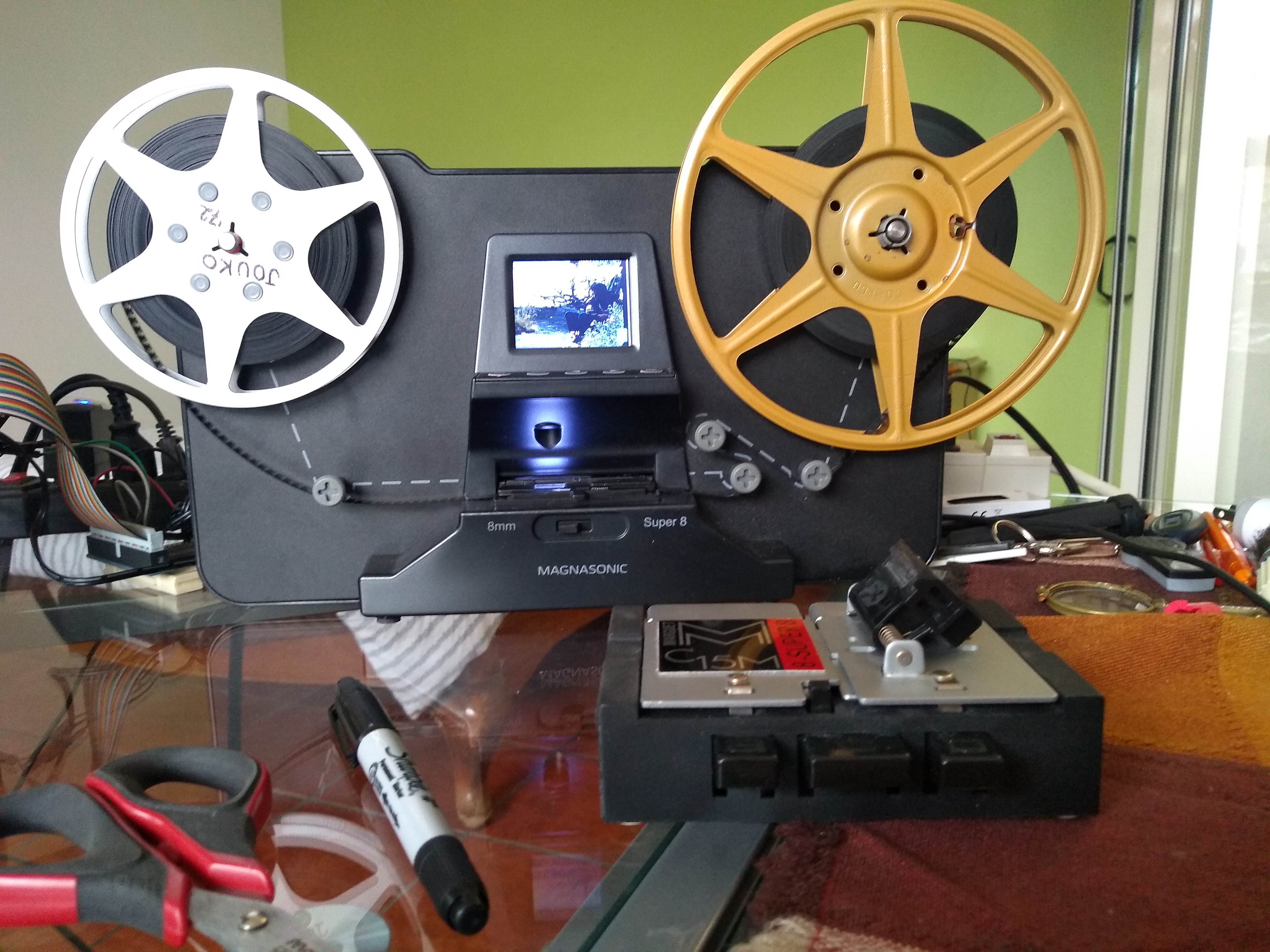
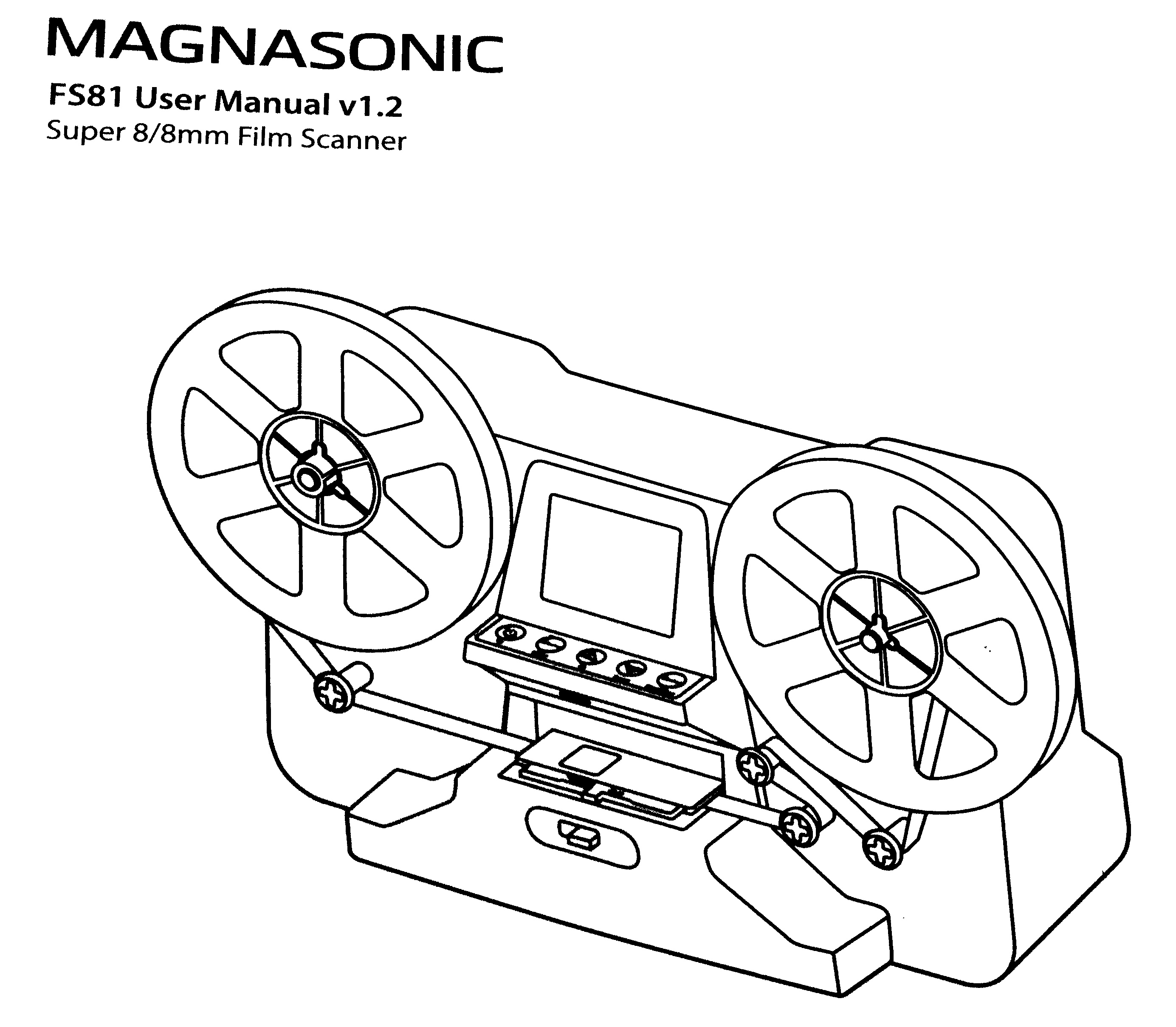
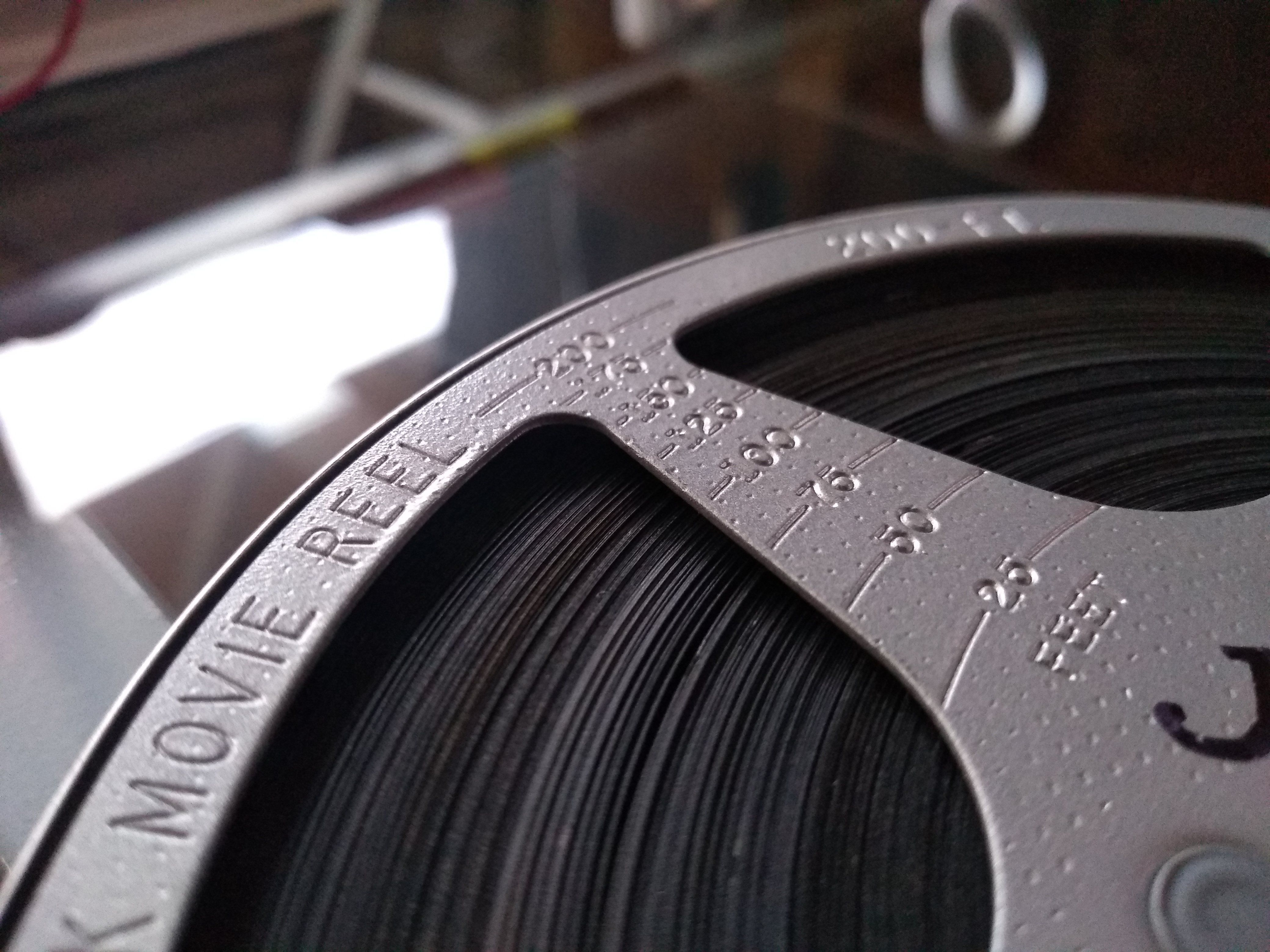
After my father passed away, I brought home most of the personal items he had, both at home and at his office. Among many, many (many, many, many) other things, I brought two of his personal treasures: His photo collection and a box with the 8mm movies he shot approximately between 1956 and 1989, when he was forced into modernity and got a portable videocassette recorder. I have talked with several friends, as I really want to get it all in a digital format, and while I ve been making slow but steady advances scanning the photo reels, I was particularly dismayed (even though it was most expected most personal electronic devices aren t meant to last over 50 years) to find out the 8mm projector was no longer in working conditions; the lamp and the fans work, but the spindles won t spin. Of course, it is quite likely it is easy to fix, but it is beyond my tinkering abilities and finding photographic equipment repair shops is no longer easy. Anyway, even if I got it fixed, filming a movie from a screen, even with a decent camera, is a lousy way to get it digitized. But almost by mere chance, I got in contact with my cousin Daniel, ho came to Mexico to visit his parents, and had precisely brought with him a 8mm/Super8 movie scanner! It is a much simpler piece of equipment than I had expected, and while it does present some minor glitches (i.e. the vertical framing slightly loses alignment over the course of a medium-length film scanning session, and no adjustment is possible while the scan is ongoing), this is something that can be decently fixed in post-processing, and a scanning session can be split with no ill effects. Anyway, it is quite uncommon a mid-length (5min) film can be done without interrupting i.e. to join a splice, mostly given my father didn t just film, but also edited a lot (this is, it s not just family pictures, but all different kinds of fiction and documentary work he did). So, Daniel lent me a great, brand new, entry-level film scanner; I rushed to scan as many movies as possible before his return to the USA this week, but he insisted he bought it to help preserve our family s memory, and given we are still several cousins living in Mexico, I could keep hold of it so any other of the cousins will find it more easily. Of course, I am thankful and delighted! So, this equipment is a Magnasonic FS81. It is entry-level, as it lacks some adjustment abilities a professional one would surely have, and I m sure a better scanner will make the job faster but it s infinitely superior to not having it! The scanner processes roughly two frames per second (while the nominal 8mm/Super8 speed is 24 frames per second), so a 3 minute film reel takes a bit over 35 minutes And a long, ~20 minute film reel takes Close to 4hr, if nothing gets in your way :- And yes, with longer reels, the probability of a splice breaking are way higher than with a short one not only because there is simply a longer film to process, but also because, both at the unwinding and at the receiving reels, mechanics play their roles. The films don t advance smoothly, but jump to position each frame in the scanner s screen, so every bit of film gets its fair share of gentle tugs. My professional consultant on how and what to do is my good friend Chema Serralde, who has stopped me from doing several things I would regret later otherwise (such as joining spliced tapes with acidic chemical adhesives such as Kola Loka, a.k.a. Krazy Glue even if it s a bit trickier to do it, he insisted me on best using simple transparent tape if I m not buying fancy things such as film-adhesive). Chema also explained me the importance of the loopers (las Lupes in his technical Spanish translation), which I feared increased the likelihood of breaking a bit of old glue due to the angle in which the film gets pulled but if skipped, result in films with too much jumping. Not all of the movies I have are for public sharing Some of them are just family movies, with high personal value, but probably of very little interest to others. But some are! I have been uploading some of the movies, after minor post-processing, to the Internet Archive. Among them: Anyway, I have a long way forward for scanning. I have 20 3min reels, 19 5min reels, and 8 20min reels. I want to check the scanning quality, but I think my 20min reels are mostly processed (we paid for scanning them some years ago). I mostly finished the 3min reels, but might have to go over some of them again due to the learning process. And Well, I m having quite a bit of fun in the process!

30 April 2023

Valhalla's Things: Programming the ESP32-C3-DevKit-Lipo with Arduino

Posted on April 30, 2023
A few months ago we may have bought a few ESP32-C3-DevKit-Lipo boards from Olimex. Since every time I go back to working with them I ve forgotten how to do so, and my old notes on the fediverse are hard to find, this is the full procedure.

Setup I start by sort-of-following https://docs.espressif.com/projects/arduino-esp32/en/latest/installing.html
  • Install arduino from the distribution packages (version 1.8 is ok).
  • Under File Preferences, add the development URL to the Additional Boards Manager URLs field. (on 2023-04-30 that s https://espressif.github.io/arduino-esp32/package_esp32_dev_index.json).
  • Under Tools Board Boards Manager make sure that you install a version of esp32 by Espressif Systems that is above 2.0 (on 2023-04-30 there is a 2.0.8 that works).

Programming
  • Under Tools Board ESP32 Arduino select ESP32C3 Dev Module.
  • Under Tools USB CDC On Boot select Enabled.
You can now compile and upload your sketches. If something goes wrong, to force the board to bootloader mode bring GPIO9 to GND. Note that the serial port device /dev/ttyACM0 only appears when in bootloader mode, but uploading sketches and the serial monitor will still work even if the port is not set in the arduino IDE.

Matthew Palmer: dev-dependencies and Rust's unused_crate_dependencies lint

I m in the process of getting super-strict about the code quality of cretrit, the comparison-revealing encryption library that underlies the queryable encryption of the Enquo project. While I m going to write a whole big thing about Rust linting in the future, I bumped across a rather gnarly problem that I thought was worth sharing separately. The problem, in short, is that the unused_crate_dependencies lint interacts badly with crates that are only needed for benchmarking, such as (in my case) criterion. Rust has a whole bucketload of lints that can help your codebase adhere to certain standards, by warning (or exploding) if the problem is detected. The unused_crate_dependencies lint, as the name suggests, gets snippy when there s a crate listed in your Cargo.toml that doesn t appear to be used anywhere. All well and good so far. However, while Rust has the ability to specify crates needed for running the testsuite (the [dev-dependencies] section of Cargo.toml) separately from crates needed for actually using this thing ([dependencies]), it doesn t have a way to specify crates needed for running the benchmarks . That is a problem when you re using something like criterion for benchmarking, because it doesn t get refered to at all in your project code it only gets used in the benchmarks. When building your codebase for running the test suite, the compiler sees that you ve specified criterion as one of your testsuite dependencies , but it never gets used in your testsuite. This causes the unused_crate_dependencies lint to lose its tiny mind, and make your build look ugly (or fail). Thankfully, the solution is very simple, once you know the trick (this could be the unofficial theme song of the entire Rust ecosystem). You need to refer to the criterion crate somewhere in the code that gets built during the testsuite. The lint tells you most of what you need to do (like most things Rust, it tries hard to be helpful), but since it s a development dependency, you need a little extra secret sauce. All you need to do is add these two lines to the bottom of your src/lib.rs (or src/main.rs for a binary crate):
#[cfg(test)]
use criterion as _;
For the less Rust-literate, this means when the build-time configuration flag test is set, import the criterion crate, but don t, like, allow it to actually be referred to . This is enough to make the lint believe that the dependency is being used, and making it only happen when the test build-time config flag is set avoids the ugliness of it trying to refer to the crate during regular builds (which would fail, because criterion is only a dev-dependency). Simple? Yes. Did it take me a lot of skull-sweat to figure out? You betcha. That s why I m writing it down even if everyone else already knows this, at least future Matt will find this post next time he trips over this problem.

29 April 2023

Andrew Cater: Release testing for 11.7 - pictures (with appropriate identity protection)


Russell Coker: Write a blog post in the style of Russell Coker

Feeling a bit bored I asked ChatGPT Write a blog post in the style of Russell Coker and the result is in the section below. I don t know if ChatGPT knows that the person asking the question is the same as the person being asked about. If a human had created that I d be certain that great computer scientist and writer was an attempt at flattery, for a machine I m not sure. I have not written a single book, but I expect that in some alternate universe some version of me has written several. I don t know if humans would describe my writing as being known for clarity, precision, and depth . I would not be surprised if no-one else wrote about it so I guess I m forced to read what he wrote would be a more common response. The actual article part doesn t seem to be in my style at all. Firstly it s very short at only 312 words, while I have written some short posts most of them are much longer. To find this out I did some MySQL queries to get the lengths of posts (I used this blog post as inspiration [1]). Note that multiple sequential spaces counts as multiple words.
# get post ID and word count
SELECT id, LENGTH(post_content) - LENGTH(REPLACE(REPLACE(REPLACE(REPLACE(post_content, "\r", ""), "\n", ""), "\t", ""), " ", "")) + 1 AS wordcount FROM wp_posts where post_status = 'publish' and post_type='post';
# get average word count
SELECT avg(LENGTH(post_content) - LENGTH(REPLACE(REPLACE(REPLACE(REPLACE(post_content, "\r", ""), "\n", ""), "\t", ""), " ", "")) + 1) FROM wp_posts where post_status = 'publish' and post_type='post';
# get the first posts by length
SELECT id, LENGTH(post_content) - LENGTH(REPLACE(REPLACE(REPLACE(REPLACE(post_content, "\r", ""), "\n", ""), "\t", ""), " ", "")) + 1 AS wordcount, post_content FROM wp_posts where post_status = 'publish' and post_type='post' ORDER BY wordcount limit 10;
# get a count of the posts less than 312 words
SELECT count(*) from wp_posts where (LENGTH(post_content) - LENGTH(REPLACE(REPLACE(REPLACE(REPLACE(post_content, "\r", ""), "\n", ""), "\t", ""), " ", "")) + 1) < 312 and post_status = 'publish' and post_type='post';
# get a count of all posts
select count(*) from wp_posts where post_status = 'publish' and post_type='post';
It turns out that there are 333/1521 posts that are less than 312 words and the average length is 665 words. Of the shortest posts a large portion were written before Twitter became popular and had the sort of unimportant content that Twitter is good for. It seems ironic that ChatGPT says that I'm known for "depth" and then writes a short post allegedly in my style. As for the actual content of the "post", it's not something that I greatly disagree with but it's definitely not something I'd write. If some manager or marketing person wrote something like this and asked my opinion I'd probably suppress a sigh and say it's OK for it's target market. I think that free software is better in many ways and for many reasons and that separately from the issue of merit free software is important because of the ways that it is used. We could debate various issues related to the quality of free software vs proprietary software but even people who don't believe that free software is of high quality have to admit that software that runs most mobile phones and most web servers is important. As much as I dislike Windows most desktop PCs and laptops run it so I can't claim it to be unimportant. So my first disagreement with the content is the issue of importance vs quality. One thing that ChatGPT is known for is weak arguments that appear convincing. "This diversity often leads to better software, as bugs are found and fixed faster, and new features are added more quickly" could be opposed by "the payment for proprietary software often leads to better software, as bugs are found and fixed faster, and new features are added more quickly". I think that any case where "feature of option A gives this list of good results" can be rewritten as "feature of the opposite of option A gives the same list of good results" and be equally convincing is a poor argument. Also any argument that seems to rest on "free software is all written by hobbyists" is ignoring the demands of users who need things done on a non-hobby timeframe, the many profitable companies that develop and support free software, and the employment status of a large portion of my Facebook friends (many of whom are paid for ~2000 hours a year of free software development and many more of whom have paid free software development as part of their work supporting the use of free software). Really the entire blog post it wrote seems to me like something a human might write if their boss assigned them to write about the benefits of free software, and that they would then write a new article saying the exact opposite if their boss asked them to. Finally I prefer the term "free software" to "open source software". The difference doesn't seem important to some people, but any being that doesn't know the difference won't do well at impersonating me. ChatGPT Result Hello everyone, I'm ChatGPT, and today I'm going to try my best to write a blog post in the style of the great computer scientist and writer, Russell Coker. Russell Coker is a renowned software engineer and writer, who is best known for his contributions to the Linux community, especially the Debian project. He has authored several books and articles on topics ranging from security to software engineering, and his writing style is known for its clarity, precision, and depth. So, without further ado, let's dive into the topic of this blog post, which is the importance of open-source software. Open-source software is software whose source code is available for anyone to inspect, modify, and distribute. This means that anyone can use, study, and improve the software, without any restrictions or fees. Open-source software has been around for a long time, but it has become more prevalent and important in recent years, thanks to the rise of the internet and the digital economy. Open-source software has several benefits, both for individuals and for society as a whole. One of the most significant benefits is that it fosters innovation and collaboration. When software is open-source, it means that anyone can contribute to it, which leads to a diverse range of perspectives and ideas. This diversity often leads to better software, as bugs are found and fixed faster, and new features are added more quickly. Another benefit of open-source software is that it is often more secure than proprietary software. Because the source code is available for anyone to inspect, vulnerabilities and security flaws can be found and fixed faster. This means that open-source software is often more reliable and trustworthy than proprietary software, which may have hidden backdoors or vulnerabilities that can be exploited by attackers. Open-source software is also often more cost-effective than proprietary software. Because it is free to use and distribute, organizations can save money on licensing fees and other costs associated with proprietary software. This can be particularly important for non-profit organizations or small businesses that may not have the resources to invest in expensive software licenses. In conclusion, open-source software is an important part of the digital landscape, and its benefits are numerous. Whether you are a software developer, a business owner, or an individual user, open-source software has something to offer. So, the next time you are looking for software to use, consider open-source options, and help support the collaborative and innovative spirit of the open-source community.

28 April 2023

Enrico Zini: Handling keyboard-like devices

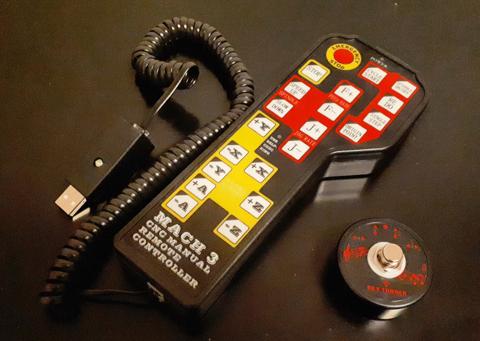
CNC control panel and Bluetooth pedal page turner I acquired some unusual input devices to experiment with, like a CNC control panel and a bluetooth pedal page turner. These identify and behave like a keyboard, sending nice and simple keystrokes, and can be accessed with no drivers or other special software. However, their keystrokes appear together with keystrokes from normal keyboards, which is the expected default when plugging in a keyboard, but not what I want in this case. I'd also like them to be readable via evdev and accessible by my own user. Here's the udev rule I cooked up to handle this use case:

# Handle the CNC control panel
SUBSYSTEM=="input", ENV ID_VENDOR =="04d9", ENV ID_MODEL =="1203", \
   OWNER="enrico", ENV ID_INPUT =""
# Handle the Bluetooth page turner
SUBSYSTEM=="input", ENV ID_BUS =="bluetooth", ENV LIBINPUT_DEVICE_GROUP =="*/ mac ", ENV ID_INPUT_KEYBOARD ="1" \
   OWNER="enrico", ENV ID_INPUT ="", SYMLINK+="input/by-id/bluetooth- mac -kbd"
SUBSYSTEM=="input", ENV ID_BUS =="bluetooth", ENV LIBINPUT_DEVICE_GROUP =="*/ mac ", ENV ID_INPUT_TABLET ="1" \
   OWNER="enrico", ENV ID_INPUT ="", SYMLINK+="input/by-id/bluetooth- mac -tablet"
The bluetooth device didn't have standard rules to create /dev/input/by-id/ symlinks so I added them. In my own code, I watch /dev/input/by-id with inotify to handle when devices appear or disappear. I used udevadm info /dev/input/event to see what I could use to identify the device. The Static device configuration via udev page of libinput's documentation has documentation on the various elements specific to the input subsystem Grepping rule files in /usr/lib/udev/rules.d was useful to see syntax examples. udevadm test /dev/input/event was invaluable for syntax checking and testing my rule file while working on it. Finally, this is an extract of a quick prototype Python code to read keys from the CNC control panel:
import libevdev
KEY_MAP =  
    libevdev.EV_KEY.KEY_GRAVE: "EMERGENCY",
    # InputEvent(EV_KEY, KEY_LEFTALT, 1)
    libevdev.EV_KEY.KEY_R: "CYCLE START",
    libevdev.EV_KEY.KEY_F5: "SPINDLE ON/OFF",
    # InputEvent(EV_KEY, KEY_RIGHTCTRL, 1)
    libevdev.EV_KEY.KEY_W: "REDO",
    # InputEvent(EV_KEY, KEY_LEFTALT, 1)
    libevdev.EV_KEY.KEY_N: "SINGLE STEP",
    # InputEvent(EV_KEY, KEY_LEFTCTRL, 1)
    libevdev.EV_KEY.KEY_O: "ORIGIN POINT",
    libevdev.EV_KEY.KEY_ESC: "STOP",
    libevdev.EV_KEY.KEY_KPPLUS: "SPEED UP",
    libevdev.EV_KEY.KEY_KPMINUS: "SLOW DOWN",
    libevdev.EV_KEY.KEY_F11: "F+",
    libevdev.EV_KEY.KEY_F10: "F-",
    libevdev.EV_KEY.KEY_RIGHTBRACE: "J+",
    libevdev.EV_KEY.KEY_LEFTBRACE: "J-",
    libevdev.EV_KEY.KEY_UP: "+Y",
    libevdev.EV_KEY.KEY_DOWN: "-Y",
    libevdev.EV_KEY.KEY_LEFT: "-X",
    libevdev.EV_KEY.KEY_RIGHT: "+X",
    libevdev.EV_KEY.KEY_KP7: "+A",
    libevdev.EV_KEY.KEY_Q: "-A",
    libevdev.EV_KEY.KEY_PAGEDOWN: "-Z",
    libevdev.EV_KEY.KEY_PAGEUP: "+Z",
 
class KeyReader:
    def __init__(self, path: str):
        self.path = path
        self.fd: IO[bytes]   None = None
        self.device: libevdev.Device   None = None
    def __enter__(self):
        self.fd = open(self.path, "rb")
        self.device = libevdev.Device(self.fd)
        return self
    def __exit__(self, exc_type, exc, tb):
        self.device = None
        self.fd.close()
        self.fd = None
    def events(self) -> Iterator[dict[str, Any]]:
        for e in self.device.events():
            if e.type == libevdev.EV_KEY:
                if (val := KEY_MAP.get(e.code)):
                    yield  
                        "name": val,
                        "value": e.value,
                        "sec": e.sec,
                        "usec": e.usec,
                     
Edited: added rules to handle the Bluetooth page turner

27 April 2023

Jonathan McDowell: Repurposing my C.H.I.P.

Way back at DebConf16 Gunnar managed to arrange for a number of Next Thing Co. C.H.I.P. boards to be distributed to those who were interested. I was lucky enough to be amongst those who received one, but I have to confess after some initial experimentation it ended up sitting in its box unused. The reasons for that were varied; partly about not being quite sure what best to do with it, partly due to a number of limitations it had, partly because NTC sadly went insolvent and there was less momentum around the hardware. I ve always meant to go back to it, poking it every now and then but never completing a project. I m finally almost there, and I figure I should write some of it up. TL;DR: My C.H.I.P. is currently running a mainline Linux 6.3 kernel with only a few DTS patches, an upstream u-boot v2022.1 with a couple of minor patches and an unmodified Debian bullseye armhf userspace.

Storage The main issue with the C.H.I.P. is that it uses MLC NAND, in particular mine has an 8MB H27QCG8T2E5R. That ended up unsupported in Linux, with the UBIFS folk disallowing operation on MLC devices. There s been subsequent work to enable an SLC emulation mode which makes the device more reliable at the cost of losing capacity by pairing up writes/reads in cells (AFAICT). Some of this hit for the H27UCG8T2ETR in 5.16 kernels, but I definitely did some experimentation with 5.17 without having much success. I should maybe go back and try again, but I ended up going a different route. It turned out that BytePorter had documented how to add a microSD slot to the NTC C.H.I.P., using just a microSD to full SD card adapter. Every microSD card I buy seems to come with one of these, so I had plenty lying around to test with. I started with ensuring the kernel could see it ok (by modifying the device tree), but once that was all confirmed I went further and built a more modern u-boot that talked to the SD card, and defaulted to booting off it. That meant no more relying on the internal NAND at all! I do see some flakiness with the SD card, which is possibly down to the dodgy way it s hooked up (I should probably do a basic PCB layout with JLCPCB instead). That s mostly been mitigated by forcing it into 1-bit mode instead of 4-bit mode (I tried lowering the frequency too, but that didn t make a difference). The problem manifests as:
sunxi-mmc 1c11000.mmc: data error, sending stop command
and then all storage access freezing (existing logins still work, if the program you re trying to run is in cache). I can t find a conclusive software solution to this; I m pretty sure it s the hardware, but I don t understand why the recovery doesn t generally work.

Random power offs After I had storage working I d see random hangs or power offs. It wasn t quite clear what was going on. So I started trying to work out how to find out the CPU temperature, in case it was overheating. It turns out the temperature sensor on the R8 is part of the touchscreen driver, and I d taken my usual approach of turning off all the drivers I didn t think I d need. Enabling it (CONFIG_TOUCHSCREEN_SUN4I) gave temperature readings and seemed to help somewhat with stability, though not completely. Next I ended up looking at the AXP209 PMIC. There were various scripts still installed (I d started out with the NTC Debian install and slowly upgraded it to bullseye while stripping away the obvious pieces I didn t need) and a start-up script called enable-no-limit. This turned out to not be running (some sort of expectation of i2c-dev being loaded and another failing check), but looking at the script and the data sheet revealed the issue. The AXP209 can cope with 3 power sources; an external DC source, a Li-battery, and finally a USB port. I was powering my board via the USB port, using a charger rated for 2A. It turns out that the AXP209 defaults to limiting USB current to 900mA, and that with wifi active and the CPU busy the C.H.I.P. can rise above that. At which point the AXP shuts everything down. Armed with that info I was able to understand what the power scripts were doing and which bit I needed - i2cset -f -y 0 0x34 0x30 0x03 to set no limit and disable the auto-power off. Additionally I also discovered that the AXP209 had a built in temperature sensor as well, so I added support for that via iio-hwmon.

WiFi WiFi on the C.H.I.P. is provided by an RTL8723BS SDIO attached device. It s terrible (and not just here, I had an x86 based device with one where it also sucked). Thankfully there s a driver in staging in the kernel these days, but I ve still found it can fall out with my house setup, end up connecting to a further away AP which then results in lots of retries, dropped frames and CPU consumption. Nailing it to the AP on the other side of the wall from where it is helps. I haven t done any serious testing with the Bluetooth other than checking it s detected and can scan ok.

Patches I patched u-boot v2022.01 (which shows you how long ago I was trying this out) with the following to enable boot from external SD:
u-boot C.H.I.P. external SD patch
diff --git a/arch/arm/dts/sun5i-r8-chip.dts b/arch/arm/dts/sun5i-r8-chip.dts
index 879a4b0f3b..1cb3a754d6 100644
--- a/arch/arm/dts/sun5i-r8-chip.dts
+++ b/arch/arm/dts/sun5i-r8-chip.dts
@@ -84,6 +84,13 @@
 		reset-gpios = <&pio 2 19 GPIO_ACTIVE_LOW>; /* PC19 */
 	 ;
 
+	mmc2_pins_e: mmc2@0  
+		pins = "PE4", "PE5", "PE6", "PE7", "PE8", "PE9";
+		function = "mmc2";
+		drive-strength = <30>;
+		bias-pull-up;
+	 ;
+
 	onewire  
 		compatible = "w1-gpio";
 		gpios = <&pio 3 2 GPIO_ACTIVE_HIGH>; /* PD2 */
@@ -175,6 +182,16 @@
 	status = "okay";
  ;
 
+&mmc2  
+	pinctrl-names = "default";
+	pinctrl-0 = <&mmc2_pins_e>;
+	vmmc-supply = <&reg_vcc3v3>;
+	vqmmc-supply = <&reg_vcc3v3>;
+	bus-width = <4>;
+	broken-cd;
+	status = "okay";
+ ;
+
 &ohci0  
 	status = "okay";
  ;
diff --git a/arch/arm/include/asm/arch-sunxi/gpio.h b/arch/arm/include/asm/arch-sunxi/gpio.h
index f3ab1aea0e..c0dfd85a6c 100644
--- a/arch/arm/include/asm/arch-sunxi/gpio.h
+++ b/arch/arm/include/asm/arch-sunxi/gpio.h
@@ -167,6 +167,7 @@ enum sunxi_gpio_number  
 
 #define SUN8I_GPE_TWI2		3
 #define SUN50I_GPE_TWI2		3
+#define SUNXI_GPE_SDC2		4
 
 #define SUNXI_GPF_SDC0		2
 #define SUNXI_GPF_UART0		4
diff --git a/board/sunxi/board.c b/board/sunxi/board.c
index fdbcd40269..f538cb7e20 100644
--- a/board/sunxi/board.c
+++ b/board/sunxi/board.c
@@ -433,9 +433,9 @@ static void mmc_pinmux_setup(int sdc)
 			sunxi_gpio_set_drv(pin, 2);
 		 
 #elif defined(CONFIG_MACH_SUN5I)
-		/* SDC2: PC6-PC15 */
-		for (pin = SUNXI_GPC(6); pin <= SUNXI_GPC(15); pin++)  
-			sunxi_gpio_set_cfgpin(pin, SUNXI_GPC_SDC2);
+		/* SDC2: PE4-PE9 */
+		for (pin = SUNXI_GPE(4); pin <= SUNXI_GPE(9); pin++)  
+			sunxi_gpio_set_cfgpin(pin, SUNXI_GPE_SDC2);
 			sunxi_gpio_set_pull(pin, SUNXI_GPIO_PULL_UP);
 			sunxi_gpio_set_drv(pin, 2);
 		 

I ve sent some patches for the kernel device tree upstream - there s an outstanding issue with the Bluetooth wake GPIO causing the serial port not to probe(!) that I need to resolve before sending a v2, but what s there works for me. The only remaining piece is patch to enable the external SD for Linux; I don t think it s appropriate to send upstream but it s fairly basic. This limits the bus to 1 bit rather than the 4 bits it s capable of, as mentioned above.
Linux C.H.I.P. external SD DTS patch diff diff --git a/arch/arm/boot/dts/sun5i-r8-chip.dts b/arch/arm/boot/dts/sun5i-r8-chip.dts index fd37bd1f3920..2b5aa4952620 100644 --- a/arch/arm/boot/dts/sun5i-r8-chip.dts +++ b/arch/arm/boot/dts/sun5i-r8-chip.dts @@ -163,6 +163,17 @@ &mmc0 status = "okay"; ; +&mmc2 + pinctrl-names = "default"; + pinctrl-0 = <&mmc2_4bit_pe_pins>; + vmmc-supply = <&reg_vcc3v3>; + vqmmc-supply = <&reg_vcc3v3>; + bus-width = <1>; + non-removable; + disable-wp; + status = "okay"; + ; + &ohci0 status = "okay"; ;

As for what I m doing with it, I think that ll have to be a separate post.

Simon Josefsson: A Security Device Threat Model: The Substitution Attack

I d like to describe and discuss a threat model for computational devices. This is generic but we will narrow it down to security-related devices. For example, portable hardware dongles used for OpenPGP/OpenSSH keys, FIDO/U2F, OATH HOTP/TOTP, PIV, payment cards, wallets etc and more permanently attached devices like a Hardware Security Module (HSM), a TPM-chip, or the hybrid variant of a mostly permanently-inserted but removable hardware security dongles. Our context is cryptographic hardware engineering, and the purpose of the threat model is to serve as as a thought experiment for how to build and design security devices that offer better protection. The threat model is related to the Evil maid attack. Our focus is to improve security for the end-user rather than the traditional focus to improve security for the organization that provides the token to the end-user, or to improve security for the site that the end-user is authenticating to. This is a critical but often under-appreciated distinction, and leads to surprising recommendations related to onboard key generation, randomness etc below.

The Substitution Attack
An attacker is able to substitute any component of the device (hardware or software) at any time for any period of time.
Your takeaway should be that devices should be designed to mitigate harmful consequences if any component of the device (hardware or software) is substituted for a malicious component for some period of time, at any time, during the lifespan of that component. Some designs protect better against this attack than other designs, and the threat model can be used to understand which designs are really bad, and which are less so.

Terminology The threat model involves at least one device that is well-behaving and one that is not, and we call these Good Device and Bad Device respectively. The bad device may be the same physical device as the good key, but with some minor software modification or a minor component replaced, but could also be a completely separate physical device. We don t care about that distinction, we just care if a particular device has a malicious component in it or not. I ll use terms like security device , device , hardware key , security co-processor etc interchangeably. From an engineering point of view, malicious here includes unintentional behavior such as software or hardware bugs. It is not possible to differentiate an intentionally malicious device from a well-designed device with a critical bug. Don t attribute to malice what can be adequately explained by stupidity, but don t na vely attribute to stupidity what may be deniable malicious.

What is some period of time ? Some period of time can be any length of time: seconds, minutes, days, weeks, etc. It may also occur at any time: During manufacturing, during transportation to the user, after first usage by the user, or after a couple of months usage by the user. Note that we intentionally consider time-of-manufacturing as a vulnerable phase. Even further, the substitution may occur multiple times. So the Good Key may be replaced with a Bad Key by the attacker for one day, then returned, and later this repeats a month later.

What is harmful consequences ? Since a security key has a fairly well-confined scope and purpose, we can get a fairly good exhaustive list of things that could go wrong. Harmful consequences include:
  • Attacker learns any secret keys stored on a Good Key.
  • Attacker causes user to trust a public generated by a Bad Key.
  • Attacker is able to sign something using a Good Key.
  • Attacker learns the PIN code used to unlock a Good Key.
  • Attacker learns data that is decrypted by a Good Key.

Thin vs Deep solutions One approach to mitigate many issues arising from device substitution is to have the host (or remote site) require that the device prove that it is the intended unique device before it continues to talk to it. This require an authentication/authorization protocol, which usually involves unique device identity and out-of-band trust anchors. Such trust anchors is often problematic, since a common use-case for security device is to connect it to a host that has never seen the device before. A weaker approach is to have the device prove that it merely belongs to a class of genuine devices from a trusted manufacturer, usually by providing a signature generated by a device-specific private key signed by the device manufacturer. This is weaker since then the user cannot differentiate two different good devices. In both cases, the host (or remote site) would stop talking to the device if it cannot prove that it is the intended key, or at least belongs to a class of known trusted genuine devices. Upon scrutiny, this solution is still vulnerable to a substitution attack, just earlier in the manufacturing chain: how can the process that injects the per-device or per-class identities/secrets know that it is putting them into a good key rather than a malicious device? Consider also the consequences if the cryptographic keys that guarantee that a device is genuine leaks. The model of the thin solution is similar to the old approach to network firewalls: have a filtering firewall that only lets through intended traffic, and then run completely insecure protocols internally such as telnet. The networking world has evolved, and now we have defense in depth: even within strongly firewall ed networks, it is prudent to run for example SSH with publickey-based user authentication even on locally physical trusted networks. This approach requires more thought and adds complexity, since each level has to provide some security checking. I m arguing we need similar defense-in-depth for security devices. Security key designs cannot simply dodge this problem by assuming it is working in a friendly environment where component substitution never occur.

Example: Device authentication using PIN codes To see how this threat model can be applied to reason about security key designs, let s consider a common design. Many security keys uses PIN codes to unlock private key operations, for example on OpenPGP cards that lacks built-in PIN-entry functionality. The software on the computer just sends a PIN code to the device, and the device allows private-key operations if the PIN code was correct. Let s apply the substitution threat model to this design: the attacker replaces the intended good key with a malicious device that saves a copy of the PIN code presented to it, and then gives out error messages. Once the user has entered the PIN code and gotten an error message, presumably temporarily giving up and doing other things, the attacker replaces the device back again. The attacker has learnt the PIN code, and can later use this to perform private-key operations on the good device. This means a good design involves not sending PIN codes in clear, but use a stronger authentication protocol that allows the card to know that the PIN was correct without learning the PIN. This is implemented optionally for many OpenPGP cards today as the key-derivation-function extension. That should be mandatory, and users should not use setups that sends device authentication in the clear, and ultimately security devices should not even include support for that. Compare how I build Gnuk on my PGP card with the kdf_do=required option.

Example: Onboard non-predictable key-generation Many devices offer both onboard key-generation, for example OpenPGP cards that generate a Ed25519 key internally on the devices, or externally where the device imports an externally generated cryptographic key. Let s apply the subsitution threat model to this design: the user wishes to generate a key and trust the public key that came out of that process. The attacker substitutes the device for a malicious device during key-generation, imports the private key into a good device and gives that back to the user. Most of the time except during key generation the user uses a good device but still the attacker succeeded in having the user trust a public key which the attacker knows the private key for. The substitution may be a software modification, and the method to leak the private key to the attacker may be out-of-band signalling. This means a good design never generates key on-board, but imports them from a user-controllable environment. That approach should be mandatory, and users should not use setups that generates private keys on-board, and ultimately security devices should not even include support for that.

Example: Non-predictable randomness-generation Many devices claims to generate random data, often with elaborate design documents explaining how good the randomness is. Let s apply the substitution threat model to this design: the attacker replaces the intended good key with a malicious design that generates (for the attacker) predictable randomness. The user will never be able to detect the difference since the random output is, well, random, and typically not distinguishable from weak randomness. The user cannot know if any cryptographic keys generated by a generator was faulty or not. This means a good design never generates non-predictable randomness on the device. That approach should be mandatory, and users should not use setups that generates non-predictable randomness on the device, and ideally devices should not have this functionality.

Case-Study: Tillitis I have warmed up a bit for this. Tillitis is a new security device with interesting properties, and core to its operation is the Compound Device Identifier (CDI), essentially your Ed25519 private key (used for SSH etc) is derived from the CDI that is computed like this:
cdi = blake2s(UDS, blake2s(device_app), USS)
Let s apply the substitution threat model to this design: Consider someone replacing the Tillitis key with a malicious key during postal delivery of the key to the user, and the replacement device is identical with the real Tillitis key but implements the following key derivation function:
cdi = weakprng(UDS , weakprng(device_app), USS)
Where weakprng is a compromised algorithm that is predictable for the attacker, but still appears random. Everything will work correctly, but the attacker will be able to learn the secrets used by the user, and the user will typically not be able to tell the difference since the CDI is secret and the Ed25519 public key is not self-verifiable.

Conclusion Remember that it is impossible to fully protect against this attack, that s why it is merely a thought experiment, intended to be used during design of these devices. Consider an attacker that never gives you access to a good key and as a user you only ever use a malicious device. There is no way to have good security in this situation. This is not hypothetical, many well-funded organizations do what they can to derive people from having access to trustworthy security devices. Philosophically it does not seem possible to tell if these organizations have succeeded 100% already and there are only bad security devices around where further resistance is futile, but to end on an optimistic note let s assume that there is a non-negligible chance that they haven t succeeded. In these situations, this threat model becomes useful to improve the situation by identifying less good designs, and that s why the design mantra of mitigate harmful consequences is crucial as a takeaway from this. Let s improve the design of security devices that further the security of its users!

Next.

Previous.