Search Results: "phil"

18 August 2011

Raphaël Hertzog: People behind Debian: Peter Palfrader, Debian System Administrator

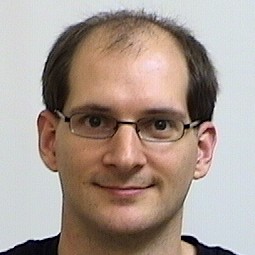
You might not know who Peter is because he s not very visible on Debian mailing lists. He s very active however and in particular on IRC. He was an admin of the OFTC IRC network at the time Debian switched from Freenode to OFTC. Nowadays he s a member of the Debian System Administration team who runs all the debian.org servers. If you went to a Debconf you probably met him since he s always looking for new signatures of his GPG key. He owns the best connected key in the PGP web of trust. He also wrote caff a popular GPG key signing tool. Raphael: Who are you? Peter: I m Peter Palfrader, also known as weasel. I m in my early 30s, born and raised in Innsbruck, Austria and am now living and working in Salzburg, Austria. In my copious free time, other than help running Debian s servers I also help maintaining the Tor project s infrastructure. Away from the computer I enjoy reading fiction (mostly English language Science Fiction and Fantasy), playing board games and going to the movies. Weather permitting, I also occasionally do some cycling. Raphael: How did you start contributing to Debian? Peter: I installed my first Debian the week slink came out. That was Debian 2.1 for the youngsters, in early 1999. The one thing I immediately liked about slink was that Debian s pppd supported RAS authentication which my university s dial-up system required. No way I d go back to SuSE 5.3 when I had working Internet with my Debian box. :) During that year I started getting involved in the German language Debian channel on IRCnet which got me in contact with some DDs. Christian Kurz (<shorty>) was working on Debian QA at the time and he asked my help in writing a couple of scripts. Some of that work, debcheck, still produces parts of the qa.d.o website, tho the relevance of that nowadays is probably negligible. While trying to learn more Perl earlier, I had written a program to produce syntax highlighted HTML for code snippets in various languages. I didn t really know what I was doing but it kinda worked, and probably still does since I still get mail from users every now and then. I figured that it would be really nice if people could just get my software together with Debian. According to code2html s Debian changelog the initial release of the package was done on a weekday at 2:30 in the morning early in 2000, and if my memory serves me correctly, shorty uploaded it shortly afterwards. I started packaging a couple of other piece of software and in the same year I sent my mail to the debian account managers to register my intent to become a DD. No new developers where being accepted at that time since the DAMs wanted to overhaul the entire process so I wasn t surprised to not get any immediate reply. Of course what the silence also meant was that the mail had been lost, but I only learned of that later when I took all my courage to ask DAM about the status of application a couple months later. Once that was sorted out I was assigned an AM, did the usual dance, and got my account late in November 2000. Raphael: Four years ago, the Debian System Administration team was a real bottleneck for the project and personal conflicts made it almost impossible to find solutions. You were eager to help and at some point you got dropped as a new member in that team. Can you share your story and how you managed the transition in the difficult climate at that time? Peter: Ah, that was quite the surprise for an awful lot of people, me included. Branden Robinson, who was our DPL for the 2005-2006 term, tried to get some new blood added to DSA who were at the time quite divided. He briefly talked to me on IRC some time in summer 2005, telling me I had come recommended for a role on the sysadmin team . In the course of these 15 minutes he outlined some of the issues he thought a new member of DSA would face and asked me if I thought I could help. My reply was cautiously positive, saying that I didn t want to step on anybody s toes but maybe I could be of some assistance. And that was the first and last of it, until some fine November day two years later I got an email from Phil Hands saying I ve just added you to the adm group, and added you to the debian-admin@d.o alias. and welcome on board . *blink* What!? My teammates at the time were James Troup (elmo), Phil Hands (fil), Martin Joey Schulze and Ryan Murray (neuro). The old team, while apparently not on good terms with one another, was however still around to do heavy lifting when required. I still remember when on my first or second day on the team two disks failed in the raid5 of ftp-master.debian.org aka ries. Neuro did the reinstall once new disks had arrived at Brown University. I m sure I d have been way out of my league had this job fallen to me. Fortunately my teammates were all willing and able to help me find whatever pieces of information existed that might help me learn how debian.org does its stuff. Unfortunately a lot of it only existed in various heads, or when lucky, in one of the huge mbox archives of the debian-admin alias or list. Anyway, soon I was able to get my hands dirty with upgrading from sarge to etch, which had been released about half a year earlier. Raphael: I know the DSA team has accomplished a lot over the last few years. Can you share some interesting figures? Peter: Indeed we have accomplished a lot. In my opinion the most important of these accomplishment is that we re actually once again a team nowadays. A team where people talk to one another and where nobody should be a SPoF. Since this year s debconf we are six people in the admin team: Tollef Fog Heen (Mithrandir) and Faidon Liambotis (paravoid) joined the existing members: Luca Filipozzi, Stephen Gran, Martin Zobel-Helas, and myself. Growing a core team, especially one where membership comes with uid0 on all machines, is not easy and that s why I m very glad we managed to actually do this step. I also think the infrastructure and our workflows have matured well over the last four years. We now have essential monitoring as a matter of course: Nagios not only checks whether all daemons that should be running are in fact running, but it also monitors hardware health of disks, fans, etc. where possible. We are alerted of outstanding security updates that need to be installed and of changes made to our systems that weren t then explicitly acked by one of us. We have set up a centralized configuration system, puppet, for some of our configuration that is the same, or at least similar, on all our machines. Most, if not all, pieces of software, scripts and helpers that we use on debian.org infrastructure is in publicly accessible git repositories. We have good communication with other teams in Debian that need our support, like the ftp folks or the buildd people. As for figures, I don t think there s anything spectacular. As of the time of our BoF at this year s DebConf, we take care of approximately 135 systems, about 100 of them being real iron, the other virtual machines (KVM). They are hosted at over 30 different locations, tho we are trying to cut down on that number, but that s a long and difficult process. We don t really collect a lot of other figures like web hits on www.debian.org or downloads from the ftp archive. The web team might do the former and the latter is pretty much impossible due to the distributed nature of our mirrors, as you well know. Raphael: The DSA team has a policy of eating its own dog food, i.e. you re trying to rely only on what s available in Debian. How does that work out and what are the remaining gaps? Peter: Mostly Debian, the OS, just meets our needs. Sure, the update frequency is a bit high, we probably wouldn t mind a longer release cycle. But on the other hand most software is recent enough. And when it s not, that s easy to fix with backports. If they aren t on backports.debian.org already, we ll just put them there (or ask somebody else to prepare a backport for us) and so everybody else benefits from that work too. Some things we need just don t, and probably won t, exist in Debian. These are mainly proprietary hardware health checks like HP s tools for their servers, or various vendors programs to query their raid controller. HP actually makes packages for their stuff which is very nice, but other things we just put into /usr/local, or if we really need it on a number of machines, package ourselves. The push to cripple our installers and kernels by removing firmware was quite annoying, since it made installing from the official media next to impossible in some cases. Support for working around these limitations has improved with squeeze so that s probably ok now. One of the other problems is that especially on embedded platforms most of the buildd work happens on some variation of development boards, usually due to increased memory and hard disk requirements than the intended market audience. This often implies that the kernel shipped with Debian won t be usable on our own debian.org machines. This makes keeping up with security and other kernel fixes way more error prone and time intensive. We keep annoying the right people in Debian to add kernel flavors that actually boot on our machines, and things are getting better, so maybe in the future this will no longer be a problem. Raphael: If you could spend all your time on Debian, what would you work on? Peter: One of the things that I think is a bit annoying for admins that maintain machines all over the globe is mirror selection. I shouldn t have to care where my packages come from, apt-get should just fetch them from a mirror, any mirror, that is close by, fast and recent. I don t need to know which one it was. We have deployed geodns for security.debian.org a while ago, and it seems to work quite well for the coarse granularity we desired for that setup, but geodns is an ugly hack (I think it is a layer violation), it might not scale to hundreds or thousands of mirrors, and it doesn t play well with DNSSEC. What I d really like to see is Debian support apt s mirror method that I think (and I apologize if I m wronging somebody) Michael Vogt implemented recently. The basic idea is that you simply add deb mirror://mirror.debian.org/ or something like that to your sources.list, and apt goes and asks that server for a list of mirrors it should use right now. The client code exists, but I don t know how well tested it is. What is missing is the server part. One that gives clients a mirror, or list of mirrors, that are close to them, current, and carry their architecture. It s probably not a huge amount of work, but at the same time it s also not entirely trivial. If I had more time on my hands this is something that I d try to do. Hopefully somebody will pick it up. Raphael: What motivates you to continue to contribute year after year? Peter: It s fun, mostly. Sure, there are things that need to be done regularly that are boring or become so after a while, but as a sysadmin you tend to do things once or twice and then seek to automate it. DSA s users, i.e. DDs, constantly want to play with new services or approaches to make Debian better and often they need our support or help in their endeavors. So that s a constant flow of interesting challenges. Another reason is that Debian is simply where some of my friends are. Working on Debian with them is interacting with friends. I not only use Debian at debian.org. I use it at work, I use it on my own machines, on the servers of the Tor project. When I was with OFTC Debian is what we put on our machines. Being a part of Debian is one way to ensure what Debian releases is actually usable to me, professionally and with other projects. Raphael: Is there someone in Debian that you admire for their contributions? Peter: That s a hard one. There are certainly people who I respect greatly for their technical or other contributions to Debian, but I don t want to single anybody out in particular. I think we all, everyone who ever contributed to Debian with code, support or a bug report, can be very proud of what we are producing one of the best operating systems out there.
Thank you to Peter for the time spent answering my questions. I hope you enjoyed reading his answers as I did. Subscribe to my newsletter to get my monthly summary of the Debian/Ubuntu news and to not miss further interviews. You can also follow along on Identi.ca, Twitter and Facebook.

No comment Liked this article? Click here. My blog is Flattr-enabled.

9 August 2011

Philipp Kern: DebConf11: Gobby documents

If you still want to grab documents that used to be on gobby.debian.net:

7 August 2011

Philipp Kern: Debian s390: channel numbers and consoles

Three things I learned about Debian s390 today:

28 July 2011

Tim Retout: DebConf 11

It feels good to be at DebConf again, this time in Banja Luka. This is my fifth consecutive DebConf. Getting here was fairly painful; a flight from Split was delayed, so I had to get a later bus than planned from Zagreb. Still, I met a bunch of DebConf attendees getting the same bus, so at least there was conversation. Packaging-wise, I have been working on adding KiokuDB (and associated backends) into Debian. I wrote a patch for libossp-uuid-perl yesterday to fix a bug with its Data::UUID compatibility; this probably means I'll drop the Data::UUID ITP. Having looked at the code, I don't see how it can be easily fixed for multi-user systems. The Perl team's forthcoming move to git has come as a pleasant surprise; I've been trying out the new workflow. Earlier in the week I went running with bubulle et. al. - I must have missed the bit in the email where the very steep hill was mentioned. And the rain. So I had to slow down and turn around, and probably didn't quite do 15km in the end. :) Beer is half the price of Coca-Cola here. Awesome. So generally, I've been decompressing, and introspecting. The cafes are good for philosophical discussions; preferably when it's not raining. More later.

Philipp Kern: caff harmful unless you know what you're doing

So there are two things I stumbled upon with caff:
Thanks to Tom Marble for the hint. I'm still sad that I'd basically need to re-do yesterday's keysigning (which was about 100 e-mails), just to switch from the default SHA1 to SHA256

21 July 2011

Rapha&#235;l Hertzog: People behind Debian: Martin Michlmayr, former Debian Project Leader

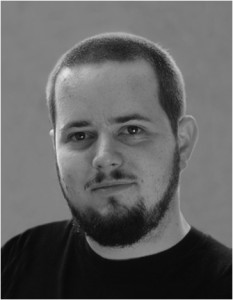
Martin Michlmayr is a Debian developer since 2000 and I share quite a few things with him, starting with his age and involvement in the quality assurance team. He managed to be elected Debian Project Leader in 2003 and 2004. He s no longer as active as he used to be but his input is always very valuable and he continues to do very interesting things in particular concerning the support of NAS devices. Read on for the details. Raphael: Who are you? Martin: I m Martin Michlmayr. I m 32, originally from Austria, and currently living in the UK. I ve contributed to various free software projects over the years but Debian is without doubt the one I m most passionate about. I joined Debian in 2000 when I was a student. I worked on Debian more or less full time for a few years while I was pretending to study. Later I started a PhD to do research about quality and management aspects of volunteer free software projects. I investigated the release process in several free software projects, in particular looking at time-based releases. After finishing my PhD in 2007, I joined Hewlett-Packard. I m part of HP s Open Source Program Office and work on various free software and open source activities, both internally and within the community. Raphael: How did you start contributing to Debian? Martin: I first used Debian in the days of 0.93R6, some time around the end of 1995. The 0.93R6 release was still based on a.out but I needed an ELF-based system for some application, so I moved to Slackware. I then quickly moved to Red Hat Linux where I stayed for several years. I rediscovered Debian in 2000 and quickly decided to join the project. I cannot recall how I rediscovered Debian but when I did, it was clear to me that Debian was the ideal project for me: I could identify with its philosophy, I liked the volunteer nature of the project, and I found the size and diversity of Debian interesting since a large project offers a lot of different challenges and opportunities. I remember how many new things there were to learn and back then the documentation and other resources for new contributors were nowhere as good as they are today. My application manager, Julian Gilbey, was a great help he was incredibly friendly and passionate about Debian. I also remember meeting up with Peter Palfrader (weasel) for key signing when we were both in the New Maintainer queue. I was incredibly lucky with my New Maintainer process and soon became an official Debian Developer. Because there was a shortage of application managers, my first major contribution in Debian was to become an application manager myself and help other people join the project. Debian is a large project with a long history and a rich culture, so new contributors should expect that it will take some time to become familiar with everything. Fortunately, there are many resources, such as documentation and the debian-mentors list, for new contributors. Another great way to become familiar with the way things are done in Debian is to subscribe to various Debian mailing lists and ideally to read some mailing list archives. It s also a great idea to attend the Debian Conference or other conferences since meeting people in real life is a great way to integrate. I remember attending Debian Conference 1 in Bordeaux where I gave my first public talk. Finally, new contributors should find an area where they can make a unique contribution. Most people in Debian maintain packages but there are so many other ways to contribute. For example, most of my contributions were not technical but were about coordination and other organizational activities. Raphael: What s your biggest achievement within Debian? Martin: I m particularly proud of a number of achievements: Raphael: Speaking about NAS devices: what exactly are you doing on this topic and how can people help? Martin: There are plenty of instructions on the Internet to install Linux distributions on NAS or various embedded devices by connecting a serial console and then typing in hundreds of commands. What I found is that such instructions significantly limit the user base because they are way too complicated for most users. There are just too many steps that can go wrong. So instead, in Debian, we provide a solution that just works: usually, you download a firmware image for your NAS device from Debian and when you upgrade you get the Debian installer. You connect to the installer via SSH and perform a normal installation. The installer knows about the device and will prepare everything for you automatically for example, it knows if the device has requirements for the partition layout and it will install the kernel where the device expects to find it; unfortunately, NAS devices are not like PCs, so the requirements are different for almost every device and therefore you need special code to support a new device. Finally, there are detailed installation guides and we provide help on our mailing lists. There are a number of technical areas for improvement. The installation could be made even easier, and it would be nice to support new platforms and devices. A bigger problem is that while we ve implemented a great solution for NAS devices, we haven t really extended this work to support other classes of devices. For example, tablets and mobile phones are getting incredibly popular and we don t have a compelling solution for such devices, mostly because of the lack of an appropriate GUI. Raphael: What are your plans for Debian Wheezy? Martin: I ve recently been asked by Stefano Zacchiroli, our current Debian Project Leader, to coordinate the care-taking of Debian finances. Debian, as a volunteer project, relies on donations and in-kind gifts (e.g. hardware) to maintain its infrastructure and to support various development efforts, such as funding sprints and other developer gatherings. Debian s money and other assets are held by affiliate organizations around the world. My responsibility will be to keep track of money and other assets (e.g. hardware and trademarks), work with the DPL to establish procedures related to the use of Debian s assets, and make sure that the procedures are followed. Finally, we want to publish public statements so our donors know how we use their donations to further improve Debian. I just started working on this and this will be my main activity in Debian in the coming months. Raphael: Speaking of money, I plan to run a fundraising to get the Debian book I wrote with Roland Mas translated (cf. http://debian-handbook.info). Is this something Debian should support? Martin: First of all, I should make it clear that I don t decide how Debian spends its money. This is up to the DPL to decide together with the project at a whole. I ll just make sure that procedures are followed and expenses tracked and reported properly. Having said that, in my opinion, it s unlikely that Debian as a project will fund this effort. It would be inconsistent with the position of the project not to fund work directly (only some related expenses, such as travel costs to allow Debian teams to organize face-to-face meetings). Whether Debian should support the fundraising effort by helping to promote it is another question and that s probably not as clear cut. It looks like a worthwhile effort, but on the other hand it would be unfair for authors of other Debian books for Debian to put its weight behind one and there are many other efforts that are worth promoting if you promote one, where do you stop? So while it sounds worthwhile, it s probably better for Debian to stay out of it. But somehow related to this, I sometimes worry about the fact that there are so few paid opportunities around Debian. If you contribute to the Linux kernel for a while, you have an excellent chance to get hired by someone and to work on the kernel full time. The kernel may be an extreme example but there are a lot of projects that have more paid opportunities than Debian, e.g. Mono, GNOME, OpenOffice/LibreOffice and KDE. Obviously, there are some Debian Developers who can spend some time on Debian as part of their job. I know that some Canonical employees contribute to Debian, that support companies like credativ improve Debian as part of their work, and that system administrators fix bugs or package new software as they deploy Debian. But I think this is a minority of contributors and even they don t work full time on Debian. Instead what I see is that a lot of people leave university, get a job and then no longer have time for Debian or people start a family and no longer have time. I can take myself as an example since I don t have nearly as much time as I did in the past when I was a student. I guess there are different ways to deal with this problem one would be to create more paid opportunities around Debian outside the project, another one might be to make it easier for new volunteers to join the project. I don t have the answers to these questions but it s something I wonder about, and I also wonder whether pure volunteer projects can still keep up with projects with a lot of full time contributors. Raphael: What motivates you to continue to contribute year after year? Martin: Debian is a great project with a great mission, goals and people. I contribute to make Debian a better solution and to promote the free software philosophy. Finally, the community around Debian provides a lot of motivation. It s amazing how much I ve learned about other cultures because of my involvement in Debian and how many friends I ve made over the years all around the world. Raphael: Do you have wishes for Debian Wheezy? Martin: Not really. I m pretty happy with the way things are going at the moment. We have made a lot of organizational changes in the last few years from which the project has greatly benefited. I m particularly pleased about the plans to adopt a time-based freeze. Raphael: Is there someone in Debian that you admire for their contributions? Martin: There are many people I admire greatly. I d like to mention Joey Hess because he s a great example to follow. He doesn t get involved in politics, is easy to work with and does great technical work. In fact, he has made not one but several contributions that have completely changed Debian (debconf, debhelper, and debian-installer). Furthermore, Debian has a lot of contributors who have done great work over the years but who are not very vocal about it. People like Colin Watson or Peter Palfrader. Debian has many unique contributors and the list of people I admire is much longer than the few people I just mentioned.
Thank you to Martin for the time spent answering my questions. I hope you enjoyed reading his answers as I did. He raised some interesting questions. Subscribe to my newsletter to get my monthly summary of the Debian/Ubuntu news and to not miss further interviews. You can also follow along on Identi.ca, Twitter and Facebook.

No comment Liked this article? Click here. My blog is Flattr-enabled.

15 July 2011

Jon Dowland: puppet revisited

In an earlier post, I asked a number of questions, most of which are now answered. Here's a recap: I wrote
I stumbled across some CF Engine-style definitions for puppet in a Debian Administration article (taken originally from puppet's own wiki, which have since been moved/deleted)
Perhaps it was removed with good reason This is a fairly horrid solution to the problem. Phil was the first to suggest investigating Augeas, a neat tool that abstracts away the nasty specifics of parsing the myriad configuration file formats and provides a unified, tree-like interface for adjusting configurations. The interface reminds me of manipulating XML via the DOM. More on Augeas in a later blog post I also wrote
package [foo,bar]: syntax worked fine, but is a little verbose and the package list is awkward to maintain buried inside the puppet syntax. I spent some time trying to see whether I could populate a puppet list based on the contents of a file: then I could list the packages one-per-line in a separate file. I haven't found a way of doing that yet.
I haven't found a more concise way of solving this problem, but as I have grown more familiar with puppet's syntax I have become less bothered by it. I igo suggested pre-processing the puppet configuration, but I'd rather not complicate my provisioning approach (VCS hooks) by attempting that. Finally I wrote
Using my laptop as a second node also exposed some interesting puppet client behaviour. Once I went off-site, the laptop tried to look up puppet on foreign networks (such as my home network). I would have assumed that, once the strong SSL association had been made, the client would try to connect to the FQDN of the server. This probably isn't a serious problem in practice, as we probably won't need to rely on nodes off-site talking to the configuration server, but I hope that the client doesn't trust any host that happens to answer to puppet...
I'm pleased to report that the client is at least this clever: it refused to talk to a local puppetmaster that I setup at home.

14 July 2011

Matthew Palmer: More Nginx SSL Performance Tips

Well, actually, just one, and it s not even mine. Matt Stancliff benchmarked a few different methods of SSL termination and found that nginx sucked rocks relative to the other options. However, it turns out the comparison wasn t as balanced as he originally thought, and discovered that the SSL ciphers you use are quite important. As an aside, I like Matt s benchmark everything philosophy.

11 July 2011

Vincent Bernat: Rewriting my .zshrc

Ten years ago, I started to use ZSH, a shell designed for interactive use but which is also powerful for scripting usage. I had a fairly comprehensive .zshrc file splitted in several parts. I have decided to rewrite it for several reasons:
  1. I did not take advantage of several features of ZSH, like some advanced parameter expansion, arrays, arithmetic expressions and other built-in features. There were a lot of head, awk, sed that could be replaced by some ZSH machinery (something easier to read like $ $ (f)~~"$(</etc/hosts)" %%\#* ).
  2. It contained a lot of hacks to make things work on some odd/old setups. I was not really sure that those hacks are useful anymore. It also contained a lot of conditionals where some parts of the code were executed depending on the hostname.
I have discovered oh-my-zsh, a nice project trying to provide a generic and flexible ZSH configuration:
A community-driven framework for managing your zsh configuration. Includes 40+ optional plugins (rails, git, OSX, hub, capistrano, brew, ant, macports, etc), over 80 terminal themes to spice up your morning, and an auto-update tool so that makes it easy to keep up with the latest updates from the community.
The idea of such a project is to fork it and make the changes that you need. I was previously hacking around Phil! s ZSH Prompt for my prompt. oh-my-zsh contains a close theme (jonathan). Neat. However, I decided to write my .zshrc from scratch (but with some snippets stolen from oh-my-zsh). Why? Mostly because I want to precisely configure ZSH. Even with its plugin architecture and its override mechanism, oh-my-zsh provides some features (options, aliases, functions) that I do not want. Of course, thanks to git, you can fork and make any local changes you want but since I would have modified most of the files, it seemed easier to just start from scratch. I have published the result on GitHub. You can use it as is, fork it or (better) steal and adapt some snippets for your own usage. Here is the mandatory screenshot for the prompt (no much space left for the commands): My ZSH prompt Here is a short snippet used to select a sensible EDITOR depending on what is available. It uses anonymous functions (to restrict the scope of local variables), arrays and flags in parameter expansion. For another example, take a look on how I select a valid locale.
()  
    local -a editors
    local editor
    editors=(
        "emacs23 -Q -D -nw" # Fast emacs
        "jove" "mg" "jed"   # Emacs clone
        "vim" "vi"          # vi
        "editor")           # fallback
    for editor in $editors; do
        (( $+commands[$editor[(w)1]] )) &&  
            export EDITOR=$editor
            break
         
    done
 
Enjoy! UPDATED: Anonymous functions were introduced in ZSH 4.3.7. Older versions do not support them. A workaround is to use a classic function instead:
__()  
    local -a editors
    local editor
    ...
  && __

3 July 2011

Asheesh Laroia: How I feel about Google+ (not thrilled)

Image credit: Lake Shimmer by (nc-sa) cobalt123. The beautiful photo above is what reflections should look like. If you don't like Google's shimmering +1 buttons, try the convenient AdBlock filter Tom Morris wrote. I also block this image.

I have been reading a lot about Google+. I'm sure a lot of people put a lot of hard work into it. Lots of people seem to enjoy using it and appreciate its features. For my part, right now, when I see Google+ mentioned, the smile vanishes from my face. I just have a few thoughts. It's anti-competitive. If you could ask Google, "How much for a shimmering +1 button next to every search result?" you would be laughed out of the room. But they managed to offer themselves that unique marketing opportunity. I know that (1) most regulators who see this anti-competitive behavior won't see it as an anti-trust violation, and (2) the damage is already done, and no retribution in the future can act fast enough to fix the unfair advantage Google gave itself in the Internet-mediated personal communication (and ad sales) markets. The shimmering is distracting, making my online search experience worse. I know that Google is holding nothing back; they are willing to distract me from my intended use of Google in order to branch out their business. (If you haven't seen the shimmering +1 button, it's next to every web search result, and if you mouse over any part of the result, it does a wavy dance.) The most-touted feature is a clone of Diaspora. This by itself is fine; software should help users by having the best features imaginable. But the enthusiasm I've seen within the free software community (like when I read about Google+ on Slashdot and Planet Debian) should at least recognize that Google "circles" are a clone of Diaspora's Aspects. Centralization on the web feels like a personal attack. Corporations on the web are like unstoppable machines rolling us toward a future of corporate eavesdropping, central points of failure, and end-users sold en masse to advertisers. It enables a future of individual "platform owners" who can change the lived experience of untold hundreds of millions with tweaks that benefit their actual customers (the advertisers). There's not much I can do about that. I happen to take this personally: I am part of a small culture of people who run their own mail and web servers and understand the importance of software freedom. This is a part of my identity. I watch as its traces online vanish, replaced by something more efficient and terrifying. It makes me sad. I'm probably going to end up using it despite all these pain points. That's how I know that I am being steamrolled. The reasons I have given above are not reasons to not use Google+. They're just reasons that I'm going to frown all the way to the address bar. In weeks to months to years, the service will grow an enthusiastic userbase. At that point, personally, I'll have to make a choice between connecting with those people on their terms, or not staying in touch with them. Already, professionally, the idea has already come up on #openhatch that Google+ could help us reach people willing to contribute to open source. Are my gripes worth holding OpenHatch back, or worth isolating myself over? Probably not.


Rog rio Brito: Installing Meego on the N900

My last cellphone was a dumb phone. I seem to remember that it was called something like Samsung Voicer. It didn't have those hip things like SIM cards. OK. Fast forward to December of 2010, and after a long hiatus, I decided to get a new phone. It was this shiny Nokia N900. The biggest thing that made me want this one was that some people at DebConf 10 were praising it for having a Debian-like distribution in it, and that it worked very well. I saw that Phil Hands was enthusiastically talking about the bargain of getting one in New York and that it would have cost him many pounds in the UK and, so, he was happy with it. Ot vio Salvador also got one in NY and during one of the nights of that DebConf with him, Tiago Vaz, Daniel Baumann, and Chris Lamb, I asked him to call my parents here in Brazil and he let me use his N900. I had more time with it and played a little bit with the command line, opened the stock media player and played a beautiful trailer of 9 (2009 film), leaving me a very good impression. I bought one, and, indeed, it is a very good machine that can even make phone calls. The ability to run Linux on it (even if it contains some non-free pieces of software) was decisive in me getting it. It runs this distribution called Maemo 5 which is loosely based on Debian. But now, Maemo is not the "cool thing" to run, regarding Linux on these portable devices. Meego is. But with the advent of many Internet forums has brought many people writing some long, convoluted howto documents for things that would be better done as, say, providing a script or, better yet, preparing a package. In the case of getting Meego running on the N900, only three things are required:
  1. Install uboot-pr13 while in Maemo.
  2. Uncompress the MeeGo 1.2 Community Edition for Nokia N900 image to a SD card.
  3. Turn the phone off, plug in the SD card, and PUT THE BACK COVER on the phone.
The last bit of the third step is crucial, as, otherwise, the SD card won't be detected and you will get kernel panics with the device trying to mount the root filesystem from a device that is not there. As an aside, the official documentation tells us one should uncompress the available pre-made images and write them with dd to the device. In my experience, it is completely unnecessary to use it and, in fact, it is so 6 times slower than using a simple shell redirection. That is, instead of:
bzip2 -d < mg-handset-armv7nhl-n900-whateverwhatever-mmcblk0p.raw.bz2   dd bs=4096 of=/dev/mmcblk0
you can get better results with the simpler:
bzip2 -d < mg-handset-armv7nhl-n900-whateverwhatever-mmcblk0p.raw.bz2 > /dev/mmcblk0
I actually used lbzip2 instead of bzip2, but that shouldn't matter. The use of the small block size for the dd command is probably the culprit, but I don't see the need to write the uncompressed data in chunks this small. If there is a problem, I would love to be informed of that. As trying it with uboot and a SD card doesn't mess with your "safe" Maemo installation, this is a good way to play with the successor of Maemo. Perhaps, if we give good feedback to the project, we can influence the direction that it is taking. It will surely be nice to learn about this new "consumer-oriented" distribution.

27 June 2011

Philipp Kern: YouTube serving its content over IPv6

In the aftermath of the World IPv6 Day YouTube seems to be serving its content over IPv6 now. Interestingly the frontpage is still served via IPv4 (if you're not in a Google IPv6 whitelisted network). But all the Flash and HTML5 video content is served through IPv6 if available, as the cache servers return proper AAAA DNS records. Apparently that's the case unless your network is blacklisted because of bad IPv6 support and even if Google has some caches at your provider's site (which is the case for Alice DSL in Germany, at least).

I think that's quite some motivation for the providers to at least fix IPv6 connectivity if available and to suppress rogue IPv6 router advertisements in their networks. I had to ensure the former today and the latter is a constant source of grief with the bulk of L2 switches and Wi-Fi access points not being IPv6 ready.

25 June 2011

Philipp Kern: Porting a library to gtk3: change soname

Last week I tried switching a library to Gtk3. The needed changes to the code are available through --with-gtk3. However this is generally not enough. Even if your symbol list doesn't change, the ABI changes implicitly. The library in question had a .symbols file, but that's not enough because the resulting GUI application will bail out at runtime if symbols of both Gtk2 and Gtk3 are found in the same address space. That's mostly because C symbols don't contain any signatures with return types and parameters.

So if your library upstream did not change the soname for the Gtk3 build, please encourage them to do so. Also keep in mind that this most likely means new pkg-config files specific to the Gtk3 build, too. At least if you want your reverse-depends to be able to build against either Gtk2 or Gtk3 in a predictable way.

An example is this change to gtk-vnc, which uses gtk-vnc-2.0 as the new API/pkg-config name for the Gtk3 build, gtk-vnc-1.0 remains the old Gtk2 one. The soname changes from libgtk-vnc-1.0.so.0 to libgtk-vnc-2.0.so.0.

(Thanks to Michael Biebl and Julien Cristau for pointing out the obvious to me.)

23 June 2011

Philipp Kern: I'm going to DebConf 11

I finally got around to book my (train) trip back from Zagreb. The hotline of Deutsche Bahn was interesting. The booking system crashed and I was called back. But in the end it worked and I can print it the next time I get near a vending machine.

I'm worried how I manage to get there from Banja Luka on my own. And the travel to Zagreb together with Joachim Breitner won't be as comfortable as it should be. But meh, I'm going to DebConf again! \o/

19 June 2011

Philipp Kern: Call for testing: Upcoming Squeeze point release 6.0.2

I just posted a call for testing to the not yet well-known debian-stable-announce mailing list. Please test the packages in squeeze-proposed-updates on some stable machines if possible, so that we don't screw up your production machines with bad updates in a week. The point release is scheduled for June 25th, i.e. next Saturday. Don't forget to copy the debian-release mailing list when you encounter regressions. Thanks for your efforts.

Alastair McKinstry: So are we headed for a permanent El Ni o <80><93>?

Maps and Coastlines in Debian #tags enso,climate,paleooceanography #postdate 2011-06-19 18:00 #ignore yes Thanks to Brian Lawrence for a pointer to an interesting review by George Philander: Where are you from? Why are you here? An African perspective on global warming. in the Annual Review of Earth and Planetary Sciences. Scroxton et al. at Oxford, in the latest edition of Paleooceanography published < href="http://www.agu.org/pubs/crossref/2011/2010PA002097.shtm"> Persistent El Ni o Southern Oscillation variation during the Pliocene Epoch Scroxton et al. study fossil foraminera, plankton remains from the mid-Pliacezian warm period (3.26 - 3.03 million years ago). By studying isotope ratios in the carbonate skeletons of these plankton, they can reconstruct the surface water temperatures in the Eastern Pacific, where the El Nino is today. They discover conditions similar to today, with El Nino-like events.

Alastair McKinstry: So are we headed for a permanent El Ni nino?

Maps and Coastlines in Debian #tags enso,climate,paleooceanography #postdate 2011-06-19 18:00 #ignore yes Thanks to Brian Lawrence for a pointer to an interesting review by George Philander: Where are you from? Why are you here? An African perspective on global warming. in the Annual Review of Earth and Planetary Sciences. Scroxton et al. at Oxford PALEOCEANOGRAPHY http://www.agu.org/pubs/crossref/2011/2010PA002097.shtml Persistent El Ni o Southern Oscillation variation during the Pliocene Epoch mid-Piacenzian Warm Period (mPWP) (3.26 3.03 Ma)

15 June 2011

Christian Perrier: So, what happened with Kikithon?

I mentioned this briefly yesterday, but now I'll try to summarize the story of a great surprise and a big moment for me. All this started when my wife Elizabeth and my son Jean-Baptiste wanted to do something special for my 50th birthday. So, it indeed all started months ago, probably early March or something (I don't yet have all the details). Jean-Baptiste described this well on the web site, so I won't go again into details, but basically, this was about getting birthday wishes from my "free software family" in, as you might guess, as many languages as possible. Elizabeth brought the original idea and JB helped her by setting up the website and collecting e-mail addresses of people I usually work with: he grabbed addresses from PO files on Debian website, plus some in his own set of GPG signatures and here we go. And then he started poking dozens of you folks in order to get your wishes for this birthday. Gradually, contributions accumulated on the website, with many challenges for them: be sure to get as many people as possible, poking and re-poking all those FLOSS people who keep forgetting things... It seems that poking people is something that's probably in the Perrier's genes! And they were doing all this without me noticing. As usually in Debian, releasing on time is a no-no. So, it quickly turned out that having everything ready by April 2nd wouldn't be possible. So, their new goal was offering this to me on Pentecost Sunday, which was yesterday. And...here comes the gift. Aha, this looks like a photo album. Could it be a "50 years of Christian" album? But, EH, why is that pic of me, with the red Debconf5 tee-shirt (that features a world map) and a "bubulle" sign, in front of the book? But, EH EH EH, what the .... are doing these word by H0lger, then Fil, then Joey doing on the following pages? And only then, OMG, I discover the real gift they prepared. 106, often bilingual, wishes from 110 people (some were couples!). 18 postcards (one made of wood). 45 languages. One postcard with wishes from nearly every distro representatives at LinuxTag 2011. Dozens of photos from my friends all around the world. All this in a wonderful album. I can't tell what I said. Anyway, JB was shooting a video, so...we'll see. OK, I didn't cry...but it wasn't that far and emotion was really really intense. Guys, ladies, gentlemen, friends....it took me a while to realize what you contributed to. It took me the entire afternoon to realize the investment put by Elizabeth and JB (and JB's sisters support) into this. Yes, as many of you wrote, I have an awesome family and they really know how to share their love. I also have an awesome virtual family all around the world. Your words are wholeheartedly appreciated and some were indeed much much much appreciated. Of course, I'll have the book in Banja Luka so that you can see the result. I know (because JB and Elizabeth told me) that many of you were really awaiting to see how it would be received (yes, that includes you, in Germany, who I visited in early May!!!). Again, thank you so much for this incredible gift. Thank you Holger Levsen, Phil Hands, Joey Hess, Lior Kaplan, Martin Michlmayr, Alberto Gonzalez Iniesta, Kenshi "best friend" Muto, Praveen Arimbrathodiyil, Felipe Augusto van de Wiel, Ana Carolina Comandulli (5 postcards!), Stefano Zacchiroli (1st contribution received by JB, of course), Gunnar Wolf, Enriiiiiico Zini, Clytie Siddall, Frans Pop (by way of Clytie), Tenzin Dendup, Otavio Salvador, Neil McGovern, Konstantinos Margaritis, Luk Claes, Jonas Smedegaard, Pema Geyleg, Meike "sp tzle queen" Reichle, Alexander Reichle-Schmehl, Torsten Werner, "nette BSD" folks, CentOS Ralph and Brian, Fedora people, SUSE's Jan, Ubuntu's Lucia Tamara, Skolelinux' Paul, Rapha l Hertzog, Lars Wirzenius, Andrew McMillan (revenge in September!), Yasa Giridhar Appaji Nag (now I know my name in Telugu), Amaya Rodrigo, St phane Glondu, Martin Krafft, Jon "maddog" Hall (and God save the queen), Eddy Petri or, Daniel Nylander, Aiet Kolkhi, Andreas "die Katze geht in die K che, wunderbar" Tille, Paul "lets bend the elbow" Wise, Jordi "half-marathon in Banja Luka" Mallach, Steve "as ever-young as I am" Langasek, Obey Arthur Liu, YAMANE Hideki, Jaldhar H. Vyas, Vikram Vincent, Margarita "Bronx cross-country queen" Manterola, Patty Langasek, Aigars Mahinovs (finding a pic *with* you on it is tricky!), Thepittak Karoonboonyanan, Javier "nobody expects the Spanish inquisition" Fern ndez-Sanguino, Varun Hiremath, Moray Allan, David Moreno Garza, Ralf "marathon-man" Treinen, Arief S Fitrianto, Penny Leach, Adam D. Barrat, Wolfgang Martin Borgert, Christine "the mentee overtakes the mentor" Spang, Arjuna Rao Chevala, Gerfried "my best contradictor" Fuchs, Stefano Canepa, Samuel Thibault, Eloy "first samba maintainer" Par s, Josip Rodin, Daniel Kahn Gillmor, Steve McIntyre, Guntupalli Karunakar, Jano Gulja , Karolina Kali , Ben Hutchings, Matej Kova i , Khoem Sokhem, Lisandro "I have the longest name in this list" Dami n Nicanor P rez-Meyer, Amanpreet Singh Alam, H ctor Or n, Hans Nordhaugn, Ivan Mas r, Dr. Tirumurti Vasudevan, John "yes, Kansas is as flat as you can imagine" Goerzen, Jean-Baptiste "Piwet" Perrier, Elizabeth "I love you" Perrier, Peter Eisentraut, Jesus "enemy by nature" Climent, Peter Palfrader, Vasudev Kamath, Miroslav "Chicky" Ku e, Mart n Ferrari, Ollivier Robert, Jure uhalev, Yunqiang Su, Jonathan McDowell, Sampada Nakhare, Nayan Nakhare, Dirk "rendez-vous for Chicago marathon" Eddelbuettel, Elian Myftiu, Tim Retout, Giuseppe Sacco, Changwoo Ryu, Pedro Ribeoro, Miguel "oh no, not him again" Figueiredo, Ana Guerrero, Aur lien Jarno, Kumar Appaiah, Arangel Angov, Faidon Liambotis, Mehdi Dogguy, Andrew Lee, Russ Allbery, Bj rn Steensrud, Mathieu Parent, Davide Viti, Steinar H. Gunderson, Kurt Gramlich, Vanja Cvelbar, Adam Conrad, Armi Be irovi , Nattie Mayer-Hutchings, Joerg "dis shuld be REJECTed" Jaspert and Luca Capello. Let's say it gain:

14 June 2011

Philipp Kern: About versions

So Christian likes to give out awards for the best bug reporting estimates and also does statistics about developers per capita. I've got at least one area where he's on top:

The award for the introduction of the highest version into the archive goes to Nicolas Spalinger and Christian Perrier for ttf-sil-gentium. The use of a date as an epoch is amazing. The runner-up is Joey Hess with intercal (soon to be gone from Debian altogether), reusing the version number in the epoch. Somehow that fits with the crazy language the package contains.

The award for the most minimal version goes to Guido G nther with libvirt-glib. It's a number less than zero but still not negative. The runner-up is Raphael Geissert with switchsh which just happens to use 2007 as a checkout date.

13 June 2011

Christian Perrier: So, what happened with Kikithon?

I mentioned this briefly yesterday, but now I'll try to summarize the story of a great surprise and a big moment for me. All this started when my wife Elizabeth and my son Jean-Baptiste wanted to do something special for my 50th birthday. So, it indeed all started months ago, probably early March or something (I don't yet have all the details). Jean-Baptiste described this well on the web site, so I won't go again into details, but basically, this was about getting birthday wishes from my "free software family" in, as you might guess, as many languages as possible. Elizabeth brought the original idea and JB helped her by setting up the website and collecting e-mail addresses of people I usually work with: he grabbed addresses from PO files on Debian website, plus some in his own set of GPG signatures and here we go. And then he started poking dozens of you folks in order to get your wishes for this birthday. Gradually, contributions accumulated on the website, with many challenges for them: be sure to get as many people as possible, poking and re-poking all those FLOSS people who keep forgetting things... It seems that poking people is something that's probably in the Perrier's genes! And they were doing all this without me noticing. As usually in Debian, releasing on time is a no-no. So, it quickly turned out that having everything ready by April 2nd wouldn't be possible. So, their new goal was offering this to me on Pentecost Sunday, which was yesterday. And...here comes the gift. Aha, this looks like a photo album. Could it be a "50 years of Christian" album? But, EH, why is that pic of me, with the red Debconf5 tee-shirt (that features a world map) and a "bubulle" sign, in front of the book? But, EH EH EH, what the .... are doing these word by H0lger, then Fil, then Joey doing on the following pages? And only then, OMG, I discover the real gift they prepared. 106, often bilingual, wishes from 110 people (some were couples!). 18 postcards (one made of wood). 45 languages. One postcard with wishes from nearly every distro representatives at LinuxTag 2011. Dozens of photos from my friends all around the world. All this in a wonderful album. I can't tell what I said. Anyway, JB was shooting a video, so...we'll see. OK, I didn't cry...but it wasn't that far and emotion was really really intense. Guys, ladies, gentlemen, friends....it took me a while to realize what you contributed to. It took me the entire afternoon to realize the investment put by Elizabeth and JB (and JB's sisters support) into this. Yes, as many of you wrote, I have an awesome family and they really know how to share their love. I also have an awesome virtual family all around the world. Your words are wholeheartedly appreciated and some were indeed much much much appreciated. Of course, I'll have the book in Banja Luka so that you can see the result. I know (because JB and Elizabeth told me) that many of you were really awaiting to see how it would be received (yes, that includes you, in Germany, who I visited in early May!!!). Again, thank you so much for this incredible gift. Thank you Holger Levsen, Phil Hands, Joey Hess, Lior Kaplan, Martin Michlmayr, Alberto Gonzalez Iniesta, Kenshi "best friend" Muto, Praveen Arimbrathodiyil, Felipe Augusto van de Wiel, Ana Carolina Comandulli (5 postcards!), Stefano Zacchiroli (1st contribution received by JB, of course), Gunnar Wolf, Enriiiiiico Zini, Clytie Siddall, Frans Pop (by way of Clytie), Tenzin Dendup, Otavio Salvador, Neil McGovern, Konstantinos Margaritis, Luk Claes, Jonas Smedegaard, Pema Geyleg, Meike "sp tzle queen" Reichle, Alexander Reichle-Schmehl, Torsten Werner, "nette BSD" folks, CentOS Ralph and Brian, Fedora people, SUSE's Jan, Ubuntu's Lucia Tamara, Skolelinux' Paul, Rapha l Hertzog, Lars Wirzenius, Andrew McMillan (revenge in September!), Yasa Giridhar Appaji Nag (now I know my name in Telugu), Amaya Rodrigo, St phane Glondu, Martin Krafft, Jon "maddog" Hall (and God save the queen), Eddy Petri or, Daniel Nylander, Aiet Kolkhi, Andreas "die Katze geht in die K che, wunderbar" Tille, Paul "lets bend the elbow" Wise, Jordi "half-marathon in Banja Luka" Mallach, Steve "as ever-young as I am" Langasek, Obey Arthur Liu, YAMANE Hideki, Jaldhar H. Vyas, Vikram Vincent, Margarita "Bronx cross-country queen" Manterola, Patty Langasek, Aigars Mahinovs (finding a pic *with* you on it is tricky!), Thepittak Karoonboonyanan, Javier "nobody expects the Spanish inquisition" Fern ndez-Sanguino, Varun Hiremath, Moray Allan, David Moreno Garza, Ralf "marathon-man" Treinen, Arief S Fitrianto, Penny Leach, Adam D. Barrat, Wolfgang Martin Borgert, Christine "the mentee overtakes the mentor" Spang, Arjuna Rao Chevala, Gerfried "my best contradictor" Fuchs, Stefano Canepa, Samuel Thibault, Eloy "first samba maintainer" Par s, Josip Rodin, Daniel Kahn Gillmor, Steve McIntyre, Guntupalli Karunakar, Jano Gulja , Karolina Kali , Ben Hutchings, Matej Kova i , Khoem Sokhem, Lisandro "I have the longest name in this list" Dami n Nicanor P rez-Meyer, Amanpreet Singh Alam, H ctor Or n, Hans Nordhaugn, Ivan Mas r, Dr. Tirumurti Vasudevan, John "yes, Kansas is as flat as you can imagine" Goerzen, Jean-Baptiste "Piwet" Perrier, Elizabeth "I love you" Perrier, Peter Eisentraut, Jesus "enemy by nature" Climent, Peter Palfrader, Vasudev Kamath, Miroslav "Chicky" Ku e, Mart n Ferrari, Ollivier Robert, Jure uhalev, Yunqiang Su, Jonathan McDowell, Sampada Nakhare, Nayan Nakhare, Dirk "rendez-vous for Chicago marathon" Eddelbuettel, Elian Myftiu, Tim Retout, Giuseppe Sacco, Changwoo Ryu, Pedro Ribeoro, Miguel "oh no, not him again" Figueiredo, Ana Guerrero, Aur lien Jarno, Kumar Appaiah, Arangel Angov, Faidon Liambotis, Mehdi Dogguy, Andrew Lee, Russ Allbery, Bj rn Steensrud, Mathieu Parent, Davide Viti, Steinar H. Gunderson, Kurt Gramlich, Vanja Cvelbar, Adam Conrad, Armi Be irovi , Nattie Mayer-Hutchings, Joerg "dis shuld be REJECTed" Jaspert and Luca Capello. Let's say it gain:

Next.

Previous.