Russell Coker: Galaxy S vs Xperia X10 and Android Network Access
Galaxy S Review
I ve just been given an indefinite loan of a Samsung Galaxy S which is more useful than the Sony Ericsson Xperia X10 that I own.
I think that the main benefit is that it runs Android 2.2 instead of Android 2.1 on the Xperia. 2.2 is what gives it USB tethering support without extra software (something I haven t tested yet but will use a lot if it works correctly) and Wifi AP support. Both phones are about the same size, the Galaxy S has slightly more RAM (reported as 304M vs 280M which doesn t really matter) and a lot more main storage (1.87G vs 465M usable after the OS is loaded).
The main down-sides of the Galaxy S is that it lacks a flash . I m not aware of any phone camera having a proper flash, but the limited LED flash is useful for taking pictures at times and there are a variety of programs that can turn it on for use as a torch.
Also I wonder whether the Samsung people actually test their phones in real use or whether they just build them to spec. When you read the specs it sounds nice to have a phone that s only 9.9mm thick (apart from the bulge at the bottom), but that makes it really difficult to hold. The Xperia X10 is 13mm thick and isn t as slick so you are much less likely to drop it. I sometimes wonder whether phone companies are designing their products to be broken so that they can sell replacements.
Three Networking Sucks
My parents use 3G broadband from Three as their only connection to the Internet, this is fast enough for viewing Youtube on occasion and generally works well for them. However whenever I try to transfer any data to their system which has integrity checks it turns out to be corrupted. About every megabyte of data transferred has a corrupt packet that has a matching checksum presumably it s a bug in Three s network. Because Three are desperate for customers they have given me a free 6 month subscription to a data SIM [1]. I ve been using that SIM with my Galaxy S and found the same data corruption problem and I ve reproduced it in many places around Melbourne so this isn t just one unreliable cell tower, it s something broken in the core of the Three network.
The obvious solution to this is to use a VPN so the corrupt packets will be dropped. So I set up a PPTP VPN only to discover that it seems impossible to make the default route be via the VPN, there has been a bug report about this since 2009 the iPhone allows configuring whether Internet traffic should go via the VPN, it can t be that hard [2].
There is an option to use a proxy for web access, but when I tried that on Android 2.1 it only worked for the system web browser not for things like the Android Market. But there is no option for configuring a proxy for use when the VPN is active, so it doesn t seem likely that I could run a proxy on the VPN network and direct all traffic to it.
Due to corruption on the Three network and the inability to get a VPN working correctly it seems that I can t use the Three SIM.
Android isn t Really Free Software
While Android implementations generally stick to the GPL and other free software licenses that are involved they seem to be a poor example of providing freedom to users.
My Xperia X10 is running Android 2.1 because Sony-Ericsson has locked the boot loader so I can t install a newer kernel. They don t care enough to release a new version this is stupid of them because it means that I am much less likely to recommend their products. If Sony-Ericsson releases a newer Android release then it will be a total OS reinstall, unlike the way I can upgrade a Debian system an application at a time.
I can t install new packages that replace system packages, so the Email and SMS programs that I ve installed sit along side the ones that came with the system. Periodically the unwanted SMS and Email programs show up.
I can t make my Android phones perform basic networking tasks that I ve done on Linux systems since the early 90 s. Hiding the complexity from the newbies is OK, but they need to make the full capabilities of the system available to experts.
It seems to me that Android effectively gives the majority of users no more freedom than the iPhone does. Even for the small minority of us who are technically capable of rooting phones and installing CyanogenMod etc it s often limited by technical measures and the amount of time required.
Update: Philipp Kern pointed out that his Galaxy S has a front facing camera. I have checked my phone and discovered that it has one too. When I published this post I criticised the Galaxy S for not having a front facing camera for video-calls based on a misunderstanding of the Wikipedia page (which says that SOME models lack it) and not testing it. Thanks for the correction Philipp and sorry for publishing wrong data.





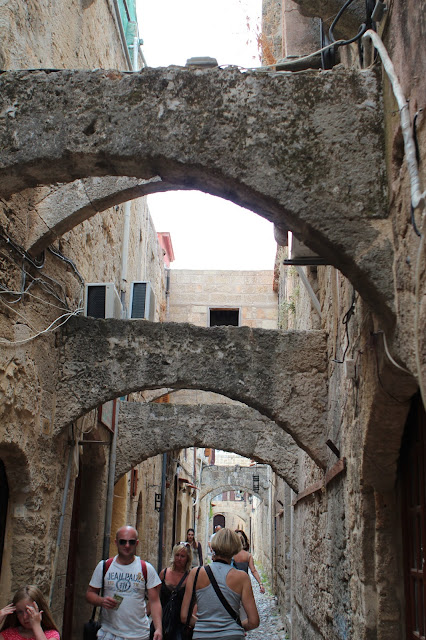


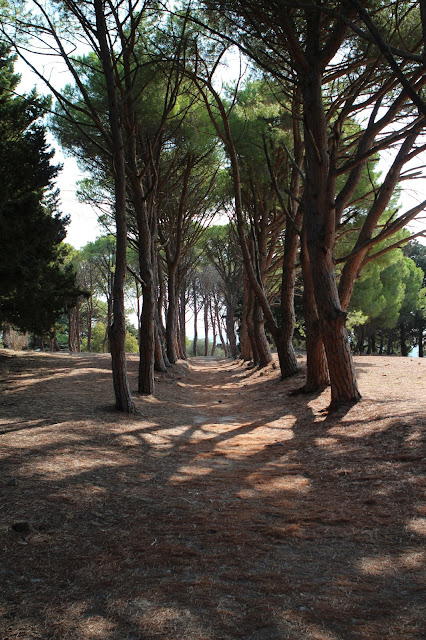


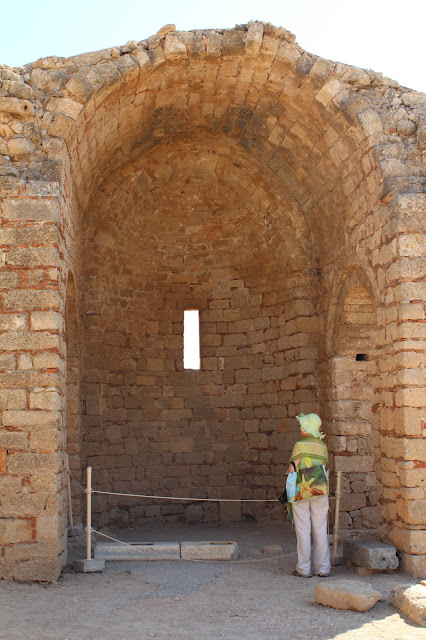


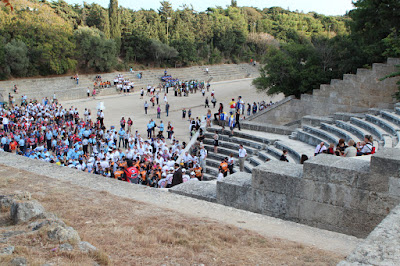
 A month ago, I published an article on the compared


 Our friends Andrew and Janice finally tied the knot last Sunday, in
Langkawi, Malaysia.
They're Aussies currently living in New York, and Janice is of Malaysian
descent, so I think part of the reason was to accommodate some Malaysian
relatives that wouldn't be able to travel, and the other reason was that it
was going to mean a bunch of people had to travel anyway, so why not travel
somewhere a bit exotic?
As my sister is getting married later this month in Brisbane, we decided to
spare Zoe two massive international flights in close succession, and Sarah
and Zoe flew out a few days ahead of me, and went to Brisbane, and then Zoe,
Sarah and her mum flew to Langkawi from there, and I flew there from San
Francisco, with the plan being for Sarah and Zoe to hang out in Brisbane for
the 4 weeks in between weddings.
It was the longest amount of travel I think I've ever done. I hadn't sat
down and calculated what the travel time was beforehand, and when I got on
the flight from San Francisco to Hong Kong, and they said it was going to be
nearly 14 hours just to Hong Kong, I nearly wept. The only good
thing about it was I didn't have to wrangle a toddler as well.
From there, I had to get to Singapore, with a several hour layover, and then
another flight from Singapore to Langkawi. I left SFO at 1:20am on Monday
morning, and finally arrived at about 7am (San Francisco time) the following
day.
I didn't even bother getting off the plane in Hong Kong, it was only an hour
and a half layover. I think the layover in Singapore was 5 hours, and it was
a separate flight. Singapore airport at least was pretty good to kill time
in.
It was funny, I was reading Wired while I was killing time in Singapore, and
they had an article, which included a side bar on



 Wait no longer,
 The following selected bibliography showcases only a small portion of
the academics who have demonstrated that while it may take two to
tango, it only takes one to give a scholarly paper a silly cliche
title:
 Fixing the Sandbrige MacBook Air display initialization
We left our hero with Debian installed on the MacBook Air, but with
the display getting scrambled as soon as the i915 driver loaded.
As was reported to Matthew, the problem is as simple as a lack of
the right mode for the eDP panel in the machine. This mode is supposed
to come from the panel EDID data, but for some reason the driver
wasn t able to query the EDID data, and so it decided to try some
random panel timings it dug out of the VBT tables, which are generally
supposed to be used by LVDS panels. Apple helpfully stuck valid data
there, but for some other panel one that is 1280x800 pixels instead
of the 1366x768 pixel panel in the MacBook Air.
I heard rumors that some machines would get a black screen when the
i915 driver loaded. I was fortunate my machine simply displayed a
1366x768 subset of the programmed 1280x800 mode. A bit of garbage on
the right side, and a few scanlines missing at the bottom. Quite
workable, especially after I ran fbset -yres 768 to keep the console
in the visible portion of the screen.
DDC failure
Looking through the kernel logs, the Intel driver tries to access the
EDID data and times out, as if DDC is just completely broken. This is
rather unexpected; the eDP spec says that the panel is required to
support DDC and provide EDID. Now, we ve seen a lot of panels which
don t quite live up to the rigorous eDP specifications, but it s a bit
surprising from Apple, who generally do VESA stuff pretty well.
We ve heard reports about panels reporting invalid EDID data, or EDID
data which didn t actually match the panel (causing us to prefer the
VBT data on LVDS machines). But I ve not heard of an eDP panel which
didn t have anything hanging off of the DDC channel.
But X works fine?
During early debugging, I happened to start X up. Much to my surprise,
X came up at the native 1366x768 mode. Digging through the kernel logs
after that, I discovered that EDID was successfully fetched from the
eDP panel while X started up.
At this point, I knew it was all downhill the EDID data was
present, it just wasn t getting picked up during the early part of the
driver initialization when the console mode is initialized.
eDP power management
The CPU is given complete control over the power management of the eDP
panel; sequencing through various power states and waiting appropriate
amounts of time when things change. Given the goal of keeping power
usage as low as possible, this makes a huge amount of sense.
The eDP spec is quite clear though, without power, the panel will not
respond to anything over the aux channel, and that includes EDID
data. The eDP panel power hardware in the Sandybridge chip has a special
mode for dealing with this requirement. If the panel is not displaying
data, you can supply power for the aux channel stuff by setting a
magic bit in the panel power registers.
When initializing the frame buffer, the kernel driver turns off the
panel completely so that it has all of the hardware in a known state
(yeah, this is not optimal, but that s another bug). When X started,
the panel was already running with the console mode.
Given the difference between these two states EDID querying with
the panel off failed, while EDID querying with the panel on worked, it
seemed pretty clear that the panel power wasn t getting managed
correctly. So, it seemed pretty clear that the magic power the panel
bit wasn t getting turned on at the right times.
Getting the power turned on.
I stuck a check inside all of the aux channel communication functions
to see where things were broken. This pointed out several places
missing the panel power calls. This wasn t quite sufficient to get
EDID data flowing. The remaining problem was that the code wasn t
waiting long enough after turning the panel power on before starting
the aux channel communication. A few msleep calls and huzzah! EDID at
boot time and the console had the right mode.
Making it faster
However, it turns out that the driver does this a lot, and the msleeps
required were fairly long the eDP panel wants a 500ms delay from
turning the panel power off before you can turn it back on.
I fix this by simply delaying the panel power off until things were
idle for a long time. Now mode setting goes zipping through, and a
few seconds later, the bit to force panel power on gets turned off.
Getting these bits for yourself
I ve pushed out the code to my (temporary) kernel repository
git://people.freedesktop.org/~keithp/linux
in the fix-edp-vdd-power branch. I d love to hear if you ve tried this
on either a MacBook Air or any other eDP machine from Ironlake onwards.
 To ensure that this email address is consistently used by the various tools that we re going to use, it s a good idea to put this email address in the DEBEMAIL environment variable. You can also specify your full name in DEBFULLNAME (in case you don t want to use the name associated with your Unix account). You usually do this by modifying
 3. Triage bugs!
Bug triaging is all about making sure that bugs are correctly classified so that when a developer looks at the bug list, he can quickly find bugs with all the information required to be able to fix them!
3.1 Adding information to bug
Adding supplementary information is easily done just by sending a mail to XXXX@bugs.debian.org (replace XXXX with the bug number).
But often you want to reply to a message in the bug history, in that case





 A few days ago I

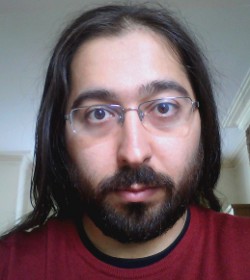 Even though Enrico is not smiling on this picture, he s one of the friendliest Debian person that I know. I always enjoy his presentations because he can t refrain from inserting jokes or other funny tricks.
 That said he s serious too, there s lots of good stuff that he has developed over the years (starting with Debtags) and he has put a lot of effort in reforming the New Maintainer process. Read on to learn more about his various projects.
Raphael: Who are you?
Enrico: Hi, I m Enrico Zini, a DD from Italy. I m 35 and I work as a freelance Free Software developer. One of my historical roles in Debian is taking care of Debtags, but that is not all I do: my paid work led me to write and maintain some weather forecast related software in Debian, and recently I gained a Front Desk hat, and then a DAM hat.
Raphael: How did you start contributing to Debian?
Enrico: It was 2001, I was at uni, I was using Debian. At some point I wanted to
learn packaging so I read through the whole Policy from top to bottom.
Then I thought: why package only for myself? . There were many DDs at
my uni, and it only seemed natural to me to join Debian as well.
Evidently this was also natural for Zack [Note from editor: Stefano Zacchiroli], who had become DD 6 months
earlier and didn t hesitate to advocate me.
I found the Policy and the Developer s Reference to be very interesting
things to read, and I welcomed my AM s questions as an excuse to learn
more. I completely understand those people who have fun trying to answer
all the questions in the NM templates while they wait for an AM.
With my super DAM powers I can see that my AM report was submitted on
October 16, 2001 by my AM Martin Michlmayr, and that James Troup created
my account 9 days later, on October 25.
Raphael: You have a special interest in the New Maintainer (NM) Process
since you are a Debian Account Manager (DAM) and a member of the NM Frontdesk.
Thanks to your work the process is much less academic/bureaucratic than it
used to be. Can you remember us the main changes?
Enrico: One of the first things I noticed when I become a Front Desk member is
that there was a tendency to advocate people too early, thinking by
the time they ll get an AM, they ll know enough .
Unfortunately, this didn t always work, and once the real NM process
started it would turn into a very long and demotivating experience both
for the applicant and for the AM. So we tried
 Together with Jeremiah Foster, we have created a small POD document that hopefully will help aspiring developers. The file currently explains how the source code is divided, some core concepts and how to run specific tests in the test suite. The plan is to make it available on lintian.d.o along with a link to the git source code (


 OK, this one is meant for Planet Debian...
 Update2: Thanks to Joerg Jaspert for the tip that all lintian versions get backported directly from unstable as an exception on ~bpo. The work package is ready, so this is going to make things a lot easier when building stuff on stable.
 To format URLs in LaTeX, one usually uses the