Reproducible Builds: Reproducible Builds in March 2023
Welcome to the March 2023 report from the Reproducible Builds project.
 In these reports we outline the most important things that we have been up to over the past month. As a quick recap, the motivation behind the reproducible builds effort is to ensure no malicious flaws have been introduced during compilation and distributing processes. It does this by ensuring identical results are always generated from a given source, thus allowing multiple third-parties to come to a consensus on whether a build was compromised.
If you are interested in contributing to the project, please do visit our Contribute page on our website.
News
 There was progress towards making the Go programming language reproducible this month, with the overall goal remaining making the Go binaries distributed from Google and by Arch Linux (and others) to be bit-for-bit identical. These changes could become part of the upcoming version 1.21 release of Go. An issue in the Go issue tracker (#57120) is being used to follow and record progress on this.
Arnout Engelen updated our website to add and update reproducibility-related links for NixOS to reproducible.nixos.org. [ ]. In addition, Chris Lamb made some cosmetic changes to our presentations and resources page. [ ][ ]
 Intel published a guide on how to reproducibly build their Trust Domain Extensions (TDX) firmware. TDX here refers to an Intel technology that combines their existing virtual machine and memory encryption technology with a new kind of virtual machine guest called a Trust Domain. This runs the CPU in a mode that protects the confidentiality of its memory contents and its state from any other software.
A reproducibility-related bug from early 2020 in the GNU GCC compiler as been fixed. The issues was that if GCC was invoked via the as frontend, the -ffile-prefix-map was being ignored. We were tracking this in Debian via the build_path_captured_in_assembly_objects issue. It has now been fixed and will be reflected in GCC version 13.
 Holger Levsen will present at foss-north 2023 in April of this year in Gothenburg, Sweden on the topic of Reproducible Builds, the first ten years.
Anthony Andreoli, Anis Lounis, Mourad Debbabi and Aiman Hanna of the Security Research Centre at Concordia University, Montreal published a paper this month entitled On the prevalence of software supply chain attacks: Empirical study and investigative framework:
Software Supply Chain Attacks (SSCAs) typically compromise hosts through trusted but infected software. The intent of this paper is twofold: First, we present an empirical study of the most prominent software supply chain attacks and their characteristics. Second, we propose an investigative framework for identifying, expressing, and evaluating characteristic behaviours of newfound attacks for mitigation and future defense purposes. We hypothesize that these behaviours are statistically malicious, existed in the past, and thus could have been thwarted in modernity through their cementation x-years ago. [ ]
On our mailing list this month:
-
Mattia Rizzolo is asking everyone in the community to save the date for the 2023 s Reproducible Builds summit which will take place between October 31st and November 2nd at Dock Europe in Hamburg, Germany. Separate announcement(s) to follow. [ ]
-
ahojlm posted an message announcing a new project which is the first project offering bootstrappable and verifiable builds without any binary seeds. That is to say, a way of providing a verifiable path towards trusted software development platform without relying on pre-provided binary code in order to prevent against various forms of compiler backdoors. The project s homepage is hosted on Tor (mirror).
The minutes and logs from our March 2023 IRC meeting have been published. In case you missed this one, our next IRC meeting will take place on Tuesday 25th April at 15:00 UTC on #reproducible-builds on the OFTC network.
 and as a Valentines Day present, Holger Levsen wrote on his blog on 14th February to express his thanks to OSUOSL for their continuous support of reproducible-builds.org. [ ]
Debian
 Vagrant Cascadian developed an easier setup for testing debian packages which uses sbuild s unshare mode along and reprotest, our tool for building the same source code twice in different environments and then checking the binaries produced by each build for any differences. [ ]
Over 30 reviews of Debian packages were added, 14 were updated and 7 were removed this month, all adding to our knowledge about identified issues. A number of issues were updated, including the Holger Levsen updating build_path_captured_in_assembly_objects to note that it has been fixed for GCC 13 [ ] and Vagrant Cascadian added new issues to mark packages where the build path is being captured via the Rust toolchain [ ] as well as new categorisation for where virtual packages have nondeterministic versioned dependencies [ ].
Upstream patches
The Reproducible Builds project detects, dissects and attempts to fix as many currently-unreproducible packages as possible. We endeavour to send all of our patches upstream where appropriate. This month, we wrote a large number of such patches, including:
-
Bernhard M. Wiedemann:
cockpit (gzip mtime)crmsh (by mcepl: rewrite to avoid python toolchain issue)cx_Freeze (merged, FTBFS-2038)golangci-lint (date)guestfs-tools (gzip mtime)perf (merged, sort python scandir)perl-Date-Calc-XS (FTBFS-2038)perl-Date-Calc (FTBFS-2038)pw3270 (merged, date)python-dtaidistance (drop unreproducible unnecessary file)sonic-pi (FTBFS-2038)spack (parallelism)tesseract (fixed, CPU, -march=native)
-
Chris Lamb:
- #1032409 filed against
esda.
- #1032759 filed against
gle-graphics-manual.
-
Stefan Br ns:
transfig/fig2dev (also in openSUSE ; date in PDF)
-
Vagrant Cascadian:
In addition, Vagrant Cascadian filed a bug with a patch to ensure GNU Modula-2 supports the SOURCE_DATE_EPOCH environment variable.
Testing framework
 The Reproducible Builds project operates a comprehensive testing framework (available at tests.reproducible-builds.org) in order to check packages and other artifacts for reproducibility. In March, the following changes were made by Holger Levsen:
-
Arch Linux-related changes:
-
Node health checks:
-
OSUOSL node migration.
- Install
megacli packages that are needed for hardware RAID. [ ][ ]
- Add health check and maintenance jobs for new nodes. [ ]
- Add mail config for new nodes. [ ][ ]
- Handle a node running in the future correctly. [ ][ ]
- Migrate some nodes to Debian bookworm. [ ]
- Fix nodes health overview for osuosl3. [ ]
- Make sure the
/srv/workspace directory is owned by by the jenkins user. [ ]
- Use
.debian.net names everywhere, except when communicating with the outside world. [ ]
- Grant fpierret access to a new node. [ ]
- Update documentation. [ ]
- Misc migration changes. [ ][ ][ ][ ][ ][ ][ ][ ]
-
Misc changes:
- Enable fail2ban everywhere and monitor it with munin [ ].
- Gracefully deal with non-existing Alpine schroots. [ ]
In addition, Roland Clobus is continuing his work on reproducible Debian ISO images:
- Add/update openQA configuration [ ], and use the actual timestamp for openQA builds [ ].
- Moved adding the user to the
docker group from the janitor_setup_worker script to the (more general) update_jdn.sh script. [ ]
- Use the (short-term) reproducible source when generating
live-build images. [ ]
diffoscope development
 diffoscope is our in-depth and content-aware diff utility. Not only can it locate and diagnose reproducibility issues, it can provide human-readable diffs from many kinds of binary formats as well. This month, Mattia Rizzolo released versions
238, and Chris Lamb released versions 239 and 240. Chris Lamb also made the following changes:
- Fix compatibility with PyPDF 3.x, and correctly restore test data. [ ]
- Rework PDF annotation handling into a separate method. [ ]
In addition, Holger Levsen performed a long-overdue overhaul of the Lintian overrides in the Debian packaging [ ][ ][ ][ ], and Mattia Rizzolo updated the packaging to silence an include_package_data=True [ ], fixed the build under Debian bullseye [ ], fixed tool name in a list of tools permitted to be absent during package build tests [ ] and as well as documented sending out an email upon [ ].
In addition, Vagrant Cascadian updated the version of GNU Guix to 238 [ and 239 [ ]. Vagrant also updated reprotest to version 0.7.23. [ ]
Other development work
 Bernhard M. Wiedemann published another monthly report about reproducibility within openSUSE
If you are interested in contributing to the Reproducible Builds project, please visit our Contribute page on our website. However, you can get in touch with us via:
-
IRC:
#reproducible-builds on irc.oftc.net.
-
Twitter: @ReproBuilds
-
Mailing list:
rb-general@lists.reproducible-builds.org
Vagrant Cascadian developed an easier setup for testing debian packages which uses sbuild s unshare mode along and reprotest, our tool for building the same source code twice in different environments and then checking the binaries produced by each build for any differences. [ ]
Over 30 reviews of Debian packages were added, 14 were updated and 7 were removed this month, all adding to our knowledge about identified issues. A number of issues were updated, including the Holger Levsen updating
build_path_captured_in_assembly_objects to note that it has been fixed for GCC 13 [ ] and Vagrant Cascadian added new issues to mark packages where the build path is being captured via the Rust toolchain [ ] as well as new categorisation for where virtual packages have nondeterministic versioned dependencies [ ].
Upstream patches
The Reproducible Builds project detects, dissects and attempts to fix as many currently-unreproducible packages as possible. We endeavour to send all of our patches upstream where appropriate. This month, we wrote a large number of such patches, including:
-
Bernhard M. Wiedemann:
cockpit (gzip mtime)crmsh (by mcepl: rewrite to avoid python toolchain issue)cx_Freeze (merged, FTBFS-2038)golangci-lint (date)guestfs-tools (gzip mtime)perf (merged, sort python scandir)perl-Date-Calc-XS (FTBFS-2038)perl-Date-Calc (FTBFS-2038)pw3270 (merged, date)python-dtaidistance (drop unreproducible unnecessary file)sonic-pi (FTBFS-2038)spack (parallelism)tesseract (fixed, CPU, -march=native)
-
Chris Lamb:
- #1032409 filed against
esda.
- #1032759 filed against
gle-graphics-manual.
-
Stefan Br ns:
transfig/fig2dev (also in openSUSE ; date in PDF)
-
Vagrant Cascadian:
In addition, Vagrant Cascadian filed a bug with a patch to ensure GNU Modula-2 supports the SOURCE_DATE_EPOCH environment variable.
Testing framework
The Reproducible Builds project operates a comprehensive testing framework (available at tests.reproducible-builds.org) in order to check packages and other artifacts for reproducibility. In March, the following changes were made by Holger Levsen:
-
Arch Linux-related changes:
-
Node health checks:
-
OSUOSL node migration.
- Install
megacli packages that are needed for hardware RAID. [ ][ ]
- Add health check and maintenance jobs for new nodes. [ ]
- Add mail config for new nodes. [ ][ ]
- Handle a node running in the future correctly. [ ][ ]
- Migrate some nodes to Debian bookworm. [ ]
- Fix nodes health overview for osuosl3. [ ]
- Make sure the
/srv/workspace directory is owned by by the jenkins user. [ ]
- Use
.debian.net names everywhere, except when communicating with the outside world. [ ]
- Grant fpierret access to a new node. [ ]
- Update documentation. [ ]
- Misc migration changes. [ ][ ][ ][ ][ ][ ][ ][ ]
-
Misc changes:
- Enable fail2ban everywhere and monitor it with munin [ ].
- Gracefully deal with non-existing Alpine schroots. [ ]
In addition, Roland Clobus is continuing his work on reproducible Debian ISO images:
- Add/update openQA configuration [ ], and use the actual timestamp for openQA builds [ ].
- Moved adding the user to the
docker group from the janitor_setup_worker script to the (more general) update_jdn.sh script. [ ]
- Use the (short-term) reproducible source when generating
live-build images. [ ]
diffoscope development
diffoscope is our in-depth and content-aware diff utility. Not only can it locate and diagnose reproducibility issues, it can provide human-readable diffs from many kinds of binary formats as well. This month, Mattia Rizzolo released versions 238, and Chris Lamb released versions 239 and 240. Chris Lamb also made the following changes:
- Fix compatibility with PyPDF 3.x, and correctly restore test data. [ ]
- Rework PDF annotation handling into a separate method. [ ]
In addition, Holger Levsen performed a long-overdue overhaul of the Lintian overrides in the Debian packaging [ ][ ][ ][ ], and Mattia Rizzolo updated the packaging to silence an include_package_data=True [ ], fixed the build under Debian bullseye [ ], fixed tool name in a list of tools permitted to be absent during package build tests [ ] and as well as documented sending out an email upon [ ].
In addition, Vagrant Cascadian updated the version of GNU Guix to 238 [ and 239 [ ]. Vagrant also updated reprotest to version 0.7.23. [ ]
Other development work
Bernhard M. Wiedemann published another monthly report about reproducibility within openSUSE
If you are interested in contributing to the Reproducible Builds project, please visit our Contribute page on our website. However, you can get in touch with us via:
-
IRC:
#reproducible-builds on irc.oftc.net.
-
Twitter: @ReproBuilds
-
Mailing list:
rb-general@lists.reproducible-builds.org
cockpit(gzip mtime)crmsh(by mcepl: rewrite to avoid python toolchain issue)cx_Freeze(merged, FTBFS-2038)golangci-lint(date)guestfs-tools(gzip mtime)perf(merged, sort python scandir)perl-Date-Calc-XS(FTBFS-2038)perl-Date-Calc(FTBFS-2038)pw3270(merged, date)python-dtaidistance(drop unreproducible unnecessary file)sonic-pi(FTBFS-2038)spack(parallelism)tesseract(fixed, CPU, -march=native)
- #1032409 filed against
esda. - #1032759 filed against
gle-graphics-manual.
transfig/fig2dev(also in openSUSE ; date in PDF)
The Reproducible Builds project operates a comprehensive testing framework (available at tests.reproducible-builds.org) in order to check packages and other artifacts for reproducibility. In March, the following changes were made by Holger Levsen:
- Arch Linux-related changes:
- Node health checks:
-
OSUOSL node migration.
- Install
megaclipackages that are needed for hardware RAID. [ ][ ] - Add health check and maintenance jobs for new nodes. [ ]
- Add mail config for new nodes. [ ][ ]
- Handle a node running in the future correctly. [ ][ ]
- Migrate some nodes to Debian bookworm. [ ]
- Fix nodes health overview for osuosl3. [ ]
- Make sure the
/srv/workspacedirectory is owned by by thejenkinsuser. [ ] - Use
.debian.netnames everywhere, except when communicating with the outside world. [ ] - Grant fpierret access to a new node. [ ]
- Update documentation. [ ]
- Misc migration changes. [ ][ ][ ][ ][ ][ ][ ][ ]
- Install
-
Misc changes:
- Enable fail2ban everywhere and monitor it with munin [ ].
- Gracefully deal with non-existing Alpine schroots. [ ]
- Add/update openQA configuration [ ], and use the actual timestamp for openQA builds [ ].
- Moved adding the user to the
dockergroup from thejanitor_setup_workerscript to the (more general)update_jdn.shscript. [ ] - Use the (short-term) reproducible source when generating
live-buildimages. [ ]
diffoscope development
diffoscope is our in-depth and content-aware diff utility. Not only can it locate and diagnose reproducibility issues, it can provide human-readable diffs from many kinds of binary formats as well. This month, Mattia Rizzolo released versions 238, and Chris Lamb released versions 239 and 240. Chris Lamb also made the following changes:
- Fix compatibility with PyPDF 3.x, and correctly restore test data. [ ]
- Rework PDF annotation handling into a separate method. [ ]
In addition, Holger Levsen performed a long-overdue overhaul of the Lintian overrides in the Debian packaging [ ][ ][ ][ ], and Mattia Rizzolo updated the packaging to silence an include_package_data=True [ ], fixed the build under Debian bullseye [ ], fixed tool name in a list of tools permitted to be absent during package build tests [ ] and as well as documented sending out an email upon [ ].
In addition, Vagrant Cascadian updated the version of GNU Guix to 238 [ and 239 [ ]. Vagrant also updated reprotest to version 0.7.23. [ ]
Other development work
Bernhard M. Wiedemann published another monthly report about reproducibility within openSUSE
If you are interested in contributing to the Reproducible Builds project, please visit our Contribute page on our website. However, you can get in touch with us via:
-
IRC:
#reproducible-builds on irc.oftc.net.
-
Twitter: @ReproBuilds
-
Mailing list:
rb-general@lists.reproducible-builds.org
Bernhard M. Wiedemann published another monthly report about reproducibility within openSUSE
If you are interested in contributing to the Reproducible Builds project, please visit our Contribute page on our website. However, you can get in touch with us via:
-
IRC:
#reproducible-buildsonirc.oftc.net. - Twitter: @ReproBuilds
-
Mailing list:
rb-general@lists.reproducible-builds.org
 The key decision I made mid-March was to commit to pursuing
 (TL;DR: I ve been trying out btrfs in some places instead of ext4, I ve hit absolutely zero issues and there are a few features that make me plan to use it more.)
Despite (or perhaps because of) working on storage products for a reasonable chunk of my career I have tended towards a conservative approach to my filesystems. By the time I came to Linux


 I was asked on the Fediverse
 Nitrokey Start
 Github
 Anti-national and Anti-India judges Kiren Rijiju, Law Minister.



 Like each month, have a look at the work funded by
 A few years ago a friend told me that her usual fabric shop was closing down and had a sale on all remaining stock.
While being sad for yet another brick and mortar shop that was going to be missed (at least it was because the owners were retiring, not because it wasn t sustainable anymore), of course I couldn t miss the opportunity.
So we drove a few hundred km, had some nice time with a friend that (because of said few hundred km) we rarely see, and spent a few hours looting the corps er helping the shop owner getting rid of stock before their retirement.
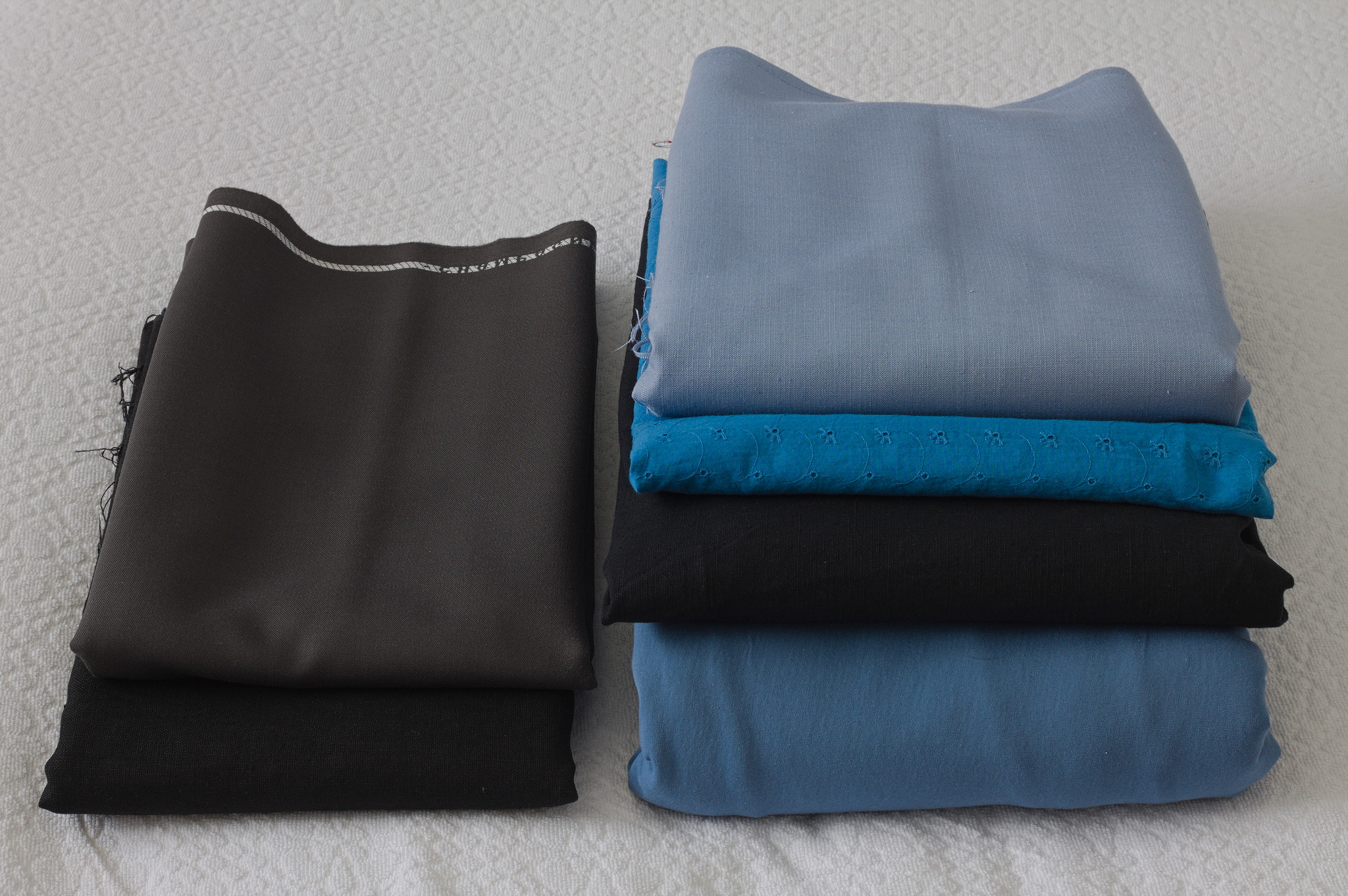 Among other things there was a cut of lightweight swiss embroidery cotton in blue which may or may not have been enthusiastically grabbed with plans of victorian underwear.
It was too nice to be buried under layers and layers of fabric (and I suspect that the embroidery wouldn t feel great directly on the skin under a corset), so the natural fit was something at the corset cover layer, and the fabric was enough for a combination garment of the kind often worn in the later Victorian age to prevent the accumulation of bulk at the waist.
It also has the nice advantage that in this time of corrupted morals it is perfectly suitable as outerwear as a nice summer dress.
Then life happened, the fabric remained in my stash for a long while, but finally this year I have a good late victorian block that I can adapt, and with spring coming it was a good time to start working on the summer wardrobe.
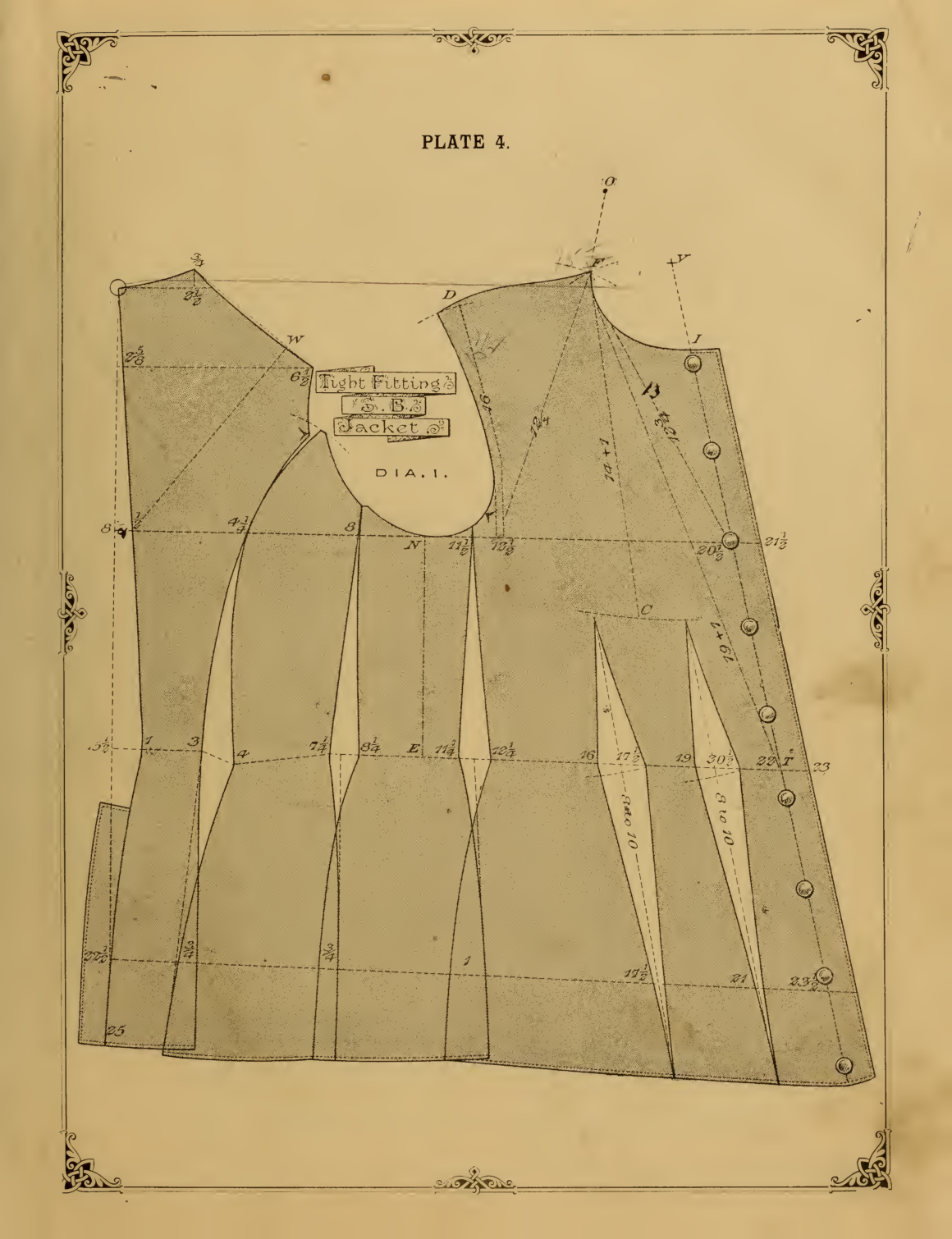 The block I ve used comes from
 The only design choice left was the pocket situation: I wanted to wear this garment both as underwear (where pockets aren t needed, and add unwanted bulk) and outerwear (where no pockets is not an option), and the fabric felt too thin to support the weight of the contents of a full pocket. So I decided to add slits into the seams, with just a modesty placket, and wear
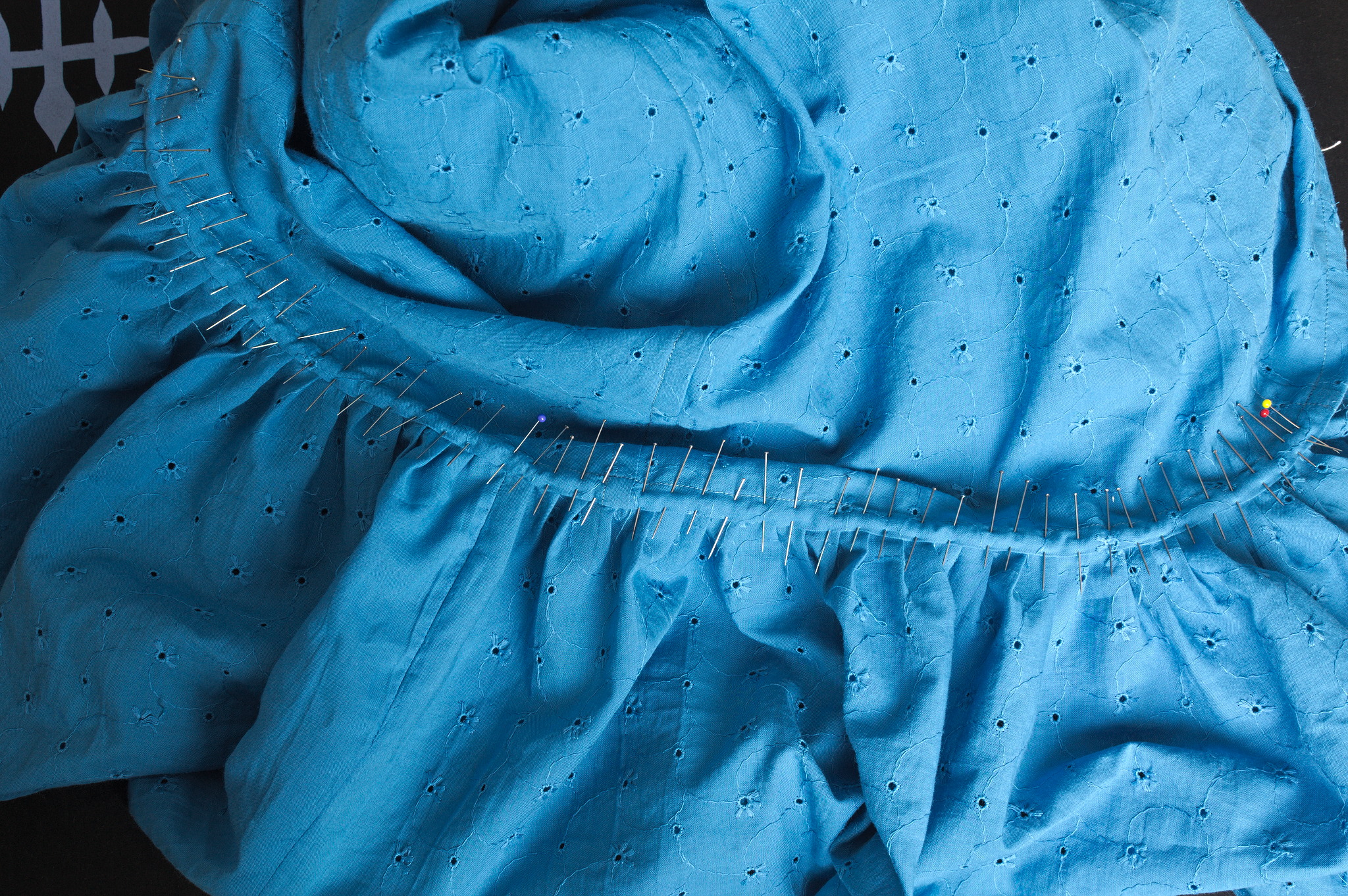 First I had to finish attaching the ruffles, however, and this is when I cursed myself for not using the ruffler foot I have (it would have meant not having selvedges on all seams of the ruffle), and for pleating the ruffle rather than gathering it (I prefer the look of handsewn gathers, but here I m sewing everything by machine, and that s faster, right? (it probably wasn t)).
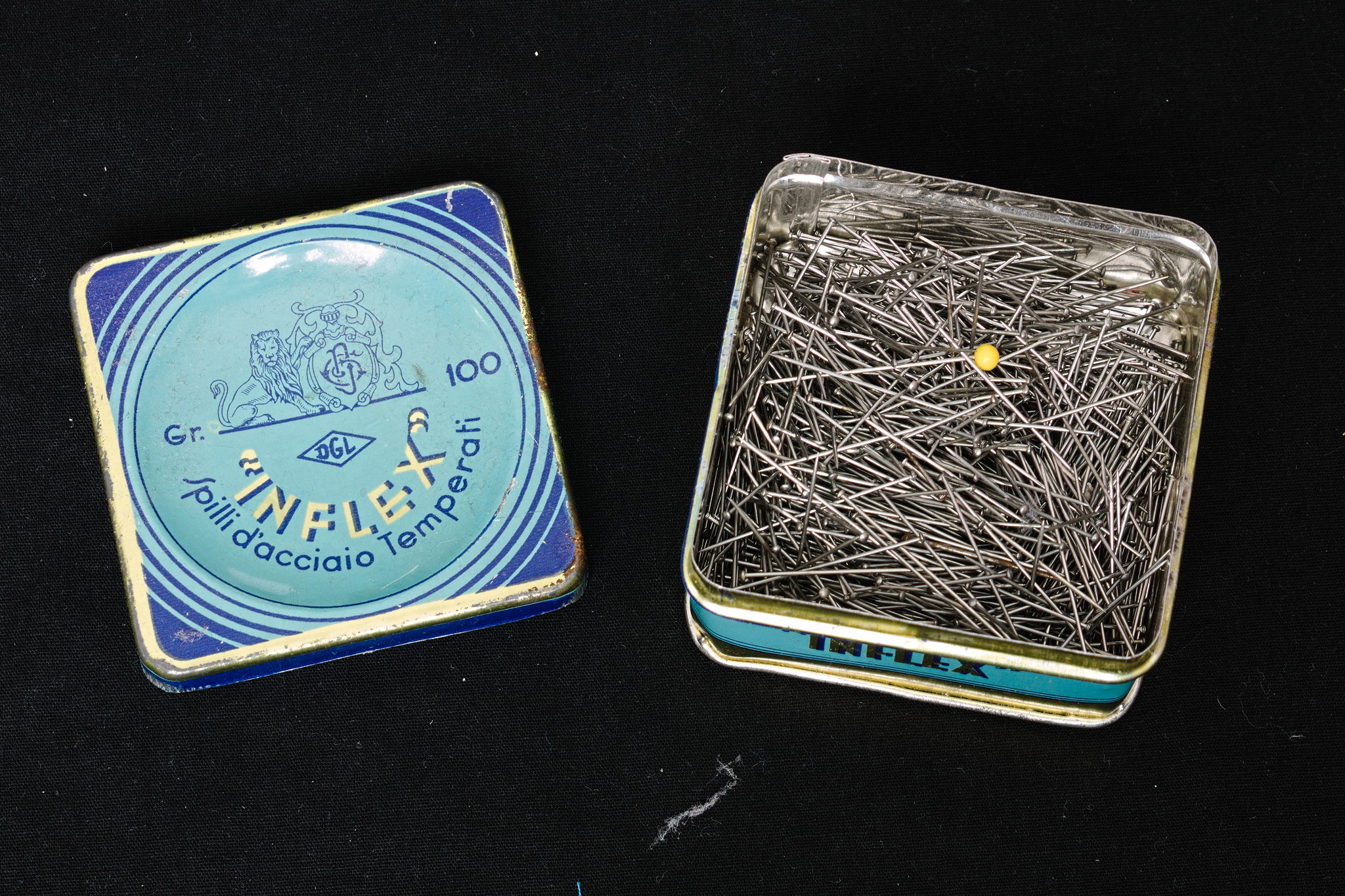 Also, this is where I started to get low on pins, and I had to use the ones from the vintage
 Except, maybe I shouldn t carry heavy items in my pockets when doing it? Oh, well.
I have other plans for the same pattern, but they involve making some crochet lace, so I expect I can aim at making them wearable in summer 2024.
Now I just have to wait for the weather to be a bit warmer, and then I can start enjoing this one.
 (no site yet)
 in October 2021. they generally seem to keep up with
shipping. update (august 2022): they rolled out a second line of
laptops (12th gen), first batch shipped, second batch
 Today I stumbled upon

 When I paint postcards I tend to start with a draft (usually on lightweight (250 g/m ) watercolour paper, then trace
 Since I m not going to be writing on the pages, I decided to use a relatively cheap 200 g / m linoprint paper with a nice feel, and I ve settled on a B6 size (before trimming) to hold A6 postcard drafts.
For the binding I ve decided to use a technique I ve learned from a craft book ages ago that doesn t use tapes, and added a full hard cover in dark grey linen-feel
 After looking on the internet for solutions, I settled on adding spacers by making a signature composed of paper - spacer - paper - spacer, with the spacers being 2 cm wide, folded in half.
And then, between finishing binding the book and making the cover I utterly forgot to add the head bands. Argh. It s not the first time I make this error.
 I m happy enough with the result. There are things that are easy to improve on in the next iteration (endpapers and head bands), and something in me is not 100% happy with the fact that the spacers aren t placed between every sheet, but there are places with no spacer and places with two of them, but I can t think of (and couldn t find) a way to make them otherwise with a sewn book, unless I sew each individual sheet, which sounds way too bulky (the album I m using for the landscapes was glued, but I didn t really want to go that way).
The size is smaller than the other one I was using and doesn t leave a lot of room around the paintings, but that isn t necessarily a bad thing, because it also means less wasted space.
I believe that one of my next project will be another similar book in a landscape format, for those postcard drafts that aren t landscapes nor clothing related.
And then maybe another? or two? or