Search Results: "tar"

3 May 2014

Russell Coker: Source Escrow for Proprietary Software

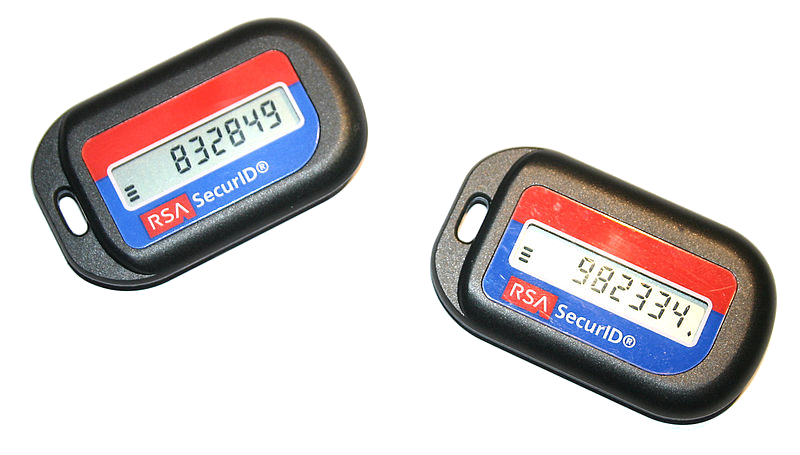
British taxpayers are paying for extra support for Windows XP due to a lack of planning by the UK government [1]. While the cost of this is trivial compared to other government stupidity (such as starting wars of aggression) this sort of thing should be stopped. The best way to solve such problems is for governments to only use free software. If the UK government used Red Hat Enterprise Linux then when Red Hat dropped support for old versions they would have the option of providing their own support for old versions, hiring any other company to support old versions, or paying Red Hat for supporting it. In that case the Red Hat offer would probably be quite reasonable as competition drives the prices down. It doesn t seem likely that the UK government will start using only free software in the near future. It s not impossible to do so, there are organisations dedicated to this task such as Free-gov.org which aims to develop e-government software that is under GPL licenses [2]. The Wikipedia page List of Linux Adopters [3] has a large section on government use, while not all entries are positive (some have reverted) it shows that it s possible to use Linux for all areas of government. But governments often move slowly and in the case of wealthy countries such as the UK it can be easier to just tax the citizens a little more than to go to the effort of saving money. But when governments use proprietary software they shouldn t be restricted in support. It seems that the only way to ensure that the government can do what it needs is to have a source escrow system. Then if the company that owned the software ceased supporting it anyone who wanted to offer support would be able to do so. This would probably require that software which is out of support be released to the public domain so that anyone who wanted to tender for such support work could first inspect the code to determine if they were capable of doing the work. People who believe the myths about secret source software claim that allowing the source code to be released would damage the company that owns it. This has been proved incorrect by the occasions when source code for software such as MS-Windows has been released on the Internet with no apparent harm. Also Microsoft have a long history of licensing their source code to universities, governments, and other companies for various purposes (including porting Windows to other CPUs). It s most likely that some part of the UK government already has the full source code to Windows XP, and it s also quite likely that computer criminals have obtained copies of the source by now for the purpose of exploiting security flaws. Also they stop supporting software when they can t make money from providing the usual support, so by definition the value to a company of the copyright is approaching zero by the time they decide to cease support. Given the lack of success experienced by companies that specialise in security (for example the attack on RSA to steal the SecurID data [4]) it doesn t seem plausible that Microsoft has had much success in keeping the source to Windows XP (or any other widely used product) secret over the course of 12 years. In summary source code to major proprietary software products is probably available to criminals long before support expires and is of little value to the copyright owners. But access to it can provide value to governments and other users of the software. The only possible down-side to the software vendor is if the new version doesn t provide any benefits to the user. This could be a problem for Microsoft who seem to have the users hate every second version of Windows enough to pay extra for the old version. The solution is to just develop quality software that satisfies the needs of the users. Providing a legal incentive for this would be a good idea.

2 May 2014

Dimitri John Ledkov: X4D Icons released

I am releasing some icons under MIT license. They will be hosted at x4d.surgut.co.uk and available for development on GitHub.

I had to create my own icons, as I couldn't find icons of similar nature under a free license. Hopefully others will find these useful as well.

The icons below are all available in PNG, GIF, SVG and EPS. To link to a specific version directly, add .png, .gif, -v.svg or -v.eps to the generic URI (or browse the icons repository to see all versions).

Document type Light Dark
HTML 2.0 Valid HTML2 Valid HTML20
HTML 3.2 Valid HTML32 Valid HTML32
HTML 4.0 Valid HTML40 Valid HTML40
HTML 4.01 Valid HTML4.01 Valid HTML4.01
XHTML 1.0 Valid XHTML10 Valid XHTML10
XHTML 1.1 Valid XHTML11 Valid XHTML11
XHTML Basic 1.0 Valid XHTML Basic 10 Valid XHTML Basic 10
XHTML-Print 1.0 Valid XHTML Print 10 Valid XHTML Print 10
CSS Valid CSS Valid CSS
CSS 1 Valid CSS1 Valid CSS1
CSS 2 Valid CSS2 Valid CSS2
MathML 2.0 Valid MathML 20 Valid MATHML20
SVG 1.0 Valid SVG10 Valid SVG10
SVG 1.1 Valid SVG11 Valid SVG11
SVG 1.2 Valid SVG12 Valid SVG12
SVG Tiny 1.1 Valid SVG Tiny11 Valid SVG Tiny11
SVG Tiny 1.2 Valid SVG Tiny12 Valid SVG Tiny12
XML 1.0 well-formed XML10 well-formed XML10
XML 1.1 well-formed XML11 well-formed XML11

C.J. Adams-Collier: Bringing the VMs back online

okay. New hypervisor hardware. Switching from xen to KVM. I took a snapshot of the xen partitions and moved them to a holding location during migration. I am now imaging these partitions to the LVM block devices:
calcifer:/home/cjac# for guest in  ls /usr/src/moonunit-guests/   grep -v -e etc   awk -F- ' print $1 '  ; do lvcreate /dev/vg00 -n $ guest  -L 4200M -C y ; done
  Logical volume "edge" created
  Logical volume "ns0" created
  Logical volume "sh1" created
  Logical volume "sip0" created
  Logical volume "smtp" created
  Logical volume "vpn1" created
  Logical volume "wsg" created
calcifer:/home/cjac# partprobe /dev/vg00/edge
calcifer:/home/cjac# fdisk -l /dev/vg00/edge
GNU Fdisk 1.2.4
Copyright (C) 1998 - 2006 Free Software Foundation, Inc.
This program is free software, covered by the GNU General Public License.
This program is distributed in the hope that it will be useful,
but WITHOUT ANY WARRANTY; without even the implied warranty of
MERCHANTABILITY or FITNESS FOR A PARTICULAR PURPOSE.  See the
GNU General Public License for more details.
Disk /dev/dm-21: 4 GB, 4400524800 bytes
255 heads, 63 sectors/track, 535 cylinders
Units = cylinders of 16065 * 512 = 8225280 bytes
     Device Boot      Start         End      Blocks   Id  System 
/dev/dm-21p1               1         535     4297356   83  Linux
calcifer:/home/cjac# kpartx -l /dev/vg00/edge
vg00-edge1 : 0 8594712 /dev/vg00/edge 63
calcifer:/home/cjac# kpartx -a /dev/vg00/edge
calcifer:/home/cjac# dd if=/usr/src/moonunit-guests/edge-disk-20140420T070034.xz   xz -d   dd of=/dev/mapper/vg00-edge1 
503474+1 records in
503474+1 records out
257778704 bytes (258 MB) copied, 311.538 s, 827 kB/s
8388608+0 records in
8388608+0 records out
4294967296 bytes (4.3 GB) copied, 925.612 s, 4.6 MB/s
calcifer:/home/cjac# mount /dev/mapper/vg00-edge1 /mnt/tmp
calcifer:/home/cjac# cp -r /lib/modules/ uname -r  /mnt/tmp/lib/modules/
calcifer:/home/cjac# emacs /mnt/tmp/etc/inittab
calcifer:/home/cjac# emacs /mnt/tmp/etc/fstab
calcifer:/home/cjac# umount /mnt/tmp
calcifer:/home/cjac# kpartx -d /dev/vg00/edge
calcifer:/home/cjac# virsh start edge && virsh console edge
Somebody needs faster drives. Wow was that ever slow.

Vasudev Kamath: Note to Self: How to use url_for in Flask application

url_for is normally used to avoid hard coding of URL in Flask based webapps. I've been using it in SILPA port written using Flask by. But this was written long back and written as POC to show for Santhosh author of SILPA app which even managed to go into production :-). Recently I started organizing the code and started using flask.Blueprint which was previously written using flask.views.MethodView class and here I started facing problem with old templates. I'm just gonna explain what is the difference when using url_for with MethodView and Blueprint. Lets have some sample code for MethodView first, this code is from Flask documentation.
from flask.views import MethodView
class UserAPI(MethodView):
       def get(self):
           users = User.query.all()
           ...
       def post(self):
           user = User.from_form_data(request.form)
           ...
app.add_url_rule('/users/', view_func=UserAPI.as_view('users'))
Here we have a view which is derived from MethodView which has logic on how to handle the requests. We use add_url_rule to register rule to handle /users/ url end point and we pass the class as view function which is done by as_view class method and we can refer this method in our Jinja2 templates using name users. So a statement like
url_for('users')
in our templates will be converted to /users/ URL when page is rendered to client by Flask. Now when I replaced the MethodView in favor of Blueprint I started getting up werkzeug.routing.BuildError thrown on my face and I had no clue why!. Yeah I know I'm bad at reading documentation but even after reading documentation I was still thinking that
url_for('/')
should return me a proper URL and I was wondering why its failing. Finally after re-reading documentation for url_for it was becoming clear to me, url_for definition looks like below
flask.url_for(endpoint, **values)
Here endpoint is actually a function which is supposed to be serving the URL and **values is the arguments for this function. The URL in question should be defined in python code using decorator. In my case following is the new function serving the web pages for SILPA.
bp = Blueprint('frontend', __name__)
@bp.route(_BASE_URL, defaults= 'page': 'index.html' )
@bp.route(_BASE_URL + '<page>')
def serve_pages(page):
       if page == "index.html":
          return render_template('index.html', title='SILPA',
                               main_page=_BASE_URL,
                               modules=_modulename_to_display)
       elif page == "License":
          return render_template('license.html', title='SILPA License',
                                main_page=_BASE_URL,
                                modules=_modulename_to_display)
       elif page == "Credits":
           return render_template('credits.html', title='Credits',
                                main_page=_BASE_URL,
                                modules=_modulename_to_display)
       elif page == "Contact":
           return render_template('contact.html', title='Contact SILPA Team',
                                main_page=_BASE_URL,
                                modules=_modulename_to_display)
       else:
           # modules requested!.
           if page in _display_module_map:
               return render_template(_display_module_map[page] + '.html',
                                    title=page, main_page=_BASE_URL,
                                    modules=_modulename_to_display)
           else:
               # Did we encounter something which is not registered by us?
               return abort(404)
You can ignore function code but just note the decorators, here I'm registering the function serve_pages with page as argument for URL patterns / and /<page>, _BASE_URL here is mount point of application it can be just / or /mountpoint depending on that URL registered changes. Now I need to modify code for all url_for in my template to look like below
url_for('.serve_pages', page='/License') # for /License
url_for('.serve_pages') # which will turn in to /index.html
The . in front of function is for referring current Blueprint, in my case the Flask will consider it as frontend.serve_pages as function name and generates appropriate URL at run time. So my fault was misunderstanding endpoint argument as URL endpoint but where as its actually function name supposed to serve the page. But when using MethodViews I can simply convert class to a function with my preferred name just like UserAPI.as_view('/') so url_for('/') just works.

1 May 2014

Siri Reiter: That goddamned perfection again

Since the MiniDebConf Jonas and I have been travelling in Spain, France and finally staying in Belgium for a week, getting some work done. It's been harder than imagined to work during travel. I haven't exercised either, and regained at least three of four kilos I spent much time and effort getting rid in the year preceding. I thrive in my home and find it hard to keep my own time and focus when I am deprived of my own space. It was challenging to give a talk, "Why aren't more designers using Debian or working for Debian", my first public talk. I've been working to recapture my points in writing, to make a stronger statement, but I seem to blur my own views with conflicting ones, and I'm loosing momentum every day. One of my reasons for speaking up was to do it even though I'm not at trained speaker and have "nothing" to contribute but my opinions from the angle of a user that happens to be a designer. Not claiming to be a superior designer, but one that would like to contribute if it was easier to figure out how. And since the community wants to encourage designers to contribute to the Debian project, I figured it to be a good idea to talk about how this has been challenging to me as a dedicated user and completely out of the question for any other designer I know - or knew before the minidebconf. No reseach, no scientific proofs, just my wiew from my "dumb user" and designer's perspective. I saw one single attendant rolling his eyes during my talk. I didn't care at that time, but I've given that look more consideration than the people approaching me after the talk, saying thank you for voicing their opinions and thoughts. I think that's absolutely astonishing and at the same time it's just typically me. It makes me angry, first with myself for not speaking to this man's perception of things, then with myself for not just letting go of that image. I'm really glad that so many seemed to listen with curiosity and interest. What if one more - or half of the auditorium - had rolled their eyes? I don't like to feel that vulnerable. The truth is, though, that I'm really not. I gave the talk against my fear of failure and public humiliation and I'm convinced that my thoughts and actions matter, just as anybody's does, if we dare to say what's on our minds and to take action. I believe it's in anybody's power to "make a difference" and even "change the world" - at least in a small way. I guess that's one of the underlying reasons to be a designer in the first place. That is quite a strong position to take. I've created the wikipage http://wiki.debian.org/Design - well knowing that design is a word with many meanings. Everything is design. Since the talk I've been in doubt about that page. About the project, my aim with it, what to do about it, how to move on with just a tiny babystep, and I realise that I'm simply afraid to be disturbing someone's peace, making people angry or roll their eyes at my fumbling attempts to figure out in public what can be done to make a thriving community of designers collaborating with coders to make better, more usable and attractive software in the free, wide world. I'm starting a design process, not presenting a perfect, finished solution. Now, having put these thoughts into words, perhaps, my mind will be somewhat appeaced and let me move on with my intended tasks of cultivating that acclaimed space in the Debian information jungle into a friendly and welcoming place with info that makes it easier to be a contributing designer in Debian.

Daniel Pocock: reSIProcate v1.9 WebRTC available for Fedora 20 testing

Today I just released reSIProcate v1.9 packages into the Fedora 20 testing updates repository. This means Fedora 20 users can now try WebRTC more easily. The same version is already available in Debian wheezy-backports and Ubuntu trusty. Get started today Install the resiprocate-repro proxy server package using yum. Set up a DNS entry, here is what we will use in the example:
Domain sip-ws1.example.org
WebSocket URL
Use this in JSCommunicator or JsSIP
ws://sip-ws1.example.org
IP address of server 198.51.100.50
so the DNS entry will be
sip-ws1.example.org.     IN    A    198.51.100.50
Notice that in the ws:// URL, we do not specify a port. This means port 80 is used by default. You can also use a non-standard port if you prefer or if you dont' have root permissions. Now edit the file /etc/repro/repro.config, adding a transport definition for WebSockets (WS) and change a few other parameters from their defaults:
# Bind to 198.51.100.50 on port 80
Transport1Interface = 198.51.100.50:80
# Use WS (can also use WSS for TLS, see repro.config for full details)
Transport1Type = WS
# if using WSS, must also change the transport param here
Transport1RecordRouteUri = sip:sip-ws1.example.org;transport=WS
EnableFlowTokens = true
DisableOutbound = false
# Disable all authentication - just for testing
DisableAuth = false
# allow http admin access on all interfaces,
# default is 127.0.0.1
# HttpBindAddress = 0.0.0.0
Now set up a password for the web admin tool using htdigest:
# htdigest /etc/repro/users.txt repro admin
After all that, restart the repro process
# service repro restart
Go to the web interface on port 5080 (only listening on localhost by default), go to the "ADD DOMAIN" page and add sip-ws1.example.org Now restart repro again so it recognises the new domain.
# service repro restart
Finally, you can test it using JSCommunicator or tryit.jssip.net Next steps
  • Set up a TURN server for NAT traversal
  • Use WebSockets over TLS (WSS) instead of regular WS mode
  • Set up authentication (see the various options, including client certificate support, in repro.confg)
  • Connect to regular SIP infrastructure such as Asterisk
Questions? Please come and ask on the repro-users mailing list

Lisandro Dami&aacute;n Nicanor P&eacute;rez Meyer: Call for help from Debian's KDE Team

Hi all!


For quite a while now the KDE team has been severely understaffed. We maintain a lot of packages, with many different kinds of bugs, but we don't have enough people to do all the work that needs to be done. We have tools that help us automate the update to new upstream releases, but that's just the tip of the iceberg of our work and so we are writing to invite more people to get involved in the team and help us get KDE software in Debian into better shape.


Some of the tasks that we need help with are:
  • Bug triaging: there are many many bugs in the BTS. We need people that go through them, understand the problem and how to reproduce it, confirm that they are still present in the latest versions. In particular, there are bugs affecting the version in wheezy, and we need people to go through those as well.
  • Bug forwarding: we are so understaffed that we have been asking users to forward the bugs upstream themselves. Some users do this, but some don't. It would help us a lot to have people in the team in charge of this.
  • Patch forwarding: we have quite a bunch of patches applied in the Debian packages that should be applied upstream. Some need to be generalized instead of being Debian-specific. This work would save us time in the future, so it's very important to get it done.
  • Upgrade-testing: in the past, the upgrade from one Debian stable to the other has been quite traumatic for KDE software users. We need people to try upgrading from wheezy to jessie and report any bugs that they might encounter so that we can fix them ahead of the release.
  • Creating patches: many of the bugs that we have require writing patches, some are easy and some are harder, but any help here would be really appreciated.
  • Packaging other KDE apps: we have packages for the core components of KDE software, but there are many other useful components that still need to get packaged.
  • Updating our welcoming wiki page [1], adding these tasks and any future tasks, and unifying the todo lists [2].
If you are interested in helping with any of these, please join our irc channel #debian-qt-kde in irc.oftc.net, or our mailing list [3]. We are happy to help you get started.


[1]: https://wiki.debian.org/PkgKde
[2]: https://wiki.debian.org/KDETodo
https://wiki.debian.org/KdeDebTasks
http://pkg-kde.alioth.debian.org/todo.html
gobby://gobby.debian.org/Teams/KDE/TODO

[3]: https://lists.debian.org/debian-qt-kde/


--
Regards,
Maximiliano Curia
On behalf of the KDE team

Elena 'valhalla' Grandi: GnuPG Crowdfunding and sticker

I've just received my laptop sticker from the GnuPG crowdfund: it is of excellent quality, but comes with HOWTO-like detailed instructions to apply it in the proper way.

This strikes me as oddly appropriate.

Joseph Bisch: GSoC Welcome Package Received

A couple days ago I received my welcome package from Google. The welcome package included a pen and a notepad that has stickers. Notepad and Pen Stickers Since my last update I got the repo setup and started working on the specifications. I have been emailing with my mentors to work out the specs. You can view the git repo. To keep up to date on my progress, you can either read this blog, or you can read the soc-corrdination mailing list once coding starts on the 19th.

Andrew Pollock: [life] Day 93: A whole lot of running around

This morning Zoe woke up again at around 4am and ended up in bed with me. I don't even remember why she woke up, and neither does she, but she's assuring me it won't happen tomorrow morning. We'll see. As a result of the disturbed night's sleep, we had a bit of a slow start to the day. Zoe was happy to go off and watch some TV after she woke up for the day, and that let me have a bit more of a doze before I got up, which made things vaguely better for me. ABC 4 Kids has been showing a lot of ads for Ha Ha Hairies, which airs at 10:20am, lately, and it's one of the shows that isn't available on iView. Zoe had been lamenting that she never got to see it, and asking me if she could. Today the schedule was fairly open, so I made sure we were home at 10:20am. That involved a quick dash out to Woolies first to get a few bits and pieces for Zoe's birthday party. While Zoe watched the Ha Ha Hairies, I did some bulk egg hard boiling in the oven. After the Ha Ha Hairies and a little bit of general mucking around, we drove out to Spotlight to pick up the helium tank I'd rented. Zoe nearly fell asleep on the way out there. We picked up the helium tank and headed back home. That errand alone probably took a bit over an hour all up. We got back home and had lunch, but by the time all of that was out of the way, Zoe seemed to have missed the window for her nap. She did have a bit of a rest in bed, flipping through her library books, and I got to read some of my book as well, so that was nice. During that time, I got the call from Bunkers saying they were about half an hour out with the delivery of Zoe's bunk bed (my birthday present for her). That worked out well, as it was towards the start of the two hour window they'd advised me of. The bunk bed was delivered and then we popped out to Overflow to see if they had any food covers for the party food (they did) so we picked up a few of them. Today I learned that "As Seen On TV" is trademarked, and so "Similar To As Seen On TV" is the trademark dodging thing to put on cheap knock-offs. As Overflow is two doors down from Petbarn, we stopped in there as well and grabbed some more kitty litter. One does not just pop into Petbarn with Zoe, so we spent some time there looking at the fish and assorting aquarium paraphernalia. They also had some hermit crabs now too. On the way back home, we stopped in at (a different) Woolies to pick up the half slab of chocolate mudcake that I'd ordered for Zoe's birthday cake. I'd decided that the upright Minion cake I'd initially wanted to do was just way too adventurous for my abilities and not a good use of my time (and the quotes I'd sought for outsourcing it had come in at over $300). I scaled things back to just a flat slab Minion, which may still exceed my cake decorating abilities, but we'll find out tomorrow. There'd been a miscommunication at Woolworths, and my half slab hadn't been boxed up and wasn't ready for my collection. All the bakery staff had already gone home, and I didn't really want to come back tomorrow, because I had this crazy idea of possibly starting on the cake tonight (not going to happen), so a couple of non-bakery staff had to find the cake and figure out how to extract a full slab from the baking tray and cut it in half and box it up. It provided some entertainment for Zoe and I. We finally got home, and I rehashed some frozen leftovers for dinner. I decided to try something different for the bath time and bed time routine to see if it'd reduce procrastination. I got Zoe to pick out the three books she wanted to read at bed time before we got to story time, so we'd have something concrete to negotiate with. I also threw in the possibility of a "bonus story" if she didn't muck around. It seemed to work, and we had a fairly streamlined bath time. There's no doubt she was pretty tired today, and she went to bed without any fuss, so I'm hopeful that we'll have a good night tonight.

30 April 2014

Russell Coker: Links April 2014

Yves Rossy is the Jetman, he flys with a wing and four jet engines strapped to his body, he gave an interesting TED talk about flying along with some exciting videos [1]. Larry Brilliant gave an informative and inspiring TED talk about stopping pandemics [2]. I thought that Smallpox was the last disease to be eradicated but I was wrong. Michael Shermer gave an interesting TED talk about pattern recognition and self deception [3]. It s a pity that the kissing prank shown at the end only pranked women, they should be less sexist and prank men too. Raffaello D Andrea gave an interesting TED presentation about Athletic quadcopters [4]. It s very impressive and has the potential for several new human/machine sports. Lisa D wrote an insightful article about Prejudice Spillover discussing the way that people who aren t in minority groups only seem to care about injustice when a member of the majority is targetted by mistake [5]. Ron Garret wrote an insightful post about the Divine Right of Billionaires which debunks some stupid arguments by a billionaire [6]. Ron says that it s often instructive to examine incorrect arguments, especially when those arguments are advanced by smart people and demonstrates it in this post. Lisa D wrote an interesting post about her problems with financial aid bureaucracy [7]. She intended the post to be a personal one about her situation, but I think it illustrates problems with the various aid programs. If aid was available to her with less bureaucracy then she would be doing paid work, completing her studies, and heading towards post-graduate studies. Mark Shuttleworth wrote an insightful article about ACPI, security, and device tree [8]. It s the first time I ve seen a good argument for device tree. TED presented an interesting video-conference interview with Edward Snowden [9]. It s unusually long by TED standards but definitely worth watching. Tom Meagher (who s wife was raped and murdered two years ago) wrote an insightful article about rape culture [10]. Key Lay (the Victorian Chief Commissioner of Police) wrote a good article encouraging men to act to stop violence against women [11]. It s particularly noteworthy when a senior police officer speaks out about this given the difficulties women have had in reporting such crimes to police. Emily Baker wrote an insightful article about the lack of support for soldiers who survive war [12]. A lot of attention and money is spent remembering the soldiers who died in the field but little on those who live suffer afterwards, more soldiers die from suicide than enemy fire. Daniel Pocock wrote an informative article about the failings of SMS authentication for online banking [13]. While he has good points I think he s a little extreme. Stopping the least competent attackers is still a significant benefit as most potential attackers aren t that competent. Jess Zimmerman wrote an interesting article for Time about the Not All Men argument that is a current trend in derailing discussions about the treatment of women [14]. The Belle Jar has an insightful article Why Won t You Educate Me About Feminism about some ways that men pretend to care about the treatment of women [15]. Jon Evans wrote an article for Tech Crunch about the Honywell Bubble Count measure of diversity in people you follow on social media [16]. Currently on Twitter I follow 57 accounts of which 15 are companies and organisations, so I follow 42 people. I follow 13 women 31%, for a visible minority group other than my own it s 2/42 or 5%, for people who live in other countries I think it s 8/42 (although it s difficult to determine where some people live) which is 19%. So my Honywell number is 55. The Top Stocks forum has an interesting post by a Coal Seam Gas (CSG) worker [17]. It seems that CSG is even worse than I thought. Ashe Dryden wrote an informative post for Model View Culture about the backlash that members of minority groups (primarily women) receive when they speak out [18].

Mirco Bauer: Smuxi 0.11 "Distractions" Release

And here we go again! We're proud to announce the new version of Smuxi, release 0.11 "Distractions". During the development, 11 bug reports and 2 feature requests in 112 commits were worked on. Notable highlights in this release are:

User Interface Enhancements
  • The chat list can be shrunken. This is especially handy with XMPP/Jabber and long group chat identifiers.
  • The highlight counter is now a separate column. This enhances the vertical alignment with other highlights and guarantees to be visible even if the chat name was truncated.

Multi Identity Support Smuxi cares for user feedback. Multi identity support was the most voted feature and thus it has been implemented! Now you can please your schizo^Wdesire to use different nicks, users and real names depending on the server. Simply edit the server in preferences and change the details.

Message Patterns Everybody knows text can be boring because it is all just text. Nothing can sidetrack you except reading that bare text. Text often has recurring patterns from which something useful and interactive can be created. For example, someone writes:
Hey meebey, do you know RFC2812?
RFCs are a recurring pattern with a distinct number behind it and are real references to something in the internet (collection of protocol specifications). So I would usually fire up a browser tab, copy/paste or type RFC2812 into my favorite search engine and click the first hit. Then I'd reply to the question afterwards. But with Smuxi's message patters, it turns RFC2812 into a link on which you can simply click to launch the relevant document. Wow this is very cool, but isn't this already happening with http URLs and email addresses? Exactly! Why shouldn't more information be used to create useful things from it? Smuxi message patterns allow you to define text patterns that are transformed into clickable links. This can be used for RFCs, CVEs, bug report numbers (#XXX), git commit hashes and much more. Make good use of your creativity! By default Smuxi comes with built-in message patterns for:
  • URLs
  • heuristic URLs (not starting with http:// etc)
  • email addresses
  • RFCs
  • CVEs
  • Debian Security Advisories (DSA)
  • Many popular bug trackers (GNU, GCC, kernel, Launchpad, freedesktop, GNOME, KDE, Xfce, Debian, Redhat, Novell, Xamarin, openSUSE, Mozilla, Samba, SourceForge, CPAN, boost, Claws and Smuxi)
If you know more general patterns useful for others, please submit them. For a full list of built-in message patterns or how to add your own patterns, head over to the message pattern documentation.

Hooks Enhancements
  • A bug was fixed that prevented hooks from issuing more than one command
  • New hook points:
    • engine/session/on-group-chat-person-added
    • engine/session/on-group-chat-person-removed
    • engine/session/on-group-chat-person-updated
  • New hook variables:
    • CMD
    • CMD_PARAMETER
    • CMD_CHARACTER
    • PROTOCOL_MANAGER_PRESENCE_STATUS: Unknown, Offline, Online, Away

Twitter Enhancements As of 14 Jan 2014, Twitter disallows unencrypted HTTP requests which broke Smuxi's Twitter support. Smuxi is now making exclusively encrypted requests (HTTPS) and thus works with Twitter again.

JabbR (Beta) Enhancements
  • Messages now raise Smuxi hooks
  • The Validate certificate setting is now correctly honored.

Updated Translations Smuxi should now be in your language, including:
  • Initial complete Dutch (Jeroen Baten)

Behind the Scenes
  • New Smuxi git repository @ GNOME
  • Cleaner XMPP code (Oliver Schneider)
  • Smuxi's STFL text frontend is doing a graceful shutdown on quit (Calvin B))
  • New sexy website! We hope you like it :)

Contributors Contributors to this release are the following people:
  • Mirco Bauer (98 commits)
  • Oliver Schneider (6 commits)
  • Calvin B (6 commits)
  • Andr s G. Aragoneses (1 commit)
  • Jeroen Baten (translations)
Thank you very much for your contributions to Smuxi! Want it? Go here and grab it right now!

Posted Mon Apr 14 13:23:29 2014

Christine Spang: becoming a better speaker

Last week, in the spirit of always getting better, I asked Twitter how to practice saying "um" less while speaking. Here's what I learned. Most people suggested to practice intentionally inserting pauses instead of saying "um". Various strategies include voice acting classes, having a friend aid with a buzzer (presumably to help you notice), and to record practice sessions as well as the real deal. Nagle suggested that meditation helped him, which makes sense to me as I've experienced meditation helping me be more mindful in many different areas of my life, including mundane things like noticing that I've touched something that's probably not that clean and remembering not to touch my face until I wash them. Wilfully directing mindfulness toward noticing how I speak is something I'm really stoked about, though it's easy to get swept away in a default "performance mode" in front of a crowd. Hendrick pointed out that Cognitive Behavioural Therapy is the principle behind changing speech behaviour and is a great starting point for more research. This is going to be really useful next time I'm practicing for a talk! Thanks @zmagg, @hendricklee, @bcrypt, @ebroder, @mscain, and @nagle5000 for playing. :) (original Twitter thread)

29 April 2014

Guido G nther: Bits from the 7th Debian groupware meeting

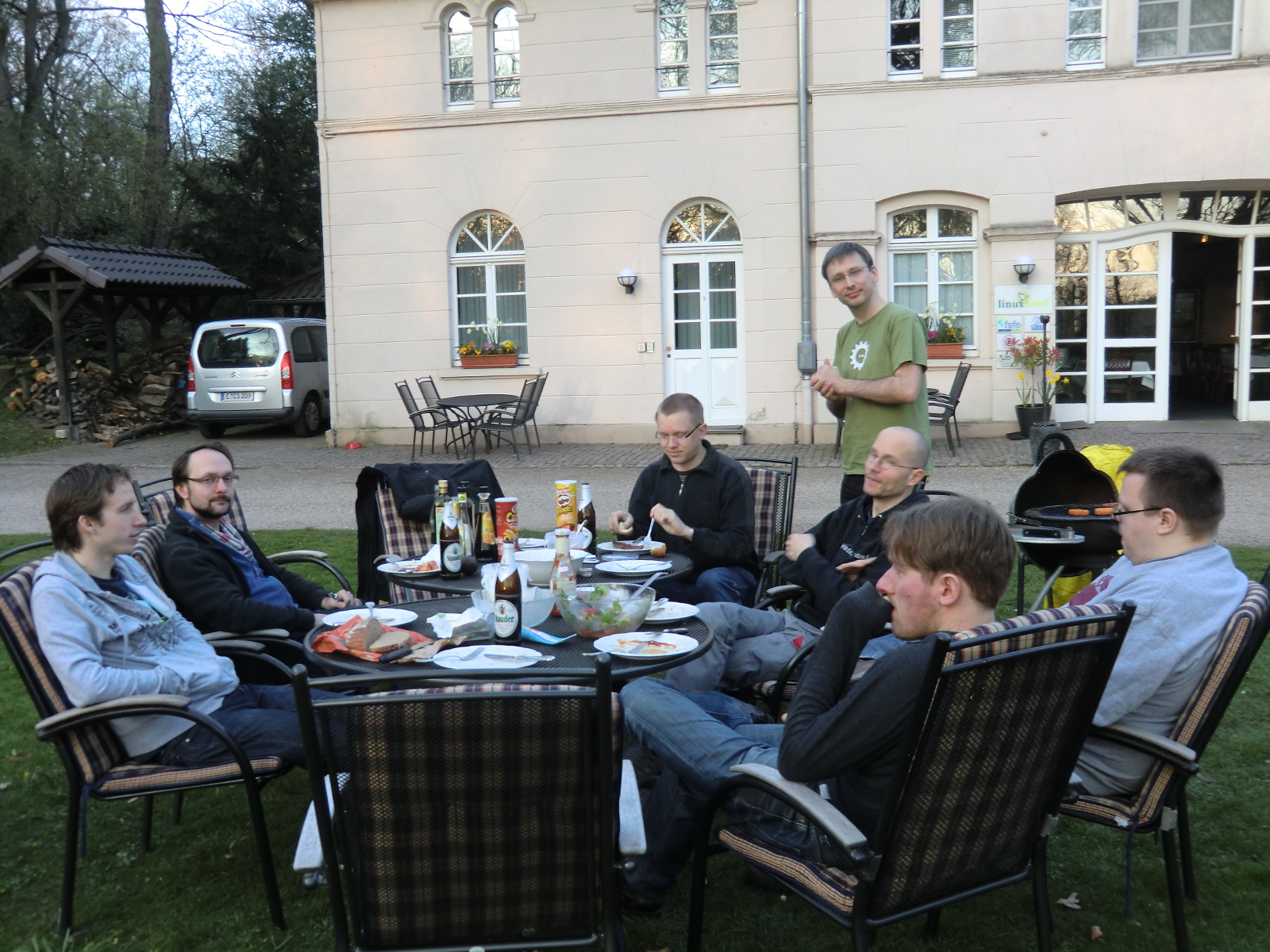
The seventh Debian Groupware Meeting was held in the LinuxHotel, Essen, Germany. We had one remote hacker from NYC which brings the number of attendants up to 9. This is a short summary of what happened during the weekend: Since we had a nice mix of first time Debian contributors, Debian Maintainers and Debian Developers we had lots of room for discussion and co-working which made this an exciting weekend. Groupphoto by Carsten Sch nert

Gunnar Wolf: Split regarding Docker

I have heard many good things about Docker, and decided to give it a spin on my systems. I think application-level virtualization has a lot to offer to my workflow... But the process to understand and later adopt it has left me somewhat heart-torn. Docker is clearly great technology, but its documentation is... Condescending and completely out of line with what I have grown used to in my years using Linux. First, there is so much simplistic self-praise sprinkled throughout it. There is almost no page I landed on that does not mention how user-friendly and user-centric Docker's commandline arguments are They let you talk in almost plain1 English. What they don't mention is that... Well, that's the way of basically every command-line tool. Of course, as soon as you start specifying details to it, the plain-Englishness starts dilluting into a more realistic English-inspiredness... Then... Things that go against our historical culture. It is often said that Windows documentation tends to be repetitive because users don't have the patience to read a full document. And our man pages are succint and to the point, because in our culture it is expected that users know how to search for the bit of information they are after. But reading documentation that's so excited with itself and praises again and again the same values and virtues, but never gets to the point I am interested in getting at (be it deployment, interoperation, description of the in-disk images+overlays layout, or anything moderately technical) never gets there... makes me quite unhappy. Last (for now)... Such a continuous sales pitch, an insistence on the good virtues, makes me wary of something they might be hiding. Anyway, at least for now, I just wanted to play a bit with it; I will wait at least until there is a backport to the stable Debian version before I consider moving my LXC VMs setup over to Docker (and a backport does not seem trivial to achieve, as Docker has several updated low-level dependencies we are unlikely to see in Wheezy). But I had to vent this. OK, now go back to your regular work ;-)

Joey Hess: the real Brazil

(click to enlarge)
"This is the real Brazil" -- Fernao After 3 days of travel, including 22 hours driving from Brasilia to the coast of Bahia, I can't say much more. A few things not pictured above.. The two hours of car-swallowing potholes in an arrow-straight highway in a flat plain, playing chicken against oncoming trucks. Night swim in the river in Correntina, followed by a whole grilled fish and ice cold guarana. Bliss. Push starting the car in a small cattle-farming village when it wouldn't start. The first sight of ocean waves and the drum circle last night.

Petter Reinholdtsen: Half the Coverity issues in Gnash fixed in the next release

I've been following the Gnash project for quite a while now. It is a free software implementation of Adobe Flash, both a standalone player and a browser plugin. Gnash implement support for the AVM1 format (and not the newer AVM2 format - see Lightspark for that one), allowing several flash based sites to work. Thanks to the friendly developers at Youtube, it also work with Youtube videos, because the Javascript code at Youtube detect Gnash and serve a AVM1 player to those users. :) Would be great if someone found time to implement AVM2 support, but it has not happened yet. If you install both Lightspark and Gnash, Lightspark will invoke Gnash if it find a AVM1 flash file, so you can get both handled as free software. Unfortunately, Lightspark so far only implement a small subset of AVM2, and many sites do not work yet. A few months ago, I started looking at Coverity, the static source checker used to find heaps and heaps of bugs in free software (thanks to the donation of a scanning service to free software projects by the company developing this non-free code checker), and Gnash was one of the projects I decided to check out. Coverity is able to find lock errors, memory errors, dead code and more. A few days ago they even extended it to also be able to find the heartbleed bug in OpenSSL. There are heaps of checks being done on the instrumented code, and the amount of bogus warnings is quite low compared to the other static code checkers I have tested over the years. Since a few weeks ago, I've been working with the other Gnash developers squashing bugs discovered by Coverity. I was quite happy today when I checked the current status and saw that of the 777 issues detected so far, 374 are marked as fixed. This make me confident that the next Gnash release will be more stable and more dependable than the previous one. Most of the reported issues were and are in the test suite, but it also found a few in the rest of the code. If you want to help out, you find us on the gnash-dev mailing list and on the #gnash channel on irc.freenode.net IRC server.

28 April 2014

Daniel Pocock: SMS logins: an illusion of security

The IT security world is still reeling from the impact of the OpenSSL Heartbleed bug. Thanks to the bug, many experts have been reviewing other technologies to try and find similar risks. While Heartbleed was hidden away in the depths of the OpenSSL code base, another major security risk has been hiding in plain sight: SMS authentication for web site logins. Remarkably, a number of firms have started giving customers the ability to receive single-use passwords over SMS for logging into their secure web sites. Some have even insisted that customers can no longer log in without it, denying customers the right to make an important choice about their own security preferences. Unfortunately, SMS is no substitute to the one-time-passwords generated using proper authentication tokens or the use of other strong authentication schemes such as cryptographic smart cards. Even telephone companies themselves advise that SMS should not be used to secure financial transactions. Ocean's 11 in real life: exploiting the weakest link in the chain To deliver single-use SMS passwords, the SMS must travel through various networks from the firm's headquarters, to a wholesale SMS gateway, international SMS network and finally down the line of the local phone company. In comparison, properly certified token devices generate a code inside the device in the palm of your hand. The code only travels from the screen to your eyes. In a litany of frauds coming in all shapes and sizes, telephone networks have been exploited over and over again because they are almost always the weakest link in the chain. Using the mobile SMS network for authentication is not building on solid ground - some experts even feel it is downright stupidity. One of the most serious examples was the theft of $150,000,000 from a pension fund deposited with JP Morgan: it was described as a real-life case of Ocean's 11. The authentication was meant to be a phone call rather than an SMS: a phone company employee who was in on the scam duly ensured the call never reached the correct place. The insecurity of traditional telephone networks has been on display for all the world to see in the ongoing trial of News Corporation executives for phone hacking. If journalists from a tabloid newspaper can allegedly hack a dozen phones before their first cigarette of the day, is it really wise to use an insecure technology like SMS as the cornerstone of a security system for authorizing transactions? A fraud recently played out on many credit card holders in the UK exploited a low-tech feature of the phone system to trick people to believe they were safe by "calling back" to their bank. A plethora of new attack vectors The staggering reality of the situation is that attackers don't even have to directly hack their victim's phones to access SMS messages. As the Android API documentation demonstrates, SMS reception is notified to all apps in real-time. Apps can process the messages even when the phone is sleeping and the message is not read by the user. Just consider all the apps on a phone that have requested permission to read incoming messages. There was an uproar recently when a new version of the Facebook app started demanding permissions to read incoming SMS. The app can't be installed if the user doesn't agree to these new permissions. WhatsApp, another popular app that has SMS access rights, was recently exposed in a major security scandal which revealed they use a phone's IMEI number as the password. When people install an app like Tinder (which does not yet request SMS access) is the security of their bank account likely to be at the front of their mind? Even if Facebook intends no harm, they have opened the floodgates by further de-sensitizing users to the risks of giving apps un-necessary access to their data. These companies are looking for every piece of data that could give them an edge in their customer profiling and marketing programs. Having real-time access to your SMS is a powerful way for them to understand your activities and feelings at every moment in the day. To facilitate these data analysis techniques, replicating and archiving your messages into their cloud databases (whether you can see them there or not) is par for the course. The cloud, of course, has become a virtual smorgasboard for cyber-criminals, including both hackers and occasionally insiders wanting to peek at private data or harvest it en-masse. Social networking and communication sites are built on a philosophy of sharing data to create interaction and excitement. Unfortunately, this is orthogonal to the needs of security. In this context, the telephone network itself may no longer be the weakest link in the chain. The diligent attacker only needs to look for the cloud operator with an unplugged security hole and use their system as a stepping stone to read any SMS they want, when they want. Would you notice a stray SMS? Maybe you feel that you would notice a stray SMS carrying a login code for your bank account. Would you always be able to react faster than the criminal however? Thanks to social networks, or location data inadvertently leaked by other apps the attacker can easily work out whether you are on holiday, at the gym, at a party or sleeping or in some other situation where you are not likely to check messages immediately. If you receive a flood of SMS spam messages (deliberately sent by an attacker) in the middle of the night and you put your phone into silent mode and ignore it, you may well miss one message that was a login to your bank account. SMS technology was never designed for secure activities. The inconvenience of SMS While security is a headline issue these days, it is also worth reflecting on the inconvenience of SMS in some situations. Travel is at the top of the list: SMS doesn't work universally when abroad. These are usually the times when the only way to access the bank is through the web site. After dealing with the irritations of the hotel or airport wifi registration, do you really need more stress from your bank's systems too? For some networks, SMS can be delayed by hours or days, sometimes never arriving at all. Many people swap their SIM cards when travelling to avoid the excessive roaming charges and there is extra inconvenience in swapping SIM cards back again just to log in to a bank account. Worst of all, if you are tethering with a SIM card from the country you are visiting, then it is impossible for you to receive the SMS message from the bank on your regular SIM card while simultaneously maintaining the SSL connection to their web site over your new SIM card. Other problems like a flat battery, water damage or PIN permanently blocked by children playing with the phone can also leave you without access to your bank account for varying lengths of time. Is there any up-side to SMS authentication? The only potential benefit to SMS authentication is that it weeds out some of the most amateur attempts to compromise your bank account, but this is a false sense of security and it opens up new attack vectors through the cloud as we have just demonstrated. For all other purposes, it smells like a new form of security theater. A more likely reason why it has become popular amongst some firms is that many lenders want to ensure they have mobile phone numbers to contact customers when loan or credit card payments are missed. Making the mobile phone number mandatory for login ensures they almost always have the correct phone number for almost 100% of customers. It is not clear that this benefit justifies the failure to provide proper security and the inconvenience when travelling though. Opting out Next time you log in to a web site, if the firm does try to enrol you in an SMS authentication scheme, it may be a good idea to click the "No thanks" option. If you have already been registered into an SMS authentication scheme, fill out the online complaint form and inform the firm that you will only accept a proper authentication token or cryptographic smart card. These solutions are tried and tested and they are the correct tool for the job.

Martin Pitt: Booting Ubuntu with systemd: Now in Utopic

Hot on the heels of my previous annoucement of my systemd PPA for trusty, I m now happy to announce that the latest systemd 204-10ubuntu1 just landed in Utopic, after sorting out enough of the current uninstallability in -proposed. The other fixes (bluez, resolvconf, lightdm, etc.) already landed a few days ago. Compared to the PPA these have a lot of other fixes and cleanups, due to the excellent hackfest that we held last weekend. So, upgrade today and let us know about problems in bugs tagged systemd-boot . I think systemd in current utopic works well enough to not break a developer s day to day workflow, so we can now start parallelizing the work of identifying packages which only have upstart jobs and provide corresponding systemd units (or SysV script). Also, this hasn t yet been tested on the phone at all, I m sure that it ll require quite some work (e. g. lxc-android-config has a lot of upstart jobs). To clarify, there is nofixed date/plan/deadline when this will be done, in particular it might well last more than one release cycle. So we ll release (i. e. switch to it as a default) when it s ready :-)

Evgeni Golov: Debian Bug Squashing Party Salzburg 2014

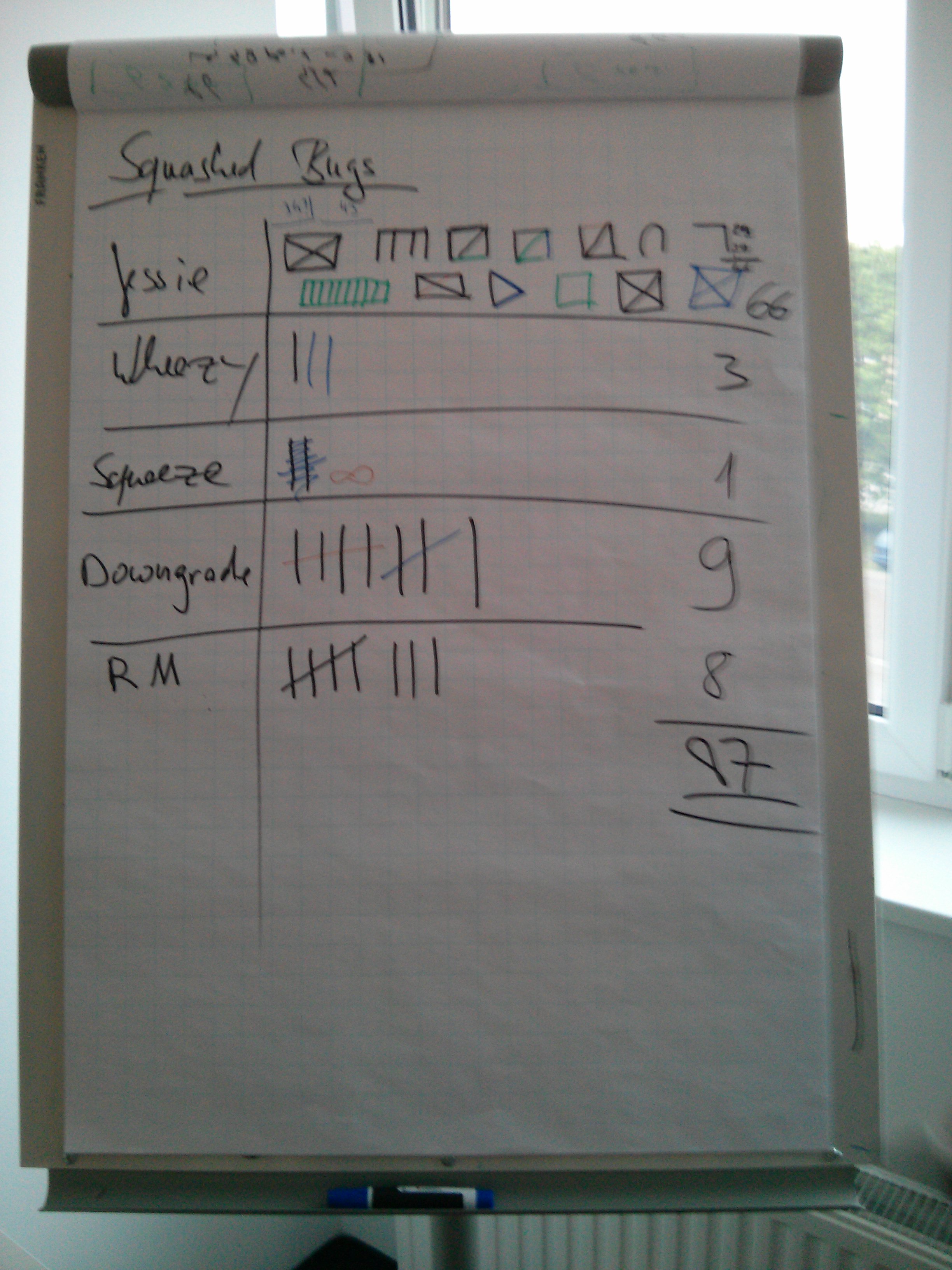
bsp2014_small This weekend, Bernd Zeimetz organized a BSP at the offices of conova in Salzburg, Austria. Three days of discussions, bugfixes, sparc removals and a lot of fun and laughter. We squashed a total of 87 bugs: 66 bugs affecting Jessie/Sid were closed, 9 downgraded and 8 closed via removals. As people tend to care about (old)stable, 3 bugs were fixed in Wheezy and one in Squeeze. These numbers might be not totaly correct, as were kinda creative at counting Marga promised a talk about an introduction to properly counting bugs using the Haus vom Nikolaus algorithm to the base of 7 . IMG_20140427_182902 Speaking of numbers, I touched the following bugs (not all RC): A couple of (non-free) pictures are available at Uwe s salzburg-cityguide.at. Thanks again to Bernd for organizing and conova and credativ for sponsoring!

Next.

Previous.