Junichi Uekawa: March came.
 March came. I was wasting more time writing and reading epidemic curves due to COVID-19. Not sure if me doing that helped anything.

 Here is my monthly update covering what I have been doing in the free software world during February 2020 (previous month):

warnings.warn method over logging.warning [...] and to document missing archive keyword argument to the get_bugs call [...].
libmate-desktop library component of the MATE Desktop Environment I submitted a pull request to make the build reproducible in/around various dialogs. [...]
python_example, an example pybind11 module built with a Python-based build system, I suggested sorting the extension sources to ensure a reproducible build in any projects based on this template. [...]
snapd component of the Snappy package manager. Here, I opened a pull request to make the build reproducible. [...]

 For the Tails privacy-oriented operating system, I uploaded the following packages to Debian:
0.1.8-5):
dh-python to Build-Depends. (#952366)sphinxdoc:Depends to binary package dependencies. (#832588)tool:pytest section in setup.cfg over plain "pytest".dh-systemd with debhelper version 9.20160709, specify Rules-Requires-Root: no, use secure URL in debian/copyright, update Vcs-Git & Vcs-Browser and bump the package's Standards-Version to 4.5.0.0.2-9):
 One of the original promises of open source software is that distributed peer review and transparency of process results in enhanced end-user security. However, whilst anyone may inspect the source code of free and open source software for malicious flaws, almost all software today is distributed as pre-compiled binaries. This allows nefarious third-parties to compromise systems by injecting malicious code into ostensibly secure software during the various compilation and distribution processes.
The motivation behind the Reproducible Builds effort is to provide the ability to demonstrate these binaries originated from a particular trusted source release: if identical results are generated from a given source in all circumstances, reproducible builds provides the means for multiple third-parties to reach a consensus on whether a build was compromised via distributed checksum validation or some other scheme.
 The initiative is proud to be a member project of the Software Freedom Conservancy, a not-for-profit 501(c)(3) charity focused on ethical technology and user freedom.
Conservancy acts as a corporate umbrella allowing projects to operate as non-profit initiatives without managing their own corporate structure. If you like the work of the Conservancy or the Reproducible Builds project, please consider becoming an official supporter.
This month, I:
libmate-desktop library component of the MATE Desktop Environment I submitted a pull request to make the build reproducible in/around various dialog boxes, etc. [...]
snapd component of the Snappy package manager. Here, I opened a pull request to make the build reproducible. [...]
python_example, an example pybind11 module built with a Python-based build system, I suggested sorting the extension sources to ensure a reproducible build in any projects based on this template. [...]
debian-installer package to allow all arguments from sources.list files (such as [check-valid-until=no]) in order that we can test the reproducibility of the installer images on the Reproducible Builds own testing infrastructure. (#13)
openstack-pkg-tools to fix a curious issue where packages built differently if they built "too fast" for example, if we built for both Python 3.7 and Python 3.8 but the installation of the latter occurs within the same wall clock second of the former, the Python 3.8 version will not overwrite the Python 3.7 version and lead to a shebang of #!/usr/bin/python3.7, whilst if it does not occur within the same second, the shebang will be overwritten
to #!/usr/bin/python3.8. (#952762)
#include directives), designate (embedded build path), javatools (nondeterminstic parsing of command-line variables), mate-desktop (build timestamps), msgpack-c (embeds build path), pynwb (embedded timestamps in test files), python-oslo.reports (nondeterminstic/random numbers), snapd-glib (embedded build path) & xavs2 (embedded timestamps).
Meson.build example to the SOURCE_DATE_EPOCH documentation [...], replacing instances of "anyone can" with "anyone may" [...], correcting/improving the logic to skip commits when generating drafts [...][...][...], etc.
 In our tooling, I also made the following changes to diffoscope, our in-depth and content-aware diff utility that can locate and diagnose reproducibility issues, including uploading version
137 to Debian:
sng image utility will return 1 if there are even minor errors in the file. (#950806)classes2.dex, classes3.dex from .apk files. (#88)str.format if we are just returning the string. [...]Command.VALID_RETURNCODES. [...]hsd, a blockchain-based top-level domain DNS protocol implementation that underpins Handshake and worked on some initial packaging. (#952472)
Debian LTS
This month I have worked 18 hours on Debian Long Term Support (LTS) and 12 hours on its sister Extended LTS project.
cacti (CVE-2020-8813), golang-go.crypto (CVE-2020-9283), netty, nodejs (CVE-2019-15605), nova (CVE-2015-9543), ntp, otrs2 (CVE-2019-11358)), php-horde-data (CVE-2020-8518), proftpd-dfsg, python-bleach (CVE-2020-6802), python-django, python-pysaml2, qtbase-opensource-src (CVE-2015-9541), ruby-rack, salt, sudo, systemd (CVE-2020-1712), waitress (CVE-2020-5236), wpa (CVE-2019-5061) & yara
1.10.7-2+deb9u8 to Debian stretch and 1.11.28-1~deb10u1 for Debian buster to address CVE-2020-7471, a potential SQL injection vulnerability.

2.2.10-1) New upstream security release. (#950581)
6.0~rc1-2 Add support for Transport Layer Security added in Redis 6.x (#951255) and add a comment regarding why we export a MAKEFLAGS variable in debian/rules.
5.0.7-2:
2.13+dfsg-2) Fix a regression in handling of CVE-2015-1197 with respect to the --no-absolute-filenames argument by reverting part of an upstream commit. (#946267 #946469)
0.14.0-6) Set the Bug-Database, Bug-Submit, Repository and Repository-Browse upstream metadata fields and rely on pre-initialised dpkg-architecture variables in debian/rules.
1.5.22-1 New upstream release.1.5.22-2 Apply a patch to fix build failures on the s390x architecture. (#950777)20.0.4-2 Set the upstream metadata fields (Repository, Repository-Browse, etc.), bump Standards-Version to 4.5.0.20.0.4-3 Specify that the gunicorn binary package provides the httpd-wsgi3 virtual package. (#952706)4.0.23-2:
future=+lfs to DEB_BUILD_MAINT_OPTIONS to support operating on large files. (#949665)gitlab-ci.yml.Rules-Requires-Root: no and bump the Standards-Version to 4.5.0.4.0.23-3 Drop quotes from DEB_BUILD_MAINT_OPTIONS export line. (#951037)
4.7.6-1) on behalf of Alexandre Rossi.
 sbuild is a tool used by those maintaining packages in Debian, and
derived distributions such as Ubuntu. When used correctly, it can
catch a lot of categories of bugs before packages are uploaded. It
does this by building the package in a clean environment, and then
running the package through the Lintian, piuparts, adequate and
autopkgtest tools. However, configuring sbuild so that it makes use
of all of these tools is cumbersome.
In response to this complexity, I wrote a module for the
Propellor configuration management system to prepare a system such
that a user can just go ahead and run the sbuild(1) command.
This module is useful on one s development laptop if you need to
reinstall your OS, you don t have to look up the instructions for
setting up sbuild again. But it s also useful on throwaway build
boxes. I can instruct propellor to provision a new virtual machine to
build packages with sbuild, and all the different tools mentioned
above will be connected together for me.
I just uploaded Propellor version 5.1.0 to Debian unstable. The
version overhauls the API and internals of the Sbuild module to take
better advantage of Propellor s design. I won t get into those
details in this post. What I d like to do is demonstrate how you can
set up sbuild on your own machines, using Propellor.
Getting started with Propellor
apt-get install propellor, and then propellor --init.
You ll be offered two setups, options A and B. I suggest starting
with option B.
If you never use Propellor for anything other than provisioning
sbuild, you can stick with option B. If this tutorial makes you want
to check out more features of Propellor, you might consider switching
to option A and importing your old configuration.
Open ~/.propellor/config.hs. You will see something like this:
-- The hosts propellor knows about.
hosts :: [Host]
hosts =
        [ mybox
        ]
-- An example host.
mybox :: Host
mybox = host "mybox.example.com" $ props
        & osDebian Unstable X86_64
        & Apt.stdSourcesList
        & Apt.unattendedUpgrades
        & Apt.installed ["etckeeper"]
        & Apt.installed ["ssh"]
        & User.hasSomePassword (User "root")
        & File.dirExists "/var/www"
        & Cron.runPropellor (Cron.Times "30 * * * *")
iris, so I might replace the above with this:
-- The hosts propellor knows about.
hosts :: [Host]
hosts =
        [ iris
        ]
-- My laptop.
iris :: Host
iris = host "iris.silentflame.com" $ props
        & osDebian Testing X86_64
& are the properties of the host
iris. Here, I ve removed all properties except the osDebian
property, which informs propellor that iris runs Debian testing and
has the amd64 architecture.
The effect of this is that Propellor will not try to change anything
about iris. In this tutorial, we are not going to let Propellor
configure anything about iris other than setting up sbuild.
(The osDebian property is a pure info property, which means that
it tells Propellor information about the host to which other
properties might refer, but it doesn t itself change anything about
iris.)
Telling Propellor to configure sbuild
First, add to the import lines at the top of config.hs the lines:
import qualified Propellor.Property.Sbuild as Sbuild
import qualified Propellor.Property.Schroot as Schroot
-- The hosts propellor knows about.
hosts :: [Host]
hosts =
        [ iris
        ]
-- My laptop.
iris :: Host
iris = host "iris.silentflame.com" $ props
        & osDebian Testing X86_64
        & Apt.useLocalCacher
        & sidSchrootBuilt
        & Sbuild.usableBy (User "spwhitton")
        & Schroot.overlaysInTmpfs
        & Cron.runPropellor (Cron.Times "30 * * * *")
  where
        sidSchrootBuilt = Sbuild.built Sbuild.UseCcache $ props
                & osDebian Unstable X86_64
                & Sbuild.update  period  Daily
                & Sbuild.useHostProxy iris
Apt.useLocalCacher set up apt-cacher-ng and points apt on iris
at the cacher. This is the most efficient way to share a cache of
packages between apt on iris, and apt within the sbuild chroot.sidSchrootBuilt builds the sbuild schroot. Unfortunately, we have
to use a where clause because of Haskell s rules about operator
precedence. But it s just a simple substitution: imagine that &
Sbuild.built ... replaces & sidSchrootBuilt.
osDebian specifies that this is a Debian unstable chroot. You
can easily change this, or add another chroot, for building
stable backports, etc.Sbuild.UseCcache enables ccache for builds in this chroot.
You can replace this with Sbuild.NoCcache when building a
package which is broken by ccache, which happens from
time-to-time.Sbuild.update updates the chroot once per day.Sbuild.useHostProxy iris causes Propellor to propagate iris s
apt proxy into the chroot, so that apt in the chroot will also
use iris s apt cacher.Sbuild.usableBy adds spwhitton to the right group, so that he is
allowed to invoke sbuild(1).Schroot.overlaysInTmpfs configures sbuild to install build
dependencies and build packages in tmpfs. You can omit this
property on machines with low amounts of memory.Cron.runPropellor sets up a cron job to re-run propellor once per
hour. This is needed to ensure that things like Sbuild.update
actually happen. It will also normalise sbuild configuration files,
replace chroots that you accidently deleted, etc.propellor iris.silentflame.com.
In this configuration, you don t need to worry about whether the
hostname iris.silentflame.com actually resolves to your laptop.
However, it must be possible to ssh root@localhost.
This should be enough that spwhitton can:
$ sbuild -A --run-lintian --run-autopkgtest --run-piuparts foo.dsc
        ...
        & stretchSchrootBuilt
        ...
  where
        ...
        stretchSchrootBuilt = Sbuild.built Sbuild.UseCcache $ props
                & osDebian (Stable "stretch") X86_64
                & Sbuild.update  period  Daily
                & Sbuild.useHostProxy iris
  where
        sidSchrootBuilt = Sbuild.built Sbuild.UseCcache $ props
                & osDebian Unstable X86_64
                & Sbuild.update  period  Daily
                & Apt.mirror "https://foo.mirror/debian/"
                & Apt.installed ["apt-transport-https"]
 Last year I wrote about some tools for working with Docker
images. Since then, we've deprecated the dogen tool for our
own images and have built a successor called
Concreate.
Concreate takes a container image definition described in a YAML document and
generates an output image. To do so, it generates an intermediate
Dockerfile,
along with the scripts and artefacts you references in the YAML file,
and by default invokes docker build on the result.
However, it can use other builders, such as the OpenShift Build
Service, which is what we use for our production
images.
Concreate can also manage running
tests against the
image. As with the Container Testing Framework that I mentioned last time,
these tests are defined using the Behave system.
In related news is that we have published the sources for all of our
images. You can now go and read
the image.yaml file for EAP 7 on
OpenShift
to give you an example of what a real image using Concreate looks like.


 A new firmware for the Kobo ebook reader came out and I adjusted the mega update pack to use it. According to the comments in the firmware thread it is working faster than previous releases. The most incredible change though is the update from wpa_supplicant 0.7.1 (around 2010) to 2.7-devel (current). Wow.
 For details and warning please consult the previous post.
Download
Mark6 Kobo GloHD
firmware: Kobo 4.6.9995 for GloHD
Mega update: Kobo-4.6.10075-combined/Mark6/KoboRoot.tgz
Mark5 Aura
firmware: Kobo 4.6.9995 for Aura
Mega update: Kobo-4.6.10075-combined/Mark5/KoboRoot.tgz
Mark4 Kobo Glo, Aura HD
firmware: Kobo 4.6.9995 for Glo and AuraHD
Mega update: Kobo-4.6.10075-combined/Mark4/KoboRoot.tgz
Enjoy.
 About powerline
Powerline does some font substitutions that allow additional theming for terminal applications such as tmux, vim, zsh, bash and more. The powerline font has been packaged in Debian for a while now, and I ve packaged two powerline themes for vim and zsh. They re currently only in testing, but once my current todo list on packages look better, I ll upload them to stretch-backports.
For vim, vim-airline
 How to enable
Install the vim-airline package, and add the following to your .vimrc file:
" Vim Airline theme
let g:airline_theme='powerlineish'
let g:airline_powerline_fonts = 1
let laststatus=2
The vim-airline-themes package contains additional themes that can be defined in the snippet above. For zsh, powerlevel9k
 Powerlevel9k has lots of options and features. If you re interested in it, you should probably take a look at their readme file on GitHub for all the details.
How to enable
Install the zsh-theme-powerlevel9k package and add the following to your to your .zshrc file.
source /usr/share/powerlevel9k/powerlevel9k.zsh-theme
SOURCE_DATE_EPOCH support.SOURCE_DATE_EPOCH.88~bpo9+1 to stretch-backports.
reprotest development
util-linux confirmed bug in nsenter, awaiting fix.--print-sudoers work for --env-build as well./contribute/ on our
main website.apt-key addapt-key add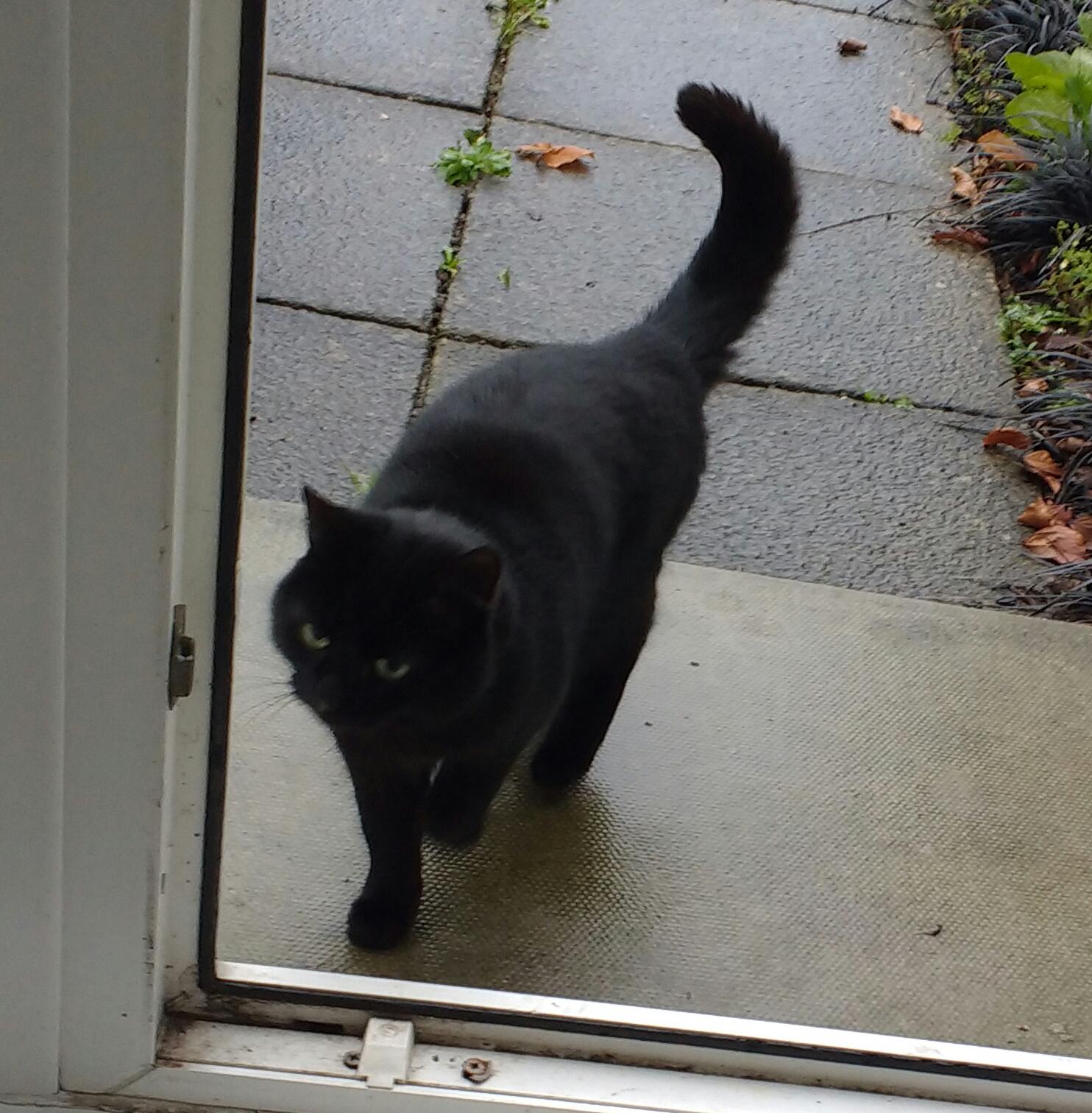 No more nagging me about the placeholder image from Wikipedia I used in
yesterday's report!
Set up
 Here's what the team did today:
tumbleweed
Stefano started the day by hacking away on our video archive. We eventually want
to upload all our videos to YouTube to give them exposure, but sadly our archive
metadata is in a pretty poor shape.
With the script tumbleweed wrote, we can scrape the archive for matches against
the old DebConf's pentabarf XML we have.
tumbleweed also helped Ivo with the ansible PXE setup he's working on. Some
recent contributions from a collaborator implemented new features (like a nice
menu to choose from) but also came with a few annoying bugs.
ivodd
Ivo continued working on the PXE setup today. He also tried to break our ansible
setup by using fresh installs with different user cases (locales, interfaces,
etc.), with some success.
The reason he and Stefano are working so hard on the PXE boot is that we had a
discussion about the future of our USB install method. The general consensus on
this was although we would not remove it, we would not actively maintain it
anymore.
PXE is less trouble for multiple machines. For single machines or if you don't
control the DHCP server, using ansible manually on a fresh Debian install will
be the recommended way.
olasd
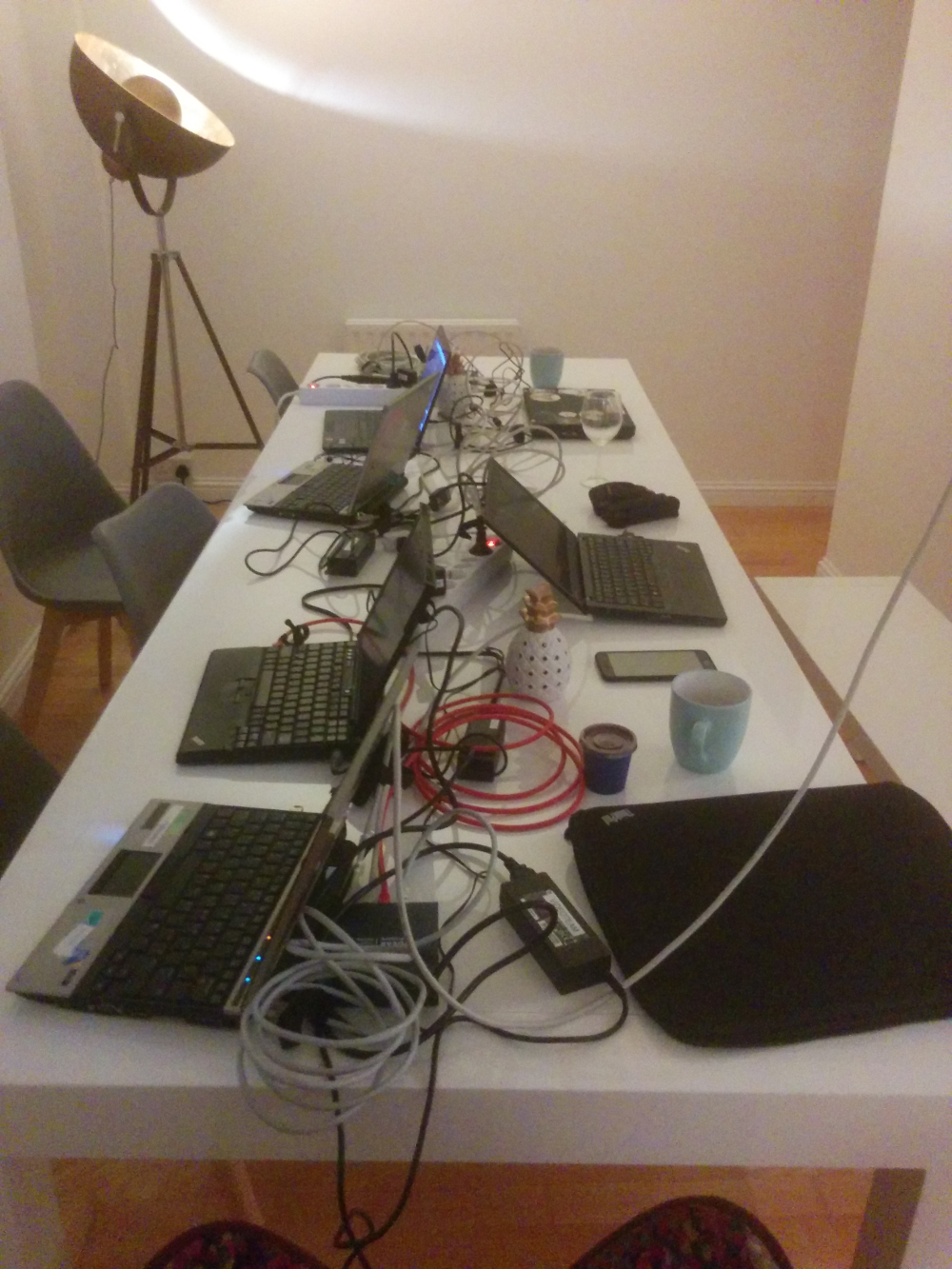
After a very long drive, olasd arrived late in the evening with all our gear.
Hurray! We were thus able to set up some test boxes and start wiring the airbnb
properly. Tomorrow will certainly be more productive with all this stuff at our
disposition.
pollo
Today I mainly worked on setting up our documentation website. After some
debate, we decided that sphinx was the right tool for the job.
I am a few pages in and if I work well I think we'll have something to show for
at the end of the sprint!
I also was thrown back into ansible after witnessing a bug in the locale
management. I'm still rusty, but it's slowly coming back to me.
Let's end this blog post with a picture of the neon pineapple that sits on the
wall of the solarium.

 A maintenance release 0.3.3.3.1 of RcppEigen is now on CRAN (and will get to Debian soon). It brings Eigen 3.3.* to R.
The impetus was a request from CRAN to change the call to
Rcpp::Rcpp.plugin.maker() to only use :: as the function has in fact been exported and accessible for a pretty long time. So now the usage pattern catches up. Otherwise, Haiku-OS is now supported and a minor Travis tweak was made.
The complete NEWS file entry follows.
Courtesy of CRANberries, there is also a diffstat report for the most recent release.Changes in RcppEigen version 0.3.3.3.1 (2017-11-19)
- Compilation under Haiku-OS is now supported (Yu Gong in #45).
- The
Rcpp.plugin.makerhelper function is called via::as it is in fact exported (yet we had old code using:::).- A spurious argument was removed from an example call.
- Travis CI now uses https to fetch the test runner script.
This post by Dirk Eddelbuettel originated on his Thinking inside the box blog. Please report excessive re-aggregation in third-party for-profit settings.
A maintenance release RcppClassic 0.9.9 is now at CRAN. This package provides a maintained version of the otherwise deprecated first Rcpp API; no new projects should use it.
Per a request from CRAN, we changed the call to Rcpp::Rcpp.plugin.maker() to only use :: as the function has in fact been exported and accessible for a pretty long time. So now the usage pattern catches up.
Courtesy of CRANberries, there are changes relative to the previous release.
Questions, comments etc should go to the rcpp-devel mailing list off the R-Forge page.
This post by Dirk Eddelbuettel originated on his Thinking inside the box blog. Please report excessive re-aggregation in third-party for-profit settings.
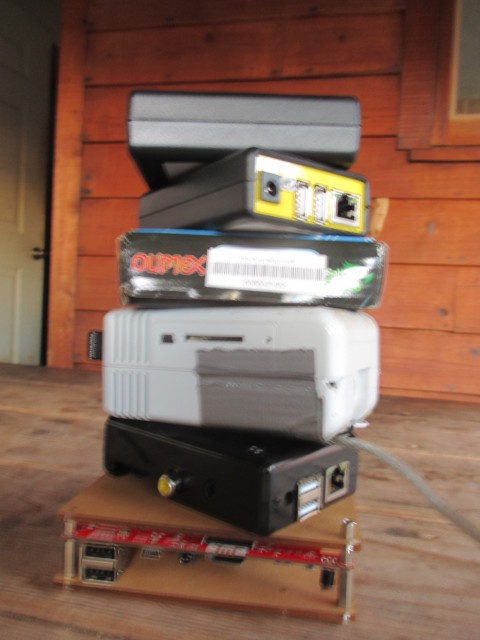
 Following up on propelling disk images,
Propellor can now build custom ARM disk images for a variety of
different ARM boards. The disk image build can run on a powerful laptop or
server, so it's super fast and easy compared with manually installing
Debian on an ARM board.
Here's a simple propellor config for a Olimex LIME board, with ssh access
and a root password:
lime :: Host
lime = host "lime.example.com" $ props
    & osDebian Unstable ARMHF
    & Machine.olimex_A10_OLinuXino_LIME
    & hasPartition (partition EXT4  mountedAt  "/"  setSize  MegaBytes 8192)
        & hasPassword (User "root")
        & Ssh.installed
    & Ssh.permitRootLogin (RootLogin True)
& imageBuiltFor lime
    (RawDiskImage "/srv/lime.img")
    (Debootstrapped mempty)
 |
olimex_A10_OLinuXino_LIME :: Property (HasInfo + DebianLike)
olimex_A10_OLinuXino_LIME = FlashKernel.installed "Olimex A10-OLinuXino-LIME"
     requires  sunixi "A10-OLinuXino-Lime"
     requires  armmp
 It's not the house's cat per say, but it's been hanging out around the house
for most of the day and makes cute faces trying to convince us to let it come
inside. Nice try cat. Nice try.
Here are some glamour professional photos of what the place looks like on a
perfect summer day, just for the kick of it:


 Of course, reality has trouble matching all the post-processing filters.
Plan for the week
Now on a more serious note; apart from enjoying the beautiful city of Cambridge,
here's what the team plans to do this week:
tumbleweed
Stefano wants to continue refactoring our ansible setup. A lot of things have
been added in the last year, but some of it are hacks we should remove and
implement correctly.
highvoltage
Jonathan won't be able to come to Cambridge, but plans to work remotely, mainly
on our desktop/xfce session implementation. Another pile of hacks waiting to be
cleaned!
ivodd
Ivo has been working a lot of the pre-ansible part of our installation and plans
to continue working on that. At the moment, creating an installation USB key is
pretty complicated and he wants to make that simpler.
olasd
Nicolas completely reimplemented our streaming setup for DC17 and wants to
continue working on that.
More specifically, he wants to write scripts to automatically setup and teardown
- via API calls - the distributed streaming network we now use.
Finding a way to push TLS certificates to those mirrors, adding a live stream
viewer on video.debconf.org and adding a viewer to our archive are also
things he wants to look at.
pollo
For my part, I plan to catch up with all the commits in our ansible repository I
missed since last year's sprint and work on documentation.
It would be very nice if we could have a static website describing our work so
that others (at mini-debconfs for examples) could replicate it easily.
If I have time, I'll also try to document all the ansible roles we have written.
Stay tuned for more daily reports!
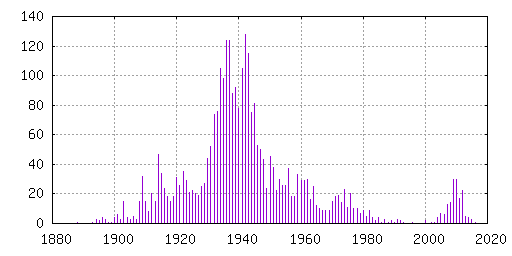 I've so far identified ten sources for IMDB title IDs for movies in
the public domain or with a free license. This is the statistics
reported when running 'make stats' in the git repository:
  249 entries (    6 unique) with and   288 without IMDB title ID in free-movies-archive-org-butter.json
 2301 entries (  540 unique) with and     0 without IMDB title ID in free-movies-archive-org-wikidata.json
  830 entries (   29 unique) with and     0 without IMDB title ID in free-movies-icheckmovies-archive-mochard.json
 2109 entries (  377 unique) with and     0 without IMDB title ID in free-movies-imdb-pd.json
  291 entries (  122 unique) with and     0 without IMDB title ID in free-movies-letterboxd-pd.json
  144 entries (  135 unique) with and     0 without IMDB title ID in free-movies-manual.json
  350 entries (    1 unique) with and   801 without IMDB title ID in free-movies-publicdomainmovies.json
    4 entries (    0 unique) with and   124 without IMDB title ID in free-movies-publicdomainreview.json
  698 entries (  119 unique) with and   118 without IMDB title ID in free-movies-publicdomaintorrents.json
    8 entries (    8 unique) with and   196 without IMDB title ID in free-movies-vodo.json
 3186 unique IMDB title IDs in total
The entries without IMDB title ID are candidates to increase the
data set, but might equally well be duplicates of entries already
listed with IMDB title ID in one of the other sources, or represent
movies that lack a IMDB title ID. I've seen examples of all these
situations when peeking at the entries without IMDB title ID. Based
on these data sources, the lower bound for movies listed in IMDB that
are legal to distribute on the Internet is between 3186 and 4713.
It would be great for improving the accuracy of this measurement,
if the various sources added IMDB title ID to their metadata. I have
tried to reach the people behind the various sources to ask if they
are interested in doing this, without any replies so far. Perhaps you
can help me get in touch with the people behind VODO, Public Domain
Torrents, Public Domain Movies and Public Domain Review to try to
convince them to add more metadata to their movie entries?
Another way you could help is by adding pages to Wikipedia about
movies that are legal to distribute on the Internet. If such page
exist and include a link to both IMDB and The Internet Archive, the
script used to generate free-movies-archive-org-wikidata.json should
pick up the mapping as soon as wikidata is updates.
As usual, if you use Bitcoin and want to show your support of my
activities, please send Bitcoin donations to my address
15oWEoG9dUPovwmUL9KWAnYRtNJEkP1u1b.
There's an old net story from the 80's, which I can't find right now, but
is about two computers, 10 feet apart, having a ridiculously long network
route between them, packets traveling into other states or countries and
back, when they could have flowed over a short cable.
Ever since I read that, I've been collecting my own ridiculously long
routes. ssh bouncing from country to country, making letters I type travel
all the way around the world until they echo back on my screen. Tasting the
latency that's one of the only ways we can viscerally understand just how
big a tangle of wires humanity has built.
Yesterday, I surpassed all that, and I did it in a way that hearkens right
back to the original story. I had two computers, 20 feet apart, I wanted
one to talk to the other, and the route between the two ended up traveling
not around the Earth, but almost the distance to the Moon.
I was rebuilding my home's access point, and ran into a
annoying bug that prevented it from
listening to wifi. I knew it was still connected over ethernet to the
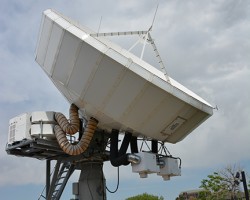
satellite receiver.
I connected my laptop to the satellite receiver over wifi. But, I didn't
know the IP address to reach the access point. Then I remembered
I had set it up so incoming ssh to the satellite receiver was directed
to the access point.
So, I sshed to a computer in New Jersey. And from there I sshed to my
access point. And the latency was amazing. Because, every time I pressed a
key:

Next.