This post is made in a personal capacity. While it represents the outcome of multiple discussions on the topic with a variety of people, nothing written below should be construed as Red Hat's corporate position
The FSF have
released a statement on UEFI secure boot. It explains the fundamental issue here, which isn't something as simple as "will OEMs let me install Linux". It's "Does the end user have the ability to manage their own keys".
Secure boot is a valuable feature. It does neatly deal with the growing threat of pre-OS malware. There is an incentive for it to be supported under Linux. I discussed the technical aspects of implementing support for it
here - it's not a huge deal of work, and it is being worked on. So let's not worry about that side of things. The problem is with the keys.
Secure boot is implemented in a straightforward way. Each section of a PE-COFF file is added together and a hash taken[1]. This hash is signed with the private half of a signing key and embedded into the binary. When you attempt to execute a file under UEFI, the firmware attempts to decrypt the embedded hash. This requires that the firmware have a either a copy of the public half of the signing key in its key database, or for there to be a chain of trust from the signing key to a key in its key database. Once it has the decrypted hash, it generates its own hash of the binary and compares them. If they match, the binary is executed.
What happens if it doesn't match? Per the UEFI specification, the firmware can then prompt the user and ask if they want to execute it anyway. If the user accepts then the hash of the binary is remembered[4] and can continue to be executed in future. This is similar to what you get when you visit a self-signed https site, or when you connect to an ssh server for the first time - the user must explicitly state that they trust the software that is being booted.
This is a little awkward for a couple of reasons. First, it means that any updates to the bootloader would require the user to manually accept the binary again. Second, as we've seen with https, there's the risk of uesrs just blindly accepting things. If it's acceptable to do this off internal media[5] then malware could just rely on some number of users saying "yes". And thirdly, we've been told that Microsoft's Windows logo requirements forbid this option.
The first is problematic but manageable with appropriate documentation. The second is a real risk that makes this approach far less compelling. And the third is probably a showstopper.
So signed but untrusted binaries are probably out, on technological, UI and policy grounds. What else?
We can sign binaries with a trusted key. This gets us interoperability, but comes at a cost. The first issue here is that we still don't know what the process for getting a trusted key is going to be. One option is for something like a generic Linux key that's provided by all firmware vendors. As long as the OEM doesn't remove it, then that Linux key could be used to sign other keys that are used by individual Linux vendors. The main difficulty involved in this is having the Linux key be managed by an authority that OEMs can trust to only provide keys to trustworthy organisations and maintain control of the private half of the key. Remember, if any malware is signed with any of these keys, it'll boot on any machine carrying this key. It's a lot of trust. It's not obvious that there's an organisation with sufficient trust at the moment.
The second approach is for each Linux vendor to generate their own key and get every OEM to carry it. Let's rule this out on the basis that it's an approach that doesn't scale at all. Red Hat could probably get its key into a bunch of OEM systems. Canonical too. Oracle? Probably for the vendors they care about. It's likely to be much harder for everyone else, and you still end up with the risk that you've just bought a computer that'll boot Red Hat but not Ubuntu.
The third approach is for each Linux vendor to obtain a key from someone who's already trusted. The most obvious authority here is Microsoft. Ignoring the PR unpleasantness involved with Linux vendors having to do business with Microsoft to get signed, so far Microsoft haven't given us any indication that this will be possible.
So every approach that involves us signing with a trusted key comes with associated problems. There's also a common problem with all of them - you only get to play if you have your own trusted key. Corporate Linux vendors can probably find a way to manage this. Everyone else (volunteer or hobbyist vendors, end users who want to run their own OS, anyone who wants to use a modified bootloader or kernel) is shut out.
The obvious workaround is for them to just turn off secure boot. Ignoring the arguments over whether or not OEMs will provide that option[6], it benefits nobody for Linux installation to require disabling a legitimate security feature. It's also not likely to be in a standard location on all systems and may have different naming. It's a support nightmare. Let's focus on trying to find a solution that provides the security and doesn't have obvious scaling issues.
There's a pretty simple one. If the problem centres around installing signing keys, why not have a standardised way of installing signing keys?
What we've proposed for this is an extension of the current UEFI standard for booting off removable media. There's a standardised location for putting the bootloader for USB sticks or optical media. For 32-bit PCs, it's EFI/BOOT/BOOTIA32.EFI. For 64-bit, it's EFI/BOOT/BOOTX64.EFI. Our proposal is to specify a path for key storage on the media. If the user attempts to boot off an item of removable media and finds a key file, we would like the firmware to prompt the user to install the key. Once the key is installed, the firmware will attempt to boot the bootloader on the removable media.
How does this avoid the problems associated with prompting the user to boot untrusted binaries? The first is that there's no problem with updates. Because a key has been imported, as long as future bootloader updates are signed with the same key, they'll boot without prompting the user. The second is that it can be limited to removable media. If malware infects the system and installs itself onto the hard drive, the firmware won't prompt for key installation. It'll just refuse to boot and fall back on whatever recovery procedures the OEM has implemented. The only way it could get on the system would involve the user explicitly booting off removable media, which would be a significant hurdle. If you're at that stage then you can also convince the user to disable secure boot entirely.
This proposal has been brought up with the UEFI standards working group, and with the UEFI plugfest taking place next week we're hoping it'll be discussed. It seems to satisfy the dual requirements of maintaining system security and ensuring that users have the flexibility to choose what they run on their system. But as with all technical proposals, feedback is entirely welcome.
[1] Hilariously, Microsoft's signing tool gets this wrong by also adding the contents of gaps between sections in direct contravention of their own specification. This is fine for binaries generated by Microsoft's toolchain because they don't have any gaps, but since our binaries
do contain gaps[2] and since the standard firmware implementation[3]
does implement the specification correctly, any Linux-generated binaries signed with the Microsoft tool fail validation. Go team.
[2] Something that is, as far as we can tell, permitted by the PE-COFF specification
[3] Written by Intel, not Microsoft
[4] Note that this means that only the specific binary is considered trusted. No key is imported, and any other binaries signed with the same key will also need to be manually trusted in the same way.
[5] As would be required if you ever want to be able to update your bootloader
[6] And to forestall panic, at this point we expect that most OEMs
will provide this option on most hardware, if only because customers will still want to boot Windows 7. We do know that some hardware will ship without it. It's not implausible that some OEMs will remove it in order to reduce their support burden. But for the foreseeable future, you'll be able to buy hardware that runs Linux.

comments
 Because of tmux I run with $TERM= screen instead of my regular rxvt-unicode, but I had a big issue with VIM because of this, it kept writing and F\n and H\n each time I pressed <end> and <home> keys respectively. I finally found the way to solve this, making VIM use $TERM= xterm internally writing this on my ~/.vimrc:
 Finally!
Last Friday, after two years worth of work, I finally got the first box of books for the
 Translating over from the back cover text (and this is just a quick translation from me It reads better in Spanish ;-) ):
 I realise it has been nearly two months since I last posted anything here. The good news is I'm still alive!
Mostly the past couple of months has been full of cute victims to take pictures of, which has helped me setup a simplified portfolio site;
 As is natural for an LTS cycle, lots of people are thinking and talking about work focused on quality rather than features. With Canonical


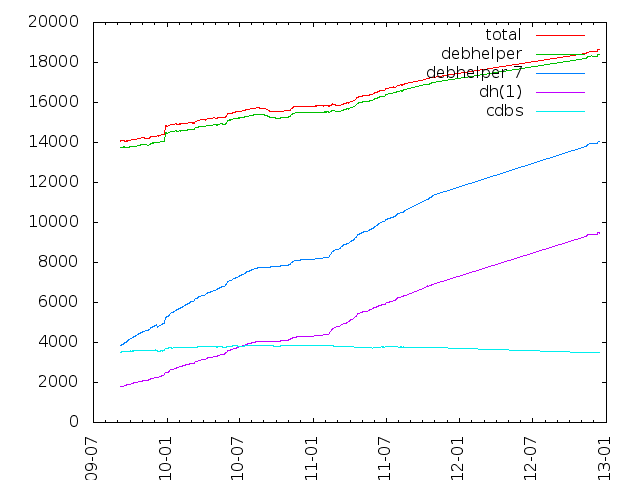
 We all love stats, don t we? So, here we go!
Let s start with a graph:

 Since


 Even though some three months have passed since
 . Even this DebConf wasn t our first bid we lost DebConf7 bid to Edinburgh, but it is perseverance that got us here. The moral I m trying to tell here is if you have a goal never back down from it.
What I found to be our biggest problem and what I personally found as most painstaking in all of this was having and reporting to so many different sides and different groups while trying to keep them in same communication channel. Even my right hand (Velimir) was apart from me (Vienna), then place where two of us are coming from is not the place where DebConf is getting organized in. As in the end we ended up having all the parties separated and pulling to their own side, from Government of Republika Srpska to NGO to Debian to local team and to those who remained as undeclared . Option of cutting the cord in this case was missing as these were the components that DebCon11 was made of.
Of course this meant you ll be missing workforce and there were days you d wake up driving >= 200 km/h (literally) with one hand on the wheel, other on the phone and your other right hand (Velimir) holding your RedBull. But you wouldn t do this just because you had to and there was no one else to do it, you d do it because you re responsible for the sake of the project and won t be just sitting there because by some unwritten hierarchy rules you re supposed to sit and supervise things. I d advise you do the same thing when you see there s no one else to do something, even if it means making coffee for one of the teams.
I m not trying to scare you away from organizing your own DebConf, on the contrary after all I ve been through in past two years if someone asked me would I do it if I knew it was like this, without a doubt my answer would still be fsck yea . All the previous DebConf organizers told me about all of this, but why didn t I give up? For the same reason you won t give up and for the same reason why we believe in the same goal.
If anything this is one of the stories you ll want to tell your kids about so When I was your age I used to sleep naked in the snow would turn to When I was your age I organized DebConf11 in Maybe this blog post wasn t even necessary and some things weren t supposed to be said, I guess sometimes I just can t shut up
 For those who were on DebConf11 I hope you enjoyed and had a great time, otherwise I m saying all of this in vein. As organizer all you see is problems and you miss most of the confrence, but by what I know there are 11 candidate bids for DebConf13 and for me hearing that tells me the results of our efforts.
DebConf11 after effects
I could write a whole novel about this, but to keep it as short as possible, for last two years as a side project I was working on an idea of Government or some of its institutions migrating to Linux. At first I was somewhat loud about it, then after Microsoft heard about it and after they tried stopping the idea by trying to scare me by trying to interfere with my private life; as that didn t work its lobbyist came even near of obstructing the whole conference within the Government. For the sake of the conference, I convinced the Government that by supporting DebConf it doesn t mean they need to move to Linux and publicly stopped talking about it. I also convinced them that our only goal was to have successful conference and promote alternative options and open ideas. I wasn t lying as I saw this as new opportunity of them concluding on their own why they should or shouldn t not move, the better conference was the more chances of success we had.
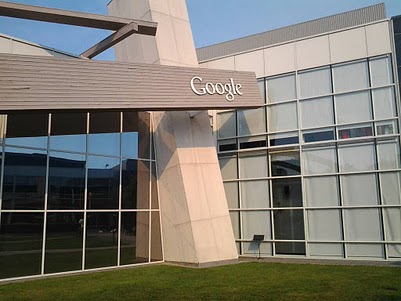
That s why I tried pushing as many representatives from various companies as in this case we would use reverse psychology where basically no one or few know what Linux or Debian for that matter is, but everybody knows who Google is, so if you have participants from i.e: Google or Austrian E-Health care system talking about how they are using your technology is better way to explain what s it all about really. Eventually Microsoft even had their first ever conference in Bosnia/Herzegovina and you wanna take a wild guess where it was held?
 I received recently a mail about my attempt to provide


 Rapha l Hertzog
 A couple of times I have written code which basically does this:










 It has been a while since I last
 Last weekend Dennis M. Ritchie, creator of the C Programming Language, the UNIX Operating System, The Plan 9 Operating System and many other key contributions to computing, passed away due an extended illness. I learned about it yesterday