Search Results: "mak"

6 December 2013

Steve Kemp: So PaaS

I just realised a lot of my projects are deployed in the same way: This includes both Apache-based projects, and node.js projects. I'm sure I could generalize this, and do clever things with git-hooks. Right now for example I have run-scripts which look like this:
#!/bin/sh
#
# /etc/service/blogspam.js/run - Runs the blogspam.net API.
#
# update the repository.
git pull --update --quiet
# install dependencies, if appropriate.
npm install
# launche
exec node server.js
It seems the only thing that differs is the name of the directory and the remote git clone URL. With a bit of scripting magic I'm sure you could push applications to a virgin Debian installation and have it do the right thing. I think the only obvious thing I'm missing is a list of Debian dependencies. Perhaps adding soemthing like the packages.json file I could add an extra step:
apt-get update -qq
apt-get install --yes --force-yes $(cat packages.apt)
Making deployments easy is a good thing, and consistency helps..

Petter Reinholdtsen: Debian Edu interview: Klaus Knopper

It has been a while since I managed to publish the last interview, but the Debian Edu / Skolelinux community is still going strong, and yesterday we even had a new school administrator show up on #debian-edu to share his success story with installing Debian Edu at their school. This time I have been able to get some helpful comments from the creator of Knoppix, Klaus Knopper, who was involved in a Skolelinux project in Germany a few years ago. Who are you, and how do you spend your days? I am Klaus Knopper. I have a master degree in electrical engineering, and is currently professor in information management at the university of applied sciences Kaiserslautern / Germany and freelance Open Source software developer and consultant. All of this is pretty much of the work I spend my days with. Apart from teaching, I'm also conducting some more or less experimental projects like the Knoppix GNU/Linux live system (Debian-based like Skolelinux), ADRIANE (a blind-friendly talking desktop system) and LINBO (Linux-based network boot console, a fast remote install and repair system supporting various operating systems). How did you get in contact with the Skolelinux / Debian Edu project? The credit for this have to go to Kurt Gramlich, who is the German coordinator for Skolelinux. We were looking for an all-in-one open source community-supported distribution for schools, and Kurt introduced us to Skolelinux for this purpose. What do you see as the advantages of Skolelinux / Debian Edu? What do you see as the disadvantages of Skolelinux / Debian Edu? For these reasons and experience from our project, I would now rather consider using plain Debian for schools next time, until Skolelinux is more closely integrated into Debian and becomes upgradeable without reinstallation. Which free software do you use daily? GNU/Linux with LXDE desktop, bash for interactive dialog and programming, texlive for documentation and correspondence, occasionally LibreOffice for document format conversion. Various programming languages for teaching. Which strategy do you believe is the right one to use to get schools to use free software? Strong arguments are

Wouter Verhelst: POV-Ray 3.7 out!

I've been using POV-Ray off and on for the past decade or so. I've never been extremely talented with graphical stuff, but I've always liked playing around with it; and POV-Ray, with its turing-complete scene description language, appeals to me as a programmer. I've used it when I needed to do some animation; for instance, I created the FOSDEM 2013 and DebConf13 "wait screen" animations for the video team with FOSDEM. One particular downside of POV-Ray has always been the fact that their license was a custom non-free one. This was a historical accident (POV-Ray has existed for a long time, since before the popularization of FLOSS), and AIUI, the relicensing was impossible for various reasons. However, a rewrite of POV-Ray (as version 3.7) has been in the making for quite a while. Today, I noticed two things: first, POV-Ray 3.7 was released (under the AGPLv3, thereby becoming Free Software); and second, as of the 3.7 release, the POV-Ray is put into a git repository and available on github. Also, apart from it being free software now, POV-Ray 3.7 has a few new features as well. Most importantly among those (at least in my opinion), POV-Ray 3.7 is a multithreaded application, in contrast to POV-Ray 3.6 and before which wasn't. Building it seemed to have some issues with the versions of a few things that are in Debian unstable; but for one of these a fix has already been merged, and for the other a merge request is out. Now to decide whether I should package it...

Gunnar Wolf: For people in Mexico: Workshop next Wednesday! Video editing from the command line (by Chema Serralde, @joseserralde)

(Yes, yes... Maybe I should post in Spanish.. But hey, gotta keep consistecy in my blog!) General, public, open invitation Are you in Mexico City, or do you plan to be next Wednesday (December 11)? Are you interested in video edition? In Free Software? I will have the pleasure to host at home the great Chema Serralde, a good friend, and a multifacetic guru both in the technical and musical areas. He will present a workshop: Video editing from the command line. I asked Chema for an outline of his talk, but given he is a busy guy, I will basically translate the introduction he prepared for this same material in FSL Vallarta, held two weeks ago.
With the help of the commandline, you can become a multimedia guru. We will edit a video using just a terminal. This skill will surprise your friends and your couple. But the most important is that this knowledge is just an excuse to understand step by step what does a video CODEC mean, what is a FORMAT, and how video and audio editors work; by using this knowledge, you will be able to set the basis for multimedia editing, without the promises and secrets of propietary editors. How much does my file weigh and why? How to improve a video file's quality? Why cannot I read my camera's information from GNU/Linux? By the end of this workshop, we well see how some libraries help you develop your first audio and video application, what are their main APIs and uses.
Logistics Everybody is welcome to come for free, no questions asked, no fees collected. I can offer coffee for all, but if you want anything else to eat/drink, you are welcome to bring it. We do require you to reserve and confirm your place (mail me to my usual mail address). We have limited space, and I must set an absolute quota of 10 participants. Some people hide their address... Mine is quite publicly known: Av. Copilco 233, just by Parque Hugo Margain, on the Northern edge of UNAM (Metro Copilco). The course starts at 16:00, and lasts... As long as we make it last ;-) So, that said... See you there! :-D [update]: Chema sent me the list of topics he plans to cover. Copy/pasting from his mail, in Spanish:
TALLER REL MPAGO DE EDICI N AUDIOVISUAL EN L NEA DE COMANDO
Jos Mar a Serralde Ruiz, facilitador
  1. Editando como cavern cola.
    1. Manipulaci n b sica de archivos multimedia en entornos POSIX.
    2. S un Bash VJ (videojockey)
    3. Vaciando y entubando
  2. Editando como cient fico.
    1. Encabezados y fourcc
    2. 3 familias de CODECS de v deo y sus patentes
    3. 3 famlias de CODECS de audio y sus patentes
    4. Muxers, demuxers y muxes.
  3. Editando como artista.
    1. Cajas de herramientas en software libre para procesamiento de v deo.
    2. Procesamiento en tiempo real de v deo (el que se crea artista pierde)
    3. Derritiendo v deo, audio con calcetines MELT + SOX
Software necesario (sistemas operativos POSIX, windouseros acercarse con el af n de repensar sus vidas): mplayer, avconv/ffmpeg (libavcodec), melt, sox, imagemagick

5 December 2013

Daniel Kahn Gillmor: The legal utility of deniability in secure chat

This Monday, I attended a workshop on Multi-party Off the Record Messaging and Deniability hosted by the Calyx Institute. The discussion was a combination of legal and technical people, looking at how the characteristics of this particular technology affect (or do not affect) the law. This is a report-back, since I know other people wanted to attend. I'm not a lawyer, but I develop software to improve communications security, I care about these questions, and I want other people to be aware of the discussion. I hope I did not misrepresent anything below. I'd be happy if anyone wants to offer corrections. BackgroundOff the Record Messaging (OTR) is a way to secure instant messaging (e.g. jabber/XMPP, gChat, AIM). The two most common characteristics people want from a secure instant messaging program are:
Authentication
Each participant should be able to know specifically who the other parties are on the chat.
Confidentiality
The content of the messages should only be intelligible to the parties involved with the chat; it should appear opaque or encrypted to anyone else listening in. Note that confidentiality effectively depends on authentication -- if you don't know who you're talking to, you can't make sensible assertions about confidentiality.
As with many other modern networked encryption schemes, OTR relies on each user maintaining a long-lived "secret key", and publishing a corresponding "public key" for their peers to examine. These keys are critical for providing authentication (and by extension, for confidentiality). But OTR offers several interesting characteristics beyond the common two. Its most commonly cited characteristics are "forward secrecy" and "deniability".
Forward secrecy
Assuming the parties communicating are operating in good faith, forward secrecy offers protection against a special kind of adversary: one who logs the encrypted chat, and subsequently steals either party's long-term secret key. Without forward secrecy, such an adversary would be able to discover the content of the messages, violating the confidentiality characteristic. With forward secrecy, this adversary is be stymied and the messages remain confidential.
Deniability
Deniability only comes into play when one of the parties is no longer operating in good faith (e.g. their computer is compromised, or they are collaborating with an adversary). In this context, if Alice is chatting with Bob, she does not want Bob to be able to cryptographically prove to anyone else that she made any of the specific statements in the conversation. This is the focus of Monday's discussion. To be clear, this kind of deniability means Alice can correctly say "you have no cryptographic proof I said X", but it does not let her assert "here is cryptographic proof that I did not say X" (I can't think of any protocol that offers the latter assertion). The opposite of deniability is a cryptographic proof of origin, which usually runs something like "only someone with access to Alice's secret key could have said X."
The traditional two-party OTR protocol has offered both forward secrecy and deniability for years. But deniability in particular is a challenging characteristic to provide for group chat which is the domain of Multi-Party OTR (mpOTR). You can read some past discussion about the challenges of deniability in mpOTR (and why it's harder when there are more than two people chatting) from the otr-users mailing list. If you're not doing anything wrong... The discussion was well-anchored by a comment from another participant who cheekily asked "If you're not doing anything wrong, why do you need to hide your chat at all, let alone be able to deny it?" The general sense of the room was that we'd all heard this question many times, from many people. There are lots of problems with the ideas behind the question from many perspectives. But just from a legal perspective, there are at least two problems with the way this question is posed: In these situations, people confront real risk from the law. If we care about these people, we need to figure out if we can build systems to help them reduce that legal risk (of course we also need to fix broken laws, and the legal environment in general, but those approaches were out of scope for this discussion). The Legal Utility of Deniability Monday's meeting was called specifically because it wasn't clear how much real-world usefulness there is in the "deniability" characteristic, and whether this feature is worth the development effort and implementation tradeoffs required. In particular, the group was interested in deniability's utility in legal contexts; many (most?) people in the room were lawyers, and it's also not clear that deniability has much utility outside of a formal legal setting. If your adversary isn't constrained by some rule of law, they probably won't care at all whether there is a cryptographic proof or not that you wrote a particular message (In retrospect, one possible exception is exposure in the media, but we did not discuss that scenario). Places of possible usefulness So where might deniability come in handy during civil litigation or a criminal trial? Presumably the circumstance is that a piece of a chat log is offered as incriminating evidence, and the defendant is trying to deny something that they appear to have said in the log. This denial could take place in two rather different contexts: during rules over admissibility of evidence, or (once admitted) in front of a jury. In legal wrangling over admissibility, apparently a lot of horse-trading can go on -- each side concedes some things in exchange for the other side conceding other things. It appears that cryptographic proof of origin (that is, a lack of deniability) on the chat logs themselves might reduce the amount of leverage a defense lawyer can get from conceding or arguing strongly over that piece of evidence. For example, if the chain of custody of a chat transcript is fuzzy (i.e. the transcript could have been mishandled or modified somehow before reaching trial), then a cryptographic proof of origin would make it much harder for the defense to contest the chat transcript on the grounds of tampering. Deniability would give the defense more bargaining power. In arguing about already-admitted evidence before a jury, deniability in this sense seems like a job for expert witnesses, who would need to convince the jury of their interpretation of the data. There was a lot of skepticism in the room over this, both around the possibility of most jurors really understanding what OTR's claim of deniability actually means, and on jurors' ability to distinguish this argument from a bogus argument presented by an opposing expert witness who is willing to lie about the nature of the protocol (or who misunderstands it and passes on their misunderstanding to the jury). The complexity of the tech systems involved in a data-heavy prosecution or civil litigation are themselves opportunities for lawyers to argue (and experts to weigh in) on the general reliability of these systems. Sifting through the quantities of data available and ensuring that the appropriate evidence is actually findable, relevant, and suitably preserved for the jury's inspection is a hard and complicated job, with room for error. OTR's deniability might be one more element in a multi-pronged attack on these data systems. These are the most compelling arguments for the legal utility of deniability that I took away from the discussion. I confess that they don't seem particularly strong to me, though some level of "avoiding a weaker position when horse-trading" resonates with me. What about the arguments against its utility? Limitations The most basic argument against OTR's deniability is that courts don't care about cryptographic proof for digital evidence. People are convicted or lose civil cases based on unsigned electronic communications (e.g. normal e-mail, plain chat logs) all the time. OTR's deniability doesn't provide any legal cover stronger than trying to claim you didn't write a given e-mail that appears to have originated from your account. As someone who understands the forgeability of e-mail, i find this overall situation troubling, but it seems to be where we are. Worse, OTR's deniability doesn't cover whether you had a conversation, just what you said in that conversation. That is, Bob can still cryptographically prove to an adversary (or before a judge or jury) that he had a communication with someone controlling Alice's secret key (which is probably Alice); he just can't prove that Alice herself said any particular part of the conversation he produces. Additionally, there are runtime tradeoffs depending on how the protocol manages to achieve these features. For example, forward secrecy itself requires an additional round trip or two when compared to authenticated, encrypted communications without forward secrecy (a "round trip" is a message from Alice to Bob followed by a message back from Bob to Alice). Getting proper deniability into the mpOTR spec might incur extra latency (imagine having to wait 60 seconds after everyone joins before starting a group chat, or a pause in the chat of 15 seconds when a new member joins) or extra computational power (meaning that they might not work well on slower/older devices) or an order of magnitude more bandwidth (meaning that chat might not work at all on a weak connection). There could also simply be complexity that makes it harder to correctly implement a protocol with deniability than an alternate protocol without deniability. Incorrectly-implemented software can put its users at risk. I don't know enough about the current state of mpOTR to know what the specific tradeoffs are for the deniability feature, but it's clear there will be some. Who decides whether the tradeoffs are worth the feature? Other kinds of deniability Further weakening the case for the legal utility of OTR's deniability, there seem to be other ways to get deniability in a legal context over a chat transcript. There are deniability arguments that can be made from outside the protocol. For example, you can always claim someone else took control of your computer while you were asleep or using the bathroom or eating dinner, or you can claim that your computer had a virus that exported your secret key and it must have been used by someone else. If you're desperate enough to sacrifice your digital identity, you could arrange to have your secret key published, at which point anyone can make signed statements with it. Having forward secrecy makes it possible to expose your secret key without exposing the content of your past communications to any listener who happened to log them. Conclusion My takeaway from the discussion is that the legal utility of OTR's deniability is non-zero, but quite low; and that development energy focused on deniability is probably only justified if there are very few costs associated with it. Several folks pointed out that most communications-security tools are too complicated or inconvenient to use for normal people. If we have limited development energy to spend on securing instant messaging, usability and ubiquity would be a better focus than this form of deniability. Secure chat systems that take too long to make, that are too complex, or that are too cumbersome are not going to be adopted. But this doesn't mean people won't chat at all -- they'll just use cleartext chat, or maybe they'll use supposedly "secure" protocols with even worse properties: for example, without proper end-to-end authentication (permitting spoofing or impersonation by the server operator or potentially by anyone else); with encryption that is reversible by the chatroom operator or flawed enough to be reversed by any listener with a powerful computer; without forward secrecy; or so on. As a demonstration of this, we heard some lawyers in the room admit to using Skype to talk with their clients even though they know it's not a safe communications channel because their clients' adversaries might have access to the skype messaging system itself. My conclusion from the meeting is that there are a few particular situations where deniability could be useful legally, but that overall, it is not where we as a community should be spending our development energy. Perhaps in some future world where all communications are already authenticated, encrypted, and forward-secret by default, we can look into improving our protocols to provide this characteristic, but for now, we really need to work on usability, popularization, and wide deployment. Thanks Many thanks to Nick Merrill for organizing the discussion, to Shayana Kadidal and Stanley Cohen for providing a wealth of legal insight and legal experience, to Tom Ritter for an excellent presentation of the technical details, and to everyone in the group who participated in the interesting and lively discussion. Tags: chat, deniability, otr, security

4 December 2013

Aigars Mahinovs: Translation management workflows

Whatever you do with translations, consider translation management issues. For example, you are developing a multilingual web site. All kinds of labels and buttons and form fields are nicely translatable with trans template tag and ugettext. You have po files that follow your code from dev to stage to production environment.

Now you add a CMS into the mix. And suddenly - you translations are in more than one place, in more than one format and follow different routes to production.
Now imagine that you need to add Chinese language to your entire site. The translator is an off-site contractor. What files would you send to him to translate? How would you generate them? How will you integrate them?
If someone adds or changes a page on production in English: how will your developers see that change? how will you know that an updated translation for Chinese is needed? how will you manage the update of the translation?
If you make a CMS and don't have at least the export_po_file and import_po_file management commands, then you are not really multilingual. It is either that or figuring out your own answer for the above questions.
I have finally found a Django-based CMS that has those - http://pythonhosted.org/django-page-cms/ . Have not really tried it yet, but I am hopeful.

3 December 2013

Matthew Garrett: Subverting security with kexec

(Discussion of a presentation I gave at Kiwicon last month)

Kexec is a Linux kernel feature intended to allow the booting of a replacement kernel at runtime. There's a few reasons you might want to do that, such as using Linux as a bootloader[1], rebooting without having to wait for the firmware to reinitialise or booting into a minimal kernel and userspace that can be booted on crash in order to save system state for later analysis.

But kexec's significantly more flexible than this. The kexec system call interface takes a list of segments (ie, pointers to a userspace buffer and the desired target destination) and an entry point. The kernel relocates those segments and jumps to the entry point. That entry point is typically code referred to as purgatory, due to the fact that it lives between the world of the first kernel and the world of the second kernel. The purgatory code sets up the environment for the second kernel and then jumps to it. The first kernel doesn't need to know anything about what the second kernel is or does. While it's conventional to load Linux, you can load just about anything.

The most important thing to note here is that none of this is signed. In other words, despite us having a robust in-kernel mechanism for ensuring that only signed modules can be inserted into the kernel, root can still load arbitrary code via kexec and execute it. This seems like a somewhat irritating way to patch the running kernel, so thankfully there's a much more straightforward approach.

I modified kexec to add an additional loader and uploaded the code here. Build and install it. Make sure that /sys/module/module/parameters/sig_enforce on your system is "Y". Then, as root, do something like:
kexec --type="dummy" --address= printf "0x%x" $(( $(grep "B sig_enforce" /proc/kallsyms awk ' print "0x"$1 ') & 0x7fffffff)) --value=0 --load-preserve-context --mem-max=0x10000 /bin/true
to load it[2]. Now do kexec -e and watch colours flash and check /sys/module/module/parameters/sig_enforce again.

The beauty of this approach is that it doesn't rely on any kernel bugs - it's using kernel functionality that was explicitly designed to let you do this kind of thing (ie, run arbitrary code in ring 0). There's not really any way to fix it beyond adding a new system call that has rather tighter restrictions on the binaries that can be loaded. If you're using signed modules but still permit kexec, you're not really adding any additional security.

But that's not the most interesting way to use kexec. If you can load arbitrary code into the kernel, you can load anything. Including, say, the Windows kernel. ReactOS provides a bootloader that's able to boot the Windows 2003 kernel, and it shouldn't be too difficult for a sufficiently enterprising individual to work out how to get Windows 8 booting. Things are a little trickier on UEFI - you need to tell the firmware which virtual physical map to use, and you can only do it once. If Linux has already done that, it's going to be difficult to set up a different map for Windows. Thankfully, there's an easy workaround. Just boot with the "noefi" kernel argument and the kernel will skip UEFI setup, letting you set up your own map.

Why would you want to do this? The most obvious reason is avoiding Secure Boot restrictions. Secure Boot, if enabled, is explicitly designed to stop you booting modified kernels unless you've added your own keys. But if you boot a signed Linux distribution with kexec enabled (like, say, Ubuntu) then you're able to boot a modified Windows kernel that will still believe it was booted securely. That means you can disable stuff like the Early Launch Anti-Malware feature or driver signing, or just stick whatever code you want directly into the kernel. In most cases all you'd need for this would be a bootloader, kernel and an initrd containing support for the main storage, an ntfs driver and a copy of kexec-tools. That should be well under 10MB, so it'll easily fit on the EFI system partition. Copy it over the Windows bootloader and you should be able to boot a modified Windows kernel without any terribly obvious graphical glitches in the process.

And that's the story of why kexec is disabled on Fedora when Secure Boot is enabled.

[1] That way you only have to write most drivers once
[2] The address section finds the address of the sig_enforce symbol in the kernel, and the value argument tells the dummy code what value to set that address to. --load-preserve-context informs the kernel that it should save hardware state in order to permit returning to the original kernel. --mem-max indicates the highest address that the kernel needs to back up. /bin/true is just there to satisfy the argument parser.

comment count unavailable comments

Iustin Pop: A not so dark sky

I'm aware of how not-dark our modern city night sky is, but sometimes it still heavily surprises me how full of light it actually is. Yesterday I went about five kilometres out of Z rich; I thought at that distance, on a reasonably dark hill, it would be good enough for some night-sky shots. So I setup my tripod, only to realise I can't expose over 30 seconds because (at low ISO and fast aperture, shooting not straight up), everything is bleached out: I couldn't believe my eyes. Yes, I heard that one needs to go 100Km out of big cities, but but So I went and found that since about 2004, all of Switzerland is light polluted - even going on top of Jungfrau, for example, wouldn't completely eliminate it. I also learned about Merle Walker's equation - yeah, 200Km or more away from light sources would be good. Not here, in this quite small, quite populated country in the middle of Europe :/ I realised that as soon as my eyes got acclimated to the location I was at, I could easily see everything around me, due to the light pollution. I miss a really dark sky - I remember a couple of years back, in a different country, stopping at night on the side of the road, and being shocked at how the sky was filled with starts. I didn't have any camera with me at that time Heck, I remember seeing the Milky Way way back as a child, but nowadays when I get out of work, I can barely see 4-5 points of light in the sky. Anyway, enough with ranting Thanks to modern technology, one can recover lots of detail, even in a washed out picture. So in the end, shooting straight up, I could get some resemblance of structure (and this was only at 28mm, which is not that wide): Or alternatively, one can use the glowing light for a bit of play/contrast: I also played with stacking images via Deep Sky Stacker, but stacking - I learned to my surprise - only works to reduce noise in the final image, and not to make it "brighter" or more detailed. Live and learn The result was a bit better than not stacked, but not by much: This was a 25 5s, ISO 800, f/4, same 28mm lens. What I found surprising is the "non-star object" (to call it so) near the centre of the image - I have no idea what it is, it definitely doesn't look like a star, it could be an elliptical galaxy or so. I tried navigating back in time via Stellarium, but I don't remember the orientation of the lens, so it will remain a mystery to me. Anyway, two more pictures and higher resolutions on a Smugmug album. Feel free to leave a comment or drop me an email if you have suggestions where to take nice night sky photos in Switzerland

Russell Coker: Preferring Not To

I ve just read Bartleby the Scrivener which is a short story about a scrivener who refused to work saying I d prefer not to . It reminded me of some situations in the computer industry. I ve never seen a single case where someone preferred not to work when everyone around them (colleagues and management) wanted them to work. But then the incidence of having an entire team and management wanting to work efficiently isn t nearly as common as one might imagine. In some cases it s desired that someone not work, such as a former colleague who was hired as a sysadmin but did nothing but change backup tapes (a few hours work per week). Not having him login as root improved the general reliability of the servers but it was fortunate that we never needed to restore from backups One time I had a colleague who preferred to spend most of his time in the office searching the Internet for videos of street fights. I have often told colleagues that I would prefer them to work, but in the case of a guy who s only hobby is street-fighting I decided to let it go. Managing people can be difficult, particularly for someone who doesn t like disagreements. Some managers that I ve reported to seemed to prefer not to manage in an apparent attempt to avoid disputes. One time when I complained about a colleague not even having a suitable computer to permit doing any work a manager responded with the rhetorical question what do you expect me to do? . That manager didn t do any annual reviews of staff for over a year, he only eventually did some reviews because he was told that his scheduled promotion was on hold until he got them done. I got the impression that at least two levels of management preferred not to work at that company. Sometimes it just gets weird though, such as the occasion when I was the only member of a team and the manager who was supposedly managing no-one but me never seemed to have time to have a meeting with me. But he didn t want me to bypass him and talk directly to other people in the company, so he preferred not to work and not to have anyone else do his job. Most of the companies that I ve worked for in a full-time capacity didn t seem to have any effective technical interviews (note that I ve mostly worked for financial companies and ISPs not free software companies). So it seems that anyone with minimal computer skills who wants a well paying job could just send out a CV to a bunch of recruiting agencies, get interviewed by enough companies to eventually hit one without a technical interview process and then find a job that doesn t require work. Depression The Wikipedia page about Bartleby the Scrivener [2] suggests that Bartleby was depressed. I wonder how much of the lack of performance I ve witnessed has been due to depression. There appears to be a strong correlation between work environments that cause depression and people preferring not to work. Maybe managers should be considering how to make work less depressing to try and get more effective employees (in terms of quality and quantity of work). One example of this is the sysadmin team death spiral I ve witnessed where no-one can automate solving problems (EG by cron jobs to manage resource usage and analysis tools to find minor problems before they become major problems) because everyone is dedicated to fixing things that break needlessly (EG systems crashing due to lack of disk space). When people start getting control over recurring problems and automating things then the work becomes increasingly about solving problems and less about implementing the same manual processes every day/week and it s more fun and effective for everyone. At the BoF on depression at LCA 2013 one delegate stated that many companies have people in HR who can arrange support for depressed employees. Apparently if you are depressed and you work for a company that s large enough to have a HR department then it can be beneficial to talk to HR about it. That probably works well in the case where an employee is depressed but the company is working well. But in the case where the company isn t working well it seems unlikely to help. David Graeber wrote an interesting article about Bullshit Jobs [3]. He goes a bit far, I don t think that late night pizza delivery is a bullshit job and actuaries are useful to society. But his points about the existence of useless jobs are reasonable. Management Levels I sometimes wonder whether there is some benefit in establishing social norms about working and then having management take little interest in how it happens. If a team works well together then management could just set deadlines (which would be negotiated with employees who know what s possible) and let the team work out how to do it. Then instead of having one manager for each team of ~10 people who theoretically tracks what everyone is doing you could have one manager for a dozen teams who just tracks overall team performance essentially remove a layer of management. Valve is famous for having no formal management structure and for getting things done, unfortunately that apparently allows school-style cliques to block actions [4]. But I think that the Valve experiment is useful and provides some ideas that can be used by other companies. Maybe if instead of requiring consensus of the entire company for hiring decisions they only required consensus of the team things would have worked better. Of course another down-side to such things is that hierarchical management can be good for avoiding discrimination and bullying. The article I cited about Valve compares it to high-school. It could be that Valve employees were all nice people who only hired other nice people. But if similar systems were implemented in many companies then some would surely end up being like a typical high school with all the bullying and mistreatment of minority groups that entails. Michael O. Church wrote an interesting article in which he divides employees into four categories, loser , clueless , psychopaths , and technocrats (note that he didn t invent the first three names) [5]. In his model the clueless category includes most middle-management. I think that there are some problems with Michael s model and I m not arguing for a technocracy (which is how this post might be interpreted in terms of his ideas). But I think he demonstrates some of the real problems in the way companies are managed and in his model the losers prefer not to work as long as they can get paid. Conclusion I don t have any good solutions to these problems to offer. It seems that the best we can hope for is incremental change to make work less depressing, to have the minimal amount of management, and to avoid bullshit jobs .

Antoine Beaupr : Announcing a prettier noping

I have implemented really pretty histograms in the venerable ping software, something I never thought could be improved, until I discovered prettyping.sh, something that was just begging for improvements. Which are now done. But first some history... First, in 1983 (!), there was ping and network operators rejoiced, as they could see if a host was down or not, and have all sorts of geeky statistics:
PING koumbit.net (209.44.112.66): 48 data bytes
56 bytes from 209.44.112.66: icmp_seq=0 ttl=52 time=25.076 ms
56 bytes from 209.44.112.66: icmp_seq=1 ttl=52 time=24.006 ms
56 bytes from 209.44.112.66: icmp_seq=2 ttl=52 time=24.106 ms
^C--- koumbit.net ping statistics ---
3 packets transmitted, 3 packets received, 0% packet loss
round-trip min/avg/max/stddev = 24.006/24.396/25.076/0.483 ms
Then, in 2006, there was noping, and things were, well, not much better, but we had colors, and there was some rejoicing. noping before Then, in october 2013, there was prettyping.sh, and things got really flashy and "oh wow, you can do that?" There was much rejoicing. prettyping animation Then, tonight, I learned ncurses and there was much headaches. But then, I reimplemented prettyping in noping, and I am so happy that I wrote this blog post: noping now Unless you haven't figured out how cool this is, let me break it down for you:
  1. it supports IPv4 and IPv6
  2. it allows you to track multiple hosts at the same time, and compare them
  3. this allows you to easily track down failure points in a network, something for which you usually need smokeping (needs a webserver) or mtr (doesn't have colors)
  4. it allows you to track a lot (the last minute at least) of history by default
  5. it is visually easy to track, even from a distance
You may know of that hack that can make "ping" ring a bell when it receives a packet? This is better: you can see the packets latency (or when they are just dropped!) from a distance, using an intuitive color code. The code is up for review here:
git clone -b prettyping git://src.anarc.at/liboping
Thanks to the well architectured noping, the patches were not that complicated to implemented. I have contacted upstream to get those changes merged, and hopefully this will be in your favorite Debian distribution soon. Rejoice!

2 December 2013

Roland Mas: Rsyncing a BackupPC storage pool, efficiently

BackupPC is a pretty good backup system. Its configuration is rather flexible, it has nice expiry policies, and it can store duplicated file contents only once (for files that are shared across hosts or don't change in time) within a compressed pool of data. However, it doesn't do much to help pushing the data to off-site storage, or at least not very efficiently. So if you have a BackupPC instance running on a Raspberry Pi or a plug computer at home, it's a bit tricky to protect your data against loss due to burglary or home fire. The obvious solution would be to rsync the storage pool to a remote site. However, the current pooling system relies heavily on hardlinks, and rsync is notoriously inefficient with those. In the home backup server scenario, this means that even if the computer is more powerful than a Pi and can handle the memory requirements of rsync, you'll often end up transferring way too much data. So, since the obvious solution doesn't work straight away, what do we do? Why, we fix it, of course. With a little look into the storage pool, we notice that the bulk of the data is stored in files with an abstract name (related to the contents) within a $prefix/pool directory; the files with concrete names looking much like their original are stored within $prefix/pc, and they're actually the same files because they're hardlinks. Knowing this (that rsync doesn't), we can make a smarter replication tool, by

  1. pushing only the pool with standard rsync;
  2. storing locally, and recreating remotely, the structure of hardlinks;
  3. pushing everything again with standard rsync.
Steps 1 and 3 are simple invocations of rsync -aH; step 2 can be implemented using the following two scripts. Run store-hardlinks.pl locally, push the links file, then run restore-hardlinks.pl on the remote server. This will ensure that files already present in the pool are also hardlinked in their natural location. store-hardlinks.pl:
#! /usr/bin/perl -w
use strict;
use Storable qw(nstore);
use File::Find;
use vars qw/$prefix $poolpath $pcpath %i2cpool %todo $store/;
$prefix = '/var/lib/backuppc';
$poolpath = '$prefix/cpool';
$pcpath = '$prefix/pc';
$store = '$prefix/links';
# for the convenience of &wanted calls, including -eval statements:
use vars qw/*name *dir *prune/;
*name   = *File::Find::name;
*dir    = *File::Find::dir;
*prune  = *File::Find::prune;
# Scan pool
File::Find::find( wanted => \&wanted_pool , $poolpath);
# Scan PC dirs
File::Find::find( wanted => \&wanted_pc , $pcpath);
nstore \%todo, $store;
exit;
sub wanted_pc  
    my ($dev,$ino,$mode,$nlink,$uid,$gid);
    (($dev,$ino,$mode,$nlink,$uid,$gid) = lstat($_)) &&
      -f _ &&
      ($nlink > 1) &&
      do  
      $name =~ s,$pcpath/,,;
      if (defined $i2cpool $ino )  
      $todo $name  = $i2cpool $ino ;


sub wanted_pool  
    my ($dev,$ino,$mode,$nlink,$uid,$gid);
    (($dev,$ino,$mode,$nlink,$uid,$gid) = lstat($_)) &&
      -f _ &&
      ($nlink > 1) &&
      do  
      $name =~ s,$poolpath/,,;
      $i2cpool $ino  = $name;
     
 
restore-hardlinks.pl:
#! /usr/bin/perl -w
use strict;
use Storable;
use File::Path qw/make_path/;
use vars qw/$prefix $poolpath $pcpath %todo $store/;
$prefix = '/srv/backuppc-mirror';
$poolpath = "$prefix/cpool";
$pcpath = "$prefix/pc";
$store = "$prefix/links";
%todo = % retrieve ($store) ;
my ($dev,$ino,$mode,$nlink,$uid,$gid);
foreach my $src (keys %todo)  
    my $inode;
    my $dest = $todo $src ;
    my $dpath = "$poolpath/$dest";
    my $spath = "$pcpath/$src";
    my $sdir = $spath;
    $sdir =~ s,/[^/]*?$,,;
    make_path ($sdir);
    next unless -e $dpath;
    if (! -e $spath)  
      link $dpath, $spath;
      next;
     
    (($dev,$ino,$mode,$nlink,$uid,$gid) = lstat($spath));
    $inode = $ino;
    (($dev,$ino,$mode,$nlink,$uid,$gid) = lstat($dpath));
    if ($ino != $inode)  
      unlink $spath;
      link $dpath, $spath;
     
 
The initial transfer can still take forever if the pool is large (and if you're pushing it through the small end of an ADSL link ), but at least the files are only transferred once. Note: This is only useful for current versions of BackupPC. Apparently BackupPC 4 will have a different pooling system without hardlinks, and the following hack will no longer be required. For now, though, here it is.

30 November 2013

Guido G nther: CrystalHD progress

Following up on my port of the crystalhd plugin to the gstreamer 1.0 api I realized that the CrystalHD repo is pretty dormant. After reading slomo's nice article about GStreamer and hardware integration and a short off list mail exchange I decided to split the GStreamer part out of the CrystalHD repo and to try to get the plugin into gst-plugins-bad. Since the kernel part is already in linux kernel's staging area there would not be much left in the repo except for the libcrystalhd library itself and the firmware blobs. So I split them out as well and started to clean them up a bit by moving it to autoconf/automake, dropping the need for a C++ compiler and adding symbol versioning among other things. So up to know video is still smooth with:
gst-launch-1.0 filesrc location=sample.mp4 ! decodebin ! xvimagesink
after jhbuilding up to gst-plugins-bad. There are #ifdefs for macosx and windows but I doubt they're functional but in case anybody is building libcrystalhd on these these platforms it'd be great to know if it still works. Should these efforts lead to the crystalhd plugin being merged into GStreamer getting the kernel driver out of staging would be a great next step. This blog is flattr enabled.

Russell Coker: Links November 2013

Shanley wrote an insightful article about microagressions and management [1]. It s interesting to read that and think of past work experiences, even the best managers do it. Bill Stone gave an inspiring TED talk about exploring huge caves, autonamous probes to explore underground lakes (which can be used on Europa) and building a refuelling station on the Moon [2]. Simon Lewis gave an interesting TED talk about consciousness and the technology needed to help him recover from injuries sustained in a serious car crash [3]. Paul Wayper wrote an interesting article about reforming the patent system [4]. He also notes that the patent system is claimed to be protecting the mythical home inventor when it s really about patent trolls (and ex-inventors who work for them). This is similar to the way that ex-musicians work for organisations that promote extreme copyright legislation. Amanda Palmer gave an interesting TED talk about asking for donations/assistance, and the interactions between musicians and the audience [5]. Some part of this are NSFW. Hans Rakers wrote a useful post about how to solve a Dovecot problem with too many files open [6]. His solution was for a Red Hat based system, for Debian you can do the same but by editing /etc/init.d/dovecot. The use of the /proc/N/limits file was interesting, I ve never had a cause to deliberately use that file before. Krebs on Security has an interesting article about Android malware being used to defeat SMS systems to prevent bank fraud [7]. Apparently an infected PC will instruct the user to install an Android app to complete the process. Rick Falkvinge wrote an interesting article about how to apply basic economics terminology to so-called Intellectual Property [8]. Matthew Garrett wrote an interesting post about the way that Ubuntu gets a better result than Debian and Fedora because it has clear fixed goals [9]. He states that many people regard Fedora as a playground to produce a range of niche derivatives , probably a large portion of the Fedora and Debian developers consider this a feature not a bug. Ming Thein wrote an interesting article about the demise of the DSLR [10]. Bruce Schneier wrote an interesting post on the detention of David Miranda by the British authorities [11]. It s mostly speculation as to why they would do such a thing (which seems to go against their own best interests) and whether the NSA even knows which documents Edward Snowden copied. Jaclyn Friedman wrote an interesting article on Mens Rights Movements (MRAs) and how they are bad for MEN as well as for women [12]. Rodney S. Tucker wrote an insightful article for the IEEE about the NBN [13]. Basically the Liberal party are going to spend most of the tax money needed for a full NBN but get a significantly less than the full benefit. Lauren Drell wrote an interesting article for Mashable about TellSpec, a portable spectrometer that communicates with an Android phone to analyse food for allergens [14]. I guess this will stop schools from banning phones. Katie McDonough wrote an interesting article for Salon about the Pope s statements about the problems with unchecked capitalism [15]. His ideas are really nothing new to anyone who has read the Bible and read the news. It seems to me that the most newsworthy part of this is that most Christian leaders don t make similar statements. Daniel Leidert wrote an interesting post about power saving when running Debian on a HP Microserver [16]. Most of it is relevant to other AMD64 hardware too, I ll have to investigate the PCIE ASPM and spin down options on some of my systems that are mostly idle.

29 November 2013

Philipp Kern: On PDiffs Usefulness for Stable

Axel just said that PDiffs are really useful for stable because it changes seldom. The truth is that there are no PDiffs for stable. I consider this a bug because you need to download a huge blob on every point release even though only few stanzas changed.

The real problem of PDiffs is the count that needs to be applied. We run "dinstall" much more often now than we used to and we cannot currently skip diffs in the middle when looking at a dak-maintained repository. It would be more useful if you could fetch a single diff from some revision to the current state and apply this instead of those (download, apply, hash check)+ cycles. 56 available index diffs are also not particularly helpful in this regard. They cover 14 days with four dinstalls each, but it takes a very long time to apply them, even on modern machines.

I know that there was ongoing work improving PDiffs that wanted to use git to generate the intermediate diffs. The current algorithm used in dak does not require old versions except one to be kept, but keeping everything is the far other end of the spectrum where you have a git repository that potentially gets huge unless you rewrite it. It should be possible to just implement a rolling ring buffer of Packages files to diff against, reprepro already generates the PDiffs in the right way, the Index format is flexible enough to support this. So someone would just need to make that bit of work in dak.

Tanguy Ortolo: Mutt: encrypt all messages sent to known PGP users

GnuPG logo This is one thing I have wanted to do for a long time: configure Mutt to encrypt all messages sent to addresses for which I have a valid public key. Well, here is an awk-based script to generate that configuration. (Yes, I know, a similar script was already written. But I did not see it at first, and I find mine more readable. :-) )Code
#! /bin/sh
set -e
# Specific hooks set global configuration values for Mutt, which are not
# reset for new messages, so a default hook is needed to set the default
# value (do not try encrypting all messages).
printf "send-hook . unset crypt_autoencrypt\n\n"
cat <<EOF
# This group contains all known PGP users, and can be used to define
# hooks, for instance to encrypt all messages sent to PGP users, or to
# add a specific signature to promote PGP usage to non-PGP users.
EOF
# Generate a machine-readable list of known keys
gpg2 --batch --with-colons --list-keys \
      awk -- '
        BEGIN  
            FS = ":"
            # A flag that indicates whether or not we are in a public
            # key with usable encryption capability
            usable = 0
         
        # Detect beginning of public keys with usable encryption
        # capability
        $1 == "pub" && $12 ~ /E/   usable = 1  
        # Detect beginning of public keys without usable encryption
        # capability
        $1 == "pub" && $12 !~ /E/   usable = 0  
        
        # Only consider user IDs from public keys with usable encryption
        # capability and with regular, marginal, full or ultimate
        # validity (n, m, f or u in the second field)
        usable && $1 == "uid" && $2 ~ /[nmfu]/ && $10 ~ /@/  
            # Remove everything before and after the email address in
            # brackets
            sub(/^[^<]*</, "", $10)
            sub(/>[^>]*$/, "", $10)
            # Finally print the email address
            print $10
         ' \
      sort -u \
       
        # Group addresses by ten to reduce the number of Mutt commands
        finished=0
        while [ $finished -ne 1 ]
        do
            addresses=""
            for i in 0 1 2 3 4 5 6 7 8 9
            do
                if read address
                then
                    addresses="$addresses $address"
                else
                    finished=1
                    break
                fi
            done
            # Add PGP users' addresses to a pgp-users group
            printf "group -group pgp-users -addr %s\n" \
                "$addresses"
        done
     
# Build a hook to try encrypting messages sent to PGP users
printf "\n# Encrypt all messages sent to known PGP users\n"
printf "send-hook \"%%C pgp-users\" set crypt_autoencrypt\n" \
printf "\n# Add a specific signature to promote PGP usage to non-PGP users\n"
printf "#send-hook \"!%%C pgp-users\" set signature=~/.signature.use-pgp\n"
Usage Script usage This script generates uses GnuPG to print a list of all known keys, takes only valid ones, and uses them to build a series of configuration instructions for Mutt, that define hooks that are triggered when you write a message to them. This configuration has to be written to your Mutt configuration file:
$ bin/gen-pgp-hooks.sh >> ~/.muttrc
Or better (far better, in fact), to a dedicated configuration file you will refer to in your main one:
$ bin/gen-pgp-hooks.sh > ~/.muttrc.crypt-recipients
$ echo "source ~/.muttrc.crypt-recipients" >> ~/.muttrc
You may want to adapt this script to it directly writes to that file rather than having to redirect it. Also, remember to run it when you refresh your public keyring or add new keys to it. Mutt usage These hooks will make Mutt try to encrypt all messages you send to at least one known PGP user. That means it will try it even for messages you send to a PGP user and to non-PGP ones. In these cases, it will not find keys for all the recipient, and ask you which key to use; as you have none, you will have to quit that prompt by typing ^G, and manually disable encryption by accessing the PGP options menu with the key p.

Keith Packard: Black Friday 2013

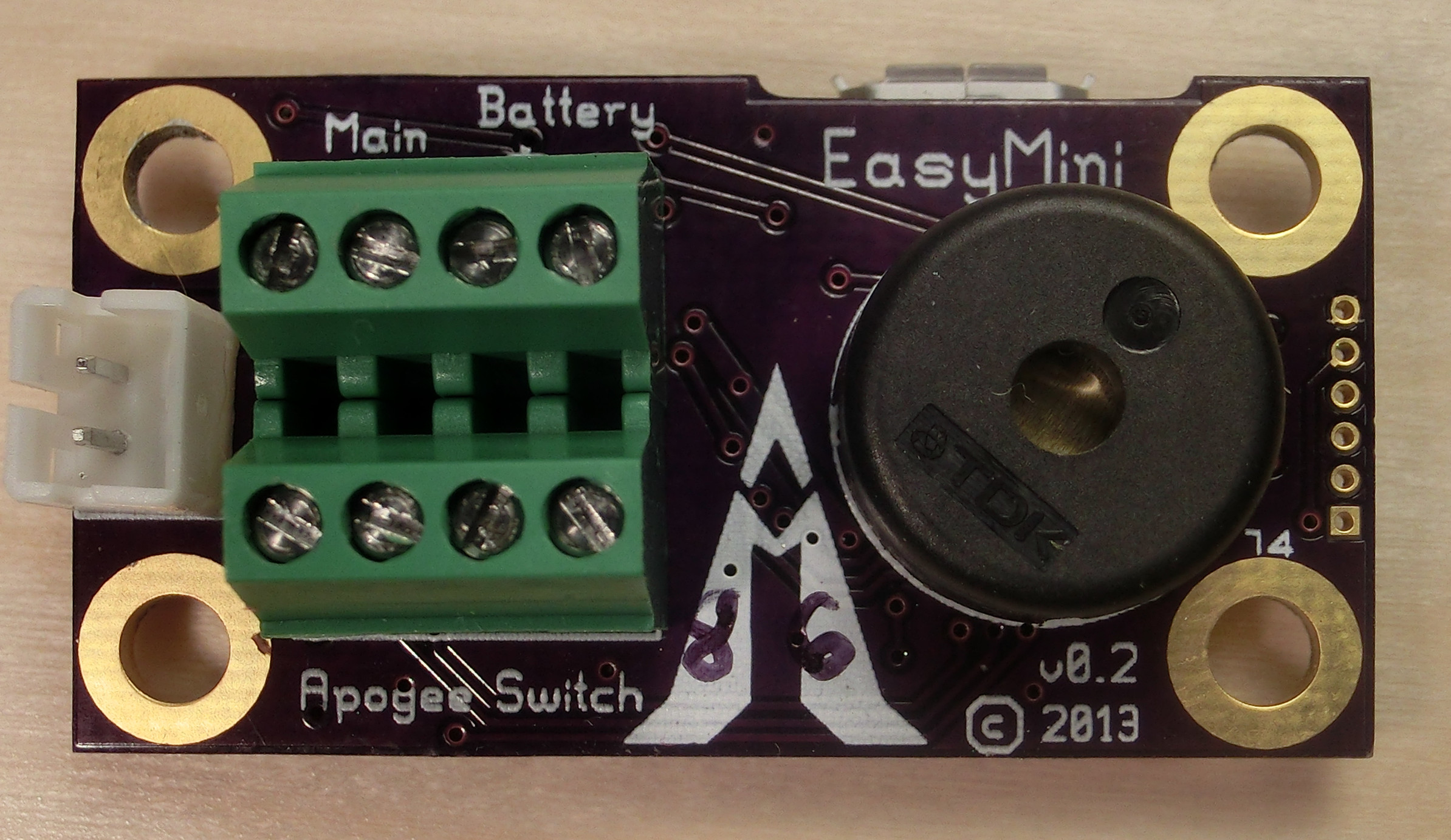
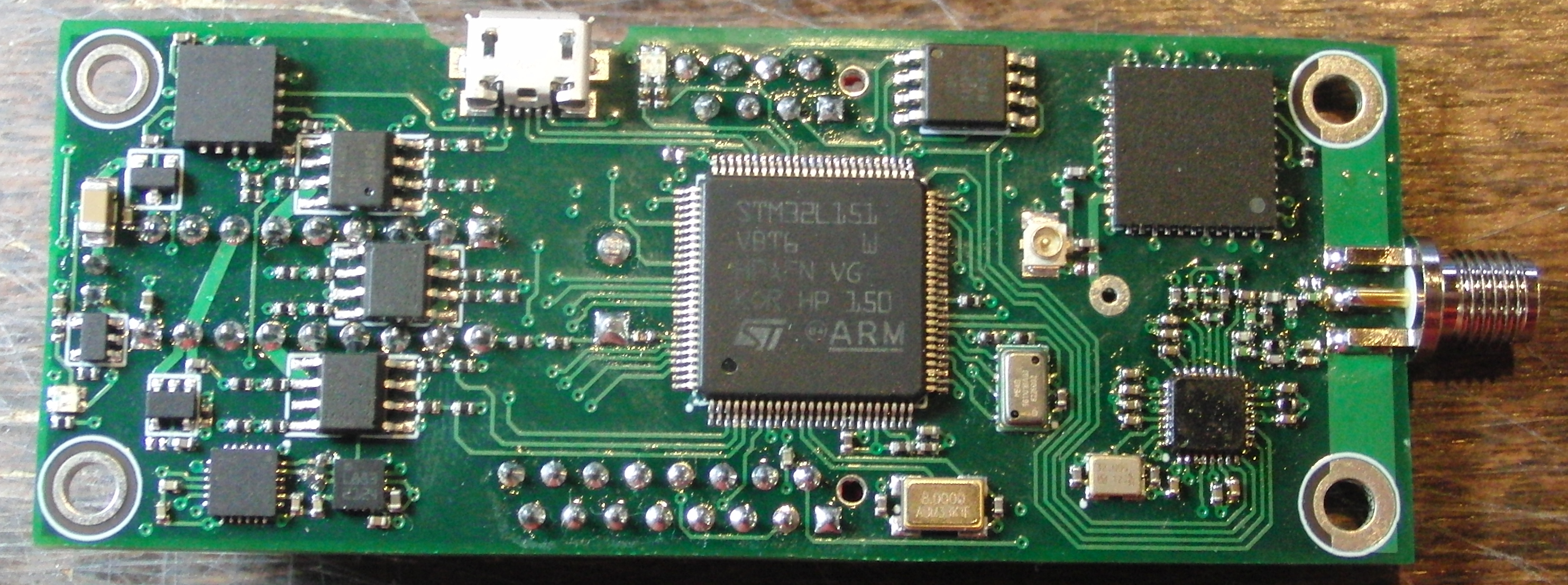
Back on Black (Friday) Event Altus Metrum is pleased to announce our Back on Black (Friday) event! For the first time since the Black Forest fire in June, we re re-opening our web store this weekend with a host of new and classic Altus Metrum products, including a special pre-order discount on our latest-and-greatest flight computer design, TeleMega. This weekend only, Friday, 29 November 2013 through Monday, 2 December, 2013, the first 40 TeleMega direct orders placed through our web store will receive a special $50 pre-order discount (regular $400, now only $350!). TeleMega is an advanced flight computer with 9-axis IMU, 6 pyro channels, uBlox Max 7Q GPS and 40mW telemetry system. We designed TeleMega to be the ideal flight computer for sustainers and other complex projects. TeleMega production is currently in process, and we expect to be ready to ship in mid-December. Pre-order now and we won t charge you until we ship. Learn more about TeleMega at: http://altusmetrum.org/TeleMega/ We are also pleased to announce that TeleBT is back in stock. Priced at $150, TeleBT is our latest ground station that connects to your laptop over USB or your Android device over BlueTooth. Learn more about TeleBT at http://altusmetrum.org/TeleBT/ Another new product we re thrilled to announce is EasyMini! Priced at only $80, EasyMini is a two-channel flight computer with built-in data logging and USB data download. Like our more advanced flight computers, EasyMini is loaded with sophisticated electronics and firmware, designed to be very simple to use yet capable enough for high performance airframes. Perfect as a first flight computer, EasyMini is also great as a backup deployment controller in complext projects. Learn more about EasyMini at: http://altusmetrum.org/EasyMini/ Also in stock for immediate shipment is MicroPeak, our 1.9 gram recording altimeter available for $50. The MicroPeak USB adapter, also $50, has been improved to make data downloading a snap. Read more about these at: http://altusmetrum.org/MicroPeak http://altusmetrum.org/MicroPeakUSB You can learn more about these and all our other Altus Metrum products at http://altusmetrum.org. The special discount on TeleMega pre-orders is available only on orders placed directly through Bdale s web store at http://shop.gag.com Thank you all for your support of Altus Metrum during 2013. It s been a rough year, but we re having a great time updating our existing products and designing new stuff! We look forward to returning products like TeleMetrum and TeleMini to the market soon, and plan to introduce even more new products soon.
28 November 2013

Craig Small: XBMC with MythTv

I have had MythTV running on my server for quite some time. Once I got past the weird problems you often have with the local ABC channel, it has worked very well. One tip, put the recordings into their own partition. MythTV will happily fill it and deleting files only marks them for deletion. This makes perfect sense when it has its own partition but is annoying otherwise. Until recently, the frontend on the television in the living room was a DVD player that spoke DLNA. This worked ok, but was very basic. The recordings were just a list with no graphics or details. Something better had to go here and it has; XBMC. A small (size of a paperback) PC later and we have XBMC running and doesn t it look pretty! The cute thing was it merged my DVD images and my recordings into one, so it didn t matter where the movie came from, it looks the same. It even understands MythTV advertising marks and skips them, all is good. Except, no sound. This is where a combination of my Google skills and XBMC s documentation failed. The documentation either says switch to HDMI output or go through a very long and involved process to get the sound card working. The tests on the command line failed and I thought I was going to be in for that long and involved process fixing alsa. Then in another part of the menus I saw you had Basic, Advanced, Expert levels and wondered what that did? It gave me more things to tweak in the menus. Perhaps that might fix my HDMI sound problem? Going into the System setup and then audio and then switching to a higher level of menu (it s on the left) suddenly I have a screen and a half of options and a few seconds later, sound! So if you are searching for NVIDIA and HDMI and sound, first turn on the advanced menu items and try setting that, it might be all you need (despite what Google and documentation says). One other thing, the C or I button on a remote could be called Guide . It is on mine. Also, SMB shares give a much better result than DLNA ones because SMB all the images and info are done on XBMC and it doesn t do the same for DLNA.

Debian Med: Bits from Debian Med team (by Andreas Tille)

Some of these bits are a bit outdated but there is no point in hiding this information just because it is old. FOSDEM talkAndreas Tille had a talk at FOSDEM which is also Video recorded. A quite similar but updated talk was held at DebConf 13 (see below). Jabber interview by reporter from IndiaThere was an interesting interview between Rajeev Nair and Andreas Tille at So, 17.02.2013 Rajeev Nair is Business head of an health care journal in India held via jabber. Since this might serve as some nice FAQ about Debian Med here is a complete log of this interview (permission to publish it was granted). Article about Debian MedAs a consequence of the interview above the Debian Med team has assembled an article which was originally intended to be published in the Health Cafe journal but somehow this never happened. So we ended up with a nice article targeting at interested readers about Free Software in medicine with not necessarily informatics background. Since the article is considered to be of good quality and has consumed some time of several team members we are seeking for ideas for relevant places where to publish it. It is available as PDFas well as in SVN. Yearly sprint of Debian Med teamThis year we had our third sprint of the Debian Med team and all participants consider it a great success again. The sprint was in end of February and the individual reports are linked from the according wiki page. Since Andreas Tille was able to prove the nice effect of having face to face meetings in Debian teams in the team metrics graphs presented in his talks at DebConf (see below) we will keep on with this good tradition. The next sprint is scheduled for Friday 31st January until Sunday 2nd February in Stonehaven near Aberdeen. If you are interested to meet the people behind Debian Med and want to join us in developing packages which are helpful in health care and bioinformatics you are invited to join us. DebConf 13 in VaumarcusAndreas Tille had two talks with specific influence to Debian Med development(Debian Med as a success story for other Blends, How to attract new developers for your team (MoM, SoB). For those who want to read a full (and lengthy) report about DebConf 13 by Andreas Tille this is online in this blog article. Codefest of the Open Bioinformatics FoundationIvo Maintz and Steffen M ller organised the Codefest of the Open Bioinformatics Foundation in Berlin. About 40 contributors from all over the world attended, connecting the Debian community strongly with upstream. The event triggered a joint paper of participants to Sprints, Codefests and Hackathons alike, presented at the Nettab conference on Semantic, Social, and Mobile Applications for Bioinformatics and Biomedical Laboratories in Venice. Reupload unattended packagesAndreas Tille has mentored the GSoC student Emmanouil Kiagias and as a byproduct some Blends metadata were now kept in UDD. This has inspired some new tools and one of this was an UDD query to return all packages in the interest of the Blend ordered by date when they were uploaded. It has shown that there were packages hanging around in the package pool since five years. So some effort was done to check those packages which were not necessarily "buggy" according to BTS entries and so we were able to fix the following issues in about 20-30 packages: Since it was impressive how many things that deserve fixing are hidden in such long unattended packages it is recommended also to other teams to spend some time into these. The UDD query can be easily tweaked for a team maintainer address. Debian Med Bug Squashing Advent Calendar 2013The Debian Med team will again do the Bug Squashing Advent Calendar. Feel free to join us in our bug squashing effort where we close bugs while other people are opening doors. :-) Kind regards and see you at Debian Med sprint
Andreas.

27 November 2013

Steinar H. Gunderson: Stockfish

The open-source chess program Stockfish recently climbed to the top of the TCEC rating lists. Even though it does not seem likely to win the actual TCEC tournament (it is 15.5 11.5 down in the 48-game superfinal against Komodo, a closed-source commercial program, after winning 4, losing 8 and drawing 15), this is a tremendeous achievement. This is not only because it is highly unusual that the strongest chess program is open-source (it's naturally hard to keep a competitive edge when everybody can see your secrets!), but also because it is a mere 9000 lines of C++ code. (This is without a GUI; it interfaces through a standardized protocol known as UCI.) In comparison, Crafty, a far weaker open-source program, is about four times that, GNU Chess is above 40000, and I seem to recall that the Deep Blue program was something like 65000 lines (in addition to, of course, all the code for the ASIC chess chips it contained, and stood for the majority of its chess strength!). So, the development team is really to be commended. It should also be said that TCEC is testing the latest beta versions of most of these engines and while Stockfish is developed in the open, on GitHub, the latest versions of e.g. Komodo and Houdini are private. (This is probably one of the reasons why Stockfish is slightly lower on e.g. the CCRL list, which also computes chess program rating lists by playing games between them.) Now, why does anyone care? Only a very small handful of players would be able to score even a draw against any of these programs in a 10-game match, so does it really matter which one we choose? Or is this some obscure pissing contest? The answer, of course, is that these engines are not primarily useful for competitive play; they are useful for analysis. Almost any player, right down from beginners to the very top players, can benefit from having someone stronger than them look at their games (or others' games!) and say where things went wrong. (Somehow analyzing losses always seem more instructive than analyzing wins. Nobody ever got better by winning, as the saying goes.) And the better a program is at playing chess, the more likely is its analysis to be correct. Of course, for the weaker players, a chess coach is likely to produce much more understandable guidance ( this creates a weak square on c7 is much more palatable than after these 18 moves here, white is 0.48 pawns stronger than you, so this was a bad move , and engines produce the latter sort of output), but they are always available, incredibly strong, and cost much less than a coach. :-) They also add a lot to the otherwise quite hard-to-comprehend activity of watching high-level human players; while the computers do not understand every kind of position equally well, they at least provide some sort of objective verdict on which player has the upper hand, something which can be really hard to discern unless you have very strong players around for commentary. So, in trying to improve my skills a bit, I've been analyzing my games with engines for a while, and recently I've switched from Rybka to Stockfish. (Rybka, a closed-source program, used to be the clear leader of the pack, but after a huge amount of drama involving accusations of who has copied code from who, it seems no longer to be actively developed, and Stockfish is now somewhat stronger.) This, unfortunately, brings me to the things I don't like too much about Stockfish; it seems to behave more erratically than Rybka did in interactive analysis mode. Its score jumps a lot more around when I move something (worse at remember the analysis from the previous position?), and sometimes, it changes its mind a lot when I move back and forth between moves maybe the huge selectivity that makes chess engines so strong these days also make them behave less usefully when only looking at a move for a few seconds. So, even though Stockfish is a fantastic chess engine, and will only get better in the future, maybe I'll go back to Rybka at some point. But then again, maybe I should then check out Komodo or any of the other engines out there or maybe talk to someone who actually knows chess, that would help a lot, too =)

26 November 2013

Daniel Pocock: Real-time streaming market data with free software

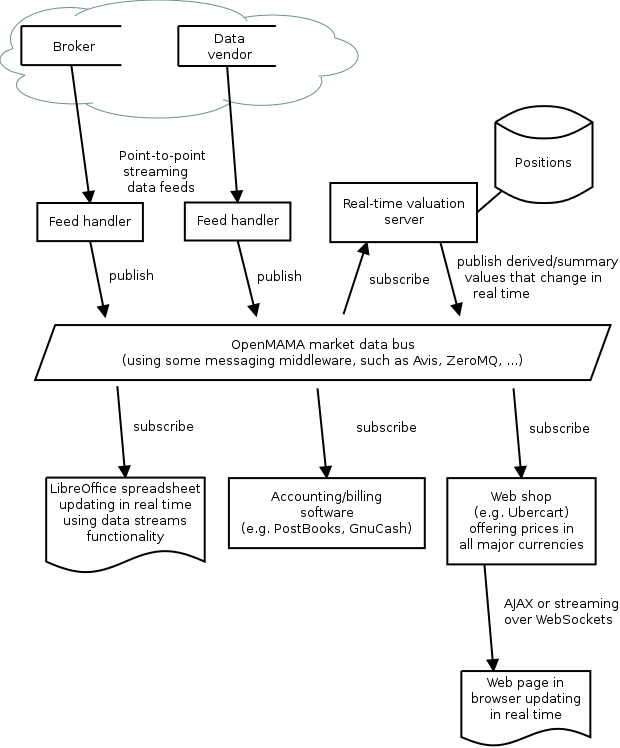
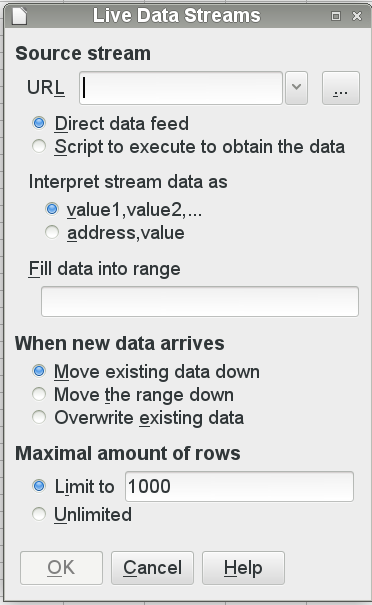
Here is an overview of the real-time market data architecture based on OpenMAMA: All these components may be running on a single host or they may be distributed across different servers and workstations in a LAN. The OpenMAMA market data bus ties them together. External data sources These are external sources of data. These could be currency trading firms, stock brokers, bullion dealers or even Bitcoin exchanges. Some exchanges don't provide data services directly to the general public and they distribute their price data through third-party data vendors such as Reuters and Bloomberg. Feed handlers The feed handlers manage the connections to external data sources. These are typically daemon processes that implement the wire protocols used by the external vendors for transmitting data over the public internet or a leased line. They typically use a point-to-point topology such as TCP connections. The feed handlers publish the data into the market data bus. In practice, the feed handler may be a proprietary application provided by the data vendor or it may simply be a Python script that fetches exchange rates from a URL every five minutes. OpenMAMA The market data bus is a distributed framework that is accessible to all of the local servers and workstations in the LAN. At the lowest level a messaging middleware solution is used to transport the data. The Avis Event Router is a free middleware. There is upcoming support for Apache QPID as well. Some commcercial middleware is supported too - here is the full list OpenMAMA does not provide a daemon or server process of its own. It is a set of libraries that operate on top of the middleware transport. In very general terms, the OpenMAMA libraries let applications publish messages (such as price ticks) or subscribe to receive the messages published by other applications. Spreadsheet application (for example, LibreOffice) LibreOffice is introducing a new data import feature for streaming time series data. This appears to provide a useful integration point for OpenMAMA and discussion is taking place in the development community. The spreadsheet can operate in various ways. A simple application may simply poll the currency prices when the spreadsheet is opened or refreshed. A more demanding application may see the spreadsheet come alive, recalculating all cells on every tick from the data vendor (several times per second). This latter scenario is more common in dealing rooms and hedge funds. Accounting/billing software There are many free accounting applications today, including PostBooks and GnuCash and some more heavyweight solutions like Adempiere and OpenERP. In a world where credit cards and the world wide web have made international trade an everyday activity, many people are using this software to track expenses and accounts in more than one currency. For example, a British business may be paying some suppliers in Euros and a Canadian may be charging some customers in US dollars. A Swiss person may be keeping some of their savings in gold bullion in the vault of one of their world reknowned Swiss banks. A common requirement for all of these users is the balance sheet. Using real-time market data sources, the balance sheet can be refreshed at any time from the live market prices. A home user may just find it convenient that they can open the balance sheet and always see their net worth immediately without having to manually cut and paste the currency prices from a web page. A business user operating in a competitive industry with low margins may be checking the balance sheet several times per day to ensure they remain solvent and profitable. Web shops Many web shops now offer the customers the convenience of viewing prices in their own currency. It is important to make sure these prices are accurate, especially when dealing with volatile currencies or when the products have a low profit margin. The web application server can receive the market data price ticks just like any other application in the network. Using this data, it can insert live prices into the pages as they are generated. If the currencies are particularly volatile, the web application could stream the prices to the browser using WebSockets and a JavaScript client embedded in the page would update the price field in real time. In fact, this web-based streaming price update mechanism is exactly how many online financial trading services offer live market prices to their customers. Real-time valuation server In a large organisation there may be many users looking at the same values. For example, in a trading desk, many users may need to see the desk's overall position in each market. In a busy web shop, many concurrent users may need to see the prices of common products. Rather than recalculating these values for each user in parallel, a common solution involves setting up a server to receive raw values (such as currency prices) from the data feed, calculate values needed by local users and then broadcast those values over the market data bus. How applications can integrate with real-time market data Here are some steps for getting started:
Next.

Previous.