
Everywhere I worked in the past, the only feedback that was asked of
employees was during a yearly evaluation meeting. These meetings always felt to me
like talking to Santa Claus and his
Knecht Ruprecht. I was asked:
Were you a good
employee last year? If yes, we might give you a raise. If no, admit all
your mistakes now, even if we already know everything, ho ho ho. And don't you talk about your feelings, or your
well-being, or say anything about the organization's (invisible)
hierarchies, otherwise we will put you on the "naughty list", and that's it with candy. The
yearly evaluation set aside, there was no other place to give feedback (except by escalating a matter by involving the
Labour Court, if you happen to work in France, or going on strike, also mostly part of French culture).
Feedback allows to reflect on work processes, to situate oneself, and to get closure.
How surprised was I when, some years ago, I received an email from a
collaborator asking me:
kindly for just few paragraphs (doesn t have to be
anything long) to hear from you about the process, your work, challenges
you had, or anything else you want to mention there.. Wow!
This simple email allowed me to reflect about:
- What did I like about the project? What part of the work was fun, challenging, and creative?
- What went well or was complicated? How did our meetings work out? Were they
productive? Was it easy for me to frame the work I have to do? Were expectations clearly defined? How were remarks
and proposals for improvement presented to me? Did people test my work
thoroughly and gave me useful feedback on mistakes or misunderstandings? Did I
have to do lots of unexpected work? Were file formats, texts or other input not
well formatted or unclear, or arrived late? Did I allocate enough time to the project? Was I late with delivering anything? Could I have done better?
- What is my overall conclusion for this project? Between what
went well and what did not: were the issues, the workload, the
assignments manageable? Am I willing to work with this person again? If
yes, what needs to change? If no, why?
- What am I grateful for? What can I thank my colleagues/collaborators for? Did they have great
communication skills, ideas, were they on time, did they voice issues early
enough? How did it feel to work with them?
How do we get to a feedback culture?
How do we get from German Christmas folklore,
protestant work
ethics, and the deeply rooted principles of
disciplining and punishing to a feedback culture on eye level? It sounds
a bit like going from the dark ages to a really cool science fiction utopia
with universal peace, telepathy, and magic between all sentient beings on all
inhabited planets in the cosmos at least that's how I imagined it as a child, just like some of my heroes did:
the cosmonaut girl who saves Earth,
the boy who talks to space flowers that give him the capacity to fly, and
the little onion who fights for justice (the Italian author was so popular on our side of the iron curtain that a soviet astronomer
named a minor planet after him. His wife meanwhile immortalized
Karl Marx.) and some romantic part of me hangs on to these ideas.
Feedback is not always easy to hear and to give.
I-Statements
Giving and receiving feedback is hard in a culture where people learnt that
when they made a mistake they won't get candy. Or that they have to constantly please
other people because they are not worthy by themselves. This can lead to people
putting mistakes on one another. Every sentence that starts with
You are
has the potential of creating a lot of hurt, and anger. Have you heard of
I-Statements? They have very powerfully changed my
world view, as they shift from accusation to ownership of feelings. So
instead of telling someone
Your writing style is impossible! You really need to change the way you write.,
with an I-Statement one could say
I have a hard time understanding that
part of the text. I-Statements make cooperation possible.
Listening actively
Feedback is not about being right or wrong, it's first of all about being
able to see how another person has experienced a situation.
Active listening is a tool that helps with understanding. It might seem easy, but needs quite
some practice and a safe space. One part of active listening is to restate what you hear the
other person say (by mirroring, or paraphrasing), to make sure you understood,
and make sure they know you understood what they were trying to say. You can
practise this: in a circle of three people, have one person tell how they
experienced a (possibly conflictual) situation, have one person do the active
listening, and the third person observing in order to give feedback to the
active listener about how they did. Then switch roles, for example
clockwise, until everyone has had every role.
Encouraging continuous feedback
A working feedback culture does not take place
only once a year. It needs to be a continuous process and therefore implemented
in meetings, teams, eventually on the level of a project. Making clear:
Who can I talk to if
I experience an issue? is not different than telling developers and users where and how they can report a bug, or request a feature. A safe space to express feedback is key.
Encouraging multiple feedback channels
Some people might feel less empowered or more vulnerable over a channel than
others. Make sure to have different channels for receiving feedback such as
email, a point on each meeting agenda, a one-to-one meeting, or a poll.
Giving and receiving feedback on eye level
In a workplace that does not have a working feedback culture, feedback is
easily perceived as policing. If your feedback process consists of asking
people to upload a form to a cloud server every 3 months, and you notice that
some people don't do it, you could ask yourself if there is an issue with how
your colleagues perceive giving feedback in your organization. Do you meet
your colleagues on eye level when it comes to feedback? Do you take feedback
seriously and act on it? How do you deal with unpleasant feedback? How do
you react when colleagues don't meet your expectations? Can people participate
in the feedback process within their paid work time? Did everybody understand
what the feedback process is about?
Don't jump to conclusions
Humans are problem solving animals. When someone comes to us with a problem,
the first thing we want to do is to solve it, to help them. But sometimes this
is uncalled for, it can be
disempowering, or prevent people from
acquiring competences themselves, and it can even break people's boundaries. So
instead of asking
What can I do for you?, try asking
What do you
need right now? People will often reply something that you did not
expect at all.
Acting on feedback
Make sure you have a process to collect feedback (possibly anonymized) and
to regularly evaluate if the organization needs to implement changes to thrive.
Conclusion
I stumbled upon
Hans-Christian Dany's critique of feedback again recently, therefore I need to make it clear: I'm not interested in improving capitalist work culture by using cybernetic principles of self-regulation through feedback. Instead, I am interested in improving cooperation between people who work either individually or in organizations on eye level. In this framework, I see feedback processes as profoundly anti-capitalist methods to improve cooperation while working towards common good.
Implementing these ideas should be doable: there are organizations who provide feedback training for example.
This document, initially aiming at people in cooperatives, gives many insights on communication skills and
feedback, the agile and UX worlds do feedback
"retrospectives". and otherwise I'll have to go and write science fiction stories for
children myself.

 A new version of

 It has been close to a year now that I've incorporated my new company,

 Example of rule matching returned in GitHub checks
 Some people like to make bots talk to each other.

 GitHub service status is not always green.


 If you have to choose one year when you won't fly, this year, 2020, is the one to choose. Why? Because CORSIA. What the heck is CORSIA?
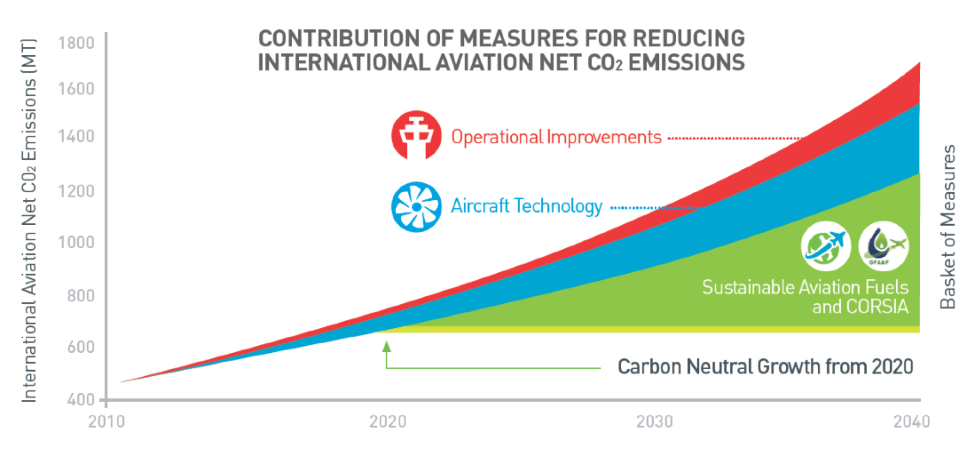 What does it have to do with *this* Year? The first phase of CORSIA will start next year, so the emissions are frozen to year 2020 levels. Due to certain recent events, lots of flights have already been cancelled - which means the reference year aviation emissions are already a lot less than the aviation industry was expecting. By avoiding flying this year, the aviation emissions are going to be frozen at an even lower level. This will increase cost of co2 offsetting for airlines, and the joke is going to be on them. So consider skipping business travel and taking your holiday trip this year with something else than a plane. Wouldn't recommend a cruise ship, tho...

 Just like we did for Debian 7 Wheezy, some of the
 I was slow to start using twitter, but found it a lot of fun. Often it
would be useful at times when websites were slow; I'd hop to the website
and search "edinburgh network", "github down", or "helsinki outage" and
find live updates as people disclosed problems before the appropriate
companies updated their status pages.
I've found a lot of useful information, in near real-time, over the past
few years. For example I remember hearing a loud explosion a few years
back and had no idea what it was. Turns out it was an electrical
substation catching fire nearby.
Anyway recently I've been getting a lot of fake notifications, things
that aren't real:
 I have a
 Welcome to gambaru.de. Here is my monthly report (+ the first week in March) that covers what I have been doing for Debian. If you re interested in Java, Games and LTS topics, this might be interesting for you.
Debian Games
 Liberation Mono
 Fira Mono