Search Results: "ana"

17 January 2011

Julien Viard de Galbert: Triaging bugs is not that hard !

There is a big thread on -devel that started about Forwarding bugs upstream, the idea is that it should be the maintainer s job. While it s true in general, some understaffed teams are so flooded by bugs that they just can t do it.
I ve seen more than once the X Strike Force asking a user to report upstream (pointing to the relevant BTS) and come back with the tracking URL to be attached to the bug. This was mostly for driver issue if I remember well.
And most users did it, so thanks! Then the thread evolved in lots of directions, I m not following all of it, but there was the question of the bug triaging and as I m doing it for the X packages, I want to share about my experience here. The available triaging docs The debian wiki already have a general Bug Triage page.
The thread pointed to the KDE Bug triaging page.
The X Strike Force has some pages, one on the wiki and a new one more specific to bug triaging on the alioth project s doc.
And when it comes to closing bugs with version information, there is a good read on the wiki: Bugs Version Tracking.
Finally don t hesitate to reopen the BTS documentation whenever you need to write to control@b.d.o ! Now if all those docs don t help you, then try to improve the docs as a first step ! ;) Talk with the maintainer(s) Well I did met Julien Cristau and Cyril Brulebois in person during mini-DebConf Paris/2010 that certainly helped. But we exchanged several mails, or met on IRC channel #debian-x.
But the triaging rules of the X Strike Force (linked above) were pretty clear anyway. My current process This process has evolved over time with the response of several contributors either to help or to fix to my mistakes, thanks!
  1. List bug from UDD: XSF unstable bugs sorted by date.
  2. Pick an old bug (once you answer and UDD runs, the bug moves down the list, so there are always old bugs on the top).
  3. Read the report, don t be afraid by the subject, it might be unrelated, the bug might be merged with other bugs, then reading the other bugs can help.
  4. If relevant try to reproduce it. (most bugs in X are hardware related or specific to one setup, so it s not that often that I have something to test).
  5. Decide what to do, most of the time, I will ping the submitter.
  6. I m a mutt user, and to my help the bts command as a way to open the bug mbox in mutt, that makes it really easy to answer the bug.
    So I launch bts -m show $n where $n is the bug number, and I can then answer the bug from mutt.
    The triaging procedure suggest to ping -submitter, but using mutt it s easier to just reply and add a -quiet to the bug number (this avoid spamming the debian-x with all my pings).
  7. In the message, always try to be kind and helpful, most of the time ask to test newer versions.
  8. Keep track of the pinged bugs, well I do it for my blog but it will be useful anyway, see below.
  9. When the submitter answers, just react accordingly, if the bug can be closed, then close it ! ;)
  10. If after some time, the bug are still not answered, consider closing them (I haven t started that yet, but this will probably get the bug number down faster:) ).
Note: Sometime I don t send the bug to -quiet so that other debian-x subscriber can have a look at the bug. They then can give me advices, or close the bug directly with a stronger reason than any I could have found. ;) To submitters, please keep the bug CCed when you answer, thanks. For the skeptics Yes as a newbie I did some mistakes, but I was always corrected in a nice way, with explanations. Also I try to have a conservative approach, I don t close bugs if I m not sure, I ask if I can close them, so it might take longer, but in the end the effect is the same for the bug, but not the same to the submitter ! ;) Also this work might look boring, but it s actually rewarding, most of the answers I received included a cheerful message thanking me for following up on the bug. Not to mention all I ve learned on Xorg. Conclusion As long as I have time for it, I ll continue to triage bugs and I d love to see others coming to help me on X or probably better go and help some other teams that also need help, and flood the planet with bug triaging reports ! ;) Get involved !

Dirk Eddelbuettel: Keeping simple things simple

My friend Jeff deserves a sincere congratulation for finally unveiling his rebranded R consultancy Lemnica. One notable feature of the new website is a section called esoteric R which discusses less frequently-visited corners of the R world. It even boasts its own CRAN package esotericR with the example sources. esoteric R currently holds two articles. Jeff had sent me the one about introducing closures a while back, and I like it and may comment at another time. What caught me by surprise when Lemnica finally opened was the other article: R calling C. It is a fine article motivated by all the usual reasons that are e.g. mentioned in the Google Tech Talk which Romain and I gave last October about our work around Rcpp. But it is just not simple. Allow me to explain. When Jeff showed this C language file
#include <R.h>
#include <Rinternals.h>
SEXP esoteric_rev (SEXP x)  
  SEXP res;
  int i, r, P=0;
  PROTECT(res = allocVector(REALSXP, length(x))); P++;
  for(i=length(x), r=0; i>0; i--, r++)  
     REAL(res)[r] = REAL(x)[i-1];
   
  copyMostAttrib(x, res);
  UNPROTECT(P);
  return res;
 
and then needs several paragraphs to explain what is going on, what is needed to compile and then how to load it --- I simply could not resist. Almost immediately, I emailed back to him something as simple as this using both our Rcpp package as well as the wonderful inline package by Oleg which Romain and I more or less adopted:
library(inline)  ## for cxxfunction()
src <- 'Rcpp::NumericVector x = Rcpp::NumericVector(xs);
        std::reverse(x.begin(), x.end());
        return(x);'
fun <- cxxfunction(signature(xs="numeric"), body=src, plugin="Rcpp")
fun( seq(0, 1, 0.1) )
Here we load inline, and then define a three-line C++ program using facilities from our Rcpp package. All we need to revert a vector is to first access its R object in C++ by instantiating the R vector as a NumericVector. These C++ classes then provide iterators which are compatible with the Standard Template Library (STL). So we simply call the STL function reverse pointing the beginning and end of the vector, and are done! Rcpp then allows us the return the C++ vector which it turns into an R vector. Efficient in-place reversal, just like Jeff had motivated, in three lines. Best of all, we can execute this from within R itself:
R> library(inline)  ## for cxxfunction()
R> src <- 'Rcpp::NumericVector x = Rcpp::NumericVector(xs);
+         std::reverse(x.begin(), x.end());
+         return(x);'
R> fun <- cxxfunction(signature(xs="numeric"), body=src, plugin="Rcpp")
R> fun( seq(0, 1, 0.1) )
 [1] 1.0 0.9 0.8 0.7 0.6 0.5 0.4 0.3 0.2 0.1 0.0
R>
Lastly, Jeff shows a more complete example wherein a new vector is created, and any potential attributes are copied as well. Naturally, we can do that too. First, we used clone() to make a deep copy (ie forcing creation of a new object rather than a mere proxy) and use the same R API function he accessed---but it our case both prefixed with ::Rf_ for R remapping (to protect clashed with other functions with identical names) and a global namespace identifier (as it is a global C function from R).
R> library(inline)
R> src <- 'Rcpp::NumericVector x = Rcpp::clone<Rcpp::NumericVector>(xs);
+         std::reverse(x.begin(), x.end());
+         ::Rf_copyMostAttrib(xs, x);
+         return(x);'
R> fun <- cxxfunction(signature(xs="numeric"), body=src, plugin="Rcpp")
R> obj <- structure(seq(0, 1, 0.1), obligatory="hello, world!")
R> fun(obj)
 [1] 1.0 0.9 0.8 0.7 0.6 0.5 0.4 0.3 0.2 0.1 0.0
attr(,"obligatory")
[1] "hello, world!"
R> obj
 [1] 0.0 0.1 0.2 0.3 0.4 0.5 0.6 0.7 0.8 0.9 1.0
attr(,"obligatory")
[1] "hello, world!"
R>
Both the obj variable and the new copy contain the desired data attribute, the new copy is reversed, the original is untouched---and all in four lines of C++ called via one inline call. I have now been going on for over one hundred lines yet I never had to mention memory management, pointers, PROTECT or other components of the R API for C. Hopefully, this short writeup provided an idea of why Romain and I think Rcpp is the way to go for creating C/C++ functions for extending and enhancing R.

Rapha&#235;l Hertzog: Review of my Debian related goals for 2010

Last year I shared my Debian related goals for 2010 . I announced that I would not be able to complete them all and indeed I have not, but I have still done more than what I expected. Let s have a look. Translate my Debian book into English and get it published: NOT DONE Or rather not yet done. It s still an important project of mine and I will do it this year. When I wrote this last year, I expected to find a publisher that would take care of everything but we failed to find a suitable one so we re going to do it ourselves. Cleanup the dpkg perl API and create libdpkg-perl: DONE libdpkg-perl has been introduced with dpkg 1.15.6. Create dpkg-buildflags: DONE dpkg-buildflags has been introduced with dpkg 1.15.7. It s not widely used yet and it won t really be until debhelper 7 supports it (see #544844). It would be nice to see progress on this front this year. Ensure the new source formats continue to gain acceptance: DONE The adoption rate has been steady, it clearly slowed down since the freeze though. I have implemented quite a few features to satisfy the needs of users, like the possibility to unapply the patches after the build, or the possibility to fail in case of unwanted upstream changes. Design a generic vcs-buildpackage infrastructure to be integrated in dpkg-dev: NOT DONE I believe it s something important on the long term but it never made it to my short-term TODO list and it s unlikely to change any time soon. Continue fixing dpkg bugs faster than they are reported: PARTLY DONE We have dealt with many bugs over the year, but we still have 20 more bugs than at the start of last year (370 vs 350). We re not doing bad compared to many other Debian teams but we can still benefit from some help. Start here if you re interested. Enhance our infrastructure to ease interaction between contributors and to have a better view of how each package is maintained: NOT DONE I am convinced that we need something to have a clearer idea of the commitments made by each contributor. I don t put the same amount of care in maintaining smarty-gettext that I do on dpkg. If we had a database of the stuff that we know we don t do well enough, it s easier to point new contributors towards those. Anyway, this project is still unlikely to come to the top of my priorities any time soon. Work on the developers-reference: NOT DONE We have switched the Maintainer field to debian-policy@lists.debian.org to have more review of the changes suggested through the bug tracking system but that has not changed much on the global situation. I still hope to become more active on it sometimes this year. Maybe by trying to make it more fun and creating the text for some of the wishlist bugs as blog articles first. Rewrite in C the last Perl scripts provided by the dpkg binary package: DONE Dpkg 1.15.8 was the first version working without Perl, I announced it in July. Integrate the 3-way merge tool for Debian changelogs in dpkg-dev: DONE dpkg-mergechangelogs is part of dpkg-dev since 1.15.7. I enjoy it regularly. Unfortunately it doesn t work well for cherry-picks. Would be nice to see this fixed, anyone up to the task? :-)
Click here to subscribe to my free newsletter and get my monthly analysis on what s going on in Debian and Ubuntu. Or just follow along via the RSS feed, Identi.ca, Twitter or Facebook.

One comment Liked this article? Click here. My blog is Flattr-enabled.

David Welton: The Kindle and Book Sharing

I'm very pleased with the Kindle; all of a sudden, I can quickly, easily, and fairly cheaply buy lots of English language books that otherwise I would have had to order (not cheap, not quick). Furthermore, they're not cluttering up my house, either! Not that I view books as clutter, but sooner or later we're going to have to move out of the apartment we're in, and the less I have to haul around, the better. However, the fact that it's not easy to share the books with my wife is starting to annoy me. I could always give her the Kindle itself to read something, but that would deprive me of not only that book, but all the others I have as well. Indeed, the difficulty of the problem lies in the difference between digital goods and physical goods. Real books are: Ebooks are: Setting aside the costs and benefits to society of DRM, intellectual property, and so on, let's take the point of view of Amazon, book publishers and authors, who all want to maximize their income, and of readers, who want as much freedom as possible, and also, for the sake of argument, believe that paying for books leads to more money for authors, which leads to more books. I think the trick is to try and make the ebook market as similar as possible to that for real books. For instance, if you had the freedom to resell an ebook quickly and easily, the price would likely start dropping quickly, as people started selling their "used" copies of books they didn't want to keep. This would be good for the consumer, but potentially quite bad for authors, as fewer new copies would be sold. Sure, we have used book stores, but the practical limitations involved, and the fact that real books show some wear and tear, mean that there's still an incentive to buy new books. On the other hand, an ebook ought to be a bit cheaper than a real book if it's something you'd consider reading and then selling, because you no longer have that option, so the lack of freedom should be priced in to the original price. The other problem they seem to be having is with the lending of books. If you lend a real book, you can only lend it to someone who you see with some frequency, so there's already a big geographical limitation. Also, while they're reading it, you obviously can't. You have to have some trust in them, that they'll give it back to you sooner or later, so you won't just loan it to anyone: if you wanted a transaction with more finality, you'd simply sell it. Currently, Kindle books can only be lent for two weeks, and you can't access it while the other person has it. I think the latter part of that is fair, but two weeks seems like an arbitrary number. Remember though, that they don't want you to be able to just give someone a book, with no strings attached and no return-by date, because then you could also sell it, undercutting their store prices, and so on, as above. So to make lending work, they have to have some "strings attached". I think "two weeks" is a fairly arbitrary string though. What would work better? Perhaps a way that permanently differentiates the original purchaser from anyone borrowing it. For instance, a "recall now" button? This button would, when the original purchaser pressed it, disable it on the borrower's device and reenable it on the buyer's device. This would prevent secondary markets, or at least limit them, because the 'borrowed' books would be inferior to the originals. And yet it might still work well for lending; I could lend books to people who trust me without problems. Interestingly, I became aware of this site the other day: http://www.kindlelendingclub.com/ so it looks like whatever Amazon does, there are going to be tradeoffs involved. And of course, there is the point of view that all of the costs involved by DRM are too high, but that's a fairly involved discussion in its own right. What do you think?

16 January 2011

Gregor Herrmann: RC bugs 2011/01 - 2011/02

new year, new RC bugs most of the fixes below are for newly reported bugs in versions that don't affect squeeze. the rest are mainly uploads of packages or patches prepared by others.

John Goerzen: 24 hours with Jacob

Friday, I wrote about the train trip Jacob and I were planning to take. Here s the story about it. Friday night, Jacob was super excited. He was running around the house, talking about trains. I had him pack his own backpack with toys this time, which were you guessed it trains. Plus train track. His usual bedtime is around 7. He was still awake in his room at about 11, too excited to sleep. The train was an hour late into Newton, so got up, got ready, and then went into Jacob s room at 3:15AM. I put my arm around him and said his name softly. No response. I said, just a little louder, Jacob, it s time to wake up to go to the train station. There was about a 2-second pause and then he sat bolt upright rubbing his eyes. A couple seconds later, in a very tired but clear voice, OK dad, let s go! That is, I believe, a record for waking up speed for Jacob. We went downstairs, got coats, mittens, hats, etc. on, made sure we had the stuffed butterfly he always sleeps with, and went out the door. As usual, Jacob chattered happily during the entire 15-minute drive to the Amtrak station. One of these days I need to remember to record it because it s unique. He described things to me ranging from the difference between freight and passenger trains, to what the dining car is all about, to tractors and how to ride them safely. Newton has some winter lights , and a few places still had Christmas lights, which were of course big hits. We had to wait a few minutes at the Amtrak station, and Jacob hadn t shown any signs of slowing down yet. He wanted to look at every Amtrak poster, picture, logo, or sign in the building. This generally meant me holding him up high while he leaned over to touch it and make out a few words. Then, of course, he would pick out minute details about the trains, such as how many coach cars he thought they had, and we d visit about that for awhile. We got on at about 4:20. We found our seats, and Jacob showed no signs of calming down, despite having had only 4 hours of sleep (instead of his usual 11) so far. We checked out the buttons for lights. And, of course, he excitedly yelled out, Dad, the train is moving! He spent the next while mostly watching out his window, but also still exploring his space. Finally at about 5, I said, Jacob, I am really tired. I am going to sleep now. Will you sleep too? His response: Oh sure dad, I will sleep with my eyes open! As a result, no sleep was had for Jacob, and only a little for me. The dining car opens for breakfast at 6:30, which is normally a rather foreign time for breakfast on the train for us. But we were both awake so I figured might as well go. So Jacob and I went to the dining car. We sat with a woman going from New Mexico to Lawrence for her grandpa s funeral, though it was expected and she was having a good time on the train. Jacob turned completely shy, and refused to say a word, except maybe a few whispered into my ear. He got his favorite railroad French toast, and had me drizzle some syrup on it. I used the word drizzle for syrup the first time he had French toast on the train, and if I fail to use that word in the dining car, I will hear about it in no uncertain terms from Jacob. He loved his dining car breakfast, but we spent about an hour and a half there. He was really slow at eating because his face was pressed up against the window so much. But that was just fine; we had nowhere else to be, the person eating breakfast with us enjoyed visiting (and, apparently, scaring the dining car staff with tales of bears in the New Mexico mountains). This was what the train trip was all about, after all. We played in the lounge car for awhile. The almost floor-to-ceiling wrap-around windows provided a great view for him, and more opportunities to press his face against a window. We talked about freight trains that he saw, noticed the snow on some of them. Then we found the back of the train and he got to look out the back window. Back at our seat, he played with his toys for about 10 minutes, which was all he used them on the entire trip. There was just too much else to enjoy. When we used the restroom on the train, he d comment on how much he liked the Amtrak soap. It smells SO very very good! He wanted to wash his hands on the train. By late morning, he had decided: Dad, I LOVE this Amtrak soap. It smells like peaches! Shall your hands smell like peaches too? And, when we d get back up to our seats, he d put his hands in my face, saying, Dad, smell that! My hands smell like peaches! It was from the AMTRAK SOAP! At some point, he discovered the airline-style safety brochures in the seat back pockets. These were filled with diagrams of the train car, a few photos, and lots of icons with descriptions. I don t know how many times I read the thing to him, or really how many times he then recited it to me from memory. It was a lot. He spent hours with those brochures. Jacob had already told me that he wanted pizza for lunch, so I got him the kid-sized pizza. It wasn t all that big, and he could have devoured at least half of it when hungry. But he was getting really tired and ate only a few bites of pizza and a few chips. Pretty soon he was leaning up against me, the window, and eventually had his head on the table in some tomato sauce. But he didn t quite fall asleep by the time we went back to our seats, and of course was wide awake by that point. Jacob loves spotting the word Amtrak on things. It was very exciting when he noticed his orange juice at breakfast, and milk at lunch, were Amtrak juice and Amtrak milk due to the logo on the cups. At dinner he noticed we had Amtrak plates, and when I pointed out that his metal fork had the Amtrak logo on it, he got very excited and had to check every piece of silverware within reach. Dad, I have an Amtrak fork too! . And dad, YOU also have an Amtrak fork! We ALL have Amtrak forks! *cackling laughter* I finally insisted that Jacob lay down for some quiet time. I closed the curtains, and he finally did fall asleep less than an hour before our arrival into Galesburg. So by 2:15 he was up to 4.75 hours of sleep, I guess. We stopped in the train station briefly, then started our walk to the Discovery Depot Children s Museum, which was right nearby. Although I made no comment about it, Jacob said, Dad, there is a train museum RIGHT HERE! Yes, you re right Jacob. I can see a steam engine and some cars here. Let s go in! I don t think it s open today. It IS open shall we go check? It wasn t, and that was mighty sad though when he spotted another old caboose sitting outside the children s museum, the day suddenly seemed brighter. He complained of how cold he was, although my suggestion that he stop walking through the big piles of snowdrifts was met with a whiny, But dad, I WANT to do that! We went inside the museum (having to walk right buy the locked caboose thankfully the people at the desk promised to unlock it for us when we were ready) and Jacob started to explore. There was some wooden play trains big enough for children to climb in which he enjoyed, but in general he went from one thing to the next every minute or two as he does when he s really tired or overstimulated. Until, that is, he discovered the giant toy train table. It had a multi-level wooden track setup, and many toy trains with magnetic hitches. It was like what we have at home, only much bigger and fancier. He spent a LONG time with that. We then briefly explored the rest of the museum and went out into the caboose. It wasn t the hit it might have been, possibly because there are several at the Great Plains Transportation Museum that he gets to go in on a somewhat regular basis. After that, he was ready to go back into the museum, but I was feeling rather over-stimulated. On a day when the highs were still well below freezing, it seemed just about every family in Galesburg was crowded into the children s museum, making it loud and crowded which I don t enjoy at all. So I suggested maybe it was snack time instead. A moment s thought, then he started to pull me out of the caboose before I could get my gloves back on Yes dad, I think it IS snack time. Let s go. Let s go NOW! We walked over to Uncle Billy s Bakery (Google link or minimal website). Jacob spotted some sugar cookies shaped like mittens. Despite my reluctance to get him more sugar, he was so excited plus I had barely prevented a meltdown at lunch by promising him that he would get dessert later in the day so he picked two red mitten cookies. I got myself a wonderful peach muffin and a croissant and we sat down at one of the tables by the window. I taught Jacob how to hang his coat on his chair and he lit into those cookies. I spotted a guy at the next table over wearing a BNSF jacket, and asked him if he worked for the railroad. He had retired as an engineer a couple of years ago, and had worked various jobs before that. He grew up in Manhattan, KS and so was interested in our trip and very friendly. While we visited, Jacob devoured his cookies and increasing portions of my snack as well. He told us about a new shop The Stray Cat just two stores down that was having a grand opening event today. They make decorations and art out of basically discarded items, and had some really nifty things that I may have bought had I not been wanting for space in our backpack. Then I spotted Sweets Old-Fashioned Ice Cream, Candy, and Soda Shop across the road. I figured he d love it and I was already in for the sugar so might as well. He picked out some birthday cake flavor ice cream for himself. I got huckleberry ice cream, which he insisted on calling purpleberry and managed to get some tastes of as well. After that, we went to the train station. It was about an hour until our train would be there. I wasn t sure if we d find enough to do, but I shouldn t have worried. Earlier, we had made the happy discovery that the station s restroom featured the Amtrak soap, so there was that. Then there was the model Amtrak train in the ticket window, which Jacob kept wanting to look at while I d hold him. And also, the California Zephyr came in. We watched it arrive from the station window, saw people get off and on, and saw it leave maybe the first time Jacob has witnessed all that in person. And, of course, we looked at the pictures in that train station. The ticketmaster gave Jacob a paper conductor s hat with puzzles and mazes on the back side. And then it was time to get onto our train back home. We ate dinner Jacob again ate little and almost fell asleep and got back to our seats. I let Jacob stay awake until about 8, when he was starting to get a bit fragile. It took him awhile to fall asleep, but he finally did at about 8:30. Today he s still been all excited. He will randomly tell us about bits of the trip, that the man at supper called his grilled cheese sandwich piece little when it was really big, what we did at the ice cream store, etc. And I do think that he is now a train safety expert. All in all, I think that is probably the most excitement he s ever had in 24 hours and it was a lot of fun to be with him for it!

15 January 2011

Jordi Mallach: Hiking through the Pyrenean GR 11

Tomorrow, at this time, I'll probably be unsuccessfully trying to find a comfortable position on a seat of the Bilmanbus to Irun. Very early on Saturday, as soon as we get off the bus, Maria and I will quickly head to Hondarribia's beach in Cape Higer to symbolically wet our feet in the waters of the Cantabrian Sea. We won't have much time to enjoy the cold waters of the ocean, though. Soon after that, we'll have to take a deep breath, look East, and start walking if we want to achieve our utmost objective: take a bath in the beautiful beaches of the Cap de Creus, in the Mediterranean sea. In between, 30 days and 840 kilometres of thick woods, deep valleys, high peaks and cold waters, all of which shape incredible landscapes.
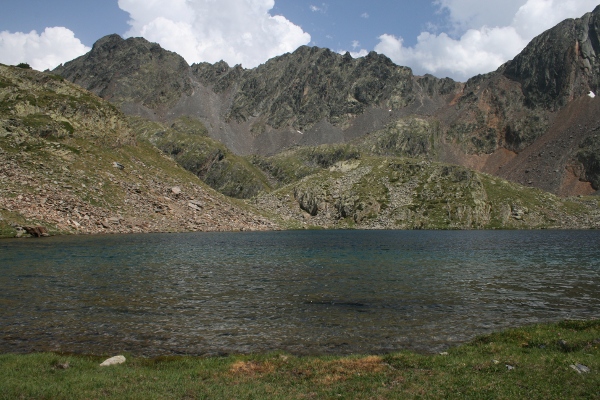

The Portella de Baiau, during our 2008 trip For a whole month, we'll be mostly disconnected from everything else that isn't our knee ache, our blisters, the Sun over our heads or where to get food. It's the first time I leave on a hiking trip as long and tough as this one, and I feel both uncertainty and eagerness. We've been so busy during the last few months that we've been unable to train at all for this, and I'm probably in the worst physical condition in a decade. It's too late to take care of that now, so we'll try to take good care of our legs and spine. In order to get back home in the Mediterranean, we'll have to be fast, some days joining two stages and skipping a few that we know are not that interesting (sections over asphalt, etc.). It's hard to make it in just one month, but we'll try our best. The plan is going to sleep not long after sunset, getting up at dawn, to be able to walk for a decent time before the heat starts being a handicap and just resting at midday, when the Sun is strongest. Of course, this means that I'm missing, yet again, this year's edition of DebConf in New York City, which is really sad because I was looking forward hanging around with Mako, Mika, Biella, micah, Clint and the rest of the NYC/ Boston gang, but when the idea of doing a long trip this summer popped up around January, it was clear DebConf seemed unlikely this year. I hope all of you have a lot of fun, and see you in a few weeks!

Jordi Mallach: De mar a mar, hiking across the Pyrenees

Two weeks ago, Maria and I completed one of our dreams when we arrived in Cap de Creus, where the Pyrenean range sinks in the Mediterranean. To get there, we walked hundreds of kilometres during a month, crossed dozens of steep valleys and enjoyed one of the richest experiences of our lives.

We managed to complete this challenge without facing major problems or pains, and after the first five our six days, our legs seemed to have gotten used to the daily effort and it started to be easier and easier. Our morale kept growing as days passed and we advanced east. When I started walking on a cold and rainy morning in Hondarribia, after barely no rest in the night bus to Ir n, I thought for myself that it was improbable that we'd manage to get anywhere near Catalunya, that one of us would get injuried way before, or we'd just give up and go for the easy beach vacation in the Basque Country.
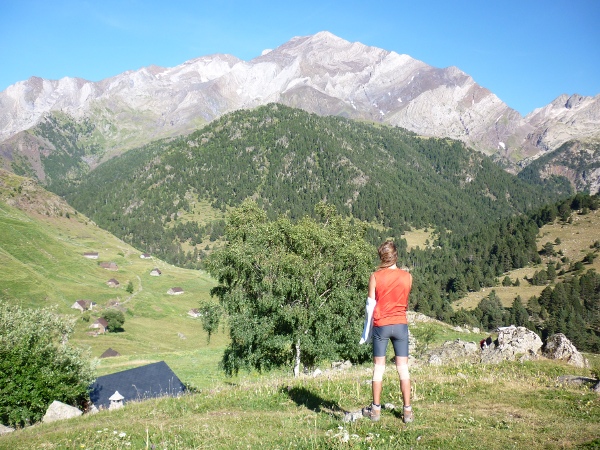

Biad s refuge, under Posets But we didn't, and after a somewhat painful start, with our boots soaking wet during the stages that crossed the enchanting Selva de Irati which ended up with me getting the biggest blister I've ever seen, we started to walk farther every day, extending the stages when we felt strong after reaching their official end. When we crossed from Nafarroa to Aragonese territory, the mental wall that I had built over the toughest stages in our quest started to fall apart. Days later, we found ourselves climbing down to Pineta, leaving Ordesa behind and enjoying a feeling that our adventure could not go better. The weather had been perfect for over a week and our legs and back were strong to go all over the way to the sea.


Ca n de A isclo, on our way to Pineta When we finally saw that huge blue stain on the horizon, the day before getting to the last mark, we got really excited. We had made it, but as we walked towards the cape, happiness slowly got mixed with melancholy. An unforgettable adventure was about to end, and we didn't want to face our return to the city and our routines. It had been many days surrounded only by awesome landscapes, and living without watches, with only sunlight and weariness marking the time to get in our sleeping bags.


At the very last red and white mark of our journey We've had plenty of time to meet great people. Starting with the Navarrian brothers we met in the early stage, which provided us with a good pace to follow while our leg muscles were still building up; or Kike and Ana, who drove from Pamplona to visit us during the first Aragonese stages (thanks for the supplies!). Tom s and Roger, young hikers from Matar , surprised us with their maturity and experience as mountaineers; we had the pleasure to join forces during four days, walking a really cool variant through the Infiernos and Collado del Letrero which avoided going through the ghost city of Panticosa. Roger and Tom s, we really hope to meet you soon! Andreu, Manel, Ghandi and Ga la visited us at the Vall de N ria and were unlucky to suffer a frightening hail and thunder storm when they left our shelter on their way back to their car. Thanks! All of you have been a very special part of our experience!

This adventure through GR 11 has been incredibly positive for us for several reasons. We've learned a lot about ourselves and strengthened our relation, and now I know how powerful drive can be; to get somewhere, no matter how far, it's really easy if you just believe you can do it and desire to get there. Maria and I are proud of what we've done, and no wonder we're looking for new challenges. An obvious one would be repeating this experience, going through the French side of the Pyrenees, but for now, the Corsican GR 20 seems the most appealing. We'll see, next summer!

Charles Plessy: Hello, planets!

This is my first post on Planet Debian. In the title, I used the plural for planets, as I will try to be bilingual, and send here each time a translation from my post on Plan te Debian. For this, I will use po4a and Virtaal or Poedit, mostly for training purpose since there is not much to translate anyway. Conversions will be via ikiwiki s po plugin. This blog is hosted on Branchable. I am a Debian developer since 2008, and specialize in bioinformatics through the Debian Med project. In the everyday life I'm a (molecular) biologist. My current packages are mostly research tools, but in view of the amazing progresses of DNA sequencing, we may see software aiming at the general public in the future. And given the stakes, I hope that some of them will be free and we'll manage to distribute them in Debian!

John Goerzen: Jacob & Dad & Trains

Back in July, our family took a train trip from Kansas to New York for Debconf10. And then in September, we went to Indiana. The only train service from here leaves at about 3AM in both directions. So starting about November, Jacob started asking me, Dad, will you wake me up in the middle of the night to go to the train station TODAY? He didn t seem to get it through his head that we didn t have another trip planned, although we surely would at some point. It just couldn t possibly be, right? So around Christmas, I booked a round trip from here to Galesburg, IL for just Jacob and me. We ll get on the train at 3AM Saturday morning, get to Galesburg about noon, and then head back home at 5PM, getting home again at, well, 3:30AM. Jacob is super excited about this. When the tickets arrived, he didn t yet know about the trip. I thought he d be excited then, but the ticket sleeve had a picture of a toy train that he didn t own, so he was somewhat sad. But starting the next day he was very excited. We wrote Amtrak on the Jan. 15 spot on his pharmacy calendar (a local pharmacy gives them away free each year). He carefully checked off each day as it went past. And he s been getting increasingly excited all week. Tonight he couldn t really think, couldn t really play, couldn t really calm down. He jabbered about how he would sit by the window, how precisely I would wake him up, and his eyes would open up right away and we ll go straight there. He talked about how he will look out the window at the dark night, and was extra excited when I told him he d see snow out the window like one of the Amtrak videos he likes to watch on Youtube. He already placed his order for breakfast in the dining car: French toast with syrup on top. He ran past the computer while I was looking at things to do in Galesburg, and saw I had a map up, and immediately noticed the train tracks. Then he pointed to the station, and said, Dad, that says Galesburg Amtrak . A rather stunned dad replied, Yes indeed it does, Jacob. I guess it was some combination of pre-reading and detective skills, but that surprised me. Anyhow, this is the first trip with just Jacob and me. We re going to have a blast, I m sure. I may, however, wind up going 24 hours without sleep if his adrenaline level is any guide

14 January 2011

Jordi Mallach: New project to discuss

Reading Scott's recent announcement on his move to Google was both surprising and a pleasure. Surprising, because it'll take time to stop associating his name to Ubuntu, Canonical, and the nice experiences I had while I worked with them. A pleasure, because his blog post was full of reminiscences of the very early days of a project that ended up being way more successful in just a few years than probably anyone in the Oxford conference could imagine. Scott, best of luck for this new adventure! Scott's write-up includes a sentence that made me remember I had been wanting to write a blog post related to all of this, but was pending Mark Shuttleworth's permission for posting:
Ok, Mark wasn t really a Nigerian 419 scammer, but some people did discard his e-mail as spam! Scott James Remnant
Many know the story of how I ended not being part of the Super-Secret-Debian-Startup Scott mentions. I even wrote about it in a blog post, 3 years ago:
[...] nothing beats the next email which sat for some dramatic 6 months in my messy inbox until I found out in the worst of the possible scenarios. Let's go back to late February, 2004, when I had no job, and I didn't have a clue on what to do with my life.
From: Mark Shuttleworth <mark@hbd.com>
Subject: New project to discuss
To: Jordi Mallach <jordi@debian.org>
Date: Sun, 29 Feb 2004 18:33:51 +0000
[...]
I'm hiring a team of debian developers to work full time on a new
distribution based on Debian. We're making internationalisation a prime
focus, together with Python and regular release management. I've discussed
it with a number of Debian leaders and they're all very positive about it.
[...]
I'm not sure if I totally missed it as it came in, or I skimmed through it and thought WTF?! Dude on crack or I just forgot I need to reply to this email , but I'd swear it was the former. Not long after, no-name-yet.com popped up, the rumours started spreading around Debian channels. Luckily, I got a job at LliureX two months later, where I worked during the following 2 years, but that's another story. I guess it was July or so when Ubuntu was made public, and Mark and his secret team organised a conference (blog entries [1] [2] [3] [4] [5]), just before the Warty release, and I was invited to it, for the same reasons I got that email. During that conference, probably because Mark sent me some email and I applied a filter to get to it, I found the lost email, and felt like digging a hole to hide for a LONG while. I couldn't believe the incredible opportunity I had missed. I went to Mark and said "hey, you're not going to believe this", and he did look quite surprised about someone being such an idiot. I wonder if I should reply to his email today...
When the usual suspects in the secret Spanish Debian Cabal channel read this blog post, they decided Mark deserved a reply, even if it would hit his inbox more than three and a half years late. :) With great care, we crafted an email that would look genuinely stupid in late 2007, but just arrogant and idiotic in 2004, when Ubuntu was just an African word, and the GNU/Linux distribution landscape was quickly evolving at the time, Gentoo Linux had the posh distribution crown, that Debian had held for quite a few years. I even took enough care to forge the X-Operating-System and User-Agent headers so they matched whatever was current in Debian in February 2004, and of course, top-posting seemed most appropriate. So Mark woke up that Monday, fired up his email client, and got... this:
Date: Mon, 1 Mar 2004 09:47:55 +0100
From: Jordi Mallach <jordi@sindominio.net>
To: Mark Shuttleworth <mark@hbd.com>
Subject: Re: New project to discuss
Organization: SinDominio
X-Operating-System: Debian GNU/Linux sid (Linux 2.6.3 i686)
User-Agent: Mutt/1.5.5.1+cvs20040105i
Hi Mark,
Thanks for your email. I nearly deleted this e-mail because for some
reason I thought it was targetted spam.
Your project looks very interesting, almost like a dream come true.
However, I feel a bit uneasy about your proposal. Something just doesn't
fit.
Why would someone start a company to work on /yet another/ Debian
derivative? Have you heard about Progeny's sad story? I think it's a
great example to show that Debian users don't want Debian-based distros,
they want people to work on the "real thing". Besides, I don't think
there's much more place for successful commercial distros, with Red Hat
and SuSE having well-established niches in the US and Europe.
Also, why focus on Debian specifically, Why not, for example, Gentoo,
which has a lot of buzz these days, and looks poised to be the next big
distribution?
To be honest, I think only a few people have the stamina or financial
stability to undertake a project like this, so I'd like to know
a bit more about you, and details on how you plan to sustain the
expenses.
Those are the main issues that worry me about your project. Other than
that, I would be interested in taking part in it, as I'm currently
unemployed and working on something Debian-based would be just too good
to miss.
You can reach me at +34 123 45 67 89, or if you feel like flying people
around Europe, I probably can be in the UK whenever it fits you.
Thanks, and hoping to hear from you again,
Jordi
On Sun, Feb 29, 2004 at 06:33:51PM +0000, Mark Shuttleworth wrote:
> Hi Jordi
>
> We haven't met, but both Jeff Waugh and Martin Michelmayr recommended that
> I get in touch with you in connection with a new project that I'm starting.
>
> I'm hiring a team of debian developers to work full time on a new
> distribution based on Debian. We're making internationalisation a prime
> focus, together with Python and regular release management. I've discussed
> it with a number of Debian leaders and they're all very positive about it.
>
> Would you be available to discuss it by telephone? I'm in the UK, so we
> could probably find a good timezoine easily enough ;-) Let me knof if
> you're keen to discuss it, when and what number to call.
>
> Cheers,
> Mark
>
> --
> Try Debian GNU/Linux. Software freedom for the bold, at www.debian.org
> http://www.markshuttleworth.com/
As you can imagine, his reaction was immediate:
Date: Mon, 22 Oct 2007 11:13:54 +0100
From: Mark Shuttleworth <mark@hbd.com>
To: Jordi Mallach <jordi@sindominio.net>
Subject: Re: New project to discuss
Jordi! I just got this now! Did you recently flush an old mail queue?
With thanks to all the Spanish Cabal members who were involved!

Alexander Reichle-Schmehl: Release Critical Bug report for Week 02

The bug webinterface of the Ultimate Debian Database currently knows about the following release critical bugs:
In Total:620
Affecting Squeeze:82
Squeeze only:36
Remaining to be fixed in Squeeze:46
Of these 46 bugs, the following tags are set:
Pending in Squeeze:4
Patched in Squeeze:9
Duplicates in Squeeze:8
Can be fixed in a security Update:1
Contrib or non-free in Squeeze:0
Claimed in Squeeze:0
Delayed in Squeeze:0
Otherwise fixed in Squeeze:8
Ignoring all the above (multiple tags possible) 20 bugs need to be fixed by Debian Contributors to get Debian 6.0 Squeeze released. However, with the view of the Release Managers, 65 need to be dealt with for the release to happen. Please see Interpreting the release critical bug statistics for an explanation of the different numbers.

13 January 2011

Cyril Brulebois: X11R7.6: Katamari summary

X11R7.6 got released on the 20th of December 2010. There were several status updates about XServer 1.9 in experimental on this blog previously, but here s a more thorough review of this katamari. Terminology: that s how upstream calls a badged annual rollup release. In other words, the server, drivers, client libraries, protocols, fonts, and basic applications are all individually released, and a rollup of all those is released from time to time, with a version for all of those components. The term comes from a series of video games. (Explanations taken from a message by Alan Coopersmith.) Katamaris are released with a consolidated changelog, where all components and versions are listed. There s also a git shortlog available for each component, pointing back to freedesktop s git web interface for each and every commit. I modified the table of versions to get the following table, dropping the X11R7.5 column, and adding a distribution one, so as to mention where each component for X11R7.6 can be found. It boils down mostly to: So there s the summary:
Type Component Version Distribution
xserver 1.9.3 experimental
app bdftopcf 1.0.3 unstable
app iceauth 1.0.4 experimental
app luit 1.1.0 experimental
app mkfontdir 1.0.6 unstable
app mkfontscale 1.0.8 unstable
app sessreg 1.0.6 unstable
app setxkbmap 1.2.0 experimental
app smproxy 1.0.4 experimental
app x11perf 1.5.2 experimental
app xauth 1.0.5 unstable
app xbacklight 1.1.2 will be dropped
app xcmsdb 1.0.3 experimental
app xcursorgen 1.0.4 experimental
app xdpyinfo 1.2.0 experimental
app xdriinfo 1.0.4 experimental
app xev 1.1.0 experimental
app xgamma 1.0.4 experimental
app xhost 1.0.4 experimental
app xinput 1.5.3 unstable
app xkbcomp 1.2.0 experimental
app xkbevd 1.1.2 experimental
app xkbutils 1.0.3 experimental
app xkill 1.0.3 experimental
app xlsatoms 1.1.0 unstable
app xlsclients 1.1.1 experimental
app xmodmap 1.0.5 experimental
app xpr 1.0.3 will be dropped
app xprop 1.2.0 experimental
app xrandr 1.3.4 experimental
app xrdb 1.0.7 experimental
app xrefresh 1.0.4 experimental
app xset 1.2.1 experimental
app xsetroot 1.1.0 experimental
app xvinfo 1.1.1 experimental
app xwd 1.0.4 experimental
app xwininfo 1.1.1 experimental
app xwud 1.0.3 experimental
data bitmaps 1.1.1 unstable
data cursors 1.0.3 unstable
doc xorg-docs 1.6 unstable
doc xorg-sgml-doctools 1.6 unstable
driver xf86-input-acecad 1.4.0 experimental
driver xf86-input-aiptek 1.3.1 experimental
driver xf86-input-evdev 2.5.0 experimental
driver xf86-input-joystick 1.5.0 experimental
driver xf86-input-keyboard 1.5.0 experimental
driver xf86-input-mouse 1.6.0 experimental
driver xf86-input-synaptics 1.3.0 experimental
driver xf86-input-vmmouse 12.6.10 experimental
driver xf86-input-void 1.3.1 experimental
driver xf86-video-apm 1.2.3 experimental
driver xf86-video-ark 0.7.3 experimental
driver xf86-video-ast 0.91.10 dropped
driver xf86-video-ati 6.13.2 experimental
driver xf86-video-chips 1.2.3 experimental
driver xf86-video-cirrus 1.3.2 experimental
driver xf86-video-dummy 0.3.4 experimental
driver xf86-video-fbdev 0.4.2 experimental
driver xf86-video-geode 2.11.10 todo: needs upload
driver xf86-video-glide 1.1.0 experimental
driver xf86-video-glint 1.2.5 experimental
driver xf86-video-i128 1.3.4 experimental
driver xf86-video-i740 1.3.2 experimental
driver xf86-video-intel 2.13.0 experimental
driver xf86-video-mach64 6.8.2 experimental
driver xf86-video-mga 1.4.13 experimental
driver xf86-video-neomagic 1.2.5 experimental
driver xf86-video-newport 0.2.3 todo: needs upload
driver xf86-video-nv 2.1.18 will be dropped
driver xf86-video-r128 6.8.1 experimental
driver xf86-video-rendition 4.2.4 experimental
driver xf86-video-s3 0.6.3 experimental
driver xf86-video-s3virge 1.10.4 experimental
driver xf86-video-savage 2.3.1 experimental
driver xf86-video-siliconmotion 1.7.4 experimental
driver xf86-video-sis 0.10.3 experimental
driver xf86-video-sisusb 0.9.4 experimental
driver xf86-video-suncg14 1.1.1 experimental
driver xf86-video-suncg3 1.1.1 experimental
driver xf86-video-suncg6 1.1.1 experimental
driver xf86-video-sunffb 1.2.1 experimental
driver xf86-video-sunleo 1.2.0 experimental
driver xf86-video-suntcx 1.1.1 experimental
driver xf86-video-tdfx 1.4.3 experimental
driver xf86-video-tga 1.2.1 experimental
driver xf86-video-trident 1.3.4 experimental
driver xf86-video-tseng 1.2.4 experimental
driver xf86-video-v4l 0.2.0 dropped
driver xf86-video-vesa 2.3.0 experimental
driver xf86-video-vmware 11.0.3 experimental
driver xf86-video-voodoo 1.2.4 experimental
driver xf86-video-wsfb 0.3.0 dropped
driver xf86-video-xgi 1.6.0 dropped
driver xf86-video-xgixp 1.8.0 dropped
font fonts skipped
lib libAppleWM 1.4.0 not for us
lib libFS 1.0.3 unstable
lib libICE 1.0.7 unstable
lib libSM 1.2.0 unstable
lib libWindowsWM 1.0.1 not for us
lib libX11 1.4.0 experimental
lib libXScrnSaver 1.2.1 unstable
lib libXau 1.0.6 unstable
lib libXaw 1.0.8 unstable
lib libXcomposite 0.4.3 unstable
lib libXcursor 1.1.11 unstable
lib libXdamage 1.1.3 unstable
lib libXdmcp 1.1.0 unstable
lib libXext 1.2.0 experimental
lib libXfixes 4.0.5 unstable
lib libXfont 1.4.3 experimental
lib libXft 2.2.0 experimental
lib libXi 1.4.0 experimental
lib libXinerama 1.1.1 unstable
lib libXmu 1.1.0 unstable
lib libXpm 3.5.9 unstable
lib libXrandr 1.3.1 unstable
lib libXrender 0.9.6 unstable
lib libXRes 1.0.5 unstable
lib libXt 1.0.9 experimental
lib libXtst 1.2.0 unstable
lib libXv 1.0.6 unstable
lib libXvMC 1.0.6 unstable
lib libXxf86dga 1.1.2 unstable
lib libXxf86vm 1.1.1 unstable
lib libdmx 1.1.1 unstable
lib libfontenc 1.1.0 unstable
lib libpciaccess 0.12.0 unstable
lib libxkbfile 1.0.7 unstable
lib libxtrans 1.2.6 unstable
proto applewmproto 1.4.1 not for us
proto bigreqsproto 1.1.1 unstable
proto compositeproto 0.4.2 unstable
proto damageproto 1.2.1 unstable
proto dmxproto 2.3 unstable
proto dri2proto 2.3 unstable
proto fixesproto 4.1.2 unstable
proto fontsproto 2.1.1 unstable
proto glproto 1.4.12 unstable
proto inputproto 2.0.1 unstable
proto kbproto 1.0.5 unstable
proto randrproto 1.3.2 unstable
proto recordproto 1.14.1 unstable
proto renderproto 0.11.1 unstable
proto resourceproto 1.1.1 unstable
proto scrnsaverproto 1.2.1 unstable
proto videoproto 2.3.1 unstable
proto windowswmproto 1.0.4 not for us
proto xcmiscproto 1.2.1 unstable
proto xextproto 7.1.2 unstable
proto xf86bigfontproto 1.2.0 unstable
proto xf86dgaproto 2.1 unstable
proto xf86driproto 2.1.0 unstable
proto xf86vidmodeproto 2.3 unstable
proto xineramaproto 1.2 unstable
proto x11proto 7.0.20 unstable
util makedepend 1.0.3 unstable
util macros 1.11.0 unstable
xcb pthread-stubs 0.3 unstable
xcb libxcb 1.7 experimental
xcb proto 1.6 unstable

Ingo Juergensmann: Changing/Renewing GPG key procedure?

I know I'm a little late with this, but I want to renew GPG key and change it from DSA to RSA. The length of my ElGamal key is 1024, which is not that good for todays standard. When searching on Planet Debian, I found some few HowTos, especially that by Ana Guerrero. Are there any other tips or caveats than those mentioned in her blog? Is an RSA key with a length of 4096 state of the art at the moment? Is it acceptable to send the new key sign (and maybe encrypted) to all those that already had signed my old key to get the new key signed? Comments are welcome, dear Lazy Web!

10 January 2011

Christoph G hre: Shredder (aka Thunderbird/Icedove) Nightly Builds

Last August I listened to Axel Beckert's (abe) talk at FrOSCon about Automated building .deb packages from VCS snapshots. Axel builds the web browser Conkeror this way and I daydreamed from a nightly built Icedove. Mozilla provides nightly snapshots of Thunderbird, but these are compressed tar files and I'm too lazy to do things (download, extract, remove, purge, ...) which a package manager does better and faster than me. Today, four months later, I want to announce my nightly build service for Icedove. It provides binary packages - shredder-nightly - for i386 and amd64 in a signed APT repository.

Christian Perrier: [life] How to discourage the use of public transport

As some of my readers may now, I'm a regular user of public transport. Even though I'm living in an area (far suburbs of Paris) where the use of cars for nearly everything is common, I managed up to now to not use my car for my daily commute. I was using the public bus line of our town, that starts close from our house and ends up at the local train station where I can commute to U line of Paris transport system (then C line, then another bus ride). You can compare this complicated 1h30 travel to the 35 minutes drive I would have if I was using my car. I *was*. I'll stop from tomorrow. The reason is simple: my U train start hour is 6h57. The bus formerly started at 6h36, then reached the train station at 6h51, which was a quite good commute. That made me leave our house at about 6h25, considering a 10min walk from the house to the bus stop. That's 32 minutes for....3 kilometers. Already needs some motivation, right? This changed today (with minimal notice). To catch the same train, I should have a bus at 6h31, thus leave 5 minutes earlier, so *nearly 40 minutes before the train schedule*. Considering that driving from our place to the train station is about 12 minutes, the deal is now made. I'll stop being the only non captive person using the bus in our neighbourhood (all others are people who can't use a car). So much for environment, etc. This is an 'interesting' way to understand why it is so easy to discourage proper use of public transport and minimize the impact on environment. A small change can lead to such effects. Of course, as you may expect, I won't stop there. Letters to the (public-funded) bus company and people in charge of public transport in our city (the bus line deficit is funded by the city), will follow very soon. Tehre are indeed many other reasons why people don't use our local buses that much. One being that, even though there are 2 trains every 15 minutes leaving the station (U and N lines), both alternated with a 7.5 minutes interval....there is only one bus every 15 minutes....on each bus line. Sometimes, even, you don't know why, there's a 23 minutes gap. Imagine waiting for your bus for more than 20 minutes at night in winter...when you're about 2-3 kilometers away from your home... Sure, that would need a lot of funding to have a really convenient system. But how about spending the billions of euros spent in super-highways, toll tunnels, etc., in public transport infrastructure? Funding my local bus line to have 2 buses every 15 minutes at peak hours would cost about the price of 100m of a 3-lane highway, for one year. Make the deal. (All that will indeed reinforce my backup system : run from my house to the train station, for 3km and 15 minutes...which involves another run at the end of my train ride, for 4km and 20 minutes. That, however, involves some "logistics" organization to be sure that I don't spend the day working in my stinking running suit. That also means up to 56km run every week, which I can't always do, particularly if I plan a race for the next week-end!) Another side effect: I will have less time for Debian as my bus commutes were used for hacking, while it will be much more difficult when driving my car to the train station, isn't it?

Cyril Brulebois: Giving Squeeze s d-i rc1 a (snap)shot

Otavio Salvador requested early testers for squeeze debian-installer rc1. (This paragraph will be edited once the official announcement is published.) Graphical installer snapshots A few snapshots follow, using various non-Latin languages to make sure rendering was doing fine. To avoid any manual drawing, tiny imagemagick magick for the snapshots cropped to 800x300:
convert cropped-snap.png -fill none -stroke black -draw \
    "stroke-dasharray 10 10 path 'M 0,299 L 800,299'" dashed-cropped-snap.png
X/experimental + g-i = ? Premises: Result:
X/experimental + g-i = Win
Proof: g-i running with Xorg from experimental Comments:

9 January 2011

Nikita Youshchenko: Open source book about parallel programming

With help of LWN site, I ve discovered in-progress effort of writing a serious book about parallel programming, in form of a real open-source project where people can contribute. Book is titled Is Parallel Programming Hard, And, If So, What Can You Do About It?, edited by Paul E. McKenney. It is still far from being complete, but even in current state it definitely is a recommended reading. Many things are explained using Linux kernel code and environment. So it is also a good kernel resource. As for project things are managed in git repository, with commits from several people. Book sources are in TeX.

Ana Beatriz Guerrero Lopez: KOffice 2.3.0 and future

It took a bit of time due to the holidays, but KOffice 2.3.0 is finally available from Debian experimental (give some hours to your mirror to sync!). If you are unstable user don t be afraid to fetch it from experimental, it is there only because the Squeeze freeze. Squeeze will ship with KOffice 2.2.1, while not all the applications are so polished as it would be desirable, it clearly offers huge improvements over old KOffice 1.6.3. I do not know if there will be a KOffice 2.3.1 upload but I know for sure the future is with Calligra :)

7 January 2011

Amaya Rodrigo: The Debian empanada

http://es.wikipedia.org/wiki/Empanada

Cod fish, fried tomato, green and red peppers. Home made from scratch. And delicious.

I wonder why I feel the need to swirl everything up :)


Originally uploaded by Amayita.

I will one day learn how to propperly cook.

Next.

Previous.