Search Results: "ina"

2 August 2014

Don Armstrong: ErgoDox keyboard assembly

I routinely use a Kinesis Advantage Pro keyboard, which is a split, ergonomic keyboard with thumb clusters that uses brown cherryMX switches. Over the thirteen years that I've been using it, I've become a huge fan of this style of keyboard. However, I have two major annoyances with the Kinesis. First, while the firmware is good, remapping the keys is complicated and producing more complicated keyboard layouts with layers and keycodes that are not present in the original layout is not possible. Secondly, the interconnect between the main key wells and the controller board in the middle occasionally fails, and requires disassembly and occasional re-tinning of the circuit board interconnect connector. 1 About a year ago, I became aware of the ErgoDox keyboard, which is a keyboard design which mimics the kinesis to some degree, but with completely separated key halves (useful, because I'm substantially bigger than the average human), programmable firmware (so I can finally have the layers and missing keys) and with slightly more elegant interconnects (TRRS cables). Unfortunately, at the time I first heard about it (and other custom keyboards), making it required sourcing circuit boards, parts, and finding someone to cut a case for the keyboard. Then, a few months ago, I learned about MassDrop, a company who puts together groups of people to do buys of products at near-wholesale level prices, and their offer of all of the parts to build an ErgoDox. After waiting for a group buy of the keyboard to become available, I put in an order, and received the parts two months later. Over a few hours yesterday, I learned how to do surface mount soldering of the 78 diodes (one for each key), and finished assembling and flashing the firmware. This morning, I fixed up the few key bindings that I needed to be productive, and viola, my laptop at home now has a brand new ergonomic keyboard.

1 August 2014

Raphaël Hertzog: My Free Software Activities in July 2014

This is my monthly summary of my free software related activities. If you re among the people who made a donation to support my work (548.59 , thanks everybody!), then you can learn how I spent your money. Otherwise it s just an interesting status update on my various projects. Distro Tracker Now that tracker.debian.org is live, people reported bugs (on the new tracker.debian.org pseudo-package that I requested) faster than I could fix them. Still I spent many, many hours on this project, reviewing submitted patches (thanks to Christophe Siraut, Joseph Herlant, Dimitri John Ledkov, Vincent Bernat, James McCoy, Andrew Starr-Bochicchio who all submitted some patches!), fixing bugs, making sure the code works with Django 1.7, and started the same with Python 3. I added a tox.ini so that I can easily run the test suite in all 4 supported environments (created by tox as virtualenv with the combinations of Django 1.6/1.7 and Python 2.7/3.4). Over the month, the git repository has seen 73 commits, we fixed 16 bugs and other issues that were only reported over IRC in #debian-qa. With the help of Enrico Zini and Martin Zobel, we enabled the possibility to login via sso.debian.org (Debian s official SSO) so that Debian developers don t even have to explicitly create their account. As usual more help is needed and I ll gladly answer your questions and review your patches. Misc packaging work Publican. I pushed a new upstream release of publican and dropped a useless build-dependency that was plagued by a difficult to fix RC bug (#749357 for the curious, I tried to investigate but it needs major work for make 4.x compatibility). GNOME 3.12. With gnome-shell 3.12 hitting unstable, I had to update gnome-shell-timer (and filed an upstream ticket at the same time), a GNOME Shell extension to start some run-down counters. Django 1.7. I packaged python-django 1.7 release candidate 1 in experimental (found a small bug, submitted a ticket with a patch that got quickly merged) and filed 85 bugs against all the reverse dependencies to ask their maintainers to test their package with Django 1.7 (that we want to upload before the freeze obviously). We identified a pain point in upgrade for packages using South and tried to discuss it with upstream, but after closer investigation, none of the packages are really affected. But the problem can hit administrators of non-packaged Django applications. Misc stuff. I filed a few bugs (#754282 against git-import-orig uscan, #756319 against wnpp to see if someone would be willing to package loomio), reviewed an updated package for django-ratelimit in #755611, made a non-maintainer upload of mairix (without prior notice) to update the package to a new upstream release and bring it to modern packaging norms (Mako failed to make an upload in 4 years so I just went ahead and did what I would have done if it were mine). Kali work resulting in Debian contributions Kali wants to switch from being based on stable to being based on testing so I did try to setup britney to manage a new kali-rolling repository and encountered some problems that I reported to debian-release. Niels Thykier has been very helpful and even managed to improve britney thanks to the very specific problem that the kali setup triggered. Since we use reprepro, I did write some Python wrapper to transform the HeidiResult file in a set of reprepro commands but at the same time I filed #756399 to request proper support of heidi files in reprepro. While analyzing britney s excuses file, I also noticed that the Kali mirrors contains many source packages that are useless because they only concern architectures that we don t host (and I filed #756523 against reprepro). While trying to build a live image of kali-rolling, I noticed that libdb5.1 and db5.1-util were still marked as priority standard when in fact Debian already switched to db5.3 and thus should only be optional (I filed #756623 against ftp.debian.org). When doing some upgrade tests from kali (wheezy based) to kali-rolling (jessie based) I noticed some problems that were also affecting Debian Jessie. I filed #756629 against libfile-fcntllock-perl (with a patch), and also #756618 against texlive-base (missing Replaces header). I also pinged Colin Watson on #734946 because I got a spurious base-passwd prompt during upgrade (that was triggered because schroot copied my unstable s /etc/passwd file in the kali chroot and the package noticed a difference on the shell of all system users). Thanks See you next month for a new summary of my activities.

One comment Liked this article? Click here. My blog is Flattr-enabled.

31 July 2014

Russell Coker: Links July 2014

Dave Johnson wrote an interesting article for Salon about companies ripping off the tax system by claiming that all their income is produced in low tax countries [1]. Seb Lee-Delisle wrote an insightful article about how to ask to get paid to speak [2]. I should do that. Daniel Pocock wrote an informative article about the reConServer simple SIP conferencing server [3]. I should try it out, currently most people I want to conference with are using Google Hangouts, but getting away from Google is a good thing. Fran ois Marier wrote an informative post about hardening ssh servers [4]. S. E. Smith wrote an interesting article I Am Tired of Hearing Programmers Defend Gender Essentialism [5]. Bert Archer wrote an insightful article about lazy tourism [6]. His initial example of love locks breaking bridges was a bit silly (it s not difficult to cut locks off a bridge) but his general point about lazy/stupid tourism is good. Daniel Pocock wrote an insightful post about new developments in taxis, the London Taxi protest against Uber, and related changes [7]. His post convinced me that Uber is a good thing and should be supported. I checked the prices and unfortunately Uber is more expensive than normal taxis for my most common journey. Cory Doctorow wrote an insightful article for The Guardian about the moral issues related to government spying [8]. The Verge has an interesting review of the latest Lytro Lightbox camera [9]. Not nearly ready for me to use, but interesting technology. Prospect has an informative article by Kathryn Joyce about the Protestant child sex abuse scandal in the US [10]. Billy Graham s grandson is leading the work to reform churches so that they protect children instead of pedophiles. Prospect also has an article by Kathryn Joyce about Christians home-schooling kids to try and program them to be zealots and how that hurts kids [11]. The Daily Beast has an interesting article about the way that the extreme right wing in the US are trying to kill people, it s the right wing death panel [12]. Jay Michaelson wrote an informative article for The Daily Beast about right-wing hate groups in the US who promote the extreme homophobic legislation in Russia and other countries [13]. It also connects to the Koch brothers who seem to be associated with most evil. Elias Isquith wrote an insightful article for Salon about the current right-wing obsession with making homophobic discrimination an issue of religious liberty will hurt religious people [14]. He also describes how stupid the right-wing extremists are in relation to other issues too. EconomixComix.com has a really great comic explaning the economics of Social Security in the US [15]. They also have a comic explaining the TPP which is really good [16]. They sell a comic book about economics which I m sure is worth buying. We need to have comics explaining all technical topics, it s a good way of conveying concepts. When I was in primary school my parents gave me comic books covering nuclear physics and other science topics which were really good. Mia McKenzie wrote an insightful article for BlackGirlDangerous.com about dealing with racist white teachers [17]. I think that it would be ideal to have a school dedicated to each minority group with teachers from that group.

Craig Small: Linux Capabilities

I was recently updating some code that uses fping. Initially it used exec() that was redirected to a temporary file but I changed it to use popen. While it had been a while since I ve done this sort of thing, I do recall there was an issue with running popen on setuid binary. A later found it is mainly around setuid scripts which are very problematic and there are good reasons why you don t do this. Anyhow, the program worked fine which surprised me. Was fping setuid root to get the raw socket?
$ ls -l /usr/bin/fping
-rwxr-xr-x 1 root root 31464 May  6 21:42 /usr/bin/fping
It wasn t which at first all I thought ok, so that s why popen is happy . The way that fping and other programs work is they bind to a raw socket. This socket sits below the normal type sockets such as the ones used for TCP and UDP and normal users cannot use them by default. So how did fping work it s magic and get access to this socket? It used Capabilities. Previously getting privileged features had a big problem; it was an all or nothing thing. You want access to a raw socket? Sure, be setuid but that means you also could, for example, read any file on the system or set passwords. Capabilites provide a way of giving programs some better level of access, but not a blank cheque. The tool getcap is the way of determining what capabilities are found on a file. These capabilities are attributes on the file which, when the file is run, turn into capabilities or extra permissions. fping has the capability cap_net_raw+ep applied to it. This gives access to the RAW and PACKET sockets which is what fping needs. The +ep after the capability name means it is an Effective and Permitted capability, which describes what happens with child processes and dropping privileges. I hadn t seen these Capabilities before. They are a nice way to give your programs the access they need, but limiting the risk of something going wrong and having a rouge program running as root.

Russell Coker: BTRFS Status July 2014

My last BTRFS status report was in April [1], it wasn t the most positive report with data corruption and system hangs. Hacker News has a brief discussion of BTRFS which includes the statement Russell Coker s reports of his experiences with BTRFS give me the screaming heebie-jeebies, no matter how up-beat and positive he stays about it [2] (that s one of my favorite comments about my blog). Since April things have worked better. Linux kernel 3.14 solves the worst problems I had with 3.13 and it s generally doing everything I want it to do. I now have cron jobs making snapshots as often as I wish (as frequently as every 15 minutes on some systems), automatically removing snapshots (removing 500+ snapshots at once doesn t hang the system), balancing, and scrubbing. The fact that I can now expect that a filesystem balance (which is a type of defragment operation for BTRFS that frees some chunks ) from a cron job and expect the system not to hang means that I haven t run out of metadata chunk space. I expect that running out of metadata space can still cause filesystem deadlocks given a lack of reports on the BTRFS mailing list of fixes in that regard, but as long as balance works well we can work around that. My main workstation now has 35 days of uptime and my home server has 90 days of uptime. Also the server that stores my email now has 93 days uptime even though it s running Linux kernel 3.13.10. I am rather nervous about the server running 3.13.10 because in my experience every kernel before 3.14.1 had BTRFS problems that would cause system hangs. I don t want a server that s an hour s drive away to hang The server that runs my email is using kernel 3.13.10 because when I briefly tried a 3.14 kernel it didn t work reliably with the Xen kernel 4.1 from Debian/Wheezy and I had a choice of using the Xen kernel 4.3 from Debian/Unstable to match the Linux kernel or use an earlier Linux kernel. I have a couple of Xen servers running Debian/Unstable for test purposes which are working well so I may upgrade my mail server to the latest Xen and Linux kernels from Unstable in the near future. But for the moment I m just not doing many snapshots and never running a filesystem scrub on that server. Scrubbing In kernel 3.14 scrub is working reliably for me and I have cron jobs to scrub filesystems on every system running that kernel. So far I ve never seen it report an error on a system that matters to me but I expect that it will happen eventually. The paper An Analysis of Data Corruption in the Storage Stack from the University of Wisconsin (based on NetApp data) [3] shows that nearline disks (IE any disks I can afford) have an incidence of checksum errors (occasions when the disk returns bad data but claims it to be good) of about 0.42%. There are 18 disks running in systems I personally care about (as opposed to systems where I am paid to care) so with a 0.42% probability of a disk experiencing data corruption per year that would give a 7.3% probability of having such corruption on one disk in any year and a greater than 50% chance that it s already happened over the last 10 years. Of the 18 disks in question 15 are currently running BTRFS. Of the 15 running BTRFS 10 are scrubbed regularly (the other 5 are systems that don t run 24*7 and the system running kernel 3.13.10). Newer Kernels The discussion on the BTRFS mailing list about kernel 3.15 is mostly about hangs. This is correlated with some changes to improve performance so I presume that it has exposed race conditions. Based on those discussions I haven t felt inclined to run a 3.15 kernel. As the developers already have some good bug reports I don t think that I could provide any benefit by doing more testing at this time. I think that there would be no benefit to me personally or the Linux community in testing 3.15. I don t have a personal interest in RAID-5 or RAID-6. The only systems I run that have more data than will fit on a RAID-1 array of cheap SATA disks are ones that I am paid to run and they are running ZFS. So the ongoing development of RAID-5 and RAID-6 code isn t an incentive for me to run newer kernels. Eventually I ll test out RAID-6 code, but at the moment I don t think they need more bug reports in this area. I don t have a great personal interest in filesystem performance at this time. There are some serious BTRFS performance issues. One problem is that a filesystem balance and subtree removal seem to take excessive amounts of CPU time. Another is that there isn t much support for balancing IO to multiple devices (in RAID-1 every process has all it s read requests sent to one device). For large-scale use of a filesystem these are significant problems. But when you have basic requirements (such as a mail server for dozens of users or a personal workstation with a quad-core CPU and fast SSD storage) it doesn t make much difference. Currently all of my systems which use BTRFS have storage hardware that exceeds the system performance requirements by such a large margin that nothing other than installing Debian packages can slow the system down. So while there are performance improvements in newer versions of the BTRFS kernel code that isn t an incentive for me to upgrade. It s just been announced that Debian/Jessie will use Linux 3.16, so I guess I ll have to test that a bit for the benefit of Debian users. I am concerned that 3.16 won t be stable enough for typical users at the time that Jessie is released.

Petter Reinholdtsen: Debian Edu interview: Bernd Zeitzen

The complete and free out of the box software solution for schools, Debian Edu / Skolelinux, is used quite a lot in Germany, and one of the people involved is Bernd Zeitzen, who show up on the project mailing lists from time to time with interesting questions and tips on how to adjust the setup. I managed to interview him this summer. Who are you, and how do you spend your days? My name is Bernd Zeitzen and I'm married with Hedda, a self employed physiotherapist. My former profession is tool maker, but I haven't worked for 30 years in this job. 30 years ago I started to support my wife and become her officeworker and a few years later the administrator for a small computer network, today based on Ubuntu Server (Samba, OpenVPN). For her daily work she has to use Windows Desktops because the software she needs to organize her business only works with Windows . :-( In 1988 we started with one PC and DOS, then I learned to use Windows 98, 2000, XP, , 8, Ubuntu, MacOSX. Today we are running a Linux server with 6 Windows clients and 10 persons (teacher of children with special needs, speech therapist, occupational therapist, psychologist and officeworkers) using our Samba shares via OpenVPN to work with the documentations of our patients. How did you get in contact with the Skolelinux / Debian Edu project? Two years ago a friend of mine asked me, if I want to get a job in his school (Gymnasium Harsewinkel). They started with Skolelinux / Debian Edu and they were looking for people to give support to the teachers using the software and the network and teaching the pupils increasing their computer skills in optional lessons. I'm spending 4-6 hours a week with this job. What do you see as the advantages of Skolelinux / Debian Edu? The independence. First: Every person is allowed to use, share and develop the software. Even if you are poor, you are allowed to use the software included in Skolelinux/Debian Edu and all the other Free Software. Second: The software runs on old machines and this gives us the possibility to recycle computers, weeded out from offices. The servers and desktops are running for more than two years and they are working reliable. We have two servers (one tjener and one terminal server), 45 workstations in three classrooms and seven laptops as a mobile solution for all classrooms. These machines are all booting from the terminal server. In the moment we are installing 30 laptops as mobile workstations. Then the pupils have the possibility to work with these machines in their classrooms. Internet access is realized by a WLAN router, connected to the schools network. This is all done without a dedicated system administrator or a computer science teacher. What do you see as the disadvantages of Skolelinux / Debian Edu? Teachers and pupils are Windows users. <Irony on> And Linux isn't cool. It's software for freaks using the command line. <Irony off> They don't realize the stability of the system. Which free software do you use daily? Firefox, Thunderbird, LibreOffice, Ubuntu Server 12.04 (Samba, Apache, MySQL, Joomla!, and Skolelinux / Debian Edu) Which strategy do you believe is the right one to use to get schools to use free software? In Germany we have the situation: every school is free to decide which software they want to use. This decision is influenced by teachers who learned to use Windows and MS Office. They buy a PC with Windows preinstalled and an additional testing version of MS Office. They don't know about the possibility to use Free Software instead. Another problem are the publisher of school books. They develop their software, added to the school books, for Windows.

30 July 2014

Konstantinos Margaritis: SIMD book, update 3! Addition/Subtraction mostly finished

Finally. Apologies for the delay, but it's been a busy month. This time I will hold true to my word and upload a PDF for people to see (attached to this page). So, what's new? Here is a list of things done: * Finished ALL addition/subtraction related instructions for all engines and major derivatives (SSE*/AVX, VMX/VSX, NEON/armv8 NEON). With diagrams (these were the reasons it has taken so long).
* Reorganized the structure (split the book into Parts I/II, the instruction index will be in Part II, Part I will carry the design analysis of each SIMD engine.
* Added an TOC/index.
* So far, with just Addition/Subtraction Chapter and the rest empty sections, it has reached 175 pages (B5, again I'm not fixed on the size, it might actually change)! My estimate is that the whole book will surpass 800 pages with everything included. TODO:

29 July 2014

Ian Campbell: Debian Installer ARM64 Dailies

It's taken a while but all of the pieces are finally in place to run successfully through Debian Installer on ARM64 using the Debian ARM64 port. So I'm now running nightly builds locally and uploading them to http://www.hellion.org.uk/debian/didaily/arm64/. If you have CACert in your CA roots then you might prefer the slightly more secure version. Hopefully before too long I can arrange to have them building on one of the project machines and uploaded to somewhere a little more formal like people.d.o or even the regular Debian Installer dailies site. This will have to do for now though. Warning The arm64 port is currently hosted on Debian Ports which only supports the unstable "sid" distribution. This means that installation can be a bit of a moving target and sometimes fails to download various installer components or installation packages. Mostly it's just a case of waiting for the buildd and/or archive to catch up. You have been warned! Installing in a Xen guest If you are lucky enough to have access to some 64-bit ARM hardware (such as the APM X-Gene, see wiki.xen.org for setup instructions) then installing Debian as a guest is pretty straightforward. I suppose if you had lots of time (and I do mean lots) you could also install under Xen running on the Foundation or Fast Model. I wouldn't recommend it though. First download the installer kernel and ramdisk onto your dom0 filesystem (e.g. to /root/didaily/arm64). Second create a suitable guest config file such as:
name = "debian-installer"
disk = ["phy:/dev/LVM/debian,xvda,rw"]
vif = [ '' ] 
memory = 512
kernel = "/root/didaily/arm64/vmlinuz"
ramdisk= "/root/didaily/arm64/initrd.gz"
extra = "console=hvc0 -- "
In this example I'm installing to a raw logical volume /dev/LVM/debian. You might also want to use randmac to generate a permanent MAC address for the Ethernet device (specified as vif = ['mac=xx:xx:xx:xx:xx:xx']). Once that is done you can start the guest with:
xl create -c cfg
From here you'll be in the installer and things carry on as usual. You'll need to manually point it to ftp.debian-ports.org as the mirror, or you can preseed by appending to the extra line in the cfg like so:
mirror/country=manual mirror/http/hostname=ftp.debian-ports.org mirror/http/directory=/debian
Apart from that there will be a warning about not knowing how to setup the bootloader but that is normal for now. Installing in Qemu To do this you will need a version of http://www.qemu.org which supports qemu-system-aarch64. The latest release doesn't yet so I've been using v2.1.0-rc3 (it seems upstream are now up to -rc5). Once qemu is built and installed and the installer kernel and ramdisk have been downloaded to $DI you can start with:
qemu-system-aarch64 -M virt -cpu cortex-a57 \
    -kernel $DI/vmlinuz -initrd $DI/initrd.gz \
    -append "console=ttyAMA0 -- " \
    -serial stdio -nographic --monitor none \
    -drive file=rootfs.qcow2,if=none,id=blk,format=qcow2 -device virtio-blk-device,drive=blk \
    -net user,vlan=0 -device virtio-net-device,vlan=0
That's using a qcow2 image for the rootfs, I think I created it with something like:
qemu-img create -f qcow2 rootfs.qcow2 4G
Once started installation proceeds much like normal. As with Xen you will need to either point it at the debian-ports archive by hand or preseed by adding to the -append line and the warning about no bootloader configuration is expected. Installing on real hardware Someone should probably try this ;-).

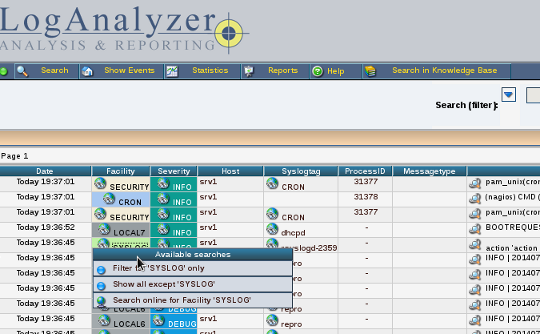
Daniel Pocock: Pruning Syslog entries from MongoDB

I previously announced the availability of rsyslog+MongoDB+LogAnalyzer in Debian wheezy-backports. This latest rsyslog with MongoDB storage support is also available for Ubuntu and Fedora users in one way or another. Just one thing was missing: a flexible way to prune the database. LogAnalyzer provides a very basic pruning script that simply purges all records over a certain age. The script hasn't been adapted to work within the package layout. It is written in PHP, which may not be ideal for people who don't actually want LogAnalyzer on their Syslog/MongoDB host. Now there is a convenient solution: I've just contributed a very trivial Python script for selectively pruning the records. Thanks to Python syntax and the PyMongo client, it is extremely concise: in fact, here is the full script:
#!/usr/bin/python
import syslog
import datetime
from pymongo import Connection
# It assumes we use the default database name 'logs' and collection 'syslog'
# in the rsyslog configuration.
with Connection() as client:
    db = client.logs
    table = db.syslog
    #print "Initial count: %d" % table.count()
    today = datetime.datetime.today()
    # remove ANY record older than 5 weeks except mail.info
    t = today - datetime.timedelta(weeks=5)
    table.remove( "time":  "$lt": t  , "syslog_fac":   "$ne" : syslog.LOG_MAIL  )
    # remove any debug record older than 7 days
    t = today - datetime.timedelta(days=7)
    table.remove( "time":  "$lt": t  , "syslog_sever": syslog.LOG_DEBUG )
    #print "Final count: %d" % table.count()
Just put it in /usr/local/bin and run it daily from cron. Customization Just adapt the table.remove statements as required. See the PyMongo tutorial for a very basic introduction to the query syntax and full details in the MongoDB query operator reference for creating more elaborate pruning rules. Potential improvements
  • Indexing the columns used in the queries
  • Logging progress and stats to Syslog

LogAnalyzer using a database backend such as MongoDB is very easy to set up and much faster than working with text-based log files

Gunnar Wolf: Editorial process starting in 3... 2... 1...

Yay! Today I finally submitted our book, Fundamentos de Sistemas Operativos, for the Editorial Department of our institute. Of course, I'm not na ve enough to assume there won't be a heavy editorial phase, but I'm more than eager to dive into it... And have the book printed in maybe two months time! Of course, this book is to be published under a free license (CC-BY-SA). And I'm talking with the coauthors, we are about to push the Git repository to a public location, as we believe the source for the text and figures can also be of interest to others. The book itself (as I've already boasted about here :- ) is available (somewhat as a preprint) for download. [update] Talked it over with the coauthors, and we finally have a public repository! Clone it from: https://github.com/gwolf/sistop.git Or just browse it from Github's web interface.

Christian Perrier: Developers per country (July 2014)

This is time again for my annual report about the number of developers per country. This is now the sixth edition of this report. Former editions: So, here we are with the July 2014 version, sorted by the ratio of *active* developers per million population for each country.
Act: number of active developers
Dev: total number of developers
A/M: number of active devels per million pop.
D/M: number of devels per million pop.
2009: rank in 2009
2010: rank in 2010
2011: rank in 2011 (June)
2012: rank in 2012 (June)
2013: rank in 2012 (July)
2014: rank now
Code Name Population Act Dev Dev Act/Million Dev/Million 2009 2010 June 2011 June 2012 July 2013 July 2014
fi Finland 5259250 19 31 3,61 5,89 1 1 1 1 1 1
ie Ireland 4670976 13 17 2,78 3,64 13 9 6 2 2 2
nz New Zealand 4331600 11 15 2,54 3,46 4 3 5 7 7 3 *
mq Martinique 396404 1 1 2,52 2,52

3 4 4 4
se Sweden 9088728 22 37 2,42 4,07 3 6 7 5 5 5
ch Switzerland 7870134 19 29 2,41 3,68 2 2 2 3 3 6 *
no Norway 4973029 11 14 2,21 2,82 5 4 4 6 6 7 *
at Austria 8217280 18 29 2,19 3,53 6 8 10 10 10 8 *
de Germany 81471834 164 235 2,01 2,88 7 7 9 9 8 9 *
lu Luxemburg 503302 1 1 1,99 1,99 8 5 8 8 9 10 *
fr France 65350000 101 131 1,55 2 12 12 11 11 11 11
au Australia 22607571 32 60 1,42 2,65 9 10 12 12 12 12
be Belgium 11071483 14 17 1,26 1,54 10 11 13 13 13 13
uk United-Kingdom 62698362 77 118 1,23 1,88 14 14 14 14 14 14
nl Netherlands 16728091 18 40 1,08 2,39 11 13 15 15 15 15
ca Canada 33476688 34 63 1,02 1,88 15 15 17 16 16 16
dk Denmark 5529888 5 10 0,9 1,81 17 17 16 17 17 17
es Spain 46754784 34 56 0,73 1,2 16 16 19 18 18 18
it Italy 59464644 36 52 0,61 0,87 23 22 22 19 19 19
hu Hungary 10076062 6 12 0,6 1,19 18 25 26 20 24 20 *
cz Czech Rep 10190213 6 6 0,59 0,59 21 20 21 21 20 21 *
us USA 313232044 175 382 0,56 1,22 19 21 25 24 22 22
il Israel 7740900 4 6 0,52 0,78 24 24 24 25 23 23
hr Croatia 4290612 2 2 0,47 0,47 20 18 18 26 25 24 *
lv Latvia 2204708 1 1 0,45 0,45 26 26 27 27 26 25 *
bg Bulgaria 7364570 3 3 0,41 0,41 25 23 23 23 27 26 *
sg Singapore 5183700 2 2 0,39 0,39


33 33 27 *
uy Uruguay 3477778 1 2 0,29 0,58 22 27 28 28 28 28
pl Poland 38441588 11 15 0,29 0,39 29 29 30 30 30 29 *
jp Japan 127078679 36 52 0,28 0,41 30 28 29 29 29 30 *
lt Lithuania 3535547 1 1 0,28 0,28 28 19 20 22 21 31 *
gr Greece 10787690 3 4 0,28 0,37 33 38 34 35 35 32 *
cr Costa Rica 4301712 1 1 0,23 0,23 31 30 31 31 31 33 *
by Belarus 9577552 2 2 0,21 0,21 35 36 39 39 32 34 *
ar Argentina 40677348 8 10 0,2 0,25 34 33 35 32 37 35 *
pt Portugal 10561614 2 4 0,19 0,38 27 32 32 34 34 36 *
sk Slovakia 5477038 1 1 0,18 0,18 32 31 33 36 36 37 *
rs Serbia 7186862 1 1 0,14 0,14


38 38
tw Taiwan 23040040 3 3 0,13 0,13 37 34 37 37 39 39
br Brazil 192376496 18 21 0,09 0,11 36 35 38 38 40 40
cu Cuba 11241161 1 1 0,09 0,09
38 41 41 41 41
co Colombia 45566856 4 5 0,09 0,11 41 44 46 47 46 42 *
kr South Korea 48754657 4 6 0,08 0,12 39 39 42 42 42 43 *
gt Guatemala 13824463 1 1 0,07 0,07


43 44 *
ec Ecuador 15007343 1 1 0,07 0,07
40 43 43 45 45
cl Chile 16746491 1 2 0,06 0,12 42 41 44 44 47 46 *
za South Africa 50590000 3 10 0,06 0,2 38 48 48 48 48 47 *
ru Russia 143030106 8 9 0,06 0,06 43 42 47 45 49 48 *
mg Madagascar 21281844 1 1 0,05 0,05 44 37 40 40 50 49 *
ro Romania 21904551 1 2 0,05 0,09 45 43 45 46 51 50 *
ve Venezuela 28047938 1 1 0,04 0,04 40 45 50 49 44 51 *
my Malaysia 28250000 1 1 0,04 0,04

49 50 52 52
pe Peru 29907003 1 1 0,03 0,03 46 46 51 51 53 53
tr Turkey 74724269 2 2 0,03 0,03 47 47 52 52 54 54
ua Ukraine 45134707 1 1 0,02 0,02 48 53 58 59 55 55
th Thailand 66720153 1 2 0,01 0,03 50 50 54 54 56 56
eg Egypt 80081093 1 3 0,01 0,04 51 51 55 55 57 57
mx Mexico 112336538 1 1 0,01 0,01 49 49 53 53 58 58
cn China 1344413526 10 14 0,01 0,01 53 53 57 56 59 59
in India 1210193422 8 9 0,01 0,01 52 52 56 57 60 60
sv El Salvador 7066403 0 1 0 0,14

36 58 61 61


969 1561 62,08%


A few interesting facts:

Russell Coker: Happiness and Lecture Questions

I just attended a lecture about happiness comparing Australia and India at the Australia India Institute [1]. The lecture was interesting but the questions were so bad that it makes a good case for entirely banning questions from public lectures. Based on this and other lectures I ve attended I ve written a document about how to recognise worthless questions and cut them off early [2]. As you might expect from a lecture on happiness there were plenty of stupid comments from the audience about depression, as if happiness is merely the absence of depression. Then they got onto stupidity about suicide. One question claimed that Australia has a high suicide rate, Wikipedia however places Australia 49th out of 110 countries, that means Australia is slightly above the median for suicide rates per country. Given some of the dubious statistics in the list (for example the countries claiming to have no suicides and the low numbers reported by some countries with extreme religious policies) I don t think we can be sure that Australia would be above the median if we had better statistics. Another question claimed that Sweden had the highest suicide rate in Europe, while Greenland, Belgium, Finland, Austria, France, Norway, Denmark, Iceland, and most of Eastern Europe are higher on the list. But the bigger problem in regard to discussing suicide is that the suicide rate isn t about happiness. When someone kills themself because they have a terminal illness that doesn t mean that they were unhappy for the majority of their life and doesn t mean that they were any unhappier than the terminally ill people who don t do that. Some countries have a culture that is more positive towards suicide which would increase the incidence, Japan for example. While people who kill themselves in Japan are probably quite unhappy at the time I don t think that there is any reason to believe that they are more unhappy than people in other countries who only keep living because suicide is considered to be wrong. It seems to me that the best strategy when giving or MCing a lecture about a potentially contentious topic is to plan ahead for what not to discuss. For a lecture about happiness it would make sense to rule out all discussion of suicide, anti-depressants, and related issues as they aren t relevant to the discussion and can t be handled in an appropriate manner in question time.

Ricardo Mones: Switching PGP keys

Finally I find the mood to do this, a process which started 5 years ago in DebConf 9 at C ceres by following Ana's post, of course with my preferred options and my name, not like some other ;-).

Said that, dear reader, if you have signed my old key:

1024D/C9B55DAC 2005-01-19 [expires: 2015-10-01]
Key fingerprint = CFB7 C779 6BAE E81C 3E05  7172 2C04 5542 C9B5 5DAC

And want to sign my "new" and stronger key:

4096R/DE5BCCA6 2009-07-29
Key fingerprint = 43BC 364B 16DF 0C20 5EBD  7592 1F0F 0A88 DE5B CCA6

You're welcome to do so :-)

The new key is signed with the old, and the old key is still valid, and will probably be until expiration date next year. Don't forget to gpg --recv-keys DE5BCCA6 to get the new key and gpg --refresh-keys C9B55DAC to refresh the old (otherwise it may look expired).

Debian's Keyring Team has already processed my request to add the new key, so all should keep working smoothly. Kudos to them!

Christian Perrier: [life] Running update July 26th 2014

Dog, long time since I blogged about my running activities. Apparently, I didn't since.....I posted a summary for 2013. So, well, that will be a long update as many things happened during the first half of 2014 when it comes at running, for me. January: I was recovering from a fatigue fracture injury inherited from last races in 2013. As a consequence, I resumed running only on Jan 7th. Therefore I cancelled my participation to the "Semi Raid 28", an night orienteering raid of about 50-60km in southern neighbourhood of Paris. Instead, I actually offerred my help to organizers in collecting orienteering signs after the race (the longest one : 120km). So, I ended up spending over 24 hours running in woods and hunting down hidden signs with the same information than runners. My only advantage was that I was able to use my car to go from one point to another. Still, I ended up running over 70km in many small parts, often alone in the dark woods with my headlamp, on very muddy areas...and collecting nearly 80 huge signs. February: Everything was going well and I for instance ran a great half-marathon in Bullion (south of Paris) in 1h3821" (great for a quite hilly race)....until I twisted my left ankle while running back from work. A quite severe twist, though no bone damage, thankfully. I had to stop running, again, for 3 years. Biking to/from work was the replacement activity.... March: I resumed running on March 10th, one week before a quite difficult trail race in my neighbourhood (30km "only" but up to 800 meters positive climb). That race was a preparation (and a test after the injury) for my 3rd participation to "Paris Ecotrail", a 80km trail race in woods of the South-West area of Paris, ending in the Eiffel Tower area. Indeed, both went very well, though I was very careful with my ankle. I finally broke my record at Ecotrail, finishing the race in 9h08 (to be compared to 9h36 last year and 11h15 the year before). April: Paris marathon was scheduled one week after Ecotrail. Everybody will tell you that running a marathon one week after a 80km race is kinda crazy.....which is why I made it..:-). That was my 3rd Paris marathon and my 12th marathon overall. However, this year, no record in sight. The challenge was running the marathon....dressed as SpongeBob (you know me, right?). I actually had great fun doing that and was happy to get zillions of cheering all over the race, from the crowd. I finally completed the race in 4h30, which is, after all, not that far from the time of my very first marathon (4h12). The only drawback was that the succession of quite very long distance runs made my left knee suffer as it never happened before. As a consequence, I (again) had to stop running for nearly one month before we found that I was quite sensitive to pronation, which the succession of long and slow races made worse. May: so finally afterthese (very) long weeks, I could gradually resume running, which finally culminated in mid-May with the 50km race "trail des Cerfs", in the Rambouillet Forest, closed to our place. This quite long but not too difficult trail race ("only" 800 meters positive climb overall) was completed in 5h16, which was completely unexpected, given the low training during the previous weeks. June: no race during that month. The entire month was focused on preparing the Montagn'hard race of July 5th: so several training sessions with a lot of climbing either by running or by fast walking (nordic style) as well as downhill run training (always important for moutain trail). July: the second "big peak" of my 2014 season was scheduled for July 5th: "La Montagn'hard", a moutain trail race close to Les Contamines in the neighbourhood of Chamonix, the french moutaineering Mekkah. "Only" 60 kilometers....but close to 5000 meters positive climb. Montagn'hard is among the thoughest moutain trail races in France and therefore a "must do" for trail runners. This race week-end includes also a 105km ultra-race, which is often said to be as hard, even maybe harder, than the very famous "Ultra Trail du Mont-Blanc" trail in Chamonix. Still, for my second only season in moutain trail running, I decided to be "wise" and stick with the "medium" version (after all, my experience, as of now with moutain trails were only two quite "short" ones). Needless to say, it has indeed been a GREAT race. The environment is wonderful ("Miage" side of the Mont-Blanc range), the race goes through great place (Col de Tricot, noticeably) and I made a great result by finishing80th out of 325+ runners, in 12h18, while my target time was around 13 hours. This is where I am now. Nearly one month after Montagn'hard, I'm deeply training for my next Big Goal: The "Sur la Trace des Ducs de Savoie" or "TDS", one of the 4 races of the Ultra Trail du Mont-Blanc week, in end August (during DebConf): 120km, nearly 7500m positive climp, between Courmayeur and Chamonix, through several passes, up to 2600m height. Yet another challenge: my first "over 24h" race, with a full night out in the moutains. You'll certainly hear again from me about that...:-)

28 July 2014

Daniel Pocock: Secure that Dictaphone

2014 has been a big year for dictaphones so far. First, it was France and the secret recordings made by Patrick Buisson during the reign of President Sarkozy. Then, a US court ordered the release of the confidential Boston College tapes, part of an oral history project. Originally, each participant had agreed their recording would only be released after their death. Sinn Fein leader Gerry Adams was arrested and questioned over a period of 100 hours and released without charge. Now Australia is taking its turn. In #dictagate down under, a senior political correspondent from a respected newspaper recorded (most likely with consent) some off-the-record comments of former conservative leader Ted Baillieu. Unfortunately, this journalist misplaced the dictaphone at the state conference of Baillieu's arch-rivals, the ALP. A scandal quickly errupted. Secure recording technology There is no question that electronic voice recordings can be helpful for people, including journalists, researchers, call centers and many other purposes. However, the ease with which they can now be distributed is only dawning on people. Twenty years ago, you would need to get the assistance of a radio or TV producer to disseminate such recordings so widely. Today there is email and social media. The Baillieu tapes were emailed directly to 400 people in a matter of minutes. Just as technology brings new problems, it also brings solutions. Encryption is one of them. Is encryption worthwhile? Coverage of the Snowden revelations has revealed that many popular security technologies are not one hundred percent safe. In each of these dictaphone cases, however, NSA-level expertise was not a factor. Even the most simplistic encryption would have caused endless frustration to the offenders who distributed the Baillieu tape. How can anybody be sure encryption is reliable? Part of the problem is education. Everybody using the technology needs to be aware of the basic concepts, for example, public key cryptography. Another big question mark is back doors. There is ongoing criticism of Apple iPhone/iPod devices and the many ways that their encryption can be easily disabled by Apple engineers and presumably many former staff, security personnel and others. The message is clear: proprietary, closed-source solutions should be avoided. Free and open source technologies are the alternative. If a company does not give you the source code, how can anybody independently audit their code for security? With encryption software, what use is it if nobody has verified it? What are the options? However, given that the majority of people don't have a PhD in computer science or mathematics, are there convenient ways to get started with encryption? Reading is a good start. The Code Book by Simon Singh (author of other popular science books like Fermat's Last Theorem) is very accessible, not classified and assumes no formal training in mathematics. Even for people who do know these topics inside out, it is a good book to share with friends and family. The Guardian Project (no connection with Guardian Media of Edward Snowden fame) aims to provide a secure and easy to use selection of apps for pocket devices. This project has practical applications in business, journalism and politics alike. How should a secure dictaphone app work? Dictaphone users typically need to take their dictaphones in the field, so there is a risk of losing it or having it stolen. A strong security solution in this situation may involve creating an RSA key pair on a home/office computer, keeping the private key on the home computer and putting the public key on the dictaphone device. Configured this way, the dictaphone will not be able to play back any of the recordings itself - the user will always have to copy them to the computer for decryption.

27 July 2014

Christian Perrier: [life] Running update July 26th 2014

Dog, long time since I blogged about my running activities. Apparently, I didn't since...... So, well, that will be a long update as many things happened during the first half of 2014 when it comes at running, for me. January: I was recovering from a fatigue fracture injury inherited from last races in 2013. As a consequence, I resumed running only on Jan 7th. Therefore I cancelled my participation to the "Semi Raid 28", an night orienteering raid of about 50-60km in southern neighbourhood of Paris. Instead, I actually offerred my help to organizers in collecting orienteering signs after the race (the longest one : 120km). So, I ended up spending over 24 hours running in woods and hunting down hidden signs with the same information than runners. My only advantage was that I was able to use my car to go from one point to another. Still, I ended up running over 70km in many small parts, often alone in the dark woods with my headlamp, on very muddy areas...and collecting nearly 80 huge signs. February: Everything was going well and I for instance ran a great half-marathon in Bullion (south of Paris) in 1h3821" (great for a quite hilly race)....until I twisted my left ankle while running back from work. A quite severe twist, though no bone damage, thankfully. I had to stop running, again, for 3 years. Biking to/from work was the replacement activity.... March: I resumed running on March 10th, one week before a quite difficult trail race in my neighbourhood (30km "only" but up to 800 meters positive climb). That race was a preparation (and a test after the injury) for my 3rd participation to "Paris Ecotrail", a 80km trail race in woods of the South-West area of Paris, ending in the Eiffel Tower area. Indeed, both went very well, though I was very careful with my ankle. I finally broke my record at Ecotrail, finishing the race in 9h08 (to be compared to 9h36 last year and 11h15 the year before). April: Paris marathon was scheduled one week after Ecotrail. Everybody will tell you that running a marathon one week after a 80km race is kinda crazy.....which is why I made it..:-). That was my 3rd Paris marathon and my 12th marathon overall. However, this year, no record in sight. The challenge was running the marathon....dressed as SpongeBob (you know me, right?). I actually had great fun doing that and was happy to get zillions of cheering all over the race, from the crowd. I finally completed the race in 4h30, which is, after all, not that far from the time of my very first marathon (4h12). The only drawback was that the succession of quite very long distance runs made my left knee suffer as it never happened before. As a consequence, I (again) had to stop running for nearly one month before we found that I was quite sensitive to pronation, which the succession of long and slow races made worse. May: so finally afterthese (very) long weeks, I could gradually resume running, which finally culminated in mid-May with the 50km race "trail des Cerfs", in the Rambouillet Forest, closed to our place. This quite long but not too difficult trail race ("only" 800 meters positive climb overall) was completed in 5h16, which was completely unexpected, given the low training during the previous weeks. June: no race during that month. The entire month was focused on preparing the Montagn'hard race of July 5th: so several training sessions with a lot of climbing either by running or by fast walking (nordic style) as well as downhill run training (always important for moutain trail). July: the second "big peak" of my 2014 season was scheduled for July 5th: "La Montagn'hard", a moutain trail race close to Les Contamines in the neighbourhood of Chamonix, the french moutaineering Mekkah. "Only" 60 kilometers....but close to 5000 meters positive climb. Montagn'hard is among the thoughest moutain trail races in France and therefore a "must do" for trail runners. This race week-end includes also a 105km ultra-race, which is often said to be as hard, even maybe harder, than the very famous "Ultra Trail du Mont-Blanc" trail in Chamonix. Still, for my second only season in moutain trail running, I decided to be "wise" and stick with the "medium" version (after all, my experience, as of now with moutain trails were only two quite "short" ones). Needless to say, it has indeed been a GREAT race. The environment is wonderful ("Miage" side of the Mont-Blanc range), the race goes through great place (Col de Tricot, noticeably) and I made a great result by finishing80th out of 3250+ runners, in 12h18, while my target time was around 13 hours. This is where I am now. Nearly one month after Montagn'hard, I'm deeply training for my next Big Goal: The "Sur la Trace des Ducs de Savoie" or "TDS", one of the 4 races of the Ultra Trail du Mont-Blanc week, in end August (during DebConf): 120km, nearly 7500m positive climp, between Courmayeur and Chamonix, through several passes, up to 2600m height. Yet another challenge: my first "over 24h" race, with a full night out in the moutains. You'll certainly hear again from me about that...:-)

Christian Perrier: Developers per country (July 2014)

This is time again for my annual report about the number of developers per country. This is now the sixth edition of this report. Former editions: So, here we are with the July 2014 version, sorted by the ratio of *active* developers per million population for each country.
Act: number of active developers
Dev: total number of developers
A/M: number of active devels per million pop.
D/M: number of devels per million pop.
2009: rank in 2009
2010: rank in 2010
2011: rank in 2011 (June)
2012: rank in 2012 (June)
2013: rank in 2012 (July)
2014: rank now
Code Name Population Act Dev Dev Act/Million Dev/Million 2009 2010 June 2011 June 2012 July 2013 July 2014
fi Finland 5259250 19 31 3,61 5,89 1 1 1 1 1 1
ie Ireland 4670976 13 17 2,78 3,64 13 9 6 2 2 2
nz New Zealand 4331600 11 15 2,54 3,46 4 3 5 7 7 3 *
mq Martinique 396404 1 1 2,52 2,52

3 4 4 4
se Sweden 9088728 22 37 2,42 4,07 3 6 7 5 5 5
ch Switzerland 7870134 19 29 2,41 3,68 2 2 2 3 3 6 *
no Norway 4973029 11 14 2,21 2,82 5 4 4 6 6 7 *
at Austria 8217280 18 29 2,19 3,53 6 8 10 10 10 8 *
de Germany 81471834 164 235 2,01 2,88 7 7 9 9 8 9 *
lu Luxemburg 503302 1 1 1,99 1,99 8 5 8 8 9 10 *
fr France 65350000 101 131 1,55 2 12 12 11 11 11 11
au Australia 22607571 32 60 1,42 2,65 9 10 12 12 12 12
be Belgium 11071483 14 17 1,26 1,54 10 11 13 13 13 13
uk United-Kingdom 62698362 77 118 1,23 1,88 14 14 14 14 14 14
nl Netherlands 16728091 18 40 1,08 2,39 11 13 15 15 15 15
ca Canada 33476688 34 63 1,02 1,88 15 15 17 16 16 16
dk Denmark 5529888 5 10 0,9 1,81 17 17 16 17 17 17
es Spain 46754784 34 56 0,73 1,2 16 16 19 18 18 18
it Italy 59464644 36 52 0,61 0,87 23 22 22 19 19 19
hu Hungary 10076062 6 12 0,6 1,19 18 25 26 20 24 20 *
cz Czech Rep 10190213 6 6 0,59 0,59 21 20 21 21 20 21 *
us USA 313232044 175 382 0,56 1,22 19 21 25 24 22 22
il Israel 7740900 4 6 0,52 0,78 24 24 24 25 23 23
hr Croatia 4290612 2 2 0,47 0,47 20 18 18 26 25 24 *
lv Latvia 2204708 1 1 0,45 0,45 26 26 27 27 26 25 *
bg Bulgaria 7364570 3 3 0,41 0,41 25 23 23 23 27 26 *
sg Singapore 5183700 2 2 0,39 0,39


33 33 27 *
uy Uruguay 3477778 1 2 0,29 0,58 22 27 28 28 28 28
pl Poland 38441588 11 15 0,29 0,39 29 29 30 30 30 29 *
jp Japan 127078679 36 52 0,28 0,41 30 28 29 29 29 30 *
lt Lithuania 3535547 1 1 0,28 0,28 28 19 20 22 21 31 *
gr Greece 10787690 3 4 0,28 0,37 33 38 34 35 35 32 *
cr Costa Rica 4301712 1 1 0,23 0,23 31 30 31 31 31 33 *
by Belarus 9577552 2 2 0,21 0,21 35 36 39 39 32 34 *
ar Argentina 40677348 8 10 0,2 0,25 34 33 35 32 37 35 *
pt Portugal 10561614 2 4 0,19 0,38 27 32 32 34 34 36 *
sk Slovakia 5477038 1 1 0,18 0,18 32 31 33 36 36 37 *
rs Serbia 7186862 1 1 0,14 0,14


38 38
tw Taiwan 23040040 3 3 0,13 0,13 37 34 37 37 39 39
br Brazil 192376496 18 21 0,09 0,11 36 35 38 38 40 40
cu Cuba 11241161 1 1 0,09 0,09
38 41 41 41 41
co Colombia 45566856 4 5 0,09 0,11 41 44 46 47 46 42 *
kr South Korea 48754657 4 6 0,08 0,12 39 39 42 42 42 43 *
gt Guatemala 13824463 1 1 0,07 0,07


43 44 *
ec Ecuador 15007343 1 1 0,07 0,07
40 43 43 45 45
cl Chile 16746491 1 2 0,06 0,12 42 41 44 44 47 46 *
za South Africa 50590000 3 10 0,06 0,2 38 48 48 48 48 47 *
ru Russia 143030106 8 9 0,06 0,06 43 42 47 45 49 48 *
mg Madagascar 21281844 1 1 0,05 0,05 44 37 40 40 50 49 *
ro Romania 21904551 1 2 0,05 0,09 45 43 45 46 51 50 *
ve Venezuela 28047938 1 1 0,04 0,04 40 45 50 49 44 51 *
my Malaysia 28250000 1 1 0,04 0,04

49 50 52 52
pe Peru 29907003 1 1 0,03 0,03 46 46 51 51 53 53
tr Turkey 74724269 2 2 0,03 0,03 47 47 52 52 54 54
ua Ukraine 45134707 1 1 0,02 0,02 48 53 58 59 55 55
th Thailand 66720153 1 2 0,01 0,03 50 50 54 54 56 56
eg Egypt 80081093 1 3 0,01 0,04 51 51 55 55 57 57
mx Mexico 112336538 1 1 0,01 0,01 49 49 53 53 58 58
cn China 1344413526 10 14 0,01 0,01 53 53 57 56 59 59
in India 1210193422 8 9 0,01 0,01 52 52 56 57 60 60
sv El Salvador 7066403 0 1 0 0,14

36 58 61 61


969 1561 62,08%


A few interesting facts:

25 July 2014

Juliana Louback: Extending an xTuple Business Object

xTuple is in my opinion incredibly well designed; the code is clean and the architecture ahderent to a standardized structure. All this makes working with xTuple software quite a breeze. I wanted to integrate JSCommunicator into the web-based xTuple version. JSCommunicator is a SIP communication tool, so my first step was to create an extension for the SIP account data. Luckily for me, the xTuple development team published an awesome tutorial for writing an xTuple extension. xTuple cleverly uses model based business objects for the various features available. This makes customizing xTuple very straightforward. I used the tutorial mentioned above for writing my extension, but soon noticed my goals were a little different. A SIP account has 3 data fields, these being the SIP URI, the account password and an optional display name. xTuple currently has a business object in the core code for a User Account and it would make a lot more sense to simply add my 3 fields to this existing business object rather than create another business object. The tutorial very clearly shows how to extend a business object with another business object, but not how to extend a business object with only new fields (not a whole new object). Now maybe I m just a whole lot slower than most people, but I had a ridiculously had time figuring this out. Mind you, this is because I m slow, because the xTuple documentation and code is understandable and as self-explanatory as it gets. I think it just takes a bit to get used to. Either way, I thought this just might be useful to others so here is how I went about it. Setup First you ll have to set up your xTuple development environment and fork the xtuple and xtuple-extesions repositories as shown in this handy tutorial. A footnote I d like to add is please verify that your version of Vagrant (and anything else you install) is the one listed in the tutorial. I think I spent like two entire days or more on a wild goose (bug) chase trying to set up my environment when the cause of all the errors was that I somehow installed an older version of Vagrant - 1.5.4 instead of 1.6.3. Please don t make the same mistake I did. Actually if for some reason you get the following error when you try using node:
<<ERROR 2014-07-10T23:52:46.948Z>> Unrecoverable exception. Cannot call method 'extend' of undefined
    at /home/vagrant/dev/xtuple/lib/backbone-x/source/model.js:37:39
    at Object.<anonymous> (/home/vagrant/dev/xtuple/lib/backbone-x/source/model.js:1364:3)
    ...
chances are, you have the wrong version. That s what happened to me. The Vagrant Virtual Development Environment automatically installs and configures everything you need, it s ready to go. So if you find yourself installing and updating and apt-gets and etc, you probably did something wrong. Coding So by now we should have the Vagrant Virtual Development Environment set up and the web app up and running and accessible at localhost:8443. So far so good. Disclaimer: You will note that much of this is similar - or rather, nearly identical - to xTuple s tutorial but there are some small but important differences and a few observations I think might be useful. Other Disclaimer: I m describing how I did it, which may or may not be up to snuff . Works for me though. Schema First let s make a schema for the table we will create with the new custom fields. Be sure to create the correct directory stucture, aka /path/to/xtuple-extensions/source/<YOUR EXTENSION NAME>/database/source or in my case /path/to/xtuple-extensions/source/sip_account/database/source, and create the file create_sa_schema.sql, sa is the name of my schema. This file will contain the following lines:
do $$
  /* Only create the schema if it hasn't been created already */
  var res, sql = "select schema_name from information_schema.schemata where schema_name = 'sa'",
  res = plv8.execute(sql);
  if (!res.length)  
    sql = "create schema sa; grant all on schema sa to group xtrole;"
    plv8.execute(sql);
   
$$ language plv8;
Of course, feel free to replace sa with your schema name of choice. All the code described here can be found in my xtuple-extensions fork, on the sip_ext branch. Table We ll create a table containing your custom fields and a link to an existing table - the table for the existing business object you want to extend. If you re wondering why make a whole new table for a few extra fields, here s a good explanation, the case in question is adding fields to the Contact business object. You need to first figure out what table you want to link to. This might not be uber easy. I think the best way to go about it is to look at the ORMs. The xTuple ORMs are a JSON mapping between the SQL tables and the object-oriented world above the database, they re .json files found at path/to/xtuple/node_modules/xtuple/enyo-client/database/orm/models for the core business objects and at path/to/xtuplenyo-client/extensions/source/<EXTENSION NAME>/database/orm/models for exension business objects. I ll give two examples. If you look at contact.json you will see that the Contact business object refers to the table cntct . Look for the type : Contact on the line above, so we know it s the Contact business object. In my case, I wanted to extend the UserAccount and UserAccountRelation business objects, so check out user_account.json. The table listed for UserAccount is xt.usrinfo and the table listed for UserAccountRelation is xt.usrlite. A closer look at the sql files for these tables (usrinfo.sql and usrlite.sql) revealed that usrinfo is in fact a view and usrlite is A light weight table of user information used to avoid punishingly heavy queries on the public usr view . I chose to refer to xt.usrlite - that or I received error messages when trying the other table names. Now I ll make the file /path/to/xtuple-extensions/source/sip_account/database/source/usrlitesip.sql, to create a table with my custom fields plus the link to the urslite table. Don t quote me on this, but I m under the impression that this is the norm for naming the sql file joining tables: the name of the table you are referring to ( usrlite in this case) and your extension s name. Content of usrlitesip.sql:
select xt.create_table('usrlitesip', 'sa');
select xt.add_column('usrlitesip','usrlitesip_id', 'serial', 'primary key', 'sa');
select xt.add_column('usrlitesip','usrlitesip_usr_username', 'text', 'references xt.usrlite (usr_username)', 'sa');
select xt.add_column('usrlitesip','usrlitesip_uri', 'text', '', 'sa');
select xt.add_column('usrlitesip','usrlitesip_name', 'text', '', 'sa');
select xt.add_column('usrlitesip','usrlitesip_password', 'text', '', 'sa');
comment on table sa.usrlitesip is 'Joins User with SIP account';
Breaking it down, line 1 creates the table named usrlitesip (no duh), line 2 is for the primary key (self-explanatory). You can then add any columns you like, just be sure to add one that references the table you want to link to. I checked usrlite.sql and saw the primary key is usr_username, be sure to use the primary key of the table you are referencing. You can check what you made by executing the .sql files like so:
$ cd /path/to/xtuple-extensions/source/sip_account/database/source
$ psql -U admin -d dev -f create_sa_schema.sql
$ psql -U admin -d dev -f usrlitesip.sql
After which you will see the table with the columns you created if you enter:
$ psql -U admin -d dev -c "select * from sa.usrlitesip;"
Now create the file /path/to/xtuple-extensions/source/sip_account/database/source/manifest.js to put the files together and in the right order. It should contain:
 
  "name": "sip_account",
  "version": "1.4.1",
  "comment": "Sip Account extension",
  "loadOrder": 999,
  "dependencies": ["crm"],
  "databaseScripts": [
    "create_sa_schema.sql",
    "usrlitesip.sql",
    "register.sql"
  ]
 
I think the name has to be the same you named your extension directory as in /path/to/xtuple-extensions/source/<YOUR EXTENSION NAME>. I think the comment can be anything you like and you want your loadOrder to be high so it s the last thing installed (as it s an add on.) So far we are doing exactly what s instructed in the xTuple tutorial. It s repetitive, but I think you can never have too many examples to compare to. In databaseScripts you will list the two .sql files you just created for the schema and the table, plus another file to be made in the same directory named register.sql. I m not sure why you have to make the register.sql or even if you indeed have to. If you leave the file empty, there will be a build error, so put a ; in the register.sql or remove the line register.sql from manifest.js as I think for now we are good without it. Now let s update the database with our new extension:
$ cd /path/to/xtuple
$ ./scripts/build_app.js -d dev -e ../xtuple-extensions/source/sip_account
$ psql -U admin -d dev -c "select * from xt.ext;"
That last command should display a table with a list of extensions; the ones already in xtuple like crm and billing and some others plus your new extension, in this case sip_account . When you run build_app.js you ll probably see a message along the lines of <Extension name> has no client code, not building client code and that s fine because yeah, we haven t worked on the client code yet. ORM Here s where things start getting different. So ORMs link your object to an SQL table. But we DON T want to make a new business object, we want to extend an existing business object, so the ORM we will make will be a little different than the xTuple tutorial. Steve Hackbarth kindly explained this new business object/existing business object ORM concept here. First we ll create the directory /path/to/xtuple-extensions/source/sip_account/database/orm/ext, according to xTuple convention. ORMs for new business objects would be put in /path/to/xtuple-extensions/source/sip_account/database/orm/models. Now we ll create the .json file /path/to/xtuple-extensions/source/sip_account/database/orm/ext/user_account.jscon for our ORM. Once again, don t quote me on this, but I think the name of the file should be the name of the business object you are extending, as is done in the turorial example extending the Contact object. In our case, UserAccount is defined in user_account.json and that s what I named my extension ORM too. Here s what you should place in it:
 1 [
 2    
 3     "context": "sip_account",
 4     "nameSpace": "XM",
 5     "type": "UserAccount",
 6     "table": "sa.usrlitesip",
 7     "isExtension": true,
 8     "isChild": false,
 9     "comment": "Extended by Sip",
10     "relations": [
11        
12         "column": "usrlitesip_usr_username",
13         "inverse": "username"
14        
15     ],
16     "properties": [
17        
18         "name": "uri",
19         "attr":  
20           "type": "String",
21           "column": "usrlitesip_uri",
22           "isNaturalKey": true
23          
24        ,
25        
26         "name": "displayName",
27         "attr":  
28           "type": "String",
29           "column": "usrlitesip_name"
30          
31        ,
32        
33         "name": "sipPassword",
34         "attr":  
35           "type": "String",
36           "column": "usrlitesip_password"
37          
38        
39     ],
40     "isSystem": true
41    ,
42    
43     "context": "sip_account",
44     "nameSpace": "XM",
45     "type": "UserAccountRelation",
46     "table": "sa.usrlitesip",
47     "isExtension": true,
48     "isChild": false,
49     "comment": "Extended by Sip",
50     "relations": [
51        
52         "column": "usrlitesip_usr_username",
53         "inverse": "username"
54        
55     ],
56     "properties": [
57        
58         "name": "uri",
59         "attr":  
60           "type": "String",
61           "column": "usrlitesip_uri",
62           "isNaturalKey": true
63          
64        ,
65        
66         "name": "displayName",
67         "attr":  
68           "type": "String",
69           "column": "usrlitesip_name"
70          
71        ,
72        
73         "name": "sipPassword",
74         "attr":  
75           "type": "String",
76           "column": "usrlitesip_password"
77          
78        
79     ],
80     "isSystem": true
81    
82 ]
Note the context is my extension name, because the context + nameSpace + type combo has to be unique. We already have a UserAccount and UserAccountRelation object in the XM namespace in the xtuple context in the original user_account.json, now we will have a UserAccount and UserAccountRelation object in the XM namespace in the sip_account conext. What else is important? Note that isExtension is true on lines 7 and 47 and the relations item contains the column of the foreign key we referenced. This is something you might want to verify: column (lines 12 and 52) is the name of the attribute on your table. When we made a reference to the primary key usr_usrname from the xt.usrlite table we named that column usrlitesip_usr_usrname. But the inverse is the attribute name associated with the original sql column in the original ORM. Did I lose you? I had a lot of trouble with this silly thing. In the original ORM that created a new UserAccount business object, the primary key attribute is named username , as can be seen here. That is what should be used for the inverse value. Not the sql column name (usr_username) but the object attribute name (username). I m emphasizing this because I made that mistake and if I can spare you the pain I will. If we rebuild our extension everything should come along nicely, but you won t see any changes just yet in the web app because we haven t created the client code. Client Create the directory /path/to/xtuple-extensions/source/sip_account/client which is where we ll keep all the client code. Extend Workspace View I want the fields I added to show up on the form to create a new User Account, so I need to extend the view for the User Account workspace. I ll start by creating a directory /path/to/xtuple-extensions/source/sip_account/client/views and in it creating a file named workspace.js containing this code:
XT.extensions.sip_account.initWorkspace = function ()  
	var extensions = [
  	 kind: "onyx.GroupboxHeader", container: "mainGroup", content: "_sipAccount".loc() ,
  	 kind: "XV.InputWidget", container: "mainGroup", attr: "uri"  ,
  	 kind: "XV.InputWidget", container: "mainGroup", attr: "displayName"  ,
  	 kind: "XV.InputWidget", container: "mainGroup", type:"password", attr: "sipPassword"  
	];
	XV.appendExtension("XV.UserAccountWorkspace", extensions);
 ;
So I m initializing my workspace and creating an array of items to add (append) to view XV.UserAccountWorkspace. The first item is this onyx.GroupboxHeader which is a pretty divider for my new form fields, the kind you find in the web app at Setup > User Accounts, like Overview . I have no idea what other options there are for container other than mainGroup , so let s stick to that. I ll explain content: _sipAccount .loc() in a bit. Next I created three input fields of the XV.InputWidget kind. This also confused me a bit as there are different kinds of input to be used, like dropdowns and checkboxes. The only advice I can give is snoop around the webapp, find an input you like and look up the corresponding workspace.js file to see what was used. What we just did is (should be) enough for the new fields to show up on the User Account form. But before we see things change, we have to package the client. Create the file /path/to/xtuple-extensions/source/sip_account/client/views/package.js. This file is needed to package groups of files and indicates the order the files should be loaded (for more on that, see this). For now, all the file will contain is:
enyo.depends(
"workspace.js"
);
You also need to package the views directory containing workspace.js, so create the file Create the file /path/to/xtuple-extensions/source/sip_account/client/package.js and in it show that the directory views and its contents must be part of the higher level package:
enyo.depends(
"views"
);
I like to think of it as a box full of smaller boxes. This will sound terrible, but apparently you also need to create the file /path/to/xtuple-extensions/source/sip_account/client/core.js containing this line:
XT.extensions.icecream =  ;
I don t know why. As soon as I find out I ll be sure to inform you. As we ve added a file to the client directory, be sure to update /path/to/xtuple-extensions/source/sip_account/client/package.js so it included the new file:
enyo.depends(
"core.js",
"views"
);
Translations Remember _sipAccount .loc() in our workspace.js file? xTuple has great internationalization support and it s easy to use. Just create the directory and file /path/to/xtuple-extensions/source/sip_account/client/en/strings.js and in it put key-value pairs for labels and their translation, like this:
(function ()  
  "use strict";
  var lang = XT.stringsFor("en_US",  
    "_sipAccount": "Sip Account",
    "_uri": "Sip URI",
    "_displayName": "Display Name",
    "_sipPassword": "Password"
   );
  if (typeof exports !== 'undefined')  
    exports.language = lang;
   
 ());
So far I included all the labels I used in my Sip Account form. If you write the wrong label (key) or forget to include a corresponding key-value pair in strings.js, xTuple will simply name your lable _lableName , underscore and all. Now build your extension and start up the server:
$ cd /path/to/xtuple 
$ ./scripts/build_app.js -d dev -e ../xtuple-extensions/source/sip_account
$ node node-datasource/main.js
If the server is already running, just stop it and restart it to reflect your changes. Now if you go to Setup > User Accounts and click the + button, you should see a nice little addition to the form with a Sip Account divider and three new fields. Nice, eh? Extend Parameters Currently you can search your User Accounts list using any of the User Account fields. It would be nice to be able to search with the Sip account fields we added as well. To do that, let s create the directory /path/to/xtuple-extensions/source/sip_account/client/widgets and there create the file parameter.js to extend XV.UserAccountListParameters. One again, you ll have to look this up. In the xTuple code you ll find the application s parameter.js in /path/to/xtuple/enyo-client/application/source/widgets. Search for the business object you are extending (for example, XV.UserAccount) and look for some combination of the business object name and Parameters . If there s more than one, try different ones. Not a very refined method, but it worked for me. Here s the content of our parameter.js:
XT.extensions.sip_account.initParameterWidget = function ()  
  var extensions = [
     kind: "onyx.GroupboxHeader", content: "_sipAccount".loc() ,
     name: "uri", label: "_uri".loc(), attr: "uri", defaultKind: "XV.InputWidget" ,
     name: "displayName", label: "_displayName".loc(), attr: "displayName", defaultKind: "XV.InputWidget" 
  ];
  XV.appendExtension("XV.UserAccountListParameters", extensions);
 ;
Node that I didn t include a search field for the password attribute for obvious reasons. Now once again, we package this new code addition by creating a /path/to/xtuple-extensions/source/sip_account/client/widgets/package.js file:
enyo.depends(
"parameter.js"
);
We also have to update /path/to/xtuple-extensions/source/sip_account/client/package.js:
enyo.depends(
"core.js",
"widgets"
"views"
);
Rebuild the extension (and restart the server) and go to Setup > User Accounts. Press the magnifying glass button on the upper left side of the screen and you ll see many options for filtering the User Accounts, among them the SIP Uri and Display Name. Extend List View You might want your new fields to show up on the list of User Accounts. There s a bit of an issue here because unlike what we did in workspace.js and parameter.js, we can t append new things to the list of UserAccounts with the funciton XV.appendExtension(args). First I tried overwriting the original UserAccountList, which works but it s far from ideal as this could result in a loss of data from the core implementation. After some discussion with the xTuple dev community, now there s a better alternative: Create the file /path/to/xtuple-extensions/source/sip_account/client/views/list.js and add the following:
1 var oldUserAccountListCreate = XV.UserAccountList.prototype.create;
2 
3 XV.UserAccountList.prototype.create = function ()  
4   oldUserAccountListCreate.apply(this, arguments);
5   this.createComponent(
6    kind: "XV.ListColumn", container: this.$.listItem, components: [
7         kind: "XV.ListAttr", attr: "uri" 
8    ] )
9  ;
To understand what I m doing, check out the XV.UserAccountList implementation in /path/to/xtuple/enyo-client/application/source/views/list.js the entire highlighted part. What we are doing is extending XV.UserAccountList through prototype-chaining ; this is how inheritance works with Enyo. In line 1 we create a prototype and in line 4 we inherit the features including original components array which the list is based on. We then create an additional component immitating the setup shown in XV.UserAccountList: An XV.ListColumn containing an XV.ListAttr, which should be placed in the XV.ListItem components array as is done with the existing columns (refer to implementation). Components can or should (?) have names which are used to access said components. You d refer to a specific component by the this.$.componentName hash. The components in XV.UserAccountList don t have names, so Enyo automatically names them (apparently) based on the kind name, for example something of the kind ListItem is named listItem. I found this at random after a lot of trial and error and it s not a bullet proof solution. Can be bettered. It s strange because if you encapsulate that code with
XT.extensions.sip_account.initList = function ()  
 //Code here
 ;
as is done with parameter.js and workspace.js (and in the xTuple tutorial you are supposed to do that with a new business object), it doesn t work. I have no idea why. This might be wrong or against xTuple coding norms; I will find out and update this post ASAP. But it does work this way. * shrugs * That said, as we ve created the list.js file, we need to ad it to our package by editing /path/to/xtuple-extensions/source/sip_account/client/views/package.js:
enyo.depends(
"list.js",
"workspace.js"
);
That s all. Rebuild the app and restart your server and when you select Setup > User Accounts in the web app you should see the Sip URI displayed on the User Accounts that have the Sip Account data. Add a new User Account to try this out.

Gunnar Wolf: Nice read: The Fasinatng Frustrating Fascinating History of Autocorrect

A long time ago, I did some (quite minor!) work on natural language parsing. Most of what I got was the very basic rudiments on what needs to be done to begin with. But I like reading some texts on the subject every now and then. I am also a member of the ACM Association for Computing Machinery. Most of you will be familiar with it, it's one of the main scholarly associations for the field of computing. One of the basic perks of being an ACM member is the subscription to a very nice magazine, Communications of the ACM. And, of course, although I enjoy the physical magazine, I like reading some columns and articles as they appear along the month using the RSS feeds. They also often contain pointers to interesting reads on other media As happened today. I found quite a nice article, I think, worth sharing with whoever thinks I have interesting things to say. They published a very short blurb titled The Fasinatng Frustrating Fascinating History of Autocorrect. I was somewhat skeptical reading it links to an identically named article, published in Wired. But gave it a shot, anyway... The article follows a style that's often abused and not very amusing, but I think was quite well done: The commented interview. Rather than just drily following through an interview, the writer tells us a story about that interview. And this is the story of Gideon Lewis-Kraus interviewing Dean Hachamovitch, the creator of the much hated (but very much needed) autocorrect feature that appeared originally in Microsoft Word. The story of Hachamovitch's work (and its derivations, to the much maligned phone input predictors) over the last twenty-something years is very light to read, very easy to enjoy. I hope you find it as interesting as I did.

24 July 2014

Martin Pitt: vim config for Markdown+LaTeX pandoc editing

I have used LaTeX and latex-beamer for pretty much my entire life of document and presentation production, i. e. since about my 9th school grade. I ve always found the LaTeX syntax a bit clumsy, but with good enough editor shortcuts to insert e. g. \begin itemize \item...\end itemize with just two keystrokes, it has been good enough for me. A few months ago a friend of mine pointed out pandoc to me, which is just simply awesome. It can convert between a million document formats, but most importantly take Markdown and spit out LaTeX, or directly PDF (through an intermediate step of building a LaTeX document and calling pdftex). It also has a template for beamer. Documents now look soo much more readable and are easier to write! And you can always directly write LaTeX commands without any fuss, so that you can use markdown for the structure/headings/enumerations/etc., and LaTeX for formulax, XYTex and the other goodies. That s how it should always should have been! So last night I finally sat down and created a vim config for it:
"-- pandoc Markdown+LaTeX -------------------------------------------
function s:MDSettings()
    inoremap <buffer> <Leader>n \note[item] <Esc>i
    noremap <buffer> <Leader>b :! pandoc -t beamer % -o %<.pdf<CR><CR>
    noremap <buffer> <Leader>l :! pandoc -t latex % -o %<.pdf<CR>
    noremap <buffer> <Leader>v :! evince %<.pdf 2>&1 >/dev/null &<CR><CR>
    " adjust syntax highlighting for LaTeX parts
    "   inline formulas:
    syntax region Statement oneline matchgroup=Delimiter start="\$" end="\$"
    "   environments:
    syntax region Statement matchgroup=Delimiter start="\\begin .* " end="\\end .* " contains=Statement
    "   commands:
    syntax region Statement matchgroup=Delimiter start=" " end=" " contains=Statement
endfunction
autocmd BufRead,BufNewFile *.md setfiletype markdown
autocmd FileType markdown :call <SID>MDSettings()
That gives me good enough (with some quirks) highlighting without trying to interpret TeX stuff as Markdown, and shortcuts for calling pandoc and evince. Improvements appreciated!

Next.

Previous.