Search Results: "sto"

11 June 2013

Daniel Pocock: Interrupt-free computing

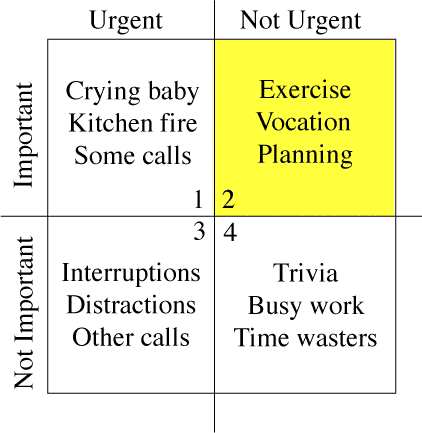
On debian-devel, there has been a discussion about the security issues of "spontaneously" appearing popups demanding the root password to make immediate security updates. There is a much more general issue related to this: computing without interruptions. Most of us have probably seen some friend or acquaintance with a (usually non-Linux) PC that is constantly beeping and flashing with chat notifications, new email popups, Adobe update this, Java update that, etc. In one recent case I came across somebody who had experienced a dramatic drop in his productivity as a consequence - giving him a laptop with a freshly installed copy of Linux made a dramatic difference to his work. I can already hear people insisting that security trumps everything (which isn't an original argument either) and that popups can't be avoided. A search on the web for "computing without interruptions" reveals users have a particular distaste for these things appearing while watching a video. Websites responding to that complaint fill the search results. With many types of interactive real-time content (video, WebRTC phone/video calls and so on) deployed within browsers, it is even more important for UI designers to contemplate when it is not appropriate to interrupt a user and to do everything possible to avoid interrupting the user. Preparing for disaster On the other hand, just ignoring security updates and not telling the user their disk is filling until 0 bytes remain available could only shift the problem down the road (from constant annoyance to periodic crisis). That said, sometimes you can still fill the disk very suddenly (especially with fast SSDs) and rather than relying on popups to keep users away from the precipice, applications (particularly the core desktop and daemon processes) could be tested more regularly to ensure they remain resilient in full disk situations. Managing information overload Popups are just part of a wider problem of information overload. There are emails too: some applications, such as Drupal, will send daily or weekly emails to a user if their system is not up to date. For many virtual-hosted sites, this starts to resemble a small flood. There is a flaw in this design: applications are competing for attention by sending more and more emails and popups or making them more annoying (e.g. the security updates in Debian 6 were ignorable popups in the top right-hand corner of the screen, Debian 7's Gnome Classic mode displays a big password prompt in the middle of the screen). The solution would be to develop a mechanism for unifying, de-duplicating and then prioritising these information/event flows. Some fault alerting systems already do this for their own events - these are niche solutions that aren't always applicable to the average PC-owner, although the principles are well tested. Some email organisation tools have similar features, but only for email. I'm not currently aware of any solution that synthesizes such an experience for all possible information sources. Setting priorities One well-read work on this subject in the business world is The 7 Habits of Highly Effective People (Stephen R. Covey, 1989). Of particular interest for the problem at hand is the priority matrix (borrowed from the Eisenhower Method): The left column, Urgent items, typically must be executed by a certain date (e.g. buying a gift before a birthday or installing a new SSL certificate before the old one expires). A security update or Acrobat reader update does not have this same characteristic. Under this model:
Urgent Non-urgent
Important Replace SSL certificate
Buy birthday gift
Security update
Run backup job
Not important Register for conference before deadline for free gift Non-security update for Acrobat reader
Covey even released an Outlook plugin, Plan Plus to help people organise their tasks (and their lives) using his methodology. Unfortunately it is closed-source software with a terrible set of ratings on Amazon - this review from a customer stands out: "My take is that Franklin does not consider robust software nor customer support to be either Urgent or Important." Could this be replicated more successfully with an open-source plugin for Mozilla Lightning or a similar productivity tool, and could the concept be extended across the range of data sources, including email, calendar items, system notifications and more to provide a unified approach to both the computing platform and general productivity (real-life) time management? Would this help solve the same problem in a more effective manner? In other words, would such an effort to help users integrate the demands of technology with the other demands of life make them more likely to keep their systems up to date? The wider community experience Going beyond the desktop/user experience, could this model be extended to automatically integrate external tasks, such as handling bug reports, moderating mailing lists and other slightly tedious things that have to be given regular attention to keep the free-software world moving along smoothly? Managing down-time For people who work in computing, there is almost no down-time any more. Even when on holiday, checking in for a flight might involve navigating through a buggy wifi access control system and an annoying set of advertisements from your low-cost airline as you try to print a boarding pass. These things often trigger thoughts about similar issues on client projects. Glancing at your email to find the booking number could awaken thoughts of a whole lot of projects you had tried to put out of your mind for a week. This is another area where excessive popups and emails can only compound the problem. Who really wants to download and install security updates while on holiday using an intermittent wifi connection? Managing all these events through a common mechanism may also finally make it possible to have an "ordinary user" experience with your PC. In practice, this might mean being able to view information/events through a time-of-day filter or "holiday mode" - and only on demand. A worthy design goal? Would any free software operating system make it a design goal to give their users a 100% interrupt-free experience? Of course there would still be things like chat notifications - but those would only be possible when a user has signed-in to a chat application. The distinction for the interrupt-free experience would only need to apply to default system behavior and not to every application.

Petter Reinholdtsen: Fixing the Linux black screen of death on machines with Intel HD video

When installing RedHat, Fedora, Debian and Ubuntu on some machines, the screen just turn black when Linux boot, either during installation or on first boot from the hard disk. I've seen it once in a while the last few years, but only recently understood the cause. I've seen it on HP laptops, and on my latest acquaintance the Packard Bell laptop. The reason seem to be in the wiring of some laptops. The system to control the screen background light is inverted, so when Linux try to turn the brightness fully on, it end up turning it off instead. I do not know which Linux drivers are affected, but this post is about the i915 driver used by the Packard Bell EasyNote LV, Thinkpad X40 and many other laptops. The problem can be worked around two ways. Either by adding i915.invert_brightness=1 as a kernel option, or by adding a file in /etc/modprobe.d/ to tell modprobe to add the invert_brightness=1 option when it load the i915 kernel module. On Debian and Ubuntu, it can be done by running these commands as root:
echo options i915 invert_brightness=1   tee /etc/modprobe.d/i915.conf
update-initramfs -u -k all
Since March 2012 there is a mechanism in the Linux kernel to tell the i915 driver which hardware have this problem, and get the driver to invert the brightness setting automatically. To use it, one need to add a row in the intel_quirks array in the driver source drivers/gpu/drm/i915/intel_display.c (look for "static struct intel_quirk intel_quirks"), specifying the PCI device number (vendor number 8086 is assumed) and subdevice vendor and device number. My Packard Bell EasyNote LV got this output from lspci -vvnn for the video card in question:
00:02.0 VGA compatible controller [0300]: Intel Corporation \
    3rd Gen Core processor Graphics Controller [8086:0156] \
    (rev 09) (prog-if 00 [VGA controller])
 Subsystem: Acer Incorporated [ALI] Device [1025:0688]
 Control: I/O+ Mem+ BusMaster+ SpecCycle- MemWINV- VGASnoop- \
    ParErr- Stepping- SE RR- FastB2B- DisINTx+
 Status: Cap+ 66MHz- UDF- FastB2B+ ParErr- DEVSEL=fast >TAbort- \
    <tabort-><mabort->SERR- <perr- intx-="INTx-" latency:="Latency:"><unassigned> [disabled]
 Capabilities: <access denied="denied">
 Kernel driver in use: i915
The resulting intel_quirks entry would then look like this:
struct intel_quirk intel_quirks[] =  
       ...
        /* Packard Bell EasyNote LV11HC needs invert brightness quirk */
	  0x0156, 0x1025, 0x0688, quirk_invert_brightness  ,
       ...
 
According to the kernel module instructions (as seen using modinfo i915), information about hardware needing the invert_brightness flag should be sent to the dri-devel (at) lists.freedesktop.org mailing list to reach the kernel developers. But my email about the laptop sent 2013-06-03 have not yet shown up in the web archive for the mailing list, so I suspect they do not accept emails from non-subscribers. Because of this, I sent my patch also to the Debian bug tracking system instead as BTS report #710938, to make sure the patch is not lost. Unfortunately, it is not enough to fix the kernel to get Laptops with this problem working properly with Linux. If you use Gnome, your worries should be over at this point. But if you use KDE, there is something in KDE ignoring the invert_brightness setting and turning on the screen during login. I've reported it to Debian as BTS report #711237, and have no idea yet how to figure out exactly what subsystem is doing this. Perhaps you can help? Perhaps you know what the Gnome developers did to handle this, and this can give a clue to the KDE developers? Or you know where in KDE the screen brightness is changed during login? If so, please update the BTS report (or get in touch if you do not know how to update BTS).

8 June 2013

Thorsten Glaser: Waypoint Statistics

mirabilos  found waypoints I ve finally gotten around to listing all Waypoints (Geocaches, Opencaches, Closedcaches, Earthcaches, Terracaches including Locationless, Navicaches, etc.) I ve found a box, enjoyful, educating, a good place to hide one myself, etc. and putting up a list and, of course, generate my own statpic.

I ll put them up for the other project members, too (already made a picture for gecko2@ but bsiegert@ still needs one; we also need to collect offline lists of found, owned and attended waypoints) A bit of background story: I decided, years ago, to have an offline list of cache finds in case something would happen. Just, I had found way too many already, so this was a huge bit of work. Oh well I of course procrastinated, and then something did happen (Opencaching wanting to force a Restricted Commons licence; me disagreeing and suggesting a change; some trigger-happy person immediately deleting my account without waiting for the discussion or the decision period to end; weeks of forum discussions; Opencaching allowing dual-licencing; them telling me they can t restore my data probably never heard of databa sorry, MySQL backups). And I still didn t have the list. Now I do; recreated even the OC information from what was still accessible and with help from one OC supporter ( mic@ , thanks); merged caches that are co-listed on several platforms, etc. (still need to put in the FTF/STF/TTF/4TF/LTF and voting/favourites information) and a statpic, all in Open Source and Open Data, in cvs(1) with mksh(1) and a frontend for libgd2 I admit, but we had been using that for the MirWebsite for a while already. I suggest every geocacher keep an offline or local record of all their finds (and hides and attended logs) for things like this, in case some platform decides to let s say, put your data into the cloud where it is? I don t know .

5 June 2013

Daniel Pocock: The Gold Standard in Free Communications Technology

In a previous blog entry, I posed the question whether open source communications software is really free and came to the conclusion that additional principles need to be defined for free communications, above and beyond the normal expectations of free software. This is a fundamental problem that projects like the FreedomBox, Lumicall and other privacy-enabling free communications solutions must be familiar with. Otherwise there is a risk that development will never end as there is no finish line in sight. Practical solutions are not so easily defined though: so let's just imagine a perfect solution for a moment. Later, we can contemplate the trade-offs that are necessary to make it practical. Perfect privacy Here are some attributes that may exist for a perfect solution: Privacy must be the default: the user should not have to explicitly request privacy. If there is a risk that an incoming communication will establish a session without full privacy, the user should be able to decline the opportunity to participate. Only participants to a communication can receive the communication A third party should not be able to replay, modify or forge any aspect of the communication or the request to initiate a session Only participants to a communication are aware that a communication occurred Only participants to the communication are aware of who participated in the communication A participant may be anonymous: but in this case, all other participants will be aware that there is an anonymous party present in the communication Participants may not deduce any information about the other participants that is not explicitly shared (e.g. location, type of device, service provider) In the case of real-time communication, a participant may leave the communication without any other party even realising that they left or why. Communication is off-the-record: No participant can save and reproduce a copy of the communication in such a way that a third-party will know it was authentic. Anonymous reception of communications - the perfect post-office box: someone may create an anonymous identifier that allows other people to call them without being able to trace their location or identity Some consequences of a perfect solution Just imagine if all communications worked in this manner. There are many potential consequences. For example, if you call somebody and the call is not connected, you will get no feedback about whether their line is busy, out of service or whether they deliberately chose to reject your call. Another example is somebody who is driving while talking on a telephone. If they have an accident, there will be no way to prove that they were using the phone. This may already be the case if somebody uses a VoIP app on their phone - the police investigating the accident later will simply find no records of calls through the mobile phone account. Conclusion The perfect solution described here is something of a holy grail rather than a recipe that a developer can implement. It is unlikely that such a solution will fall out of the sky in the immediate future. Most software products that offer secure communications only address less than half the issues described above: for example, digital mobile phones prevent eavesdropping with arbitrary radio receivers, but they don't prevent shops detecting the IMEI (serial numbers) of phones that pass through their store and using that information to identify repeat visits to their store.

Petter Reinholdtsen: Is there a PHP expert in the building? Debian Edu need help!

Here is a call for help from the Debian Edu / Skolelinux project. We have two problems blocking the release of the Wheezy version we hope to get released soon. The two problems require some with PHP skills, and we seem to lack anyone with both time and PHP skills in the project:
  1. It is impossible to log into the slbackup web interface (slbackup-php) using the root user and password. This is BTS report #700257. This used to work, but stopped working some time since Squeeze. Perhaps some obsolete PHP feature was used?
  2. It is not possible to "mass import" user lists in Gosa, neither using ldif nor using CSV files. The feature was disabled after a major rewrite of Gosa, and need to be ported to the new system. This is BTS report #698840.
If you can help us, please join us on IRC (#debian-edu on irc.debian.org) and provide patches via the BTS.

Dirk Eddelbuettel: RcppArmadillo 0.3.900.0

A Armadillo release 3.900.0 was provided by Conrad yesterday. It has been rolled into a new RcppArmadillo release 0.3.900.0 which is now on CRAN and in Debian. It has a number of nice changes, mostly on the performance side of things (see below) and a minor cleanup/improvement in our Kalman filter example (which, as I just realized, I forgot to note in the \code NEWS.Rd in the released tarball):
Changes in RcppArmadillo version 0.3.900 (2013-06-04)
  • Upgraded to Armadillo release Version 3.900.0 (Bavarian Sunflower)
    • added automatic SSE2 vectorisation of elementary expressions (eg. matrix addition) when using GCC 4.7+ with -O3 optimisation
    • added support for saving & loading of cubes in HDF5 format, contributed by Szabolcs Horvat
    • faster median(), contributed by Ruslan Shestopalyuk
    • faster handling of compound expressions with transposes of submatrix rows
    • faster handling of compound expressions with transposes of complex vectors
  • Kalman filter example switched from inline to \code sourceCpp , which simplifies / streamlines the C++ side a little
Courtesy of CRANberries, there is also a diffstat report for the most recent release As always, more detailed information is on the RcppArmadillo page. Questions, comments etc should go to the rcpp-devel mailing list off the R-Forge page.

Steve Kemp: How do people deal with email?

As part of writing a new mail client I'm wondering about how to change my email-life, and how other people process/handle their incoming email. I sort my incoming email into folders at delivery-time using procmail. Mail is generally filtered into mailboxes on the basis of the company that sent it, the person that sent it, or the machine which generated it. Because I manage a lot of machines personally I've split things up so that I have a folder per host. So on a morning I might have unread mail in the following folders:
machines.steve.org.uk/
machines.da-db1/
machines.da-db2/
machines.da-web1/
machines.da-web2/
machines.da-web3/
machines.da-web4/
The per-machine mailboxes usually contain a single mail every day from LogWatch, along with output from any cron-jobs. For example today I received the mail:
From: Cron Daemon
To: steve@steve.org.uk
Subject: Cron steve@steve.org.uk /home/steve/bin/download-check
URL http://nodejs.org/ - no longer matches v0.10.9
Generally speaking I don't need to read the per-machine messages. I'll keep the most recent 100 for reference, but only need to look if something seems "off" on a machine. But if I don't look I'd not see the node upgrade notice, so find that I do read them after all. This suggest to me that email isn't the right way to handle this kind of thing. Instead I should use a notification system - at work we have a central service called MauveAlert (yes, Red Dwarf reference). Mauve receives "alerts" of various kinds, via UDP. The alerts are then fanned out to appropriate people via XMPP, Email, or SMSs. I have a similarly-inspired system I use on my Debian Administration cluster. A (node) service runs non-stop collecting UDP messages and showing them on a dashboard. I look at it throughout the day to see when slaughter runs, etc. Anyway in conslusion I get a lot of mail. Some of it is related to random projects, and all ends up in the steve.org.uk/ mailbox, some of it relates to machines, and gets filed away, and I have regular conversions with folk so I have a .people.kirsi/ folder which receives a lot of attention, for example. ObRandom:daily() - Mark ~/Maildir/.machines.*, etc, read.

4 June 2013

Keith Packard: dri3 extension

Completing the DRI3 Extension This week marks a pretty significant milestone for the glorious DRI3000 future. The first of the two new extensions is complete and running both full Gnome and KDE desktops. DRI3 Extension Overview The DRI3 extension provides facilities for building direct rendering libraries to work with the X window system. DRI3 provides three basic mechanisms:
  1. Open a DRM device.
  2. Share kernel objects associated with X pixmaps. The direct rendering client may allocate kernel objects itself and ask the X server to construct a pixmap referencing them, or the client may take an existing X pixmap and discover the underlying kernel object for it.
  3. Synchronize access to the kernel objects. Within the X server, Sync Fences are used to serialize access to objects. These Sync Fences are exposed via file descriptors which the underlying driver can use to implement synchronization. The current Intel DRM driver passes a shared page containing a Linux Futex.
Opening the DRM Device Ideally, the DRM application would be able to just open the graphics device and start drawing, sending the resulting buffers to the X server for display. There s work going on to make this possible, but the current situation has the X server in charge of blessing the file descriptors used by DRM clients. DRI2 does this by having the DRM client fetch a magic cookie from the kernel and pass that to the X server. The cookie is then passed to the kernel which matches it up with the DRM client and turns on rendering access for that application. For DRI3, things are much simpler the DRM client asks the X server to pass back a file descriptor for the device. The X server opens the device, does the magic cookie dance all by itself (at least for now), and then passes the file descriptor back to the application.
 
    DRI3Open
    drawable: DRAWABLE
    driverType: DRI3DRIVER
    provider: PROVIDER
       
    nfd: CARD8
    driver: STRING
    device: FD
 
    Errors: Drawable, Value, Match
    This requests that the X server open the direct rendering
    device associated with drawable, driverType and RandR
    provider. The provider must support SourceOutput or SourceOffload.
    The direct rendering library used to implement the specified
    'driverType' is returned in 'driver'. The file
    descriptor for the device is returned in 'device'. 'nfd' will
    be set to one (this is strictly a convenience for XCB which
    otherwise would need request-specific information about how
    many file descriptors were associated with this reply).
Sharing Kernel Pixel Buffers An explicit non-goal of DRI3 is support for sharing buffers that don t map directly to regular X pixmaps. So, GL ancillary buffers like depth and stencil just don t apply here. The shared buffers in DRI3 are regular X pixmaps in the X server. This provides a few obvious benefits over the DRI2 scheme: In the kernel, the buffers are referenced by DMA-BUF handles, which provides a nice driver-independent mechanism.
  1. Lifetimes are easily managed. Without being associated with a separate drawable, it s easy to know when to free the Pixmap.
  2. Regular X requests apply directly. For instance, copying between buffers can use the core CopyArea request.
To create back- and fake-front- buffers for Windows, the application creates a kernel buffer, associates a DMA-BUF file descriptor with that and then sends the fd to the X server with a pixmap ID to create the associated pixmap. Doing it in this direction avoids a round trip.
 
    DRI3PixmapFromBuffer
    pixmap: PIXMAP
    drawable: DRAWABLE
    size: CARD32
    width, height, stride: CARD16
    depth, bpp: CARD8
    buffer: FD
 
    Errors: Alloc, Drawable, IDChoice, Value, Match
    Creates a pixmap for the direct rendering object associated
    with 'buffer'. Changes to pixmap will be visible in that
    direct rendered object and changes to the direct rendered
    object will be visible in the pixmap.
    'size' specifies the total size of the buffer bytes. 'width',
    'height' describe the geometry (in pixels) of the underlying
    buffer. 'stride' specifies the number of bytes per scanline in
    the buffer. The pixels within the buffer may not be arranged
    in a simple linear fashion, but 'size' will be at least
    'height' * 'stride'.
    Precisely how any additional information about the buffer is
    shared is outside the scope of this extension.
    If buffer cannot be used with the screen associated with
    drawable, a Match error is returned.
    If depth or bpp are not supported by the screen, a Value error
    is returned.
To provide for texture-from-pixmap, the application takes the pixmap ID and passes that to the X server which returns the a file descriptor for a DMA-BUF which is associated with the underlying kernel buffer.
 
    DRI3BufferFromPixmap
    pixmap: PIXMAP
       
    depth: CARD8
    size: CARD32
    width, height, stride: CARD16
    depth, bpp: CARD8
    buffer: FD
 
    Errors: Pixmap, Match
    Pass back a direct rendering object associated with
    pixmap. Changes to pixmap will be visible in that
    direct rendered object and changes to the direct rendered
    object will be visible in the pixmap.
    'size' specifies the total size of the buffer bytes. 'width',
    'height' describe the geometry (in pixels) of the underlying
    buffer. 'stride' specifies the number of bytes per scanline in
    the buffer. The pixels within the buffer may not be arranged
    in a simple linear fashion, but 'size' will be at least
    'height' * 'stride'.
    Precisely how any additional information about the buffer is
    shared is outside the scope of this extension.
    If buffer cannot be used with the screen associated with
    drawable, a Match error is returned.
Tracking Window Size Changes When Eric Anholt and I first started discussing DRI3, we hoped to avoid needing to learn about the window size from the X server. The thought was that the union of all of the viewports specified by the application would form the bounds of the drawing area. When the window size changed, we expected the application would change the viewport. Alas, this simple plan isn t sufficient here a few GL functions are not limited to the viewport. So, we need to track the actual window size and monitor changes to it. DRI2 does this by delivering invalidate events to the application whenever the current buffer isn t valid; the application discovers that this event has been delivered and goes to as the X server for the new buffers. There are a couple of problems with this approach:
  1. Any outstanding DRM rendering requests will still draw to the old buffers.
  2. The Invalidate events must be captured before the application sees the related ConfigureNotify event so that the GL library can react appropriately.
The first problem is pretty intractable within DRI2 the application has no way of knowing whether a frame that it has drawn was delivered to the correct buffer as the underlying buffer object can change at any time. DRI3 fixes this by having the application in control of buffer management; it can easily copy data from the previous back buffer to the new back buffer synchronized to its own direct rendering. The second problem was solved in DRI2 by using the existing Xlib event hooks; the GL library directly implements the Xlib side of the DRI2 extension and captures the InvalidateBuffers events within that code, delivering those to the driver code. The problem with this solution is that Xlib holds the Display structure mutex across this whole mess, and Mesa must be very careful not to make any Xlib calls during the invalidate call. For DRI3, I considered placing the geometry data in a shared memory buffer, but my future plans for the Present extension led me to want an X event instead (more about the Present extension in a future posting). An X ConfigureNotify event is sufficient for the current requirements to track window sizes accurately. However, there s no easy way for the GL library to ensure that ConfigureNotify events will be delivered to the application other application code may (and probably will) adjust the window event mask for its own uses. I considered adding the necessary event mask tracking code within XCB, but again, knowing that the Present extension would probably need additional information anyhow, decided to create a new event instead. Using an event requires that XCB provide some mechanism to capture those events, keep them from the regular X event stream, and deliver them to the GL library. A further requirement is that the GL library be absolutely assured of receiving notification about these events before the regular event processing within the application will see a core ConfigureNotify event. The method I came up with for XCB is fairly specific to my requirements. The events are always XGE events, and are tagged with a special event context ID , an XID allocated for this purpose. The combination of the extension op-code, the event type and this event context ID are used to split off these events to custom event queues using the following APIs:
/**
 * @brief Listen for a special event
 */
xcb_special_event_t *xcb_register_for_special_event(xcb_connection_t *c,
                                                    uint8_t extension,
                                                    uint16_t evtype,
                                                    uint32_t eid,
                                                    uint32_t *stamp);
This creates a special event queue which will contain only events matching the specified extension/type/event-id triplet.
/**
 * @brief Returns the next event from a special queue
 */
xcb_generic_event_t *xcb_check_for_special_event(xcb_connection_t *c,
                                                 xcb_special_event_t *se);
This pulls an event from a special event queue. These events will not appear in the regular X event queue and so applications will never see them. There s one more piece of magic here the stamp value passed to xcbregisterforspecialevent. This pointer refers to a location in memory which will be incremented every time an event is placed in the special event queue. The application can cheaply monitor this memory location for changes and known when to check the queue for events. Within GL, the value used is the existing dri2 stamp value. That is checked at the top of the rendering operation; if it has changed, the drawing buffers will be re-acquired. Part of the buffer acquisition process is a check for special events related to the window. For now, I ve placed these events in the DRI3 extension. However, they will move to the Present extension once that is working.
 
    DRI3SelectInput
    eventContext: DRI3EVENTID
    window: WINDOW
    eventMask: SETofDRI3EVENT
 
    Errors: Window, Value, Match, IDchoice
    Selects the set of DRI3 events to be delivered for the
    specified window and event context. DRI3SelectInput can
    create, modify or delete event contexts. An event context is
    associated with a specific window; using an existing event
    context with a different window generates a Match error.
    If eventContext specifies an existing event context, then if
    eventMask is empty, DRI3SelectInput deletes the specified
    context, otherwise the specified event context is changed to
    select a different set of events.
    If eventContext is an unused XID, then if eventMask is empty
    no operation is performed. Otherwise, a new event context is
    created selecting the specified events.
The events themselves look a lot like a configure notify event:
 
    DRI3ConfigureNotify
    type: CARD8         XGE event type (35)
    extension: CARD8        DRI3 extension request number
    length: CARD16          2
    evtype: CARD16          DRI3_ConfigureNotify
    eventID: DRI3EVENTID
    window: WINDOW
    x: INT16
    y: INT16
    width: CARD16
    height: CARD16
    off_x: INT16
    off_y: INT16
    pixmap_width: CARD16
    pixmap_height: CARD16
    pixmap_flags: CARD32
 
    'x' and 'y' are the parent-relative location of 'window'.
Note that there are a couple of odd additional fields offx, offy, pixmapwidth, pixmapheight and pixmap_flags are all place-holders for what I expect to end up in the Present extension. For now, in DRI3, they should be ignored. Synchronization The DRM application needs to know when various X requests related to its buffers have finished. In particular, when performing a buffer swap, the client wants to know when that completes, and be able to block until it has. DRI2 does this by having the application make a synchronous request from the X server to get the names of the new back buffer for drawing the next frame. This has two problems:
  1. The synchronous round trip to the X server isn t free. Other running applications may cause fairly arbitrary delays in getting the reply back from the X server.
  2. Synchronizing with the X server doesn t ensure that GPU operations are necessarily serialized between the application and the X server.
What we want is a serialization guarantee between the X server and the DRM application that operates at the GPU level. I ve written a couple of times (dri3k first steps and Shared Memory Fences) about using X Sync extension Fences (created by James Jones and Aaron Plattner) for this synchronization and wanted to get a bit more specific here. With the X server, a Sync extension Fence is essentially driver-specific, allowing the hardware design to control how the actual synchronization is performed. DRI3 creates a way to share the underlying operating system object by passing a file descriptor from application to the X server which somehow references that device object. Both sides of the protocol need to tacitly agree on what it means.
 
    DRI3FenceFromFD
    drawable: DRAWABLE
    fence: FENCE
    initially-triggered: BOOL
    fd: FD
 
    Errors: IDchoice, Drawable
    Creates a Sync extension Fence that provides the regular Sync
    extension semantics along with a file descriptor that provides
    a device-specific mechanism to manipulate the fence directly.
    Details about the mechanism used with this file descriptor are
    outside the scope of the DRI3 extension.
For the current GEM kernel interface, because all GPU access is serialized at the kernel API, it s sufficient to serialize access to the kernel itself to ensure operations are serialized on the GPU. So, for GEM, I m using a shared memory futex for the DRI3 synchronization primitive. That does not mean that all GPUs will share this same mechanism. Eliminate the kernel serialization guarantee and some more GPU-centric design will be required. What about Swap Buffers? None of the above stuff actually gets bits onto the screen. For now, the GL implementation is simply taking the X pixmap and copying it to the window at SwapBuffers time. This is sufficient to run applications, but doesn t provide for all of the fancy swap options, like limiting to frame rate or optimizing full-screen swaps. I ve decided to relegate all of that functionality to the as-yet-unspecified Present extension. Because the whole goal of DRI3 was to get direct rendered application contents into X pixmaps, the Present extension will operate on those X objects directly. This means it will also be usable with non-DRM applications that use simple X pixmap based double buffering, a class which includes most existing non-GL based Gtk+ and Qt applications. So, I get to reduce the size of the DRI3 extension while providing additional functionality for non direct-rendered applications. Current Status As I said above, all of the above functionality is running on my systems and has booted both complete KDE and Gnome sessions. There have been some recent DMA-BUF related fixes in the kernel, so you ll need to run the latest 3.9.x stable release or a 3.10 release candidate. Here s references to all of the appropriate git repositories: DRI3 protocol and spec:
git://people.freedesktop.org/~keithp/dri3proto      master
XCB protocol
git://people.freedesktop.org/~keithp/xcb/proto.git  dri3
XCB library
git://people.freedesktop.org/~keithp/xcb/libxcb.git dri3
xshmfence library:
git://people.freedesktop.org/~keithp/libxshmfence.git   master
X server:
git://people.freedesktop.org/~keithp/xserver.git    dri3
Mesa:
git://people.freedesktop.org/~keithp/mesa.git       dri3
Next Steps Now it s time to go write the Present extension and get that working. I ll start coding and should have another posting here next week.

Daniel Pocock: Using reSIProcate to connect Asterisk with WebRTC

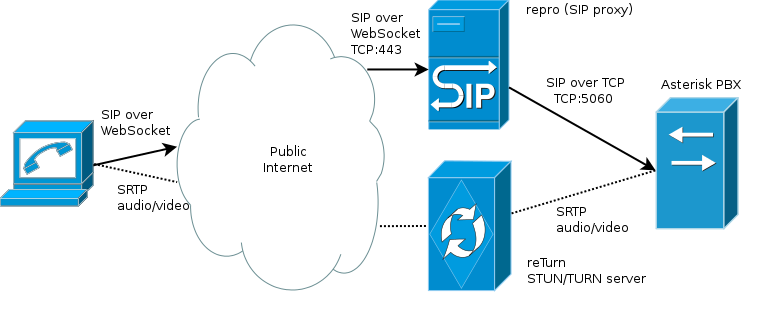
In my previous blog entry about how to get WebRTC going fast I looked at the basics of setting up a SIP proxy (also known as a SIP router) to accept connections from WebRTC clients. As in a traditional, non-WebRTC world, the SIP proxy simply facilitates calling between all the clients it knows. In practice, deployments usually want to add additional functionality in the form of a PBX with queues, voicemail, menus and conferencing. The recent Asterisk 11 release includes support for WebRTC although it is still evolving and I don't currently recomend connecting Asterisk directly to the public Internet. In particular, Asterisk doesn't support features like mutual TLS authentication with the WSS (secure WebSocket) transport. Here, we look at how repro can accept connections from Internet/web users and relay them to an internal Asterisk server. Here is an architecture diagram: Notice that the SIP messages are accepted over repro's WebSocket transport and relayed to Asterisk over a regular SIP TCP transport. This means that we benefit from repro's TLS support too, so the WebSocket client has a much higher chance of escaping their client-side firewall if port 443 is used (repro pretending to be a HTTPS server) and clients can be authenticated with certificates in their browser. Here are the steps to get it running: repro and reTurn setup Set up repro and reTurn server on a Debian server as per my previous blog post. Verify that the clients can talk to repro. Asterisk source build Digium, the creators of Asterisk, are not currently supporting Debian packages, but they do provide RPM packages in their Asterisk package repository However, the pre-built binary packages for Asterisk 11.4 don't include SRTP support. SRTP is a mandatory part of WebRTC. Therefore, we take the Source RPM (SRPM) and build it manually. First, it is recommended that you start with a completely fresh CentOS 6 or RHEL6 server. I built a fresh virtual machine in my XCP environment using a procedure similar to that documented by Grant. After installing and setting a root password, configure yum to access EPEL6 Make sure SELinux and firewall are disabled on the box (they are often enabled by default). A quick way to do this:

# sed -i s/SELINUX=enforcing/SELINUX=disabled/g /etc/selinux/config
# reboot
...
# iptables -I INPUT -j ACCEPT
Next you can tell yum about the Digium repository and install all the necessary dependencies for building Asterisk:
# rpm -Uvh http://packages.asterisk.org/centos/6/current/x86_64/RPMS/asterisknow-version-3.0.0-1_centos6.noarch.rpm
# yum update
# yum install rpm-build libsrtp-devel
In your home directory, set up a work tree for rpmbuild:
$ mkdir ~/rpmbuild
$ cd ~/rpmbuild
$ mkdir BUILD BUILDROOT RPMS SOURCES SPECS SRPMS
$ cd SPECS
$ wget http://danielpocock.com/sites/danielpocock.com/files/asterisk.spec
$ cd ../SRPMS
$ wget http://packages.asterisk.org/centos/6/asterisk-11/SRPMS/asterisk-11.4.0-1_centos6.src.rpm
$ rpmbuild --rebuild asterisk-11.4.0-1_centos6.src.rpm
At this stage, you will have some errors, but it has successfully extracted the tarball into the SOURCES directory:
$ ls -l ../SOURCES
-rw-r--r--   1 daniel daniel 11573400 May 20 23:07 asterisk-sources-11.4.0.tar.gz
$
It will also complain about missing dependencies, you install them using yum:
# yum install make gcc gcc-c++ ....
Notice that you have downloaded a slightly modified version of the asterisk.spec file, the reasons for this are explained in this mailing list discussion. The following should now trigger a successful build:
$ rpmbuild -bb \
  --without tds \
    --without misdn \
    --without odbc \
   ~/rpmbuild/SOURCES/asterisk.spec
Hopefully, Digium will add the SRTP support in the 11.4.1 packages so that source build won't be necessary for every future release. Asterisk configuration: demo application Here we just have to install the RPMs and make a quick configuration change:
$ cd ~/rpmbuild/RPMS/x86_64
$ su -
# rpm -i asterisk*rpm
# yum install asterisk-sounds-core-en-ulaw asterisk-sounds-extra-en-ulaw --enablerepo=asterisk-11
# ln -s /usr/share/asterisk/sounds/demo-* /var/lib/asterisk/sounds/en/
To enable connections from the proxy, we must set a few non-default settings. It is essential to use the TCP transport as the SIP messages from WebSocket clients are usually too big for UDP packets. It is also necessary to enable SRTP and AVPF, as these are mandatory in WebRTC. Here is a diff against the default /etc/asterisk/sip.conf:
--- /etc/asterisk.orig/sip.conf	2013-06-04 10:57:49.428617785 +0200
+++ /etc/asterisk/sip.conf	2013-06-04 11:18:17.825604261 +0200
@@ -207,7 +207,7 @@
 ; subject to change in any release.  If they are changed, the changes will
 ; be reflected in this sample configuration file, as well as in the UPGRADE.txt file.
 ;
-tcpenable=no                    ; Enable server for incoming TCP connections (default is no)
+tcpenable=yes                    ; Enable server for incoming TCP connections (default is no)
 tcpbindaddr=0.0.0.0             ; IP address for TCP server to bind to (0.0.0.0 binds to all interfaces)
                                 ; Optionally add a port number, 192.168.1.1:5062 (default is port 5060)
 
@@ -1371,6 +1371,13 @@
 ; ...
 ;
 
+[1001](public-phone,ulaw-phone)
+avpf = yes
+encryption = yes
+context = public
+icesupport = yes
+
+
 ; Standard configurations not using templates look like this:
 ;
 ;[grandstream1]
This assumes that the SIP user ID of your WebSocket user is 1001 Now you can start Asterisk:
# service asterisk start
Configuring the repro SIP proxy to send calls to Asterisk This is a relatively simple demonstration. The goal is to send calls for the number 1000 to the demo application in Asterisk In repro's web interface, click ADD ROUTE in the menu. Use the following parameters and leave all other options blank:
  • URI: ^sip:1000@
  • Destination: sip:$1@pbx.example.org?transport=tcp
Note: replace pbx.example.org with the hostname or IP address of the box running Asterisk Go to the ADD USER menu link and add a user called 1001. The user ID and password have to be placed in the custom.js file for JsSIP Testing from JsSIP I assume JsSIP was set up following the instructions from my previous blog post Asterisk doesn't support the video codec from a WebRTC client. To work around this, in the custom.js file for JsSIP, make sure video is disabled by default. In the WebRTC client, dial 1000. You should hear the demo greeting from Asterisk. Troubleshooting
  • Check the JavaScript log in the browser
  • Check the logs on the repro proxy and increase the verbosity of the logs if necessary. If the level is set to STACK, you will see full copies of each SIP message sent and received.
  • Connect to the Asterisk console (UNIX command: asterisk -r -vvv) and enable SIP message display: sip set debug on.

Petter Reinholdtsen: Debian Edu interview: C dric Boutillier

It has been a while since my last English Debian Edu and Skolelinux interview last November. But the developers and translators are still pulling along to get the Wheezy based release out the door, and this time I managed to get an interview from one of the French translators in the project, C dric Boutillier. Who are you, and how do you spend your days? I am 34 year old. I live near Paris, France. I am an assistant professor in probability theory. I spend my daytime teaching mathematics at the university and doing fundamental research in probability in connexion with combinatorics and statistical physics. I have been involved in the Debian project for a couple of years and became Debian Developer a few months ago. I am working on Ruby packaging, publicity and translation. How did you get in contact with the Skolelinux / Debian Edu project? I came to the Debian Edu project after a call for translation of the Debian Edu manual for the release of Debian Edu Squeeze. Since then, I have been working on updating the French translation of the manual. I had the opportunity to make an installation of Debian Edu in a virtual machine when I was preparing localised version of some screen shots for the manual. I was amazed to see it worked out of the box and how comprehensive the list of software installed by default was. What amazed me was the complete network infrastructure directly ready to use, which can and the nice administration interface provided by GOsa . What pleased me also was the fact that among the software installed by default, there were many "traditional" educative software to learn languages, to count, to program... but also software to develop creativity and artistic skills with music (Ardour, Audacity) and movies/animation (I was especially thinking of Stopmotion). I am following the development of Debian Edu and am hanging out on #debian-edu. Unfortunately, I don't much time to get more involved in this beautiful project. What do you see as the advantages of Skolelinux / Debian Edu? For me, the main advantages of Skolelinux/Debian Edu are its community of experts and its precise documentation, as well as the fact that it provides a solution ready to use. I would add also the fact that it is based on the rock solid Debian distribution, which ensures stability and provides a huge collection of educational free software. What do you see as the disadvantages of Skolelinux / Debian Edu? Maybe the lack of manpower to do lobbying on the project. Sometimes, people who need to take decisions concerning IT do not have all the elements to evaluate properly free software solutions. The fact that support by a company may be difficult to find is probably a problem if the school does not have IT personnel. One can find support from a company by looking at the wiki dokumentation, where some countries already have a number of companies providing support for Debian Edu, like Germany or Norway. This list is easy to find readily from the manual. However, for other countries, like France, the list is empty. I guess that consultants proposing support for Debian would be able to provide some support for Debian Edu as well. Which free software do you use daily? I am using the KDE Plasma Desktop. But the pieces of software I use most runs in a terminal: Mutt and OfflineIMAP for emails, latex for scientific documents, mpd for music. VIM is my editor of choice. I am also using the mathematical software Scilab and Sage (built from source as not completely packaged for Debian, yet). Do you have any suggestions for teachers interested in using the free software in Debian to teach mathematics and statistics? I do not have any "nice" recommendations for statistics. At our university, we use both R and Scilab to teach statistics and probabilistic simulations. For geometry, there are nice programs: I like also cantor, which provides a uniform interface to SciLab, Sage, Octave, etc... Which strategy do you believe is the right one to use to get schools to use free software? My suggestions would be to

3 June 2013

Matthew Garrett: Dealing with UEFI non-volatile memory quirks

Since I wrote this, we've made some worthwhile progress on avoiding damaging Samsung hardware. The first is that the samsung-laptop driver appeared to be causing the firmware to attempt to write to an area of memory that was marked in the chipset, triggering a Machine Check Exception. That was what generated the pstore output that caused the problem originally. The driver now refuses to load if EFI is enabled, which avoids the problem. It's not ideal, since it's currently the only mechanism we have for certain functionality on Samsung laptops, but there you go.
The second problem was that avoiding crashing on boot didn't actually fix the problem in any fundamental way. Even with pstore disabled, it was possible for userspace to fill the nvram and trigger the same problem. Our first approach to this was to prevent any writes to nvram if the UEFI QueryVariableInfo() call reported that more than 50% of the nvram storage space would be used. That was safe, but led to another issue. The nvram storage area is typically implemented as part of the same flash chip as the firmware. Flash isn't arbitrarily accessible - changing the contents of a block typically involves rewriting the entire block. It's impractical to rewrite the entire nvram area on every write, so what actually happens is that deleting variables just results in them being marked as inactive but doesn't actually free up the space. The firmware can later perform some sort of garbage collection to free it up.

This caused us problems, since inactive space that hasn't been garbage collected yet isn't actually available, and as a result firmware implementations tend to count it as used. Say you had 64KB of nvram and wrote 32KB of variables. We'd then refuse to write any more because you'd drop below 50%. So you delete 16KB of the variables you've created and try again. Unfortunately, the firmware still thinks that there's 32KB in use and Linux would still refuse.
If you were lucky, rebooting would trigger a garbage collection run. If you weren't, it wouldn't. Problematic. Our next approach was to try to account for the space actually actively used by the variables, rather than relying on what the firmware told us via QueryVariableInfo(). This seems simple enough - just add up the size of all the variables and subtract that from the overall size to determine how much of the "used" space is actually just old inactive variables that can be ignored. However, there's still some problems there. The first is that each variable has some additional overhead associated with it, and the size of that overhead varies depending on the system vendor. We had to make a conservative guess, which could cause problems if systems had large numbers of small variables. The second is that the only variables the kernel can see are those that are flagged as runtime-visible. There may also be a significant quantity of nvram used to store variables that are only visible in boot services code. We could work around this by adding up sizes while we're still in boot services code, but on some systems calling QueryVariableInfo() before ExitBootServices() results in later calls to GetNextVariable() jumping to invalid addresses and crashing the kernel. Not a great approach.

Meanwhile, Samsung got back to us and let us know that their systems didn't require more than 5KB of nvram space to be available, which meant we could get rid of the 50% value and replace it with 5KB. The hope was that any system that booted with only 5KB of space available in nvram would trigger a garbage collection run. Unfortunately, it turned out that that wasn't true - some systems will only trigger garbage collection if the OS actually makes an attempt to write a variable that won't otherwise fit.

Hence this patch. The new approach is to ask the firmware how much space is available. If the size of the new variable would reduce this to less than 5K, we attempt to create a variable bigger than the remaining space. This should cause the firmware to realise that it's out of room and either (depending on implementation) perform a garbage collection run at runtime or set a flag that will cause the system to perform garbage collection on the next reboot. We then call QueryVariableInfo() again to see whether a garbage collection run actually happened, and if so check whether we now have enough space. If so, we go ahead and write the variable. If not, we tell userspace that there's not enough space.

This seems to work in all the situations I've tested, and it should avoid ending up in a situation where a Samsung can end up bricked. However, it's firmware, so who knows whether it's going to break things for someone else.

comment count unavailable comments

John Goerzen: Two boys, shrimp, and stars

I recently made a routine analysis of my kitchen. (Of course I make a routine analysis of my kitchen; don t you?) In it, I discovered these items, still usable, but approaching that magic throw it out date: So, I thought, what can I make that would use all of these? And I realized I had some shrimp in the freezer, so: a shrimp boil! I tossed it all, plus some various seasonings and a few other veggies, into the Dutch oven, and boiled. Jacob and Oliver watched the activity with interest. Well, except for the potato-peeling part. For that, they went and played with their toy school buses. But the rest was good. They carefully observed me adding some spices, some vegetables, the shrimp, and watched it all simmer. Then it was time to eat. Excitement! Of course, it did take a few minutes to boil, so Jacob got down his whiteboard while Oliver looked on. They enjoyed learning how to peel the shell from the shrimp and devoured their food. And another night recently, Jacob unexpectedly showed up in the kitchen at 10PM. He said he was thirsty, so I got him some water. He asked, Dad, did you make ice cream? Earlier that day, I had prepared ice cream with Oliver, but it was a kind that had to be cooked (lemon with pureed strawberries and peaches) and it wasn t cool enough to finish before their bedtime. I did let them help add the ice and salt to the ice cream freezer just before they went to bed. So I told Jacob that yes, the ice cream was done. He stood there, tiredly, considering, with this oh he ll never say yes to ice cream at 10PM look on his face. So I said, would you like one bite right now? The look of delight on his face was amazing; a broad smile, a twinkle in his eyes, and a clap. So I got out the big bowl of ice cream and scooped up one big spoonful. He loved it. Then I said, should we go look at the stars? I carried Jacob outside to the porch. We stood there, looking up. I used to do this with him periodically, but it had been about a year. So he was thrilled. It was a partially overcast night, but there were still some stars visible. He had no idea there were some stars missing. To him, it was amazing and wonderful and infinite. Oh dad, there are way too many stars to count! He stayed there, arms around my neck, for a minute or two, then was ready to go back inside. I set him down, gave him a hug, said Goodnight, Jacob. And off he trotted, back upstairs, wearing a contented smile, and he fell asleep almost immediately. All it takes to delight children is a bit a shrimp or some stars. And those things delight me, too.

2 June 2013

Vagrant Cascadian: debian alarm clock

I finally used my new alarm clock for it's intended purpose, to wake up far earlier than I would normally be inclined. I set the alarm with the "at" command, playing an ogg file previously downloaded off of libre.fm... and groggily awoke to music of my choosing. Admittedly, my search began looking for a replacement for an aging music player, which had no built-in speakers, so didn't work as an alarm clock. Some time ago, the headphone jack broke, so it had kind of functioned as a glorified clock with 6GB of storage and a very little screen... I wanted something more capable; one of my requirements was that it would be feasible to run Debian a well as being relatively portable. I ended with something a little overpowered for an alarm clock... Hello, openpandora! Sporting a 1GHz ARMv7, 512MB of ram, 512MB built-in storage, two SD card slots, wifi, nearly full keyboard, 800x480 touchscreen, useable mouse nubs, 10 hours of battery life under active use... so it's nearly a netbook replacement. Yay, feature creep! It's far lighter than my netbook and fits in the palm of my hand. It fits in my pocket, but barely. Didn't spend much time using the OS it came with, ngstr m. There was already a wiki page about running Debian squeeze using the armel port, but the hardware looked like it could run armhf. Used qemu-debootstrap to build a Debian Wheezy armhf image on an SD card, and figured out the relatively simple process of booting the kernel shipped with it with an alternate root device. And it worked! But the kernel was a litle bit older than what's was in Wheezy, at the time, so I spent a couple days getting the kernel to build from the latest linux sorce package in Debian. There was a pandora git reposiory for linux 3.2.39, and most of the patches applied cleanly(those that didn't seemed already applied with the newer version). After a few build cycles, managed to get a working kernel, though haven't yet trimmed down the kernel config to my liking. Ideally, it'll get sufficiently upstreamed to be able to use the omap kernel variant. Also put together a package that configures the keyboard map, touchscreen and some cpu frequency scaling settings. Still need to document all that. Spent a week without a laptop or other computer while traveling... and the openpandora running Debian Wheezy held up pretty well.

1 June 2013

Petter Reinholdtsen: Educational applications included in Debian Edu / Skolelinux (the screenshot collection :-)

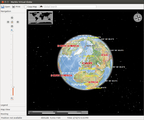
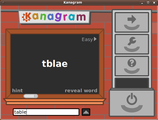
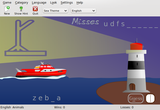
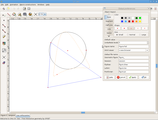
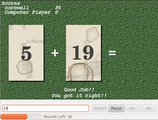
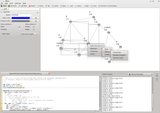
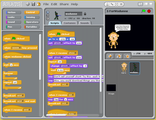
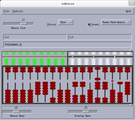
Included in Debian Edu / Skolelinux, there are quite a lot of educational software. Created to help teachers teach, and pupils learn. We have tried to tag them all using debtags use::learning and role::program, and using the debtags I was happy to be able to create a collage of the educational software packages installed by default, sorted by the debtag field. Here it is. Click on a image to learn more about the program. field::arts audacity childsplay denemo freebirth gcompris gimp hydrogen lilypond lmms rosegarden scribus solfege stopmotion tuxpaint field::astronomy celestia-gnome gpredict kstars planets stellarium xplanet field::biology:structural pymol field::chemistry atomix chemtool easychem gchempaint gdis ghemical gperiodic kalzium pymol [viewmol] xdrawchem field::electronics gcompris [gpsim] field::geography kgeography marble xplanet field::linguistics gcompris kanagram khangman klettres parley field::mathematics childsplay drgeo gcompris geogebra [geomview] grace graphmonkey graphthing kalgebra kbruch kig kmplot mathwar rocs scratch tuxmath xabacus field::physics gcompris step field::TODO blinken cgoban childsplay gcompris gnuchess gnugo gtans ktouch librecad scratch In total, 61 applications. 3 of them lacked screen shots on screenshot.debian.net. If you know of some packages we should install by default, please let us know on IRC, #debian-edu on irc.debian.org, or our mailing list debian-edu@.

Daniel Pocock: Democracy down-under is not democracy

This weekend we have the AGM of a local community organisation. Like many organisations I am involved in, there will be a democratic process of decision making, board election and a low-budget social activity afterwards. We take it for granted that democracy is a good thing. In my own country, Australia, people are supposedly happier than they've ever been, no doubt people will suggest that our democracy is part of the recipe for success. While this example is from Australia, it could well happen anywhere. While everybody was slapping themselves on the back about our officially confirmed contentment, the politicians tried to slip something under the radar. With elections expected in September, the press exposed a secret deal between the two biggest political parties, raiding the public piggy bank for $60 million to prop up their campaign accounts. There is even a leaked copy of a letter confirming the deal. It was to be voted through parliament in a stitch-up within 48 hours after the happiness' announcement. Why would these two big political parties engage in a such a gross conspiracy? Weren't they already content with their whopping big pay increases that put our Prime Minister on a bigger salary than the US president or the UK Prime Minister? Well, you don't have to look hard to find out what this special funding was all about: Not long ago, the post office at the University of Melbourne where Wikileaks operates a post-office box was mysteriously shut down. While that may seem like it could just be a co-incidence on it's own, it's worth considering in the wider context: the Wikileaks party is one of the most widely recognised names in Australian politics right now. The party's leader, like the new pope, is seen as somebody who puts his principles ahead of his own comfort, living a humble life in exile while our politicians romp around with prostitutes paid for with stolen money. Whatever you think of Wikileaks or Mr Assange's private life, they are not the only example here. There are other democratic movements in our country that are equally frightening for those who are currently drunk on power. One of the independent MPs holding the balance of power is a former Lieutenant Colonel in Australia's spy agency who was ridiculed by a prior Government and forced out of his job when he exposed the sham of the Iraq war. Neither of the major political parties wants to continue being held accountable by someone who has shown such strong principles against their campaign of death and deception. That $60 million welfare payment to big political parties was intended to be something akin to a weapon of mass destruction, obliterating independent representatives out of the parliament. More recently, the same independent MP has been equally vigorous in his campagin to break the scourge of our mafia-style gambling industry with it's cosy links to Australian politicians. Now it is starting to become obvious just how scary democracy can be. Motivated by the spectacle of a few independents holding our incumbent politicians to account, other Australians have also volunteered to get in on the act and try their hand at running the country. One of Australia's richest men, Clive Palmer has found that even with his enormous wealth (and having started planning more than a year before the election), his plans to form a political party are dampened by the fact that it can't be registered with a proper name to be listed on the ballot paper and all the candidates have to be listed under his name, Palmer, or their own names, barely distinguishable from the independent candidates. This discriminatory approach to the creation of political parties clearly favours the two big incumbent groups. Now it is a lot clearer why existing politicians needed an extra $60 million war chest: like Lance Armstrong's illegal doping program, it was intended to keep themselves ahead of the pack. It all goes to show that people should not take democracy for granted: constant vigilence and involvement is needed to hold leaders to account or replace them when they deviate.
AttachmentSize
piggy-bank.jpg32.83 KB

31 May 2013

Gerfried Fuchs: On Finding Words

There is still a lot of things going on inside me and turning, and I'd like to share two words that I grow attached to, one a fair amount longer now than the other, but both are terms that I seem to had lacking in my vocabulary which I tried to explain in a different way. After finding out about them, I noticed that both what I felt and believed were actual things that were not totally uncommon concepts, even though most people wouldn't know about them. The first term that I stumbled upon years ago was the term of pansexuality. (Do not dare to read the German Wikipedia article. It's ridiculous wrong, insulting and shows that they don't understand the topic at all.) I always had issues to explain my intimate preference to others. Especially after they found out about me being female on the inside. Questions arose (if they understood that I'm open about these things when I post the poem publicly) along the lines of "what are you now: gay, lesbian, hetero and if the latter, what does that mean?". My usual answer was that I fall in love with people, not with their bodies, and that things will eventually work out if meant to be. And thus even though I love my "Bi" shirt, it doesn't really describe properly how I swing, so to say. The latter term I discovered just recently. A friend of mine with whom I chat every now and then told me about it, and when we met again last autumn, they wore a button of the Italian community for Polyamory (I so much prefer the Italian logo to the "widely used symbol", to be honest). It was an eye opening moment for me. I often mentioned to people that I felt like I have a big heart, being able to store multiple people in it. It always puzzled me that when I'm together with someone (and I always was faithful) why I should feel bad and especially keep it a secret when there is someone else who touches my heart, too. Society seems to see this already as a breach of trust, no matter whether it gets pursued or not, just the thought is enough. But it never changed anything with respect to the person I was together with, so what's the deal? Finding out about this term explained so much to me and made a lot of sense. It is about honesty and communication, which I see lagging in a lot of relationships these days... So here you are, getting another inside view on me. And I'm sure that there will be again the one or the other person who considers to use this as ammunition against me, but you know, being open about it acts as a shield. It's not embarrassing for me, never was. And like always, I hope that I can help others feeling similar being lost for words or an understanding that it's not as weird as it might feel. Enjoy!

/personal permanent link Comments: 9 Flattr this

Julien Danjou: OpenStack Ceilometer Havana-1 milestone released

Yesterday, the first milestone of the Havana developement branch of Ceilometer has been released and is now available for testing and download. This means the first quarter of the OpenStack Havana development has passed! New features Ten blueprints have been implemented as you can see on the release page. I'm going to talk through some of them here, that are the most interesting for users. Ceilometer can now counts the scheduling attempt of instances done by nova-scheduler. This can be useful to eventually bill such information or for audit (implemented by me for eNovance).
People using the HBase backend can now do requests filtering on any of the counter fields, something we call metadata queries, and which was missing for this backend driver. Thanks to Shengjie Min (Dell) for the implementation. Counters can now be sent over UDP instead of the Oslo RPC mechanism (AMQP based by default). This allows counter transmission to be done in a much faster way, though less reliable. The primary use case being not audit or billing, but the alarming features that we are working on (implemented by me for eNovance).
The initial alarm API has been designed and implemented, thanks to Mehdi Abaakouk (eNovance) and Angus Salkled (RedHat) who tackled this. We're now able to do CRUD actions on these. Posting of meters via the HTTP API is now possible. This is now another conduct that can be used to publish and collector meter. Thanks to Angus Salkled (RedHat) for implementing this. I've been working on an somewhat experimental notifier driver for Oslo notification that publishes Ceilometer counters instead of the standard notification, using the Ceilometer pipeline setup. Sandy Walsh (Rackspace) has put in place the base needed to store raw notifications (events), with the final goal of bringing more functionnalities around these into Ceilometer. Obviously, all of this blueprint and bugfixes wouldn't be implemented or fixed without the harden eyes of our entire team, reviewing code and advising restlessly the developers. Thanks to them! Bug fixes Thirty-one bugs were fixed, though most of them might not interest you so I won't elaborate too much on that. Go read the list if you are curious. Toward Havana 2 We now have 21 blueprints targetting the Ceilometer's second Havana milestone, with some of them are already started. I'll try to make sure we'll get there without too much trouble for the 18th July 2013. Stay tuned!

Daniel Pocock: VoIP federation: another milestone

Slashdot recently picked out Federated VoIP as one of the compelling features in the upcoming Fedora 19 (Schrodinger's Cat) release. The same capability was recently part of the Debian 7 (wheezy) release and it is in Ubuntu too. It is ironic that the debates about Federated VoIP have long mirrored the debate about Schrodinger's famous feline - is it dead, is it alive, or is it just a theory? Well, the answer is here today (for VoIP, not the cat).

Does it work? Yes, it does work. Even better, users on all the supported platforms can call each other, for example, user1@debian.org should be able to seamlessly and securely place a call to user2@fedoraproject.org What is involved? Server: Each domain needs a SIP proxy, XMPP server or preferably both. They are alternatives and they happily co-exist. For convenience, they can run on an existing mail server as long as the load is not excessive. See the Real-time communcations (RTC) quick start guide for setting up the server, firewall rules, DNS entries and all other details Clients: Each user can have a hard phone, softphone such as Jitsi or Empathy or a mobile VoIP client like Lumicall. Each of these projects has their own email support lists where users can ask any questions about getting started. Is the server difficult to set up and maintain? Setting up fully featured Asterisk or FreeSWITCH servers and keeping them secure for public Internet use is a daunting task. That's why federated VoIP with a basic SIP proxy is so compelling. It is possible to set up the SIP proxy now, get people talking, and add in a soft PBX later if optional features like queues or menus are needed. The repro SIP proxy from reSIProcate is one of the easiest to set up. It can be configured through a web interface or directly entering users into the MySQL tables. Here is a screenshot: Where to next for federated VoIP? People should not be waiting for their ISP to deploy federated VoIP. Many of them are either looking for ways to monetize VoIP, or keen to keep costs low by just selling bandwidth. Rather, it will be up to power users (like those of us who run their own mail server at home), corporate IT departments and also the IT departments of universities and other large, distributed organisations to take leadership. There is huge opportunity here: by displacing the phone companies, IT departments can provide a wider range of services to their organisations. Money previously lost in contracts for phone systems can bolster the IT department as the one-stop-shop for technology, giving IT workers greater career opportunities and stability in their organisation. The organisation benefits from having a system designed and operated around their business needs with much better value for money and a visible support team.

30 May 2013

Steve Kemp: First binary release of lumail

Give me a few days and I'll stop writing about Lumail, but tomorrow I intend to make the first stable source & binary release. From that point onwards you'll not need to track the github repository to getu pdates. The website has had an overhaul in advance of the release, but could still benefit from a logo. As usual I've written the website using my templer static-site generator. I hacked up a couple of plugins to make it easy to generate the pages of Lua primitive documentation, and handle cross-links suitably. (The source is available for reference.) The first binary release of the mail-client is obviously something of a big deal. I've been using the client daily for the past week or so, as a read-only mail-viewer. But now that the compose() and reply() primitives are present it is usable "for real". Having real scripting present is also allowing me to do interesting things, which are kinda/sorta demonstrated on the examples page. Now its a case of fixing up a couple of display-related glitches, and implementing things that are both missing and desirable. Happily the list of missing things is actually surprisingly small. I think the biggest outstanding issue is that the defaults are Steve-friendly, for example the colour-setup should probably be configurable. Beyond the personal-defaults I think the next biggest issue is the lack of threading support. Messages are displayed in oldest->newest order. Always. The other omission is that it is impossible to tag-things, in the mutt-sense, so you can't reply to two messages at once. That's a design decision I might have to revisit. The balance of course is that you can open multiple folders at once, and that rocks! Happy days.

Russ Allbery: Review: Get Everything Done

Review: Get Everything Done, by Mark Forster
Publisher: Hodder & Stoughton
Copyright: 2000
ISBN: 0-340-74620-3
Format: Trade paperback
Pages: 190
Mark Forster is the author of my (current) favorite time management book, Do It Tomorrow, and several excellent blog posts. I've therefore been rather curious about some of his earlier books, and finally decided to order this one. It appears to only have been published in the UK, so it can be a bit expensive in the US unless you can find it used. The main reason why I like Forster's writing so much is that he's a theory and neat trick sort of author instead of a single system author. A lot of time management writing (such as Getting Things Done) presents a single system that's supposedly universal. If that system happens to work for you, great. If it doesn't, the usefulness of the book drops off rapidly. You have to work through the basic principles, which are often sidelined in the book, and come up with variations on your own. Forster is the other sort of time management author: he throws out a flurry of tricks and tactics and lets you see which ones stick. He doesn't have a single system; indeed, one of the most entertaining parts of Get Everything Done is a parable about following many of the common time management systems and having one's life get worse and worse. Instead, he talks about the underlying theory, about the different approaches he's tried and their tradeoffs, and about lots of little tricks that he's found help in one situation or another. It's more of a toolkit than a system. This is, of course, only as good as the clarity of presentation. In both Do It Tomorrow and here, the clarity is excellent. For example, one of the most eye-opening ideas he explores in this book is that time management is a horrible name for the field. Time continues on no matter what you do; you can't increase it, and you can't save it. Rather, what you're actually doing is attention management: for each moment, you're deciding where to direct your attention. Things to which you turn your attention will change; things that you don't pay attention to will not change (except possibly for the worse). I'm quite fond of this reframing of the problem. Forster's thinking about time, or, rather, attention management is not as fully-developed here as in the later Do It Tomorrow. Much of the latter book is about the theory and practice of to-do lists. The techniques presented here were, at least for me, less immediately inspiring, although still thought-provoking. Much of the book focuses on internal resistance and procrastination, on the concept of self-control and decision-making as a mental "muscle" that has to be exercised, and on a philosophy of attention management that slowly builds up to doing whatever one is resisting the most at the moment. I haven't had a chance to work through the exercises that he offers (Forster's books tend to be full of illuminating exercises), so I don't have a fully-formed opinion on their efficacy. I was able to put Do It Tomorrow into practice more immediately. However, one thing this book does do is tackle directly the problem of trying to do too many things. Since this, more than organization, is the heart of my personal attention management problems, I was delighted to see this. Most attention management books at least give lip service to the problem, but they provide little useful guidance. David Allen's Getting Things Done effectively rules it out of scope: the goal of the system is to free you to act on your decisions, but there's little or no attention paid to the practical problem of making those decisions. As a result, I had serious trouble with GTD when I tried to use it. My project and next action lists would simply grow without bound, and GTD offered no useful assistance with culling them. Deciding what to do is, of course, a hard problem, but Forster here offers some specific and useful techniques and spends some time on the necessity of culling one's backlog. He also states directly the problem that everyone else seems to dance around: if you don't cull your committments, no attention management system will actually help you. It will just enable you to do trivia more efficiently, and therefore allow you to fill your life with even more of it, while still feeling just as overwhelmed as before. The bluntness is refreshing, and the exercises in cataloging commitments with time values and then forcing yourself to reduce the commitment list to the doable look quite helpful. I would still start with Do It Tomorrow rather than this book, since I think some practical approaches to to-do list management are one of the best places to start with attention management. But I'm glad I picked up this book as well, despite the cost of the UK import, and I plan on working through the exercises in it. Unlike David Allen, who has one basic system and whose other book was interesting but not as helpful, Forster's toolkit approach means that more books mean more ideas and more possible tools. He doesn't stick with one concept and polish it; he tries a lot of different ideas and then analyzes their strengths and weaknesses. If Do It Tomorrow spoke to you, I recommend grabbing this one as well. (Yes, it's somewhat amusing for me to read and review this book immediately after The Making of the Indebted Man, since to an extent attention management is part of the remaking of the self that's the obligation of the debtor in Lazzarato's construction of the nature of debt. It was something that occurred to me while reading this book. But I think Forster does a good job of showing attention management as a tool to direct one's efforts towards an internal goal rather than externally-imposed goals.) Rating: 8 out of 10

Next.

Previous.