Search Results: "otto"

9 March 2012

Andreas Barth: Traveling to DebConf 11 - in Mostar

The next day was reserved for seeing Mostar. I could leave my luggage at the hotel, so I first went to the train station. The train station was rather large and impressive, in spite of only two trains per day and direction. However, the train station was closed at that time, so no ticket purchase yet. Into the historic city of Mostar: Visiting the Ottoman House was interesting, as well as climbing on the tower of one mosque. In the city, many houses still had effects of shelters and gun shots from the war. (At least) One of the trees in the pedestrian area had many shots as well.
river Neretva within the city of Mostar
City of Mostar from the mosque tower
Ottoman House and bird nests within Seeing Stari Most, the old (or rather: rebuilt) bridge was nice, as well as the masses of people looking there. However, the area with many tourists was quite small. Whereas Stari Most was shoot down during the war, there was a small sister bridge which survived the war damaged but still existed. However, that bridge collapsed during one high water afterwards but had also been rebuilt.
Stari Most with tourists, sister bridge of Stari Most without tourists and houses along the river Below Stari Most, there was an area that looked like a nice picknick-place to look at the bridge and old city, but it was obviously unmaintained since some time. Same at other places: Really great, but many of them unmaintained (as in "too less money", not as in "vandalized"). Soon in the afternoon, most tourists disappeared, so I had the chance to look at the city with only few tourists arround before I had to leave for the train. Walking around Mostar, I meet a few people who were in Germany before, for work, studying or school. The city was quite fascinating - in some way reminded me of 20 years ago. I saw a few more nice vegetables, like kiwis. Mostar wasn't as tourismn-oriented as I would have expected from the monuments available to see there. All people were very nice and friendly, and in the cafes around there was free wifi. A nice place, but also depressing when thinking how much better it could be.

5 March 2012

Benjamin Mako Hill: Unhappy Birthday Hall of Shame

/copyrighteous/images/no_happy_bday.png I roll my eyes a little when I think that Unhappy Birthday is the document I have written that has been read by the most people. The page -- basically a website encouraging people to rat on their friends for copyright violation for singing Happy Birthday in public -- has received millions of page views and has generated tons of its own media (including a rather memorable interview of CBC's WireTap). At the bottom of the page I am listed, by name and email, as the "copyrighteous spokesman" for the initiative. And since the page has been online, I have received hate mail about it. Constantly. Since the email only goes to me, I thought it might be fun to share some of these publicly. All these messages are quoted verbatim but I have not included the senders' names. Be warned: the language is often salty. This email is years old now but it is probably still my favorite:
Atrocity and strife run rampant in this world. Babies are abandoned in dumpsters. Teachers molest students. Impoverished Indonesians make sneakers for pennies while the spoiled jackhole in the 30-second commercial makes millions for sinking a three-pointer and smirking at the camera. Forms of religion are interpreted as to compel people to strap explosives to their chest and board buses full of innocents. Boss Tweeds embezzle and get severance pay while John Q. Workingman gets put out on the street when the corporation goes belly up. Out of all these indignities and countless others I haven't the time to mention, why do you make it your personal crusade to assist in the flagrant persecution of family restaurants for partaking in the time-honored tradition of singing "Happy Birthday"? God forbid these foul brigands bend copyright law in order to bring a smile to somebody's face. Food for thought...without the accompanying song.
Many others strike a defiant, if less poetic, tone:
Good luck! There are millions of us who refuse to accept the ridiculous "copyright" on Happy Birthday. If Time Warner were an ethical company rather than a greedy megacorp they would do something truly special and release it into the public domain. There are some things in this world more important than money.
Quite a few people notice that my last name is Hill and suspect that I must be related to the Hill sisters who originally penned the song. I'm not, to my knowledge, although since Time Warner bought the rights, it's not clear it would matter:
I am writing to just let you know how disappointed I am that a large corporation and others (like the HILL family) are making $2 million plus for a song that was created over 100 years ago with noone knowing who created the lyrics! None of us at our place of employment could believe this and we certainly won't encourage people to send money to ASCAP. It is a shame that ASCAP license fees aren't used to pay more to up-and-coming artists who I'm sure need this money alot more than Time Warner. We all plan to sing Happy Birthday MORE now in public places and if anyone asks if it is copyrighted we will say "of course not". Maybe this way the song will not die out completely as more and more other "birthday" songs are being sung. It would also be nice if your website cited whose opinion is writing the piece and your obvious conflict of interest.
Or another:
Is it a coincidence that your last name is the same as the last name of the authors of the song "Happy Birthday?" You seem to have a personal monetary motive for your work with the "grassroots project" you call Unhappy Birthday, and if you do not, your concern is misplaced all the same. Whom do you imagine your campaign serves? And do you realize whom it harms? I do not question the illegality of performing the copyrighted song publicly. And you are correct that most of the public is not even aware that the song is under copyright. I think the harm done to Time Warner and its associates by such public performances is far outweighed by the joy created when the much-loved happy tune is shared. I urge you to ask yourself why you think the immortal Hill sisters wrote the song in the first place. It was not to put more money Time Warner's pocket. It was, I would argue, for the sake of the song itself and the happiness it brings when performed (publicly or otherwise). Please consider siding with the children and the artists; let the lawsuits alone.
Some people suspect the site may be satire, but include insults and and attacks just in case it isn't:
I'm trying to figure out if your Unhappy Birthday site is meant to be in jest. If so Rofl, and congrats on a hilarious site. If you're actually serious, then fuck you Nazi cunts and your corporate butt buddies. Thank you for your time.
Or these two alternatives (each were separate emails):
If this is a joke then it's rather funny. However if this website is serious then you're a fucking idiot. Get a life!!!! if it is a form of protest, then THANK YOU! if it is not, then screw you all!
One memorable piece of mail was from someone who knew of me from my activities in the free software and free culture communities and had a hard time reconciling my work there with the high protectionist website:
I was quiet surprised to see your name and email address at the bottom of the home page of the site Unhappy Birthday. The site claims that you are their spokesman. Is this correct? I do not understand... You have all this Open Source/ Free Software background and then this site that defends one of the most controversial copyright issues??? Do you really mean this? Do you want to help Time Warner?
I've also received probably half a dozen mails that offer some sort of support! For example, this person liked the website -- and even wanted to buy one of our t-shirts -- but objected to our logo:
I was going to buy one of your products from your Unhappy Birthday Shop at CafePress but there's a problem. I hate emblems that uses human skulls in them. Being a member of ASCAP I really do support your cause but I can't buy a product that I would never wear.
And many people are simply confused asking something like this one:
So I saw the unhappy birthday site and I'm just a little confused. Is this a joke or a serious thing?
I usually reply and explain that I have tried to ensure that the site describes the legal situation around Happy Birthday honestly and correctly. That said, the vast majority of messages I receive are unequivocal. Like this email that I received last week addressed to "you anti-free speech fascists":
         __
        /  \


 __  __      __
/  \/  \    /  \
                \
                  
                 /
                 \
                  /
\                /
                 
                 
Half an hour later, the author followed up with a English version of the same message, set to the tune of happy birthday. You might think that getting insulted and flipped off by confused people on the Internet might get me down. It doesn't! I made Unhappy Birthday because I thought that the fact that something as important to our culture as Happy Birthday could be owned was outrageous. Every piece of hate mail means that somebody else -- almost always somebody who isn't a "copyfighter" or a free culture geek -- is now upset about the current state of copyright too. Sure, Unhappy Birthday makes me a tiny bit sad about people's ability to recognize satire. But it makes me really happy about people's ability to get very annoyed at what they think is the outrageous control of our culture through copyright. When more people are as mad as the the people I've quoted above, we will be able to change copyright into something less outrageous to all of us.

26 February 2012

John Goerzen: Timelessness of an Old Pickup

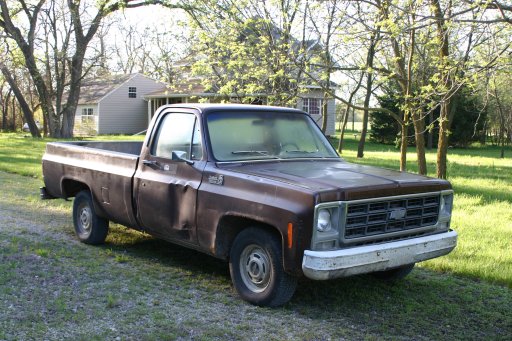
Our society is one that is pretty well defined by timeliness. TV programs start at a precise time, down to the second. Schools have elaborate timekeeping systems. Even church services are carefully timed. We know how fast we re going, and our GPS or phones tell us when we ll get there. And we re pretty confident that we will, in fact, get there. Somehow this doesn t apply to our pickup. This pickup, in case you re wondering, is a thing of stories, shall we say. After a particularly frustrating experience with it one week (oh yes, the battle extended several days), I likened it to the Greek gods. And Terah had a good laughing fit when I began a sentence with The reason there s a towel connecting the brake pedal to the steering wheel But I guess the thrifty side of me won out, and somewhere along the line, I relented. My brother fixed up the carburetor. I got it a new battery. The flat tire is repaired. The starter broke, and I got it replaced. And I even got an oil change. Fancy, I know. So today, when I needed to take some backbreaking junk off the yard, I was hoping the pickup would work. I hadn t driven it in months, and any manner of catastrophe could have struck it in that time. So I was mildly relieved when it started on the 6th try. That is, quite seriously, quite the improvement, and shows how skilled a mechanic my brother is. The speedometer, of course, isn t working. The odometer stupidly reads 21531 or something like that (it was only a 5-digit odometer, broke long ago, so who knows how many miles it really has.) And I like to keep things like grease and heavy ancient air conditioners (one of the things I was hauling) away from my watch, so I wasn t wearing it. The result: I have no idea what time it is, how fast I m going, when I ll get there, IF I ll get there, or all those things. I set out, and made it a good half mile before it died as I was rounding a corner at the bottom of the hill. Always a great place for a finicky old stick-shift vehicle to die, right? Anyhow, a few random adjustments to the choke later, and the thing sputtered then roared (and I do mean roared) back to life. A little lurching up the hill and I was back on my way. Now, I was stuck there in the middle of the road, but it was a country road, so I d have probably had a good hour to get it fixed before worrying about blocking anybody s way. My first stop: my great uncle s place. He has a scrap metal for charity project going on. He is looking for old motors, air conditioners, dehumidifiers, etc. He takes them apart, separates out the metals, sells them, and donates the result to MCC, a world relief agency. I knew I had an old dehumidifier in the basement, and thought I remembered seeing an old window air conditioner in the elevator. That thing is probably the single heaviest object I have ever moved without help. I have a bandaid to prove it. It was way too heavy to carry, so I kind of rolled it, side to side, from the side of the elevator on to the pickup. If you were watching, you d have heard me making struggling noises, followed by BANG rattle rattle rattle pause struggling noises . BANG rattle rattle rattle as I rolled it along the ground, and waited for the internal bits to settle after each quarter turn. So anyway, eventually I got it to the pickup, and then had the sickening realization: I have no way to get this thing up there. Oops. I eventually placed it on top of an old tire rim, balanced it there as I knelt down, and somehow still not quite sure how managed to lift the entire thing a few feet until I could get some leverage to shove it onto the pickup. I later commented to my dad that it was a Chrysler brand air conditioner, somewhat to my surprise, and he said that it was probably my great-grandpa s. That was a surprise. Anyhow, back to the pickup. I drove down the few miles to my great grandpa s place, not really knowing how fast I was going. I smelled the familiar smells of the old pickup: exhaust fumes, oil on hot surfaces it shouldn t be on, a touch of hot antifreeze. You never have any doubt about whether the engine is running. It was sort of nice to not know, or particularly care, how fast I was going, or what time it was. Sometimes I d idly wonder, but you know, it didn t really matter and there wasn t a thing I could do about it anyhow. I got to uncle s place, unloaded the junk sorta dropped the air conditioner off the back of the pickup with a terrific BANG, then rolled it all the way to his trailer and got back in. On to town. I hadn t put gas in the pickup in a few years, and I suspected it was getting low. (The gas gauge, you guessed it, doesn t work right either.) Plus we had some large recyclables built up and it was time to get rid of them. And for that, I had to drive on the highway a ways. The speed limit there is 65MPH. I have no idea how fast I was going, but it wasn t 65. Maybe it was 45. I got passed a lot, but nobody looked particularly surprised that a pickup that looks like mine wasn t going 65. Partway there, I smelled a different smoke smell. Not an oil smoke, but more of a grassy or wood smoke. Hmm, I thought. That s odd. Hope it s not coming from the pickup. I didn t really see smoke anywhere else, so I just drove on until I couldn t smell it anymore. I unloaded the recyclables, then went to the gas station. As the pump readout neared $50, I decided: 1) the gas tank really was pretty empty, and 2) I just can t put more gas in it anymore. That would be more than the truck s worth. So I drove home. The drive home was into the wind. My face got pretty cold I always drive with the windows open to prevent carbon monoxide poisoning (remember the fumes?) I got home and prepared to pack up the pickup close the windows, replace the bungee cord holding the brake pedal up, etc. I then thought I d have a look under the hood to see if there was anything, well, on fire. Nope, but there was a packrat nest that fell down as soon as the wind hit it. Source of grassy-smelling smoke identified. It s amazing what difference simple lack of knowledge makes sometimes. Not knowing what time it is or how fast I m going means I don t have to worry about those things. I wonder how society has changed simply because accurate and cheap watches are available. I kind of like driving the old truck. It s a bit of an adventure, a bit of a challenge, a bit of randomness, and a bit of an escape from the normal and predictable. Not a bad deal for a $75 vehicle.

25 February 2012

Philipp Kern: gobby.debian.org

TL;DR: Since a few months Debian also hosts a Gobby server. You can find it at gobby.debian.org. To use it, install gobby-0.5.

Gobby is a realtime collaborative editor, much like Etherpad, but as a standalone desktop application. (It's also open source since the beginning.) It resembles gedit somewhat. In retrospect plugging into gedit would've made more sense than to develop yet another editor.

Sadly there's a catch: Gobby had multiple iterations at getting its protocol right. So there are two incompatible versions: Gobby 0.4 and Gobby 0.5. But to confuse you, Gobby 0.4.9x is currently called Gobby 0.5. The lead developer wants to get self-hosting (i.e. the one-click creation of a server) back into the application before he calls it stable.

So to use the aforementioned server you need to apt-get install gobby-0.5, invoke gobby-0.5 and type gobby.debian.org into the "direct connection" field in the lower left bottom. This will give you a document tree on the left, where you can create new documents and folders. Please don't be destructive.

If you have a problem, if no one else can help, and if you can find them, you might contact the admins at admin@$service.

21 February 2012

Francois Marier: Putting a limit on Apache and PHP memory usage

A little while ago, we ran into memory problems on mahara.org. It turned out to be due to the GD library having issues with large (as in height and width, not file size) images.

What we discovered is that the PHP memory limit (which is set to a fairly low value) only applies to actual PHP code, not C libraries like GD that are called from PHP. It's not obvious what PHP libraries are implemented as external C calls, which fall outside of the control of the interpreter, but anything that sounds like it's using some other library is probably not in PHP and is worth looking at.

To put a cap on the memory usage of Apache, we set process limits for the main Apache process and all of its children using ulimit.

Unfortunately, the limit we really wanted to change (resident memory or "-m") isn't implemented in the Linux kernel. So what we settled on was to limit the total virtual memory that an Apache process (or sub-process) can consume using "ulimit -v".

On a Debian box, this can be done by adding this to the bottom of /etc/default/apache2:
ulimit -v 1048576
for a limit of 1GB of virtual memory.

You can ensure that it works by setting it first to a very low value and then loading one of your PHP pages and seeing it die with some kind of malloc error.

I'm curious to know what other people do to prevent runaway Apache processes.

15 February 2012

Russell Coker: Links February 2012

Sociological Images has an interesting article about the attempts to apply the word Camping to OWS and framing the issues [1]. Lester Macgurdy wrote an insightful article about the snake , a new technique for OWS protesters to beat riot police [2]. Ron Barassi suggests that Australia Day be celebrated on the 27th of May to commemorate the day in 1967 when the Australian constitution was amended to not be racist [3]. The current Australia Day is often referred to as Invasion Day . IMHO Ron deserves another Best and Fairest award. Stefon Harris gave an entertaining TED talk about improv Jazz music titled There Are No Mistakes on the Bandstand [4]. It seems that his concepts can apply to some extent to many collaborative projects. John Robb wrote an interesting article about the future of drone (UAV) warfare [5]. He suggests that having one person control each drone is a temporary thing and that the future is to have a cloud of cheap autonomous drones taking strategic control from one person. His comparison of Starcraft players to future drone fighters is interesting. The OWS movement is branching out into other related areas, OccupyYourHomes.org is one of the latest ones [6]. When banks try to forclose on homes without good cause the OWS people are protesting. Cory Doctorow wrote an important article for The Guardian about corporations using the Youtube ContentID system to pirate works that other people have uploaded [7]. Matt Taibbi s description of Goldman Sachs as a great vampire squid wrapped around the face of humanity, relentlessly jamming its blood funnel into anything that smells like money will never die [8]. It has spawned many other creative descriptions of the evil and greed of Goldman Sachs and even Lloyd Blankfein of Goldman Sachs describes his company as having burned down the Reichstag, shot the Archduke Ferdinand and fired on Fort Sumter he was trying to use satire, but I don t think that Goldman Sachs people would act differently to Fritz Thyssen. Keith Packard wrote an interesting article about the Calypso CalDAV system which he uses with Android [9]. He makes lots of good points about how to improve calendaring and contacts on Android, unfortunately I lack time to fiddle with such things at the moment so I ll stick with Google in spite of the risks. Asheesh Laroia wrote a great article about the problems with short (32bit) GPG keys [10]. It seems that creating keys with matching ID numbers isn t particularly difficult and that GPG doesn t handle them as well as we would like giving the possibility of at best annoying DoS attacks and at worse security problems due to using the wrong key. Sociological Images has an interesting article about when game show audiences are trustworthy [11]. It seems that French people don t want an undeserving person to win so they will intentionally advocate the wrong answer if the contestant should know it. Paul Wayper gave a great lecture titled SE Linux for Everyone [12]. He covers the basics of SE Linux in a user-friendly way and explains some simple solutions to common problems which don t involve compromising system security. Paul Tassi wrote an insightful article for Forbes about piracy [13]. His conclusion is that the media companies should make it cheaper and easier to be a customer and not spend insane amounts of money on low quality products. The Reid Report has an interesting article about Ron Paul s racism [14]. Ron Paul is generally well regarded outside the US because he wants the US government to stop meddling in the affairs of other countries, but while he s less bad than other US politicians in terms of foreign policy that doesn t make him a good person. Anonymous hacked some mailboxes belonging to a neo-Nazi group and found links to Ron Paul [15]. I ve always been suspicious of the way Ron Paul wanted to avoid anti-racism legislation on supposed Libertarian principles. The Reid Report has an interesting summary of Ron Paul news plus some criticism of Glenn Greenwald and others who associate with him [16]. Related posts:
  1. Links February 2011 Australia s Department of Finance has mandated that the MS-Office document...
  2. Links January 2012 Cops in Tennessee routinely steal cash from citizens [1]. They...
  3. Links February 2009 Michael Anissimov writes about the theft of computers from the...

3 February 2012

Joey Hess: more on ghc filename encodings

My last post missed an important thing about GHC 7.4's handling of encodings for FileName. It can in fact be safe to use FilePath to write a command like rm. This is because GHC internally uses a special encoding for FilePath data, that is documented to allow "arbitrary undecodable bytes to be round-tripped through it". (It seems to do this by encoding the undecodable bytes as very high unicode code points.) So, when presented with a filename that cannot be decoded using utf-8 (or whatever the system encoding is), it still handles it, and using the resulting FilePath will in fact operate on the right file. Whew! Moral of the story is that if you're going to be using GHC 7.4 to read or write filenames from a pipe, or a file, you need to arrange for the Handle you're reading or writing to use this special encoding too. I use this to set up my Handles:
import System.IO
import GHC.IO.Encoding
import GHC.IO.Handle
fileEncoding :: Handle -> IO ()
fileEncoding h = hSetEncoding h =<< getFileSystemEncoding
Even if you're only going to write a FilePath to stdout, you need to do this. Otherwise, your program will crash on some filenames! This doesn't seem quite right to me, but I hesitate to file a bug report. (And this is not a new problem in GHC anyway.) If I did, it would have this testcase:
# touch "me "
# LANG=C ghc
Prelude> :m System.Directory
Prelude System.Directory> mapM_ putStrLn =<< getDirectoryContents "."
me*** Exception: <stdout>: hPutChar: invalid argument (invalid character)
Since git-annex reads lots of filenames from git commands and other places, I had to deal with this extensively. Unfortunatly I have not found a way to read Text from a Handle using the fileSystemEncoding. So I'm stuck with slow Strings. But, it does seem to work now.
PS: I found a bug in GHC 7.4 today where one of those famous Haskell immutable values seems to get well, mutated. Specifically a [FilePath] that is non-empty at the top of a function ends up empty at the bottom. Unless IO is done involving it at the top. Really. Hope to develop a test case soon. Happily, the code that triggered it did so while working around a bug in GHC that is fixed in 7.4. Language bugs.. gotta love em.

23 January 2012

Neil Williams: Emdebian Grip automated dependency resolution

The script isn't fully automated yet, I'm running it manually and watching for errors, but I do now have a simple script (~100 lines of perl) which runs edos-debcheck against each of the supported Emdebian architectures for unstable-grip and picks out those packages which are missing from the subset of packages which Emdebian monitors for Grip.

I was hoping to make these scripts into a normal Debian package but there are some limitations in that the scripts need to assume various pieces of Debian infrastructure. e.g. I started off using rsync to pull in the Packages files (along with Release and Sources) because apt has annoying behaviours with multiple architectures. (Emdebian Grip processes 7 architectures simultaneously on blavet.debian.org). Peter Palfrader kindly arranged for a local mirror to be available and now the entire Packages processing can be done using symlinks. Much, much better.

Actual package movement data comes directly from dak via projectb - something else which makes packaging these scripts for use on non debian.org boxes a bit hard.

Once again, I am indebted to the EDOS team (please, please keep working on edos-debcheck - it hasn't had uploads recently) because I tried to get this working with germinate but failed. (Colin - I'll be looking to borrow some of your time to work out what was going wrong.)

The dependency resolution script now means that I can meet release team requirements that when foo is updated in sid to depend on libbar2 but Emdebian Grip only has libbar1, the scripts will automatically pick up libbar2 and add it to Emdebian Grip. The current sid version gets pulled in and (the theory goes) will migrate into testing-grip as an almost automatically valid candidate. Processing of the dependency can happen within hours of the updated version of foo arriving in Emdebian Grip but as long as it happens within a few days I think everyone will be fine with it.

I've got a sync script too which can periodically run across the entire suite and check for packages which have slipped the net. I'll have to see how often that needs to run but once a week doesn't sound too painful.

Processing for Emdebian Grip is very fast. Most of the time is taken uploading:

2012-01-23 22:24:42 add sid-grip deb main armhf libfltk-images1.3 1.3.0-5em1
2012-01-23 22:24:52 add sid-grip deb main i386 libfltk-images1.3 1.3.0-5em1
2012-01-23 22:25:07 add sid-grip deb main mips libfltk-images1.3 1.3.0-5em1
2012-01-23 22:25:25 add sid-grip deb main powerpc libfltk-images1.3 1.3.0-5em1
2012-01-23 22:26:00 add sid-grip deb main amd64 libstdc++6-4.5-dev 4.5.3-12em1
2012-01-23 22:26:34 add sid-grip deb main armel libstdc++6-4.5-dev 4.5.3-12em1


(It was a lot longer, comparatively, when I was having to rsync and then dget instead of just read from the local filesystem.)

I've also been working on an init script which will gradually work through the subset of packages by order of Priority - approximately what a new architecture (like armhf) would do. Note that Emdebian Grip supports armhf already. The only slight concern is whether the init script needs to be throttled back to not flood the queues with hundreds of uploads an hour (which it could end up doing, at least for the first 24 hours).

Logs of package movements are available: http://www.emdebian.org/grip/logs.php

Packages can be searched too: http://www.emdebian.org/grip/search.php

More on Emdebian Integration on the Debian wiki: http://wiki.debian.org/EmdebianIntegration

Now all I need is a fix for #655919 :-) FTP team?

20 January 2012

Paul Tagliamonte: Dual-screen setup with aligned bottom edges

For the sake of anyone else who s fighting their screens, I ve got a script that will do this (but very very slowly) setup script
xrandr --output VGA1  --auto
xrandr --output LVDS1 --auto
xrandr --output VGA1  --rotate left
eval " monconf "
monoconf script
#!/usr/bin/env python
import subprocess
output = subprocess.check_output(["/home/tag/.bin/mon.ls"])
output = [ item.split() for item in output.split("\n") ]
mons =  
for mon in output:
    if len(mon) > 0:
        if mon[1] == "connected":
            res=mon[2]
            res=res.split("x")
            for item in res[1].split("+"):
                res.append(item)
            res.pop(1)
            mons[mon[0]] = res
BOTTOM_LEFT = "LVDS1"
TOP_RIGHT="VGA1"
LEFT_WIDTH  = mons[BOTTOM_LEFT][0]
LEFT_HEIGHT = mons[BOTTOM_LEFT][1]
RIGHT_WIDTH  = mons[TOP_RIGHT][0]
RIGHT_HEIGHT = mons[TOP_RIGHT][1]
print "xrandr --output %s --pos 0x%s" % (
    BOTTOM_LEFT,
    (int(RIGHT_HEIGHT) - int(LEFT_HEIGHT)))
print "xrandr --output %s --pos %sx0" % (
    TOP_RIGHT,
    int(LEFT_WIDTH)
)
and the mon.ls command
xrandr -q   grep "^[^\ ].*"   grep -v Screen
All of this is super hacky, but it works.

Enrico Zini: Debtags for derivative distributions

Debtags for derivative distributions Sometimes I do cool stuff and I forget to announce it. Ok, so I recently announced a new Debtags website. I forgot to say in the announcement that the new website does not only know of Debian packages: see for example this page, at the very bottom it says: "Distributions: oneiric, precise, sid, testing". This means that already, here and now, debtags.debian.net can be used to tag packages from both Debian and Ubuntu, and can easily be extended to cover the entire Debian ecosystem. If you are a package maintainer, you will notice that your maintainer page shows your packages from everywhere. If you want to filter things a bit, for example hide obsolete packages from an old Debian Stable or Ubuntu LTS, just click on the "Settings" link on the top right to configure the page. How it works The magic is in this mergepackages script, which is run daily, and exports merged Packages files at dde.debian.net. The debtags.debian.net concept of Packages and Sources files are just those all-merged.gz and all-merged-sources.gz. The merging is simple: that rebuild script processes files in order, and the first version of a package that is found is chosen as the base for the one that will go in the merged Packages file. Some fields like "Description" are just taken from this pivot package, others like Architecture or dependencies are merged into it. It's arbitrary, but works for me: the result has all the packages with all their possible architectures and dependencies, and is ready to be indexed with apt-xapian-index. At the moment I pull data from Debian and Ubuntu, but you can see that the script can easily be extended to pull data from any Debian-style ftp archive, so any Debian derivative can go in. I've already started negotiations with the Derivatives Census on how to add any Debian derivative and keep the list up to date. How to export tags for your own distribution I'll use Ubuntu as an example since the data is already available. The way you add Debtags to the Ubuntu packages file is just this one:
  1. Get the full reviewed tag database
  2. Optionally filter out those packages that you are not interested in
  3. Tweak this script to build an overrides file.
  4. Give the overrides file to your favourite ftp archive building tool.
The make-overrides is a bit rusty: if you improve it, please send me your changes. That is it, nothing else required, no excuses, it's ready, here, now! Hitches and gotchas This merged Packages file is a bit of a hack, and suffers from name conflicts across distributions, where two different softwares are packaged in two different distributions with the same name. Ideally, name conflicts should not happen: if a derivative decided to package kate and call it gedit, they deserve to have it tagged uitoolkit::gtk. I think it's rather important that the whole Debian ecosystem works as much as possible with a single package namespace. However, that reasoning fails if you take time into account: packages get renamed, like git and chromium, and may mean completely different things, for example, if you compare Debian Stable with Debian Sid. This last is a problem caused by debtags only working with package names but not package versions. I have a strategy in mind based on being able to override the stable tag database using headers in debian/control; it still needs some details sorted out, but I'm confident we will be able to address these issues properly soon enough. Why stop at the Debian ecosystem? Why indeed. I'm clearly trying to use FOSDEM, and the CrossDistribution devroom as the venue to discuss just that.

19 January 2012

Riku Voipio: CuBox


Just recently arrived from DHL, a solid-run CuBox. I guess nobody who knows me will be surprised when I tell it features an ARM cpu. Specifically an Marvell Armada 510. It features ARMv7 compatibility, with a slight twist of replacing NEON extensions with iWMMX extensions. On the boasting side Armada 510 promises 1080p video decoding and OpenGL ES graphics acceleration (closed source, unfortunately).
The tiny form factor of CuBox is pretty much more than the impressive amount of connectors included;

* Gigabit ethernet
* 2*USB
* eSATA
* HDMI out
* s/pdif optical audio out
* microSD slot
* microUSB serial/jtag port

The last item being important as it makes CuBox unbrickable.. Some will probably lament the lack of WiFi/Bluetooth, but get everything in one device ;). Besides, the USB slots are there to be filled..
Getting started was an slightly rough ride, as in the included Ubuntu (10.04 LTS), X refused to start. After wrongly suspecting that my Display was at fault, turned out the microSD included was slightly corrupted, and some critical contents of xkb-data package were garbage. After reinstall of that package, everything worked, including playing Big Buck Bunny in FullHD with totem.
Biggest disappointment so far is the non-mainline kernel, based on old 2.6.32.9. Some mainline support of Armada 510 exist, but will it work with the proprietary graphics code?

1 January 2012

Tanguy Ortolo: Debian Developper

Debian red swirl For this new year I got a quite specific present : a Debian Developer account. Of course this is not an end by itself but rather a beginning, or perhaps a continuation of my modest effort to contribute to the greater good of our users and free software. As an introduction, I would like to quickly explain how I came to this point, and I also have some people to thank.

Debianist journey
1997-2003
First family computer, a PC running Microsoft Windows 98. I became a power-user, and I progressively replaced all the pieces of that computer, except it operating system (though I reinstalled it several times).
2003
First contact with GNU/Linux: at my preparatory school, we use XEmacs and Kile under Mandrake Linux 9.2 to do some works in Caml Light and LaTeX. I start enjoying free software at home, with Mozilla Firefox, Thunderbird and Libre^WOpenOffice.org.
2005, preparatory school
I try Knoppix at home and eventually install Mandriva Linux 10.2 for my own use. Since then I have never used Microsoft Windows for personal work any more.
2005, engineer school
I integrate Centrale Paris and I join the team of VIA Centrale R seaux, which I believe is a known den of debianists. So I start using Debian on my personal laptop.
2006
Debian power-user. I start reporting bugs.
2007
First small contributions: some of my bug reports now include patches. I also start maintaining a French training document about Debian: formation Debian GNU/Linux.
2008
First packaging work with the help of adn, a modification and split of frozen-bubble to have a server-only package (contribution finally refused, actually).
2010
First package: I adopt dokuwiki with the help of adn. I become a Debian Maintainer, with the intent of applying as a Debian Member later.
2012
I am now a Debian Developer, responsible for a handful of packages and able to do NMUs and to sponsor new contributors.
As you may guess, I have always been a tinkerer, about computers but also about bikes (the ones that work with manpower, not the ones that make noise and smoke ;-)). And I also always wanted to publish my works somehow, because I hate to think that someone could have to do again some reusable work I had to do before instead of taking advantage of it. Well, it happened that free software was a way to achieve both goals: to hack and to make my work available for anyone. Thanks I would like to thank all those who helped me to discover and contribute to free software, especially: adn, who helped me with my first steps to directly contribute to Debian, dererk and all the Debian Developers that patiently reread and sponsored my packages, and my Application Manager gwolf, who gave quite a lot of time asking me questions, reading my replies, and replying to some questions that arose during the process. Outside of the Debian Project I have to thank Alexis de Lattre, who wrote the original Formation Linux that I am now maintaining under the name of Formation Debian GNU/Linux , a document which helped me to discover GNU/Linux and Debian specifically. More generally, I would like to thank all the Free Software community that made that possible: Debian Developers, hackers and users from everywhere. We have built and we are still building quite an impressive pile of very useful work, and we can be proud of it. Notes
  1. Here in the northern hemisphere our school years begin in the middle of the civil year, which makes it tricky to tell them apart
  2. This is almost a synonym for tinkering, in the context of free software, is it not?

24 December 2011

Uwe Hermann: HOWTO: Using OpenVPN on Debian GNU/Linux

Here's a quick HOWTO for setting up an OpenVPN server and client on any (Debian, in this case) Linux machine of your choice. I'm running an OpenVPN server on a box at home, and a client on my laptop, so I can securely route all my laptop traffic through my OpenVPN server, no matter where I am. I highly recommend reading the official OpenVPN HOWTO from top to bottom, at least once. But here's a short, condensed HOWTO (specifically geared towards my needs, yours might be different): On the server: Install OpenVPN (apt-get install openvpn), then copy the "easy-rsa" files to /etc/openvpn/easy-rsa from where we'll use them to create our keys and certificates:
  $ cp -r /usr/share/doc/openvpn/examples/easy-rsa/2.0 /etc/openvpn/easy-rsa
  $ cd /etc/openvpn/easy-rsa
In the vars file change the KEY_SIZE variable from 1024 to 4096 for good measure:
  export KEY_SIZE=4096
Then, read in the vars file, clean old keys and certificates (if any) and create new ones:
  $ . ./vars
  $ ./clean-all
  $ ./build-ca
You'll now have the chance to enter some data such as country code (e.g. "DE"), state/province, locality, organization name, organizational unit name, common name, name, and email address. The values you choose don't really matter much (except for commonName, maybe, which could be your hostname or domain or such). Finally, the ca.key (root CA key) and ca.crt (root CA certificate) files will be created. Next, we'll create the server key:
  $ ./build-key-server server
You'll have to enter lots of info again (see above), commonName could be "server" or such this time. Upon "Sign the certificate? [y/n]" say y, as well as upon "1 out of 1 certificate requests certified, commit? [y/n]". Finally, the server.key and server.crt files will be created. Same procedure for creating a client key (I used "client1" as filename and commonName here):
  $ ./build-key client1
Next up we'll generate Diffie Hellman parameters (this will take a shitload of time due to keysize=4096, go drink some coffee):
  $ ./build-dh
When this step is done, you'll have a dh4096.pem file. As we want to use OpenVPN's "tls-auth" feature for perfect forward secrecy (it "adds an additional HMAC signature to all SSL/TLS handshake packets for integrity verification"), we'll have to generate a shared secret:
  $ openvpn --genkey --secret ta.key
  $ mv ta.key keys
So much for creating keys. Now, we'll have to configure OpenVPN. Copy the default server config file and edit it:
  $ cd /etc/openvpn
  $ cp /usr/share/doc/openvpn/examples/sample-config-files/server.conf.gz .
  $ gunzip server.conf.gz
The most important change in my setup is that I use port 443/TCP instead of the usual OpenVPN default of 1194/UDP. This increases the chances that you'll be able to use OpenVPN in almost all places, even in environments which firewall/block lots of stuff. Port 443/TCP (for https) will almost always be usable. I also uncommented the following line, which tells the client to use the VPN interface (usually tun0) per default, so that all the client's traffic (web browsing, DNS, and so on) goes over the VPN:
  push "redirect-gateway def1 bypass-dhcp"
Here's my server config file (comments and commented out lines stripped):
  port 443
  proto tcp
  dev tun
  ca /etc/openvpn/easy-rsa/keys/ca.crt
  cert /etc/openvpn/easy-rsa/keys/server.crt
  key /etc/openvpn/easy-rsa/keys/server.key  # This file should be kept secret
  dh /etc/openvpn/easy-rsa/keys/dh4096.pem
  server 10.8.0.0 255.255.255.0
  ifconfig-pool-persist ipp.txt
  push "redirect-gateway def1 bypass-dhcp"
  keepalive 10 120
  tls-auth /etc/openvpn/easy-rsa/keys/ta.key 0 # This file is secret
  comp-lzo
  user nobody
  group nogroup
  persist-key
  persist-tun
  status openvpn-status.log
  log-append openvpn.log
  verb 3
You can now start the OpenVPN server, e.g. via
  $ /etc/init.d/openvpn restart
Server firewall setup/changes: I'm running a custom iptables script on pretty much all of my boxes. Here's the relevant changes needed to allow the OpenVPN server to work properly. Basically, you need to enable IP forwarding, accept/forward tun0 traffic and setup masquerading (change "eth0" below, if needed):
  echo 1 > /proc/sys/net/ipv4/ip_forward
  iptables -A INPUT -i tun+ -j ACCEPT
  iptables -A FORWARD -i tun+ -j ACCEPT
  iptables -A FORWARD -m state --state ESTABLISHED,RELATED -j ACCEPT
  iptables -t nat -F POSTROUTING
  iptables -t nat -A POSTROUTING -s 10.8.0.0/24 -o eth0 -j MASQUERADE
My firewall script gets run upon every reboot. If you don't use such a script, you could add the above stuff to your /etc/rc.local file. On the client: Install OpenVPN (apt-get install openvpn), then copy the default client config file and edit it:
  $ cd /etc/openvpn
  $ cp /usr/share/doc/openvpn/examples/sample-config-files/client.conf .
Change the parameters to match the server config (port 443/TCP, and so on) and use "tls-auth /etc/openvpn/ta.key 1" (note the "1" on the client, and the "0" on the server!). Replace xxx.xxx.xxx.xxx with the public IP address of your OpenVPN server. If it doesn't have a public, static IP address already, you can use services such as DynDNS, or (my preferred method), my ssh-based DIY poor man's dynamic DNS setup. Here's my full client config:
  client
  dev tun
  proto tcp
  remote xxx.xxx.xxx.xxx 443
  resolv-retry infinite
  nobind
  user nobody
  group nogroup
  persist-key
  ca /etc/openvpn/ca.crt
  cert /etc/openvpn/client1.crt
  key /etc/openvpn/client1.key
  ns-cert-type server
  tls-auth /etc/openvpn/ta.key 1
  comp-lzo
  verb 3
Now you only need to copy the required certificates and keys to the client (into /etc/openvpn): ca.crt, and ta.key. Do not copy the other, server-specific private keys and such to the client(s)! Also, the root CA key (ca.key) should not even be left on the server, but rather moved to some offline storage/box, so that it cannot fall into the wrong hands, e.g. in the case of a server compromise. I prefer to manually start the client on my laptop when needed, so I use AUTOSTART="none" in /etc/default/openvpn and then start the client via:
  $ openvpn /etc/openvpn/client.conf
That's it. Comments and suggestions for improving the setup and/or the security aspects of it are highly welcome!

11 December 2011

Amaya Rodrigo: Biggest of them all


Biggest of them all
Originally uploaded by Amayita.
And what the heck bumped into that? :)

Via Flickr:
Tomares, Seville

9 December 2011

Russell Coker: Some OWS Stuff

There is an interesting interview with Richard Wilkinson on ted.com about the damage to society that is caused by excessive inequality [1]. The conclusion is interesting, it seems that one part of the solution is to send the message that excessive greed is anti-social. The demonstrations against the greedy 1% seem likely to do some good in this regard. He also has a TED talk about this in which he shows that even the rich don t benefit from great inequality [2]. If nothing else the links between great inequality and high rates of mental illness and murder should convince people that they don t want to live in such a society. Buying Cameras Some of the radio news reports have claimed that some of the people in OWS camps in Australia are somehow unworthy because they have smart-phones and digital cameras. They seem to believe that people have to demonstrate great poverty to have standing to complain. The problem here is that owning a mobile phone is essential to getting employment in many industries, so the vast majority of people who are old enough to work but not near retirement age just have to own a mobile phone. Once you have decided to use a phone if you are going to use it a lot (which you probably will if living in a tent in a public place) then being on a contract usually makes economic sense. As the cheapest contracts include a free Android phone that means almost everyone who is old enough to be allowed out alone at night and young enough to be willing to sleep rough for a cause will have such a phone. A related complaint is about people owning good cameras. One reason for this is the fact that the huge number of cameras deters the police from using excessive force that s a good justification for spending money on a good camera. But then a good camera doesn t cost much nowadays, the specs on $100 cameras are quite impressive and a camera that costs $400 new will have features that are useful for professional photographers and cameras are even cheaper on ebay. In Australia social security payments for a single person who is out of work are as much as $486.80 per fortnight [3]. Therefore someone who is living on social security could buy a great camera if they saved up two weeks of social security payments or buy a similar camera on ebay for one week s worth of payments. When at a protest the widespread use of cameras is essential for protection against police brutality. It s worth saving up for a camera. But really they are missing the point, OWS is about representing ~99% of the population. Even people on the average income are suffering because of the greed of the rich. Is Australia such a Great Place? There have been claims that Australia is such a great place that OWS protests are not needed, supposedly we have a very egalitarian society. The ABS data shows that the level of inequality as expressed by numbers isn t that great when restricted to just income if you restrict the analysis to the top 20% [4]. The mean gross household income per week is $340 for the lowest quintile and $2,380 for the highest quintile giving a ratio of 1:7.0. But when you look at total household net worth it s $27,400 vs $1,720,700 a ratio of 1:62.8! The ratio for the richest 1% would surely be a lot greater but a quick search of abs.gov.au didn t turn up any statistics on them. Also Richard Wilkinson s analysis puts Australia quite close to the US. If the people who are in the top 1% earned their money, paid taxes, and didn t pervert the political process then there wouldn t be any OWS protests. The corruption in the political process and rent seeking by corporations isn t as bad here as it is in the US, but it s bad enough that we need some serious changes. Emily Manuel wrote an interesting article for Tiger Beatdown about the need for an Occupy movement in Australia [5]. Her description of the political problems in Australia is quite clear. But I wasn t convinced by her analysis which suggested that Australia is different from the US in any significant way. Really Comparing Income To properly compare income it doesn t make sense to compare a ratio of money earned, or disposable income which is often misleading due to disagreements about what is considered disposable. It s really about which of the things that you want to do can be achieved on your income. One possible way of comparing it is based on Maslow s hierarchy of human needs. The poorest 20% of households in Australia have a gross income of $340 per week. The ABS shows that the average of private rental prices in the 8 capital cities (where most of the population lives) is $218 per week [6]. Obviously the poorest households can t afford an average rent unless you have lots of people packed in one house. No matter how you look at the numbers it s going to be difficult for low income people to pay for rent and food. That puts them on the bottom level of Maslow s higherarchy. It seems to me that the benefits of increased income diminish and it becomes more of a contest to be richer than other people. Owning an old car is a significant benefit over having no car. Owning a new car has some real benefits over an old car. Luxury cars usually have safety features before they are introduced to cheaper cars, but apart from that the benefit of owning a luxury car is small. Owning multiple Rolls-Royces doesn t seem to provide any real benefit, someone who would want to do that would probably be better served by hiring a good psychologist. Update: In a comment Brendan Scott cited The Theory of the Leisure Class by Thorstein Veblen. That s a great point, and I ll have to read that book! I still maintain that owning two Rolls Royces is a symptom of psychological problems, people who can sort out such problems won t feel the need to try and prove that they have more money than others. Charles Stross has an interesting article about wealth disparity etc [7]. Being a sci-fi author he also explores what life might be like after Drexler boxes satisfy most of our current materiel needs. The Age has an informative article by Suzy Freeman-Greene contrasting the OWS protests in Melbourne which were broken up by police to the Catholic anti-abortion protests that have been going on for more than 20 years [8]. It seems that corporations aren t the only large organisations that are pwning democracy!

8 December 2011

Craig Sanders: How to set the application icon for chromium

This has been a minor annoyance for the last few months, and I've finally figured out how to fix it: Sometime within the last few months, an upgrade prevented Chromium from finding its application icon with the result that when minimised (or displayed in the panel window list or Alt-Tab) it used the default application icon. It looks to me as if the problem is that Chromium is now looking for chromium-browser.svg but chromium.svg is what's on my debian system. To restore, all you need to do is:
$ mkdir -p ~/.local/share/icons/hicolor/scalable/apps
$ cd ~/.local/share/icons/hicolor/scalable/apps
$ ln -s /usr/share/icons/hicolor/scalable/apps/chromium.svg chromium-browser.svg
great, done. Now my chromium windows don't look the same as my mrxvt windows in Alt-Tab, they're quite clearly Chromium windows. The icon now looks like this: rather than an icon i'd insert here if i knew what its filename is it looks like a white window with a blue title bar and a thinner blue bar at the bottom (about half the height/thickness of the "title bar") I've spent half an hour searching for it and have given up anyone know what it is? alternatively, use cp rather than ln just in case some future upgrade removes or renames the chromium.svg file How to set the application icon for chromium is a post from: Errata

7 December 2011

Benjamin Mako Hill: Wide Scream

<object data="https://upload.wikimedia.org/wikipedia/commons/d/de/Aspect-ratio-4x3.svg" type="image/svg+xml"> https://upload.wikimedia.org/wikipedia/commons/d/de/Aspect-ratio-4x3.svg</object> <object data="https://upload.wikimedia.org/wikipedia/commons/f/f8/Aspect-ratio-16x9.svg" type="image/svg+xml"> https://upload.wikimedia.org/wikipedia/commons/f/f8/Aspect-ratio-16x9.svg</object> It seems that nearly all computer monitors have now switched from a 4:3 aspect ratio popular several years ago to a "wide screen" 16:10 and now mostly to an even wider 16:9. But screen sizes are usually measured by their diagonal length and those sizes have not changed. For example, before I had my Thinkpad X201, I had a X60 and a X35. They are similar laptops in the same product line with 12.1" screens. But 12.1" describes the size along the diagonal and the aspect ratio switched from 4:3 to 16:10 between the X60 and the X201. As the screen stretched out but maintained the same diagonal length, the area shrunk: from 453 square centimeters to 425. But screens are not only getting smaller, they are also getting less useful. The switch to wider aspect ratios is done so that people can watch wide screen movies while using a larger proportion of their screens. Of course, the vast majority of people's time on their laptops is not spent watching wide screen movies but in programs like browsers, word processors, and editors. Because most of our writing systems lay out documents from top to bottom, the tools we most frequently use to display (and then scroll through) the things we read primarily use vertical screen space -- the dimension that is shrinking. If you have a desktop monitor, you might rotate the whole thing 90 degrees and "solve" the problem. If you're on a laptop though (as I usually am) this is clearly not an option. I am not the first person to be annoyed by this trend. In fact, many recent desktop UI changes are designed to work around this issue. In the free software world, both Unity and GNOME 3 have made efforts to hide, merge, or otherwise get ride of title bars, menu bars, and panels that take up dwindling vertical space. I use Awesome which I've mostly set up to do two side-by-side terminals with very little in the way of menu bars. /copyrighteous/images/awesome_screenshot_2011-small.png Applications are the worst offenders and the solutions for those things that won't run in a terminal (or people that don't want to live there) are still lacking. I have been using Firefox's Tree Style Tab extension to move tabs to the side and hand-customized toolbars that squeeze everything I need (i.e., back, forward, stop, refresh, and URL bar) onto a single menu bar. /copyrighteous/images/iceweasel_menu_eg_screenshot_2011-small.png But the situation still drives me crazy. I'd love to hear what others are doing.

27 November 2011

Craig Sanders: some more reasons to hate gnome shell

  1. Non-resizable configuration windows. I have a 1920 1200 screen but the window manager provides no way to resize windows like the System Settings window. Result is that the window is quite small and, worse, has a scroll bar for no good reason when another hundred or so vertical pixels would easily display everything. Even another 30 or so horizontal pixels would allow more icons per line under Hardware, reducing the number of lines, and again allowing the entire list of available settings to be displayed without a scroll bar. Instead, to see all of the options I have to scroll down. And these people call themselves user-interface and usability experts. It's not up to the gnome developers to decide that I never need to resize certain windows or certain kinds of windows. It's up to me to decide that. They're not at my desktop, using my screen. I am.
  2. No way to disable a shell extenstion from the command line. I installed the gnome-shell-extensions package and was trying out various extensions to see if they made gnome shell tolerable. Enabling one of them (i forget exactly which one), immediately displayed some "Oh no! Something has gone wrong. A problem has occured and the system can't recover. Please log out and try again." leaving me no option but to log out. An absolutely fucking useless error message. "Something" has gone wrong. A little fucking detail might help me to diagnose the problem and fix it. Like a trace of whatever the fuck it was doing when "Something went wrong". When i logged back in, it crashed again, with the same useless error screen. So, now I can't even log in to Gnome Shell. I've tried logging in to Fallback mode, but the Extensions tab is empty in gnome-tweak-tool (because, of course, nobody would want to configure Shell Extensions from fallback mode, would they?). I can't even find any way of listing which shell extensions are enabled, let alone disable one of them. Hell, I'd settle for disabling all of them, and then carefully re-enabling them one-by-one until I rediscovered the culprit.
  3. Oh, wait. I finally found /org/gnome/shell/enabled-extensions in dconf-editor. it's a text field with an array of items. so far, so good. The "editor" (and i use that term very loosely) for text fields is garbage. It can't even wrap lines so that it displays the whole field without a horizontal scroll bar probably my all-time least favourite user-interface element. Have gnome devs never heard of multi-line text-edit fields? Rather than fuck around with a crappy GUI editor, it's far easier to:
    $ dconf read /org/gnome/shell/enabled-extensions > /tmp/extensions
    $ vi /tmp/extensions
    $ dconf write /org/gnome/shell/enabled-extensions "$(cat /tmp/extensions)"
    
    I guess now it's time to log out from fallback mode to find out if I can log back in to Gnome Shell again. [ nope. didn't work ]
  4. Add non-resizable user-interface elements to item 1. above. So far, Gnome devs are doing a great job of regressing to the crap usability of the Windows GUI here s a useful rule of thumb for things like that: Every single window, every single user-interface element should be resizable and tweakable by the user. And the system should remember all user changes so that they don t have to waste a few minutes every time they run an app resizing things to suit their requirements. Gnome 2 mostly had that. Gnome 3 seems to have lost a large part of it along the way Second rule of thumb: If the user happens to replace their monitor or run it in a mode too small for the current settings, then they should revert to some sane default. Even better, it should remember the settings for each resolution choosing either sane defaults or the user s settings for the nearest similar resolution if the user hasn t created custom settings for that resolution yet.
  5. Lack of documentation. here's a good example:
    $ gnome-shell-extension-tool help
    Usage: gnome-shell-extension-tool [options]
    $ man gnome-shell-extension-tool
    No manual entry for gnome-shell-extension-tool
    See 'man 7 undocumented' for help when manual pages are not available.
    What more needs to be said? At least /usr/bin/dconf has built-in help. Which is great, since it doesn't have a man page either.
Update: About three hours of stuffing around later, and I ve finally got Gnome Shell running again. I have NFI what actually fixed it, it could have any one of the dozens of settings I fucked around with. Nor do i have any idea what the actual problem was. And after all that, the extensions I tried still don t make Gnome Shell tolerable. They make it less *intolerable* (bottom-panel extension in particular), but that s still a long way from being tolerable i m really trying hard to find some way to come to terms with Gnome 3. I ve been trying for months now. But every time I give it another trial, I just end up hating it even more I m glad I have more than one desktop machine to use, so i can experiment with odious shit like Gnome Shell without fucking up my main working environment. So it s back to my main desktop machine and gnome2. Eventually I ll have to upgrade that, but xfce4 is looking to be my best option. I already switched to xfce4 on my desktop machine at work last week, and it s pretty good certainly far better than the Gnome 3 fallback mode i ve been using there for the last 5 or 6 months. Thanks, Gnome devs you re making a fantastic advertisement for XFCE. I wouldn t have bothered trying it again if I hadn t been forced to. ps: before anyone says wait for Gnome 3.2, it s much better . Todays waste of time *was* using Gnome 3.2 some more reasons to hate gnome shell is a post from: Errata

26 November 2011

Andrew McMillan: CeBIT 2011 in (overdue) review

The German Linux Magazine runs a sponsored an "Open Source Lounge" at CeBIT each year. Last year I put in a proposal for DAViCal and it got accepted! With some airfare support from InternetNZ I got to showcase my Free Software project at the largest IT trade fair in the world.If you have an open source project to promote I can't recommend this highly enough. Below is a review of my experience at CeBIT early this year. This is long overdue for posting, and I'm prompted now because submissions are now open for the Open Source Project Lounge at CeBIT in 2012. Apply now.The German Linux Magazine runs a sponsored an "Open Source Lounge" at CeBIT each year. Last year I put in a proposal for DAViCal and it got accepted! With some airfare support from InternetNZ I got to showcase my Free Software project at the largest IT trade fair in the world. If you have an open source project to promote I can't recommend this highly enough. Below is a review of my experience at CeBIT early this year. This is long overdue for posting, and I'm prompted now because submissions are now open for the Open Source Project Lounge at CeBIT in 2012. Apply now.

CeBIT Hall 2 is an enormous space

DAViCal at CeBIT 2011 CeBIT in Hannover is said to be the largest trade fair in the world, attracting over 300,000 visitors during it's five days. Late last year a DAViCal user in Germany suggested that I apply for a free booth for DAViCal in the Linux New Media Open Source Project Lounge . When DAViCal was accepted, I realised I needed some funding to help me travel around the world to attend, so I applied for a grant from InternetNZ who were kind enough to agree to cover part of my travel costs, and I was on my way. Germany in March is cold, especially for me coming from Summer! My travel allowed for a couple of days in Germany before CeBIT because that was when I could get the cheapest flights, and I wanted to have a little time to recover from the journey. Everyone had warned me to pack my winter woollies, and they were definitely needed! I stayed with a friend in Hamburg for two days and on the the second day we walked through the frozen park, past the frozen lake and over the frozen streams to see the Attraktor Hackerspace in Hamburg Nord where the CCC also hold their meetings a very impressive hackerspace in a repurposed bank (including the vault :-) with several separated areas for talks, meetings and workplaces. The day before CeBIT I travelled to Hannover to take a look at my booth space, fetch exhibitor passes for myself and volunteers and generally prepare to do battle with the crowds. The following day the fair started and it was up at 6:30 to get ready and catch the 7:38 train out to the fairgrounds. Although the fair opens at 9:00 there was always something to do between eight o'clock or so when I arrived at my booth and when the attendees started wandering past.
I was fortunate to have two volunteers for my booth who were there all week, as well as a couple more who turned up on the first two days. Not only did this mean that I got to spend a few hours during the week actually wandering the fairgrounds, but that I had some knowledgeable native german speakers for the occasional visitor who could not speak English. DAViCal has been translated into a dozen languages, and there had been some extra work put in to update the German translation before CeBIT also. As well as showing DAViCal, I was also able to demonstrate a new project at the fair which was aCal - a CalDAV Calendar Client for Android which I had released into the market just a few days beforehand for a token sum (it is licensed GPL v3 or later and the source code is available on gitorious.org). Having the smartphone devices available was great for giving live demonstrations, and I used the timetable for events at the Open Source Forum across the aisle from the Open Source Lounge to populate a calendar that we shared among a variety of devices. The first day was really the calm before the storm, and we saw lots of people asking what we were about, and had some good conversations with people wanting to know more, or telling us they used the software and were very happy with it.
CeBIT closes the gates at 18:00 with the visitor supply drying up pretty quickly around then and the secret lives of the exhibitors are revealed with people starting to relax and joke, and beer or wine starting to come out and some booth parties kicking off... if you have the stamina! I didn't, so it was off back to the train, to Hildesheim, to dinner and to bed. That first day blurred into the next, and the next and by Friday I was starting to lose my voice with all the talking I had been doing. I was visited by a chap from Posnan University who are a DAViCal user and he invited me down to the Polish stand to tell me about what they do there, and he agreed that they would love to help get the Polish translation improved. Another DAViCal user turned up with some bavarian wheat beer and a special beer glass for it by way of thanks. In some spare moments I fixed a bug in aCal's handling of character sets and uploaded a new version, so that we could use umlauts in events. Many people came past to talk to us, some of whom want to help with them project or have ideas for interesting things to do with DAViCal, some were already users of DAViCal and some went away thinking that they would be in the future. The last day of CeBIT is a little different: it's a Saturday and the doors are opened to the public and the minimum age is lowered to allow children to attend the event. I had been warned that this day is a madhouse, and it did indeed seem to be so for many booths. For DAViCal it was probably quieter than the day before, I think perhaps because calendar server software is inherently less sexy than many of the other things on display. We still had plenty of great discussions with interested people nonetheless and to be honest I was fairly happy to be spared the further exhaustion that had been threatened. Sunday was spent recuperating: discovering that Hildesheim has a great little restaurant that does traditional german pancakes for breakfast and then wandering around the small city soaking in the sunshine that I'd seen through the windows outside all week. On Monday I caught the train to M nchengladbach to meet with an organisation that might provide support for DAViCal in Germany, but who hadn't been able to come to the fair to see me due to illness. I was encouraged to spend the night in Aachen a beautiful little city , which I did, arriving around sunset and I spent a couple more days before flying home being intensely antisocial to recover from the furious week beforehand. Is CeBIT worth it? CeBIT seemed to me to be quite a different business model, or perhaps on a different scale. I've seen trade fairs in New Zealand for other purposes, but not to showcase software and services in quite this way. To give an idea of it's scale, consider that I had a tiny booth in a hall that was probably four times the size of the TSB Arena, and CeBIT included around 20 such buildings , packed with exhibitors, with free buses to get around the campus, acres of multi-storey parking buildings, two train stations, and so on. The scale of the event is incredible.

Polish people are huge too, like these friendly DAViCal
users from Pozna University of Technology who
showed me all the cool toys they brought to CeBIT.

As a result of this scale, CeBIT boasts impressive visitor numbers, and while a visitor will usually attend with a specific area of interest in relation to their business they will also wander the fair to see other areas of more personal interest, or just to see what is around. Open Source is a specific area of interest to a significant percentage of business in Germany, and Deutsche Messe, the fair operators, recognise the value of having an open source area as a draw for visitors, with the primary open source area placed in Hall 2, directly off the main north entrance. Within the open source area, the Open Source Project Lounge , where DAViCal was located, is a series of booths sponsored by Linux New Media AG. Projects in the Open Source Lounge are selected by a jury of Linux New Media, Deutsche Messe and several community advisors, so as such there is a range of interesting projects on show and the draw of any given project has a flow-on effect to the others. As an example, at one point while briefly minding the adjacent stand for the OpenEmbedded project I was unable to help an inquiring visitor, but I was able to talk about DAViCal with him until the exhibitor returned to answer his question. His interest in DAViCal was definitely increased in this process, and I'm sure that many people came into our area of the lounge attracted by a specific exhibitor and moving on to see some of the others. Outside of this association with open source, however, CeBIT offers something which general free software events cannot: an association with mainstream software and services. This presentation of Open Source alongside IBM, SAP, HP, Oracle, Software AG, Apple, Microsoft and so forth makes inclusion at this event particularly valuable. Free software solutions can have good brand recognition within the open ecosystem itself and yet be practically unheard of outside it. Most traditional methods of communication with suppliers don't work well with Open Source projects: a request for proposal will sail silently by, unless noted by a related commercial entity. In general there is no sales department, and marketing is frequently a desultory hit or miss affair. The fair is different. The fair is about talking with people. While there is still plenty of collateral marketing with brochures, signs, presentations and giveaway knick-knacks those things are just there to bring people into range: the real action happens when you engage a person in conversation, and at that point a humble free software project can be on an equal footing with a larger booth staffed with eager young salesmen. Of course there are a number of places where free software can get a booth. Linuxtag is a German example where there are many booths for free software projects, linux.conf.au also offers booths to free software projects during it's more outreach Open Day and software freedom day events happen all around the world where booths are available, but the audience arriving at these events are all largely pre-sold on openness and free software. So in presenting this broad blend of people, in a way in which free software projects can present on a roughly equal footing with their commercial brethren, CeBIT is an opportunity not to be missed. The numbers speak for themselves, too: traffic to the DAViCal websites has increased by about 50% around CeBIT with 25% coming from Germany, but significant increases also from France, Netherlands, Italy, Switzerland and Poland. Traffic to the DAViCal wiki has doubled over the last 12 months in a steady increase to around 200,000 page views each month. This sudden increase to around 10000/day in March, with some days during CeBIT peaking at over 20000/day The Future I won't be returning to CeBIT to represent DAViCal in Hannover next year as the sponsored booth is pretty much a one-time thing and the costs involved in purchasing a booth for attendance at the fair are significant (around NZD$15000 for a small 3m x 2m stall). It's possible that I will return next year in a different capacity, as one of the larger stand organisers has confidentially indicated he will invite me to attend as part of an Open Source Apps area that he is considering running on his stand, somewhat along the lines of the Open Source Lounge . Time will tell, I guess, but if invited I think I would definitely go for that. I will definitely be suggesting to a few specific free software projects that they should apply for the Linux New Media opportunity when it comes around again. Koha is one project that immediately springs to mind, but of course there are many, many worthy free software projects and this opportunity seems to be little-understood outside of Germany.

Britta was unfailingly helpful and charming

If I do convince a project to apply, and they are successful, I will also try and give them some assistance and background knowledge to understand the fair, and how best they can take advantage of the opportunity it offers. Some basic tips would be: and finally... I would like to express my appreciation to InternetNZ for the grant to partially cover my travel costs to Hannover, making my attendance at this outstanding event much more achievable. My thanks also to Britta Wulfling who supported all of the projects in the Open Source Lounge. My friends Alexander & Meike in Hildesheim who supplied somewhere for me to recuperate, and accompanied me to the fair every day to run the Debian booth. Thanks also, of course, to the German Linux Magazine for selecting DAViCal for a free booth, and to Benny who pointed the opportunity out, encouraged me to apply, and came along and helped out for the whole week.

24 November 2011

Andrew McMillan: The Obligation to Vote

Could you not trust this man?Max and Fraser are very interested in this year's election. I guess political awareness starts at the first election after you turn 10, or so. They're both very curious about how mum and dad are voting, and while their mother will not tell (though we all have our suspicions :-) I don't see any reason not to discuss my political leanings with them.I've been what is commonly termed a 'floating' voter for most of my voting life. I imagine the politicians themselves might term people like me 'floaters', with an eye to the scatalogical implications. After all, their livelihoods are on the line!So, after reading this blog post I thought I might as well also share my personal voting plans with the world.

Could you not trust this man?

Max and Fraser are very interested in this year's election. I guess political awareness starts at the first election after you turn 10, or so. They're both very curious about how mum and dad are voting, and while their mother will not tell (though we all have our suspicions :-) I don't see any reason not to discuss my political leanings with them. I've been what is commonly termed a 'floating' voter for most of my voting life. I imagine the politicians themselves might term people like me 'floaters', with an eye to the scatalogical implications. After all, their livelihoods are on the line! So, after reading this blog post I thought I might as well also share my personal voting plans with the world. In the referendum I will be voting to retain MMP MMP is a straightforward system which gives a representation in parliament almost directly proportional to the proportion of votes for each party. It seems like a no-brainer to anyone aged five to twenty-five, and I figure it's important for their future that I vote this way. Some older folk seem shocked at the idea that a government might have to negotiate with representatives of large minorities in order to actually get legislation passed which would annoy one person in twenty. In voting for an alternative to MMP, should an insufficiency of fairness-loving voters visit the polls, I will be voting for STV. STV is a stupid alternative, because it's complicated and confusing, and so if we really end up going down to the wire against some less fair system than MMP it will be much easier to argue against STV, but I'm really hoping that doesn't happen. MMP has been a great enabler to produce a much more inclusive government for New Zealand since it's introduction. In the Mana Electorate I will be voting for Hekia Parata I've been disappointed with Kris Fa'afoi who seems to think that "communicating with the electorate" means "standing on street corners shouting into a megaphone", and I believe Hekia is much more aware of the issues, and a much more capable and experienced politician. My party vote will go to the Green Party It's pretty obvious that National don't need my party vote, and I've been disappointed with their performance on important environmental and economic issues in any case. In an ideal world they'd have to form a coalition with the Green Party in order to govern, but that seems unlikely unless every Labour and Green voter who can still draw breath turns up at the polling places while the National voters all sleep in and forget to vote. Unlikely. What I see from John Key seems increasingly like patronising gloss, and I can only imagine he has his hand behind his back with his fingers crossed. We're getting little real information in between the sound bites, for example the National Party has refused to answer the questions from Radio NZ. That can't be good. And what do the kids think? They tell me that they believe that these are good choices for the future. Fraser's fairly easily swayed by the opinions of those around him, but he's only 10 after all. Max does look at all the options, thinks about them and has interesting things to say. I don't think they're saying it just to please dad! Oh, and Max drew the politician for this post. I'll let you guess who he definitely doesn't trust...

Next.

Previous.