Search Results: "matthew"

10 February 2009

Matthew Palmer: Look Ma, I'm in the paper!

From the local paper, yesterday, in a larger article about the bushfires roaming hither and yon:
While arsonists are allegedly responsible for the fatal fires in Victoria, it was "idiots" who laid the groundwork for a potential blaze in the Royal National park near Helensburgh yesterday. Rural Fire Service Illawarra manager Richard Cotterill said that despite a total fire ban being in effect for the Illawarra and most of southern NSW, weekend bushwalkers in the park lit a campfire and then left it to smoulder. Mr Cotterill said two trucks with about 10 firefighters tended to the bushfire hazard just before 1pm, after being alerted to the smoking logs by a resident. "Obviously someone has not taken the fire ban rules into account and we are just lucky that we haven't had any significant wind conditions being as hot as it is," Mr Cotterill said. "Something like that is obviously potentially very, very dangerous. You get a wind blowing embers into the bush and it is downhill from there. "It's a very stupid thing to do and obviously people don't realise just how dangerous it can be."
I like Richard. Nice bloke, works hard for the local area, speaks straight and doesn't mince words. "Idiots" indeed. Several thousand homes are threatened if the Royal National Park burns. We've got easier evacuation paths than a lot of the people down in Victoria had, but it still could have been pretty bad. Meanwhile, the weather up here has turned grey and cold, which will be a mixed blessing for the firefighters working up at Peats Ridge and Singleton, and down around Bega. It's a lot nicer to fight a fire at 24 degrees celsius rather than 40, but the misty rain we've had around home would be enough to make backburning impossible, whilst not being enough to really knock down the fire. The winds we got on Sunday night would have made life far more exciting than is comfortable, too.

Matthew Palmer: Search Engines: All Google, All The Time

Just saw some interesting numbers about the sources of traffic for Stack Overflow:
Currently, 83% of our total traffic is from search engines, or rather, one particular search engine:
Search EngineVisits
Google3,417,919
Yahoo9,779
Live5,638
Search2,961
AOL1,274
[...] Google delivers 350x the traffic to Stack Overflow that the next best so-called "search engine" does. Three hundred and fifty times!
I'm not sure that there's much I can really add to that, except perhaps a quiet and dignified "Holy crap!".

9 February 2009

Matthew Palmer: Venerating blessed Saint Makita

From my sigfile:
> There really is no substitute for brute force.
Indeed - I must admit to being a disciple of blessed Saint Makita myself.
        -- Robert Sneddon and Tanuki, in the Monastery
Over the last couple of weeks, I've been teaching myself Erlang by solving the problems over at Project Euler. They're interesting problems, require a bit of math knowledge and logical reasoning (my skills in both have been getting rusty anyway), along with just enough coding on each problem to make it interesting. One of the things that I've found, though, is that algorithmic elegance is required far less often than I had expected. In several cases, I've sat down with the problem and gone, "well, I can brute-force it like this, (clickety click), but I'll bet it'll take forever to run. I'll set that going while I think about a bett... oh, it's done already." Part of this is that I've got a nice shiny-fast computer, and I'm writing the sort of code that Erlang does well at (and using it's sexy-powerful concurrent programming features to hammer away at all my CPU cores, with practically no extra coding effort on my part), but primarily the problem is that I don't have that good a "feel" for how long something's going to actually take to run. I suspect I'm not the only one, and that it's not something that experience is going to completely solve. My take away lesson from all this (apart from a working knowledge of the basics of Erlang), is one that has been said a million times before, but is so easily forgotten in the excitement of coding: premature optimisation is the root of all evil. In other words, first make it work, then make it fast.

8 February 2009

Matthew Palmer: English Comprehension Skills

The phrase "Total Fire Ban" is bandied around a lot these days -- mostly on days with high temperatures, low humidity, and high winds. To me, it isn't a particularly hard concept to understand, either: in the immortal words of Metallica, "Fire bad, Aircon goood!". And yet, some people just don't seem to get it. This afternoon, my brigade got a page for a fire call to a reported "smoking log" behind town. When we got to where the log was, indeed, smoking, it was obvious that a group of people had had a large party around a bonfire last night. Given the prevalence of large-scale fire incidents at the moment, anyone who feels that lighting up a bonfire, cracking open a large quantity of alcohol, and then leaving the damn fire going in the morning, is a good idea, really needs to have their head examined. In other firefighting-related news, despite being the on-call brigade for our district this week, we've not been called to assist at any of the fires currently burning both to our north and south. It's frustrating that having been trained to fight bushfires, and with so many areas currently needing some serious firefighting, my district isn't getting asked to help out. On the other hand, they don't appear to be hurting for resources at these fires (with several hundred RFS personnel, not to mention NSWFB and NPWS people, at the Peats Ridge fire; also, some 200 RFS personnel have been dispatched to Victoria), so it's good to know that there's plenty of bush firefighting volunteers around if things get bad around here.

1 February 2009

Matthew Garrett

I'm sitting on a plane. The screen in front of me is currently displaying X root weave. Xorg fo life, yo.

31 January 2009

Matthew Palmer: Ssssssmokin'

I'm doing a bunch of exercises from Project Euler, as a way of exercising my mind a bit, and getting myself more familiar with Erlang. So, I'm working on problem 7, which involves finding the 10,001th prime number. I hack up a really brute-force solution in Erlang, expecting it to take forever. 524ms of wall clock time later, it's done. Wow, that was pretty good, apparently my algorithm isn't as dodgy as I thought. What about in other languages? My first try, in Ruby, with roughly the same algorithm, runs in 6.3s. Yeah, OK, we all know Ruby is slow as molasses, and we don't write things in it for their speed. Next, since no doubt all the Pythonistas are scoffing at Ruby's poor showing, I converted my Ruby code into Python. This basically involved sticking a colon on every second line and filing off the ends. 2.03s, which is highly respectable relative to Ruby's time, but kinda bodgy compared to Erlang. Finally, that old speed standby, C. 49ms. Apparently my algorithm isn't all that bad overall, and C is still damned fast compared to everything else out there.

29 January 2009

Matthew Garrett

One of the points I made in my presentation at LCA this year was that for power management to be effective, it needs to be something that works without anyone having to think about it. One aspect of that is ensuring that it doesn't get in the way of the user, since otherwise the user will eventually get irritated and turn it off. Part of my work at Red Hat is coming up with ways to not only offer power management functionality, but to make it sufficiently useful and inobtrusive that manual configuration is almost never required.

Screensavers are an interesting case. We have a good idea of whether most hardware is "doing something" or not, based on whether it's generating traffic or an application has it open. This is less true of screens - the resource making use of the display is the user, and it's entirely possible for the user to be reading or watching something[1] onscreen without us getting any feedback from them. It's common to see people noticing that their screensaver is activating and hitting the mouse or keyboard to stop it. What's the correct solution?

One solution is to have the user increase the screensaver timeout. This is a poor solution - it's one of those "Think about what you're going to be doing with the computer before starting to do it" ideas that I dislike a lot. Computers are there to serve the user, not the other way around. The other downside to this is that the timeout will be left at a large number and monitors will be turned on for significantly longer than necessary.

Another is to pay attention to what the user's doing. If they keep hitting the keyboard just as the screensaver's activating, it's because they want a larger timeout. It's not difficult to give them that. I spent a while today playing with various complex implementations, but I finally came down to a simple one:Another option would be to double the timeout each time the user unblanks the screen, and that may be what I end up going with. A more complex solution might be to keep track of the user behaviour and tie it to time of day (if the system goes idle at 3:30, you might as well blank straight away - they've gone to grab a coffee or something), but I'm leaning towards thinking that that's overkill.

To test this out, I've actually gone to the extent of setting my default screensaver timeout to a minute. We'll see whether it gets irritating. I suspect that there's some more fine tuning to do, and I may want some kind of decay function rather than immediately pushing the timeout back to the original value.

Next job is to think about whether there's any reason to not just enter DPMS straight away if the user's selected a blank screen...

[1] I'm thinking along the lines of IRC conversations or logfiles rather than films - media players should be talking to the screensaver already

26 January 2009

Matthew Garrett: Nnngh.

Intel have a magic communciation channel between the system firmware and the graphics hardware. It's based on a region of shared memory and judicious use of interrupts, and it's documented here.

Nvidia have a magic communication channel between the system firmware and the graphcis hardware. It's based on WMI and bonghits, and it's not documented.

Why, yes, I have spent half the day trying to work out how the NVIF method works.

23 January 2009

Robert McQueen: Auctions, Beards, Conferences and Devils

Tuz, coming soon to a Linux kernel near you
It s the last day of the most awesome linux.conf.au 2009 conference in Hobart, Tasmania. I ve just witnessed the a room full of 500 people sit with baited breath as Linus wielded a set of clippers to shave Bdale Garbee s beard, followed by Bdale (with a razor with 3 more blades than last time he shaved, a tiny bowl of water and a hand-mirror) trying to make it look neater. The LCA twitter feed was up on the projector, and someone rightly observed this whole event was actually pretty weird. There are already pictures on flickr too. However, well done to Bdale for being such a good sport, but it looks like his wife Karen will accompany him next year to make sure he doesn t agree to anything else like this, and supervise the waxing of Rusty s chest :) What s this all in aid of? After the incredible auction for this beautiful picture from Karen, and generous donations at the Penguin Dinner on Wednesday night, the conference has now raised between AU$ 35k and 40k towards the Save the Tasmanian Devil appeal. Around AU$ 1.3k of the nonsensical winning consortium s AU $10.6k bid came from the Collabora folks who were at the dinner, and AU$ 1.2k from Collabora and Collabora Multimedia directly. We were all set to place a winning AU$ 3k bid but then Matthew and Daniel came up with the Bdale shaving scheme, and then things really picked up. I m glad we took part - the lead scientist from the project was really grateful, and I hope the money can make a real difference to their great work.
Telepathy
On more mundane matters, I also gave my talk this morning, and my slides (Telepathy slides v2.0 thanks to Marco) are online. I also made a few demos of new awesome stuff you can do with Telepathy (most of the patches are already merged upstream or well on the way): On that note, these were just the five that I picked to try and fit into my talk. There are a load more demos in the pipeline from the other guys in Collabora of doing stuff with Telepathy, so keep a close look on Planet Collabora for the next cool thing.

22 January 2009

Matthew Garrett

I had a deeply fucked up dream last night. For some reason we'd paid huge quantities of money to obtain nothing of value and George W Bush had been president for 8 years. I clearly need to drink less.

20 January 2009

Matthew Garrett

Hey! My laptop's died again! Neat!

9 January 2009

Matthew Garrett

Dear HP,

How does "Next business day warranty" translate into it being somehow acceptable for you to be unable to source a replacement part until February, especially when I reported the problem at the end of December?

No love,

Matthew.

6 January 2009

Matthew Palmer: A Marketing Slogan

Pylons: For when Ruby is just Too Powerful
I should get T-shirts printed or something.

Matthew Palmer: A Word Of Thanks...

... to the Python "Egg" package format. It reminds me that Ruby gems aren't the dumbest way to package something up.

3 January 2009

Matthew Garrett: Analysis

While it's obvious that being a kernel developer is absolutely the best thing anyone in life could ever aspire to, I'm finding it increasingly difficult to justify not having just given up and gone off to be an analyst instead. Two stories stuck with me this week. The first claims that we can expect Android netbooks to be on sale within a year or so. The reasoning behind this? Android runs on x86 and has a MID profile. Oh, yeah, and it sounds like a cool idea. Sure, we need to ignore straightforward facts like, oh, I don't know, it being UNSPEAKABLY PAINFUL TO DO OS DEVELOPMENT ON ARM, and hence it being NO SURPRISE WHATSOEVER TO FIND THAT BUILDS AND RUNS ON COMPUTERS THAT ACTUALLY GO FAST AND SIT ON PEOPLE'S DESKS. Or that MID refers to the class of devices like Nokia's internet tablets or, well, any of these and not a netbook. And, leaving those, the evidence we have for this is that "It sounds like a cool idea".

It's easy to write an article on why something sounds like a good idea, and even easier to make it sound like a good business plan if you're not the one who's going to lose money on it. But yeah, maybe Google's going to push for Android on netbooks. It's going to be a kind of crowded place to be, what with Microsoft and Intel and Canonical and Xandros and half a dozen Chinese Linux distributions that you've never heard of and really hope never to again once you've seen their distributions, but it's possible. And so these guys might even be right. But the sum total of their insight here is that (a) Google have a product, and (b) Google might want to enlarge the market for that product. The rest is a collection of extraneous facts designed to make you think that they've actually done something more impressive than typing make, and frankly if that's enough to get you noticed then gentoo users the world over are missing out badly.

It's ok, though. There's worse. Google are making a secret OS, which by my count means that there's been eleventy billion people inside Google working on a fucking OS for the past TWENTY YEARS and this time we can tell not because people have, y'know, gone to Google and seen it, but because they're busy leaking information about their secret OS by removing the user agent string from a bunch of their web traffic.

Of course, as Clint points out in his article, Google's a web company and so would want to produce a web OS. The obvious way to develop this web OS would be to, uh, run it on top of Android, an OS currently entirely unsuited to desktop use due to little things like the lack of decently accelerated framebuffer drivers on any hardware you can currently obtain (rather than, say, any of the operating systems already deployed in Google, all of which share one striking feature - the ability to RUN A WEB BROWSER AT A DECENT SPEED). And even though basically everyone in Google seems to have an Android device, it'd be vital to prevent anyone from knowing that they used Android to browse the web, so scratch the user agent.

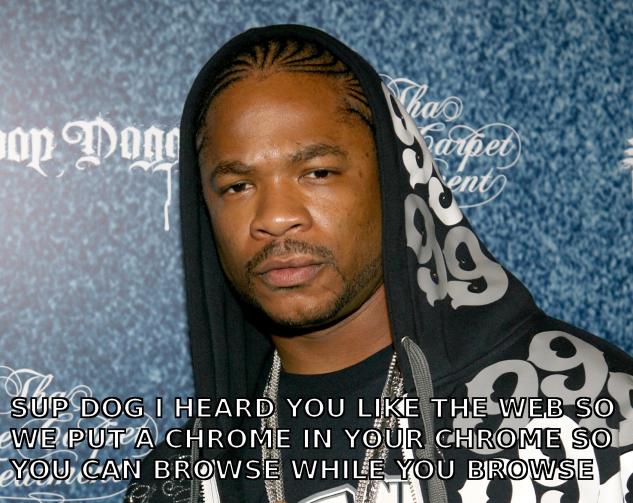
But that makes no sense. So what Clint's clearly getting at is that people using the Google web OS are browsing the web using the Google web OS, and so remove the user agent string to avoid leaking that information. That makes sense, up until you actually think about it. A web OS would run in a web browser. Why would you run a web browser in a web browser?


Google's not an OS company. They don't employ enough people to develop a full OS and releasing a Linux derivative themselves would just be a way of tarnishing their brand in a hideous manner. Any move into the home would have to be in the form of appliances with known hardware configurations, and seriously, what's the point? It's not a big enough market. If Google's going to push applications, it's going to do it through the browser. And if it's doing it through the browser, then right now it doesn't matter what the underlying OS is. There could be any number of reasons for the mystery of the missing user agent strings, but if it's because Google are trying to prevent people from working out that they're developing an entire software stack that they're going to push out onto arbitrary hardware then I have an Android netbook to sell you.

That'll be $50,000, please.

27 December 2008

Matthew Garrett

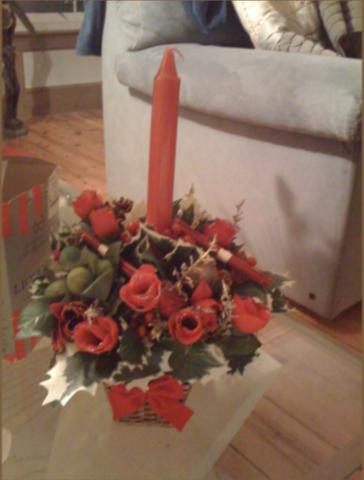
So. Burning down the house. Uniquely Welsh concept[1] or near-inevitable consequence of design failure? I present the following:

Innocent Christmas ornament or HARBINGER OF DOOM?
Note how the candle descends into the foliage. There's a good inch and a half of candle left there, embedded into a block. The foliage is, in fact, plastic. The block it's embedded into is some sort of hydrocarbon-based foam. It turns out that lighting one of these and leaving it for a while is a good way to trigger all kinds of excitement. Of the "Goodness me, there appears to be a large lump of petroleum byproduct burning quite vigorously in the hall" variety.

The software design moral: Everything is shit and will attempt to kill you when you're not looking

Now. Back to eating turkish delight and wondering what to do for New Year.

[1] Yes, yes, it's a cover. THAT'S THE JOKE.

25 December 2008

Matthew Garrett

Christmas is a time to ignore such trifling details as nearly accidently burning the house down, and instead to focus on what's important in life - working out which hoops to jump through to make new hardware useful without installing less convenient operating systems. This year was more straightforward than some, and merely involved attempting to work out how to give people money in return for books that could then be read on my Sony reader thingy. Shockingly enough, the Sony Ebook Store requires a windows app, so not a good start. There's no shortage of sites that sell ebooks in a variety of formats without any platform dependent awkwardness, though - of course, most of them are inconveniently DRMed. And the only DRMed content the Sonys will read is either Sony's own or some encrypted PDFs[1].

Not to worry - the DRMed version of the Mobipocket format is based on a symmetric encryption algorithm from 1991, so finding a way around that isn't much of a problem[2]. The only real issue I had was generating the PID needed to buy one of the damn things in the first place. This 10 character string is generated when you install the Mobipocket reader software, but doing so would again involve Windows.

So here's a trivial C program that generates valid PIDs with working checksums. The PID on its own isn't a secret (given that you can get as many as you want by reinstalling the Windows software), so I can't see any awkward copyright law things going on. And, really, it's just a random string plus a checksum.

CRC code is from SSH, the checksum validation is a reimplementation of code from EBook::Tools::Mobipocket by Zed Pobre. My total creative input was generating a 7 character random string and sticking a dollar sign at the end. Go me.

[1] According to the blurb about the firmware update, though mine still seems to claim that it's not authorised to read DRMed content in the about screen. Possibly it needs keys generating, or something

[2] No, I'm not going to tell you how. The internet exists so you can work these things out without asking me

14 December 2008

Matthew Garrett: ngh.

Dear humanity,

When I provide shower-related metaphors about software design, it is because I am interested in software design. Not showers. Except to the extent that showers make me clean, which is beneficial from a functional aspect but still not the point.

13 December 2008

Matthew Garrett: Showers and UI design

Travelling rather a lot this year has left me spending plenty of time staring at showers[1]. There seem to be three broad categories of shower UI design. The first is the one that exposes the raw functionality of the underlying implementation:

(image by bean, reused under cc-by-nc 2.0)
Showers work by mixing hot and cold water and feeding them through a shower head. This implementation allows direct control of the hot and cold feeds. The user can obtain any combination of pressure and temperature that the supply contraints make possible, but at the cost of it being impossible to adjust single variables. Changing the pressure without changing the temperature is difficult. One of the most common alternatives I've seen this year is the following:

(image by anearthling, reused under cc-by-nc-sa 2.0)
Here, power and temperature are unified into a single control. The major problem with this design is that it's generally impossible to have any pressure setting other than full on. The benefit is that the temperature can be altered without any significant concern over the pressure. Simplification through limiting functionality. Finally, we have setups like:

(image by stevec77, reused under cc-by-nc 2.0)
Though not clearly shown, this interface separates temperature and pressure into independent functions. The number of UI elements is identical to the original "hot/cold" case, but the user is now able to set temperature and pressure independently without having to worry about the interaction between the two. This is obviously more effort to implement but improves usability, decreases complexity and doesn't clutter the interface.

So, if this is a solved problem, why do I keep coming across implementations that suck?

YES THIS IS A METAPHOR FOR SOFTWARE DESIGN

[1] Often in a certain degree of confusion, but that's not really the point here

12 December 2008

Matthew Palmer: ETOOMUCHMAGIC

I'm a fairly big fan of the Rails web development framework; it uses a programming language I quite enjoy using, and deals with the "bureaucratic" overhead of writing a web application with minimal fuss, leaving me to think about the things that matter -- my application's functionality. To achieve this wonderous feat[1], Rails has a healthy injection of magic in the codebase, to do all sorts of interesting things, like autoload missing constants, and make intelligent guesses about what I want to happen in various situations. The problem comes when you want to reuse this magical code for something else. I'm working on a project at the moment where a bunch of the utility functions that are in the ActiveSupport gemlibrary would come in real handy. Well, that's OK, it's a separate gemlibrary from the rest of Rails, I'll just load it into my app, and I'm away. Or... not. The problem is that it would appear that a lot of the magic in the library is mandatory. Regardless of whether I want your constant autoloading magic, I've got it. I also can't just easily pick-and-mix the parts of the ActiveSupport library that I want, because there's all sorts of dependencies between the different chunks of the code that aren't expressed the "right way" -- everything gets loaded in the top-level active_support.rb, rather than being depended on by the files that need the classes. This is arguably a bug in ActiveSupport, but it's not something that's likely to be real high on anyone's annoyance list (since in practice ActiveSupport is a part of Rails, and when you use it in Rails it works Just Fine). So, to all programmers: magic is great, but be careful about excessive magic. In particular, don't make magic happen in places that the user didn't ask for, and allow people to turn off your magic when it's counter-productive to their purposes.
[1] This feat becomes more and more wonderous to me every time I look at the other available web development frameworks out there, especially ones in other languages. Despite having Rails to rip offtake inspiration from, they still seem to require a lot of boilerplate to achieve their goals. While there's a limited amount of boilerplate stripping you could do for a C program, Python people keep telling me that their language is just as powerful as Ruby -- and yet all the Python web framework usage I see is chock full of unnecessary cruft.

Next.

Previous.