Search Results: "gio"

27 August 2013

Robert Collins: Using vanilla novaclient with Rackspace cloud

The Rackspace docs describe how to use rackspace s custom extensions, but not how to use plain ol nova. Using plain nova is important if you want cloud portability in your scripts. So for future reference these are the settings:

export OS_AUTH_URL=https://identity.api.rackspacecloud.com/v2.0/
export OS_REGION_NAME=DFW
export OS_USERNAME=<username>
export OS_TENANT_NAME=<clientid>
export OS_PASSWORD=<password>
export OS_PROJECT_ID=<clientid>
export OS_NO_CACHE=1
unset NOVA_RAX_AUTH
unset OS_AUTH_SYSTEM

25 August 2013

Joey Hess: southern fried science fiction with plum sauce

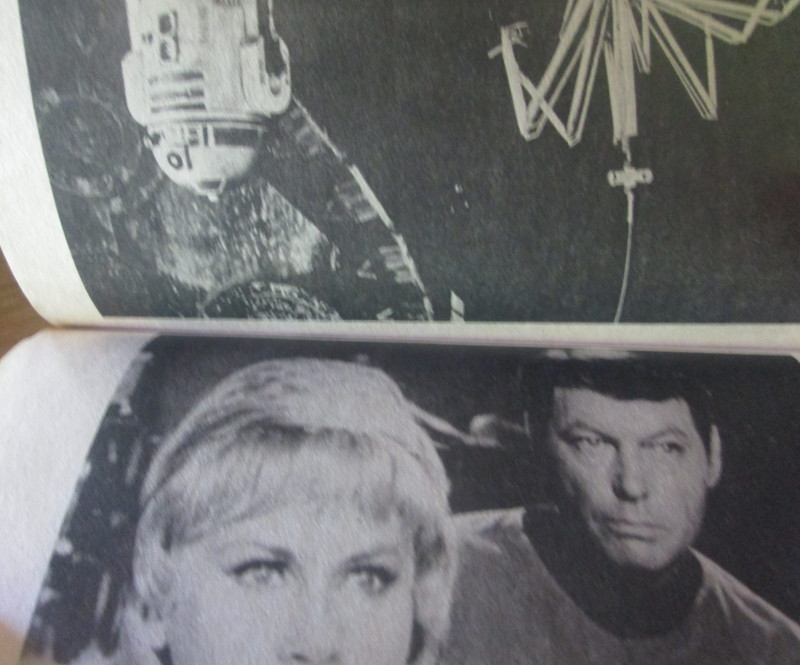
Had an afternoon of steak and science fiction. Elysium is only so-so, but look what we found in a bookstore that was half religious materials and half SF, local books, and carefully hidden romance novels:
Star Wars, Star Trek and the 21st Century Christians
Best part was at the end, when I finally found one of the local asian markets Tomoko tells us about when she casually pulls out the good stuff at family gatherings. I will be back for whole ducks, fresh fish, squid, 50 lb bags of rice, tamarind paste, fresh ginger that has not sat on the shelf for 2 months because only I buy it, etc. Only an hour from home in the woods! Between the garlic scapes, bean sprouts, enoki mushrooms, etc that I got for $10 today and this week's CSA surprise of 18 inch snake beans and smoked pork knuckles, I have the epic stir fry potential.. Spock and R2D2

3 August 2013

Russell Coker: Religious Conversion

Today I was in the center of Melbourne and I saw two stands run by Muslims advocating their faith. They had a selection of DVDs and brochures to give away and seemed friendly enough for anyone who wanted a chat. I think that this is a good thing, if the majority of the Australian population would think of the Muslim minority as people who give away DVDs rather than as potential suicide bombers then it would be a great benefit for society. Then I saw a Christian stand which had placards indicating that Jesus loves Muslims, which is fine. One of the workers on that stand then gleefully told me that there had been a Muslim stand in that area but the Muslims departed when they arrived. It would be good if advocates for the various religions could work together to promote positive things that they all agree on (generally related to being nice to other people). When they seem to be essentially bullying other religious groups into leaving the area they aren t making a good case for a kind and caring god. The Christian who was so happy about the Muslims departing then tried to convert me. He started by talking about a mobile phone not being able to appear from nothing which was the start of an utterly stupid argument about creationism. That was stupid firstly because it s obvious that evolution doesn t apply to consumer electronics, if I leave a phone lying on top of another phone overnight I m not going to get some little phones appearing as a result. But the bigger stupidity is in even promoting creationism in the first place. Advocating creationism is essentially claiming that god is so incapable that ze can t manage an evolutionary process. An all-seeing all-knowing god of infinite intelligence could just create a plasma cloud that will form into a solar system and evolve life. People who argue for creationism don t believe in a capable god, they believe in a being that resembles a god in the way a magician resembles someone who can actually perform magic. Arguing for creationism is arguing for a limited being which probably isn t worthy of worship (why worship space aliens who are probably only a few thousand years ahead of us). Regardless of the scientific evidence (which is strongly in favor of evolution) just logically thinking about the issue in regard to what a being with infinite powers might actually do suggests that ze could just as easily create or evolve all life and probably wouldn t care about what we believe. Genesis should be taken as metaphor because it s obvious that nothing that s taught in a year 7 science class could be taught to your typical stone age goat-herd, but even if it was taken literally it s not specified as a required belief (as opposed to a belief in a single god, repenting sins, and other beliefs which are required). The greatest stupidity however is the fact that even if it made any sense to promote creationism it wouldn t make sense to do so immediately. Any time you want to convert someone to a set of beliefs it s a good strategy to start with the ones which will seem least wacky. I can have have a conversation with Christians about positive things which we generally agree on such as donating to charity and trying to do good things in various ways. But when they start with the stupid stuff I walk away. When the weather is better I plan to interview representatives of the various religious groups who are trying to convert people on the street and rate them according to how wacky they are. I ll be a little limited in my ability to review them by the total lack of any right to free speech in Australia (our laws are much the same as those in the UK). But I should still be able to give them a reasonable review.

2 August 2013

Jonathan Wiltshire: Cold caller: 1, jmw: 0

Some evil nasty cold callers who want to sell us windows and doors have been on the phone for a third time. Previously they have been cagey and haven t given away any information that could identify them, except the name Status . They always claim to have made an appointment with the homeowner (that s me) to call (which is a lie) but can never say who arranged the appointment because it s not on the file (probably the only true thing in the conversation). We re listed at the Telephone Preference Service so this kind of call shouldn t be arriving in the first place. However, the TPS gives very little recourse to subscribers when companies ignore it and call anyway. Tonight I thought I d got somewhere by feigning interest and getting a phone number out of them while I have a think about whether to replace our windows. That s one piece of information I can access to make a start on finding out who they are. I was so surprised to get an answer straight away that I didn t bother to gather anything else. The number is for the regional branch of a well-known national children s charity.
Cold caller: 1, jmw: 0 is a post from: jwiltshire.org.uk Flattr

31 July 2013

Russell Coker: Links July 2013

Wayne Mcgregor gave an interesting TED talk about the creative processes of a choreographer [1]. The dancing in this talk is really good. Melissa McEwan wrote an interesting article on whether being an ally to members of a disadvantaged group is a state or a process [2]. It seems to me that the word ally is a problem here, maybe a word like supporter would be more useful. Ken Murray wrote an insightful article How Doctors Die about the end of life choices that people with medical experience make [3]. He makes a good case for rejecting the type of treatment which has a low probability of success and a certainty of lowering the quality of life. It would be good if health insurance offered patients with terminal illness an option of $1000 per day party funds if they chose to reject the expensive and painful methods that might extend their life, that might even save enough money to allow cheaper health insurance! Rick Falkvinge wrote an interesting post about the copyright to translations of the Bible [4]. I used to think that copyright issues with religious works was only a problem with cults Joshua Foer wrote an interesting article for the New Yorker about the invention of the language Quijada which is designed for maximum precision [5]. It also has a lot of background information on constructed languages and the way that they are used.

25 July 2013

John Goerzen: Spring Always Comes

There will come a time when you believe everything is finished. That will be the beginning. Louis L Amour
Last year, I wrote about the difficult times in my life and hope for future, but never really explained why. I have written little since, because there is little I can write without a bit of explanation. It is partly because of the complexity of the task of telling my story without telling too much of others stories. But it is important I tell this story. So often on the Internet, we hear only the brave face, the positive things that happen. This story involves tears and difficulty. And also we often see only anger and bitterness. This story involves joy and celebration. One afternoon last year, I was working as usual (I work from home) when two sheriff deputies arrived on my doorstep. They gave me paperwork showing that my now ex-wife had filed for divorce, had asked them to serve me the paperwork, and that she had been given temporary possession of the house. I had 2 hours to gather up clothes and a little computer equipment (there was a list) and leave the house. Thus began the most difficult time in my life. I went from reading a bedtime story and singing a bedtime song to my young boys every night to seeing them only a little, from living in the house my grandparents and dad had lived in to having no particular plan for where I d sleep that night, from thinking I had a good idea of what the future held to not knowing when, if ever, I d ever be back home. I worried about how the boys would fare (they have done well so far). And it was incomprehensible; I couldn t find answers to why? . In the time since, the divorce became final, I did return home, the boys spend more time with me, and a new normal emerged. At the time, it seemed like a sudden, deep winter blizzard. I couldn t see very far down the road, spring seemed far off, and I couldn t see very well either forward or backward. But I was determined to find positives in the situation. It started almost immediately; I had never been a person to talk about pain, but just a few hours after the divorce was filed, I knew I needed to talk to someone about it, and did. A week later, I shared about it in church. Amazing friends, locally and all over the world, provided support and encouragement. I had less total time with the boys than before the divorce, but more time with just the three of us, and we used it to play together at home, spend days in town, and even take a train trip to Santa Fe, where none of us had ever been before. I realized how much I could forgive, and that my ex-wife probably did the best she could with the persistent legacy of difficult life events that happened to her long before she met me. I understood this, and was never angry, just sad, for everyone. I have always known nobody is perfect, myself included, but can be hard on myself when I m less than perfect. I forgave myself, too, realizing that I did my best to help in the most unfamiliar of waters, and although I sometimes didn t get it right, my conscience is clear because my heart was in the right place and I tried, very hard. Most incredibly, I became a person with a deep sense of inner peace. I always tried to work hard to set life on a good path; I got good grades in school, am a good employee, and have a strong set of values. But where courts are involved, there s a strong sense of powerlessness. At times, there was nothing I could do to make life better for my boys or for me. I finally had to let go of taking on responsibility for all that on my own shoulders. I simply knew that things would be OK, and in fact were OK, and that there is nothing in life that really deserves worries. That doesn t mean worries are never present, but that mostly they are subdued, like a radio quietly playing in another room. When they aren t, I can sit down at the piano, play my penny whistle, sing, walk to my creek, talk to friends, or any of so many things that let them melt away. I stopped searching for happiness and peace, and let those things find me. In religious terms, my faith became not just an intellectual one, but also a spiritual one. An atheist friend asked me, Just what does religion mean to you anyway? My answer: The certainty that spring always comes, for everyone that understands this.
People speak of misfortunes and sufferings, remarked Pierre, but if at this moment I were asked: Would you rather be what you were before you were taken prisoner, or go through all this again? then for heaven s sake let me again have captivity and horseflesh! We imagine that when we are thrown out of our usual ruts all is lost, but it is only then that what is new and good begins. While there is life there is happiness. There is much, much before us. Tolstoy, War and Peace
By Thanksgiving, I had much to be thankful for. Some of it under my nose waiting to be rediscovered after years of distraction, such as the glorious Kansas sunrises. Some things were new, such as roasting a turkey all by myself (or, rather, with Jacob and Oliver) for the first time, and having it come out absolutely perfectly. And some were just the things of everyday life: that I lived in my own house again, that I could walk out to the creek at the edge of my property whenever I wanted, that I could play piano, that the sounds of laughter and little running feet again could often be heard on my wood floors. That s not to say everything was easy; the courts sometimes made decisions sometimes I didn t think were in the boys best interests, legal things dragged on and on, but in the end, peace endured. Happiness endured. I found myself thinking at Thanksgiving that it was the best Thanksgiving ever. Not much later, I considered myself happier than I ve ever been. I was focusing on the daily gifts of life, marveling at the sunrises, looking forward to life s next adventure, confident that it would be far better than the last. And then, to my complete surprise, I found myself in a relationship again. On top of all the wonderful things happening in my life, I met Laura. I never could have imagined a friend so wonderful, a relationship so loving and joyful, something to treasure so deeply. I can look back at events and shake my head in amazement and wonder, that I found myself happier than I d ever been, and then this wonderful relationship on top of that. I have been blessed to have the life I do, and feel almost embarrassingly lucky. I share this story because friends that had been through divorce years ago shared their stories. They gave me hope. And if I didn t share this story in this public way, I would be squandering an opportunity to find more positives from what happened. I hope that this helps, somehow, someone that is in pain know that there is beauty in the valley, and spring always comes, every single year. And I share it because happiness like this can t be repressed for long. Tolstoy was right. While there is life, there is happiness. I ll end with a story from last Thanksgiving. It was 6:10AM that weekend. I was still asleep, and heard this: Jacob, yelling from his room: Dad? Dad! Me, groggy: Yes, Jacob? Jacob: Can I go down and look at the Christmas tree? Me: Sure, and you can turn it on too. Jacob: Great! At that point, I could have gone back to sleep. I was really short on sleep that morning, and Jacob would have been fine. But I gave him a couple of minutes, then I went downstairs too. He was curled up on the piano bench, looking at the tree. I quietly turned up the downstairs thermostat, got a chair, put it next to the piano bench, and sat down by the tree too. Jacob crawled over onto my lap and snuggled up for awhile. Neither of us said anything. Then: Dad? Yes? This is the best Thanksgiving ever. And he gave me a big hug. And he was right. Yes, he was RIGHT! That will be the beginning. Spring comes!

24 July 2013

Keith Packard: present-redirect

Present Extension Redirection Multi-buffered applications have always behaved poorly in the presence of the Composite extension: Owen Taylor suggested that Present should offer a way to redirect operations to the compositing manager as a way to solve these problems. This posting is my attempt to make that idea a bit more concrete given the current Present design. Design Goals Here s a list of features I think we should try to provide:
  1. Provide accurate information to applications about when presentation to the screen actually occurs. In particular, GLX applications using GLX_OML_sync_control should receive the correct information in terms of UST and MSC for each Swap Buffers request.
  2. Ensure that applications still receive correct information as to the contents of their buffers, in particular we want to be able to implement EGL_EXT_buffer_age in a useful manner.
  3. Avoid needing to un-redirect full-screen windows to get page flipping behavior.
  4. Eliminate all extra copies. A windowed application may still perform one copy from back buffer to scanout buffer, but there shouldn t be any reason to copy contents to the composite redirection buffer or the compositing manager back buffer.
Simple Present Redirection With those goals in mind, here s what I see as the sequence of events for a simple windowed application doing a new full-window update without any translucency or window transformation in effect:
  1. Application creates back buffer, draws new frame to it.
  2. Application executes PresentRegion. In this example, the valid and update parameters are None , indicating that the full window should be redrawn.
  3. The server captures the PresentRegion request and constructs a PresentRedirectNotify event containing sufficient information for the compositor to place that image correctly on the screen:
    • target window for the presentation
    • source pixmap containing the new image
    • idle fence to notify when the source pixmap is no longer in use.
    • serial number from the request.
    • target MSC for the presentation. This should probably just be the computed absolute MSC value, and not the original target/divisor/numerator values provided by the application.
  4. The compositing manager receives this event and constructs a new PresentRegion request using the provided source pixmap, but this time targeting the root window, and constructing a valid region which clips the pixmap to the shape of the window on the screen. This request would use the original application s idle fence value so that when complete, the application would get notified. This request would need to also include the original target window and serial number so that a suitable PresentCompleteNotify event can be constructed and delivered when the final presentation is complete.
  5. The server executes this new PresentRegion operation. When complete, it delivers PresentCompleteNotify events to both the compositing manager and the application.
  6. Once the source pixmap is no longer in use (either the copy has completed, or the screen has flipped away from this pixmap), the server triggers the idle fence.
Multiple Application Redirection If multiple applications perform PresentRegion operations within the same frame, then the compositing manager will receive multiple PresentRedirectNotify events, and can simply construct multiple new PresentRegion requests. If these are all queued to the same global MSC, they will execute at the same frame boundary. No inter-operation dependency exists here. Complex Presentations Ok, so the simple case looks like it s pretty darn simple to implement, and satisfies the design goals nicely. Let s look at a couple of more complicated cases in common usage; the first is with translucency, the second with scaling application images down to thumbnails and the third with partial application window updates. Redirection with Translucency If the compositing manager discovers that a portion of the updated region overlays or is overlaid by something translucent (either another window, or drop shadows, or something else), then a composite image for that area must be constructed before the whole can be presented. Starting when the compositing manager receives the event, we have:
  1. The compositing manager receives this event. Using the new pixmap, along with pixmaps for the other involved windows and graphical elements, the compositing manager constructs an updated view for the affected portion of the screen in a back buffer pixmap. Once complete, a PresentRegion operation that uses this back buffer pixmap is sent to the X server. Again, the original target window and serial number are also delivered to the server so that a suitable PresentCompleteNotify event can be delivered to the application.
  2. The server executes this new PresentRegion operation; PresentCompleteNotify events are delivered, and idle fences triggered as appropriate.
Redirection with Transformation Transformation of the window contents means that we cannot always update a portion of the back buffer directly from the provided application pixmap as that will not contain the window border. Contents generated from a region that includes both application pixels and window border pixels must be sourced from a single pixmap containing both sets of pixels. One option that I ve discussed in the past to solve this would be to have the original application allocate the pixmap large enough to hold both the application contents and the surrounding window border. Have it draw the application contents at the correct offset within this pixmap, and then have the window manager contents drawn around that; either automatically by the X server, or even manually by the compositing manager. That would be mighty convenient for the compositing manager, but would require significant additional infrastructure throughout the X server and even harder the drawing system (OpenGL or some other system). There s another reason to want this though, and that s for sub-frame buffer scanout page swapping. The second option would be for the compositing manager to combine these images itself; there s a nice pixmap already containing the window manager image the composite redirect buffer. Taking the provided source pixmap and copying it directly to the target window will construct our composite image, just as if we had no Present redirection in place. This will cost an additional copy though, which we ve promised to avoid. Of course, as it s just for thumb-nailing or other visual effects, perhaps the compositing manager could perform this operation at a reduced frame rate, so that overall system performance didn t suffer. Retaining Access to the Application Buffer Above, I discussed having the idle fence from the redirected PresentRegion operation be sent along with the replacement PresentRegion operation. This ignores the fact that the composting manager may well need the contents of that application frame again in the future, when displaying changes for other applications that involve the same region of the screen. With the goal of making sure the idle fences are triggered as soon as possible so that applications can re-use or free the buffers quickly, let s think about when the triggering can occur.
  1. Full-screen flipped applications. In this case, the application s idle fence can be triggered once the application provides a new frame and the X server has flipped to that new frame, or some other scanout buffer.
  2. Windowed, copied applications. In this case, the application s idle fence can be triggered once the application provides a new frame to the compositing manager, and the X server doesn t have any presentations queued.
In both cases, we require that both the X server and the compositing manager be finished with the buffer before the application s idle fence should be triggered. One easy way to get this behavior is for the composting manager to create a new idle fence for its operations. When that is triggered, it would receive an X event and then trigger the applications idle fence as appropriate. This would add considerable latency to the application s idle fence a round trip through the compositing manager. The alternative would be to construct some additional protocol to make the applications idle fence dependent on the Present operation and some additional state provided by the compositing manager. Some experimentation here is warranted, but my experience with latency in this area is that it causes applications to end up allocating another back buffer as the idle notification arrives just after a buffer allocation request comes down to the rendering library. Definitely sub-optimal. An Aside on Media Stream Counters The GLX_OML_sync_control extension defines the Media Stream Counter (MSC) as a counter unique to the graphics subsystem which is incremented each time a vertical retrace occurs. That would be trivial if we had only one vertical retrace sequence in the world. However, we actually have N+1 such counters, one for each of the N active monitors in the system and a separate fake counter to be used when none of the other counters is available. In the current Present implementation, windows transition among the various Media Stream Counter domains as they move between the various monitors, and those monitors get turned on and off. As they move between these counter domains, Present tracks a global offset from their original domain. This offset ensures that the MSC value remains monotonically increasing as seen by each window. What it does not ensure is that all windows have comparable MSC sequence values; two windows on the same monitor may well have different MSC values for the same physical retrace event. And, even moving a window from one MSC domain to another and back won t make it return to the original MSC sequence values due to differences in refresh rates between the monitors. Internally, Present asserts that each CRTC in the system identifies a unique MSC domain, and it has a driver API which identifies which CRTC a particular window should be associated with. Once a particular CRTC has been identified for a window, client-relative MSC values and CRTC-relative MSC values can be exchanged using an offset between that CRTC MSC domain and the window MSC domain. The Intel driver assigns CRTCs to windows by picking the CRTC showing the greatest number of pixels for a particular window. When two CRTCs show the same number of pixels, the Intel driver picks the first in the list. Vblank Synchronization and Multiple Monitors Ok, so each window lives in a particular MSC domain, clocked by the MSC of the CRTC the driver has associated it with. In an un-composited world, this makes picking when to update the screen pretty simple; Present updates the screen when vblank happens in the CRTC associated with the window. In the composite redirected case, it s a bit harder all of the PresentRegion operations are going to target the root window, and yet we want updates for each window to be synchronized with the monitor containing that window. Of course, the root window belongs to a single MSC domain (likely the largest monitor, using the selection algorithm described above from the Intel driver). So, any PresentRegion requests will be timed relative to that single monitor. I think what is required here is for the PresentRegion extension to take an optional CRTC argument, which would then be used as the MSC domain instead of the window MSC domain. All of the timing arguments would be interpreted relative to that CRTC MSC domain. The PresentRedirectNotify event would then contain the relevant CRTC and the MSC value would be relative to that CRTC. A clever Compositing manager could then decompose a global PresentRegion operation into per-CRTC PresentRegion operations and ensure that multiple monitors were all synchronized correctly. We could take this even further and have the PresentRegion capable of passing a smaller CRTC-sized pixmap down to the kernel, effectively providing per-CRTC pixmaps with no visible explicit protocol Other Composite Users Ok, so the above discussion is clearly focused on getting the correct contents onto the screen with minimal copies along the way. However, what I ve ignored is how to deal with other applications, also using Composite at the same time. They re all going to expect that the composite redirect buffers will contain correct window contents at all times, and yet we ve just spent a bunch of time making that not be the case to avoid copying data into those buffers and instead copying directly to the compositing manager back or front buffers. Obviously the X server is aware of when this happens; the compositing manager will have selected for manual redirection on all top-level windows, while our other application will have only been able to select for automatic redirection. So, we ve got two pretty clear choices here:
  1. Have the X server change how Present redirection works when some other application selects for Automatic redirection on a window. It would copy the source pixmap into the window buffer and then send (a modified?) PresentRedirectNotify event to the compositing manager.
  2. Include a flag in the PresentRedirectNotify event that the composite redirect buffer needs to eventually get the contents of the source pixmap, and then expect the compositing manager to figure out what to do.
Development Plans As usual, I m going to pick the path of least resistance for all of the above options and see how things look; where the easy thing works, we can keep using it. Where the easy thing fails, I ll try something else. The changes required for this are pretty minimal. The PresentRegion request needs to gain a list of window/serial pairs that are also to be notified when the operation completes:
PRESENTNOTIFY  
    window: WINDOW
    serial: CARD32
     
 
    PresentRegion
    window: WINDOW
    pixmap: PIXMAP
    serial: CARD32
    valid-area: REGION or None
    update-area: REGION or None
    x-off, y-off: INT16
    idle-fence: FENCE
    target-crtc: CRTC or None
    target-msc: CARD64
    divisor: CARD64
    remainder: CARD64
    notifies: LISTofPRESENTNOTIFY
 
    Errors: Window, Pixmap, Match
The target-crtc parameter explicitly identifies a CRTC MSC domain. If None, then this request implicitly uses the window MSC domain. notifies provides a list of windows that will also receive PresentCompleteNotify events with the associated serial number when this PresentRegion operation completes.
 
    PresentRedirectNotify
    type: CARD8         XGE event type (35)
    extension: CARD8        Present extension request number
    length: CARD16          2
    evtype: CARD16          Present_RedirectNotify
    eventID: PRESENTEVENTID
    event-window: WINDOW
    window: WINDOW
    pixmap: PIXMAP
    serial: CARD32
    valid-area: REGION
    valid-rect: RECTANGLE
    update-area: REGION
    update-rect: RECTANGLE
    x-off, y-off: INT16
    target-crtc: CRTC
    target-msc: CARD64
    idle-fence: FENCE
    update-window: BOOL
 
The target-crtc identifies which CRTC MSC domain the target-msc value relates to. divisor and remainder have been removed as the target-msc value has been adjusted using the application values. If update-window is True, then the recipient of this event is instructed to provide reasonably up-to-date contents directly to the window by copying the contents of pixmap to the window manually. Beyond these two protocol changes, the compositing manager is expected to receive Sync events when the idle-fence is triggered and then manually perform a Sync operation to trigger the client s idle-fence when appropriate. I m planning to work on these changes, and then go re-work xcompmgr (or perhaps unagi, which certainly looks less messy) to incorporate support for Present redirection. The goal is to have something to demonstrate at Guadec, which doesn t seem impossible, aside from leaving on vacation in four days

23 July 2013

Daniel Pocock: If Assange is a rapist, what type of monsters are running Australia?

It's almost one year since Julian Assange was granted asylum by the republic of Ecuador. Newspapers often incorrectly report that he sought political asylum to avoid those disturbing rape allegations (they are not charges). The real basis of his claim to asylum, which is the foundation that asylum law is based on, is that Mr Assange is not safe from political persecution in his own country. Let's not talk about rape It's often difficult for men to talk about this subject without putting their foot in their mouth. In this case, it may be easier to understand by trying to put it in context. Safer with Mr Assange?
Just last week, our Government announced plans to expand their program of dumping poor coloured people into random countries around the Asia-Pacific region. On Monday they broke every rule in the UN's book of human rights by using the Internet to distribute gut wrenching youtube videos of a woman suffering at the hands of our immigration officers. They hope this degradation will scare away other migrants who do not meet the right economic criteria. It makes me wonder, if Mr Assange is genuinely guilty of rape despite his alleged victim boasting about her experience on Twitter, what has happened to this other woman in the care of Kevin Rudd's scorched-Earth immigration policy? Maybe because she's not a Swedish blonde, nobody cares. More racist videos from the immigration department fail to correctly inform migrants of their right to seek asylum under international law - is it possible that this offensive and misleading propaganda violates Youtube's terms of service? Crimes so bad that whistle-blowers are inevitable Former employees of the Manus Island concentration camp have stepped forward and revealed what the Government naturally doesn't want us to know. According to one former security manager, vulnerable migrants had suffered virtually every form of physical abuse, including rapes, and under orders from management in Australia, the victims were simply locked up with their abusers and no formal complaints were documented. All of a sudden, those pictures of the woman crying in the degrading video made by immigration officials take on a new meaning: she is next in line for the same destination, PNG. I somewhat suspect she would enjoy greater dignity and safety confined to Ecuador's London embassy with the so-called rapist that everybody has been distracted with. Can anybody imagine the widely discussed expression on her face improving after 20 months enforced confinement with rapists under the protection of Australia's refugee program?

15 July 2013

Daniel Pocock: Linux init-systems

Several value-added init systems have emerged in recent times. Most notably, Upstart has become the default on Ubuntu while systemd is now default in Fedora. Let's not forget the crusade to move beyond traditional init was given a big boost back in 2005 by Sun's introduction of SMF on Solaris 10 some years before the main Linux solutions gained prominence. Debian is currently debating whether to use one of these alternatives as a default. My own position on the matter is not decided, but I do feel that some of the debates are asking the wrong questions. Some of the most interesting issues here are likely to have ramifications for other distributions. My experience with systemd I've come across systemd in my efforts to package reSIProcate on Fedora. One of the challenges I came across was trying to both create a /var/run/repro directory and telling systemd to launch the process as a non-root user. I tried using the ExecStartPre directive in the systemd manifest to invoke mkdir. Unfortunately, it runs as the non-root user too and could not create the PID directory. The conventional init script doesn't suffer this problem. In the end, I have patched the repro binary to start as root and drop privileges itself, but that was only when it became apparent that we need to do that for WebRTC support (listening on port 443). While most daemons have the ability to drop privileges, there will be edge cases like this that need more than just a systemd manifest. Maintainers who encounter such issues may have to give feedback to the systemd and Upstart upstreams and give them the opportunity to provide generalized solutions. Then again, the most generalized solution would be another scripting language and then we'd be back where we started. The reason to change and the reason not to Some people have argued that Debian should change simply because other distributions did so. This is not a compelling technical argument alone. The fragmentation of init-alternatives is not something that makes upstreams excited either. It would be interesting to see if Upstart and systemd could agree on a common manifest format - maybe even a format that could be parsed by a wrapper from SysV init. Then Debian wouldn't really have to give up support for kFreeBSD and other non-Linux kernel efforts. A slight alternative to this approach would be using a system like cmake to read a single service XML manifest and spit out permutations readable by each of the different init schemes. It has also been well argued that the simple and well known solution of scripts is much less complicated to understand and maintain and is extremely stable. Wishlist items for all distributions While I don't know which solution is the best, one thing I do believe is that if there is a change and if it is going to be disruptive to maintainers and users then it should aim to bring in as many benefits as possible to offset the pain and encourage people to support the migration effort. Some of the potential road-map items are not only possible for Debian but could also become part of other platforms. Here are some of the issues that came to my mind:
  • Better support for starting multiple instances of a single process
  • Support for distributed solutions, for example, making sure that process A only starts on host 1 after process B on host 2
  • Support for clustering, for example, making sure that at least 2 instances of process A are running across 3 hosts.
  • Automated integration with monitoring and fault recovery systems: for example, can Nagios (or another tool) automatically detect whether a particular process should be running and whether it is running? Given that init-replacements typically need to start processes in the correct order, can they share that dependency information with Nagios to avoid manual/duplicated dependency mappings? Can Nagios restart the process without any manual scripting? Can this all be enabled for all processes on a given system in a plug-and-play manner?
  • Scheduler interaction: can and should any of the above, particularly the dependency mappings, be integrated with scheduling? For example, should some cron jobs be deferred when MySQL is down?
What other potential improvements do people feel to be worthwhile?

14 July 2013

Gregor Herrmann: RC bugs 2013/28

this week(end) I was more in the "RC bug fix flow" than in the last weeks, & here are the results:

12 July 2013

Keith Packard: Present

The Present Extension I ve finally gotten an initial implementation of the Present extension written and running and thought I should write up the current design and status. Present Design The current Present extension consists of two requests:
  1. PresentRegion. Puts new bits from a pixmap in a window.
  2. PresentSelectInput. Asks for Present events to be delivered.
PresentRegion This request takes a pile of arguments:
 
    PresentRegion
    window: WINDOW
    pixmap: PIXMAP
    valid-area: REGION or None
    update-area: REGION or None
    x-off, y-off: INT16
    target-msc: CARD64
    divisor: CARD64
    remainder: CARD64
    idle-fence: FENCE
 
Errors: Drawable, Pixmap, Match
Provides new content for the specified window, to be made visible at the specified time (defined by target-msc , divisor and remainder ). update-area defines the subset of the window to be updated, or None if the whole window is to be updated. valid-area defines the portion of pixmap which contains valid window contents, or None if the pixmap contains valid contents for the whole window. PresentRegion may use any region of pixmap which contains update-area and which is contained by valid-area . In other words, areas inside update-area will be presented from pixmap , areas outside valid-area will not be presented from pixmap and areas inside valid-area but outside update-area may or may not be presented at the discretion of the X server. x-off and y-off define the location in the window where the 0,0 location of the pixmap will be presented. valid-area and update-area are relative to the pixmap. If target-msc is greater than the current msc for window , the presentation will occur at (or after) the target-msc field. Otherwise, the presentation will occur after the next field where msc % divisor == remainder . If divisor is zero, then the presentation will occur after the current field. idle-fence is triggered when pixmap is no longer in use. This may be at any time following the PresentRegion request, the contents may be immediately copied to another buffer, copied just in time for the vblank interrupt or the pixmap may be used directly for display, in which case it will be busy until some future PresentRegion operation. If window is destroyed before the presentation occurs, then the presentation action will not be completed. PresentRegion holds a reference to pixmap until the presentation occurs, so pixmap may be immediately freed after the request executes, even if that is before the presentation occurs. If idle-fence is destroyed before the presentation occurs, then idle-fence will not be signaled but the presentation will occur normally. PresentSelectInput
 
    PresentSelectInput
    event-id: PRESENTEVENTID
    window: WINDOW
    eventMask: SETofPRESENTEVENT
 
Errors: Window, Value, Match, IDchoice, Access
Selects the set of Present events to be delivered for the specified window and event context. PresentSelectInput can create, modify or delete event contexts. An event context is associated with a specific window; using an existing event context with a different window generates a Match error. If eventContext specifies an existing event context, then if eventMask is empty, PresentSelectInput deletes the specified context, otherwise the specified event context is changed to select a different set of events. If eventContext is an unused XID, then if eventMask is empty no operation is performed. Otherwise, a new event context is created selecting the specified events. Present Extension Events There are three different events for the Present extension:
  1. PresentConfigureNotify
  2. PresentCompleteNotify
  3. PresentRedirectNotify
PresentConfigureNotify This event is moving from the DRI3 extension where it doesn t belong.
 
    PresentConfigureNotify
    type: CARD8         XGE event type (35)
    extension: CARD8        Present extension request number
    length: CARD16          2
    evtype: CARD16          Present_ConfigureNotify
    eventID: PRESENTEVENTID
    window: WINDOW
    x: INT16
    y: INT16
    width: CARD16
    height: CARD16
    off_x: INT16
    off_y: INT16
    pixmap_width: CARD16
    pixmap_height: CARD16
    pixmap_flags: CARD32
 
PresentConfigureNotify events are sent when the window configuration changes if PresentSelectInput has requested it. PresentConfigureNotify events are XGE events and so do not have a unique event type. x and y are the parent-relative location of window . PresentCompleteNotify
 
    PresentCompleteNotify
    type: CARD8         XGE event type (35)
    extension: CARD8        Present extension request number
    length: CARD16          2
    evtype: CARD16          Present_CompleteNotify
    eventID: PRESENTEVENTID
    window: WINDOW
    ust: CARD64
    msc: CARD64
    sbc: CARD64
 
Notify events are delivered when a PresentRegion operation has completed and the specified contents are being displayed. sbc, msc and ust indicate the swap count, frame count and system time of the related PresentRegion request. PresentRedirectNotify This one is not specified yet, but the intent is for it to contain sufficient information for the compositing manager to be able to construct a suitable screen update that includes an application window update. Finishing GLXOMLsync_control At this point, Mesa only exposes the old swapinterval configuration value, it doesn t provide any of the GLXOMLsynccontrol APIs. However, the Present protocol does have the bits necessary to support glXSwapBuffersMscOML in the PresentRegion request. Let s see how the remaining APIs in this GL extension will be supported. glXGetSyncValuesOML This one is easy; it only needs to return the UST/MSC/SBC values from the most recent SwapBuffers request. Those are returned in the PresentCompleteNotify event, so Mesa just needs to capture that event and save the values away for return to the application. We don t need any new Present protocol for this. glXGetMscRateOML This returns the refresh rate of the monitor associated with the specified drawable. RandR exposes all of the necessary data for each monitor, but the monitor each window is going to be synchronized against isn t exposed anywhere, and is effectively implementation-dependent. So, I think the easy thing to do here is to have a Present request which reports which RandR output a window will be synchronized with. glXSwapBuffersMscOML This is the one API which is already directly supported by the Present extension. glXWaitForMscOML This is effectively the same as glXSwapBuffersMscOML, except that it doesn t actually perform a swap. For this, I think we want a new request that generates an X event when the target values are reached, and then have the client block until that event is received. This will avoid blocking other threads using the same X connection. glXWaitForSbcOML Like glXWaitForMscOML, this just needs to trigger an event to be delivered at the right time. Presentation Redirection I m focusing on finishing the above stuff before I start writing the redirection spec and code, but I ve been thinking a bit about it. What we want is for applications that are presenting a new frame within a redirected window to have that presentation delivered directly to the compositing manager instead of having the bits copied to the redirected buffer and have the compositing manager only learn about this when the damage event is received from copying the bits. Once the compositing manager receives notification that there are new bits available for a portion of a window, it can then get those bits onto the screen in one of two ways:
  1. Copy them to the back buffer for the whole screen and then present that back buffer to the screen.
  2. Present them directly to the screen, bypassing the compositing manager s back buffer entirely.
The first option is what you d do if there were more updates than just a single window; it would update the whole screen at the same time. The second option is what you d do if there was only the one window update to act on, and this would automatically take advantage of page flipping to avoid copying data at all. No need to un-redirect windows for the page flip to work. In both cases, we need to inform the original application both when its pixmap is idle and when the swap actually hits the screen. And we need to make sure the final swap happens when the application requested. For the pixmap idle notification, the current PresentRegion idlefence argument should suffice; we just need to pass the idlefence XID along in the redirection event. Simple. For completion notification, we need to make sure the SBC value for the original window gets incremented and that a PresentCompleteNotify event is delivered. I think that means we want to append a chunk of data to the PresentRegion request so that suitable events can be delivered when the compositing manager PresentRegion occur. I think that just needs to be the window of that original window. To make sure the swap happens at the right time, we just need to have the targetmsc value provided to the compositing manager. I m hoping that having this all event driven is that when a later PresentRegion is redirected that has an *earlier* targetmsc, we can simply queue that as well and things should just work . Current Status I ve got the protocol definitions (both X server and XCB) done, and libxcb supporting the extension. I ve got the X server bits working, but the actual updates are not synchronized to the monitor; they re using OS timers and CopyArea for now, mostly so I can test things without also hacking drivers. Mesa is using the extension, but it only provides the swapinterval value and is not yet supporting the full GLXOMLsynccontrol extension. I ve also got a simple 2D core X application using the extension which is in the shmfd repository in my home directory on freedesktop.org. Availability As always, these bits are already published in my home directory on freedesktop.org in various git repositories.

4 July 2013

Daniel Pocock: My Linux server IPv6 deployment approach

I previously discussed the ease of deploying IPv6 for Linux servers. Whether it is Debian, Fedora or another distribution the IPv6 stack should "just work" these days. However, for maintaining a production network with minimum risk of interruption, there are a few extra things to be aware of during IPv6 deployment. Here I present a rough set of steps that can be followed, usually with minimal or no downtime, to deploy IPv6. The steps are in the order that they should be used in practice Plenty of other web sites already explain the theory of IPv6 networks or practical configuration detail (like how to set a static IPv6 address in Debian). This page ignores all of that detail and looks at the overall project strategy. Borrow the last decimal octet (or host bits) of IPv4 addresses As mentioned in my earlier blog:
  • Of the 128 bits in IPv6 addresses, most sites now use a fixed 64 bit netmask for all their subnets. This is the practice encouraged by RFC 4291.
  • Therefore, there are always more bits in the 64-bit "host" portion of the address than in the host portion of any 32-bit IPv4 address.
  • Consequently, it is possible to just borrow the host portion (typically the last octet for a class-C network) and use it as the host portion of an IPv6 address
IPv4 address Host portion of address IPv6 address
192.168.1.5/24 5 2001:1234:567::5
Gotcha: remember that the IPv4 addresses are usually written in decimal while IPv6 addresses, including the example above, are hex. This doesn't really matter in practice unless the addresses are being manipulated by code that is sensitive to the host bits. For all other intents and purposes, it just makes it easy to read the addresses and associate them with IPv4. A completely valid alternative is to use the full IPv4 address as the host portion of the IPv6 address. For example, if the IPv4 address = 192.168.1.5, the IPv6 address may be 2001:1234:567::192.168.1.5. This approach is slighly more verbose and is completely valid. Which approach you use is at your discretion. Create reverse mappings (PTR records) in DNS Just as IPv4 has the in-addr.arpa zone and telephone numbers have the e164.arpa zone (for ENUM), IPv6 addresses have a reverse mapping zone too: ip6.arpa The recommended way to proceed is to create reverse mappings for all hosts that have IPv4 reverse mappings. Some services may be using reverse lookups for authentication (e.g. MySQL will check this for any user who has a "Host" restriction defined). This is why it is recommended to create all the reverse mappings very early in the IPv6 program, before any hosts start making connections over IPv6. Create extra A records in DNS It's possible that some applications will be more stubborn about IPv6 adoption than others. For example, if you have a host called wolf.example.org and it hosts a mail server, web server, DNS server and XMPP server all using the name wolf then all those server processes will have to support IPv6 connectivity from the moment you add an AAAA record. A good practice is to create independent DNS A records (such as ns1.example.org and mail.example.org) for each application (not just CNAME records). Existing CNAME records can be converted to A records and converted back to CNAME records after the IPv6 deployment is 100% complete. Duplicate firewall entries Duplicate all IPv4 firewall entries to create an IPv6 firewall For many types of network, this is a trivial (although possibly tedious) task. There are some small gotchas:
  • There is no NAT. Any firewall entries for NAT need to be reviewed: for source NAT, it is necessary to use a mechanism like connection tracking to protect workstations that previously had asymmetrical access to the public Internet. For destination NAT, see the TPROXY feature in ip6tables
  • IPsec works slightly differently. Rules for AH and ESP packets can't simply be duplicated for IPv6, they need further tweaks or warnings will be generated.
  • IPv6 makes some ICMP packages mandatory. If IPv4 ICMP is completely blocked, you still need to enable the IPv6 ICMP (or at least the subset of ICMP packets that are mandatory).
For more comments about firewalling IPv6, please see my earlier blog on the subject Put the IPv6 addresses on the hosts Add the necessary records to the appropriate place, for example, the /etc/network/interfaces files on Debian/Ubuntu style systems. For hosts that have multiple addresses on a single interface, it is often desirable to ensure that outbound connections always appear to come from just one of the addresses. This can be achieved using the preferred_lft option when configuring the non-default addresses. For example, if configuring three addresses on eth0:
ip addr add dev eth0 preferred_lft 0 2001:1234:567::10/64
ip addr add dev eth0  2001:1234:567::11/64
ip addr add dev eth0 preferred_lft 0 2001:1234:567::12/64
In the example above, all outgoing IPv6 connections will appear to come from 2001:1234:567::11/64 Important: this is only a very shallow discussion of the issues around source addresses. If it doesn't provide a valid solution for you, there are many dedicated articles about this specific topic, madduck's blog looks at it for firewalls and tunnels but the concepts are valid for any type of multi-homed host Review listening processes with netstat Now that hosts have IPv6 addresses, it is worthwhile looking through the output of
netstat -nlp
to see which processes have bound to both IPv4 and IPv6 addresses and which processes remain stuck on IPv4 only. For processes that are only listening on IPv4 or only bound to a specific address (rather than 0.0.0.0), it is a good idea to investigate the way they are configured and find out if they will support IPv6. Review the monitoring infrastructure (Nagios, Ganglia, etc) Now is a good time to review the monitoring infrastructure. Make sure that tools like Nagios are testing the services using their dedicated DNS names and not the host names. For example, if the host wolf.example.org runs an LDAP server accessible as ldap1.example.org, make sure Nagios is configured to poll ldap1.example.org. Look at the check_v46 wrapper for Nagios and similar solutions to make sure that Nagios is testing both the IPv4 and IPv6 version of each service. Just as developers use unit testing as part of test-driven development workflows, administrators deploying IPv6 can use the monitoring framework to validate the progress of their IPv6 program. Check for ACLs Do any server processes use IP-based ACLs to control access? For example, an Apache web server may be using an IP ACL to restrict access to some pages. MySQL or Postgres databases may have IP ACLs defined for some users or databases. When hosts start using IPv6 to connect to services, their IPv6 source addresses won't pass the ACL and services may be inaccessible. Therefore, it is worthwhile checking for such ACLs early on. Prepare DNS servers first Preparing the DNS servers first is a good step. The DNS servers should be configured to accept queries over IPv6. Once the DNS servers are listening on IPv6 addresses, go ahead and do some of the following:
  • Insert IPv6 AAAA records for the name servers in their own zone files. As mentioned in the previous tip, the name server records should have their own independent A records already with names such as ns1.example.org. Consequently, no other application should notice when the AAAA record is created.
  • Create IPv6 glue records for any name servers that have IPv4 glue records
Configure secondary name servers to poll over IPv6 Configure the secondary nameservers to poll the primary nameserver using it's new IPv6 address. Update resolv.conf on all hosts Now that DNS servers are listening on IPv6, it is possible to put IPv6 nameserver addresses in /etc/resolv.conf on all the other hosts. Configure and test other low-level services Although services such as LDAP and MySQL may not be exposed to public Internet users, they are an essential foundation for many other applications to run. Make sure all these low level services are accessible over IPv6. Test them. After testing each of these services, it is OK to go ahead and create the AAAA records for the service. Configure and test other services Continue testing each service is accessible over it's IPv6 address and then add the necessary AAAA record. This includes all the high level services now, such as mail and web servers. Configure and test hostnames Finally, start adding AAAA records associated with hostnames to the DNS zone. Now it should be possible to ssh or ping6 the hostnames using IPv6. You may also want to add the IPv6 address of each host into it's own /etc/hosts file at this stage.

28 June 2013

Russ Allbery: Review: This Alien Shore

Review: This Alien Shore, by C.S. Friedman
Publisher: DAW
Copyright: 1998
Printing: July 1999
ISBN: 0-88677-799-2
Format: Mass market
Pages: 564
Jamisia is an orphan taken in by the Shido corporation, but she has a fairly comfortable and happy life in Shido Station. She lives in the care of her tutor, has friends, has something that feels like a relatively normal life. Then the station is attacked and destroyed by a rival corporation and she barely escapes in a one-person lifeboat, sent inexplicably by her tutor with a fake identity to rendezvous with a spaceship heading for the up-and-out. That begins a long and quite confusing flight away from everything she's known, and a discovery that her life is far more complicated than she thought. Meanwhile, far from the backwater of corporate tyranny that Earth has become, a new computer virus is wreaking havoc on Guild outpilots. The Guild navigate the ainniq: a sort of subspace that allows ships to slip between nodes without regard to distance. This is the only acceptable method of interstellar travel now that humans know that the more conventional Hausman Drive causes massive genetic mutations, and only Guerans have the secret of navigating it safely. But a virus of a sophistication no one has seen before appears to be targeting outpilot brains through their implants. This Alien Shore is told in two threads but multiple characters and viewpoints. Jamisia (yes, I stumbled over that name the entire book) spends nearly the whole book running while discovering that her head is a very complicated place for very bad reasons. Meanwhile, various other people (most notably the careful and meticulous Kio Masada) are analyzing and tracing the virus, which is of deep concern to the powers that be in the Guaran-controlled network of human colonies. The threads do come together eventually, helped by a young and much more impulsive hacker named Phoenix who is also on the trail of the virus, but it takes much longer than I expected. The book is a bit of cyberpunk, a bit of space opera, and is stuffed to the brim with world-building ideas. There's always something that feels slightly emotionally off about C.S. Friedman novels. Her characters are a bit too intense, a bit too full of primary colors and inherent natures. They don't do a lot of changing; they're just a little too much purely themselves to feel quite accurate. Sometimes it matters and sometimes it doesn't. This is one of the books where it mostly doesn't, partly because it's full of such an amazing variety of characters, and partly because Friedman does a great job adding situational complexity by playing them off of each other and showing them through each other's eyes. Pyschological realism, though, this isn't, nor would I look to Friedman for that. That's somewhat unfortunate given how central psychology is to this book. The focus that slowly emerges from this novel is the whole-hearted embrace of psychological difference as a force for creativity, power, and perspective. Acceptance, respect for, and integration of difference borders on a religious belief for Guerans, which makes this book one of the most wholeheartedly inclusive stories (at least for psychology) I've read. I loved that message enough to overlook the fact that those psychological differences are not treated with much subtlety. The most central of the differences (a very mild spoiler, but one that's essentially given away on the back cover and that is easy to guess early in the book) is multiple personalities. Sadly, I thought that was also the least successful. Friedman treats the topic respectfully and as a difficult asset, which I liked, but it's bog-standard fictional multiple personalities. The presentation owes much more to popular fiction than to the reality of disassociative identity, and the notes that Friedman hits (and the characteristics that the multiples embody) are predictable. However, her second major psychological idea is simply brilliant. The Guerans have developed a coding system for people to communicate their psychological profile to anyone who sees them, and all of the Gueran characters in the novel actively engage with that system and make extensive use of it. Friedman hints at a great deal of subtlety: a wealth of primary patterns (many of which are described in quite enjoyable animal metaphors as chapter epigraphs), secondary patterns that can be layered underneath, and a complex interaction of base patterns and patterns for daily mood. Here, I think Friedman's mild tendency towards archetypal characters helps, since it makes the psychological coding system clearer for the reader. I wish it had been more central to the story and explained further, although I can see the risk of turning the novel into an RPG sourcebook. (Although, now that I mention it, I would love to read an RPG sourcebook for this universe.) The other point for which I have to give Friedman huge credit is that at least half of the book is about a computer virus, the analysis of that virus, and the hacking culture of her future universe, and at no point during the story did I want to start throwing things. There are no completely unbelievable magic computer programs, the sense of movement of data and virtual presence through computer networks seemed vaguely plausible and less steeped in unrealistic VR metaphors, the sense of aesthetics of code is captured remarkably well for a story of this sort, and Friedman even brings some variety to her computer-savvy characters. There are a few mildly stereotyped young hackers (although even those have a tendency to have more depth than the stereotype), but Friedman also populates her electronic world with the other types you rarely see in these novels: thoughtful, brilliant, but meticulous researchers, competent technicians who don't engage as much on the aesthetic aspects, and even moderately-intelligent users who pay attention to the computers their lives are built around. I could actually believe in both these people and the software they use with only the suspension of disbelief required for any future SF. That's not to say there are no flaws, quibbles, or places where computers probably won't ever work that way. But that's part of what makes me so impressed. Friedman is still using computers and hacking in the direct service of a fairly typical SF plot to achieve specific dramatic ends and to create a mystery. She's not building the story around actual technology; she's staying fairly close to the sort of technology and plots that a lot of cyberpunk and hacking novels have. And yet she manages not to make the computing entirely stupid or unbelievable. It's existence proof that an SF author can pay attention to experts and research without compromising the story they want to tell. I want to take this book and smack Robert Sawyer upside the head with it. This is a great idea book with a heavily computer-driven plot strand that I quite enjoyed. It is, however, not without its flaws. The virus-hunting part of the plot is significantly more interesting than Jamisia's flight, particularly given that she keeps running, and running, and running, encountering various people who seem important and end up not being important at all. It takes more than half the book before anything particularly interesting happens to her; up until then, I was dragging myself through her segments so that I could get back to Masada and the other Guerans. She's also annoyingly dim about some things. I figured out what the deep secret in her brain was within the first four or five chapters (it's entirely obvious from the political structure of Friedman's universe), and I have no idea why it took everyone else so long to figure it out. There is also, as mentioned, the slightly off feeling of the characters that I find typical of Friedman, and a cut-throat power struggle at the heart of the book that just didn't have enough psychological believability to fully engage me. But the ideas are wonderful: technology-driven political structures, corporate-controlled states, ideological clashes, lots of believable cultural interactions, and a neat two-option interstellar travel system (even if the nature of the Hausman Drive damage bears no resemblence to any genetic science known to our reality). And that's on top of a wonderful visual language of psychology and discussions of computer security that I actually enjoyed reading. Friedman's the sort of author who won't be to everyone's tastes. You have to have some tolerance for her tendency to write grand clashes of power between highly flawed, aggressively emotional people. Sometimes you have to put up with rather a lot of setup. But I really liked this novel. I suspect I'm editing out a lot of the boring bits in my memory, but I fondly remember that edited version as a ton of fun. Rating: 8 out of 10

27 June 2013

Tollef Fog Heen: Getting rid of NSCA using Python and Chef

NSCA is a tool used to submit passive check results to nagios. Unfortunately, an incompatibility was recently introduced between wheezy clients and old servers. Since I don't want to upgrade my server, this caused some problems and I decided to just get rid of NSCA completely. The server side of NSCA is pretty trivial, it basically just adds a timestamp and a command name to the data sent by the client, then changes tabs into semicolons and stuffs all of that down Nagios' command pipe. The script I came up with was:
#! /usr/bin/python
# -* coding: utf-8 -*-
import time
import sys
# format is:
# [TIMESTAMP] COMMAND_NAME;argument1;argument2; ;argumentN
#
# For passive checks, we want PROCESS_SERVICE_CHECK_RESULT with the
# format:
#
# PROCESS_SERVICE_CHECK_RESULT;<host_name>;<service_description>;<return_code>;<plugin_output>
#
# return code is 0=OK, 1=WARNING, 2=CRITICAL, 3=UNKNOWN
#
# Read lines from stdin with the format:
# $HOSTNAME\t$SERVICE_NAME\t$RETURN_CODE\t$TEXT_OUTPUT
if len(sys.argv) != 2:
    print "Usage:  0  HOSTNAME".format(sys.argv[0])
    sys.exit(1)
HOSTNAME = sys.argv[1]
timestamp = int(time.time())
nagios_cmd = file("/var/lib/nagios3/rw/nagios.cmd", "w")
for line in sys.stdin:
    (_, service, return_code, text) = line.split("\t", 3)
    nagios_cmd.write(u"[ timestamp ] PROCESS_SERVICE_CHECK_RESULT; hostname ; service ; return_code ; text \n".format
                     (timestamp = timestamp,
                      hostname = HOSTNAME,
                      service = service,
                      return_code = return_code,
                      text = text))
The reason for the hostname in the line (even though it's overridden) is to be compatible with send_nsca's input format. Machines submit check results over SSH using its excellent ForceCommand capabilities, the Chef template for the authorized_keys file looks like:
<% for host in @nodes %>
command="/usr/local/lib/nagios/nagios-passive-check-result <%= host[:hostname] %>",no-port-forwarding,no-X11-forwarding,no-agent-forwarding,no-pty ssh-rsa <%= host[:keys][:ssh][:host_rsa_public] %> <%= host[:hostname] %>
<% end %>
The actual chef recipe looks like:
nodes = []
search(:node, "*:*") do  n 
  # Ignore not-yet-configured nodes                                                                       
  next unless n[:hostname]
  next unless n[:nagios]
  next if n[:nagios].has_key?(:ignore)
  nodes << n
end
nodes.sort!    a,b  a[:hostname] <=> b[:hostname]  
print nodes
template "/etc/ssh/userkeys/nagios" do
  source "authorized_keys.erb"
  mode 0400
  variables( 
              :nodes => nodes
             )
end
cookbook_file "/usr/local/lib/nagios/nagios-passive-check-result" do
  mode 0555
end
user "nagios" do
  action :manage
  shell "/bin/sh"
end
To submit a check, hosts do:
printf "$HOSTNAME\t$SERVICE_NAME\t$RET\t$TEXT\n"   ssh -i /etc/ssh/ssh_host_rsa_key -o BatchMode=yes -o StrictHostKeyChecking=no -T nagios@$NAGIOS_SERVER

Matthew Garrett: Automating HP server BIOS setup

One of the goals of our work at Nebula is making it as easy as possible for someone to set up a private cloud. In an ideal world that would involve being able to just plug in the controller hardware, wire up a rack of servers and turn everything on, but right now there are cases where the default firmware configuration on the servers doesn't match our desired configuration. Plugging a console into individual servers just to set some BIOS options is (based on personal experience) about as much fun as writing a doctoral thesis on the experience of watching paint dry, so it seemed worth trying to find a way to avoid people having to deal with that. Thankfully, it turns out that the industry has come to a similar set of conclusions. Recent Dell hardware lets you use WS-MAN, which makes it easy to do things like enable security features as long as you have an authenticated connection to the iDRAC management system. This actually works out wonderfully - the first time a Dell node sends a PXE request to the Cloud Controller, it can push back some configuration changes, reboot the system and then boot it in a known good configuration. Thanks, Dell![1].

HP's slightly trickier. As far as I've been able to work out, the remotely-available programmatic interfaces only provide configuration interfaces to the iLO device itself, along with a range of chassis-level monitoring. Instead, HP provide a couple of utilities that allow the OS to change values. The first of these is called conrep. Conrep is able to modify BIOS settings, but needs an XML file which tells it which configuration values are at which addresses. That's a bit of a pain. Thankfully it's being replaced with a new tool called hprcu which is able to directly query the firmware in order to figure out which configuration options are available and which values have to be stored where in order to set them. You run hprcu once and it spits out a file containing your existing settings. You modify that, feed it back into hprcu, reboot and you're set.

Sounds pretty ideal. What's the problem? The first is that hprcu is currently only shipped as a 32-bit binary, and right now we don't deploy any 32-bit support code on our nodes. It'd be irritating to have to do so just to configure the firmware. The second is that it works by doing raw port IO, and that's not going to be possible from userspace once we've moved to a UEFI Secure Boot setup.

So, obviously, I've been working on reimplementing it. The first step was to figure out what it was actually doing. The first step was to strace it to see if it was using the kernel IPMI interface. strace showed no accesses to /dev/ipmi*. My next thought was that it could be using some sort of shared memory segment with the iLO hardware, so I used MMIOTrace to dump the memory accesses it made. Turned out there weren't many, and certainly not enough to do anything interesting. Then I went back to the strace logs and saw that it was calling iopl() a bunch, and then I got sad.

iopl() allows a userspace application to change its io privilege levels. The Linux manpage for the iopl() call is amazingly helpful, informing us with a straight face that "This call is necessary to allow 8514-compatible X servers to run under Linux." What it actually does is grant userspace access to the full range of io ports.

So, what's an io port? The x86 architecture (and some others) provide two ways to communicate with hardware. The one that's mostly used these days is to map the hardware into the same address space as memory (memory-mapped io), but x86 has an entirely separate address range that can be used. This is significantly more limited, as only 65,536 addresses are available for the entire system. Further, you can only read or write a maximum of 4 bytes in a single transaction. However, while slower and less generally useful than memory-mapped io, port io has the advantage that it's much simpler to implement. As a result, a lot of the original PC hardware was intended to be accessed via port io, and a bunch of that's still present. Want to reprogram your real-time clock? Port io. Want to read from the legacy keyboard controller? Port io. For low-bandwidth transactions, it's a completely reasonable way to implement hardware.

Applications[2] perform port io by executing in and out instructions. Since these instructions allow you to do things like, say, hit the keyboard controller directly[3], userspace is generally forbidden from calling them. Sufficiently privileged applications can call iopl() to raise their privileges and gain access to the full set of io ports. But, since in and out are CPU-level instructions, the actual port io accesses won't show up in strace. So I had to take another approach.

The correct way of doing this would be to LD_PRELOAD something that intercepted iopl(), didn't call it, let the application perform an in or out instruction, caught the fault, looked at the stack frame, called iopl(), performed the access, dumped debug details, dropped iopl() again and restored state. Because that seemed like a bunch of work, I took advantage of the fact that hprcu had separate in and out functions and used gdb. I told gdb to break on every call to in or out, dump the register state and then continue. Then I hacked up a script to parse the register dumps and tell me where the reads and writes were going. Astonishingly, it worked. And then I read the results and got really sad.

PCI setup is hard, if you're a BIOS. You've got PCI devices with large memory windows and you've got to arrange them all somehow and look you've only got 640K of RAM you can access while you're doing this and come on, seriously? So PC-type systems define a port IO interface to performing PCI configuration. Each PCI device has an address made up of a bus, a device and a function. You take a 32-bit integer, set the top bit to indicate that you want PCI access, put the bus in bits 16-23, the device in bits 11-15, the function in bits 8-10 and the configuration register on that device you want to access in bits 0-7. Then you write that to io port 0xcf8. Reads or writes to io port 0xcfc then read or write from that configuration register on that device. This lets the BIOS tell each PCI device where it's going to live in mmio address space without having to actually perform any mmio. Good work, BIOS developers.

This works fine in the BIOS, because nothing else is running while the BIOS is. It even works fine in the kernel, which uses this approach on older hardware that doesn't provide a memory-mapped mechanism to access PCI configuration registers. But it works really badly if you're doing it in userspace, because it shares a problem with all other indexed accesses. You write an address to 0xcf8. You write a value to 0xcfc. What happens if the kernel writes to 0xcf8 before you write to 0xcfc? Your access goes to some other register on some other device and suddenly you've just mapped a PCI device over the top of RAM and well I sure hope you saved all your work.

So, I wasn't thrilled to discover that hprcu was communicating with the iLO by using 0xcf8/0xcfc port io accesses. Not only was it going to stop working once we started deploying UEFI Secure Boot, it had the potential to cause really annoyingly hard to debug problems. Working out how to reimplement it became something of a priority.

By looking at the XML files it generated, and by following the port IO accesses it was performing, I could figure out pretty much how it worked. Some configuration values are stored in the real-time clock CMOS. These were just done in the standard way - write the address to port 0x70, read or write the value to port 0x71[4]. Other configuration values were stored in NVRAM, with accesses going via PCI. This was a little trickier to figure out, because sometimes different NVRAM addresses went to the same PCI address. I finally figured it out - there's a 48 byte window into NVRAM via the PCI configuration registers, and another register which chooses which set of NVRAM is visible. So, take the NVRAM address, divide by 48, write that value to register 0xa6, take the modulus, add it to 0x80 and write the desired value to that address.

So now I knew enough to be able to take an existing XML file and deploy it. Definitely progress, and I could even add support to the kernel. But I still wanted to know how hprcu generated that XML file in the first place. Running strings over the binary showed a bunch of debug output that it never actually printed, but immediately after the help text it also printed SsLlFf:HhAaTtOoDd. I've lost enough years of my life to this kind of thing to be able to identity that as a getopt format string, and there was that tantalising D option at the end that went entirely unmentioned in the help text. Re-running hprcu with the -D argument gave me huge piles of debug output, including references to a DMI entry and an $RBS table.

DMI is a standard for exposing system information, and one aspect of it is providing data from the firmware to the operating system. The OS can look for a defined signature in a fixed area of memory and then pull out a bunch of data about the hardware, including things like the vendor name, model, serial number, BIOS version and more. Some of these information tables are standardised and some are vendor-specific. hprcu was looking for a vendor-specific table and then scanning for it looking for a known signature. That table turned out to to contain a set of signatures and addresses. The address corresponding to the signature hprcu was contained a bunch of data starting with "$RBS". It also contained a huge quantity of ASCII that looked awfully like the strings in the XML file that hprcu had written. Success!

So, the rest of today was spent on working out the format of this table. This was only marginally less tedious than setting up BIOS settings on 20 servers by hand, but I've made enough progress to be able to figure out how to write a kernel-level driver for this. That's about half-done now - the parsing code is all implemented, I just need to add the sysfs glue and I am nowhere near drunk enough for that right now[5], so for now you're just getting a format description.

To start with, look for a DMI table with a type of 0xe5. This contains several entries of 4 bytes of signature, 8 bytes of address and 4 bytes of length. Find the entry with a signature of "$CRQ" and map the corresponding address. The first four bytes of the mapped region should be "$RBS". The first record is 21 bytes into the file. Each record starts with a single byte representing the type and two bytes representing the record length. Records of type 1 contain an ascii string that starts 8 bytes into the record, and have a further type number 6 bytes into the record that tells you what type of string it is. 0x05 indicates that it's a "Feature string", which defines the overall classification of the following features. 0x06 is an "Option string", which provides a human readable explanation of what this configuration value corresponds to. 0x60 is an "Optional warning string", which tells the user which further configuration may be required before the configuration change takes effect.

All other types appear to be configuration options. Bytes 3 to 6 provide the little-endian name of the configuration option. Bytes 7 and 8 provide a unique numberical identifier for the configuration option. Byte 13 indicates the type. 0x03 is stored in CMOS. 0x04 is stored in NVRAM. 0x05 appears to be some different kind of CMOS store. I haven't figured out the others. There then follows a set of choices. These vary in length depending on the type - 0x03 are 14 bytes long, 0x04 are 6 bytes long, 0x05 are 5 bytes long. Type 0x03 choices have the choice id at byte 0, the CMOS offset at byte 2, the mask at byte 3 and the value at byte 4. Type 0x04 choices have the choice id at byte 0, the nvram offset at bytes 1 and 2, the mask at byte 3 and the value at byte 4. Type 0x05 choices have the choice id at byte 0, the cmos offset at byte 1, the mask at byte 2 and the value at byte 3. There are optional flags following each choice - if the final byte of the choice isn't 0, there then follow 6 bytes of flags. The first four bytes provide the name of a configuration option (little-endian, again), the fifth byte refers to a choice on that option and the sixth byte indicates what kind of flag. 0x1 appears to indicate that the option is mutually exclusive with that other option. Examples include the embedded serial port and virtual serial port options, where it's impossible to map both to the same address at once. A choice can have multiple flags.

After a configuration option, there'll be a set of option string records. In turn, these correspond to the previous choices - if a configuration option had three choices, there'll be three option string records. I haven't figured out whether there's a stronger way of binding the option string records to the configuration choice yet. The other thing I haven't entirely figured out are the details of configuring the platform to perform a cold reboot on the next power cycle, but the io traces for that don't look too bad.

The aim is to provide a kernel driver that exposes all these configuration options via sysfs, including indicating the current value, the available values and letting the user set a new value. In an ideal world we'd have a wonderfully generic interface to this kind of functionality, but I'm (sadly) not sure that that's possible.

And that's how I spent the past two days.

[1] (Thell)
[2] Or, indeed, kernels
[3] And, hence, read your keystrokes
[4] Which has exactly the same problems as the PCI access, in that if you happen to ask the clock what the time is while hprcu is accessing CMOS, at least one of you is going to get very confused
[5] Obviously, I would never write kernel code while drunk. You're certainly not running any of it in your enterprise kernel.

comment count unavailable comments

26 June 2013

Russ Allbery: Review: River of Stars

Review: River of Stars, by Guy Gavriel Kay
Publisher: Roc
Copyright: April 2013
ISBN: 0-451-46497-4
Format: Hardcover
Pages: 639
In Under Heaven, Guy Gavriel Kay applied his style of slightly fantastic alternate history to Tang Dynasty China and wrote possibly the best book of his career. In River of Stars, he takes the unusual step of revisiting one of his historical worlds, something I don't think he's done explicitly apart from the Sarantime Mosaic duology. River of Stars is set in the same land of Kitai, Kay's alternate China, four centuries later. It's a stand-alone novel, not a sequel, but the effects of the events of the earlier book are deeply felt on the structure of society. Under Heaven was one of my favorite books of all time, so you can imagine how eagerly I've been awaiting this book ever since it was announced. It starts, once again, in the distant regions of Kitai, this time with a boy. Ren Daiyan is the second son of a minor clerk in a backwater town with a very atypical dream for someone of his social rank: to win back the lost provinces of Kitai from the Xiaolu and restore the glory of the empire as the center of the world. One sees little hope for this dream in a world where no one with any choice in the matter would let their sons join the discredited and suspected army. And, as River of Stars opens, it's become much less likely since the town's only teacher has closed his school and left. As with Under Heaven, the unfolding of Daiyan's life is full of surprises, all of which should be enjoyed in the flow of the story. Here, I think the cover flap even gives away too much information, despite only mentioning events at the start of the book, since the incident that it recounts has much more impact without being spoiled. I recommend avoiding any plot summary and just reading, and therefore will avoid giving any more details. River of Stars, in another echo of its predecessor novel, has a second, female protagonist. Lin Shan is the daughter of a scholar on the edges of imperial court life, a man who has quietly but persistently refused to educate her differently than he would have educated a son. This matters in the time of this novel. Kitai has turned more conservative, turned away from the roles of women in public life seen (in their limited ways) in Under Heaven, and has pressed women into new roles of formal modesty. Shan has been set up for a difficult life. But she's also brilliant, careful, and canny, making use of opportunties, and manages to make several extraordinary friends within the power structures of the court. It's impossible not to compare this novel to Under Heaven, but that's an unfair standard to which to hold any novel. So I will say up front that, at least for me, River of Stars does not capture quite the same magic. Shen Tai was a brilliant protagonist, and his unwanted journey into the circles of power was the perfect palette on which to mix personal integrity with sweeping politics. It used history as a backdrop for a novel that was always grounded in Shen Tai's modest ambitions and quiet integrity. Neither Daiyan nor Shen are that character, nor is River of Stars that book. This novel is far more political from the start, concerned directly with issues of governance, court intrigue, and military maneuvers. Even with Shen to ground the story, the personal is the political and the events of history have been moved to center stage. I've seen Kay approach a history both ways, and I prefer when he uses history as backdrop rather than focus. I find it easier to identify and celebrate with the protagonists when their journies are less caught up in grand events. When, as here, the personal becomes the political, it creates a darker tone. The stakes are higher, and there is little separable individual triumph to blunt the tragic moments. That said, Kay remains at the height of his form. Once again, this novel contains some of the best conversations I have ever read. I'm not sure what Kay is doing that other novelists aren't. It may be that he is discarding some realism in favor of presenting the purified essence of sharp and dangerous exchanges (more on that in a bit). But there are several conversations here that read like the distilled essence of a high-stakes, insightful exchange between fearsomely intelligent adversaries: steeped in strategy, carefully managed for effect, and full of thrilling rhetorical tightropes. There are also moments that literally sent shivers up my spine: moments when the story changes, and lives change, in ways that I was not expecting at all. The story is beautifully stage-managed, imbuing every moment with a feeling of a broader resonance. I do have to warn, as with all Kay but particularly recent writing, that this is done openly and explicitly via an omniscient and very obvious narrative voice. Kay writes in the style of high fantasy in which the narrator is nearly a character in the story, one who foreshadows events and shares observations directly with the reader. Some people dislike that style inherently, and if so, Kay may not be for you. I love it when it's done well, and I don't think anyone does it better than Kay. I feel like I'm in the hands of a master storyteller who is carefully crafting the story to preserve surprise and suspense and who knows exactly where he wants the story to go. That's fitting, since one of the major themes of this book is stories and legends, and how they are shaped by events but then come to shape events in turn. River of Stars is partly about the construction of stories in the way that Under Heaven was partly about poetry. Some of the characters try to control the setting and subject matter, some use stories as a way to focus their personal motivation, and some use them to define their lives. But stories also shape politics because they can define popular reaction and the limits of the possible. This theme is subtle through much of the book, but the more I thought about it the more I noticed it woven through the story. Unfortunately, and very unusually for one of Kay's novels, the journey was intense but the destination was mildly unsatisfying. I don't want to give away any detail of the plot, so this is necessarily vague, but while I intellectually appreciate the themes that I think Kay was exploring, I think River of Stars lacks the powerful catharsis that I normally get from his novels. This for me returns to the focus on the politics over the personal (which is in some ways another of the themes of the novel). The catharsis in a novel for me begins and ends with the characters, and these characters didn't have quite enough independence from the broader sweep of events. Another theme of the novel is the degree to which every character is operating within tight constraints. This also showed up in Under Heaven, but Under Heaven was full of characters who subverted and manipulated those constraints. In River of Stars, they are more often suffocating. Shen is my favorite character, and I think the strongest character in the novel, because she manages to work around the most constraints and has the most personal story. But the roles into which she's forced remain smothering and push her out of the center of the action. Her life is full of lovely details (I particularly liked her domestic situation, which shows a family model that I think was far more common in reality than it has been in fiction and one that I would like to see portrayed far more often), but she simply doesn't have realistic room, within the society portrayed here, to maneuver to the catharsis I was looking for. One other, minor note: as in Tigana, but more blatantly, unusual sexual desires make an appearance linked with the closest thing this story has to a villain. (In this case, femdom BDSM, although shown so glancingly that I suspect some readers will not pick up on what's being described.) It was neither unrealistic nor out of character, but there is a moment of nastiness that caught me by surprise and bothered me. I hope eventually to see alternative sexuality show up in a Kay novel without the negative linkages. It's not quite characterization by stereotype (I think Kay was going for a deeper point about the constrained roles available to women), but it's close enough to not work for me. I'm spending a lot of words on what didn't quite work for me, but that's because it's complex to explain, not because this is a bad story. Rather the opposite: it's an excellent novel that I didn't enjoy quite as much as its predecessor for reasons that are very individual to me. It's quite likely that those with different narrative preferences or different tolerances for certain emotional tones in novels will have a far different reaction. The quality of the writing is quite high, provided that you don't mind Kay's intrusive narrator, and several moments in this novel made me catch my breath in wonder. If you like Kay, read this; it's very much worth your time. If you're new to Kay, I would start with Under Heaven, which is near the top of my list of novels to recommend to anyone. Then read this, since seeing how the world develops and how the events of the previous novel change and shape subsequent politics is fascinating. It's not quite at the same level, but it's very much worth reading on its own terms. Rating: 9 out of 10

25 June 2013

Dirk Eddelbuettel: Rcpp 0.10.4

A new version of Rcpp is now on the CRAN network for GNU R; binaries for Debian have been uploaded as well. This release brings a fairly large number of fixes and improvements across a number of Rcpp features, see below for the detailed list. We are also announcing with this release that we plan to phase out the RCPP_FUNCTION_* macros. Not only have they been superceded by Rcpp Modules and Rcpp Atributes (each of which has its own pdf vignette in the Rcpp package), but they also appear to be at best lightly used. We are for example not aware of any CRAN packages deploying them. To provide a smooth transition, we are aiming to keep them around for another twelve months, but plan to remove them with the first release after that time window has passed. As before, we tested the release rather rigorously by checking against all packages I could (relatively easily) built on my server: this time it covered 91 of the 124 CRAN packages depending on Rcpp. As all of these 91 packages passed their checks, we do not expect any issues with dependent packages. The complete NEWS entry for 0.10.4 is below; more details are in the ChangeLog file in the package and on the Rcpp Changelog page.
Changes in Rcpp version 0.10.4 (2013-06-23)
  • Changes in R code: None beyond those detailed for Rcpp Attributes
  • Changes in Rcpp attributes:
    • Fixed problem whereby the interaction between the gc and the RNGScope destructor could cause a crash.
    • Don't include package header file in generated C++ interface header files.
    • Lookup plugins in inline package if they aren't found within the Rcpp package.
    • Disallow compilation for files that don't have extensions supported by R CMD SHLIB
  • Changes in Rcpp API:
    • The DataFrame::create set of functions has been reworked to just use List::create and feed to the DataFrame constructor
    • The operator-() semantics for Date and Datetime are now more inline with standard C++ behaviour; with thanks to Robin Girard for the report.
    • RNGScope counter now uses unsigned long rather than int.
    • Vector<*>::erase(iterator, iterator) was fixed. Now it does not remove the element pointed by last (similar to what is done on stl types and what was intended initially). Reported on Rcpp-devel by Toni Giorgino.
    • Added equality operator between elements of CharacterVectors.
  • Changes in Rcpp sugar:
  • Changes in Rcpp build tools:
    • Fix by Martyn Plummer for Solaris in handling of SingleLogicalResult.
    • The src/Makevars file can now optionally override the path for /usr/bin/install_name_tool which is used on OS X.
    • Vignettes are trying harder not to be built in parallel.
  • Changes in Rcpp documentation:
    • Updated the bibliography in Rcpp.bib (which is also sourced by packages using Rcpp).
    • Updated the THANKS file.
  • Planned Deprecation of RCPP_FUNCTION_*:
    • The set of macros RCPP_FUNCTION_ etc ... from the preprocessor_generated.h file will be deprecated in the next version of Rcpp, i.e they will still be available but will generate some warning in addition to their expected behavior.
    • In the first release that is at least 12 months after this announcement, the macros will be removed from Rcpp.
    • Users of these macros (if there are any) should start replacing them with more up to date code, such as using Rcpp attributes or Rcpp modules.
Thanks to CRANberries, you can also look at a diff to the previous release 0.10.3. As always, even fuller details are on the Rcpp Changelog page and the Rcpp page which also leads to the downloads, the browseable doxygen docs and zip files of doxygen output for the standard formats. A local directory has source and documentation too. Questions, comments etc should go to the rcpp-devel mailing list off the R-Forge page

24 June 2013

Vincent Sanders: A picture is worth a thousand words

When Sir Tim made a band the first image on the web back in 1992, I do not imagine for a moment he understood the full scope of what was to follow. I also do not imagine Marc Andreessen understood the technical debt he was about to introduce and that fateful day in 1993 when he proposed the img tag allowing inline images.

Many will argue of course that the old adage of my title may not apply to the web, where if it were true, every page view would be like reading a novel! and many of those novels would involve cats or one pixel tall colour gradients.

Leaving aside the philosophical arguments for a moment it takes web browser author a great deal of effort to quickly and efficiently put those cat pictures in front of your eyeballs.
NavigatingImages are navigated by a user in a selection of ways, including:
Whatever the method, the resulting object is subject to the same caching operations as any content object within a browser. These caching and storage operations are not specific to images however images are one of the most resource intensive objects a browser must regularly deal with (though javascript and stylesheet sources are starting to rival it at times) because they are relatively large and numerous.
Pre render processing
When the image object fetch is completed the browser must process the image for rendering which is where this gets even more complicated. I shall use how this works in NetSurf as I know that browsers internals best, but operation is pretty similar in many browsers.

The content fetch will have performed basic content sniffing to determine the received objects mime type. This is necessary because a great number of servers are misconfigured and a disturbingly large number of images served as png are really jpegs etc. Indeed sometimes you even get files served which are not images!

Upon receipt of enough data to decode the image header, for the detected mime type, the images metadata is extracted. This metadata usually includes things like size and colour depth.

If the img tag in the original source document omitted the width or height of the image the entire document render may have to be reflowed at this point to allow the correct spacing. The reflow process is often unsightly and should be avoided. Additionally at this stage if the image is too large to handle or an unhandled format the object will be replaced with the "broken" image icon.

Often that will be everything that is done with the image, when I added "lazy" image conversion to NetSurf we performed extensive profiling and discovered well over 40% of images on visited pages are simply never viewed by the user but that small (100 pixel on a side) images were almost always displayed.

This odd distribution comes down to how images are used in modern web pages, they broadly fall into two categories of "decoration" and "content" for example all the background gradients and sidebar images etc. are generally small images used as decoration whereas the cat picture above is part of the "content". A user may not scroll down a page to see content but almost always gets to "view" the decoration.
Rendering
Created by Andrea R used under CC Attribution-NonCommercial-ShareAlike 2.0 licence
The exact browser heuristics used differ as to when the render operation is performed but they all have a similar job to perform. When i say render here this may be possibly as an "off screen" view if they are actually on another tab etc. Regardless the image data must be converted from the source data (a PNG, JPEG etc.) into a format suitable for the browsers display plotting routines.

The browser will create a render bitmap in whatever format the plotting routines require (for example the GTK plotters use a Cairo image surface) , use an image library to unpack the source image data (PNG) into the render bitmap (possibly performing transforms such as scaling and rotation) and then use that bitmap to update the pixels on screen.

The most common transform at render time is that of scaling, this can be problematic as not all image libraries have output scaling capabilities which results in having to decode the entire source image and then scaling from that bitmap.

This is especially egregious if the source image is large (perhaps a multi megabyte jpeg) but the width and height are set to produce a thumbnail. The effect is amplified if the user has set the image cache size limit to a small value like 8 Megabytes (yes some users do this apparently their machines have 32MB of RAM and they browse the web)

In addition the image may well require tiling (for background gradients) and quite complex transforms (including rotation) thanks to CSS 3. Add in that javascript can alter the css style and hence the transform and you can imagine quite how complex the renderers can become.
CachingThe keen reader might spot that repeated renderings of the source image (e.g. because window is scrolled or clipped) result in this computationally expensive operation also being repeated. We solve this by interposing a render image cache between the source data and the render bitmaps.

By keeping the data in the preferred format, image rendering performance can be greatly increased. It should be noted that this cache is completely distinct from the source object cache and relates only to the rendered images.

Originally NetSurf used to perform the render conversion for every image as it was received without exception, rather than at render time, resulting in a great deal of unnecessary processing and memory usage. This was originally done for simplicity and optimising for "decoration" images.

The rules for determining what gets cached and for how long are somewhat involved and the majority of the code within the current implementation NetSurf uses is metrics and statistic generation to produce better decisions.

There comes a time at which this cache is no longer sufficient and rendering performance becomes unacceptable. The NetSurf renderer errs on the side of reducing resource usage (clearing the cache) at the expense of increased render times. Other browsers make different compromises based on the expected resources of the user base.
FinallyHopefully that gives a reasonable overview to the operations a browser performs just to put that cat picture in front of your eyeballs.

And maybe next time your browser is guzzling RAM to plot thousands of images you might have a bit more appreciation to exactly what it is up to.

22 June 2013

Benjamin Mako Hill: Iceowl s Awesome New Icon

If you re a Debian user, you are probably already familiar with some of the awesome icons for IceWeasel (rebranded Mozilla Firefox), IceDove (rebranded Mozilla Thunderbird) and IceApe (rebranded Mozilla SeaMonkey).

iceweasel_icon-200pxicedove_icon-200px iceape_icon-200px I was pretty ambivalent about the decision to rebrand Firefox until I saw some of proposed the IceWeasel icons which in my humble opinion were just too cute, and awesome, to pass up.

iceweasel-old Until very recently however, IceOwl (rebranded Mozilla Sundbird) had no such awesome icon. Quite a while ago, I filed bug #658664 in Debian complaining that iceowl does not include awesome icy owl icons. I wrote:

I was extremely disappointed when I installed Iceowl and discovered that it does not ship with an awesome logo or icons showing a picture of an IceOwl. Instead, it seems to be represented by picture of a (boring) paper calendar which is very generic and not awesome at all. IceWeasel, IceDove, and IceApe each include extremely awesome logos/icons that have really cool looking white illustrations of icy weasels, doves, and apes. IceOwl needs a similarly awesome logo to use as its icon. This bug seems particularly egregious because owls actually live in icy climates and come in white versions! For example: https://commons.wikimedia.org/wiki/File:Snowy_Owl_-_Schnee-Eule.jpg While illustrators need to imagine what an ice ape or ice weasel might look like, there is no such need for imagination in the case of an ice owl! As far as I m concerned, this bug should be release critical. Hopefully, someone will upload a patch quickly!
Finally, after many months of all of us suffering in silence, Nick Morrott came along and fixed the bug with the creation of this new, incredibly awesome, icy owl logo!

iceowl_icon-350px

18 June 2013

Tollef Fog Heen: An otter, please (or, a better notification system)

Recently, there's been discussions on IRC and the debian-devel mailing list about how to notify users, typically from a cron script or a system daemon needing to tell the user their hard drive is about to expire. The current way is generally "send email to root" and for some bits "pop up a notification bubble, hoping the user will see it". Emailing me means I get far too many notifications. They're often not actionable (apt-get update failed two days ago) and they're not aggregated. I think we need a system that at its core has level and edge triggers and some way of doing flap detection. Level interrupts means "tell me if a disk is full right now". Edge means "tell me if the checksums have changed, even if they now look ok". Flap detection means "tell me if the nightly apt-get update fails more often than once a week". It would be useful if it could extrapolate some notifications too, so it could tell me "your disk is going to be full in $period unless you add more space". The system needs to be able to take in input in a variety of formats: syslog, unstructured output from cron scripts (including their exit codes), snmp, nagios notifications, sockets and fifos and so on. Based on those inputs and any correlations it can pull out of it, it should try to reason about what's happening on the system. If the conclusion there is "something is broken", it should see if it's something that it can reasonably fix by itself. If so, fix it and record it (so it can be used for notification if appropriate: I want to be told if you restart apache every two minutes). If it can't fix it, notify the admin. It should also group similar messages so a single important message doesn't drown in a million unimportant ones. Ideally, this should be cross-host aggregation. The notifications should be possible to escalate if they're not handled within some time period. I'm not aware of such a tool. Maybe one could be rigged together by careful application of logstash, nagios, munin/ganglia/something and sentry. If anybody knows of such a tool, let me know, or if you're working on one, also please let me know.

Next.

Previous.