Russ Allbery: Review: An Informal History of the Hugos
| Publisher: | Tor |
| Copyright: | August 2018 |
| ISBN: | 1-4668-6573-3 |
| Format: | Kindle |
| Pages: | 564 |
| Publisher: | Tor |
| Copyright: | August 2018 |
| ISBN: | 1-4668-6573-3 |
| Format: | Kindle |
| Pages: | 564 |
hz.tools will be tagged
#hztools.librtlsdr to read in
an IQ stream, did some filtering, and played the real valued audio stream via
pulseaudio. Over 4 years this has slowly grown through persistence, lots of
questions to too many friends to thank (although I will try), and the eternal
patience of my wife hearing about radios nonstop for years into a number
of Go repos that can do quite a bit, and support a handful of radios.
I ve resisted making the repos public not out of embarrassment or a desire to
keep secrets, but rather, an attempt to keep myself free of any maintenance
obligations to users so that I could freely break my own API, add and remove
API surface as I saw fit. The worst case was to have this project feel like
work, and I can t imagine that will happen if I feel frustrated by PRs
that are getting ahead of me solving problems I didn t yet know about, or
bugs I didn t understand the fix for.
As my rate of changes to the most central dependencies has slowed, i ve begun
to entertain the idea of publishing them. After a bit of back and forth, I ve
decided
it s time to make a number of them public,
and to start working on them in the open, as I ve built up a bit of knowledge
in the space, and I and feel confident that the repo doesn t contain overt
lies. That s not to say it doesn t contain lies, but those lies are likely
hidden and lurking in the dark. Beware.
That being said, it shouldn t be a surprise to say I ve not published
everything yet for the same reasons as above. I plan to open repos as the
rate of changes slows and I understand the problems the library solves well
enough or if the project dead ends and I ve stopped learning.
),
and from time-to-time I ve made sure that my code runs on OpenBSD
too.
Platforms beyond that will likely not be supported at the expense of either
of those two. I ll take fixes for bugs that fix a problem on another
platform, but not damage the code to work around issues / lack of features
on other platforms (like Windows).hz.tools/rf library contains the abstract concept of frequency, and
some very basic helpers to interact with frequency ranges (such as helpers
to deal with frequency ranges, or frequency range math) as well as frequencies
and some very basic conversions (to meters, etc) and parsers (to parse values
like 10MHz). This ensures that all the hz.tools libraries have a shared
understanding of Frequencies, a standard way of representing ranges of
Frequencies, and the ability to handle the IO boundary with things like CLI
arguments, JSON or YAML.
The git repo can be found at
github.com/hztools/go-rf, and is
importable as hz.tools/rf.
// Parse a frequency using hz.tools/rf.ParseHz, and print it to stdout.
freq := rf.MustParseHz("-10kHz")
fmt.Printf("Frequency: %s\n", freq+rf.MHz)
// Prints: 'Frequency: 990kHz'
// Return the Intersection between two RF ranges, and print
// it to stdout.
r1 := rf.Range rf.KHz, rf.MHz
r2 := rf.Range rf.Hz(10), rf.KHz * 100
fmt.Printf("Range: %s\n", r1.Intersection(r2))
// Prints: Range: 1000Hz->100kHz
io idioms
so that this library feels as idiomatic as it can, so that Go builtins interact
with IQ in a way that s possible to reason about, and to avoid reinventing the
wheel by designing new API surface. While some of the API looks (and is even
called) the same thing as a similar function in io, the implementation is
usually a lot more naive, and may have unexpected sharp edges such as
concurrency issues or performance problems.
The following IQ types are implemented using the sdr.Samples interface. The
hz.tools/sdr package contains helpers for conversion between types, and some
basic manipulation of IQ streams.
| IQ Format | hz.tools Name | Underlying Go Type |
|---|---|---|
| Interleaved uint8 (rtl-sdr) | sdr.SamplesU8 |
[][2]uint8 |
| Interleaved int8 (hackrf, uhd) | sdr.SamplesI8 |
[][2]int8 |
| Interleaved int16 (pluto, uhd) | sdr.SamplesI16 |
[][2]int16 |
| Interleaved float32 (airspy, uhd) | sdr.SamplesC64 |
[]complex64 |
| SDR | Format | RX/TX | State |
|---|---|---|---|
| rtl | u8 | RX | Good |
| HackRF | i8 | RX/TX | Good |
| PlutoSDR | i16 | RX/TX | Good |
| rtl kerberos | u8 | RX | Old |
| uhd | i16/c64/i8 | RX/TX | Good |
| airspyhf | c64 | RX | Exp |
| Import | What is it? |
|---|---|
| hz.tools/sdr | Core IQ types, supporting types and implementations that interact with the byte boundary |
| hz.tools/sdr/rtl | sdr.Receiver implementation using librtlsdr. |
| hz.tools/sdr/rtl/kerberos | Helpers to enable coherent RX using the Kerberos SDR. |
| hz.tools/sdr/rtl/e4k | Helpers to interact with the E4000 RTL-SDR dongle. |
| hz.tools/sdr/fft | Interfaces for performing an FFT, which are implemented by other packages. |
| hz.tools/sdr/rtltcp | sdr.Receiver implementation for rtl_tcp servers. |
| hz.tools/sdr/pluto | sdr.Transceiver implementation for the PlutoSDR using libiio. |
| hz.tools/sdr/uhd | sdr.Transceiver implementation for UHD radios, specifically the B210 and B200mini |
| hz.tools/sdr/hackrf | sdr.Transceiver implementation for the HackRF using libhackrf. |
| hz.tools/sdr/mock | Mock SDR for testing purposes. |
| hz.tools/sdr/airspyhf | sdr.Receiver implementation for the AirspyHF+ Discovery with libairspyhf. |
| hz.tools/sdr/internal/simd | SIMD helpers for IQ operations, written in Go ASM. This isn t the best to learn from, and it contains pure go implemtnations alongside. |
| hz.tools/sdr/stream | Common Reader/Writer helpers that operate on IQ streams. |
hz.tools/fftw package contains bindings to libfftw3 to implement
the hz.tools/sdr/fft.Planner type to transform between the time and
frequency domain.
The git repo can be found at
github.com/hztools/go-fftw, and is
importable as hz.tools/fftw.
This is the default throughout most of my codebase, although that default is
only expressed at the leaf package libraries should not be hardcoding the
use of this library in favor of taking an fft.Planner, unless it s used as
part of testing. There are a bunch of ways to do an FFT out there, things like
clFFT or a pure-go FFT implementation could be plugged in depending on what s
being solved for.
hz.tools/fm and hz.tools/am packages contain demodulators for
AM analog radio, and FM analog radio. This code is a bit old, so it has
a lot of room for cleanup, but it ll do a very basic demodulation of IQ
to audio.
The git repos can be found at
github.com/hztools/go-fm and
github.com/hztools/go-am,
and are importable as
hz.tools/fm and
hz.tools/am.
As a bonus, the hz.tools/fm package also contains a modulator, which has been
tested on the air and with some of my handheld radios. This code is a bit
old, since the hz.tools/fm code is effectively the first IQ processing code
I d ever written, but it still runs and I run it from time to time.
// Basic sketch for playing FM radio using a reader stream from
// an SDR or other IQ stream.
bandwidth := 150*rf.KHz
reader, err = stream.ConvertReader(reader, sdr.SampleFormatC64)
if err != nil
...
demod, err := fm.Demodulate(reader, fm.DemodulatorConfig
Deviation: bandwidth / 2,
Downsample: 8, // some value here depending on sample rate
Planner: fftw.Plan,
)
if err != nil
...
speaker, err := pulseaudio.NewWriter(pulseaudio.Config
Format: pulseaudio.SampleFormatFloat32NE,
Rate: demod.SampleRate(),
AppName: "rf",
StreamName: "fm",
Channels: 1,
SinkName: "",
)
if err != nil
...
buf := make([]float32, 1024*64)
for
i, err := demod.Read(buf)
if err != nil
...
if i == 0
panic("...")
if err := speaker.Write(buf[:i]); err != nil
...
hz.tools/rfcap package is the reference implementation of the
rfcap spec , and is how I store IQ captures
locally, and how I send them across a byte boundary.
The git repo can be found at
github.com/hztools/go-rfcap, and is
importable as hz.tools/rfcap.
If you re interested in storing IQ in a way others can use, the better approach
is to use SigMF rfcap exists for cases
like using UNIX pipes to move IQ around, through APIs, or when I send
IQ data through an OS socket, to ensure the sample format (and other metadata)
is communicated with it.
rfcap has a number of limitations, for instance, it can not express a change
in frequency or sample rate during the capture, since the header is fixed at
the beginning of the file.
Like each month, have a look at the work funded by Freexian s Debian LTS offering.
This is the first monthly report in 2023.
To be able to investigate and work on the the measured boot features I have switched from grub to systemd-boot (sd-boot).
This initial step is optional, but it is useful because this way /etc/kernel/cmdline will become the new place where the kernel command line can be configured:
. /etc/default/grub echo "root=/dev/mapper/root $GRUB_CMDLINE_LINUX $GRUB_CMDLINE_LINUX_DEFAULT" > /etc/kernel/cmdlineDo not forget to set the correct root file system there, because initramfs-tools does not support discovering it at boot time using the Discoverable Partitions Specification. The installation has been automated since systemd version 252.6-1, so installing the package has the effect of installing sd-boot in the ESP, enabling it in the UEFI boot sequence and then creating boot loader entries for the kernels already installed on the system:
apt install systemd-bootIf needed, it could be manually installed again just by running
bootctl install.
I like to show the boot menu by default, at least until I will be more familiar with sd-boot:
bootctl set-timeout 4Since other UEFI binaries can be easily chainloaded, I am also going to keep around grub for a while, just to be sure:
cat <<END > /boot/efi/loader/entries/grub.conf title Grub linux /EFI/debian/grubx64.efi ENDAt this point sd-boot works, but I still had to enable secure boot. So far sd-boot has not been signed with a Debian key known to the shim bootloader, so I needed to create a Machine Owner Key (MOK), enroll it in UEFI and then use it to sign everything. I dislike the complexity of mokutil and the other related programs, so after removing it and the boot shim I have decided to use sbctl instead. With it I easily created new keys, enrolled them in the EFI key store and then signed everything:
sbctl create-keys sbctl enroll-keys for file in /boot/efi/*/*/linux /boot/efi/EFI/*/*.efi; do sbctl sign -s $file doneSince there is no sbctl package yet I need to make sure that also the kernels installed in the future will be automatically signed, so I have created a trivial script in
/etc/kernel/install.d/ which automatically runs sbctl sign -s or sbctl remove-file.
The Debian wiki SecureBoot page documents how do do this with mokutil and sbsigntool, but I think that sbctl is much friendlier.
Since I am not using the boot shim, I also had to set DisableShimForSecureBoot=true in /etc/fwupd/uefi_capsule.conf to make firmware updates work automatically.
As a bonus, I have also added to the boot menu the excellent Debian-based GRML live distribution. Since sd-boot is not capable of loopback-mounting CD-ROM images like grub, I first had to extract the kernel and initramfs and copy them to the ESP:
mount -o loop /boot/grml/grml64-full_2022.11.iso /mnt/ mkdir /boot/efi/grml/ cp /mnt/boot/grml64full/* /boot/efi/grml/ umount /mnt/ cat <<END > /boot/efi/loader/entries/grml.conf title GRML linux /grml/vmlinuz initrd /grml/initrd.img options boot=live bootid=grml64full202211 findiso=/grml/grml64-full_2022.11.iso live-media-path=/live/grml64-full net.ifnames=0 ENDAs expected, after a reboot
bootctl reports the new security features:
System:
Firmware: UEFI 2.70 (Lenovo 0.4496)
Firmware Arch: x64
Secure Boot: enabled (user)
TPM2 Support: yes
Boot into FW: supported
Current Boot Loader:
Product: systemd-boot 252.5-2
Features: Boot counting
Menu timeout control
One-shot menu timeout control
Default entry control
One-shot entry control
Support for XBOOTLDR partition
Support for passing random seed to OS
Load drop-in drivers
Support Type #1 sort-key field
Support @saved pseudo-entry
Support Type #1 devicetree field
Boot loader sets ESP information
ESP: /dev/disk/by-partuuid/1b767f8e-70fa-5a48-b444-cfe5c272d66e
File: /EFI/systemd/systemd-bootx64.efi
...
Relevant documentation:
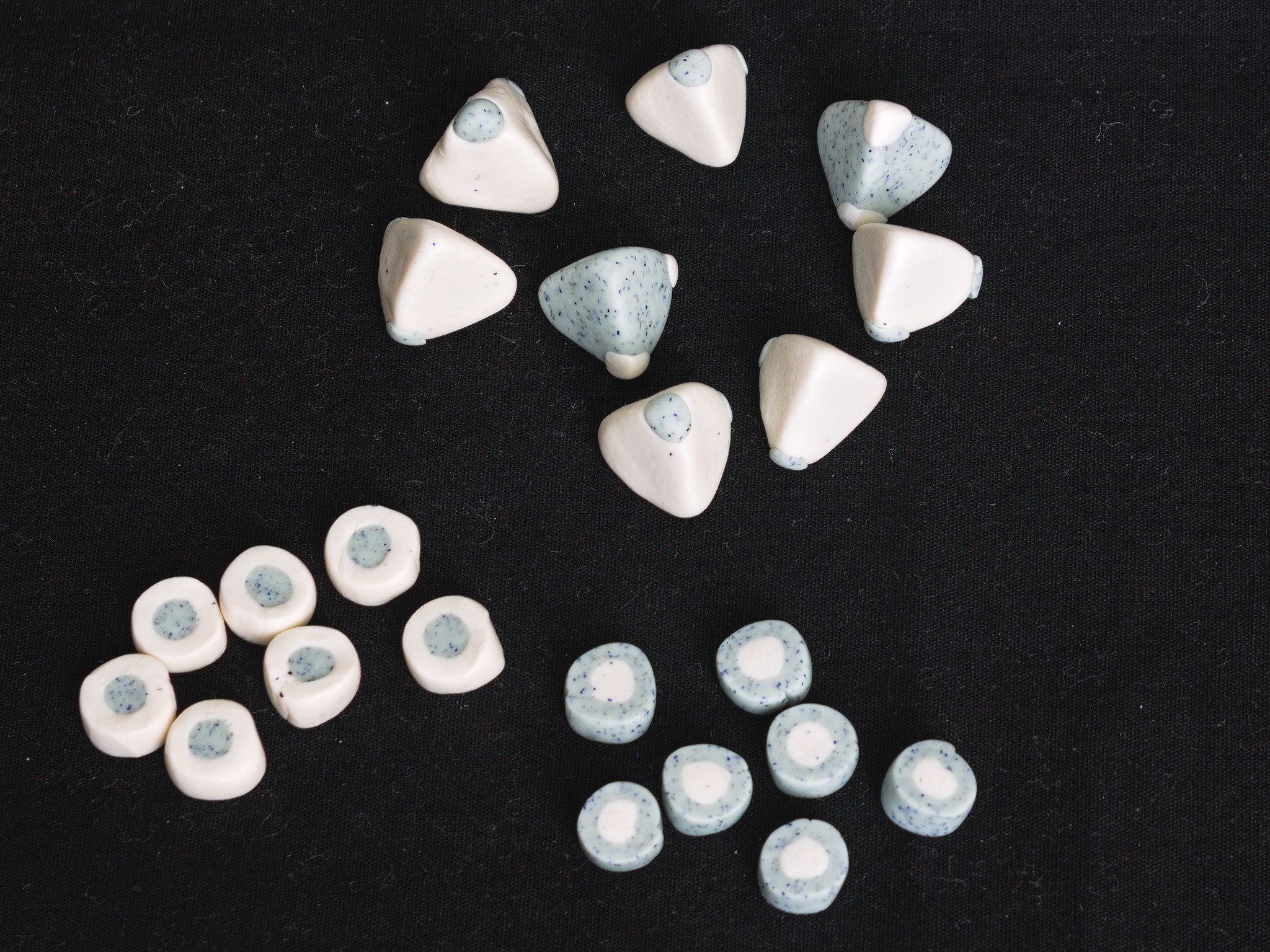
And after baking and trying them I liked them, but they had not been planned in any way, and they were a bit too small for the board, so the next time I was using cernit I tried to make a new set.
And while I was doing that I tried a new shape for the dice, as coins marked with a dot in the middle of one of the sides, because I don t really like tetrahedral dice.
And now, I realized this wasn t going to be my last set, and urgently felt the need for some container to keep them in and avoid missing pieces.
(Yes, in the picture above one piece was already missing. While taking it I didn t realize it, and neither I did when picking up everything to put it away, getting the missing piece and storing it safely together with the rest of the set. It must have been hiding in plain sight nearby, but I will never know where.)
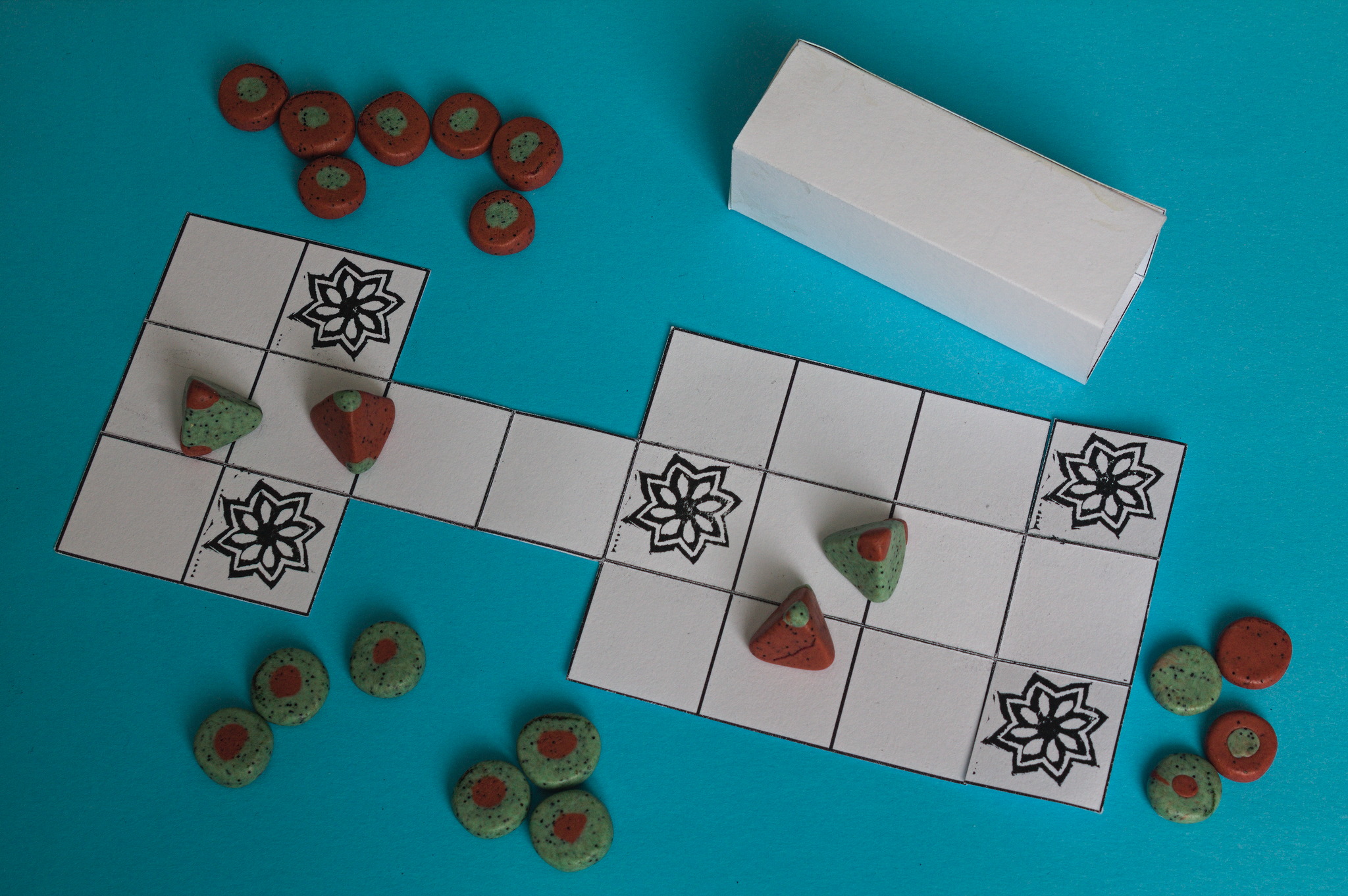
Anyway, back to Inkscape, and to a board printed on scrap paper that I tried to fold up until I came up with a layout that folded up in a small drawer, and then I added a case to wrap around it to keep it closed.
I played around with the case until it was big enough to actually slide around the folded board, and this is the result, ready to be printed out on A4 paper, cut, folded and glued. (This takes most of the sheet, and I m not sure that the case would still fit around the board/drawer if printed with scaling, so if you want to print it on Letter paper I d recommend to move the pieces around.)
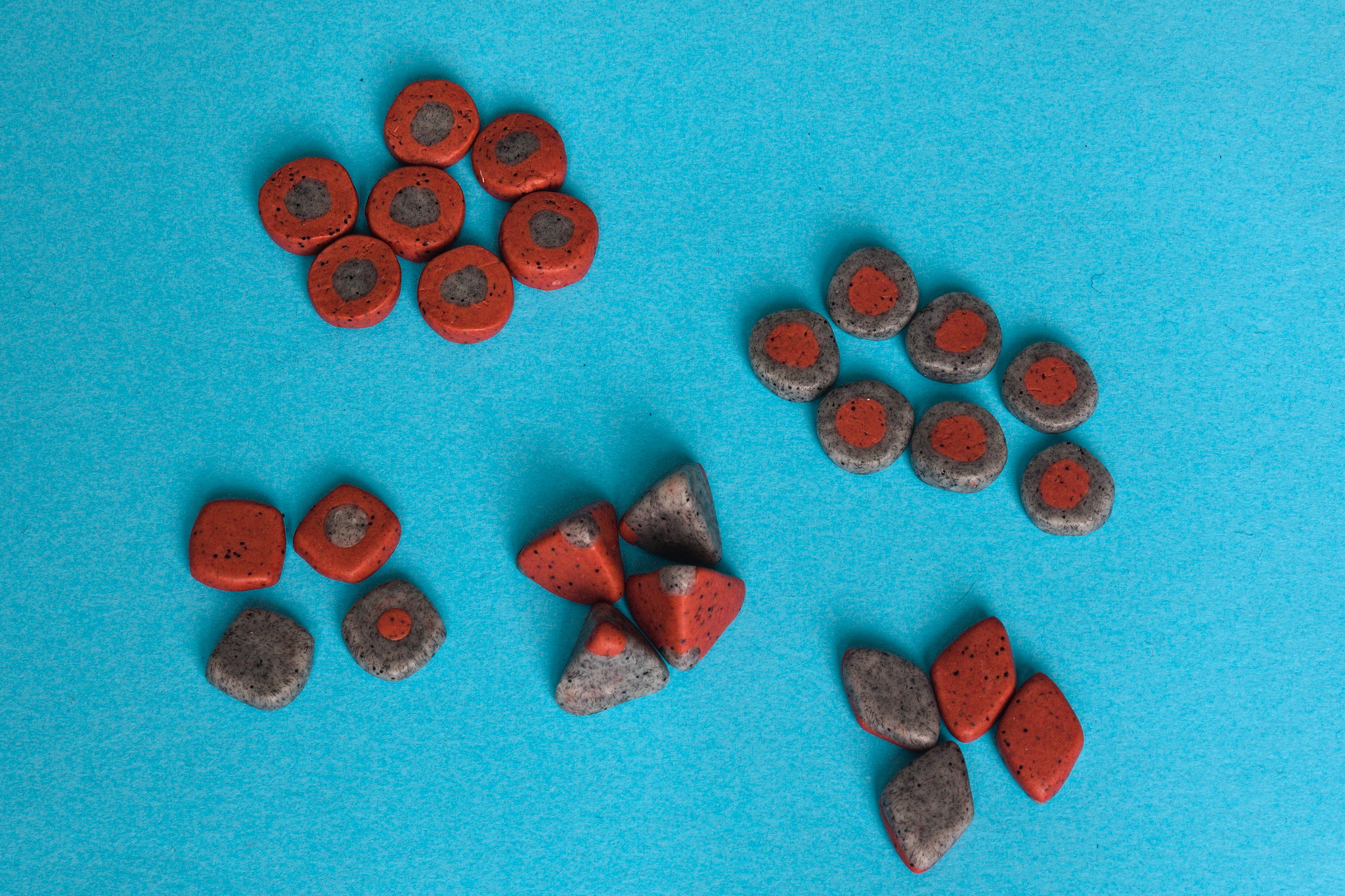
I still used stone effect cernit, but this time in a red/grey scheme that knew I would have liked more, and while I was doing it I tried a few improvements on the randomization devices.
The tetrahedral dice are still the same: they work, it s what they use in the replica sets, so I keep making them even if they re not my first choice.
I ve changed the coins to make them almost square for two reasons, however: one is that the round one tended to roll away into inconvenient places when throwing them with emphasis, and the other one is to make it easier to recognise them from the tokens with no need to flip each one around before starting the game.
The lozenges were a bit of a failure, instead. They work fine when thrown, but I don t think that there is a self-evident way to decide which side should be counted, and the only intuitive way I can think of (count the ones in the player s colour) would be unbalanced.
Speaking of balance issues: of course the hand-modelled dice and coins aren t perfectly balanced but:
This is the second part of how I build a read-only root setup for my router. You might want to read part 1 first, which covers the initial boot and general overview of how I tie the pieces together. This post will describe how I build the squashfs image that forms the main filesystem.
Most of the build is driven from a script, make-router, which I ll dissect below. It s highly tailored to my needs, and this is a fairly lengthy post, but hopefully the steps I describe prove useful to anyone trying to do something similar.
#!/bin/bash
# Either rb3011 (arm) or rb5009 (arm64)
#HOSTNAME="rb3011"
HOSTNAME="rb5009"
if [ "x$ HOSTNAME " == "xrb3011" ]; then
ARCH=armhf
elif [ "x$ HOSTNAME " == "xrb5009" ]; then
ARCH=arm64
else
echo "Unknown host: $ HOSTNAME "
exit 1
fi
BASE_DIR=$(dirname $0)
IMAGE_FILE=$(mktemp --tmpdir router.$ ARCH .XXXXXXXXXX.img)
MOUNT_POINT=$(mktemp -p /mnt -d router.$ ARCH .XXXXXXXXXX)
# Build and mount an ext4 image file to put the root file system in
dd if=/dev/zero bs=1 count=0 seek=1G of=$ IMAGE_FILE
mkfs -t ext4 $ IMAGE_FILE
mount -o loop $ IMAGE_FILE $ MOUNT_POINT
# Add dpkg excludes
mkdir -p $ MOUNT_POINT /etc/dpkg/dpkg.cfg.d/
cat <<EOF > $ MOUNT_POINT /etc/dpkg/dpkg.cfg.d/path-excludes
# Exclude docs
path-exclude=/usr/share/doc/*
# Only locale we want is English
path-exclude=/usr/share/locale/*
path-include=/usr/share/locale/en*/*
path-include=/usr/share/locale/locale.alias
# No man pages
path-exclude=/usr/share/man/*
EOF
# Setup fstab + mtab
echo "# Empty fstab as root is pre-mounted" > $ MOUNT_POINT /etc/fstab
ln -s ../proc/self/mounts $ MOUNT_POINT /etc/mtab
# Setup hostname
echo $ HOSTNAME > $ MOUNT_POINT /etc/hostname
# Add the root SSH keys
mkdir -p $ MOUNT_POINT /root/.ssh/
cat <<EOF > $ MOUNT_POINT /root/.ssh/authorized_keys
ssh-rsa AAAAB3NzaC1yc2EAAAABIwAAAQEAv8NkUeVdsVdegS+JT9qwFwiHEgcC9sBwnv6RjpH6I4d3im4LOaPOatzneMTZlH8Gird+H4nzluciBr63hxmcFjZVW7dl6mxlNX2t/wKvV0loxtEmHMoI7VMCnrWD0PyvwJ8qqNu9cANoYriZRhRCsBi27qPNvI741zEpXN8QQs7D3sfe4GSft9yQplfJkSldN+2qJHvd0AHKxRdD+XTxv1Ot26+ZoF3MJ9MqtK+FS+fD9/ESLxMlOpHD7ltvCRol3u7YoaUo2HJ+u31l0uwPZTqkPNS9fkmeCYEE0oXlwvUTLIbMnLbc7NKiLgniG8XaT0RYHtOnoc2l2UnTvH5qsQ== noodles@earth.li
ssh-rsa AAAAB3NzaC1yc2EAAAADAQABAAACAQDQb9+qFemcwKhey3+eTh5lxp+3sgZXW2HQQEZMt9hPvVXk+MiiNMx9WUzxPJnwXqlmmVdKsq+AvjA0i505Pp8fIj5DdUBpSqpLghmzpnGuob7SSwXYj+352hjD52UC4S0KMKbIaUpklADgsCbtzhYYc4WoO8F7kK63tS5qa1XSZwwRwPbYOWBcNocfr9oXCVWD9ismO8Y0l75G6EyW8UmwYAohDaV83pvJxQerYyYXBGZGY8FNjqVoOGMRBTUcLj/QTo0CDQvMtsEoWeCd0xKLZ3gjiH3UrknkaPra557/TWymQ8Oh15aPFTr5FvKgAlmZaaM0tP71SOGmx7GpCsP4jZD1Xj/7QMTAkLXb+Ou6yUOVM9J4qebdnmF2RGbf1bwo7xSIX6gAYaYgdnppuxqZX1wyAy+A2Hie4tUjMHKJ6OoFwBsV1sl+3FobrPn6IuulRCzsq2aLqLey+PHxuNAYdSKo7nIDB3qCCPwHlDK52WooSuuMidX4ujTUw7LDTia9FxAawudblxbrvfTbg3DsiDBAOAIdBV37HOAKu3VmvYSPyqT80DEy8KFmUpCEau59DID9VERkG6PWPVMiQnqgW2Agn1miOBZeIQV8PFjenAySxjzrNfb4VY/i/kK9nIhXn92CAu4nl6D+VUlw+IpQ8PZlWlvVxAtLonpjxr9OTw== noodles@yubikey
ssh-rsa AAAAB3NzaC1yc2EAAAADAQABAAABAQC0I8UHj4IpfqUcGE4cTvLB0d2xmATSUzqtxW6ZhGbZxvQDKJesVW6HunrJ4NFTQuQJYgOXY/o82qBpkEKqaJMEFHTCjcaj3M6DIaxpiRfQfs0nhtzDB6zPiZn9Suxb0s5Qr4sTWd6iI9da72z3hp9QHNAu4vpa4MSNE+al3UfUisUf4l8TaBYKwQcduCE0z2n2FTi3QzmlkOgH4MgyqBBEaqx1tq7Zcln0P0TYZXFtrxVyoqBBIoIEqYxmFIQP887W50wQka95dBGqjtV+d8IbrQ4pB55qTxMd91L+F8n8A6nhQe7DckjS0Xdla52b9RXNXoobhtvx9K2prisagsHT noodles@cup
ecdsa-sha2-nistp256 AAAAE2VjZHNhLXNoYTItbmlzdHAyNTYAAAAIbmlzdHAyNTYAAABBBK6iGog3WbNhrmrkglNjVO8/B6m7mN6q1tMm1sXjLxQa+F86ETTLiXNeFQVKCHYrk8f7hK0d2uxwgj6Ixy9k0Cw= noodles@sevai
EOF
# Bootstrap our install
debootstrap \
--arch=$ ARCH \
--include=collectd-core,conntrack,dnsmasq,ethtool,iperf3,kexec-tools,mosquitto,mtd-utils,mtr-tiny,ppp,tcpdump,rng-tools5,ssh,watchdog,wget \
--exclude=dmidecode,isc-dhcp-client,isc-dhcp-common,makedev,nano \
bullseye $ MOUNT_POINT https://deb.debian.org/debian/
debootstrap step, including a bunch of extra packages that we want.
# Install mqtt-arp
cp $ BASE_DIR /debs/mqtt-arp_1_$ ARCH .deb $ MOUNT_POINT /tmp
chroot $ MOUNT_POINT dpkg -i /tmp/mqtt-arp_1_$ ARCH .deb
rm $ MOUNT_POINT /tmp/mqtt-arp_1_$ ARCH .deb
# Frob the mqtt-arp config so it starts after mosquitto
sed -i -e 's/After=.*/After=mosquitto.service/' $ MOUNT_POINT /lib/systemd/system/mqtt-arp.service
# Frob watchdog so it starts earlier than multi-user
sed -i -e 's/After=.*/After=basic.target/' $ MOUNT_POINT /lib/systemd/system/watchdog.service
# Make sure the watchdog is poking the device file
sed -i -e 's/^#watchdog-device/watchdog-device/' $ MOUNT_POINT /etc/watchdog.conf
# Clean up docs + locales
rm -r $ MOUNT_POINT /usr/share/doc/*
rm -r $ MOUNT_POINT /usr/share/man/*
for dir in $ MOUNT_POINT /usr/share/locale/*/; do
if [ "$ dir " != "$ MOUNT_POINT /usr/share/locale/en/" ]; then
rm -r $ dir
fi
done
# Set root password to root
echo "root:root" chroot $ MOUNT_POINT chpasswd
# Add security to sources.list + update
echo "deb https://security.debian.org/debian-security bullseye-security main" >> $ MOUNT_POINT /etc/apt/sources.list
chroot $ MOUNT_POINT apt update
chroot $ MOUNT_POINT apt -y full-upgrade
chroot $ MOUNT_POINT apt clean
# Cleanup the APT lists
rm $ MOUNT_POINT /var/lib/apt/lists/www.*
rm $ MOUNT_POINT /var/lib/apt/lists/security.*
# Disable the daily APT timer
rm $ MOUNT_POINT /etc/systemd/system/timers.target.wants/apt-daily.timer
# Disable daily dpkg backup
cat <<EOF > $ MOUNT_POINT /etc/cron.daily/dpkg
#!/bin/sh
# Don't do the daily dpkg backup
exit 0
EOF
# We don't want a persistent systemd journal
rmdir $ MOUNT_POINT /var/log/journal
# Enable nftables
ln -s /lib/systemd/system/nftables.service \
$ MOUNT_POINT /etc/systemd/system/sysinit.target.wants/nftables.service
# Add systemd-coredump + systemd-timesync user / group
echo "systemd-timesync:x:998:" >> $ MOUNT_POINT /etc/group
echo "systemd-coredump:x:999:" >> $ MOUNT_POINT /etc/group
echo "systemd-timesync:!*::" >> $ MOUNT_POINT /etc/gshadow
echo "systemd-coredump:!*::" >> $ MOUNT_POINT /etc/gshadow
echo "systemd-timesync:x:998:998:systemd Time Synchronization:/:/usr/sbin/nologin" >> $ MOUNT_POINT /etc/passwd
echo "systemd-coredump:x:999:999:systemd Core Dumper:/:/usr/sbin/nologin" >> $ MOUNT_POINT /etc/passwd
echo "systemd-timesync:!*:47358::::::" >> $ MOUNT_POINT /etc/shadow
echo "systemd-coredump:!*:47358::::::" >> $ MOUNT_POINT /etc/shadow
# Create /etc/.pwd.lock, otherwise it'll end up in the overlay
touch $ MOUNT_POINT /etc/.pwd.lock
chmod 600 $ MOUNT_POINT /etc/.pwd.lock
# Copy config files
cp --recursive --preserve=mode,timestamps $ BASE_DIR /etc/* $ MOUNT_POINT /etc/
cp --recursive --preserve=mode,timestamps $ BASE_DIR /etc-$ ARCH /* $ MOUNT_POINT /etc/
chroot $ MOUNT_POINT chown mosquitto /etc/mosquitto/mosquitto.users
chroot $ MOUNT_POINT chown mosquitto /etc/ssl/mqtt.home.key
# Build symlinks into flash for boot / modules
ln -s /mnt/flash/lib/modules $ MOUNT_POINT /lib/modules
rmdir $ MOUNT_POINT /boot
ln -s /mnt/flash/boot $ MOUNT_POINT /boot
# Put our git revision into os-release
echo -n "GIT_VERSION=" >> $ MOUNT_POINT /etc/os-release
(cd $ BASE_DIR ; git describe --tags) >> $ MOUNT_POINT /etc/os-release
# Add some stuff to root's .bashrc
cat << EOF >> $ MOUNT_POINT /root/.bashrc
alias ls='ls -F --color=auto'
eval "\$(dircolors)"
case "\$TERM" in
xterm* rxvt*)
PS1="\\[\\e]0;\\u@\\h: \\w\a\\]\$PS1"
;;
*)
;;
esac
EOF
# Build the squashfs
mksquashfs $ MOUNT_POINT /tmp/router.$ ARCH .squashfs \
-comp xz
# Save the installed package list off
chroot $ MOUNT_POINT dpkg --get-selections > /tmp/wip-installed-packages
/etc, shared across both routers are the following:
apt/apt.conf.d/10periodic, apt/apt.conf.d/local-recommendsdefault/localednsmasq.conf, dnsmasq.d/dhcp-ranges, dnsmasq.d/static-ipshosts, resolv.confsysctl.conflogrotate.conf, rsyslog.confmosquitto/mosquitto.users, mosquitto/conf.d/ssl.conf, mosquitto/conf.d/users.conf, mosquitto/mosquitto.acl, mosquitto/mosquitto.confmqtt-arp.confssl/lets-encrypt-r3.crt, ssl/mqtt.home.key, ssl/mqtt.home.crtppp/ip-up.d/0000usepeerdns, ppp/ipv6-up.d/defaultroute, ppp/pap-secrets, ppp/chap-secretsnetwork/interfaces.d/pppoe-wannftables.confdnsmasq.d/interfacesnetwork/interfaces.d/eth0, network/interfaces.d/p1, network/interfaces.d/p2, network/interfaces.d/p7, network/interfaces.d/p8ppp/peers/aquissssh/ssh_host_ecdsa_key, ssh/ssh_host_ed25519_key, ssh/ssh_host_rsa_key, ssh/ssh_host_ecdsa_key.pub, ssh/ssh_host_ed25519_key.pub, ssh/ssh_host_rsa_key.pubcollectd/collectd.conf, collectd/collectd.conf.d/network.conf
Very few highly-anticipated movies appear in January and February, as the bigger releases are timed so they can be considered for the Golden Globes in January and the Oscars in late February or early March, so film fans have the advantage of a few weeks after the New Year to collect their thoughts on the year ahead. In other words, I'm not actually late in outlining below the films I'm most looking forward to in 2023...
Barbie No, seriously! If anyone can make a good film about a doll franchise, it's probably Greta Gerwig. Not only was Little Women (2019) more than admirable, the same could be definitely said for Lady Bird (2017). More importantly, I can't help feel she was the real 'Driver' behind Frances Ha (2012), one of the better modern takes on Claudia Weill's revelatory Girlfriends (1978). Still, whenever I remember that Barbie will be a film about a billion-dollar toy and media franchise with a nettlesome history, I recall I rubbished the "Facebook film" that turned into The Social Network (2010). Anyway, the trailer for Barbie is worth watching, if only because it seems like a parody of itself.
Blitz It's difficult to overstate just how important the aerial bombing of London during World War II is crucial to understanding the British psyche, despite it being a constructed phenomenon from the outset. Without wishing to underplay the deaths of over 40,000 civilian deaths, Angus Calder pointed out in the 1990s that the modern mythology surrounding the event "did not evolve spontaneously; it was a propaganda construct directed as much at [then neutral] American opinion as at British." It will therefore be interesting to see how British Grenadian Trinidadian director Steve McQueen addresses a topic so essential to the British self-conception. (Remember the controversy in right-wing circles about the sole Indian soldier in Christopher Nolan's Dunkirk (2017)?) McQueen is perhaps best known for his 12 Years a Slave (2013), but he recently directed a six-part film anthology for the BBC which addressed the realities of post-Empire immigration to Britain, and this leads me to suspect he sees the Blitz and its surrounding mythology with a more critical perspective. But any attempt to complicate the story of World War II will be vigorously opposed in a way that will make the recent hullabaloo surrounding The Crown seem tame. All this is to say that the discourse surrounding this release may be as interesting as the film itself.
Dune, Part II Coming out of the cinema after the first part of Denis Vileneve's adaptation of Dune (2021), I was struck by the conception that it was less of a fresh adaptation of the 1965 novel by Frank Herbert than an attempt to rehabilitate David Lynch's 1984 version and in a broader sense, it was also an attempt to reestablish the primacy of cinema over streaming TV and the myriad of other distractions in our lives. I must admit I'm not a huge fan of the original novel, finding within it a certain prurience regarding hereditary military regimes and writing about them with a certain sense of glee that belies a secret admiration for them... not to mention an eyebrow-raising allegory for the Middle East. Still, Dune, Part II is going to be a fantastic spectacle.
Ferrari It'll be curious to see how this differs substantially from the recent Ford v Ferrari (2019), but given that Michael Mann's Heat (1995) so effectively re-energised the gangster/heist genre, I'm more than willing to kick the tires of this about the founder of the eponymous car manufacturer. I'm in the minority for preferring Mann's Thief (1981) over Heat, in part because the former deals in more abstract themes, so I'd have perhaps prefered to look forward to a more conceptual film from Mann over a story about one specific guy.
How Do You Live There are a few directors one can look forward to watching almost without qualification, and Hayao Miyazaki (My Neighbor Totoro, Kiki's Delivery Service, Princess Mononoke Howl's Moving Castle, etc.) is one of them. And this is especially so given that The Wind Rises (2013) was meant to be the last collaboration between Miyazaki and Studio Ghibli. Let's hope he is able to come out of retirement in another ten years.
Indiana Jones and the Dial of Destiny Given I had a strong dislike of Indiana Jones and the Kingdom of the Crystal Skull (2008), I seriously doubt I will enjoy anything this film has to show me, but with 1981's Raiders of the Lost Ark remaining one of my most treasured films (read my brief homage), I still feel a strong sense of obligation towards the Indiana Jones name, despite it feeling like the copper is being pulled out of the walls of this franchise today.
Kafka I only know Polish filmmaker Agnieszka Holland through her Spoor (2017), an adaptation of Olga Tokarczuk's 2009 eco-crime novel Drive Your Plow Over the Bones of the Dead. I wasn't an unqualified fan of Spoor (nor the book on which it is based), but I am interested in Holland's take on the life of Czech author Franz Kafka, an author enmeshed with twentieth-century art and philosophy, especially that of central Europe. Holland has mentioned she intends to tell the story "as a kind of collage," and I can hope that it is an adventurous take on the over-furrowed biopic genre. Or perhaps Gregor Samsa will awake from uneasy dreams to find himself transformed in his bed into a huge verminous biopic.
The Killer It'll be interesting to see what path David Fincher is taking today, especially after his puzzling and strangely cold Mank (2020) portraying the writing process behind Orson Welles' Citizen Kane (1941). The Killer is said to be a straight-to-Netflix thriller based on the graphic novel about a hired assassin, which makes me think of Fincher's Zodiac (2007), and, of course, Se7en (1995). I'm not as entranced by Fincher as I used to be, but any film with Michael Fassbender and Tilda Swinton (with a score by Trent Reznor) is always going to get my attention.
Killers of the Flower Moon In Killers of the Flower Moon, Martin Scorsese directs an adaptation of a book about the FBI's investigation into a conspiracy to murder Osage tribe members in the early years of the twentieth century in order to deprive them of their oil-rich land. (The only thing more quintessentially American than apple pie is a conspiracy combined with a genocide.) Separate from learning more about this disquieting chapter of American history, I'd love to discover what attracted Scorsese to this particular story: he's one of the few top-level directors who have the ability to lucidly articulate their intentions and motivations.
Napoleon It often strikes me that, despite all of his achievements and fame, it's somehow still possible to claim that Ridley Scott is relatively underrated compared to other directors working at the top level today. Besides that, though, I'm especially interested in this film, not least of all because I just read Tolstoy's War and Peace (read my recent review) and am working my way through the mind-boggling 431-minute Soviet TV adaptation, but also because several auteur filmmakers (including Stanley Kubrick) have tried to make a Napoleon epic and failed.
Oppenheimer In a way, a biopic about the scientist responsible for the atomic bomb and the Manhattan Project seems almost perfect material for Christopher Nolan. He can certainly rely on stars to queue up to be in his movies (Robert Downey Jr., Matt Damon, Kenneth Branagh, etc.), but whilst I'm certain it will be entertaining on many fronts, I fear it will fall into the well-established Nolan mould of yet another single man struggling with obsession, deception and guilt who is trying in vain to balance order and chaos in the world.
The Way of the Wind Marked by philosophical and spiritual overtones, all of Terrence Malick's films are perfumed with themes of transcendence, nature and the inevitable conflict between instinct and reason. My particular favourite is his stunning Days of Heaven (1978), but The Thin Red Line (1998) and A Hidden Life (2019) also touched me ways difficult to relate, and are one of the few films about the Second World War that don't touch off my sensitivity about them (see my remarks about Blitz above). It is therefore somewhat Malickian that his next film will be a biblical drama about the life of Jesus. Given Malick's filmography, I suspect this will be far more subdued than William Wyler's 1959 Ben-Hur and significantly more equivocal in its conviction compared to Paolo Pasolini's ardently progressive The Gospel According to St. Matthew (1964). However, little beyond that can be guessed, and the film may not even appear until 2024 or even 2025.
Zone of Interest I was mesmerised by Jonathan Glazer's Under the Skin (2013), and there is much to admire in his borderline 'revisionist gangster' film Sexy Beast (2000), so I will definitely be on the lookout for this one. The only thing making me hesitate is that Zone of Interest is based on a book by Martin Amis about a romance set inside the Auschwitz concentration camp. I haven't read the book, but Amis has something of a history in his grappling with the history of the twentieth century, and he seems to do it in a way that never sits right with me. But if Paul Verhoeven's Starship Troopers (1997) proves anything at all, it's all in the adaption.
personal servers
Moxie Marlinspike, former CEO of Signal, wrote a very interesting
blog post about
"web3", the
crypto-scam1. It's worth a read if you are interested in that stuff. This
blog post, however, is not about crypto-scams; but I wanted to quote from the
beginning of the article:
People don t want to run their own servers, and never will. The premise for web1 was that everyone on the internet would be both a publisher and consumer of content as well as a publisher and consumer of infrastructure. We d all have our own web server with our own web site, our own mail server for our own email, our own finger server for our own status messages, our own chargen server for our own character generation. However and I don t think this can be emphasized enough that is not what people want. People do not want to run their own servers.What's interesting to me about this is I feel that he's right: the vast, vast majority of people almost certainly do not want to run their own servers. Yet, I decided to. I started renting a Linux virtual server2 close to 20 years ago3, but more recently, decided to build and run a home NAS, which was a critical decision for getting my personal data under control. FreedomBox and Debian I am almost entirely dormant within the Debian project these days, and that's unlikely to change in the near future, at least until I wrap up some other commitments. I do sometimes mull over what I would do within Debian, if/when I return to the fold. And one thing I could focus on, since I am running my own NAS, would be software support for that sort of thing. FreedomBox is a project that bills itself as a private server for non-experts: in other words, it's almost exactly the thing that Marlinspike states people don't want. Nonetheless, it is an interesting project. And, it's a Debian Pure Blend: which is to say (quoting the previous link)
a subset of Debian that is tailored to be used out-of-the-box in a particular situation or by a particular target group.So FreedomBox is a candidate project for me to get involved with, especially (or more sensibly, assuming that) I end up using some of it myself. But, that's not the only possibility, especially after a really, really good conversation I had earlier today with old friends Neil McGovern and Chris Boot
I was passing through London on Friday and I had time to get to The Horror Show! Exhibit at Somerset House, over by Victoria embankment. I learned about the exhibition from Gazelle Twin s website: she wrote music for the final part of the exhibit, with Maxine Peake delivering a monologue over the top.
I loved it. It was almost like David Keenan s book England s Hidden Reverse had been made into an exhibition. It s divided into three themes: Monster, Ghost and Witch, although the themes are loose with lots of cross over and threads running throughout.
The show is littered with artefacts from culturally significant works from a recently-bygone age. There s a strong theme of hauntology. The artefacts that stuck out to me include some of Leigh Bowery s costumes; the spitting image doll of Thatcher; the cover of a Radio Times featuring the cult BBC drama Threads; Nigel Kneale s the stone tape VHS alongside more recent artefacts from Inside Number 9 and a MR James adaptation by Mark Gatiss (a clear thread of inspiration there); various bits relating to Derek Jarman including the complete Blue screening in a separate room; Mica Levi s eerie score to under the skin playing in the Witch section, and various artefacts and references to the underground music group Coil. Too much to mention!
Having said that, the things which left the most lasting impression are the some of the stand-alone works of art: the charity box boy model staring fractured and refracted through a glass door (above); the glossy drip of blood running down a wall; the performance piece on a Betamax tape; the self portrait of a drowned man; the final piece, "The Neon Heiroglyph".
Jonathan Jones at the Guardian liked it.
The show runs until the 19th February and is worth a visit if you can.
FROM jgoerzen/debian-base-security:bullseye
RUN echo "deb http://deb.debian.org/debian bullseye-backports main" >> /etc/apt/sources.list && \
apt-get --allow-releaseinfo-change update && \
apt-get -y --no-install-recommends -t bullseye-backports install yggdrasil
...
COPY yggdrasil.conf /etc/yggdrasil/
RUN set -x; \
chown root:yggdrasil /etc/yggdrasil/yggdrasil.conf && \
chmod 0750 /etc/yggdrasil/yggdrasil.conf && \
systemctl enable yggdrasil
docker run to make Yggdrasil work are:
--cap-add=NET_ADMIN --sysctl net.ipv6.conf.all.disable_ipv6=0 --device=/dev/net/tun:/dev/net/tun
--privileged. In fact, due to the network namespaces in use in Docker, this command does not let the container modify the host s networking (unless you use --net=host, which I do not recommend).
The --sysctl parameter was the result of a lot of banging my head against the wall. Apparently Docker tries to disable IPv6 in the container by default. Annoying.
yggdrasil.conf with yggdrasil -genconf like usual. Some things to note for this one:
Listen to something like Listen: ["tls://[::]:12345"] where 12345 is the port number you ll be listening on.MulticastInterfaces entirely by just setting it to [] since it doesn t work anyway.AllowedPublicKeys is another useful step.Listen and act as a client to the others. See below.Peers to something like Peers: ["tls://routernode:12345"] where routernode is the Docker hostname of the router container, and 12345 is its port number as defined above. If you have more than one local router container, you can simply list them all here. Yggdrasil will then fail over nicely if any one of them go down.Listen should be empty.MulticastInterfaces should be empty.ping6 between your containers. If you have multiple hosts running Docker, you can simply set up the router nodes on each to connect to each other. Now you have direct, secure, container-to-container communication that is host-agnostic! You can also set up Yggdrasil on a bare metal server or VM using standard procedures and everything will just talk nicely!
AllowedPublicKeys on the nodes with listening ports, you can authenticate the Yggdrasil peers. Note that part of the benefit of the Yggdrasil mesh is normally that you don t have to propagate a configuration change to every participatory node that s a nice thing in general!
You can also run a firewall inside your container (I like firehol for this purpose) and aggressively firewall the IPs that are allowed to connect via the Yggdrasil interface. I like to set a stable interface name like ygg0 in yggdrasil.conf, and then it becomes pretty easy to firewall the services. The Docker parameters that allow Yggdrasil to run are also sufficient to run firehol.
--add-host command to add things to /etc/hosts
A new release 0.2.18 of RInside
arrived on CRAN and in Debian today. This is the first
release in ten months since the 0.2.17 release. RInside
provides a set of convenience classes which facilitate embedding of R inside of C++ applications and
programs, using the classes and functions provided by Rcpp.
This release brings a contributed change to how the internal REPL is
called: Dominick found the
current form more reliable when embedding R on Windows. We also updated
a few other things around the package.
The list of changes since the last release:
My CRANberries also provides a short report with changes from the previous release. More information is on the RInside page. Questions, comments etc should go to the rcpp-devel mailing list off the Rcpp R-Forge page, or to issues tickets at the GitHub repo. If you like this or other open-source work I do, you can now sponsor me at GitHub.Changes in RInside version 0.2.18 (2023-02-01)
- The random number initialization was updated as in R.
- The main REPL is now running via 'run_Rmainloop()'.
- Small routine update to package and continuous integration.
This post by Dirk Eddelbuettel originated on his Thinking inside the box blog. Please report excessive re-aggregation in third-party for-profit settings.
Welcome to the 39th post in the relatively randomly recurring rants,
or R4 for short. Today s
post picks up where the previous post #38:
Faster Feedback Systems started. As we argued in #38,
the need for fast feedback loops is fairly universal and
widespread. Fairly shortly after we posted #38,
useR! 2022 happened and one presentation had the key line
Waiting 1-24 minutes for a build to finish can be a massive time suck.which we would like to come back to today. Furthermore, the unimitable @b0rk had a fabulous tweet just weeks later stating the same point debugging strategy: shorten your feedback loop as a key in a successful debugging strategy. So in sum: shorter is better. Nobody likes to wait. And shorter i.e. faster is a key and recurrent theme in the R4 series. Today we have a fairly nice illustration of two aspects we have stressed before:
lim-tiny
and lim-tidy.
Our conjecture was (and is!) that less is more just as post
#34
titled Less Is More argued with respect to package
dependencies. Each of the repos just does one thing: a query to a
(freely accessible but remote) PostgreSQL database. The tiny version
just retrieves a data frame using only the dependencies needed for RPostgreSQL
namely DBI and
nothing else. The tidy version retrieves a tibble and has access to
everything else that comes when installing RPostgres: DBI, dplyr, and magrittr plus
of course their respective dependencies. We were able to let the code
run in (very default) GitHub Actions on a weekly schedule without
intervention apart from one change to the SQL query when the remote
server (providing public bioinformatics data) changed its schema
slighly, plus one update to the action yaml code version. No other
changes.
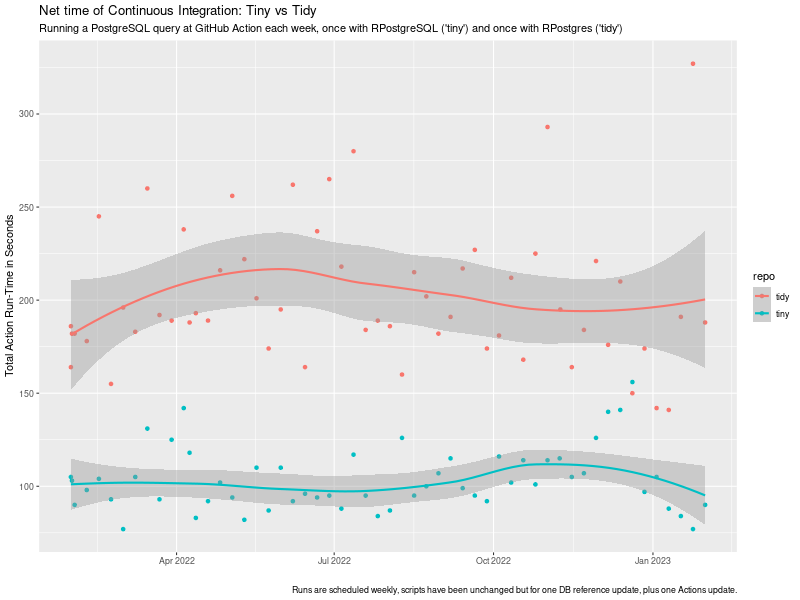
We measure the time a standard continuous integration run takes in
total using the default GitHub Action setup in the tidy case (which
relies on RSPM/PPM binaries, caching, , and does not rebuild
from source each time), and our own r-ci script (introduced
in #32
for CI with R. It switched to using r2u during the course of
this experiment but already had access to binaries via c2d4u
so it is always binaries-based (see e.g. #37
or #13
for more). The chart shows the evolution of these run-times over the
course of the year with one weekly run each.
tiny vs tidy ci timing impact
chart
This post by Dirk Eddelbuettel originated on his Thinking inside the box blog. Please report excessive re-aggregation in third-party for-profit settings.
Just days after a build-fix
release (for aarch64) and still only a few weeks after the 0.2.0
release of RcppTOML
and its switch to toml++, we have
another bugfix release 0.2.2 on CRAN also bringing release 3.3.0 of
toml++ (even if we
had large chunks of 3.3.0 already incorporated).
TOML is a file format that is most
suitable for configurations, as it is meant to be edited by
humans but read by computers. It emphasizes strong readability
for humans while at the same time supporting strong typing
as well as immediate and clear error reports. On small typos
you get parse errors, rather than silently corrupted garbage. Much
preferable to any and all of XML, JSON or YAML though sadly these may
be too ubiquitous now. TOML is
frequently being used with the projects such as the Hugo static blog compiler, or the Cargo system of Crates (aka packages )
for the Rust
language.
The package was building fine on Intel-based macOS provided the
versions were recent enough. CRAN, however, aims for the
broadest possibly reach of binaries and builds on a fairly ancient macOS
10.13 with clang version 10. This confused toml++ into (wrongly)
concluding it could not build when it in fact can. After a hint from Simon that Apple in their infinite
wisdom redefines clang version ids, this has been reflected in version
3.3.0 of toml++ by
Mark so we should now build
everywhere. Big thanks to everybody for the help.
The short summary of changes follows.
Courtesy of my CRANberries, there is a diffstat report for this release. More information is on the RcppTOML page page. Please use the GitHub issue tracker for issues and bugreports. If you like this or other open-source work I do, you can sponsor me at GitHub.Changes in version 0.2.2 (2023-01-29)
- New toml++ version 3.3.0 with fix to permit compilation on ancient macOS systems as used by CRAN for the Intel-based builds.
This post by Dirk Eddelbuettel originated on his Thinking inside the box blog. Please report excessive re-aggregation in third-party for-profit settings.
For the fourth year in a row, I've asked Soci t de Transport de Montr al,
Montreal's transit agency, for the foot traffic data of Montreal's subway.
By clicking on a subway station, you'll be redirected to a graph of the
station's foot traffic.