Search Results: "daniel"

18 July 2014

Dominique Dumont: Looking for help to package Perl6, moar and others for Debian

Let s face reality: I cannot find the time to properly maintain Perl6 related packages for Debian. Given the recent surge of popularity of rakudo, it would be a shame to let these packages rot. Instead of throwing the towel, I d rather call for help to maintain these packages. You don t need to be a Debian Developer or Maintainer: I will gladly review and upload packages. The following packages are looking for maintainer: Next step to help Perl6 on Debian is to join: All the best
Tagged: debian, package, Perl6

17 July 2014

Daniel Pocock: MH17 and the elephant in the room

Just last week, air passengers were told of intrusive new checks on their electronic devices when flying. For years, passengers have also suffered bans on basic essentials like drinking water and excesses like the patting down of babies that even Jimmy Saville would find offensive. Of course, all this is being done for public safety. So if western leaders claim the safety and security of their citizens is really their number one priority, just how is it that a passenger aircraft can be flying through a war zone where two other planes were shot down this month? When it comes to aviation security, this really is the elephant in the room. The MH17 tragedy today demonstrates that terror always finds a way. It is almost like the terrorists can have their cake and eat it too: they force "free" countries to give up their freedoms and public decency and then they still knock the occasional plane out of the sky anyway. History in the making? It is 100 years since the assassination of Austrian Archduke Franz Ferdinand started World War I and just over 50 years since the Cuban missile crisis. Will this incident also achieve similar notoriety in history? The downing of MH17 may well have been a "mistake" but the casualties are real and very tragic indeed. I've flown with Malaysia Airlines many times, including the same route MH17 and feel a lot of sympathy for these people who have been affected.

6 July 2014

Daniel Pocock: News team jailed, phone hacking not fixed though

This week former News of the World executives were sentenced, most going to jail, for the British phone hacking scandal. Noticeably absent from the trial and much of the media attention are the phone companies. Did they know their networks could be so systematically abused? Did they care? In any case, the public has never been fully informed about how phones have been hacked. Speculation has it that phone hackers were guessing PIN numbers for remote voicemail access, typically trying birthdates and inappropriate PIN numbers like 0000 or 1234. There is more to it Those in the industry know that there are additional privacy failings in mobile networks, especially the voicemail service. It is not just in the UK either. There are various reasons for not sharing explicit details on a blog like this and comments concerning such techniques can't be accepted. Nonetheless, there are some points that do need to be made:
  • it is still possible for phones, especially voicemail, to be hacked on demand
  • an attacker does not need expensive equipment nor do they need to be within radio range (or even the same country) as their target
  • the attacker does not need to be an insider (phone company or spy agency employee)
Disable voicemail completely - the only way to be safe The bottom line is that the only way to prevent voicemail hacking is to disable the phone's voicemail service completely. Voicemail is not really necessary given that most phones support email now. For those who feel they need it, consider running the voicemail service on your own private PBX using free software like Asterisk or FreeSWITCH. Some Internet telephony service providers also offer third-party voicemail solutions that are far more secure than those default services offered by mobile networks. To disable voicemail, simply do two things:
  • send a letter to the phone company telling them you do not want any voicemail box in their network
  • in the mobile phone, select the menu option to disable all diversions, or manually disable each diversion one by one (e.g. disable forwarding when busy, disable forwarding when not answered, disable forwarding when out of range)

23 June 2014

Daniel Pocock: Bendigo: a risk of becoming the Australian capital of Islamophobia?

I spent most of my high-school years in a small town called Bendigo in Australia. These days, I'm living in the centre of Europe, Switzerland. Oddly enough, a more than trivial number of people in Bendigo are now trying to imitate one of the darkest moments in Switzerland's history, a crusade to prevent the construction of a mosque. At least in Switzerland, they tried to be slightly diplomatic: the official question on the referendum was about banning minarets rather than a whole religion. The placards in the street were more explicit, with the silhouette of blackened minarets arranged to resemble a field of inter-continental ballistic missiles: In Bendigo, however, the gloves are off. One councillor has already declared "I wouldn't want to live near a mosque. Would you?" Will Bendigo ban the internet too? In Australia and Britain, the press has been fascinated with the recent release of a Jihad video on Youtube created by Brits and Aussies fighting in Syria. Fear-mongering fanatics claim the mosque will bring jihadists to Bendigo. If they genuinely believe that, shouldn't they be pushing to censor or ban the internet too, so that the children of Bendigo won't get their hands on these recruitment videos? Weeds will grow if nobody plucks them out The fact is, most of these anti-Islam campaigners are nutcases or opportunists looking for a political career. Hundreds of millions of muslims worship their God in peace every day. As the referendum in Switzerland demonstrates, if good people do nothing, the nutcases will flourish like weeds. Only 30% of Swiss people voted to ban minarets, but with 47% of people not voting at all, the nutcases won. Citizens of Bendigo who value their human rights (which includes freedom of religion) would be wise to avoid complacency. Even though the mosque may now have council approval, sinister groups from around the whole country are now conspiring to overturn the decision or perhaps just make the town a focal point for their Islamophobia campaigns.

Francesca Ciceri: Adventures in Mozillaland #2

Time for an update from my internship at Mozilla, as part of the OPW. The last weeks have been a bit rough: I have my usual migraines to thank for that. It's not easy to work with them: you are either stoned by the meds, or cannot look at a monitor. And while you're trying to sleep your headaches away, the world keeps rolling. Silly world.
As Liz, my mentor, suggested I tried to stick with the little things and to do a bit of something everyday.
"Waiting for the miracle", you know.
So, here's what I've been up to: Triaging I probably failed my personal 5-bugs-a-day policy, in the last two weeks, but beside that I'm pretty satisfied of my progress: All in all, I realized that I really love triaging/verifying bugs: being not a developer nor a simple user, but a bit of both, gives me the right mindset - I think - to mediate between these two worlds. Community On the community front, I finally managed to meet - virtually - the Mozilla Italian community. The guys are great and beside running the forum to give user support, they do a whole lot of activities related to localization. They are also trying to encourage participation of Italian users and enthusiasts to Mozilla events: don't miss, for instance, the upcoming Marketplace Day when a couple of us will be available to help other Italian users with the day's activities. Read Daniele's post on the forum for more information in Italian. Documentation On the documentation front, I finally managed to get out the Bugdays FAQ, draft a guide on how to run different versions of Firefox and multiple profiles for triaging purposes on Linux and Windows - still have to finish this one, though -, and participate to a very interesting discussion on the current state of QMO - the entry point for QA contributors in Mozilla.
The site, in my opinion, needs some love and I'd very much like to help in that sense.
Check out the discussion, and give us some feedback about the website on the dev-quality mailing list! Lessons learned

15 June 2014

Daniel Pocock: Should Ireland rejoin the UK?

US President Obama has been widely quoted questioning Scottish independence. Does he have similar doubts about the Irish Republic? Ireland's decision to leave the UK was proclaimed in 1916 and ratified by elections and a decision in 1919. England finally signed the Anglo-Irish Treaty in 1921, simultaneously downgrading themselves from being the British Empire to the British Commonwealth of Nations. For a small nation, Ireland packs a big punch. What does the President have to say about Free Ireland? The US Embassy in Dublin is happy to share President Obama's insights like those below:
Some wise Irish man or woman once said that broken Irish is better than clever English. So here goes: T thas orm bheith in irinn I am happy to be in Ireland! I'm happy to be with so many cairde.
Mr Obama then switches into a more personal context:
if you believe the Corrigan Brothers, there s no one more Irish than me.
He is referring to his Irish roots in the village of Moneygall. He then goes on to look at the impact the free Irish spirit had on the way Americans gained the freedom they have over their own country today:
When the father of our country, George Washington, needed an army, it was the fierce fighting of your sons that caused the British official to lament, We have lost America through the Irish.
and America's freedom to move beyond our planet too:
it was our first Irish President our first Catholic President, John F. Kennedy, who made us believe 50 years ago this week that mankind could do something big and bold and ambitious as walk on the moon. He made us dream again.
In fact, US presidents traditionally have lunch with the Irish leadership for St Patrick's day each year. This year they discussed international issues like Ukraine - maybe the complexities of Northern Ireland provide insights into the challenges of the Crimea? Will Scotland choose to sit at this table and will they bring a good Scotch with them? US President Obama, Guinness/></p> </body></html>

11 June 2014

Daniel Pocock: Protest or Uber marketing stunt?

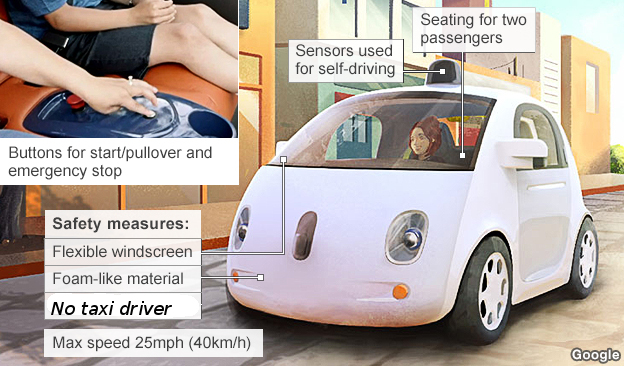
London's taxi "strike" today has been so successful that Uber claims to have had an 850% increase in new customer registrations this week. Well, that is a big success if you believe the strike may have been a guerrilla marketing tactic organised by Uber itself. No sympathy Personally, I have no sympathy for the taxi drivers. There is no city I have ever visited where I haven't encountered at least one taxi driver who tried to overcharge me. Honest drivers who give their customers value for money have less to fear from new technology than those who are unscrupulous. When I broke a leg a few years ago and was getting about on crutches for 6 weeks we decided to go out for dinner one night. This was the first time I went anywhere after having a long stint in hospital followed by a period of time I was confined to the house. The taxi driver deliberately skipped two turns leading directly to the restaurant, went another 1km past it and then followed a small street that winds back and forth and eventually demanded I pay him double what the fare should have been. This is exactly the type of abusive and despicable practice that is being eradicated by Uber's live GPS mapping technology. Although not every driver behaves so shamefully, this type of abuse of the weak or vulnerable is replicated in one way or another the world over. For example, in Melbourne, Australia, wheelchair taxis that have worked out they can make more money collecting families with suitcases at the airport leave genuine wheelchair users without a ride. Will Google be targeted next week? Google has just announced a step-change in plans to build their own self driving cars. Will Google offices around the world, including London be targetted by these crude blockades too? Political protest or anti-competitive mischief? Why were taxi drivers not arrested for their protest today? Given that the roads are the place where taxis and their competitors do business, can this blockade really be considered a political protest or is it an anti-competitive practice in blatant disregard of the law? Weapons of mass destruction Before even having breakfast you could probably find 10,000 cyclists in central London willing to sign a petition declaring taxis are a weapon of mass destruction. Once again, while there are honest drivers, there is a more than trivial number of taxi drivers who are a genuine danger to the lives of cyclists, scooters, motorcycles and occasionally pedestrians. I have personally experienced one of these thugs ramming my bicycle from behind (his hard-nosed insurer eventually paid up but without admitting liability). The police who attended the incident even told me they had seen so many accidents like this they wouldn't dare cycle themselves. The web is full of examples that appear to show malicious and criminal behavior by taxi drivers, thanks to Youtube and helmet cams: Will hotels protest about AirBNB? Now the taxi drivers have had their chance to cause mayhem, will hotel operators be next? What could they do though? Will they seek out AirBNB apartments and try to obstruct them somehow? Making mischief outside somebody's home is not a good way to make a point. Chances are, they would be prosecuted or served with restraining orders. So why do the taxi drivers get to jam up whole cities and get away with it? The Uber taxi meter loophole Will the courts decide that the Uber app is a taxi meter? This is actually a tough question. Even if courts rule against apps that perform live metering, Uber could simply remove all metering functions from the app itself and perform the metering calculations in the cloud. The app would just send start and finish locations to the cloud and the cloud would send a message back to the phone confirming the charge. The phone is then nothing more than a communication and positioning device. Remember the elevator man? When the automobile was first invented, laws were made requiring every car to be accompanied through public streets by a man carrying a flag. That job, like many others, no longer exists. elevator attendant In the good old days, every elevator had a man or woman who would sit on a stool and press buttons to operate the doors and motors. Some up-market department stores and hotels still have an elevator man to add a touch of nostalgia. The vast majority, however, have eliminated these jobs thanks to automatic elevators. Now, even aircraft can land automatically on a ship at sea. Look at all those people manning the deck in the video and contemplate how many of them might potentially be out of a job too in 50 years time as Terminator-style automated battleships patrol the seas. Technology, like the Terminator, is not going to stop.

9 June 2014

Daniel Pocock: reSIProcate v1.9 with WebRTC now available for Fedora 20 users

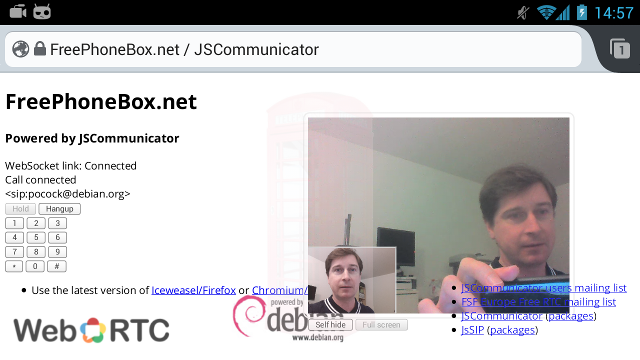
reSIProcate v1.9 has now moved from testing to stable and is available for Fedora 20 users. Version 1.9.7 has also propagated to Debian testing and wheezy-backports, delivering improved stability as discussed in my previous blog. Ready to try WebRTC? The quickest way to set up your own WebRTC trial is to install the repro (reSIProcate SIP proxy) packages for your preferred Linux distribution and then copy JSCommunicator into a directory on your web server. My earlier blog get WebRTC going faster gives specific examples of entries needed in repro.config.. WebRTC Calling from Android I've continued to have success making and receiving calls with both the Firefox and Chrome apps on Android. This is a great way to reach out to friends and family using free software for communication. More details and some screenshots are available in my earlier blog on Android WebRTC.

4 June 2014

Daniel Pocock: Trialing the xTuple/PostBooks next generation web UI

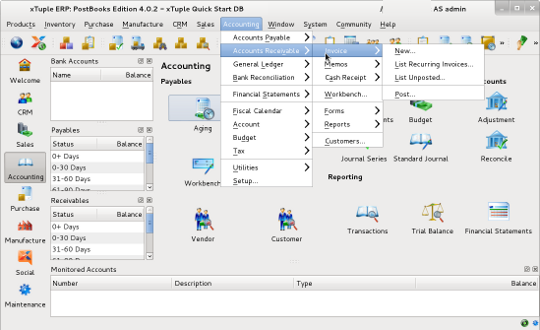
For some time I've been using PostBooks to keep track of finances. The traditional PostBooks system has a powerful Qt GUI. The xTuple team have been hard at work creating a shiny new web-based user interface. The traditional UI has no dedicated server - all users communicate directly with the PostgreSQL database where stored procedures and triggers ensure the correct logic is applied. The new model provides an xTuple application server that can handle requests from web users and potentially other third-party apps too. Who is it for? Some people may feel that the web UI is intended to appeal to mobile users. While it is useful for mobile and tablet devices, this is not strictly the aim, John has discussed this in a blog. One benefit of the web UI is that accountants and book-keepers do not need to have a copy of every exact PostBooks version that every client is using. Given that many people only need their accountant to look at their books for just a few hours at the end of each year, the ease of access with a web UI will make a big difference. Installing it quickly The xTuple Git repository provides a script to install the whole server quickly. Initially it just supported a single Ubuntu release, I just contributed some tweaks to generalize it for Debian wheezy and potentially other releases. It doesn't appear too difficult to generalize it further for Fedora or RHEL users. To get going, I recommend trying it in a fresh virtual machine, either in a server environment or desktop VirtualBox solution. The installation script will install various packages on the machine and mess about with the PostgreSQL setup so you will not want to run the automated setup script on any machine where you have existing databases. Once the virtual machine is setup, make sure sudo is installed and configured:
# apt-get install sudo
# visudo
and then run the install as your normal user:
git clone --recursive git://github.com/xtuple/xtuple.git
cd xtuple
git remote add XTUPLE git://github.com/xtuple/xtuple.git
git fetch XTUPLE
git checkout git describe --abbrev=0
chmod a+x scripts/install_xtuple.sh
scripts/install_xtuple.sh
If all goes well, 5-10 minutes later it is ready to run:
cd node-datasource
node main.js
The port numbers will appear on the screen and you can connect with a web browser. Trying it out Despite my comments above to the effect that this is not primarily aimed at mobile, the first and second device I tested with were both mobile devices, Samsung Galaxy S3 and a Samsung Galaxy Note 3. I feel the Note is far better for this type of application, primarily due to screen size and the fact that most of the forms in the application have fields that launch popup menus. It appears to work in both Chrome and Firefox on these devices. One handy feature is that the mobile device can dial numbers directly from the CRM address book, this is facilitated with the tel URI. My impression is that this is still a product that is in the final stages of development, although some people will be able to use it almost immediately. One significant thing to note is that the database schema is very stable due to the long history of the traditional xTuple/PostBooks products.

3 June 2014

Daniel Pocock: Click to dial for mobile users of your web sites

If there was a trivial way to let mobile phone users call you from your web site, just by adding a single HTML element to the page, would you do it? In fact, there is. It doesn't even require a mobile WebRTC browser. It works for virtually any smartphone and a growing number of desktops too. Introducing the tel: URI The tel: URI is defined in RFC 3966. For most mobile phone users, if they click a link to a tel: URI, their browser will copy the link into their dialer for convenience. To protect users against calls to 0900 premium rate numbers, the user still has to make one more click to confirm they want to dial. Examples Here is a tel: URI:
tel:+44-20-7135-7070
Here is how to create a link with it: <a href="tel:+44-20-7135-7070">020 7135 7070 (from abroad: +44 20 7135 7070)</a> and here is how it looks on the page:
Call me on 020 7135 7070 (from abroad: +44 20 7135 7070)
(Note: some planet aggregation sites block the link in the example) and here is what appears on the mobile device after a user clicks the tel: URI link: For desktop users too Many desktop users can also benefit from tel: URIs. If they have a modern telephone system in their office, the system administrator may have already added a tel: URI handler to their desktop. Anyone with a software PBX or a SIP account can also potentially use the TBDialOut extension for Thunderbird to help convert address book phone numbers into tel: or sip: URIs or even URLs for some bespoke dialer. For those who want extra convenience, the Telify extension for Firefox will look for phone numbers in any HTML page and display them as tel: URIs so you can click them even if the web developer overlooked this.

2 June 2014

Daniel Pocock: Fixing WebRTC dropouts

A few people have observed dropouts using WebRTC, including the new Debian community service at rtc.debian.org I've been going over some of these problems and made some improvements. If you tried it before and had trouble, please try again (rtc.debian.org is running with some of the fixes already). If anybody else has seen these problems or continues to experience them, please let the reSIProcate community know about it through the repro-users mailing list. WebSocket link disconnects immediately when call starts In this case, you may see the picture of the other person for a split second and then the websocket link disconnects and JSCommunicator re-initializes itself. People observing this problem had sometimes found that audio-only calls would work more frequently. I believe one reason for this problem has been some incorrect handling of the OpenSSL error queue. I posted my observations about this on the resiprocate developer's list and included a fix for it in the recent 1.9.7 release. Call starts, no remote picture appears, call stops after 20 seconds or so In this case, if you look closely in the JavaScript console, you may see that one of the endpoints has sent a SIP BYE message. A BYE message usually includes a reason such as this: Reason: SIP ;cause=200; text="RTP Timeout"
This particular reason (RTP Timeout) may indicate that the TURN server is faulty, not running at all or is not reachable due to one or both users being behind a firewall. If you experience this problem but some other reason code appears, please share your observations on the repro-users mailing list so it can be improved. For those people who have firewall problems, this will eventually be resolved when the browsers support TURN over a TLS connection through a HTTP proxy. We also hope to provide better feedback in the JavaScript UI of JSCommunicator to tell people their call was blocked by a firewall.

20 May 2014

Daniel Pocock: Ganglia welcomes Google Summer of Code students for 2014

Ganglia has been granted funding for five students in the 2014 Google Summer of Code The names of the students chosen for the program were announced on 21 April and the official coding period has started this week. The students are:
Project Student
Data science Plamen Dimitrov
NVIDIA GPU monitoring Md Ali Ahsan Rana
Ganglia/Nagios integration Chandrika Parimoo
JMXetric Ng Zhi An
Internal Ganglia metrics Oliver Hamm
and the mentoring team consists of Rajat Phull, Bernard Li, Nick Satterly, Robert Kovacs and Daniel Pocock. The whole Ganglia community congratulates the students on their selection for GSoC this year and is very excited about working with them. We would also like to thank O'Reilly for generously providing the GSoC students with copies of the book Monitoring with Ganglia If any other member of the community would like to assist formally or informally in the mentoring program, testing any of the projects or anything else please just get in touch with us through the Ganglia developers mailing list or #ganglia on freenode

18 May 2014

Daniel Pocock: London free VoIP user group this Tuesday

A new user group for free and open VoIP and RTC is getting together in London. The first meeting is this Tuesday, 20 May at a central London location. Free RTC mailing list Please feel free to join the Free RTC mailing list (kindly sponsored by FSF Europe) if you would like to find out more about the emergence of free software based RTC solutions.

11 May 2014

Daniel Pocock: Is Uber on your side?

Crowdsourcing ventures with disruptive business models are a regular point of contention these days. In London, taxi drivers are threatening to create gridlock as part of an anti-Uber protest. In Melbourne, Uber drivers have been issued with $1,700 fines for operating without a taxi license. San Francisco city officials, despite being the birthplace of many of these ventures, are debating whether AirBNB should be regulated. An orderly society or an old-school protection racket? Just what exactly is it that established players in these industries are trying to achieve through their protests and lobbying efforts? In the case of apartment rentals, many people have sympathy for respecting the wishes of neighbourhoods over those of individual landlords. In the case of car pooling schemes, the arguments tend to come not from motorists at large but from those who are afraid of competition. Without competition, could things be any worse? Melbourne actually provides the perfect backdrop for this debate. Only a couple of years before Uber came on the scene, the government had made a detailed study into the taxi industry. One of Australia's most prominent economic experts, a former chairman of the Australian Competition and Consumer Commission spent 18 months studying the industry. One of the highlights of the incumbent system (and the reason I suggest Melbourne is the perfect backdrop for this debate) is the way licenses are issued to taxi drivers. There are a fixed number of licenses issued by the government. The licenses are traded on the open market so prices can go up and down just like real-estate. Under the rules of Australia's pension scheme, people have even been able to use money from their pension fund to purchase a taxi license as an investment. It goes without saying that this has helped rampant speculation and the price of a license is now comparable to the price of a house. The end result is that no real taxi driver can afford a license: most of them have to rent their license from one of the speculators who bought the license. These fixed rental fees have to be paid every month whether the driver uses their car or not. Consequently, taxi drivers have cut back on other expenses, they are often criticised for failing to keep their cars clean and the industry as a whole is criticised due to the poor quality of drivers who don't even know their way around the city. The reason, of course, is simple: by the time some newly arrived immigrant has learnt his way around Melbourne he has also figured out that the economics of driving a taxi are not in his favor. Realizing there is no way to break even, they take other jobs instead. It was originally speculated that the government review would dramatically reduce or abolish these speculative practices but ultimately lower license charges have only been used for the issue of 60 new licenses, barely 1% of the taxi fleet in the city today. Furthermore, the new licenses were only available to existing players in the industry. Uber to the rescue? Uber drove into the perfect storm as they launched their service in Melbourne in 2013. Uber drivers get a significant benefit over their competitors in traditional taxis. In particular, as they don't have the fixed monthly payment to rent a taxi license, they don't have to work every day and can even take holidays or take time to clean the cars. These things may simultaneously benefit road safety and passenger comfort. Meanwhile, those people who speculated on the old taxi licenses have tried hunger strikes and all kinds of other desperate tactics to defer the inevitable loss of their "investment". The reality is that crowdsourcing is here to stay. Even if Uber is stopped by bullying and intimidation, the inefficiency of Melbourne's taxi system is plain for all to see and both customers and drivers will continue looking for alternatives. Other car-pooling apps based on barter or cost sharing will continue to find ways to operate even if the Uber model is prohibited. It is interesting to note that the last great reform of Melbourne taxis, under Premier Jeff Kennett in the 1990s, simply resulted in a change of paint with the aim of making them look like those in New York City. Disruptive services like Uber (with their numerous technology-powered innovations to save time and money) appear to be doing far more to improve the lives of passengers and drivers. The hidden cost That said, large scale schemes like Uber do also have a down side for customer privacy. Hailing cabs in the street leaves no records of your movements. This new model, however, is leaving a very detailed trail of breadcrumbs that can be used for both marketing purposes or extracted (lawfully or otherwise) by some third party who wishes to monitor a particular customer's past or future movements. This is the trade-off that arises when we benefit from the efficiencies of any cloud-based service.

7 May 2014

Daniel Pocock: A URI prefix for radio callsigns

I've had my amateur callsign far longer than I've had my email address or provider-indepent IP ranges. While working with the tel: URI recently, I started thinking it would be useful to have a similar URI scheme for radio callsigns. After all, callsigns follow a well documented and globally unique pattern. Amateur operators are often mixing computing technology with radio. This could be a useful foundation for bigger things. One possibility is in SIP. SIP already has the possibility to route messages using URIs other than sip:. For example, a SIP message can have a tel: URI in the request line. It could be equally feasible to do this for radio callsigns, especially for amateur radio. Another possibility is placing call signs in HTML. Imagine if you could click M0GLR and some browser plugin looks up a directory to find out which frequencies or repeaters I've used recently. From URI to URL A URI typically identifies a resource. A URL helps locate the resource. In radio, a URL would probably not be very similar to a HTTP scheme URL. A full URL for a radio contact might specify not just the callsign but also the desired frequency and transmission mode. Instead of a directory path, it is likely you would need things like these as a bare minimum:
  • transmit frequency
  • receive frequence (or offset) if using a duplex mode
  • modulation (FM, SSB, etc)
  • bandwidth
  • mode: morse code, voice, video, packet data, etc
For a fixed station, especially a repeater, it may also be useful to encode the geographic location. For a station in orbit, however, it may be necessary to provide a completely different set of parameters describing the orbit or a pointer to where to find fresh parameters. Please share your feedback The idea is now actively under discussion on the IETF URI-review mailing list.

1 May 2014

Daniel Pocock: reSIProcate v1.9 WebRTC available for Fedora 20 testing

Today I just released reSIProcate v1.9 packages into the Fedora 20 testing updates repository. This means Fedora 20 users can now try WebRTC more easily. The same version is already available in Debian wheezy-backports and Ubuntu trusty. Get started today Install the resiprocate-repro proxy server package using yum. Set up a DNS entry, here is what we will use in the example:
Domain sip-ws1.example.org
WebSocket URL
Use this in JSCommunicator or JsSIP
ws://sip-ws1.example.org
IP address of server 198.51.100.50
so the DNS entry will be
sip-ws1.example.org.     IN    A    198.51.100.50
Notice that in the ws:// URL, we do not specify a port. This means port 80 is used by default. You can also use a non-standard port if you prefer or if you dont' have root permissions. Now edit the file /etc/repro/repro.config, adding a transport definition for WebSockets (WS) and change a few other parameters from their defaults:
# Bind to 198.51.100.50 on port 80
Transport1Interface = 198.51.100.50:80
# Use WS (can also use WSS for TLS, see repro.config for full details)
Transport1Type = WS
# if using WSS, must also change the transport param here
Transport1RecordRouteUri = sip:sip-ws1.example.org;transport=WS
EnableFlowTokens = true
DisableOutbound = false
# Disable all authentication - just for testing
DisableAuth = false
# allow http admin access on all interfaces,
# default is 127.0.0.1
# HttpBindAddress = 0.0.0.0
Now set up a password for the web admin tool using htdigest:
# htdigest /etc/repro/users.txt repro admin
After all that, restart the repro process
# service repro restart
Go to the web interface on port 5080 (only listening on localhost by default), go to the "ADD DOMAIN" page and add sip-ws1.example.org Now restart repro again so it recognises the new domain.
# service repro restart
Finally, you can test it using JSCommunicator or tryit.jssip.net Next steps
  • Set up a TURN server for NAT traversal
  • Use WebSockets over TLS (WSS) instead of regular WS mode
  • Set up authentication (see the various options, including client certificate support, in repro.confg)
  • Connect to regular SIP infrastructure such as Asterisk
Questions? Please come and ask on the repro-users mailing list

30 April 2014

Russell Coker: Links April 2014

Yves Rossy is the Jetman, he flys with a wing and four jet engines strapped to his body, he gave an interesting TED talk about flying along with some exciting videos [1]. Larry Brilliant gave an informative and inspiring TED talk about stopping pandemics [2]. I thought that Smallpox was the last disease to be eradicated but I was wrong. Michael Shermer gave an interesting TED talk about pattern recognition and self deception [3]. It s a pity that the kissing prank shown at the end only pranked women, they should be less sexist and prank men too. Raffaello D Andrea gave an interesting TED presentation about Athletic quadcopters [4]. It s very impressive and has the potential for several new human/machine sports. Lisa D wrote an insightful article about Prejudice Spillover discussing the way that people who aren t in minority groups only seem to care about injustice when a member of the majority is targetted by mistake [5]. Ron Garret wrote an insightful post about the Divine Right of Billionaires which debunks some stupid arguments by a billionaire [6]. Ron says that it s often instructive to examine incorrect arguments, especially when those arguments are advanced by smart people and demonstrates it in this post. Lisa D wrote an interesting post about her problems with financial aid bureaucracy [7]. She intended the post to be a personal one about her situation, but I think it illustrates problems with the various aid programs. If aid was available to her with less bureaucracy then she would be doing paid work, completing her studies, and heading towards post-graduate studies. Mark Shuttleworth wrote an insightful article about ACPI, security, and device tree [8]. It s the first time I ve seen a good argument for device tree. TED presented an interesting video-conference interview with Edward Snowden [9]. It s unusually long by TED standards but definitely worth watching. Tom Meagher (who s wife was raped and murdered two years ago) wrote an insightful article about rape culture [10]. Key Lay (the Victorian Chief Commissioner of Police) wrote a good article encouraging men to act to stop violence against women [11]. It s particularly noteworthy when a senior police officer speaks out about this given the difficulties women have had in reporting such crimes to police. Emily Baker wrote an insightful article about the lack of support for soldiers who survive war [12]. A lot of attention and money is spent remembering the soldiers who died in the field but little on those who live suffer afterwards, more soldiers die from suicide than enemy fire. Daniel Pocock wrote an informative article about the failings of SMS authentication for online banking [13]. While he has good points I think he s a little extreme. Stopping the least competent attackers is still a significant benefit as most potential attackers aren t that competent. Jess Zimmerman wrote an interesting article for Time about the Not All Men argument that is a current trend in derailing discussions about the treatment of women [14]. The Belle Jar has an insightful article Why Won t You Educate Me About Feminism about some ways that men pretend to care about the treatment of women [15]. Jon Evans wrote an article for Tech Crunch about the Honywell Bubble Count measure of diversity in people you follow on social media [16]. Currently on Twitter I follow 57 accounts of which 15 are companies and organisations, so I follow 42 people. I follow 13 women 31%, for a visible minority group other than my own it s 2/42 or 5%, for people who live in other countries I think it s 8/42 (although it s difficult to determine where some people live) which is 19%. So my Honywell number is 55. The Top Stocks forum has an interesting post by a Coal Seam Gas (CSG) worker [17]. It seems that CSG is even worse than I thought. Ashe Dryden wrote an informative post for Model View Culture about the backlash that members of minority groups (primarily women) receive when they speak out [18].

28 April 2014

Daniel Pocock: SMS logins: an illusion of security

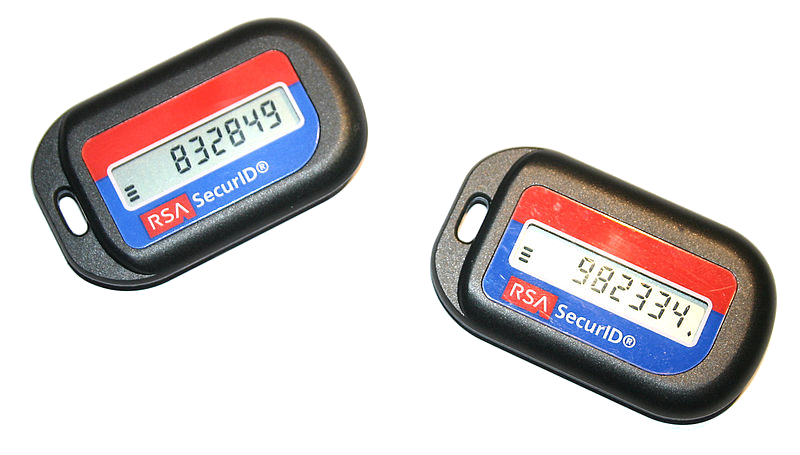
The IT security world is still reeling from the impact of the OpenSSL Heartbleed bug. Thanks to the bug, many experts have been reviewing other technologies to try and find similar risks. While Heartbleed was hidden away in the depths of the OpenSSL code base, another major security risk has been hiding in plain sight: SMS authentication for web site logins. Remarkably, a number of firms have started giving customers the ability to receive single-use passwords over SMS for logging into their secure web sites. Some have even insisted that customers can no longer log in without it, denying customers the right to make an important choice about their own security preferences. Unfortunately, SMS is no substitute to the one-time-passwords generated using proper authentication tokens or the use of other strong authentication schemes such as cryptographic smart cards. Even telephone companies themselves advise that SMS should not be used to secure financial transactions. Ocean's 11 in real life: exploiting the weakest link in the chain To deliver single-use SMS passwords, the SMS must travel through various networks from the firm's headquarters, to a wholesale SMS gateway, international SMS network and finally down the line of the local phone company. In comparison, properly certified token devices generate a code inside the device in the palm of your hand. The code only travels from the screen to your eyes. In a litany of frauds coming in all shapes and sizes, telephone networks have been exploited over and over again because they are almost always the weakest link in the chain. Using the mobile SMS network for authentication is not building on solid ground - some experts even feel it is downright stupidity. One of the most serious examples was the theft of $150,000,000 from a pension fund deposited with JP Morgan: it was described as a real-life case of Ocean's 11. The authentication was meant to be a phone call rather than an SMS: a phone company employee who was in on the scam duly ensured the call never reached the correct place. The insecurity of traditional telephone networks has been on display for all the world to see in the ongoing trial of News Corporation executives for phone hacking. If journalists from a tabloid newspaper can allegedly hack a dozen phones before their first cigarette of the day, is it really wise to use an insecure technology like SMS as the cornerstone of a security system for authorizing transactions? A fraud recently played out on many credit card holders in the UK exploited a low-tech feature of the phone system to trick people to believe they were safe by "calling back" to their bank. A plethora of new attack vectors The staggering reality of the situation is that attackers don't even have to directly hack their victim's phones to access SMS messages. As the Android API documentation demonstrates, SMS reception is notified to all apps in real-time. Apps can process the messages even when the phone is sleeping and the message is not read by the user. Just consider all the apps on a phone that have requested permission to read incoming messages. There was an uproar recently when a new version of the Facebook app started demanding permissions to read incoming SMS. The app can't be installed if the user doesn't agree to these new permissions. WhatsApp, another popular app that has SMS access rights, was recently exposed in a major security scandal which revealed they use a phone's IMEI number as the password. When people install an app like Tinder (which does not yet request SMS access) is the security of their bank account likely to be at the front of their mind? Even if Facebook intends no harm, they have opened the floodgates by further de-sensitizing users to the risks of giving apps un-necessary access to their data. These companies are looking for every piece of data that could give them an edge in their customer profiling and marketing programs. Having real-time access to your SMS is a powerful way for them to understand your activities and feelings at every moment in the day. To facilitate these data analysis techniques, replicating and archiving your messages into their cloud databases (whether you can see them there or not) is par for the course. The cloud, of course, has become a virtual smorgasboard for cyber-criminals, including both hackers and occasionally insiders wanting to peek at private data or harvest it en-masse. Social networking and communication sites are built on a philosophy of sharing data to create interaction and excitement. Unfortunately, this is orthogonal to the needs of security. In this context, the telephone network itself may no longer be the weakest link in the chain. The diligent attacker only needs to look for the cloud operator with an unplugged security hole and use their system as a stepping stone to read any SMS they want, when they want. Would you notice a stray SMS? Maybe you feel that you would notice a stray SMS carrying a login code for your bank account. Would you always be able to react faster than the criminal however? Thanks to social networks, or location data inadvertently leaked by other apps the attacker can easily work out whether you are on holiday, at the gym, at a party or sleeping or in some other situation where you are not likely to check messages immediately. If you receive a flood of SMS spam messages (deliberately sent by an attacker) in the middle of the night and you put your phone into silent mode and ignore it, you may well miss one message that was a login to your bank account. SMS technology was never designed for secure activities. The inconvenience of SMS While security is a headline issue these days, it is also worth reflecting on the inconvenience of SMS in some situations. Travel is at the top of the list: SMS doesn't work universally when abroad. These are usually the times when the only way to access the bank is through the web site. After dealing with the irritations of the hotel or airport wifi registration, do you really need more stress from your bank's systems too? For some networks, SMS can be delayed by hours or days, sometimes never arriving at all. Many people swap their SIM cards when travelling to avoid the excessive roaming charges and there is extra inconvenience in swapping SIM cards back again just to log in to a bank account. Worst of all, if you are tethering with a SIM card from the country you are visiting, then it is impossible for you to receive the SMS message from the bank on your regular SIM card while simultaneously maintaining the SSL connection to their web site over your new SIM card. Other problems like a flat battery, water damage or PIN permanently blocked by children playing with the phone can also leave you without access to your bank account for varying lengths of time. Is there any up-side to SMS authentication? The only potential benefit to SMS authentication is that it weeds out some of the most amateur attempts to compromise your bank account, but this is a false sense of security and it opens up new attack vectors through the cloud as we have just demonstrated. For all other purposes, it smells like a new form of security theater. A more likely reason why it has become popular amongst some firms is that many lenders want to ensure they have mobile phone numbers to contact customers when loan or credit card payments are missed. Making the mobile phone number mandatory for login ensures they almost always have the correct phone number for almost 100% of customers. It is not clear that this benefit justifies the failure to provide proper security and the inconvenience when travelling though. Opting out Next time you log in to a web site, if the firm does try to enrol you in an SMS authentication scheme, it may be a good idea to click the "No thanks" option. If you have already been registered into an SMS authentication scheme, fill out the online complaint form and inform the firm that you will only accept a proper authentication token or cryptographic smart card. These solutions are tried and tested and they are the correct tool for the job.

27 April 2014

Daniel Pocock: AirBNB hosts scanning identity documents and passports?

We recently had a vacation in Italy and used AirBNB to book our accommodation in three different cities we visited. We've used AirBNB quite a few times now but we had a new experience this time: one of the hosts told me she makes a scan of the passport of each guest. Sitting on the dinner table was a shiny new looking handheld scanner similar to this: I was tempted to ask if she also wanted my fingerprints and a DNA sample too. Not wanting to be too offensive though, I simply told her that there was no way she would be making a copy of our documents. I tried to explain it to her in terms that she would understand: that AirBNB had already verified my identity and that AirBNB automatically gives her insurance (Italy is included) and she doesn't need a copy of my passport to be eligible for the insurance. At best, I suggested, she would be welcome to look at the passport to see that the name matches the AirBNB account - but no copies under any circumstances. A common problem A quick search in Google reveals we weren't the first people to have such an experience with a host. However, the AirBNB FAQ has no definite comment on the topic. I wrote to AirBNB's safety team and explained the risks with copying documents onto home computers and they are now considering adding something about this issue to their policies and FAQ. I would suggest that anybody else who is asked for a copy of an identity document should also fill in the safety report form and ask AirBNB to publish a firm policy prohibiting hosts from demanding copies of identity documents. Just what is at risk? Just how bad could it be? Some of the following risks come to mind:
  • The host's computer is sold, sent for repair or stolen and the passport images all end up in the hands of strangers.
  • Viruses and trojans designed to search hard disks for sensitive documents can quickly recognise a passport image. Such viruses are far more likely to hit a home computer than one of those computers used by passport scanners at an airport or bank.
  • Maybe the host even has children or housemates who access the same computer.
  • The host may actually be making themself a target by keeping a cache of these documents - it would be a fairly low-tech hack for a criminal to look through AirBNB listings for hosts who explicitly mention they want to copy an identity document at check-in.
Did the world really get safer since September 2011? Ever since the horrors of 09/11/2011, many people have felt an urge to try and make the world safer. Simultaneously, the rise of cheap technology has made it easy for people to take these things way too far. Everywhere from bed and breakfasts to luggage storage companies are now trying to scan these documents at every opportunity. Having electronic copies of identity documents floating around in so many different places, many of them on poorly maintained computers that are used by staff to surf the web when they are not busy, is actually a huge increase in the risk of identity fraud. A good proportion of these companies are not even required to scan/copy identity documents - for some of them it is sufficient for them to simply look at the document, just as a train conductor looks at a ticket. Many are simply scanning the documents because management have realized this is the most efficient way to accurately build up a marketing database including customer date of birth (which is harder to ask for directly). There was significant outrage a few years ago when Mossad was accused of using passport images presumably acquired at Israeli airports to give fake identities to a hit-squad. The quality of passport images now available in the hard disk of a typical AirBNB host or bed'n'breakfast are now likely to be of a higher quality and yet available for misappropriation by a far wider proportion of (cyber-)criminals.

Daniel Pocock: AirBNB hosts scanning identity documents and passports?

We recently had a vacation in Italy and used AirBNB to book our accommodation in three different cities we visited. We've used AirBNB quite a few times now but we had a new experience this time: one of the hosts told me she makes a scan of the passport of each guest. Sitting on the dinner table was a shiny new looking handheld scanner similar to this: I was tempted to ask if she also wanted my fingerprints and a DNA sample too. Not wanting to be too offensive though, I simply told her that there was no way she would be making a copy of our documents. I tried to explain it to her from her own perspective: that AirBNB had already verified my identity and that AirBNB automatically gives her insurance (Italy is included) and she doesn't need a copy of my passport to be eligible for the insurance. At best, I suggested, she would be welcome to look at the passport to see that the name matches the AirBNB account - but no copies under any circumstances. A common problem A quick search in Google reveals we weren't the first people to have such an experience with a host. However, the AirBNB FAQ has no definite comment on the topic. I wrote to AirBNB's safety team and explained the risks with copying documents onto home computers and they are now considering adding something about this issue to their policies and FAQ. I would suggest that anybody else who is asked for a copy of an identity document should also fill in the safety report form and ask AirBNB to publish a firm policy prohibiting hosts from demanding copies of identity documents. Just what is at risk? Just how bad could it be? Some of the following risks come to mind:
  • The host's computer is sold, sent for repair or stolen and the passport images all end up in the hands of strangers.
  • Viruses and trojans designed to search hard disks for sensitive documents can quickly recognise a passport image. Such viruses are far more likely to hit a home computer than one of those computers used by passport scanners at an airport or bank.
  • Maybe the host even has children or housemates who access the same computer.
  • The host may actually be making themself a target by keeping a cache of these documents - it would be a fairly low-tech hack for a criminal to look through AirBNB listings for hosts who explicitly mention they want to copy an identity document at check-in.
Did the world really get safer since September 2001? Ever since the horrors of 09/11/2001, many people have felt an urge to try and make the world safer. Simultaneously, the rise of cheap technology has made it easy for people to take security precautions too far. Everywhere from bed and breakfasts to luggage storage companies are now trying to scan and make a rather permanent electronic copy of identity documents at each opportunity. Having electronic copies of identity documents floating around in so many different places, many of them on poorly maintained computers that are used by staff to surf the web when they are not busy, is actually a huge increase in the risk of identity fraud. A good proportion of these companies are not even required to scan/copy identity documents - for some of them it is sufficient for them to simply look at the document, just as a train conductor looks at a ticket. Many are simply scanning the documents because management have realized this is the most efficient way to accurately build up a marketing database including customer date of birth (which is harder to ask for directly). There was significant outrage a few years ago when Mossad agents were accused of using passport images presumably acquired at airports to give identities to a their operatives. The quality of passport images now available in the hard disk of a typical AirBNB host or bed'n'breakfast are now likely to be of a higher quality more easily accessible for any number of unintended uses.

Next.

Previous.