Search Results: "bod"

3 July 2022

Russ Allbery: Review: The Haunting of Tram Car 015

Review: The Haunting of Tram Car 015, by P. Dj l Clark
Publisher: Tordotcom
Copyright: February 2019
ASIN: B07H796G2Z
Format: Kindle
Pages: 65
The Haunting of Tram Car 015 is a novella and the second story in the Dead Djinn universe, after "A Dead Djinn in Cairo". While there are a few references to the previous story, it's not a direct sequel and has different main characters. Order of reading is not important. Agents Hamed and Onsi of the Ministry of Alchemy, Enchantments, and Supernatural Entities have been called by the Superintendent of Tram Safety & Maintenance at Ramses Station because one of the tram cars is haunted. The aerial tram system of Cairo (technically a telpher system since the cars move independently) is one of the modern wonders of the 1912 city after al-Jahiz breached the boundaries between universes and allowed djinn to return to the world. The trams are elaborate magical clockwork machines created by djinn to travel their routes, but tram car 015 had to be taken out of service after a magical disturbance. Some supernatural creature has set up residence in its machinery and has been attacking passengers. Like "A Dead Djinn in Cairo," this is a straightforward police procedural in an alternate history with magic and steampunk elements. There isn't much in the way of mystery, and little about the plot will come as a surprise. The agents show up, study the problem, do a bit of research, and then solve the problem with some help. Unlike the previous story, though, it does a far better job at setting. My main complaint about Clark's first story in this universe was that it had a lot of infodumps and not much atmosphere. The Haunting of Tram Car 015 is more evocative, starting with the overheated, windowless office of the superintendent and its rattling fan and continuing with a glimpse of the city's aerial tram network spreading out from the dirigible mooring masts of Ramses Station. While the agents puzzle through identifying the unwanted tram occupant, they have to deal with bureaucratic funding fights and the expense of djinn specialists. In the background, the women of Cairo are agitating for the vote, and Islam, Coptic Christianity, and earlier Egyptian religions mingle warily. The story layered on top of this background is adequate but not great. It's typical urban fantasy fare built on random bits of obscure magical trivia, and feels akin to the opening problem in a typical urban fantasy novel (albeit with a refreshingly non-European magical system). It also features an irritatingly cliched bit of costuming at the conclusion. But you wouldn't read this for the story; you read it to savor the world background, and I thought that was successful. This is not a stand-out novella for me and I wouldn't have nominated it for the various awards it contended for, but it's also not my culture and by other online accounts it represents the culture well. The world background was interesting enough that I might have kept reading even if the follow-on novel had not won a Nebula award. Followed by the novel A Master of Djinn, although the continuity link is not strong. Rating: 7 out of 10

2 July 2022

Russ Allbery: Review: Overdue

Review: Overdue, by Amanda Oliver
Publisher: Chicago Review Press
Copyright: 2022
ISBN: 1-64160-534-0
Format: Kindle
Pages: 190
Like many lifetime readers, I adored the public library. I read my way through three different children's libraries at the rate of a grocery sack of books per week, including numerous re-readings, and then moved on to the adult section as my introduction to science fiction. But once I had a regular job, I discovered the fun of filling shelves with books without having to return them or worry about what the library had available. I've always supported my local library, but it's been decades since I spent much time in it. When I last used one heavily, the only computers were at the checkout desk and the only books were physical, normally hardcovers. Overdue: Reckoning with the Public Library therefore caught my eye when I saw a Twitter thread about it before publication. It promised to be a picture of the modern public library and its crises from the perspective of the librarian. The author's primary topic was the drafting of public libraries as de facto homeless service centers, but I hoped it would also encompass technological change, demand for new services, and the shifting meaning of what a public library is for. Overdue does... some of that. The author was a children's librarian in a Washington DC public school and then worked at a downtown branch of the Washington DC public library, and the book includes a few anecdotes from both experiences. Most of the book, though, is Oliver's personal memoir of how she got into field, why she chose to leave it, and how she is making sense of her feelings about the profession. Intermixed with that memoir is wide-ranging political commentary on topics ranging from gentrification to mental health care. This material is relevant to the current challenges libraries face, but it wandered far afield from what I was hoping to get from the book. I think of non-fiction books as coming in a few basic shapes. One is knowledge from an expert: the author has knowledge about a topic that is not widely shared, and they write a book to share it. Another is popularization: an author, possibly without prior special expertise in the topic, does research the reader could have done but doesn't have time to do and then summarizes the results in a format that's easier to understand than the original material. And a third is memoir, in which the author tells the story of their own life. This is a variation of the first type, since the author is obviously an expert in their own life, but most people's lives are not interesting. (Mine certainly isn't!) Successful memoir therefore depends on either having an unusual life or being a compelling storyteller, and ideally both. Many non-fiction books fall into multiple categories, but it's helpful for an author to have a clear idea of which of these goals they're pursuing since they result in different books. If the author is writing primarily from a position of special expertise, the book should focus on that expertise. I am interested in librarians and libraries and would like to know more about that job, so I will read with interest your personal stories about being a librarian. I am somewhat interested in your policy suggestions for how to make libraries work better, although more so if you can offer context and analysis beyond your personal experiences. I am less interested in your opinions on, say, gentrification. That's not because I doubt it is a serious problem (it is) or that it impacts libraries (it does). It's because working in a library doesn't provide any special expertise in gentrification beyond knowing that it exists, something that I can see by walking around the corner. If I want to know more, I will read books by urban planners, sociologists, and housing rights activists. This is a long-winded way of saying that I wish Overdue had about four times as many stories about libraries, preferably framed by general research and background that extended beyond the author's personal experience, or at least more specific details of the politics of the Washington DC library system. The personal memoir outside of the library stories failed to hold my interest. This is not intended as a slam on the author. Oliver seems like a thoughtful and sincere person who is struggling with how to do good in the world without burning out, which is easy for me to sympathize with. I suspect I broadly agree with her on many political positions. But I have read all of this before, and personally lived through some of the same processing, and I don't think Oliver offered new insight. The library stories were memorable enough to form the core of a good book, but the memoir structure did nothing for them and they were strangled by the unoriginal and too-general political analysis. At the risk of belaboring a negative review, there are two other things in Overdue that I've also seen in other writing and seem worth commenting on. The first is the defensive apology that the author may not have the best perspective to write the book. It's important to be clear: I am glad that the Oliver has thought about the ways her experiences as a white woman may not be representative of other people. This is great; the world is a better place when more people consider that. I'm less fond of putting that observation in the book, particularly at length. As the author, rather than writing paragraphs vaguely acknowledging that other people have different experiences, she could instead fix the problem: go talk to librarians of other ethnic and social backgrounds and put their stories in this book. The book would then represent broader experiences and not require the apology. Overdue desperately needed more library-specific content, so that would have improved the book in more than one way. Or if Oliver is ideologically opposed to speaking for other people (she makes some comments to that effect), state up-front, once, that this is a personal memoir and, as a memoir, represents only her own experience. But the author should do something with this observation other than dump its awkwardness on the reader, if for no other reason than that lengthy disclaimers about the author's limited perspective are boring. The second point is about academic jargon and stock phrasing. I work in a field that relies on precise distinctions of meaning (between identity, authentication, and authorization, for example), and therefore I rely on jargon. Its purpose is to make those types of fine distinctions. But authors who read heavily in fields with jargon tend to let that phrasing slip into popular writing where it's not necessary. The result is, to quote Orwell, "gumming together long strips of words which have already been set in order by someone else." The effect may be small in a single sentence but, when continued throughout a book, the overuse of jargon is leaden, belabored, and confusing. Any example I choose will be minor since the effect is cumulative, but one of several I noticed in Overdue is "lived experience." This is jargon from philosophy that, within the field, draws a useful distinction between one's direct experiences of living in the world, and academic or scientific experience with a field. Both types of experience are valuable in different situations, but they're not equivalent. This is a useful phrase when the distinction matters and is unclear. When the type of experience one is discussing is obvious in context (the case in at least three of the four uses in this book), the word "lived" adds nothing but verbosity. If too much of this creeps into writing, it becomes clunky and irritating to read. The best (and not coincidentally the least clunky) part of this book is Oliver's stories of the patrons and other employees of the Northwest One branch of the Washington DC library system and her experiences with them. The picture was not as vivid as I was hoping for, but I came away with some new understanding of typical interactions and day-to-day difficulties. The same was true to a lesser extent for her experiences as a school librarian. For both, I wish there had been more context and framing so that I could see how her experiences fit into a whole system, but those parts of the book were worth reading. Unfortunately, they weren't enough of those parts in the book for me to recommend Overdue. But I'm still interested in reading the book I hoped I was getting! Rating: 5 out of 10

1 July 2022

Steve Kemp: An update on my simple golang TCL interpreter

So my previous post introduced a trivial interpreter for a TCL-like language. In the past week or two I've cleaned it up, fixed a bunch of bugs, and added 100% test-coverage. I'm actually pretty happy with it now. One of the reasons for starting this toy project was to experiment with how easy it is to extend the language using itself Some things are simple, for example replacing this:
puts "3 x 4 = [expr 3 * 4]"
With this:
puts "3 x 4 = [* 3 4]"
Just means defining a function (proc) named *. Which we can do like so:
proc *  a b   
    expr $a * $b
 
(Of course we don't have lists, or variadic arguments, so this is still a bit of a toy example.) Doing more than that is hard though without support for more primitives written in the parent language than I've implemented. The obvious thing I'm missing is a native implementation of upvalue, which is TCL primitive allowing you to affect/update variables in higher-scopes. Without that you can't write things as nicely as you would like, and have to fall back to horrid hacks or be unable to do things.
# define a procedure to run a body N times
proc repeat  n body   
    set res ""
    while  > $n 0   
        decr n
        set res [$body]
     
    $res
 
# test it out
set foo 12
repeat 5   incr foo  
#  foo is now 17 (i.e. 12 + 5)
A similar story implementing the loop word, which should allow you to set the contents of a variable and run a body a number of times:
proc loop  var min max bdy   
    // result
    set res ""
    // set the variable.  Horrid.
    // We miss upvalue here.
    eval "set $var [set min]"
    // Run the test
    while  <= [set "$$var"] $max    
        set res [$bdy]
        // This is a bit horrid
        // We miss upvalue here, and not for the first time.
        eval  incr "$var" 
     
    // return the last result
    $res
 
loop cur 0 10   puts "current iteration $cur ($min->$max)"  
# output is:
# => current iteration 0 (0-10)
# => current iteration 1 (0-10)
# ...
That said I did have fun writing some simple test-cases, and implementing assert, assert_equal, etc. In conclusion I think the number of required primitives needed to implement your own control-flow, and run-time behaviour, is a bit higher than I'd like. Writing switch, repeat, while, and similar primitives inside TCL is harder than creating those same things in FORTH, for example.

27 June 2022

Russ Allbery: Review: Light from Uncommon Stars

Review: Light from Uncommon Stars, by Ryka Aoki
Publisher: Tor
Copyright: 2021
ISBN: 1-250-78907-9
Format: Kindle
Pages: 371
Katrina Nguyen is an young abused transgender woman. As the story opens, she's preparing to run away from home. Her escape bag is packed with meds, clothes, her papers, and her violin. The note she is leaving for her parents says that she's going to San Francisco, a plausible lie. Her actual destination is Los Angeles, specifically the San Gabriel Valley, where a man she met at a queer youth conference said he'd give her a place to sleep. Shizuka Satomi is the Queen of Hell, the legendary uncompromising violin teacher responsible for six previous superstars, at least within the limited world of classical music. She's wealthy, abrasive, demanding, and intimidating, and unbeknownst to the rest of the world she has made a literal bargain with Hell. She has to deliver seven souls, seven violin players who want something badly enough that they'll bargain with Hell to get it. Six have already been delivered in spectacular fashion, but she's running out of time to deliver the seventh before her own soul is forfeit. Tamiko Grohl, an up-and-coming violinist from her native Los Angeles, will hopefully be the seventh. Lan Tran is a refugee and matriarch of a family who runs Starrgate Donut. She and her family didn't flee another unstable or inhospitable country. They fled the collapsing Galactic Empire, securing their travel authorization by promising to set up a tourism attraction. Meanwhile, she's careful to give cops free donuts and to keep their advanced technology carefully concealed. The opening of this book is unlikely to be a surprise in general shape. Most readers would expect Katrina to end up as Satomi's student rather than Tamiko, and indeed she does, although not before Katrina has a very difficult time. Near the start of the novel, I thought "oh, this is going to be hurt/comfort without a romantic relationship," and it is. But it then goes beyond that start into a multifaceted story about complexity, resilience, and how people support each other. It is also a fantastic look at the nuance and intricacies of being or supporting a transgender person, vividly illustrated by a story full of characters the reader cares about and without the academic abstruseness that often gets in the way. The problems with gender-blindness, the limitations of honoring someone's gender without understanding how other people do not, the trickiness of privilege, gender policing as a distraction and alienation from the rest of one's life, the complications of real human bodies and dysmorphia, the importance of listening to another person rather than one's assumptions about how that person feels it's all in here, flowing naturally from the story, specific to the characters involved, and never belabored. I cannot express how well-handled this is. It was a delight to read. The other wonderful thing Aoki does is set Satomi up as the almost supernaturally competent teacher who in a sense "rescues" Katrina, and then invert the trope, showing the limits of Satomi's expertise, the places where she desperately needs human connection for herself, and her struggle to understand Katrina well enough to teach her at the level Satomi expects of herself. Teaching is not one thing to everyone; it's about listening, and Katrina is nothing like Satomi's other students. This novel is full of people thinking they finally understand each other and realizing there is still more depth that they had missed, and then talking through the gap like adults. As you can tell from any summary of this book, it's an odd genre mash-up. The fantasy part is a classic "magician sells her soul to Hell" story; there are a few twists, but it largely follows genre expectations. The science fiction part involving Lan is unfortunately weaker and feels more like a random assortment of borrowed Star Trek tropes than coherent world-building. Genre readers should not come to this story expecting a well-thought-out science fiction universe or a serious attempt to reconcile metaphysics between the fantasy and science fiction backgrounds. It's a quirky assortment of parts that don't normally go together, defy easy classification, and are often unexplained. I suspect this was intentional on Aoki's part given how deeply this book is about the experience of being transgender. Of the three primary viewpoint characters, I thought Lan's perspective was the weakest, and not just because of her somewhat generic SF background. Aoki uses her as a way to talk about the refugee experience, describing her as a woman who brings her family out of danger to build a new life. This mostly works, but Lan has vastly more power and capabilities than a refugee would normally have. Rather than the typical Asian refugee experience in the San Gabriel valley, Lan is more akin to a US multimillionaire who for some reason fled to Vietnam (relative to those around her, Lan is arguably even more wealthy than that). This is also a refugee experience, but it is an incredibly privileged one in a way that partly undermines the role that she plays in the story. Another false note bothered me more: I thought Tamiko was treated horribly in this story. She plays a quite minor role, sidelined early in the novel and appearing only briefly near the climax, and she's portrayed quite negatively, but she's clearly hurting as deeply as the protagonists of this novel. Aoki gives her a moment of redemption, but Tamiko gets nothing from it. Unlike every other injured and abused character in this story, no one is there for Tamiko and no one ever attempts to understand her. I found that profoundly sad. She's not an admirable character, but neither is Satomi at the start of the book. At least a gesture at a future for Tamiko would have been appreciated. Those two complaints aside, though, I could not put this book down. I was able to predict the broad outline of the plot, but the specifics were so good and so true to characters. Both the primary and supporting cast are unique, unpredictable, and memorable. Light from Uncommon Stars has a complex relationship with genre. It is squarely in the speculative fiction genre; the plot would not work without the fantasy and (more arguably) the science fiction elements. Music is magical in a way that goes beyond what can be attributed to metaphor and subjectivity. But it's also primarily character story deeply rooted in the specific location of the San Gabriel valley east of Los Angeles, full of vivid descriptions (particularly of food) and day-to-day life. As with the fantasy and science fiction elements, Aoki does not try to meld the genre elements into a coherent whole. She lets them sit side by side and be awkward and charming and uneven and chaotic. If you're the sort of SF reader who likes building a coherent theory of world-building rules, you may have to turn that desire off to fully enjoy this book. I thought this book was great. It's not flawless, but like its characters it's not trying to be flawless. In places it is deeply insightful and heartbreakingly emotional; in others, it's a glorious mess. It's full of cooking and food, YouTube fame, the disappointments of replicators, video game music, meet-cutes over donuts, found family, and classical music drama. I wish we'd gotten way more about the violin repair shop and a bit less warmed-over Star Trek, but I also loved it exactly the way it was. Definitely the best of the 2022 Hugo nominees that I've read so far. Content warning for child abuse, rape, self-harm, and somewhat explicit sex work. The start of the book is rather heavy and horrific, although the author advertises fairly clearly (and accurately) that things will get better. Rating: 9 out of 10

26 June 2022

Russ Allbery: Review: Feet of Clay

Review: Feet of Clay, by Terry Pratchett
Series: Discworld #19
Publisher: Harper
Copyright: October 1996
Printing: February 2014
ISBN: 0-06-227551-8
Format: Mass market
Pages: 392
Feet of Clay is the 19th Discworld novel, the third Watch novel, and probably not the best place to start. You could read only Guards! Guards! and Men at Arms before this one, though, if you wanted. This story opens with a golem selling another golem to a factory owner, obviously not caring about the price. This is followed by two murders: an elderly priest, and the curator of a dwarven bread museum. (Dwarf bread is a much-feared weapon of war.) Meanwhile, assassins are still trying to kill Watch Commander Vimes, who has an appointment to get a coat of arms. A dwarf named Cheery Littlebottom is joining the Watch. And Lord Vetinari, the ruler of Ankh-Morpork, has been poisoned. There's a lot going on in this book, and while it's all in some sense related, it's more interwoven than part of a single story. The result felt to me like a day-in-the-life episode of a cop show: a lot of character development, a few largely separate plot lines so that the characters have something to do, and the development of a few long-running themes that are neither started nor concluded in this book. We check in on all the individual Watch members we've met to date, add new ones, and at the end of the book everyone is roughly back to where they were when the book started. This is, to be clear, not a bad thing for a book to do. It relies on the reader already caring about the characters and being invested in the long arc of the series, but both of those are true of me, so it worked. Cheery is a good addition, giving Pratchett an opportunity to explore gender nonconformity with a twist (all dwarfs are expected to act the same way regardless of gender, which doesn't work for Cheery) and, even better, giving Angua more scenes. Angua is among my favorite Watch characters, although I wish she'd gotten more of a resolution for her relationship anxiety in this book. The primary plot is about golems, which on Discworld are used in factories because they work nonstop, have no other needs, and do whatever they're told. Nearly everyone in Ankh-Morpork considers them machinery. If you've read any Discworld books before, you will find it unsurprising that Pratchett calls that belief into question, but the ways he gets there, and the links between the golem plot and the other plot threads, have a few good twists and turns. Reading this, I was reminded vividly of Orwell's discussion of Charles Dickens:
It seems that in every attack Dickens makes upon society he is always pointing to a change of spirit rather than a change of structure. It is hopeless to try and pin him down to any definite remedy, still more to any political doctrine. His approach is always along the moral plane, and his attitude is sufficiently summed up in that remark about Strong's school being as different from Creakle's "as good is from evil." Two things can be very much alike and yet abysmally different. Heaven and Hell are in the same place. Useless to change institutions without a "change of heart" that, essentially, is what he is always saying. If that were all, he might be no more than a cheer-up writer, a reactionary humbug. A "change of heart" is in fact the alibi of people who do not wish to endanger the status quo. But Dickens is not a humbug, except in minor matters, and the strongest single impression one carries away from his books is that of a hatred of tyranny.
and later:
His radicalism is of the vaguest kind, and yet one always knows that it is there. That is the difference between being a moralist and a politician. He has no constructive suggestions, not even a clear grasp of the nature of the society he is attacking, only an emotional perception that something is wrong, all he can finally say is, "Behave decently," which, as I suggested earlier, is not necessarily so shallow as it sounds. Most revolutionaries are potential Tories, because they imagine that everything can be put right by altering the shape of society; once that change is effected, as it sometimes is, they see no need for any other. Dickens has not this kind of mental coarseness. The vagueness of his discontent is the mark of its permanence. What he is out against is not this or that institution, but, as Chesterton put it, "an expression on the human face."
I think Pratchett is, in that sense, a Dickensian writer, and it shows all through Discworld. He does write political crises (there is one in this book), but the crises are moral or personal, not ideological or structural. The Watch novels are often concerned with systems of government, but focus primarily on the popular appeal of kings, the skill of the Patrician, and the greed of those who would maneuver for power. Pratchett does not write (at least so far) about the proper role of government, the impact of Vetinari's policies (or even what those policies may be), or political theory in any deep sense. What he does write about, at great length, is morality, fairness, and a deeply generous humanism, all of which are central to the golem plot. Vimes is a great protagonist for this type of story. He's grumpy, cynical, stubborn, and prejudiced, and we learn in this book that he's a descendant of the Discworld version of Oliver Cromwell. He can be reflexively self-centered, and he has no clear idea how to use his newfound resources. But he behaves decently towards people, in both big and small things, for reasons that the reader feels he could never adequately explain, but which are rooted in empathy and an instinctual sense of fairness. It's fun to watch him grumble his way through the plot while making snide comments about mysteries and detectives. I do have to complain a bit about one of those mysteries, though. I would have enjoyed the plot around Vetinari's poisoning more if Pratchett hadn't mercilessly teased readers who know a bit about French history. An allusion or two would have been fun, but he kept dropping references while having Vimes ignore them, and I found the overall effect both frustrating and irritating. That and a few other bits, like Angua's uncommunicative angst, fell flat for me. Thankfully, several other excellent scenes made up for them, such as Nobby's high society party and everything about the College of Heralds. Also, Vimes's impish PDA (smartphone without the phone, for those younger than I am) remains absurdly good commentary on the annoyances of portable digital devices despite an original publication date of 1996. Feet of Clay is less focused than the previous Watch novels and more of a series book than most Discworld novels. You're reading about characters introduced in previous books with problems that will continue into subsequent books. The plot and the mysteries are there to drive the story but seem relatively incidental to the characterization. This isn't a complaint; at this point in the series, I'm in it for the long haul, and I liked the variation. As usual, Pratchett is stronger for me when he's not overly focused on parody. His own characters are as good as the material he's been parodying, and I'm happy to see them get a book that's not overshadowed by another material. If you've read this far in the series, or even in just the Watch novels, recommended. Followed by Hogfather in publication order and, thematically, by Jingo. Rating: 8 out of 10

24 June 2022

Russ Allbery: Review: A Dead Djinn in Cairo

Review: A Dead Djinn in Cairo, by P. Dj l Clark
Publisher: Tordotcom
Copyright: May 2016
ASIN: B01DJ0NALI
Format: Kindle
Pages: 47
Fatma el-Sha'arawi is a special investigator with the Egyptian Ministry of Alchemy, Enchantments, and Supernatural Entities in an alternate 1912 Egypt. In Fatma's world, the mystic al-Jahiz broke through to the realm of the djinn in the late 1800s, giving Egypt access to magic and the supernatural and the djinn access to Egypt. It is now one of the great powers of the world, able to push off the Europeans and control its own politics. This is a Tor.com original novelette, so you can read it on-line for free or drop $2 on a Kindle version for convenience. It's the first story in the "Dead Djinn" universe, in which Clark has also written a novella and a novel (the latter of which won the Nebula Award for best novel in 2022). There are three things here I liked. Fatma is a memorable character, both for her grumpy demeanor as a rare female investigator having to put up with a sexist pig of a local police liaison, and for her full British attire (including a bowler hat) and its explanation. (The dynamics felt a bit modern for a story set in 1912, but not enough to bother me.) The setting is Arabian-inspired fantasy, which is a nice break from the normal European or Celtic stuff. And there are interesting angels (Fatma: "They're not really angels"), which I think have still-underused potential, particularly when they can create interesting conflicts with Coptic Christianity and Islam. Clark's version are energy creatures of some sort inside semi-mechanical bodies with visuals that reminded me strongly of Diablo III (which in this context is a compliment). I'm interested to learn more about them, although I hope there's more going on than the disappointing explanation we get at the end of this story. Other than those elements, there's not much here. As hinted by the title, the story is structured as a police investigation and Fatma plays the misfit detective. But there's no real mystery; the protagonists follow obvious clue to obvious clue to obvious ending. The plot structure is strictly linear and never surprised me. Aasim is an ass, which gives Fatma something to react to but never becomes real characterization. The world-building is the point, but most of it is delivered in infodumps, and the climax is a kind-of-boring fight where the metaphysics are explained rather than discovered. I'm possibly being too harsh. There's space for novelettes that tell straightforward stories without the need for a twist or a sting. But I admit I found this boring. I think it's because it's not tight enough to be carried by the momentum of a simple plot, and it's also not long enough for either the characters or the setting to breathe and develop. The metaphysics felt rushed and the characterization cramped. I liked Siti and the dynamic between Siti and Fatma at the end of the story, but there wasn't enough of it. As a world introduction, it does its job, and the non-European fantasy background is interesting enough that I'd be willing to read more, even without the incentive of reading all award winning novels. But "A Dead Djinn in Cairo" doesn't do more than its job. It might be worth skipping (I'll have to read the subsequent works to know for certain), but it won't take long to read and the price is right. Followed by The Haunting of Tram Car 015. Rating: 6 out of 10

21 June 2022

Steve Kemp: Writing a simple TCL interpreter in golang

Recently I was reading Antirez's piece TCL the Misunderstood again, which is a nice defense of the utility and value of the TCL language. TCL is one of those scripting languages which used to be used a hell of a lot in the past, for scripting routers, creating GUIs, and more. These days it quietly lives on, but doesn't get much love. That said it's a remarkably simple language to learn, and experiment with. Using TCL always reminds me of FORTH, in the sense that the syntax consists of "words" with "arguments", and everything is a string (well, not really, but almost. Some things are lists too of course). A simple overview of TCL would probably begin by saying that everything is a command, and that the syntax is very free. There are just a couple of clever rules which are applied consistently to give you a remarkably flexible environment. To get started we'll set a string value to a variable:
  set name "Steve Kemp"
  => "Steve Kemp"
Now you can output that variable:
  puts "Hello, my name is $name"
  => "Hello, my name is Steve Kemp"
OK, it looks a little verbose due to the use of set, and puts is less pleasant than print or echo, but it works. It is readable. Next up? Interpolation. We saw how $name expanded to "Steve Kemp" within the string. That's true more generally, so we can do this:
 set print pu
 set me    ts
 $print$me "Hello, World"
 => "Hello, World"
There "$print" and "$me" expanded to "pu" and "ts" respectively. Resulting in:
 puts "Hello, World"
That expansion happened before the input was executed, and works as you'd expect. There's another form of expansion too, which involves the [ and ] characters. Anything within the square-brackets is replaced with the contents of evaluating that body. So we can do this:
 puts "1 + 1 = [expr 1 + 1]"
 => "1 + 1 = 2"
Perhaps enough detail there, except to say that we can use and to enclose things that are NOT expanded, or executed, at parse time. This facility lets us evaluate those blocks later, so you can write a while-loop like so:
 set cur 1
 set max 10
 while   expr $cur <= $max    
       puts "Loop $cur of $max"
       incr cur
  
Anyway that's enough detail. Much like writing a FORTH interpreter the key to implementing something like this is to provide the bare minimum of primitives, then write the rest of the language in itself. You can get a usable scripting language with only a small number of the primitives, and then evolve the rest yourself. Antirez also did this, he put together a small TCL interpreter in C named picol: Other people have done similar things, recently I saw this writeup which follows the same approach: So of course I had to do the same thing, in golang: My code runs the original code from Antirez with only minor changes, and was a fair bit of fun to put together. Because the syntax is so fluid there's no complicated parsing involved, and the core interpreter was written in only a few hours then improved step by step. Of course to make a language more useful you need I/O, beyond just writing to the console - and being able to run the list-operations would make it much more useful to TCL users, but that said I had fun writing it, it seems to work, and once again I added fuzz-testers to the lexer and parser to satisfy myself it was at least somewhat robust. Feedback welcome, but even in quiet isolation it's fun to look back at these "legacy" languages and recognize their simplicity lead to a lot of flexibility.

20 June 2022

Iustin Pop: Experiment: A week of running

My sports friends know that I wasn t able to really run in many, many years, due to a recurring injury that was not fully diagnosed and which, after many sessions with the doctor, ended up with OK-ish state for day-to-day life but also with these words: Maybe, running is just not for you? The year 2012 was my running year . I went to a number of races, wrote blog posts, then slowly started running only rarely, then a few years later I was really only running once in a while, and coupled with a number of bad ideas of the type lets run today after a long break, but a lot , I started injuring my foot. Add a few more years, some more kilograms on my body, a one event of jumping with a kid on my shoulders and landing on my bad foot, and the setup was complete. Doctor visits, therapy, slow improvements, but not really solving the problem. 6 months breaks, small attempts at running, pain again, repeat, pain again, etc. It ended up with me acknowledging that yes, maybe running is not for me, and I should really give it up. Incidentally, in 2021, as part of me trying to improve my health/diet, I tried some thing that is not important for this post and for the first time in a long time, I was fully, 100%, pain free in my leg during day-to-day activities. Huh, maybe this is not purely related to running? From that point on, my foot became, very slowly, better. I started doing short runs (2-3km), especially on holidays where I can t bike, and if I was careful, it didn t go too bad. But I knew I can t run, so these were rare events. In April this year, on vacation, I run a couple of times - 20km distance. In May, 12km. Then, there was a Garmin Badge I really wanted, so against my good judgement, I did a run/walk (2:1 ratio) the previous weekend, and to my surprise, no unwanted side-effect. And I got an idea: what if I do short run/walks an entire week? When does my foot break ? I mean, by now I knew that a short (3-4, maybe 5km) run that has pauses doesn t negatively impact my foot. What about the 2nd one? Or the 3rd one? When does it break? Is it distance, or something else? The other problem was - when to run? I mean, on top of hybrid work model. When working from home, all good, but when working from the office? So the other, somewhat more impossible task for me, was to wake up early and run before 8 AM. Clearly destined to fail! But, the following day (Monday), I did wake up and 3km. Then Tuesday again, 3.3km (and later, one hour of biking). Wed - 3.3km. Thu - 4.40km, at 4:1 ratio (2m:30s). Friday, 3.7km (4:1), plus a very long for me (112km) bike ride. By this time, I was physically dead. Not my foot, just my entire body. On Saturday morning, Training Peaks said my form is -52, and it starts warning below -15. I woke up late and groggy, and I had to extra motivate myself to go for the last, 5.3km run, to round up the week. On Friday and Saturday, my problem leg did start to how to say, remind me it is problematic? But not like previously, no waking in the morning with a stiff tendon. No, just not fully happy. And, to my surprise, correlated again with my consumption of problematic food (I was getting hungrier and hungrier, and eating too much of things I should keep an eye on). At this point, with the week behind me: Did my experiment make me wiser? Not really. Happier? Yes, 100%. I plan to buy some new running clothes, my current ones are really old. But did I really understand how my body function? A loud no. Sigh. The next challenge will be, how to manage my time across multiple sports (and work, and family, and other hobbies). Still, knowing that I can anytime go for 25-35 minutes of running, without preparation, is very reassuring. Freedom, health and injury-free sports to everyone!

Jamie McClelland: A very liberal spam assassin rule

I just sent myself a test message via Powerbase (a hosted CiviCRM project for community organizers) and it didn t arrive. Wait, nope, there it is in my junk folder with a spam score of 6!
X-Spam-Status: Yes, score=6.093 tagged_above=-999 required=5
	tests=[BAYES_00=-1.9, DKIM_SIGNED=0.1, DKIM_VALID=-0.1,
	DKIM_VALID_AU=-0.1, DKIM_VALID_EF=-0.1, DMARC_MISSING=0.1,
	HTML_MESSAGE=0.001, KAM_WEBINAR=3.5, KAM_WEBINAR2=3.5,
	NO_DNS_FOR_FROM=0.001, SPF_HELO_NONE=0.001, ST_KGM_DEALS_SUB_11=1.1,
	T_SCC_BODY_TEXT_LINE=-0.01] autolearn=no autolearn_force=no
What just happened? A careful look at the scores suggest that the KAM_WEBINAR and KAM_WEBINAR2 rules killed me. I ve never heard of them (this email came through a system I m not administering). So, I did some searching and found a page with the rules:
# SEMINARS AND WORKSHOPS SPAM
header   __KAM_WEBINAR1 From =~ /education career manage learning webinar project efolder/i
header   __KAM_WEBINAR2 Subject =~ /last chance increase productivity workplace morale payroll dept trauma.training case.study issues follow.up service.desk vip.(lunch breakfast) manage.your private.business professional.checklist customers.safer great.timesaver prep.course crash.course hunger.to.learn (keys tips).(to for).smarter/i
header   __KAM_WEBINAR3 Subject =~ /webinar strateg seminar owners.meeting webcast our.\d.new sales.video/i
body     __KAM_WEBINAR4 /executive.education contactid register now \d+.minute webinar management.position supervising.skills discover.tips register.early take.control marketing.capabilit drive.more.sales leveraging.cloud solution.provider have.a.handle plan.to.divest being.informed upcoming.webinar spearfishing.email increase.revenue industry.podcast \d+.in.depth.tips early.bird.offer pmp.certified lunch.briefing/i

meta     KAM_WEBINAR (__KAM_WEBINAR1 + __KAM_WEBINAR2 + __KAM_WEBINAR3 + __KAM_WEBINAR4 >= 3)
describe KAM_WEBINAR Spam for webinars
score    KAM_WEBINAR 3.5

meta     KAM_WEBINAR2 (__KAM_WEBINAR1 + __KAM_WEBINAR2 + __KAM_WEBINAR3 + __KAM_WEBINAR4 >= 4)
describe KAM_WEBINAR2 Spam for webinars
score    KAM_WEBINAR2 3.5
For those of you who don t care to parse those regular expressions, here s a summary: Hm. I m glad I can now fix our email, but this doesn t work so well for people with a name that includes project that like to organize webinars for which you have to register.

19 June 2022

Dirk Eddelbuettel: #38: Faster Feedback Systems

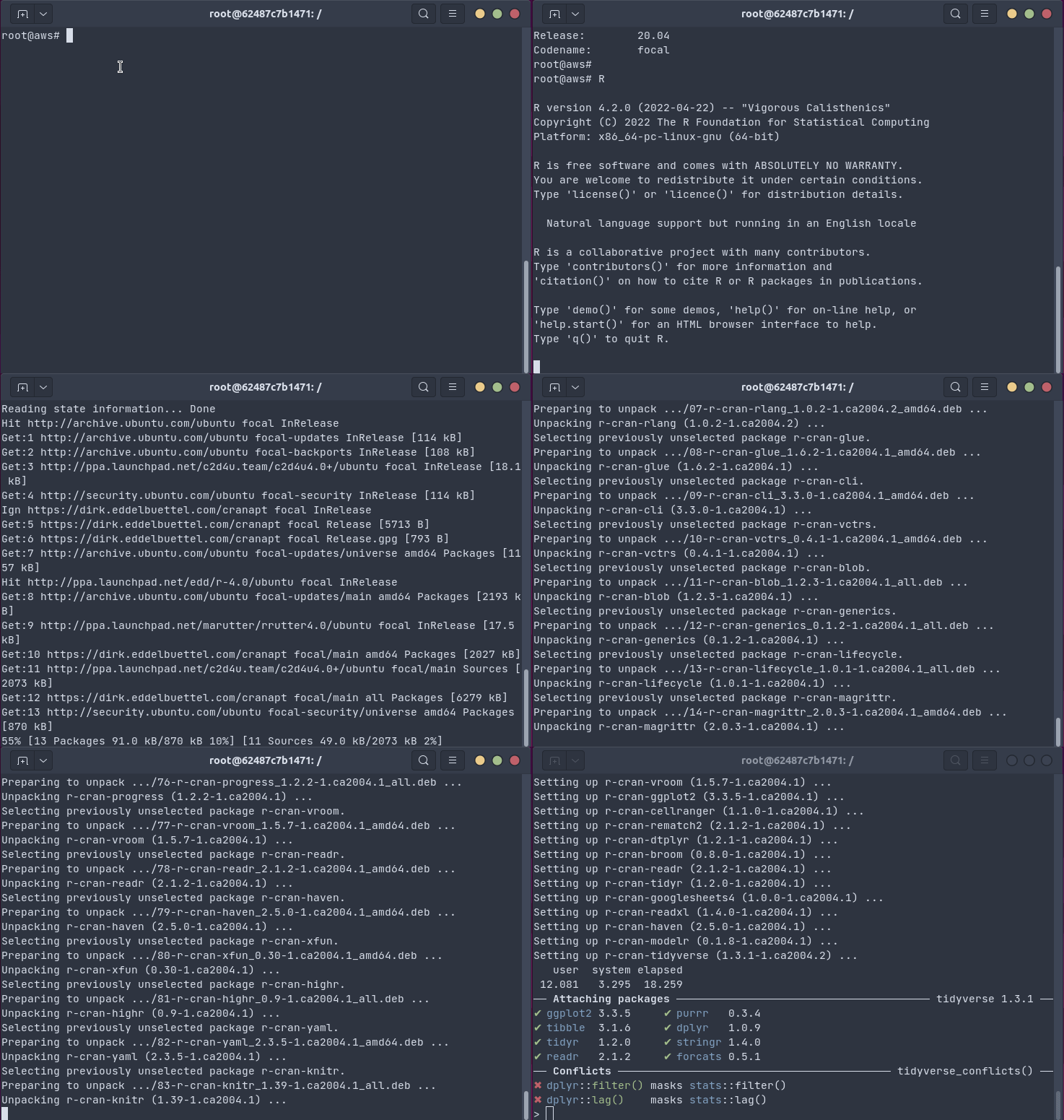
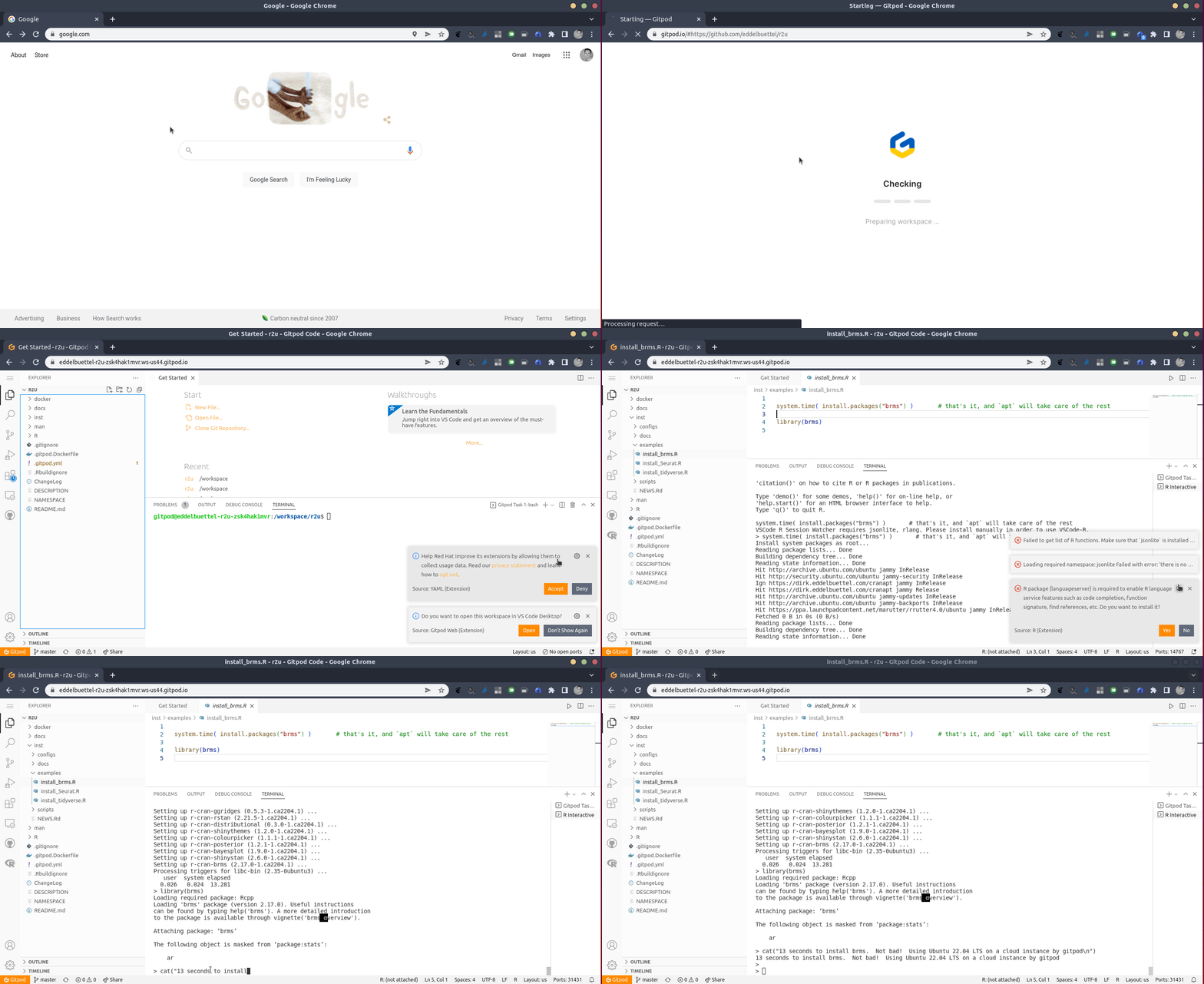
Engineers build systems. Good engineers always stress and focus efficiency of these systems. Two recent examples of engineering thinking follow. One was in a video / podcast interview with Martin Thompson (who is a noted high-performance code expert) I came across recently. The overall focus of the hour-long interview is on managing software complexity . Around minute twenty-two, the conversation turns to feedback loops and systems, and a strong preference for simple and fast systems for more immediate feedback. An important topic indeed. The second example connects to this and permeates many tweets and other writings by Erik Bernhardsson. He had an earlier 2017 post on Optimizing for iteration speed , as well as a 17 May 2022 tweet on minimizing feedback loop size, another 28 Mar 2022 tweet reply on shorter feedback loops, then a 14 Feb 2022 post on problems with slow feedback loops, as well as a 13 Jan 2022 post on a priority for tighter feedback loops, and lastly a 23 Jul 2021 post on fast feedback cycles. You get the idea: Erik really digs faster feedback loops. Nobody likes to wait: immediatecy wins each time. A few years ago, I had touched on this topic with two posts on how to make (R) package compilation (and hence installation) faster. One idea (which I still use whenever I must compile) was in post #11 on caching compilation. Another idea was in post #13: make it faster by not doing it, in this case via binary installation which skip the need for compilation (and which is what I aim for with, say, CI dependencies). Several subsequent posts can be found by scrolling down the r^4 blog section: we stressed the use of the amazing Rutter PPA c2d4u for CRAN binaries (often via Rocker containers, the (post #28) promise of RSPM, and the (post #29) awesomeness of bspm. And then in the more recent post #34 from last December we got back to a topic which ties all these things together: Dependencies. We quoted Mies van der Rohe: Less is more. Especially when it comes to dependencies as these elongate the feedback loop and thereby delay feedback. Our most recent post #37 on r2u connects these dots. Access to a complete set of CRAN binaries with full-dependency resolution accelerates use and installation. This of course also covers testing and continuous integration. Why wait minutes to recompile the same packages over and over when you can install the full Tidyverse in 18 seconds or the brms package and all it needs in 13 seconds as shown in the two gifs also on the r2u documentation site. You can even power up the example setup of the second gif via this gitpod link giving you a full Ubuntu 22.04 session in your browser to try this: so go forth and install something from CRAN with ease! The benefit of a system such our r2u CRAN binaries is clear: faster feedback loops. This holds whether you work with few or many dependencies, tiny or tidy. Faster matters, and feedback can be had sooner. And with the title of this post we now get a rallying cry to advocate for faster feedback systems: FFS .

This post by Dirk Eddelbuettel originated on his Thinking inside the box blog. Please report excessive re-aggregation in third-party for-profit settings.

17 June 2022

Antoine Beaupr : Matrix notes

I have some concerns about Matrix (the protocol, not the movie that came out recently, although I do have concerns about that as well). I've been watching the project for a long time, and it seems more a promising alternative to many protocols like IRC, XMPP, and Signal. This review may sound a bit negative, because it focuses on those concerns. I am the operator of an IRC network and people keep asking me to bridge it with Matrix. I have myself considered just giving up on IRC and converting to Matrix. This space is a living document exploring my research of that problem space. The TL;DR: is that no, I'm not setting up a bridge just yet, and I'm still on IRC. This article was written over the course of the last three months, but I have been watching the Matrix project for years (my logs seem to say 2016 at least). The article is rather long. It will likely take you half an hour to read, so copy this over to your ebook reader, your tablet, or dead trees, and lean back and relax as I show you around the Matrix. Or, alternatively, just jump to a section that interest you, most likely the conclusion.

Introduction to Matrix Matrix is an "open standard for interoperable, decentralised, real-time communication over IP. It can be used to power Instant Messaging, VoIP/WebRTC signalling, Internet of Things communication - or anywhere you need a standard HTTP API for publishing and subscribing to data whilst tracking the conversation history". It's also (when compared with XMPP) "an eventually consistent global JSON database with an HTTP API and pubsub semantics - whilst XMPP can be thought of as a message passing protocol." According to their FAQ, the project started in 2014, has about 20,000 servers, and millions of users. Matrix works over HTTPS but over a special port: 8448.

Security and privacy I have some concerns about the security promises of Matrix. It's advertised as a "secure" with "E2E [end-to-end] encryption", but how does it actually work?

Data retention defaults One of my main concerns with Matrix is data retention, which is a key part of security in a threat model where (for example) an hostile state actor wants to surveil your communications and can seize your devices. On IRC, servers don't actually keep messages all that long: they pass them along to other servers and clients as fast as they can, only keep them in memory, and move on to the next message. There are no concerns about data retention on messages (and their metadata) other than the network layer. (I'm ignoring the issues with user registration, which is a separate, if valid, concern.) Obviously, an hostile server could log everything passing through it, but IRC federations are normally tightly controlled. So, if you trust your IRC operators, you should be fairly safe. Obviously, clients can (and often do, even if OTR is configured!) log all messages, but this is generally not the default. Irssi, for example, does not log by default. IRC bouncers are more likely to log to disk, of course, to be able to do what they do. Compare this to Matrix: when you send a message to a Matrix homeserver, that server first stores it in its internal SQL database. Then it will transmit that message to all clients connected to that server and room, and to all other servers that have clients connected to that room. Those remote servers, in turn, will keep a copy of that message and all its metadata in their own database, by default forever. On encrypted rooms those messages are encrypted, but not their metadata. There is a mechanism to expire entries in Synapse, but it is not enabled by default. So one should generally assume that a message sent on Matrix is never expired.

GDPR in the federation But even if that setting was enabled by default, how do you control it? This is a fundamental problem of the federation: if any user is allowed to join a room (which is the default), those user's servers will log all content and metadata from that room. That includes private, one-on-one conversations, since those are essentially rooms as well. In the context of the GDPR, this is really tricky: who is the responsible party (known as the "data controller") here? It's basically any yahoo who fires up a home server and joins a room. In a federated network, one has to wonder whether GDPR enforcement is even possible at all. But in Matrix in particular, if you want to enforce your right to be forgotten in a given room, you would have to:
  1. enumerate all the users that ever joined the room while you were there
  2. discover all their home servers
  3. start a GDPR procedure against all those servers
I recognize this is a hard problem to solve while still keeping an open ecosystem. But I believe that Matrix should have much stricter defaults towards data retention than right now. Message expiry should be enforced by default, for example. (Note that there are also redaction policies that could be used to implement part of the GDPR automatically, see the privacy policy discussion below on that.) Also keep in mind that, in the brave new peer-to-peer world that Matrix is heading towards, the boundary between server and client is likely to be fuzzier, which would make applying the GDPR even more difficult. Update: this comment links to this post (in german) which apparently studied the question and concluded that Matrix is not GDPR-compliant. In fact, maybe Synapse should be designed so that there's no configurable flag to turn off data retention. A bit like how most system loggers in UNIX (e.g. syslog) come with a log retention system that typically rotate logs after a few weeks or month. Historically, this was designed to keep hard drives from filling up, but it also has the added benefit of limiting the amount of personal information kept on disk in this modern day. (Arguably, syslog doesn't rotate logs on its own, but, say, Debian GNU/Linux, as an installed system, does have log retention policies well defined for installed packages, and those can be discussed. And "no expiry" is definitely a bug.

Matrix.org privacy policy When I first looked at Matrix, five years ago, Element.io was called Riot.im and had a rather dubious privacy policy:
We currently use cookies to support our use of Google Analytics on the Website and Service. Google Analytics collects information about how you use the Website and Service. [...] This helps us to provide you with a good experience when you browse our Website and use our Service and also allows us to improve our Website and our Service.
When I asked Matrix people about why they were using Google Analytics, they explained this was for development purposes and they were aiming for velocity at the time, not privacy (paraphrasing here). They also included a "free to snitch" clause:
If we are or believe that we are under a duty to disclose or share your personal data, we will do so in order to comply with any legal obligation, the instructions or requests of a governmental authority or regulator, including those outside of the UK.
Those are really broad terms, above and beyond what is typically expected legally. Like the current retention policies, such user tracking and ... "liberal" collaboration practices with the state set a bad precedent for other home servers. Thankfully, since the above policy was published (2017), the GDPR was "implemented" (2018) and it seems like both the Element.io privacy policy and the Matrix.org privacy policy have been somewhat improved since. Notable points of the new privacy policies:
  • 2.3.1.1: the "federation" section actually outlines that "Federated homeservers and Matrix clients which respect the Matrix protocol are expected to honour these controls and redaction/erasure requests, but other federated homeservers are outside of the span of control of Element, and we cannot guarantee how this data will be processed"
  • 2.6: users under the age of 16 should not use the matrix.org service
  • 2.10: Upcloud, Mythic Beast, Amazon, and CloudFlare possibly have access to your data (it's nice to at least mention this in the privacy policy: many providers don't even bother admitting to this kind of delegation)
  • Element 2.2.1: mentions many more third parties (Twilio, Stripe, Quaderno, LinkedIn, Twitter, Google, Outplay, PipeDrive, HubSpot, Posthog, Sentry, and Matomo (phew!) used when you are paying Matrix.org for hosting
I'm not super happy with all the trackers they have on the Element platform, but then again you don't have to use that service. Your favorite homeserver (assuming you are not on Matrix.org) probably has their own Element deployment, hopefully without all that garbage. Overall, this is all a huge improvement over the previous privacy policy, so hats off to the Matrix people for figuring out a reasonable policy in such a tricky context. I particularly like this bit:
We will forget your copy of your data upon your request. We will also forward your request to be forgotten onto federated homeservers. However - these homeservers are outside our span of control, so we cannot guarantee they will forget your data.
It's great they implemented those mechanisms and, after all, if there's an hostile party in there, nothing can prevent them from using screenshots to just exfiltrate your data away from the client side anyways, even with services typically seen as more secure, like Signal. As an aside, I also appreciate that Matrix.org has a fairly decent code of conduct, based on the TODO CoC which checks all the boxes in the geekfeminism wiki.

Metadata handling Overall, privacy protections in Matrix mostly concern message contents, not metadata. In other words, who's talking with who, when and from where is not well protected. Compared to a tool like Signal, which goes through great lengths to anonymize that data with features like private contact discovery, disappearing messages, sealed senders, and private groups, Matrix is definitely behind. (Note: there is an issue open about message lifetimes in Element since 2020, but it's not at even at the MSC stage yet.) This is a known issue (opened in 2019) in Synapse, but this is not just an implementation issue, it's a flaw in the protocol itself. Home servers keep join/leave of all rooms, which gives clear text information about who is talking to. Synapse logs may also contain privately identifiable information that home server admins might not be aware of in the first place. Those log rotation policies are separate from the server-level retention policy, which may be confusing for a novice sysadmin. Combine this with the federation: even if you trust your home server to do the right thing, the second you join a public room with third-party home servers, those ideas kind of get thrown out because those servers can do whatever they want with that information. Again, a problem that is hard to solve in any federation. To be fair, IRC doesn't have a great story here either: any client knows not only who's talking to who in a room, but also typically their client IP address. Servers can (and often do) obfuscate this, but often that obfuscation is trivial to reverse. Some servers do provide "cloaks" (sometimes automatically), but that's kind of a "slap-on" solution that actually moves the problem elsewhere: now the server knows a little more about the user. Overall, I would worry much more about a Matrix home server seizure than a IRC or Signal server seizure. Signal does get subpoenas, and they can only give out a tiny bit of information about their users: their phone number, and their registration, and last connection date. Matrix carries a lot more information in its database.

Amplification attacks on URL previews I (still!) run an Icecast server and sometimes share links to it on IRC which, obviously, also ends up on (more than one!) Matrix home servers because some people connect to IRC using Matrix. This, in turn, means that Matrix will connect to that URL to generate a link preview. I feel this outlines a security issue, especially because those sockets would be kept open seemingly forever. I tried to warn the Matrix security team but somehow, I don't think this issue was taken very seriously. Here's the disclosure timeline:
  • January 18: contacted Matrix security
  • January 19: response: already reported as a bug
  • January 20: response: can't reproduce
  • January 31: timeout added, considered solved
  • January 31: I respond that I believe the security issue is underestimated, ask for clearance to disclose
  • February 1: response: asking for two weeks delay after the next release (1.53.0) including another patch, presumably in two weeks' time
  • February 22: Matrix 1.53.0 released
  • April 14: I notice the release, ask for clearance again
  • April 14: response: referred to the public disclosure
There are a couple of problems here:
  1. the bug was publicly disclosed in September 2020, and not considered a security issue until I notified them, and even then, I had to insist
  2. no clear disclosure policy timeline was proposed or seems established in the project (there is a security disclosure policy but it doesn't include any predefined timeline)
  3. I wasn't informed of the disclosure
  4. the actual solution is a size limit (10MB, already implemented), a time limit (30 seconds, implemented in PR 11784), and a content type allow list (HTML, "media" or JSON, implemented in PR 11936), and I'm not sure it's adequate
  5. (pure vanity:) I did not make it to their Hall of fame
I'm not sure those solutions are adequate because they all seem to assume a single home server will pull that one URL for a little while then stop. But in a federated network, many (possibly thousands) home servers may be connected in a single room at once. If an attacker drops a link into such a room, all those servers would connect to that link all at once. This is an amplification attack: a small amount of traffic will generate a lot more traffic to a single target. It doesn't matter there are size or time limits: the amplification is what matters here. It should also be noted that clients that generate link previews have more amplification because they are more numerous than servers. And of course, the default Matrix client (Element) does generate link previews as well. That said, this is possibly not a problem specific to Matrix: any federated service that generates link previews may suffer from this. I'm honestly not sure what the solution is here. Maybe moderation? Maybe link previews are just evil? All I know is there was this weird bug in my Icecast server and I tried to ring the bell about it, and it feels it was swept under the rug. Somehow I feel this is bound to blow up again in the future, even with the current mitigation.

Moderation In Matrix like elsewhere, Moderation is a hard problem. There is a detailed moderation guide and much of this problem space is actively worked on in Matrix right now. A fundamental problem with moderating a federated space is that a user banned from a room can rejoin the room from another server. This is why spam is such a problem in Email, and why IRC networks have stopped federating ages ago (see the IRC history for that fascinating story).

The mjolnir bot The mjolnir moderation bot is designed to help with some of those things. It can kick and ban users, redact all of a user's message (as opposed to one by one), all of this across multiple rooms. It can also subscribe to a federated block list published by matrix.org to block known abusers (users or servers). Bans are pretty flexible and can operate at the user, room, or server level. Matrix people suggest making the bot admin of your channels, because you can't take back admin from a user once given.

The command-line tool There's also a new command line tool designed to do things like:
  • System notify users (all users/users from a list, specific user)
  • delete sessions/devices not seen for X days
  • purge the remote media cache
  • select rooms with various criteria (external/local/empty/created by/encrypted/cleartext)
  • purge history of theses rooms
  • shutdown rooms
This tool and Mjolnir are based on the admin API built into Synapse.

Rate limiting Synapse has pretty good built-in rate-limiting which blocks repeated login, registration, joining, or messaging attempts. It may also end up throttling servers on the federation based on those settings.

Fundamental federation problems Because users joining a room may come from another server, room moderators are at the mercy of the registration and moderation policies of those servers. Matrix is like IRC's +R mode ("only registered users can join") by default, except that anyone can register their own homeserver, which makes this limited. Server admins can block IP addresses and home servers, but those tools are not easily available to room admins. There is an API (m.room.server_acl in /devtools) but it is not reliable (thanks Austin Huang for the clarification). Matrix has the concept of guest accounts, but it is not used very much, and virtually no client or homeserver supports it. This contrasts with the way IRC works: by default, anyone can join an IRC network even without authentication. Some channels require registration, but in general you are free to join and look around (until you get blocked, of course). I have seen anecdotal evidence (CW: Twitter, nitter link) that "moderating bridges is hell", and I can imagine why. Moderation is already hard enough on one federation, when you bridge a room with another network, you inherit all the problems from that network but without the entire abuse control tools from the original network's API...

Room admins Matrix, in particular, has the problem that room administrators (which have the power to redact messages, ban users, and promote other users) are bound to their Matrix ID which is, in turn, bound to their home servers. This implies that a home server administrators could (1) impersonate a given user and (2) use that to hijack the room. So in practice, the home server is the trust anchor for rooms, not the user themselves. That said, if server B administrator hijack user joe on server B, they will hijack that room on that specific server. This will not (necessarily) affect users on the other servers, as servers could refuse parts of the updates or ban the compromised account (or server). It does seem like a major flaw that room credentials are bound to Matrix identifiers, as opposed to the E2E encryption credentials. In an encrypted room even with fully verified members, a compromised or hostile home server can still take over the room by impersonating an admin. That admin (or even a newly minted user) can then send events or listen on the conversations. This is even more frustrating when you consider that Matrix events are actually signed and therefore have some authentication attached to them, acting like some sort of Merkle tree (as it contains a link to previous events). That signature, however, is made from the homeserver PKI keys, not the client's E2E keys, which makes E2E feel like it has been "bolted on" later.

Availability While Matrix has a strong advantage over Signal in that it's decentralized (so anyone can run their own homeserver,), I couldn't find an easy way to run a "multi-primary" setup, or even a "redundant" setup (even if with a single primary backend), short of going full-on "replicate PostgreSQL and Redis data", which is not typically for the faint of heart.

How this works in IRC On IRC, it's quite easy to setup redundant nodes. All you need is:
  1. a new machine (with it's own public address with an open port)
  2. a shared secret (or certificate) between that machine and an existing one on the network
  3. a connect block on both servers
That's it: the node will join the network and people can connect to it as usual and share the same user/namespace as the rest of the network. The servers take care of synchronizing state: you do not need to worry about replicating a database server. (Now, experienced IRC people will know there's a catch here: IRC doesn't have authentication built in, and relies on "services" which are basically bots that authenticate users (I'm simplifying, don't nitpick). If that service goes down, the network still works, but then people can't authenticate, and they can start doing nasty things like steal people's identity if they get knocked offline. But still: basic functionality still works: you can talk in rooms and with users that are on the reachable network.)

User identities Matrix is more complicated. Each "home server" has its own identity namespace: a specific user (say @anarcat:matrix.org) is bound to that specific home server. If that server goes down, that user is completely disconnected. They could register a new account elsewhere and reconnect, but then they basically lose all their configuration: contacts, joined channels are all lost. (Also notice how the Matrix IDs don't look like a typical user address like an email in XMPP. They at least did their homework and got the allocation for the scheme.)

Rooms Users talk to each other in "rooms", even in one-to-one communications. (Rooms are also used for other things like "spaces", they're basically used for everything, think "everything is a file" kind of tool.) For rooms, home servers act more like IRC nodes in that they keep a local state of the chat room and synchronize it with other servers. Users can keep talking inside a room if the server that originally hosts the room goes down. Rooms can have a local, server-specific "alias" so that, say, #room:matrix.org is also visible as #room:example.com on the example.com home server. Both addresses refer to the same room underlying room. (Finding this in the Element settings is not obvious though, because that "alias" are actually called a "local address" there. So to create such an alias (in Element), you need to go in the room settings' "General" section, "Show more" in "Local address", then add the alias name (e.g. foo), and then that room will be available on your example.com homeserver as #foo:example.com.) So a room doesn't belong to a server, it belongs to the federation, and anyone can join the room from any serer (if the room is public, or if invited otherwise). You can create a room on server A and when a user from server B joins, the room will be replicated on server B as well. If server A fails, server B will keep relaying traffic to connected users and servers. A room is therefore not fundamentally addressed with the above alias, instead ,it has a internal Matrix ID, which basically a random string. It has a server name attached to it, but that was made just to avoid collisions. That can get a little confusing. For example, the #fractal:gnome.org room is an alias on the gnome.org server, but the room ID is !hwiGbsdSTZIwSRfybq:matrix.org. That's because the room was created on matrix.org, but the preferred branding is gnome.org now. As an aside, rooms, by default, live forever, even after the last user quits. There's an admin API to delete rooms and a tombstone event to redirect to another one, but neither have a GUI yet. The latter is part of MSC1501 ("Room version upgrades") which allows a room admin to close a room, with a message and a pointer to another room.

Spaces Discovering rooms can be tricky: there is a per-server room directory, but Matrix.org people are trying to deprecate it in favor of "Spaces". Room directories were ripe for abuse: anyone can create a room, so anyone can show up in there. It's possible to restrict who can add aliases, but anyways directories were seen as too limited. In contrast, a "Space" is basically a room that's an index of other rooms (including other spaces), so existing moderation and administration mechanism that work in rooms can (somewhat) work in spaces as well. This enables a room directory that works across federation, regardless on which server they were originally created. New users can be added to a space or room automatically in Synapse. (Existing users can be told about the space with a server notice.) This gives admins a way to pre-populate a list of rooms on a server, which is useful to build clusters of related home servers, providing some sort of redundancy, at the room -- not user -- level.

Home servers So while you can workaround a home server going down at the room level, there's no such thing at the home server level, for user identities. So if you want those identities to be stable in the long term, you need to think about high availability. One limitation is that the domain name (e.g. matrix.example.com) must never change in the future, as renaming home servers is not supported. The documentation used to say you could "run a hot spare" but that has been removed. Last I heard, it was not possible to run a high-availability setup where multiple, separate locations could replace each other automatically. You can have high performance setups where the load gets distributed among workers, but those are based on a shared database (Redis and PostgreSQL) backend. So my guess is it would be possible to create a "warm" spare server of a matrix home server with regular PostgreSQL replication, but that is not documented in the Synapse manual. This sort of setup would also not be useful to deal with networking issues or denial of service attacks, as you will not be able to spread the load over multiple network locations easily. Redis and PostgreSQL heroes are welcome to provide their multi-primary solution in the comments. In the meantime, I'll just point out this is a solution that's handled somewhat more gracefully in IRC, by having the possibility of delegating the authentication layer.

Delegations If you do not want to run a Matrix server yourself, it's possible to delegate the entire thing to another server. There's a server discovery API which uses the .well-known pattern (or SRV records, but that's "not recommended" and a bit confusing) to delegate that service to another server. Be warned that the server still needs to be explicitly configured for your domain. You can't just put:
  "m.server": "matrix.org:443"  
... on https://example.com/.well-known/matrix/server and start using @you:example.com as a Matrix ID. That's because Matrix doesn't support "virtual hosting" and you'd still be connecting to rooms and people with your matrix.org identity, not example.com as you would normally expect. This is also why you cannot rename your home server. The server discovery API is what allows servers to find each other. Clients, on the other hand, use the client-server discovery API: this is what allows a given client to find your home server when you type your Matrix ID on login.

Performance The high availability discussion brushed over the performance of Matrix itself, but let's now dig into that.

Horizontal scalability There were serious scalability issues of the main Matrix server, Synapse, in the past. So the Matrix team has been working hard to improve its design. Since Synapse 1.22 the home server can horizontally scale to multiple workers (see this blog post for details) which can make it easier to scale large servers.

Other implementations There are other promising home servers implementations from a performance standpoint (dendrite, Golang, entered beta in late 2020; conduit, Rust, beta; others), but none of those are feature-complete so there's a trade-off to be made there. Synapse is also adding a lot of feature fast, so it's an open question whether the others will ever catch up. (I have heard that Dendrite might actually surpass Synapse in features within a few years, which would put Synapse in a more "LTS" situation.)

Latency Matrix can feel slow sometimes. For example, joining the "Matrix HQ" room in Element (from matrix.debian.social) takes a few minutes and then fails. That is because the home server has to sync the entire room state when you join the room. There was promising work on this announced in the lengthy 2021 retrospective, and some of that work landed (partial sync) in the 1.53 release already. Other improvements coming include sliding sync, lazy loading over federation, and fast room joins. So that's actually something that could be fixed in the fairly short term. But in general, communication in Matrix doesn't feel as "snappy" as on IRC or even Signal. It's hard to quantify this without instrumenting a full latency test bed (for example the tools I used in the terminal emulators latency tests), but even just typing in a web browser feels slower than typing in a xterm or Emacs for me. Even in conversations, I "feel" people don't immediately respond as fast. In fact, this could be an interesting double-blind experiment to make: have people guess whether they are talking to a person on Matrix, XMPP, or IRC, for example. My theory would be that people could notice that Matrix users are slower, if only because of the TCP round-trip time each message has to take.

Transport Some courageous person actually made some tests of various messaging platforms on a congested network. His evaluation was basically:
  • Briar: uses Tor, so unusable except locally
  • Matrix: "struggled to send and receive messages", joining a room takes forever as it has to sync all history, "took 20-30 seconds for my messages to be sent and another 20 seconds for further responses"
  • XMPP: "worked in real-time, full encryption, with nearly zero lag"
So that was interesting. I suspect IRC would have also fared better, but that's just a feeling. Other improvements to the transport layer include support for websocket and the CoAP proxy work from 2019 (targeting 100bps links), but both seem stalled at the time of writing. The Matrix people have also announced the pinecone p2p overlay network which aims at solving large, internet-scale routing problems. See also this talk at FOSDEM 2022.

Usability

Onboarding and workflow The workflow for joining a room, when you use Element web, is not great:
  1. click on a link in a web browser
  2. land on (say) https://matrix.to/#/#matrix-dev:matrix.org
  3. offers "Element", yeah that's sounds great, let's click "Continue"
  4. land on https://app.element.io/#/room%2F%23matrix-dev%3Amatrix.org and then you need to register, aaargh
As you might have guessed by now, there is a specification to solve this, but web browsers need to adopt it as well, so that's far from actually being solved. At least browsers generally know about the matrix: scheme, it's just not exactly clear what they should do with it, especially when the handler is just another web page (e.g. Element web). In general, when compared with tools like Signal or WhatsApp, Matrix doesn't fare so well in terms of user discovery. I probably have some of my normal contacts that have a Matrix account as well, but there's really no way to know. It's kind of creepy when Signal tells you "this person is on Signal!" but it's also pretty cool that it works, and they actually implemented it pretty well. Registration is also less obvious: in Signal, the app confirms your phone number automatically. It's friction-less and quick. In Matrix, you need to learn about home servers, pick one, register (with a password! aargh!), and then setup encryption keys (not default), etc. It's a lot more friction. And look, I understand: giving away your phone number is a huge trade-off. I don't like it either. But it solves a real problem and makes encryption accessible to a ton more people. Matrix does have "identity servers" that can serve that purpose, but I don't feel confident sharing my phone number there. It doesn't help that the identity servers don't have private contact discovery: giving them your phone number is a more serious security compromise than with Signal. There's a catch-22 here too: because no one feels like giving away their phone numbers, no one does, and everyone assumes that stuff doesn't work anyways. Like it or not, Signal forcing people to divulge their phone number actually gives them critical mass that means actually a lot of my relatives are on Signal and I don't have to install crap like WhatsApp to talk with them.

5 minute clients evaluation Throughout all my tests I evaluated a handful of Matrix clients, mostly from Flathub because almost none of them are packaged in Debian. Right now I'm using Element, the flagship client from Matrix.org, in a web browser window, with the PopUp Window extension. This makes it look almost like a native app, and opens links in my main browser window (instead of a new tab in that separate window), which is nice. But I'm tired of buying memory to feed my web browser, so this indirection has to stop. Furthermore, I'm often getting completely logged off from Element, which means re-logging in, recovering my security keys, and reconfiguring my settings. That is extremely annoying. Coming from Irssi, Element is really "GUI-y" (pronounced "gooey"). Lots of clickety happening. To mark conversations as read, in particular, I need to click-click-click on all the tabs that have some activity. There's no "jump to latest message" or "mark all as read" functionality as far as I could tell. In Irssi the former is built-in (alt-a) and I made a custom /READ command for the latter:
/ALIAS READ script exec \$_->activity(0) for Irssi::windows
And yes, that's a Perl script in my IRC client. I am not aware of any Matrix client that does stuff like that, except maybe Weechat, if we can call it a Matrix client, or Irssi itself, now that it has a Matrix plugin (!). As for other clients, I have looked through the Matrix Client Matrix (confusing right?) to try to figure out which one to try, and, even after selecting Linux as a filter, the chart is just too wide to figure out anything. So I tried those, kind of randomly:
  • Fractal
  • Mirage
  • Nheko
  • Quaternion
Unfortunately, I lost my notes on those, I don't actually remember which one did what. I still have a session open with Mirage, so I guess that means it's the one I preferred, but I remember they were also all very GUI-y. Maybe I need to look at weechat-matrix or gomuks. At least Weechat is scriptable so I could continue playing the power-user. Right now my strategy with messaging (and that includes microblogging like Twitter or Mastodon) is that everything goes through my IRC client, so Weechat could actually fit well in there. Going with gomuks, on the other hand, would mean running it in parallel with Irssi or ... ditching IRC, which is a leap I'm not quite ready to take just yet. Oh, and basically none of those clients (except Nheko and Element) support VoIP, which is still kind of a second-class citizen in Matrix. It does not support large multimedia rooms, for example: Jitsi was used for FOSDEM instead of the native videoconferencing system.

Bots This falls a little aside the "usability" section, but I didn't know where to put this... There's a few Matrix bots out there, and you are likely going to be able to replace your existing bots with Matrix bots. It's true that IRC has a long and impressive history with lots of various bots doing various things, but given how young Matrix is, there's still a good variety:
  • maubot: generic bot with tons of usual plugins like sed, dice, karma, xkcd, echo, rss, reminder, translate, react, exec, gitlab/github webhook receivers, weather, etc
  • opsdroid: framework to implement "chat ops" in Matrix, connects with Matrix, GitHub, GitLab, Shell commands, Slack, etc
  • matrix-nio: another framework, used to build lots more bots like:
    • hemppa: generic bot with various functionality like weather, RSS feeds, calendars, cron jobs, OpenStreetmaps lookups, URL title snarfing, wolfram alpha, astronomy pic of the day, Mastodon bridge, room bridging, oh dear
    • devops: ping, curl, etc
    • podbot: play podcast episodes from AntennaPod
    • cody: Python, Ruby, Javascript REPL
    • eno: generic bot, "personal assistant"
  • mjolnir: moderation bot
  • hookshot: bridge with GitLab/GitHub
  • matrix-monitor-bot: latency monitor
One thing I haven't found an equivalent for is Debian's MeetBot. There's an archive bot but it doesn't have topics or a meeting chair, or HTML logs.

Working on Matrix As a developer, I find Matrix kind of intimidating. The specification is huge. The official specification itself looks somewhat digestable: it's only 6 APIs so that looks, at first, kind of reasonable. But whenever you start asking complicated questions about Matrix, you quickly fall into the Matrix Spec Change specification (which, yes, is a separate specification). And there are literally hundreds of MSCs flying around. It's hard to tell what's been adopted and what hasn't, and even harder to figure out if your specific client has implemented it. (One trendy answer to this problem is to "rewrite it in rust": Matrix are working on implementing a lot of those specifications in a matrix-rust-sdk that's designed to take the implementation details away from users.) Just taking the latest weekly Matrix report, you find that three new MSCs proposed, just last week! There's even a graph that shows the number of MSCs is progressing steadily, at 600+ proposals total, with the majority (300+) "new". I would guess the "merged" ones are at about 150. That's a lot of text which includes stuff like 3D worlds which, frankly, I don't think you should be working on when you have such important security and usability problems. (The internet as a whole, arguably, doesn't fare much better. RFC600 is a really obscure discussion about "INTERFACING AN ILLINOIS PLASMA TERMINAL TO THE ARPANET". Maybe that's how many MSCs will end up as well, left forgotten in the pits of history.) And that's the thing: maybe the Matrix people have a different objective than I have. They want to connect everything to everything, and make Matrix a generic transport for all sorts of applications, including virtual reality, collaborative editors, and so on. I just want secure, simple messaging. Possibly with good file transfers, and video calls. That it works with existing stuff is good, and it should be federated to remove the "Signal point of failure". So I'm a bit worried with the direction all those MSCs are taking, especially when you consider that clients other than Element are still struggling to keep up with basic features like end-to-end encryption or room discovery, never mind voice or spaces...

Conclusion Overall, Matrix is somehow in the space XMPP was a few years ago. It has a ton of features, pretty good clients, and a large community. It seems to have gained some of the momentum that XMPP has lost. It may have the most potential to replace Signal if something bad would happen to it (like, I don't know, getting banned or going nuts with cryptocurrency)... But it's really not there yet, and I don't see Matrix trying to get there either, which is a bit worrisome.

Looking back at history I'm also worried that we are repeating the errors of the past. The history of federated services is really fascinating:. IRC, FTP, HTTP, and SMTP were all created in the early days of the internet, and are all still around (except, arguably, FTP, which was removed from major browsers recently). All of them had to face serious challenges in growing their federation. IRC had numerous conflicts and forks, both at the technical level but also at the political level. The history of IRC is really something that anyone working on a federated system should study in detail, because they are bound to make the same mistakes if they are not familiar with it. The "short" version is:
  • 1988: Finnish researcher publishes first IRC source code
  • 1989: 40 servers worldwide, mostly universities
  • 1990: EFnet ("eris-free network") fork which blocks the "open relay", named Eris - followers of Eris form the A-net, which promptly dissolves itself, with only EFnet remaining
  • 1992: Undernet fork, which offered authentication ("services"), routing improvements and timestamp-based channel synchronisation
  • 1994: DALnet fork, from Undernet, again on a technical disagreement
  • 1995: Freenode founded
  • 1996: IRCnet forks from EFnet, following a flame war of historical proportion, splitting the network between Europe and the Americas
  • 1997: Quakenet founded
  • 1999: (XMPP founded)
  • 2001: 6 million users, OFTC founded
  • 2002: DALnet peaks at 136,000 users
  • 2003: IRC as a whole peaks at 10 million users, EFnet peaks at 141,000 users
  • 2004: (Facebook founded), Undernet peaks at 159,000 users
  • 2005: Quakenet peaks at 242,000 users, IRCnet peaks at 136,000 (Youtube founded)
  • 2006: (Twitter founded)
  • 2009: (WhatsApp, Pinterest founded)
  • 2010: (TextSecure AKA Signal, Instagram founded)
  • 2011: (Snapchat founded)
  • ~2013: Freenode peaks at ~100,000 users
  • 2016: IRCv3 standardisation effort started (TikTok founded)
  • 2021: Freenode self-destructs, Libera chat founded
  • 2022: Libera peaks at 50,000 users, OFTC peaks at 30,000 users
(The numbers were taken from the Wikipedia page and Netsplit.de. Note that I also include other networks launch in parenthesis for context.) Pretty dramatic, don't you think? Eventually, somehow, IRC became irrelevant for most people: few people are even aware of it now. With less than a million users active, it's smaller than Mastodon, XMPP, or Matrix at this point.1 If I were to venture a guess, I'd say that infighting, lack of a standardization body, and a somewhat annoying protocol meant the network could not grow. It's also possible that the decentralised yet centralised structure of IRC networks limited their reliability and growth. But large social media companies have also taken over the space: observe how IRC numbers peak around the time the wave of large social media companies emerge, especially Facebook (2.9B users!!) and Twitter (400M users).

Where the federated services are in history Right now, Matrix, and Mastodon (and email!) are at the "pre-EFnet" stage: anyone can join the federation. Mastodon has started working on a global block list of fascist servers which is interesting, but it's still an open federation. Right now, Matrix is totally open, but matrix.org publishes a (federated) block list of hostile servers (#matrix-org-coc-bl:matrix.org, yes, of course it's a room). Interestingly, Email is also in that stage, where there are block lists of spammers, and it's a race between those blockers and spammers. Large email providers, obviously, are getting closer to the EFnet stage: you could consider they only accept email from themselves or between themselves. It's getting increasingly hard to deliver mail to Outlook and Gmail for example, partly because of bias against small providers, but also because they are including more and more machine-learning tools to sort through email and those systems are, fundamentally, unknowable. It's not quite the same as splitting the federation the way EFnet did, but the effect is similar. HTTP has somehow managed to live in a parallel universe, as it's technically still completely federated: anyone can start a web server if they have a public IP address and anyone can connect to it. The catch, of course, is how you find the darn thing. Which is how Google became one of the most powerful corporations on earth, and how they became the gatekeepers of human knowledge online. I have only briefly mentioned XMPP here, and my XMPP fans will undoubtedly comment on that, but I think it's somewhere in the middle of all of this. It was co-opted by Facebook and Google, and both corporations have abandoned it to its fate. I remember fondly the days where I could do instant messaging with my contacts who had a Gmail account. Those days are gone, and I don't talk to anyone over Jabber anymore, unfortunately. And this is a threat that Matrix still has to face. It's also the threat Email is currently facing. On the one hand corporations like Facebook want to completely destroy it and have mostly succeeded: many people just have an email account to register on things and talk to their friends over Instagram or (lately) TikTok (which, I know, is not Facebook, but they started that fire). On the other hand, you have corporations like Microsoft and Google who are still using and providing email services because, frankly, you still do need email for stuff, just like fax is still around but they are more and more isolated in their own silo. At this point, it's only a matter of time they reach critical mass and just decide that the risk of allowing external mail coming in is not worth the cost. They'll simply flip the switch and work on an allow-list principle. Then we'll have closed the loop and email will be dead, just like IRC is "dead" now. I wonder which path Matrix will take. Could it liberate us from these vicious cycles? Update: this generated some discussions on lobste.rs.

  1. According to Wikipedia, there are currently about 500 distinct IRC networks operating, on about 1,000 servers, serving over 250,000 users. In contrast, Mastodon seems to be around 5 million users, Matrix.org claimed at FOSDEM 2021 to have about 28 million globally visible accounts, and Signal lays claim to over 40 million souls. XMPP claims to have "millions" of users on the xmpp.org homepage but the FAQ says they don't actually know. On the proprietary silo side of the fence, this page says
    • Facebook: 2.9 billion users
    • WhatsApp: 2B
    • Instagram: 1.4B
    • TikTok: 1B
    • Snapchat: 500M
    • Pinterest: 480M
    • Twitter: 397M
    Notable omission from that list: Youtube, with its mind-boggling 2.6 billion users... Those are not the kind of numbers you just "need to convince a brother or sister" to grow the network...

16 June 2022

Dima Kogan: Ricoh GR IIIx 802.11 reverse engineering

I just got a fancy new camera: Ricoh GR IIIx. It's pretty great, and I strongly recommend it to anyone that wants a truly pocketable camera with fantastic image quality and full manual controls. One annoyance is the connectivity. It does have both Bluetooth and 802.11, but the only official method of using them is some dinky closed phone app. This is silly. I just did some reverse-engineering, and I now have a functional shell script to download the last few images via 802.11. This is more convenient than plugging in a wire or pulling out the memory card. Fortunately, Ricoh didn't bend over backwards to make the reversing difficult, so to figure it out I didn't even need to download the phone app, and sniff the traffic. When you turn on the 802.11 on the camera, it says stuff about essid and password, so clearly the camera runs its own access point. Not ideal, but it's good-enough. I connected, and ran nmap to find hosts and open ports: only port 80 on 192.168.0.1 is open. Pointing curl at it yields some error, so I need to figure out the valid endpoints. I downloaded the firmware binary, and tried to figure out what's in it:
dima@shorty:/tmp$ binwalk fwdc243b.bin
DECIMAL       HEXADECIMAL     DESCRIPTION
--------------------------------------------------------------------------------
3036150       0x2E53F6        Cisco IOS microcode, for "8"
3164652       0x3049EC        Certificate in DER format (x509 v3), header length: 4, sequence length: 5412
5472143       0x537F8F        Copyright string: "Copyright ("
6128763       0x5D847B        PARity archive data - file number 90
10711634      0xA37252        gzip compressed data, maximum compression, from Unix, last modified: 2022-02-15 05:47:23
13959724      0xD5022C        MySQL ISAM compressed data file Version 11
24829873      0x17ADFB1       MySQL MISAM compressed data file Version 4
24917663      0x17C369F       MySQL MISAM compressed data file Version 4
24918526      0x17C39FE       MySQL MISAM compressed data file Version 4
24921612      0x17C460C       MySQL MISAM compressed data file Version 4
24948153      0x17CADB9       MySQL MISAM compressed data file Version 4
25221672      0x180DA28       MySQL MISAM compressed data file Version 4
25784158      0x1896F5E       Cisco IOS microcode, for "\"
26173589      0x18F6095       MySQL MISAM compressed data file Version 4
28297588      0x1AFC974       MySQL ISAM compressed data file Version 6
28988307      0x1BA5393       MySQL ISAM compressed data file Version 3
28990184      0x1BA5AE8       MySQL MISAM index file Version 3
29118867      0x1BC5193       MySQL MISAM index file Version 3
29449193      0x1C15BE9       JPEG image data, JFIF standard 1.01
29522133      0x1C278D5       JPEG image data, JFIF standard 1.08
29522412      0x1C279EC       Copyright string: "Copyright ("
29632931      0x1C429A3       JPEG image data, JFIF standard 1.01
29724094      0x1C58DBE       JPEG image data, JFIF standard 1.01
The gzip chunk looks like what I want:
dima@shorty:/tmp$ tail -c+10711635 fwdc243b.bin> /tmp/tst.gz
dima@shorty:/tmp$ < /tmp/tst.gz gunzip   file -
/dev/stdin: ASCII cpio archive (SVR4 with no CRC)
dima@shorty:/tmp$ < /tmp/tst.gz gunzip > tst.cpio
OK, we have some .cpio thing. It's plain-text. I grep around it in, looking for GET and POST and such, and I see various URI-looking things at /v1/..... Grepping for that I see
dima@shorty:/tmp$ strings tst.cpio   grep /v1/
GET /v1/debug/revisions
GET /v1/ping
GET /v1/photos
GET /v1/props
PUT /v1/params/device
PUT /v1/params/lens
PUT /v1/params/camera
GET /v1/liveview
GET /v1/transfers
POST /v1/device/finish
POST /v1/device/wlan/finish
POST /v1/lens/focus
POST /v1/camera/shoot
POST /v1/camera/shoot/compose
POST /v1/camera/shoot/cancel
GET /v1/photos/ / 
GET /v1/photos/ / /info
PUT /v1/photos/ / /transfer
/v1/photos/<string>/<string>
/v1/photos/<string>/<string>/info
/v1/photos/<string>/<string>/transfer
/v1/device/finish
/v1/device/wlan/finish
/v1/lens/focus
/v1/camera/shoot
/v1/camera/shoot/compose
/v1/camera/shoot/cancel
/v1/changes
/v1/changes message received.
/v1/changes issue event.
/v1/changes new websocket connection.
/v1/changes websocket connection closed. reason( )
/v1/transfers, transferState( ), afterIndex( ), limit( )
Jackpot. I pointed curl at most of these, and they do interesting things. Generally they all spit out JSON. /v1/liveview sends out a sequence of JPEG images. The thing I care about is /v1/photos/DIRECTORY/FILE and /v1/photos/DIRECTORY/FILE/info. The result is a script I just wrote to connect to the camera, download N images, and connect back to the original access point: https://github.com/dkogan/ricoh-download Kinda crude, but works for now. I'll improve it with time. After I did this I found an old thread from 2015 where somebody was using an apparently-compatible camera, and wrote a fancier tool: https://www.pentaxforums.com/forums/184-pentax-k-s1-k-s2/295501-k-s2-wifi-laptop-2.html

Dirk Eddelbuettel: RcppArmadillo 0.11.2.0.0 on CRAN: New Upstream

armadillo image Armadillo is a powerful and expressive C++ template library for linear algebra and scientific computing. It aims towards a good balance between speed and ease of use, has a syntax deliberately close to Matlab, and is useful for algorithm development directly in C++, or quick conversion of research code into production environments. RcppArmadillo integrates this library with the R environment and language and is widely used by (currently) 991 other packages on CRAN, downloaded over 25 million times (per the partial logs from the cloud mirrors of CRAN), and the CSDA paper (preprint / vignette) by Conrad and myself has been cited 476 times according to Google Scholar. This release brings a second upstream fix by Conrad in the release series 11.*. We once again tested this very rigorously via a complete reverse-depedency check (for which results are always logged here). It so happens that CRAN then had a spurious error when re-checking on upload, and it took a fews days to square this as everybody remains busy but the release prepared on June 10 is now on CRAN. The full set of changes (since the last CRAN release 0.11.1.1.0) follows.

Changes in RcppArmadillo version 0.11.2.0.0 (2022-06-10)
  • Upgraded to Armadillo release 11.2 (Classic Roast)
    • faster handling of sparse submatrix column views by norm(), accu(), nonzeros()
    • extended randu() and randn() to allow specification of distribution parameters
    • internal refactoring, leading to faster compilation times

Courtesy of my CRANberries, there is a diffstat report relative to previous release. More detailed information is on the RcppArmadillo page. Questions, comments etc should go to the rcpp-devel mailing list off the R-Forge page. If you like this or other open-source work I do, you can sponsor me at GitHub.

This post by Dirk Eddelbuettel originated on his Thinking inside the box blog. Please report excessive re-aggregation in third-party for-profit settings.

15 June 2022

Edward Betts: Find link needs a rewrite, the visual editor broke it

Find link is a tool that I wrote for adding links between articles in Wikipedia. Given an article title, find link will find other articles that include the entered article title but no link to the article. There is the option to edit the found articles and add the missing link. For example, you might want to find missing links to the gig economy article.
I originally wrote the tool in 2008 when the MediaWiki software didn't have a rich-text editor. Wikipedia articles were edited by writing wiki markup in MediaWiki syntax. Since then MediaWiki has evolved and now has rich-text editing via the visual editor. Users don't need to know how to write wiki markup to modify an article. Within MediaWiki there is a user preference to disable the visual editor and stick with editing via the original wiki markup. Find link edits articles by taking the article text, adding the missing link, and sending the user to the changes view of the modified article on Wikipedia, if they're happy with the change they hit save. This only works with the original editor, it doesn't work with the visual editor.
English Wikipedia has had the visual editor enabled by default since 2016. For somebody to use find link they need to disable the visual editor in their Wikipedia preferences first. Fixing this bug means quite a significant change to how the tool works. My plan is to rewrite find link to save edits directly without needing to send the user to Wikipedia article edit change view page to make the edits. Users will authenticate with their Wikipedia account via OAuth and give permission for find link to edit articles on their behalf. Some of my other tools use OAuth for editing OpenStreetMap and Wikidata, so I'm confident about using it to edit Wikipedia. The source code for find link is on GitHub. I'll post updates here as I make progress on the rewrite.

13 June 2022

Edward Betts: Fixing spelling in GitHub repos using codespell

Codespell is a spell checker specifically designed for finding misspellings in source code. I've been using it to correct spelling mistakes in GitHub repos sine 2016. Most spell checkers use a list of valid words and highlighting any word in a document that is not in the word list. This method doesn't work for source code because code contains abbreviations and words joined together without spaces, a spell checker will generate too many false positives. Codespell uses a different approach, instead of a list of valid words it has a dictionary of common misspellings. Currently the codespell dictionary includes 34,466 known misspellings. I've contributed 300 misspellings to the dictionary. Whenever I find an interesting open source project I run codespell to check for spelling mistakes. Most projects have spelling mistakes and I can send a pull request to fix them. In 2019 Microsoft made the Windows calculator open source and uploaded it to GitHub. I used codespell to find some spelling mistakes, sent them a pull request and they accepted it. A great source for GitHub repos to spell check is Hacker News. Let's have a look.
Hacker News has a link to forum software called Flarum. I can use codespell to look for spelling mistakes. When I'm looking for errors in a GitHub repo I don't fork the project until I know there is a spelling mistake to fix.
edward@x1c9 ~/spelling> git clone git@github.com:flarum/flarum.git
Cloning into &aposflarum&apos...
remote: Enumerating objects: 1338, done.
remote: Counting objects: 100% (42/42), done.
remote: Compressing objects: 100% (23/23), done.
remote: Total 1338 (delta 21), reused 36 (delta 19), pack-reused 1296
Receiving objects: 100% (1338/1338), 725.02 KiB   1.09 MiB/s, done.
Resolving deltas: 100% (720/720), done.
edward@x1c9 ~/spelling> cd flarum/
edward@x1c9 ~/spelling/flarum (master)> codespell -q3
./public/web.config:13: sensitve ==> sensitive
edward@x1c9 ~/spelling/flarum (master)> gh repo fork
  Created fork EdwardBetts/flarum
? Would you like to add a remote for the fork? Yes
  Added remote origin
edward@x1c9 ~/spelling/flarum (master)> git checkout -b spelling
Switched to a new branch &aposspelling&apos
edward@x1c9 ~/spelling/flarum (spelling)> codespell -q3
./public/web.config:13: sensitve ==> sensitive
edward@x1c9 ~/spelling/flarum (spelling)> codespell -q3 -w
FIXED: ./public/web.config
edward@x1c9 ~/spelling/flarum (spelling)> git commit -am "Correct spelling mistakes"
[spelling bbb04c7] Correct spelling mistakes
 1 file changed, 1 insertion(+), 1 deletion(-)
edward@x1c9 ~/spelling/flarum (spelling)> git push -u origin
Enumerating objects: 7, done.
Counting objects: 100% (7/7), done.
Delta compression using up to 8 threads
Compressing objects: 100% (4/4), done.
Writing objects: 100% (4/4), 360 bytes   360.00 KiB/s, done.
Total 4 (delta 3), reused 0 (delta 0), pack-reused 0
remote: Resolving deltas: 100% (3/3), completed with 3 local objects.
remote: 
remote: Create a pull request for &aposspelling&apos on GitHub by visiting:
remote:      https://github.com/EdwardBetts/flarum/pull/new/spelling
remote: 
To github.com:EdwardBetts/flarum.git
 * [new branch]      spelling -> spelling
branch &aposspelling&apos set up to track &aposorigin/spelling&apos.
edward@x1c9 ~/spelling/flarum (spelling)> gh pr create 
Creating pull request for EdwardBetts:spelling into master in flarum/flarum
? Title Correct spelling mistakes
? Choose a template Open a blank pull request
? Body <Received>
? What&aposs next? Submit
https://github.com/flarum/flarum/pull/81
edward@x1c9 ~/spelling/flarum (spelling)> 
That worked. I found one spelling mistake, the word "sensitive" was spelled wrong. I forked the repo, fixed the spelling mistake and submitted the fix as a pull request.
The maintainer of Flarum accepted my pull request. Fixing spelling mistakes in Bootstrap helped me unlocked the Mars 2020 Contributor achievements on GitHub.
Why not try running codespell on your own codebase? You'll probably find some spelling mistakes to fix.

12 June 2022

Russ Allbery: Review: The Shattered Sphere

Review: The Shattered Sphere, by Roger MacBride Allen
Series: Hunted Earth #2
Publisher: Tor
Copyright: July 1994
Printing: September 1995
ISBN: 0-8125-3016-0
Format: Mass market
Pages: 491
The Shattered Sphere is a direct sequel to The Ring of Charon and spoils everything about the plot of the first book. You don't want to start here. Also be aware that essentially everything you can read about this book will spoil the major plot driver of The Ring of Charon in the first sentence. I'm going to review the book without doing that, but it's unlikely anyone else will try. The end of the previous book stabilized matters, but in no way resolved the plot. The Shattered Sphere opens five years later. Most of the characters from the first novel are joined by some new additions, and all of them are trying to make sense of a drastically changed and far more dangerous understanding of the universe. Humanity has a new enemy, one that's largely unaware of humanity's existence and able to operate on a scale that dwarfs human endeavors. The good news is that humans aren't being actively attacked. The bad news is that they may be little more than raw resources, stashed in a safe spot for future use. That is reason enough to worry. Worse are the hints of a far greater danger, one that may be capable of destruction on a scale nearly beyond human comprehension. Humanity may be trapped between a sophisticated enemy to whom human activity is barely more noticeable than ants, and a mysterious power that sends that enemy into an anxious panic. This series is an easily-recognized example of an in-between style of science fiction. It shares the conceptual bones of an earlier era of short engineer-with-a-wrench stories that are full of set pieces and giant constructs, but Allen attempts to add the characterization that those books lacked. But the technique isn't there; he's trying, and the basics of characterization are present, but with none of the emotional and descriptive sophistication of more recent SF. The result isn't bad, exactly, but it's bloated and belabored. Most of the characterization comes through repetition and ham-handed attempts at inner dialogue. Slow plotting doesn't help. Allen spends half of a nearly 500 page novel on setup in two primary threads. One is mostly people explaining detailed scientific theories to each other, mixed with an attempt at creating reader empathy that's more forceful than effective. The other is a sort of big dumb object exploration that failed to hold my attention and that turned out to be mostly irrelevant. Key revelations from that thread are revealed less by the actions of the characters than by dumping them on the reader in an extended monologue. The reading goes quickly, but only because the writing is predictable and light on interesting information, not because the plot is pulling the reader through the book. I found myself wishing for an earlier era that would have cut about 300 pages out of this book without losing any of the major events. Once things finally start happening, the book improves considerably. I grew up reading large-scale scientific puzzle stories, and I still have a soft spot for a last-minute scientific fix and dramatic set piece even if the descriptive detail leaves something to be desired. The last fifty pages are fast-moving and satisfying, only marred by their failure to convince me that the humans were required for the plot. The process of understanding alien technology well enough to use it the right way kept me entertained, but I don't understand why the aliens didn't use it themselves. I think this book falls between two stools. The scientific mysteries and set pieces would have filled a tight, fast-moving 200 page book with a minimum of characterization. It would have been a throwback to an earlier era of science fiction, but not a bad one. Allen instead wanted to provide a large cast of sympathetic and complex characters, and while I appreciate the continued lack of villains, the writing quality is not sufficient to the task. This isn't an awful book, but the quality bar in the genre is so much higher now. There are better investments of your reading time available today. Like The Ring of Charon, The Shattered Sphere reaches a satisfying conclusion but does not resolve the series plot. No sequel has been published, and at this point one seems unlikely to materialize. Rating: 5 out of 10

1 June 2022

Russ Allbery: Review: The Seeress of Kell

Review: The Seeress of Kell, by David Eddings
Series: The Malloreon #5
Publisher: Del Rey
Copyright: May 1991
Printing: May 1992
ISBN: 0-345-37759-1
Format: Mass market
Pages: 374
The Seeress of Kell is the conclusion of the five-book Malloreon series and a direct sequel to Sorceress of Darshiva. You do not want to begin the series here (or, to be honest, at all). We have finally finished the relaxed tour of Mallorea, the second continent of Eddings's remarkably small two-continent world. The heroes have gathered all of their required companions and are headed for Kell, where the seeress Cyradis awaits. From there, they and the new Child of Dark must find their way to the Place Which Is No More for the final confrontation. By "find," I mean please remain seated with your hands, arms, feet, and legs inside the vehicle. The protagonists have about as much to do with the conclusion of this series as the passengers of a roller coaster have control over its steering. I am laughing at my younger self, who quite enjoyed this series (although as I recall found it a bit repetitive) and compared it favorably to the earlier Belgariad series. My memory kept telling me that the conclusion of the series was lots of fun. Reader, it was not. It was hilariously bad. Both of Eddings's first two series, but particularly this one, take place in a fantasy world full of true prophecy. The conceit of the Malloreon in particular (this is a minor spoiler for the early books, but not one that I think interferes with enjoyment) is that there are two competing prophecies that agree on most events but are in conflict over a critical outcome. True prophecy creates an agency problem: why have protagonists if everything they do is fixed in prophecy? The normal way to avoid that is to make the prophecy sufficiently confusing and the mechanism by which it comes true sufficiently subtle that everyone has to act as if there is no prophecy, thus reducing the role of the prophecy to foreshadowing and a game the author plays with the reader. What makes the Malloreon interesting (and I mean this sincerely) is that Eddings instead leans into the idea of a prophecy as an active agent leading the protagonists around by the nose. As a meta-story commentary on fantasy stories, this can be quite entertaining, and it helps that the prophecy appears as a likable character of sorts in the book. The trap that Eddings had mostly avoided before now is that this structure can make the choices of the protagonists entirely pointless. In The Seeress of Kell, he dives head-first into the trap and then pulls it shut behind him. The worst part is Ce'Nedra, who once again spends an entire book either carping at Garion in ways that are supposed to be endearing (but aren't) or being actively useless. The low point is when she is manipulated into betraying the heroes, costing them a significant advantage. We're then told that, rather than being a horrific disaster, this is her important and vital role in the story, and indeed the whole reason why she was in the story at all. The heroes were too far ahead of the villains and were in danger of causing the prophecy to fail. At that point, one might reasonably ask why one is bothering reading a novel instead of a summary of the invented history that Eddings is going to tell whether his characters cooperate or not. The whole middle section of the book is like this: nothing any of the characters do matters because everything is explicitly destined. That includes an extended series of interludes following the other main characters from the Belgariad, who are racing to catch up with the main party but who will turn out to have no role of significance whatsoever. I wouldn't mind this as much if the prophecy were more active in the story, given that it's the actual protagonist. But it mostly disappears. Instead, the characters blunder around doing whatever seems like a good idea at the time, while Cyradis acts like a bizarre sort of referee with a Calvinball rule set and every random action turns out to be the fulfillment of prophecy in the most ham-handed possible way. Zandramas, meanwhile, is trying to break the prophecy, which would have been a moderately interesting story hook if anyone (Eddings included) thought she were potentially capable of doing so. Since no one truly believes there's any peril, this turns into a series of pointless battles the reader has no reason to care about. All of this sets up what has been advertised since the start of the series as a decision between good and evil. Now, at the least minute, Eddings (through various character mouthpieces) tries to claim that the decision is not actually between good and evil, but is somehow beyond morality. No one believes this, including the narrator and the reader, making all of the philosophizing a tedious exercise in page-turning. To pull off a contention like that, the author has to lay some sort of foundation to allow the reader to see the supposed villain in multiple lights. Eddings does none of that, instead emphasizing how evil she is at every opportunity. On top of that, this supposed free choice on which the entire universe rests and for which all of history was pointed depends on someone with astonishing conflicts of interest. While the book is going on about how carefully the prophecy is ensuring that everyone is in the right place at the right time so that no side has an advantage, one side is accruing an absurdly powerful advantage. And the characters don't even seem to realize it! The less said about the climax, the better. Unsurprisingly, it was completely predictable. Also, while I am complaining, I could never get past how this entire series starts off with and revolves around an incredibly traumatic and ongoing event that has no impact whatsoever on the person to whom the trauma happens. Other people are intermittently upset or sad, but not only is that person not harmed, they act, at the end of this book, as if the entire series had never happened. There is one bright spot in this book, and ironically it's the one plot element that Eddings didn't make blatantly obvious in advance and therefore I don't want to spoil it. All I'll say is that one of the companions the heroes pick up along the way turns out to be my favorite character of the series, plays a significant role in the interpersonal dynamics between the heroes, and steals every scene that she's in by being more sensible than any of the other characters in the story. Her story, and backstory, is emotional and moving and is the best part of this book. Otherwise, not only is the plot a mess and the story structure a failure, but this is also Eddings at his most sexist and socially conservative. There is an extended epilogue after the plot resolution that serves primarily as a showcase of stereotypes: baffled men having their habits and preferences rewritten by their wives, cast-iron gender roles inside marriage, cringeworthy jokes, and of course loads and loads of children because that obviously should be everyone's happily ever after. All of this happens to the characters rather than being planned or actively desired, continuing the theme of prophecy and lack of agency, although of course they're all happy about it (shown mostly via grumbling). One could write an entire academic paper on the tension between this series and the concept of consent. There were bits of the Malloreon that I enjoyed, but they were generally in spite of the plot rather than because of it. I do like several of Eddings's characters, and in places I liked the lack of urgency and the sense of safety. But I think endings still have to deliver some twist or punch or, at the very least, some clear need for the protagonists to take an action other than stand in the right room at the right time. Eddings probably tried to supply that (I can make a few guesses about where), but it failed miserably for me, making this the worst book of the series. Unless like me you're revisiting this out of curiosity for your teenage reading habits (and even then, consider not), avoid. Rating: 3 out of 10

31 May 2022

Russ Allbery: Review: Maskerade

Review: Maskerade, by Terry Pratchett
Series: Discworld #18
Publisher: Harper
Copyright: 1995
Printing: February 2014
ISBN: 0-06-227552-6
Format: Mass market
Pages: 360
Maskerade is the 18th book of the Discworld series, but you probably could start here. You'd miss the introduction of Granny Weatherwax and Nanny Ogg, which might be a bit confusing, but I suspect you could pick it up as you went if you wanted. This is a sequel of sorts to Lords and Ladies, but not in a very immediate sense. Granny is getting distracted and less interested in day-to-day witching in Lancre. This is not good; Granny is incredibly powerful, and bored and distracted witches can go to dark places. Nanny is concerned. Granny needs something to do, and their coven needs a third. It's not been the same since they lost their maiden member. Nanny's solution to this problem is two-pronged. First, they'd had their eye on a local girl named Agnes, who had magic but who wasn't interested in being a witch. Perhaps it was time to recruit her anyway, even though she'd left Lancre for Ankh-Morpork. And second, Granny needs something to light a fire under her, something that will get her outraged and ready to engage with the world. Something like a cookbook of aphrodisiac recipes attributed to the Witch of Lancre. Agnes, meanwhile, is auditioning for the opera. She's a sensible person, cursed her whole life by having a wonderful personality, but a part of her deep inside wants to be called Perdita X. Dream and have a dramatic life. Having a wonderful personality can be very frustrating, but no one in Lancre took either that desire or her name seriously. Perhaps the opera is somewhere where she can find the life she's looking for, along with another opportunity to try on the Perdita name. One thing she can do is sing; that's where all of her magic went. The Ankh-Morpork opera is indeed dramatic. It's also losing an astounding amount of money for its new owner, who foolishly thought owning an opera would be a good retirement project after running a cheese business. And it's haunted by a ghost, a very tangible ghost who has started killing people. I think this is my favorite Discworld novel to date (although with a caveat about the ending that I'll get to in a moment). It's certainly the one that had me laughing out loud the most. Agnes (including her Perdita personality aspect) shot to the top of my list of favorite Discworld characters, in part because I found her sensible personality so utterly relatable. She is fascinated by drama, she wants to be in the middle of it and let her inner Perdita goth character revel in it, and yet she cannot help being practical and unflappable even when surrounded by people who use far too many exclamation points. It's one thing to want drama in the abstract; it's quite another to be heedlessly dramatic in the moment, when there's an obviously reasonable thing to do instead. Pratchett writes this wonderfully. The other half of the story follows Granny and Nanny, who are unstoppable forces of nature and a wonderful team. They have the sort of long-standing, unshakable adult friendship between very unlike people that's full of banter and minor irritations layered on top of a deep mutual understanding and respect. Once they decide to start investigating this supposed opera ghost, they divvy up the investigative work with hardly a word exchanged. Planning isn't necessary; they both know each other's strengths. We've gotten a lot of Granny's skills in previous books. Maskerade gives Nanny a chance to show off her skills, and it's a delight. She effortlessly becomes the sort of friendly grandmother who blends in so well that no one questions why she's there, and thus manages to be in the middle of every important event. Granny watches and thinks and theorizes; Nanny simply gets into the middle of everything and talks to everyone until people tell her what she wants to know. There's no real doubt that the two of them are going to get to the bottom of anything they want to get to the bottom of, but watching how they get there is a delight. I love how Pratchett handles that sort of magical power from a world-building perspective. Ankh-Morpork is the Big City, the center of political power in most of the Discworld books, and Granny and Nanny are from the boondocks. By convention, that means they should either be awed or confused by the city, or gain power in the city by transforming it in some way to match their area of power. This isn't how Pratchett writes witches at all. Their magic is in understanding people, and the people in Ankh-Morpork are just as much people as the people in Lancre. The differences of the city may warrant an occasional grumpy aside, but the witches are fully as capable of navigating the city as they are their home town. Maskerade is, of course, a parody of opera and musicals, with Phantom of the Opera playing the central role in much the same way that Macbeth did in Wyrd Sisters. Agnes ends up doing the singing for a beautiful, thin actress named Christine, who can't sing at all despite being an opera star, uses a truly astonishing excess of exclamation points, and strategically faints at the first sign of danger. (And, despite all of this, is still likable in that way that it's impossible to be really upset at a puppy.) She is the special chosen focus of the ghost, whose murderous taunting is a direct parody of the Phantom. That was a sufficiently obvious reference that even I picked up on it, despite being familiar with Phantom of the Opera only via the soundtrack. Apart from that, though, the references were lost on me, since I'm neither a musical nor an opera fan. That didn't hurt my enjoyment of the book in the slightest; in fact, I suspect it's part of why it's in my top tier of Discworld books. One of my complaints about Discworld to date is that Pratchett often overdoes the parody to the extent that it gets in the way of his own (excellent) characters and story. Maybe it's better to read Discworld novels where one doesn't recognize the material being parodied and thus doesn't keep getting distracted by references. It's probably worth mentioning that Agnes is a large woman and there are several jokes about her weight in Maskerade. I think they're the good sort of jokes, about how absurd human bodies can be, not the mean sort? Pratchett never implies her weight is any sort of moral failing or something she should change; quite the contrary, Nanny considers it a sign of solid Lancre genes. But there is some fat discrimination in the opera itself, since one of the things Pratchett is commenting on is the switch from full-bodied female opera singers to thin actresses matching an idealized beauty standard. Christine is the latter, but she can't sing, and the solution is for Agnes to sing for her from behind, something that was also done in real opera. I'm not a good judge of how well this plot line was handled; be aware, going in, if this may bother you. What did bother me was the ending, and more generally the degree to which Granny and Nanny felt comfortable making decisions about Agnes's life without consulting her or appearing to care what she thought of their conclusions. Pratchett seemed to be on their side, emphasizing how well they know people. But Agnes left Lancre and avoided the witches for a reason, and that reason is not honored in much the same way that Lancre refused to honor her desire to go by Perdita. This doesn't seem to be malicious, and Agnes herself is a little uncertain about her choice of identity, but it still rubbed me the wrong way. I felt like Agnes got steamrolled by both the other characters and by Pratchett, and it's the one thing about this book that I didn't like. Hopefully future Discworld books about these characters revisit Agnes's agency. Overall, though, this was great, and a huge improvement over Interesting Times. I'm excited for the next witches book. Followed in publication order by Feet of Clay, and later by Carpe Jugulum in the thematic sense. Rating: 8 out of 10

30 May 2022

Gunnar Wolf: On to the next journey

Last Wednesday my father, Kurt Bernardo Wolf Bogner, took the steps towards his next journey, the last that would start in this life. I cannot put words to this so just sharing this with the world will have to suffice. Goodbye to my teacher, my friend, the person I have always looked up to. Some of his friends were able to put in words more than what I can come up with. If you can read Spanish, you can read the eulogy from the Science Academy of Morelos. His last project, enjoyable by anybody who reads Spanish, is the book with his account of his youth travels Asia, Africa and Europe, beteen 1966 and 1970. You can read it online. And I have many printed copies, in case you want one as well. We will always remember you with love.

Russ Allbery: Review: Steles of the Sky

Review: Steles of the Sky, by Elizabeth Bear
Series: Eternal Sky #3
Publisher: Tor
Copyright: April 2014
ISBN: 0-7653-2756-2
Format: Hardcover
Pages: 429
Steles of the Sky is the third book of the Eternal Sky trilogy and a direct sequel to Shattered Pillars. You should not start here, and ideally you should read all three books close together. They form a single story, and Elizabeth Bear is somewhat notorious for not adding extra explanation to her novels. By the end of Shattered Pillars, Bear was (mostly) finished adding new factions to this story. Temur is returning home to fight for his people and his clan. His allies are mostly in place, as are his enemies. The hissable villain has remained hissable and boring, but several of his allies are more ambiguous and therefore more interesting (and get considerably more page time). All that remains is to see how Bear will end the story, and what last-minute twists will be thrown in. Well, that and getting the characters into the right positions, which occupies roughly the first half of the book and dragged a bit. There is an important and long-awaited reunion, Brother Hsiung gets his moment of focus, and the dowager empress gets some valuable character development, all of which did add to the story. But there's also a lot of plodding across the countryside. I also have no idea why the extended detour to Kyiv, began in Shattered Pillars and completed here, is even in this story. It tells us a few new scraps about Erem and its implications, but nothing vital. I felt like everything that happened there could have been done elsewhere or skipped entirely without much loss. The rest of the book is build-up to the epic conclusion, which is, somewhat unsurprisingly, a giant battle. It was okay, as giant battles go, but it also felt a bit like a fireworks display. Bear makes sure all the guns on the mantle go off by the end of the series, but a lot of them go off at the same time. It robs the plot construction of some of its power. There's nothing objectionable about this book. It's well-written, does what it sets out to do, brings the story to a relatively satisfying conclusion, provides some memorable set pieces, and is full of women making significant decisions that shape the plot. And yet, when I finished it, my reaction was "huh, okay" and then "oh, good, I can start another book now." Shattered Pillars won me over during the book. Steles of the Sky largely did not. I think my biggest complaint is one I've had about Bear's world-building before. She hints at some fascinating ideas: curious dragons, skies that vary with the political power currently in control, evil ancient magic, humanoid tigers with their own beliefs and magical system independent from humans, and a sky with a sun so hot that it would burn everything. Over the course of the series, she intrigued me with these ideas and left me eagerly awaiting an explanation. That explanation never comes. The history is never filled in, the tiger society is still only hints, Erem remains a vast mystery, the dragons appear only fleetingly to hint at connections with Erem... and then the book ends. I'm not sure whether Bear did explain some details and I wasn't paying close enough attention, or if she never intended detailed explanations. (Both are possible! Bear's books are often subtle.) But I wanted so much more. For me, half the fun of SFF world-building is the explanation. I love the hints and the mystery and the sense of lost knowledge and hidden depths... but then I want the characters to find the knowledge and plumb the depths, not just solve their immediate conflict. This is as good of a book as the first two books of the series on its own merits, but I enjoyed it less because I was hoping for more revelations before the story ended. The characters are all fine, but only a few of them stood out. Hrahima stole every scene she was in, and I would happily read a whole trilogy about her tiger people. Edene came into her own and had some great moments, but they didn't come with the revelations about Erem that I was hungry for. The rest of the large cast is varied and well-written and features a refreshing number of older women, and it wouldn't surprise me to hear that other readers had favorite characters who carried the series for them. But for me the characters weren't compelling enough to overcome my disappointment in the lack of world-building revelations. The series sadly didn't deliver the payoff that I was looking for, and I can't recommend it given the wealth of excellent fantasy being written today. But if you like Bear's understated writing style and don't need as much world-building payoff as I do, it may still be worth considering. Rating: 6 out of 10

Next.

Previous.