Search Results: "John Goerzen"

17 August 2007

John Goerzen: Time: Failing Our Geniuses

An interesting article on Time today: Failing Our Geniuses about how the most talented students are being sidelined by current education policy. Some choice bits:

Since well before the Bush Administration began using the impossibly sunny term "no child left behind," those who write education policy in the U.S. have worried most about kids at the bottom, stragglers of impoverished means or IQs. But surprisingly, gifted students drop out at the same rates as nongifted kids--about 5% of both populations leave school early. Later in life, according to the scholarly Handbook of Gifted Education, up to one-fifth of dropouts test in the gifted range.

It can't make sense to spend 10 times as much to try to bring low-achieving students to mere proficiency as we do to nurture those with the greatest potential.

We take for granted that those with IQs at least three standard deviations below the mean (those who score 55 or lower on IQ tests) require "special" education. But students with IQs that are at least three standard deviations above the mean (145 or higher) often have just as much trouble interacting with average kids and learning at an average pace. Shouldn't we do something special for them as well?

In a no-child-left-behind conception of public education, lifting everyone up to a minimum level is more important than allowing students to excel to their limit. It has become more important for schools to identify deficiencies than to cultivate gifts. Odd though it seems for a law written and enacted during a Republican Administration, the social impulse behind No Child Left Behind is radically egalitarian. It has forced schools to deeply subsidize the education of the least gifted, and gifted programs have suffered. The year after the President signed the law in 2002, Illinois cut $16 million from gifted education; Michigan cut funding from $5 million to $500,000. Federal spending declined from $11.3 million in 2002 to $7.6 million this year.
John Goerzen: Linux Hardware Support Better Than Windows

Something I often hear from people that talk about Linux on the desktop is this: people want to be able to go to the store, buy hardware, and be confident that it will Just Work.

I would like to point out that things are rarely this simple on Windows. And, in fact, things are often simpler on Linux these days.

Here's the example that prompted this post.

I have a computer that's about 4 years old. It's my main desktop machine at home. It was still fast enough for me, but has been developing all sorts of weird behaviors. Certain USB ports stopped working altogether a few months ago. Then it started hanging during POST whenever I'd try to reboot -- but would still boot OK about 80% of the time after a power cycle. Then it started randomly losing contact with my USB mouse until a reboot. And the last straw was when the display started randomly going out. I've told everyone that my machine has cancer and is slowly dying.

The case is a pretty nice full tower -- solid and sturdy. I have an 160GB IDE drive in it. So I figured I will upgrade the motherboard, CPU, RAM, and add a 500GB SATA drive since they're so cheap these days and I'm running out of space. I'd also have to buy a new video card since my old one was AGP and the new motherboard only has PCI Express for video. So about $700 later from Newegg (I got a Core 2 Duo E6750), the parts arrived.

I spent some time installing it all. The motherboard had only one IDE channel, and I didn't have any IDE cable long enough to connect both the IDE hard disk and the optical drive, so I popped in an old Maxtor/Promise PCI Ultra133 controller I had sitting around to use with the DVD burner.

Now, to recap, the hardware that the OS would see as new/different is: CPU, RAM, IDE controller, SATA controller, Promise IDE controller, integrated NIC, sound, video.

Then the magic smoke test.

I turned on the machine. Grub appeared. Linux started booting.

Even though I had switched from the default Debian "supports everything" kernel to a K7 kernel, it still booted.

And every single piece of hardware was supported immediately. There was no "add new hardware" wizard that popped up, no "I've found new hardware" boxes. It just worked, silently, with no need to tell me anything or have me click on anything.

Only one piece required configuration: the NIC, thanks to some udev design flaws (it got renamed from eth0 to eth1 by udev). That took 20 seconds. Debian saw the IDE HDD, the SATA drive, the Promise controller, the DVD burner, the video card, the sound, and it all worked automatically. And Debian is not even a distro that occurs to a lot of people when they think of great hardware support.

Now let's turn to Windows.

The Windows Nightmare

I have a legal copy of Windows XP Home that was preinstalled on the machine when I got it. I resized its partition down to about 20GB so that I could use 140GB for Linux. I use it rarely, primarily for gaming, and I've bought about 3 games in the last 4 years. I usually disconnect the network when I boot to Windows, though I do keep it current with updates.

I did some research on what Windows was going to do when I replace the hardware. The general consensus from people on the 'net is that you can't just replace a motherboard and expect everything to be happy. There were generally three different approaches suggested: 1) don't even try, just reinstall; 2) do a rescue install after you move over; and 3) use sysprep. The rescue install has to be done by booting from an XP install CD, then picking a rescue install option somewhere. It will overwrite your installed Windows with the version from the CD. That means that I'd have to re-apply SP2, though bits of it that didn't get overwritten would still be on the hard disk, and who knows what would happen to the registry.

Option #3 was to download sysprep (must have the Genuine Disadvantage ActiveX to get the free download from MS). Sysprep is designed to be used just prior to taking an image with ghost for replication. It removes the hardware-specific config (but not the drivers), as well as the product key, from the machine, but otherwise leaves it untouched. On the next boot, you get the "Welcome to XP" wizard.

One other strike against #2 is that Compaq "helpfully" didn't ship any install CDs with the machine. Under Windows, they did have a "create rescue CD" tool, which burned 7 CDs for me. But they are full Compaq-specific CDs, not one of them an XP CD, *AND* they check on boot to see if you're using the same Compaq motherboard, and exit if not. Highly useless.

So I went with sysprep. Before my new hardware even arrived, I downloaded the Windows drivers for all of it. I burned them to a CD, and installed as many as I could on the system in advance. About half of them refused to install since the new hardware wasn't there yet. I then took a raw image of the partition with dd, just in case. Finally, right before I swapped the hardware, I ran sysprep and let it shut down the machine.

So after the new hardware was installed came the adventure.

Windows booted to the "welcome to XP" thingy. The video, keyboard, mouse, and IDE HDD worked. That's about it.

I went through the "welcome to XP wizard". But the network didn't work yet, so I couldn't activate it. So I popped my handy driver CD in the drive. But what's this? Windows doesn't recognize the DVD drive because it doesn't have drivers for this Promise controller that came out in, what, 2001? Sigh. Downloaded the drivers with the imac, copy them to a CF card, plug the USB CF reader into Windows.

While I was doing that, about 6 "found new hardware" dialogs got queued up. Not one of them could actually find a driver for my hardware, but that didn't prevent Windows from making me click through them all.

So, install Promise driver from CF card, reboot. Click through new hardware dialogs again. Install network driver, reboot, click through dialogs. Install sound driver. Install Intel "chipset" driver, click through dialogs. Reboot. Install SATA driver. Reboot.

So the hardware appears to all be working by this point, though I have a Creative volume control (from the old hardware) and a Realtek one in the tray. Minor annoyance to deal with later.

Now I have to re-activate XP. I dutifully key in the magic string from the sticker on my case. Surprise surprise, the Internet-based activation fails because my hardware is different. So I have to call the 800 number. I have to read in 7 blocks of 6 digits, one block at a time. Then I answer some questions: have I activated Windows before, have I changed hardware, was the old hardware defective (yes, yes, and yes). Then I get 7 blocks of 6 digits read to me. Finally Windows is activated. PHEW! Why they couldn't ask those questions with the online tool is beyond me.

Anyhow. Linux took me 20 seconds to get working. Windows, about 2 hours, plus another 2 hours for prep and research.

I did zero prep for Linux. I made one config change (GUI users could have just configured their machine to use eth1).

Other cool Linux HW features

Say you buy a new printer and want to get it set up. On Windows, you insert the CD, let it install 200MB of print drivers plus ads plus crap plus add something to your taskbar plus who knows what else. Probably reboot. Then the printer might actually print.

On Debian, you plug in the printer to the USB port. You type printconf. 5 seconds later, your printer works.

I have been unpleasantly surprised lately by just how difficult hardware support in Windows really is, especially since everyone keeps saying how good it is. It's not good. Debian's is better, in my opinion.

16 August 2007

John Goerzen: There's a redneck joke here somewhere

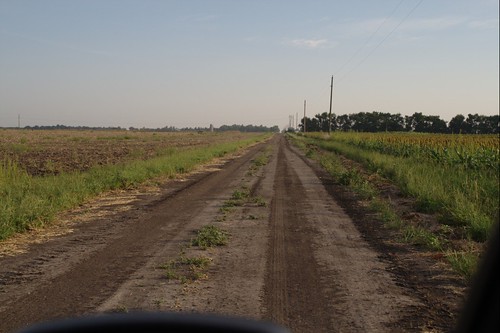
Back when I was in high school, I heard a Jeff Foxworthy CD once. He had this "you might be a redneck if" routine. We resemble one of his comments: "If the directions to your house include 'turn off the paved road', you might be a redneck."

What if the road -- the county road, not our driveway, mind you -- has weeds growing down the middle? And you can tell that the county maintainer has been by recently because there are fewer, and shorter, weeds than before?

img_3383.jpg

12 August 2007

Joey Hess: haskell

I saw the old house on Haskell St. last week for the first time in forver. I could barely pick it out of the other houses on the block, it's so different now. I also, conincidentially, studied the haskell programming language a bit. I watched some talks that John Goerzen linked to, and I read several chapters of the "Gentle Introduction to Haskell". Which wasn't all that gentle. :-) I should have put off reading it until after the talks and after reading some other introductory examples. At least I have some motivation to learn haskell. I could never see any reason to bother learning python or ruby, since there's so few compelling differences between them and perl. I had begun to worry that I wasn't learning any new programming languages, so it's nice to have a new dot on this graph of languages I've learned since 1990: graph

8 August 2007

John Goerzen: Disasters happen

It's been one of those days.

It started with me forgetting my laptop bag at home. Then I had to work with an attorney on some things. He's a nice guy, and does a good job, but you know, it's not what I'd really like to spend my day doing.

Then in the middle of the afternoon, I hung up the phone and checked my email. About 50 messages from Samba telling me that processes with various PIDs had crashed unexpectedly. Uh-oh. I think we still have some 80ish people using that.

About a minute later, a coworker says, "John, I've been bad." "Is that why I just got 50 emails from Samba?" "No. Well, yes. Well, maybe. I don't know."

It turned out he was working on a restore from tape that, out of necessity, grabbed more data than he needed. He meant to type rm -r ./var but typed rm -r /var instead. Oops. He hit Ctrl-C halfway through, so /var was still there enough to send email but not enough for Samba (or, apparently, NFS) to work.

As he dashed off to pull yesterday's tapes from offsite storage, I prepared the restore and made a plan. We hadn't installed any software since yesterday, so I restored var to a temporary location, took the server down into single-user mode, overwrote the /var that still existed, and rebooted the Xen instance in question. Everything back to normal. Except, that is, for the potentially dozens of users that will require assistance running SCANPST.EXE because their Outlook PST, being the fragile heap of garbage that it is, will have somehow been corrupted by this little incident.

So, what did we learn from this?

John Goerzen: I suppose this means I'm a geek

I work in an open-plan office. Normally I like to listen to some of my iPod's music, or NPR or something, at some point during the day. It helps me tune out distractions when I'm coding or concentrating on something. My iPod, and my nice Etymotic headphones, get transported to and from work each day in my laptop bag. Today I forgot the laptop bag at home.

What to do? I could just work without headphones. I'd be fine, but you know, I've got standards here. My job involves working with computers, so I ought to be able to come up with a workaround, right?

So lesse... what do I have? One binaural (mono sound, but speakers for each hear) telephone headset. One Polycom SIP phone, connected to our corporate Asterisk system. One workstation with sound capabilities. One installation of Asterisk on this workstation for testing purposes. And, a pre-existing path from the corporate system to the workstation system for testing Asterisk. (Very handy that, and used a lot when we were doing active Asterisk work.)

So in less then five minutes I had music going via my telephone headset. Lo-fi, and not noise-dampening like the Etymotics, but I enjoyed it for the simple fact that it was being played *over the phone* at no cost to anyone. My desk phone supports multiple "lines", so I still could place and receive calls just fine.

Should anyone care to look, they'd find a 5-hour call from me to myself deep in the Asterisk logs. My own workstation logs will show that I put myself on hold for 5 hours (since I used Asterik's music-on-hold feature to play my own selections).

IP telephony is fun. So is Asterisk.

3 August 2007

John Goerzen: Haskell Fun

Bryan O'Sullivan noted over at the Real World Haskell blog that Haskell made quite the impact at OSCon. And I can attest to Simon Peyton-Jones having trouble leaving the building because of all the people that wanted to talk to him about Haskell. It was interesting to think about "why now" for Haskell's popularity. Bryan's post has links to the video of Simon's talks, which are great. (Sample quote: "Oh look, a whiteboard has appeared as if by magic! What joy!")

I followed Bryan's link to the Haskell/OSCon-related blog posts at Technorati. Here's an interesting one by chromatic, who gave some Perl talks at OSCon. Favorite quote:

I sat next to Nat Torkington at the tutorial. He kept rubbing his temples. At one point I leaned over and said, The interesting thing about Haskell is that its functions only take one argument. He turned green.

In all seriousness, well-factored Haskell code resembles well-factored Smalltalk code: if you have functions (or methods) longer than a handful of lines, you re probably doing too much. Lower level languages such as C rarely give the opportunity for composition and abstraction that you can get out of functional languages. The presence of pure functions functions which never change global state and which return the same output for the same input is also immensely important.

It s actually the combination of the two features which give these languages such power. When Haskell forces you to mark impure functions explicitly, it gives you tools to isolate behavior which can change global state in the smallest possible scopes, and prevents you from composing impure and pure code together accidentally. When Haskell lets you compose functions into larger functions, not only does it help you write code more concisely, but it provides well-defined units of behavior which work along well-defined and isolated boundaries.


So what is this business about Haskell functions taking only one argument? Let's look at a quick example. Say I wanted to write a function to multiply two numbers. I'd write:

mul a b = a * b

I could give the type of this function like this:

mul :: Int -> Int -> Int

You could read that as "mul takes two Ints and returns an Int". And you can think of it this way. But you could also write the type this way:

mul :: Int -> (Int -> Int)

It means the exact same thing and is valid to Haskell. To read it, you'd say "mul takes an Int and returns a function that takes an Int and returns an Int." And truly this is what Haskell functions that take multiple parameters are doing. Now, I can say:

fifteen = mul 3 5
mulByThree = mul 3
fifteen' = mulByThree 5
fifteen'' = (mul 3) 5


mulByThree has type Int -> Int; it's a function that we got by simply not applying "mul" to all its arguments. fifteen'' illustrates what is going on internally when you write "mul 3 5". It turns out that being able to call a function with multiple arguments is just some syntactic sugar to Haskell.

This is a tremendously useful feature. For instance:

filter (>= 10) [1..20]

I've applied >= to only one argument here. That's fine; it returns a function that's exactly what filter wants.

I've been watching the video of Simon's Taste of Haskell talk. I could *hear* when the audience grasped the utility of this because there was a collective "Oooooo!" from them.

By the way, Haskell has type inference, so I didn't have to give types at all. Oh, and you can also refer to the function itself by not giving any arguments.

mul = (*)

This is one small reason I like to say "Haskell manipulates functions with the same ease that Perl manipulates strings." Mind-bending, isn't it?

28 July 2007

John Goerzen: OSCon and Portland Wrap-Up

I really enjoyed OSCon. This was the first conference I've been to in years where I've felt a bit sad that it's over. I met a lot of interesting people, enjoyed most of the talks I attended (and especially this morning's keynotes), and also enjoyed Portland. I recommend OSCon. Last year, I went to Usenix ATC. Compared to Usenix, OSCon had more talks that were relevant to things I'm interested in, more people that I met with similar interests, more people that I knew online and met in person, and a more broad program. The one criticism I would level at OSCon is that it has a disproportionately high number of web-related talks.

On to other items...

Portland

Probably the friendliest "big city" I've ever seen. Everyone from cab drivers to bus drivers seems to go out of their way to be helpful and friendly. Somewhat different from, say, Chicago or Los Angeles.

The climate is very nice and the transit system is excellent as well. While it doesn't move as fast as below-ground systems, since it has to work within traffic, one nice thing for visitors is that you actually get to see the city and see potential places to stop. Last year, we went from Boston to Cambridge on the T, but you don't see much except a whole lot of concrete along the way.

The Japanese Gardens are wonderful and deserve a visit.

Compared to Indianapolis, where we lived for awhile, Portland has some nicer parks, and a better transit system. I think that Indianapolis had a nicer walking path. Portland had a lot of friendly people, including many that worked for TriMet. MAX was very nice, with frequent departures. The TriMet system had scattered electronic signs about the MAX lines, streetcar stops, and even some bus stops I think. These listed how many minutes until the next departure in each direction, and were very helpful. Stations were announced audibly and on signs on-board. There was helpful information at stops and platforms.

Indianapolis has a really quite awful transit system, which consists of, let's see, regular buses and small buses. These run infrequently, are known for not being on-time, and a former co-worker had trouble with them just not showing up at times. They also all seemed to run between downtown and the outskirts. So if you wanted to go from one area towards the outskirts to another area there, you'd have to go towards downtown and back out.

Because of all this, I never rode IndyGo, and wouldn't ever encourage visitors to. TriMet was very different, and if I lived in Portland, I'd want to live close to MAX.

Hotel

The DoubleTree Lloyd Center is a nice, friendly hotel. Everyone here has noticed that the elevators inexplicably stop on the 2nd floor every time they go down, but other than that, we have had no real problems (other than some water dripping onto the desk when we first were here, but maintenance fixed that). It's annoying that they charge for in-room Internet access, but that is unfortunately typical for hotels of this class.

The room is also a bit small, but has worked out OK. The hotel is very close to a MAX stop, and fairly close to the Lloyd Center mall, which is convenient. The staff is very friendly and helpful as well, especially the concierge staff, which are great and helping visitors find their way around the city and the transit system.

They give you cookies on check-in, but Terah was disappointed that they didn't offer any without nuts.

Restaurants

I had opportunities to eat with various people from OSCon, some Portland area people, and of course, Terah and Jacob.

Portland has some good restaurants, and a few more iffy ones...

The Multnomah Grill in our hotel was one of the iffy ones. I had the ribs, which were not at all good. The prices were about in line with other Portland restaurants, which is too bad because the food wasn't. Because of all that, I just couldn't bring myself to try the other restaurant in the hotel, Eduardo's Mexican/American Cantina.

I had heard about Jake's Famous Crawfish from a passenger on the train. It was also listed on the OSCon wiki restaurants page. It's a historic century-old restaurant, with excellent seafood. I had parmesean-crusted Alaskan Halibut, which was very good.

I also went to the Newport Seafood Grill, which is within walking distance of the hotel, just on the other side of the Lloyd Center mall. It was also good; I had a tuna dish served rare, with a sauce that complimented it well.

Blossoming Lotus Cafe is a vegan cafe in the Pearl District. I hadn't ever been to one of those before. It was OK, but not all that great.

Across the street was Sweet Masterpiece, a chocolate and coffee house. Excellent chocolate made in-house, all sorts of desserts, and good coffee.

Rock Bottom in downtown has some surprisingly good food options. I was there with a group of local and OSCon Haskellers, and it was a little bit hard to follow conversation all the time due to the background noise, but that's to be expected in this sort of place. I'm not into beer, but those that were enjoyed their selection, I think.

I also went to a couple of chains: Quizno's and Ben and Jerry's. Both were about what you'd expect from those chains. Good ice cream of course at Ben & Jerry's.

OSCon provided breakfast and lunch free to paid attendees. Breakfast consisted of a selection of various fruits, slightly stale pastries, and bagels. On the tutorial days, lunch was pre-made boxed lunch. For what it was, it was OK. On Wednesday and Thursday, lunch was served hot in buffet lines. They had chicken both days, which looked identical. I had tried it Wednesday so knew not to bother Thursday. Wednesday they also had salmon with cranberries, which was good. Their salads, breads, etc. were OK.

Oregon Convention Center

This is where OSCon was held. A very nice, but incredibly huge, building. They say it covers the equivalent of 13 square city blocks, and if you look on a map, you can see that it is indeed quite large. There was a lot of walking to get to everything, even though OSCon took up only one part of this huge place. Restrooms in particular were not in very convenient locations to just about anything. But it was a nice place and I wouldn't mind being there again next year.

27 July 2007

John Goerzen: OSCon Friday

Fudge Update

Yesterday I blogged about the guy handing out fudge. He saw my post and explained why he was doing it. Today he was around handing out fudge, and I thanked him for his comment. He gave me two pieces of fudge for blogging about it.

Pineapple

At most of the breaks, they have this truly wonderful real (non-canned) pineapple. I think I have eaten more pineapple this week than any other week, ever. Very insidious, O'Reilly.

Conference materials

Slides of talks are available. Apparently keynotes are being posted on Youtube and Google Video, though they haven't provided a specific link AFAICT.

Philip Rosedale, Founder/CEO of Linden Lab

Second Life and the XPrize are two examples of escapism: you can escape to virtual earth, or escape the planet entirely.

In order for Second Life to grow, it has to become profoundly open. It has to be a standardized protocol. They are working on code to let people run their own servers. They are trying to make the server trusted and make it able to be open sourced as well. They see openness as the key way for it to grow.

If you are writing a web app that depends on the network effect -- such as Facebook -- you should open source everything right from the beginning. Not because it's best for humanity, but because you will win.

Jimmy Wales

He's trying to do open source search. Nice idea, could have been summarized in 45 seconds, I think.

Simon Wardli

Was going to talk about Zimki, which was going to open sourced, but they decided not to.

Funny and interesting talk, I sorta forgot to take notes while listening...

Nat Torkington

OSCon program chair.

Funny talk about Linux, an adolescent at 16 years old. Thinking about different languages and how they're doing. How the Linux community is organized: are we fighting battles, and do we need to?

James Larsson

This guy takes old hardware and makes insane devices out of it. 15,000 volts running over a coat hanger used as a "game controller", for instance.

In all, awesome keynotes today.

John Goerzen: OSCon Thursday Part 2: Linux on laptops

Matthew Garrett

A lot of background on the state of laptop support in Linux. It worked reasonably well in the 90s, but with the migration to ACPI, has become much more complicated and less reliable in general, especially with suspend/resume and video.

Emporer Linux and System 76 produce Linux supported laptops.

I wanted some more in-depth technical information and found Matthew later on at the Intel booth. Here's what I learned:

s2ram is little more than a wrapper around standard ACPI sleep that has options to do video mode save/restore

I asked him about all the many, many different userland laptop management tools. He recommends simple acpi-utils with the ondemand governor. laptop-mode-tools tries to do way too much, and there is little point to using a userland governor anymore.

I've been having a problem with my MacBook Pro (Core Duo) hanging on suspend about 10% of the time. I explained the symptoms and asked him how to go about debugging it. He suggested disabling console suspend and enabling PM debug in the kernel. I will give that a try and see what I get.

26 July 2007

John Goerzen: OSCon Thursday

First off, this guy is walking around handing out free fudge. Neat idea, but I can't quite figure out why!

Bill Hilf from Microsoft spoke today. He started by saying "I guarantee you won't agree with a lot of things I say today."

Nat introduced him as "our man on the inside."

Microsoft is submitting their Shared Source license for OSI approval. I don't know if this means that MS will have to actually make any modifications.

New website today: http://www.microsoft.com/opensource.

Bill invited feedback from anyone at billhilf at microsoft dot com.

He got some fairly pointed questions from Nat about software patents. Bill said two things about that: 1) Microsoft flubbed the communication with the press and that their intent isn't to sue, and 2) Microsoft is learning and he's working to help them learn.

Rick Falkvinge from the Pirate Party

Funny and informative talk about why they've started a Pirate Party in Sweden.

Originally copyright only impacted public places, but now it impacts people's private lives as well.

Copyright is protecting the entertainment industry -- funded by luxury purchases -- at the expense of privacy and individual freedoms.

"The Norwegian Liberal Party forked our platform into Norwegian"

www.piratpartiet.se/donate

"Political donations in Sweden are not regulated", so you all can contributed

Steve Yegge (Google)

"Google will probably fire me for this talk"

Neither Steve's mic nor his laptop appear to work... after his line about being fired, someone shouted "Google is very powerful!"

"A brand, in geek terms, is a pointer."

GTE was, for a time, the most reviled brand in the US. Then they invested in improvements and ran commercials basically saying "we don't suck anymore", but nobody believed it.

"The single biggest branding problem in Open Source is the name 'Open Source'."

John Goerzen: OSCon and Portland Photos

I've taken my camera around OSCon and Portland a bit. Here are a few photos that I've taken so far.

At OSCon Itself

(click here to see all)

img_3165

Overflow from breakfast. Most tables had powerestrips and laptops on them.

img_3204

Debian booth at the expo hall. And the only one with beanbags. Sign reads "The developer is in."

img_3166

Filing in for the keynotes. Everyone seemed to want a seat either at the very front or very back.

img_3177

Simon Peyton-Jones explaining how locks with traditional threading can be improved upon with transactional memory.

img_3202

Run for your life! The bell will attack at any moment!

I didn't hear it ring all week.

Around Portland

(click here to see all)

img_3127

The Japanese Gardens were beautiful and tranquil. Jacob actually feel asleep while being rolled around on his stroller.

img_3145

For some reason, this one reminds me of the Jedi Academy in one of the Star Wars video games.

img_3118

One of the many bridges in Portland.

img_3164

Terah's favorite find: Sweet Masterpiece Chocolate and Coffe.

We went there after the Blossoming Lotus Cafe, which was an interesting experience but not quite as good as I had hoped.

John Goerzen: OSCon Wednesday Part 2

After today's keynote session, I met up with Simon Peyton-Jones and Bryan O'Sullivan. A vibrant discussion with these two Haskellers. We had all noticed that Haskell, and FP languages in general, have been doing really well lately and mused about why. Perhaps it's that people are becoming more used to functional approaches to problem solving because popular languages include some of them these days. Or perhaps it's that FP already has tools to solve problems that are suddenly hot, such as parallelization.

In any case, Simon's Haskell talks have really been highlights this week for many.

I had some time to visit the show floor. Stopped by the Debian booth and met Steve Langasek. A couple of Sun guys dropped by to talk about trademarks with OpenJDK. Bart Massey of Portland State Univ. also dropped by. I've conversed with him in email a few times. We talked about what PSU is doing with Haskell, some of the code I've written, and some of the code they've written. They're doing some fun stuff with rocketry and software-defined radio.

Oh, attended Simon's talk on nested data parallelism, which he is working to add to GHC. That sounds like a very interesting topic. Think list comprehensions, but the compiler automatically parallelizes the task for you.

After the conference's events, went out to dinner with some local (and some conference) Haskellers. That was a lot of fun, and Terah and Jacob got to come along too. People are doing some interesting stuff with Haskell.

25 July 2007

John Goerzen: Oscon Wednesday PM

Nested Data Parallelism in Haskell

John Goerzen: OSCon Wednesday

Nat Torkington, program chair, started off the day. He commented that one of the most interesting trends these days is the expansion of the Open Source ideals beyond software.

Tim O'Reilly commented about the FSF's four freedoms, and asked how we maintain them. We have to think about preserving freedoms -- questions such as Free Software that relies on proprietary services, data, or business processes. It's important to remember to pay attention to freedom and not just to the success of businesses. But businesses matter and have enormous power and will always be related.

Tim really pushed expanding the boundaries of Open Source and thinking ahead: wikipedia, OpenID, etc. He also asked: does Congress need a version control system?

He suggested there are four open source success factors: frictionless software distribution, collaborative development, freedom to build/adapt/extend, freedom to fork.

Hadoop is an interesting FLOSS project to build some infrastructure like Google has. Apparently Yahoo is very interested.

Back to Nat... hardware is cheap and everyone keeps buying more of it.

James Reinders from Intel talking about multi-core parallelism. Saying that parallelism is going to be more and more important. Intel released threading building blocks, a series of templates for C++, as GPL'd software at the conference this week. I'm not all that excited about a C++ project, though, since I think languages like Haskell have more promise here anyway.

The other Intel guy mentioned Intel's open source involvement: intellinuxgraphics.org, intellinuxwireless.org, linuxpowertop.org, kernel,org, moblin.org. Linux laptops have the longest runtimes compared to other laptops.

"It's amazing how many people you can make paranoid by showing up with a tie and a suit to do a keynote at OSCON." -- James Reinders

Simon Peyton-Jones is up now, and Nat says he will "stretch your brain until only tiny bits are left."

State of the art in parallelism is really 30 years old with locks and condition variables -- like building a skyscraper out of bananas.

Locks are difficult to do right and have "diabolical error recovery".

Let's do transactions against memory instead of against a database. Implementation can even be similar to databases. The idea is transactional memory, and it sounds very, very slick.

Mark Shuttleworth and Tim for an interview...

Mark was fine, but I wish Tim had more interesting questions for him.

I went up to the front a few minutes after the event to talk to Simon PJ. He was talking to someone, who saw my nametag, and said, "Hi John, nice to meet you." He looked familiar but I couldn't quite place him, so I asked who he was. "Mark Shuttleworth." Yep, I was sitting just far enough back from the stage that I wasn't behind one of the large TV screens and couldn't make out faces real well, and I didn't recognize him. Erg..

John Goerzen: OSCon

Monday was the first day of the OSCon tutorials. The first question was: how to get there? OSCon is being held in the Oregon Convention Center, about half a mile from the conference "headquarters" hotel, the Portland DoubleTree at Lloyd Center.

MAX light rail is free in this area. It's about a block to the Lloyd Center station, and a block from the Convention Center station to the Convention Center. The trains run every few minutes and are very friendly to people that aren't from Portland. On-board announcements point out bus and rail connections in advance, and each station has a system map, city map, and digital display listing the time until the next arrival. Even bus and streetcar stations have that display.

In fact, everyone here is. The personnel at the Amtrak station were great. Our cab driver from the station to the hotel told us about all the things he loves about Portland and why he'll never move anywhere else. And the DoubleTree hotel has probably the friendliest hotel staff I've ever seen, even when we reported water dripping from the ceiling in our room. The concierge desk gladly showed Terah how to get to a nearby Safeway for groceries, and explained -- correctly -- to me how to use trains and buses to get to the Japenese Gardens in Washington Park.

Anyhow, back to OSCon. The first two days are tutorials. These are extended talks. You can go to 2 per day, one in the morning and one in the afternoon. I attended Advanced Vim Scripting and Linux Performance Monitoring. Neither was quite as advanced as I'd like, but I got useful information out of them both -- especially out of Linux Performance Monitoring. I finally learned the exact difference between buffers and cache and what the IOwait state in top really means, among other things. I heard from others in IRC that Simon Peyton-Jones was a fantastic speaker and his tutorial on Haskell met rave reviews. I'm looking forward to his keynote and talk on Wednesday.

I also went to the keysigning BoF in the evening. Signed a ton of keys, and met some interesting people. I met a couple of folks from an independent telephone company in Michigan that were interested in my Asterisk experience, and spoke to an Earthlink employee from Georgia that was involved on the ISP side of things.

In all, a good first day. This is a great conference in a great city, with lots of variety in its programming and lots of opportunity to network (the old-fashioned way).

The venue is also very nice, and aside from not being right next to the venue, so it the hotel.

The day's main mystery: everybody has noticed, and nobody has figured out why, the hotel elevators all stop on the 2nd floor on the way down, even if nobody requested it.

24 July 2007

John Goerzen: Trip to Oregon

Last week, Terah, Jacob, and I boarded a train in Kansas. We were bound for Los Angeles, then would go up the coast of California, eventually winding up in Portland for OSCON.

Our first train was the Southwest Chief out to LA.

img_2926

Jacob had a great time on the train. This is a picture of Jacob and Terah in our sleeping car room. Jacob slept in his carseat at night and played with us during the day. See all recent photos of Jacob.

We had the option to get off the train for a few minutes in La Junta, CO. I took some photos trackside.

img_2962

Here's Jacob enjoying the lounge car. There were dozens of Boy Scouts on our train, heading to the Boy Scout camp near Raton, NM. Many of them hung out in the lounge car, so Jacob had plenty to watch and keep him entertained.

img_2995

The lounge car has wrap-around windows. We got an expansive view of the Rockies on the first day of our trip, and of the California desert on the second. This route really gives you a feeling of being alone sometimes. There are times where you can look out the window, and as far as you can see, there is no evidence of people or civilization.

Here's a picture out the lounge car, looking at the train as it rounded a curve.

img_2977

The lounge car was in the middle of the train, so the train really was longer than it might appear here.

We had a bit of an adventure in Lamy, NM. Apparently a terminal cancer patient was riding the train, and died in the night. We were held up for about 2 hours for authorities to arrive, perform their investigation, etc.

While we were there, passengers could get off the train and look around. I took a few photos there.

img_3000

This is a photo looking towards the front of the Chief. It uses bi-level cars, so every car has an upstairs and a downstairs.

Just outside the Lamy station is an old dining car. It is now a stationary restaurant. The restaurant had closed just before we arrived, but they let me in to take a few quick photos anyway.

img_3007

Just past Albuquerque, one of the two locomotives on our train failed. That meant that, combined with the delay at Lamy, we were more than 3 hours late into Los Angeles. That, in turn, meant that we missed our connection to the Coast Starlight. So the new plan was to take a bus to Bakersfield, then the San Joaquin train to Sacramento, where we could catch up with the Coast Starlight and get to Portland as scheduled.

img_3038

Jacob really enjoyed the Bakersfield train station. I carried him up to the stone walls, which he enjoyed exploring with his hands.

img_3034

This is the Bakersfield station. It's a nice building. But their large metal sign reads "To trains and busses." Someday I will forget about them misspelling "buses" on a large metal sign.

I've got two more pictures of Jacob at Bakersfield that you'd enjoy: one, two. He sure was a popular baby. We got countless compliments from strangers, and he got even more smiles and greetings from people. Even when he was fussy, people kept saying what a good baby he was. We were a little surprised at that. A few people even found his cry to be cute and funny!

img_3051

One of the nice side-effects of missing our connection was seeing the grand old Sacramento train station. A beautifully-decorated building. We were there until about 12:30AM because the Coast Starlight had been delayed as well.

Terah saw a sign out the door saying "Quiznos: Now Open." I figured that meant that the store was open, not that the place was open late into the night, but she wanted to check. She stepped out and then back in again. "As soon as I got out, homeless people started yelling at me! Plus the store wasn't open," she reported.

img_3070

On the Coast Starlight, we discovered the absolutely stunning Pacific Parlour Car. These cars were originally built in the 1950s for the Santa Fe railroad, and have been renovated and restored by Amtrak for service on the Coast Starlight. That's the only train where they run, and they are available only to first-class passengers.

I noticed stairs going to the lower level of the Parlour, and was curious what was down there. So I went down to check it out, and it is a small (18 seats, I think) theater!

img_3087

We sat down there for awhile and talked to some of the other people.

The view from the Coast Starlight was amazing. The trip through the mountains was particularly nice. We saw mountains from the distance, up close, and at some points could look out our window directly down into a deep valley below. There were lakes, waterfalls, and little creeks all along.

img_3095

And finally, this is the grand Portland train station. Still an active station and a sight to see, though not as nice as Kansas City's.

So that's the trip to Portland. More to come on the convention and the city itself.

17 July 2007

John Goerzen: Progress

While everyone else is excited about their iPhones and whatnot, technology isn't leaving us country dwellers behind. Consider these two recent events:

1) The weeds growing down the middle of the road were gone for a bit. That was surely evidence that the county road maintainer has been by.

2) Word from our letter carrier that we just *may* be able to have our mailbox at our driveway. Someone wants to build across the road near us, and asked about getting a mailbox there instead of almost a mile away where ours is. Apparently if both of us want our mailboxes closer (Terah said "YES", I'm sure), they just may consider it.

That's right, we may need to now have only a 1/2 mile round trip to get our mail.

Back to the iPhone: we do get a signal from Cingular at our place, but I can't help thinking "what's the point?" I don't really need an always-on Internet connection everywhere I go.

3 July 2007

John Goerzen: Sierra Wireless 595U / Sprint on Linux

Here's how you use a Sierra Wireless 595U USB modem to connect to wireless Internet service with Sprint:

Insert the modem into the USB slot. lsusb should show:

Bus 001 Device 005: ID 1199:0120 Sierra Wireless, Inc.

rmmod usbserial

Then:

modprobe usbserial vendor=0x1199 product=0x0120

You should see /dev/ttyUSB0, ttyUSB1, and ttyUSB2 appear. See also instructions for automating this with a similar card (modify vendor and product to above settings).

Now you will need to configure PPP for this. On Debian, run pppconfig. Your settings will be:

Phone number: #777
Username: 1234567890@sprintpcs.com (replace 1234567890 with your data card's "phone number", no dashes)
Password: your sprint password
Speed (BPS): 921600 (use lower numbers such as 115200 if you have trouble with this)
Port: /dev/ttyUSB0
Init string: ATZ

Here are some other helpful pages:

Verizon EVDO
Sprint and Linux
Cingular AT&T UMTS
Sierra's Linux page

John Goerzen: Mail Readers Still Stink

Five years ago, I started work on OfflineIMAP. I couldn't find any mail reader that offered good IMAP support and a good feature set. Rather than write my own mail reader, I simply wrote OfflineIMAP and used it with mutt. OfflineIMAP does a bi-directional sync between an IMAP server and local mailboxes. This lets you work offline, and also speeds up reading since each new message doesn't have to be downloaded from the network on the spot.

I kept hoping that OfflineIMAP would become obsolete soon, as mail readers got better. Back in 2004, two years after writing OfflineIMAP, I looked at mail readers. In 2005, after some more frustrations with mail readers, I wrote a comparison. I wound up sticking with mutt and OfflineIMAP each time.

I've gone out looking at mail readers again. Here's what I've found.

KMail
Overall a nice reader, KMail has almost every feature and setting I want. It has "disconnected IMAP" folders, which download every new message in folders to the local disk as part of the routine mail checking. It then caches local changes and syncs them to the remote on the next mail check. This boosts interactive performance and permits offline operation -- very similar to OfflineIMAP. KMail has keyboard shortcuts for most things, and keyboard shortcuts can be added or changed for most other things as well.

KMail also integrates with the KDE calendar and addressbook, which I already use. That's nice, too.

I have two big gripes about it though.

Back in 2004, I noticed that KMail crashes a lot. By 2005, it was worse. Sadly, KMail still has a tendency to crash. I've seen an average of 1-2 crashes per day, due to SIGFPE, SIGSEGV, and I think also SIGILL. This doesn't make me happy at all. Especially to see that it's no better on that in three years. Just don't try emptying trash while your mailbox is being synced, for one thing....

Gripe #2 is that there is absolutely no way to select a different alternative in a multipart message without using the mouse. Simply no way using the keyboard. It's also cumbersome, though possible, to view attachments using the keyboard -- you have to press Enter to open the message in its own window, then tab to the attachment.

KMail also sometimes works a bit sluggishly -- for instance, when you delete a message, you first see strikethrough through it, then it disappears. It doesn't feel very "snappy".

Evolution
Evolution has a decent core. It is easy to get set up and has an extensive set of keyboard shortcuts. It does IMAP downloading and syncing like Kmail, and it does it by default. It doesn't offer all that much flexibility in configuration, but probably enough.

Here's my gripe. There is no way for it to show a total message count next to each folder in the folder list. It will show an unread message count, but not a total message count. You have to click on each folder individually to see a total message count. I can't figure out why this is missing from Evolution. It's one of the main benefits to switching from mutt, and so I didn't bother looking at Evolution any more past there.

Thunderbird / Icedove
By default, it isn't all that capable of a mail reader. There aren't that many configuration options, and the keyboard shortcuts -- while existing for most things -- are cumbersome.

The Nostalgy extension helps with the keyboard shortcuts significantly. You still can't change some of them (Ctrl-L for forward, anyone) -- at least not without an extremely cumbersome process involving editing text files.

Thunderbird can do automatic IMAP downloading and syncing like KMail and Evolution, but for some inexplicible reason, only for your INBOX. In fact, Thunderbird won't even check for mail in folders other than INBOX unless you set an undocumented configuration option. It seems to assume that nobody does server-side mail filtering.

If you want IMAP downloading for offline use or performance, you have to manually invoke a download operation. There is a Sync on Arrival extension, but it isn't compatible with Thunderbird 2.0. From reading comments online, there are a lot of people frustrated about that.

So Thunderbird strikes out as well.

mutt + OfflineIMAP
The good thing about this combination is performace. mutt is extremely fast, and OfflineIMAP works faster than anything else for IMAP downloading. mutt is also far more configurable than anything else.

There are some annoyances about mutt.

#1 on that list is the lack of a folder list. There is just no way to see a list of folders along with new or total message counts. You can press c, Enter to go to the next folder with unread mail, which is something, but not enough. There have been numerous abortive projects over the years to address this, but for whatever reason, mutt itself doesn't have this yet. Probably the most promising current project is this one.

#2 is HTML mail. I don't mind the lack of default support for HTML mail. That's to be expected. There are some things that do bug me involving viewing HTML mail. First off, sometimes people attach graphics to messages that also have an HTML component. Viewing these graphics doesn't represent a security risk, but mutt doesn't make them available to a browser for viewing -- you have to manually save them if you want to view them. Also, you normally don't want to load graphics from the Internet for HTML mail. The only way to accomplish that with mutt is to set your browser to lynx or something; just using Firefox to view a HTML component will load all of that.

#3 is handling of embedded URLs. xterms can pass mouse clicks, and it would be nice if mutt made URLs clickable like other mail readers do.

#4 is the IMAP support. No support for caching, fragile, etc. That's why I use OfflineIMAP. That works, but it's a hassle.

#5 is printing. Printouts from mutt just spew the text of the message at the printer. No page numbers, formatting, nothing. muttprint makes that situation a bit better, but the integration is flaky and weird.

Conclusions
I'm not sure what I'll do. None of these are really where I want them to be, though mutt and KMail are probably the closest.

Next.

Previous.