Search Results: freedom

15 January 2024

Russ Allbery: Review: The Library of Broken Worlds

Review: The Library of Broken Worlds, by Alaya Dawn Johnson
Publisher: Scholastic Press
Copyright: June 2023
ISBN: 1-338-29064-9
Format: Kindle
Pages: 446
The Library of Broken Worlds is a young-adult far-future science fantasy. So far as I can tell, it's stand-alone, although more on that later in the review. Freida is the adopted daughter of Nadi, the Head Librarian, and her greatest wish is to become a librarian herself. When the book opens, she's a teenager in highly competitive training. Freida is low-wetware, without the advanced and expensive enhancements of many of the other students competing for rare and prized librarian positions, which she makes up for by being the most audacious. She doesn't need wetware to commune with the library material gods. If one ventures deep into their tunnels and consumes their crystals, direct physical communion is possible. The library tunnels are Freida's second home, in part because that's where she was born. She was created by the Library, and specifically by Iemaja, the youngest of the material gods. Precisely why is a mystery. To Nadi, Freida is her daughter. To Quinn, Nadi's main political rival within the library, Freida is a thing, a piece of the library, a secondary and possibly rogue AI. A disruptive annoyance. The Library of Broken Worlds is the sort of science fiction where figuring out what is going on is an integral part of the reading experience. It opens with a frame story of an unnamed girl (clearly Freida) waking the god Nameren and identifying herself as designed for deicide. She provokes Nameren's curiosity and offers an Arabian Nights bargain: if he wants to hear her story, he has to refrain from killing her for long enough for her to tell it. As one might expect, the main narrative doesn't catch up to the frame story until the very end of the book. The Library is indeed some type of library that librarians can search for knowledge that isn't available from more mundane sources, but Freida's personal experience of it is almost wholly religious and oracular. The library's material gods are identified as AIs, but good luck making sense of the story through a science fiction frame, even with a healthy allowance for sufficiently advanced technology being indistinguishable from magic. The symbolism and tone is entirely fantasy, and late in the book it becomes clear that whatever the material gods are, they're not simple technological AIs in the vein of, say, Banks's Ship Minds. Also, the Library is not solely a repository of knowledge. It is the keeper of an interstellar peace. The Library was founded after the Great War, to prevent a recurrence. It functions as a sort of legal system and grand tribunal in ways that are never fully explained. As you might expect, that peace is based more on stability than fairness. Five of the players in this far future of humanity are the Awilu, the most advanced society and the first to leave Earth (or Tierra as it's called here); the Mah m, who possess the material war god Nameren of the frame story; the Lunars and Martians, who dominate the Sol system; and the surviving Tierrans, residents of a polluted and struggling planet that is ruthlessly exploited by the Lunars. The problem facing Freida and her friends at the start of the book is a petition brought by a young Tierran against Lunar exploitation of his homeland. His name is Joshua, and Freida is more than half in love with him. Joshua's legal argument involves interpretation of the freedom node of the treaty that ended the Great War, a node that precedent says gives the Lunars the freedom to exploit Tierra, but which Joshua claims has a still-valid originalist meaning granting Tierrans freedom from exploitation. There is, in short, a lot going on in this book, and "never fully explained" is something of a theme. Freida is telling a story to Nameren and only explains things Nameren may not already know. The reader has to puzzle out the rest from the occasional hint. This is made more difficult by the tendency of the material gods to communicate only in visions or guided hallucinations, full of symbolism that the characters only partly explain to the reader. Nonetheless, this did mostly work, at least for me. I started this book very confused, but by about the midpoint it felt like the background was coming together. I'm still not sure I understand the aurochs, baobab, and cicada symbolism that's so central to the framing story, but it's the pleasant sort of stretchy confusion that gives my brain a good workout. I wish Johnson had explained a few more things plainly, particularly near the end of the book, but my remaining level of confusion was within my tolerances. Unfortunately, the ending did not work for me. The first time I read it, I had no idea what it meant. Lots of baffling, symbolic things happened and then the book just stopped. After re-reading the last 10%, I think all the pieces of an ending and a bit of an explanation are there, but it's absurdly abbreviated. This is another book where the author appears to have been finished with the story before I was. This keeps happening to me, so this probably says something more about me than it says about books, but I want books to have an ending. If the characters have fought and suffered through the plot, I want them to have some space to be happy and to see how their sacrifices play out, with more detail than just a few vague promises. If much of the book has been puzzling out the nature of the world, I would like some concrete confirmation of at least some of my guesswork. And if you're going to end the book on radical transformation, I want to see the results of that transformation. Johnson does an excellent job showing how brutal the peace of the powerful can be, and is willing to light more things on fire over the course of this book than most authors would, but then doesn't offer the reader much in the way of payoff. For once, I wish this stand-alone turned out to be a series. I think an additional book could be written in the aftermath of this ending, and I would definitely read that novel. Johnson has me caring deeply about these characters and fascinated by the world background, and I'd happily spend another 450 pages finding out what happens next. But, frustratingly, I think this ending was indeed intended to wrap up the story. I think this book may fall between a few stools. Science fiction readers who want mysterious future worlds to be explained by the end of the book are going to be frustrated by the amount of symbolism, allusion, and poetic description. Literary fantasy readers, who have a higher tolerance for that style, are going to wish for more focused and polished writing. A lot of the story is firmly YA: trying and failing to fit in, developing one's identity, coming into power, relationship drama, great betrayals and regrets, overcoming trauma and abuse, and unraveling lies that adults tell you. But this is definitely not a straight-forward YA plot or world background. It demands a lot from the reader, and while I am confident many teenage readers would rise to that challenge, it seems like an awkward fit for the YA marketing category. About 75% of the way in, I would have told you this book was great and you should read it. The ending was a let-down and I'm still grumpy about it. I still think it's worth your attention if you're in the mood for a sink-or-swim type of reading experience. Just be warned that when the ride ends, I felt unceremoniously dumped on the pavement. Content warnings: Rape, torture, genocide. Rating: 7 out of 10

11 January 2024

Matthias Klumpp: Wayland really breaks things Just for now?

This post is in part a response to an aspect of Nate s post Does Wayland really break everything? , but also my reflection on discussing Wayland protocol additions, a unique pleasure that I have been involved with for the past months1.

Some facts Before I start I want to make a few things clear: The Linux desktop will be moving to Wayland2 this is a fact at this point (and has been for a while), sticking to X11 makes no sense for future projects. From reading Wayland protocols and working with it at a much lower level than I ever wanted to, it is also very clear to me that Wayland is an exceptionally well-designed core protocol, and so are the additional extension protocols (xdg-shell & Co.). The modularity of Wayland is great, it gives it incredible flexibility and will for sure turn out to be good for the long-term viability of this project (and also provides a path to correct protocol issues in future, if one is found). In other words: Wayland is an amazing foundation to build on, and a lot of its design decisions make a lot of sense! The shift towards people seeing Linux more as an application developer platform, and taking PipeWire and XDG Portals into account when designing for Wayland is also an amazing development and I love to see this this holistic approach is something I always wanted! Furthermore, I think Wayland removes a lot of functionality that shouldn t exist in a modern compositor and that s a good thing too! Some of X11 s features and design decisions had clear drawbacks that we shouldn t replicate. I highly recommend to read Nate s blog post, it s very good and goes into more detail. And due to all of this, I firmly believe that any advancement in the Wayland space must come from within the project.

But! But! Of course there was a but coming  I think while developing Wayland-as-an-ecosystem we are now entrenched into narrow concepts of how a desktop should work. While discussing Wayland protocol additions, a lot of concepts clash, people from different desktops with different design philosophies debate the merits of those over and over again never reaching any conclusion (just as you will never get an answer out of humans whether sushi or pizza is the clearly superior food, or whether CSD or SSD is better). Some people want to use Wayland as a vehicle to force applications to submit to their desktop s design philosophies, others prefer the smallest and leanest protocol possible, other developers want the most elegant behavior possible. To be clear, I think those are all very valid approaches. But this also creates problems: By switching to Wayland compositors, we are already forcing a lot of porting work onto toolkit developers and application developers. This is annoying, but just work that has to be done. It becomes frustrating though if Wayland provides toolkits with absolutely no way to reach their goal in any reasonable way. For Nate s Photoshop analogy: Of course Linux does not break Photoshop, it is Adobe s responsibility to port it. But what if Linux was missing a crucial syscall that Photoshop needed for proper functionality and Adobe couldn t port it without that? In that case it becomes much less clear on who is to blame for Photoshop not being available. A lot of Wayland protocol work is focused on the environment and design, while applications and work to port them often is considered less. I think this happens because the overlap between application developers and developers of the desktop environments is not necessarily large, and the overlap with people willing to engage with Wayland upstream is even smaller. The combination of Windows developers porting apps to Linux and having involvement with toolkits or Wayland is pretty much nonexistent. So they have less of a voice.
A quick detour through the neuroscience research lab I have been involved with Freedesktop, GNOME and KDE for an incredibly long time now (more than a decade), but my actual job (besides consulting for Purism) is that of a PhD candidate in a neuroscience research lab (working on the morphology of biological neurons and its relation to behavior). I am mostly involved with three research groups in our institute, which is about 35 people. Most of us do all our data analysis on powerful servers which we connect to using RDP (with KDE Plasma as desktop). Since I joined, I have been pushing the envelope a bit to extend Linux usage to data acquisition and regular clients, and to have our data acquisition hardware interface well with it. Linux brings some unique advantages for use in research, besides the obvious one of having every step of your data management platform introspectable with no black boxes left, a goal I value very highly in research (but this would be its own blogpost). In terms of operating system usage though, most systems are still Windows-based. Windows is what companies develop for, and what people use by default and are familiar with. The choice of operating system is very strongly driven by application availability, and WSL being really good makes this somewhat worse, as it removes the need for people to switch to a real Linux system entirely if there is the occasional software requiring it. Yet, we have a lot more Linux users than before, and use it in many places where it makes sense. I also developed a novel data acquisition software that even runs on Linux-only and uses the abilities of the platform to its fullest extent. All of this resulted in me asking existing software and hardware vendors for Linux support a lot more often. Vendor-customer relationship in science is usually pretty good, and vendors do usually want to help out. Same for open source projects, especially if you offer to do Linux porting work for them But overall, the ease of use and availability of required applications and their usability rules supreme. Most people are not technically knowledgeable and just want to get their research done in the best way possible, getting the best results with the least amount of friction.
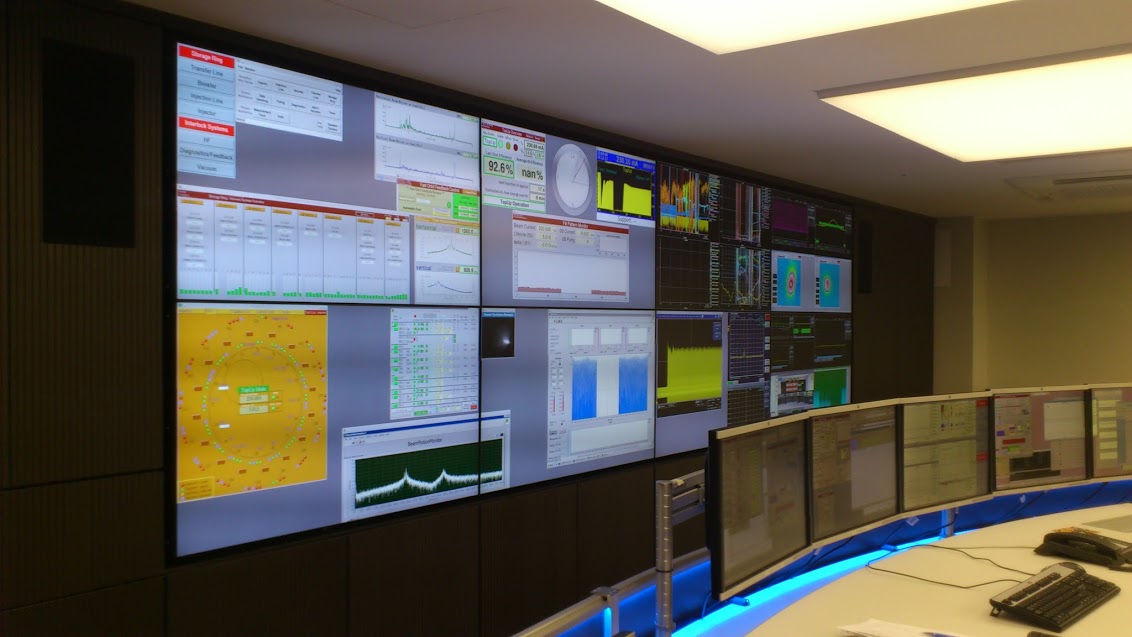
KDE/Linux usage at a control station for a particle accelerator at Adlershof Technology Park, Germany, for reference (by 25years of KDE)3

Back to the point The point of that story is this: GNOME, KDE, RHEL, Debian or Ubuntu: They all do not matter if the necessary applications are not available for them. And as soon as they are, the easiest-to-use solution wins. There are many facets of easiest : In many cases this is RHEL due to Red Hat support contracts being available, in many other cases it is Ubuntu due to its mindshare and ease of use. KDE Plasma is also frequently seen, as it is perceived a bit easier to onboard Windows users with it (among other benefits). Ultimately, it comes down to applications and 3rd-party support though. Here s a dirty secret: In many cases, porting an application to Linux is not that difficult. The thing that companies (and FLOSS projects too!) struggle with and will calculate the merits of carefully in advance is whether it is worth the support cost as well as continuous QA/testing. Their staff will have to do all of that work, and they could spend that time on other tasks after all. So if they learn that porting to Linux not only means added testing and support, but also means to choose between the legacy X11 display server that allows for 1:1 porting from Windows or the new Wayland compositors that do not support the same features they need, they will quickly consider it not worth the effort at all. I have seen this happen. Of course many apps use a cross-platform toolkit like Qt, which greatly simplifies porting. But this just moves the issue one layer down, as now the toolkit needs to abstract Windows, macOS and Wayland. And Wayland does not contain features to do certain things or does them very differently from e.g. Windows, so toolkits have no way to actually implement the existing functionality in a way that works on all platforms. So in Qt s documentation you will often find texts like works everywhere except for on Wayland compositors or mobile 4. Many missing bits or altered behavior are just papercuts, but those add up. And if users will have a worse experience, this will translate to more support work, or people not wanting to use the software on the respective platform.

What s missing?

Window positioning SDI applications with multiple windows are very popular in the scientific world. For data acquisition (for example with microscopes) we often have one monitor with control elements and one larger one with the recorded image. There is also other configurations where multiple signal modalities are acquired, and the experimenter aligns windows exactly in the way they want and expects the layout to be stored and to be loaded upon reopening the application. Even in the image from Adlershof Technology Park above you can see this style of UI design, at mega-scale. Being able to pop-out elements as windows from a single-window application to move them around freely is another frequently used paradigm, and immensely useful with these complex apps. It is important to note that this is not a legacy design, but in many cases an intentional choice these kinds of apps work incredibly well on larger screens or many screens and are very flexible (you can have any window configuration you want, and switch between them using the (usually) great window management abilities of your desktop). Of course, these apps will work terribly on tablets and small form factors, but that is not the purpose they were designed for and nobody would use them that way. I assumed for sure these features would be implemented at some point, but when it became clear that that would not happen, I created the ext-placement protocol which had some good discussion but was ultimately rejected from the xdg namespace. I then tried another solution based on feedback, which turned out not to work for most apps, and now proposed xdg-placement (v2) in an attempt to maybe still get some protocol done that we can agree on, exploring more options before pushing the existing protocol for inclusion into the ext Wayland protocol namespace. Meanwhile though, we can not port any application that needs this feature, while at the same time we are switching desktops and distributions to Wayland by default.

Window position restoration Similarly, a protocol to save & restore window positions was already proposed in 2018, 6 years ago now, but it has still not been agreed upon, and may not even help multiwindow apps in its current form. The absence of this protocol means that applications can not restore their former window positions, and the user has to move them to their previous place again and again. Meanwhile, toolkits can not adopt these protocols and applications can not use them and can not be ported to Wayland without introducing papercuts.

Window icons Similarly, individual windows can not set their own icons, and not-installed applications can not have an icon at all because there is no desktop-entry file to load the icon from and no icon in the theme for them. You would think this is a niche issue, but for applications that create many windows, providing icons for them so the user can find them is fairly important. Of course it s not the end of the world if every window has the same icon, but it s one of those papercuts that make the software slightly less user-friendly. Even applications with fewer windows like LibrePCB are affected, so much so that they rather run their app through Xwayland for now. I decided to address this after I was working on data analysis of image data in a Python virtualenv, where my code and the Python libraries used created lots of windows all with the default yellow W icon, making it impossible to distinguish them at a glance. This is xdg-toplevel-icon now, but of course it is an uphill battle where the very premise of needing this is questioned. So applications can not use it yet.

Limited window abilities requiring specialized protocols Firefox has a picture-in-picture feature, allowing it to pop out media from a mediaplayer as separate floating window so the user can watch the media while doing other things. On X11 this is easily realized, but on Wayland the restrictions posed on windows necessitate a different solution. The xdg-pip protocol was proposed for this specialized usecase, but it is also not merged yet. So this feature does not work as well on Wayland.

Automated GUI testing / accessibility / automation Automation of GUI tasks is a powerful feature, so is the ability to auto-test GUIs. This is being worked on, with libei and wlheadless-run (and stuff like ydotool exists too), but we re not fully there yet.

Wayland is frustrating for (some) application authors As you see, there is valid applications and valid usecases that can not be ported yet to Wayland with the same feature range they enjoyed on X11, Windows or macOS. So, from an application author s perspective, Wayland does break things quite significantly, because things that worked before can no longer work and Wayland (the whole stack) does not provide any avenue to achieve the same result. Wayland does break screen sharing, global hotkeys, gaming latency (via no tearing ) etc, however for all of these there are solutions available that application authors can port to. And most developers will gladly do that work, especially since the newer APIs are usually a lot better and more robust. But if you give application authors no path forward except use Xwayland and be on emulation as second-class citizen forever , it just results in very frustrated application developers. For some application developers, switching to a Wayland compositor is like buying a canvas from the Linux shop that forces your brush to only draw triangles. But maybe for your avant-garde art, you need to draw a circle. You can approximate one with triangles, but it will never be as good as the artwork of your friends who got their canvases from the Windows or macOS art supply shop and have more freedom to create their art.

Triangles are proven to be the best shape! If you are drawing circles you are creating bad art! Wayland, via its protocol limitations, forces a certain way to build application UX often for the better, but also sometimes to the detriment of users and applications. The protocols are often fairly opinionated, a result of the lessons learned from X11. In any case though, it is the odd one out Windows and macOS do not pose the same limitations (for better or worse!), and the effort to port to Wayland is orders of magnitude bigger, or sometimes in case of the multiwindow UI paradigm impossible to achieve to the same level of polish. Desktop environments of course have a design philosophy that they want to push, and want applications to integrate as much as possible (same as macOS and Windows!). However, there are many applications out there, and pushing a design via protocol limitations will likely just result in fewer apps.

The porting dilemma I spent probably way too much time looking into how to get applications cross-platform and running on Linux, often talking to vendors (FLOSS and proprietary) as well. Wayland limitations aren t the biggest issue by far, but they do start to come come up now, especially in the scientific space with Ubuntu having switched to Wayland by default. For application authors there is often no way to address these issues. Many scientists do not even understand why their Python script that creates some GUIs suddenly behaves weirdly because Qt is now using the Wayland backend on Ubuntu instead of X11. They do not know the difference and also do not want to deal with these details even though they may be programmers as well, the real goal is not to fiddle with the display server, but to get to a scientific result somehow. Another issue is portability layers like Wine which need to run Windows applications as-is on Wayland. Apparently Wine s Wayland driver has some heuristics to make window positioning work (and I am amazed by the work done on this!), but that can only go so far.

A way out? So, how would we actually solve this? Fundamentally, this excessively long blog post boils down to just one essential question: Do we want to force applications to submit to a UX paradigm unconditionally, potentially loosing out on application ports or keeping apps on X11 eternally, or do we want to throw them some rope to get as many applications ported over to Wayland, even through we might sacrifice some protocol purity? I think we really have to answer that to make the discussions on wayland-protocols a lot less grueling. This question can be answered at the wayland-protocols level, but even more so it must be answered by the individual desktops and compositors. If the answer for your environment turns out to be Yes, we want the Wayland protocol to be more opinionated and will not make any compromises for application portability , then your desktop/compositor should just immediately NACK protocols that add something like this and you simply shouldn t engage in the discussion, as you reject the very premise of the new protocol: That it has any merit to exist and is needed in the first place. In this case contributors to Wayland and application authors also know where you stand, and a lot of debate is skipped. Of course, if application authors want to support your environment, you are basically asking them now to rewrite their UI, which they may or may not do. But at least they know what to expect and how to target your environment. If the answer turns out to be We do want some portability , the next question obviously becomes where the line should be drawn and which changes are acceptable and which aren t. We can t blindly copy all X11 behavior, some porting work to Wayland is simply inevitable. Some written rules for that might be nice, but probably more importantly, if you agree fundamentally that there is an issue to be fixed, please engage in the discussions for the respective MRs! We for sure do not want to repeat X11 mistakes, and I am certain that we can implement protocols which provide the required functionality in a way that is a nice compromise in allowing applications a path forward into the Wayland future, while also being as good as possible and improving upon X11. For example, the toplevel-icon proposal is already a lot better than anything X11 ever had. Relaxing ACK requirements for the ext namespace is also a good proposed administrative change, as it allows some compositors to add features they want to support to the shared repository easier, while also not mandating them for others. In my opinion, it would allow for a lot less friction between the two different ideas of how Wayland protocol development should work. Some compositors could move forward and support more protocol extensions, while more restrictive compositors could support less things. Applications can detect supported protocols at launch and change their behavior accordingly (ideally even abstracted by toolkits). You may now say that a lot of apps are ported, so surely this issue can not be that bad. And yes, what Wayland provides today may be enough for 80-90% of all apps. But what I hope the detour into the research lab has done is convince you that this smaller percentage of apps matters. A lot. And that it may be worthwhile to support them. To end on a positive note: When it came to porting concrete apps over to Wayland, the only real showstoppers so far5 were the missing window-positioning and window-position-restore features. I encountered them when porting my own software, and I got the issue as feedback from colleagues and fellow engineers. In second place was UI testing and automation support, the window-icon issue was mentioned twice, but being a cosmetic issue it likely simply hurts people less and they can ignore it easier. What this means is that the majority of apps are already fine, and many others are very, very close! A Wayland future for everyone is within our grasp!  I will also bring my two protocol MRs to their conclusion for sure, because as application developers we need clarity on what the platform (either all desktops or even just a few) supports and will or will not support in future. And the only way to get something good done is by contribution and friendly discussion.


Footnotes
  1. Apologies for the clickbait-y title it comes with the subject
  2. When I talk about Wayland I mean the combined set of display server protocols and accepted protocol extensions, unless otherwise clarified.
  3. I would have picked a picture from our lab, but that would have needed permission first
  4. Qt has awesome platform issues pages, like for macOS and Linux/X11 which help with porting efforts, but Qt doesn t even list Linux/Wayland as supported platform. There is some information though, like window geometry peculiarities, which aren t particularly helpful when porting (but still essential to know).
  5. Besides issues with Nvidia hardware CUDA for simulations and machine-learning is pretty much everywhere, so Nvidia cards are common, which causes trouble on Wayland still. It is improving though.

1 January 2024

Petter Reinholdtsen: Welcome out of prison, Mickey, hope you find some freedom!

Today, the animation figure Mickey Mouse finally was released from the corporate copyright prison, as the 1928 movie Steamboat Willie entered the public domain in USA. This movie was the first public appearance of Mickey Mouse. Sadly the figure is still on probation, thanks to trademark laws and a the Disney corporations powerful pack of lawyers, as described in the 2017 article in "How Mickey Mouse Evades the Public Domain" from Priceonomics. On the positive side, the primary driver for repeated extentions of the duration of copyright has been Disney thanks to Mickey Mouse and the 2028 movie, and as it now in the public domain I hope it will cause less urge to extend the already unreasonable long copyright duration. The first book I published, the 2004 book "Free Culture" by Lawrence Lessig, published 2015 in English, French and Norwegian Bokm l, touch on the story of Disney pushed for extending the copyright duration in USA. It is a great book explaining problems with the current copyright regime and why we need Creative Commons movement, and I strongly recommend everyone to read it. This movie (with IMDB ID tt0019422) is now available from the Internet Archive. Two copies have been uploaded so far, one uploaded 2015-11-04 (torrent) and the other 2023-01-01 (torrent) - see VLC bittorrent plugin for streaming the video using the torrent link. I am very happy to see the number of public domain movies increasing. I look forward to when those are the majority. Perhaps it will reduce the urge of the copyright industry to control its customers. A more comprehensive list of works entering the public domain in 2024 is available from the Public Domain Review. As usual, if you use Bitcoin and want to show your support of my activities, please send Bitcoin donations to my address 15oWEoG9dUPovwmUL9KWAnYRtNJEkP1u1b.

31 December 2023

Chris Lamb: Favourites of 2023

This post should have marked the beginning of my yearly roundups of the favourite books and movies I read and watched in 2023. However, due to coming down with a nasty bout of flu recently and other sundry commitments, I wasn't able to undertake writing the necessary four or five blog posts In lieu of this, however, I will simply present my (unordered and unadorned) highlights for now. Do get in touch if this (or any of my previous posts) have spurred you into picking something up yourself

Books

Peter Watts: Blindsight (2006) Reymer Banham: Los Angeles: The Architecture of Four Ecologies (2006) Joanne McNeil: Lurking: How a Person Became a User (2020) J. L. Carr: A Month in the Country (1980) Hilary Mantel: A Memoir of My Former Self: A Life in Writing (2023) Adam Higginbotham: Midnight in Chernobyl (2019) Tony Judt: Postwar: A History of Europe Since 1945 (2005) Tony Judt: Reappraisals: Reflections on the Forgotten Twentieth Century (2008) Peter Apps: Show Me the Bodies: How We Let Grenfell Happen (2021) Joan Didion: Slouching Towards Bethlehem (1968)Erik Larson: The Devil in the White City (2003)

Films Recent releases

Unenjoyable experiences included Alejandro G mez Monteverde's Sound of Freedom (2023), Alex Garland's Men (2022) and Steven Spielberg's The Fabelmans (2022).
Older releases (Films released before 2022, and not including rewatches from previous years.) Distinctly unenjoyable watches included Ocean's Eleven (1960), El Topo (1970), L olo (1992), Hotel Mumbai (2018), Bulworth (1998) and and The Big Red One (1980).

29 December 2023

Russ Allbery: Review: The Afterward

Review: The Afterward, by E.K. Johnston
Publisher: Dutton Books
Copyright: February 2019
Printing: 2020
ISBN: 0-7352-3190-7
Format: Kindle
Pages: 339
The Afterward is a standalone young adult high fantasy with a substantial romance component. The title is not misspelled. Sir Erris and her six companions, matching the number of the new gods, were successful in their quest for the godsgem. They defeated the Old God and destroyed Him forever, freeing King Dorrenta from his ensorcellment, and returned in triumph to Cadrium to live happily ever after. Or so the story goes. Sir Erris and three of the companions are knights. Another companion is the best mage in the kingdom. Kalanthe Ironheart, who distracted the Old God at a critical moment and allowed Sir Erris to strike, is only an apprentice due to her age, but surely will become a great knight. And then there is Olsa Rhetsdaughter, the lowborn thief, now somewhat mockingly called Thief of the Realm for all the good that does her. The reward was enough for her to buy her freedom from the Thief's Court. It was not enough to pay for food after that, or enough for her to change her profession, and the Thief's Court no longer has any incentive to give her easy (or survivable) assignments. Kalanthe is in a considerably better position, but she still needs a good marriage. Her reward paid off half of her debt, which broadens her options, but she's still a debt-knight, liable for the full cost of her training once she reaches the age of nineteen. She's mostly made her peace with the decisions she made given her family's modest means, but marriages of that type are usually for heirs, and Kalanthe is not looking forward to bearing a child. Or, for that matter, sleeping with a man. Olsa and Kalanthe fell in love during the Quest. Given Kalanthe's debt and the way it must be paid, and her iron-willed determination to keep vows, neither of them expected their relationship to survive the end of the Quest. Both of them wish that it had. The hook is that this novel picks up after the epic fantasy quest is over and everyone went home. This is not an entirely correct synopsis; chapters of The Afterward alternate between "After" and "Before" (and one chapter delightfully titled "More or less the exact moment of"), and by the end of the book we get much of the story of the Quest. It's not told from the perspective of the lead heroes, though; it's told by following Kalanthe and Olsa, who would be firmly relegated to supporting characters in a typical high fantasy. And it's largely told through the lens of their romance. This is not the best fantasy novel I've read, but I had a fun time with it. I am now curious about the intended audience and marketing, though. It was published by a YA imprint, and both the ages of the main characters and the general theme of late teenagers trying to chart a course in an adult world match that niche. But it's also clearly intended for readers who have read enough epic fantasy quests that they will both be amused by the homage and not care that the story elides a lot of the typical details. Anyone who read David Eddings at an impressionable age will enjoy the way Johnston pokes gentle fun at The Belgariad (this book is dedicated to David and Leigh Eddings), but surely the typical reader of YA fantasy these days isn't also reading Eddings. I'm therefore not quite sure who this book was for, but apparently that group included me. Johnston thankfully is not on board with the less savory parts of Eddings's writing, as you might have guessed from the sapphic romance. There is no obnoxious gender essentialism here, although there do appear to be gender roles that I never quite figured out. Knights are referred to as sir, but all of the knights in this story are women. Men still seem to run a lot of things (kingdoms, estates, mage colleges), but apart from the mage, everyone on the Quest was female, and there seems to be an expectation that women go out into the world and have adventures while men stay home. I'm not sure if there was an underlying system that escaped me, or if Johnston just mixed things up for the hell of it. (If the latter, I approve.) This book does suffer a bit from addressing some current-day representation issues without managing to fold them naturally into the story or setting. One of the Quest knights is transgender, something that's revealed in a awkward couple of paragraphs and then never mentioned again. Two of the characters have a painfully earnest conversation about the word "bisexual," complete with a strained attempt at in-universe etymology. Racial diversity (Olsa is black, and Kalanthe is also not white) seemed to be handled a bit better, although I am not the reader to notice if the discussions of hair maintenance were similarly awkward. This is way better than no representation and default-white characters, to be clear, but it felt a bit shoehorned in at times and could have used some more polish. These are quibbles, though. Olsa was the heart of the book for me, and is exactly the sort of character I like to read about. Kalanthe is pure stubborn paladin, but I liked her more and more as the story continued. She provides a good counterbalance to Olsa's natural chaos. I do wish Olsa had more opportunities to show her own competence (she's not a very good thief, she's just the thief that Sir Erris happened to know), but the climax of the story was satisfying. My main grumble is that I badly wanted to dwell on the happily-ever-after for at least another chapter, ideally two. Johnston was done with the story before I was. The writing was serviceable but not great and there are some bits that I don't think would stand up to a strong poke, but the characters carried the story for me. Recommended if you'd like some sapphic romance and lightweight class analysis complicating your Eddings-style quest fantasy. Rating: 7 out of 10

24 December 2023

Russ Allbery: Review: Liberty's Daughter

Review: Liberty's Daughter, by Naomi Kritzer
Publisher: Fairwood Press
Copyright: November 2023
ISBN: 1-958880-16-7
Format: Kindle
Pages: 257
Liberty's Daughter is a stand-alone near-future science fiction fix-up novel. The original stories were published in Fantasy and Science Fiction between 2012 and 2015. Beck Garrison lives on New Minerva (Min), one of a cluster of libertarian seasteads 220 nautical miles off the coast of Los Angeles. Her father brought her to Min when she was four, so it's the only life she knows. As this story opens, she's picked up a job for pocket change: finding very specific items that people want to buy. Since any new goods have to be shipped in and the seasteads have an ambiguous legal status, they don't get Amazon deliveries, but there are enough people (and enough tourists who bring high-value goods for trade) that someone probably has whatever someone else is looking for. Even sparkly high-heeled sandals size eight. Beck's father is high in the informal power structure of the seasteads for reasons that don't become apparent until very late in this book. Beck therefore has a comfortable, albeit cramped, life. The social protections, self-confidence, and feelings of invincibility that come with that wealth serve her well as a finder. After the current owner of the sandals bargains with her to find a person rather than an object, that privilege also lets her learn quite a lot before she starts getting into trouble. The political background of this novel is going to require some suspension of disbelief. The premise is that one of those harebrained libertarian schemes to form a freedom utopia has been successful enough to last for 49 years and attract 80,000 permanent residents. (It's a libertarian seastead so a lot of those residents are indentured slaves, as one does in libertarian philosophy. The number of people with shares, like Beck's father, is considerably smaller.) By the end of the book, Kritzer has offered some explanations for why the US would allow such a place to continue to exist, but the chances of the famously fractious con artists and incompetents involved in these types of endeavors creating something that survived internal power struggles for that long seem low. One has to roll with it for story reasons: Kritzer needs the population to be large enough for a plot, and the history to be long enough for Beck to exist as a character. The strength of this book is Beck, and specifically the fact that Beck is a second-generation teenager who grew up on the seastead. Unlike a lot of her age peers with their Cayman Islands vacations, she's never left and has no experience with life on land. She considers many things to be perfectly normal that are not at all normal to the reader and the various reader surrogates who show up over the course of the book. She also has the instinctive feel for seastead politics of the child of a prominent figure in a small town. And, most importantly, she has formed her own sense of morality and social structure that matches neither that of the reader nor that of her father. Liberty's Daughter is told in first-person by Beck. Judging the authenticity of Gen-Z thought processes is not one of my strengths, but Beck felt right to me. Her narration is dryly matter-of-fact, with only brief descriptions of her emotional reactions, but her personality shines in the occasional sarcasm and obstinacy. Kritzer has the teenage bafflement at the stupidity of adults down pat, as well as the tendency to jump head-first into ideas and make some decisions through sheer stubbornness. This is not one of those fix-up novels where the author has reworked the stories sufficiently that the original seams don't show. It is very episodic; compared to a typical novel of this length, there's more plot but less character growth. It's a good book when you want to be pulled into a stream of events that moves right along. This is not the book for deep philosophical examinations of the basis of a moral society, but it does have, around the edges, is the humans build human societies and develop elaborate social conventions and senses of belonging no matter how stupid the original philosophical foundations were. Even societies built on nasty exploitation can engender a sort of loyalty. Beck doesn't support the worst parts of her weird society, but she wants to fix it, not burn it to the ground. I thought there was a profound observation there. That brings me to my complaint: I hated the ending. Liberty's Daughter is in part Beck's fight for her own autonomy, both moral and financial, and the beginnings of an effort to turn her home into the sort of home she wants. By the end of the book, she's testing the limits of what she can accomplish, solidifying her own moral compass, and deciding how she wants to use the social position she inherited. It felt like the ending undermined all of that and treated her like a child. I know adolescence comes with those sorts of reversals, but I was still so mad. This is particularly annoying since I otherwise want to recommend this book. It's not ground-breaking, it's not that deep, but it was a thoroughly enjoyable day's worth of entertainment with a likable protagonist. Just don't read the last chapter, I guess? Or have more tolerance than I have for people treating sixteen-year-olds as if they're not old enough to make decisions. Content warnings: pandemic. Rating: 7 out of 10

22 December 2023

Gunnar Wolf: Pushing some reviews this way

Over roughly the last year and a half I have been participating as a reviewer in ACM s Computing Reviews, and have even been honored as a Featured Reviewer. Given I have long enjoyed reading friends reviews of their reading material (particularly, hats off to the very active Russ Allbery, who both beats all of my frequency expectations (I could never sustain the rythm he reads to!) and holds documented records for his >20 years as a book reader, with far more clarity and readability than I can aim for!), I decided to explicitly share my reviews via this blog, as the audience is somewhat congruent; I will also link here some reviews that were not approved for publication, clearly marking them so. I will probably work on wrangling my Jekyll site to display an (auto-)updated page and RSS feed for the reviews. In the meantime, the reviews I have published are:

6 December 2023

Reproducible Builds: Reproducible Builds in November 2023

Welcome to the November 2023 report from the Reproducible Builds project! In these reports we outline the most important things that we have been up to over the past month. As a rather rapid recap, whilst anyone may inspect the source code of free software for malicious flaws, almost all software is distributed to end users as pre-compiled binaries (more).

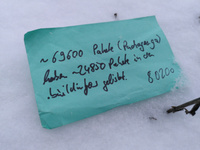
Reproducible Builds Summit 2023 Between October 31st and November 2nd, we held our seventh Reproducible Builds Summit in Hamburg, Germany! Amazingly, the agenda and all notes from all sessions are all online many thanks to everyone who wrote notes from the sessions. As a followup on one idea, started at the summit, Alexander Couzens and Holger Levsen started work on a cache (or tailored front-end) for the snapshot.debian.org service. The general idea is that, when rebuilding Debian, you do not actually need the whole ~140TB of data from snapshot.debian.org; rather, only a very small subset of the packages are ever used for for building. It turns out, for amd64, arm64, armhf, i386, ppc64el, riscv64 and s390 for Debian trixie, unstable and experimental, this is only around 500GB ie. less than 1%. Although the new service not yet ready for usage, it has already provided a promising outlook in this regard. More information is available on https://rebuilder-snapshot.debian.net and we hope that this service becomes usable in the coming weeks. The adjacent picture shows a sticky note authored by Jan-Benedict Glaw at the summit in Hamburg, confirming Holger Levsen s theory that rebuilding all Debian packages needs a very small subset of packages, the text states that 69,200 packages (in Debian sid) list 24,850 packages in their .buildinfo files, in 8,0200 variations. This little piece of paper was the beginning of rebuilder-snapshot and is a direct outcome of the summit! The Reproducible Builds team would like to thank our event sponsors who include Mullvad VPN, openSUSE, Debian, Software Freedom Conservancy, Allotropia and Aspiration Tech.

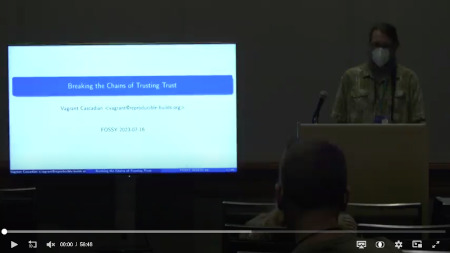
Beyond Trusting FOSS presentation at SeaGL On November 4th, Vagrant Cascadian presented Beyond Trusting FOSS at SeaGL in Seattle, WA in the United States. Founded in 2013, SeaGL is a free, grassroots technical summit dedicated to spreading awareness and knowledge about free source software, hardware and culture. The summary of Vagrant s talk mentions that it will:
[ ] introduce the concepts of Reproducible Builds, including best practices for developing and releasing software, the tools available to help diagnose issues, and touch on progress towards solving decades-old deeply pervasive fundamental security issues Learn how to verify and demonstrate trust, rather than simply hoping everything is OK!
Germane to the contents of the talk, the slides for Vagrant s talk can be built reproducibly, resulting in a PDF with a SHA1 of cfde2f8a0b7e6ec9b85377eeac0661d728b70f34 when built on Debian bookworm and c21fab273232c550ce822c4b0d9988e6c49aa2c3 on Debian sid at the time of writing.

Human Factors in Software Supply Chain Security Marcel Fourn , Dominik Wermke, Sascha Fahl and Yasemin Acar have published an article in a Special Issue of the IEEE s Security & Privacy magazine. Entitled A Viewpoint on Human Factors in Software Supply Chain Security: A Research Agenda, the paper justifies the need for reproducible builds to reach developers and end-users specifically, and furthermore points out some under-researched topics that we have seen mentioned in interviews. An author pre-print of the article is available in PDF form.

Community updates On our mailing list this month:

openSUSE updates Bernhard M. Wiedemann has created a wiki page outlining an proposal to create a general-purpose Linux distribution which consists of 100% bit-reproducible packages albeit minus the embedded signature within RPM files. It would be based on openSUSE Tumbleweed or, if available, its Slowroll-variant. In addition, Bernhard posted another monthly update for his work elsewhere in openSUSE.

Ubuntu Launchpad now supports .buildinfo files Back in 2017, Steve Langasek filed a bug against Ubuntu s Launchpad code hosting platform to report that .changes files (artifacts of building Ubuntu and Debian packages) reference .buildinfo files that aren t actually exposed by Launchpad itself. This was causing issues when attempting to process .changes files with tools such as Lintian. However, it was noticed last month that, in early August of this year, Simon Quigley had resolved this issue, and .buildinfo files are now available from the Launchpad system.

PHP reproducibility updates There have been two updates from the PHP programming language this month. Firstly, the widely-deployed PHPUnit framework for the PHP programming language have recently released version 10.5.0, which introduces the inclusion of a composer.lock file, ensuring total reproducibility of the shipped binary file. Further details and the discussion that went into their particular implementation can be found on the associated GitHub pull request. In addition, the presentation Leveraging Nix in the PHP ecosystem has been given in late October at the PHP International Conference in Munich by Pol Dellaiera. While the video replay is not yet available, the (reproducible) presentation slides and speaker notes are available.

diffoscope changes diffoscope is our in-depth and content-aware diff utility that can locate and diagnose reproducibility issues. This month, Chris Lamb made a number of changes, including:
  • Improving DOS/MBR extraction by adding support for 7z. [ ]
  • Adding a missing RequiredToolNotFound import. [ ]
  • As a UI/UX improvement, try and avoid printing an extended traceback if diffoscope runs out of memory. [ ]
  • Mark diffoscope as stable on PyPI.org. [ ]
  • Uploading version 252 to Debian unstable. [ ]

Website updates A huge number of notes were added to our website that were taken at our recent Reproducible Builds Summit held between October 31st and November 2nd in Hamburg, Germany. In particular, a big thanks to Arnout Engelen, Bernhard M. Wiedemann, Daan De Meyer, Evangelos Ribeiro Tzaras, Holger Levsen and Orhun Parmaks z. In addition to this, a number of other changes were made, including:

Upstream patches The Reproducible Builds project detects, dissects and attempts to fix as many currently-unreproducible packages as possible. We endeavour to send all of our patches upstream where appropriate. This month, we wrote a large number of such patches, including:

Reproducibility testing framework The Reproducible Builds project operates a comprehensive testing framework (available at tests.reproducible-builds.org) in order to check packages and other artifacts for reproducibility. In October, a number of changes were made by Holger Levsen:
  • Debian-related changes:
    • Track packages marked as Priority: important in a new package set. [ ][ ]
    • Stop scheduling packages that fail to build from source in bookworm [ ] and bullseye. [ ].
    • Add old releases dashboard link in web navigation. [ ]
    • Permit re-run of the pool_buildinfos script to be re-run for a specific year. [ ]
    • Grant jbglaw access to the osuosl4 node [ ][ ] along with lynxis [ ].
    • Increase RAM on the amd64 Ionos builders from 48 GiB to 64 GiB; thanks IONOS! [ ]
    • Move buster to archived suites. [ ][ ]
    • Reduce the number of arm64 architecture workers from 24 to 16 in order to improve stability [ ], reduce the workers for amd64 from 32 to 28 and, for i386, reduce from 12 down to 8 [ ].
    • Show the entire build history of each Debian package. [ ]
    • Stop scheduling already tested package/version combinations in Debian bookworm. [ ]
  • Snapshot service for rebuilders
    • Add an HTTP-based API endpoint. [ ][ ]
    • Add a Gunicorn instance to serve the HTTP API. [ ]
    • Add an NGINX config [ ][ ][ ][ ]
  • System-health:
    • Detect failures due to HTTP 503 Service Unavailable errors. [ ]
    • Detect failures to update package sets. [ ]
    • Detect unmet dependencies. (This usually occurs with builds of Debian live-build.) [ ]
  • Misc-related changes:
    • do install systemd-ommd on jenkins. [ ]
    • fix harmless typo in squid.conf for codethink04. [ ]
    • fixup: reproducible Debian: add gunicorn service to serve /api for rebuilder-snapshot.d.o. [ ]
    • Increase codethink04 s Squid cache_dir size setting to 16 GiB. [ ]
    • Don t install systemd-oomd as it unfortunately kills sshd [ ]
    • Use debootstrap from backports when commisioning nodes. [ ]
    • Add the live_build_debian_stretch_gnome, debsums-tests_buster and debsums-tests_buster jobs to the zombie list. [ ][ ]
    • Run jekyll build with the --watch argument when building the Reproducible Builds website. [ ]
    • Misc node maintenance. [ ][ ][ ]
Other changes were made as well, however, including Mattia Rizzolo fixing rc.local s Bash syntax so it can actually run [ ], commenting away some file cleanup code that is (potentially) deleting too much [ ] and fixing the html_brekages page for Debian package builds [ ]. Finally, diagnosed and submitted a patch to add a AddEncoding gzip .gz line to the tests.reproducible-builds.org Apache configuration so that Gzip files aren t re-compressed as Gzip which some clients can t deal with (as well as being a waste of time). [ ]

If you are interested in contributing to the Reproducible Builds project, please visit our Contribute page on our website. However, you can get in touch with us via:

11 November 2023

Reproducible Builds: Reproducible Builds in October 2023

Welcome to the October 2023 report from the Reproducible Builds project. In these reports we outline the most important things that we have been up to over the past month. As a quick recap, whilst anyone may inspect the source code of free software for malicious flaws, almost all software is distributed to end users as pre-compiled binaries.

Reproducible Builds Summit 2023 Between October 31st and November 2nd, we held our seventh Reproducible Builds Summit in Hamburg, Germany! Our summits are a unique gathering that brings together attendees from diverse projects, united by a shared vision of advancing the Reproducible Builds effort, and this instance was no different. During this enriching event, participants had the opportunity to engage in discussions, establish connections and exchange ideas to drive progress in this vital field. A number of concrete outcomes from the summit will documented in the report for November 2023 and elsewhere. Amazingly the agenda and all notes from all sessions are already online. The Reproducible Builds team would like to thank our event sponsors who include Mullvad VPN, openSUSE, Debian, Software Freedom Conservancy, Allotropia and Aspiration Tech.

Reflections on Reflections on Trusting Trust Russ Cox posted a fascinating article on his blog prompted by the fortieth anniversary of Ken Thompson s award-winning paper, Reflections on Trusting Trust:
[ ] In March 2023, Ken gave the closing keynote [and] during the Q&A session, someone jokingly asked about the Turing award lecture, specifically can you tell us right now whether you have a backdoor into every copy of gcc and Linux still today?
Although Ken reveals (or at least claims!) that he has no such backdoor, he does admit that he has the actual code which Russ requests and subsequently dissects in great but accessible detail.

Ecosystem factors of reproducible builds Rahul Bajaj, Eduardo Fernandes, Bram Adams and Ahmed E. Hassan from the Maintenance, Construction and Intelligence of Software (MCIS) laboratory within the School of Computing, Queen s University in Ontario, Canada have published a paper on the Time to fix, causes and correlation with external ecosystem factors of unreproducible builds. The authors compare various response times within the Debian and Arch Linux distributions including, for example:
Arch Linux packages become reproducible a median of 30 days quicker when compared to Debian packages, while Debian packages remain reproducible for a median of 68 days longer once fixed.
A full PDF of their paper is available online, as are many other interesting papers on MCIS publication page.

NixOS installation image reproducible On the NixOS Discourse instance, Arnout Engelen (raboof) announced that NixOS have created an independent, bit-for-bit identical rebuilding of the nixos-minimal image that is used to install NixOS. In their post, Arnout details what exactly can be reproduced, and even includes some of the history of this endeavour:
You may remember a 2021 announcement that the minimal ISO was 100% reproducible. While back then we successfully tested that all packages that were needed to build the ISO were individually reproducible, actually rebuilding the ISO still introduced differences. This was due to some remaining problems in the hydra cache and the way the ISO was created. By the time we fixed those, regressions had popped up (notably an upstream problem in Python 3.10), and it isn t until this week that we were back to having everything reproducible and being able to validate the complete chain.
Congratulations to NixOS team for reaching this important milestone! Discussion about this announcement can be found underneath the post itself, as well as on Hacker News.

CPython source tarballs now reproducible Seth Larson published a blog post investigating the reproducibility of the CPython source tarballs. Using diffoscope, reprotest and other tools, Seth documents his work that led to a pull request to make these files reproducible which was merged by ukasz Langa.

New arm64 hardware from Codethink Long-time sponsor of the project, Codethink, have generously replaced our old Moonshot-Slides , which they have generously hosted since 2016 with new KVM-based arm64 hardware. Holger Levsen integrated these new nodes to the Reproducible Builds continuous integration framework.

Community updates On our mailing list during October 2023 there were a number of threads, including:
  • Vagrant Cascadian continued a thread about the implementation details of a snapshot archive server required for reproducing previous builds. [ ]
  • Akihiro Suda shared an update on BuildKit, a toolkit for building Docker container images. Akihiro links to a interesting talk they recently gave at DockerCon titled Reproducible builds with BuildKit for software supply-chain security.
  • Alex Zakharov started a thread discussing and proposing fixes for various tools that create ext4 filesystem images. [ ]
Elsewhere, Pol Dellaiera made a number of improvements to our website, including fixing typos and links [ ][ ], adding a NixOS Flake file [ ] and sorting our publications page by date [ ]. Vagrant Cascadian presented Reproducible Builds All The Way Down at the Open Source Firmware Conference.

Distribution work distro-info is a Debian-oriented tool that can provide information about Debian (and Ubuntu) distributions such as their codenames (eg. bookworm) and so on. This month, Benjamin Drung uploaded a new version of distro-info that added support for the SOURCE_DATE_EPOCH environment variable in order to close bug #1034422. In addition, 8 reviews of packages were added, 74 were updated and 56 were removed this month, all adding to our knowledge about identified issues. Bernhard M. Wiedemann published another monthly report about reproducibility within openSUSE.

Software development The Reproducible Builds project detects, dissects and attempts to fix as many currently-unreproducible packages as possible. We endeavour to send all of our patches upstream where appropriate. This month, we wrote a large number of such patches, including: In addition, Chris Lamb fixed an issue in diffoscope, where if the equivalent of file -i returns text/plain, fallback to comparing as a text file. This was originally filed as Debian bug #1053668) by Niels Thykier. [ ] This was then uploaded to Debian (and elsewhere) as version 251.

Reproducibility testing framework The Reproducible Builds project operates a comprehensive testing framework (available at tests.reproducible-builds.org) in order to check packages and other artifacts for reproducibility. In October, a number of changes were made by Holger Levsen:
  • Debian-related changes:
    • Refine the handling of package blacklisting, such as sending blacklisting notifications to the #debian-reproducible-changes IRC channel. [ ][ ][ ]
    • Install systemd-oomd on all Debian bookworm nodes (re. Debian bug #1052257). [ ]
    • Detect more cases of failures to delete schroots. [ ]
    • Document various bugs in bookworm which are (currently) being manually worked around. [ ]
  • Node-related changes:
    • Integrate the new arm64 machines from Codethink. [ ][ ][ ][ ][ ][ ]
    • Improve various node cleanup routines. [ ][ ][ ][ ]
    • General node maintenance. [ ][ ][ ][ ]
  • Monitoring-related changes:
    • Remove unused Munin monitoring plugins. [ ]
    • Complain less visibly about too many installed kernels. [ ]
  • Misc:
    • Enhance the firewall handling on Jenkins nodes. [ ][ ][ ][ ]
    • Install the fish shell everywhere. [ ]
In addition, Vagrant Cascadian added some packages and configuration for snapshot experiments. [ ]

If you are interested in contributing to the Reproducible Builds project, please visit our Contribute page on our website. However, you can get in touch with us via:

2 November 2023

Reproducible Builds: Farewell from the Reproducible Builds Summit 2023!

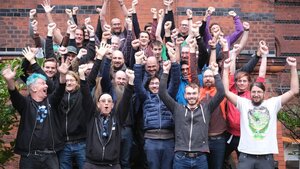
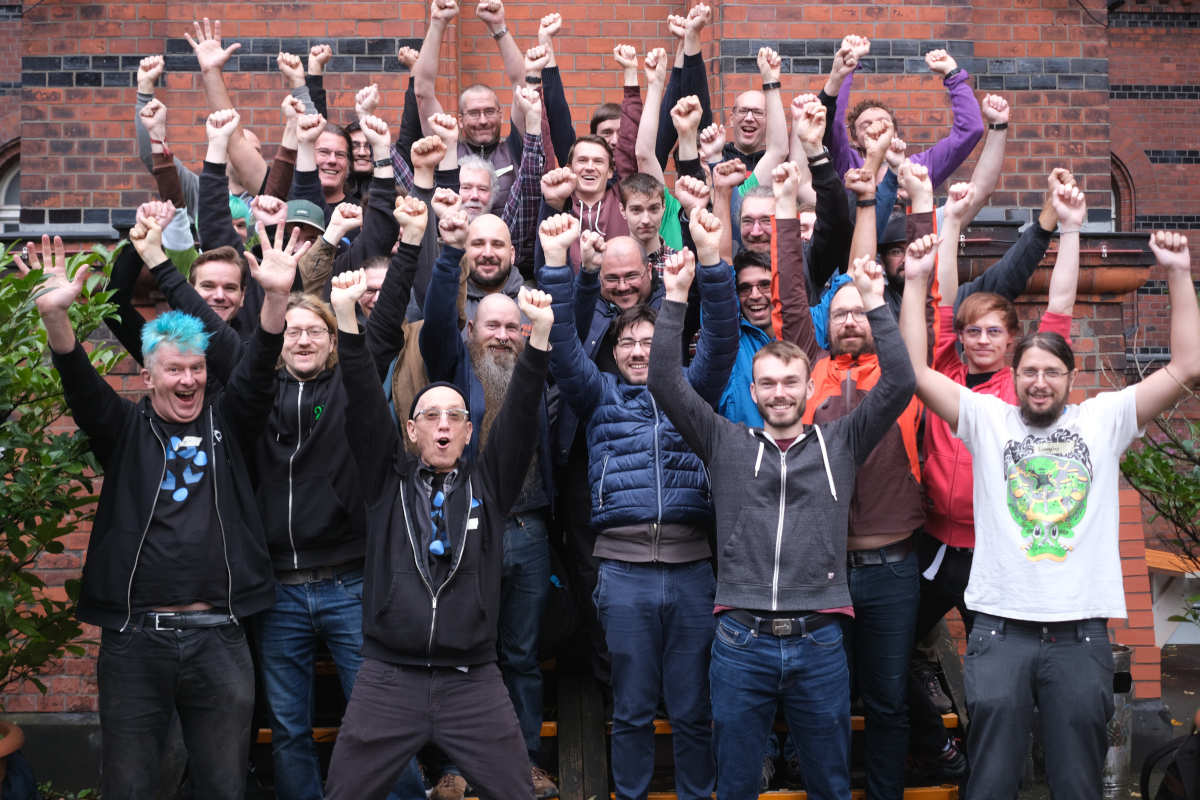
Farewell from the Reproducible Builds summit, which just took place in Hamburg, Germany: This year, we were thrilled to host the seventh edition of this exciting event. Topics covered this year included:

as well as countless informal discussions and hacking sessions into the night. Projects represented at the venue included:
Debian, openSUSE, QubesOS, GNU Guix, Arch Linux, phosh, Mobian, PureOS, JustBuild, LibreOffice, Warpforge, OpenWrt, F-Droid, NixOS, ElectroBSD, Apache Security, Buildroot, Systemd, Apache Maven, Fedora, Privoxy, CHAINS (KTH Royal Institute of Technology), coreboot, GitHub, Tor Project, Ubuntu, rebuilderd, repro-env, spytrap-adb, arch-repro-status, etc.

A huge thanks to our sponsors and partners for making the event possible:
Aspiration

Event facilitation

Mullvad

Platinum sponsor


If you weren t able to make it this year, don t worry; just look out for an announcement in 2024 for the next event.

22 October 2023

Ravi Dwivedi: Software Freedom Day at sflc.in

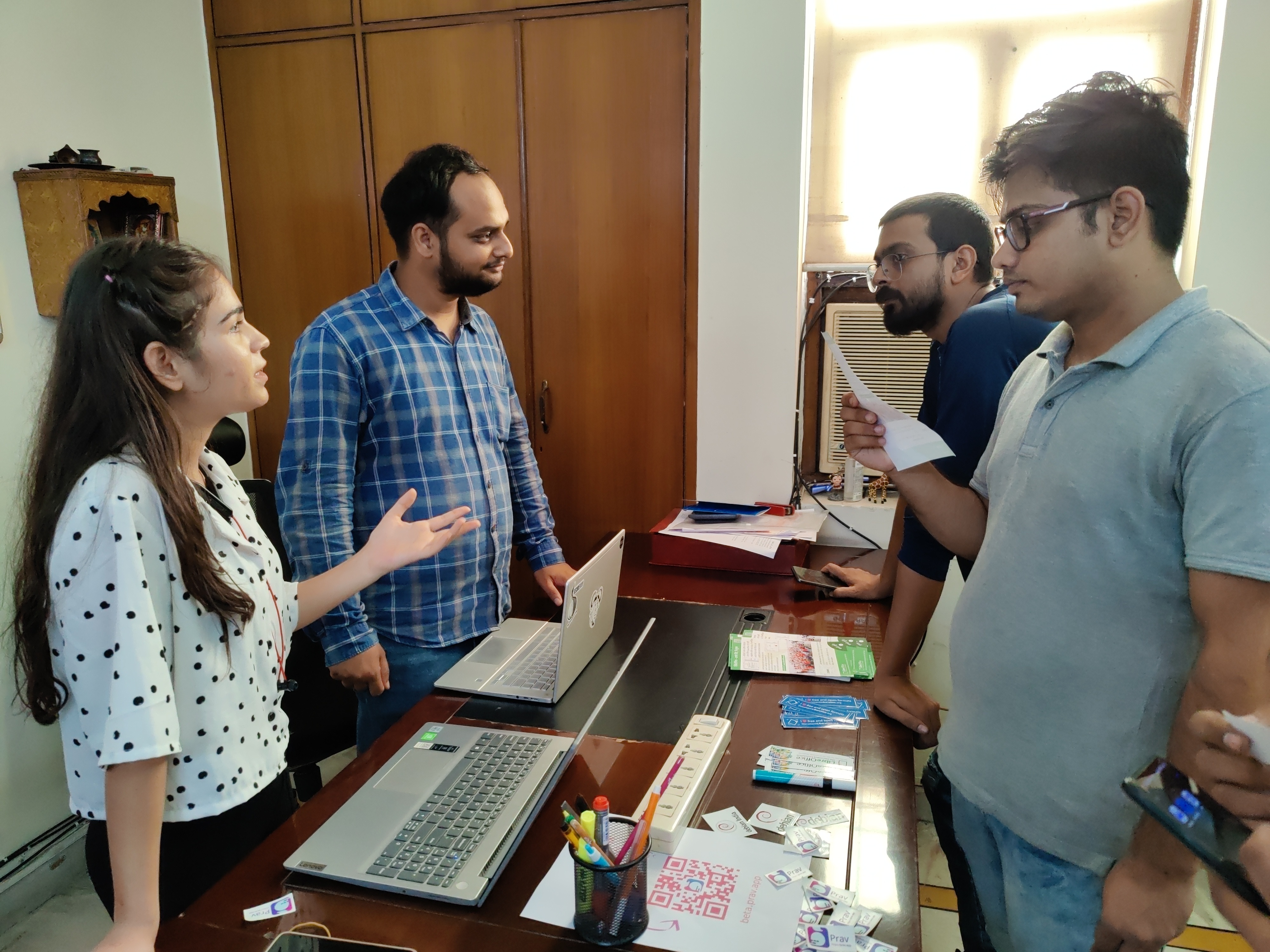
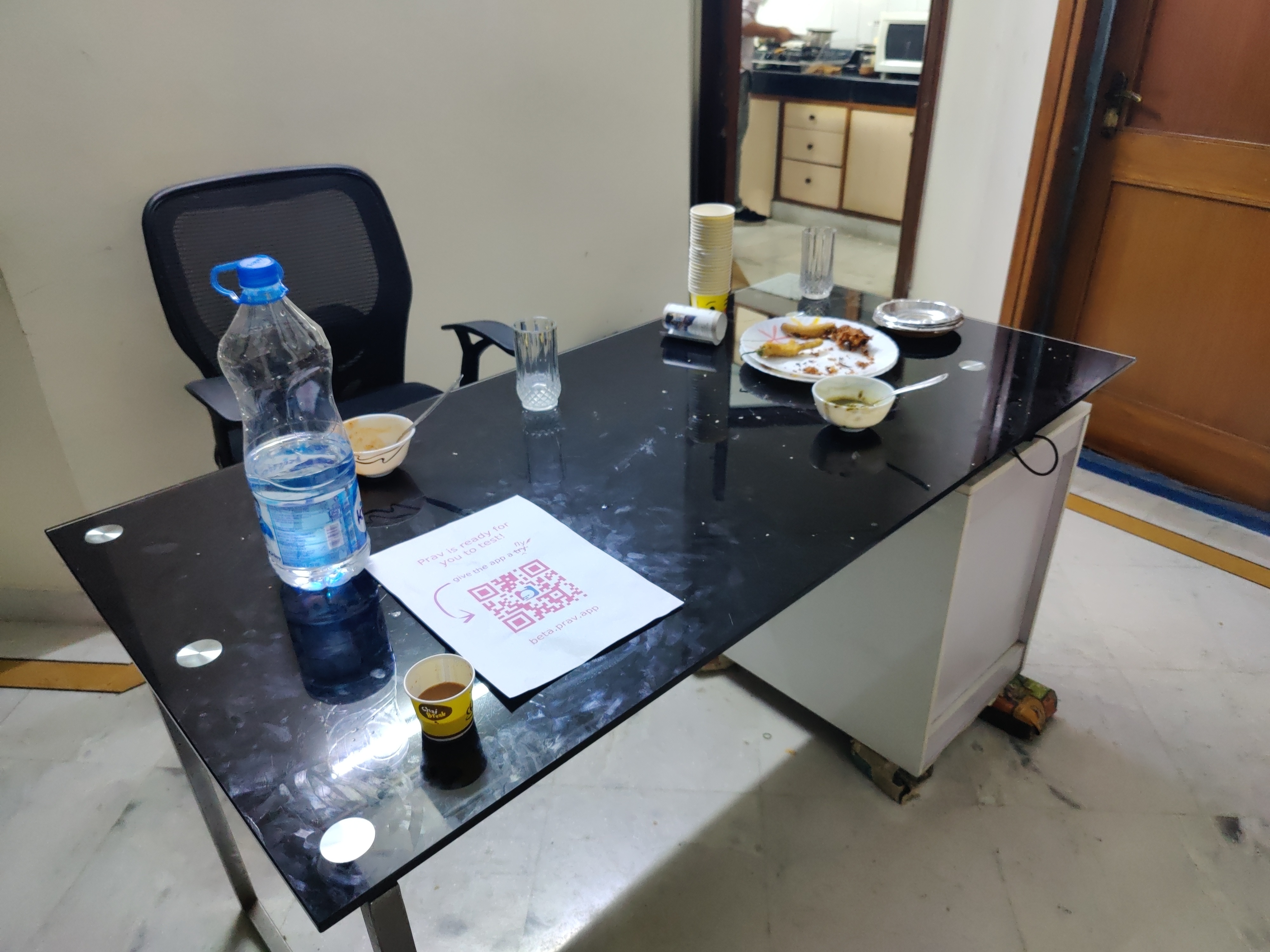
Software Freedom Law Center, India, also known as sflc.in, organized an event to celebrate the Software Freedom Day on 30th September 2023. Me, Sahil, Contrapunctus and Suresh joined. The venue was at the SFLC India office in Delhi. The sflc.in office was on the second floor of what looked like someone s apartment:). I also met Chirag, Orendra, Surbhi and others. My plan was to have a stall on LibreOffice and Prav app to raise awareness about these projects. I didn t have QR code for downloading prav app printed already, so I asked the people at sflc.in if they can get it printed for me. They were very kind and helped me in getting a color printout for me. So, I got a stall in their main room. Surbhi was having an Inkscape stall next to mine and gave me company. People came and asked about the prav project and then I realized I was still too tired to explain the idea behind the prav project and about LibreOffice (after a long Kerala trip). We got a few prav app installs during the event, which is cool.
My stall. Photo credits: Tejaswini.
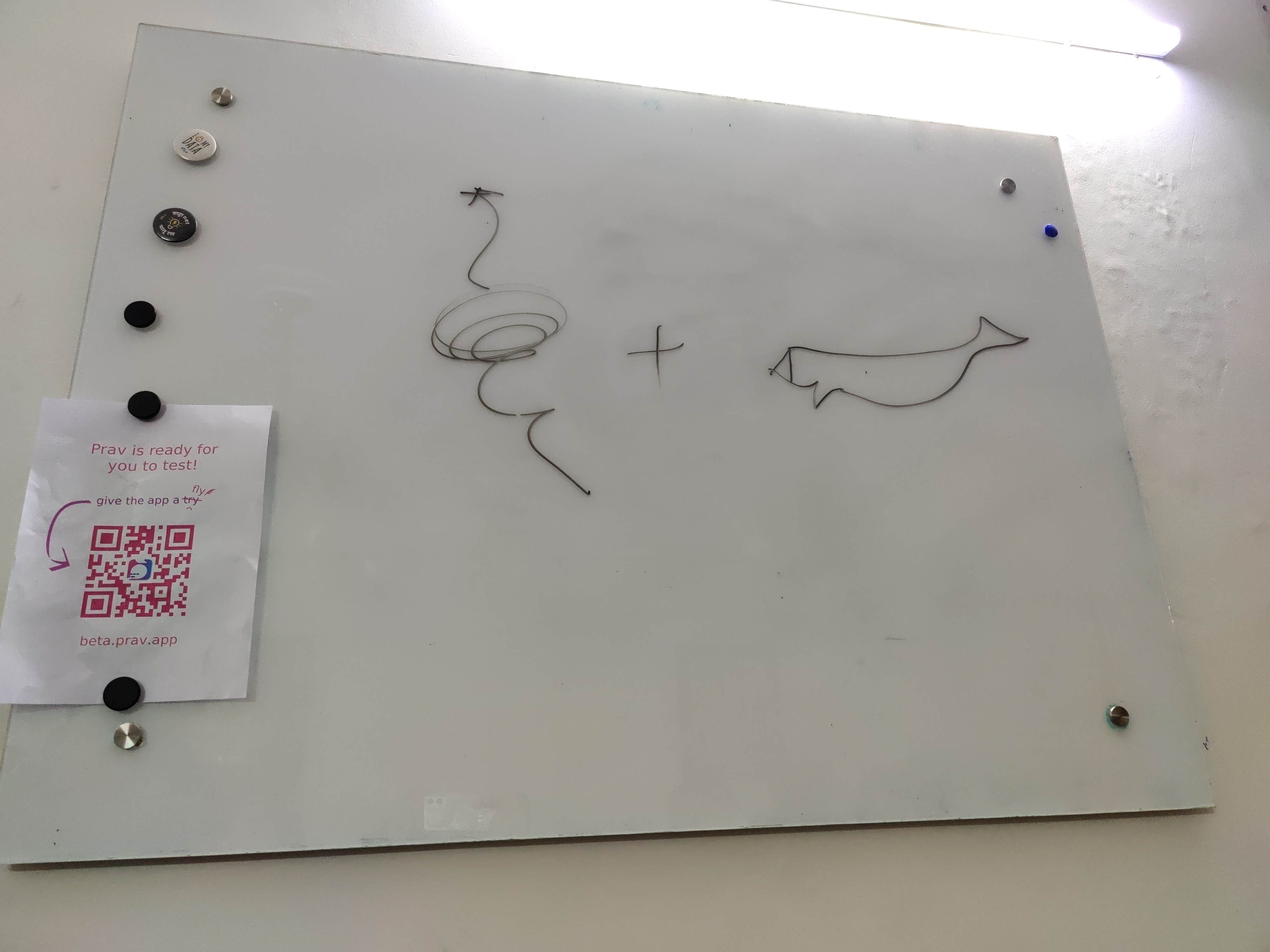
Sahil had Debian stall and contrapunctus had OpenStreetMap stall. After about an hour, Revolution OS was screened for all of us to watch, along with popcorn. The documentary gave an overview of history of Free Software Movement. The office had a kitchen where fresh chai was being made and served to us. The organizers ordered a lot of good snacks for us.
Snacks and tea at the front desk. CC-BY-SA 4.0 by Ravi Dwivedi.
I came out of the movie hall to take more tea and snacks from the front desk. I saw a beautiful painting was hanging at the wall opposite to the front desk and Tejaswini (from sflc.in) revealed that she had made it. The tea was really good as it was freshly made in the kitchen. After the movie, we played a game of pictionary. We were divided into two teams. The game goes as follows: A person from a team is selected and given a term related to freedom respecting software written on a piece of paper, but concealed from other participants. Then that person draws something on the board (no logo, no alphabets) without speaking. If the team from which the person belongs correctly guesses the term, the team gets one step ahead on the leader board. The team who reaches the finish line wins. I recall some fun pictionaries. Like, the one in the picture below seems far from the word Wireguard and even then someone from the team guessed that word. Our team won in the end \o/.
Pictionary drawing nowhere close to the intended word Wireguard :), which was guessed. Photo by Ravi Dwivedi, CC-BY-SA 4.0.
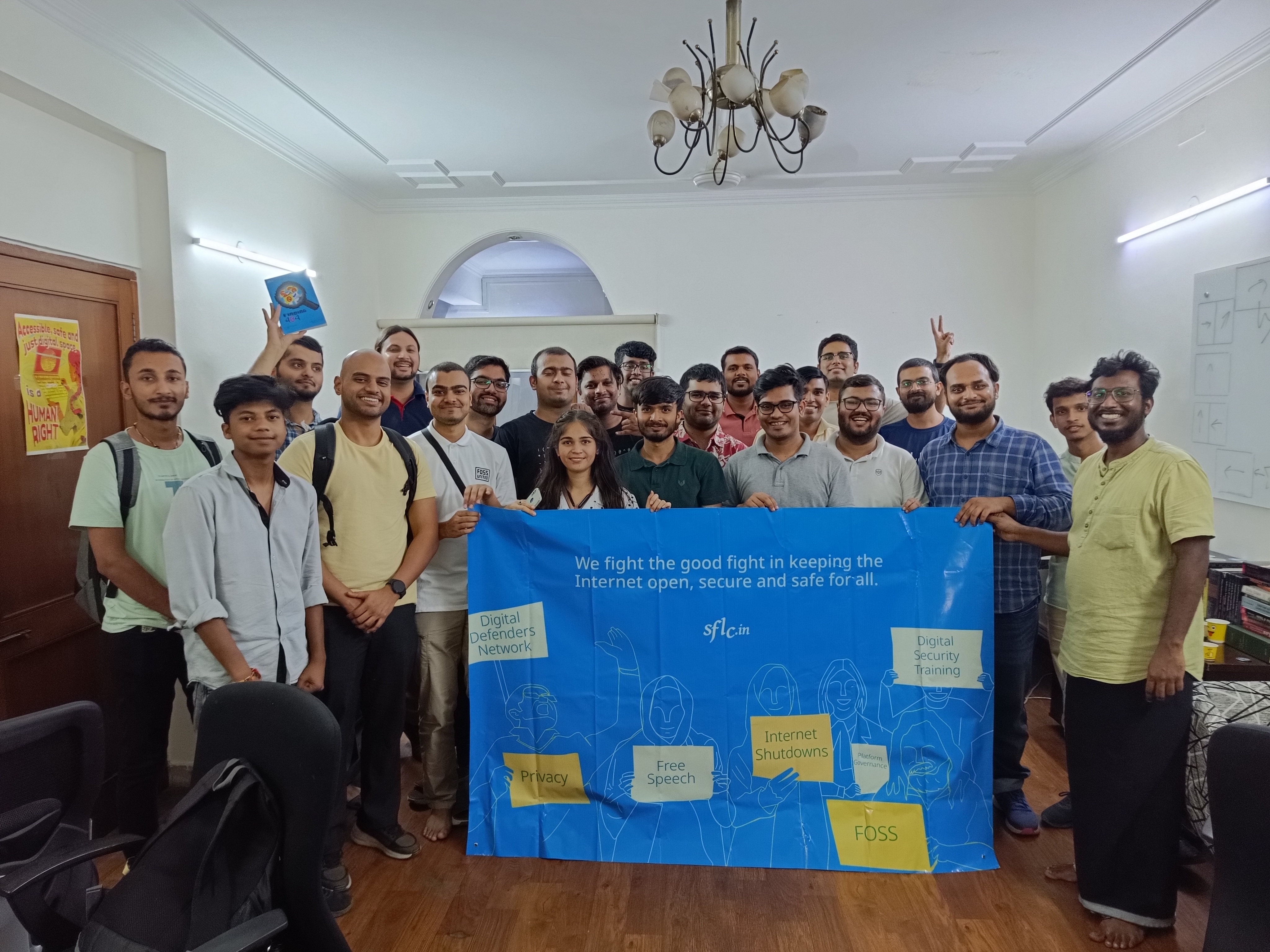
Then, we posed for a group picture. At the end, SFLC.in had a delicious cake in store for us. They had some merchandise - handbags, T-shirts, etc. which we could take if we donate some amount to SFLC.in. I bought a handbag with Ban Plastic, not Internet written on it in exchange for donation. I hope that gives people around me a powerful message :) .
Group photo. Photo credits: Tejaswini.
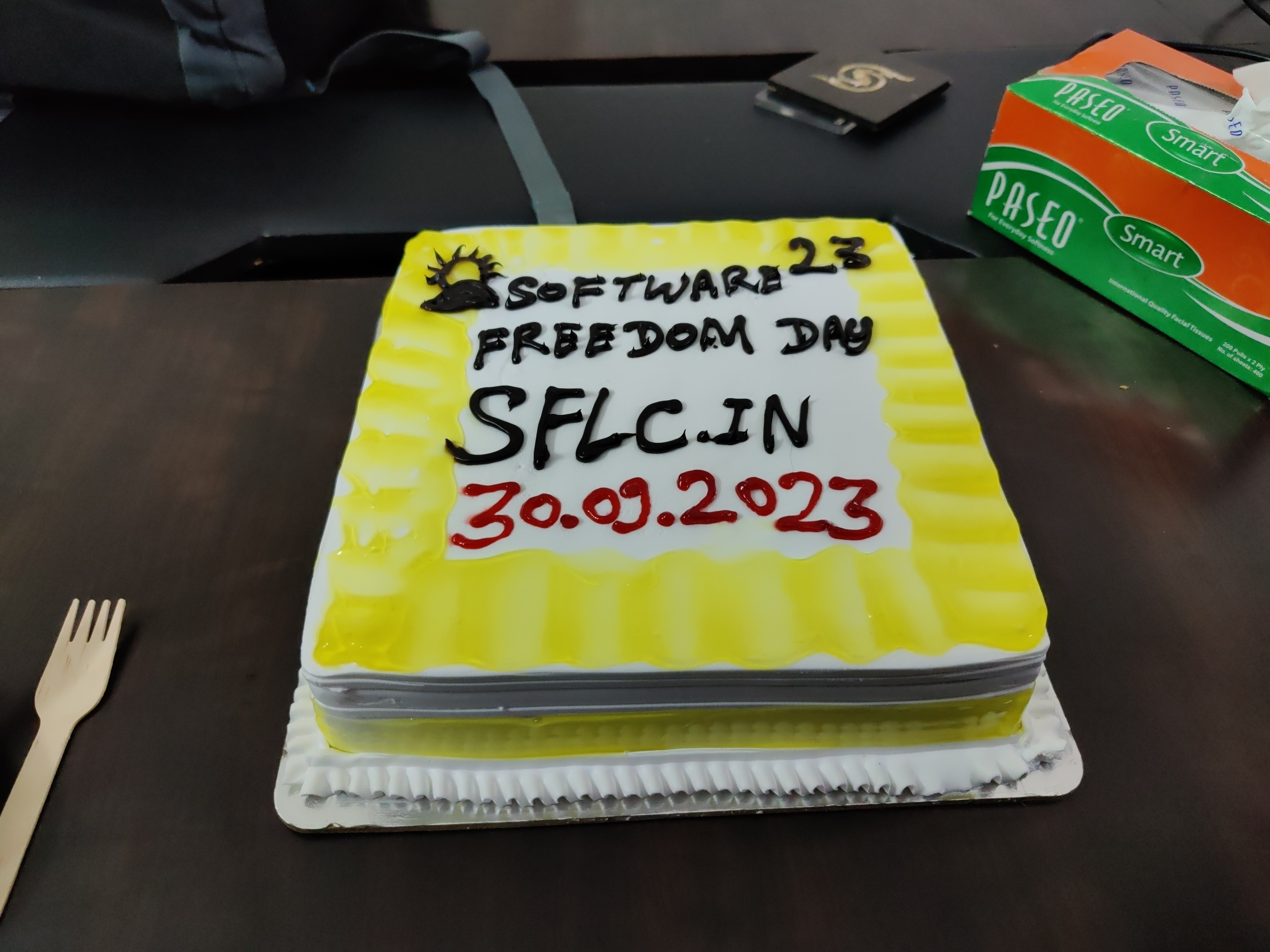
Tasty cake. CC-BY-SA 4.0 by Ravi Dwivedi.
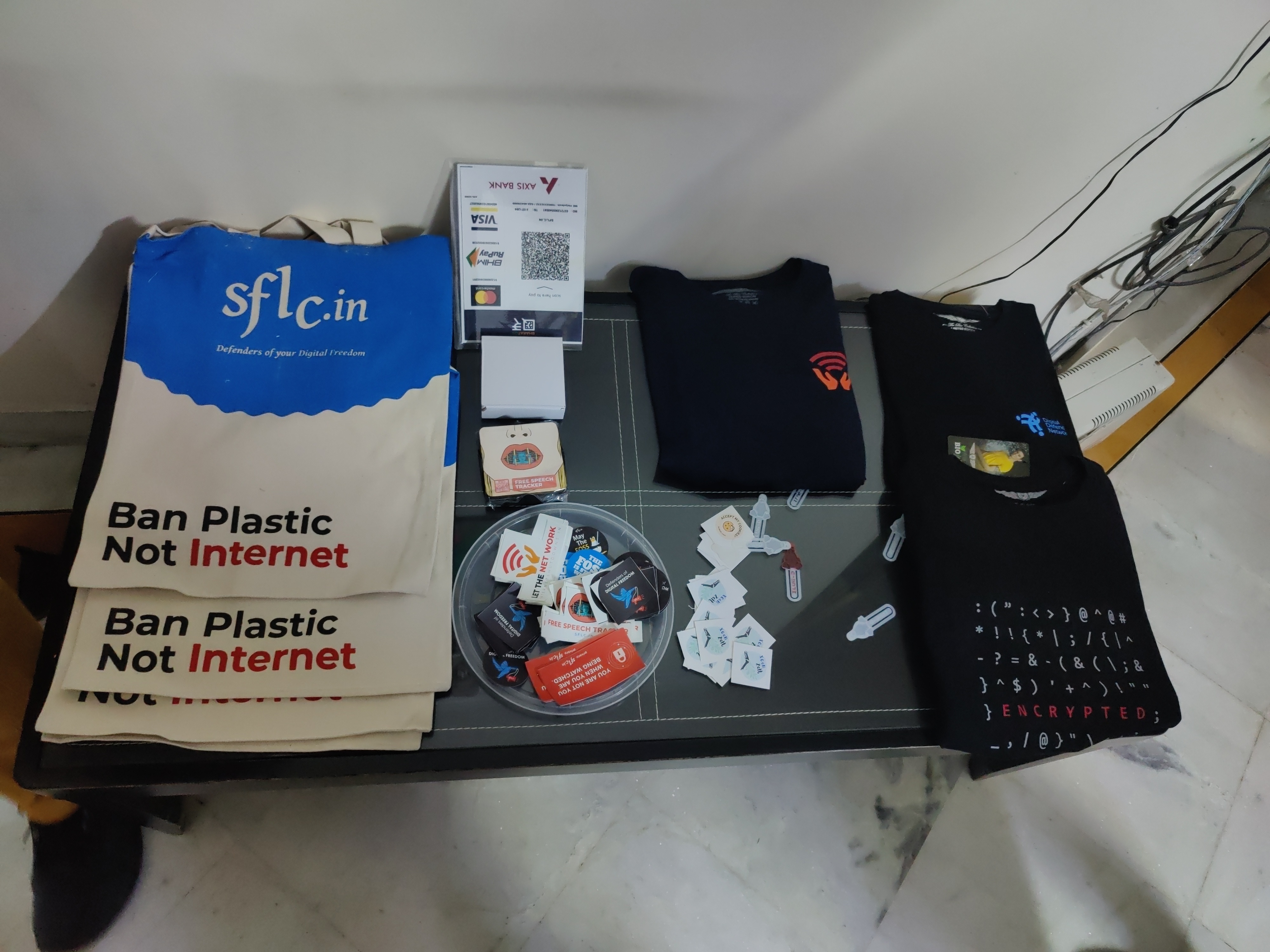
Merchandise by sflc.in. CC-BY-SA 4.0 by Ravi Dwivedi.

All in all, a nice event by sflc.in :)

20 October 2023

Ravi Dwivedi: More

19 October 2023

Russ Allbery: Review: The Cassini Division

Review: The Cassini Division, by Ken MacLeod
Series: Fall Revolution #3
Publisher: Tor
Copyright: 1998
Printing: August 2000
ISBN: 0-8125-6858-3
Format: Mass market
Pages: 305
The Cassini Division is the third book in the Fall Revolution series and a fairly direct sequel (albeit with different protagonists) to The Stone Canal. This is not a good place to start the series. It's impossible to talk about the plot of this book without discussing the future history of this series, which arguably includes some spoilers for The Star Fraction and The Stone Canal. I don't think the direction of history matters that much in enjoying the previous books, but read the first two books of the series before this review if you want to avoid all spoilers. When the Outwarders uploaded themselves and went fast, they did a lot of strange things: an interstellar probe contrary to all known laws of physics, the disassembly of Ganymede, and the Malley Mile, which plays a significant role in The Stone Canal. They also crashed the Earth. This was not entirely their fault. There were a lot of politics, religious fundamentalism, and plagues in play as well. But the storm of viruses broadcast from their transformed Jupiter shut down essentially all computing equipment on Earth, which set off much of the chaos. The results were catastrophic, and also politically transformative. Now, the Solar Union is a nearly unified anarchosocialist society, with only scattered enclaves of non-cooperators left outside that structure. Ellen May Ngewthu is a leader of the Cassini Division, the bulwark that stands between humans and the Outwarders. The Division ruthlessly destroys any remnant or probe that dares rise out of Jupiter's atmosphere, ensuring that the Outwarders, whatever they have become after untold generations of fast evolution, stay isolated to the one planet they have absorbed. The Division is very good at what they do. But there is a potential gap in that line of defense: there are fast folk in storage at the other end of the Malley Mile, on New Mars, and who knows what the deranged capitalists there will do or what forces they might unleash. The one person who knows a path through the Malley Mile isn't talking, so Ellen goes in search of the next best thing: the non-cooperator scientist Isambard Kingdom Malley. I am now thoroughly annoyed at how politics are handled in this series, and much less confused by the frequency with which MacLeod won Prometheus Awards from the Libertarian Futurist Society. Some of this is my own fault for having too high of hopes for political SF, but nothing in this series so far has convinced me that MacLeod is seriously engaging with political systems. Instead, the world-building to date makes the classic libertarian mistake of thinking societies will happily abandon stability and predictability in favor of their strange definition of freedom. The Solar Union is based on what Ellen calls the true knowledge, which is worth quoting in full so that you know what kind of politics we're talking about:
Life is a process of breaking down and using other matter, and if need be, other life. Therefore, life is aggression, and successful life is successful aggression. Life is the scum of matter, and people are the scum of life. There is nothing but matter, forces, space and time, which together make power. Nothing matters, except what matters to you. Might makes right, and power makes freedom. You are free to do whatever is in your power, and if you want to survive and thrive you had better do whatever is in your interests. If your interests conflict with those of others, let the others pit their power against yours, everyone for theirselves. If your interests coincide with those of others, let them work together with you, and against the rest. We are what we eat, and we eat everything. All that you really value, and the goodness and truth and beauty of life, have their roots in this apparently barren soil. This is the true knowledge. We had founded our idealism on the most nihilistic implications of science, our socialism on crass self-interest, our peace on our capacity for mutual destruction, and our liberty on determinism. We had replaced morality with convention, bravery with safety, frugality with plenty, philosophy with science, stoicism with anaesthetics and piety with immortality. The universal acid of the true knowledge had burned away a world of words, and exposed a universe of things. Things we could use.
This is certainly something that some people will believe, particularly cynical college students who love political theory, feeling smarter than other people, and calling their pet theories things like "the true knowledge." It is not even remotely believable as the governing philosophy of a solar confederation. The point of government for the average person in human society is to create and enforce predictable mutual rules that one can use as a basis for planning and habits, allowing you to not think about politics all the time. People who adore thinking about politics have great difficulty understanding how important it is to everyone else to have ignorable government. Constantly testing your power against other coalitions is a sport, not a governing philosophy. Given the implication that this testing is through violence or the threat of violence, it beggars belief that any large number of people would tolerate that type of instability for an extended period of time. Ellen is fully committed to the true knowledge. MacLeod likely is not; I don't think this represents the philosophy of the author. But the primary political conflict in this novel famous for being political science fiction is between the above variation of anarchy and an anarchocapitalist society, neither of which are believable as stable political systems for large numbers of people. This is a bit like seeking out a series because you were told it was about a great clash of European monarchies and discovering it was about a fight between Liberland and Sealand. It becomes hard to take the rest of the book seriously. I do realize that one point of political science fiction is to play with strange political ideas, similar to how science fiction plays with often-implausible science ideas. But those ideas need some contact with human nature. If you're going to tell me that the key to clawing society back from a world-wide catastrophic descent into chaos is to discard literally every social system used to create predictability and order, you had better be describing aliens, because that's not how humans work. The rest of the book is better. I am untangling a lot of backstory for the above synopsis, which in the book comes in dribs and drabs, but piecing that together is good fun. The plot is far more straightforward than the previous two books in the series: there is a clear enemy, a clear goal, and Ellen goes from point A to point B in a comprehensible way with enough twists to keep it interesting. The core moral conflict of the book is that Ellen is an anti-AI fanatic to the point that she considers anyone other than non-uploaded humans to be an existential threat. MacLeod gives the reader both reasons to believe Ellen is right and reasons to believe she's wrong, which maintains an interesting moral tension. One thing that MacLeod is very good at is what Bob Shaw called "wee thinky bits." I think my favorite in this book is the computer technology used by the Cassini Division, who have spent a century in close combat with inimical AI capable of infecting any digital computer system with tailored viruses. As a result, their computers are mechanical non-Von-Neumann machines, but mechanical with all the technology of a highly-advanced 24th century civilization with nanometer-scale manufacturing technology. It's a great mental image and a lot of fun to think about. This is the only science fiction novel that I can think of that has a hard-takeoff singularity that nonetheless is successfully resisted and fought to a stand-still by unmodified humanity. Most writers who were interested in the singularity idea treated it as either a near-total transformation leaving only remnants or as something that had to be stopped before it started. MacLeod realizes that there's no reason to believe a post-singularity form of life would be either uniform in intent or free from its own baffling sudden collapses and reversals, which can be exploited by humans. It makes for a much better story. The sociology of this book is difficult to swallow, but the characterization is significantly better than the previous books of the series and the plot is much tighter. I was too annoyed by the political science to fully enjoy it, but that may be partly the fault of my expectations coming in. If you like chewy, idea-filled science fiction with a lot of unexplained world-building that you have to puzzle out as you go, you may enjoy this, although unfortunately I think you need to read at least The Stone Canal first. The ending was a bit unsatisfying, but even that includes some neat science fiction ideas. Followed by The Sky Road, although I understand it is not a straightforward sequel. Rating: 6 out of 10

12 October 2023

Matthew Garrett: Defending abuse does not defend free software

The Free Software Foundation Europe and the Software Freedom Conservancy recently released a statement that they would no longer work with Eben Moglen, chairman of the Software Freedom Law Center. Eben was the general counsel for the Free Software Foundation for over 20 years, and was centrally involved in the development of version 3 of the GNU General Public License. He's devoted a great deal of his life to furthering free software.

But, as described in the joint statement, he's also acted abusively towards other members of the free software community. He's acted poorly towards his own staff. In a professional context, he's used graphically violent rhetoric to describe people he dislikes. He's screamed abuse at people attempting to do their job.

And, sadly, none of this comes as a surprise to me. As I wrote in 2017, after it became clear that Eben's opinions diverged sufficiently from the FSF's that he could no longer act as general counsel, he responded by threatening an FSF board member at an FSF-run event (various members of the board were willing to tolerate this, which is what led to me quitting the board). There's over a decade's evidence of Eben engaging in abusive behaviour towards members of the free software community, be they staff, colleagues, or just volunteers trying to make the world a better place.

When we build communities that tolerate abuse, we exclude anyone unwilling to tolerate being abused[1]. Nobody in the free software community should be expected to deal with being screamed at or threatened. Nobody should be afraid that they're about to have their sexuality outed by a former boss.

But of course there are some that will defend Eben based on his past contributions. There were people who were willing to defend Hans Reiser on that basis. We need to be clear that what these people are defending is not free software - it's the right for abusers to abuse. And in the long term, that's bad for free software.

[1] "Why don't people just get better at tolerating abuse?" is a terrible response to this. Why don't abusers stop abusing? There's fewer of them, and it should be easier.

comment count unavailable comments

11 October 2023

Russell Coker: PinePhone Status

4 months ago I got my PinePhonePro [1]. Since then I have got SE Linux working on it to the stage of allowing it to boot correctly with Debian/Unstable, login with the user_t domain (minimum privilege for the graphical user) and make and receive calls. I finished getting SE Linux working reasonably well 3 days ago and most (but not all) of the SE Linux policy is in Debian now. I ve been getting good at Github PRs and I m sending a lot of policy upstream, so the next version of Debian will have a much smaller diff from the upstream Refpolicy. I have been running the PinePhone with Plasma Mobile because I prefer KDE, I would run GNOME/Phoc if it gave significantly better functionality. 3 days ago I moved my main SIM (the one with the number that people call about work etc) to my PinePhone and tried running it as my main phone. Today I gave up on that. My Android History The last phone I had that did everything I needed was a Huawei Mate 10 Pro that I bought refurbished in June 2019 for $389. The Mate 10 Pro runs Android with the Google Play store and has been quite unremarkable which is presumably why I forgot to blog about it when I got it, it was a slight upgrade over the Huawei Mate 9 [2] that I had used for 2 years before that. In April 2022 I tried using a Huawei Nova 7i as my main phone without Google Play programs or services [3]. That experiment was a failure as I couldn t get NextCloud to work for Calendaring and Contacts. It could be that I stuffed something up when trying that, but I put more skill and effort into trying to get it to work than most people ever would. The Nova 7i is a very slick phone, faster and nicer than the Mate 10 Pro (as expected being 2 years newer) while also having ridiculously long battery life. The Nova 7i when always on running the SchildiChat Matrix client and the Conversations Jabber client it will use less than 10% battery in a 8 hour work day. As nice as the Nova 7i is for the core functions I still need to have Play Store apps for LinkedIn, Twitter, Facebook, Zoom, etc. Which meant connecting the Mate 10 Pro via Wifi. As slick as the Nova 7i is for non-Google stuff running it and the Mate 10 Pro is a medium amount of pain for a small amount of freedom. So now I have for the moment abandoned the Nova 7i and gone back to the Mate 10 Pro. What I will try to do is to either forcibly install Google Play on the Nova 7i to make it my proprietary phone or to install an open distribution of Linux (IE not Android) to make it at least a small tablet which incidentally is much more powerful than a PinePhonePro. Issues With the PinePhonePro The battery charges very slowly (as much as 50 hours estimated charge time) and discharges fast. When used in a typical way in Caffeine mode to stop suspend so I can ssh to it etc it won t come close to lasting an 8 hour day. Also it will only take 5V charging and ideally wants 5V 3A charging which most chargers won t do. The charging speed over regular USB ports is very slow, sometimes stating it will take as much as 50 hours to charge. A phone that gets below 50% charge in less than 4 hours and can t be charged at a reasonable speed from a USB port on a laptop or monitor is going to be a major pain to use in the office. I don t think this can be fixed in software, we can alleviate it by making software more CPU efficient and by enabling various hardware sleep modes more effectively but the slow charging is a hardware issue that can t be fixed. The phone call quality is poor. Usually when on a call I hear static and sometimes the person at the other end appears to hear nothing. Also the UI for calls is different from Android which makes it take longer to answer a call and gives more missed calls. The UI issue is a combination of software and habits, both of which can be changed. But the call quality may be a hardware issue. I don t know if it s a hardware issue specific to my phone or something related to the PinePhonePro on the Telstra network. Clicking on notification in the drop-down doesn t take me to the app. I don t know if this is regarded as a bug by the Plasma-Mobile developers. Also notifications aren t displayed on the lock screen and there doesn t seem to be a configuration option to enable this. The Plasma-Mobile configuration for the wifi hotspot is difficult. There is no button for it in the drop-down menu (called Quicksettings in Plasma-Mobile) and no way of easily determining whether it s in hotspot or wifi client mode. This isn t an insurmountable problem and the worst-case is that I could write a script to do it, but it s still annoying. There is apparent support in the desktop version of KDE for syncing contacts from Google and I could probably get that working (although I failed last time I tried on the desktop), but it is a pain. Conclusion Most of the problems are software related and therefore I can get involved in solving them. I plan to keep working on these things. If all the software had worked in an ideal manner then I would have spent more time investigating the hardware issues of battery life and charge time and the quality of calls. I now have my Librem5 [4] running Debian so I will be able to compare call quality with the PinePhonePro. If I m unable to get the PinePhonePro working adequately then maybe making the Librem5 my main phone will be an option. I hope that by early next year I will be able to make another test at using a FOSS phone my main phone. In the mean time I can still work on convergence and other things.

8 October 2023

Sahil Dhiman: Lap 24

Twenty-four is a big number. More than one/fourth (or more) of my life is behind me now. At this point, I truly feel like I have become an adult; mentally and physically. Another year seem to have gone by quickly. I still vividly remember writing 23 and Counting and here I m writing the next one so soon. Probably the lowest I felt ever on my birthday; with loss of Abraham and on the other hand, medical issues with a dear one. Didn t even felt like birthday was almost here. The loss of Abraham, taught me to care for people more and meet cherish everyone. I m grateful for all the people who supported and cared for me and others during times of grief when things went numb. Thank you! Also, for the first time ever, I went to office on my birthday. This probably would become a norm in coming years. Didn t felt like doing anything, so just went to office. The cake, wishes and calls kept coming in throughout the day. I m grateful for the all people around for remembering :) This year marked my first official job switch where I moved from MakeMyTrip to Unmukti as a GNU/Linux Network Systems engineer (that s a mouthful of a job role, I know) where I do anything and everything ranging from system admin, network engineering, a bit of social media, chronicling stuff on company blog and bringing up new applications as per requirement. Moving from MMT to Unmukti was a big cultural shift. From a full-blown corporate with more than 3 thousand employees to a small 5-person team. People still think I work for a startup on hearing the low head count, though Unmukti is a 13 year old organization. I get the freedom to work at my own pace and put my ideas in larger technical discussions, while also actively participating in the community, which I m truly grateful of. I go full geek here and almost everyone here is on the same spectrum, so things technical or societal discussions just naturally flow. The months of August-September again marked the Great Refresh. For reasons unforeseen, I have had to pack my stuff again and move, albeit to just next door for now, but that gave me the much need opportunity to sift through my belongings here. As usual, I threw a boatload of stuff which was of no use and/or just hogging space. My wardrobe cupboard finally got cleaned and sorted, with old and new clothes getting (re)discovered. The Refresh is always a pain with loads of collating stuff in carry worthy bags and hauling stuff but as usual, there s nothing else I can do other than just pack and move. This year also culminated our four plus years of work for organizing annual Debian conference, DebConf to India. DebConf23 happened in Kochi, Kerala from 3rd September to 17th September (including DebCamp). First concrete work to bring conference to India was done Raju Dev who made the first bid during DebConf18 in Hsinchu, Taiwan. We lost but won during the next year bid at DebConf19 Curitiba, Brazil in 2019. I joined the efforts after meeting the team online after DebConf20. Initially started with the publicity team, but we didn t need much publicity for event, I was later asked to join sponsors/fundraising team. That turned out to be quite an experience. Then the conference itself turned to be a good experience. More on that in an upcoming DebConf23 blog post, which will come eventually. After seeing how things work out in Debian in 2020, I had the goal to become a Debian Developer (DD) before DebConf23, which gave me almost three years to get involved and get recognized to become a DD. I was more excited to grab sahil AT debian.org, a short email with only my name and no number of characters after it. After, quite a while, I dropped the hope of become a DD because I wasn t successful in my attempts to meaningfully package and technically contribute to the project. But people in Debian India later convinced me that I have done enough to become a Debian Developer, non uploading, purely by showing up and helping around all for the Debian conferences. I applied and got sponsored (i.e. supported) for my request by srud and Praveen. Finally, on 23rd Feb, I officially became part of Debian project as 14th (at the moment) Debian Developer from India. Got sahil AT debian.org too :) For some grace, I also became a DD before DebConf23. Becoming a DD didn t change anything much though, I still believe, it might have helped secure me a job though. Also, worth mentioning is my increased interest in OpenStreetMap (OSM) mapping. I heavily mapped this year and went around for mapathon-meetups too. One step towards a better OSM and more community engagement around it. Looking back at my blog, this year around, it seems mostly dotted with Debian and one OSM post. Significant shift from the range of topics I use to write about in the past year but blogging this year wasn t a go-to activity. Other stuff kept me busy. Living in Gurugram has shown me many facades of life from which I was shielded or didn t come across earlier. It made me realize all the privileges which has helped me along the way, which became apparent while living almost alone here and managing thing by oneself.

22 September 2023

Ravi Dwivedi: Debconf23

Official logo of DebConf23

Introduction DebConf23, the 24th annual Debian Conference, was held in India in the city of Kochi, Kerala from the 3rd to the 17th of September, 2023. Ever since I got to know about it (which was more than an year ago), I was excited to attend DebConf in my home country. This was my second DebConf, as I attended one last year in Kosovo. I was very happy that I didn t need to apply for a visa to attend. I got full bursary to attend the event (thanks a lot to Debian for that!) which is always helpful in covering the expenses, especially if the venue is a five star hotel :) For the conference, I submitted two talks. One was suggested by Sahil on Debian packaging for beginners, while the other was suggested by Praveen who opined that a talk covering broader topics about freedom in self-hosting services will be better, when I started discussing about submitting a talk about prav app project. So I submitted one on Debian packaging for beginners and the other on ideas on sustainable solutions for self-hosting. My friend Suresh - who is enthusiastic about Debian and free software - wanted to attend the DebConf as well. When the registration started, I reminded him about applying. We landed in Kochi on the 28th of August 2023 during the festival of Onam. We celebrated Onam in Kochi, had a trip to Wayanad, and returned to Kochi. On the evening of the 3rd of September, we reached the venue - Four Points Hotel by Sheraton, at Infopark Kochi, Ernakulam, Kerala, India.
Suresh and me celebrating Onam in Kochi.
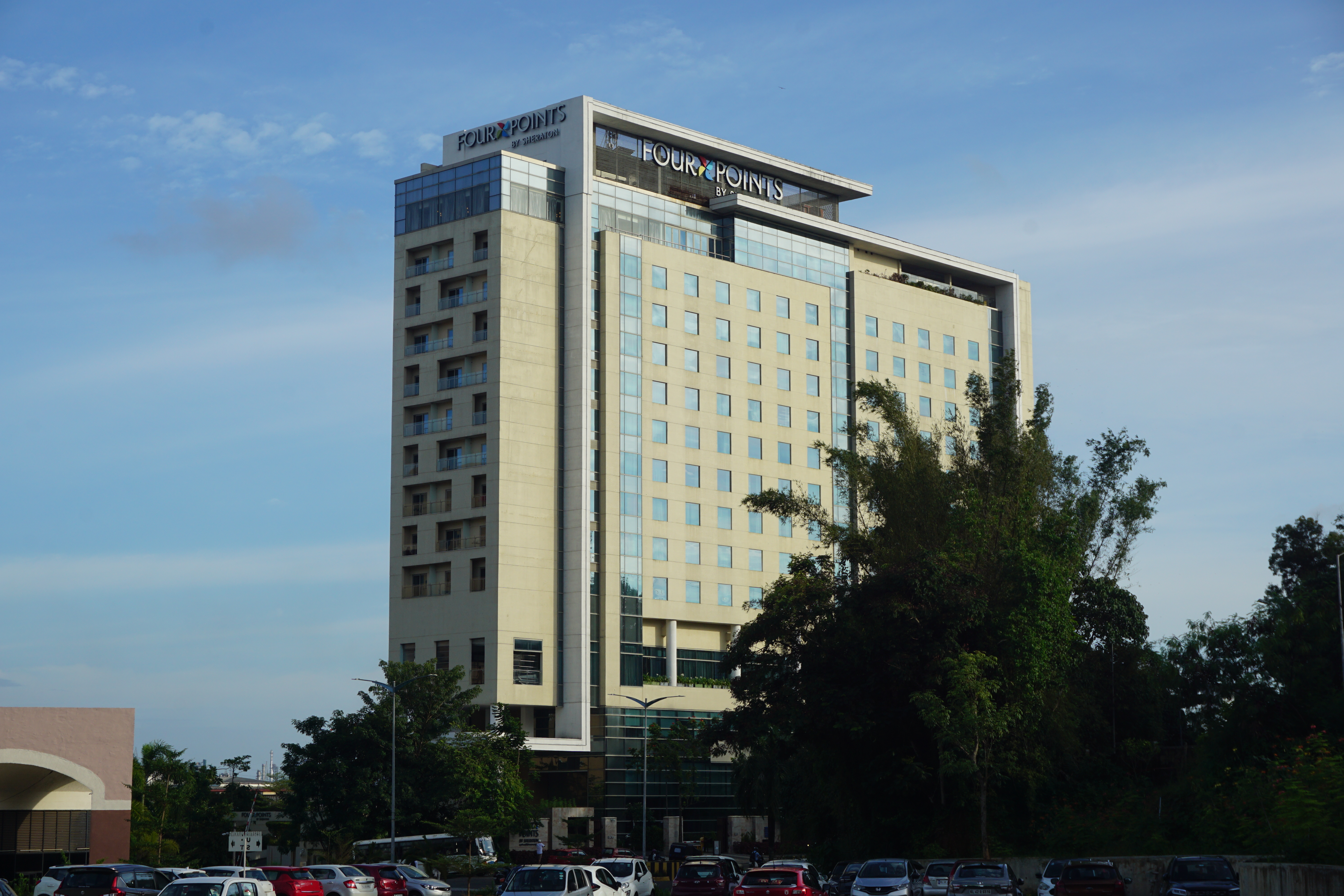
Hotel overview The hotel had 14 floors, and featured a swimming pool and gym (these were included in our package). The hotel gave us elevator access for only our floor, along with public spaces like the reception, gym, swimming pool, and dining areas. The temperature inside the hotel was pretty cold and I had to buy a jacket to survive. Perhaps the hotel was in cahoots with winterwear companies? :)
Four Points Hotel by Sheraton was the venue of DebConf23. Photo credits: Bilal

Photo of the pool. Photo credits: Andreas Tille.
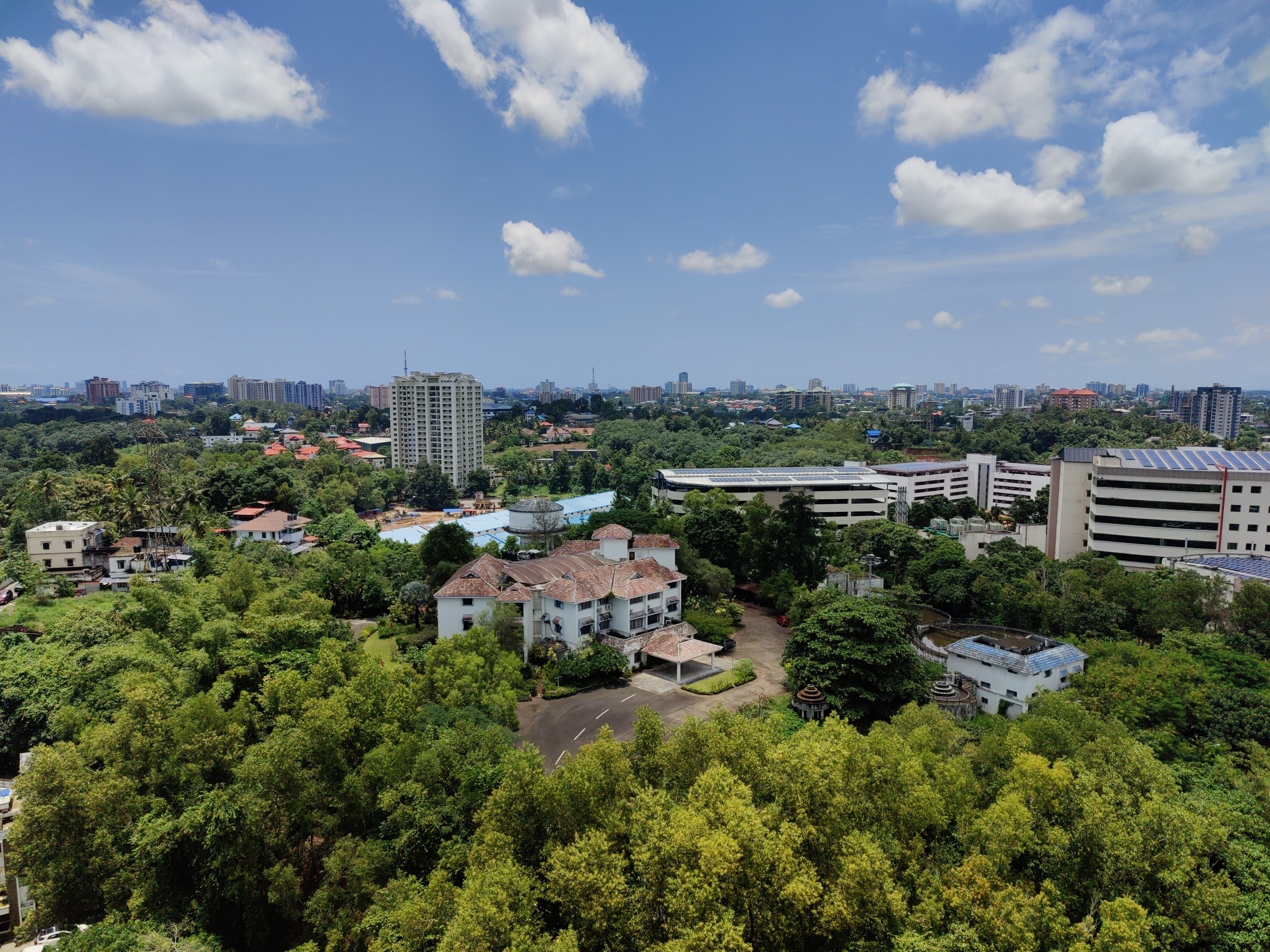
View from the hotel window.
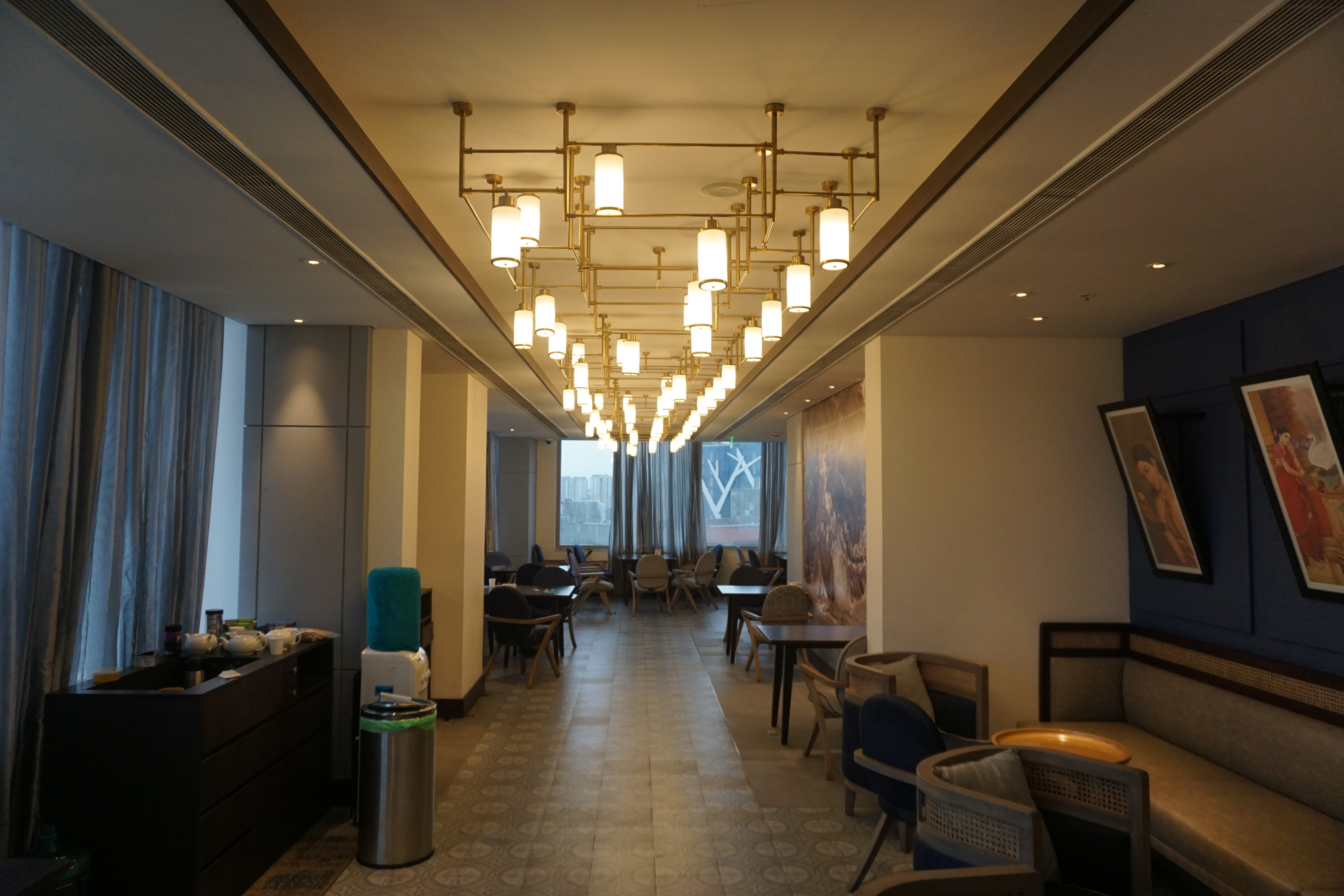
Meals On the first day, Suresh and I had dinner at the eatery on the third floor. At the entrance, a member of the hotel staff asked us about how many people we wanted a table for. I told her that it s just the two of us at the moment, but (as we are attending a conference) we might be joined by others. Regardless, they gave us a table for just two. Within a few minutes, we were joined by Alper from Turkey and urbec from Germany. So we shifted to a larger table but then we were joined by even more people, so we were busy adding more chairs to our table. urbec had already been in Kerala for the past 5-6 days and was, on one hand, very happy already with the quality and taste of bananas in Kerala and on the other, rather afraid of the spicy food :) Two days later, the lunch and dinner were shifted to the All Spice Restaurant on the 14th floor, but the breakfast was still served at the eatery. Since the eatery (on the 3rd floor) had greater variety of food than the other venue, this move made breakfast the best meal for me and many others. Many attendees from outside India were not accustomed to the spicy food. It is difficult for locals to help them, because what we consider mild can be spicy for others. It is not easy to satisfy everyone at the dining table, but I think the organizing team did a very good job in the food department. (That said, it didn t matter for me after a point, and you will know why.) The pappadam were really good, and I liked the rice labelled Kerala rice . I actually brought that exact rice and pappadam home during my last trip to Kochi and everyone at my home liked it too (thanks to Abhijit PA). I also wished to eat all types of payasams from Kerala and this really happened (thanks to Sruthi who designed the menu). Every meal had a different variety of payasam and it was awesome, although I didn t like some of them, mostly because they were very sweet. Meals were later shifted to the ground floor (taking away the best breakfast option which was the eatery).
This place served as lunch and dinner place and later as hacklab during debconf. Photo credits: Bilal
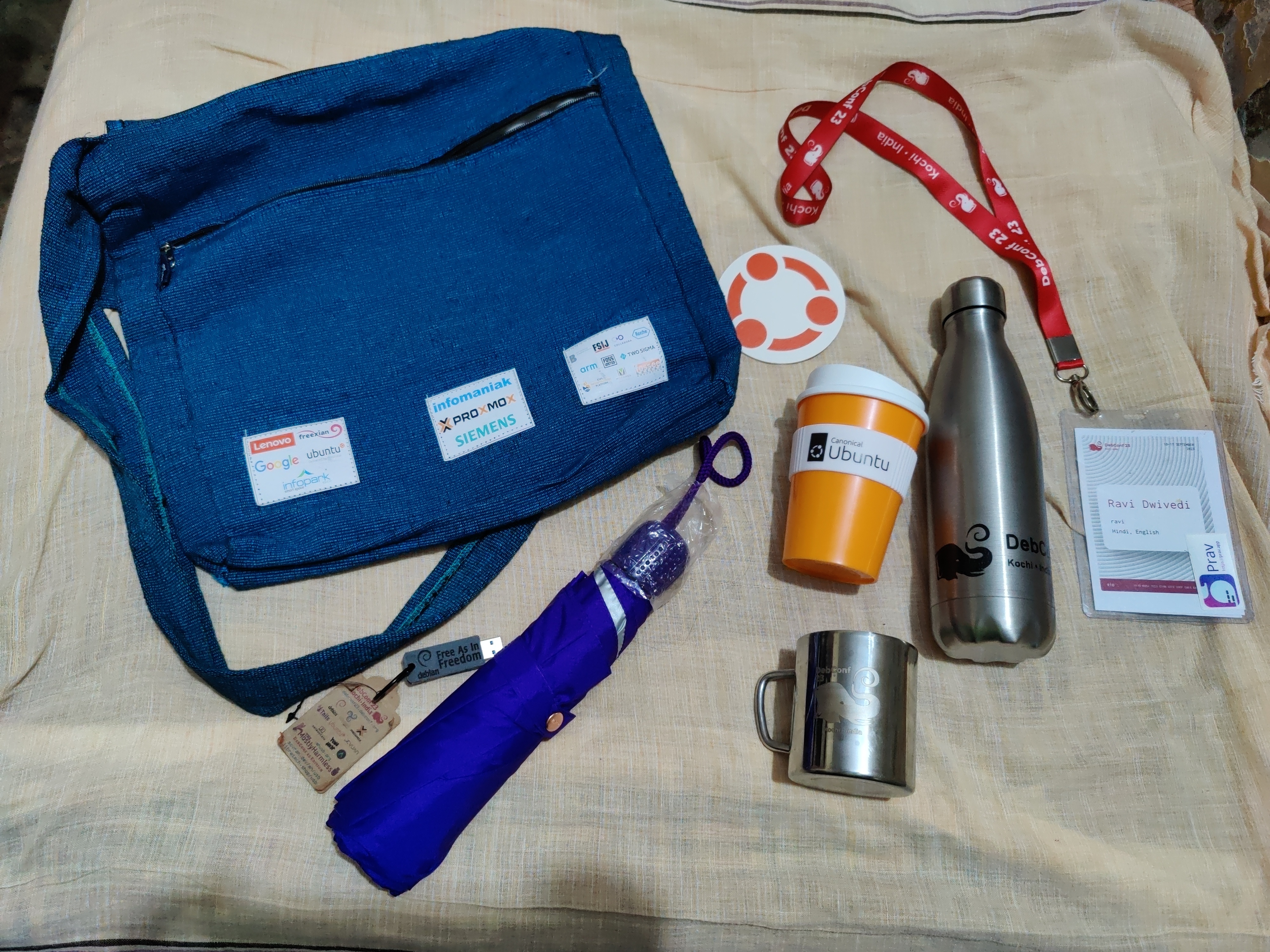
The excellent Swag Bag The DebConf registration desk was at the second floor. We were given a very nice swag bag. They were available in multiple colors - grey, green, blue, red - and included an umbrella, a steel mug, a multiboot USB drive by Mostly Harmless, a thermal flask, a mug by Canonical, a paper coaster, and stickers. It rained almost every day in Kochi during our stay, so handing out an umbrella to every attendee was a good idea.
Picture of the awesome swag bag given at DebConf23. Photo credits: Ravi Dwivedi
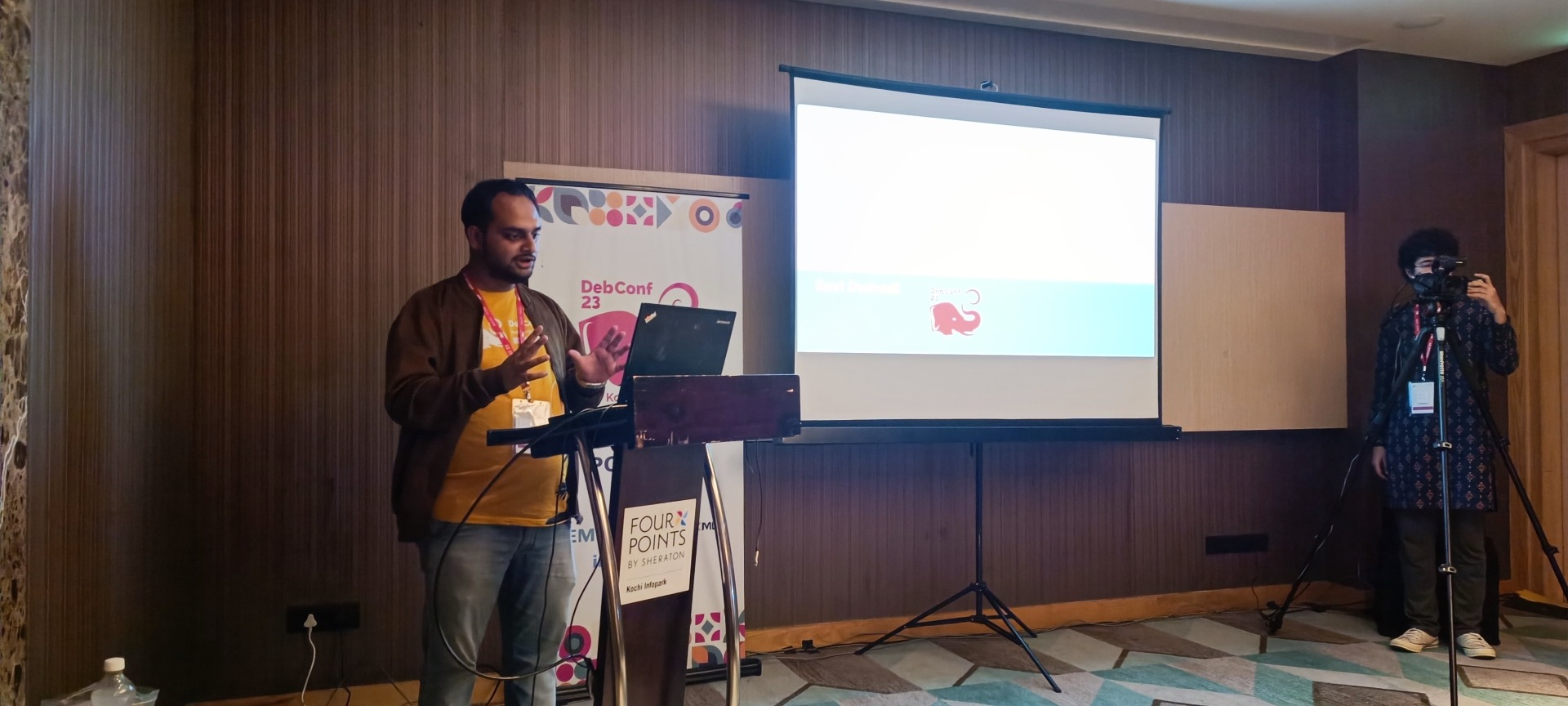
A gift for Nattie During breakfast one day, Nattie (Belgium) expressed the desire to buy a coffee filter. The next time I went to the market, I bought a coffee filter for her as a gift. She seemed happy with the gift and was flattered to receive a gift from a young man :)

Being a mentor There were many newbies who were eager to learn and contribute to Debian. So, I mentored whoever came to me and was interested in learning. I conducted a packaging workshop in the bootcamp, but could only cover how to set up the Debian Unstable environment, and had to leave out how to package (but I covered that in my talk). Carlos (Brazil) gave a keysigning session in the bootcamp. Praveen was also mentoring in the bootcamp. I helped people understand why we sign GPG keys and how to sign them. I planned to take a workshop on it but cancelled it later.

My talk My Debian packaging talk was on the 10th of September, 2023. I had not prepared slides for my Debian packaging talk in advance - I thought that I could do it during the trip, but I didn t get the time so I prepared them on the day before the talk. Since it was mostly a tutorial, the slides did not need much preparation. My thanks to Suresh, who helped me with the slides and made it possible to complete them in such a short time frame. My talk was well-received by the audience, going by their comments. I am glad that I could give an interesting presentation.
My presentation photo. Photo credits: Valessio
Visiting a saree shop After my talk, Suresh, Alper, and I went with Anisa and Kristi - who are both from Albania, and have a never-ending fascination for Indian culture :) - to buy them sarees. We took autos to Kakkanad market and found a shop with a great variety of sarees. I was slightly familiar with the area around the hotel, as I had been there for a week. Indian women usually don t try on sarees while buying - they just select the design. But Anisa wanted to put one on and take a few photos as well. The shop staff did not have a trial saree for this purpose, so they took a saree from a mannequin. It took about an hour for the lady at the shop to help Anisa put on that saree but you could tell that she was in heaven wearing that saree, and she bought it immediately :) Alper also bought a saree to take back to Turkey for his mother. Me and Suresh wanted to buy a kurta which would go well with the mundu we already had, but we could not find anything to our liking.
Selfie with Anisa and Kristi. Photo credits: Anisa.
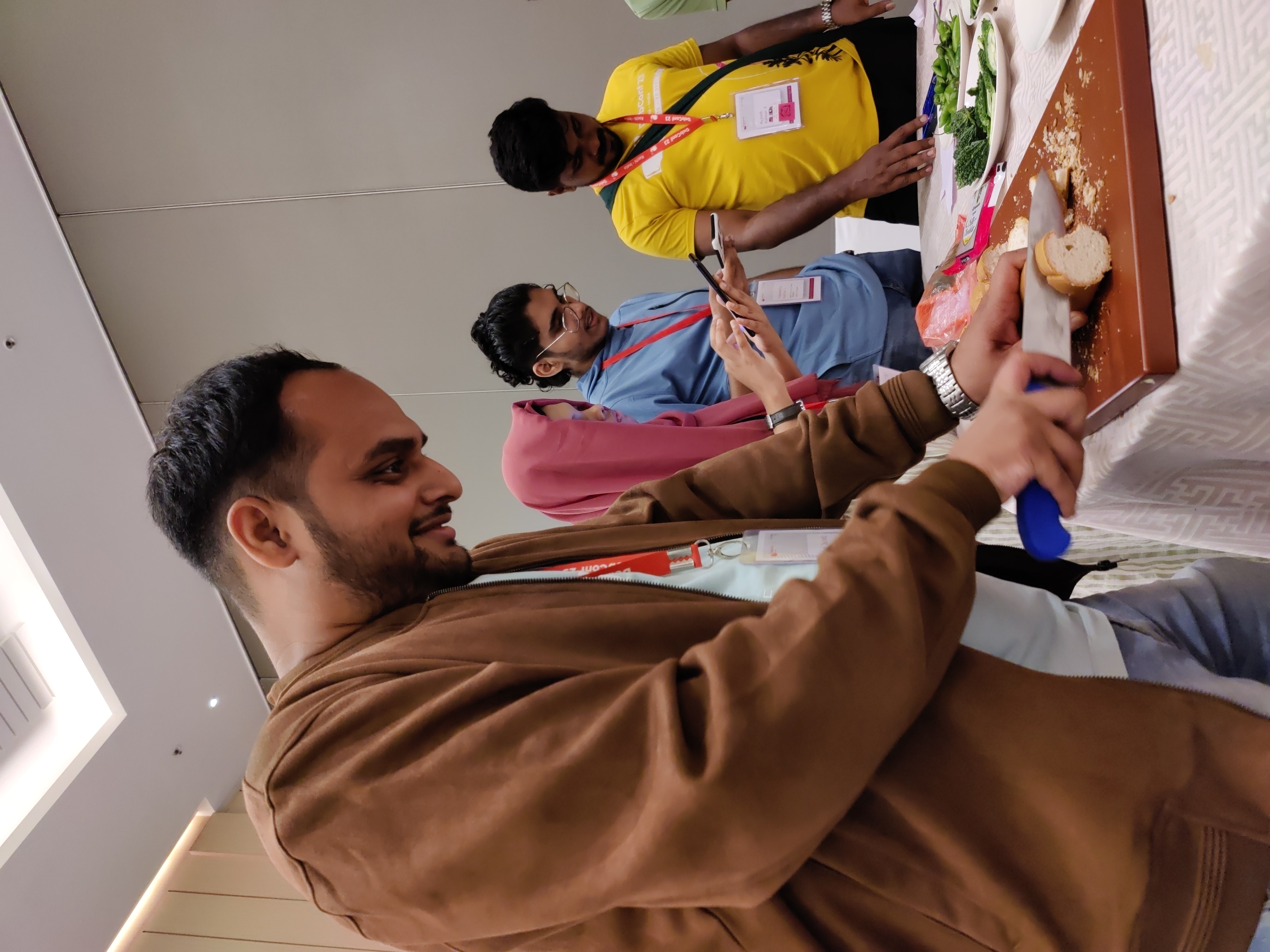
Cheese and Wine Party On the 11th of September we had the Cheese and Wine Party, a tradition of every DebConf. I brought Kaju Samosa and Nankhatai from home. Many attendees expressed their appreciation for the samosas. During the party, I was with Abhas and had a lot of fun. Abhas brought packets of paan and served them at the Cheese and Wine Party. We discussed interesting things and ate burgers. But due to the restrictive alcohol laws in the state, it was less fun compared to the previous DebConfs - you could only drink alcohol served by the hotel in public places. If you bought your own alcohol, you could only drink in private places (such as in your room, or a friend s room), but not in public places.
Me helping with the Cheese and Wine Party.
Party at my room Last year, Joenio (Brazilian) brought pastis from France which I liked. He brought the same alocholic drink this year too. So I invited him to my room after the Cheese and Wine party to have pastis. My idea was to have them with my roommate Suresh and Joenio. But then we permitted Joenio to bring as many people as he wanted and he ended up bringing some ten people. Suddenly, the room was crowded. I was having good time at the party, serving them the snacks given to me by Abhas. The news of an alcohol party at my room spread like wildfire. Soon there were so many people that the AC became ineffective and I found myself sweating. I left the room and roamed around in the hotel for some fresh air. I came back after about 1.5 hours - for most part, I was sitting at the ground floor with TK Saurabh. And then I met Abraham near the gym (which was my last meeting with him). I came back to my room at around 2:30 AM. Nobody seemed to have realized that I was gone. They were thanking me for hosting such a good party. A lot of people left at that point and the remaining people were playing songs and dancing (everyone was dancing all along!). I had no energy left to dance and to join them. They left around 03:00 AM. But I am glad that people enjoyed partying in my room.
This picture was taken when there were few people in my room for the party.
Sadhya Thali On the 12th of September, we had a sadhya thali for lunch. It is a vegetarian thali served on a banana leaf on the eve of Thiruvonam. It wasn t Thiruvonam on this day, but we got a special and filling lunch. The rasam and payasam were especially yummy.
Sadhya Thali: A vegetarian meal served on banana leaf. Payasam and rasam were especially yummy! Photo credits: Ravi Dwivedi.
Sadhya thali being served at debconf23. Photo credits: Bilal
Day trip On the 13th of September, we had a daytrip. I chose the daytrip houseboat in Allepey. Suresh chose the same, and we registered for it as soon as it was open. This was the most sought-after daytrip by the DebConf attendees - around 80 people registered for it. Our bus was set to leave at 9 AM on the 13th of September. Me and Suresh woke up at 8:40 and hurried to get to the bus in time. It took two hours to reach the venue where we get the houseboat. The houseboat experience was good. The trip featured some good scenery. I got to experience the renowned Kerala backwaters. We were served food on the boat. We also stopped at a place and had coconut water. By evening, we came back to the place where we had boarded the boat.
Group photo of our daytrip. Photo credits: Radhika Jhalani
A good friend lost When we came back from the daytrip, we received news that Abhraham Raji was involved in a fatal accident during a kayaking trip. Abraham Raji was a very good friend of mine. In my Albania-Kosovo-Dubai trip last year, he was my roommate at our Tirana apartment. I roamed around in Dubai with him, and we had many discussions during DebConf22 Kosovo. He was the one who took the photo of me on my homepage. I also met him in MiniDebConf22 Palakkad and MiniDebConf23 Tamil Nadu, and went to his flat in Kochi this year in June. We had many projects in common. He was a Free Software activist and was the designer of the DebConf23 logo, in addition to those for other Debian events in India.
A selfie in memory of Abraham.
We were all fairly shocked by the news. I was devastated. Food lost its taste, and it became difficult to sleep. That night, Anisa and Kristi cheered me up and gave me company. Thanks a lot to them. The next day, Joenio also tried to console me. I thank him for doing a great job. I thank everyone who helped me in coping with the difficult situation. On the next day (the 14th of September), the Debian project leader Jonathan Carter addressed and announced the news officially. THe Debian project also mentioned it on their website. Abraham was supposed to give a talk, but following the incident, all talks were cancelled for the day. The conference dinner was also cancelled. As I write, 9 days have passed since his death, but even now I cannot come to terms with it.

Visiting Abraham s house On the 15th of September, the conference ran two buses from the hotel to Abraham s house in Kottayam (2 hours ride). I hopped in the first bus and my mood was not very good. Evangelos (Germany) was sitting opposite me, and he began conversing with me. The distraction helped and I was back to normal for a while. Thanks to Evangelos as he supported me a lot on that trip. He was also very impressed by my use of the StreetComplete app which I was using to edit OpenStreetMap. In two hours, we reached Abraham s house. I couldn t control myself and burst into tears. I went to see the body. I met his family (mother, father and sister), but I had nothing to say and I felt helpless. Owing to the loss of sleep and appetite over the past few days, I had no energy, and didn t think it was good idea for me to stay there. I went back by taking the bus after one hour and had lunch at the hotel. I withdrew my talk scheduled for the 16th of September.

A Japanese gift I got a nice Japanese gift from Niibe Yutaka (Japan) - a folder to keep papers which had ancient Japanese manga characters. He said he felt guilty as he swapped his talk with me and so it got rescheduled from 12th September to 16 September which I withdrew later.
Thanks to Niibe Yutaka (the person towards your right hand) from Japan (FSIJ), who gave me a wonderful Japanese gift during debconf23: A folder to keep pages with ancient Japanese manga characters printed on it. I realized I immediately needed that :)
This is the Japanese gift I received.
Group photo On the 16th of September, we had a group photo. I am glad that this year I was more clear in this picture than in DebConf22.
Click to enlarge

Volunteer work and talks attended I attended the training session for the video team and worked as a camera operator. The Bits from DPL was nice. I enjoyed Abhas presentation on home automation. He basically demonstrated how he liberated Internet-enabled home devices. I also liked Kristi s presentation on ways to engage with the GNOME community.
Bits from the DPL. Photo credits: Bilal
Kristi on GNOME community. Photo credits: Ravi Dwivedi.
Abhas' talk on home automation. Photo credits: Ravi Dwivedi.
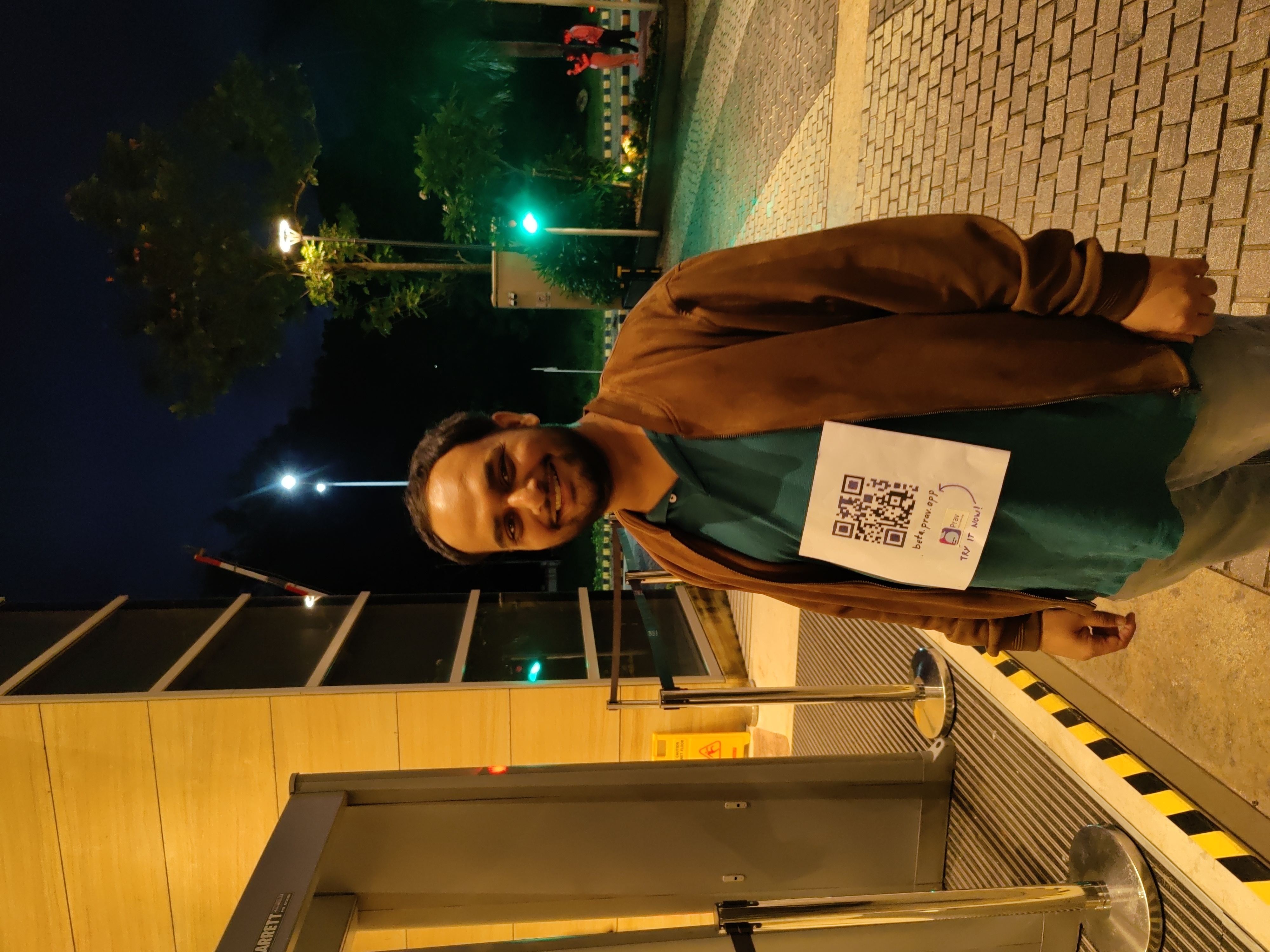
I also attended lightning talks on the last day. Badri, Wouter, and I gave a demo on how to register on the Prav app. Prav got a fair share of advertising during the last few days.
I was roaming around with a QR code on my T-shirt for downloading Prav.
The night of the 17th of September Suresh left the hotel and Badri joined me in my room. Thanks to the efforts of Abhijit PA, Kiran, and Ananthu, I wore a mundu.
Me in mundu. Picture credits: Abhijith PA
I then joined Kalyani, Mangesh, Ruchika, Anisa, Ananthu and Kiran. We took pictures and this marked the last night of DebConf23.

Departure day The 18th of September was the day of departure. Badri slept in my room and left early morning (06:30 AM). I dropped him off at the hotel gate. The breakfast was at the eatery (3rd floor) again, and it was good. Sahil, Saswata, Nilesh, and I hung out on the ground floor.
From left: Nilesh, Saswata, me, Sahil. Photo credits: Sahil.
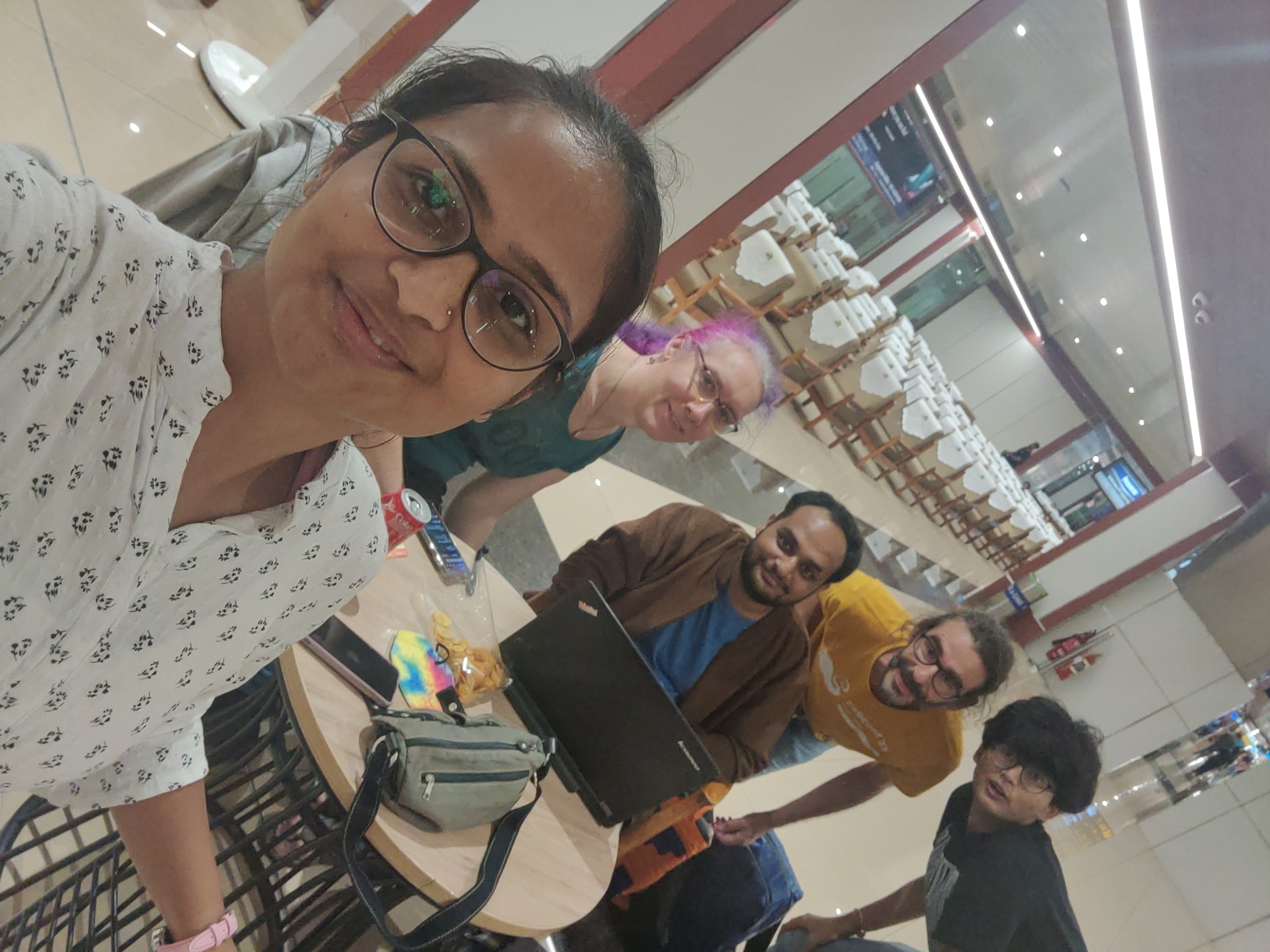
I had an 8 PM flight from Kochi to Delhi, for which I took a cab with Rhonda (Austria), Michael (Nigeria) and Yash (India). We were joined by other DebConf23 attendees at the Kochi airport, where we took another selfie.
Ruchika (taking the selfie) and from left to right: Yash, Joost (Netherlands), me, Rhonda
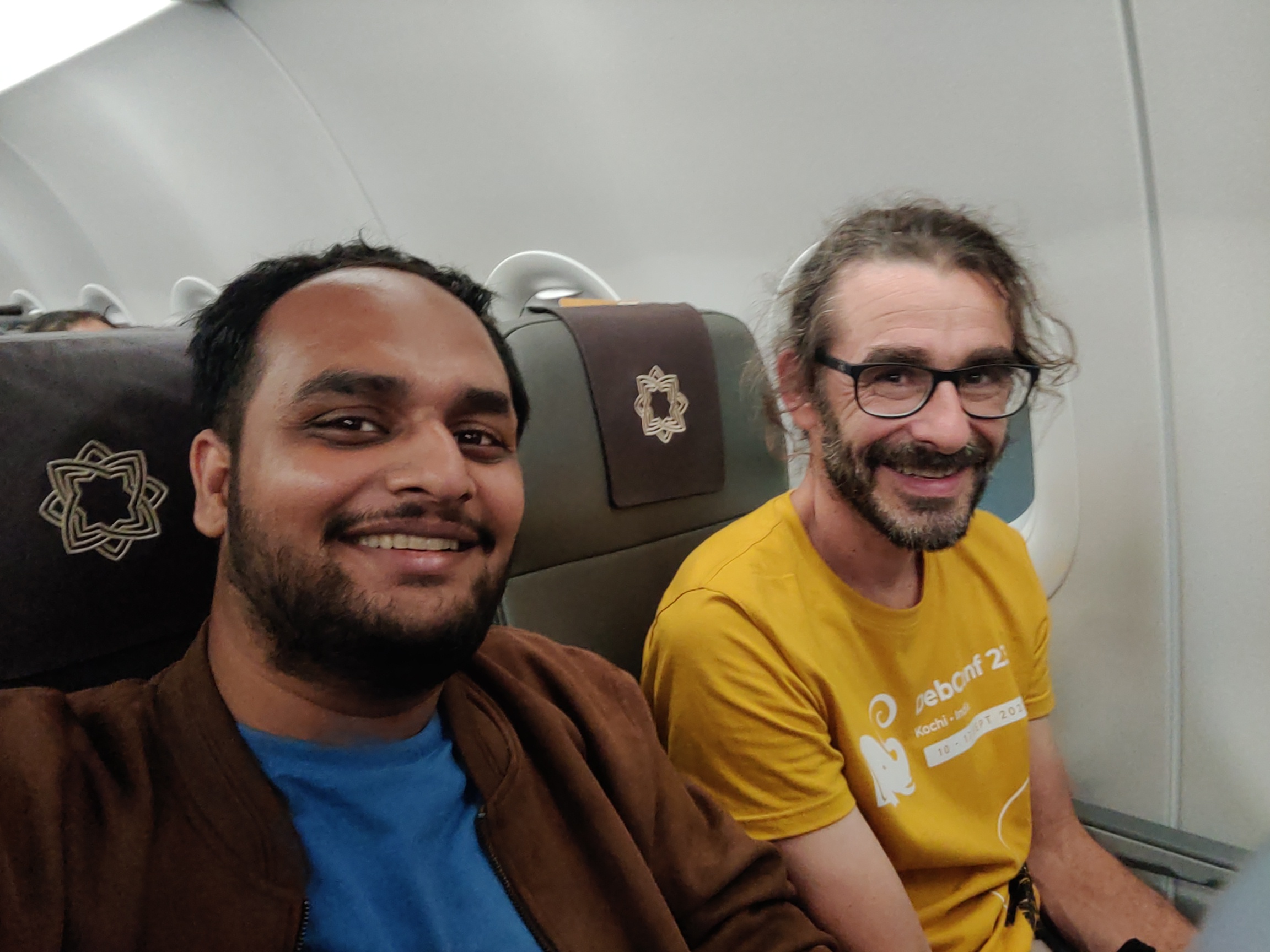
Joost and I were on the same flight, and we sat next to each other. He then took a connecting flight from Delhi to Netherlands, while I went with Yash to the New Delhi Railway Station, where we took our respective trains. I reached home on the morning of the 19th of September, 2023.
Joost and me going to Delhi. Photo credits: Ravi.

Big thanks to the organizers DebConf23 was hard to organize - strict alcohol laws, weird hotel rules, death of a close friend (almost a family member), and a scary notice by the immigration bureau. The people from the team are my close friends and I am proud of them for organizing such a good event. None of this would have been possible without the organizers who put more than a year-long voluntary effort to produce this. In the meanwhile, many of them had organized local events in the time leading up to DebConf. Kudos to them. The organizers also tried their best to get clearance for countries not approved by the ministry. I am also sad that people from China, Kosovo, and Iran could not join. In particular, I feel bad for people from Kosovo who wanted to attend but could not (as India does not consider their passport to be a valid travel document), considering how we Indians were so well-received in their country last year.

Note about myself I am writing this on the 22nd of September, 2023. It took me three days to put up this post - this was one of the tragic and hard posts for me to write. I have literally forced myself to write this. I have still not recovered from the loss of my friend. Thanks a lot to all those who helped me. PS: Credits to contrapunctus for making grammar, phrasing, and capitalization changes.

9 September 2023

Bits from Debian: DebianDay Celebrations and comments

Debian Celebrates 30 years! We celebrated our birthday this year and we had a great time with new friends, new members welcomed to the community, and the world. We have collected a few comments, videos, and discussions from around the Internet, and some images from some of the DebianDay2023 events. We hope that you enjoyed the day(s) as much as we did! Maqsuel Maqson
"Debian 30 years of collective intelligence" -Maqsuel Maqson Brazil Thiago Pezzo

Pouso Alegre, Brazil Daniel Pimentel

Macei , Brazil Daniel Lenharo

Curitiba, Brazil Daniel Lenharo

The cake is there. :) phls Honorary Debian Developers: Buzz, Jessie, and Woody welcome guests to this amazing party. Carlos Melara Sao Carlos, state of Sao Paulo, Brazil Carlos Melara Stickers, and Fliers, and Laptops, oh my! phls Belo Horizonte, Brazil sergiosacj Bras lia, Brazil sergiosacj Bras lia, Brazil Mexico Jathan 30 a os! Jathan A quick Selfie Jathan We do not encourage beverages on computing hardware, but this one is okay by us. Germany h01ger

30 years of love h01ger

The German Delegation is also looking for this dog who footed the bill for the party, then left mysteriously. h01ger

We took the party outside Stefano Rivera

We brought the party back inside at CCCamp Belgium Stefano Rivera

Cake and Diversity in Belgium El Salvador Gato Barato Canel n Pulgosky

Food and Fellowship in El Salvador South Africa highvoltage

Debian is also very delicious! highvoltage

All smiles waiting to eat the cake Reports Debian Day 30 years in Macei - Brazil Debian Day 30 years in S o Carlos - Brazil Debian Day 30 years in Pouso Alegre - Brazil Debian Day 30 years in Belo Horizonte - Brazil Debian Day 30 years in Curitiba - Brazil Debian Day 30 years in Bras lia - Brazil Debian Day 30 years online in Brazil Articles & Blogs Happy Debian Day - going 30 years strong - Liam Dawe Debian Turns 30 Years Old, Happy Birthday! - Marius Nestor 30 Years of Stability, Security, and Freedom: Celebrating Debian s Birthday - Bobby Borisov Happy 30th Birthday, Debian! - Claudio Kuenzier Debian is 30 and Sgt Pepper Is at Least Ninetysomething - Christine Hall Debian turns 30! -Corbet Thirty years of Debian! - Lennart Hengstmengel Debian marks three decades as 'Universal Operating System' - Sam Varghese Debian Linux Celebrates 30 Years Milestone - Joshua James 30 years on, Debian is at the heart of the world's most successful Linux distros - Liam Proven Looking Back on 30 Years of Debian - Maya Posch Cheers to 30 Years of Debian: A Journey of Open Source Excellence - arindam Discussions and Social Media Debian Celebrates 30 Years - Source: News YCombinator Brand-new Linux release, which I'm calling the Debian ... Source: News YCombinator Comment: Congrats @debian !!! Happy Birthday! Thank you for becoming a cornerstone of the #opensource world. Here's to decades of collaboration, stability & #software #freedom -openSUSELinux via X (formerly Twitter) Comment: Today we #celebrate the 30th birthday of #Debian, one of the largest and most important cornerstones of the #opensourcecommunity. For this we would like to thank you very much and wish you the best for the next 30 years! Source: X (Formerly Twitter -TUXEDOComputers via X (formerly Twitter) Happy Debian Day! - Source: Reddit.com Video The History of Debian The Beginning - Source: Linux User Space Debian Celebrates 30 years -Source: Lobste.rs Video Debian At 30 and No More Distro Hopping! - LWDW388 - Source: LinuxGameCast Debian Celebrates 30 years! - Source: Debian User Forums Debian Celebrates 30 years! - Source: Linux.org

8 September 2023

Reproducible Builds: Reproducible Builds in August 2023

Welcome to the August 2023 report from the Reproducible Builds project! In these reports we outline the most important things that we have been up to over the past month. As a quick recap, whilst anyone may inspect the source code of free software for malicious flaws, almost all software is distributed to end users as pre-compiled binaries. The motivation behind the reproducible builds effort is to ensure no flaws have been introduced during this compilation process by promising identical results are always generated from a given source, thus allowing multiple third-parties to come to a consensus on whether a build was compromised. If you are interested in contributing to the project, please visit our Contribute page on our website.

Rust serialisation library moving to precompiled binaries Bleeping Computer reported that Serde, a popular Rust serialization framework, had decided to ship its serde_derive macro as a precompiled binary. As Ax Sharma writes:
The move has generated a fair amount of push back among developers who worry about its future legal and technical implications, along with a potential for supply chain attacks, should the maintainer account publishing these binaries be compromised.
After intensive discussions, use of the precompiled binary was phased out.

Reproducible builds, the first ten years On August 4th, Holger Levsen gave a talk at BornHack 2023 on the Danish island of Funen titled Reproducible Builds, the first ten years which promised to contain:
[ ] an overview about reproducible builds, the past, the presence and the future. How it started with a small [meeting] at DebConf13 (and before), how it grew from being a Debian effort to something many projects work on together, until in 2021 it was mentioned in an executive order of the president of the United States. (HTML slides)
Holger repeated the talk later in the month at Chaos Communication Camp 2023 in Zehdenick, Germany: A video of the talk is available online, as are the HTML slides.

Reproducible Builds Summit Just another reminder that our upcoming Reproducible Builds Summit is set to take place from October 31st November 2nd 2023 in Hamburg, Germany. Our summits are a unique gathering that brings together attendees from diverse projects, united by a shared vision of advancing the Reproducible Builds effort. During this enriching event, participants will have the opportunity to engage in discussions, establish connections and exchange ideas to drive progress in this vital field. If you re interested in joining us this year, please make sure to read the event page, the news item, or the invitation email that Mattia Rizzolo sent out, which have more details about the event and location. We are also still looking for sponsors to support the event, so do reach out to the organizing team if you are able to help. (Also of note that PackagingCon 2023 is taking place in Berlin just before our summit, and their schedule has just been published.)

Vagrant Cascadian on the Sustain podcast Vagrant Cascadian was interviewed on the SustainOSS podcast on reproducible builds:
Vagrant walks us through his role in the project where the aim is to ensure identical results in software builds across various machines and times, enhancing software security and creating a seamless developer experience. Discover how this mission, supported by the Software Freedom Conservancy and a broad community, is changing the face of Linux distros, Arch Linux, openSUSE, and F-Droid. They also explore the challenges of managing random elements in software, and Vagrant s vision to make reproducible builds a standard best practice that will ideally become automatic for users. Vagrant shares his work in progress and their commitment to the last mile problem.
The episode is available to listen (or download) from the Sustain podcast website. As it happens, the episode was recorded at FOSSY 2023, and the video of Vagrant s talk from this conference (Breaking the Chains of Trusting Trust is now available on Archive.org: It was also announced that Vagrant Cascadian will be presenting at the Open Source Firmware Conference in October on the topic of Reproducible Builds All The Way Down.

On our mailing list Carles Pina i Estany wrote to our mailing list during August with an interesting question concerning the practical steps to reproduce the hello-traditional package from Debian. The entire thread can be viewed from the archive page, as can Vagrant Cascadian s reply.

Website updates Rahul Bajaj updated our website to add a series of environment variations related to reproducible builds [ ], Russ Cox added the Go programming language to our projects page [ ] and Vagrant Cascadian fixed a number of broken links and typos around the website [ ][ ][ ].

Software development In diffoscope development this month, versions 247, 248 and 249 were uploaded to Debian unstable by Chris Lamb, who also added documentation for the new specialize_as method and expanding the documentation of the existing specialize as well [ ]. In addition, Fay Stegerman added specialize_as and used it to optimise .smali comparisons when decompiling Android .apk files [ ], Felix Yan and Mattia Rizzolo corrected some typos in code comments [ , ], Greg Chabala merged the RUN commands into single layer in the package s Dockerfile [ ] thus greatly reducing the final image size. Lastly, Roland Clobus updated tool descriptions to mark that the xb-tool has moved package within Debian [ ].
reprotest is our tool for building the same source code twice in different environments and then checking the binaries produced by each build for any differences. This month, Vagrant Cascadian updated the packaging to be compatible with Tox version 4. This was originally filed as Debian bug #1042918 and Holger Levsen uploaded this to change to Debian unstable as version 0.7.26 [ ].

Distribution work In Debian, 28 reviews of Debian packages were added, 14 were updated and 13 were removed this month adding to our knowledge about identified issues. A number of issue types were added, including Chris Lamb adding a new timestamp_in_documentation_using_sphinx_zzzeeksphinx_theme toolchain issue.
In August, F-Droid added 25 new reproducible apps and saw 2 existing apps switch to reproducible builds, making 191 apps in total that are published with Reproducible Builds and using the upstream developer s signature. [ ]
Bernhard M. Wiedemann published another monthly report about reproducibility within openSUSE.

Upstream patches The Reproducible Builds project detects, dissects and attempts to fix as many currently-unreproducible packages as possible. We endeavour to send all of our patches upstream where appropriate. This month, we wrote a large number of such patches, including:

Testing framework The Reproducible Builds project operates a comprehensive testing framework (available at tests.reproducible-builds.org) in order to check packages and other artifacts for reproducibility. In August, a number of changes were made by Holger Levsen:
  • Debian-related changes:
    • Disable Debian live image creation jobs until an OpenQA credential problem has been fixed. [ ]
    • Run our maintenance scripts every 3 hours instead of every 2. [ ]
    • Export data for unstable to the reproducible-tracker.json data file. [ ]
    • Stop varying the build path, we want reproducible builds. [ ]
    • Temporarily stop updating the pbuilder.tgz for Debian unstable due to #1050784. [ ][ ]
    • Correctly document that we are not variying usrmerge. [ ][ ]
    • Mark two armhf nodes (wbq0 and jtx1a) as down; investigation is needed. [ ]
  • Misc:
    • Force reconfiguration of all Jenkins jobs, due to the recent rise of zombie processes. [ ]
    • In the node health checks, also try to restart failed ntpsec, postfix and vnstat services. [ ][ ][ ]
  • System health checks:
    • Detect Debian live build failures due to missing credentials. [ ][ ]
    • Ignore specific types of known zombie processes. [ ][ ]
In addition, Vagrant Cascadian updated the scripts to use a predictable build path that is consistent with the one used on buildd.debian.org. [ ][ ]

If you are interested in contributing to the Reproducible Builds project, please visit our Contribute page on our website. However, you can get in touch with us via:

1 September 2023

Simon Josefsson: Trisquel on ppc64el: Talos II

The release notes for Trisquel 11.0 Aramo mention support for POWER and ARM architectures, however the download area only contains links for x86, and forum posts suggest there is a lack of instructions how to run Trisquel on non-x86. Since the release of Trisquel 11 I have been busy migrating x86 machines from Debian to Trisquel. One would think that I would be finished after this time period, but re-installing and migrating machines is really time consuming, especially if you allow yourself to be distracted every time you notice something that Really Ought to be improved. Rabbit holes all the way down. One of my production machines is running Debian 11 bullseye on a Talos II Lite machine from Raptor Computing Systems, and migrating the virtual machines running on that host (including the VM that serves this blog) to a x86 machine running Trisquel felt unsatisfying to me. I want to migrate my computing towards hardware that harmonize with FSF s Respects Your Freedom and not away from it. Here I had to chose between using the non-free software present in newer Debian or the non-free software implied by most x86 systems: not an easy chose. So I have ignored the dilemma for some time. After all, the machine was running Debian 11 bullseye , which was released before Debian started to require use of non-free software. With the end-of-life date for bullseye approaching, it seems that this isn t a sustainable choice. There is a report open about providing ppc64el ISOs that was created by Jason Self shortly after the release, but for many months nothing happened. About a month ago, Luis Guzm n mentioned an initial ISO build and I started testing it. The setup has worked well for a month, and with this post I want to contribute instructions how to get it up and running since this is still missing. The setup of my soon-to-be new production machine: According to the notes in issue 14 the ISO image is available at https://builds.trisquel.org/debian-installer-images/ and the following commands download, integrity check and write it to a USB stick:
wget -q https://builds.trisquel.org/debian-installer-images/debian-installer-images_20210731+deb11u8+11.0trisquel14_ppc64el.tar.gz
tar xfa debian-installer-images_20210731+deb11u8+11.0trisquel14_ppc64el.tar.gz ./installer-ppc64el/20210731+deb11u8+11/images/netboot/mini.iso
echo '6df8f45fbc0e7a5fadf039e9de7fa2dc57a4d466e95d65f2eabeec80577631b7  ./installer-ppc64el/20210731+deb11u8+11/images/netboot/mini.iso'   sha256sum -c
sudo wipefs -a /dev/sdX
sudo dd if=./installer-ppc64el/20210731+deb11u8+11/images/netboot/mini.iso of=/dev/sdX conv=sync status=progress
Sadly, no hash checksums or OpenPGP signatures are published. Power off your device, insert the USB stick, and power it up, and you see a Petitboot menu offering to boot from the USB stick. For some reason, the "Expert Install" was the default in the menu, and instead I select "Default Install" for the regular experience. For this post, I will ignore BMC/IPMI, as interacting with it is not necessary. Make sure to not connect the BMC/IPMI ethernet port unless you are willing to enter that dungeon. The VGA console works fine with a normal USB keyboard, and you can chose to use only the second enP4p1s0f1 network card in the network card selection menu. If you are familiar with Debian netinst ISO s, the installation is straight-forward. I complicate the setup by partitioning two RAID1 partitions on the two NVMe sticks, one RAID1 for a 75GB ext4 root filesystem (discard,noatime) and one RAID1 for a 900GB LVM volume group for virtual machines, and two 20GB swap partitions on each of the NVMe sticks (to silence a warning about lack of swap, I m not sure swap is still a good idea?). The 3x18TB disks use DM-integrity with RAID1 however the installer does not support DM-integrity so I had to create it after the installation. There are two additional matters worth mentioning: I have re-installed the machine a couple of times, and have now finished installing the production setup. I haven t ran into any serious issues, and the system has been stable. Time to wrap up, and celebrate that I now run an operating system aligned with the Free System Distribution Guidelines on hardware that aligns with Respects Your Freedom Happy Hacking indeed!

Next.

Previous.