Posted on May 26, 2023
Some time ago, on an early Friday afternoon our internet connection died. After a reasonable time had passed we called the customer service, they told us that they would look into it and then call us back.
On Friday evening we had not heard from them, and I was starting to get worried. At the time in the evening when I would have been relaxing online I grabbed the first Victorian sewing-related book I found on my hard disk and started to read it.
For the record, it wasn t actually Victorian, it was Margaret J. Blair. System of Sewing and Garment Drafting. from 1904, but I also had available for comparison the earlier and smaller Margaret Blair. System of Garment Drafting. from 1897.
Anyway, this book had a system to draft a pair of combinations (chemise top + drawers); and months ago I had already tried to draft a pair from another system, but they didn t really fit and they were dropped low on the priority list, so on a whim I decided to try and draft them again with this new-to-me system.
Around 23:00 in the night the pattern was ready, and I realized that my SO had gone to sleep without waiting for me, as I looked too busy to be interrupted.
The next few days were quite stressful (we didn t get our internet back until Wednesday) and while I couldn t work at my day job I didn t sew as much as I could have done, but by the end of the week I had an almost complete mockup from an old sheet, and could see that it wasn t great, but it was a good start.
One reason why the mockup took a whole week is that of course I started to sew by machine, but then I wanted flat-felled seams, and felling them by hand is so much neater, isn t it?
And let me just say, I m grateful for the fact that I don t depend on streaming services for media, but I have a healthy mix of DVDs and stuff I had already temporary downloaded to watch later, because handsewing and being stressed out without watching something is not really great.
Anyway, the mockup was a bit short on the crotch, but by the time I could try it on and be sure I was invested enough in it that I decided to work around the issue by inserting a strip of lace around the waist.
And then I went back to the pattern to fix it properly, and found out that I had drafted the back of the drawers completely wrong, making a seam shorter rather than longer as it should have been. ooops.
I fixed the pattern, and then decided that YOLO and cut the new version directly on some lightweight linen fabric I had originally planned to use in this project.
The result is still not perfect, but good enough, and I finished it with a very restrained amount of lace at the neckline and hems, wore it one day when the weather was warm (loved the linen on the skin) and it s ready to be worn again when the weather will be back to being warm (hopefully not too soon).
The last problem was taking pictures of this underwear in a way that preserves the decency (and it even had to be outdoors, for the light!).
This was solved by wearing leggings and a matched long sleeved shirt under the combinations, and then promptly forgetting everything about decency and, well, you can see what happened.
The pattern is, as usual, published on my pattern website as #FreeSoftWear.
And then, I started thinking about knits.
In the late Victorian and Edwardian eras knit underwear was a thing, also thanks to the influence of various aspects of the rational dress movement; reformers such as Gustav J ger advocated for wool underwear, but mail order catalogues from the era such as https://archive.org/details/cataloguefallwin00macy (starting from page 67) have listings for both cotton and wool ones.
From what I could find, back then they would have been either handknit at home or made to shape on industrial knitting machines; patterns for the former are available online, but the latter would probably require a knitting machine that I don t currently1 have.
However, this is underwear that is not going to be seen by anybody2, and I believe that by using flat knit fabric one can get a decent functional approximation.
In The Stash I have a few meters of a worked cotton jersey with a pretty comfy feel, and to make a long story short: this happened.
I suspect that the linen one will get worn a lot this summer (linen on the skin. nothing else need to be said), while the cotton one will be stored away for winter. And then maybe I may make a couple more, if I find out that I m using it enough.
cue ominous music. But first I would need space to actually keep and use it :)
other than me, my SO, any costuming friend I may happen to change in the presence of, and everybody on the internet in these pictures.
Posted on May 12, 2023
Even when it s \m/.
Years ago I watched my SO play Br tal Legend and of course loved it, but I ve been only using used computers for a long time, and none of them was really able to run modern games.
Admittedly, he told me that I could use his computer to play the game while he wasn t home (and I do have an account on that computer, that I ve sporadically used to do computationally intensive stuff, but always remotely), but it was a hassle, and I never did.
This year, however, he gifted me a shiny new CPU and motherboard, and among other things that meant games from this century!
The first thing I ve spent time on was 0ad (which admittedly already worked on one of the old computers, as long as the map wasn t too big), but now it was time to play basically the one recent proprietary game I had been wanting to play.
So, this afternoon I started by trying to copy the installer (it was bought from an humble bundle, I don t have steam) from the home server to my PC, and the home server froze. Ok, I could copy it through something else than git annex (or from the offline hard disk backup, as I did).
Then I tried to run the installer, which resulted in the really helpful error message:
bash: ./BrutalLegend-Linux-2013-05-07-setup.bin: cannot execute: required file not found
ok, then surely ldd can help:
not a dynamic executable
maybe it doesn t like being a symlink (remember, git annex), but no, that wasn t the problem. ah! maybe file can help, and indeed:
argh. Why does proprietary software hate us?
Oh, well, https://wiki.debian.org/Multiarch/HOWTO , dpkg --add-architecture i386 followed by apt update and apt install libc6-i386 and the installer started.
Of course this didn t mean that the game could run, but at least it was spitting out the right error messages, and I could quickly see what the other missing packages were:
and the game started!
and
no. audio.
I often play games with no audio, because I can t wear headphones, but here the soundtrack is basically 50% of the reason one would play this game.
Back when my SO had played the game audio was still through pulseaudio, while now I m using pipewire (and I wasn t sure that the game wasn t old enough to be wanting to use alsa), so I started to worry a bit.
And this time, there was no error message to help, but some googling (on searx) and trial and error gave me this list of packages:
and that was it! the game started AND I could hear music!
And then it was time for dinner, and I couldn t play.
(You may notice that this post has been posted quite some time after dinner. Most of this time wasn t spent writing the post.)
Anyway, as soon as I ve defeated and crushed Doviculus I m going back to 0ad. or maybe wesnoth. or some other Free Software and frustration-free game.
Posted on May 5, 2023
When I travel for a few days I don t usually1 bring any other shoe than the ones I m wearing, plus some kind of slippers for use inside hotel / B&B rooms.
It s good for not carrying useless weight, but it always leave me with a vague feeling of what if my only shoes break , followed by on a Sunday, when the shops are closed .
So I started to think in the general direction of hiking sandals, shoes that are designed to be worn when resting, and lightweight to carry, but are a passable substitute for regular shoes in case of an accident to the main ones, maybe with the help of an extra pair of socks2 (or when crossing fords, but that s not really a usecase I have).
My requirements are easier than the ones for real hiking sandals, since I m only going to be walking on paved streets (or at most easy unpaved ones), and the weight considerations are a thing, but not as strict as if I had to carry these on my back while hiking many hours in a day.
My first attempt was a pair of hiking sandals from things I already had in my stash, with vibram soles, neoprene padding and polyester webbing. After a couple fixes they sort of worked, but they had a few big issues.
While comfortable when worn, the neoprene made the sandals hard to make, as it tended to deform while being assembled.
Polyester webbing is slippery. Some strips of hot glue in strategical places helped, but they weren t perfect and in time they are peeling off.
Most importantly, to make the sandals stable enough to wear while walking I had to add a strap around the ankle that needs closing: this makes it a bit of a hassle to use the sandals, say, when waking up in the middle of the night for metabolic reasons.
And then, one day I made my linen slippers, and that lead me to think again about the problem: what if I made a pair of slippers with a rubber sole, technical materials and maybe uppers made of net, so that they would be lightweight, breathable and possibly even still suitable in case I ever need to cross a ford.
This was also readily attainable from the stash: some polycotton for the sole lining, elastic mesh for the uppers, EVA foam for padding and vibram soles.
I decided to assemble most of them by machine, and it was quick and painless (possibly also thanks to the elasticity of the mesh)
For the soles I may have gone a bit overboard with the vibram claw, but:
I already had it in the stash;
if I need to wear them on an unpaved road, they are going to be suitable;
why not?
The soles were glued to the slippers rather than being sewn, as I don t think there is a reasonable way to sew these soles; I hope it won t cause durability issues later on (if it does, there will be an update)
As for the finished weight, at 235 g for the pair I thought I could do better, but apparently shoes are considered ultralight if they are around 500 g? Using just one layer of mesh rather than two would probably help, but it would have required a few changes to the pattern, and anyway I don t really to carry them around all day.
I ve also added a loop of fabric (polycotton) to the centre back to be able to hang the slippers to the backpack when wet or dirty; a bit of narrow webbing may have been better, but I didn t have any in my stash.
The pattern is the same as that used for the linen slippers, and of course it s released as #FreeSoftWear.
I ve worn these for a few days around the home and they worked just fine, except for the fact that I had to re-glue the sole in a few places (but I suspect it was glued badly in the first place, since the other sole had no issues).
Right now I have no plans to travel, so I don t know how much I will be able to test these in the next few months, but sooner or later I will (or I ll keep wearing them at home after I ve thoroughly tested the linen ones), and if there are issues I will post them here on the blog (and add a link to this post).
the exception would be when I m also bringing some kind of costume, and even there it s not always true.
and one should always carry an extra pair of clean socks, as they are useful for so many things, as Pratchett reminds us.
Posted on May 4, 2023
I hate going out to buy shoes. Even more so I hate buying home shoes, which is what I spend most of my life in, also because no matter what I buy they seem to disintegrate after a season or so. So, obviously, I ve been on a quest to make my own.
As a side note, going barefoot (with socks) would only move the wear issue to the socks, so it s not really a solution, and going bare barefoot on ceramic floors is not going to happen, kaythanksbye.
For the winter I m trying to make knit and felted slippers; I ve had partial success, and they should be pretty easy to mend (I ve just had to do the first mend, with darning and needle felting, and it seems to have worked nicely).
For the summer, I ve been thinking of something sewn, and with the warm season approaching (and the winter slippers needing urgent repairs) I decided it was time to work on them.
I already had a shaped (left/right) pattern for a sole from my hiking sandals attempts (a topic for another post), so I started by drafting a front upper, and then I started to have espadrille feeling and decided that a heel guard was needed.
As for fabric, looking around in the most easily accessible part of the Stash I ve found the nice heavyweight linen I m using for my Augusta Stays, of which I still have a lot and which looked almost perfect except for one small detail: it s very white.
I briefly thought about dyeing, but I wanted to start sewing NOW to test the pattern, so, yeah, maybe it will happen one day, or maybe I ll have patchy dust-grey slippers. If I ll ever have a place where I can do woad dyeing a blue pair will happen, however.
Contrary to the typical espadrillas I decided to have a full lining, and some padding between the lining and the sole, using cotton padding leftovers from my ironing board.
To add some structure I also decided to add a few rows of cording (and thus make the uppers in two layers of fabric), to help prevent everything from collapsing flat.
As for the sole, that s something that is still causing me woes: I do have some rubber sole sheets (see hiking sandals above), but I suspect that they require glueing, which I m not sure would work well with the natural fabric uppers and will probably make repairs harder to do.
In the past I tried to make some crocheted rope soles and they were a big failure: they felt really nice on the foot, but they also self-destroyed in a matter of weeks, which is not really the kind of sole I m looking for.
Now I have some ~ 3 mm twine that feels much harsher on the hands while working it (and would probably feel harsher on the feet, but that s what the lining and padding are for), so I hope it may be a bit more resistant, and I tried to make a braided rope sole.
Of course, I have published the pattern and instructions for the slippers as well as those for the braided rope sole as #FreeSoftWear.
Now what is left is trying everything under daily use, and I hope I will have updates on this at the end of the season, rather than soon :D
Posted on April 30, 2023
A few months ago we may have bought a few ESP32-C3-DevKit-Lipo boards from Olimex.
Since every time I go back to working with them I ve forgotten how to do so, and my old notes on the fediverse are hard to find, this is the full procedure.
Install arduino from the distribution packages (version 1.8 is ok).
Under File Preferences, add the development URL to the Additional Boards Manager URLs field. (on 2023-04-30 that s https://espressif.github.io/arduino-esp32/package_esp32_dev_index.json).
Under Tools Board Boards Manager make sure that you install a version of esp32 by Espressif Systems that is above 2.0 (on 2023-04-30 there is a 2.0.8 that works).
Programming
Under Tools Board ESP32 Arduino select ESP32C3 Dev Module.
Under Tools USB CDC On Boot select Enabled.
You can now compile and upload your sketches.
If something goes wrong, to force the board to bootloader mode bring GPIO9 to GND.
Note that the serial port device /dev/ttyACM0 only appears when in bootloader mode, but uploading sketches and the serial monitor will still work even if the port is not set in the arduino IDE.
Posted on April 5, 2023
For this summer, I ve just made a nice sleeveless dress, but that doesn t mean that I m planning to go around with bare arms like, I don t know, a peasant or even somebody with no health issues, perish the thought!
Instead, at the end of last season I ve bought a remnant of white ramie / viscose jersey that is a bit too transparent to be decent when worn on its own, but should still give some protection from the sun without being unconfortable in the heat, with the intent to make myself a new top.
Because of the transparency I wasn t sure whether to actually use it for a top, or just to make camisoles, but with the decency preserved by the dress the choice was made: I had enough fabric for a top, a camisole and maybe something small.
I already have a trusted pattern for the top and camisole, but they still had to be published, so I took care to write down instructions and take step-by-step pictures; maybe the white fabric isn t the best, but it s better than nothing, and I can still take better pictures the next time I ll do another make. They are of course on my pattern webiste: top and camisole.
Since the fabric was bought online as a remnant, I didn t exactly know what to expect, and was pleasantly surprised by how soft it is: it feels like touching a cloud.
This however means that it felt like working with a cloud, and, well, let s just say I m happy that both patterns were quite simple and I didn t have to deal with fiddly bits.
I was also not so pleasantly surprised by the fact that part of the fabric had a few small holes as if the end of the roll had been caught on something; I was able to cut everything around the holes, other than a small bit that I hadn t noticed and had to be mended. It s not a big deal, but I suspect it s a sign that this fabric may not be as sturdy as it could have been, and that there will be more mending in the future as I wear it.
And then, when I had finished the set I was faced with another problem: taking pictures. For one thing, worn on their own they aren t exactly decent, and then there was the fact that after a week of late spring weather in March, as I was working on summer clothing the temperature dropped and there was even a hint of rain.
I solved this by wearing the new set on top of another set of fitting top and camisole, with matching leggings. Not exactly something I would wear on the regular streets, but good enough for a picture of underwear.
Still, the pictures were taken in quite a hurry, because I wasn t completely freezing, but still pretty cold.
Anyway, I m off to find some other piece of summer wear to make, hoping that it will bring proper rain. :)
Posted on March 16, 2023
A few years ago a friend told me that her usual fabric shop was closing down and had a sale on all remaining stock.
While being sad for yet another brick and mortar shop that was going to be missed (at least it was because the owners were retiring, not because it wasn t sustainable anymore), of course I couldn t miss the opportunity.
So we drove a few hundred km, had some nice time with a friend that (because of said few hundred km) we rarely see, and spent a few hours looting the corps er helping the shop owner getting rid of stock before their retirement.
Among other things there was a cut of lightweight swiss embroidery cotton in blue which may or may not have been enthusiastically grabbed with plans of victorian underwear.
It was too nice to be buried under layers and layers of fabric (and I suspect that the embroidery wouldn t feel great directly on the skin under a corset), so the natural fit was something at the corset cover layer, and the fabric was enough for a combination garment of the kind often worn in the later Victorian age to prevent the accumulation of bulk at the waist.
It also has the nice advantage that in this time of corrupted morals it is perfectly suitable as outerwear as a nice summer dress.
Then life happened, the fabric remained in my stash for a long while, but finally this year I have a good late victorian block that I can adapt, and with spring coming it was a good time to start working on the summer wardrobe.
The block I ve used comes from The Cutters Practical Guide to the Cutting of Ladies Garments and is for a jacket, rather than a bodice, but the bodice block from the same book had a 4 part back, which was too much for this garment. I reduced the ease around the bust a bit, which I believe worked just fine.
The main pattern was easy enough to prepare, I just had to add skirt panels with a straight side towards the front and flaring out towards the back, and I did a quick mockup from an old sheet to check the fit (good) and the swish and volume of the skirt (just right at the first attempt!).
The mockup was also used to get an idea of a few possible necklines, and I opted for a relatively deep V, and a front opening with a partial placket down to halfway between the waist and the hips. I also opted for a self-fabric ruffle at the hem and armscyes.
The only design choice left was the pocket situation: I wanted to wear this garment both as underwear (where pockets aren t needed, and add unwanted bulk) and outerwear (where no pockets is not an option), and the fabric felt too thin to support the weight of the contents of a full pocket. So I decided to add slits into the seams, with just a modesty placket, and wear pockets under the dress as needed.
I decided to put the slits between the side and side back panels for two reasons: one is that this way the pockets can sit towards the back, where the fullness of the skirt is supposed to be, rather than under the flat front, and the other one is to keep the seams around the front panel clean, since they are the first ones to be changed when altering a garment for fit.
For the same reason, I didn t trim the excess allowance from that seam: it means that it is a bit more bulky, but the fabric is thin enought that it s not really noticeable, and it gives an additional cm for future alterations.
Then, as the garment was getting close to being finished I was measuring and storing some old cotton lace I had received as a gift, and there was a length of relatively small lace, and the finish on the neckline was pretty simple and called for embellishment, and who am I to deny embellishment to victorian inspired clothing?
First I had to finish attaching the ruffles, however, and this is when I cursed myself for not using the ruffler foot I have (it would have meant not having selvedges on all seams of the ruffle), and for pleating the ruffle rather than gathering it (I prefer the look of handsewn gathers, but here I m sewing everything by machine, and that s faster, right? (it probably wasn t)).
Also, this is where I started to get low on pins, and I had to use the ones from the vintage1 box I ve been keeping as decoration in the sewing room.
A few long sessions of pinning later, the ruffle was sewn and I could add the lace; I used white thread so that it would be hidden on the right side, but easily visible inside the garment in case I ll decide to remove or change it later.
A few buttons and buttonholes later, the garment was ready, and the only thing left was to edit the step-by-step pictures and publish the pattern: it s now available as #FreeSoftWear on my patterns website.
And Of course, I had to do a proper swish test of the finished dress with the ruffle, and I m happy to announce that it was fully passed.
Except, maybe I shouldn t carry heavy items in my pockets when doing it? Oh, well.
I have other plans for the same pattern, but they involve making some crochet lace, so I expect I can aim at making them wearable in summer 2024.
Now I just have to wait for the weather to be a bit warmer, and then I can start enjoing this one.
ok, even more vintage, since my usual pins come from a plastic box that has been probably bought in the 1980s.
Posted on March 7, 2023
Yesterday around 13:00 I started my usual I m being lazy bread recipe:
400 g flour
250 g water
6 g salt
worked for 8 minutes (by machine), left to rise until about 18:00.
For the record, it was a strong flour (310 W), type 1, so white, but somewhat coarsely ground.
And then, when it was time to cook bread for dinner I realized that something was missing. Something critical. See if you can spot it in the list above.
The yeast.
Some bread was taken out of the freezer and defrosted in the oven, but I didn t want to throw away the flour, so I mixed 2-3 g dried yeast, 10 g flour and 10 g water, and left it to rise until after dinner.
Then I added it to the dought, added some more water (I know. I should have measured it. I didn t expect having to repeat the thing. It was probably about 20 g), mixed for 5 minutes, covered it to rise.
This afternoon, around 15:30, I took the dought, folded it 5-6 times, formed a round loaf on the lined baking tray and left it in the cold oven until 17:45. Then I removed it from the oven, turned it on at 240 C, scored the top of the loaf and sprinkled it with water.
When the oven was hot I baked the loaf for 10 minutes at 240 C, then turned it down to 160 C for 20 additional minutes.
And then I realized I need to repeat this.
No, there are no pictures (there is some left, but it s too dark to take pictures).
Posted on March 6, 2023
When I paint postcards I tend to start with a draft (usually on lightweight (250 g/m ) watercolour paper, then trace1 the drawing on blank postcards and paint it again.
I keep the drafts for a number of reasons; for the views / architectural ones I m using a landscape photo album that I bought many years ago, but lately I ve also sent a few cards with my historical outfits to people who like to be kept updated on that, and I wanted a different book for those, both for better organization and to be able to keep them in the portrait direction.
If you know me, you can easily guess that buying one wasn t considered as an option.
Since I m not going to be writing on the pages, I decided to use a relatively cheap 200 g / m linoprint paper with a nice feel, and I ve settled on a B6 size (before trimming) to hold A6 postcard drafts.
For the binding I ve decided to use a technique I ve learned from a craft book ages ago that doesn t use tapes, and added a full hard cover in dark grey linen-feel2 paper. For the end-papers I ve used some random sheets of light blue paper (probably around 100-something g / m ), and that s the thing where I could have done better, but they work.
Up to now there isn t anything I hadn t done before, what was new was the fact that this book was meant to hold things between the pages, and I needed to provide space for them.
After looking on the internet for solutions, I settled on adding spacers by making a signature composed of paper - spacer - paper - spacer, with the spacers being 2 cm wide, folded in half.
And then, between finishing binding the book and making the cover I utterly forgot to add the head bands. Argh. It s not the first time I make this error.
I m happy enough with the result. There are things that are easy to improve on in the next iteration (endpapers and head bands), and something in me is not 100% happy with the fact that the spacers aren t placed between every sheet, but there are places with no spacer and places with two of them, but I can t think of (and couldn t find) a way to make them otherwise with a sewn book, unless I sew each individual sheet, which sounds way too bulky (the album I m using for the landscapes was glued, but I didn t really want to go that way).
The size is smaller than the other one I was using and doesn t leave a lot of room around the paintings, but that isn t necessarily a bad thing, because it also means less wasted space.
I believe that one of my next project will be another similar book in a landscape format, for those postcard drafts that aren t landscapes nor clothing related.
And then maybe another? or two? or
Traceback (most recent call last):
TooManyProjectsError: project queue is full
yes, trace. I can t draw. I have too many hobbies to spend the required amount of time every day to practice it. I m going to fake it. 85% of the time I m tracing from a photo I took myself, so I m not even going to consider it cheating.
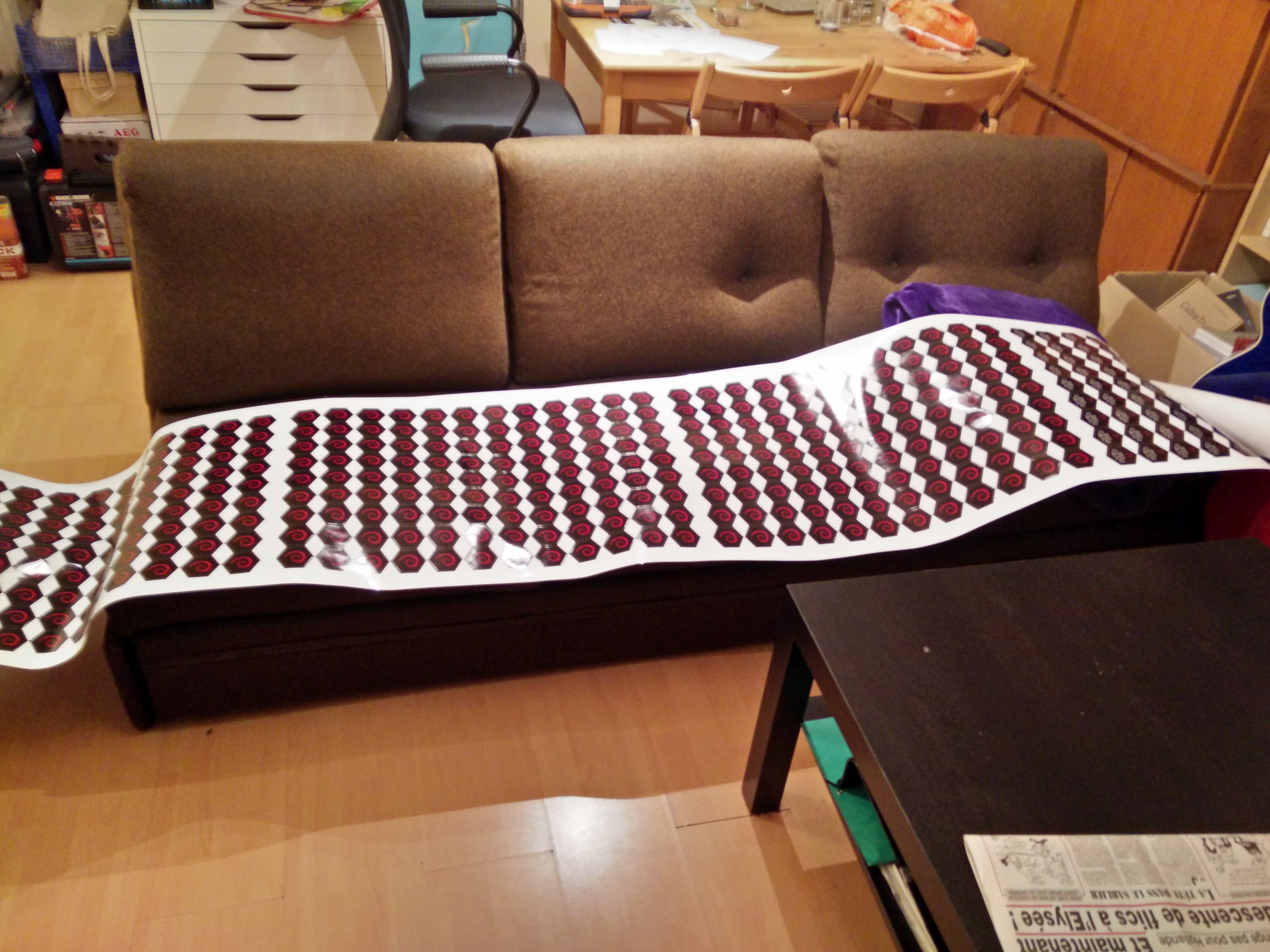
the description of which, on the online shop, made it look like fabric, even if the price was suspiciously low, so I bought a sheet to see what it was. It wasn t fabric. It feels and looks nice, but I m not sure how sturdy it s going to be.
Posted on February 17, 2023
TIL, from a conversation with friends1, that git status can indeed have side effects, of some sort.
By default, running git status causes a background refresh of the index to happen, which holds the write lock on the repository.
In theory, if somebody is really unlucky, this could break some script / process that is also trying to work on the repo at the same time, especially on a huge repository where git status takes a significant time, rather than the usual fraction of a second2.
There is a way to prevent this, by running git status --no-optional-locks (https://git-scm.com/docs/git#Documentation/git.txt---no-optional-locks) or by setting GIT_OPTIONAL_LOCKS to 0, as writing the updated index is just an optimization and git knows it can be avoided.
I don t think there are many chances to actually stumble on this in the real life, but I m writing this down so that if I ever do I have an easy way to remember what happened and find the solution.
I won t name name or provide details to protect the innocents (and the guilty), but thanks to all of the people involved in the conversations who helped find the answer.
Related, but unrelated TIL: there is a place called Secondo (second), near Venice, but it s already a frazione (fraction / subdivision of municipality).
Posted on February 15, 2023
I ve had and used1 a PinePhone for quite some time now, and a shiny new blog sounds like a good time to do a review of my experience.
TL;DL: I love it, but my use cases may not be very typical.
While I ve had a mobile phone since an early time (my parents made me carry one for emergencies before it was usual for my peers) I ve never used a typical smartphone (android / iPhone / those other proprietary things) because I can t trust them not to be designed to work against me (data collection, ads, tricking users into micro payments, and other antipatterns of proprietary software design), and bringing them to sanity as most of the people I know do is too much effort for my tastes.
Instead, as a phone I keep using an old nokia featurephone2 which is reliable, only requires charging once a week, and can easily survive falling from hand height to the ground, even if thrown 3.
And then I ve been carrying a variety of other devices to do other computer-like tasks; earlier it was just a laptop, or a netbook, a Pandora (all of which used a dongle to connect to mobile network internet) then I tried a phone with FirefoxOS (it could have been better) and now the PinePhone has taken their place, at least when I m not carrying a laptop anyway.
So, the tasks I use the PinePhone for are mostly:
sending and receiving xmpp messages, with no need for notifications (when somebody needs to tell me something where urgency is required, they know to use the other phone, either with a call or an sms);
tethering an internet connection to the laptop;
reading djvu scans of old books while standing in a queue or something;
checking something on the internet when I m not close to a real computer (i.e. one with a keyboard and a big screen);
running a timer while heat-setting fabric paint with an iron (and reading a djvu book at the same time yes, this is a very specific task, but it has happened multiple times already :D );
running a calculator with unit conversions;
running the odd command line program;
taking pictures, especially those that I want to send soon (I often also carry a DSLR camera, but I tend to wait a few days before I download them from the card);
map related things.
3 and 5 work perfectly well, no issues there. 1, 2 and 4 usually work just fine, except for the fact that sometimes while the phone is suspended it forgets about being a phone, and needs to be restarted to turn the modem back on. It s not a big deal while using the phone, I just need to check before I try to use it after a few hours.
For 1, I also had to take care to install dino-im from experimental, as up to now the features required to fit the interface in a mobile screen aren t available in the official release, but I believe that this has just been fixed.
Somewhat related to 4, I ve also installed kiwix and the dumps of wiktionary and wikivoyage, but I haven t had a chance to travel much, so I m not really using it.
For 6 I m quite happy with qalculate, the GUI version of qalc (which is what I use on my laptop), even if it has a few minor interface issues, and 7 of course works as well as it can, given the limitations of a small screen and virtual keyboard.
8 is, let us say, problematic. The camera on the PinePhone is peculiar, only works with a specific software, and even there the quality of the pictures is, well, low-fi, vintagey pictures are a look and that s a specific artistic choice, right? Thanks to the hard work of the megapixels maintainer the quality has improved a lot, and these days it is usable, but there are still limits (no webcam in the browser, no recording of videos).
9 is really bad. A few times I can remember getting a GPS fix. A few times in many months, and now and then I keep trying, to see if a miracle has happened, but usually I only get a vague position from wifi data (which isn t great, when walking through less densely populated areas).
I ve seen another PinePhone running gpsd and getting data from an external GPS receiver via bluetooth, and if I really needed it I may seriously consider that solution.
Also, the apps available in mobian aren t great either, even when compared to running tangogps on an OpenMoko with pre-downloaded maps (I mean! I don t think my expectations are too high!).
I ve heard that PureMaps is quite good as a software, but a bit of a PITA to package for Debian, and I really hope that one day there will be a linux-first mobile device with good GPS hardware, so that people will be encouraged to fix the software side.
Thankfully, I don t usually need GPS and navigation software; when I m driving into places I don t know I usually have a human navigator, and when walking into places I can do with just a static map (either printed on paper or on the PinePhone), maybe some pre-calculated route from the OSM website and looking at street names to find out where I am.
Overall, for my use cases the PinePhone works just fine and is an useful addition to the things I always carry with me, and I don t feel the pressing need to get an android phone. I don t think it s ready as a daily driver for everybody, but I think that depending on one s needs it s worth asking around (I d recommend doing so on the fediverse with a #PinePhone and #mobian hashtag), as there is a non-zero chance that it may be a good fit for you.
which, if I m not mistaken, is often not implied by the fact of owning it :D
for very low values of feature: it doesn t have any kind of internet access, and there are only 3 games, one of which is snake.
Posted on February 13, 2023
Some months ago I stumbled on the video where Irving Finkel teaches Tom Scott how to play the Royal Game of Ur and my takeout was:
Irving Finkel is Gandalf or something;
the game sounded quite fun!;
so I did the almost sensible thing, quickly drew a board with inkscape, printed it on 160 g/m paper and used my piecepackpieces to try a few games.
I say almost sensible, because rather than drawing the rosettes with inkscape I decided to carve a rubber stamp and use that to print them on the board (which is why the svgs on this page are missing them: if you print them you ll have to add the rosettes in some way).
And if I had been a sensible person, that s where I would have stopped, since that s perfectly enough to play games and find out that it actually is quite a fun game, and one of our staples.
As some of you probably know, I m not a sensible person.
I also have quite a few blocks and half-blocks of cernit, and one day after I ve had used some, my hands were still moving and accidentally made some pyramidal dice, and a handful of tokens.
And after baking and trying them I liked them, but they had not been planned in any way, and they were a bit too small for the board, so the next time I was using cernit I tried to make a new set.
And while I was doing that I tried a new shape for the dice, as coins marked with a dot in the middle of one of the sides, because I don t really like tetrahedral dice.
And now, I realized this wasn t going to be my last set, and urgently felt the need for some container to keep them in and avoid missing pieces.
(Yes, in the picture above one piece was already missing. While taking it I didn t realize it, and neither I did when picking up everything to put it away, getting the missing piece and storing it safely together with the rest of the set. It must have been hiding in plain sight nearby, but I will never know where.)
Anyway, back to Inkscape, and to a board printed on scrap paper that I tried to fold up until I came up with a layout that folded up in a small drawer, and then I added a case to wrap around it to keep it closed.
I played around with the case until it was big enough to actually slide around the folded board, and this is the result, ready to be printed out on A4 paper, cut, folded and glued. (This takes most of the sheet, and I m not sure that the case would still fit around the board/drawer if printed with scaling, so if you want to print it on Letter paper I d recommend to move the pieces around.)
Now, the only problem left was that green isn t really my colour, and while I did like the stone effect of this set, I wasn t exactly pleased by the colour scheme. (why did I do it this way in the first place? probably because I was trying to use up old cernit blocks before opening new ones.)
So, the only possible way out was to make yet another set, right?
I still used stone effect cernit, but this time in a red/grey scheme that knew I would have liked more, and while I was doing it I tried a few improvements on the randomization devices.
The tetrahedral dice are still the same: they work, it s what they use in the replica sets, so I keep making them even if they re not my first choice.
I ve changed the coins to make them almost square for two reasons, however: one is that the round one tended to roll away into inconvenient places when throwing them with emphasis, and the other one is to make it easier to recognise them from the tokens with no need to flip each one around before starting the game.
The lozenges were a bit of a failure, instead. They work fine when thrown, but I don t think that there is a self-evident way to decide which side should be counted, and the only intuitive way I can think of (count the ones in the player s colour) would be unbalanced.
Speaking of balance issues: of course the hand-modelled dice and coins aren t perfectly balanced but:
they don t feel obviously unbalanced;
both players use the same set, so any subtle unbalance isn t going to affect the chance of winning in an uneven way.
Maybe one day I will find a way to easily roll them a statistically significant number of times, collect data and analyze it to find out how imbalanced they are, but that s not going to happen with manual data collecting, and I m not really ready to go down the yak shaving filled road to automatize it.
To wrap up: is it going to be the last set I make for the Royal Game of Ur? lol. Is it going to be the last cernit set I make this month? definitely yes, I now have one I m happy with, I m routinely playing with it and I m currently doing other crafts rather than cernit.
Posted on February 2, 2023
Thanks to Vagrant on the debian-arm mailing list I ve found that there is a chain of verifiability for the images usually used to install Debian on ARM devices.
It s not trivial, so I m writing it down for future reference when I ll need it again.
(I know, I probably can use awk instead of that tail, but it s getting late and I want to publish this).
Verify the actual files, for hd-media:
grep hd-media SHA256SUMS \
  sed 's#hd-media/SD-card-images/##' \
  sha256sum -c \
  grep -v "No such file or directory" \
  grep -v "FAILED open or read" 2> /dev/null
and for netboot:
grep netboot SHA256SUMS \
  sed 's#netboot/SD-card-images/##' \
  sha256sum -c \
  grep -v "No such file or directory" \
  grep -v "FAILED open or read" 2> /dev/null
and check that all of the files you wanted are there with an OK; of course change hd-media with netboot as needed.
And I fully agree that fewer steps would be nice, but this is definitely better than nothing!
Posted on January 29, 2023
Welcome to my new blog!
Or rather, strictly speaking, welcome to my first blog!
Back when everybody had a blog, I had an old-fashioned personal website where pages were organized by topic rather than by date, so now that blogs are dead (or so they say), I guess it s time for me to have one :) .
The old website is still online, but updating it is getting harder, both for organizational reasons and because the static generator I ve used is no longer supported and requires python 2; lately I ve started publish some specific categories of material such as sewing patterns into their own website (you can find a list in the about page), but I was missing a place to post about the history and experiences of the things I publish elsewhere, as well as more uncategorized things.
Of course I ve chosen to use a static site generator, but since I m picky I ve discarded most of the common ones mostly because they enforce assumptions I don t agree with.
On the other hand, one day I wouldn t mind learning a bit of Haskell, so I decided to look for trouble and use Hakyll, hoping that nobody will add a level 20 wandering monster to it.
Right now I m using mostly the default theme, because I know that if I start fiddling with it I m not going to start posting content ever; maybe one day I ll decide to completely change the look.
As for contents, on the bits side of things you can expect me to talk about Debian, the Fediverse, Python, my inventory manging program and a bit of arduino-level electronics; on the atom side you should definitely expect sewing, modern and mostly historically inspired, some fiber crafts (spinning, knitting, crochet), maybe some bad attempts at painting (watercolours and acrilics), printing (screen and linocut), things that are written on paper and, well, any other craft I will happen to collect.
Before the blog gets too full I plan to add tag management to help people who are only interested in some of these contents.
This being a blog, of course it has an atom feed you can add to your favourite (and ideally self-hosted) rss reader, and since this is a personal blog there will be no periodicity, posts will happen when I ll have something to say on some topic.
Until next time
Dealing with the void during MiniDebConf Online #1
Between 28 and 31 May this year, we set out to create our first ever online MiniDebConf for Debian. Many people have been meaning to do something similar for a long time, but it just didn t work out yet. With many of us being in lock down due to COVID-19, and with the strong possibility looming that DebConf20 might have had to become an online event, we rushed towards organising the first ever Online MiniDebConf and put together some form of usable video stack for it.
I could go into all kinds of details on the above, but this post is about a bug that lead to a pretty nifty feature for DebConf20. The tool that we use to capture Jitsi calls is called Jibri (Jitsi Broadcasting Infrustructure). It had a bug (well, bug for us, but it s an upstream feature) where Jibri would hang up after 30s of complete silence, because it would assume that the call has ended and that the worker can be freed up again. This would result in the stream being ended at the end of every talk, so before the next talk, someone would have to remember to press play again in their media player or on the video player on the stream page. Hrmph.
Easy solution on the morning that the conference starts? I was testing a Debian Live image the night before in a KVM and thought that I might as well just start a Jitsi call from there and keep a steady stream of silence so that Jibri doesn t hang up.
It worked! But the black screen and silence on stream was a bit eery. Because this event was so experimental in nature, and because we were on such an incredibly tight timeline, we opted not to seek sponsors for this event, so there was no sponsors loop that we d usually stream during a DebConf event. Then I thought Ah! I could just show the schedule! .
The stream looked bright and colourful (and was even useful!) and Jitsi/Jibri didn t die. I thought my work was done. As usual, little did I know how untrue that was.
The silence was slightly disturbing after the talks, and people asked for some music. Playing music on my VM and capturing the desktop audio in to Jitsi was just a few pulseaudio settings away, so I spent two minutes finding some freely licensed tracks that sounded ok enough to just start playing on the stream. I came across mini-albums by Captive Portal and Cinema Noir, During the course of the MiniDebConf Online I even started enjoying those. Someone also pointed out that it would be really nice to have a UTC clock on the stream. I couldn t find a nice clock in a hurry so I just added a tmux clock in the meantime while we deal with the real-time torrent of issues that usually happens when organising events like this.
Speaking of issues, during our very first talk of the last day, our speaker had a power cut during the talk and abruptly dropped off. Oops! So, since I had a screenshare open from the VM to the stream, I thought I d just pop in a quick message in a text editor to let people know that we re aware of it and trying to figure out what s going on.
In the end, MiniDebConf Online worked out all right. Besides the power cut for our one speaker, and another who had a laptop that was way too under-powered to deal with video, everything worked out very well. Even the issues we had weren t show-stoppers and we managed to work around them.
DebConf20 Moves Online
For DebConf, we usually show a sponsors loop in between sessions. It s great that we give our sponsors visibility here, but in reality people see the sponsors loop and think Talk over! and then they look away. It s also completely silent and doesn t provide any additional useful information. I was wondering how I could take our lessons from MDCO#1 and integrate our new tricks with the sponsors loop. That is, add the schedule, time, some space to type announcements on the screen and also add some loopable music to it.
I used OBS before in making my videos, and like the flexibility it provides when working with scenes and sources. A scene is what you would think of as a screen or a document with its own collection of sources or elements. For example, a scene might contain sources such as a logo, clock, video, image, etc. A scene can also contain another scene. This is useful if you want to contain a banner or play some background music that is shared between scenes.
The above screenshots illustrate some basics of scenes and sources. First with just the DC20 banner, and then that used embedded in another scene.
For MDCO#1, I copied and pasted the schedule into a LibreOffice Impress slide that was displayed on the stream. Having to do this for all 7 days of DebConf, plus dealing with scheduling changes would be daunting. So, I started to look in to generating some schedule slides programmatically. Stefano then pointed me to the Happening Now page on the DebConf website, where the current schedule block is displayed. So all I would need to do in OBS was to display a web page. Nice!
Unfortunately the OBS in Debian doesn t have the ability to display web pages out of the box (we need to figure out CEF in Debian), but fortunately someone provides a pre-compiled version of the plugin called Linux Browser that works just fine. This allowed me to easily add the schedule page in its own scene.
Being able to display a web page solved another problem. I wasn t fond of having to type / manage the announcements in OBS. It would either be a bit prone to user error, and if you want to edit the text while the loop is running, you d have to disrupt the loop, go to the foreground scene, and edit the text before resuming the loop. That s a bit icky. Then I thought that we could probably just get that from a web page instead. We could host some nice html snippet in a repository in salsa, and then anyone could easily commit an MR to update the announcement.
But then I went a step further, use an etherpad! Then anyone in the orga team can quickly update the announcement and it would be instantly changed on the stream. Nice! So that small section of announcement text on the screen is actually a whole web browser with an added OBS filter to crop away all the pieces we don t want. Overkill? Sure, but it gave us a decent enough solution that worked in time for the start of DebConf. Also, being able to type directly on to the loop screen works out great especially in an emergency. Oh, and uhm the clock is also a website rendered in its own web browser :-P
So, I had the ability to make scenes, add elements and add all the minimal elements I wanted in there. Great! But now I had to figure out how to switch scenes automatically. It s probably worth mentioning that I only found some time to really dig into this right before DebConf started, so with all of this I was scrambling to find things that would work without too many bugs while also still being practical.
Now I needed the ability to switch between the scenes automatically / programmatically. I had never done this in OBS before. I know it has some API because there are Android apps that you can use to control OBS with from your phone. I discovered that it had an automatic scene switcher, but it s very basic. It can only switch based on active window, which can be useful in some cases, but since we won t have any windows open other than OBS, this tool was basically pointless.
After some quick searches, I found a plugin called Advanced Scene Switcher. This plugin can do a lot more, but has some weird UI choices, and is really meant for gamers and other types of professional streamers to help them automate their work flow and doesn t seem at all meant to be used for a continuous loop, but, it worked, and I could make it do something that will work for us during the DebConf.
I had a chicken and egg problem because I had to figure out a programming flow, but didn t really have any content to work with, or an idea of all the content that we would eventually have. I ve been toying with the idea in my mind and had some idea that we could add fun facts, postcards (an image with some text), time now in different timezones, Debian news (maybe procured by the press team), cards that contain the longer announcements that was sent to debconf-announce, perhaps a shout out or two and some photos from previous DebConfs like the group photos. I knew that I wouldn t be able to build anything substantial by the time DebConf starts, but adding content to OBS in between talks is relatively easy, so we could keep on building on it during DebConf.
Nattie provided the first shout out, and I made 2 video loops with the DC18/19 pictures and also two Did you know cards. So the flow I ended up with was: Sponsors -> Happening Now -> Random video (which would be any of those clips) -> Back to sponsors. This ended up working pretty well for quite a while. With the first batch of videos the sponsor loop would come up on average about every 2 minutes, but as much shorter clips like shout outs started to come in faster and faster, it made sense to play a few 2-3 shout-outs before going back to sponsors.
So here is a very brief guide on how I set up the sequencing in Advanced Scene Switcher.
If no condition was met, a video would play from the Random tab.
Then in the Random tab, I added the scenes that were part of the random mix. Annoyingly, you have to specify how long it should play for. If you don t, the no condition thingy is triggered and another video is selected. The time is also the length of the video minus one second, because
You can t just say that a random video should return back to a certain scene, you have to specify that in the sequence tab for each video. Why after 1 second? Because, at least in my early tests, and I didn t circle back to this, it seems like 0s can randomly either mean instantly, or never. Yes, this ended up being a bit confusing and tedious, and considering the late hours I worked on this, I m surprised that I didn t manage to screw it up completely at any point.
I also suspected that threads would eventually happen. That is, when people create video replies to other videos. We had 3 threads in total. There was a backups thread, beverage thread and an impersonation thread. The arrow in the screenshot above points to the backups thread. I know it doesn t look that complicated, but it was initially somewhat confusing to set up and make sense out of it.
For the next event, the Advanced Scene Switcher might just get some more taming, or even be replaced entirely. There are ways to drive OBS by API, and even the Advanced Scene Switcher tool can be driven externally to some degree, but I think we definitely want to replace it by the next full DebConf. We had the problem that when a talk ended, we would return to the loop in the middle of a clip, which felt very unnatural and sometimes even confusing. So Stefano helped me with a helper script that could read the socket from Vocto, which I used to write either Loop or Standby to a file, and then the scene switcher would watch that file and keep the sponsors loop ready for start while the talks play. Why not just switch to sponsors when the talk ends? Well, the little bit of delay in switching would mean that you would see a tiny bit of loop every time before switching to sponsors. This is also why we didn t have any loop for the ad-hoc track (that would have probably needed another OBS instance, we ll look more into solutions for this for the future).
Then for all the clips. There were over 50 of them. All of them edited by hand in kdenlive. I removed any hard clicks, tried to improve audibility, remove some sections at the beginning and the end that seemed extra and added some music that would reduce in volume when someone speaks. In the beginning, I had lots of fun with choosing music for the clips. Towards the end, I had to rush them through and just chose the same tune whether it made sense or not. For comparison of what a difference the music can make, compare the original and adapted version for Valhalla s clip above, or this original and adapted video from urbec. This part was a lot more fun than dealing with the video sequencer, but I also want to automate it a bit. When I can fully drive OBS from Python I ll likely instead want to show those cards and control music volume from Python (what could possibly go wrong ).
The loopy name happened when I requested an @debconf.org alias for this. I was initially just thinking about loop@debconf.org but since I wanted to make it clear that the purpose of this loop is also to have some fun, I opted for loopy instead:
I was really surprised by how people took to loopy. I hoped it would be good and that it would have somewhat positive feedback, but the positive feedback was just immense. The idea was that people typically saw it in between talks. But a few people told me they kept it playing after the last talk of the day to watch it in the background. Some asked for the music because they want to keep listening to it while working (and even for jogging!?). Some people also asked for recordings of the loop because they want to keep it for after DebConf. The shoutouts idea proved to be very popular. Overall, I m very glad that people enjoyed it and I think it s safe to say that loopy will be back for the next event.
Also throughout this experiment Loopy Loop turned into yet another DebConf mascot. We gain one about every DebConf, some by accident and some on purpose. This one was not quite on purpose. I meant to make an image for it for salsa, and started with an infinite loop symbol. That s a loop, but by just adding two more solid circles to it, it looks like googly eyes, now it s a proper loopy loop!
I like the progress we ve made on this, but there s still a long way to go, and the ideas keep heaping up. The next event is quite soon (MDCO#2 at the end of November, and it seems that 3 other MiniDebConf events may also be planned), but over the next few events there will likely be significantly better graphics/artwork, better sequencing, better flow and more layout options. I hope to gain some additional members in the team to deal with incoming requests during DebConf. It was quite hectic this time! The new OBS also has a scripting host that supports Python, so I should be able to do some nice things even within OBS without having to drive it externally (like, display a clock without starting a web browser).
The Loopy Loop Music
The two mini albums that mostly played during the first few days were just a copy and paste from the MDCO#1 music, which was:
I have much more things to say about DebConf20, but I ll keep that for another post, and hopefully we can get all the other video stuff in a post from the video team, because I think there s been some real good work done for this DebConf. Also thanks to Infomaniak who was not only a platinum sponsor for this DebConf, but they also provided us with plenty of computing power to run all the video stuff on. Thanks again!
On 2017-08-06 I have a talk at DebConf17 in
Montreal titled
"Consensually doing things together?"
(video).
Here are the talk notes.
Abstract
At DebConf Heidelberg I talked about how Free Software has a lot to do about
consensually doing things together. Is that always true, at least in Debian?
I d like to explore what motivates one to start a project and what motivates
one to keep maintaining it. What are the energy levels required to manage bits
of Debian as the project keeps growing. How easy it is to say no. Whether we
have roles in Debian that require irreplaceable heroes to keep them going. What
could be done to make life easier for heroes, easy enough that mere mortals can
help, or take their place.
Unhappy is the community that needs heroes, and unhappy is the community that
needs martyrs.
I d like to try and make sure that now, or in the very near future, Debian is
not such an unhappy community.
Consensually doing things together
I gave a talk in Heidelberg.
Valhallamadestickers
Debian France distributed
many of them.
There's one on my laptop.
Which reminds me of what we ought to be doing.
Of what we have a chance to do, if we play our cards right.
I'm going to talk about relationships. Consensual relationships.
Relationships in short.
Nonconsensual relationships are usually called abuse.
I like to see Debian as a relationship between multiple people.
And I'd like it to be a consensual one.
I'd like it not to be abuse.
Consent
From wikpedia:
In Canada "consent means the voluntary agreement of the complainant to engage
in sexual activity" without abuse or exploitation of "trust, power or
authority", coercion or threats.[7] Consent can also be revoked at any
moment.[8]
There are 3 pillars often included in the description of sexual consent, or
"the way we let others know what we're up for, be it a good-night kiss or the
moments leading up to sex."
They are:
Knowing exactly what and how much I'm agreeing to
Expressing my intent to participate
Deciding freely and voluntarily to participate[20]
Saying "I've decided I won't do laundry anymore" when the other partner is
tired, or busy doing things.
Is different than saying "I've decided I won't do laundry anymore" when the
other partner has a chance to say "why? tell me more" and take part in
negotiation.
Resources:
Relationships
Debian is the Universal Operating System.
Debian is made and maintained by people.
The long term health of debian is a consequence of the long term health of the
relationship between Debian contributors.
Debian doesn't need to be technically perfect, it needs to be socially healthy.
Technical problems can be fixed by a healty community.
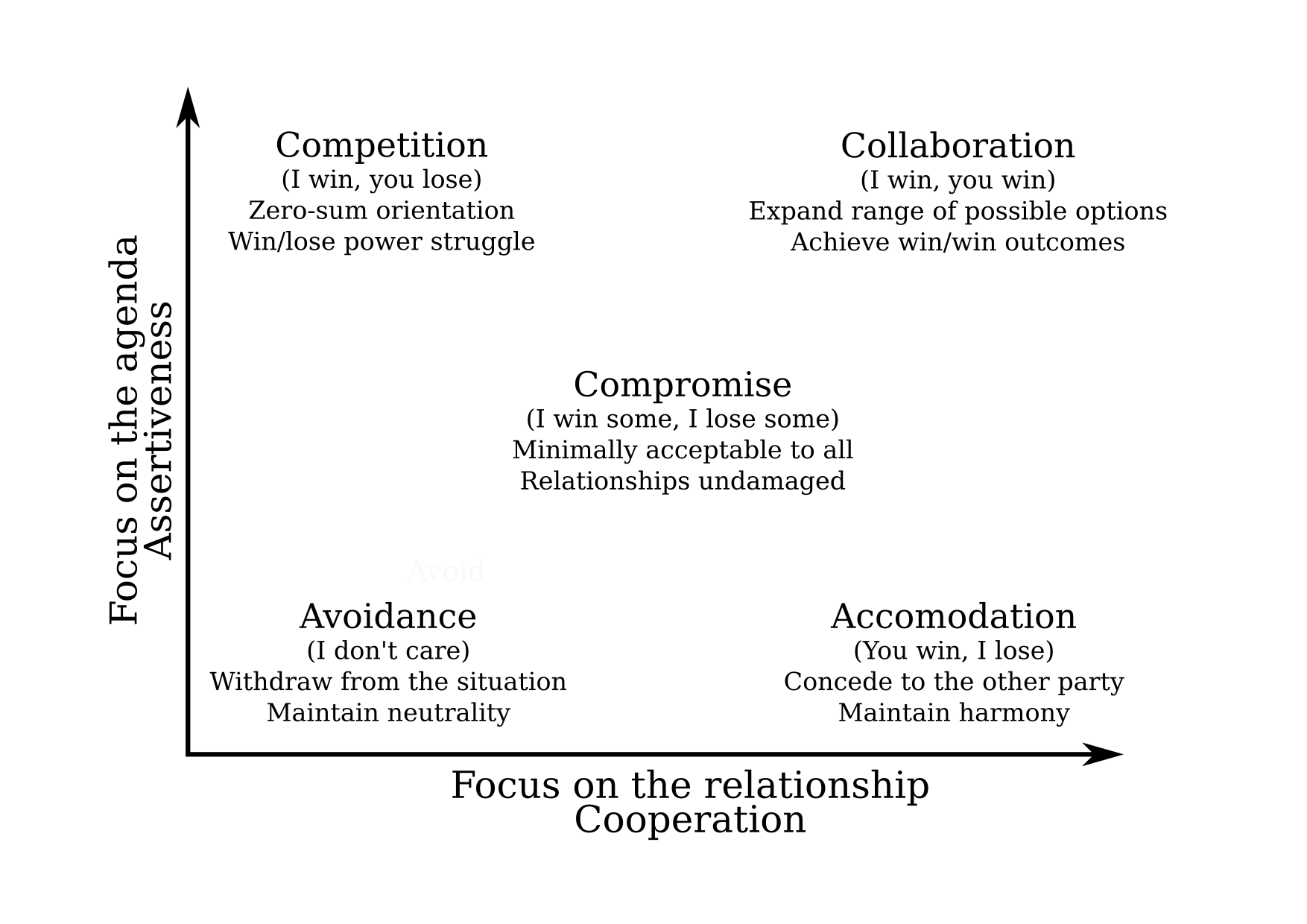
The Thomas-Kilmann Conflict Mode Instrument: sourcepng.
Motivations
Quick poll:
how many of you do things in Debian because you want to?
how many of you do things in Debian because you have to?
how many of you do both?
What are your motivations to be in a relationship?
Which of those motivations are healthy/unhealthy?
healthy sustain the relationship
unhealthy may explode spectacularly at some point
"Galadriel" (noun, by Francesca Ciceri): a task you have to do otherwise Sauron takes over Middle Earth
See: http://blog.zouish.org/nonupdd/#/22/1
What motivates me to start a project or pick one up?
I have an idea for for something fun or useful
I see something broken and I have an idea how to fix it
What motivates me to keep maintaning a project?
Nobody else can do it
Nobody else can be trusted to do it
Nobody else who can and can be trusted to do it is doing it
Somebody is paying me to do it
What motivates you?
What's an example of a sustainable motivation?
it takes me little time?
it's useful for me
It's fun
It saves me time to keep something running that if it breaks when I or somebody else needs it
it makes me feel useful? (then if I stop, I become useless, then I can't afford to stop?)
Getting positive feedback (more "you're good" than "i use it") ?
Is it really all consensual in Debian?
what tasks are done by people motivated by guilt / motivated by Galadriel?
if I volunteer to help team X that is in trouble, will I get stuck doing
all the work as soon as people realise things move fine again and finally
feel free to step back?
Energy
Energy that thing which is measured in spoons. The metaphore comes from people suffering with chronic health issues:
"Spoons" are a visual representation used as a unit of measure used to
quantify how much energy a person has throughout a given day. Each activity
requires a given number of spoons, which will only be replaced as the person
"recharges" through rest. A person who runs out of spoons has no choice but
to rest until their spoons are replenished.
are the things that we expect a person to do the things that one person can
do?
having a history of people who can do it anyway is no excuse: show
compassion to those people, take some of their work, thank them, but don't
glorify them
Have reasonable expectations, on others:
If someone is out of spoons, they're out of spoons; they don't get more
spoons if you insist; if you insist, you probably take even more spoons from
them
If someone needs their spoons for something else, they are entitled to
If someone gets out of spoons for something important, and nobody else can
do it, it's not their fault but a shared responsibility
Have reasonable expectations, on yourself:
If you are out of spoons, you are out of spoons
If you need spoons for something else, use them for something else
If you are out of spoons for something important, and nobody else can do it,
it's not your problem, it's a problem in the community
Debian is a shared responsibility
Don't expect few people to take care of everything
Leave space for more people to take responsibility for things
Turnover empowers
Humans are a renewable resource, but only if you think of them that way
When spoons are limited, what takes more energy tends not to get done
routine is ok
non-routine tends to get stuck in the mailbox waiting for a day with more
free time
are we able to listen when tricky cases happen?
are we able to respond when tricky cases happen?
are we able to listen/respond when socially tricky cases happen?
are we able to listen/respond when harassment happens?
can we tell people raising valid issues from troublemakers?
in NM
it's easier to accept a new maintainer than to reject them
it's hard or impossible to make a call on a controversial candidate when
one doesn't know that side of Debian
I'm tired, why you report a bug? I don't want to deal with your bug.
Maybe you are wrong and your bug is invalid? It would be good if you were
wrong and your bug was invalid.
even politeness goes when out of spoons because it's too much effort
As the project grows, project-wide tasks become harder
Are they still humanly achievable?
release team
DAM (amount of energy to deal with when things go wrong; only dealing with
when things go spectacularly wrong?)
DPL (how many people candidate to this year elections?)
I don't want Debian to have positions that require hero-types to fill them
heroes are rare
heroes are hard to replace
heroes burn out
heroes can become martyrs
heroes can become villains
heroes tend to be accidents waiting to happen
Dictatorship of who has more spoons:
Someone who has a lot of energy can take more and more tasks out of people
who have less, and slowly drive all the others away
Good for results, bad for the team
Then we have another person who is too big to fail, and another accident
waiting to happen
Perfectionism
You are in a relationship that is just perfect. All your friends look up to
you. You give people relationship advice. You are safe in knowing that You Are
Doing It Right.Then one day you have an argument in public.You don't just have to deal with the argument, but also with your reputation
and self-perception shattering.
One things I hate about Debian: consistent technical excellence.
I don't want to be required to always be right.
One of my favourite moments in the history of Debian is
the openssl bug
Debian doesn't need to be technically perfect, it needs to be socially healthy,
technical problems can be fixed.
I want to remove perfectionism from Debian: if we discover we've been wrong all
the time in something important, it's not the end of Debian, it's the beginning
of an improved Debian.
Too good to be true
There comes a point in most people's dating experience where one learns that
when some things feel too good to be true, they might indeed be.
There are people who cannot say no:
you think everything is fine, and you discover they've been suffering all
the time and you never had a clue
There are people who cannot take a no:
They depend on a constant supply of achievement or admiration to have a
sense of worth, therefore have a lot of spoons to invest into getting it
However, when something they do is challenged, such as by pointing out a
mistake one has made, or a problem with their behaviour, all hell breaks
loose, beacuse they see their whole sense of worth challenged, too
Note the diversity statement: it's not a problem to have one of those (and many
other) tendencies, as long as one manages to keep interacting constructively
with the rest of the community
Also, it is important to be aware of these patterns, to be able to compensate
for one's own tendencies. What happens when an avoidant person meets a
narcissistic person, and they are both unaware of the risks?
Resources:
Note: there are problems with the way these resources are framed:
These topics are often very medicalised, and targeted at people who are
victims of abuse and domestic violence.
I find them useful to develop regular expressions for pattern matching of
behaviours, and I consider them dangerous if they are used for pattern
matching of people.
you had an argument with someone and the outcome was positive for both
Red flags:
you feel demeaned
you feel invalidated
Apologies / Dealing with issues
I don't see the usefulness of apologies that are about accepting blame, or
making a person stop complaining.
I see apologies as opportunities to understand the problem I caused, help fix
it, and possibly find ways of avoiding causing that problem again in the
future.
A Better Way to Say Sorry
lists a 4 step process, which is basically what we do when in bug reports
already:
1, Try to understand and reproduce the exact problem the person had.
2. Try to find the cause of the issue.
3. Try to find a solution for the issue.
4. Verify with the reporter that the solution does indeed fix the issue.
This is just to say
My software ate
the files
that where in
your home directory
and which
you were probably
needing
for work
Forgive me
it was so quick to write
without tests
and it worked so well for me
(inspired by a 1934 poem by William Carlos Williams)
Don't be afraid to fail
Don't be afraid to fail or drop the ball.
I think that anything that has a label attached of "if you don't do it, nobody
will", shouldn't fall on anybody's shoulders and should be shared no matter
what.
Shared or dropped.
Share the responsibility for a healthy relationship
Don't expect that the more experienced mates will take care of everything.
In a project with active people counted by the thousand, it's unlikely that
harassment isn't happening. Is anyone writing anti-harassment? Do we have
stats? Is having an email address and a CoC giving us a false sense of
security?
When you get involved in a new community, such as Debian, find out early
where, if that happens, you can find support, understanding, and help to make
it stop.
If you cannot find any, or if the only thing you can find is people who say
"it never happens here", consider whether you really want to be in that
community.
There are some nice people in the world. I mean nice people, the sort I couldn t describe myself as. People who are friends with everyone, who are somehow never involved in any argument, who seem content to spend their time drawing pictures of bumblebees on flowers that make everyone happy.
Those people are great to have around. You want to hold onto them as much as you can.
But people only have so much tolerance for jerkiness, and really nice people often have less tolerance than the rest of us.
The trouble with not ejecting a jerk whether their shenanigans are deliberate or incidental is that you allow the average jerkiness of the community to rise slightly. The higher it goes, the more likely it is that those really nice people will come around less often, or stop coming around at all. That, in turn, makes the average jerkiness rise even more, which teaches the original jerk that their behavior is acceptable and makes your community more appealing to other jerks. Meanwhile, more people at the nice end of the scale are drifting away.
(from https://eev.ee/blog/2016/07/22/on-a-technicality/)
Give people freedom
If someone tries something in Debian, try to acknowledge and accept their work.
You can give feedback on what they are doing, and try not to stand in their
way, unless what they are doing is actually hurting you. In that case, try to
collaborate, so that you all can get what you need.
It's ok if you don't like everything that they are doing.
I personally don't care if people tell me I'm good when I do something, I
perceive it a bit like "good boy" or "good dog". I rather prefer if people show
an interest, say "that looks useful" or "how does it work?" or "what do you
need to deploy this?"
Acknowledge that I've done something. I don't care if it's especially liked,
give me the freedom to keep doing it.
Don't give me rewards, give me space and dignity.
Rather than feeding my ego, feed by freedom, and feed my possibility to create.
I'm stuck home instead of being able to go to DebConf, but that doesn't mean that Debian Day will be left uncelebrated!
Since many of the locals are away for the holidays, we of @Gruppo Linux Como and @LIFO aren't going to organize a full day of celebrations, but at the very least we are meeting for a dinner in Varese, at some restaurant that will be open on that date.
Everybody is welcome: to join us please add your name (nickname or identifier of any kind, as long as it fits in the box) on https://dudle.inf.tu-dresden.de/debdayvarese2017/ before thursday, August 10th, so that we can get a reservation at the restaurant.
I understand that somebody on the internet will always be trolling, but I just wanted to point out:
* that the installer in the old live images has been broken (for international users) for years * that nobody cared enough to fix it, not even the people affected by it (the issue was reported as known in various forums, but for a long time nobody even opened an issue to let the *developers* know).
Compare this with the current situation, with people doing multiple tests as the (quite big number of) images were being built, and a fix released soon after for the issues found.
I'd say that this situation is great, and that instead of trolling around we should thank the people involved in this release for their great job.
I've been thinking for a while that an half-size set could be useful, and between yesterday and today I've actually managed to do the first version.
It's (2d) printed on both sides of a single sheet of heavy paper, laminated and then cut, comes with both the basic suites and the playing card expansion and fits in a mint tin divided by origami boxes.
It's just version 0.1 because there are a few issues: first of all I'm not happy with the manual way I used to draw the page: ideally it would have been programmatically generated from the same svg files as the 3d piecepack (with the ability to generate other expansions), but apparently reading paths from an svg and writing it in another svg is not supported in an easy way by the libraries I could find, and looking for it was starting to take much more time than just doing it by hand.
I also still have to assemble the dice; in the picture above I'm just using the ones from the 3d-printed set, but they are a bit too big and only four of them fit in the mint tin. I already have the faces printed, so this is going to be fixed in the next few days.
Source files are available in the same git repository as the 3d-printable piecepack http://git.trueelena.org/cgit.cgi/3d/piecepack/, with the big limitation mentioned above; updates will also be pushed there, just don't hold your breath for it :)
I now have an XMPP setup which has all the features of the recent fancy chat systems, and on top of that it runs, client and server, on Free Software, which can be audited, it is federated and I can self-host my own server in my own VPS if I want to, with packages supported in Debian.
I'm also targeting https://www.debian.org/ stable (+ backports); as I write this is jessie; if there are significant differences I will update this article when I will upgrade my server to stretch. Right now, this means that I'm using prosody 0.9 (and that's probably also the version that will be available in stretch).
Installation and prerequisites
You will need to enable the https://backports.debian.org/ repository and then install the packages prosody and prosody-modules.
the "local" configures prosody so that only local users are allowed to create new rooms (but then everybody can join them, if the room administrator allows it): this may help reduce unwanted usages of your server by random people.
You can also add the following line to enable rich media transfers via http uploads (XEP-0363):
Don't forget to enable the virtualhost by linking the file inside /etc/prosody/conf.d/.
additional modules
Most of the other interesting XEPs are enabled by loading additional modules inside /etc/prosody/prosody.cfg.lua (under modules_enabled); to enable mod_something just add a line like:
"something";
Most of these come from the prosody-modules package (and thus from https://modules.prosody.im/ ) and some may require changing when prosody 0.10 will be available; when this is the case it is mentioned below.
mod_carbons (XEP-0280) To keep conversations syncronized while using multiple devices at the same time.
This will be included by default in prosody 0.10.
mod_privacy + mod_blocking (XEP-0191) To allow user-controlled blocking of users, including as an anti-spim measure.
In prosody 0.10 these two modules will be replaced by mod_privacy.
mod_smacks (XEP-0198) Allow clients to resume a disconnected session before a customizable timeout and prevent message loss.
mod_mam (XEP-0313) Archive messages on the server for a limited period of time (default 1 week) and allow clients to retrieve them; this is required to syncronize message history between multiple clients.
With prosody 0.9 only an in-memory storage backend is available, which may make this module problematic on servers with many users. prosody 0.10 will fix this by adding support for an SQL backed storage with archiving capabilities.
mod_throttle_presence + mod_filter_chatstates (XEP-0352) Filter out presence updates and chat states when the client announces (via Client State Indication) that the user isn't looking. This is useful to reduce power and bandwidth usage for "useless" traffic.
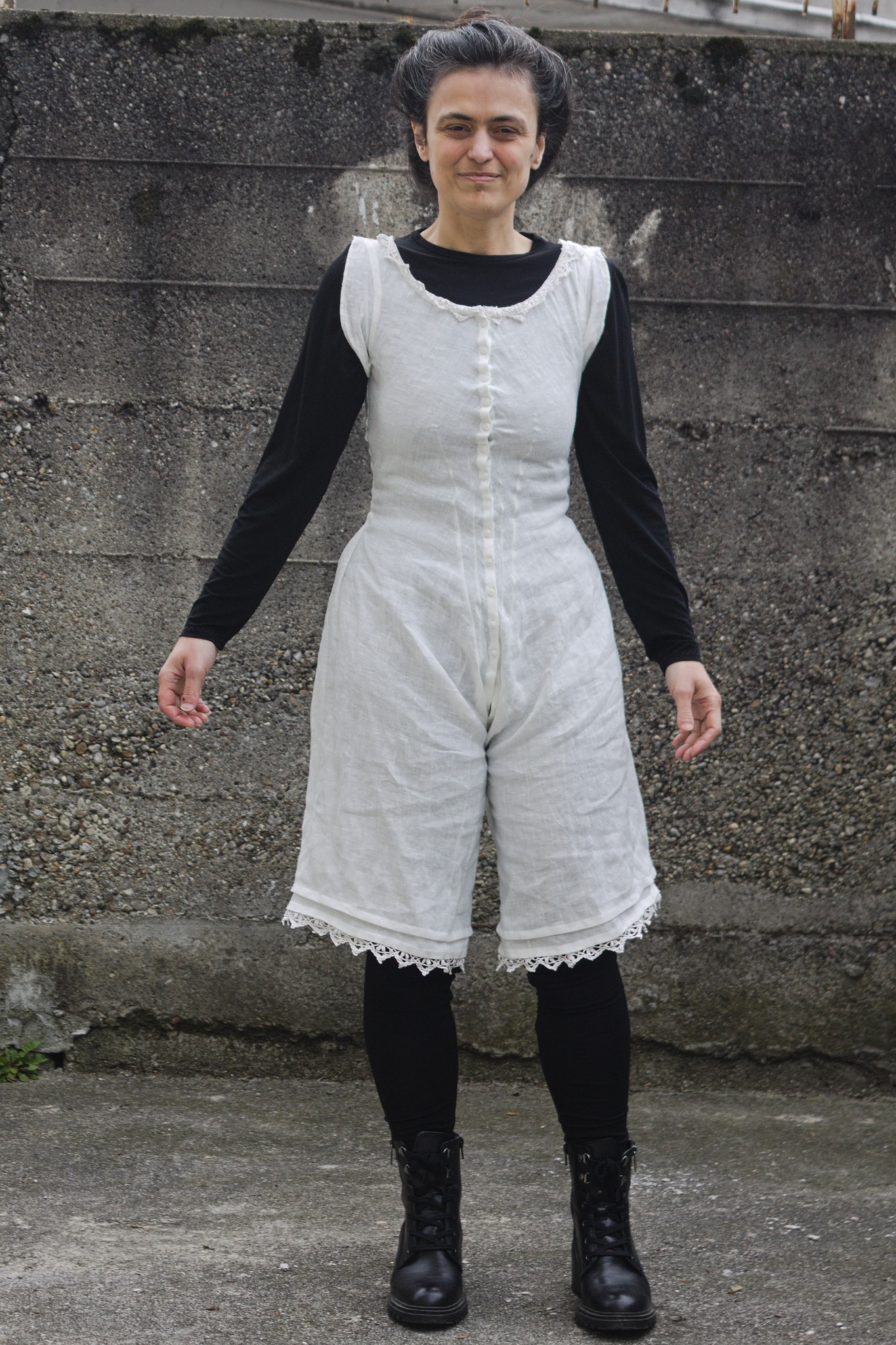 Some time ago, on an early Friday afternoon our internet connection died. After a reasonable time had passed we called the customer service, they told us that they would look into it and then call us back.
On Friday evening we had not heard from them, and I was starting to get worried. At the time in the evening when I would have been relaxing online I grabbed the first Victorian sewing-related book I found on my hard disk and started to read it.
For the record, it wasn t actually Victorian, it was Margaret J. Blair. System of Sewing and Garment Drafting. from 1904, but I also had available for comparison the earlier and smaller Margaret Blair. System of Garment Drafting. from 1897.
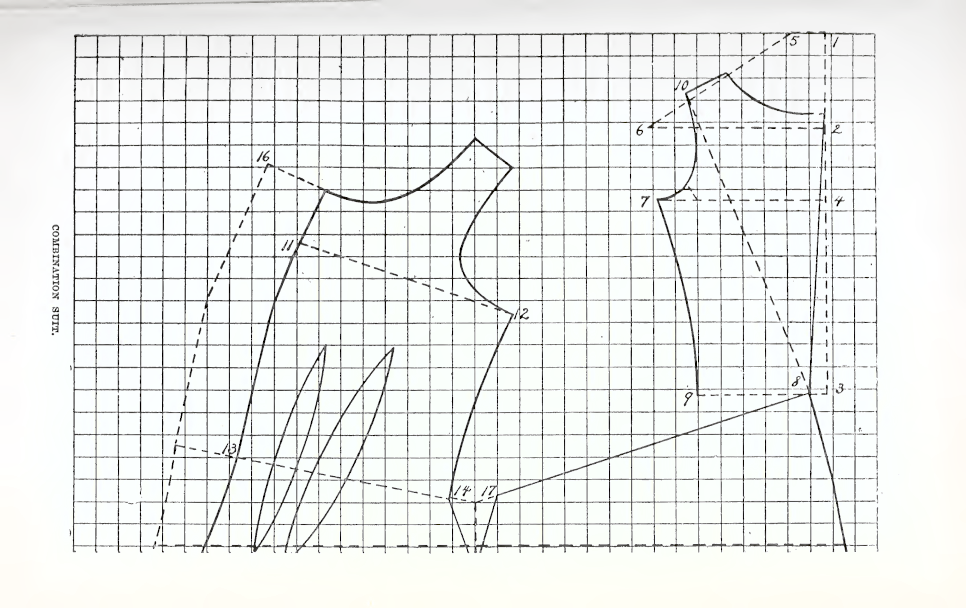 Anyway, this book had a system to draft a pair of combinations (chemise top + drawers); and months ago I had already tried to draft a pair from another system, but they didn t really fit and they were dropped low on the priority list, so on a whim I decided to try and draft them again with this new-to-me system.
Around 23:00 in the night the pattern was ready, and I realized that my SO had gone to sleep without waiting for me, as I looked too busy to be interrupted.
The next few days were quite stressful (we didn t get our internet back until Wednesday) and while I couldn t work at my day job I didn t sew as much as I could have done, but by the end of the week I had an almost complete mockup from an old sheet, and could see that it wasn t great, but it was a good start.
One reason why the mockup took a whole week is that of course I started to sew by machine, but then I wanted flat-felled seams, and felling them by hand is so much neater, isn t it?
And let me just say, I m grateful for the fact that I don t depend on streaming services for media, but I have a healthy mix of DVDs and stuff I had already temporary downloaded to watch later, because handsewing and being stressed out without watching something is not really great.
Anyway, the mockup was a bit short on the crotch, but by the time I could try it on and be sure I was invested enough in it that I decided to work around the issue by inserting a strip of lace around the waist.
And then I went back to the pattern to fix it properly, and found out that I had drafted the back of the drawers completely wrong, making a seam shorter rather than longer as it should have been. ooops.
I fixed the pattern, and then decided that YOLO and cut the new version directly on some lightweight linen fabric I had originally planned to use in this project.
The result is still not perfect, but good enough, and I finished it with a very restrained amount of lace at the neckline and hems, wore it one day when the weather was warm (loved the linen on the skin) and it s ready to be worn again when the weather will be back to being warm (hopefully not too soon).
The last problem was taking pictures of this underwear in a way that preserves the decency (and it even had to be outdoors, for the light!).
This was solved by wearing leggings and a matched long sleeved shirt under the combinations, and then promptly forgetting everything about decency and, well, you can see what happened.
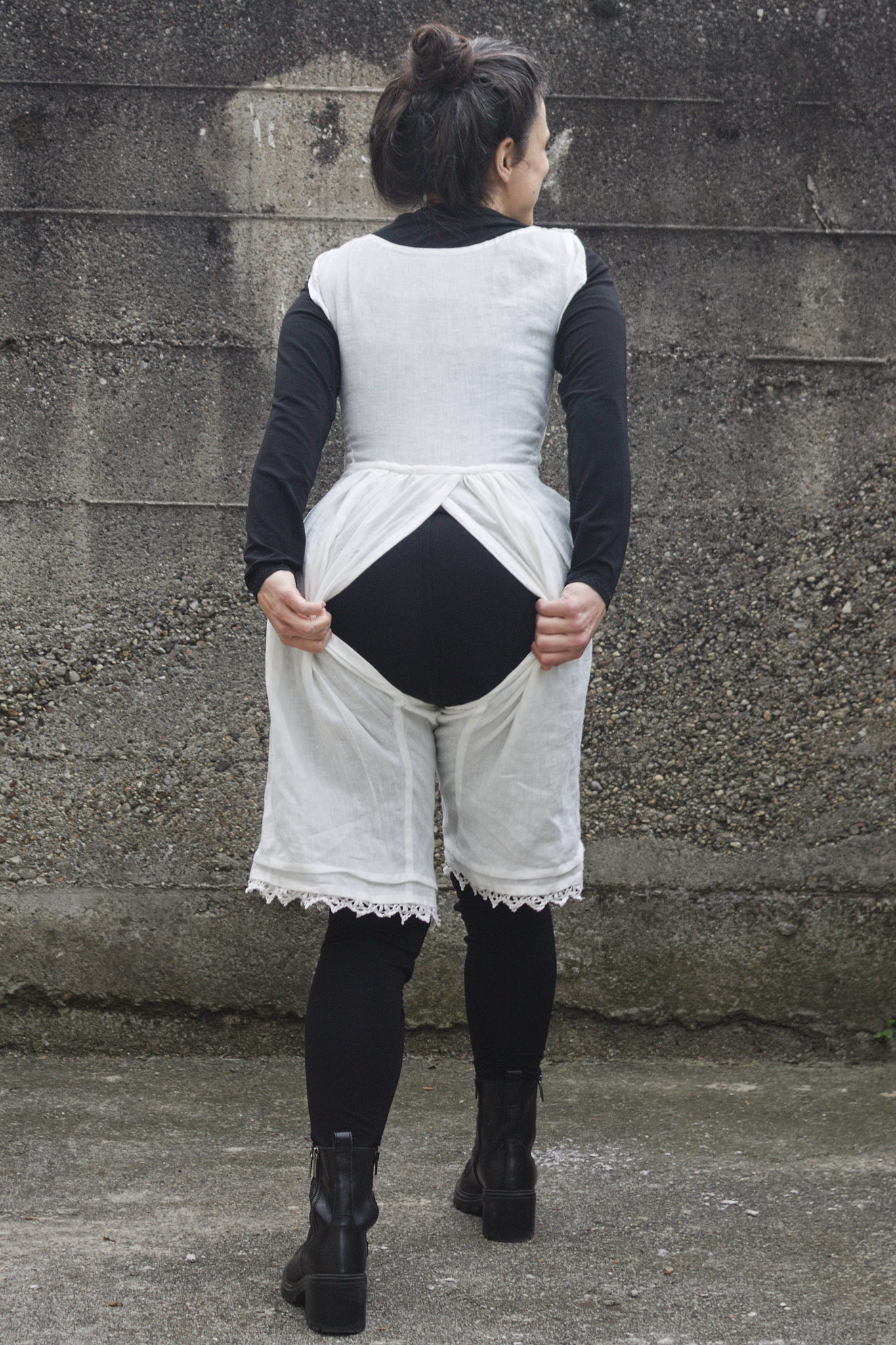 The pattern is, as usual, published on my pattern website as #FreeSoftWear.
And then, I started thinking about knits.
In the late Victorian and Edwardian eras knit underwear was a thing, also thanks to the influence of various aspects of the rational dress movement; reformers such as Gustav J ger advocated for wool underwear, but mail order catalogues from the era such as https://archive.org/details/cataloguefallwin00macy (starting from page 67) have listings for both cotton and wool ones.
From what I could find, back then they would have been either handknit at home or made to shape on industrial knitting machines; patterns for the former are available online, but the latter would probably require a knitting machine that I don t currently1 have.
However, this is underwear that is not going to be seen by anybody2, and I believe that by using flat knit fabric one can get a decent functional approximation.
In The Stash I have a few meters of a worked cotton jersey with a pretty comfy feel, and to make a long story short: this happened.
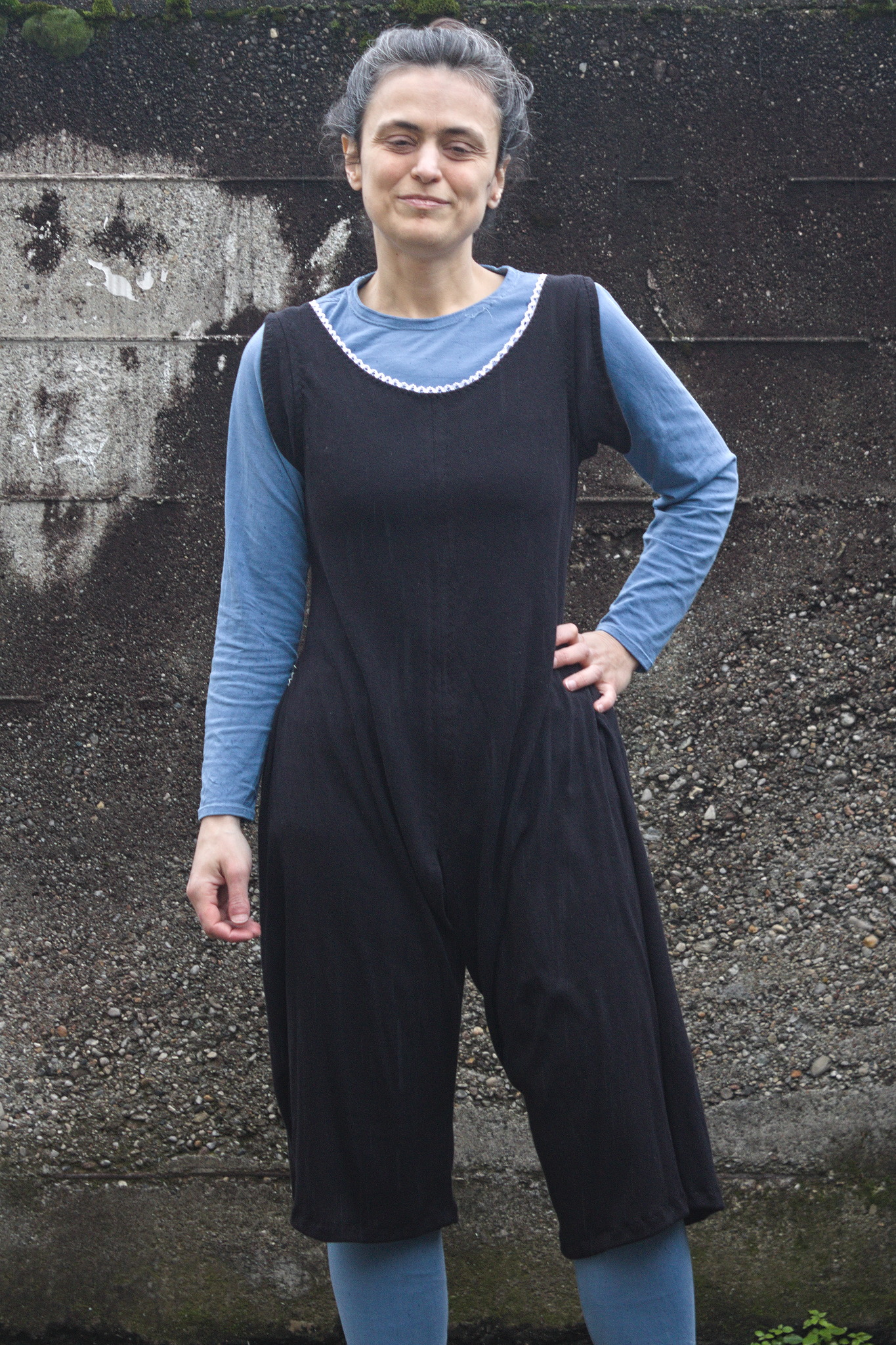 I suspect that the linen one will get worn a lot this summer (linen on the skin. nothing else need to be said), while the cotton one will be stored away for winter. And then maybe I may make a couple more, if I find out that I m using it enough.
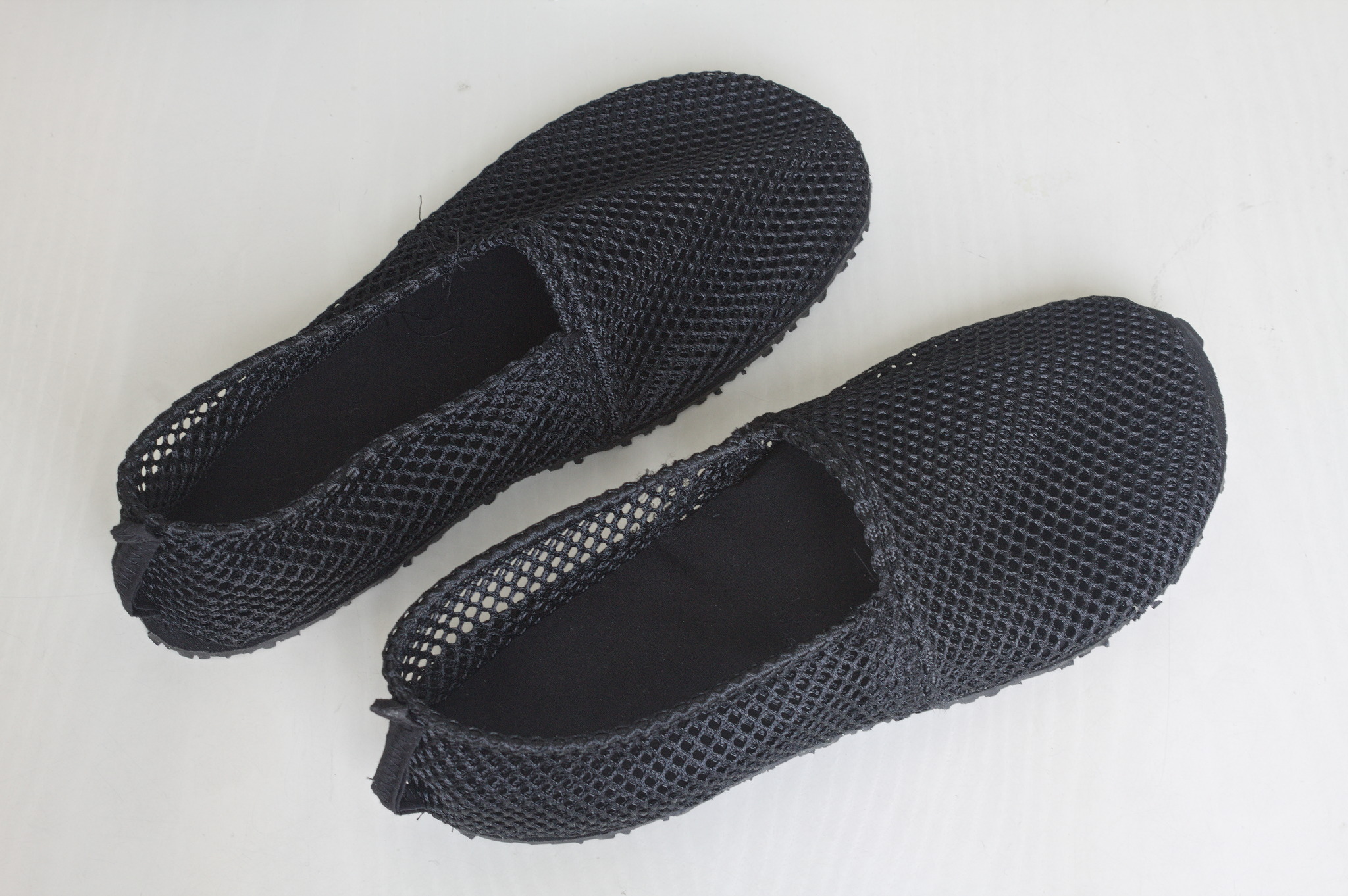 When I travel for a few days I don t usually
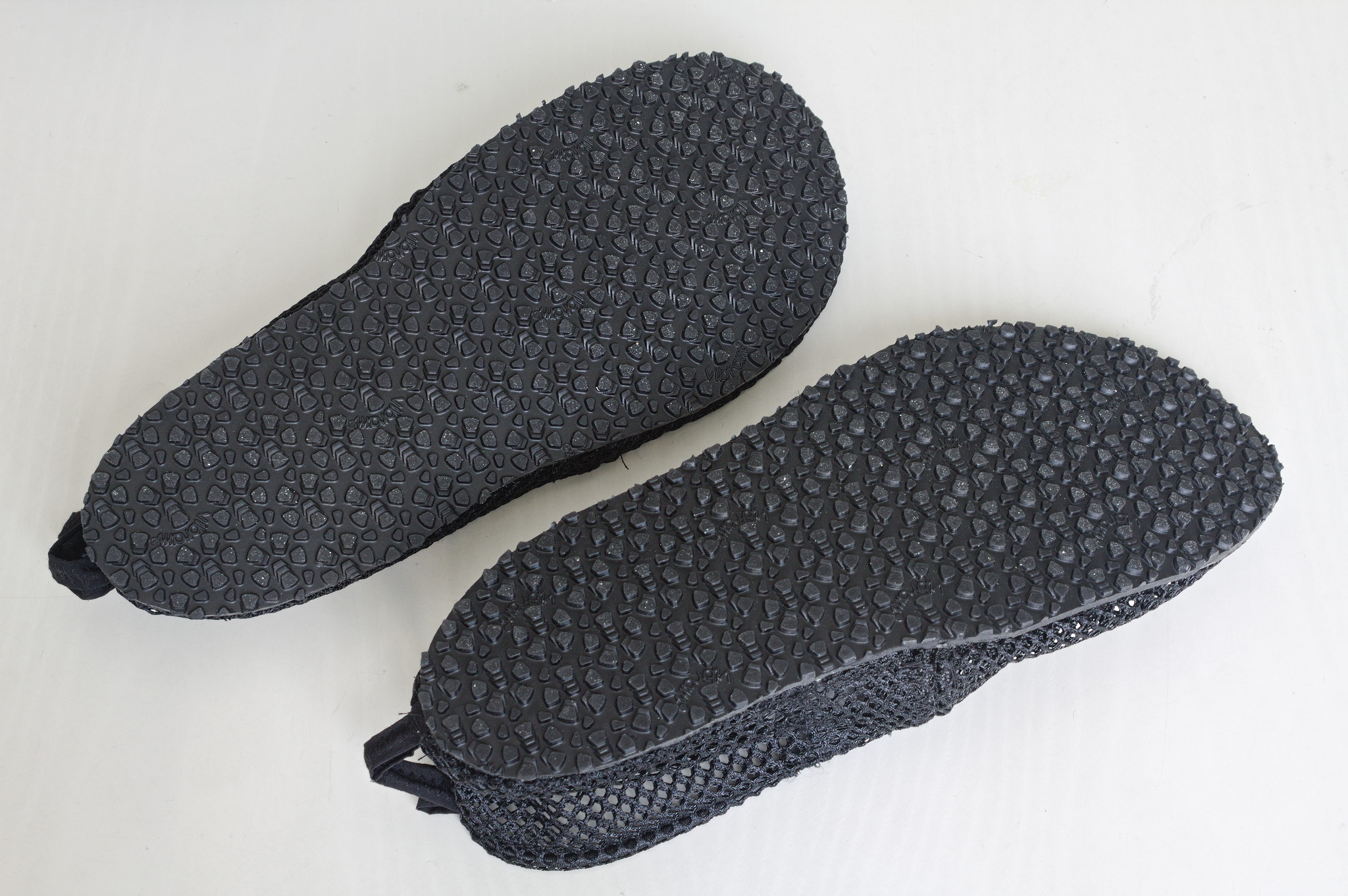 For the soles I may have gone a bit overboard with the vibram claw, but:
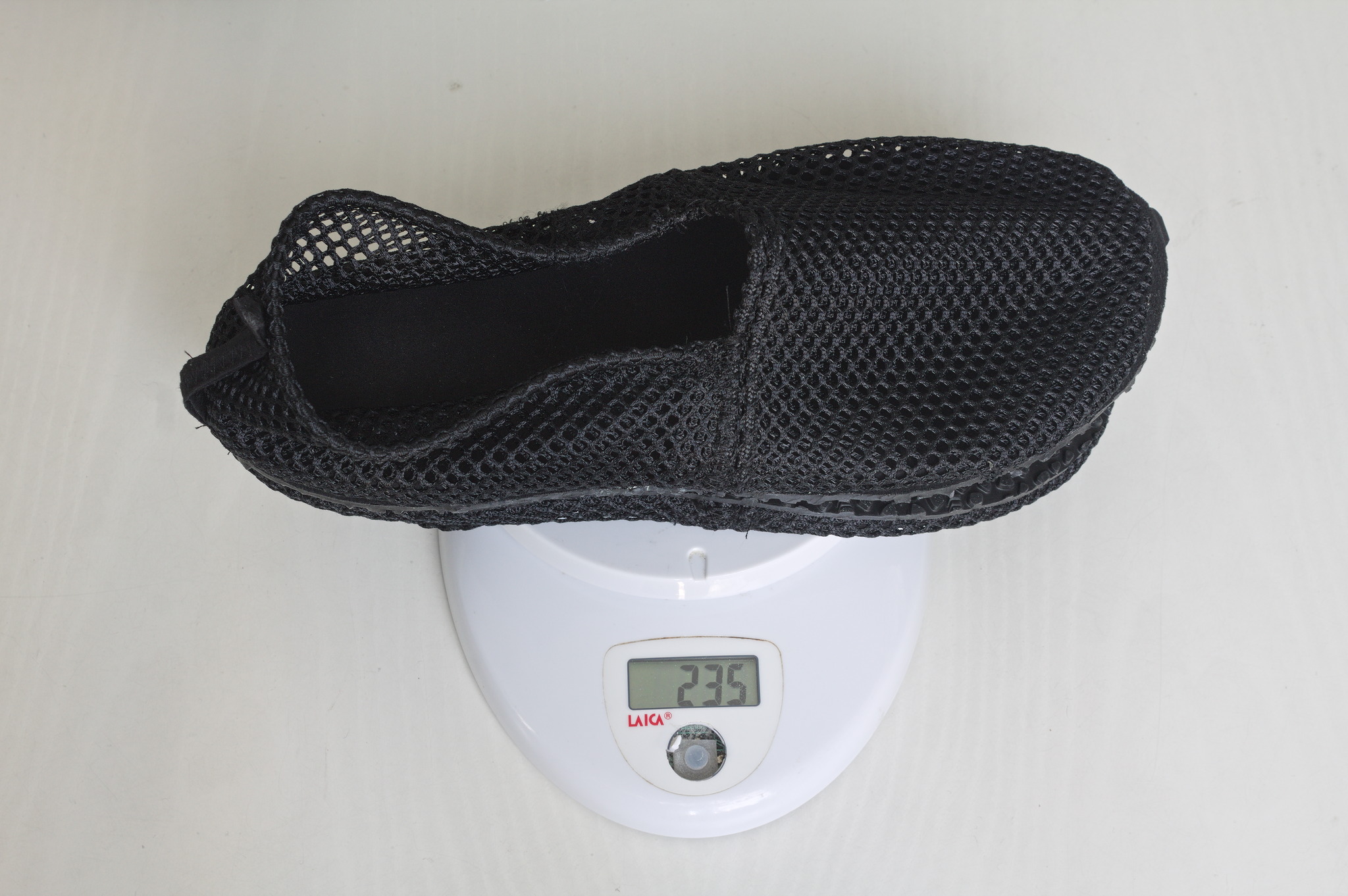 As for the finished weight, at 235 g for the pair I thought I could do better, but apparently shoes are considered ultralight if they are around 500 g? Using just one layer of mesh rather than two would probably help, but it would have required a few changes to the pattern, and anyway I don t really to carry them around all day.
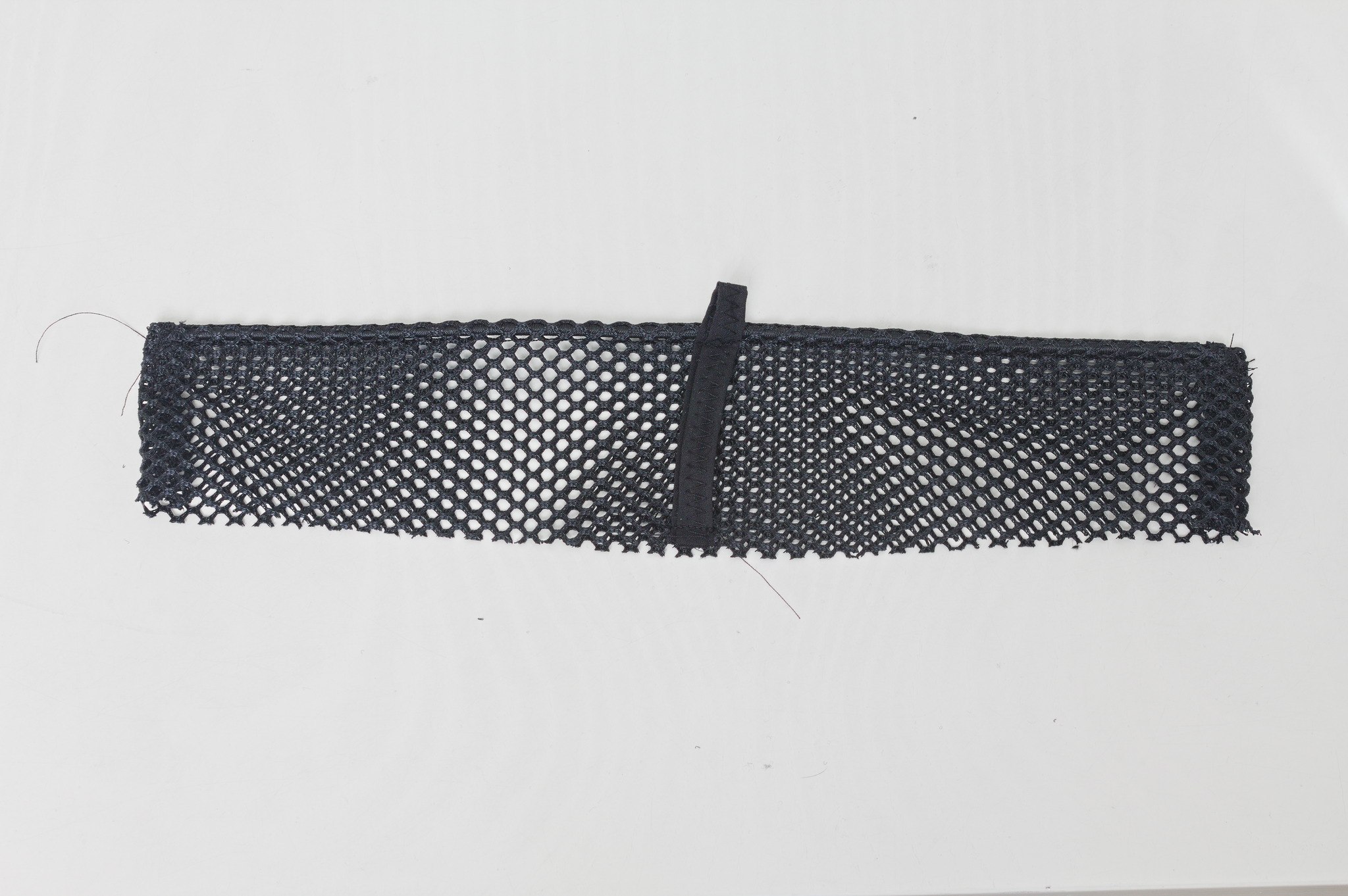 I ve also added a loop of fabric (polycotton) to the centre back to be able to hang the slippers to the backpack when wet or dirty; a bit of narrow webbing may have been better, but I didn t have any in my stash.
The
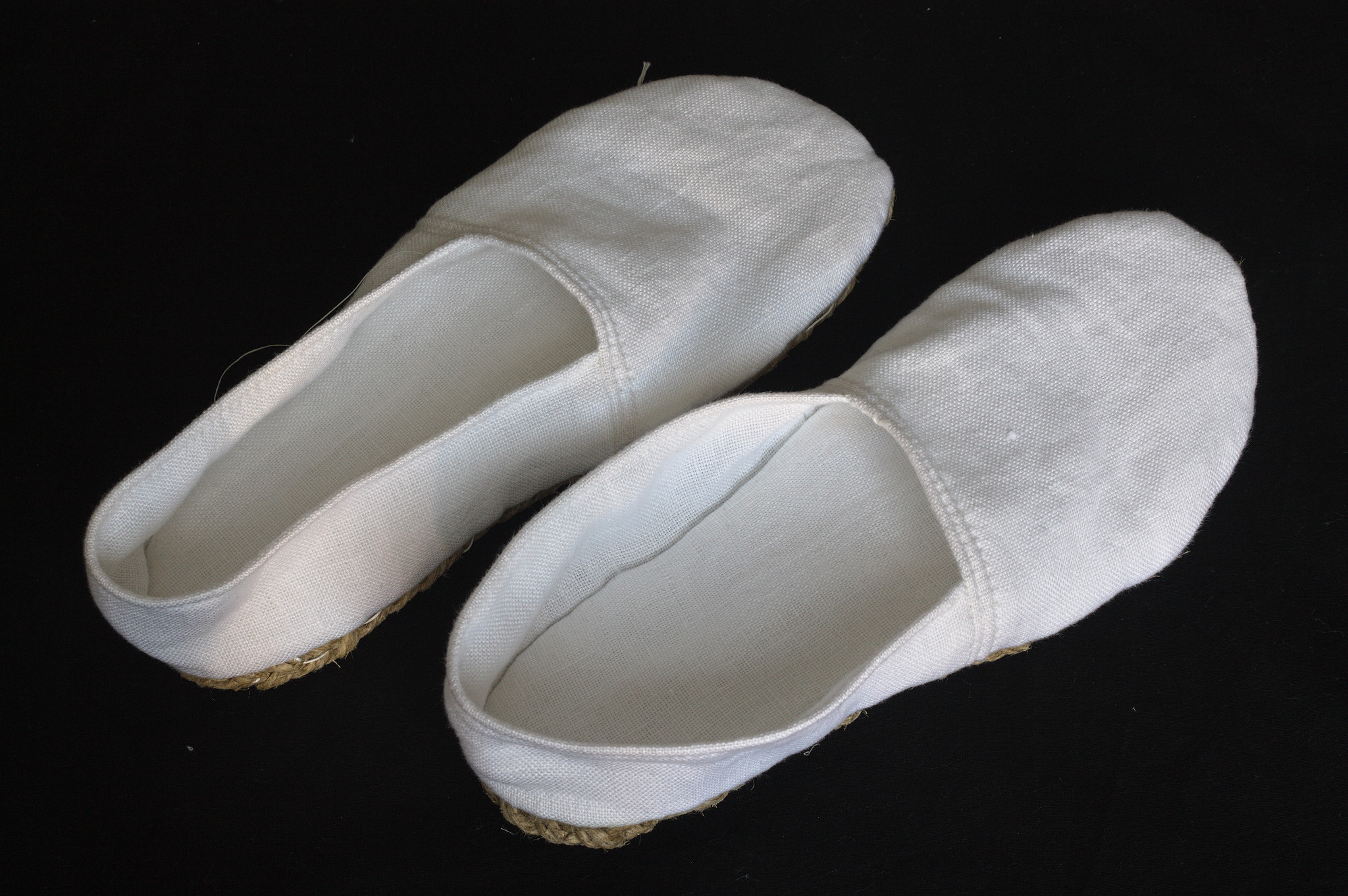 I hate going out to buy shoes. Even more so I hate buying home shoes, which is what I spend most of my life in, also because no matter what I buy they seem to disintegrate after a season or so. So, obviously, I ve been on a quest to make my own.
As a side note, going barefoot (with socks) would only move the wear issue to the socks, so it s not really a solution, and going bare barefoot on ceramic floors is not going to happen, kaythanksbye.
For the winter I m trying to make knit and felted slippers; I ve had partial success, and they should be pretty easy to mend (I ve just had to do the first mend, with darning and needle felting, and it seems to have worked nicely).
For the summer, I ve been thinking of something sewn, and with the warm season approaching (and the winter slippers needing urgent repairs) I decided it was time to work on them.
I already had a shaped (left/right) pattern for a sole from my hiking sandals attempts (a topic for another post), so I started by drafting a front upper, and then I started to have espadrille feeling and decided that a heel guard was needed.
As for fabric, looking around in the most easily accessible part of the Stash I ve found the nice heavyweight linen I m using for my Augusta Stays, of which I still have a lot and which looked almost perfect except for one small detail: it s very white.
I briefly thought about dyeing, but I wanted to start sewing NOW to test the pattern, so, yeah, maybe it will happen one day, or maybe I ll have patchy dust-grey slippers. If I ll ever have a place where I can do woad dyeing a blue pair will happen, however.
Contrary to the typical espadrillas I decided to have a full lining, and some padding between the lining and the sole, using cotton padding leftovers from my ironing board.
To add some structure I also decided to add a few rows of cording (and thus make the uppers in two layers of fabric), to help prevent everything from collapsing flat.
As for the sole, that s something that is still causing me woes: I do have some rubber sole sheets (see hiking sandals above), but I suspect that they require glueing, which I m not sure would work well with the natural fabric uppers and will probably make repairs harder to do.
In the past I tried to make some crocheted rope soles and they were a big failure: they felt really nice on the foot, but they also self-destroyed in a matter of weeks, which is not really the kind of sole I m looking for.
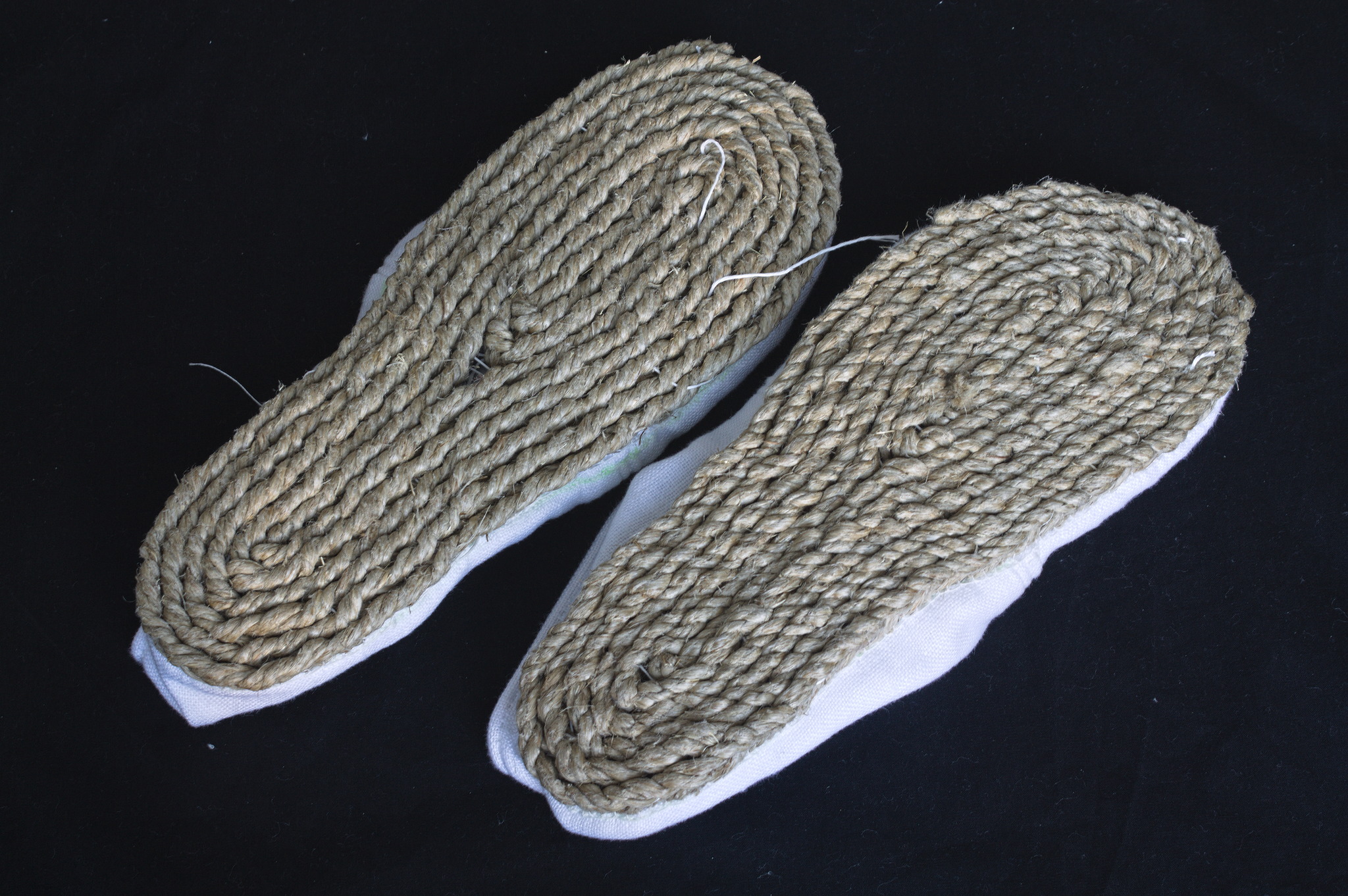 Now I have some ~ 3 mm twine that feels much harsher on the hands while working it (and would probably feel harsher on the feet, but that s what the lining and padding are for), so I hope it may be a bit more resistant, and I tried to make a braided rope sole.
Of course, I have
 For this summer, I ve just made a nice
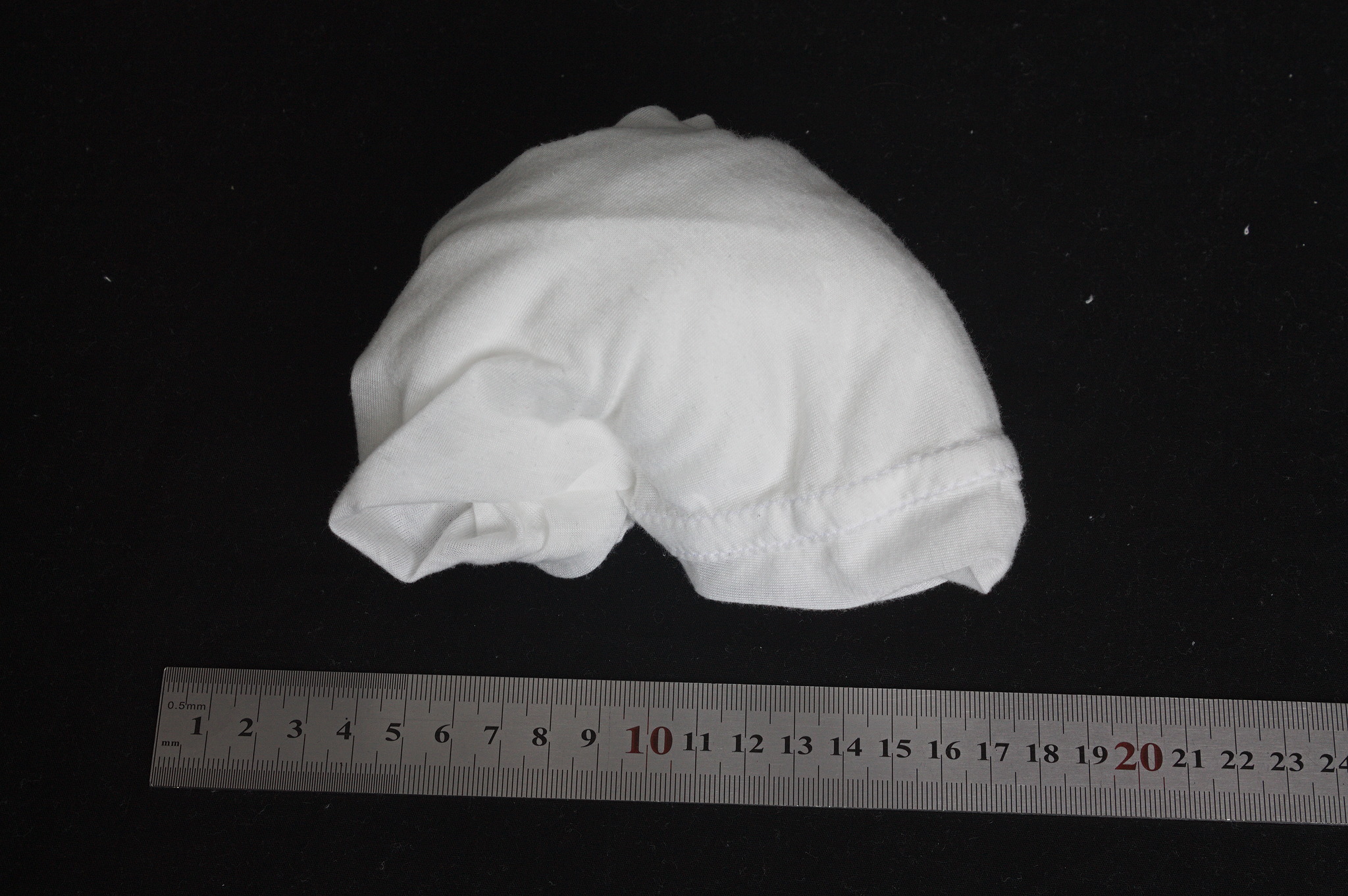 Since the fabric was bought online as a remnant, I didn t exactly know what to expect, and was pleasantly surprised by how soft it is: it feels like touching a cloud.
This however means that it felt like working with a cloud, and, well, let s just say I m happy that both patterns were quite simple and I didn t have to deal with fiddly bits.
I was also not so pleasantly surprised by the fact that part of the fabric had a few small holes as if the end of the roll had been caught on something; I was able to cut everything around the holes, other than a small bit that I hadn t noticed and had to be mended. It s not a big deal, but I suspect it s a sign that this fabric may not be as sturdy as it could have been, and that there will be more mending in the future as I wear it.
And then, when I had finished the set I was faced with another problem: taking pictures. For one thing, worn on their own they aren t exactly decent, and then there was the fact that after a week of late spring weather in March, as I was working on summer clothing the temperature dropped and there was even a hint of rain.
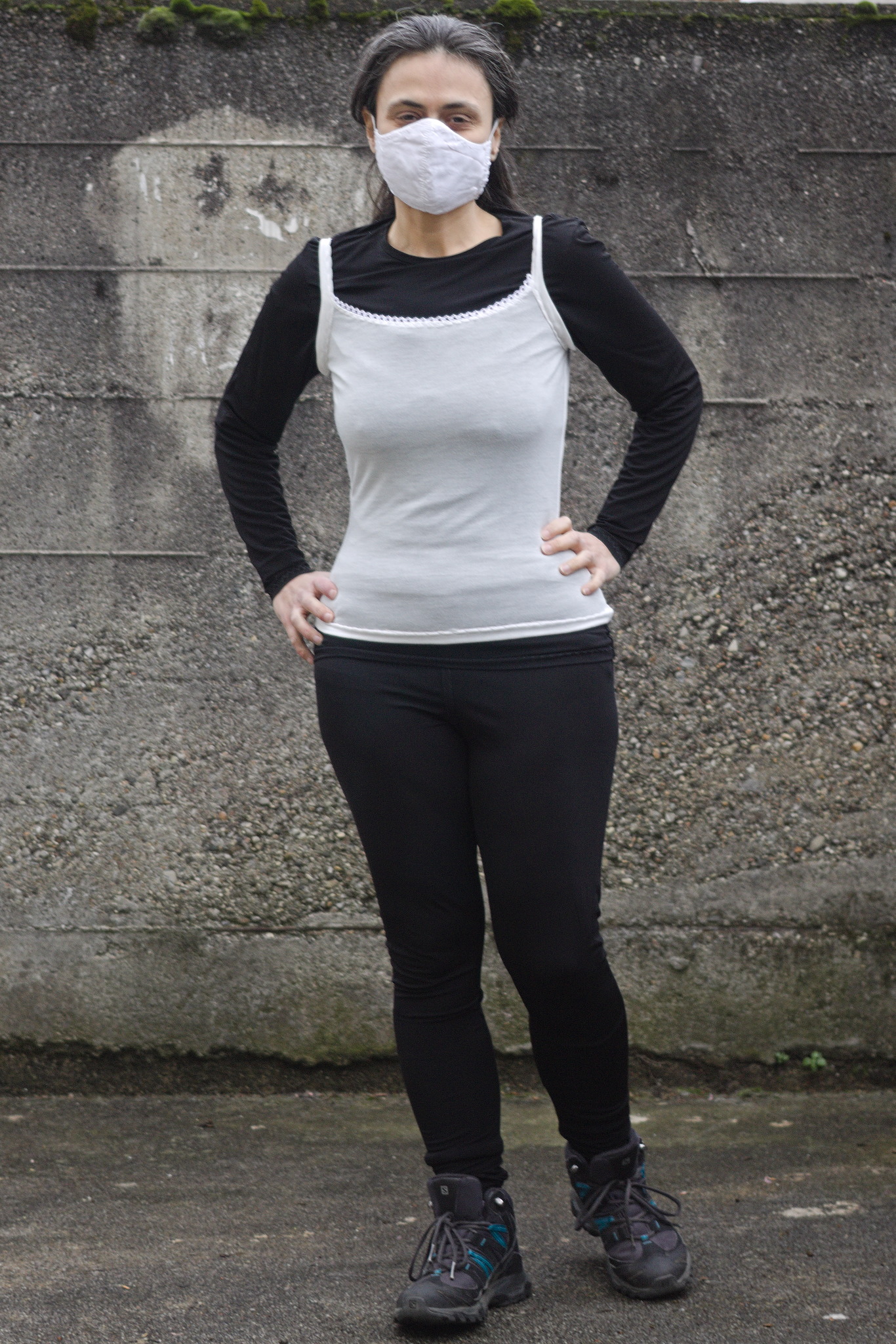 I solved this by wearing the new set on top of another set of fitting top and camisole, with matching
 Still, the pictures were taken in quite a hurry, because I wasn t completely freezing, but still pretty cold.
Anyway, I m off to find some other piece of summer wear to make, hoping that it will bring proper rain. :)
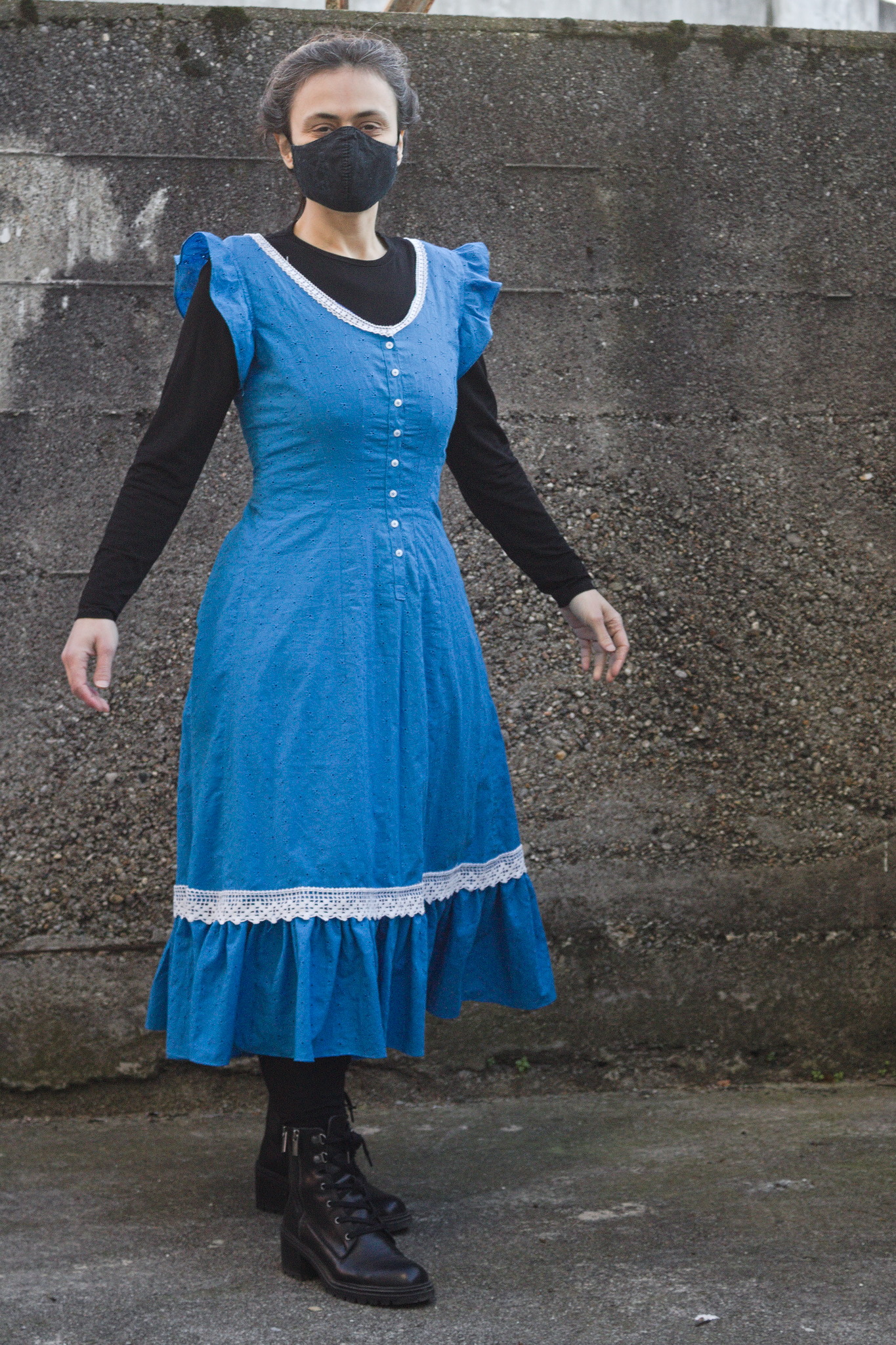 A few years ago a friend told me that her usual fabric shop was closing down and had a sale on all remaining stock.
While being sad for yet another brick and mortar shop that was going to be missed (at least it was because the owners were retiring, not because it wasn t sustainable anymore), of course I couldn t miss the opportunity.
So we drove a few hundred km, had some nice time with a friend that (because of said few hundred km) we rarely see, and spent a few hours looting the corps er helping the shop owner getting rid of stock before their retirement.
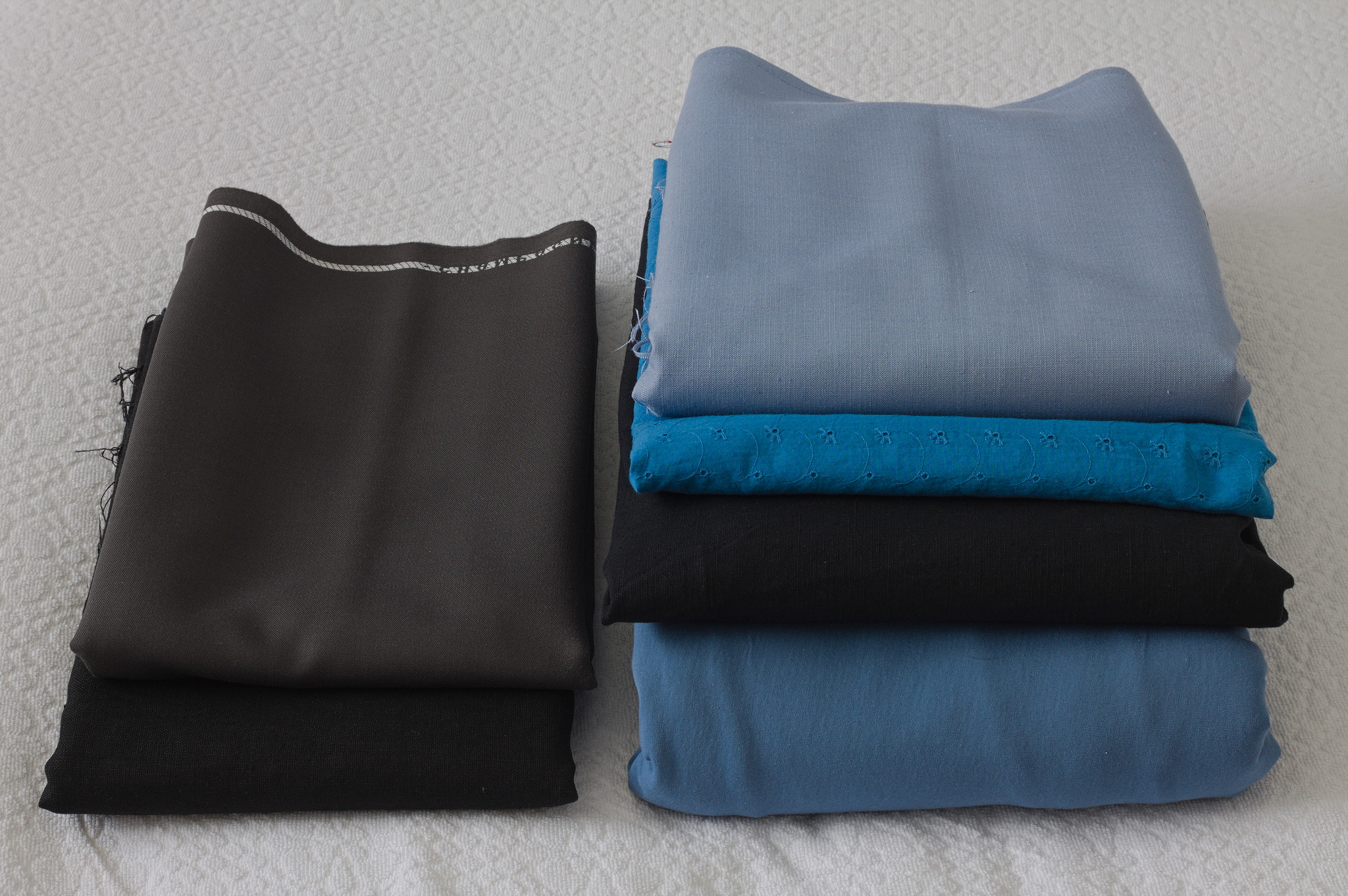 Among other things there was a cut of lightweight swiss embroidery cotton in blue which may or may not have been enthusiastically grabbed with plans of victorian underwear.
It was too nice to be buried under layers and layers of fabric (and I suspect that the embroidery wouldn t feel great directly on the skin under a corset), so the natural fit was something at the corset cover layer, and the fabric was enough for a combination garment of the kind often worn in the later Victorian age to prevent the accumulation of bulk at the waist.
It also has the nice advantage that in this time of corrupted morals it is perfectly suitable as outerwear as a nice summer dress.
Then life happened, the fabric remained in my stash for a long while, but finally this year I have a good late victorian block that I can adapt, and with spring coming it was a good time to start working on the summer wardrobe.
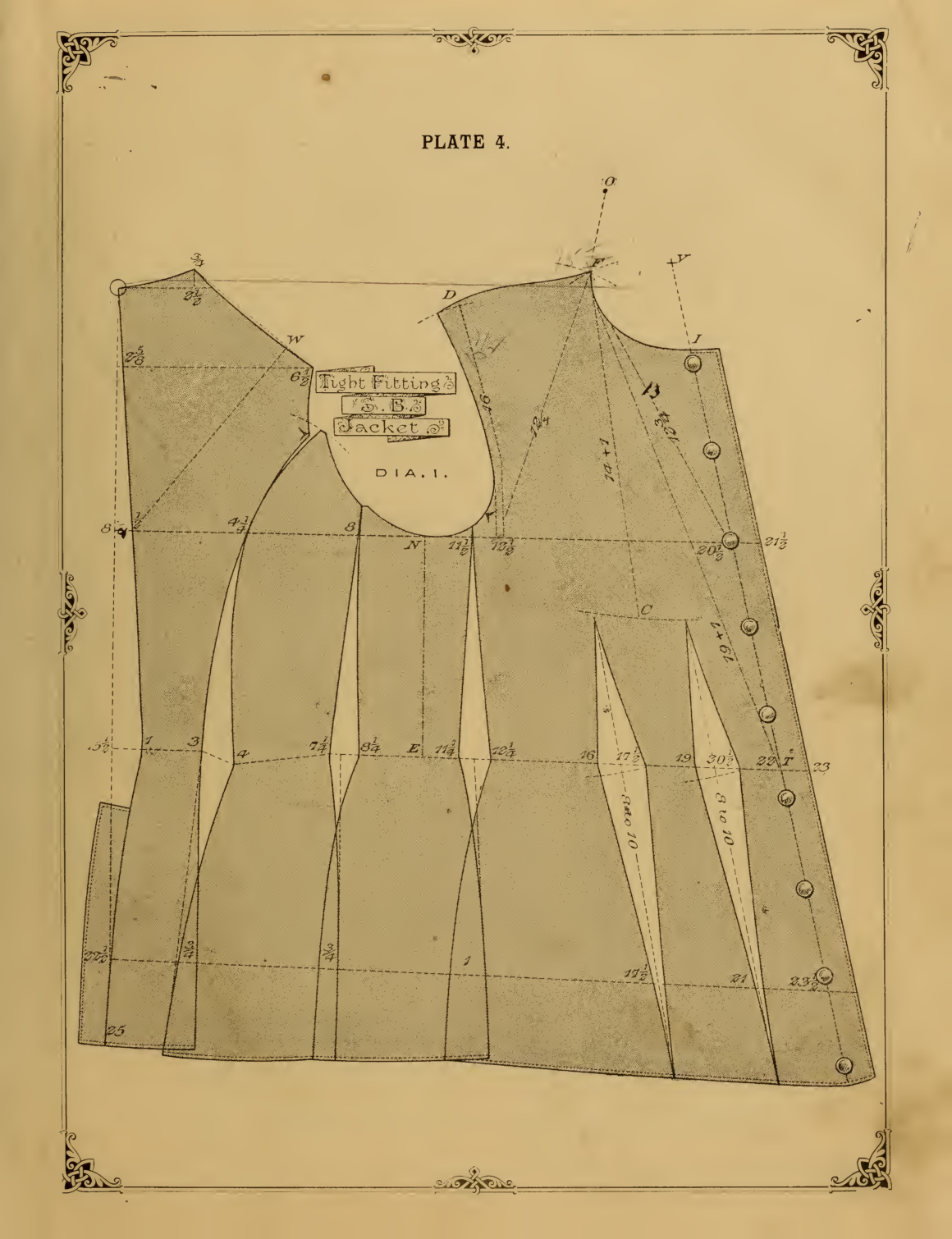 The block I ve used comes from
 The only design choice left was the pocket situation: I wanted to wear this garment both as underwear (where pockets aren t needed, and add unwanted bulk) and outerwear (where no pockets is not an option), and the fabric felt too thin to support the weight of the contents of a full pocket. So I decided to add slits into the seams, with just a modesty placket, and wear
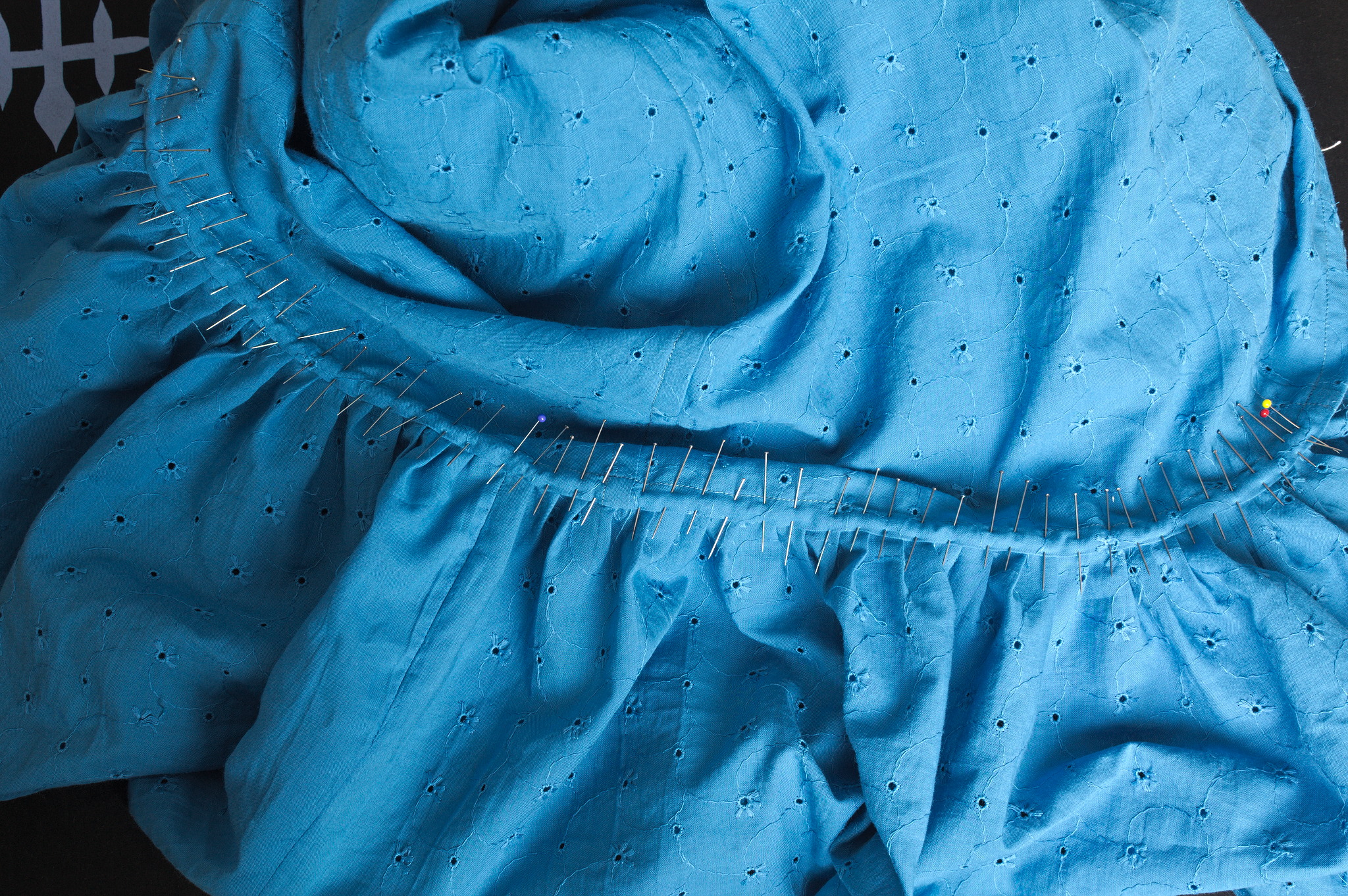 First I had to finish attaching the ruffles, however, and this is when I cursed myself for not using the ruffler foot I have (it would have meant not having selvedges on all seams of the ruffle), and for pleating the ruffle rather than gathering it (I prefer the look of handsewn gathers, but here I m sewing everything by machine, and that s faster, right? (it probably wasn t)).
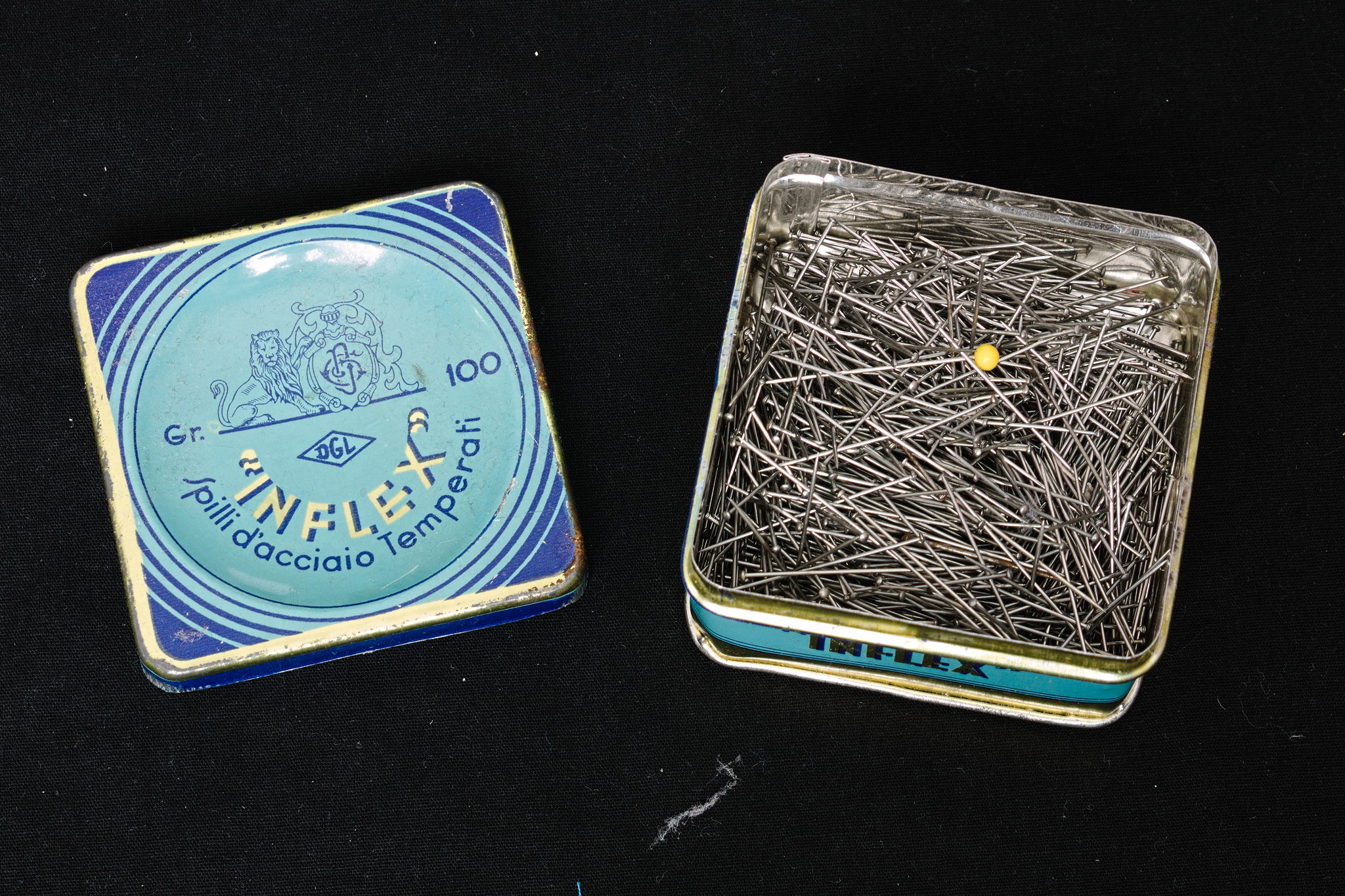 Also, this is where I started to get low on pins, and I had to use the ones from the vintage
 Except, maybe I shouldn t carry heavy items in my pockets when doing it? Oh, well.
I have other plans for the same pattern, but they involve making some crochet lace, so I expect I can aim at making them wearable in summer 2024.
Now I just have to wait for the weather to be a bit warmer, and then I can start enjoing this one.
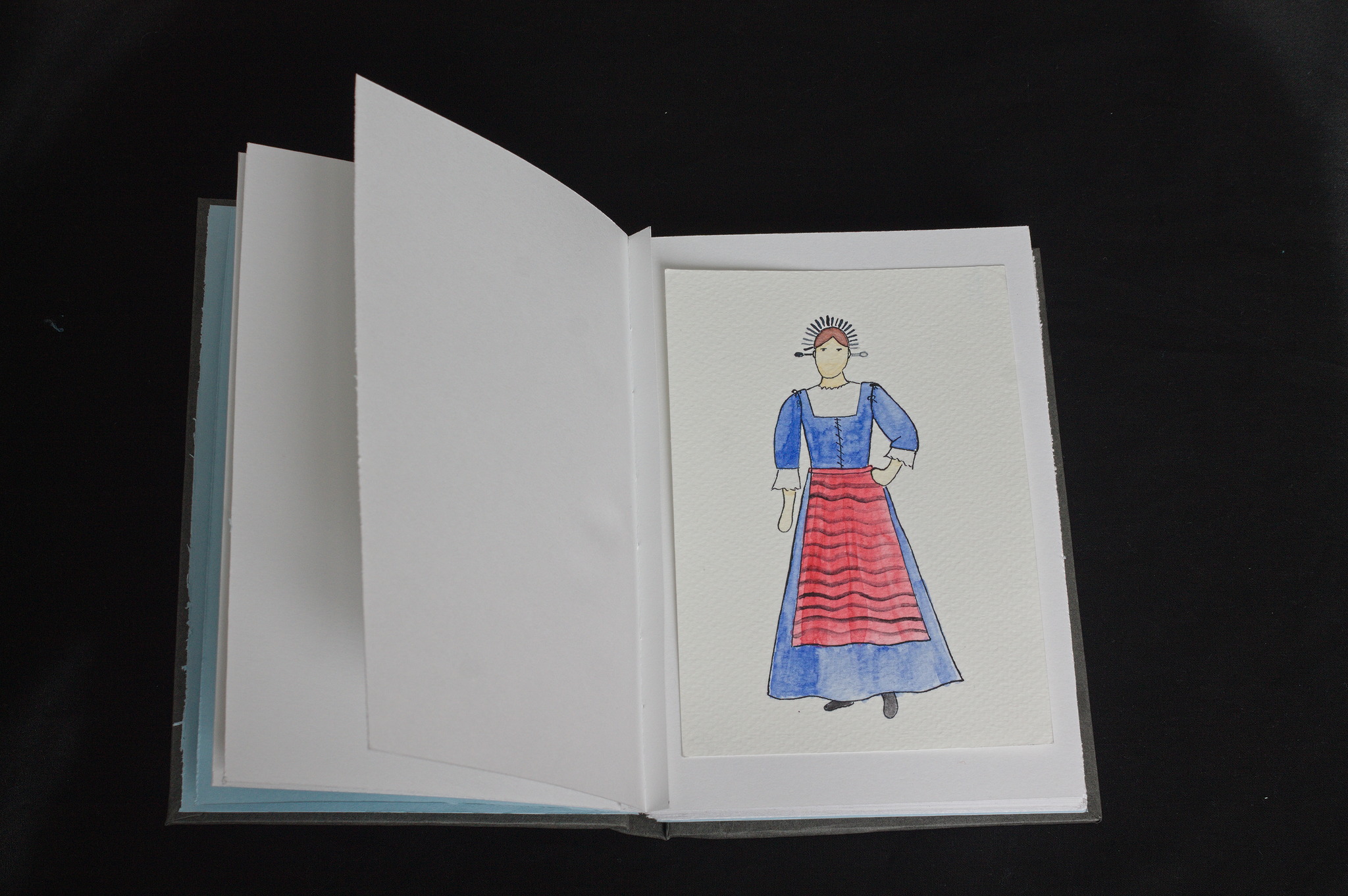 When I paint postcards I tend to start with a draft (usually on lightweight (250 g/m ) watercolour paper, then trace
 Since I m not going to be writing on the pages, I decided to use a relatively cheap 200 g / m linoprint paper with a nice feel, and I ve settled on a B6 size (before trimming) to hold A6 postcard drafts.
For the binding I ve decided to use a technique I ve learned from a craft book ages ago that doesn t use tapes, and added a full hard cover in dark grey linen-feel
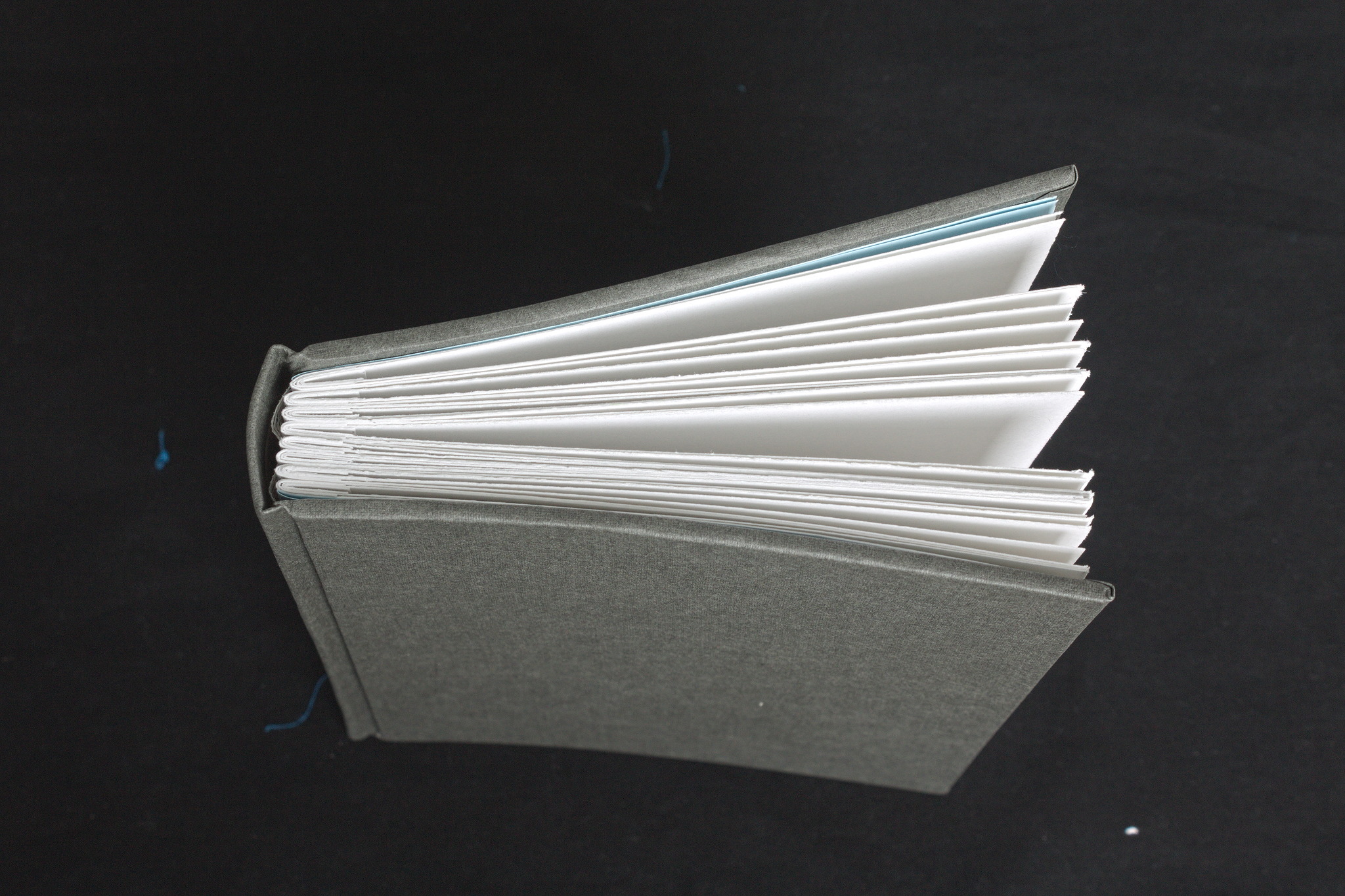 After looking on the internet for solutions, I settled on adding spacers by making a signature composed of paper - spacer - paper - spacer, with the spacers being 2 cm wide, folded in half.
And then, between finishing binding the book and making the cover I utterly forgot to add the head bands. Argh. It s not the first time I make this error.
 I m happy enough with the result. There are things that are easy to improve on in the next iteration (endpapers and head bands), and something in me is not 100% happy with the fact that the spacers aren t placed between every sheet, but there are places with no spacer and places with two of them, but I can t think of (and couldn t find) a way to make them otherwise with a sewn book, unless I sew each individual sheet, which sounds way too bulky (the album I m using for the landscapes was glued, but I didn t really want to go that way).
The size is smaller than the other one I was using and doesn t leave a lot of room around the paintings, but that isn t necessarily a bad thing, because it also means less wasted space.
I believe that one of my next project will be another similar book in a landscape format, for those postcard drafts that aren t landscapes nor clothing related.
And then maybe another? or two? or

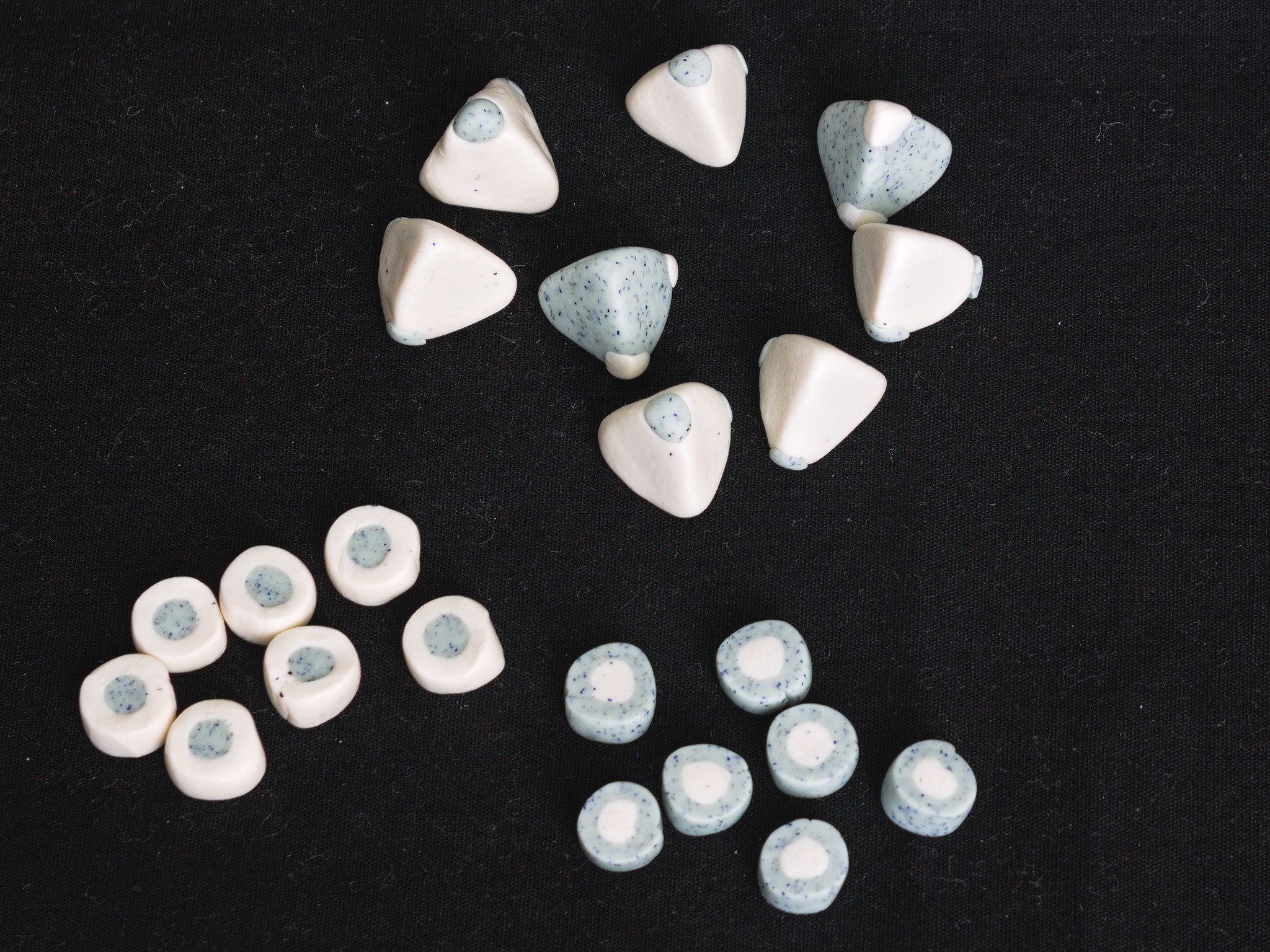 And after baking and trying them I liked them, but they had not been planned in any way, and they were a bit too small for the board, so the next time I was using cernit I tried to make a new set.
And while I was doing that I tried a new shape for the dice, as coins marked with a dot in the middle of one of the sides, because I don t really like tetrahedral dice.
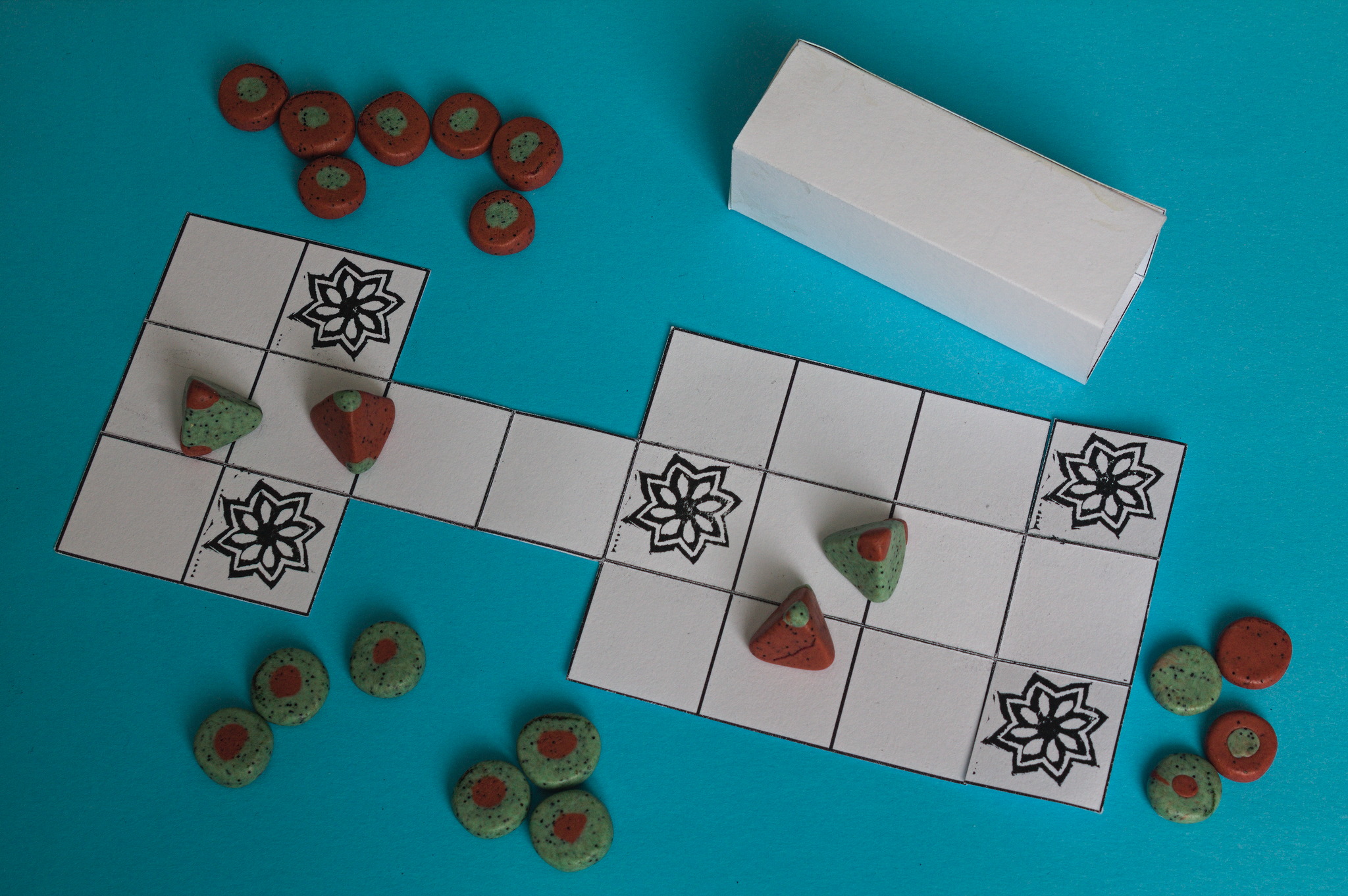 And now, I realized this wasn t going to be my last set, and urgently felt the need for some container to keep them in and avoid missing pieces.
(Yes, in the picture above one piece was already missing. While taking it I didn t realize it, and neither I did when picking up everything to put it away, getting the missing piece and storing it safely together with the rest of the set. It must have been hiding in plain sight nearby, but I will never know where.)
Anyway, back to Inkscape, and to a board printed on scrap paper that I tried to fold up until I came up with a layout that folded up in a small drawer, and then I added a case to wrap around it to keep it closed.

 I played around with the case until it was big enough to actually slide around the folded board, and this is the result, ready to be printed out on A4 paper, cut, folded and glued. (This takes most of the sheet, and I m not sure that the case would still fit around the board/drawer if printed with scaling, so if you want to print it on Letter paper I d recommend to move the pieces around.)

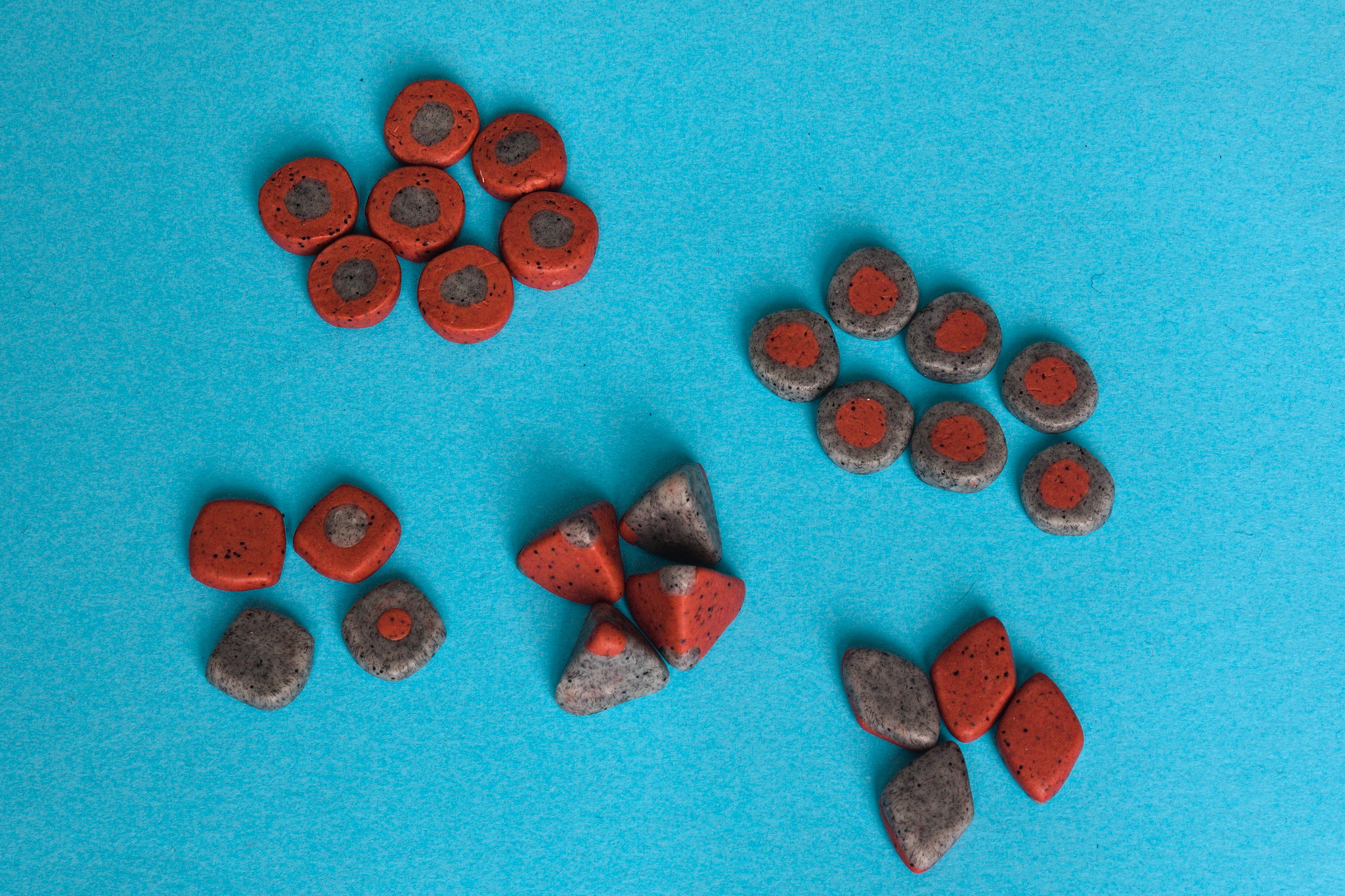 I still used stone effect cernit, but this time in a red/grey scheme that knew I would have liked more, and while I was doing it I tried a few improvements on the randomization devices.
The tetrahedral dice are still the same: they work, it s what they use in the replica sets, so I keep making them even if they re not my first choice.
I ve changed the coins to make them almost square for two reasons, however: one is that the round one tended to roll away into inconvenient places when throwing them with emphasis, and the other one is to make it easier to recognise them from the tokens with no need to flip each one around before starting the game.
The lozenges were a bit of a failure, instead. They work fine when thrown, but I don t think that there is a self-evident way to decide which side should be counted, and the only intuitive way I can think of (count the ones in the player s colour) would be unbalanced.
Speaking of balance issues: of course the hand-modelled dice and coins aren t perfectly balanced but:

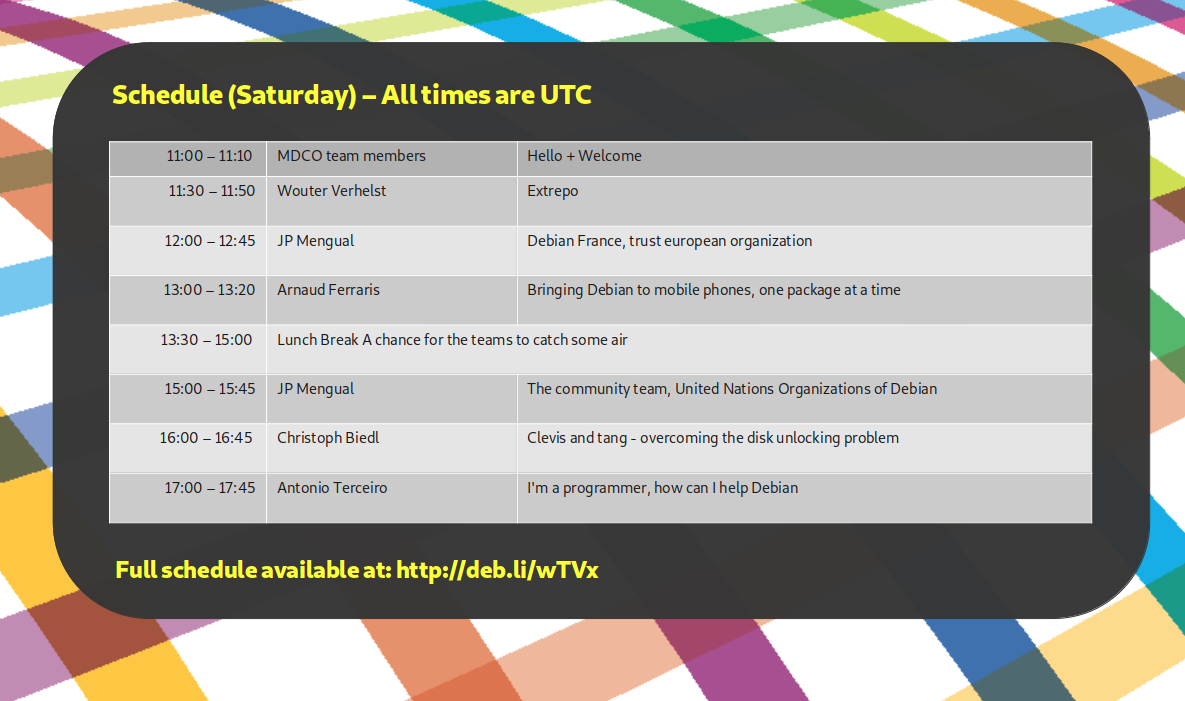
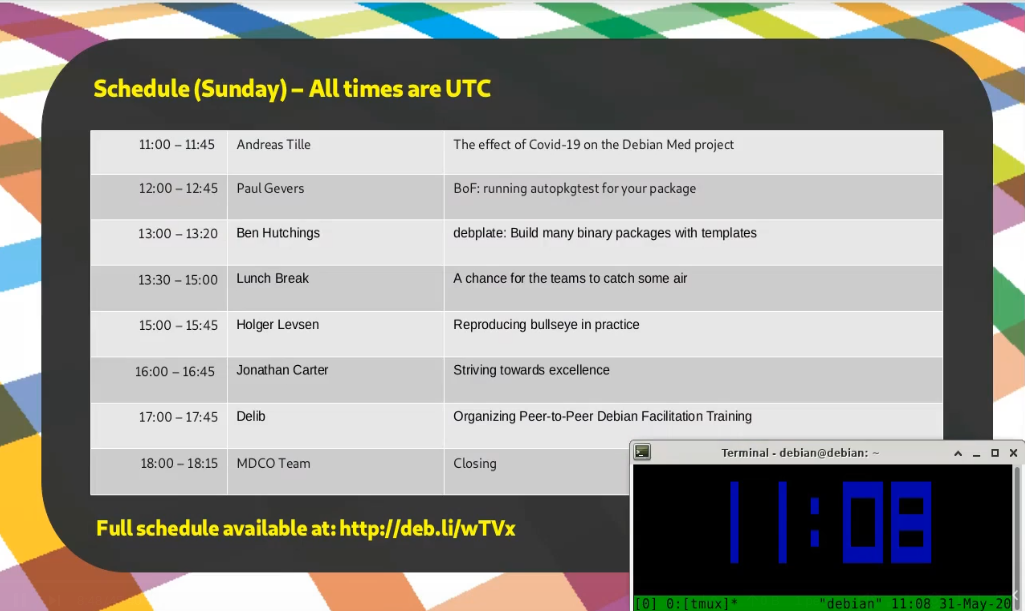
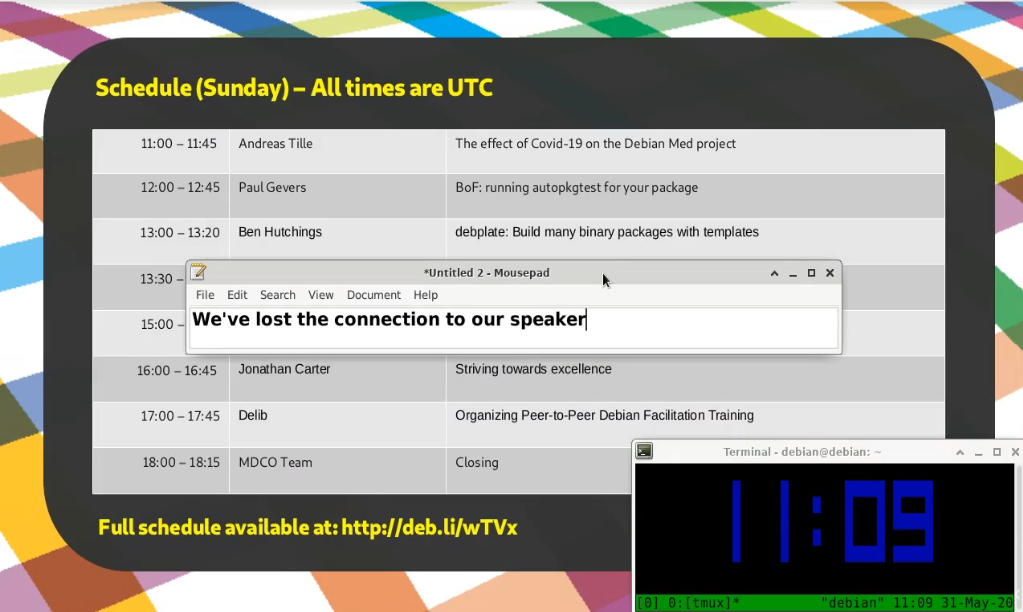
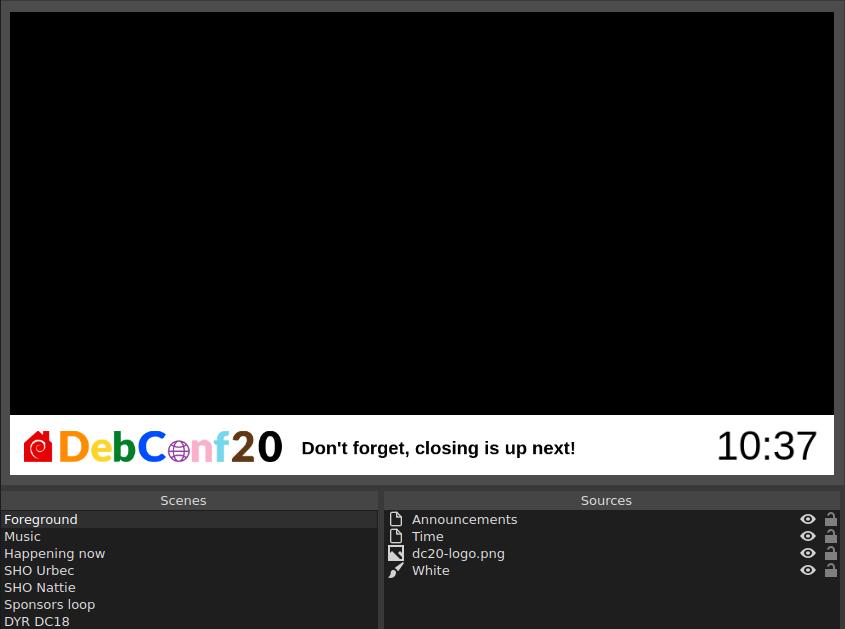
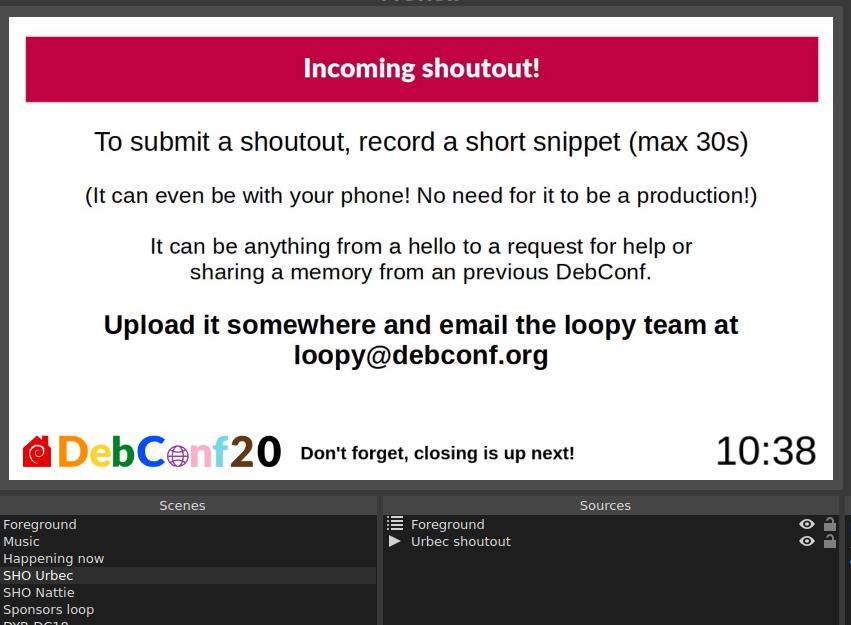
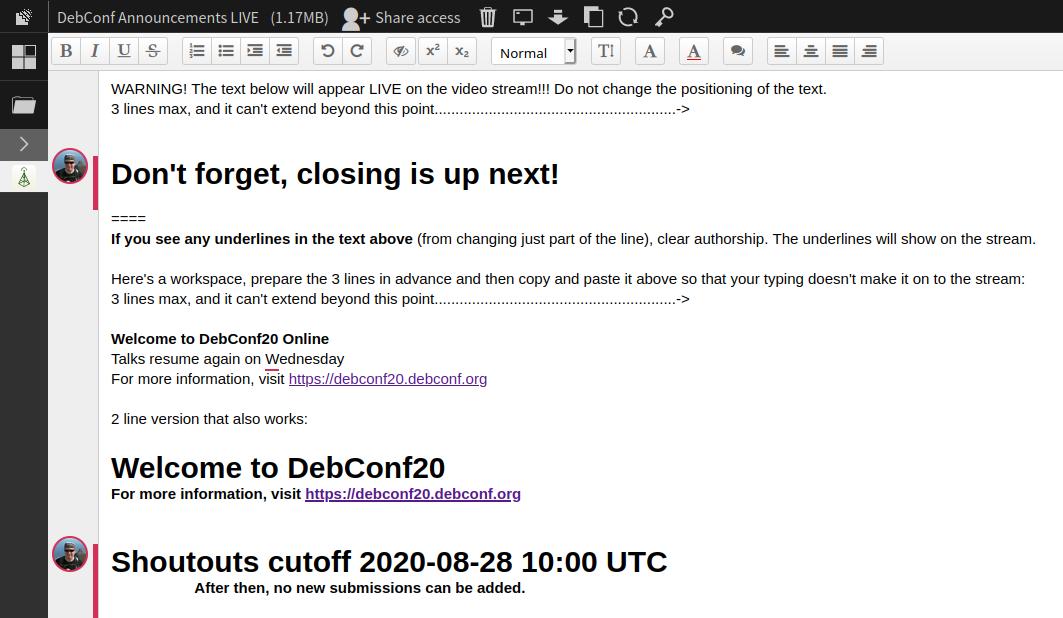
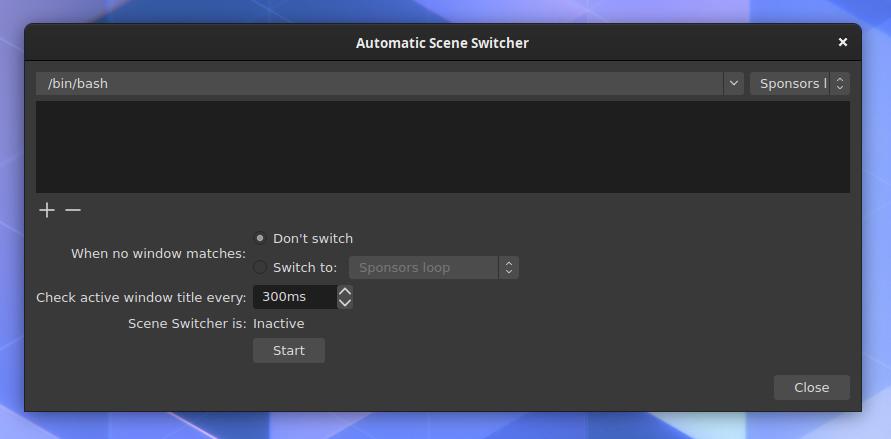
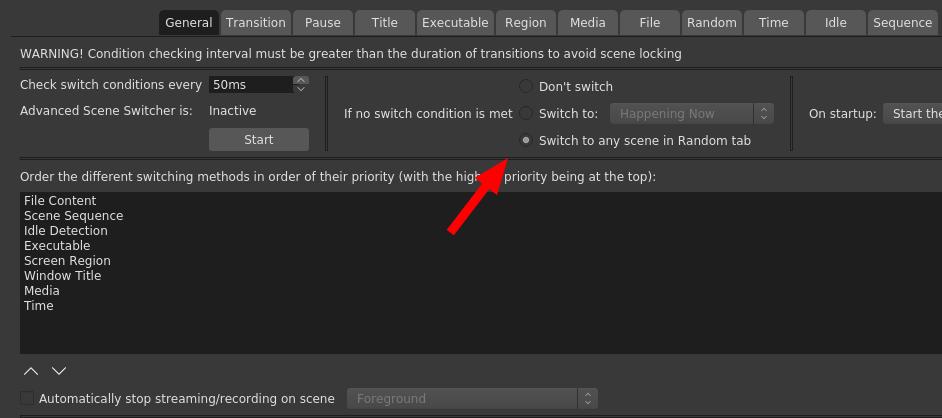
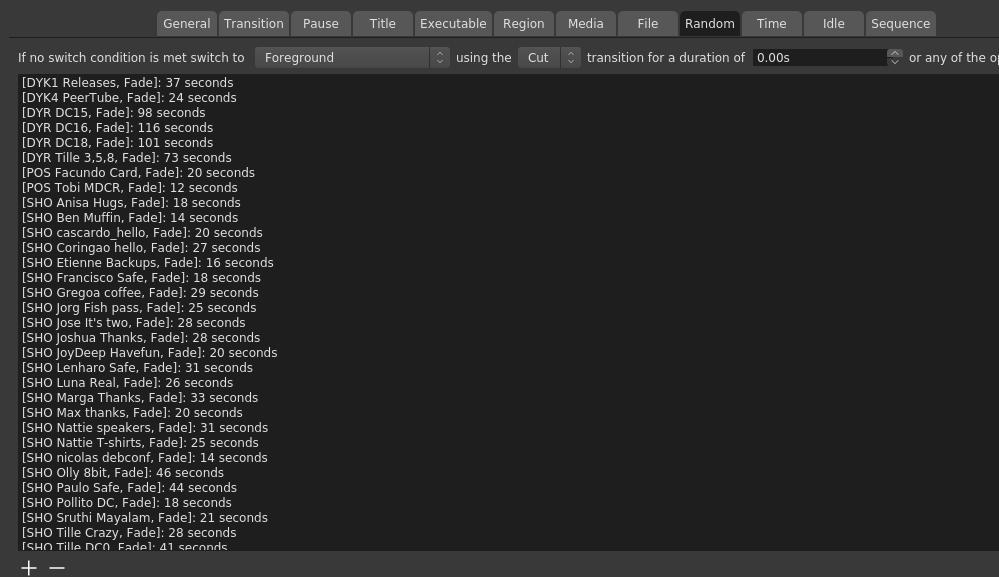
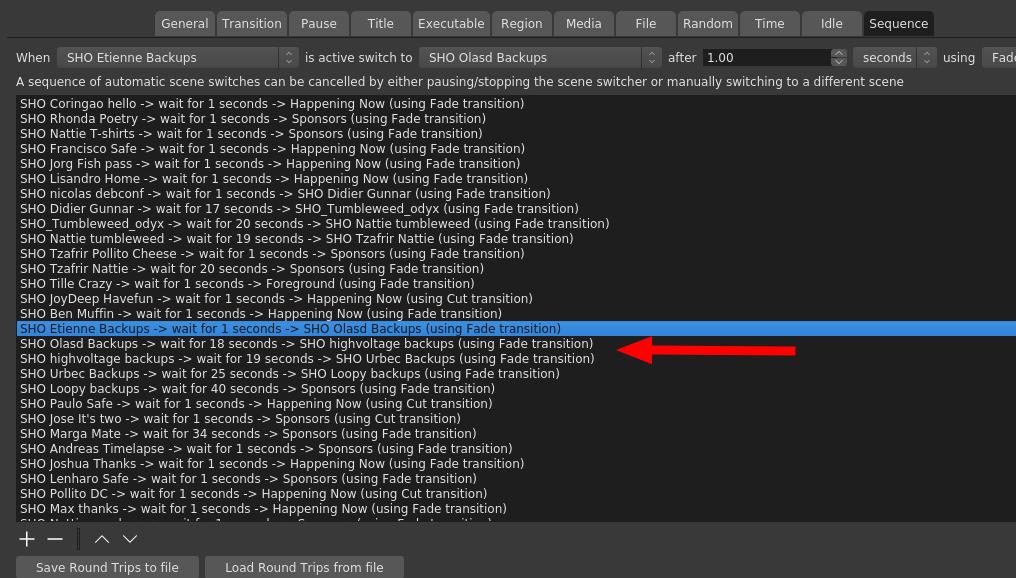
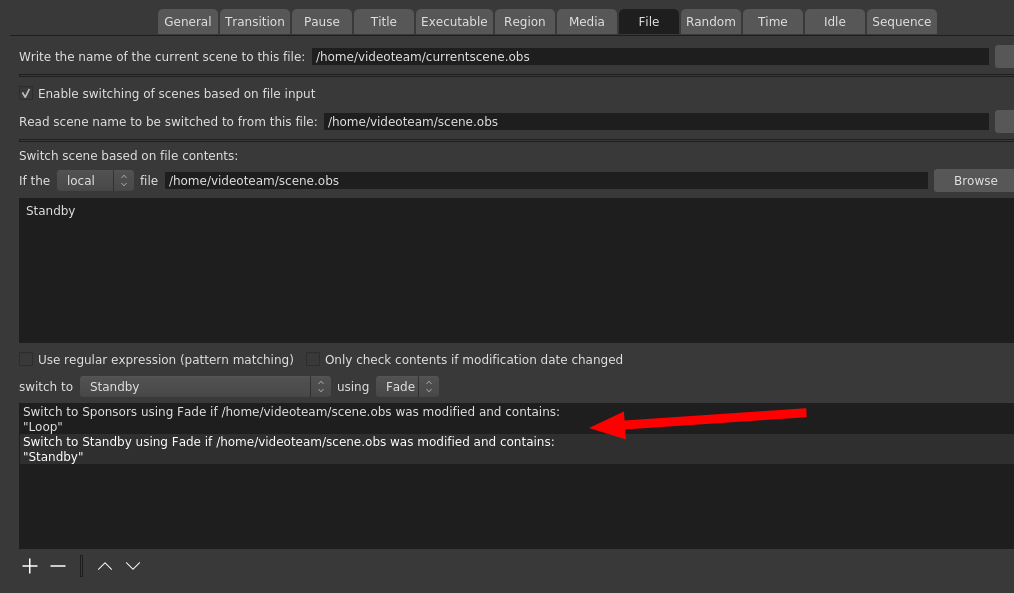
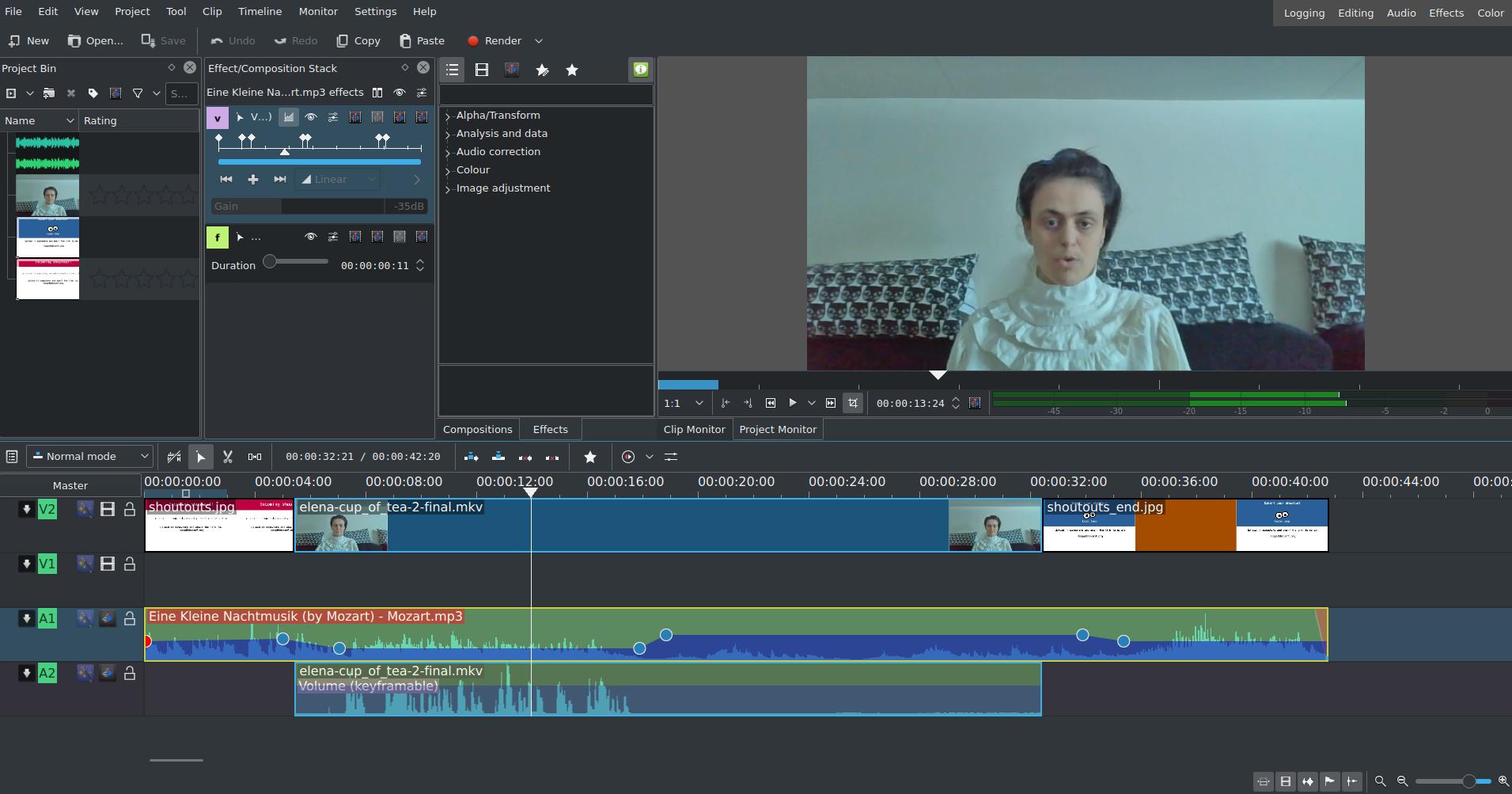

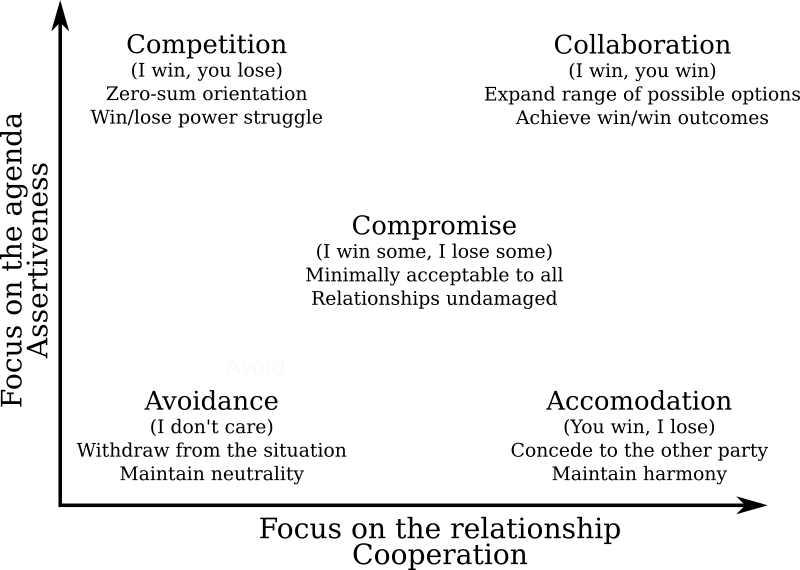 The