Updating old Debian Printing software to meet C23 requirements, by Thorsten Alteholz
The work of Thorsten fell under the motto gcc15 . Due to the introduction of
gcc15 in Debian, the default language version was changed to C23. This means
that for example, function declarations without parameters are no longer allowed.
As old software, which was created with ANSI C (or C89) syntax, made use of such
function declarations, it was a busy month. One could have used something like
-std=c17 as compile flags, but this would have just postponed the tasks. As a
result Thorsten uploaded modernized versions of ink, nm2ppa and rlpr for the
Debian printing team.
Work done to decommission packages.qa.debian.org, by Rapha l Hertzog
Rapha l worked to decommission the old package tracking system
(packages.qa.debian.org). After figuring out
that it was still receiving emails from the bug tracking system
(bugs.debian.org), from multiple debian lists and from
some release team tools, he reached out to the respective teams to either drop
those emails or adjust them so that they are sent to the current Debian Package
Tracker (tracker.debian.org).
rebootstrap uses *-for-host, by Helmut Grohne
Architecture cross bootstrapping is an ongoing effort that has shaped Debian in
various ways over the years. A longereffort to express
toolchain dependencies now bears fruit. When cross compiling, it becomes
important to express what architecture one is compiling for in Build-Depends.
As these packages have become available in trixie , more and more packages add
this extra information and in August, the libtool package
gained
a gfortran-for-host dependency. It was the first package in the essential
build closure to adopt this and required putting the pieces together in
rebootstrap that now has to
build gcc-defaults early on. There still are
hundreds of packages whose dependencies need to be updated
though.
Miscellaneous contributions
Rapha l dropped the Build Log Scan integration in tracker.debian.org
since it was showing stale data for a while as the underlying service has been
discontinued.
Emilio updated pixman to 0.46.4.
Emilio coordinated several transitions, and NMUed guestfs-tools to unblock one.
Stefano uploaded Python 3.14rc3 to Debian unstable. It s not yet used by any
packages, but it allows testing the level of support in packages to begin.
Stefano upgraded almost all of the debian-social infrastructure to Debian trixie .
Stefano attended the Debian Technical Committee meeting.
Stefano uploaded routine upstream updates for a handful of Python packages
(pycparser, beautifulsoup4, platformdirs, pycparser, python-authlib,
python-cffi, python-mitogen, python-resolvelib, python-super-collections,
twine).
Stefano reviewed and responded to DebConf 25 feedback.
Stefano investigated and fixed a request visibility bug in debian-reimbursements
(for admin-altered requests).
Lucas reviewed a couple of merge requests from external contributors for Go
and Ruby packages.
Lucas updated some ruby packages to its latest upstream version (thin,
passenger, and puma is still WIP).
Lucas set up the build environment to run rebuilds of reverse dependencies of
ruby using ruby3.4. As an alternative, he is looking for personal repositories
provided by Debusine to perform this task more easily. This is the preparation
for the transition to ruby3.4 as the default in Debian.
Lucas helped on the next round of the Outreachy internship program.
Helmut sent patches for 30 cross build failures and responded to cross
building support questions on the mailing list.
Helmut continued to maintain rebootstrap.
As gcc version 15 became the default, test jobs for version 14 had to be dropped.
A fair number of patches were applied to packages and could be dropped.
Helmut resumed removing RC-buggy packages from unstable and sponsored a
termrec upload to avoid its deletion. This work was paused to give packages
some time to migrate to forky .
While doing some new upstream release updates, thanks to Debusine s
reverse dependencies autopkgtest
checks, Santiago discovered that paramiko 4.0 will introduce a
regression in libcloud by the drop of support
for the obsolete DSA keys. Santiago finally uploaded to unstable both
paramiko 4.0,
and a regression fix for libcloud.
Santiago has taken part in different discussions and meetings for the
preparation of DebConf 26. The DebConf 26 local team aims to prepare for the
conference with enough time in advance.
Carles kept working on the missing-package-relations and reporting missing
Recommends. He improved the tooling to detect and report bugs creating
269 bugs
and followed up comments. 37 bugs have been resolved, others acknowledged.
The missing Recommends are a mixture of packages that are gone from Debian,
packages that changed name, typos and also packages that were recommended but
are not packaged in Debian.
Carles improved the missing-package-relations to report broken Suggests only
for packages that used to be in Debian but are removed from it now. No bugs have
been created yet for this case but identified 1320 of them.
Colin spent much of the month chasing down build/test regressions in various
Python packages due to other upgrades, particularly relating to pydantic,
python-pytest-asyncio, and rust-pyo3.
It's been a while since the last performance check of Transparent Data Encryption (TDE) in Cybertec's PGEE distribution - that was in 2016. Of course, the question is still interesting, so I did some benchmarks.
Since the difference is really small between running without any extras, with data checksums turned on, and with both encryption and checksums turned on, we need to pick a configuration that will stress-test these features the most. So in the spirit of making PostgreSQL deliberately run slow, I went with only 1MB of shared_buffers with a pgbench workload of scale factor 50. The 770MB of database size will easily fit into RAM. However, having such a small buffer cache setting will cause a lot of cache misses with pages re-read from the OS disk cache, checksums checked, and the page decrypted again. To further increase the effect, I ran pgbench --skip-some-updates so the smaller, in-cache-anyway pgbench tables are not touched. Overall, this yields a pretty consistent buffer cache hit rate of only 82.8%.
Here are the PGEE 17.6 tps (transactions per second) numbers averaged over a few 1-minute 3-client pgbench runs for different combinations of data checksums on/off, TDE off, and the various supported key bit lengths:
no checksums
data checksums
no TDE
2455,6
100,00 %
2449,7
99,76 %
128 bits
2440,9
99,40 %
2443,3
99,50 %
192 bits
2439,6
99,35 %
2446,1
99,61 %
256 bits
2450,3
99,78 %
2443,1
99,49 %
There is a lot of noise in the individual runtimes before averaging, so the numbers must be viewed with some care (192-bit TDE is certainly not faster with checksums than without), but if we dare to interpret these tiny differences, we can conclude the following:
The cost of enabling data checksums on this bad-cache-ratio workload is about 0.25 %.
The cost of enabling both TDE encryption and data checksums on this workload is about 0.5%.
My trip to pgday.at started Wednesday at the airport in D sseldorf. I was there on time, and the plane started with an estimated flight time of about 90 minutes. About half an hour into the flight, the captain announced that we would be landing in 30 minutes - in D sseldorf, because of some unspecified technical problems. Three hours after the original departure time, the plane made another attempt, and we made it to Vienna.
On the plane I had already met Dirk Krautschick who had the great honor of bringing Slonik (in the form of a big extra bag) to the conference, and we took a taxi to the hotel. On the taxi, the next surprise happened: Hans-J rgen Sch nig unfortunately couldn't make it to the conference, and his talks had to be replaced. I had submitted a talk to the conference, but it was not accepted, and neither queued on the reserve list. But two speakers on the reserve list had cancelled, and another was already giving a talk in parallel to the slot that had to be filled, so Pavlo messaged me if I could hold the talk - well of course I could. Before, I didn't have any specific plans for the evening yet, but suddenly I was a speaker, so I joined the folks going to the speakers dinner at the Wiener Grill Haus two corners from the hotel. It was a very nice evening, chatting with a lot of folks from the PostgreSQL community that I had not seen for a while.
Thursday was the conference day. The hotel was a short walk from the venue, the Apothekertrakt in Vienna's Schloss Sch nbrunn. The courtyard was already filled with visitors registering for the conference. Since I originally didn't have a talk scheduled, I had signed up to volunteer for a shift as room host. We got our badge and swag bag, and I changed into the "crew" T-shirt.
The opening and sponsor keynotes took place in the main room, the Orangerie. We were over 100 people in the room, but apparently still not enough to really fill it, so the acoustics with some echo made it a bit difficult to understand everything. I hope that part can be improved for next time (which is planned to happen!).
I was host for the Maximilian room, where the sponsor sessions were scheduled in the morning. The first talk was by our Peter Hofer, also replacing the absent Hans. He had only joined the company at the beginning of the same week, and was already tasked to give Hans' talk on PostgreSQL as Open Source. Of course he did well.
Next was Tanmay Sinha from Readyset. They are building a system that caches expensive SQL queries and selectively invalidates the cache whenever any data used by these queries changes. Whenever actually fixing the application isn't feasible, that system looks like an interesting alternative to manually maintaining materialized views, or perhaps using pg_ivm.
After lunch, I went to Federico Campoli's Mastering Index Performance, but really spent the time polishing the slides for my talk. I had given the original version at pgconf.de in Berlin in May, and the slides were still in German, so I had to do some translating. Luckily, most slides are just git commit messages, so the effort was manageable.
The next slot was mine, talking about Modern VACUUM. I started with a recap of MVCC, vacuum and freezing in PostgreSQL, and then showed how over the past years, the system was updated to be more focused (the PostgreSQL 8.4 visibility map tells vacuum which pages to visit), faster (12 made autovacuum run 10 times faster by default), less scary (14 has an emergency mode where freezing switches to maximum speed if it runs out of time; 16 makes freezing create much less WAL) and more performant (17 makes vacuum use much less memory). In summary, there is still room for the DBA to tune some knobs (for example, the default autovacuum_max_workers=3 isn't much), but the vacuum default settings are pretty much okay these days for average workloads. Specific workloads still have a whopping 31 postgresql.conf settings at their disposal just for vacuum.
Right after my talk, there was another vacuum talk: When Autovacuum Met FinOps by Mayuresh Bagayatkar. He added practical advice on tuning the performance in cloud environments. Luckily, our contents did not overlap.
After the coffee break, I was again room host, now for Floor Drees and Contributing to Postgres beyond code. She presented the various ways in which PostgreSQL is more than just the code in the Git repository: translators, web site, system administration, conference organizers, speakers, bloggers, advocates. As a member of the PostgreSQL Contributors Committee, I could only approve and we should closer cooperate in the future to make people's contributions to PostgreSQL more visible and give them the recognition they deserve.
That was already the end of the main talks and everyone rushed to the Orangerie for the lightning talks. My highlight was the Sheldrick Wildlife Trust. Tickets for the conference had included the option to donate for the elephants in Kenya, and the talk presented the trust's work in the elephant orphanage there.
After the conference had officially closed, there was a bonus track: the Celebrity DB Deathmatch, aptly presented by Boriss Mejias. PostgreSQL, MongoDB, CloudDB and Oracle were competing for the grace of a developer. MongoDB couldn't stand the JSON workload, CloudDB was dismissed for handing out new invoices all the time, and Oracle had even brought a lawyer to the stage, but then lost control over a literally 10 meter long contract with too much fine print. In the end, PostgreSQL (played by Floor) won the love of the developer (played by our Svitlana Lytvynenko).
The day closed with a gathering at the Brandauer Schlossbr u - just at the other end of the castle ground, but still a 15min walk away. We enjoyed good beer and Kaiserschmarrn. I went back to the hotel a bit before midnight, but some extended that time quite some bit more.
On Friday, my flight back was only in the afternoon, so I spent some time in morning in the Technikmuseum just next to the hotel, enjoying some old steam engines and a live demonstration of Tesla coils. This time, the flight actually went to the destination, and I was back in D sseldorf in the late afternoon.
In summary, pgday.at was a very nice event in a classy location. Thanks to the organizers for putting in all the work - and next year, Hans will hopefully be present in person!
The post A Trip To Vienna With Surprises appeared first on CYBERTEC PostgreSQL Services & Support.
Preparing for setup.py install deprecation, by Colin Watson
setuptools upstream will be removing the setup.py install command
on 31 October. While this may not trickle down immediately into Debian, it does
mean that in the near future nearly all Python packages will have to use
pybuild-plugin-pyproject (though they don t necessarily have to use
pyproject.toml; this is just a question of how the packaging runs the build
system). Some of the Python team talked about this a bit at DebConf, and Colin
volunteered to write up some notes
on cases where this isn t straightforward. This page will likely grow as the
team works on this problem.
Salsa CI, by Santiago Ruano Rinc n
Santiago fixed some pending issues in the MR that moves the pipeline to sbuild+unshare,
and after several months, Santiago was able to mark the MR as ready. Part of the
recent fixes include handling external repositories,
honoring the RELEASE autodetection from d/changelog
(thanks to Ahmed Siam for spotting the main reason of the issue), and fixing a
regression about the apt resolver for *-backports releases.
Santiago is currently waiting for a final review and approval from other members
of the Salsa CI team, and being able to merge it. Thanks to all the folks who
have helped testing the changes or provided feedback so far. If you want to test
the current MR, you need to include the following pipeline definition in your
project s CI config file:
As a reminder, this MR will make the Salsa CI pipeline build the packages more
similar to how it s built by the Debian official builders. This will also save
some resources, since the default pipeline will have one stage less (the
provisioning) stage, and will make it possible for more projects to be built on
salsa.debian.org (including large projects and
those from the OCaml ecosystem), etc. See the different issues being fixed in
the MR description.
Debian 13 trixie release, by Emilio Pozuelo Monfort
On August 9th, Debian 13 trixie was released, building on two years worth of
updates and bug fixes from hundreds of developers. Emilio helped coordinate the
release, communicating with several teams involved in the process.
DebConf 26 Site Visit, by Stefano Rivera
Stefano visited Santa Fe, Argentina, the site for DebConf 26
next year. The aim of the visit was to help build a local team and see the
conference venue first-hand. Stefano and Nattie represented the DebConf
Committee. The local team organized Debian meetups in Buenos Aires and Santa Fe,
where Stefano presented a talk
on Debian and DebConf. Venues were scouted
and the team met with the university management and local authorities.
Miscellaneous contributions
Rapha l updated tracker.debian.org after the
trixie release to add the new forky release in the set of monitored
distributions.
He also reviewed and deployed the work of Scott Talbert
showing open merge requests from salsa in the action needed panel.
Rapha l reviewed some DEP-3 changes
to modernize the embedded examples in light of the broad git adoption.
Rapha l configured new workflows
on debusine.debian.net to upload to trixie and
trixie-security, and officially announced the service
on debian-devel-announce, inviting Debian developers to try the service for
their next upload to unstable.
Carles created a merge request
for django-compressor upstream to fix an error when concurrent node processing
happened. This will allow removing a workaround
added in openstack-dashboard and avoid the same bug in other projects that use
django-compressor.
Carles prepared a system to detect packages that Recommends packages which
don t exist in unstable. Processed (either reported
or ignored due to mis-detected problems or temporary problems) 16% of the
reports. Will continue next month.
Carles got familiar and gave feedback for the freedict-wikdict package.
Planned contributions with the maintainer to improve the package.
Helmut responded to queries related to /usr-move.
Helmut adapted crossqa.d.n to the release of
trixie .
Helmut diagnosed sufficient failures in rebootstrap
to make it work with gcc-15.
Faidon discovered that the Multi-Arch hinter would emit confusing hints about
:any annotations. Helmut identified the root cause to be the handling of
virtual packages and fixed it.
Colin upgraded about 70 Python packages to new upstream versions, which is
around 10% of the backlog; this included a complicated Pydantic upgrade in
collaboration with the Rust team.
Colin fixed
a bug in debbugs that caused incoming emails to bugs.debian.org with certain
header contents to go missing.
Thorsten uploaded sane-airscan, which was already in experimental, to unstable.
Thorsten created a script to automate the upload of new upstream versions of
foomatic-db. The database contains information about printers and regularly gets
an update. Now it is possible to keep the package more up to date in Debian.
Stefano prepared updates to almost all of his packages that had new versions
waiting to upload to unstable. (beautifulsoup4, hatch-vcs, mkdocs-macros-plugin,
pypy3, python-authlib, python-cffi, python-mitogen, python-pip, python-pipx,
python-progress, python-truststore, python-virtualenv, re2, snowball, soupsieve).
Stefano uploaded two new python3.13 point releases to unstable.
Stefano updated distro-info-data in stable releases, to document the trixie
release and expected EoL dates.
Stefano did some debian.social sysadmin work (keeping up quotas with growing
databases and filesystems).
Stefano supported the Debian treasurers in processing some of the DebConf 25
reimbursements.
Lucas uploaded ruby3.4 to experimental. It was already approved by FTP masters.
Lucas uploaded ruby-defaults to experimental to add support for ruby3.4. It
will allow us to start triggering test rebuilds and catch any FTBFS with ruby3.4.
Lucas did some administrative work for Google Summer of Code (GSoC) and
replied to some queries from mentors and students.
Anupa helped to organize release parties for Debian 13 and Debian Day events.
Anupa did the live coverage for the Debian 13 release and prepared the Bits
post for the release announcement and 32nd Debian Day as part of the Debian
Publicity team.
Anupa attended a Debian Day event
organized by FOSS club SSET as a speaker.
Tobias Frost
did 4.0h (out of 0.0h assigned and 12.0h from previous period), thus carrying over 8.0h to the next month.
Utkarsh Gupta
did 16.0h (out of 22.75h assigned), thus carrying over 6.75h to the next month.
Evolution of the situation
In August, we released 27 DLAs.
The month of August marked the release of Debian 13 (codename trixie ). This is worth noting because it brought with it the return of the customary fast development pace of Debian unstable, which included several contributions from LTS Team members. More on that below.
Of the many security updates which were published (and a few non-security updates as well), some notable ones are highlighted here.
Notable security updates:
gnutls28 prepared by Adrian Bunk, fixes several potential denial of service vulnerabilities
apache2, prepared by Bastien Roucari s, fixes several vulnerabilities including a potential denial of service and SSL/TLS-related access control
mbedtls (original update, regression update) prepared by Andrej Shadura, fixes several potential denial of service and information disclosure vulnerabilities
openjdk-17, prepared by Emilio Pozuelo Monfort, fixes several vulnerabilities which could result in denial of service, information disclosure or weakened TLS connections
Notable non-security updates:
distro-info-data, prepared by Stefano Rivera, adds information concerning future Debian and Ubuntu releases
ca-certificates-java, prepared by Bastien Roucari s, fixes some bugs which could disrupt future updates
The LTS Team continues to welcome the collaboration of maintainers from across the Debian community. The contributions of maintainers from outside the LTS Team include: postgresql-13 (Christoph Berg), sope (Jordi Mallach), thunderbird (Carsten Schoenert), and iperf3 (Roberto Lumbreras).
Finally, LTS Team members also contributed updates of the following packages:
redis (to stable), prepared by Chris Lamb
firebird3.0 (to oldstable and stable), prepared by Adrian Bunk
node-tmp (to oldstable, stable, and unstable), prepared by Adrian Bunk
openjpeg2 (to oldstable, stable, and unstable), prepared by Adrian Bunk
apache2 (to oldstable), prepared by Bastien Roucari s
unbound (to oldstable), prepared by Guilhem Moulin
luajit (to oldstable), prepared by Guilhem Moulin
golang-github-gin-contrib-cors (to oldstable and stable), prepared by Thorsten Alteholz
libcoap3 (to stable), prepared by Thorsten Alteholz
libcommons-lang-java and libcommons-lang3-java (both to unstable), prepared by Daniel Leidert
python-flask-cors (to oldstable), prepared by Daniel Leidert
The LTS Team would especially like to thank our many longtime friends and sponsors for their support and collaboration.
Thanks to our sponsors
Sponsors that joined recently are in bold.
There are times when an email based workflow gets really difficult. One of those times is when discussing projects related to spam and malware detection.
 noahm@debian.org
host stravinsky.debian.org [2001:41b8:202:deb::311:108]
SMTP error from remote mail server after end of data:
550-malware detected: Sanesecurity.Phishing.Fake.30934.1.UNOFFICIAL:
550 message rejected
submit@bugs.debian.org
host stravinsky.debian.org [2001:41b8:202:deb::311:108]
SMTP error from remote mail server after end of data:
550-malware detected: Sanesecurity.Phishing.Fake.30934.1.UNOFFICIAL:
550 message rejected
This was, in fact, a false positive. And now, because reportbug doesn t record outgoing messages locally, I need to retype the whole thing.
(NB. this is not a complaint about the policies deployed on the Debian mail servers; they d be negligent if they didn t implement such policies on today s internet.)
About 95% of my Debian contributions this month were
sponsored by Freexian.
You can also support my work directly via
Liberapay or GitHub
Sponsors.
Python team
forky is
open!
As a result I m starting to think about the upcoming Python
3.14. At some point we ll doubtless do
a full test rebuild, but in advance of that I concluded that one of the most
useful things I could do would be to work on our very long list of packages
with new upstream
versions.
Of course there s no real chance of this ever becoming empty since upstream
maintainers aren t going to stop work for that long, but there are a lot of
packages there where we re quite a long way out of date, and many of those
include fixes that we ll need for 3.14, either directly or by fixing
interactions with new versions of other packages that in turn will need to
be fixed. We can backport changes when we need to, but more often than not
the most efficient way to do things is just to keep up to date.
So, I upgraded these packages to new upstream versions (deep breath):
That s only about 10% of the backlog, but of course others are working on
this too. If we can keep this up for a while then it should help.
I packaged pytest-run-parallel,
pytest-unmagic (still in NEW), and
python-forbiddenfruit (still in NEW),
all needed as new dependencies of various other packages.
setuptools upstream will be removing the setup.py install
command on 31
October. While this may not trickle down immediately into Debian, it does
mean that in the near future nearly all Python packages will have to use
pybuild-plugin-pyproject (note that this does not mean that they
necessarily have to use pyproject.toml; this is just a question of how the
packaging runs the build system). We talked about this a bit at DebConf,
and I said that I d noticed a number of packages where this isn t
straightforward and promised to write up some notes. I wrote the
Python/PybuildPluginPyproject
wiki page for this; I expect to add more bits and pieces to it as I find them.
On that note, I converted several packages to pybuild-plugin-pyproject:
I reviewed Debian defaults: nftables as banaction and systemd as
backend,
but it looked as though nothing actually needed to be changed so we closed
this with no action.
Rust team
Upgrading Pydantic was complicated, and required a rust-pyo3 transition
(which Jelmer Vernoo started and Peter Michael Green has mostly been
driving, thankfully), packaging rust-malloc-size-of (including an upstream
portability fix), and
upgrading several packages to new upstream versions:
Today marks both a milestone and a turning point in my journey with open source software. I m proud to announce the release of KDE Gear 25.08.0 as my final snap package release. You can find all the details about this exciting update at the official KDE announcement.
After much reflection and with a heavy heart, I ve made the difficult decision to retire from most of my open source software work, including snap packaging. This wasn t a choice I made lightly it comes after months of rejections and silence in an industry I ve loved and called home for over 20 years.
Passing the Torch
While I m stepping back, I m thrilled to share that the future of KDE snaps is in excellent hands. Carlos from the Neon team has been working tirelessly to set up snaps on the new infrastructure that KDE has made available. This means building snaps in KDE CI is now possible a significant leap forward for the ecosystem. I ll be helping Carlos get the pipelines properly configured to ensure a smooth transition.
Staying Connected (But Differently)
Though I m stepping away from most development work, I won t be disappearing entirely from the communities that have meant so much to me:
Kubuntu: I ll remain available as a backup, though Rik is doing an absolutely fabulous job getting the latest and greatest KDE packages uploaded. The distribution is in capable hands.
Ubuntu Community Council: I m continuing my involvement here because I ve found myself genuinely enjoying the community side of things. There s something deeply fulfilling about focusing on the human connections that make these projects possible.
Debian: I ll likely be submitting for emeritus status, as I haven t had the time to contribute meaningfully and want to be honest about my current capacity.
The Reality Behind the Decision
This transition isn t just about career fatigue it s about financial reality. I ve spent too many years working for free while struggling to pay my bills. The recent changes in the industry, particularly with AI transforming the web development landscape, have made things even more challenging. Getting traffic to websites now requires extensive social media work and marketing all expected to be done without compensation.
My stint at webwork was good while it lasted, but the changing landscape has made it unsustainable. I ve reached a point where I can t continue doing free work when my family and I are struggling financially. It shouldn t take breaking a limb to receive the donations needed to survive.
A Career That Meant Everything
These 20+ years in open source have been the defining chapter of my professional life. I ve watched communities grow, technologies evolve, and witnessed firsthand the incredible things that happen when passionate people work together. The relationships I ve built, the problems we ve solved together, and the software we ve created have been deeply meaningful.
But I also have to be honest about where I stand today: I cannot compete in the current job market. The industry has changed, and despite my experience and passion, the opportunities just aren t there for someone in my situation.
Looking Forward
Making a career change after two decades is terrifying, but it s also necessary. I need to find a path that can provide financial stability for my family while still allowing me to contribute meaningfully to the world.
If you ve benefited from my work over the years and are in a position to help during this transition, I would be forever grateful for any support. Every contribution, no matter the size, helps ease this difficult period: https://gofund.me/a9c55d8f
Thank You
To everyone who has collaborated with me, tested my packages, filed bug reports, offered encouragement, or simply used the software I ve helped maintain thank you. You ve made these 20+ years worthwhile, and you ve been part of something bigger than any individual contribution.
The open source world will continue to thrive because it s built on the collective passion of thousands of people like Carlos, Rik, and countless others who are carrying the torch forward. While my active development days are ending, the impact of this community will continue long into the future.
With sincere gratitude and fond farewells,
Scarlett Moore
DebConf 25, by Stefano Rivera and Santiago Ruano Rinc n
In July, DebConf 25 was held in Brest, France.
Freexian was a gold sponsor and most of the Freexian team attended the event.
Many fruitful discussions were had amongst our team and within the Debian
community.
DebConf itself was organized by a local team in Brest, that included Santiago
(who now lives in Uruguay). Stefano was also deeply involved in the
organization, as a DebConf committee member, core video team, and the lead
developer for the conference website. Running the conference took an enormous
amount of work, consuming all of Stefano and Santiago s time for most of July.
Lucas Kanashiro was active in the DebConf content team, reviewing talks and
scheduling them. There were many last-minute changes to make during the event.
Anupa Ann Joseph was part of the Debian publicity team doing live coverage of
DebConf 25 and was part of the DebConf 25 content team reviewing the talks.
She also assisted the local team to procure the lanyards.
Recorded sessions presented by Freexian collaborators, often alongside other
friends in Debian, included:
OpenSSH upgrades, by Colin Watson
Towards the end of a release cycle, people tend to do more upgrade testing, and
this sometimes results in interesting problems. Manfred Stock reported
No new SSH connections possible during large part of upgrade to Debian Trixie ,
which would have affected many people upgrading from Debian 12 (bookworm), with
potentially severe consequences for people upgrading remote systems. In fact,
there were two independent problems that each led to much the same symptom:
As part of hardening the OpenSSH server, OpenSSH 9.8 split the monolithic
sshd listener process into two pieces: a minimal network listener (still
called sshd), and an sshd-session process dealing with each individual
session. Before this change, when sshd received an incoming connection, it
forked and re-executed itself with some special parameters to deal with it;
after this change, it forks and executes sshd-session instead, and sshd no
longer accepts the parameters it used to accept for this.
Debian package upgrades happen (roughly) in two phases: first we unpack the new
files onto disk, and then we run some configuration steps which usually include
things like restarting services. Normally this is fine, because the old service
keeps on working until it s restarted. In this case, unpacking the new files
onto disk immediately stopped new SSH connections from working: the old sshd
received the connection and tried to hand it off to a freshly-executed copy of
the new sshd binary on disk, which no longer supports this. This wasn t much
of a problem when upgrading OpenSSH on its own or with a small number of other
packages, but in release upgrades it left a large gap when you can t SSH to the
system any more, and if anything fails in that interval then you could be in
trouble.
After trying a couple of other approaches, Colin landed on the idea of having
the openssh-server package divert /usr/sbin/sshd to
/usr/sbin/sshd.session-split before the unpack step of an upgrade from before
9.8, then removing the diversion and moving the new file into place once it s
ready to restart the service. This reduces the period when new connections fail
to a minimum.
Most OpenSSH processes, including sshd, check for a compatible version of
the OpenSSL library when they start up. This check used to be very picky, among
other things requiring both the major and minor part of the version number to
match. OpenSSL 3 has a better versioning policy,
and so OpenSSH 9.4p1 relaxed this check.
Unfortunately, bookworm shipped with OpenSSH 9.2p1, so as soon as you unpacked
the new OpenSSL library during an upgrade, sshd stopped working. This
couldn t be fixed by a change in trixie; we needed to change bookworm in advance
of the upgrade so that it would tolerate newer versions of OpenSSL, and time was
tight if we wanted this to be available before the release of Debian 13.
Fortunately, there s a
stable-updates
mechanism for exactly this sort of thing, and the stable release managers kindly
accepted Colin s proposal to fix this there.
The net result is that if you apply updates to bookworm (including
stable-updates / bookworm-updates, which is enabled by default) before
starting the upgrade to trixie, everything should be fine.
Cross compilation collaboration, by Helmut Grohne
Supporting cross building in Debian packages touches lots of areas of the
archive and quite some of these matters reside in shared responsibility between
different teams. Hence, DebConf was an ideal opportunity to settle long-standing
issues.
The cross building bof
sparked lively discussions as a significant
fraction of developers employ cross builds to get their work done. In the
trixie release, about two thirds of the packages can satisfy their cross
Build-Depends and about half of the packages actually can be cross built.
Miscellaneous contributions
Rapha l Hertzog updated tracker.debian.org to remove
references to Debian 10 which was moved to
archive.debian.org, and had many fruitful discussions
related to Debusine during DebConf 25.
Carles Pina prepared some data, questions and information for the DebConf 25
l10n and i18n BoF.
Carles Pina demoed and discussed possible next steps for
po-debconf-manager
with different teams in DebConf 25. He also reviewed Catalan translations and
sent them to the packages.
Carles Pina started investigating a django-compressor bug:
reproduced the bug consistently and prepared a PR for django-compressor upstream
(likely more details next month). Looked at packaging
frictionless-py.
Stefano Rivera triaged Python CVEs against pypy3.
Stefano prepared an upload of a new upstream release of pypy3 to Debian
experimental (due to the freeze).
Stefano uploaded python3.14 RC1 to Debian experimental.
Thorsten Alteholz uploaded a new upstream version of sane-airscan to
experimental. He also started to work on a new upstream version of hplip.
Colin backported fixes for CVE-2025-50181
and CVE-2025-50182 in python-urllib3, and
fixed several other release-critical or important bugs in Python team packages.
Lucas uploaded ruby3.4 to experimental as a starting point for the
ruby-defaults transition that will happen after Trixie release.
Lucas coordinated with the Release team the fix of the remaining RC bugs
involving ruby packages, and got them all fixed.
Lucas, as part of the Debian Ruby team, kicked off discussions to improve
internal process/tooling.
Lucas, as part of the Debian Outreach team, engaged in multiple discussions
around internship programs we run and also what else we could do to improve
outreach in the Debian project.
Lucas joined the Local groups BoF during DebConf 25 and shared all the good
experiences from the Brazilian community and committed to help to document
everything to try to support other groups.
Helmut reiterated the multiarch policy proposal
with a lot of help from Nattie Mayer-Hutchings, Rhonda D Vine and Stuart Prescott.
Helmut finished his work on the process based unschroot prototype
that was the main feature of his talk (see above).
Helmut analyzed a multiarch-related glibcupgrade failure
induced by a /usr-move mitigation of systemd and sent a patch and regression
fix both of which reached trixie in time. Thanks to Aurelien Jarno and the
release team for their timely cooperation.
Helmut resurrected an earlier discussion about changing the semantics of
Architecture: all packages in a multiarch context in order to improve the
long-standing interpreter problem. With help from Tollef Fog Heen better
semantics were discovered and agreement was reached with Guillem Jover and
Julian Andres Klode to consider this change. The idea is to record a concrete
architecture for every Architecture: all package in the dpkg database and
enable choosing it as non-native.
Partners holding big jigsaw puzzle pieces flat vector illustration. Successful partnership, communication and collaboration metaphor. Teamwork and business cooperation concept.
I write this in the wake of a personal attack against my work and a project that is near and dear to me. Instead of spreading vile rumors and hearsay, talk to me. I am not known to be hard to talk to and am wide open for productive communication. I am disheartened and would like to share some thoughts of the importance of communication. Thanks for listening.
Open source development thrives on collaboration, shared knowledge, and mutual respect. Yet sometimes, the very passion that drives us to contribute can lead to misunderstandings and conflicts that harm both individuals and the projects we care about. As contributors, maintainers, and community members, we have a responsibility to foster environments where constructive dialogue flourishes.
The Foundation of Healthy Open Source Communities
At its core, open source is about people coming together to build something greater than what any individual could create alone. This collaborative spirit requires more than just technical skills it demands emotional intelligence, empathy, and a commitment to treating one another with dignity and respect.
When disagreements arise and they inevitably will the manner in which we handle them defines the character of our community. Technical debates should focus on the merits of ideas, implementations, and approaches, not on personal attacks or character assassinations conducted behind closed doors.
The Importance of Direct Communication
One of the most damaging patterns in any community is when criticism travels through indirect channels while bypassing the person who could actually address the concerns. When we have legitimate technical disagreements or concerns about someone s work, the constructive path forward is always direct, respectful communication.
Consider these approaches:
Address concerns directly: If you have technical objections to someone s work, engage with them directly through appropriate channels
Focus on specifics: Critique implementations, documentation, or processes not the person behind them
Assume good intentions: Most contributors are doing their best with the time and resources available to them
Offer solutions: Instead of just pointing out problems, suggest constructive alternatives
Supporting Contributors Through Challenges
Open source contributors often juggle their community involvement with work, family, and personal challenges. Many are volunteers giving their time freely, while others may be going through difficult periods in their lives job searching, dealing with health issues, or facing other personal struggles.
During these times, our response as a community matters enormously. A word of encouragement can sustain someone through tough periods, while harsh criticism delivered thoughtlessly can drive away valuable contributors permanently.
Building Resilient Communities
Strong open source communities are built on several key principles:
Transparency in Communication: Discussions about technical decisions should happen in public forums where all stakeholders can participate and learn from the discourse.
Constructive Feedback Culture: Criticism should be specific, actionable, and delivered with the intent to improve rather than to tear down.
Recognition of Contribution: Every contribution, whether it s code, documentation, bug reports, or community support, has value and deserves acknowledgment.
Conflict Resolution Processes: Clear, fair procedures for handling disputes help prevent minor disagreements from escalating into community-damaging conflicts.
The Long View
Many successful open source projects span decades, with contributors coming and going as their life circumstances change. The relationships we build and the culture we create today will determine whether these projects continue to attract and retain the diverse talent they need to thrive.
When we invest in treating each other well even during disagreements we re investing in the long-term health of our projects and communities. We re creating spaces where innovation can flourish because people feel safe to experiment, learn from mistakes, and grow together.
Moving Forward Constructively
If you find yourself in conflict with another community member, consider these steps:
Take a breath: Strong emotions rarely lead to productive outcomes
Seek to understand: What are the underlying concerns or motivations?
Communicate directly: Reach out privately first, then publicly if necessary
Focus on solutions: How can the situation be improved for everyone involved?
Know when to step back: Sometimes the healthiest choice is to disengage from unproductive conflicts
A Call for Better
Open source has given us incredible tools, technologies, and opportunities. The least we can do in return is treat each other with the respect and kindness that makes these collaborative achievements possible.
Every contributor whether they re packaging software, writing documentation, fixing bugs, or supporting users is helping to build something remarkable. Let s make sure our communities are places where that work can continue to flourish, supported by constructive communication and mutual respect.
The next time you encounter work you disagree with, ask yourself: How can I make this better? How can I help this contributor grow? How can I model the kind of community interaction I want to see?
Our projects are only as strong as the communities that support them. Let s build communities worthy of the amazing software we create together.
https://gofund.me/506c910c
How I deployed this Website
I will describe the step-by-step process I followed to make this
static website accessible on the Internet.
DNS
I bought this domain on NameCheap and am using their DNS for now,
where I created these records:
Record Type
Host
Value
A
sergiocipriano.com
201.54.0.17
CNAME
www
sergiocipriano.com
Virtual Machine
I am using Magalu Cloud for
hosting my VM, since employees have free credits.
Besides creating a VM with a public IP, I only needed to set up a
Security Group with the following rules:
Type
Protocol
Port
Direction
CIDR
IPv4 / IPv6
TCP
80
IN
Any IP
IPv4 / IPv6
TCP
443
IN
Any IP
Firewall
The first thing I did in the VM was enabling ufw
(Uncomplicated Firewall).
Enabling ufw without pre-allowing SSH is a common pitfall and can
lock you out of your VM. I did this once :)
A safe way to enable ufw:
$ sudo ufw status verbose
Status: active
Logging: on (low)
Default: deny (incoming), allow (outgoing), disabled (routed)
New profiles: skip
To                           Action      From
--                           ------      ----
22/tcp (OpenSSH)             ALLOW IN    Anywhere
80,443/tcp (Nginx Full)      ALLOW IN    Anywhere
22/tcp (OpenSSH (v6))        ALLOW IN    Anywhere (v6)
80,443/tcp (Nginx Full (v6)) ALLOW IN    Anywhere (v6)
Reverse Proxy
I'm using Nginx as the reverse proxy. Since I use the Debian package,
I just needed to add this file:
/etc/nginx/sites-enabled/sergiocipriano.com
with this content:
server
    listen 443 ssl;      # IPv4
    listen [::]:443 ssl; # IPv6
    server_name sergiocipriano.com www.sergiocipriano.com;
    root /path/to/website/sergiocipriano.com;
    index index.html;
    location /
        try_files $uri /index.html;


server
    listen 80;
    listen [::]:80;
    server_name sergiocipriano.com www.sergiocipriano.com;
    # Redirect all HTTP traffic to HTTPS
    return 301 https://$host$request_uri;
TLS
It's really easy to setup TLS thanks to Let's Encrypt:
$ sudo apt-get install certbot python3-certbot-nginx
$ sudo certbot install --cert-name sergiocipriano.com
Saving debug log to /var/log/letsencrypt/letsencrypt.log
Deploying certificate
Successfully deployed certificate for sergiocipriano.com to /etc/nginx/sites-enabled/sergiocipriano.com
Successfully deployed certificate for www.sergiocipriano.com to /etc/nginx/sites-enabled/sergiocipriano.com
Certbot will edit the nginx configuration with the path to the
certificate.
HTTP Security Headers
I decided to use wapiti, which is a web application vulnerability
scanner, and the report found this problems:
CSP is not set
X-Frame-Options is not set
X-XSS-Protection is not set
X-Content-Type-Options is not set
Strict-Transport-Security is not set
I'll explain one by one:
The Content-Security-Policy header prevents XSS and data injection
by restricting sources of scripts, images, styles, etc.
The X-Frame-Options header prevents a website from being embedded in
iframes (clickjacking).
The X-XSS-Protection header is deprecated. It is recommended
that CSP is used instead of XSS filtering.
The X-Content-Type-Options header stops MIME-type sniffing to
prevent certain attacks.
The Strict-Transport-Security header informs browsers that the host
should only be accessed using HTTPS, and that any future attempts to
access it using HTTP should automatically be upgraded to HTTPS.
Additionally, on future connections to the host, the browser will not
allow the user to bypass secure connection errors, such as an invalid
certificate. HSTS identifies a host by its domain name only.
I added this security headers inside the HTTPS and HTTP server block,
outside the location block, so they apply globally to all responses.
Here's how the Nginx config look like:
I added always to ensure that nginx sends the header
regardless of the response code.
To add Content-Security-Policy header I had to move the css to a
separate file, because browsers block inline styles under strict CSP
unless you allow them explicitly. They're considered unsafe inline
unless you move to a separate file and link it like this:
I ve participated in this year s Google Summer of Code (GSoC)
program and have been working on the small (90h) autopkgtests for the rsync
package project at Debian.
Writing my proposal
Before you can start writing a proposal, you need to select an organization
you want to work with. Since many organizations participate in GSoC, I ve
used the following criteria to narrow things down for me:
Programming language familiarity: For me only Python (preferably) as well
as shell and Go projects would have made sense. While learning another
programming language is cool, I wouldn t be as effective and helpful to
the project as someone who is proficient in the language already.
Standing of the organization: Some of the organizations participating in
GSoC are well-known for the outstanding quality of the software they
produce. Debian is one of them, but so is e.g. the Django Foundation or
PostgreSQL. And my thinking was that the higher the quality of the
organization, the more there is to learn for me as a GSoC student.
Mentor interactions: Apart from the advantage you get from mentor
feedback when writing your proposal (more on that further below), it is
also helpful to gauge how responsive/helpful your potential mentor is
during the application phase. This is important since you will be working
together for a period of at least 2 months; if the mentor-student
communication doesn t work, the GSoC project is going to be difficult.
Free and Open-Source Software (FOSS) communication platforms: I
generally believe that FOSS projects should be built on FOSS
infrastructure. I personally won t run proprietary software
when I want to contribute to FOSS in my spare time.
Be a user of the project: As Eric S. Raymond has pointed out
in his seminal The Cathedral and the Bazaar 25 years ago
Every good work of software starts by scratching a developer s personal
itch.
Once I had some organizations in mind whose projects I d be interested in
working on, I started writing proposals for them. Turns out, I started
writing my proposals way too late: In the end I only managed to hand in a
single one which is risky. Competition for the GSoC projects is fierce
and the more quality (!) proposals you send out, the better your chances are
at getting one. However, don t write proposals for the sake of it: Reviewers
get way too many AI slop proposals already and you will not do yourself a
favor with a low-quality proposal. Take the time to read the
instructions/ideas/problem descriptions the project mentors have provided
and follow their guidelines. Don t hesitate to reach out to project mentors:
In my case, I ve asked Samuel Henrique a few clarification questions whereby
the following (email) discussion has helped me greatly in improving my
proposal. Once I ve finalized my proposal draft, I ve sent it to Samuel for
a review, which again led to some improvements to the final proposal
which I ve uploaded to the GSoC program webpage.
Community bonding period
Once you get the information that you ve been accepted into the GSoC program
(don t take it personally if you don t make it; this was my second attempt
after not making the cut in 2024), get in touch with your prospective mentor
ASAP. Agree upon a communication channel and some response times. Put
yourself in the loop for project news and discussions whatever that means in
the context of your organization: In Debian s case this boiled down to
subscribing to a bunch of mailing lists and IRC channels. Also make sure to
setup a functioning development environment if you haven t done so for
writing the proposal already.
Payoneer setup
The by far most annoying part of GSoC for me. But since you don t have a
choice if you want to get the stipend, you will need to signup for an
account at Payoneer.
In this iteration of GSoC all participants got a personalized link to open a
Payoneer account. When I tried to open an account by following this link, I
got an email after the registration and email verification that my
account is being blocked because Payoneer deems the email adress I gave a
temporary one. Well, the email in question is most certainly anything but
temporary, so I tried to get in touch with the Payoneer support - and ended
up in an LLM-infused kafkaesque support hell. Emails are answered by an LLM
which for me meant utterly off-topic replies and no help whatsoever. The
Payoneer website offers a real-time chat, but it is yet another instance of
a bullshit-spewing LLM bot. When I at last tried to call them (the
support lines are not listed on the Payoneer website but were provided by
the GSoC program), I kid you not, I was being told that their platform is
currently suffering from technical problems and was hung up on. Only thanks
to the swift and helpful support of the GSoC administrators (who get
priority support from Payoneer) I was able to setup a Payoneer account in
the end.
Apart from showing no respect to customers, Payoneer is also ripping them
off big time with fees (unless you get paid in USD). They charge you 2% for
currency conversions to EUR on top of the FX spread they take. What
worked for me to avoid all of those fees, was to open a USD account at Wise
and have Payoneer transfer my GSoC stipend in USD to that account. Then I
exchanged the USD to my local currency at Wise for significantly less than
Payoneer would have charged me. Also make sure to close your Payoneer
account after the end of GSoC to avoid their annual fee.
Project work
With all this prelude out of the way, I can finally get to the actual work
I ve been doing over the course of my GSoC project.
Background
The upstream rsync project generally sees little development. Nonetheless,
they released version 3.4.0 including some CVE fixes earlier
this year. Unfortunately, their changes broke the -H
flag. Now, Debian package maintainers need to apply those security fixes to
the package versions in the Debian repositories; and those are typically a
bit older. Which usually means that the patches cannot be applied as is but
will need some amendments by the Debian maintainers. For these cases it is
helpful to have autopkgtests defined, which check the package s
functionality in an automated way upon every build.
The question then is, why should the tests not be written upstream such that
regressions are caught in the development rather than the distribution
process? There s a lot to say on this question and it probably depends a lot
on the package at hand, but for rsync the main benefits are twofold:
The upstream project mocks the ssh connection over which rsync is most
typically used. Mocking is better than nothing but not the real thing. In
addition to being a more realisitic test scenario for the typical rsync
use case, involving an ssh server in the test would automatically extend
the overall resilience of Debian packages as now new versions of the
openssh-server package in Debian benefit from the test cases in the
rsync reverse dependency.
The upstream rsync test framework is somewhat idiosyncratic and
difficult to port to reimplementations of rsync. Given that the
original rsync upstream sees little development, an extensive test suit
further downstream can serve as a threshold for drop-in replacements for
rsync.
Goal(s)
At the start of the project, the Debian rsync package was just running (a
part of) the upstream tests as autopkgtests. The relevant snippet from the
build log for the rsync_3.4.1+ds1-3 package reads:
Samuel and I agreed that it would be a good first milestone to make the
skipped tests run. Afterwards, I should write some rsync test cases for
local calls, i.e. without an ssh connection, effectively using rsync as
a more powerful cp. And once that was done, I should extend the tests such
that they run over an active ssh connection.
With these milestones, I went to work.
Upstream tests
Running the seven skipped upstream tests turned out to be fairly
straightforward:
Two upstream tests concern access control lists and extended
filesystem attributes. For these tests to run they rely on
functionality provided by the acl and xattr Debian packages. Adding
those to the Build-Depends list in the debian/control file of the
rsync Debian package repo made them run.
Four upstream tests required root privileges to run. The autopkgtest
tool knows the needs-root restriction for that reason. However, Samuel
and I agreed that the tests should not exclusively run with root
privileges. So, instead of just adding the restiction to the existing
autopkgtest test, we created a new one which has the needs-root
restriction and runs the upstream-tests-as-root script - which is
nothing else than a symlink to the existing upstream-tests script.
The commits to implement these changes can be found in this merge
request.
The careful reader will have noticed that I only made 2 + 4 = 6 upstream
test cases run out of 7: The leftover upstream test is checking the
functionality of the --ctimes rsync option. In the context of Debian, the
problem is that the Linux kernel doesn t have a syscall to set the creation
time of a file. As long as that is the case, this test will always be
skipped for the Debian package.
Local tests
When it came to writing Debian specific test cases I started of a completely
clean slate. Which is a blessing and a curse at the same time: You have full
flexibility but also full responsibility.
There were a few things to consider at this point in time:
Which language to write the tests in?
The programming language I am most proficient in is Python. But testing a
CLI tool in Python would have been weird: it would have meant that I d
have to make repeated subprocess calls to run rsync and then read from
the filesystem to get the file statistics I want to check.
Samuel suggested I stick with shell scripts and make use of diffoscope -
one of the main tools used and maintained by the Reproducible Builds
project - to check whether the file contents and
file metadata are as expected after rsync calls. Since I did not have
good reasons to use bash, I ve decided to write the scripts to be POSIX
compliant.
How to avoid boilerplate? If one makes use of a testing framework, which
one?
Writing the tests would involve quite a bit of boilerplate, mostly related
to giving informative output on and during the test run, preparing the
file structure we want to run rsync on, and cleaning the files up after
the test has run. It would be very repetitive and in violation of DRY
to have the code for this appear in every test. Good testing frameworks
should provide convenience functions for these tasks. shunit2 comes with
those functions, is packaged for Debian, and given that it is already
being used in the curl project, I decided to go with it.
Do we use the same directory structure and files for every test or should
every test have an individual setup?
The tradeoff in this question being test isolation vs. idiosyncratic
code. If every test has its own setup, it takes a) more work to write the
test and b) more work to understand the differences between
tests. However, one can be sure that changes to the setup in one test will
have no side effects on other tests. In my opinion, this guarantee was
worth the additional effort in writing/reading the tests.
Having made these decisions, I simply started writing
tests and ran into issues very quickly.
rsync and subsecond mtime diffs
When testing the rsync --times option, I observed a weird phenomenon: If
the source and destination file have modification times which differ only in
the nanoseconds, an rsync --times call will not synchronize the
modification times. More details about this behavior and examples can be
found in the upstream issue I raised. In the Debian tests we
had to occasionally work around this by setting the timestamps explicitly
with touch -d.
diffoscope regression
In one test case, I was expecting a difference in the modification times but
diffoscope would not report a diff. After a good amount of time spent
on debugging the problem (my default, and usually correct, assumption is
that something about my code is seriously broken if I run into issues like
that), I was able to show that diffoscope only displayed this behavior in
the version in the unstable suite, not on Debian stable (which I am running
on my development machine).
Since everything pointed to a regression in the diffoscope project and
with diffoscope being written in Python, a language I am familiar with, I
wanted to spend some time investigating (and hopefully fixing) the problem.
Running git bisect on the diffoscope repo helped me in identifying the
commit which introduced the regression: The commit contained an optimization
via an early return for bit-by-bit identical files. Unfortunately, the early
return also caused an explicitly requested metadata comparison (which could
be different between the files) to be skipped.
With a nicely diagnosed issue like that, I was able to
go to a local hackerspace event, where people work on FOSS together for an
evening every month. In a group, we were able to first, write a test which
showcases the broken behavior in the latest diffoscope version, and
second, make a fix to the code such that the same test passes going
forward. All details can be found in this merge request.
shunit2 failures
At some point I had a few autopkgtests setup and passing, but adding a new
one would throw me totally inexplicable errors. After trying to isolate the
problem as much as possible, it turns out that shunit2 doesn t play well
together we the -e shell option. The project mentions this in the release
notes for the 2.1.8 version1, but in my opinion a
constraint this severe should be featured much more prominently, e.g. in the
README.
Tests over an ssh connection
The centrepiece of this project; everything else has in a way only been
preparation for this.
Obviously, the goal was to reuse the previously written local tests in some
way. Not only because lazy me would have less work to do this way, but also
because of a reduced long-term maintenance burden of one rather than two
test sets.
As it turns out, it is actually possible to accomplish that: The
remote-tests script doesn t do much apart from starting an ssh server on
localhost and running the local-tests script with the REMOTE environment
variable set.
The REMOTE environment variable changes the behavior of the local-tests
script in such a way that it prepends "$REMOTE": to the destination of the
rsync invocations. And given that we set REMOTE=rsync@localhost in the
remote-tests script, local-tests copies the files to the exact same
locations as before, just over ssh.
The implementational details for this can be found in this merge
request.
proposed-updates
Most of my development work on the Debian rsync package took place during
the Debian freeze as the release of Debian Trixie is just
around the corner. This means that uploading by Debian Developers (DD) and
Debian Maintainers (DM) to the unstable suite is discouraged as it makes
migrating the packages to testing more difficult for the Debian release
team. If DDs/DMs want to have the package version in unstable migrated to
testing during the freeze they have to file an unblock request.
Samuel has done this twice (1, 2) for my work for Trixie but has
asked me to file the proposed-updates request for current
stable (i.e. Debian Bookworm) myself after I ve backported my
tests to bookworm.
Unfinished business
To run the upstream tests which check access control list and extended file
system attributes functionality, I ve added the acl and xattr packages
to Build-Depends in debian/control. This, however, will only make the
packages available at build time: If Debian users install the rsync
package, the acl and xattr packages will not be installed alongside
it. For that, the dependencies would have to be added to Depends or
Suggests in debian/control. Depends is probably to strong of a relation
since rsync clearly works well in practice without, but adding them to
Suggests might be worthwhile. A decision on this would involve checking,
what happens if rsync is called with the relevant options on a host
machine which has those packages installed, but where the destination
machine lacks them.
Apart from the issue described above, the 15 tests I managed to write are
are a drop in the water in light of the infinitude of rsync
optionsand their combinations. Most glaringly, not all
options of the --archive option are covered separately (which would help
indicating what code path of rsync broke in a regression). To increase the
likelihood of catching regressions with the autopkgtests, the test
coverage should be extended in the future.
Conclusion
Generally, I am happy with my contributions to Debian over the course of my
small GSoC project: I ve created an extensible, easy to understand, and
working autopkgtest setup for the Debian rsync package. There are two
things which bother me, however:
In hindsight, I probably shouldn t have gone with shunit2 as a testing
framework. The fact that it behaves erratically with the -e flag is a
serious drawback for a shell testing framework: You really don t want a
shell command to fail silently and the test to continue running.
As alluded to in the previous section, I m not particularly proud of the
number of tests I managed to write.
On the other hand, finding and fixing the regression in diffoscope - while
derailing me from the GSoC project itself - might have a redeeming quality.
DebConf25
By sheer luck I happened to work on a GSoC project at Debian over a time
period during which the annual Debian conference would take place
close enough to my place of residence. Samuel pointed the
opportunity to attend DebConf out to me during the community bonding period
and since I could make time for the event in my schedule, I signed up.
DebConf was a great experience which - aside from gaining more knowledge
about Debian development - allowed me to meet the actual people usually
hidden behind email adresses and IRC nicks. I can wholeheartedly recommend
attending a DebConf to every interested Debian user!
For those who have missed this year s iteration of the conference, I can
recommend the following recorded talks:
While not featuring as a keynote speaker (understandably so as the newcomer
to Debian community that I am), I could still contribute a bit to the
conference program.
Debian install workshop
Additionally, with so many Debian experts gathering in one place while KDE s
End of 10 campaign is ongoing, I felt it natural to
organize a Debian install workhop. In hindsight I can say
that I underestimated how much work it would be, especially for me who does
not speak a word of French. But although the turnout of people who wanted us
to install Linux on their machines was disappointingly low, it was still
worth it: Not only because the material in the repo can be
helpful to others planning install workshops but also because it was nice to
meet a) the person behind the Debian installer images and b) the
local Brest/Finist re Linux user group as well as the motivated and helpful
people at Infini.
Credits
I want to thank the Open Source team at Google for organizing GSoC: The
highly structured program with a one-to-one mentorship is a great avenue to
start contributing to well established and at times intimidating FOSS
projects. And as much as I disagree with Google s surveillance
capitalist business model, I have to give it to them that the company at
least takes its responsibility for FOSS (somewhat) seriously - unlike many
other businesses which rely on FOSS and choose to freeride of it.
Big thanks to the Debian community! I ve experienced nothing but
friendliness in my interactions with the community.
And lastly, the biggest thanks to my GSoC mentor Samuel Henrique. He has
dealt patiently and competently with all my stupid newbie questions. His
support enabled me to make - albeit small - contributions to Debian. It has
been a pleasure to work with him during GSoC and I m looking forward to
working together with him in the future.
Obviously, I ve only read them after experiencing the problem.
It's Sunday and I'm now sitting in the train from Brest to Paris where I will be changing to Germany, on the way back from the annual Debian conference. A full week of presentations, discussions, talks and socializing is laying behind me and my head is still spinning from the intensity.
Pollito and the gang of DebConf mascots wearing their conference badges (photo: Christoph Berg)
Table of Contents
Sunday, July 13th
It started last Sunday with traveling to the conference. I got on the Eurostar in Duisburg and we left on time, but even before reaching Cologne, the train was already one hour delayed for external reasons, collecting yet another hour between Aachen and Liege for its own technical problems. "The train driver is working on trying to fix the problem." My original schedule had well over two hours for changing train stations in Paris, but being that late, I missed the connection to Brest in Montparnasse. At least in the end, the total delay was only one hour when finally arriving at the destination. Due to the French julliet quatorze fireworks approaching, buses in Brest were rerouted, but I managed to catch the right bus to the conference venue, already meeting a few Debian people on the way.
The conference was hosted at the IMT Atlantique Brest campus, giving the event a nice university touch. I arrived shortly after 10 in the evening and after settling down a bit, got on one of the "magic" buses for transportation to the camping site where half of the attendees where stationed. I shared a mobile home with three other Debianites, where I got a small room for myself.
Monday, July 14th
Next morning, we took the bus back to the venue with a small breakfast and the opening session where Enrico Zini invited me to come to his and Nicolas Dandrimont's session about Debian community governance and curation, which I gladly did. Many ideas about conflict moderation and community steering were floated around. I hope some of that can be put into effect to make flamewars on the mailing lists less heated and more directed. After that, I attended Olly Betts' "Stemming with Snowball" session, which is the stemmer used also in PostgreSQL. Text search is one of the areas in PostgreSQL that I never really looked closely at, including the integration into the postgresql-common package, so it was nice to get more information about that.
In preparation for the conference, a few of us Ham radio operators in Debian had decided to bring some radio gear to DebConf this year in order to perhaps spark more interest for our hobby among the fellow geeks. In the afternoon after the talks, I found a quieter spot just outside of the main hall and set up a shortwave antenna by attaching a 10m mast to one of the park benches there. The 40m band was still pretty much closed, but I could work a few stations from England, just across the channel from Bretagne, answering questions from interested passing-by Debian people between the contacts. Over time, the band opened and more European stations got into the log.
F/DF7CB in Brest (photo: Evangelos Ribeiro Tzaras)
Tuesday, July 15th
Tuesday started with Helmut Grohne's session about "Reviving (un)schroot". The schroot program has been Debian's standard way of managing build chroots for a long time, but it is more and more being regarded as obsolete with all kinds of newer containerization and virtualization technologies taking over. Since many bits of Debian infrastructure depend on schroot, and its user interface is still very useful, Helmut reimplemented it using Linux namespaces and the "unshare" systemcall. I had already worked with him at the Hamburg Minidebconf to replace the apt.postgresql.org buildd machinery with the new system, but we were not quite there yet (network isolation is nice, but we still sometimes need proper networking), so it was nice to see the effort is still progressing and I will give his new scripts a try when I'm back home.
Next, Stefano Rivera and Colin Watson presented Debusine, a new package repository and workflow management system. It looks very promising for anyone running their own repository, so perhaps yet another bit of apt.postgresql.org infrastructure to replace in the future. After that, I went to the Debian LTS BoF session by Santiago Ruano Rinc n and Bastien Roucari s - Debian releases plus LTS is what we are covering with apt.postgresql.org. Then there were bits from the DPL (Debian Project Leader), and a session moderated by Stefano Rivera interesting to me as a member of the Debian Technical Committee on the future structure of the packages required for cross-building in Debian, a topic which had been brought to TC a while ago. I am happy that we could resolve the issue without having to issue a formal TC ruling as the involved parties (kernel, glibc, gcc and the cross-build people) found a promising way forward themselves. DebConf is really a good way to get such issues unstuck.
Ten years ago at the 2015 Heidelberg DebConf, Enrico had given a seminal "Semi-serious stand-up comedy" talk, drawing parallels between the Debian Open Source community and the BDSM community - "People doing things consensually together". (Back then, the talk was announced as "probably unsuitable for people of all ages".) With his unique presentation style and witty insights, the session made a lasting impression on everyone attending. Now, ten years later (and he and many in the audience being ten years older), he gave an updated version of it. We are now looking forward to the sequel in 2035. The evening closed with the famous DebConf tradition of the Cheese & Wine party in a old fort next to the coast, just below the conference venue. Even when he's a fellow Debian Developer, Ham and also TC member, I had never met Paul Tagliamonte in person before, but we spent most of the evening together geeking out on all things Debian and Ham radio.
The northern coast of Ushant (photo: Christoph Berg)
Wednesday, July 16th
Wednesday already marked the end of the first half of the week, the day of the day trips. I had chosen to go to Ouessant island (Ushant in English) which marks the Western end of French mainland and hosts one of the lighthouses yielding the way into the English channel. The ferry trip included surprisingly big waves which left some participants seasick, but everyone recovered fast. After around one and a half hours we arrived, picked up the bicycles, and spent the rest of the day roaming the island. The weather forecast was originally very cloudy and 18 C, but over noon this turned into sunny and warm, so many got an unplanned sunburn. I enjoyed the trip very much - it made up for not having time visiting the city during the week. After returning, we spent the rest of the evening playing DebConf's standard game, Mao (spoiler alert: don't follow the link if you ever intend to play).
Having a nice day (photo: Christoph Berg)
Thursday, July 17th
The next day started with the traditional "Meet the Technical Committee" session. This year, we trimmed the usual slide deck down to remove the boring boilerplate parts, so after a very short introduction to the work of the committee by our chairman Matthew Vernon, we opened up the discussion with the audience, with seven (out of 8) TC members on stage. I think the format worked very well, with good input from attendees. Next up was "Don't fear the TPM" by Jonathan McDowell. A common misconception in the Free Software community is that the TPM is evil DRM hardware working against the user, but while it could be used in theory that way, the necessary TPM attestations seem to impossible to attain in practice, so that wouldn't happen anyway. Instead, it is a crypto coprocessor present in almost all modern computers that can be used to hold keys, for example to be used for SSH. It will also be interesting to research if we can make use of it for holding the Transparent Data Encryption keys for CYBERTEC's PostgreSQL Enterprise Edition.
Aigars Mahinovs then directed everyone in place for the DebConf group picture, and Lucas Nussbaum started a discussion about archive-wide QA tasks in Debian, an area where I did a lot of work in the past and that still interests me. Antonio Terceiro and Paul Gevers followed up with techniques to track archive-wide rebuilding and testing of packages and in turn filing a lot of bugs to track the problems. The evening ended with the conference dinner, again in the fort close by the coast. DebConf is good for meeting new people, and I incidentally ran into another Chris, who happened to be one of the original maintainers of pgaccess, the pre-predecessor of today's pgadmin. I admit still missing this PostgreSQL frontend for its simplicity and ability to easily edit table data, but it disappeared around 2004.
Friday, July 18th
On Friday, I participated in discussion sessions around contributors.debian.org (PostgreSQL is planning to set up something similar) and the New Member process which I had helped to run and reform a decade or two ago. Agathe Porte (also a Ham radio operator, like so many others at the conference I had no idea of) then shared her work on rust-rewriting the slower parts of Lintian, the Debian package linter. Craig Small talked about "Free as in Bytes", the evolution of the Linux procps free command. Over the time and many kernel versions, the summary numbers printed became better and better, but there will probably never be a version that suits all use cases alike. Later over dinner, Craig (who is also a TC member) and I shared our experiences with these numbers and customers (not) understanding them. He pointed out that for PostgreSQL and looking at used memory in the presence of large shared memory buffers, USS (unique set size) and PSS (proportional set size) should be more realistic numbers than the standard RSS (resident set size) that the top utility is showing by default.
Antonio Terceiro and Paul Gevers again joined to lead a session, now on ci.debian.net and autopkgtest, the test driver used for running tests on packages after then have been installed on a system. The PostgreSQL packages are heavily using this to make sure no regressions creep in even after builds have successfully completed and test re-runs are rescheduled periodically. The day ended with Bdale Garbee's electronics team BoF and Paul Tagliamonte and me setting up the radio station in the courtyard, again answering countless questions about ionospheric conditions and operating practice.
Saturday, July 19th
Saturday was the last conference day. In the first session, Nikos Tsipinakis and Federico Vaga from CERN announced that the LHC will be moving to Debian for the accelerator's frontend computers in their next "long shutdown" maintenance period in the next year. CentOS broke compatibility too often, and Debian trixie together with the extended LTS support will cover the time until the next long shutdown window in 2035, until when the computers should have all been replaced with newer processors covering higher x86_64 baseline versions. The audience was very delighted to hear that Debian is now also being used in this prestige project.
Ben Hutchings then presented new Linux kernel features. Particularly interesting for me was the support for atomic writes spanning more than one filesystem block. When configured correctly, this would mean PostgreSQL didn't have to record full-page images in the WAL anymore, increasing throughput and performance. After that, the Debian ftp team discussed ways to improve review of new packages in the archive, and which of their processes could be relaxed with new US laws around Open Source and cryptography algorithms export. Emmanuel Arias led a session on Salsa CI, Debian's Gitlab instance and standard CI pipeline. (I think it's too slow, but the runners are not under their control.) Julian Klode then presented new features in APT, Debian's package manager. I like the new display format (and a tiny bit of that is also from me sending in wishlist bugs).
In the last round of sessions this week, I then led the Ham radio BoF with an introduction into the hobby and how Debian can be used. Bdale mentioned that the sBitx family of SDR radios is natively running Debian, so stock packages can be used from the radio's touch display. We also briefly discussed his involvement in ARDC and the possibility to get grants from them for Ham radio projects. Finally, DebConf wrapped up with everyone gathering in the main auditorium and cheering the organizers for making the conference possible and passing Pollito, the DebConf mascot, to the next organizer team.
Pollito on stage (photo: Christoph Berg)
Sunday, July 20th
Zoom back to the train: I made it through the Paris metro and I'm now on the Eurostar back to Germany. It has been an intense week with all the conference sessions and meeting all the people I had not seen so long. There are a lot of new ideas to follow up on both for my Debian and PostgreSQL work. Next year's DebConf will take place in Santa Fe, Argentina. I haven't yet decided if I will be going, but I can recommend the experience to everyone!
The post The Debian Conference 2025 in Brest appeared first on CYBERTEC PostgreSQL Services & Support.
Dear friends, family, and community,
I m reaching out during a challenging time in my life to ask for your support. This year has been particularly difficult as I ve been out of work for most of it due to a broken arm and a serious MRSA infection that required extensive treatment and recovery time.
Current Situation
While I ve been recovering, I ve been actively working to maintain and improve my professional skills by contributing to open source software projects. These contributions help me stay current with industry trends and demonstrate my ongoing commitment to my field, but unfortunately, they don t provide the income I need to cover my basic living expenses.
Despite my efforts, I m still struggling to secure employment, and I m falling behind on essential bills including:
Rent/mortgage payments
Utilities
Medical expenses
Basic living costs
How You Can Help
Any financial assistance, no matter the amount, would make a meaningful difference in helping me stay afloat during this job search. Your support would allow me to:
Keep my housing stable
Maintain essential services
Focus fully on finding employment without the constant stress of unpaid bills
Continue contributing to the open source community
Moving Forward
I m actively job searching and interviewing, and I m confident that I ll be back on my feet soon. Your temporary support during this difficult period would mean the world to me and help bridge the gap until I can secure stable employment.
If you re able to contribute, GoFundMe . If you re unable to donate, I completely understand, and sharing this request with others who might be able to help would be greatly appreciated.
Thank you for taking the time to read this and for considering helping me during this challenging time.
With gratitude, Scarlett
DebConf 25 happened between 14th July and
19th July and I was there. It was my first DebConf (the big one, I was at a
Mini DebConf in Hamburg a
couple of years ago) and it was interesting. DebConf 25 happened at a Campus
University at the outskirts of Brest and I was rather reluctant to go at first
(EuroPython 25 was happening at the same time
in Prague), but I decided to use the chance of DebConf happening in Europe,
reachable by train from Vienna. We took the nighttrain to Paris, then found our
way through the maze that is the Paris underground system and then got to Brest
with the TGV. On our way to the Conference site we made a detour to a
supermarket, which wasn t that easy because is was a national holiday in France
and most of the shops were closed. But we weren t sure about the food situation
at DebConf and we also wanted to get some beer.
At the conference we were greeted by very friendly people at the badge station
and the front desk and got our badges, swag and most important the keys to
pretty nice rooms on the campus. Our rooms had a small private bathroom with a
toilet and a shower and between the two rooms was a shared kitchen with a
refrigerator and a microwave. All in all, the accommodation was simple but
provided everything we needed and especially a space to have some privacy.
During the next days I watched a lot of talks, met new people, caught up with
old friends and also had a nice time with my travel buddies. There was a beach
near the campus which I used nearly every day. It was mostly sunny except for
the last day of the conference, which apparently was not common for the Brest
area, so we got lucky regarding the weather.
Given that we only arrived in the evening of the first day of DebConf, I missed
the talk When Free Software Communities Unite: Tails, Tor, and the Fight for
Privacy
(recording),
but I watched it on the way home and it was also covered by
LWN.
On Tuesday I started the day by visiting a talk about
tag2upload
(recording).
The same day there was also an academic track and I watched the talk titled
Integrating Knowledge Graphs into the Debian
Ecosystem
(recording) which presented
a property graph showing relationships between various entities like packages,
maintainers or bugs (there is a
repository with parts of a paper,
but not much other information). The speaker also mentioned the graphcast
framework and the ontocast
framework which sound interesting - we
might have use for something liked this at $dayjob.
In the afternoon there was a talk about the
ArchWiki
(recording)
which gave a comprehensive insight in how the
ArchWiki and the community behind it works. Right
after that was a Debian Wiki BoF. There are various technical limitations with
the current wiki software and there are not enough helping hands to maintain
the service and do content curation. But the BoF had some nice results: there
is now a new debian-wiki mailinglist,
an IRC channel, a MediaWiki installation has been set up during DebConf, there
are efforts to migrate the data and most importantly: and handful of people who
want to maintain the service and organize the content of the wiki. I think the
input from the ArchWiki folks gave some ideas how that team could operate.
Wednesday was the day of the daytrip. I did not sign up for any of the trips
and used the time to try out
tag2upload, uploaded
the latest labwc release to
experimental
and spent the rest of the day at the beach.
Other noteworthy session I ve attended were the Don t fear the
TPM talk
(recording),
which showed me a lot of stuff to try out, the session about
lintian-ng (no
recording), which is an experimental approach to make lintian faster, the
review of the first year of wcurls
existence (no
recording yet) and the summary of Rust packaging in
Debian (no
recording yet). In between the sessions I started working on packaging
wlr-sunclock
(#1109230).
What did not work
Vegan food.
I might be spoiled by other conferences. Both at EuroPycon last year (definitely
bigger, a lot more commercial) and at PyCon CZ
23 (similar
in size, a lot more DIY) there was catering with explicitly vegan options.
As I ve mentioned in the beginning, we went to a supermarket before we went to
the conference and we had to go there one more time during the conference. I
think there was a mixture between a total lack of awareness and a LOT of
miscommunication. The breakfasts at the conference consisted of pastries and
baguettes - I asked at the first day what the vegan options were and the answer
was I don t know, maybe the baguette? and we were asked to only take as
much baguette as the people who also got pastries.
The lunch was prepared by the Restaurant associatif de Kern vent which is
a canteen at the university campus. When we asked if there is vegan food, the
people there said that there was only a vegetarian option so we only ate salad.
Only later we heard via word of mouth that one has to explicitly ask for a
vegan meal which was apparently prepared separatly and you had to find the
right person that knows about it (I think thats very Debian-like ). But even
then a person once got a vegetarian option offered as vegan food.
One problem was also the missing / confusing labeling of the food. At the
conference dinner there was apparently vegan food, but it was mixed with all
the other food. There were some labels but with hundreds of hungry people around
and caterers removing empty plates and dropping off plates with other stuff,
everything gets mixed up. In the end we ate bread soaked in olive oil, until the
olive oil got taken away by the catering people literally while we were dipping
the bread in it.
And when these issues were raised, some of the reactions can be summarized as
You re holding it wrong which was really frustrating.
The dinners at the conference hall were similar. At some point I had the
impression that vegan and vegetarian was simply seen as the same thing.
If the menus would be written like a debian/copyright file it would probably
have looked like this:
Food: *
Diet: Vegan or Vegetarian
But the thing is that Vegan and Vegetarian cannot be mixed. Its similar to non
compatible licenses. Once you mix vegan food with vegan food with vegetarian
food it s not vegan anymore.
Don t get me wrong, I know its hard to organize food for hundreds of people.
But if you don t know what it means to provide a vegan option, just communicate
the fact so people can look alternatives in advance. During the week some of
the vegan people shared food, which was really nice and there were also a lot
of non-vegan people who tried to help, organized extra food or simply listened
to the hangry rants. Thanks for that!
Paris
Saturday was the last day of DebConf and it was a rainy day. On Sunday morning
we took the TGV back to Paris and then stayed there for one night because the
next night train back to Vienna was on Monday. Luckily the weather was
better in Paris. The first thing we did was to look up a vegan burger place. In
the evening we strolled along the Seine and had a couple of beers at the
Jardins du Trocad ro. Monday the rain also arrived in Paris and we mostly went
from one cafe to the next, but also managed to visit Notre Dame.
Conclusio
The next DebConf will be in Argentina and I think its likely that DebConf 27
will also not happen anywhere in trainvelling distance. But even if, I think
the Mini DebConfs are more my style of happening (there is one planned in
Hamburg next spring, and a couple of days ago I learned that there will be a
Back to the Future musical show in Hamburg during that time). Nonetheless I had
a nice time and I stumbled over some projects I might get more involved in.
Thanks also to my travel buddies who put up with me
How I finally
tracked my Debian uploads correctly
A long time ago, I became aware of UDD (Ultimate Debian Database), which
gathers various Debian data into a single SQL database.
At that time, we were trying to do something simple: list the
contributions (package uploads) of our local community, Debian Bras lia.
We ended up with a script
that counted uploads to unstable and experimental.
I was never satisfied with the final result because some uploads were
always missing. Here is an example:
I made changes in debci 3.0, but the upload was done by someone else.
This kind of contribution cannot be tracked by that script.
Then, a few years ago, I learned about Minechangelogs,
which allows us to search through the changelogs of all Debian packages
currently published.
Today, I decided to explore how this was done, since I couldn't find
anything useful for that kind of query in UDD's tables.
That's when I came across ProjectB. It was my first
time hearing about it. ProjectB is a database that stores all the
metadata about the packages in the Debian archive, including the
changelogs of those packages.
Now that I'm a Debian Developer, I have access to this database. If
you also have access and want to try some queries, you can do this:
Update on 2025-07-28: added note about Debian 13/trixie support for OpenVox (thanks, Ben Ford!)
Debian v13 with codename trixie is scheduled to be published as new stable release on 9th of August 2025.
I was the driving force at several of my customers to be well prepared for the upcoming stable release (my efforts for trixie started in August 2024). On the one hand, to make sure packages we care about are available and actually make it into the release. On the other hand, to ensure there are no severe issues that make it into the release and to get proper and working upgrades. So far everything is looking pretty well and working fine, the efforts seemed to have payed off. :)
As usual with major upgrades, there are some things to be aware of, and hereby I m starting my public notes on trixie that might be worth for other folks. My focus is primarily on server systems and looking at things from a sysadmin perspective.
Further readings
As usual start at the official Debian release notes, make sure to especially go through What s new in Debian 13 + issues to be aware of for trixie (strongly recommended read!).
Package versions
As a starting point, let s look at some selected packages and their versions in bookworm vs. trixie as of 2025-07-20 (mainly having amd64 in mind):
Package
bookworm/v12
trixie/v13
ansible
2.14.3
2.19.0
apache
2.4.62
2.4.64
apt
2.6.1
3.0.3
bash
5.2.15
5.2.37
ceph
16.2.11
18.2.7
docker
20.10.24
26.1.5
dovecot
2.3.19
2.4.1
dpkg
1.21.22
1.22.21
emacs
28.2
30.1
gcc
12.2.0
14.2.0
git
2.39.5
2.47.2
golang
1.19
1.24
libc
2.36
2.41
linux kernel
6.1
6.12
llvm
14.0
19.0
lxc
5.0.2
6.0.4
mariadb
10.11
11.8
nginx
1.22.1
1.26.3
nodejs
18.13
20.19
openjdk
17.0
21.0
openssh
9.2p1
10.0p1
openssl
3.0
3.5
perl
5.36.0
5.40.1
php
8.2+93
8.4+96
podman
4.3.1
5.4.2
postfix
3.7.11
3.10.3
postgres
15
17
puppet
7.23.0
8.10.0
python3
3.11.2
3.13.5
qemu/kvm
7.2
10.0
rsync
3.2.7
3.4.1
ruby
3.1
3.3
rust
1.63.0
1.85.0
samba
4.17.12
4.22.3
systemd
252.36
257.7-1
unattended-upgrades
2.9.1
2.12
util-linux
2.38.1
2.41
vagrant
2.3.4
2.3.7
vim
9.0.1378
9.1.1230
zsh
5.9
5.9
Misc unsorted
The asterisk package once again didn t make it into trixie (see #1031046)
The new debian-repro-status package provides the identically named command-line tool debian-repro-status to query the reproducibility status of your installed Debian packages
The Grml live system project provided further of their packages into Debian. Available as of trixie are now also grml-keyring (OpenPGP certificates used for signing the Grml repositories), grml-hwinfo (a tool which collects information of the hardware ) + grml-paste (command line interface for paste.debian.net)
If you use pacemaker, be aware that its fence-agents package is now a transitional package. All the fence-agents got split into separate packages (fence-agents-$whatever). If you want to have all the fence-agents available, make sure to install the fence-agents-all package. If you have Recommends disabled, you definitely should be aware of this.
support for colors (f.e. green for installs/upgrades, yellow for downgrades, red for removals, can be disabled via &dash&dashno-color, APT_NO_COLOR=1 or NO_COLOR=1 and customized via e.g. APT::Color::Action::Install cyan )
organizes output in more readable sections and shows removals more prominently
the new apt modernize-sources command converts /etc/apt/sources.list.d/*.list files into the new .sources format (AKA DEB822)
the new apt distclean command removes all files under $statedir/lists except Release, Release.gpg, and InRelease (it can be used for example, when finalizing images distributed to users)
new configuration option APT::NeverAutoRemove::KernelCount for keeping a configurable amount of kernels, f.e. setting APT::NeverAutoRemove::KernelCount 3 will keep 3 kernels (including the running, and most recent)
new command line option &dash&dashsnapshot, and configuration option APT::Snapshot, controlling the snapshot chosen for archives with Snapshot: enable
new command line option &dash&dashupdate to run the update command before the specified command, like apt &dash&dashupdate install zsh, apt &dash&dashupdate remove foobar or apt &dash&dashupdate safe-upgrade
apt-key is gone, and there s no replacement for it available (if you need an interface for listing present keys)
systemd
systemd got upgraded from v252.36-1~deb12u1 to 257.7-1 and there are lots of changes.
Be aware that systemd v257 has a new net.naming_scheme, v257 being PCI slot number is now read from firmware_node/sun sysfs file. The naming scheme based on devicetree aliases was extended to support aliases for individual interfaces of controllers with multiple ports. This might affect you, see e.g. #1092176 and #1107187, the Debian Wiki provides further useful information.
There are new systemd tools available:
run0: temporarily and interactively acquire elevated or different privileges (serves a similar purpose as sudo)
systemd-ac-power: Report whether we are connected to an external power source
systemd-vpick: Resolve paths to .v/ versioned directories
varlinkctl: Introspect with and invoke Varlink services
The tools provided by systemd gained several new options:
busctl: new option &dash&dashlimit&dashmessages=NUMBER (Stop monitoring after receiving the specified number of message)
hostnamectl: new option &dashj (same as &dash&dashjson=pretty on tty, &dash&dashjson=short otherwise)
journalctl: new options &dash&dashimage&dashpolicy=POLICY (Specify disk image dissection policy), &dash&dashinvocation=ID (Show logs from the matching invocation ID), &dashI (Show logs from the latest invocation of unit), &dash&dashexclude-identifier=STRING (Hide entries with the specified syslog identifier),&dash&dashtruncate-newline (Truncate entries by first newline character), &dash&dashlist-invocations (Show invocation IDs of specified unit), &dash&dashlist-namespaces (Show list of journal namespaces)
localectl: new option &dash&dashfull (Do not ellipsize output)
loginctl: new options &dash&dashjson=MODE (Generate JSON output for list-sessions/users/seats) + &dashj (Same as &dash&dashjson=pretty on tty, &dash&dashjson=short otherwise)
networkctl: new commands edit FILES DEVICES (Edit network configuration files), cat [FILES DEVICES ] (Show network configuration files), mask FILES (Mask network configuration files) + unmask FILES (Unmask network configuration files) + persistent-storage BOOL (Notify systemd-networkd if persistent storage is ready), and new options &dash&dashno-ask-password (Do not prompt for password), &dash&dashno-reload (Do not reload systemd-networkd or systemd-udevd after editing network config), &dash&dashdrop-in=NAME (Edit specified drop-in instead of main config file), &dash&dashruntime (Edit runtime config files) + &dash&dashstdin (Read new contents of edited file from stdin)
systemctl new commands list-paths [PATTERN] (List path units currently in memory, ordered by path), whoami [PID ] (Return unit caller or specified PIDs are part of), soft-reboot (Shut down and reboot userspace) + sleep (Put the system to sleep), and new options &dash&dashcapsule=NAME (Connect to service manager of specified capsule), &dash&dashbefore (Show units ordered before with list-dependencies ), &dash&dashafter (Show units ordered after with list-dependencies ), &dash&dashkill-value=INT (Signal value to enqueue), &dash&dashno-warn (Suppress several warnings shown by default), &dash&dashmessage=MESSAGE (Specify human readable reason for system shutdown), &dash&dashimage&dashpolicy=POLICY (Specify disk image dissection policy), &dash&dashreboot&dashargument=ARG (Specify argument string to pass to reboot()), &dash&dashdrop-in=NAME (Edit unit files using the specified drop-in file name), &dash&dashwhen=TIME (Schedule halt/power-off/reboot/kexec action after a certain timestamp) + &dash&dashstdin (Read
new contents of edited file from stdin)
systemd-analyze new commands architectures [NAME ] (List known architectures), smbios11 (List strings passed via SMBIOS Type #11), image-policy POLICY (Analyze image policy string), fdstore SERVICE (Show file descriptor store contents of service), malloc [D-BUS SERVICE ] (Dump malloc stats of a D-Bus service), has-tpm2 (Report whether TPM2 support is available), pcrs [PCR ] (Show TPM2 PCRs and their names) + srk [>FILE] (Write TPM2 SRK (to FILE)) and new options &dash&dashno-legend (Disable column headers and hints in plot with either &dash&dashtable or &dash&dashjson=), &dash&dashinstance=NAME (Specify fallback instance name for template units), &dash&dashunit=UNIT (Evaluate conditions and asserts of unit), &dash&dashtable (Output plot s raw time data as a table), &dash&dashscale-svg=FACTOR (Stretch x-axis of plot by FACTOR (default: 1.0)), &dash&dashdetailed (Add more details to SVG plot), &dash&dashtldr (Skip comments and empty lines), &dash&dashimage
-policy=POLICY (Specify disk image dissection policy) + &dash&dashmask (Parse parameter as numeric capability mask)
systemd-ask-password: new options &dash&dashuser (Ask only our own user s agents) + &dash&dashsystem (Ask agents of the system and of all users)
systemd-cat: new option &dash&dashnamespace=NAMESPACE (Connect to specified journal namespace)
systemd-creds: new options &dash&dashuser (Select user-scoped credential encryption), &dash&dashuid=UID (Select user for scoped credentials) + &dash&dashallow-null (Allow decrypting credentials with empty key)
systemd-detect-virt: new options &dash&dashcvm (Only detect whether we are run in a confidential VM) + &dash&dashlist-cvm (List all known and detectable types of confidential virtualization)
systemd-firstboot: new options &dash&dashimage-policy=POLICY (Specify disk image dissection policy), &dash&dashkernel-command-line=CMDLINE (Set kernel command line) + &dash&dashreset (Remove existing files)
systemd-id128: new commands var-partition-uuid (Print the UUID for the /var/ partition) + show [NAME UUID] (Print one or more UUIDs), and new options &dash&dashno-pager (Do not pipe output into a pager), &dash&dashno-legend (Do not show the headers and footers), &dash&dashjson=FORMAT (Output inspection data in JSON), &dashj (Equivalent to &dash&dashjson=pretty (on TTY) or &dash&dashjson=short (otherwise)) + &dashP &dash&dashvalue (Only print the value)
systemd-inhibit: new option &dash&dashno-ask-password (Do not attempt interactive authorization)
systemd-machine-id-setup: new option &dash&dashimage-policy=POLICY (Specify disk image dissection policy)
systemd-mount: new options &dash&dashjson=pretty short off (Generate JSON output) + &dash&dashtmpfs (Create a new tmpfs on the mount point)
systemd-notify: new options &dash&dashreloading (Inform the service manager about configuration reloading), &dash&dashstopping (Inform the service manager about service shutdown), &dash&dashexec (Execute command line separated by ; once done), &dash&dashfd=FD (Pass specified file descriptor with along with message) + &dash&dashfdname=NAME (Name to assign to passed file descriptor(s))
systemd-path: new option &dash&dashno-pager (Do not pipe output into a pager)
systemd-run: new options &dash&dashexpand-environment=BOOL (Control expansion of environment variables), &dash&dashjson=pretty short off (Print unit name and invocation id as JSON), &dash&dashignore-failure (Ignore the exit status of the invoked process) + &dash&dashbackground=COLOR (Set ANSI color for background)
systemd-sysext: new options &dash&dashmutable=yes no auto import ephemeral ephemeral-import (Specify a mutability mode of the merged hierarchy), &dash&dashno-reload (Do not reload the service manager), &dash&dashimage-policy=POLICY (Specify disk image dissection policy) + &dash&dashnoexec=BOOL (Whether to mount extension overlay with noexec)
systemd-sysusers: new options &dash&dashtldr (Show non-comment parts of configuration) + &dash&dashimage-policy=POLICY (Specify disk image dissection policy)
systemd-tmpfiles: new command &dash&dashpurge(Delete files and directories marked for creation in specified configuration files (careful!)), and new options &dash&dashuser (Execute user configuration), &dash&dashtldr (Show non-comment parts of configuration files), &dash&dashgraceful (Quietly ignore unknown users or groups), &dash&dashimage-policy=POLICY (Specify disk image dissection policy) + &dash&dashdry-run (Just print what would be done)
systemd-umount: new options &dash&dashjson=pretty short off (Generate JSON output) + &dash&dashtmpfs (Create a new tmpfs on the mount point)
timedatectl: new commands ntp-servers INTERFACE SERVER (Set the interface specific NTP servers) + revert INTERFACE (Revert the interface specific NTP servers) and new option &dashP NAME (Equivalent to &dash&dashvalue &dash&dashproperty=NAME)
Debian s systemd ships new binary packages:
systemd-boot-efi-amd64-signed (Tools to manage UEFI firmware updates (signed))
systemd-cryptsetup (Provides cryptsetup, integritysetup and veritysetup utilities)
systemd-netlogd (journal message forwarder)
systemd-repart (Provides the systemd-repart and systemd-sbsign utilities)
systemd-standalone-shutdown (standalone shutdown binary for use in exitrds)
systemd-ukify (tool to build Unified Kernel Images)
Linux Kernel
The trixie release ships a Linux kernel based on latest longterm version 6.12. As usual there are lots of changes in the kernel area, including better hardware support, and this might warrant a separate blog entry. To highlight some changes with Debian trixie:
New Debian package linux-bpf-dev, providing the header file for BPF CO-RE builds
New Debian package intel-sdsi, Intel On Demand (SDSi) provisioning tool
New Debian package virtme-ng, providing helper scripts to easily test a Linux kernel on a QEMU VM
See Kernelnewbies.org for further changes between kernel versions.
Configuration management
For puppet users, Debian provides the puppet-agent (v8.10.0), puppetserver (v8.7.0) and puppetdb (v8.4.1) packages. Puppet s upstream does not provide packages for trixie, yet. Given how long it took them for Debian bookworm, and with their recent Plans for Open Source Puppet in 2025, it s unclear when (and whether at all) we might get something. As a result of upstream behavior, also the OpenVox project evolved, and they already provide Debian 13/trixie support (https://apt.voxpupuli.org/openvox8-release-debian13.deb). FYI: the AIO puppet-agent package for bookworm (v7.34.0-1bookworm) so far works fine for me on Debian/trixie. Be aware that due to the apt-key removal you need a recent version of the puppetlabs-apt for usage with trixie. The puppetlabs-ntp module isn t yet ready for trixie (regarding ntp/ntpsec), if you should depend on that.
ansible is available and made it with version 2.19 into trixie.
Prometheus stack
Prometheus server was updated from v2.42.0 to v2.53, and all the exporters that got shipped with bookworm are still around (in more recent versions of course). Trixie gained some new exporters:
Virtualization
docker (v26.1.5), ganeti (v3.1.0), libvirt (v11.3.0, be aware of significant changes to libvirt packaging), lxc (v6.0.4), podman (v5.4.2), openstack (see openstack-team on Salsa), qemu/kvm (v10.0.2), xen (v4.20.0) are all still around.
Proxmox already announced their PVE 9.0 BETA, being based on trixie and providing 6.14.8-1 kernel, QEMU 10.0.2, LXC 6.0.4, OpenZFS 2.3.3.
Vagrant is available in version 2.3.7, but Vagrant upstream does not provide packages for trixie yet. Given that HashiCorp adopted the BSL, the future of vagrant in Debian is unclear.
If you re relying on VirtualBox, be aware that upstream doesn t provide packages for trixie, yet. VirtualBox is available from Debian/unstable (version 7.1.12-dfsg-1 as of 2025-07-20), but not shipped with stable release since quite some time (due to lack of cooperation from upstream on security support for older releases, see #794466). Be aware that starting with Linux kernel 6.12, KVM initializes virtualization on module loading by default. This prevents VirtualBox VMs from starting. In order to avoid this, either add kvm.enable_virt_at_load=0 parameter into kernel command line or unload the corresponding kvm_intel / kvm_amd module.
If you want to use Vagrant with VirtualBox on trixie, be aware that Debian s vagrant package as present in trixie doesn t support the VirtualBox package version 7.1 as present in Debian/unstable (manually patching vagrant s meta.rb and rebuilding the package without Breaks: virtualbox (>= 7.1) is known to be working).
util-linux
The are plenty of new options available in the tools provided by util-linux:
blkdiscard: new option &dash&dashquiet (suppress warning messages)
blockdev: new options &dash&dashgetdiskseq (get disk sequence number) + &dash&dashgetzonesz (get zone size)
dmesg: new option &dash&dashkmsg-file (use the file in kmsg format), new &dash&dashtime-format argument raw
findmnt: new options &dash&dashlist-columns (list the available columns), &dash&dashdfi (imitate the output of df(1) with -i option), &dash&dashid (filter by mount node ID), &dash&dashfilter (apply display filter) + &dash&dashuniq-id (filter by
mount node 64-bit ID)
fstrim: new option -types . (limit the set of filesystem types)
hardlink: new options &dash&dashrespect-dir (directory names have to be identical), &dash&dashexclude-subtree (regular expression to exclude directories), &dash&dashprioritize-trees (files found in the earliest specified top-level directory have higher priority), &dash&dashlist-duplicates (print every group of duplicate files), &dash&dashmount (stay within the same filesystem) + &dash&dashzero (delimit output with NULs instead of newlines)
ipcmk: new options &dash&dashposix-shmem (create POSIX shared memory segment of size), &dash&dashposix-semaphore (create POSIX semaphore), &dash&dashposix-mqueue (create POSIX message queue) + &dash&dashname (name of the POSIX resource)
ipcrm: new options &dash&dashposix-shmem (remove POSIX shared memory segment by name), &dash&dashposix-mqueue (remove POSIX message queue by name), &dash&dashposix-semaphore (remove POSIX semaphore by name) + &dash&dashall= (remove all in specified category)
lsblk: new options &dash&dashct-filter (restrict the next counter), &dash&dashct (define a custom counter), &dash&dashhighlight (colorize lines matching the expression), &dash&dashlist-columns (list the available columns), &dash&dashnvme (output info about NVMe devices), &dash&dashproperties-by (methods used to gather data), &dash&dashfilter (print only lines matching the expression), &dash&dashvirtio (output info about virtio devices)
lscpu: new options &dash&dashraw (use raw output format (for -e, -p and -C)) + &dash&dashhierarchic= (use subsections in summary (auto, never, always))
lslocks: new option &dash&dashlist-columns (list the available columns)
lslogins: new option &dash&dashlastlog2 (set an alternate path for lastlog2)
lsns: new options &dash&dashpersistent (namespaces without processes), &dash&dashfilter (apply display filter) + &dash&dashlist-columns (list the available columns)
mkswap: new options &dash&dashendianness= (specify the endianness to use (native, little or big)), &dash&dashoffset (specify the offset in the device), &dash&dashsize (specify the size of a swap file in bytes) + &dash&dashfile (create a swap file)
namei: &dash&dashcontext (print any security context of each file)
nsenter: new options &dash&dashnet-socket (enter socket s network namespace), &dash&dashuser-parent (enter parent user namespace), &dash&dashkeep-caps (retain capabilities granted in user namespaces), &dash&dashenv (inherit environment variables from tar get process) + &dash&dashjoin-cgroup (join the cgroup of the target process)
runuser: new option &dash&dashno-pty (do not create a new pseudo-terminal)
setarch: new option &dash&dashshow= (show current or specific personality and exit)
setpriv: new options &dash&dashptracer (allow ptracing from the given process), &dash&dashlandlock-access (add Landlock access), &dash&dashlandlock-rule (add Landlock rule) + &dash&dashseccomp-filter (load seccomp filter from file)
su: new option &dash&dashno-pty (do not create a new pseudo-terminal)
unshare: new option &dash&dashload-interp ( load binfmt definition in the namespace)
whereis: new option -g (interpret name as glob (pathnames pattern))
wipefs: new argument option feature for &dash&dashbackup= option to specify directory (instead of default $HOME)
zramctl: new option &dash&dashalgorithm-params (algorithm parameters to use)
Now no longer present in util-linux as of trixie:
addpart (tell the kernel about the existence of a specified partition): use partx instead
delpart (tell the kernel to forget about a specified partition): use partx instead
last (show a listing of last logged in users, binary got moved to wtmpdb), lastb (show a listing of last logged in users), mesg (control write access of other users to your terminal), utmpdump (dump UTMP and WTMP files in raw format): see Debian release notes for details
coresched: manage core scheduling cookies for tasks
enosys: utility to make syscalls fail with ENOSYS
exch: atomically exchanges paths between two files
fadvise: utility to use the posix_fadvise system call
pipesz: set or examine pipe buffer sizes and optionally execute command.
waitpid: utility to wait for arbitrary processes
OpenSSH
OpenSSH was updated from v9.2p1 to 10.0p1-5, so if you re interested in all the changes, check out the release notes between those versions (9.3, 9.4, 9.5, 9.6, 9.7, 9.8, 9.9 + 10.0).
Let s highlight some notable behavior changes in Debian:
add support for reading ED25519 private keys in PEM PKCS8 format. Previously only the OpenSSH private key format was supported.
the new hybrid post-quantum algorithm mlkem768x25519-sha256 (based on the FIPS 203 Module-Lattice Key Encapsulation mechanism (ML-KEM) combined with X25519 ECDH) is now used by default for key agreement. This algorithm is considered to be safe against attack by quantum computers, is guaranteed to be no less strong than the popular curve25519-sha256 algorithm, has been standardised by NIST and is considerably faster than the previous default.
the ssh-agent will now delete all loaded keys when signaled with SIGUSR1. This allows deletion of keys without having access to $SSH_AUTH_SOCK.
support systemd-style socket activation in ssh-agent using the LISTEN_PID/LISTEN_FDS mechanism. Activated when these environment variables are set, the agent is started with the -d or -D option and no socket path is set.
add a sshd -G option that parses and prints the effective configuration without attempting to load private keys and perform other checks. (This allows usage of the option before keys have been generated and for configuration evaluation and verification by unprivileged users.)
add support for configuration tags to ssh(1). This adds a ssh_config(5) Tag directive and corresponding Match tag predicate that may be used to select blocks of configuration.
add a match localnetwork predicate. This allows matching on the addresses of available network interfaces and may be used to vary the effective client configuration based on network location.
add a %j token that expands to the configured ProxyJump hostname
add support for Match sessiontype to ssh_config. Allows matching on the type of session initially requested, either shell for interactive sessions, exec for command execution sessions, subsystem for subsystem requests, such as sftp, or none for transport/forwarding-only sessions.
allow glob(3) patterns to be used in sshd_config AuthorizedKeysFile and AuthorizedPrincipalsFile directives.
Thanks to everyone involved in the release, looking forward to trixie + and happy upgrading!
Let s continue with working towards Debian/forky. :)
Latest oddities I ran into with Google Cloud products before I
start to forget about them again.
e2 Compute Instances vs CloudNAT
Years ago I already had a surprising encounter with the Google Cloud
e2 instances. Back then we observed CPU steal time from 20-60%, which
made the instances unusable for anything remotely latency sensitive.
Now someone started to run a workload which creates many outbound
connections to the same destination IP:Port. To connect to the internet
we utilize the Google Cloud product "CloudNAT" which implements a NAT
solution somewhere in the network layer.
Starting the workload let after a few seconds to all sort of connection
issues, and of course logs from CloudNAT that it dropped connections.
The simplest reproducer I could find was
while true; do curl http://sven.stormbind.net; done
which already let to connection drops on CloudNAT.
We starred a bit at output of gcloud compute routers get-nat-mapping-info our-default-natgw,
but allocating additional ports still worked fine in general. Further investigation
let to two differences between a project which was fine and those that failed:
c2d or n2d machine types instead of e2 and
usage of gVNIC.
Moving away from the e2 instances instantly fixed our issue. Only some connection
drops could be observed on CloudNAT if we set the min_ports_per_vm value too low
and it could not allocate new ports in time. Thus we did some additional optimizations:
raised min_ports_per_vm to 256
raised max_ports_per_vm to 32768 (the sensible maximum because CloudNAT will always double its allocation)
set nat_tcp_timewait_sec to 30, default is 120, reclaim of ports is only running every 30s, thus ports can be re-used after 30-60s
See also upstream documentation regarding timeouts.
To complete the setup alignment we also enabled gVNIC on all GKE pools. Noteworthy detail
a colleague figured out: If you use terraform to provision GKE pools make sure to use at
least google provider
v6.33.0
to avoid a re-creation of your node pool.
GKE LoadBalancer Force allPorts: true on Forwarding Rule
Technically it's possible to configure a forwarding rule to listen on some or all ports.
That gets more complicated if you do not configure the forwarding rule via terraform or gcloud
cli, but use a GKE resource kind: Service with spec.type: LoadBalancer. The
logic documented by Google Cloud
is that the forwarding rule will have per port configuration if it's five or less, and above
that it will open for all ports. Sadly that does not work e.g. in cases where you've an
internal load balancer and a serviceAttachment attached to the forwarding rule. In my
experience reconfiguring was also unreliable in cases without a serviceAttachment and
required a manual deletion of the service load balancer to have the operator reconcile it
and create it correctly.
Given that we wanted to have all ports open to allow us to dynamically add more ports on
a specific load balancer, but there is no annotation for that, I worked around with this
beauty:
If something in that area did not work out there's basically two things to check:
Is the port open on the forwarding rule / is the forwarding rule configured
with allPorts: true?
Got the VPC firewall rule created by the service operator in GKE updated to open all
required ports?
Rate Limiting with Cloud Armor on Global TCP Proxy Load Balancer
According to the Google Cloud support rate limiting on a TCP proxy is a preview feature.
That seems to be the excuse why it's all very inconsistent right now, but it works.
The Google Cloud Web Console is 100% broken and unable to deal with it. Don't touch it
via the web.
If you configure an exceed_action in a google_compute_security_policy terraform
resource you must use a value with response code, e.g. exceed_action = "deny(429)".
The response code will be ignored. In all other cases I know you must use a deny
without response code if you want to be able to assign the policy to a L3/L4 load balancer.
If you use config-connector (kcc) you can already use exceedAction: deny albeit it's
not documented. Neither for
config-connector
itself nor for the
API.
If you use the gcloud cli you can use --exceed-action=deny which is
already documented if you call gcloud beta compute security-policies create --help,
but it also works in the none beta mode. Also export / import via gcloud cli work with a
deny without defining a response code.

 It's been a while since the last
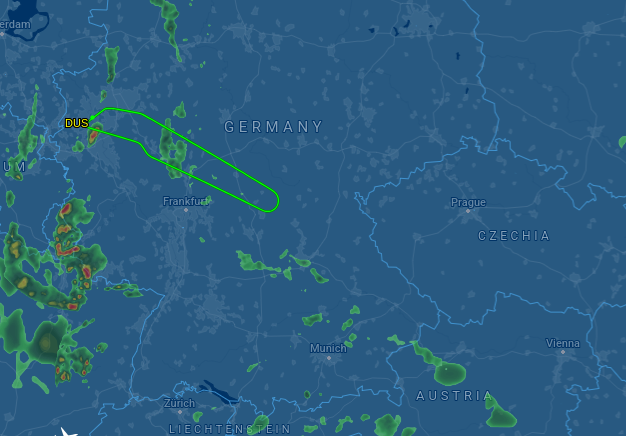
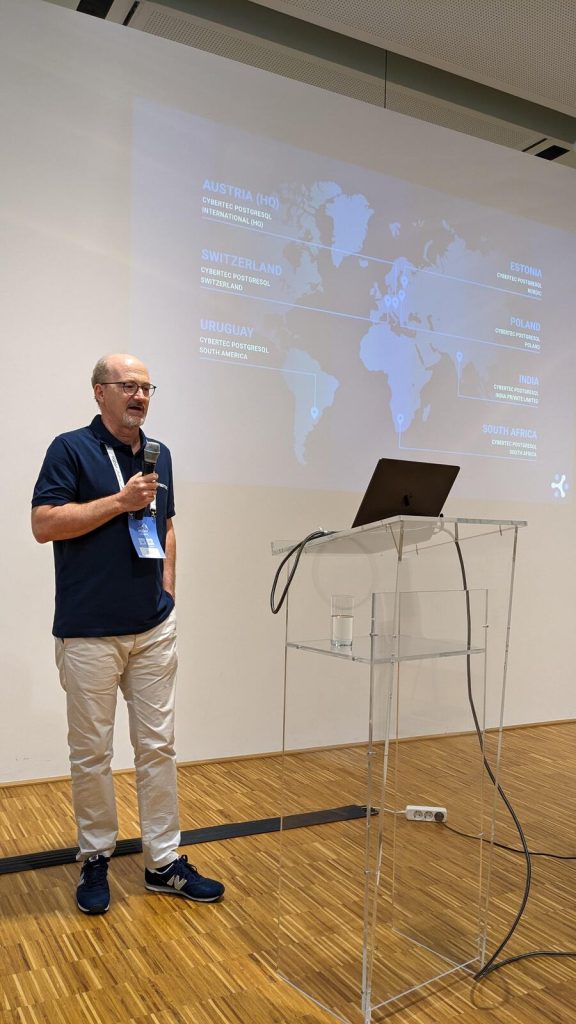
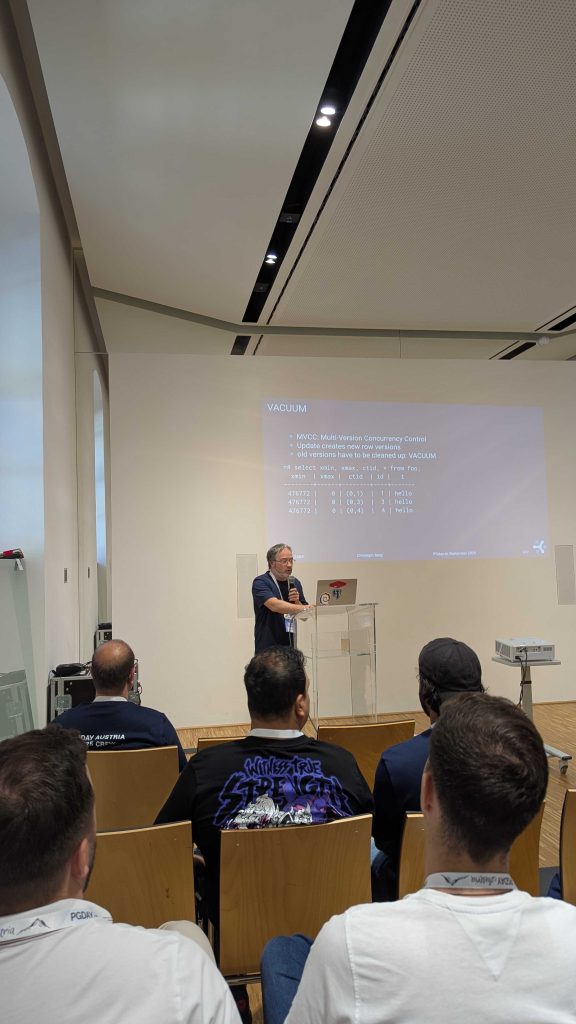
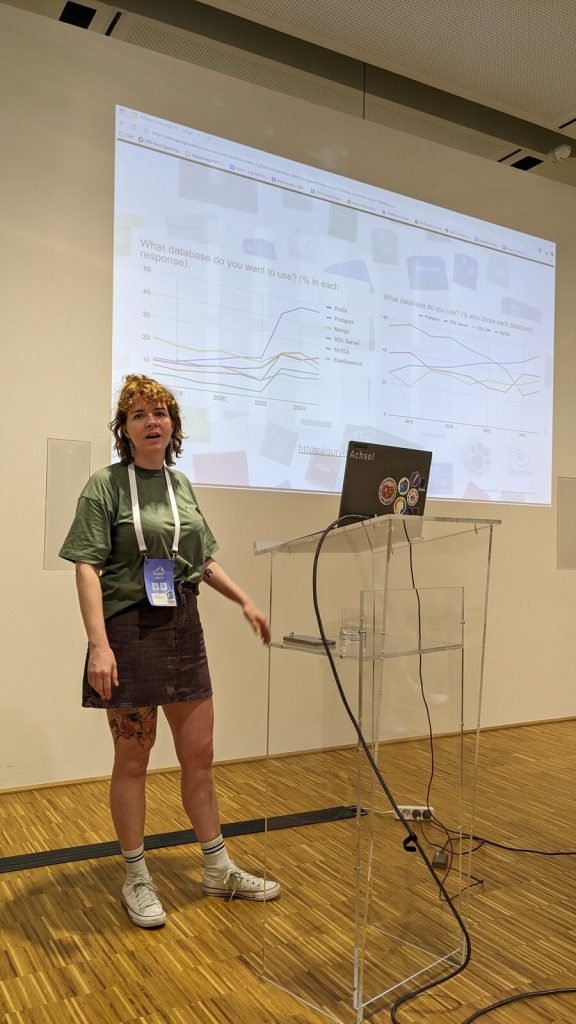

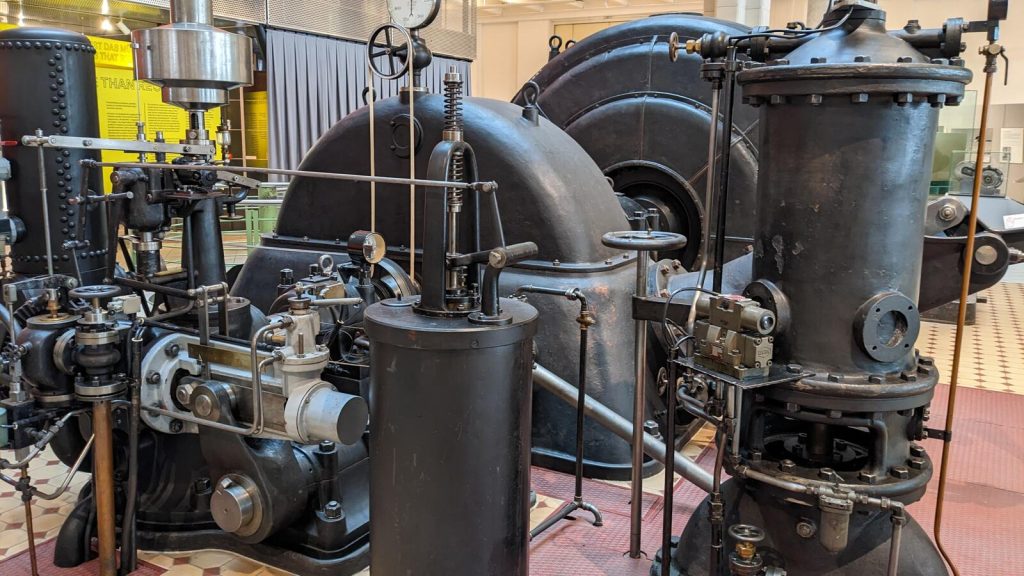
 Like each month, have a look at the work funded by
 About 95% of my Debian contributions this month were
 Partners holding big jigsaw puzzle pieces flat vector illustration. Successful partnership, communication and collaboration metaphor. Teamwork and business cooperation concept.
 Pollito and the gang of DebConf mascots wearing their conference badges (photo: Christoph Berg)
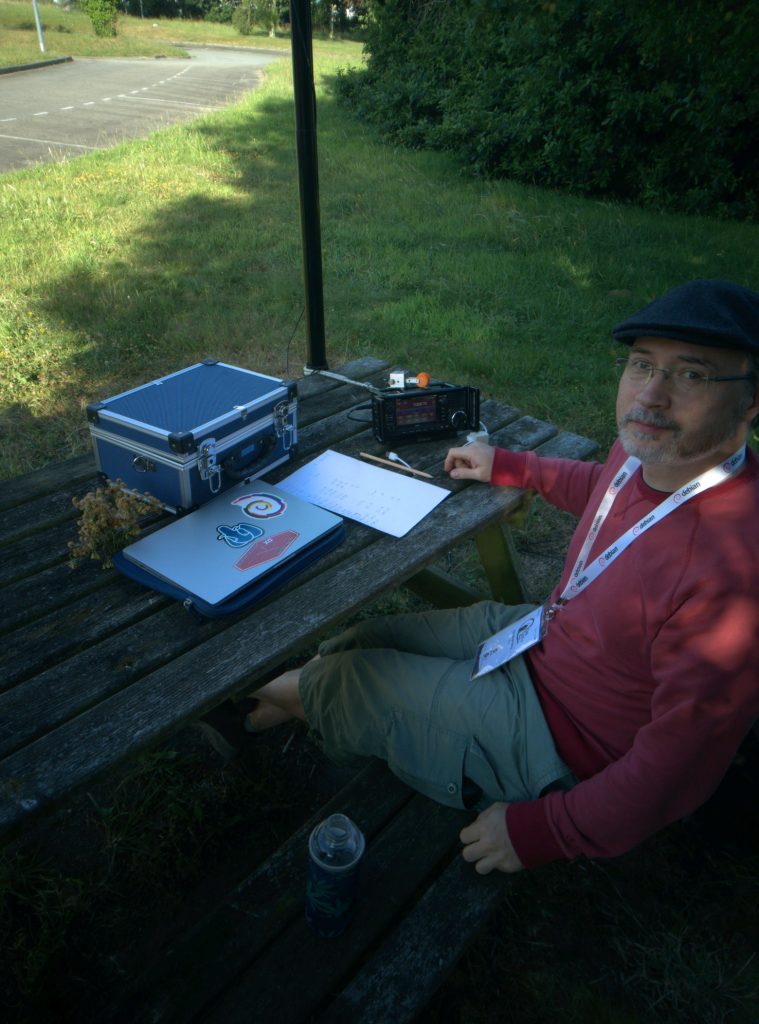 F/DF7CB in Brest (photo: Evangelos Ribeiro Tzaras)
 The northern coast of Ushant (photo: Christoph Berg)
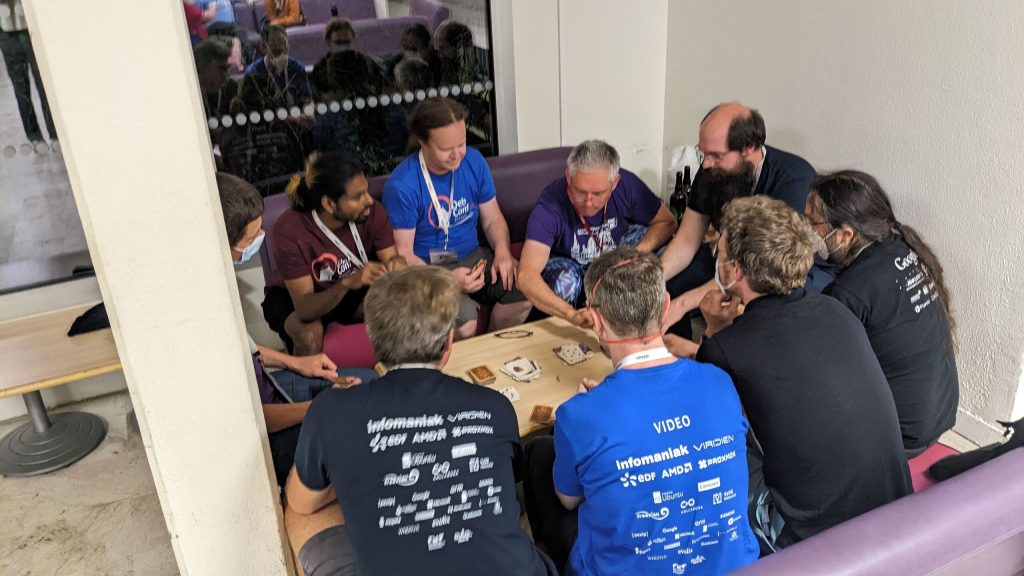 Having a nice day (photo: Christoph Berg)
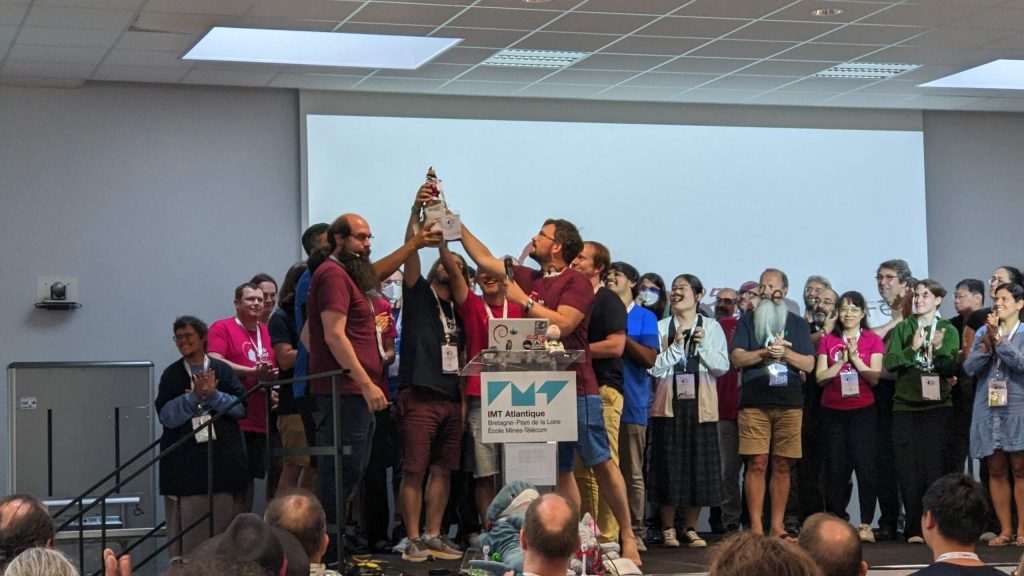 Pollito on stage (photo: Christoph Berg)
 Given that we only arrived in the evening of the first day of DebConf, I missed
the talk
 Wednesday was the day of the daytrip. I did not sign up for any of the trips
and used the time to
 If the menus would be written like a