Search Results: "tchet"

17 January 2014

Chris Lamb: Review: Captain Phillips (2013)

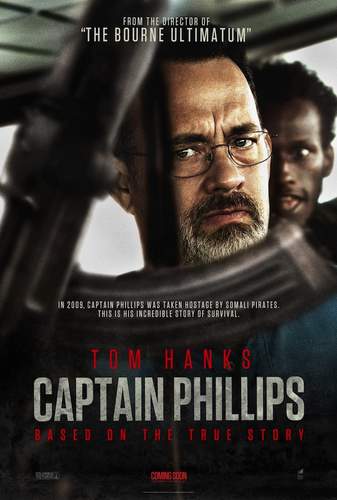
https://chris-lamb.co.uk/wp-content/2014/phillips_b.jpg Somalia's chief exports appear to be morally-ambiguous Salon articles about piracy and sophomoric evidence against libertarianism. However, it is the former topic that Captain Phillips concerns itself with, inspired by the hijacking of the Maersk Alabama container ship in 2009. What is truth? In the end, Captain Phillips does not rise above Pontius Pilate in providing an answer, but it certainly tries using more refined instruments than irony or leaden sarcasm. This motif pervades the film. Obviously, it is based on a "true story" and brings aboard all that well-travelled baggage, but it also permeates the plot in a much deeper sense. For example, Phillips and the US Navy lie almost compulsively to the pirates, whilst the pirates only really lie once where they put Phillips in greater danger. Notice further that Phillips only starts to tell the truth when he thinks all hope is lost. These telling observations become even more fascinating when you realise that they must be based on the testimony of the, well, liars. Clearly, deception is a weapon to be monopolised and there are few limits on what good guys can or should lie about if they believe they can save lives.
https://chris-lamb.co.uk/wp-content/2014/phillips_c.jpg

Even Phillip's nickname ("Irish") is a falsehood he straight-up admits he is an American citizen.

Lastly, there is an utterly disarming epilogue where Phillips is being treated for shock by clinical efficient medical staff. Not only will it scuttle any "blanket around the shoulders" clich but is probably a highly accurate portrayal of what actually happens post-trauma. This echoes the kind of truth Werner Herzog often aims for in his filmmaking as well his guilt-inducing duality between uncomfortable lingering and compulsive viewing. Another angle worthy of discussion: can a film based on real-world events even be "spoilered"? Hearing headlines on the before you read the newspaper hardly robs you of a literary journey... Captain Phillips does have some quotidian problems. Firstly, the only tool for ratcheting up tension is for the Somalians to launch verbal broadsides at the Americans, with each compromise somehow escalating the situation further. This technique is genuinely effective but well before the climatic rescue scene where it is really needed it has been subject to the most extreme diminishing returns. (I cannot be the first to notice the "Africans festooned with guns shouting incomphensively" trope I hope it is based on a Babel-esque mechanism of disorientation and miscommunication rather than anything, frankly, unsavoury.)
https://chris-lamb.co.uk/wp-content/2014/phillips_a.jpg

The racist idea that Africans prefer a AK-47 rotated about the Z-axis is socially constructed.

Secondly, the US Navy acts like a teacher with an Ofsted inspector observing quietly from the corner of the classroom; far too well-behaved it suspends belief, with no post-kill gloating or even the tiniest of post-arrest congratulations. Whilst nobody wants to see the Navy overreact badly to other military branches getting all the glory, nobody wants to see a suspiciously bland recruitment vehicle either. Paradoxically, this hermetic treatment made me unduly fascinated by them, as if they were part of some military "uncanny valley". Two quick observations:
https://chris-lamb.co.uk/wp-content/2014/phillips_d.jpg

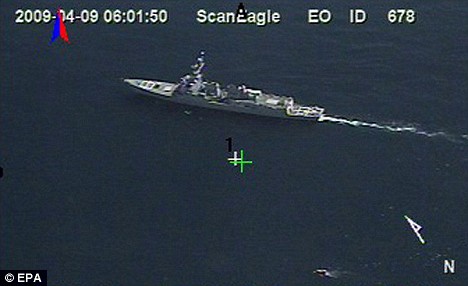
The drone footage: I'd love to read (or write) an essay about how Call of Duty might have influenced cinema.

Finally, despite the title, the film is actually about two captains; the skillful liar Phillips and ... well, that's the real problem. Whilst Captain Muse is certainly no caricatured Hook, we are offered little depth beyond a "You're not just a fisherman" faux-revelation that leads nowhere. I was left inventing reasons for his akrasia so that he made any sense whatsoever. One could charitably argue that the film attempts to stay objective on Muse, but the inability for the film to take any obvious ethical stance actually seems to confuse and then compromise the narrative. What deeper truth is actually being revealed? Is this film or documentary? Worse still, the moral vacuum is invariably filled by the viewer's existing political outlook: are Somali pirates victims of circumstance who are forced into (alas, regrettable) swashbuckling adventures to pacify plank-threatening warlords? Or are they violent and dangerous criminals who habour an irrational resentment against the West, flimsily represented by material goods in shipping containers? Your improvised answer to this Rorschach test will always sit more haphazardly in the film than any pre-constructed treatment ever could. 6/10

5 January 2014

Jon Dowland: 2013 In Fiction

I read a lot this year - I'll write more about that and reflections on goodreads in another post - but most of the things I read weren't published in 2013. (I should also write a bit about my thoughts on e-readers). However, it seems I have enough to write about 2013's novels to make a round-up post worthwhile, so here we go.
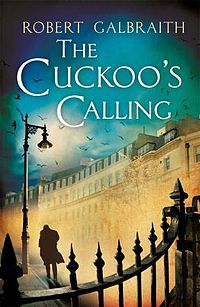
The Cuckoos Calling UK cover
This year, crime author Robert Galbraith published his first novel The Cuckoo's Calling. I'd never have heard of it if Galbraith was not outed as an alias for Joanne "JK" Rowling. Clues that Rowling was working on a detective story exist as early as a Guardian preview article in 2012 for her last novel, The Casual Vacancy. Further hints, for me, that this was no first-time author were the taglines from Ian Rankin and Val McDermid on the cover, writers of a calibre I'd be surprised a new author could attract. However I don't know whether they were on the pre-unveiling cover or not. Rowling was upset be outed, having enjoyed the freedom to write without the baggage of expectation that she is subject to. I hope she's pleased: prior to her unmasking the novel was warmly received by the (admittedly relatively small) number of people who read it. And a very good novel it is too. It starts with a genre clich of a grizzled, meloncholy detective, Mr. Cormoran Strike, in an upstairs office with a neon light flickering through the window, but fleshes the story out both forwards - a client, a mysterious death - and backwards - how did Mr. Strike end up in that upstairs office - living out of it, no less? As is traditional for the genre there's a very clever twist. What I really enjoyed about Cormoran Strike was Galbraith/Rowling moving quickly from Chandler-esque everyman to a well fleshed-out, complex protagonist, intertwining the development of the character with the unfolding of the wider plot. I'm looking forward to the sequel, expected in 2014.
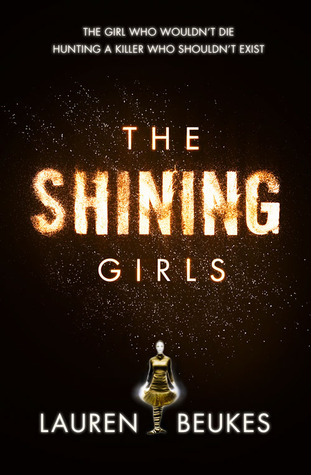
The Shining Girls UK cover
A second surprise favourite this year was Lauren Beukes' time-tripping crime story The Shining Girls. A monsterous murder of women somehow finds a room in Chicago that lets him travel through time (or perhaps the room finds him). He uses this facility to stalk and murder a set of Shining Girls: women who, for one reason or another, literally 'shine' in his perception of them. One such woman survives his first attack and decides to try and find out who attacked her, and why. The crimes are described in a brutal fashion which - from a distance - resemble the sometimes glorified violence for which crime fiction is sometimes criticised, but the focus of the story is very much on the victims: they are fully fleshed out characters and each death is felt by the reader as a genuine tragedy. I discovered Beukes when her earlier novel Zoo City was included in a Humble eBook bundle. On reading The Shining Girls I felt that the novel deserved to be more widely known than I would expect it to be trapped in the ghetto of genre fiction, so I was pleased to discover that the very mainstream Richard and Judy Book Club discovered it. In established author news, Terry Pratchett, having adopted speech recognition for writing (to combat his debilitating Alzheimer's) has seemingly managed to accelerate his rate of production and squeezed out at least two this year: The Long War with Stephen Baxter is the sequel to 2012's The Long Earth which I very much enjoyed, but it really felt like "difficult second novel" to me. Hopefully there'll be a third. Raising Steam, the 40th Discworld novel, was an enjoyable romp around the concept of steam trains, featuring the relatively new Moist von Lipwig who has managed to become one of my favourite Discworld characters. I can't think of much more to say about the novel, really. It's a Discworld novel, probably not the best introduction to the series for a new reader, but will give a reader familiar with the franchise everything they expect, and possibly no more. Iain Banks sadly died this year, shortly after the publication of his last novel, The Quarry. It's sat on my hardback shelf for the time being. I couldn't bring myself to read it in 2013. I did read his last SF offering from the year prior, The Hydrogen Sonata. Sadly, yet coincidentally, both of these books examine the nature of living and dying, The Quarry in particular from the point of view of a terminal cancer sufferer. I have a small backlog of unread Banks fiction which I want to take my time over with. Finally, whilst not really a book, I thoroughly enjoyed the BBC's 2013 adaptation of Neil Gaiman's Neverwhere. Natalie Dormer wrote a piece on the making of the drama which should serve as a good introduction. At the time of writing, most of the programmes have disappeared from iPlayer, but I would be surprised if this wasn't released commercially at some point.

12 August 2013

Chris Lamb: Cotswold Classic Middle Distance triathlon

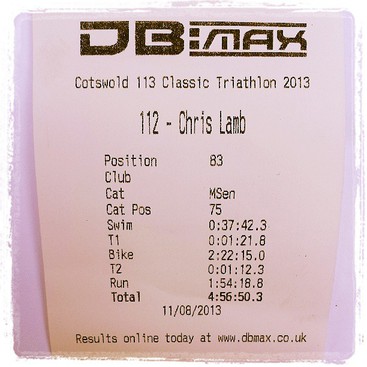
https://chris-lamb.co.uk/wp-content/2013/cotswold_course.jpg Since becoming interested in triathlon in October of last year, my goal in 2013 was not to just finish a "70.3" (or "Half-Ironman"), but to complete one in under 5 hours. At the time, each discipline was woefully inadequate; I had not swum in over a decade, my cycling was average and I had only begun running again after years away from exercise. The somewhat arbitrary target time would dictate my training. For example, the high proportion of time spent on the bike combined with the injury-sensitive nature of running meant that cycling would have a highest return on investment of the three disciplines. Despite that, I would need to take the run seriously but carefully - I decided to enter a series of monthly 10K races where I could steadily reduce my times over the year. Races themselves formed a crucial part of my preparation and a carefully balanced race calendar was surprisingly important, balancing upcoming milestones that would provide an achievable goal as well as uncovering weaknesses in enough time so they could be worked on. Whilst I did post about my first triathlon, I felt no compulsion with the interleaving five or six races as I was evaluating them in the context of the 70.3 rather than as races in their own right.
Swim
Distance
1900m
Time
37:42
Whilst this wasn't my worst open water swim, it was certainly not my best. The first 500m was straightforward, but I lost my form over the next 500m and I overcompensated with excessive kick. My calves responded by cramping badly two or three times after that, losing both momentum and time. Curiously, whenever I could identify my speed relative to my effort (for example, by some underwater reeds) I could use that as feedback and my rotation (etc.) would temporarily return. Pool swimming always has markers of this kind, whilst a murky lake does not. In conclusion, my lack of open water training outside of races held me back more than I expected.
Bike https://chris-lamb.co.uk/wp-content/2013/cotswold_bike.jpg
Distance
52 miles
Time
2:22 (21.9 mph average)
I had thoroughly absorbed the advice that you should prepare for your primary race so that it feels like another day at the office. On this criterion, the bike leg was almost perfect. My nutrition strategy energy drink every 5 minutes, gel every 30 minutes worked fine until mile 35 where I felt like I had taken on too much fluid (and no time to take a bathroom break). I had a temporary hiccup with my rear derailleur but my "tame" 52/34 12x28 gearing was vindicated on the climbs, although in retrospect that might mostly be schadenfreude. Tens of hours acclimatising to a time trial bike was rewarded by being able to spend the entire leg in "aero" position (ignoring 90-degree turns or serious gradients), improving efficiency.
Run https://chris-lamb.co.uk/wp-content/2013/cotswold_run.jpg
Distance
13.1 miles (21km)
Time
1:54:18 (5:25/km)
I had prepared a chart which provided the pace I required based on the race time at the start of the run. I would then only need to monitor my run pace instead of repeatedly extrapolating a finish time as even basic arithmetic can become impossible when fatigued. This strategy was chosen as I was too risk-adverse to aim for a faster time than strictly required; the downside of missing the target from aiming too high and "blowing up" outweighed going a few minutes faster overall. Despite that, I ran half-marathon personal best. Unfortunately, due to pressing the wrong watch button after the swim, the chart was worthless unless I could assume the race started exactly at 6:30AM. With no other option I decided to trust that with some padding, but the uncertainly it added was unsettling. Adding to that feeling, my left hip started to twinge at 7K, something it has never done before. My plan was to get to 16K, take a caffeine gel and then keep ratcheting up the pace until the finish. In my long run training I could speed up to a 4:10/km pace but after 5 hours of racing and being reasonably sure I was going to reach my goal, the best I could summon was 4:45/km. My form completely shot, I crossed the finish line and got into a fetal position in the shade behind a tent, scaring the race organisers for a few minutes.
Overall
Total time
4:56:50
Writing this the day after the race, I am still a little unsure of how I feel. I am obviously extremely content that I reached my goal but given the volume and detail of preparation it was not a huge surprise to me on race day that I did so. This combined with the "real" work and progress being achieved throughout the training seems to have robbed the event of some element of triumph it could have had, but that in itself was somewhat expected. Where next? I had always dismissed the consensus view of needing to take a decent break after the season has ended but now I am looking forward to putting triathlon-specific training on hold for a while and explore other things. I highly doubt this will be my last triathlon though. https://chris-lamb.co.uk/wp-content/2013/cotswold_result.jpg (Full results)

9 April 2013

Russ Allbery: Review: Judge Sn Goes Golfing

Review: Judge Sn Goes Golfing, by John Scalzi
Artist: Gahan Wilson
Publisher: Subterranean
Copyright: 2009
Printing: 2012
ISBN: 1-59606-479-X
Format: Kindle
Pages: 32
As you may have guessed, this is yet another short story by Scalzi that was rolled into the Subterranean Scalzi Super Bundle. This one is a bit longer than the ones I've previously reviewed, and is also illustrationed. Unlike some of the others, it's not available on-line for free... as a written work at least. There's an abridged audio version available for free from Subterranean Press's web site, though. Like the other stories I've reviewed so far, it's humor, but I think it's a bit more successful and substantial than the previous short stories. Judge Bufan Nigun Sn is an extremely foul-tempered alien judge who loves to golf, despite being terrible at it. He's a sort of circuit court judge for a larger galactic civilization, of which Earth is now part. (There's a smattering of background world-building, but it's not the core of the story.) Golf is his passion, in several senses of the word: his habit of getting into nasty fights with his fellow players and otherwise making public and occasionally injurious scenes has gotten him banned from every course in the Washington DC area, both public and private. Except, that is, for Dulles Woods, a dire, badly-maintained course designed via nepotism and theft whose business model is primarily based on letting the people banned from every other course golf there. And charging them extra to let caddies accompany them. The plot of this story is about a particular game of golf, dramatically foreshadowed by the opening sentence. But the story is really about Judge Sn's relationship to golfing and to the notorious Dulles Woods. It's one of the better jobs I've seen of writing a thoroughly unlikable person into a gloriously foul-tempered charm. It's also a story about a golf course and golfer who thoroughly deserve each other, and about how it feels to suddenly have something go right after grinding out hours and hours of work on a hobby that is supposed to be fun but manages to fall into some horribly compelling middle ground between enjoyment and rage-inducing frustration. Speaking as someone who is known to grind out video game completions while swearing at the television, I can sympathize. I got thoroughly hooked by Scalzi's descriptions of Judge Sn's mental state and enjoyed this story far more than I expected to. Sadly, when the plot does finally arrive, I thought it was a letdown. Scalzi throws in a highly improbable coincidence to create action, and while that's a legitimate plot technique (particularly in humor), it works best when the author goes back afterwards and fills in the back story of the coincidence. Pratchett does this extremely well. Scalzi, alas, doesn't really bother, and while suspension of disbelief isn't as relevant for this sort of story, I thought it was a missed opportunity. The ending seemed to be missing some sort of punch or background twist. That said, I really liked the character study and I think the story is well worth the 99 cents it's still selling for on the Kindle (and quite possibly other platforms; I haven't checked). If buying short stories on the Kindle is something you want to do, I recommend this one to your attention. Rating: 7 out of 10

26 February 2013

Russ Allbery: Review: Witches Abroad

Review: Witches Abroad, by Terry Pratchett
Series: Discworld #12
Publisher: Harper
Copyright: 1991
Printing: February 2008
ISBN: 0-06-102061-3
Format: Mass market
Pages: 350
Witches Abroad is the twelfth book in the Discworld series, but there's no strong reason why you couldn't start here. It's the second book about the three witches (Granny Weatherwax, Nanny Ogg, and Magrat Garlick), following Wyrd Sisters, and the third book about Granny Weatherwax, but it doesn't assume any knowledge of the previous books or of Discworld in general. Desiderata Hollow is dying. This is not a surprise; she's known for a long time exactly when she was going to die, and that time has come. She's not particularly bothered by it, but it does pose one difficult problem. She's a fairy godmother, as well as a witch, and she's balancing another fairy godmother because they come in pairs. With her dead, Lilith seems likely to win their long struggle, and that would be a bad thing. She needs to pass her wand on to a successor, but she wasn't the planning sort. At least she claims; this comment of hers turns out to hide an elegant bit of manipulation that leaves her wand in the hands of Magrat and sends the three witches on their way to the city of Genua to confront Lilith. There are two halves to Witches Abroad. The first half is the setup described above and their trip across Discworld. The second half is a sort of retelling of Cinderella, as foreshadowed early on by Desiderata. But the whole book is about stories and story shapes and their head-on collisions with the practical confidence of Nanny Ogg and the endless stubbornness of Granny Weatherwax. I think the three witches are one of Pratchett's best inventions, and Granny Weatherwax the best of the three. She has many of the characteristics that would normally relegate her to a supporting mentor figure: older, very knowledgeable, remarkably good at getting her way and at manipulating situations, and not particularly interested in going on adventures. But Pratchett turns this on end at every opportunity. Granny Weatherwax doesn't act like a mentor at all: she doesn't explain things to Magrat, or anyone else; she's almost constantly bickering with the other witches; and she's a fount of irritated and exasperated opinions about the world. She's one of the best irascibly competent characters in fiction, and she steals every scene she's in, refusing to become a supporting character and staying at the center of the story, despite not being a viewpoint character. (Pratchett wisely keeps her out of the viewpoint role for most of the story, since much of her knowledge and "headology" would be less effective if the reader knew what she was thinking.) The dynamics between the three witches are the best part of this book, and I love all three of them. But I'm also a sucker for fractured fairy tales in general, and Witches Abroad is full of them. Their opponent loves stories and has gathered most of her power from reinforcing and manipulating stories, which means that the density of random stories keeps increasing as they approach Genua. That provides numerous opportunities for the witches to stumble through, analyze, take apart, twist, or untwist numerous familiar stories, ranging from Red Riding Hood to Sleeping Beauty. Pratchett keeps things moving right along, not belaboring connections and not explaining too much, which makes it very easy to keep turning pages. The story does get a bit slower in Genua. There's quite a bit of scene-setting and figuring things out, and while Pratchett maintains the steady stream of humor, it isn't quite as compelling without the ever-changing context. He introduces a bit of voodoo magic, which I found to be the least interesting of the multiple styles of magic that show up here. But there are some absolutely brilliant bits with Nanny Ogg's cat, a wonderfully annoyed Cinderella, and an inversion of the traditional story that kept surprising me. I thought the ending was a bit of an anticlimax, but it does fit the nature of the characters. Despite a few plot short-comings, this is my favorite Discworld book up to this point in the series. Definitely recommended, and not a horrible starting point. Followed by Small Gods in the chronological sense and (later) by Lords and Ladies in the plot sense. Rating: 8 out of 10

20 November 2012

Jon Dowland: Waterstones

In May this year, in a desperate bid to bail water out of a sinking ship, HMV group sold off the Waterstones chain of bookstores. I'm fond of reading so naturally I visit Waterstones from time to time. (but not exclusively.) For many years, their promotions were unanimously structured as "3 for 2" offers: find three books in the promotion, in-store, and get the cheapest of the three for free. I hated these promotions. I always found it very challenging to find three books in the promotion that I wanted. If I was visiting to buy a specific book and found it in the promotion, on more than one occasion I left the shop empty handed: I wasn't prepared to pay full price for a book in a promotion and not get the benefit of the promotion. Since being sold, Waterstones seem to have made a lot of changes. Many new hardbacks from popular authors have debuted at a discount for a short period (Rowling, Pratchett). I've found many more discounted books not tied to others in 3-for-2-style offers, sometimes window-display stock at half price, a month or so after release. They started a loyalty-card scheme, with a 10 gift card the prize you reach once you've spent 100. (I wonder if such schemes are examples of a token economy?) Finally, they've tentatively started to explore putting cafes in their branches. The one in Newcastle is best described as 'fledgling', but it's nice to have one more place to escape for a cup of tea at lunchtimes. The cafe, as well as a very well stocked collection of magazines, were the two killer features of the sadly- defunct Borders bookseller chain. For years before we got our own Borders in the North East, I used to enjoy the York branch if I was passing. I actually managed to fill a loyalty card this year, so clearly their change in attitude has worked on me! I'm generally not a fan of gift cards, especially in today's climate, so I quickly spent it. I hold an American Express credit card, which earns me cashbask on purchases which I make with it. I think the rate is about 1%. However, I can opt to receive the cashback in the form of gift vouchers. If I do so, I get them to the value of 110% my cashback balance. One of the retailers in on the scheme are Waterstones. I'm tempted

6 November 2012

Russ Allbery: Review: Cerebus

Review: Cerebus, by Dave Sim
Series: Cerebus #1
Publisher: Aardvark-Vanaheim
Copyright: August 1987
Printing: July 2003
ISBN: 0-919359-08-6
Format: Graphic novel
Pages: 546
Cerebus is something of a legend in comics. Begun in December of 1977 by Dave Sim, it was one of the first entirely independent, self-published comics in a field dominated by the large work-for-hire companies like Marvel and DC. It ran for 300 issues and nearly 27 years and became one of the most influential independent comic books of all time, in part due to Sim's outspoken views in favor of creator rights and his regular use of the editorial pages in Cerebus issues to air those views. This collection (the first "phonebook") collects issues 1 through 25, with one of the amazing wrap-around covers that makes all of the phonebooks so beautiful (possibly partly by later Cerebus collaborator Gerhard, although if so it's uncredited so far as I can tell). Cerebus reliably has some of the best black-and-white art you will ever see in comics. There is some debate over where to start with Cerebus, and a faction that, for good reasons, argues for starting with the second phonebook (High Society). While these first twenty-five issues do introduce the reader to a bunch of important characters (Elrod, Lord Julius, Jaka, Artemis Roach, and Suenteus Po, for example), all those characters are later reintroduced and nothing that happens here is hugely vital for the overall story. It's also quite rough, starting as Conan parody with almost no depth. The first half or so of this collection features lots of short stories with little or no broader significance, and the early ones are about little other than Cerebus's skills and fighting abilities. That said, when reading the series, I like to start at the beginning. It is nice to follow the characters from their moment of first introduction, and it's delightful to watch Sim's ability grow (surprisingly quickly) through the first few issues. Cerebus #1 is bad: crude, simplistic artwork, almost nothing in the way of a story, and lots of purple narration. But flipping forward even to Cerebus #6 (the first appearance of Jaka), one sees a remarkable difference. By Cerebus #7, Cerebus looks like himself, the plot is getting more complex, and Sim is clearly hitting his stride. And, by the end of this collection, the art has moved from crude past competent and into truly beautiful in places. It's one of the few black-and-white comics where I never miss color. The detailed line work is more enjoyable than I think any coloring could be. The strength of Cerebus as an ongoing character slowly emerges from behind the parody. What I like the most about Cerebus is that he's neither a predestined victor (apart from the early issues that follow the Conan model most closely) nor a pure loner who stands apart from the world. He gets embroiled in political affairs, but almost always for his own reasons (primarily wealth). He has his own moral code, but it's fluid and situational; it's the realistic muddle of impulse and vague principle that most of us fall back on in our everyday life, which is remarkably unlike the typical moral code in comics (or even fiction in general). And while he is in one sense better and more powerful than anyone else in the story, that doesn't mean Cerebus gets what he wants. Most stories here end up going rather poorly for him, forcing daring escapes or frustrating cutting of losses. Sim quickly finds a voice for Cerebus that's irascible, wise, practical, and a bit world-weary, as well as remarkably unflappable. He's one of the best protagonists in comics, and that's already clear by the end of this collection. Parody is the focus of these first issues, which is a mixed bag. The early issues are fairly weak sword-and-sorcery parody (particularly Red Sonja, primarily a vehicle for some tired sexist jokes) and worth reading only for the development in Sim's art style and the growth of Cerebus as a unique voice. Sim gets away from straight parody for the middle of the collection, but then makes an unfortunate return for the final few issues, featuring parodies of Man-Thing and X-Men that I thought were more forced than funny. You have to have some tolerance for this, and (similar to early Pratchett) a lot of it isn't as funny as the author seems to think it is. That said, three of Sim's most brilliant ongoing characters are parodies, just ones that are mixed and inserted into the "wrong" genres in ways that bring them alive. Elrod of Melvinbone, a parody of Moorcock's Elric of Melnibone who speaks exactly like Foghorn Leghorn, should not work and yet does. He's the source of the funniest moments in this collection. His persistant treatment of Cerebus as a kid in a bunny suit shouldn't be as funny as it is, but it reliably makes me laugh each time I re-read this collection. Lord Julius is a straight insertion of Groucho Marx who really comes into his own in the next collection, High Society, but some of the hilarious High Society moments are foreshadowed here. And Artemis Roach, who starts as a parody of Batman and will later parody a huge variety of comic book characters, provides several delightful moments with Cerebus as straight man. I'm not much of a fan of parody, but I still think Cerebus is genuinely funny. High Society is definitely better, but I think one would miss some great bits by skipping over the first collection. Much of what makes it work is the character of Cerebus, who is in turn a wonderful straight man for Sim's wilder characters and an endless source of sharp one-liners. It's easy to really care about and root for Cerebus, even when he's being manipulative and amoral, because he's so straightforward and forthright about it. The world Sim puts him into is full of chaos, ridiculousness, and unfairness, and Cerebus is the sort of character to put his head down, make a few sarcastic comments, and then get on with it. It's fun to watch. One final note: I've always thought the "phonebook" collections were one of Sim's best ideas. Unlike nearly all comic book collections, a Cerebus phonebook provides enough material to be satisfying and has always felt like a good value for the money. I wish more comic book publishers would learn from Sim's example and produce larger collections that aren't hardcover deluxe editions (although Sim has an admitted advantage from not having to reproduce color). Followed by High Society. Rating: 7 out of 10

15 April 2012

Richard Hartmann: Choo choo two

Now that our departure is looming ahead of us, it's time to give a short update. (Turns out it's not so short, after all...) Preparation Visa Mongolian and Russian visas are done; we will apply for the Chinese ones next Monday. Travel All train tickets, hotels, hostels, and tents have been booked and both a horse-back tour through Mongolia and scuba diving in Lake Baikal have been pre-arranged. The Russian railway seems to do maintenance and development on the live website all the time which meant we were forced to book through a local travel agent. We paid a hefty extra charge for that privilege but still, that was less than half of what we would have paid if we had booked through a German agent. With the help of #china-lug on irc.freenode.net, we found accommodation in a traditional Siheyuan in an old Hutong. Hopefully, this will be a interesting as it sounds. Locals By the power of attending conferences and this blog, I now have local contacts in Moscow, Beijing, and Shanghai. Everyone who contacted me was extremely nice and helpful. I have been getting hints and tips galore; I doubt our preparations would be as neat as they are without this invaluable help. Thanks; you know who you are :) Packing list Apparently there's an interest in what we will be bringing; also, this will be a nice reminder for the future. Information and note-keeping Luggage Clothing Personal and computer security Fastening, storage, and tools Health Photography Minimal scuba gear Food Convenience Leisure That's it. Re-reading this list, I wonder how we managed to fit all of this into an 80-liter travel bag and a 15-liter backpack, but we did and with room to spare.

8 April 2012

Richard Hartmann: Richuck

Q: How much wood would a Richuck chuck if a Richuck could chuck wood? A: Quite a bit. The few times in the past when I was able to get my hands onto a tree or three, I thoroughly enjoyed turning them into firewood. It's good workout, you get fresh air, and you can actually see what you accomplished with your hands. Back then, I had access to a hatchet, a felling axe and a single wedge. Splitting anything larger than 20 or 30 cm in diameter was tedious work, though still enjoyable. Two weeks ago, I was presented with several cubic meters of spruce; log diameters ranging in between 10 and 50 cm, pre-cut to two meters in length. Plus, access to a chainsaw. Yay. After some research, I ordered two helicoidal splitting wedges (they turn themselves when driven into wood), a splitting axe and a splitting maul. The rest of the equipment handed to me is probably older than I am, but still working perfectly fine. You have to admire the simple yet efficient design of the cant hook. Something I could not find an English name for is the German Sapie, in itself loosely defined as "any tool you can use to pick up, turn, drag or otherwise move logs". There's a surprising variety of these tools, but then, moving wood around has been a necessity of life for millennia so people are bound to come up with good designs. Last weekend, the chainsaw wasn't running very smoothly or much at all, resulting in hours spent coaxing it to cut at least enough for some hacking (the wood, not the computer kind). Other than our chainsaw troubles, that weekend was very pleasant and I ended up splitting tons of logs. We had the chainsaw overhauled and resharpened during the week and picked it up again on Friday, planning to resume cutting early Saturday, a plan that was spoiled by torrential downpour and hail. In the afternoon, I started splitting some left-overs around the house and used a short break from the rain to head out into the woods to where the logs are piled. The place I chose for splitting is somewhat exposed and even though the mix of rain, sleet, snow, hail, and everything in between resumed soon enough turns out you simply stop caring at some point. While temperatures were around freezing, I ended up being drenched in sweat in no time at all. There is something primordial and deeply satisfying about simply working away at these logs, ending with piles and piles of firewood. Of course, using my favourite new toy, 4.6 kg of forged stainless steel fuck you, increased said satisfaction immensely. Between the two wedges and that maul, splitting any middle-European conifers is a breeze. Add in the splitting axe for slim trunks and splitting will take less than 60 seconds per cut, no matter how many branch knots or pockets of shock-absorbing partially decayed wood you encounter. If only I've had those tools a decade and a half ago... While I am feeling muscles I forgot I had, I am planning to pursue this new-found old hobby for at least the foreseeable future. Especially since I sourced more logs and a few trees, already.

6 February 2012

Jon Dowland: I Shall Wear Midnight

I Shall Wear Midnight is the 38th Discworld novel and the fourth following the story of Tiffany Aching, young witch of the Chalk. Reading modern Pratchett, I'm sadly, acutely (and morbidly) aware that, as he succumbs to Alzheimer's disease, these are the likely to be some of the last Discworld novels written. With the last few, this observation has been entirely external to the novel. With Midnight, however, I got the impression that the awful disease has finally started to affect the prose itself. I could just be jumping at shadows, but I got the impression that he repeated himself a tad more often than usual. With such a long series of books, an author has the difficult job of balancing new and established readers in the same text: as such, as an established reader, you get used to having some back-story with which you must be patient. This necessary background could have contributed to the impression of repetition, but I'm fairly sure doesn't explain all of it. An enjoyable story, and possibly the one to bring the Aching arc to a conclusion. She stands on her own two feet, proving herself a a capable Witch. There weren't any earth-shattering new concepts or new characters or unexplored areas of the Disc for fans to map out with their minds; non-the-less it was a satisfying read.

27 May 2010

Adrian von Bidder: Far from the real world

I guess having only the Japanese version of Tetsuo and not understanding anything might not have helped, but on the other hand there isn't all that much dialogue. Tetsuo is one of those movies I find difficult to judge; while it has some great moments, I also found it to be a bit long in some parts. Very good sound track, though. YMMV, I guess. If you like the Discworld novels by Terry Pratchett, you may want to have a peak at Terry Pratchett's The Colour of Magic, which I found quite well made (... and where I once again found that I don't have a good memory for faces, although in the end I remembered where I saw Twoflower's face just before reading the name in the closing credits ...) A bit disappointing, in contrast, was Terry Pratchett's Hogfather: to me, it proves that a movie should have some distance to the book, since what works when written down doesn't necessarily work on the screen. I quite liked Michelle Dockery as Susan, though.

19 March 2010

Jon Dowland: The Dice Man and Generation X

The movie ' Fight Club' had a profound effect on me when I first saw it in 1999. I wasn't as fond of the originating novel, although there was something about the prose that Palahniuk used which I did enjoy. Since then I've read more of Palahniuk's work. My favourite of his books is actually Non-Fiction (a.k.a. Stranger than Fiction ): a collection of essays and interviews. Reading some of the stories in that collection, it becomes very clear where some of the concepts in his fiction originate. There are also a number of pieces on the craft of writing. He writes some really gushing praise about Amy Hempel:
When you study Minimalism in the novelist Tom Spanbauer's workshop, the first story you read is Amy Hempel's The Harvest. After that, you're ruined every other book you ever read will suck.
I recently read a couple of novels, both of which reminded me a lot of Fight Club. 'Generation X: Tales for an Accelerated Culture' by Douglas Coupland is an interesting tale of three or more societal drop-outs. Fight Club was written five years after Generation X and owes it a lot. 'Generation X' has curt, clipped passages and many dictionary-definition-esque side notes decoding hipster-slang, which add a lot of colour to the non-events of the story. These remind me both of the copous asides in Pratchett novels, or the chapter introductions in Philip K Dick's excellent 'Ubik'.
Historical Overdosing: To live in a period of time when too much seems to happen. Major symptoms include addiction to newspapers, magazines, and TV news broadcasts.
The novel goes absolutely nowhere, but that's actually one of the appealing things about it. When I mentioned this to my partner (who, as far as I know, has not read the book), she said that it sounded like the perfect tonic to a stressful life: imagine lying on a sunbed, doing nothing, reading about people lying on sunbeds, doing nothing. This is the first of Coupland's novels that I have read, but I managed to pick up a copy of 'Generation A' (so far as a I can tell, not a sequel, as such) 70% off as part of the closing-down sale at my local Borders store, so I will probably read that too. I also recently finished The Dice Man , by Luke Reinhart. It's a tongue-in-cheek pseudo-autobiography written under a pen-name about a psychiatrist who opts to delegate all life decisions to the throw of dice. Once again, Fight Club owes a lot to this book. The unhinged situations that occur are used to shine a satirical light on modern society. 'modern society' in the book is the 1970s. The distance between society then and now adds something to the novel's value now. Having said that, the narrator is not a particularly likeable character and it's hard to relate to him. Coincidentally my dad recently read this book and described it as 'misogynistic', which might be an understatement. Mind you, most of the characters, female or otherwise, are fairly 2D: perhaps intentionally the only fleshed out human is the narrator. In my favourite scene of the book, the narrator is in a situation under the influence of more than one drug. A TV set is on in the background. As the scene progresses, the events taking place on the TV are written about with increasing prominence compared to the main events of the scene. This escalates to a point where they are of equal importance and you can no longer easily distinguish the events taking place in the real world from those taking place on the television. This is the only part of the book that I can recall that employed any narrative tricks. The rest is by-the-numbers, and mostly internal monologue. The book is also at least 50% too long: the concept just doesn't stretch as far as it's forced to.

21 January 2010

Robert Collins: LCA 2010 Friday keynote/lightning talks


Nathan Torkington on 3 lightning keynotes: 1) Lessons learnt! Technology solves problems no it doesn t, its all about the meatsacks! If you live a good life you ll never have to care about marketing steer the meatsacks English is an imperative language for controlling meatsacks. Tell the smart meatsacks what you want (english is declarative). 2) Open source in New Zealand: A bit of a satire :) Sheep calculator , tatoos as circuit diagrams. The reserve bank apparently has a *working* water-economy-simulator. Shades of Terry Pratchett! 3) Predictions more satire about folk that make predictions financial analysts, science journalists. After that, it was lightning talk time. I ve just grabbed some highlights. Selena Deckelmann talked about going to Ondo in Nigeria and un-rigging an election:
  1. Run for political office.
  2. Lose but polls had suggested the reverse result
  3. Don t give up protest file May 14 2007
  4. Use technology fingerprint scanning 84814 duplicate fingerprints, 360 exactly the same fingerprints
  5. Patience 2 years and the courts reversed the election
http://flossmanuals.net nice friendly manuals in many languages writen at book sprints. Kate Olliver presented on making an origami penguin. Mark Osbourne presented Open Source School a school in New Zealand that has gone completely open source, even though the NZ school system pays microsoft 10Million/year for a country wide license.

15 November 2009

Jonathan McDowell: Playing with an e-reader

I've always preferred dead tree to reading things on screen; I just find it easier. I've tried reading fiction in the past off a laptop and just didn't find it as enjoyable an experience; whether it was the form factor (hard to curl up with a laptop, even a netbook), the quality of the screen or the interface I don't know. Equally with technical documentation if it's something I'm using a lot I prefer a printed copy to flick through. However e-ink based e-readers are becoming much more common and affordable and I figured I should give the whole ebook experience another try.

I spent 3 weeks in October in the Bay Area on work, so I borrowed my Dad's Sony PR505 for the trip. First problem is that it's picky about USB charging - works fine if attached to a computer, but using a Blackberry charger looks like it's fine but then results in what looks like a hanging reader. However once charged it lasts for ages - I charged it before I went and only hooked it up to my laptop once during the trip to transfer some new content onto it. The form factor is also quite good; a bit heavier than a book, but not excessively so. Holdable in one hand, big enough screen that I wasn't squinting at it. Slightly too big physically to easily go in a coat pocket the way a paperback would unfortunately, but perfectly fine for taking to read at breakfast every morning in the hotel.

The screen was also much better than I'd expected. I knew the technology was different and supposed to be easier to read than traditional LCDs, but I was sceptical. Overall I had no problems with it. I was even quite impressed with the Sony's zoom function - one of the PDFs I was reading was too small when view full screen, so I zoomed in so it was readable. The nice feature was that then the "next page" button gave me the next bit of text to read, rather than the actual next page, so it remained very easy to navigate through as I read. A small touch, but very welcome.

This isn't intended to be a review of the Sony reader; that just happened to be the model I was easily able to borrow. I happened to see a Kindle in use on the plane and I was struck by how much bulkier it seemed, though having looked at the relative specs it seems this is entirely due to the keyboard rather than any difference in screen size. The Nook was also announced during my trip and I'd quite like a play with that as it looks quite nice.

Despite my positive experience with the Sony I'm not planning to go out and get one just yet. And that's the lack of sensibly priced content. When I bought my first mp3 player I could take my exising CD collection, rip it and be able to play it on my new device. This meant I got an immediate benefit of having my entire music collection with me all the time, just by buying the player. If I buy an e-reader then in order to get all my existing books on it I have to go and buy them again. What's worse is they'll cost me the same or more than I paid for the paperbacks. I can't go and exchange my Pratchett collection for the electronic versions for a nominal fee. I can't easily scan them in myself and produce some decent ebooks. I can't even go and buy the entire set for 20; I'd have to spend something like ten times that. With mp3s I can continue to buy the real item and also have it on my portable player. Or, while albums still don't seem to be much cheaper electronically than on CD, there is at least the ability to buy a single track if that's all I want. Books don't have a comparison. I'm not going to want to buy a single chapter, am I?

There are some sites out there that can provide cheaper ebooks - Rachel Willmer runs ebookprice.info which lets you compare pricing from different vendors. There's also Project Gutenberg if you're looking for out of copyright books. Finally Peter Corlett pointed me at the Baen Free Library, which I haven't downloaded anything from but will definitely investigate at some point. I still maintain that none of these are enough and that content provision will continue to be a hinderance for e-reader mass adoption until there is some fundemental change in the way its provision is handled.

20 October 2009

Andrew McMillan: Using incron to autocommit changes in a folder

A friend e-mailed me this morning asking for some help with a problem he had where he wanted to make a folder writable by a group of people without making the files deletable. Stepping back from his question, I first pointed out that if the files are editable then they can be effectively deleted by removing the content from them, regardless of whether the directory entries themselves are retained. One solution which occurred to me would be to automatically version the content of the directory, and this reminds me of why versioning of /etc has never worked for me: it only happens when I remember to commit.
<!--break-->
Normally when I edit files in /etc, I am focused on achieving something now, and not on being able to undo it later. To this end I have written myself a script which will commit the contents of a directory (including adding new files and removing deleted ones) into a git repository, as follows:
#!/bin/sh
#
# Allow for debugging.
[ -n "$DEBUG" ] && set -o xtrace
cd $1
MESSAGE="Autocommit"
# Initialise the directory if it's not in Git currently
if [ ! -d .git ]; then
  git init
  MESSAGE="Initial commit"
fi
# Any files that aren't in the directory, but are in the repository can be removed.
for F in  git ls-tree HEAD   cut -f2 ; do
  [ -e "$ F " -o -L "$ F " ]   git rm "$ F "
done
# Any files that are in the directory, but aren't in the repository can be added
git add .
# And commit...
git commit -m "$MESSAGE"
So this script takes one parameter: the name of the directory where changes have (presumably) occurred, and just blindly commits everything there. The magic glue, then, is the awesomeness that is 'incron' :-) My first target is the ~/bin directory of all of those useful little scripts that I tend to randomly edit without nearly enough version control:
incrontab -e
home/andrew/bin IN_MODIFY,IN_DELETE,IN_CLOSE_WRITE,IN_MOVE \
     /home/andrew/bin/commit-directory /home/andrew/bin 2>&1   logger -t andrew-bin
With this, it means that whenever a file changes, is deleted from, moved into, or out of the directory we are monitoring, our commit-directory script is run. Just for testing I delete some ancient files that should have been killed a few computers back. A quick 'git status' in the directory shows everything was committed nicely. I edit a file and make some quick changes. Once again, I go into gitk and can see all the history. I sit back and ratchet my laziness another notch with a nice cup of tea, happy that, for now, at least, changes to my scripts are under revision control at last. Outstanding Issues Well, ok: it's usable as is, but there are a few small things that could be improved: I'll keep monitoring in the real world if these are real annoyances, and whatever other annoyances I find, and maybe I'll tweak that commit script a bit more - add a delay and/or some locking too it. I don't think that adding some push would be too big a deal either, and I'd love to get suggestions from Git geeks as to how to do this more simply/reliably too.

25 August 2008

Steve Kemp: Who do you think God really favors in the web?

Steven Brust is a big tease. His most recent Vlad Taltos novel is full of tease for two reasons: It was a fun read though, and didn't make me as hungry as the previous volume did. (Mmmmmm pies food.) I always liked him as an author, and he rocks for publishing Dzur around the time I was telling local people "Too many people seem to write novels in which nobody really eats. Forget all that action, dialog, and exposition. Lets have a bunch of folk sit down and eat an exceptionally well described meal." (Many things that people do are never described in books. We all know why. Still on the same subject I love the scene in Terry Pratchetts Pyramids where Teppic puts his outfit on. "And slowly falls over". Nice) ObFilm: Blade

6 February 2008

Biella Coleman: Interview on Alzheimer s Disease

I am not quite up to listening to this myself, but this interview with author Terry Pratchet about hisearly on-set of alzheimer’s disease seems interesting and it is good to see people talk about it frankly.

8 January 2008

Simon Huggins: Books (part 2)

[ Apologies for Debian planet readers expecting something pithy and Debian related. This isn't. But then pkg-xfce packaging just continues. We get more bugs, we fix some of them (if you have a dual-headed setup and want to help us fix or reproduce more we'd love to hear from you). Corsac became a DD at last and has made me more or less redundant in a good way. I should probably investigate libburnia again and prod George Danchev about #450873 since basically it seems to just need the ubuntu packaging brought across into Debian to replace libburn etc. But anyway, on with the irrelevant stuff... ] Books part 1 was back in April and I've since found myself with some time on my hands before I get a new job so here we go again.
Making Money - Terry Pratchett
This was a Christmas present and I quite enjoyed it and enjoyed the character but didn't really think it lived up to the laugh a minute Pratchett books that I remembered from the good old days.
The Lovely Bones - Alice Seebold
This is quite a weird concept for a book given that it's from the point of view of a dead girl in heaven but it seems to work. It's very well done and I enjoyed it.
Alex Rider series - Anthony Horowitz
I had seen Stormbreaker and wanted to read some more of these as light holiday reading. They work well for that. There's enough plot to keep me interested but not enough to make them at all hard to read. I read a couple of them in French when I was in France (in between traipsing between different bits of Paris since the m tro workers were on strike). I wish they'd been around when I was younger.
My Sister's Keeper - Jodi Picoult
Ooh this is a really, really good book. I loved it except perhaps for the very end but I can forgive it that. The idea is that she's suing her parents for the rights to her own body because she was conceived as a donor for her sister to fight off her sister's leukaemia. It's a very thought provoking read with several interesting characters with their own stories woven together.
The Language Instinct - Steven Pinker
This book is fascinating to me. It takes ideas mainly from linguistics, evolution and psychology and explains a theory that seems to hold together and is well illustrated and explained. The central point is that we all are born with the ability to develop a universal grammar from an early age which can be adapted to any human language and which sticks around in the young child and then disappears. If you have any interest in language at all read this book.
A Spot of Bother - Mark Haddon
I found this a bit hard to get into as essentially it's about the normal lives of a family (albeit quite a special family). It doesn't really grab you. Towards the end though I was interested to find out how it would all unravel and was pleased with it.
The Mephisto Club - Tess Gerritsen
This is a nice, honest thriller that does what you expect. It keeps you flicking the pages wanting to know what happens next.
The God Delusion - Richard Dawkins
I quite enjoyed this and did find new arguments against religion but I don't think he's going to convert anyone with this book. Of course I'd recommend anyone read it because it raises lots of interesting points but it's polemic essentially.
The Blind Watchmaker - Richard Dawkins
I enjoyed this though it builds on previous work I'd read. I guess if you're just interested in evolution then read this and not the God Delusion.
The Raw Shark Texts - Steven Hall
I was recommended this by a friend. It's very surreal possibly a bit too surreal for me but I enjoyed it nonetheless.
Do Androids Dream of Electric Sheep? - Philip K Dick
I hadn't read the book and saw it at a friend's and borrowed it. You probably all know what it's like. I'm glad I read it because of the references to it but it's not my normal reading material.
Harry Potter and the Deathly Hallows - J K Rowling
I had to read this of course to finish off the series but I thought it was a lot better than some of the others. I think I enjoyed the first, the one with the tri-wizarding championship and this one the most.
Love in Idleness - Charlotte Mendelson
This is well written and you really get into the character that's painted for you. I really liked some of the descriptions of justifying things to yourself and coping with boredom.
Blood, Sweat & Tea - Tom Reynolds
This was an interesting look at the life of a paramedic and if you don't already read Random acts of reality then read the book first and start reading the blog.
Telling Lies - Paul Ekman
This came from my Blink/Tipping Point reading and I found it hard going. It was interesting but quite detailed and not really a book for late night reading. The theories in it are very interesting though and explain why you probably aren't as good at detecting things as you think you might be and how to look for factors that will help you.
The Man Who Mistook His Wife for a Hat - Oliver Sacks
I read this ages ago and it was fascinating. It's about a number of different cases of problems with the brain. Often physical defects in various areas of the brain that cause odd problems and how it sheds light on how things relate. I really enjoyed it.
As always, do please punt your own recommendations at me.

17 October 2007

Chris Lamb: Missing notes in the Mozart s Dissonance quartet K. 465?

The second movement of Mozart’s String Quartet in C «Dissonance», K. 465 has an interesting two bars where it appears that the violin theme is accidentally missing. As highlighted in red on the score, the violin part is devoid of the crotchet/four quavers that the other parts present - the other “missing” bar is at this section’s mirror in the sub-dominant, bar 75. Some printed editions have added the missing notes, claiming that Mozart made a mistake (or overruling him on musical grounds!), but it seems bizarre that Mozart—who even likened the composition of the “Haydn” quartets to a long, labourious fatigue (”lungha e laboriosa fatica“)—would make such an error. The preface to the Neue Mozart Ausgabe claims:
It is unthinkable that Mozart [could] have made a mistake or from absent-mindedness made a slip of the pen no less than four times in such an obvious and important detail.
(The preparation of the original first edition, which Mozart himself presided over, presumably accounts for the other two.) At least one scholar has claimed that the notes aren’t missing at all; they are simply contained within the cello’s notes. I don’t find this explanation particulary satisfying. The NMA goes further by stressing its wish that the original version should be used in performances, which seems to suggest that adding the notes is (or at least, was) a common practice, but I cannot find many recordings with the added notes: my Leipziger, Emerson, Alban Berg, Ysa e, Italiano and Amadeus Quartet interpretations all omit the notes, whilst only the Hagen Quartet add them.

29 August 2007

Gunnar Wolf: Gl cklich in sterreich!

Good comrades, great chat, greater motivation.
Some good Scotch whisky, a good friend who was lumped along with me in .br by mere chance. A very good time.
A strong whisky aftertaste and numbness in the mouth. My first couple of pages of Terry Pratchet - Thanks a bunch!
My mind wanders, I go over all the nice and dear things and people
Maybe tomorrow I should restart my reading? I know Pratchett is not supposed to make much (rational) sense, but still... Although I've enjoyed this couple of pages, I'd rather let the whisky wear out before continuing with the gollem owner's life and tribulations, with his friendly treatment for his plausible but honorable assassin...
Today I saw quantum superpositions mixed with special relativity in a small (less than 200 lines) Perl module. Positronic variables go back in time, yay! Damian Conway rules.
Time to sleep, yes, if tomorrow you want to be in time for the lightning talks. Oh, BTW: great honor, great honor: One of the lightning talkers requested /me to sit on the front row "to have a friendly face to look at". Have to comply, have to do.
But... Last reflection before going away: What a better way to describe bliss in Vienna (oder auf Deutstch, ich glaube - gl cklich in sterreich;) than to go to sleep while listening to the neighbour's fucking-loud music? Of course, his fucking-loud-music is just the-Balkan-music-you-seem-to-love, so everything's berfine!
Thanks to everybody who made this possible. Specially to the Austrian friends.

Next.

Previous.