Search Results: "ron"

24 August 2026

Dirk Eddelbuettel: gaussfacts 0.0.3 on CRAN: Maintenance

Gauss A new release of gaussfacts package arrived on CRAN the first in pretty much exactly a decade! gaussfacts provides a fortunes-inspired function to display randomly-chosen facts about Carl Friedrich Gauss, based on the collection curated by Mike Cavers via the gaussfacts web site (with an archive.org link it case it vanishes again). Each call of gaussfact() displays another (randomly chosen, or indexed) fact. An example:
> gaussfacts::gaussfact(9)
Gauss once played himself in a zero-sum game and won $50. 
> 
This releases, as detailed below, accumulates a number of smaller maintenance changes including switching to Authors@R. Functionality has not changed. Oddly enough, it appears that I did not blog about the package when I created it in August 2016. So to (partially) make up for that, the NEWS for all three releases follow.

Changes in version 0.0.3 (2026-08-23)
  • Several rounds of continuous integration maintenance and enhancements
  • Additional README.md badges
  • Updates to DESCRIPTION as CRAN requirements change
  • A duplicate data entry has been removed (Tim Pokart in #4)
  • Documentation prefers https URLs
  • Updated continunous integration multiple times
  • Correct man page removing an erroneous duplicate word

Changes in version 0.0.2 (2016-08-03)
  • Support 'ind' argument to reference by position
  • Clean-up encoding and support extended character set (#2 closes #1)
  • Updated continunous integration (#3)

Changes in version 0.0.1 (2016-06-19)
  • Initial version and CRAN upload

Thanks to my CRANberries, there is a diff to the previous release. Questions, comments etc should go to the GitHub issue tracker off the GitHub repo.

This post by Dirk Eddelbuettel originated on his Thinking inside the box blog. If you like this or other open-source work I do, you can sponsor me at GitHub.

Vincent Bernat: An interactive tour of the spanning tree protocol

Warning This post contains interactive examples. To visualize and interact with them, you need to leave your RSS reader.

Imagine you rent office space for a three-day event. You quickly set up a few Ethernet switches and tape some cables on the floor to get everyone online. Unfortunately, Stan, your clumsiest coworker, kicks out a cable every time he gets up for coffee. You could add extra cables, but then you d get a broadcast storm: Ethernet packets that loop and multiply until nothing else gets through. That s where the spanning tree protocol (STP) comes in. STP blocks just enough of your spare cables to leave a loop-free tree. When Stan strikes again, it rebuilds the tree in a second, leaving some time for Blobby, your one-person support crew, to reconnect the cable.1 See for yourself: the diagram below runs a real STP implementation in your browser!
:demo
A1 @0,0 prio=4096
A2 @0,1
A3 @0,2
A4 @0,3
B1 @1,0 prio=8192
B2 @1,1
B3 @1,2
B4 @1,3
C1 @2,0 prio=8192
C2 @2,1
C3 @2,2
C4 @2,3
A1 -- A2 hazard=0
A2 -- A3 hazard=0
A3 -- A4 hazard=0
B1 -- B2
B2 -- B3
B3 -- B4
C1 -- C2 hazard=0
C2 -- C3 hazard=0
C3 -- C4 hazard=0
A1 -- B1 cost=10
B1 -- C1 cost=10
A4 -- B4 cost=20
B4 -- C4 cost=20
Leo @-0.3,0.7 proto=none icon= 
Mia @-0.3,1.3 proto=none icon= 
Joy @0.3,0.7  proto=none icon= 
Roy @0.3,1.3  proto=none icon= 
A2 -- Leo hazard=0 A2:edge
A2 -- Mia hazard=0 A2:edge
A2 -- Joy hazard=0 A2:edge
A2 -- Roy hazard=0 A2:edge
Max @-0.3,1.7 proto=none icon= 
Zoe @-0.3,2.3 proto=none icon= 
Ada @0.3,1.7  proto=none icon= 
Amy @0.3,2.3  proto=none icon= 
A3 -- Max hazard=0 A3:edge
A3 -- Zoe hazard=0 A3:edge
A3 -- Ada hazard=0 A3:edge
A3 -- Amy hazard=0 A3:edge
Eli @0.7,0.7 proto=none icon= 
Jay @0.7,1.3 proto=none icon= 
Kai @1.3,0.7  proto=none icon= 
Ben @1.3,1.3  proto=none icon= 
B2 -- Eli hazard=0.2 B2:edge
B2 -- Jay hazard=0.2 B2:edge
B2 -- Kai hazard=0.2 B2:edge
B2 -- Ben hazard=0.2 B2:edge
Ava @0.7,1.7 proto=none icon= 
Lea @0.7,2.3 proto=none icon= 
Ivy @1.3,1.7  proto=none icon= 
Rex @1.3,2.3  proto=none icon= 
B3 -- Ava hazard=0.2 B3:edge
B3 -- Lea hazard=0.2 B3:edge
B3 -- Ivy hazard=0.2 B3:edge
B3 -- Rex hazard=0.2 B3:edge
Ana @1.7,0.7 proto=none icon= 
Eve @1.7,1.3 proto=none icon= 
Abe @2.3,0.7  proto=none icon= 
Ian @2.3,1.3  proto=none icon= 
C2 -- Ana hazard=0 C2:edge
C2 -- Eve hazard=0 C2:edge
C2 -- Abe hazard=0 C2:edge
C2 -- Ian hazard=0 C2:edge
Ned @1.7,1.7 proto=none icon= 
Lou @1.7,2.3 proto=none icon= 
Fay @2.3,1.7  proto=none icon= 
Sue @2.3,2.3  proto=none icon= 
C3 -- Ned hazard=0 C3:edge
C3 -- Lou hazard=0 C3:edge
C3 -- Fay hazard=0 C3:edge
C3 -- Sue hazard=0 C3:edge

Note This article is also available as a video, but I advise you to keep reading here to try the interactive demonstrations.

The basics Designed in the 80s, the spanning tree protocol has evolved into a rapid flavor (RSTP) and a VLAN-aware variation (MSTP).2 Any sound-minded network engineer knows there are better alternatives, like BGP EVPN VXLAN. Yet, because any switch speaks it, the venerable spanning tree protocol still fills a niche. We focus on RSTP: it replaced the original protocol in 2004. To eliminate network loops, RSTP implements a complex state machine. Timers, link state changes, and the link-local control frames a bridge receives from its neighbors drive its transitions. These Ethernet frames are the Bridge Protocol Data Units (BPDUs). You can watch them in action below: hit the Start button.
:protocol rstp
:tx-hold 10
A1 @0,1
C11 @1,0 prio=4096 icon= 
C12 @1,2 prio=4096 icon= 
C21 @2,0 prio=4096 icon= 
C22 @2,2 prio=4096 icon= 
A2 @3,1
H1 @0,0.2 proto=none icon= 
H2 @0,1.8 proto=none icon= 
H3 @3,0.2 proto=none icon= 
H4 @3,1.8 proto=none icon= 
A1 -- C11
A1 -- C12
A2 -- C21
A2 -- C22
C11 -- C12
C11 -- C21
C11 -- C21
C11 -- C22
C12 -- C21
C12 -- C22
C21 -- C22
A1 -- H1 A1:edge
A1 -- H2 A1:edge
A2 -- H3 A2:edge
A2 -- H4 A2:edge
After some time, the topology converges to a tree: from the root C11, there is a path to each bridge3 and no loop. In the upper right corner, the interface displays a tree icon followed by the time it took to reach this state. Cut a link and see how the protocol finds an alternate path to reach C12 in less than a second. You can stop the simulation, move it forward step by step, reset it to its initial state, or slow it down with the snail mode . Don t worry about all the displayed information: I explain it later.

Note While you scroll, the current simulation stays in view so you can look at it while reading. Uncheck this box to disable this behavior: .

All examples run in your browser, powered by MSTPD an open-source user-space4 implementation of RSTP.5

Historical interlude Radia Perlman, an inductee of the Internet Hall of Fame in 2014, summarized the ancestor of STP she invented at DEC with this poem, later included in a US patent:
I think that I shall never see
A graph more lovely than a tree.
A tree whose crucial property
Is loop-free connectivity.
A tree which must be sure to span
So packets can reach every LAN.
First, the root must be selected.
By ID, it is elected.
Least cost paths from root are traced.
In the tree, these paths are placed.
A mesh is made by folks like me,
Then bridges find a spanning tree. Radia Perlman, Algorhyme.

Electing the root bridge To build a tree, RSTP first elects the bridge with the lowest bridge identifier as the root bridge. The bridge identifier combines the priority and the MAC address: 8192.6e:2b:10:a0:5f:29. In the example below, S1 and S2 have priorities of 4,096 and 8,192: S1 becomes root. S4 has a priority of 12,288, while S3 keeps the default priority of 32,768:6 S4 becomes root. S5 and S6 don t have a specific priority, so the lowest MAC address wins and S5 becomes root.
:protocol rstp
S1 @0,0 prio=4096
S2 @0,1 prio=8192
S1 -- S2
S3 @1,0
S4 @1,1 prio=12288
S3 -- S4
S5 @2,0
S6 @2,1
S5 -- S6
Initially, each bridge advertises itself as root:7
Spanning Tree Protocol
    Protocol Identifier: Spanning Tree Protocol (0x0000)
    Protocol Version Identifier: Rapid Spanning Tree (2)
    BPDU Type: Rapid/Multiple Spanning Tree (0x02)
    Root Identifier: 8192.02:00:00:01:00:01
    Bridge Identifier: 8192.02:00:00:01:00:01
Once a bridge receives a BPDU advertising a better root bridge, it propagates this new information to its neighbors.
Spanning Tree Protocol
    Protocol Identifier: Spanning Tree Protocol (0x0000)
    Protocol Version Identifier: Rapid Spanning Tree (2)
    BPDU Type: Rapid/Multiple Spanning Tree (0x02)
    Root Identifier: 4096.02:00:00:00:00:00
    Bridge Identifier: 8192.02:00:00:00:00:01

Assigning roles to ports The second step is to assign a role to each port. RSTP defines five roles, each denoted by a letter:
  • root (R),
  • designated (D),
  • alternate (A),
  • disabled (X), or
  • backup (B).8
Each non-root bridge chooses its root port, the one with the lowest-cost path to the root. Unless you override it, each bridge derives the link cost from the speed: 20,000 for 1 Gbps. In case of equality, the lowest port identifier wins. Each remaining port becomes a designated port if the BPDU it sends is better than the BPDU it receives. Otherwise, it becomes an alternate port. Later, if the root port goes down, the best alternate port becomes the new root port. The tiebreakers for the best BPDU are:
  1. the lowest root bridge identifier,
  2. the lowest accumulated cost to the root,
  3. the lowest bridge identifier, and
  4. the lowest port identifier.
:protocol rstp
S1 @1,0  prio=4096 icon= 
S2 @0,1
S3 @2,1
S1 -- S2
S1 -- S3
S1 -- S3
S2 -- S3
In the example above, after convergence, S1 is the root bridge because it has a priority of 4,096, while the other bridges have a priority of 32,768. All its ports are designated ports because the accumulated cost to the root is 0. S2 s port facing S1 becomes a root port because it has the lowest accumulated cost to the root 20,000 vs 40,000. S3 has two ports facing S1, and the one with the lowest port identifier becomes the root port 0x8000 vs 0x8001. The other candidate is an alternate port because the remote port on the link sends a better BPDU, with an accumulated cost of 0. On the segment between S2 and S3, S2 s port wins: while both bridges have the same accumulated cost to the root (20,000), S2 s bridge identifier is smaller 32768.02:00:00:00:00:01 vs 32768.02:00:00:00:00:02.
Spanning Tree Protocol
    Protocol Identifier: Spanning Tree Protocol (0x0000)
    Protocol Version Identifier: Rapid Spanning Tree (2)
    BPDU Type: Rapid/Multiple Spanning Tree (0x02)
    Root Identifier: 4096.02:00:00:00:00:00
    Root Path Cost: 20000
    Bridge Identifier: 32768.02:00:00:00:00:01
    Port identifier: 0x8002
If you cut the active link between S1 and S3, S3 promotes the best alternate port to root port. If you also disable the second link, S3 chooses the remaining alternate port as a root port. But if you disable the link between S1 and S2, S2 needs a bit more work to elect a new root port because it does not have an alternate port. Unless a specific event happens, designated ports send BPDUs every 2 seconds.9 If a bridge does not receive BPDUs from its neighbor for 3 consecutive hello periods, it considers the neighbor dead and removes the port information.

Port state transition Each port can have one of three states. The diagram displays a background color for each state:
  • discarding (red),
  • learning (yellow), or
  • forwarding (green).
A root port transitions automatically to the forwarding state. An alternate port stays in the discarding state. A designated port has two options to transition from the discarding state to the forwarding state:
  • If the port is an edge port, either through configuration or because the remote device does not speak any flavor of STP, the bridge assumes the device won t participate in the protocol and cannot create a loop. In this case, the designated port immediately transitions to the forwarding state.
  • Otherwise, it sends a proposal to its downstream neighbor. If the remote bridge agrees that the received BPDU is better than any other BPDU stored for other ports, it elects the receiving port as its root port and starts the synchronization process: it transitions all non-edge non-synced designated ports to the discarding state to avoid a loop. Then, it sends back an agreement. Upon receiving the agreement, the peer designated port transitions to the forwarding state.10
:protocol rstp
S1 @1,0 prio=4096 icon= 
S2 @1,1
S3 @0,2
S4 @2,2
S5 @0,3 prio=8192 icon= 
S6 @2,3
H1 @0,1.2   proto=none icon= 
H2 @2,1.2   proto=none icon= 
H3 @2.5,1.3 proto=none icon= 
H4 @2.5,2.3 proto=none icon= 
S1 -- S2
S2 -- S3
S2 -- S4
S3 -- S5
S4 -- S6
S4 -- S3
S5 -- S6
S3 -- H1 S3:edge
S4 -- H2 S4:edge
S4 -- H3 S4:edge
S6 -- H4 S6:edge
In the topology above, H1, H2, H3, and H4 are end devices not participating in the protocol. We configure the ports they connect to as edge ports, so these ports immediately move to the forwarding state. Use the step button to move the simulation forward. The clock moves to 1 second. Step again and S1 and S2 send a proposal to each other. Here is the proposal from S2:
Spanning Tree Protocol
    Protocol Identifier: Spanning Tree Protocol (0x0000)
    Protocol Version Identifier: Rapid Spanning Tree (2)
    BPDU Type: Rapid/Multiple Spanning Tree (0x02)
    BPDU flags: 0x4e, Agreement, Port Role: Designated, Proposal
        0... .... = Topology Change Acknowledgment: No
        .1.. .... = Agreement: Yes
        ..0. .... = Forwarding: No
        ...0 .... = Learning: No
        .... 11.. = Port Role: Designated (3)
        .... ..1. = Proposal: Yes
        .... ...0 = Topology Change: No
    Root Identifier: 32768.02:00:00:00:00:01
    Root Path Cost: 0
    Bridge Identifier: 32768.02:00:00:00:00:01
    Port identifier: 0x8001
S1 ignores it: its own root identifier is lower. When S2 receives a similar proposal from S1, it accepts S1 as its root bridge. It also elects the port to S1 as the root port and starts the synchronization process. The two designated ports are already discarding, so no change here. Step again and S2 sends two BPDUs to S1. In one of them, the agreement bit is 1 and the proposal bit is 0. It also shows that S2 accepted S1 as the root bridge and its root port is now in the forwarding state. When receiving this BPDU, S1 transitions its own designated port to the forwarding state. From this point, the link between S1 and S2 forwards user traffic.
Spanning Tree Protocol
    Protocol Identifier: Spanning Tree Protocol (0x0000)
    Protocol Version Identifier: Rapid Spanning Tree (2)
    BPDU Type: Rapid/Multiple Spanning Tree (0x02)
    BPDU flags: 0x79, Agreement, Forwarding, Learning, Port Role: Root, Topology Change
        0... .... = Topology Change Acknowledgment: No
        .1.. .... = Agreement: Yes
        ..1. .... = Forwarding: Yes
        ...1 .... = Learning: Yes
        .... 10.. = Port Role: Root (2)
        .... ..0. = Proposal: No
        .... ...1 = Topology Change: Yes
    Root Identifier: 4096.02:00:00:00:00:00
    Root Path Cost: 20000
    Bridge Identifier: 32768.02:00:00:00:00:01
    Port identifier: 0x8001
Let s look at what happened to S5. Reset the simulation and step twice. S5 exchanges BPDUs with both S3 and S6. Since S5 has a lower root identifier than S3 and S6, it stays the root bridge, while S3 and S6 accept the proposal and elect their root ports. S3 and S6 start the synchronization process. S6 s port to H4 keeps forwarding because it is an edge port. Move one step. Both S3 and S6 send an agreement back to S5, which transitions both designated ports to the forwarding state. Yet, the link between S5 and S3 keeps discarding user traffic! If you look carefully, S3 s port toward S5 is now a designated port, not a root port. During the same step, S3 also receives a better BPDU from S2 with S1 as the root bridge. It elects its port to S2 as the root port and downgrades the port to S5 to a designated port, which stays in the discarding state. On the next step, things get a bit tricky. S3 sends a proposal to S5:11
Spanning Tree Protocol
    Protocol Identifier: Spanning Tree Protocol (0x0000)
    Protocol Version Identifier: Rapid Spanning Tree (2)
    BPDU Type: Rapid/Multiple Spanning Tree (0x02)
    BPDU flags: 0x4f, Agreement, Port Role: Designated, Proposal, Topology Change
        0... .... = Topology Change Acknowledgment: No
        .1.. .... = Agreement: Yes
        ..0. .... = Forwarding: No
        ...0 .... = Learning: No
        .... 11.. = Port Role: Designated (3)
        .... ..1. = Proposal: Yes
        .... ...1 = Topology Change: Yes
    Root Identifier: 4096.02:00:00:00:00:00
    Root Path Cost: 40000
    Bridge Identifier: 32768.02:00:00:00:00:02
    Port identifier: 0x8002
S5 elects S1 as its root bridge and the port toward S3 as its root port. It starts its synchronization process, but the designated port to S6 does not move into the discarding state. Why? That port stays a designated port and its neighbor S6 has already sent an agreement on the link, so the port keeps its synced status. Now, let s step back to look at what happens to S6. At this point, S6 believes S5 is the root bridge. Step once and S4 sends a new proposal to S6. S6 accepts the proposal, elects S1 as the root bridge and the port to S4 as its root port. The role of the port facing S5 changes: from a root port, it becomes a designated port. Because its peer keeps advertising an inferior BPDU on the link, this port becomes disputed and moves to the discarding state. The root port transitions to the forwarding state and the link starts forwarding immediately because S4 s designated port is already in the forwarding state. If we step one more time, S5 and S6 exchange two BPDUs. The one from S5 is better because of its lower bridge identifier. S5 s port stays a designated port, while S6 downgrades its own port to an alternate port. Let s rewind to the start one last time: cut the link between S1 and S2, run the simulation until the topology is stable, stop the simulation, and restore the link between S1 and S2. During the first step, S1 and S2 exchange proposals. S2 elects S1 as the root bridge instead of S5 and the port to S1 as the root port. It downgrades the previous root port to a designated port and moves it into the discarding state. The other designated port stays synced and keeps its forwarding state. At the next step, S2 sends an agreement to S1 and the link between them starts forwarding user traffic. It also sends a proposal to S3, but not to S4. Instead, it sends a regular BPDU to S4. S4 still elects S1 as its root bridge and the port to S2 as its root port. It demotes its previous root port, the one to S3, to a designated port, which transitions to the discarding state because of the root port change. The other alternate port, to S6, also becomes a designated port and stays in the discarding state. The new root port moves to the forwarding state. On the next step, S4 s port to S3 settles as an alternate port after receiving a better BPDU from S3. RSTP is a giant state machine split into smaller ones: bridge detection, port information, port protocol migration, port role selection, port role transitions, port receive, port state transitions, port timers, port transmit, and topology change. Some of them are per bridge, some per port. Each bridge runs an instance. Time, operational port state changes, and the BPDUs it receives from other instances drive the transitions. Being event-driven makes RSTP more efficient but also more difficult to understand.
Western Australian Government Railways class Msa Garratt articulated steam locomotive: elevation and plan drawing
Placeholder for the Port Information state machine extracted from IEEE 802.1Q-2005, page 182. Pending IEEE authorization for reproduction, this is the blueprint for the Western Australian Government Railways class Msa Garratt articulated steam locomotive.

Topology change notification A bridge populates a MAC address table: it associates each source MAC address with the port that last received it. When forwarding an Ethernet frame, it looks up this table to choose the right port.12 When a link fails, a connected fridge reachable through one port may become reachable through another one. The affected bridges should flush the MAC addresses they learned, because these entries may now be wrong. For this purpose, RSTP implements topology change notifications using a flooding mechanism. When a non-edge port transitions to the forwarding state, a bridge generates BPDUs with the topology change (TC) bit set. It sends them to all the non-edge designated ports and to the root port. It also flushes the MAC address table on these ports. When a bridge receives such a BPDU, it propagates the notification to all non-edge designated ports and the root port, except the one the notification came from. It also flushes the MAC address table on these ports. In the examples, the BPDUs with the TC bit set to 1 have a red circle.
:protocol rstp
S1 @1,0 prio=4096 icon= 
S2 @0,1
S3 @1,1
S4 @2,1
S5 @1,2
LPT @0.1,2 proto=none icon= 
S1 -- S2
S1 -- S3
S1 -- S4
S2 -- S3
S2 -- S5
S4 -- S5
S5 -- LPT S5:edge
Start the simulation and wait a few seconds for the topology to settle. Stop the simulation and disable the link between S2 and S5. S5 elects the port facing S4 as the root port, which transitions immediately to the forwarding state. Step once and S5 emits a BPDU with the TC bit set to 1:
Spanning Tree Protocol
    Protocol Identifier: Spanning Tree Protocol (0x0000)
    Protocol Version Identifier: Rapid Spanning Tree (2)
    BPDU Type: Rapid/Multiple Spanning Tree (0x02)
    BPDU flags: 0x79, Agreement, Forwarding, Learning, Port Role: Root, Topology Change
        0... .... = Topology Change Acknowledgment: No
        .1.. .... = Agreement: Yes
        ..1. .... = Forwarding: Yes
        ...1 .... = Learning: Yes
        .... 10.. = Port Role: Root (2)
        .... ..0. = Proposal: No
        .... ...1 = Topology Change: Yes
    Root Identifier: 4096.02:00:00:00:00:00
    Root Path Cost: 40000
    Bridge Identifier: 32768.02:00:00:00:00:04
    Port identifier: 0x8002
S4 receives this BPDU. It flushes the MAC address table on the port facing S1: while LPT was previously reachable through this port, it is now reachable through S5. Step once. S4 sends S1 a BPDU with the TC bit set to 1. When S1 receives this BPDU, it flushes the MAC address table on the ports facing S2 and S3. Step once and S1 sends a notification to S2 and S3. Step once again and S2 sends a notification to S3, while S3 does nothing because the port toward S2 is an alternate port. S3 does not flush any MAC address table: LPT is still reachable through its port to S1. If you step a bit more, you will see that some of the periodic BPDUs keep the TC bit set to 1. Each port runs a timer equal to the hello timer plus one second.13 The timer starts when the port emits a notification. Until it expires, the port sets the TC bit to 1 in every BPDU it sends. You can also see some periodic BPDUs without the TC bit: they originate from a port that only received a notification and therefore did not arm its timer.

Security RSTP is weak against configuration errors and malicious actors. A bridge not talking RSTP can create a loop. An attacker can insert themselves into the topology to disrupt the service, spy on the traffic, or alter it. To mitigate such problems, you need to identify the edge ports. An edge port connects to an end device, like a PC or a printer. Such devices do not generate BPDUs and cannot create a loop. RSTP defines two related flags:
  • When true, AdminEdge initializes a port as an edge port. It defaults to false.
  • When true, AutoEdge lets a port become an edge port when it does not receive BPDUs for 3 seconds. It defaults to true.
If an edge port receives a BPDU, regardless of the values of these two flags, it reverts to a non-edge port.
R0 @1.5,1.5 prio=8192
# AutoEdge=true, AdminEdge=false, bridge
S1 @3,1.58
R0 -- S1
# AutoEdge=true, AdminEdge=false, end device
H1 @2.84,2.18 icon=  proto=none
R0 -- H1
# AutoEdge=true, AdminEdge=true, bridge
S2 @2.18,2.84
R0 -- S2 R0:edge
# AutoEdge=true, AdminEdge=true, end device
H2 @1.58,3 icon=  proto=none
R0 -- H2 R0:edge
# AutoEdge=false, AdminEdge=true, bridge
S3 @0.68,2.76
R0 -- S3 R0:edge R0:no-auto-edge
# AutoEdge=false, AdminEdge=true, end device
H3 @0.24,2.32 icon=  proto=none
R0 -- H3 R0:edge R0:no-auto-edge
# AutoEdge=false, AdminEdge=false, bridge
S4 @0,1.42
R0 -- S4 R0:no-auto-edge
# AutoEdge=false, AdminEdge=false, end device
H4 @0.16,0.82 icon=  proto=none
R0 -- H4 R0:no-auto-edge
# Network port, bridge
S5 @0.82,0.16
R0 -- S5 R0:network S5:network
# Network port, end device
H5 @1.42,0 icon=  proto=none
R0 -- H5 R0:network
# AdminEdge=true, bpdu-guard=true, bridge
S6 @2.32,0.24
R0 -- S6 R0:bpdu-guard R0:edge
# AdminEdge=true, bpdu-guard=true, end device
H6 @2.76,0.68 icon=  proto=none
R0 -- H6 R0:bpdu-guard R0:edge
In the topology above, S1, S2, S3, S4, S5, and S6 act as bridges, while H1, H2, H3, H4, H5, and H6 act as end devices:
  • S1 and H1 are on a port without a specific configuration: AutoEdge is true, AdminEdge is false,
  • S2 and H2 are on a port where AdminEdge is true,
  • S3 and H3 are on a port where AutoEdge is false and AdminEdge is true,
  • S4 and H4 are on a port where AutoEdge is false.
If you start the simulation and wait about 20 seconds, links to S1, S2, S3, S4, H1, H2, H3, and H4 eventually forward user traffic: none of the flags matter. But what about the two remaining pairs? S5 and H5 connect to a network port. Such a port enables a non-standard feature: bridge assurance. The port transmits BPDUs regardless of its role. If it does not receive BPDUs for 3 consecutive hello periods, it transitions to the discarding state. On the link between R0 and S5, you can see BPDUs traveling in both directions, unlike the other links, where only designated ports send BPDUs. S6 and H6 connect to a port where AdminEdge is true and BPDU guard is enabled. This is another non-standard feature that shuts down a port if it receives a BPDU. In summary, if you expect a port to be an edge port, you should set AdminEdge to true and enable BPDU guard. Otherwise, declare it as a network port.

Why RSTP today? A compelling use case for RSTP today is an out-of-band network for a datacenter, since you can tolerate an outage of a few seconds. The configuration is minimal and you can use cheap switches, like a Cisco 2960X.14 You need two switches acting as root bridges, and you build several loops to connect OOB switches in each cabinet. This simple design survives one failure on each loop.15
:protocol rstp
:tx-hold 10
# Root bridges
R1 @0,1 prio=0
R2 @0,2 prio=4096
R1 -- R2 cost=200 R1:network R2:network
# First loop
C1  @1,0 icon= 
C4  @2,0 icon= 
C7  @3,0 icon= 
C10 @4,0 icon= 
C12 @5,0 icon= 
C13 @5,3 icon= 
C15 @4,3 icon= 
C18 @3,3 icon= 
C21 @2,3 icon= 
C24 @1,3 icon= 
R1  -- C1  R1:network C1:network
C1  -- C4  C1:network C4:network
C4  -- C7  C4:network C7:network
C7  -- C10 C7:network C10:network
C10 -- C12 C10:network C12:network
C12 -- C13 C12:network C13:network
C13 -- C15 C13:network C15:network
C15 -- C18 C15:network C18:network
C18 -- C21 C18:network C21:network
C21 -- C24 C21:network C24:network
C24 -- R2  C24:network R2:network
# Second loop
C2  @1,0.5 icon= 
C5  @2,0.5 icon= 
C8  @3,0.5 icon= 
C11 @4,0.5 icon= 
C14 @4,2.5 icon= 
C17 @3,2.5 icon= 
C20 @2,2.5 icon= 
C23 @1,2.5 icon= 
R1  -- C2  R1:network C2:network
C2  -- C5  C2:network C5:network
C5  -- C8  C5:network C8:network
C8  -- C11 C8:network C11:network
C11 -- C14 C11:network C14:network
C14 -- C17 C14:network C17:network
C17 -- C20 C17:network C20:network
C20 -- C23 C20:network C23:network
C23 -- R2  C23:network R2:network
# Third loop
C3  @1,1 icon= 
C6  @2,1 icon= 
C9  @3,1 icon= 
C16 @3,2 icon= 
C19 @2,2 icon= 
C22 @1,2 icon= 
R1  -- C3  R1:network C3:network
C3  -- C6  C3:network C6:network
C6  -- C9  C6:network C9:network
C9  -- C16 C9:network C16:network
C16 -- C19 C16:network C19:network
C19 -- C22 C19:network C22:network
C22 -- R2  C22:network R2:network
This topology converges in about 6 seconds. Each loop should stay small (around 16 bridges) to reduce the probability of a double failure and to avoid sharing too much bandwidth. The design can evolve a bit without adding too much complexity: one VLAN per loop or one bridge domain per loop.

How large can a network be? The maximum age, whose default value is 20, governs the maximum distance of a bridge from the root. The topology below is too big for BPDUs from R1 to reach beyond S20.16
:protocol rstp
:tx-hold 10
:max-age 20
R1 @0,0 prio=4096 icon= 
R2 @0,5 prio=4096 icon= 
S1  @1,0
S2  @2,0
S3  @3,0
S4  @4,0
S5  @5,0
S6  @6,0
S7  @6,1
S8  @5,1
S9  @4,1
S10 @3,1
S11 @2,1
S12 @1,1
S13 @1,2
S14 @2,2
S15 @3,2
S16 @4,2
S17 @5,2
S18 @6,2
S19 @6,3
S20 @5,3
S21 @4,3
S22 @3,3
S23 @2,3
S24 @1,3
S25 @1,4
S26 @2,4
S27 @3,4
S28 @4,4
S29 @5,4
S30 @6,4
S31 @6,5
S32 @5,5
S33 @4,5
S34 @3,5
S35 @2,5
S36 @1,5
R1  -- S1
S1  -- S2
S2  -- S3
S3  -- S4
S4  -- S5
S5  -- S6
S6  -- S7
S7  -- S8
S8  -- S9
S9  -- S10
S10 -- S11
S11 -- S12
S12 -- S13
S13 -- S14
S14 -- S15
S15 -- S16
S16 -- S17
S17 -- S18
S18 -- S19
S19 -- S20
S20 -- S21
S21 -- S22
S22 -- S23
S23 -- S24
S24 -- S25
S25 -- S26
S26 -- S27
S27 -- S28
S28 -- S29
S29 -- S30
S30 -- S31
S31 -- S32
S32 -- S33
S33 -- S34
S34 -- S35
S35 -- S36
S36 -- R2
R1  -- R2 cost=200 down
Once the topology settles, part of the network considers R1 the root, while the other votes for R2. At the boundary, S20 tries to start a synchronization with S21 to move its designated port to the forwarding state. The BPDU looks like this:
Spanning Tree Protocol
    Protocol Identifier: Spanning Tree Protocol (0x0000)
    Protocol Version Identifier: Rapid Spanning Tree (2)
    BPDU Type: Rapid/Multiple Spanning Tree (0x02)
    BPDU flags: 0x4e, Agreement, Port Role: Designated, Proposal
    Root Identifier: 4096.02:00:00:00:00:00
    Root Path Cost: 400000
    Bridge Identifier: 32768.02:00:00:00:00:15
    Port identifier: 0x8002
    Message Age: 20
    Max Age: 20
S21 rejects it because the message age equals the maximum age. On the other hand, the BPDU S21 sends to S20 looks like this:
Spanning Tree Protocol
    Protocol Identifier: Spanning Tree Protocol (0x0000)
    Protocol Version Identifier: Rapid Spanning Tree (2)
    BPDU Type: Rapid/Multiple Spanning Tree (0x02)
    BPDU flags: 0x7c, Agreement, Forwarding, Learning, Port Role: Designated
    Root Identifier: 4096.02:00:00:00:00:01
    Root Path Cost: 320000
    Bridge Identifier: 32768.02:00:00:00:00:16
    Port identifier: 0x8001
    Message Age: 16
    Max Age: 20
This is not enough to change S20 s root port because S20 has a lower root identifier 4096.02:00:00:00:00:00 vs 4096.02:00:00:00:00:01. Fixing the link between R1 and R2 resolves the issue. The maximum message age any packet carries is now 18, below the configured maximum age. But it only works until another link breaks. A plausible fix is to increase the maximum age to 40.17

How fast is RSTP? RSTP usually converges in a couple of seconds at startup. It often repairs a tree in less than a second. Even the 38-bridge topology takes less than 10 seconds to converge.18 Some topologies can take a bit more time to recover when the root bridge becomes unavailable.19
:protocol rstp
R0 @1,0 prio=0
S1 @1,1 prio=4096
S2 @0,2 prio=8192
S3 @2,2
R0 -- S1
S1 -- S2
S2 -- S3
S3 -- S1
In the topology above, start the simulation, wait for convergence, hit stop, and cut the link between R0 and S1. The topology is already optimal, but RSTP has a hard time converging again. First, S1 loses its root port. It has no more information about R0 and elects itself as the root bridge. It keeps its ports to S2 and S3 as designated ports in the forwarding state. Step once and it sends a BPDU to both S2 and S3 to let them know about the root change. When receiving it, S2 accepts S1 as its root because it does not have a better root on another port. It elects the port to S1 as its root port. The other port stays a designated port. Both ports keep forwarding. When receiving the BPDU from S1, S3 behaves differently: it knows R0 as a better root than S1 through its alternate port to S2. It promotes this port to a root port and demotes the port facing S1 to a designated port, which requires a new agreement. Step once and S3 sends a proposal to S1 with R0 as the root bridge. S1 elects R0 as the root bridge and promotes its port to S3 as a root port. During the same step, S3 also receives a BPDU from S2 stating that S1 is the root bridge. Therefore, S3 has no port left with R0 as the root bridge: it elects S1 as the root bridge and its port to S2 as the root port. Step once and its next BPDU to S1 includes this information: S1 elects itself again as the root bridge. But during the same wave, S1 sends a proposal to S2 with R0 as the root bridge. While S1 and S3 agree that S1 is the root bridge, S2 now believes this is R0! In turn, S2 again convinces S3 that R0 is the root bridge, S3 convinces S1, S1 convinces S2, and S2 convinces S3. This could go on forever, but it does not. The BPDUs saying R0 is root eventually age out when the message age goes past the maximum age. In the example above, at the eleventh second, S2 sends a BPDU to S3 with R0 as root, but S3 drops it because its message age reached the maximum. With some luck, the topology can also converge faster if a port stops transmitting new BPDUs after tripping the transmit hold count, whose default value is 6 per second.

About MSTP MSTP is the VLAN-aware version of RSTP: it runs several instances of RSTP and lets the administrator map each VLAN to a specific instance. For example, you can map VLANs 100 to 200 to a first instance, and 300 to 400 to a second instance. The remaining VLANs map to a special instance named the Internal Spanning Tree (IST). MSTP adds its own complexity, but the gist is that you have several logical topologies acting independently. If you want to dig deeper, have a look at MSTP Tutorial Part I: Inside a Region.

About the interactive examples The interactive examples run MSTPD directly in your browser, compiled to WebAssembly with emscripten. A C API replaces the code talking to the Linux kernel: it manages bridges and ports, exports state as JSON, and drives time deterministically. A JavaScript wrapper makes it more user-friendly:
import   loadMSTPD   from "./dist/mstpd.mjs";
const mstp = await loadMSTPD();
// Create 3 bridges
const a = mstp.createBridge("A",   priority: 4096  );
const b = mstp.createBridge("B",   priority: 8192  );
const c = mstp.createBridge("C");
// Each bridge has two ports
const a1 = a.addPort("a-b",   portno: 1  );
const a2 = a.addPort("a-c",   portno: 2  );
const b1 = b.addPort("b-a",   portno: 1  );
const b2 = b.addPort("b-c",   portno: 2  );
const c1 = c.addPort("c-a",   portno: 1  );
const c2 = c.addPort("c-b",   portno: 2  );
// Build a triangle topology
mstp.link(a1, b1);
mstp.link(a2, c1);
mstp.link(b2, c2);
// Enable all bridges and ports
for (const br of [a, b, c]) br.enable();
for (const p of [a1, a2, b1, b2, c1, c2]) p.enable();
// Execute 40 seconds' worth of wall clock and display the topology
mstp.step(40);
console.log("Topology:", mstp.topology());
Several dozen unit tests explore the features of MSTPD and check that they work correctly in this environment:
$ node --test *.test.mjs
  two bridges: lower priority becomes root (41.657342ms)
  triangle loop: exactly one port blocks and all agree on the root (5.832ms)
  breaking the active link reconverges and restoring recovers (18.730753ms)
[ ]
  tests 40
  pass 40
  fail 0
[ ]
  duration_ms 396.190897
Additional JavaScript code looks for specific <pre> blocks containing a topology definition and turns them into interactive widgets. You can inspect and modify the definition by hitting the edit button. There is also a cool trick to tell whether the topology has converged. After each step, we save a snapshot of the simulation memory, play 50 seconds worth of simulation to check if the topology is stable, and travel back in time by restoring that snapshot. The complete code lives on GitHub. I am happy with the result. It can be difficult to follow everything happening during a single step, but stepping forward and backward helps. I plan to use the same approach in future blog posts about networking features.

Note Michael Lynch reviewed a first draft of this article. He authored Refactoring English, a book to sharpen your writing for blog posts, documentation, commit messages, and tutorials. Any errors are still mine!


  1. The sprites for Stan and Blobby come from Craftpix, the coffee cups from Yanin.
  2. STP was introduced in IEEE 802.1D-1990. It is still present in IEEE 802.1D-1998 but was withdrawn in IEEE 802.1D-2004 in favor of RSTP, introduced in IEEE 802.1w-2001. MSTP was introduced in IEEE 802.1s-2002 and merged into IEEE 802.1Q-2003. Both of them are part of IEEE 802.1Q-2022 along with SPB a protocol I had never heard of until writing this article.
  3. From here, I use bridge instead of the more common word switch.
  4. The Linux kernel only runs STP. It delegates the other protocols to user space.
  5. MSTPD implements the state machine from IEEE 802.1Q-2005, but on Linux it runs RSTP only. Linux 5.18 added support for forwarding multiple spanning tree, but MSTPD does not use it yet. See PR #150 for progress on this front.
  6. The priority is a multiple of 4,096: with MSTP, the lower 12 bits of the bridge priority encode the MST instance identifier, leaving only the upper 4 bits for the configured priority.
  7. To inspect the BPDUs crossing a link, select it, click the Download packets button, and open the file with Wireshark.
  8. A backup port only exists if the bridge has several ports on the same collision domain. This should not happen in a switched network.
  9. This is the value of the hello timer. It used to be configurable, but IEEE 802.1Q-2005 pins it to 2. MSTPD does not allow another value.
  10. If the peer port does not receive an agreement after the hello timer elapses or the maximum age if the port has just come up it falls back to the timer-based method for compatibility with STP: it transitions to the learning state, waits again for the hello timer to expire, and transitions to the forwarding state.
  11. As in many proposals, S3 also sets the agreement bit to 1. The proposal bit says I am the designated port on this link and I want to transition to the forwarding state. The agreement bit says I am already in sync with the rest of my bridge on this root information. Both can be true.
  12. If it finds no entry, the bridge duplicates the Ethernet frame on all ports, except the incoming one. The same happens if the destination MAC address is the broadcast one (ff:ff:ff:ff:ff:ff). This behavior bootstraps the learning process.
  13. This timer makes RSTP resistant to packet loss.
  14. You can get them for less than US$100 through a broker. All the ports run PVST+ by default and automatically fall back to plain RSTP.
  15. An alternative would be Ethernet Ring Protection Switching (ERPS) another protocol I had never heard of until researching this article.
  16. If you look closely at what happens at t=2s, you can see that R2 is gaining popularity as root: S17 to S36 believe R2 is the root bridge. S16 does not follow because we hit the maximum age. Later, S17 to S20 reverse their position. I ll let you explore the state of the various bridges to understand the root cause.
  17. When increasing the maximum age to 40, you also need to increase the forward delay to 21 (:forward-delay 21), as the standard enforces this condition: 2 (Forward Delay 1) Max Age. For this specific topology, you could also increase the maximum age to 37 and forward-delay to 20.
  18. The simulation may seem slow, but it does not run in real time. Look at the current timestamp in the upper right corner to know the wall clock, e.g. t=8s. Once the topology stabilizes, the same corner shows the convergence time, e.g. 2s.
  19. Khaled Elmeleegy, Alan Cox, and Eugene Ng formalized this phenomenon in On Count-to-Infinity Induced Forwarding Loops in Ethernet Networks and later in Understanding and Mitigating the Effects of Count to Infinity in Ethernet Networks. They propose a fix that did not find its way into a standard.

Vincent Bernat: A non-interactive tour of the spanning tree protocol

Imagine you rent office space for a three-day event. You quickly set up a few Ethernet switches and tape some cables on the floor to get everyone online. Unfortunately, Stan, your clumsiest coworker, kicks out a cable every time he gets up for coffee. Spare cables would fix that, but a loop turns into a broadcast storm: Ethernet packets multiply until nothing else gets through. That s where the spanning tree protocol comes in: it blocks just enough of the spare cables to leave a loop-free tree, and rebuilds it in a second each time Stan strikes again.1
This content is also available as a text version, with interactive demos that run a real implementation directly in your browser!
This video is an experiment.2 Honestly, except for Radia Perlman reading her poem,3 you should read the original article instead. It presents the same content, but you can play with the interactive examples, which are the main contribution. On the other hand, if you happen to like the video, be sure to tell me in the comments!

  1. The sprites for Stan and Blobby come from Craftpix. The background music is Sonatina No. 2 in G Major III. Allegro by Aaron Dunn.
  2. I thought automated tools would produce this video in a couple of hours. In the end, it was another rabbit hole and it took me more than 12.
  3. The audio was extracted from a Youtube video and cleaned up.

David Bremner: Reproducing Org mode configuration

Context Recently I was trying to reproduce a bug with citeproc.el and org-mode in emacs. I thought I could use package-vc-install to install a set of upstream emacs packages at fixed versions, and thereby let citeproc upstream test in the same environment as I have. It turns out that getting emacs to load the non-builtin version of org via package-vc-install did not work because
  • org-mode needs to run make after cloning
  • once package.el was initialized, I always seemed to end up with the built in org-mode (yeah, I realize that isn't an explanation).

Recipe part 1: get org Here you can replace 9.8.7 with any other tagged release
  EMACSHOME=$(mktemp -d)
  git clone https://git.sr.ht/~bzg/org-mode $ EMACSHOME /org
  git -C $ EMACSHOME /org reset --hard release_9.8.7 
  make -C $ EMACSHOME /org autoloads
  emacs -Q --batch -L $ EMACSHOME /org/lisp --eval "(progn (require 'org) (message (org-version)))"
This should print 9.8.7, not the version of built in org-mode.

Recipe part 2: add-on packages Now to test some add-on packages, run
    emacs -Q --init-directory $ EMACSHOME  -L $ EMACSHOME /org/lisp
  (progn
    (require 'org)
    (package-initialize)
    (package-vc-install "https://github.com/emacs-straight/queue")
    (package-vc-install "https://github.com/joostkremers/parsebib" "6.7")
    (package-vc-install "https://github.com/rejeep/f.el" "0.21.0")
    (package-vc-install "https://github.com/magnars/s.el" "1.13.0")
    (package-vc-install "https://github.com/akicho8/string-inflection" "1.0.16")
    (package-vc-install "https://github.com/andras-simonyi/citeproc-el" "0.9.5"))
You can then run your tests in that emacs right away, or restart the environment with
  emacs -Q --init-directory $ EMACSHOME  -L $ EMACSHOME /org/lisp

Freexian Collaborators: Monthly report about Debian Long Term Support, July 2026 (by Santiago Ruano Rinc n)

The Debian LTS Team, funded by Freexian s Debian LTS offering, is pleased to report its activities for July.

Activity summary During the month of July, 23 contributors have been paid to work on Debian LTS (links to individual contributor reports are located below). The team released 52 DLAs fixing 2159 CVEs. In July, the Debian Stable Release Managers published the last point release of Debian 12 ( bookworm ), after which the Debian LTS team took full responsibility of Debian 12. This completes the handover from the Security Team, that took place in June. This also marks the second month in a row where the Debian LTS has been focusing on two simultaneous Debian releases. Other than Debian 12, the team is maintaining Debian 11 ( bullseye ), which will reach the end of its Long Term Support on 31 August 2026. After that date, Freexian will continue the security support under the Extended LTS offer. The team published several notable updates:
  • jq (DLA 4662-1 and DLA 4661-1) prepared by Andreas Henriksson in collaboration with Jochen Sprickerhof, addressing multiple vulnerabilities.
  • Several updates for the different linux supported versions prepared by Ben Hutchings, in collaboration with Emilio Pozuelo Monfort. Other than the regular security advisories: DLA 4664-1, DLA 4665-1, DLA 4671-1, DLA 4688-1, and DLA 4700-1, Ben started preparing packages of 6.12 via bookworm-backports.
  • nginx (DLA 4667-1), updated for bookworm by Carlos Henrique Lima Melara, as a follow up of the bullseye update (DLA 4660-1), that was prepared in June.
  • grub2/bullseye (DLA 4685-1), prepared by Emilio. Other than addressing several security issues, this DLA was needed for being able to update the shim boot loader.
  • samba (DLA 4692-1), uploaded by Markus Koschany, to fix several security flaws in bullseye, including issues that could yield to remote code execution.
  • imagemagick (DLA 4680-1 and DLA 4696-1), prepared by Bastien Roucari s, addressing several issues that could lead to denial of service, information disclosure or potentially arbitrary code execution in some scenarios.
  • poppler (DLA 4709-1), by Guilhem Moulin, fixing several vulnerabilities.
  • nss (DLA-4694-1), by Jochen, fixing flaws that may result in or denial of service or potentially the execution of arbitrary code.
Contributions from outside the LTS Team: The LTS Team has also contributed with updates to the latest Debian releases:
  • Bastien also proposed two updates for imagemagick. The first one released as DSA 6383-1, and the second as a trixie point update proposal (#1142554).
  • python-httplib2 by Emmanuel Arias, and released by the security team as DSA 6441-1 in August.
  • hplip (DSA 6402-1), prepared by Thorsten Alteholz, to address privilege escalation and arbitrary code execution related flaws.
  • libnfs trixie update (#1142351), by Thorsten
  • patool update for trixie #1141607, by Abhijith PA
Other contributions: Besides the work on security updates, different documentation and tooling changes were needed, especially in the context of the Debian 12 handover. This work was mainly done by Sylvain Beucler.

Individual Debian LTS contributor reports

Thanks to our sponsors Sponsors that joined recently are in bold.

23 August 2026

Russ Allbery: Long delayed haul

I haven't made a new book haul post in I don't know how long, so a lot of books have piled up and many have already been reviewed. Here's the overdue catch-up in case anyone is curious what books I am finding interesting before the reviews get posted. Ilona Andrews Magic Bites (sff)
Elizabeth Bear In the House of Aryaman, a Lonely Signal Burns (sff)
Oliver Burkeman Four Thousand Weeks (non-fiction)
Miles Cameron Whalesong (sff)
Lee Child Killing Floor (thriller)
august clarke The Felicity Complex (sff)
Alison Cochrun Here We Go Again (romance)
Dan Davies The Unaccountability Machine (non-fiction)
Linzi Day Midlife in Gretna Green (sff)
Linzi Day Painting the Blues in Gretna Green (sff)
Linzi Day Ties that Bond in Gretna Green (sff)
Linzi Day Spilling the Tea in Gretna Green (sff)
Michelle Diener Dark Ambitions (sff)
Michelle Diener Dark Class (sff)
Michelle Diener Collision Course (sff)
Michelle Diener Crash Course (sff)
Henry Farrell Underground Empire (non-fiction)
Kathleen A. Flynn The Jane Austen Project (sff)
Victoria Goddard The Hands of the Emperor (sff)
James Herriot All Creatures Great and Small (mainstream)
James Herriot All Things Bright and Beautiful (mainstream)
James Herriot All Things Wise and Wonderful (mainstream)
James Herriot The Lord God Made Them All (mainstream)
James Herriot Every Living Thing (mainstream)
Lauren Hough Monster of a Land (non-fiction collection)
Bethany Jacobs This Brutal Moon (sff)
Guy Gavriel Kay Written on the Dark (sff)
Mary Robinette Kowal The Martian Contingency (sff)
Ann Leckie Radiant Star (sff)
C.B. Lee Coffeeshop in an Alternate Universe (sff)
Fonda Lee The Last Contract of Isako (sff)
Julie Leong The Teller of Small Fortunes (sff)
Julie Leong The Keeper of Magical Things (sff)
R.Z. Nicolet The Cloak and Its Wizard (sff)
Claire North Slow Gods (sff)
Rebecca Ore Writing's Writing (non-fiction collection)
Suzanne Palmer Ode to the Half-Broken (sff)
Gareth L. Powell Fleet of Knives (sff)
Cameron Reed What We Are Seeking (sff)
Beth Revis Full Speed to a Crash landing (sff)
Beth Revis How to Steal a Galaxy (sff)
Beth Revis Last Chance to Save the World (sff)
Natalie Zina Walschots Villain (sff)
Jo Walton Everybody's Perfect (sff)
Martha Wells Platform Decay (sff)
James White The Galactic Gourmet (sff)
James White Final Diagnosis (sff)
The James Herriot books were ones my parents were getting rid of. I have them marked as mainstream fiction as a short-hand since "fictionalized autobiography" seemed like too much of a mouthful.

Sergio Cipriano: Two Debian Days in one week

Two Debian Days in one week The Debian Project was officially founded by Ian Murdock on August 16, 1993. The Debian community celebrates its birthday, Debian Day, on or around this date every year. This year, I had the chance to attend two of them: one in Jo o Pessoa, Para ba, and another in Bras lia, the capital of Brazil.

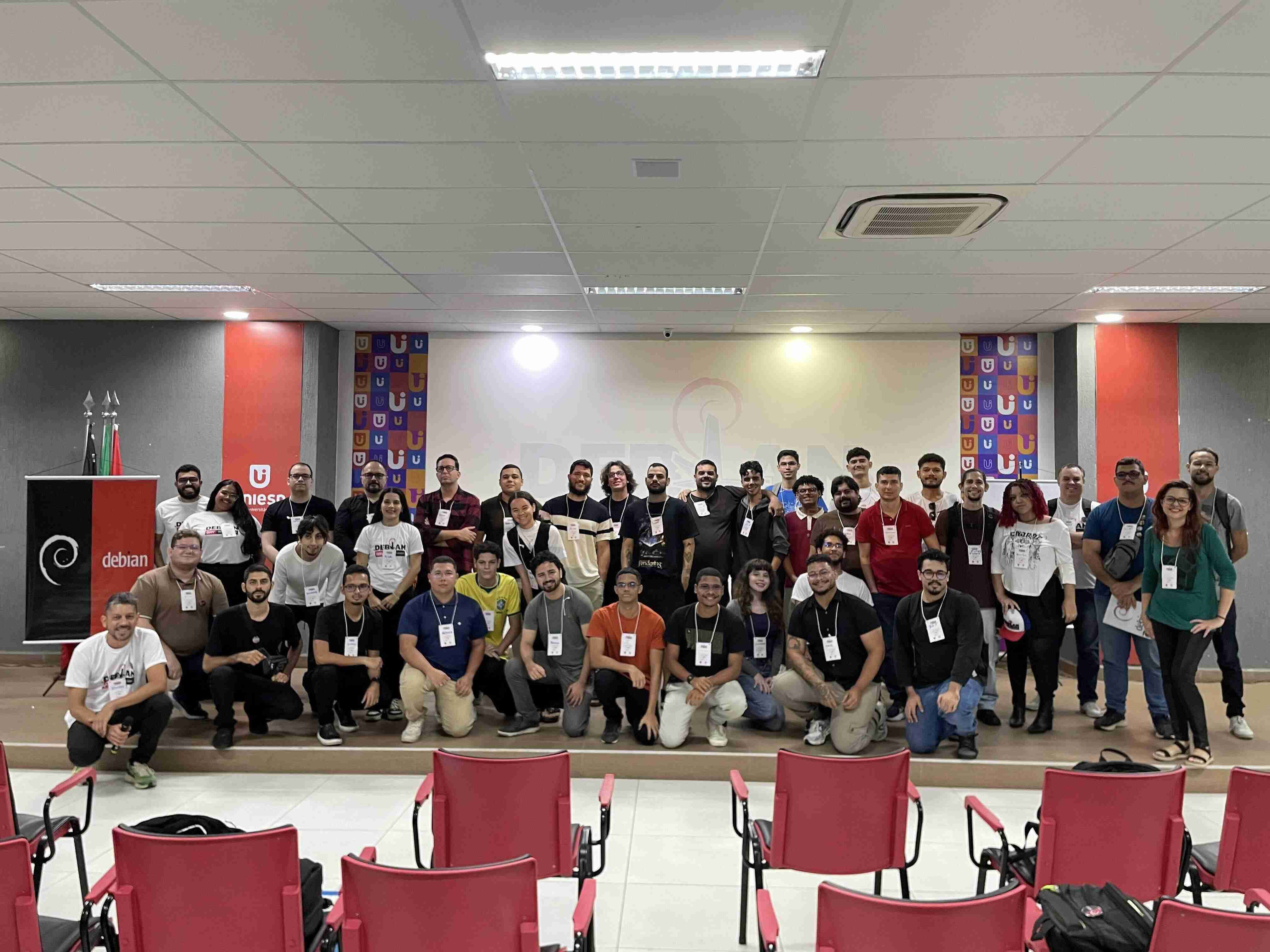
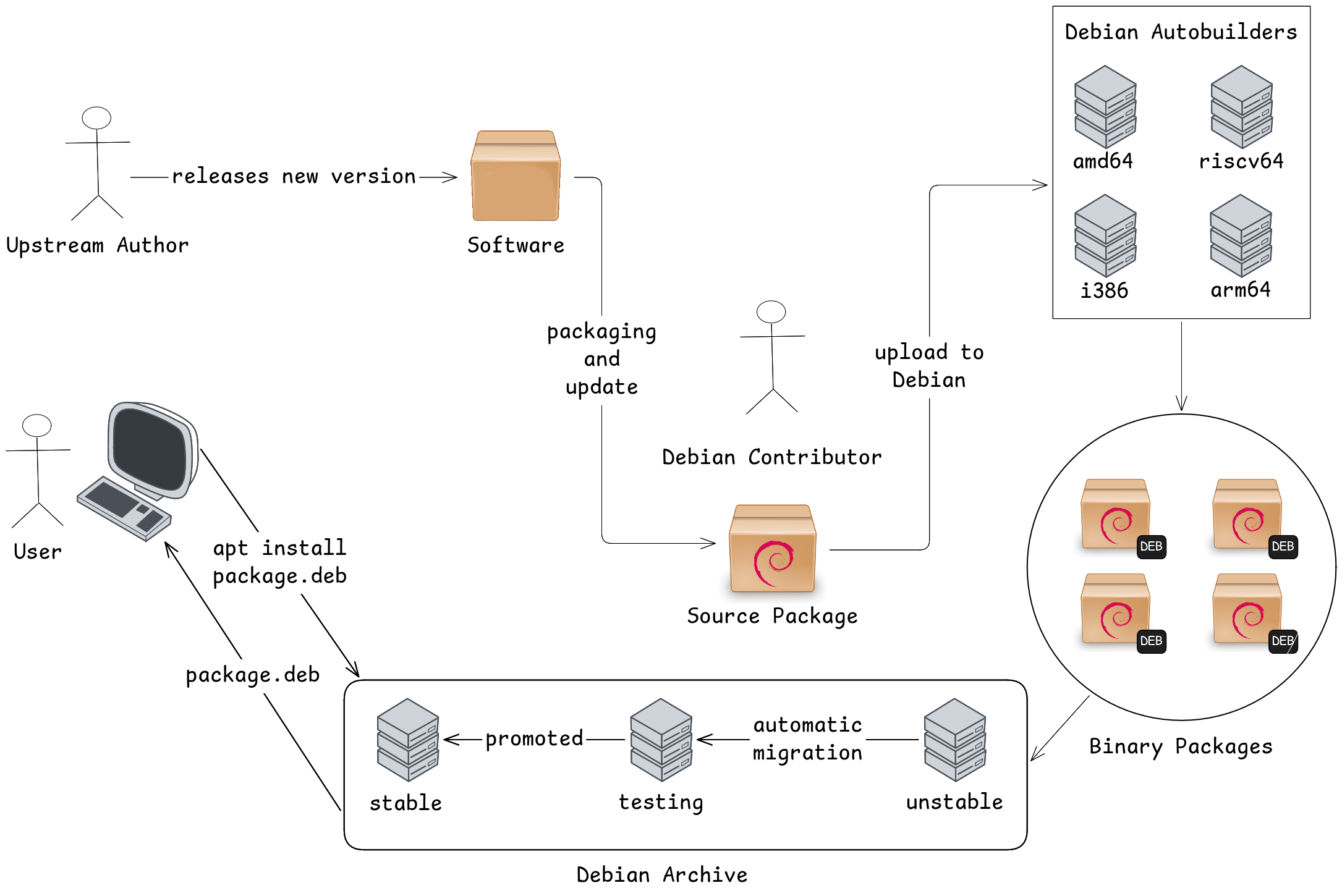
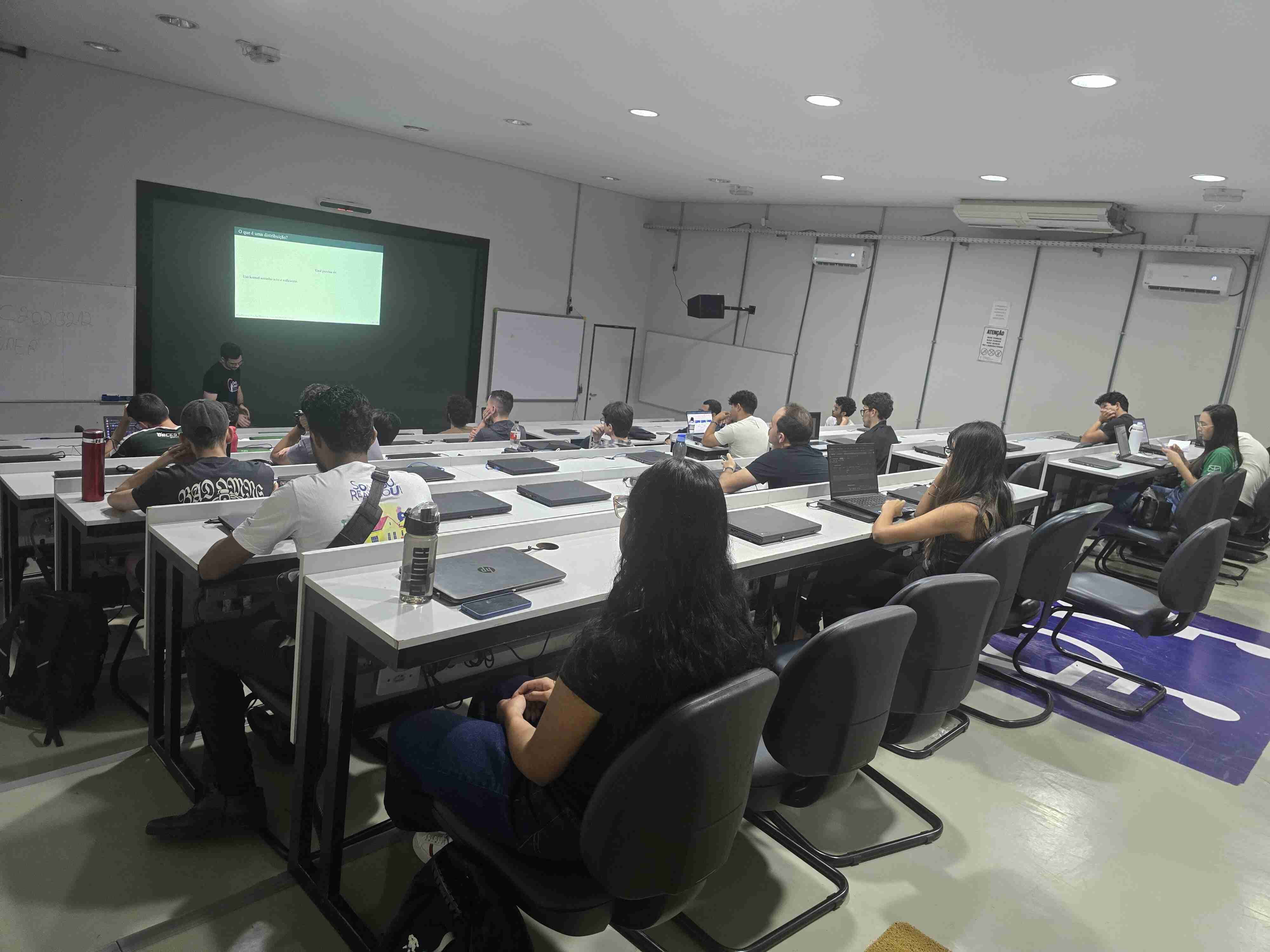
Jo o Pessoa Debian Day Jo o Pessoa Group Photo In Jo o Pessoa, we had a two-day event. The first day was dedicated entirely to workshops, and I ran a packaging workshop for newcomers. It was the first time I had been responsible for a workshop, and it was a great experience. We didn't have a lot of time, so I decided to start with a 30-minute talk explaining a few things about Debian. For example, I made this image to explain the packaging workflow: Debian upload workflow This image was based on The Debian Administrator's Handbook, and I think the participants really enjoyed learning about this workflow. When I showed the slide with this image, it was the moment when I received the most questions. After the talk, I explained my way of working and what they were going to do. The hardest part was setting up the environment, since my approach uses sbuild + gbp. They were running different Debian releases and, because of my inexperience with workshops, I had some of them configure sbuild with unshare, even though it is only available in stable through backports. Some of them even managed to learn how to use backports, while others decided to start again using the "old" way. One thing that helped a lot was the Debian Brasil Wiki. It has all the instructions for configuring sbuild in Portuguese, along with great examples. The Brazilian wiki is an opinionated version of the Debian Wiki. We generally prefer to use it for the convenience of having the exact workflow we follow, as well as an up-to-date Portuguese version of our process. If you want to learn more about the Brazilian community, you can find more details in the schedules from previous DebConfs. We almost always had a talk about the community and its activities. In the end, everyone successfully set up their development environment, and all six participants made their first contribution to Debian. If you take a look at my upload tracking page, you will see that every upload made on August 15, 2026 was a sponsored upload from this event. One of them appear twice in the list because I sponsored the upload and also made some other changes. I also asked all of them to put this in their changelog:
* My first contribution!
The idea was to make it clear to other people that they were only working on small Lintian issues as a way of learning and understanding the process. By the way, I made a UDD query to find packages with the following Lintian tag: redundant-rules-requires-root-no-field. To fix this issue, they only had to remove one line from the debian/control file. It is obvious that these uploads are not particularly useful. I call them "motivational uploads" because my goal is to help newcomers understand the process and immediately give them the reward of having made a contribution to Debian. I'll try to keep in touch with them. My plan is to hold another session, this time remotetly, to help them continue contributing to Debian. In fact, I already have another package prepared by one of them waiting for my review. The second day was a full-day event featuring a bunch of talks from the local community. I gave a talk explaining the new members process. I was the only Debian Developer at the event, and I think having a DD there made a real difference. Being there to answer questions, and simply being present, makes Debian feel more tangible and accessible to people. A big shout-out to Rafael Rocha, who put in a lot of work to make this event happen, with the help of many volunteers who contributed along the way.

Bras lia Debian Day talk in Bras lia One thing I really like about Debian Days is that each place has its own way of doing things. In Jo o Pessoa, we had a MiniDebConf-like event, while in Bras lia, we had something smaller but still very valuable. We decided to keep things simple: talk to a few students at the University of Bras lia (UnB) and then go somewhere to eat and have a few drinks.

A bit of history For those who don't know, the DebConf 19 was held in Curitiba, Brazil. After the event, Arthur Diniz got really excited about Debian and decided to go back to his University, UnB, to share his experience and encourage more people to contribute to Debian. I attended one of his talks, thanks to Joenio Costa, who invited Arthur to give the talk. Joenio was also my professor at the time and a Debian contributor. I really liked what Arthur had to say about free software, and he did a great job of presenting the Debian community as a friendly and welcoming place. So I decided to attend local meetings of the Debian Bras lia community, which had been inactive for a long time. Lucas Kanashiro was the Debian Developer who answered our questions and, as I mentioned earlier, simply being there made Debian feel more tangible. Everything stopped when the pandemic began. Then, towards the end of 2020, I saw a message in the Debian Bras lia channel saying that the meetings were back, this time remotely. I was hesitant to join because, back in 2019, I hadn't managed to make a packaging contribution, even with their help. I had eventually given up on the process. So this time, I decided to join the meeting with something already prepared for review. I watched all of Eriberto's packaging videos, picked a random package, and joined the meeting. I remember Kanashiro being excited that someone had just shown up with something ready for review. At the time, it was only the second meeting since Debian Bras lia had come back online, and none of the newcomers had started working on contributions yet. During the same meeting, he also convinced us, the newcomers, to give a talk about Debian just three days later. The MiniDebConf Online Brazil 2020 was happening on Sunday, and the meeting was on the Thursday before it. Since he has great convincing skills, I went along with the idea and prepared the talk with Francisco Ferreira. That was the rebirth of the Debian Bras lia community. Since then, we have maintained a close connection with the University of Bras lia, and today, at least seven Debian Developers are from UnB, whether as former students or former professors. The reason I told this story is that, even though the Debian Day we held in Bras lia was smaller, it is part of something that has been working for us for several years: staying close to an University. We've managed to attract and retain many people who share the same values and interests. I've hope you all had a great Debian Day. If you're reading this and aren't part of the Debian community but would like to join, get in touch!

Iustin Pop: Another optimistic take on AI

Disclaimers The current discussion in Debian around the AI GR is very heated, and I won t add to that, however, I am very confused about some of the viewpoints there. But, I had no idea how to even try to write this, so did shut up, until I saw Aigars excellent Optimistic take on AI, which motivated me to try, at least. For the record, I fully subscribe to the post, and to the voting suggestions (and I just voted). Also, for full disclosure, I don t think I did any contribution to Debian until now using AI, neither packaging, nor emails, nor bug reports. And this blog post specifically is 100% hand written. With that out of the way there are two points I want to make in this post.

AI is useful, even if it has risks First is, that even if we could put the genie back in the metaphorical bottle, we should not. We do need to continue working towards safe AI, and efficient AI (less environmental impact), but we should not work towards removing the usage of AI. There are already significant advancements in sciences and technology thanks to the use of AI, so desiring AI to not exist (assuming we had a magical wand) is the wrong approach. Sure, AI has significant risks and I can see ways in which AI can do significant damage to society but I don t think we can go from Kardashev I to II without the use of AI, and definitely not to III. And I think, that should be the goal. A few simple examples: Do we want to rollback all the 20 years old security issues that AI found? Do we want to rollback the recent Moderna cancer findings? Do we want to rollback the concept of extremely large scale pattern matchings , just because it runs on chips and no longer in one person s head?

Reading Debian lists The second point is, lately I found less and less enjoyment in reading Debian lists. Even with that already being the case, I feel so disconnected from many of the opinions being voiced in this discussion. On one hand, it s normal and healthy that people have different opinions, disagree, and move forward. On the other hand, looking at one of the proposed options:
  • Moderators and disciplinary teams may make narrow and tailored exceptions to rule 4, and decide on interpretation .
  • Violations of these requirements should be treated as violations of the relevant Code of Conduct and should result in swift and proportionate disciplinary action .
I already knew Debian, and some large parts of the OSS world, is left leaning. But those phrasings, to me, are too close to socialism/communism. As someone who grew up under communism, this is a much more slippery slope (disciplinary teams? really?) than AI usage. Ask me in person for more details. So, it is possible that Debian continues to evolve in such a way that I don t find myself in any way close to its ongoing culture. I will be sad at that point, but it will be what it is.

Where to? I think that, until such a time that an AI bubble bursts, what any organization should do is try to logically see where and if AI can help. And in an organization that is about computer software, I see hundreds of places that are subject to very large scale pattern matching so the half of the discussion is, to me, mind-boggling. To be clear, it s not about if you can t beat them, join them . As I wrote above, I think AI is useful, so the point is how to use it effectively. Well, will see what Debian votes. I am half curious, half sad already.

Wouter Verhelst: Programming and GR 2026 002

Programming language generations When I was young, I learned about a model of classifying programming language: the system of programming language generations. In this model, first generation programming languages are, basically, where you program the computer in the language that is defined by its architecture. On a Von Neumann machine, with its load-and-store architecture, you do that by inputting a string of numbers. The first programmer in human history -- her name was Ada Lovelace -- wrote in a first-generation language. 1GLs aren't so much invented as they are a byproduct of the computers for which they're created. Second-generation languages are the assembler languages. Because humans are not computers, and because decoding long lines of numbers to understand what the computer is doing, when programming became a full-time job, the programmers that did it decided that doing all this assembling manually is too complicated, so they quickly wrote assemblers to automate the process for them. They still could understand the 1GL output of the 2GL assembler, but most of them quickly forgot how to write software in a first-generation language. Not that anyone cared, as the translation from a 2GL to a 1GL is lossless and you can just revert it. Third-generation languages are higher-level languages. When the first 3GLs were invented (such as COBOL and, more famously, FORTRAN) in the late 1950s and early 1960s, it was believed by some that the work of programming a computer so accessible to non-programmers that the job of programmer would eventually cease to exist, and people would just ask the computer what they needed by entering COBOL instructions. This of course was ridiculous and incorrect, because converting algorithms to computer instructions, whether at the 2GL or 3GL level, is a specialized skill that some automation can perhaps make simpler but never completely take away the need for. At the time, some people also felt to some extent that using 3GL wasn't the same thing as actually programming 3GLs, but eventually the world moved on and embraced things. The invention of 3GL environments reduced, but did not completely take away, the need for people to understand 2GLs, as compiler and operating system authors still need to understand them, and some highly optimized code still continues to be written in 2GLs to this day. Fourth-generation languages abstract away some or all of the process of programming. For instance, a database-related 4GL will hide away the complexities of storing data in particular locations, how to fetch that data, how to index it such that you can fetch it efficiently, how to loop over the data to get you a summary of that data, and instead allows you to express the required information in an abstract way, expecing the computer to fill in the blanks. When SQL, an early 4GL, was invented, some people believed that the language made accessing databases so simple that the requirement to implement database applications would eventually cease to exist and we would just hand SQL prompts to users who need to access data. This of course was ridiculous and incorrect, because understanding data schemas and using that understanding to query data from a database is a specialized skill that perhaps a higher abstraction can help you make simpler, but that in the longer run it can never completely take away the need for. The invention of 4GLs also reduced, but did not completely take away, the need for people to understand how to do the things that the 4GLs automate for you manually, as the people who do write those things still need to understand them, and there are also environments where these particular 4GLs are rather not appropriate or just very slow. The first definition of programming language generations that I read about in the 1980s simply stated that fifth-generation languages did not yet exist, but that they would in the future, and that in those, you would "tell the computer what to do, and it would then do that". Now that we have a way of doing so, it could be said that by some definition, we now actually do have a number of 5GLs. The existence of these LLM systems has caused some, especially the people who build and exploit these systems, to exclaim that programming as we know it today is going to cease to exist, and everyone will just ask an LLM to generate a program, which will then do so. That is of course ridiculous and incorrect, as no automaton can generate software from nothing; input is still required for the model to be able to produce something that approaches usability, and being able to word that input in a correct and productive fashion will be a skill that future programmers can benefit from. I ran some experiments a while back, and from that concluded that, if we look only at the technical side, LLM use can, in some niches, increase productivity for a programmer. There are certainly things that you shouldn't use an LLM for, but equally there can be cases where use of an LLM to perform some task that traditionally would have been done by a programmer would be a net positive. But LLMs, as they exist today, are highly problematic. They require vast amounts of data to build the model. The companies that build these models are disrespectful of people who run web services, and as a result, everyone now has to implement various types of application firewalls just to not make systems fall over from the overwhelming requests for data. They are also disregarding the licenses that are attached to these vast amounts of data, which makes me, as a person who believes in the tenets of free software, sad. They require vast amounts of energy, causing an already-critical global warming crisis to, well, not improve. They require vast amounts of coolant to dissipate the energy concentrated in their data centers, causing further environmental effects. In this, they are problematic and to be avoided. But these are side states of the current state of affairs; I do not believe that they are inherently implied to be able to build and operate an LLM -- any LLM. I guess it's fair to say that my feelings towards LLM usage are complex and many-faceted. I haven't been involved in many debates about the subject, debates that to me seem to be mostly focused on "LLM good" vs "LLM bad" arguments that aren't as nuanced as the position that I would believe is more accurate. This is not because I don't care, but partially because I've been busy in my personal life recently and partially because the whole thing seems somewhat disheartening. But then Debian popped up GR 2026-002, meaning, I now have to come up with an opinion about various candidate statements in the context of the above, which is... not easy. But I did it anyway. There are 8 choices on the ballot, and they all have some truth and some falsehood to them. My position about LLMs can be summarized as:
  • The current state of affairs wrt LLMs is disastrous and we should not encourage them
  • However, there's no technical reason why this must remain true for all time
  • And so any statement should keep in mind what might happen in the future and that the current disastrousness of the whole thing isn't guaranteed to continue to exist for all eternity.
With that, let's go over them.

GR vote options

Proposal A Its summary, from the GR text:
This proposal aims to expressly forbid any contributions to Debian written with the use or assistance of large language models (LLMs) or other generative AI tools.
This falls squarely in the "LLM bad" camp, outlawing all generative-AI contributions, disregarding potential future ones where the problematic situations that exist today are not present. It makes a change to the social contract, which is especially difficult to reverse (on purpose), and which therefore also will require a 3:1 supermajority, but if we want to ban LLM-assisted contributions, this is probably the best way to do it.

Proposal B This one tries to allow AI-assisted contributions under certain conditions. It's mostly an "LLM good" proposal, with some caveats that can be discribed as "make sure you know what you're doing".

Proposal C This proposal is both a weaker (in some places) and stronger (in other places) version of Proposal A. It makes changes to the code of conduct instead of to the social contract, and it also wants to, at least, suggest policy to parties beyond the Debian project. By not changing the social contract, however, it is more likely to reach its simple majority requirement than proposal A. I don't think the language that it wants to add to the code of conduct is particularly well phrased, however.

Proposal D This is a weaker form of proposal B. The language is more compact and there are a few requirements that are spelled out in proposal B that are not spelled out in proposal D, but if you read between the lines you'll see that the requirement is still there really and I don't understand why proposals B and D were not merged into one.

Proposal E This proposal tries to hold a middle ground between "LLM good" and "LLM bad". It appreciates that things are quite muddled at the present time, and that perhaps the situation might might change in the future. It acknowledges that certain questions remain unanswered and that perhaps future considerations might therefore be different. But it essentially refuses to take a stance on whether LLMs should be accepted by the project or not.

Proposal F Similar to proposal E, this proposal tries to discourage Debian contributors from using LLMs, while still allowing people to use it should they want to, but with some requests and requirements to mark LLM-assisted contributions to account for those people who don't want to interact with LLM-generated software. As such, it is a proposal similar to proposal E that leans closer to the "LLM bad" camp.

Proposal G
This proposal aims to ensure that contributions directly to Debian are created by humans, while at the same time avoiding restrictions on the tools those humans may choose to use when contributing
Another "LLM bad" proposal, it however restricts the "bad" bits to only the direct output of the LLM. If you use an LLM to do something and then clean-room re-implement the same thing yourself, that's apparently fine.

Proposal H This proposal condemns the use of LLM for its environmental and moral problems, but explicitly not for its technical considerations. I feel that it is closest to my position as explained above.

Voting Expressing a vote on a ballot so convoluted and complicated like this one takes time. I have to read and understand every ballot option, and formulate an order of them. And I shouldn't just state which option has my preference; Debian's voting process allows a rich expression of opinion on ballot options. Anyway, I eventually ended up voting in a way that I think is consistent with my opinion. But it wasn't easy.

22 August 2026

Aigars Mahinovs: Optimistic take on AI

As I am writing this, there is a vote ongoing in the Debian project on how to deal with AI in general and AI-assisted contributions to Debian specifically. Massive discussions have happened in debian-vote and other locations. I have also asked questions there and offered my perspective. IMHO now is the time to summarize that, after all the discussions that I've had with people on multiple sides of this debate both online and offline, and explain how I will be voting and why. Hopefully that will be helpful to someone else as well. None of this has been compiled with AI assistance, but only because I think that forming opinions is not something where AI can really be helpful. Spellcheck was used though. So, first I will describe how I see each of the 8 proposals, then what my vote will be, and then a bit more detail on the reasoning and thinking behind this. WARNING - this went long. With all the above considered I will vote like this (earlier options are preferred over later options): Details on rationale Hypocrisy - I find any proposal that would ban AI-assisted contributions to Debian, but at the same time not ban including AI-assisted contributions from upstream projects to be inherently hypocritical. If LLMs and AI are the very incarnation of evil (a puppy-killing machine, as the analogy went in some emails), then any rational proposal would involve excluding any and ALL code contaminated by this evil from the project. What does it matter if puppies were killed in writing the debian subfolder of the source code or the src subfolder? No proposals went there because everyone knows that such a ban would be the death of the relevance of the project for the future. Debian would be frozen on some old version of the Linux kernel forever and other software would be falling to the same problem too, for example as projects on GitHub start enabling AI-supported reviews with patch suggestions. Soon the "development" of Debian could just be stopped as there is nothing to develop without any upstreams. Assumptions - a lot of proposals mention various "concerns" with at most one word, like "practical" or "community" without an explanation of what exactly they mean by that. The proposers assumed that everyone lives in the same info bubble as they do and already know everything that they mean and already agree to that. That is false. Proposal A was a positive stand-out in this area. Debian has contributors all over the world with very different exposure to different information sources and very different world views. If you want to convince the project as a whole that LLMs are bad because of "ethics", then you do really need to explain what you mean by that and give links to sources, at least as well as Proposal A did. All other proposals were really weak in this area. Copyright - the question on how copyright law interacts with training LLMs and their outputs is still not settled law. The closest legal statements we have so far are that - just because an LLM is trained on copyrighted material does not make that LLM itself be a derivative work of the training data (you, however, cannot just create and distribute a "library" of copyrighted materials just because you plan to train LLMs on it). The output of the LLM might not be subject to copyright law at all, like a photo taken by a monkey. It would then be public domain and thus can be modified and then licensed by the user of the LLM. It might also be a derived work of the context of the inference (so for software - if you refactor a GPL project, the refactoring itself is likely GPL too). Any stricter interpretations would break a lot of existing copyright doctrine, such as raising questions like: "does the output of any programmer now become a derived work of the programming manual books they read in college?". In any case it is really not up to Debian to legislate the nuances of copyright law. And I strongly disagree with the concept that an author can tell me how I am allowed to use the learnings that I gained by reading their work. That is not how either copyright or society works. I can look at 10 pictures of a sunset and draw my own, inspired by the ones I saw. No one can forbid me that expression. The same must be true for a machine learning and replicating patterns. Ethics - I've re-read all proposals and emails and the only real specifically ethical concern I could find was the complaint that some LLMs (or their training farms) are running their web scrapers too aggressively and that causes extra load on services. Like that is not an LLM problem. Scraping the web is not an inherent part of the LLM training or inference process. It's just a few misconfigured scripts. We saw the exact same thing in the early days of web search engine proliferation. Then we banned/blocked the misconfigured engines and the survivors learned that obeying robots.txt is one of the rules for surviving. Literally the exact same problem and it will be solved the same way. Did we ban all search engines back then just because some of them were misconfigured? No. Some claims (like in Proposal C) are just bombastic hyperbole ("hazards to users' mental health", "fraud", ...) and on top of that have zero relevance to the topic at hand - AI-assisted contributions to Debian. What "hazard to users' mental health" is created when a Coderabbit spots that a lock is not taken before accessing a resource in a particular function and suggests an AI-generated patch to fix it? What "fraud" is committed by this? There is no sane answer. I get that some people are very busy fighting some culture wars and sometimes, some AI-bros happen to be on the other side of one such war, so it is useful to label everything coming from the AI sphere as "bad" in all possible and impossible ways. You do you. In private. Why pull Debian into that? Why force your position on everyone else in the project? Why deny everyone in the project access to useful tooling, just because you have strong feelings about some of the people promoting some of those tools? This seems to me a repeating pattern here - blaming the technology as a whole or blaming all providers of this type of technology for failings (ethical or technical) of some of those providers. Like refusing to wear all shoes and condemning all shoemakers and sellers, just because some American billionaires figured out a way to make and sell cheap shoes by killing puppies. Not refusing and condemning those providers, but condemning all for the actions of a few. Resource usage - this is a big topic for many and it has reasonable points to it. The LLM and AI technology has no inherent need to be damaging to the environment in any way for it to function. It does not need to burn oil or dig up cobalt. It does not need to sacrifice a ton of water to the Gods. It is perfectly possible to run AI (both inference and training) purely from green, electrical energy and cool data centers in equally sustainable ways, like with simple air-source heat pumps (also known as air conditioning) or even use it beneficially (many data centers are used for heating surrounding buildings via district heating). However, some AI companies do use non-green power for their data centers, some do use locally-limited fresh water for evaporative cooling (evaporated water still rains down as rain, it is not really lost, but that may happen in another location so lack of water can still happen locally). Some even run unlicensed natural gas turbines in their data centers to provide them with power. And those specific providers can and should be shunned and condemned. Not the other ones, who are doing the right things. Not the technology or its users or its outputs. There is a very wide spectrum of options on how an AI system could be powered: starting from local execution on already existing private hardware powered by one's own local solar power (good), to a data center stuffed with borrowed AI-only cards powered by a gas turbine or coal power station that operates solely to supply this data center (bad). Proposals that talk about ecological impact, but do not even consider where on that (very wide) spectrum to draw the line between "good", "acceptable", "discouraged" and "bad" well, I cannot see those proposals being actually serious about the environment to begin with. It feels like they just refer to it for points. And if we go into the power question deeper, well the grid dynamics and economics become very, very complex and often also non-intuitive. Like, all large software companies with data centers (that also happen to provide AI services), like Google, Meta, Apple, Microsoft and others do actually care about sustainability (in part because their customers care and vote with their wallets) and so all of them use 100% green energy for their data centers (including AI data centers) .... "on an annual scale". Wait, what does that mean? Well, the electrical grid is special - the amount of electricity produced and consumed on the whole electrical grid together has to match almost exactly every second. If there is just a single second where there is significantly more energy consumed from the grid than is produced, the frequency will plummet and you get a brownout and risk a grid collapse. The same is true in reverse - that causes a voltage swell. So grid operators manage energy flows every second and command power stations to increase and decrease generation all the time. Some power stations are easier to regulate dynamically than others. In the end, all that means is that even if your data center has a contract for 100% green energy with your power company, at some seconds across the year there might not be enough green energy in the grid to fully supply ALL people and companies that have 100% green energy contracts. This gets compensated in other seconds, so that across the year ("on an annual scale") for each kWh that your data center pulled from the grid, the same amount of kWh of 100% green energy flows into the grid. But it might not happen at the exact same second. Pedantic companies, like Google, take that discrepancy and count that as CO2 emissions for themselves. And then they and the power companies (they have contracts with) invest billions into new green energy projects, better grids and better batteries so that eventually this discrepancy goes down to zero. In this way green AI data centers with their increasing consumption of green energy are actually doing a lot of good work in making our electrical grid more green. They are making more resources than they are consuming. And that is just the tip of the iceberg. This is a deep topic that really abhors generalizations like "more consumption = bad". I've heard similar discussions in the context of electric cars - "so you got an electric car? you'd have fewer emissions if you drove no car at all!". That might be so. And I would also reduce my emissions to zero if I stopped breathing, but I really do not want that kind of thinking to be propagated further, especially when impressionable young people are around who may take it to its logical (but wrong!) conclusion. Instead I talk about how early adopters use electric cars to gather experience and achieve volume to start the network effects working. Once network effects of many electric cars on the roads are sufficient, it becomes an economically logical choice to get an electric car. People who cannot avoid having a car start to switch over. And at the point of mass switchover the reduction of emissions is so massive that those early adopters failing to go all the way to riding a bicycle becomes a rounding error. But surely that does not apply to LLMs? They are only increasing consumption and bring no benefit? Benefit - and here we have to actually talk about benefits. Because you cannot make any cost-benefit analysis if you do not actually fully investigate the benefits. Are there environmental benefits from running those AI models? Yes, in a lot of very diverse ways. Hard to measure, however. There are projects that are easy to quantify - like that Google AI project on contrail avoidance. An advanced, special model trained and executed in Google AI data centers was able to predict where in the air contrails would be produced and could generate proposed course adjustments to commercial flights to avoid specific heights in specific locations at specific times. This stopped these aircraft from creating contrails and those contrails did not make a further contribution to global warming. That benefit in a year was many times higher than the environmental cost of training and running that AI model. And it can keep running for many years accumulating further benefits. On a personal scale, I've had problems that I bashed my head (and computer and CI resources) against without much success years ago solved with a few minutes of compute. Having a good enough candidate solution quickly is much cheaper from a resource perspective than spending days trying different things, running my PC for it, trying different patches on CI executions, doing different rebuilds. I've seen very significant benefits in AI-assisted development in enterprise environments where code way more complex than what is in Debian (especially in Debian tools and packaging) gets analysed, reviewed, modified or even refactored or rewritten in another language with AI assistance. And it generally works. The commonly mentioned "hallucinations" are a thing of last year in the coding context. Nowadays the AIs work in special coding harnesses and use real tools as foundational facts. You cannot "hallucinate" an API call or parameter if you have to run and pass the unit tests and integration tests by your harness before you can return "success" to the caller. I've personally seen high-level AI models read very complex software projects across multiple repositories and point out a very specific design consideration that was encoded in the code logic, but never mentioned in comments or documentation. It was so obscure that even I did not immediately know what it was talking about (and I wrote that code). Only on close inspection of code interaction across three repos did I remember that there was indeed that bug 2 years ago that I fixed by doing the change that this AI picked up (it wasn't in the history of this git repo due to repo migration). It mentioned this because it was very relevant to the task I initially gave it to review. These LLMs in a proper harness with proper system instructions and usage approach are not just fancy spell checkers or auto-complete. They function more like very advanced pattern matchers. They have learned millions of patterns from training data. When they look at the code, they see hundreds or thousands of overlapping patterns. When you ask them to make or change something, they pull out a pattern (or ten) from their training and apply those patterns to the context of your program. You get something that looks just like the surrounding code, same style choices, same language, same comment voice, but it implements something new there, based on other patterns learned. If you've studied design patterns in your CS class, this will be familiar. But people can learn and remember maybe 20-30 patterns, while an LLM can have a million patterns and can combine them when needed. So it takes a pattern of Python code, pattern of standalone script, pattern of parsing command line parameters, pattern of classes, pattern for background threads, pattern for file tree traversing, pattern for pipes, ... and squishes them together to make a solution for your query. And then tries to debug it with compilation, tests and execution until it works as expected. Even if there is zero LLM development going forward, it will take many years to fully appreciate the benefits we can extract from the already trained models. They don't even have to be retrained - for existing languages they just keep working. For new language variations, like a new Python version, you can feed the changelog into context and they will be able to work with a Python version that they never saw in training. And patterns are mostly abstract, so not really specific to any language - human or programming. This is another big enabler that LLMs have created that we have not really explored yet. LLMs have created really free software. People can actually create software that is perfectly suited just for them and no one else. They don't even have to know how to program and don't even need to speak English. I've seen people writing prompts in their native language and LLMs creating and then adjusting web apps or Android/iPhone apps and deploying them to the user's own phone. It was too buggy to work last year, but this year it is actually very functional for simpler use-cases. And the code looks just fine too - I've seen external contractors in a business setting deliver far worse. If you start with a good initial system prompt, the project will have architecture documentation, use-case documentation, unit tests, integration tests, deployment harness, testing and production deployments, audit logs, monitoring, clear git commits, CI validation on commit, ... Modern AI systems have the capabilty to deliver software freedom to people who are not coders. I really can not overstate the consequences this may have on the world. Community - I find the concerns that new people will be using LLMs so much that they will no longer be understanding the actual code they are contributing a bit regressive. I don't see any significant difference between this and people relying on compilers, on high-level languages or on debhelper. Writing modern debhelper packaging feels more like writing configuration and not writing code. It takes really significant effort to dig down through layers of abstraction to find what actually is being executed in debian/rules. AI does not really make this worse. In fact, I find that AI can make it much easier to understand arcane syntax because you can ask an LLM to explain what is happening in any part of the code and it will do a pretty good job of it, digging down through the layers of abstraction for you. All the pro-AI proposals include the requirement that each human contributor needs to understand and stand behind their AI-assisted contribution and I believe that is a good requirement and also a sufficient requirement. Modern LLMs not only produce clear and concise code, but they are also capable of producing good comments explaining why the code is how it is, good commit messages explaining the change and reason behind it and also making corresponding changes to test suites and documentation. You know - the housekeeping stuff that is often skipped because it slows down the actual feature development, but then its lack becomes a problem for future contributors. Responsible use of AI assistance is a great chance to actually strengthen our community and make our software easier to maintain. That said, I have no qualms about flat-out rejecting contributions that do not make sense. And it does not matter if they are made with or without AI assistance. If the contributor will not explain their patch, it might be they do not understand what their AI produced or it could be that the contribution is deliberately hiding a backdoor being planted. It is also quite common for a contribution of a new feature to be rejected because the author/maintainer does not believe that it is a good fit for the project. Featuritis is a real disease. AI or not. There have always been drive-by contributions to various projects. They will continue to exist. Each of them should be evaluated on its merits - is this feature valuable to our users and is the added complexity (if any) worth the functionality? A lot of security bug reports are "drive-by" contributions as well. And many of them nowadays are discovered, exploited and patched with AI assistance. We could reject them, but that just leaves us holding the bag on the now-known exploits. And the New Maintainer process should be able to figure out if an upcoming Developer has actually understood the nuances of Debian packaging or not. A contributor with upload rights to the archive has to be able to create a basic package with no support tooling (maybe even without using debhelper?) and be able to understand and modify more complex packages (possibly with tooling support). IMHO that is a separate discussion that is worth having, involving experts from the educational sector. Conclusion IMHO the Debian project should not restrict what tooling individual contributors use to contribute. Expecting high-quality contributions and that contributors understand what they are contributing (as a first level of review) is enough. However, Debian should provide its contributors (internal or external) with guidance on how to contribute in the best way possible. That could include: In addition to that it would be helpful for Debian, as a project, to reach out to AI service providers to: Questions? Feedback? Just ask here or here.

Russell Coker: Links August 2026

This YouTube video about the Cashier Girl Meme is interesting in the context of AI systems that generate images of people and can communicate with people, hotter than any real human is an achievable goal [1]. Stand Up Maths has an interesting Youtube video about LLMs solving maths problems which I highly recommend watching (it does not require any real knowledge of maths), I think this opens the door to attacks on well established cryptologic systems [2]. Adam Conover made an insightful YouTube video about how and why Hollywood is now unable to make good sitcoms and why this is bad for society [3]. Sky Croeser wrote an interesting and insightful blog post about topics covered at the Digital and sexual citizenship in an age of social media bans: Interrogating the rights of children and young people conference [4]. Zane wrote a very informative blog post about reverse engineering a trojaned Android projector with Claude Code [5]. We need much better security on home networks to break the business model for this sort of thing. Renee Stonebraker s article Puritans Wouldn t Eat Pussy, So They Invented the Western has a lot of interesting information about early days of colonising the US, and not much about eating pussy [6]. IFLScience has an interesting article about brinicles, icicles of brine that form under sea ice [7]. Nautilus has an interesting article about the Silurian Hypothesis [8]. The Conversation has an intersting article about the pros and cons of no-till farming [9]. Cold War is a 365tomorrows story about bio-warfare which raises several disturbing possibilities we need to guard against [10]. Scott Santens wrote an insightful article describing how a land value tax would reduce rent and solve the housing shortages [11]. Positive News has an interesting article about using OnlyFans to teach people about climate change [12]. The Conversation has an interesting article about cultural safety in healthcare, sounds good, and while we are at it lets deal with sexism [13]. Doctoreww has an interesting web page about ways of displaying different strings to humans and machines, this could result in you running a different command to what you thought you copied from a web site or defeating tools designed to block hostile content [14]. Cory Doctorow wrote an insightful article Commentary Hell is Other People about the way rich people want to use AI to replace all people [15]. Also psychologists who help rich people accept being greedy are worthy of a Luigi The research article Worship me at the office altar: Why narcissistic leaders resist remote work is interesting, yet another reason to get rid of narcissistic executives [16]. Renew Economy has an interesting article about clean up costs for mining (which is usually left for the government to pay) and how this could impact renewable energy production facilities [17]. Elvira Bary wrote an insightful article on the Russian financial collapse that is happening now [18]. The Guardian has an interesting article about Afro-American women who travel to South Korea for healthcare because of problems with racism and sexism in American hospitals [19]. The Conversation has an interesting article about the potential for disabled people to be more productive in space than non-disabled people [20]. Krebs has an interesting article about LG banning residential proxy code from apps after the LG store was found to have such code in 42% of it s apps [21]. Robert B Shpiner wrote an insightful article for The Guardian about the death of democracy in the US [22].

Dirk Eddelbuettel: RProtoBuf 0.4.28 on CRAN: Small Updates

A new minor release 0.4.28 of RProtoBuf arrived on CRAN today. RProtoBuf provides R with bindings to the Google Protocol Buffers ( ProtoBuf ) data encoding and serialization library used and released by Google, and deployed very widely in numerous projects as a language and operating-system agnostic protocol. The new release is also already as a binary via r2u. This release corrects a really old bug. Troy found, when working on gRPC based extensions, which is in and by itself exciting, that a small part of our interface surface (for service descriptors) was just wrong confusing single and double underscores. adjusts to a change upstream. This has been corrected. I updated a few of the usual continuous integration parts, updated a help page for a newly-added nag by CRAN, and also got a last-minute round of noodling in as the JSS paper vignette was still referencing OmegaHat which the CRAN URL checker objected to. I created a quick one-off repo to serve pdf files should the need arise again, and rebuilt the vignette linking to it. No other changes. The following section from the NEWS.Rd file has all details and links.

Changes in RProtoBuf version 0.4.28 (2026-08-21)
  • Standard maintenance of continuous integration
  • The type help page has received a usage section
  • Cleanup of several methods for ServiceDescriptor, correct several other declaration (Troy Hernandez in #117 fixing #116)
  • Adjusted vignette reference to Omegahat paper to alternate location

Thanks to my CRANberries, there is a diff to the previous release. The RProtoBuf page has copies of the (older) package vignette, the quick overview vignette, and the pre-print of our JSS paper. Questions, comments etc should go to the GitHub issue tracker off the GitHub repo.

This post by Dirk Eddelbuettel originated on his Thinking inside the box blog. If you like this or other open-source work I do, you can sponsor me at GitHub.

21 August 2026

Emmanuel Kasper: Moving software development to separate VM to reduce credential scavenging

Rationale: I was remembered via https://unit42.paloaltonetworks.com/chaindrop-npm-worm-analysis/ (linked from https://anarc.at/blog/2026-08-18-people-vs-ai-overlords/) of the risk of downloading untrusted packages in a dev environment. If you read the blog post above you will see that it is way to easy do have a random npm, or even python package in a dev environment scavenge your long running credentials from your workstation, either on disk, or reading from memory ! I will thus move to the following set up:
  • things running directly in my workstation will require either to come from a trusted source (Debian package that is) or run in a sandboxed infrastructure (Podman rootless is the best thing here, followed by Flatpaks)
  • everything else, will run in a Libvirt VM based on Debian cloud images. For me it will be mostly in the beginning the VSCodium editor, with its myriad of extensions.
I am aware of whole blown solutions like QubeOS however I don t indent to reinstall the whole OS, and QubeOS does not run on ARM64 which is one of the environment I am using. I will try to document this setup in two blog posts, one about the VM creation using Debian Cloud Images, the second one about running a graphical env in the VM with some filesystem passthrough. Stay tuned !

19 August 2026

Sergio Cipriano: My experience at DebConf 2026 in Santa F

My experience at DebConf 2026 in Santa F The Official DebConf26 Group Photo Last month, I attended DebConf 2026 in Santa F , which was my 5th DebConf. As always, it was an amazing experience, and I met a lot of great people there. For those unfamiliar with the event, it takes place over the course of two weeks. The first week is called DebCamp and is geared more towards hacking and organizing the event itself, while also offering a great opportunity to discuss ideas with others. The second week is the DebConf. We still have the hacklabs, but the talks and workshops are the main focus.

My Activities during DebCamp My main activity was working on the python-click transition that I started in May. There were only a few packages left, and with the help of Guilherme Puida, we managed to work through all the remaining bugs. I plan to talk in details about this transition in another blog post, where I will focus on the tools I used and my experience with mass rebuilds and mass bug filing. I also helped with de Golang Sprint. I worked on a few packages and experimented with the dak API to generate a list of packages that needed manual action. There was a lot of manual, repetitive work and false positives, so I eventually moved on to some other, more fun stuff. I also learned a few thinks about kernel live patching while talking to David Tadokoro. I had to work on the Ubuntu Kernel package recently as part of my job, so we exchanged some ideas, and the conversation was really helpful. He also taught me two commands that I wasn't familiar with, since I'm a newbie in kernel development. Here are the commands:
$ b4 am https://lore.kernel.org/lkml/20240730071904.1047-1-sergiosacj@riseup.net/
$ b4 diff *mbox
By the way, this is the first and only patch I have submitted to the Linux Kernel. I worked on it during DebConf 2024, when I attended the workshop Helen Koike runs to help newcomers submit their first patch to the Linux Kernel. Another great interaction was with Marcos Talau. He showed me his remote access setup, which he is using to help students make contributions to Debian without the struggle of setting up the development environment. Another cool thing is that Puida showed me the command:
$ gbp clone vcs-git:typer
After that, I decided to read the gbp manpage because these little details really improve the overall experience. I also had many other amazing interactions. I just decided to write down the ones that I felt made the most sense for this kind of "blog report" post.

My Activities during DebConf I gave a talk about dh-make-vim, a tool I have been working on sporadically. An interesting detail is that one of the video team volunteers for the talk, Piotr, spoke to me about his tool, pypi2deb, which is similar but aimed at the Python ecosystem. There are many tools of this kind in Debian, and they are all interesting pieces of software. I plan to write more about them in the future. I attended several talks and participated in a few BoF sessions, and they were all great. But something that really stood out to me was the workshop on the Debian Installer, led by Alper Nebi Yasak. I didn't know anything about the Debian Installer, and I liked the way he approached the subject and showed the specific details. I'll take some time to read the Debian Installer internals documentation. I was not familiar with udebs or with the fact that the Debian Installer uses debconf under the hood.

Wrap up It was an amazing event. Unfortunatly, a lot of people I know were not able to attend for different reasons, and they were missed. There were many other things that I enjoyed during this trip. Here are a few more highlights:
  • World Cup matches
  • A day trip around Santa F
  • The Cheese & Wine party
  • Empanadas!!

Antoine Beaupr : The people vs the AI overlords

Also in this series:
In a post to oss-security, my (Debian) co-developer Russ Allbery stated that "open source software [OSS] is coming face to face with a motivation crisis that has been building for a long time". His point is essentially that large language models (LLMs1) are making the existing OSS community crisis worse. For him, it's the flood of code reviews, but he argues that varies according to people's desires, for others it's security issues and so on. I think Russ is right, but I would argue there's something much bigger than our open communities going on here, and it's about the entire field of computing. This pressure is on all of us, regardless of whether we work on open source software or not.

How people use models People using LLMs in their workflow have radically changed how programming works, even for people who claim to avoid vibe-coding. And I'm sorry to single out one poor maintainer here: it's not you, Brian, you're just one example among many. But this is typical use of those models nowadays:
Once it s done, I ll use /code-review and let Claude spawn sub-agents to do a full review of the new code. This usually finds some problems, even problems that the main Claude instance didn t find during its validation. I usually keep running /code-review again and again after finding and fixing issues, until there aren t any left.
Think about what that means for a minute. This is automation built to fire up dozens of agents crunching at a problem for minutes if not hours of GPU compute time, in parallel. This is essentially a couple of shelves in a datacenter rack, totally maxed out on power and cooling, abstracted behind a cute little /code-review command. The author, here, is rightly concerned that "Anthropic could pull the rug out and require API pricing", which is perhaps a code word for "charging something closer to actual costs". Brian also pays lip service to environmental and societal costs but those are largely abstracted away, so let's keep that conversation aside here as well, as we have discussed it before anyways. But clearly, this way of working has an (externalized) cost, to say the least.

Paying for non-free tools For decades my work has been focused on free and open source software. I've long stopped using proprietary operating systems like Windows or Mac, and even before that switch, I was mostly using free software on those platforms, partly out of principle, but also because I was too poor. So the tools of my trade are free, and I build free tools with them. It feels like we're going backwards: when I was in school, a millennia ago, my classmates didn't have access to a compiler and were wondering how they would scrape the money to buy a compiler like Borland's or Microsoft's. I had a compiler built into my operating system (FreeBSD at the time), so that wasn't a problem for me. For them, it was a significant expense, but at least those expenses (or more shady sourcing of programs) were a one-shot deal. Fast forward 30 years, and software is rented: you pay monthly for Adobe's Photoshop and Microsoft's office suite just like you pay for Netflix, Disney+ or Spotify2. And now you need to add dozens (if not hundreds of dollars) of monthly credits to access LLMs on top of that. So, now we have to pay to get anything done? This is peak enshitification of our job: first they steal our work to train their models, and then they sell it back to us at a profit.

Attacking the engineers AI is coming for our jobs, as engineers, if not everyone, according to the narrative. For a while now, our job market has deteriorated: less jobs, for less pay. Lots of skilled engineers looking for work and finding crap jobs then still looking while working. This is not by accident.3 We engineers have a lot of power, it is not organized, but that's just a couple of unions away (easy!). Tech overlords know this, so they are attacking our profession, directly, by forcing us to train and use models that they can control. Even in environments where programmers are not forced to use LLMs, the mere pressure of other people's LLM-generated work is huge. One can be forced to review LLM outputs, or just peer pressured you into producing more. We're now supposed to accelerate delivery, because models can presumably do things so much better and faster. With supply chain security becoming such a large vector that we now have worms crawling around developers accounts on NPM, increasing the delivery cadence seems like a really bad idea.4 The LLM hype is part of the larger wave of cyberwar against workers, against water, against the Earth, against all the people. This is not a matter of individually "adapting to the reality" or personal choice, but a political, social, hard problem we need to address collectively.

  1. I again prefer the term LLM to "AI" because models do not possess intelligence. I did use it in the title because click baiting is apparently important, but I stopped short of calling this one "Rage Against the Machines" because that would be the title of every blog post I have ever made.
  2. Yes, I know that Visual Studio is kind of free now, but I wouldn't be surprised if they turn that into a rental as well, because why not.
  3. Beyond sabotaging the job market, Sam Altman event wants to sell "intelligence as a utility" something that is just a really bad idea but especially shows how megalomaniac those people are.
  4. This brings back memories of another era, walking us back decades in terms of computer security.

18 August 2026

Andy Simpkins: My first go at tracking down a kernel bug

A couple of weekends back, I upgraded my home sever. It failed to restart after running apt dist-upgrade The only update that was performed was to the kernel, it went from 6.12.88+deb13-amd64 to 6.12.100+deb13-amd64. I had previously performed an apt-get upgrade, and rebooted the machine, so I was pretty sure that this was to blame. This blog entry (is a late) attempt to document how I went about finding a fix for this issue so that next time I don t need as much hand holding as I did this time around :-) (1)

Having my machine not boot following an upgrade is pretty rare, but has happened before. Usually it is because I have done something wrong so as always confirming I haven t broken something by accident is always my first step I plugged in a keyboard an monitor to the machine and watched it boot. Being a server this takes a long time (I guess because at this stage of system initialisation we want to test things sequentially) Watching the system boot I see the usual BIOS/UEFI stages for this machine, followed by the grub menu and the the local screen showed:
            Loading Linux 6.12.100+deb13-amd64 ...
            Loading initial ramdisk ...
Nothing else. That was it. OK that looks like I have a broken system all right, and at very early stage of the boot process process. (2)
Breaking into the grub menu and removing the quiet option yields a little more information (but not much):
            Loading Linux 6.12.100+deb13-amd64  
            Loading initial ramdisk ...
            
            	EFI stub: Loaded initrd from LINUX_EFI_INITRD_MEDIA_GUID d
            	evice path
            		EFI stub: Measured initrd data into PCR 9
and nothing else. (3) Initial debugging (4) Triage Start looking for where the fault first occurred. At this point I needed help, and given that Sledge was visiting I asked if he would sanity check what I was doing. His initial thoughts were that that /boot had run out of space, but replaying my step (3) with him acting as a rubber duck showed that this was something other than PBKAC Sledge had a quick look, then informed me that between kernel images 6.12.88+deb13 and 6.12.100+deb13 Debian stable has only had shipped .90 .94 .95 and .96 kernels. We could easily try them all: OK I now have the first kernel image that doesn t boot on my system, time to raise a bug

Up until now I have been walking to my garage where the server is located and standing in front of a rack
with a monitor and keyboard plugged into the machine. However this machine supports IPMI so I spent a little time getting that up and running so that I can continue from the relative comfort of my desk (with lights, a chair and not needing to hold the keyboard with one hand)
Great I can now grab screen shots from the confort of my desk (unfortunatly they are only screen shots not text files, but at least we can seen the early stage of boot, Post, grub menu and then initramfs before system log happens) (5) Collating information for the initial bug report Sledge had mentioned my problem in irc/#debain-kernal where iam_tj suggested that we try appending
debug earlycon=efifb to the kernal command line. This yielded 15 seconds worth of messages before the system locked up the last few messages being (vmlinuz-6.12.96+deb13-amd64):

[ 14.663477] RCU Tasks: Setting shift to 5 and lim to 1 rcu_task_cb_adjust=1 rcu_task_cpu_ids=20.
[ 14.750474] RCU Tasks Rude: Setting shift to 5 and lim to 1 rcu_task_cb_adjust=1 rcu_task_cpu_ids=20.
[ 14.838024] RCU Tasks Trace: Setting shift to 5 and lim to 1 rcu_task_cb_adjust=1 rcu_task_cpu_ids=20.
[ 14.929752] NR_IRQS: 524544, nr_irqs: 584, preallocated irqs: 16
[ 15.016814] rcu: srcu_init: Setting srcu_struct sizes based on contention.
[ 15.104011] Console: colour dummy device 80 25
[ 15.191236] printk: legacy console [tty0] enabled
[ 15.278249] printk: legacy bootconsole [efifb0] disabled Booting the working kernel with the same kernel options yields the SAME messages with slightly differing times, but then continues to login prompt:

 [   14.697466] RCU Tasks: Setting shift to 5 and lim to 1 rcu_task_cb_adjust=1 rcu_task_cpu_ids=20.
 [   14.784936] RCU Tasks Rude: Setting shift to 5 and lim to 1 rcu_task_cb_adjust=1 rcu_task_cpu_ids=20.
 [   14.872067] RCU Tasks Trace: Setting shift to 5 and lim to 1 rcu_task_cb_adjust=1 rcu_task_cpu_ids=20.
 [   14.964000] NR_IRQS: 524544, nr_irqs: 584, preallocated irqs: 16
 [   15.051482] rcu: srcu_init: Setting srcu_struct sizes based on contention.
 [   15.226079] printk: legacy console [tty0] enabled
 [   15.313751] printk: legacy bootconsole [efifb0] disabled
 [   15.400831] ACPI: Core revision 20240827
 [   15.401415] clocksource: hpet: mask: 0xffffffff max_cycles: 0xffffffff, max_idle_ns: 79635855245 ns
 [   15.401464] APIC: Switch to symmetric I/O mode setup
 
... and so on
iam_tj also suggested adding keep_bootcon with debug earlycon=efifb keep_bootcon on vmlinuz-6.12.96+deb13-amd64:
We get a LOT further and we see a crash / trace-back:
[ 34.285342] BUG: kernel NULL pointer dereference, address: 0000000000000000
I raised bug #1143721 and followed it up with screen captures of the boot sequence (captured from the IPMI client) and files containing the output of dmidecode, lscpu and lspci to kive the kernel team as much information as possible:
[6.12.96+deb13-amd64 debug earlycon=efifb keep_bootcon.tar.gz (application/gzip, attachment)]
[dmidecode.txt (text/plain, attachment)]
[lscpu.txt (text/plain, attachment)]
[lspci.txt (text/plain, attachment)]
(6) Tracking down the bug Git Bisect The problem with this type of bug is that it is hardware (class) specific, whilst the kernel doesn t boot on my system, it clearly has worked on machines used by the kernel team, the Debian test and build infrastructure, (otherwise this kernel would never have been released) and everyone else who has upgraded to the newer kernel before I did (otherwise we would be drowning in fails to boot bug reports). Carnil s excellent response to my bug: Message #15 (and help in IRC) provided me with a detailed step by step guide in how to track down the individual git commit that fails on my system. I had already (with Sledge s suggestion) made a clone of the stable branch, but was struggling to follow the steps in the Debian Linux Kernel Handbook to re-build a duplicate kernel because I didn t understand how to obtain the same configuration that Debian used to build the kernel; Carnil s email provided me the missing steps (Highlighted).
git clone --single-branch -b linux-6.12.y https://git.kernel.org/pub/scm/linux/kernel/git/stable/linux-stable.git
cd linux-stable
git checkout v6.12.95
cp /boot/config-$(uname -r) .config
yes ''   make localmodconfig
make savedefconfig
mv defconfig arch/x86/configs/my_def
test 6.12.96 to ensure this is "bad"
git checkout v6.12.96
make my_defconfig
make -j $(nproc) bindeb-pkg
  install the resulting .deb package and confirm it fails to boot and triggers the NULL pointer dereference.
Right I can now start to Bisect the problem:
git bisect start
git bisect good v6.12.95
git bisect bad v6.12.96
Rather than use the half step point s git bisect suggested I was advised in irc to jump straight to the a given commit that from the git log was suspected as the culprit:

git checkout 977855894bca4b87afa50d21e3f3e85a5a0e901f
build and install .
fails
git bisect bad

git checkout 977855894bca4b87afa50d21e3f3e85a5a0e901f~1 ## ~1 is the commit beforehand
build and install .
fails
git bisect good The entire test tree can shown with git bisect log and this was submitted as an email to the bug report, we have found our smoking gun :-) Finally I would like to thank Carnil, Iam_tj for their time patience and fantastic support in guiding me through finding this regression. Right now kernel bugs are coming in thick and fast with a lot of AI assisted bug hunting, the increased numbers of bugs mean that the kernel team are especially busy. Hopefully our paths will cross and I ll be able to buy you some beers (or whatever) soon. thank you. Sledge also deserves thanks for putting up with me and pointing me in the right direction (as ever). Lucky for me that he lives nearby so I can provide beers on a regular basis :-)

John Goerzen: AI in Debian: The Vote, Proposals, and Nuance

Let me start with a hypothesis:
For human developers, using coding LLMs magnifies their difference in skill levels.
I am one that rarely thinks things are always black and white. Back in March, I wrote Artifial Intelligence: Shades of Gray. Since then, I ve had more of a chance to experiment with LLMs myself. I also happen to work for an employer that is taking a very pragmatic approach to LLMs: teams and individuals use it as they see fit, but if they are causing considerable expense, they have to justify it. In various settings, I have seen the egregious examples of AI slop we all know about. As I wrote in March, I have seen it both waste more time than it saves, and save a ton of time. I have come to see that, as a tool, it is most valuable when it is running under the supervision of an experienced engineer. It is at its worst when it has no such supervision; the vibe coding and other low-quality slop we see. A coding agent is like a junior developer or research assistant. When properly supervised, they help projects move along more quickly by letting a senior developer focus on the more difficult, less mundane aspects of the project. But one couldn t expect a junior developer to consistently deliver high-quality code and architecture on their own. Let s put a pin in this idea and look at the story in Debian. LLM use in Debian There is a vote happening in Debian around the use of LLMs. In typical Debian fashion, there are 8 options to choose from, many of them similar. Most of these proposals acknowledge there are different types of tasks done in Debian, but the proposals don t differentiate between them well. Let me do so here. These are some of the LLM-relevant tasks people in Debian perform: I m going to focus my remarks here on packaging upstream software for Debian, since this is by far the most time-consuming developer task project-wide. It matters to our users that we get this right, and packaging quality is one of the things that sets Debian apart from other distros. Packaging things for Debian requires knowledge of some specific tools, such as debhelper, that aren t widely used anywhere else. In most cases, it is fairly rote time-consuming work. In other words, by its design, it requires people with senior-level skills to do grunt work. I can t overstate how massive a burden this grunt work is. I maintain some packages for Go and Rust. By Debian policy, all of those packages dependencies must also exist as Debian packages, and be used to build against. When upstream adopts a newer version of some library, it can unleash cascading dependencies that can take hours to sort out. Worse, the Rust team and the Go team use entirely different ways of managing packages (Go uses one Git repo per package, while Rust has a monorepo with specialized scripts to import Cargo packages and generate Debian ones). On top of that, we can t just modify things like usual; we have to use quilt. And on top of that, I m also a backports maintainer, so all the work (and usually even more) has to be done there also. Now let s pull on that pin from the earlier conversation. This is exactly the kind of scenario that a well-supervised coding LLM is most effective in. I could see a seasoned developer saving hours, maybe even days, by turning over the mundane tasks of managing trees of cascading dependencies over to a coding tool and verifying and directing the process. (Yes, I have been using em-dashes for years; LLMs have copied people like me, not the other way around! This post was not written with any AI assistance.) Actually, this is almost a dream scenario for a coding assistant. The result is time-consuming to formulate but easy to review, which is the opposite of the way these things often go. I can assure you with 100% certainty that humans aren t adding a lot of value in this process. It would be wrong to believe that a human is carefully reading every line of code in dozens of updated or new library packages. The problem set is too big, the time too short, and the code too varied and complex. Coding agents seem to be most effective when there are strong test suites that they can test changes against. Debian builds, especially of modern packages, tend to have this property. Many packages have test suites that are run during build. And, if the package builds in an isolated environment (and especially if its downstream dependencies do also), then there is a decent chance that it s fairly correct. Maybe needing some manual tweaking here and there, but generally a successful build is a reasonable indicator. You can argue that it would make more sense for Debian to just include dependencies in source packages, along with some version information to support security rebuilds, and I d tend to agree with you. But we are where we are. This would be one of the more significant leaps forward in developer productivity, but it complicates things like copyright reviews. Where are LLMs run? What is the environmental impact? Most of the proposals seem to make the assumption that LLMs must always run in some large, hosted datacenter. As I noted in my March article, I have had credible results on even an older GPU running on solar power. That said, it is undeniable that LLMs are fueling a datacenter boom, and this in turn is producing a significant new demand for resources. Most notably for the global scale: electricity, which is sometimes generated using carbon-emitting technologies. Bill McKibben, who has been a leading voice in the fight against climate change since the 1980s, has made some interesting points recently: he s noted that solar power is the fastest kind of generation we can build, and a number of large AI companies are investing heavily in solar, even to the point of fully offsetting new datacenter s needs. On the other hand, he s also noted that some companies are buying inefficient and dirty gas turbines. It is decidedly a mixed bag. The heavy investment in solar can have knock-on positive effects for infrastructure. Obviously, not every picture here is rosy. This analysis doesn t touch on the real land and water use situation, either. On the other hand, if an LLM allows me to do in an hour what I would have done in a day, that s a day of not heating or cooling the work area generally not sustaining a human for the purpose of writing code for Debian. HVAC energy consumption dwarfs my GPU, and I d imagine probably also the slice of LLM energy used. Holistically, I would have to conclude the picture is mixed. It is possible to use LLMs in a pretty green way, and also in a pretty dirty way. Assuming Conditions Never Change A flaw in most of these proposals is they assume that the conditions at this present moment will always hold. In fact, that the conditions at the present moment will not continue is something both AI cheerleaders and AI skeptics agree on. For instance: Ed Zitron has done a ton of research into the financing side of AI, and has concluded that the current model is unsustainable and headed for a significant bubble burst. I m not positioned to personally evaluate those claims, but if that happens, what is the result? Perhaps it is a steeply increasing cost of inference for the frontier models, slower pace of training/evolution for them, etc. In a recent episode of Oxide and Friends, Simon Willison discussed the open weight models that are now available. They have been making remarkable strides in efficiency and capabilities, to the point where $50,000 of hardware can now run high-end open weight models with capabilities that are at least in the same ballpark as the American frontier models. This puts running high-end models locally squarely within reach of universities and small- to medium-sized businesses, with power requirements that can be met with standard commercial solar and wind installations. The lack of nuance in the more restrictive proposals is particularly concerning. Proposal A doesn t allow the use or assitance of LLMs . So it bans my solar-powered GPU. It bans using LLMs to find security issues. It bans all sorts of things that don t seem to be ban-worthy, alongside the things that do. And it codifies it in the very hard-to-change social contract. That proposal, and some like it, seem to imply that all LLM output is bad. I grant you that AI slop is a real and legitimate concern, and many Open Source projects have to deal with it. On the other hand, we have all seen first-hand how the security of the Linux kernel has benefited dramatically from AI analysis. It is certain that black hats are using these tools. If we refuse to use modern security tools, our security will be compromised (and what is the environmental and social impact of THAT?) I find the statement Generative AI is characterized by producing output of a nature that would ordinarily be produced and consumed by humans to be particularly interesting. The same was once said of compilers. The Real Concerns You might think from reading this that I am some AI cheerleader. I m not. I share the ethics of the FLOSS movement, and have for decades. I abhor the power and lack of ethics that many big names in the field are running with at the moment. I ve had to put up Anubis on this blog, for instance. I have personally experienced the effects of AI slop, especially at review time. This is a real problem, though I don t think the more draconian policies are likely to help (the looser you must disclose stand a fighting chance, but I m not sure they would help, either.) Done poorly, AI threatens developer burnout by overwhelming them with poor code and verbose but useless explanations. Done well, AI can help prevent developer burnout by automating tedious and low-value tasks. Shouldn t our goal be that humans submit work to Debian, using tools they prefer, and take responsibility for it? Does it matter if someone uses ed, vim, emacs, or vscode? If they use LSP or just run gcc manually? I d say we benefit from the diversity. Wouldn t we be better off to benefit from the diversity here, and judge work as we always have: on its merits, not what tools were used to create it? Fundamentally, a GR is a long and arduous process. It s not easy to reverse later. Amending the Social Contract is even longer and more arduous (I should know; I may have been the first one to try). The LLM landscape is fast-moving. None of us can really predict where it will be in a year. Will the current market leading companies even still exist? Will it be at all credible to refuse to use AI-assisted security tools? What is the most effective way to deal with AI slop? What level of utility will we be able to achieve with models run locally? Some of these proposals would make sense if drafted in some way short of a GR, which would allow more maneuverability as the landscape changes. Brief analysis of the options Considering the proposals: In favor of nuance I find that black-and-white thinking is almost always something to be avoided. I see it too often. I see it in politics, I see it in our software, I see it in discussions around AI. Are there deeply unethical things happening in AI? Absolutely. Are they doing some impressive things? Also yes. We have accepted this nuance in other areas. For instance, almost all the hardware Debian runs on has closed-source hardware, and has components manufactured or assembled in countries with some of the worst human rights records on the planet. I m not saying this is a great state of affairs. It is something we should speak up about and act upon. But the worse state of affairs would be no Debian because the hardware is impure .

16 August 2026

Vasudev Kamath: Releasing debvulns-exporter and debvulns CLI 0.2.2

I made another minor release with several enhancements: handling non-Debian origin vulnerabilities, improving data caching, and sharing the cache between the debvulns CLI and the exporter. Additionally, there are a few improvements on the dashboard front. Here is a breakdown of what changed.
Handling Vulnerabilities in Non-Debian Origin Packages During the previous release, I noticed that the grafana package which is not in Debian and was installed via an upstream repository was reported as vulnerable with multiple issues. Looking into why this happened, I found that all the CVEs reported in the dashboard were indeed listed on security-tracker.debian.org, but without a fixed version or status description. The logic assumed no fix was available and marked the package as vulnerable on the dashboard.
How Did I Solve This? Google maintains a distributed vulnerability database for open-source projects called osv.dev. I checked the generic vulnerability data for those CVEs on OSV (unbound to any specific distribution) and found that the issues were already fixed in the upstream version I was running. What I needed was a way to differentiate native Debian packages from non-Debian packages, which corresponds to the Origin field in APT metadata.
Pitfall The AI-generated code initially attempted to differentiate package origin using apt_pkg.PackageRecords and its origin field. However, many native Debian packages were incorrectly flagged as non-Debian. On closer inspection, when an upgrade is available for a package, the installed version's origin field can be unset. I had to resolve this by detecting available upgrades and inspecting the candidate version's origin instead, which was implemented in this patch. This solution was proudly crafted by me ;-) (partly because I ran out of API limits and had to wait 6 hours for the next reset).
Caching OSV Data Initially, the AI implemented the exporter to re-download the entire OSV dataset on every run, which was unnecessary. Since vulnerability data does not change rapidly once published, caching it on disk for longer than the standard 24-hour Debian/EPSS cache makes sense. OSV vulnerability data is now cached for 7 days before a refresh is triggered. All cache expiration thresholds remain configurable via CLI flags.
Catch One caveat with this approach: I have not yet verified whether every upstream CVE is tracked on security-tracker.debian.org. In the case of grafana, the entries existed. This feature operates on the assumption that security-tracker.debian.org indexes CVE metadata regardless of whether the package is native to Debian. I plan to re-evaluate this and add fallback handling if that assumption fails.
Unified Cache Directory for CLI and Exporter Another issue was cache segregation: the debvulns CLI utility defaulted to /var/cache/debvulns, while the Prometheus exporter used /var/cache/debvulns-exporter. While harmless when running only one tool, installing both led to duplicated cache storage and redundant network requests. Since the core evaluation logic is identical across both tools, they now share a unified cache directory to eliminate duplicate downloads.
Dashboard Changes During the initial dashboard rollout, my test environment (my laptop alongside Debian 11 and Debian 12 VMs) reported a high aggregated vulnerability count. It was not immediately obvious whether these were distinct vulnerabilities or the same CVEs replicated across all three machines. This mirrors common questions raised during vulnerability reviews:
  • How many unique vulnerabilities are present across the fleet?
  • Which unique packages are affected?
The dashboard has been redesigned to surface unique vulnerability counts alongside affected package lists. The updated dashboard is shown below:
What's Next? A few planned items remain to make debvulns a comprehensive vulnerability reporting toolkit for Debian systems:
  1. Kernel Vulnerability Handling: Currently, installing a patched kernel marks the vulnerability as resolved, even if the system has not rebooted into it. The system remains exposed while the vulnerable kernel is executing in memory. Factoring in running kernel versions is crucial.
  2. Reboot and Service Restart Tracking: Similar to kernel upgrades requiring a reboot, userland library and binary fixes require running services to be restarted. This is typically detected via needrestart. Integrating this behavior directly into debvulns will provide complete visibility in a single dashboard metric.
  3. Debian Packaging: Once the above features are stable, the final step is packaging debvulns for Debian so it can be installed directly from the archive.
Until then, happy hacking.

11 August 2026

Freexian Collaborators: Debian Contributions: DebConf 26 organization, d-i VLAN support and more! (by Anupa Ann Joseph)

Debian Contributions: 2026-07 Contributing to Debian is part of Freexian s mission. This article covers the latest achievements of Freexian and their collaborators. All of this is made possible by organizations subscribing to our Long Term Support contracts and consulting services.

DebConf 26 organization, by Lucas Kanashiro, Santiago Ruano Rinc n, Stefano Rivera and Antonio Terceiro The 27th Annual Debian Conference was held in Santa Fe, Argentina, and several Freexian fellows were quite busy by being involved in the organization team.
  • Santiago continued helping with duties related to the local team, e.g. preparing or proof-reading some announcements, reviewing the proposed food and the menus for the different diet required.
  • During the conference, Kanashiro and Santiago also carried over tasks related to the content of the conference, including updating the schedule as it became necessary during the event.
  • Stefano worked within the core video team, setting up equipment in talk rooms and coordinating the live video streaming. Stefano also supported the front desk and local organisers as a website developer and conference book-keeper.
  • Antonio kept working on website maintenance, specially in support of the content team. During DebConf he also ran a hands-on workshop to help interested contributors get started with developing the DebConf websites.

d-i VLAN support, by Colin Watson In environments that use IEEE 802.1Q VLANs, some hosts (such as routers attached to trunk ports) may need to apply VLAN tags themselves rather than relying on switches to do so. There has been a long-running request to add support for these to the Debian installer with a proposed patch set put together by several people over the years, and a Freexian customer asked us to help get this over the line. Colin reviewed the latest version of the patch set, applied a number of corrections, added Netplan support, spent some time testing a variety of possible paths through the installer, and landed this. There s also now documentation for this in the next version of the installation guide.

Miscellaneous contributions
  • Carles wrote documentation for installing Mailman3 and migrating from Mailman2. Added it into Mailman3 upstream documentation.
  • Carles, using po-debconf-manager: reviewed 2 packages, submitted 2 packages
  • Carles organized Catalan translation update. Created a Debian Wiki page to have an overview of the work / coordination during next months. Reviewed and submitted some pages.
  • Carles improved the documentation for building the debian.org Web in MR 1154 and MR 1557. Fixed debian-reference documentation. Added sections on Mutt Wiki page (handling of mailto, viewing HTML parts web browser), update and improve bash-completion Wiki page. Added a troubleshooting section in Signal Wiki.
  • Thorsten did another upload of hplip to fix RC bugs. He also spent some time taking care of older bugs. Most of the time such bugs had been fixed in a previous upload but haven t been closed in the BTS. He also uploaded a new upstream version of foomatic-db. Last but not least, he gave some user support with the package epson-inkjet-printer-escpr. There seems to be a new software available for Epson printers. Unfortunately the license is not compatible with DFSG and so this software will never make it into Debian.
  • During DebCamp 26, the Golang team had a dedicated Sprint to transition the Golang toolchain (namely on dh-golang) to make builds aware of the module defined upstream with the aim of solving important issues. To help in these efforts, Santiago made changes in the Salsa CI pipeline and documented on how to use it to check if a package requires adjustments after the toolchain update.
  • Santiago continued co-mentoring Aryan Karamtoth on the Linux livepatching project, specifically providing feedback about the implementation of dlp-tools.
  • Stefano reviewed and merged a migration of Debian reimbursements from wkhtmltopdf to weasyprint, unblocking an upgrade to Debian trixie.
  • Stefano s cPython upstream merge request adding multiarch tags to stable ABI extensions was finally merged.
  • Stefano iterated on his upstream cPython merge request to add CI coverage for Debian s multi-arch expectations.
  • Stefano uploaded Python 3.15.0 beta 4 to Debian experimental.
  • Stefano uploaded Python 3.13 to trixie, fixing a regression in a previous trixie point update he made.
  • Helmut continued to report undeclared file conflicts.
  • Helmut sent patches for three cross build failures.
  • Helmut proposed a MR to port piuparts to pathlib.
  • Antonio has done quite some work on Debian CI, including rebuilding the Debian CI armhf/armel worker VMs, and releasing debci 4.2, implementing a backup scheme, and several improvements to the codebase such as improving the incus-lxc backend in preparation for switching to the upcoming switch to using it by default as announced in the latest bits from the ci.debian.net operators.
  • Emilio helped with transitions, particularly with Python 3.14 as default and Perl 5.42. During the Perl transition, an issue was identified with how britney schedules autopkgtests for binNMUs, and that testing was reverted for the time being.
  • Colin restructured openssh-* binary packages to better support the upcoming GSS-API package split. This caused several autopkgtest regressions in other packages because openssh-server no longer depends on openssh-client, all of which have fixes either pending review or merged now.
  • Lucas started a discussion around the creation of a Debian packaging video course for newcomers in the context of the Outreach team.
  • Lucas reviewed some contributions to ruby3.4 and provided feedback.
  • Anupa worked with Jean-Pierre Giraud on the point release announcements for Debian 13.6 and Debian 12.15.
  • Anupa joined Jean-Pierre Giraud to prepare the Micronews for DebConf 26 press coverage.

10 August 2026

Bits from Debian: DebConf26 Local Team says goodbye

On Saturday 25 July 2026, the annual Debian Developers and Contributors Conference came to a close. The Debian Press team would now like to share this personal and beautiful message from the Santa Fe Local Team. Words from DC26 Local Team DebConf26 is over, and those of us who were part of the Local Team are trying to return to normality , if such a thing exists after organizing a DebConf. This event changed our lives and would not have been possible without the help of many great people. We would especially like to thank everyone who became part of our extended local team. Our endless thanks go to Gunnar who also instigated this whole adventure , Santiago, Nattie, Stefano, and Olasd. Thank you for supporting and guiding us, sharing your experience, and helping us find solutions throughout the entire process. It was also made possible thanks to the great work, strong support and patience of international teams: Fundraising, Bursaries, Content, Video, Treasury, Visa, Website, Accommodation, Front Desk, Cheese and Wine, Publicity as well as all the other teams and individuals who contributed. We apologize if we have forgotten to mention anyone; many people helped make this event possible. Our deepest thanks also go to everyone who joined us in working on the event, especially Fer, Jos , and Juli n, who showed great commitment and took responsibility for several important tasks. We would also like to extend our gratitude to FICH, the Universidad Nacional del Litoral, the institutions, organizations, sponsors, suppliers, and everyone who contributed in one way or another to welcoming the Debian community to Santa Fe. And finally, a very special thank you to our families, to whom we dedicated little time these past few weeks, who supported us on this adventure, enduring the exhaustion, the calls and messages at all hours, and the occasional stressful situation. Always giving us that much-needed, encouraging hug with so much love. These were very intense weeks, during which we tried to give our best so that everyone could enjoy their stay and so that the Debian community had the necessary conditions to meet, work, share knowledge, and continue creating the magic that characterizes community life and the development of Debian. As happens at every DebConf, there were difficulties, unexpected situations, and challenges that required us to improvise, learn, and perform a few juggling acts. There were also moments that will certainly remain as memorable anecdotes: the antisocial room , some gas heaters worthy of a museum, and newly unlocked powers for negotiating with suppliers. We have no evidence, but also no doubt, that for many people the Conference Dinner was one of the best moments of the event. A few ingredients we had hoped would happen naturally were missing, such as more wine nights and at least one in-person football match. During the two weeks of DebConf, we experienced every kind of weather and a wide range of emotions. Above all, however, we saw people enjoying themselves and building friendships, which fills us with pride. Thank you very much to everyone who came and helped DebConf26 leave such a beautiful mark on our hearts. We hope our paths cross again somewhere in life. Best regards, Leonardo, Emmanuel, Mariano, Pablo, and Mart n DebConf26 Local Team About Debian The Debian Project was founded in 1993 by Ian Murdock to be a truly free community project. Since then the project has grown to be one of the largest and most influential Open Source projects. Thousands of volunteers from all over the world work together to create and maintain Debian software. Available in 70 languages, and supporting a huge range of computer types, Debian calls itself the universal operating system. About DebConf DebConf is the Debian Project's developer conference. In addition to a full schedule of technical, social and policy talks, DebConf provides an opportunity for developers, contributors and other interested people to meet in person and work together more closely. It has taken place annually since 2000 in locations as varied as Scotland, Bosnia and Herzegovina, India, Korea, France. More information about DebConf is available from https://debconf.org/. Contact Information For further information, please visit the DebConf26 web page at https://debconf26.debconf.org/ or send mail to press@debian.org.

Next.

Previous.