Here s my (thirty-eighth) monthly but brief update about the activities I ve done in the F/L/OSS world.
Debian
This was my 47th month of actively contributing to Debian.
I became a DM in late March 2019 and a DD on Christmas 19! \o/
There s a bunch of things I do, both, technical and non-technical. Here are the things I did this month:
Ubuntu
This was my 22nd month of actively contributing to Ubuntu.
Now that I joined Canonical to work on Ubuntu full-time, there s a bunch of things I do! \o/
I mostly worked on different things, I guess.
I was too lazy to maintain a list of things I worked on so there s
no concrete list atm. Maybe I ll get back to this section later or
will start to list stuff from the fall, as I was doing before. :D
Debian (E)LTS
Debian Long Term Support (LTS) is a project to extend the lifetime of all Debian stable releases to (at least) 5 years. Debian LTS is not handled by the Debian security team, but by a separate group of volunteers and companies interested in making it a success.
And Debian Extended LTS (ELTS) is its sister project, extending support to the stretch and jessie release (+2 years after LTS support).
This was my thirty-eighth month as a Debian LTS and twenty-nine month as a Debian ELTS paid contributor.
I worked for 41.00 hours for LTS and 30.25 hours for ELTS.
LTS CVE Fixes and Announcements:
Issued DLA 3187-1, fixing CVE-2021-36369, for dropbear.
For Debian 10 buster, these problems have been fixed in version 2018.76-5+deb10u2.
Issued DLA 3189-1 for a minor LTS version update of postgresql-11.
For Debian 10 buster, the package has been updated to version 11.18-0+deb10u1.
Issued DLA 3215-1, fixing CVE-2022-3328, for snapd.
For Debian 10 buster, these problems have been fixed in version 2.37.4-1+deb10u2.
Issued DLA 3216-1, fixing CVE-2022-41325, for vlc.
For Debian 10 buster, these problems have been fixed in version 3.0.17.4-0+deb10u2.
Issued DLA 3217-1, fixing CVE-2022-46338, for g810-led.
For Debian 10 buster, these problems have been fixed in version 0.3.3-2+deb10u1.
Issued DLA 3218-1, fixing CVE-2022-41946, for libpgjava.
For Debian 10 buster, these problems have been fixed in version 42.2.5-2+deb10u3.
Issued DLA 3220-1 for a new upstream version update of clamav.
For Debian 10 buster, the package has been updated to version 0.103.7+dfsg-0+deb10u1.
Started to look at other set of packages.
ELTS CVE Fixes and Announcements:
Issued ELA 731-1, fixing CVE-2022-39377, for sysstat.
For Debian 9 stretch, these problems have been fixed in version 11.4.3-2+deb9u1.
For Debian 8 jessie, these problems have been fixed in version 11.0.1-1+deb8u1.
Issued ELA 749-1, fixing CVE-2022-41325, for vlc.
For Debian 9 stretch, these problems have been fixed in version 3.0.17.4-0+deb9u2.
Issued ELA 750-1 for a new upstream version update of clamav.
For Debian 9 stretch, the package has been updated to version 0.103.7+dfsg-0+deb9u1.
For Debian 8 jessie, the package has been updated to version 0.103.7+dfsg-0+deb8u1.
Started to look at other set of packages.
Other (E)LTS Work:
Front desk duty from 21-11 until 27-11 for both, LTS and ELTS.
I m trying to replace my old OpenPGP key with a new one. The old key wasn t compromised or lost or anything
bad. Is still valid, but I plan to get rid of it soon. It was created in 2013.
The new key id fingerprint is: AA66280D4EF0BFCC6BFC2104DA5ECB231C8F04C4
I plan to use the new key for things like encrypted emails, uploads to the Debian archive, and more. Also,
the new key includes an identity with a newer personal email address I plan to use soon: arturo.bg@arturo.bg
The new key has been uploaded to some public keyservers.
If you would like to sign the new key, please follow the steps in the Debian wiki.
If you are curious about what that long code block contains, check this https://cirw.in/gpg-decoder/
For the record, the old key fingerprint is: DD9861AB23DC3333892E07A968E713981D1515F8
Cheers!
What is Ubuntu Touch? (And what does sunweaver have to do with it?)
With Ubuntu Touch, the UBports Foundation offers a truly unique mobile experience - a viable alternative to Android and iOS. The UBports community provides a free and open-source GNU/Linux-based mobile operating system. One that can be installed and used today.
Currently, there is an intensive effort going on lifting Ubuntu Touch from its current Ubuntu 16.04 base up to an Ubuntu 20.04 base. (And very soon after that to an Ubuntu 22.04 base...).
With the Ubuntu Touch 20.04 base the progress bar is already at (I'd say) 89%, but we recently got hit by a drawback.
I am currently involved in the Ubuntu Touch core development team at UBports and on medium short notice our current ARM64 server sponsor has announced to decommission our ARM64 build server that currently powers all the ARM64 and armhf CI builds.
Call for Hardware Sponsoring
So, the UBports core development team is currently desperately looking for a sponsor (or a few sponsors) who can provide us with (datacenter-hosted) ARM-based CPU power. It is important, that also 32-bit ARM builds are possible with the hardware provided.
For testing, I recently ordered a HoneyComb LX2 (by SolidRun) as a possible solution (multi-node in the end), but the board arrived in a non-usable state, it seems. So this also didn't work out as easy as expected.
As the former provider/sponsor is about to pull the plug, this call for help is kind of urgent.
Please get in touch if you can help us out or know people who can.
Thanks!!!
Mike (sunweaver at debian.org, libera.chat, OFTC, Telegram, matrix.org, etc.)
Well this is a mouthful.
I recently worked on a neat hack called puppet-package-check. It
is designed to warn about manually installed packages, to make sure
"everything is in Puppet". But it turns out it can (probably?)
dramatically decrease the bootstrap time of Puppet bootstrap when it
needs to install a large number of packages.
Detecting manual packages
On a cleanly filed workstation, it looks like this:
Yuck! That's a lot of shit to go through.
Notice how the packages get sorted between "old" and "new"
packages. This is because popcon is used as a tool to mark which
packages are "old". If you have unmanaged packages, the "old" ones are
likely things that you can uninstall, for example.
If you don't have popcon installed, you'll also get this warning:
popcon stats not available: [Errno 2] No such file or directory: '/var/log/popularity-contest'
The error can otherwise be safely ignored, but you won't get "help"
prioritizing the packages to add to your manifests.
Note that the tool ignores packages that were "marked" (see
apt-mark(8)) as automatically installed. This implies that you
might have to do a little bit of cleanup the first time you run this,
as Debian doesn't necessarily mark all of those packages correctly on
first install. For example, here's how it looks like on a clean
install, after Puppet ran:
Normally, there should be unmanaged packages here. But because of the
way Debian is installed, a lot of libraries and some core packages are
marked as manually installed, and are of course not managed through
Puppet. There are two solutions to this problem:
really manage everything in Puppet (argh)
mark packages as automatically installed
I typically chose the second path and mark a ton of stuff as
automatic. Then either they will be auto-removed, or will stop being
listed. In the above scenario, one could mark all libraries as
automatically installed with:
apt-mark auto $(./bin/puppet-package-check grep -o 'lib[^ ]*')
... but if you trust that most of that stuff is actually garbage that
you don't really want installed anyways, you could just mark it all
as automatically installed:
apt-mark auto $(./bin/puppet-package-check)
In my case, that ended up keeping basically all libraries (because of
course they're installed for some reason) and auto-removing this:
You'll notice xorg in there: yep, that's bad. Not what I wanted. But
for some reason, on other workstations, I did not actually have
xorg installed. Turns out having xserver-xorg is enough, and that
one has dependencies. So now I guess I just learned to stop worrying
and live without X(org).
Optimizing large package installs
But that, of course, is not all. Why make things simple when you can
have an unreadable title that is trying to be both syntactically
correct and click-baity enough to flatter my vain ego? Right.
One of the challenges in bootstrapping Puppet with large package lists
is that it's slow. Puppet lists packages as individual resources and
will basically run apt install $PKG on every package in the
manifest, one at a time. While the overhead of apt is generally
small, when you add things like apt-listbugs, apt-listchanges,
needrestart, triggers and so on, it can take forever setting up a
new host.
So for initial installs, it can actually makes sense to skip the queue
and just install everything in one big batch.
And because the above tool inspects the packages installed by Puppet,
you can run it against a catalog and have a full lists of all the
packages Puppet would install, even before I even had Puppet
running.
So when reinstalling my laptop, I basically did this:
That massive grep was because there are currently a lot of
packages missing from bookworm. Those are all packages that I have
in my catalog but that still haven't made it to bookworm. Sad, I
know. I eventually worked around that by adding bullseye sources so
that the Puppet manifest actually ran.
The point here is that this improves the Puppet run time a lot. All
packages get installed at once, and you get a nice progress bar. Then
you actually run Puppet to deploy configurations and all the other
goodies:
puppet agent --test
I wish I could tell you how much faster that ran. I don't know, and I
will not go through a full reinstall just to please your
curiosity. The only hard number I have is that it installed 444
packages (which exploded in 10,191 packages with dependencies) in a
mere 10 minutes. That might also be with the packages already
downloaded.
In any case, I have that gut feeling it's faster, so you'll have to
just trust my gut. It is, after all, much more important than you
might think.
It figures out what you ve done manually, stores it locally in a Git
repository, generates code that s able to recreate your efforts, and
helps you deploy those changes to production
That tool has unfortunately been abandoned for a decade at this point.
Also note that the AutoRemove::RecommendsImportant and
AutoRemove::SuggestsImportant are relevant here. If it is set to
true (the default), a package will not be removed if it is
(respectively) a Recommends or Suggests of another package (as
opposed to the normal Depends). In other words, if you want to also
auto-remove packages that are only Suggests, you would, for example,
add this to apt.conf:
AutoRemove::SuggestsImportant false;
Paul Wise has tried to make the Debian installer and debootstrap
properly mark packages as automatically installed in the past, but his
bug reports were rejected. The other suggestions in this section are
also from Paul, thanks!
Welcome to the August 2022 report from the Reproducible Builds project! In these reports we outline the most important things that we have been up to over the past month. As a quick recap, whilst anyone may inspect the source code of free software for malicious flaws, almost all software is distributed to end users as pre-compiled binaries. The motivation behind the reproducible builds effort is to ensure no flaws have been introduced during this compilation process by promising identical results are always generated from a given source, thus allowing multiple third-parties to come to a consensus on whether a build was compromised.
As ever, if you are interested in contributing to the project, please visit our Contribute page on our website.
Community news
As announced last month, registration is currently open for our in-person summit this year which is due to be held between November 1st November 3rd. The event will take place in Venice (Italy). Very soon we intend to pick a venue reachable via the train station and an international airport. However, the precise venue will depend on the number of attendees. Please see the announcement email for information about how to register.
The US National Security Agency (NSA), Cybersecurity and Infrastructure Security Agency (CISA) and the Office of the Director of National Intelligence (ODNI) have released a document called Securing the Software Supply Chain: Recommended Practices Guide for Developers (PDF) as part of their Enduring Security Framework (ESF) work.
The document expressly recommends having reproducible builds as part of advanced recommended mitigations, along with hermetic builds. Page 31 (page 35 in the PDF) says:
Reproducible builds provide additional protection and validation against attempts to compromise build systems. They ensure the binary products of each build system match: i.e., they are built from the same source, regardless of variable metadata such as the order of input files, timestamps, locales, and paths. Reproducible builds are those where re-running the build steps with identical input artifacts results in bit-for-bit identical output. Builds that cannot meet this must provide a justification why the build cannot be made reproducible.
The full press release is available online.
On our mailing list this month, Marc Prud hommeaux posted a feature request for diffoscope which additionally outlines a project called The App Fair, an autonomous distribution network of free and open-source macOS and iOS applications, where validated apps are then signed and submitted for publication .
Author/blogger Cory Doctorow posted published a provocative blog post this month titled Your computer is tormented by a wicked god . Touching on Ken Thompson s famous talk, Reflections on Trusting Trust , the early goals of Secure Computing and UEFI firmware interfaces:
This is the core of a two-decade-old debate among security people, and it s one that the benevolent God faction has consistently had the upper hand in. They re the curated computing advocates who insist that preventing you from choosing an alternative app store or side-loading a program is for your own good because if it s possible for you to override the manufacturer s wishes, then malicious software may impersonate you to do so, or you might be tricked into doing so. [..] This benevolent dictatorship model only works so long as the dictator is both perfectly benevolent and perfectly competent. We know the dictators aren t always benevolent. [ ] But even if you trust a dictator s benevolence, you can t trust in their perfection. Everyone makes mistakes. Benevolent dictator computing works well, but fails badly. Designing a computer that intentionally can t be fully controlled by its owner is a nightmare, because that is a computer that, once compromised, can attack its owner with impunity.
Debian
In Debian this month, the essential and required package sets became 100% reproducible in Debian bookworm on the amd64 and arm64 architectures. These two subsets of the full Debian archive refer to Debian package priority levels as described in the 2.5 Priorities section of the Debian Policy there is no canonical minimal installation package set in Debian due to its diverse methods of installation.
As it happens, these package sets are not reproducible on the i386 architecture because the ncurses package on that architecture is not yet reproducible, and the sed package currently fails to build from source on armhf too. The full list of reproducible packages within these package sets can be viewed within our QA system, such as on the page of required packages in amd64 and the list of essential packages on arm64, both for Debian bullseye.
It recently has become very easy to install reproducible Debian Docker containers using podman on Debian bullseye:
The (pre-built) image used is itself built using debuerrotype, as explained on docker.debian.net. This page also details how to build the image yourself and what checksums are expected if you do so.
Related to this, it has also become straightforward to reproducibly bootstrap Debian using mmdebstrap, a replacement for the usual debootstrap tool to create Debian root filesystems:
This works for (at least) Debian unstable, bullseye and bookworm, and is tested automatically by a number of QA jobs set up by Holger Levsen (unstable, bookworm and bullseye)
Work has also taken place to ensure that the canonical debootstrap and cdebootstrap tools are also capable of bootstrapping Debian reproducibly, although it currently requires a few extra steps:
Clamping the modification time of files that are newer than $SOURCE_DATE_EPOCH to be not greater than SOURCE_DATE_EPOCH.
Deleting a few files. For debootstrap, this requires the deletion of /etc/machine-id, /var/cache/ldconfig/aux-cache, /var/log/dpkg.log, /var/log/alternatives.log and /var/log/bootstrap.log, and for cdebootstrap we also need to delete the /var/log/apt/history.log and /var/log/apt/term.log files as well.
This process works at least for unstable, bullseye and bookworm and is now being tested automatically by a number of QA jobs setup by Holger Levsen [][][][][][]. As part of this work, Holger filed two bugs to request a better initialisation of the /etc/machine-id file in both debootstrap [] and cdebootstrap [].
Elsewhere in Debian, 131 reviews of Debian packages were added, 20 were updated and 27 were removed this month, adding to our extensive knowledge about identified issues. Chris Lamb added a number of issue types, including: randomness_in_browserify_output [], haskell_abi_hash_differences [], nondeterministic_ids_in_html_output_generated_by_python_sphinx_panels []. Lastly, Mattia Rizzolo removed the deterministic flag from the captures_kernel_variant flag [].
Ignoring the pesky unknown packages, it is more like ~93% reproducibleand ~7% unreproducible... that feels a bit better to me!These numbers wander around over time, mostly due to packages movingback into an "unknown" state while the build farms catch up with eachother... although the above numbers seem to have been pretty consistentover the last few days.
The post itself contains a lot more details, including a brief discussion of tooling.
Elsewhere in GNU Guix, however, Vagrant updated a number of packages such as itpp [], perl-class-methodmaker [], libnet [], directfb [] and mm-common [], as well as updated the version of reprotest to 0.7.21 [].
In openSUSE, Bernhard M. Wiedemann published his usual openSUSE monthly report.
diffoscopediffoscope is our in-depth and content-aware diff utility. Not only can it locate and diagnose reproducibility issues, it can provide human-readable diffs from many kinds of binary formats. This month, Chris Lamb prepared and uploaded versions 220 and 221 to Debian, as well as made the following changes:
Update external_tools.py to reflect changes to xxd and the vim-common package. []
Depend on the dedicated xxd package now, not the vim-common package. []
Don t crash if we can open a PDF file using the PyPDF library, but cannot subsequently parse the annotations within. []
In addition, Vagrant Cascadian updated diffoscope in GNU Guix, first to to version 220 [] and later to 221 [].
Community news
The Reproducible Builds project aims to fix as many currently-unreproducible packages as possible as well as to send all of our patches upstream wherever appropriate. This month we created a number of patches, including:
Bernhard M. Wiedemann:
at-spi-sharp (build failure when build on a multiprocessor machine).
Testing framework
The Reproducible Builds project runs a significant testing framework at tests.reproducible-builds.org, to check packages and other artifacts for reproducibility. This month, Holger Levsen made the following changes:
Debian-related changes:
Temporarily add Debian unstabledeb-src lines to enable test builds a Non-maintainer Upload (NMU) campaign targeting 708 sources without .buildinfo files found in Debian unstable, including 475 in bookworm. [][]
Correctly deal with the Debian Edu packages not being installable. []
Finally, stop scheduling stretch. []
Make sure all Ubuntu nodes have the linux-image-generic kernel package installed. []
Only report the first uninstallable package set. []
Show new bootstrap jobs. [] and debian-live jobs. [] in the job health view.
Fix regular expression to detect various zombie jobs. []
New jobs:
Add a new job to test reproducibility of mmdebstrap bootstrapping tool. [][][][]
Run our new mmdebstrap job remotely [][]
Improve the output of the mmdebstrap job. [][][]
Adjust the mmdebstrap script to additionally support debootstrap as well. [][][]
Work around mmdebstrap and debootstrap keeping logfiles within their artifacts. [][][]
Add support for testing cdebootstrap too and add such a job for unstable. [][][]
Use a reproducible value for SOURCE_DATE_EPOCH for all our new bootstrap jobs. []
Misc changes:
Send the create_meta_pkg_sets notification to #debian-reproducible-changes instead of #debian-reproducible. []
In addition, Roland Clobus re-enabled the tests for live-build images [] and added a feature where the build would retry instead of give up when the archive was synced whilst building an ISO [], and Vagrant Cascadian added logging to report the current target of the /bin/sh symlink [].
Contact
As ever, if you are interested in contributing to the Reproducible Builds project, please visit our Contribute page on our website. However, you can get in touch with us via:
Welcome to the July 2022 report from the Reproducible Builds project!
In our reports we attempt to outline the most relevant things that have been going on in the past month. As a brief introduction, the reproducible builds effort is concerned with ensuring no flaws have been introduced during this compilation process by promising identical results are always generated from a given source, thus allowing multiple third-parties to come to a consensus on whether a build was compromised. As ever, if you are interested in contributing to the project, please visit our Contribute page on our website.
Reproducible Builds summit 2022
Despite several delays, we are pleased to announce that registration is open for our in-person summit this year:
November 1st November 3rd
The event will happen in Venice (Italy). We intend to pick a venue reachable via the train station and an international airport. However, the precise venue will depend on the number of attendees.
Please see the announcement email for information about how to register.
Our attention was recently caught by a nice slide deck on the methods and tools for reproducible research in the R programming language. Among those, the talk mentions Guix, stating that it is for professional, sensitive applications that require ultimate reproducibility , which is probably a bit overkill for Reproducible Research . While we were flattered to see Guix suggested as good tool for reproducibility, the very notion that there s a kind of reproducibility that is ultimate and, essentially, impractical, is something that left us wondering: What kind of reproducibility do scientists need, if not the ultimate kind? Is reproducibility practical at all, or is it more of a horizon?
The post goes on to outlines the concept of reproducibility, situating examples within the context of the GNU Guix operating system.
diffoscopediffoscope is our in-depth and content-aware diff utility. Not only can it locate and diagnose reproducibility issues, it can provide human-readable diffs from many kinds of binary formats. This month, Chris Lamb prepared and uploaded versions 218, 219 and 220 to Debian, as well as made the following changes:
Fix a regression introduced in version 207 where diffoscope would crash if one directory contained a directory that wasn t in the other. Thanks to Alderico Gallo for the testcase. []
Don t traceback if we encounter an invalid Unicode character in Haskell versioning headers. []
Santiago Torres-Arias announced a Call for Papers (CfP) for a new SCORED conference, an academic workshop around software supply chain security . As Santiago highlights, this new conference invites reviewers from industry, open source, governement and academia to review the papers [and] I think that this is super important to tackle the supply chain security task .
Upstream patches
The Reproducible Builds project attempts to fix as many currently-unreproducible packages as possible. This month, however, we submitted the following patches:
Reprotestreprotest is the Reproducible Builds project s end-user tool to build the same source code twice in widely and deliberate different environments, and checking whether the binaries produced by the builds have any differences. This month, the following changes were made:
Holger Levsen:
Uploaded version 0.7.21 to Debian unstable as well as mark 0.7.22 development in the repository [].
Make diffoscope dependency unversioned as the required version is met even in Debian buster. []
Revert an accidentally committed hunk. []
Mattia Rizzolo:
Apply a patch from Nick Rosbrook to not force the tests to run only against Python 3.9. []
Run the tests through pybuild in order to run them against all supported Python 3.x versions. []
Fix a deprecation warning in the setup.cfg file. []
Close a new Debian bug. []
Reproducible builds website
A number of changes were made to the Reproducible Builds website and documentation this month, including:
Add talk from FOSDEM 2015 presented by Holger and Lunar. []
Show date of presentations if we have them. [][]
Add my presentation from DebConf22 [] and from Debian Reunion Hamburg 2022 [].
Add dhole to the speakers of the DebConf15 talk. []
Add raboof s talk Reproducible Builds for Trustworthy Binaries from May Contain Hackers. []
Drop some Debian-related suggested ideas which are not really relevant anymore. []
Add a link to list of packages with patches ready to be NMUed. []
Mattia Rizzolo:
Add information about our upcoming event in Venice. [][][][]
Testing framework
The Reproducible Builds project runs a significant testing framework at tests.reproducible-builds.org, to check packages and other artifacts for reproducibility. This month, Holger Levsen made the following changes:
Debian-related changes:
Create graphs displaying existing .buildinfo files per each Debian suite/arch. [][]
Fix a typo in the Debian dashboard. [][]
Fix some issues in the pkg-r package set definition. [][][]
Improve the builtin-pho HTML output. [][][][]
Temporarily disable all live builds as our snapshot mirror is offline. []
Automated node health checks:
Detect dpkg failures. []
Detect files with bad UNIX permissions. []
Relax a regular expression in order to detect Debian Live image build failures. []
Misc changes:
Test that FreeBSD virtual machine has been updated to version 13.1. []
Add a reminder about powercycling the armhf-architecture mst0X node. []
Fix a number of typos. [][]
Update documentation. [][]
Fix Munin monitoring configuration for some nodes. []
Fix the static IP address for a node. []
In addition, Vagrant Cascadian updated host keys for the cbxi4pro0 and wbq0 nodes [] and, finally, node maintenance was also performed by Mattia Rizzolo [] and Holger Levsen [][][].
Contact
As ever, if you are interested in contributing to the Reproducible Builds project, please visit our Contribute page on our website. However, you can get in touch with us via:
Since the first week of April 2022 I have (finally!) changed my company car from
a plug-in hybrid to a fully electic car. My new ride, for the next two years, is
a BMW i4 M50 in Aventurine Red metallic.
An ellegant car with very deep and
memorable color, insanely powerful (544 hp/795 Nm), sub-4 second 0-100 km/h, large
84 kWh battery (80 kWh usable), charging up to 210 kW, top speed of 225 km/h
and also very efficient (which came out best in this trip) with WLTP range of 510 km
and EVDB real range of 435 km. The car
also has performance tyres (Hankook Ventus S1 evo3 245/45R18 100Y XL in front and
255/45R18 103Y XL in rear all at recommended 2.5 bar) that have reduced efficiency.
So I wanted to document and describe how was it for me to travel ~2000 km (one way)
with this, electric, car from south of Germany to north of Latvia. I have done
this trip many times before since I live in Germany now and travel back to my
relatives in Latvia 1-2 times per year. This was the first time I made this trip in
an electric car. And as this trip includes both travelling in Germany (where BEV
infrastructure is best in the world) and across Eastern/Northen Europe, I believe
that this can be interesting to a few people out there.
Normally when I travelled this trip with a gasoline/diesel car I would normally drive
for two days with an intermediate stop somewhere around Warsaw with about 12 hours
of travel time in each day. This would normally include a couple bathroom stops in each
day, at least one longer lunch stop and 3-4 refueling stops on top of that. Normally
this would use at least 6 liters of fuel per 100 km on average with total usage of about
270 liters for the whole trip (or about 540 just in fuel costs, nowadays). My
(personal) quirk is that both fuel and recharging of my (business) car inside Germany
is actually paid by my employer, so it is useful
for me to charge up (or fill up) at the last station in Gemany before driving on.
The plan for this trip was made in a similar way as when travelling with a gasoline car:
travelling as fast as possible on German Autobahn network to last chargin stop on the A4
near G rlitz, there charging up as much as reasonable and then travelling to a hotel
in Warsaw, charging there overnight and travelling north towards Ionity chargers in
Lithuania from where reaching the final target in north of Latvia should be possible.
How did this plan meet the reality?
Travelling inside Germany with an electric car was basically perfect. The most efficient
way would involve driving fast and hard with top speed of even 180 km/h (where possible
due to speed limits and traffic). BMW i4 is very efficient at high speeds with consumption
maxing out at 28 kWh/100km when you actually drive at this speed all the time. In real
situation in this trip we saw consumption of 20.8-22.2 kWh/100km in the first legs of the trip.
The more traffic there is, the more speed limits and roadworks, the lower is the average
speed and also the lower the consumption. With this kind of consumption we could comfortably
drive 2 hours as fast as we could and then pick any fast charger along the route and in
26 minutes at a charger (50 kWh charged total) we'd be ready to drive for another 2 hours.
This lines up very well with recommended rest stops for biological reasons (bathroom, water
or coffee, a bit of movement to get blood circulating) and very close to what I had to do
anyway with a gasoline car. With a gasoline car I had to refuel first, then park, then go to
bathroom and so on. With an electric car I can do all of that while the car is charging and
in the end the total time for a stop is very similar. Also not that there was a crazy heat
wave going on and temperature outside was at about 34C minimum the whole day and hitting
40C at one point of the trip, so a lot of power was used for cooling. The car has a heat pump
standard, but it still was working hard to keep us cool in the sun.
The car was able to plan a charging route with all the charging stops required and had all
the good options (like multiple intermediate stops) that many other cars (hi Tesla) and
mobile apps (hi Google and Apple) do not have yet. There are a couple bugs with charging
route and display of current route guidance, those are already fixed and will be delivered
with over the air update with July 2022 update. Another good alterantive is the ABRP (A
Better Route Planner) that was specifically designed for electric car routing along the
best route for charging. Most phone apps (like Google Maps) have no idea about your specific
electric car - it has no idea about the battery capacity, charging curve and is missing key
live data as well - what is the current consumption and remaining energy in the battery. ABRP
is different - it has data and profiles for almost all electric cars and can also be linked to
live vehicle data, either via a OBD dongle or via a new Tronity cloud service. Tronity reads
data from vehicle-specific cloud service, such as MyBMW service, saves it, tracks history and
also re-transmits it to ABRP for live navigation planning. ABRP allows for options and settings
that no car or app offers, for example, saying that you want to stop at a particular place for
an hour or until battery is charged to 90%, or saying that you have specific charging cards and
would only want to stop at chargers that support those. Both the car and the ABRP also support
alternate routes even with multiple intermediate stops. In comparison, route planning by Google
Maps or Apple Maps or Waze or even Tesla does not really come close.
After charging up in the last German fast charger, a more interesting part of the trip started.
In Poland the density of high performance chargers (HPC) is much lower than in Germany. There are
many chargers (west of Warsaw), but vast majority of them are (relatively) slow 50kW chargers.
And that is a difference between putting 50kWh into the car in 23-26 minutes or in 60 minutes. It
does not seem too much, but the key bit here is that for 20 minutes there is easy to find stuff
that should be done anyway, but after that you are done and you are just waiting for the car and
if that takes 4 more minutes or 40 more minutes is a big, perceptual, difference. So using
HPC is much, much preferable. So we put in the Ionity charger near Lodz as our intermediate target
and the car suggested an intermediate stop at a Greenway charger by Katy Wroclawskie. The location
is a bit weird - it has 4 charging stations with 150 kW each. The weird bits are that each station
has two CCS connectors, but only one parking place (and the connectors share power, so if two cars
were to connect, each would get half power). Also from the front of the location one can only see
two stations, the otehr two are semi-hidden around a corner. We actually missed them on the way
to Latvia and one person actually waited for the charger behind us for about 10 minutes. We only
discovered the other two stations on the way back. With slower speeds in Poland the consumption
goes down to 18 kWh/100km which translates to now up to 3 hours driving between stops.
At the end of the first day we drove istarting from Ulm from 9:30 in the morning until about 23:00 in the evening with
total distance of about 1100 km, 5 charging stops, starting with 92% battery, charging for
26 min (50 kWh), 33 min (57 kWh + lunch), 17 min (23 kWh), 12 min (17 kWh) and 13 min (37 kW).
In the last two chargers you can see the difference between a good and fast 150 kW charger at high
battery charge level and a really fast Ionity charger at low battery charge level, which makes
charging faster still.
Arriving to hotel with 23% of battery. Overnight the car charged from a Porsche Destination
Charger to 87% (57 kWh). That was a bit less than I would expect from a full power 11kW charger,
but good enough. Hotels should really install 11kW Type2 chargers for their guests, it is a really
significant bonus that drives more clients to you.
The road between Warsaw and Kaunas is the most difficult part of the trip for both driving itself
and also for charging. For driving the problem is that there will be a new highway going from
Warsaw to Lithuanian border, but it is actually not fully ready yet. So parts of the way one drives
on the new, great and wide highway and parts of the way one drives on temporary roads or on old
single lane undivided roads. And the most annoying part is navigating between parts as signs are
not always clear and the maps are either too old or too new. Some maps do not have the new roads and
others have on the roads that have not been actually build or opened to traffic yet. It's really easy
to loose ones way and take a significant detour. As far as charging goes, basically there is only
the slow 50 kW chargers between Warsaw and Kaunas (for now). We chose to charge on the last charger
in Poland, by Suwalki Kaufland. That was not a good idea - there is only one 50 kW CCS and many people
decide the same, so there can be a wait. We had to wait 17 minutes before we could charge for
30 more minutes just to get 18 kWh into the battery. Not the best use of time. On the way back we chose
a different charger in Lomza where would have a relaxed dinner while the car was charging. That
was far more relaxing and a better use of time.
We also tried charging at an Orlen charger that was not recommended by our car and we found out why.
Unlike all other chargers during our entire trip, this charger did not accept our universal BMW Charging
RFID card. Instead it demanded that we download their own Orlen app and register there. The app is only
available in some countries (and not in others) and on iPhone it is only available in Polish. That is a
bad exception to the rule and a bad example. This is also how most charging works in USA. Here in Europe
that is not normal. The normal is to use a charging card - either provided from the car maker or from
another supplier (like PlugSufring or Maingau Energy). The providers then make roaming arrangements with
all the charging networks, so the cards just work everywhere. In the end the user gets the prices and the
bills from their card provider as a single monthly bill. This also saves all any credit card charges for
the user. Having a clear, separate RFID card also means that one can easily choose how to pay for each
charging session. For example, I have a corporate RFID card that my company pays for (for charging in
Germany) and a private BMW Charging card that I am paying myself for (for charging abroad). Having the
car itself authenticate direct with the charger (like Tesla does) removes the option to choose how to pay.
Having each charge network have to use their own app or token bring too much chaos and takes too much setup.
The optimum is having one card that works everywhere and having the option to have additional card
or cards for specific purposes.
Reaching Ionity chargers in Lithuania is again a breath of fresh air - 20-24 minutes to charge 50 kWh is
as expected. One can charge on the first Ionity just enough to reach the next one and then on the second
charger one can charge up enough to either reach the Ionity charger in Adazi or the final target in Latvia.
There is a huge number of CSDD (Road Traffic and Safety Directorate) managed chargers all over Latvia,
but they are 50 kW chargers. Good enough for local travel, but not great for long distance trips. BMW i4
charges at over 50 kW on a HPC even at over 90% battery state of charge (SoC). This means that it is always
faster to charge up in a HPC than in a 50 kW charger, if that is at all possible. We also tested the CSDD
chargers - they worked without any issues. One could pay with the BMW Charging RFID card, one could use
the CSDD e-mobi app or token and one could also use Mobilly - an app that you can use in Latvia for
everything from parking to public transport tickets or museums or car washes.
We managed to reach our final destination near Aluksne with 17% range remaining after just 3 charging stops:
17+30 min (18 kWh), 24 min (48 kWh), 28 min (36 kWh). Last stop we charged to 90% which took a few extra
minutes that would have been optimal.
For travel around in Latvia we were charging at our target farmhouse from a normal 3 kW Schuko EU socket.
That is very slow. We charged for 33 hours and went from 17% to 94%, so not really full. That was perfectly
fine for our purposes. We easily reached Riga, drove to the sea and then back to Aluksne with 8% still
in reserve and started charging again for the next trip. If it were required to drive around more and charge
faster, we could have used the normal 3-phase 440V connection in the farmhouse to have a red CEE 16A plug
installed (same as people use for welders). BMW i4 comes standard with a new BMW Flexible Fast Charger
that has changable socket adapters. It comes by default with a Schucko connector in Europe, but for 90
one can buy an adapter for blue CEE plug (3.7 kW) or red CEE 16A or 32A plugs (11 kW). Some public charging
stations in France actually use the blue CEE plugs instead of more common Type2 electric car charging stations.
The CEE plugs are also common in camping parking places.
On the way back the long distance BEV travel was already well understood and did not cause us any problem. From
our destination we could easily reach the first Ionity in Lithuania, on the Panevezhis bypass road where
in just 8 minutes we got 19 kWh and were ready to drive on to Kaunas, there a longer 32 minute stop before
the charging desert of Suwalki Gap that gave us 52 kWh to 90%. That brought us to a shopping mall in Lomzha
where we had some food and charged up 39 kWh in lazy 50 minutes. That was enough to bring us to our return hotel
for the night - Hotel 500W in Strykow by Lodz that has a 50kW charger on site, while we were having late
dinner and preparing for sleep, the car easily recharged to full (71 kWh in 95 minutes), so I just moved
it from charger to a parking spot just before going to sleep. Really easy and well flowing day.
Second day back went even better as we just needed an 18 minute stop at the same Katy Wroclawskie charger
as before to get 22 kWh and that was enough to get back to Germany. After that we were again flying on the
Autobahn and charging as needed, 15 min (31 kWh), 23 min (48 kWh) and 31 min (54 kWh + food). We started the
day on about 9:40 and were home at 21:40 after driving just over 1000 km on that day. So less than 12 hours
for 1000 km travelled, including all charging, bio stops, food and some traffic jams as well. Not bad.
Now let's take a look at all the apps and data connections that a technically minded customer can have
for their car. Architecturally the car is a network of computers by itself, but it is very secured and
normally people do not have any direct access. However, once you log in into the car with your BMW account
the car gets your profile info and preferences (seat settings, navigation favorites, ...) and the car then
also can start sending information to the BMW backend about its status. This information is then available
to the user over multiple different channels. There is no separate channel for each of those data flow.
The data only goes once to the backend and then all other communication of apps happens with the backend.
First of all the MyBMW app.
This is the go-to for everything about the car - seeing its current status and location (when not driving),
sending commands to the car (lock, unlock, flash lights, pre-condition, ...) and also monitor and control
charging processes. You can also plan a route or destination in the app in advance and then just send it over
to the car so it already knows where to drive to when you get to the car. This can also integrate with calendar
entries, if you have locations for appointments, for example. This also shows full charging history and
allows a very easy export of that data, here I exported all charging sessions from June and then
trimmed it back to only sessions relevant to the trip and cut off some design elements to have the data more
visible.
So one can very easily see when and where we were charging, how much power we got at each spot and
(if you set prices for locations) can even show costs.
I've already mentioned the Tronity service and its ABRP integration, but it also saves the information that
it gets from the car and gathers that data over time. It has nice aspects, like showing the driven routes
on a map, having ways to do business trip accounting and having good calendar view. Sadly it does not correctly
capture the data for charging sessions (the amounts are incorrect).
Update: after talking to Tronity support, it looks like the bug was in the incorrect value for the usable
battery capacity for my car. They will look into getting th eright values there by default, but as a workaround
one can edit their car in their system (after at least one charging session) and directly set the expected
battery capacity (usable) in the car properties on the Tronity web portal settings.
One other fun way to see data from your BMW is using the BMW integration in Home Assistant.
This brings the car as a device in your own smart home. You can read all the variables from the car current status
(and Home Asisstant makes cute historical charts) and you can even see
interesting trends, for example for remaining range shows much
higher value in Latvia as its prediction is adapted to Latvian road speeds and during the trip it adapts to Polish
and then to German road speeds and thus to higher consumption and thus lower maximum predicted remaining range.
Having the car attached to the Home Assistant also allows you to attach the car to automations, both as data and event
source (like detecting when car enters the "Home" zone) and also as target, so you could flash car lights or even
unlock or lock it when certain conditions are met.
So, what in the end was the most important thing - cost of the trip? In total we charged up 863 kWh, so that would
normally cost one about 290 , which is close to half what this trip would have costed with a gasoline car. Out of
that 279 kWh in Germany (paid by my employer) and 154 kWh in the farmhouse (paid by our wonderful relatives :D) so
in the end the charging that I actually need to pay adds up to 430 kWh or about 150 . Typically, it took about 400
in fuel that I had to pay to get to Latvia and back. The difference is really nice!
In the end I believe that there are three different ways of charging:
incidental charging - this is wast majority of charging in the normal day-to-day life. The car gets charged when
and where it is convinient to do so along the way. If we go to a movie or a shop and there is a chance to leave
the car at a charger, then it can charge up. Works really well, does not take extra time for charging from us.
fast charging - charging up at a HPC during optimal charging conditions - from relatively low level to no more
than 70-80% while you are still doing all the normal things one would do in a quick stop in a long travel
process: bio things, cleaning the windscreen, getting a coffee or a snack.
necessary charging - charging from a whatever charger is available just enough to be able to reach the next
destination or the next fast charger.
The last category is the only one that is really annoying and should be avoided at all costs. Even by shifting
your plans so that you find something else useful to do while necessary charging is happening and thus, at least
partially, shifting it over to incidental charging category. Then you are no longer just waiting for the car,
you are doing something else and the car magically is charged up again.
And when one does that, then travelling with an electric car becomes no more annoying than travelling with
a gasoline car. Having more breaks in a trip is a good thing and makes the trips actually easier and less
stressfull - I was more relaxed during and after this trip than during previous trips. Having the car air
conditioning always be on, even when stopped, was a godsend in the insane heat wave of 30C-38C that we were
driving trough.
Final stats: 4425 km driven in the trip. Average consumption: 18.7 kWh/100km. Time driving: 2 days and 3 hours.
Car regened 152 kWh. Charging stations recharged 863 kWh.
Questions? You can use this i4talk forum thread or this Twitter thread to ask them to me.
Back in 2017 I did work to setup a cross-building toolchain for QT Creator,
that takes advantage of Debian's packaging for all the dependency ecosystem.
It ended with cbqt
which is a little script that sets up a chroot to hold
cross-build-dependencies, to avoid conflicting with packages in the host
system, and sets up a qmake alternative to make use of them.
Today I'm dusting off that work, to ensure it works on Debian bullseye.
Resetting QT Creator
To make things reproducible, I wanted to reset QT Creator's configuration.
Besides purging and reinstalling the package, one needs to manually remove:
~/.config/QtProject
~/.cache/QtProject/
/usr/share/qtcreator/QtProject which is where configuration is stored if
you used sdktool
to programmatically configure Qt Creator (see for example
this post
and see Debian bug #1012561.
Updating cbqt
Easy start, change the distribution for the chroot:
QMAKE_CXX.COMPILER_MACROS is not defined
I traced it to this bit in
armhf/usr/lib/arm-linux-gnueabihf/qt5/mkspecs/features/toolchain.prf
(nonrelevant bits deleted):
It turns out that qmake is not able to realise that the compiler is gcc, so
vars does not get set, nothing is set in COMPILER_MACROS, and qmake fails.
Reproducing it on the command line
When run manually, however, qmake-armhf worked, so it would be good to know
how Qt Creator is actually running qmake. Since it frustratingly does not
show what commands it runs, I'll have to strace it:
I run the command manually and indeed I reproduce the problem:
$ /usr/local/bin/qmake-armhf Test.pro -spec arm-linux-gnueabihf CONFIG+=debug CONFIG+=qml_debug
 /armhf/usr/lib/arm-linux-gnueabihf/qt5/mkspecs/features/toolchain.prf:76: Variable QMAKE_CXX.COMPILER_MACROS is not defined.
I try removing options until I find the one that breaks it and... now it's
always broken! Even manually running qmake-armhf, like I did earlier,
stopped working:
$ rm .qmake.stash
$ qmake-armhf -makefile
 /armhf/usr/lib/arm-linux-gnueabihf/qt5/mkspecs/features/toolchain.prf:76: Variable QMAKE_CXX.COMPILER_MACROS is not defined.
Debugging toolchain.prf
I tried purging and reinstalling qtcreator, and recreating the chroot, but
qmake-armhf is staying broken. I'll let that be, and try to debug
toolchain.prf.
By grepping gcc in the mkspecs directory, I managed to figure out that:
The else: gcc ghs test is matching the value(s) of QMAKE_COMPILER
QMAKE_COMPILER can have multiple values, separated by space
If in armhf/usr/lib/arm-linux-gnueabihf/qt5/mkspecs/arm-linux-gnueabihf/qmake.conf
I set QMAKE_COMPILER = gcc arm-linux-gnueabihf-gcc, then things work again.
Sadly, I failed to find reference documentation for QMAKE_COMPILER's syntax
and behaviour. I also failed to find why qmake-armhf worked earlier, and I am
also failing to restore the system to a situation where it works again. Maybe I
dreamt that it worked? I had some manual change laying around from some
previous fiddling with things?
Anyway at least now I have the fix:
Fixing a compiler mismatch warning
In setting up the kit, Qt Creator also complained that the compiler from qmake
did not match the one configured in the kit. That was easy to fix, by pointing
at the host system cross-compiler in qmake.conf:
# Note: :arch is added automatically to package names if no arch is explicitly specified
sudo ./cbqt ./armhf --install libqt5svg5-dev libmosquittopp-dev qtwebengine5-dev
Build with qmake
Use qmake-armhf instead of qmake and it works perfectly:
qmake-armhf -makefile
make
Set up Qt Creator
Configure a new Kit in Qt Creator:
Tools/Options, then Kits, then Add
Name: armhf (or anything you like)
In the Qt Versions tab, click Add then set the path of the new Qt to
/usr/local/bin/qmake-armhf. Click Apply.
Back in the Kits, select the Qt version you just created in the Qt
version field
In Compilers, select the ARM versions of GCC. If they do not appear,
install crossbuild-essential-armhf, then in the Compilers tab click
Re-detect and then Apply to make them available for selection
Dismiss the dialog with "OK": the new kit is ready
Now you can choose the default kit to build and run locally, and the armhf
kit for remote cross-development.
I tried looking at sdktool
to automate this step, and it requires a nontrivial amount of work to do it
reliably, so these manual instructions will have to do.
Credits
This has been done as part of my work with Truelite.
# Download a binary device tree file and matching kernel a good soul uploaded to github
wget https://github.com/vfdev-5/qemu-rpi2-vexpress/raw/master/kernel-qemu-4.4.1-vexpress
wget https://github.com/vfdev-5/qemu-rpi2-vexpress/raw/master/vexpress-v2p-ca15-tc1.dtb
# Download the official Rasbian image without X
wget https://downloads.raspberrypi.org/raspios_lite_armhf/images/raspios_lite_armhf-2022-04-07/2022-04-04-raspios-bullseye-armhf-lite.img.xz
unxz 2022-04-04-raspios-bullseye-armhf-lite.img.xz
# Convert it from the raw image to a qcow2 image and add some space
qemu-img convert -f raw -O qcow2 2022-04-04-raspios-bullseye-armhf-lite.img rasbian.qcow2
qemu-img resize rasbian.qcow2 4G
# make sure we get a user account setup
echo "me:$(echo 'test123' openssl passwd -6 -stdin)" > userconf
sudo guestmount -a rasbian.qcow2 -m /dev/sda1 /mnt
sudo mv userconf /mnt
sudo guestunmount /mnt
# start qemu
qemu-system-arm -m 2048M -M vexpress-a15 -cpu cortex-a15 \
 -kernel kernel-qemu-4.4.1-vexpress -no-reboot \
 -smp 2 -serial stdio \
 -dtb vexpress-v2p-ca15-tc1.dtb -sd rasbian.qcow2 \
 -append "root=/dev/mmcblk0p2 rw rootfstype=ext4 console=ttyAMA0,15200 loglevel=8" \
 -nic user,hostfwd=tcp::5555-:22
# login at the serial console as user me with password test123
sudo -i
# enable ssh
systemctl enable ssh
systemctl start ssh
# resize partition and filesystem
parted /dev/mmcblk0 resizepart 2 100%
resize2fs /dev/mmcblk0p2
Welcome to the February 2022 report from the Reproducible Builds project. In these reports, we try to round-up the important things we and others have been up to over the past month. As ever, if you are interested in contributing to the project, please visit our Contribute page on our website.
Jiawen Xiong, Yong Shi, Boyuan Chen, Filipe R. Cogo and Zhen Ming Jiang have published a new paper titled Towards Build Verifiability for Java-based Systems (PDF). The abstract of the paper contains the following:
Various efforts towards build verifiability have been made to C/C++-based systems, yet the techniques for Java-based systems are not systematic and are often specific to a particular build tool (eg. Maven). In this study, we present a systematic approach towards build verifiability on Java-based systems.
We first define the problem, and then provide insight into the challenges of making real-world software build in a reproducible manner-this is, when every build generates bit-for-bit identical results. Through the experience of the Reproducible Builds project making the Debian Linux distribution reproducible, we also describe the affinity between reproducibility and quality assurance (QA).
In openSUSE, Bernhard M. Wiedemann posted his monthly reproducible builds status report.
On our mailing list this month, Thomas Schmitt started a thread around the SOURCE_DATE_EPOCH specification related to formats that cannot help embedding potentially timezone-specific timestamp. (Full thread index.)
The Yocto Project is pleased to report that it s core metadata (OpenEmbedded-Core) is now reproducible for all recipes (100% coverage) after issues with newer languages such as Golang were resolved. This was announced in their recent Year in Review publication. It is of particular interest for security updates so that systems can have specific components updated but reducing the risk of other unintended changes and making the sections of the system changing very clear for audit.
The project is now also making heavy use of equivalence of build output to determine whether further items in builds need to be rebuilt or whether cached previously built items can be used. As mentioned in the article above, there are now public servers sharing this equivalence information. Reproducibility is key in making this possible and effective to reduce build times/costs/resource usage.
diffoscopediffoscope is our in-depth and content-aware diff utility. Not only can it locate and diagnose reproducibility issues, it can provide human-readable diffs from many kinds of binary formats. This month, Chris Lamb prepared and uploaded versions 203, 204, 205 and 206 to Debian unstable, as well as made the following changes to the code itself:
Bug fixes:
Fix a file(1)-related regression where Debian .changes files that contained non-ASCII text were not identified as such, therefore resulting in seemingly arbitrary packages not actually comparing the nested files themselves. The non-ASCII parts were typically in the Maintainer or in the changelog text. [][]
Fix a regression when comparing directories against non-directories. [][]
If we fail to scan using binwalk, return False from BinwalkFile.recognizes. []
If we fail to import binwalk, don t report that we are missing the Python rpm module! []
Testsuite improvements:
Add a test for recent file(1) issue regarding .changes files. []
Use our assert_diff utility where we can within the test_directory.py set of tests. []
Don t run our binwalk-related tests as root or fakeroot. The latest version of binwalk has some new security protection against this. []
Codebase improvements:
Drop the _PATH suffix from module-level globals that are not paths. []
Tidy some control flow in Difference._reverse_self. []
Don t print a warning to the console regarding NT_GNU_BUILD_ID changes. []
In addition, Mattia Rizzolo updated the Debian packaging to ensure that diffoscope and diffoscope-minimal packages have the same version. []
Move the contributors.sh Bash/shell script into a Python script. [][][]
Daniel Shahaf:
Try a different Markdown footnote content syntax to work around a rendering issue. [][][]
Holger Levsen:
Make a huge number of changes to the Who is involved? page, including pre-populating a large number of contributors who cannot be identified from the metadata of the website itself. [][][][][]
Improve linking to sponsors in sidebar navigation. []
drop sponsors paragraph as the navigation is clearer now. []
Upstream patches
The Reproducible Builds project attempts to fix as many currently-unreproducible packages as possible. February s patches included the following:
Testing framework
The Reproducible Builds project runs a significant testing framework at tests.reproducible-builds.org, to check packages and other artifacts for reproducibility. This month, the following changes were made:
Daniel Golle:
Update the OpenWrt configuration to not depend on the host LLVM, adding lines to the .config seed to build LLVM for eBPF from source. []
Preserve more OpenWrt-related build artifacts. []
Holger Levsen:
Temporary use a different Git tree when building OpenWrt as our tests had been broken since September 2020. This was reverted after the patch in question was accepted by Paul Spooren into the canonical openwrt.git repository the next day.
Various improvements to debugging OpenWrt reproducibility. [][][][][]
Ignore useradd warnings when building packages. []
Update the script to powercycle armhf architecture nodes to add a hint to where nodes named virt-*. []
Update the node health check to also fix failed logrotate and man-db services. []
Mattia Rizzolo:
Update the website job after contributors.sh script was rewritten in Python. []
Make sure to set the DIFFOSCOPE environment variable when available. []
Vagrant Cascadian:
Various updates to the diffoscope timeouts. [][][]
Node maintenance was also performed by Holger Levsen [] and Vagrant Cascadian [].
Finally
If you are interested in contributing to the Reproducible Builds project, please visit our Contribute page on our website. However, you can get in touch with us via:
This has ended up longer than I expected. I ll write up posts about some of the individual steps with some more details at some point, but this is an overview of the yak shaving I engaged in. The TL;DR is:
I wanted to upgrade my internet connection, but:
My router wasn t fast enough, so:
I bought a new one and:
Proceeded to help work on mainline Linux support, and:
Did some tweaking of my Debian setup to allow for a squashfs root, and:
Upgraded it to Debian 11 (bullseye) in the process, except:
It turned out my home automation devices weren t happy, so:
I dug into some memory issues on my ESP8266 firmware, which:
Led to diagnosing some TLS interaction issues with the firmware, and:
I had an interlude into some interrupt affinity issues, but:
I finally got there.
The desire for a faster connection
When I migrated my home connection to FTTP I kept the same 80M/20M profile I d had on FTTC. I didn t have a pressing need for faster, and I saved money because I was no longer paying for the phone line portion. I wanted more, but at the time I think the only option was for a 160M/30M profile instead and I didn t need it and it wasn t enough better to convince me.
Time passed and BT rolled out their GigE (really 900M) download option. And again, I didn t need it, but I wanted it. My provider, Aquiss, initially didn t offer this (I think they had up to 330M download options available by this point). So I stayed on 80M/20M. And the only time I really wanted it to be faster was when pushing off-site backups to rsync.net.
Of course, we ve had the pandemic, and that s involved 2 adults working from home with plenty of video calls throughout the day. The 80M/20M connection has proved rock solid for this, so again, I didn t feel an upgrade was justified. We got a 4K capable TV last year and while the bandwidth usage for 4K streaming is noticeably higher, again the connection can handle it no problem.
At some point last year I noticed Aquiss had added speed options all the way to 900M down. At the end of the year I accepted a new role, which is fully remote, so I had a bit of an acceptance about the fact that I wasn t going back into an office any time soon. The combination (and the desire for the increased upload speed) finally allowed me to justify the upgrade to myself.
Testing the current setup for bottlenecks
The first thing to do was see whether my internal network could cope with an upgrade. I m mostly running Cat6 GigE so I wasn t worried about that side of things. However I m using an RB3011 as my core router, and while it has some coprocessors for routing acceleration they re not supported under mainline Linux (and unlikely to be any time soon). So I had to benchmark what it was capable of routing. I run a handful of VLANs within my home network, with stateful firewalling between them, so I felt that would be a good approximation of the maximum speed to the outside world I might be able to get if I had the external connection upgraded. I went for the easy approach and fired up iPerf3 on 2 hosts, both connected via ethernet but on separate networks, so routed through the RB3011. That resulted in slightly more than a 300Mb/s throughput. Ok. I confirmed that I could get 900Mb/s+ on 2 hosts both on the same network, just to be sure there wasn t some other issue I was missing. Nope, so unsurprisingly the router was the bottleneck.
So. To upgrade my internet speed I need to upgrade my router. I could just buy something off the shelf, but I like being able to run Debian (or OpenWRT) on the router rather than some horrible vendor firmware. Lucky MikroTik launched the RB5009 towards the end of last year. RouterOS is probably more than capable, but what really interested me was the fact it s an ARM64 platform based on an Armada 7040, which is pretty well supported in mainline kernels already. There s a 10G connection from the internal switch to the CPU, as well as a 2.5Gb/s ethernet port and a 10G SFP+ cage. All good stuff. I ordered one just before the New Year.
Thankfully the OpenWRT folk had done all of the hard work on getting a mainline kernel booting on the device; Sergey Sergeev and Robert Marko in particular fighting RouterBoot and producing a suitable device tree file to get everything up and running. I ended up soldering a serial console connection up to aid debugging, and lightly patching Rob s u-boot to fix the incorrect RAM size reported by RouterBoot. A few kernel tweaks were necessary to make the networking entirely happy and at that point it was time to think about actually doing a replacement.
Upgrading to Debian 11 (bullseye)
My RB3011 is currently running Debian 10 (buster); an upgrade has been on my todo list, but with the impending replacement I decided I d hold off and create a new Debian 11 (bullseye) image for the RB5009. Additionally, I don t actually run off the internal NAND in the RB3011; I have a USB flash drive for the rootfs and just the kernel booting off internal NAND. Originally this was for ease of testing, then a combination of needing to figure out a good read-only root solution and a small enough image to fit in the 120M available. For the upgrade I decided to finally look at these pieces. I ve ended up with a script that will build me a squashfs image, and the initial rootfs takes care of mounting this and then a tmpfs as an overlay fs. That means I can easily see what pieces are being written to. The RB5009 has a total of 1G NAND so I m not as space constrained, but the squashfs ends up under 50M. I ve added some additional pieces to allow me to pre-populate the overlay fs with updates rather than always needing to rebuild the squashfs image.
With that done I decided to try it out on the RB3011; I tweaked the build script to be able to build for armhf (the RB3011) or arm64 (the RB5009) and to deal with some slight differences in configuration between the two (e.g. interface naming). The idea here was to ensure I d got all the appropriate configuration sorted for the RB5009, in the known-good existing environment. Everything is still on a USB stick at this stage and the new device has an armhf busybox root meaning it can be used on either device, and the init script detects the architecture to select the appropriate squashfs to mount.
A problem with ESP8266 home automation devices
Everything seemed to work fine - a few niggles with the watchdog, which is overly sensitive on the RB3011, but I got those sorted (and the build script updated) and the device came up and successfully did the PPPoE dance to bring up external connectivity. And then I noticed that my home automation devices were having problems connecting to the mosquitto MQTT server. It turned out it was only the ESP8266 based devices that were failing, and examining the serial debug output on one of my test devices revealed it was hitting an out of memory issue (displaying E:M 280) when establishing the TLS MQTT connection.
I rolled back to the Debian 10 image and set about creating a test environment to look at the ESP8266 issues. My first action was to try and reduce my RAM footprint to try and ensure there was enough spare to establish the connection. I moved a few functions that were still sitting in IRAM into flash. I cleaned up a couple of buffers that are on the stack to be more correctly sized. I tried my new image, and I didn t get the memory issue. Instead I progressed a bit further and got a watchdog reset. Doh!
It was obviously something related to the TLS connection, but I couldn t easily see what the difference was; the same x509 cert was in use, it looked like the initial handshake was the same (and trying with openssl s_client looked pretty similar too). I set about instrumenting the ancient Mbed TLS used in the Espressif SDK and discovered that whatever had changed between buster + bullseye meant the EPS8266 was now trying a TLS-DHE-RSA-WITH-AES-256-CBC-SHA256 handshake instead of a TLS-RSA-WITH-AES-256-CBC-SHA256 handshake and that was causing enough extra CPU usage that it couldn t complete in time and the watchdog kicked in. So I commented out MBEDTLS_KEY_EXCHANGE_DHE_RSA_ENABLED in the config_esp.h for mbedtls and rebuilt things. Hacky, but I ll go back to trying to improve this generally at some point.
A detour into interrupt load
Now, my testing of the RB3011 image is generally done at weekends, when I have enough time to tear down and rebuild the connection rather than doing it in the evening and having limited time to get things working again in time for work in the morning. So at the point I had an image ready to go I pulled the trigger on the line upgrade. I went with the 500M/75M option rather than the full 900M - I suspect I d have difficulty actually getting that most of the time and 75M of upload bandwidth seems fairly substantial for now. It only took a couple of days from the order to the point the line was regraded (which involved no real downtime - just a reconnection in the night). Of course this happened just after the weekend I d discovered the ESP8266 issue.
This provided an opportunity to see just what the RB3011 could actually manage. In the configuration I had it turned out to be not much more than the 80Mb/s speeds I had previously seen. The upload jumped from a solid 20Mb/s to 75Mb/s, so I knew the regrade had actually happened. Looking at CPU utilisation clearly showed the problem; softirqs were using almost 100% of a CPU core.
Now, the way the hardware is setup on the RB3011 is that there are two separate 5 port switches, each connected back to the CPU via a separate GigE interface. For various reasons I had everything on a single switch, which meant that all traffic was boomeranging in and out of the same CPU interface. The IPQ8064 has dual cores, so I thought I d try moving the external connection to the other switch. That puts it on its own GigE CPU interface, which then allows binding the interrupts to a different CPU core. That helps; throughput to the outside world hits 140Mb/s+. Still a long way from the expected max, but proof we just need more grunt.
Success
Which brings us to this past weekend, when, having worked out all the other bits, I tried the squashfs root image again on the RB3011. Success! The home automation bits connected to it, the link to the outside world came up, everything seemed happy. So I double checked my bootloader bits on the RB5009, brought it down to the comms room and plugged it in instead. And, modulo my failing to update the nftables config to allow it to do forwarding, it all came up ok. Some testing with iperf3 internally got a nice 912Mb/s sustained between subnets, and some less scientific testing with wget + speedtest-cli saw speeds of over 460Mb/s to the outside world.
Time from ordering the router until it was in service? Just under 8 weeks
I just released a new version of the sbuild-qemu utilities as part of
sbuild. Notable changes are support for new architectures, and a new
sbuild-qemu-boot utility to start a VM and interact with its console
directly through the terminal.
As a reminder, these utilities leverage functionality in vmdb2,
autopkgtest, and sbuild to use QEMU VM images for building and
testing packages in strongly isolated environments and/or on foreign
architectures and/or that might break the system. For example, the
following would create an image for sid on the ppc64el architecture,
and then use that image to build a package:
# Creating an image still requires root, unfortunately$ sudo sbuild-qemu-create --arch ppc64el -o simple.img unstable http://deb.debian.org/debian
$ sudo chown <user>:<group> simple.img
# Building a package doesn't$ sbuild-qemu --arch ppc64el --image simple.img -d unstable [<other sbuild options>] FOO.dsc
# Neither does updating the image (runs apt-get update && dist-upgrade in the VM)$ sbuild-qemu-update --arch ppc64el simple.img
Since the sbuild-qemu utilities build on top of the autopkgtest
utilities, the created images can also be used for running autopkgtests:
sbuild-qemu-boot
This new release now ships with sbuild-qemu-boot which boots a VM
directly to a console, where it can be used as a porterbox, or to evaluate
changes that might break the system, etc. By default, the VM is started in
read-only mode, so changes are not saved when the VM is shut down. This
can be changed with the --read-write option. With the --shared-dir
option, a directory can be shared with the host. It will be mounted at
/shared within the VM.
Note that the console in the VM is 24x80 by default. This can be changed
within the VM with stty to match your host, e.g.:
$ stty rows M cols N
I'm still pondering whether to automate this in sbuild-qemu-create.
New Architectures
Thanks to updates to vmdb2 and autopkgtest, the sbuild-qemu
utilities now also support new architectures. Currently, amd64,
i386, arm64, armhf, and ppc64el are supported, so most of the
official architectures.
However, there's an autopkgtest issue
(#10031002)
with the host-guest communication bridge on armhf and on multi-core
arm64 (single-core seems to work fine) that currently makes images
unusable for sbuild and autopkgtest. I haven't yet figured out what
the problem seems to be, but for the time being, the images can still be
used with sbuild-qemu-boot.
Welcome to the January 2022 report from the Reproducible Builds project. In our reports, we try outline the most important things that have been happening in the past month. As ever, if you are interested in contributing to the project, please visit our Contribute page on our website.
An interesting blog post was published by Paragon Initiative Enterprises about Gossamer, a proposal for securing the PHP software supply-chain. Utilising code-signing and third-party attestations, Gossamer aims to mitigate the risks within the notorious PHP world via publishing attestations to a transparency log. Their post, titled Solving Open Source Supply Chain Security for the PHP Ecosystem goes into some detail regarding the design, scope and implementation of the system.
This month, the Linux Foundation announced SupplyChainSecurityCon, a conference focused on exploring the security threats affecting the software supply chain, sharing best practices and mitigation tactics. The conference is part of the Linux Foundation s Open Source Summit North America and will take place June 21st 24th 2022, both virtually and in Austin, Texas.
Debian
There was a significant progress made in the Debian Linux distribution this month, including:
Related to this, it is now possible to create a bit-by-bit reproducible chroots using mmdebstrap when SOURCE_DATE_EPOCH is set. As of Debian 11 Bullseye, this works for all variants, except for the variant that includes all so-called Priority: standard packages where fontconfig caches, *.pyc files and man-db index.db are unreproducible. (These issues have been addressed in Tails and live-build by removing*.pyc files, in addition to removingindex.db files as well. (Whilst index.db files can be regenerated, there is no straightforward method to re-creating *.pyc files, and the resulting installation will suffer from reduced performance of Python scripts. Ideally, no removal would be necessary as all files would be created reproducibly in the first place.)
A longstanding issue around fontconfig s cache files being unreproducible saw some progress this month. Debian bug number #864082 (originally filed in June 2017) was NMU d by josch, although this resulted in a small number of minor side-effects which have already been addressed with a follow-up patch.
120 reviews of Debian packages were added, 272 were updated and 31 were removed this month, all adding to our index of identified issues. A number of issue types were updated too [][][][].
diffoscopediffoscope is our in-depth and content-aware diff utility. Not only can it locate and diagnose reproducibility issues, it can provide human-readable diffs from many kinds of binary formats. This month, Chris Lamb prepared and uploaded versions 199, 200, 201 and 202 to Debian unstable (that were later backported to Debian bullseye-backports by Mattia Rizzolo), as well as made the following changes to the code itself:
New features:
First attempt at incremental output support with a timeout. Now passing, for example, --timeout=60 will mean that diffoscope will not recurse into any sub-archives after 60 seconds total execution time has elapsed. Note that this is not a fixed/strict timeout due to implementation issues. [][]
Support both variants of odt2txt, including the one provided by the unoconv package. []
Bug fixes:
Do not return with a UNIX exit code of 0 if we encounter with a file whose human-readable metadata matches literal file contents. []
Don t fail if comparing a nonexistent file with a .pyc file (and add test). [][]
If the debian.deb822 module raises any exception on import, re-raise it as an ImportError. This should fix diffoscope on some Fedora systems. []
Even if a Sphinx .inv inventory file is labelled The remainder of this file is compressed using zlib, it might not actually be. In this case, don t traceback and simply return the original content. []
Documentation:
Improve documentation for the new --timeout option due to a few misconceptions. []
Drop reference in the manual page claiming the ability to compare non-existent files on the command-line. (This has not been possible since version 32 which was released in September 2015). []
Update X has been modified after NT_GNU_BUILD_ID has been applied messages to, for example, not duplicating the full filename in the diffoscope output. []
Codebase improvements:
Tidy some control flow. []
Correct a recompile typo. []
In addition, Alyssa Ross fixed the comparison of CBFS names that contain spaces [],
Sergei Trofimovich fixed whitespace for compatibility with version 21.12 of the Black source code reformatter [] and Zbigniew J drzejewski-Szmek fixed JSON detection with a new version of file [].
Testing framework
The Reproducible Builds project runs a significant testing framework at tests.reproducible-builds.org, to check packages and other artifacts for reproducibility. This month, the following changes were made:
Fr d ric Pierret (fepitre):
Add Debian bookworm to package set creation. []
Holger Levsen:
Install the po4a package where appropriate, as it is needed for the Reproducible Builds website job []. In addition, also run the i18n.sh and contributors.sh scripts [].
Correct some grammar in Debian live image build output. []
Shell monitor improvements:
Only show the offline node section if there are offline nodes. []
Colorise offline nodes. []
Shrink screen usage. [][][]
Node health check improvements:
Detect if live package builds encounter incomplete snapshots. [][][]
Detect if a host is running with today s date (when it should be set artificially in the future). []
Use the devscripts package from bullseye-backports on Debian nodes. []
Use the Munin monitoring package bullseye-backports on Debian nodes too. []
Update New Year handling, needed to be able to detect real and fake dates. [][]
Improve the error message of the script that powercycles the arm64 architecture nodes hosted by Codethink. []
Mattia Rizzolo:
Use the new --timeout option added in diffoscope version 202. []
Roland Clobus:
Update the build scripts now that the hooks for live builds are now maintained upstream in the live-build repository. []
Show info lines in Jenkins when reproducible hooks have been active. []
Use unique folders for the artifacts from each live Debian version. []
Vagrant Cascadian:
Switch the Debian armhf architecture nodes to use new proxy. []
Misc. node maintenance. [].
Upstream patches
The Reproducible Builds project attempts to fix as many currently-unreproducible packages as possible. In January, we wrote a large number of such patches, including:
And finally
If you are interested in contributing to the Reproducible Builds project, please visit our Contribute page on our website. However, you can get in touch with us via:
After a hiatus of 6 years, it was nice to be back with the ThinkPad. This blog post briefly touches upon my impressions with the current generation ThinkPad T14 Gen2 AMD variant.
ThinkPad T14 Gen2 AMD
Lenovo
It took 8 weeks to get my hands on the machine. Given the pandemic, restrictions and uncertainities, not sure if I should call it an ontime delivery. This was a CTO - Customise-to-order; so was nice to get rid of things I really didn t care/use much. On the other side, it also meant I could save on some power. It also came comparatively cheaper overall.
No fingerprint reader
No Touch screen
There s still parts where Lenovo could improve. Or less frustate a customer. I don t understand why a company would provide a full customization option on their portal, while at the same time, not provide an explicit option to choose the make/model of the hardware one wants. Lenovo deliberately chooses to not show/specify which WiFi adapter one could choose. So, as I suspected, I ended up with a MEDIATEK Corp. Device 7961 wifi adapter.
AMD
For the first time in my computing life, I m now using AMD at the core. I was pretty frustrated with annoying Intel Graphics bugs, so decided to take the plunge and give AMD/ATI a shot, knowing that the radeon driver does have decent support. So far, on the graphics side of things, I m glad that things look bright. The stock in-kernel radeon driver has been working perfect for my needs and I haven t had to tinker even once so far, in my 30 days of use.
On the overall system performance, I have not done any benchmarks nor do I want to do. But wholly, the system performance is smooth.
Power/Thermal
This is where things need more improvement on the AMD side. This AMD laptop terribly draws a lot of power in suspend mode. And it isn t just this machine, but also the previous T14 Gen1 which has similar problems. I m not sure if this is a generic ThinkPad problem, or an AMD specific problem. But coming from the Dell XPS 13 9370 Intel, this does draw a lot lot more power. So much, that I chose to use hibernation instead.
Similarly, on the thermal side, this machine doesn t cool down well as compared the the Dell XPS Intel one. On an idle machine, its temperature are comparatively higher. Looking at powertop reports, it does show to consume an average of 10 watts power even while idle.
I m hoping these are Linux ingeration issues and that Lenovo/AMD will improve things in the coming months. But given the user feedback on the ThinkPad T14 Gen1 thread, it may just be wishful thinking.
Linux
The overall hardware support has been surprisingly decent. The MediaTek WiFi driver had some glitches but with Linux 5.15+, things have considerably improved. And I hope the trend will continue with forthcoming Linux releases. My previous device driver experience with MediaTek wasn t good but I took the plunge, considering that in the worst scenario I d have the option to swap the card.
There s a lot of marketing about Linux + Intel. But I took a jibe with Linux + AMD. There are glitches but nothing so far that has been a dealbreaker. If anything, I wish Lenovo/AMD would seriously work on the power/thermal issues.
Migration
Other than what s mentioned above, I haven t had any serious issues. I may have had some rare occassional hangs but they ve been so infrequent that I haven t spent time to investigate those.
Upon receiving the machine, my biggest requirement was how to switch my current workstation from Dell XPS to Lenovo ThinkPad. I ve been using btrfs for some time now. And over the years, built my own practise on how to structure it. Things like, provisioning [sub]volumes, based on use cases is one thing I see. Like keeping separate subvols for: cache/temporary data, copy-on-write data , swap etc. I wish these things could be simplified; either on the btrfs tooling side or some different tool on top of it.
Below is filtered list of subvols created over years, that were worthy of moving to the new machine.
rrs@priyasi:~$ cat btrfs-volume-layout
ID 550 gen 19166 top level 5 path home/foo/.cache
ID 552 gen 1522688 top level 5 path home/rrs
ID 553 gen 1522688 top level 552 path home/rrs/.cache
ID 555 gen 1426323 top level 552 path home/rrs/rrs-home/Libvirt-Images
ID 618 gen 1522672 top level 5 path var/spool/news
ID 634 gen 1522670 top level 5 path var/tmp
ID 635 gen 1522688 top level 5 path var/log
ID 639 gen 1522226 top level 5 path var/cache
ID 992 gen 1522670 top level 5 path disk-tmp
ID 1018 gen 1522688 top level 552 path home/rrs/NoBackup
ID 1196 gen 1522671 top level 5 path etc
ID 23721 gen 775692 top level 5 path swap
18:54
btrfs send/receive
This did come in handy but I sorely missed some feature. Maybe they aren t there, or are there and I didn t look close enough. Over the years, different attributes were set to different subvols. Over time I forget what feature was added where. But from a migration point of view, it d be nice to say, Take this volume and take it with all its attributes . I didn t find that functionality in send/receive.
There s get/set-property which I noticed later but by then it was late. So some sort of tooling, ideally something like btrfs migrate or somesuch would be nicer.
In the file system world, we already have nice tools to take care of similar scenarios. Like with rsync, I can request it to carry all file attributes.
Also, iirc, send/receive works only on ro volumes. So there s more work one needs to do in:
create ro vol
send
receive
don t forget to set rw property
And then somehow find out other properties set on each individual subvols and [re]apply the same on the destination
I wish this all be condensed into a sub-command.
For my own sake, for this migration, the steps used were:
user@debian:~$ for volume in  sudo btrfs sub list /media/user/TOSHIBA/Migrate/   cut -d ' ' -f9   grep -v ROOTVOL   grep -v etc   grep -v btrbk ; do echo $volume; sud
o btrfs send /media/user/TOSHIBA/$volume   sudo btrfs receive /media/user/BTRFSROOT/ ; done
Migrate/snapshot_disk-tmp
At subvol /media/user/TOSHIBA/Migrate/snapshot_disk-tmp
At subvol snapshot_disk-tmp
Migrate/snapshot-home_foo_.cache
At subvol /media/user/TOSHIBA/Migrate/snapshot-home_foo_.cache
At subvol snapshot-home_foo_.cache
Migrate/snapshot-home_rrs
At subvol /media/user/TOSHIBA/Migrate/snapshot-home_rrs
At subvol snapshot-home_rrs
Migrate/snapshot-home_rrs_.cache
At subvol /media/user/TOSHIBA/Migrate/snapshot-home_rrs_.cache
At subvol snapshot-home_rrs_.cache
ERROR: crc32 mismatch in command
Migrate/snapshot-home_rrs_rrs-home_Libvirt-Images
At subvol /media/user/TOSHIBA/Migrate/snapshot-home_rrs_rrs-home_Libvirt-Images
At subvol snapshot-home_rrs_rrs-home_Libvirt-Images
ERROR: crc32 mismatch in command
Migrate/snapshot-var_spool_news
At subvol /media/user/TOSHIBA/Migrate/snapshot-var_spool_news
At subvol snapshot-var_spool_news
Migrate/snapshot-var_lib_machines
At subvol /media/user/TOSHIBA/Migrate/snapshot-var_lib_machines
At subvol snapshot-var_lib_machines
Migrate/snapshot-var_lib_machines_DebianSidTemplate
..... snipped .....
And then, follow-up with:
user@debian:~$ for volume in  sudo btrfs sub list /media/user/BTRFSROOT/   cut -d ' ' -f9 ; do echo $volume; sudo btrfs property set -ts /media/user/BTRFSROOT/$volume ro false; done
ROOTVOL
ERROR: Could not open: No such file or directory
etc
snapshot_disk-tmp
snapshot-home_foo_.cache
snapshot-home_rrs
snapshot-var_spool_news
snapshot-var_lib_machines
snapshot-var_lib_machines_DebianSidTemplate
snapshot-var_lib_machines_DebSidArmhf
snapshot-var_lib_machines_DebianJessieTemplate
snapshot-var_tmp
snapshot-var_log
snapshot-var_cache
snapshot-disk-tmp
And then finally, renaming everything to match proper:
snapper
Entirely independent of this, but indirectly related. I use snapper as my snapshotting tool. It worked perfect on my previous machine. While everything got migrated, the only thing that fell apart was snapper. It just wouldn t start/run proper. Funny thing is that I just removed the snapper configs and reinitialized with the exact same config again, and voila snapper was happy.
Conclusion
That was pretty much it. With the above and then also migrating /boot and then just chroot to install the boot loader. At some time, I d like to explore other boot options but given that that is such a non-essential task, it is low on the list.
The good part was that I booted into my new machine with my exact workstation setup as it was. All the way to the user cache and the desktop session. So it was nice on that part.
But I surely think there s room for a better migration experience here. If not directly as btrfs migrate, then maybe as an independent tool. The problem is that such a tool is going to be used once in years, so I didn t find the motivation to write one. But this surely would be a good use case for the distribution vendors.
Welcome to the November 2021 report from the Reproducible Builds project.
As a quick recap, whilst anyone may inspect the source code of free software for malicious flaws, almost all software is distributed to end users as pre-compiled binaries. The motivation behind the reproducible builds effort is therefore to ensure no flaws have been introduced during this compilation process by promising identical results are always generated from a given source, thus allowing multiple third-parties to come to a consensus on whether a build was compromised. If you are interested in contributing to our project, please visit our Contribute page on our website.
On November 6th, Vagrant Cascadian presented at this year s edition of the SeaGL conference, giving a talk titled Debugging Reproducible Builds One Day at a Time:
I ll explore how I go about identifying issues to work on, learn more about the specific issues, recreate the problem locally, isolate the potential causes, dissect the problem into identifiable parts, and adapt the packaging and/or source code to fix the issues.
In the role of a packager, updating packages is a recurring task. For some projects, a packager is involved in upstream maintenance, or well written release notes make it easy to figure out what changed between the releases. This isn t always the case, for instance with some small project maintained by one or two people somewhere on GitHub, and it can be useful to verify what exactly changed. Diffoscope can help determine the changes between package releases. []
diffoscopediffoscope is our in-depth and content-aware diff utility. Not only can it locate and diagnose reproducibility issues, it can provide human-readable diffs from many kinds of binary formats. This month, Chris Lamb made the following changes, including preparing and uploading versions 190, 191, 192, 193 and 194 to Debian:
New features:
Continue loading a .changes file even if the referenced files do not exist, but include a comment in the returned diff. []
Log the reason if we cannot load a Debian .changes file. []
Bug fixes:
Detect XML files as XML files if file(1) claims if they are XML files or if they are named .xml. (#999438)
Don t duplicate file lists at each directory level. (#989192)
Don t raise a traceback when comparing nested directories with non-directories. []
Re-enable test_android_manifest. []
Don t reject Debian .changes files if they contain non-printable characters. []
Codebase improvements:
Avoid aliasing variables if we aren t going to use them. []
Use isinstance over type. []
Drop a number of unused imports. []
Update a bunch of %-style string interpolations into f-strings or str.format. []
When pretty-printing JSON, mark the difference as being reformatted, additionally avoiding including the full path. []
Import itertools top-level module directly. []
Chris Lamb also made an update to the command-line client to trydiffoscope, a web-based version of the diffoscope in-depth and content-aware diff utility, specifically only waiting for 2 minutes for try.diffoscope.org to respond in tests. (#998360)
In addition Brandon Maier corrected an issue where parts of large diffs were missing from the output [], Zbigniew J drzejewski-Szmek fixed some logic in the assert_diff_startswith method [] and Mattia Rizzolo updated the packaging metadata to denote that we support both Python 3.9 and 3.10 [] as well as a number of warning-related changes[][]. Vagrant Cascadian also updated the diffoscope package in GNU Guix [][].
Software development
The Reproducible Builds project detects, dissects and attempts to fix as many currently-unreproducible packages as possible. We endeavour to send all of our patches upstream where appropriate. This month, we wrote a large number of such patches, including:
Elsewhere, in software development, Jonas Witschel updated strip-nondeterminism, our tool to remove specific non-deterministic results from a completed build so that it did not fail on JAR archives containing invalid members with a .jar extension []. This change was later uploaded to Debian by Chris Lamb.
reprotest is the Reproducible Build s project end-user tool to build the same source code twice in widely different environments and checking whether the binaries produced by the builds have any differences. This month, Mattia Rizzolo overhauled the Debian packaging [][][] and fixed a bug surrounding suffixes in the Debian package version [], whilst Stefano Rivera fixed an issue where the package tests were broken after the removal of diffoscope from the package s strict dependencies [].
Testing framework
The Reproducible Builds project runs a testing framework at tests.reproducible-builds.org, to check packages and other artifacts for reproducibility. This month, the following changes were made:
Holger Levsen:
Document the progress in setting up snapshot.reproducible-builds.org. []
Extend testing to include Debian bookworm too.. []
Automatically create the Jenkins view to display jobs related to building the Live images. []
Vagrant Cascadian:
Add a Debian package set group for the packages and tools maintained by the Reproducible Builds maintainers themselves. []
If you are interested in contributing to the Reproducible Builds project, please visit our Contribute page on our website. However, you can get in touch with us via:
I ve spent a bit of time playing with
vxlan - which is very neat, but also incredibly insecure by default.When using vxlan, be very careful to understand how the host is connected to the internet. The kernel will listen on all interfaces for packets, which means hosts accessable to VMs it s hosting (e.g., by bridged interface or a private LAN will accept packets from VMs and inject them into arbitrary VLANs, even ones it s not on.I reported this to the kernel mailing list to no reply with more technical details.The tl;dr is:
  $ ip link add vevx0a type veth peer name vevx0z
  $ ip addr add 169.254.0.2/31 dev vevx0a
  $ ip addr add 169.254.0.3/31 dev vevx0z
  $ ip link add vxlan0 type vxlan id 42 \
    local 169.254.0.2 dev vevx0a dstport 4789
  $ # Note the above 'dev' and 'local' ip are set here
  $ ip addr add 10.10.10.1/24 dev vxlan0
results in vxlan0 listening on all interfaces, not just vevx0z or vevx0a. To prove it to myself, I spun up a docker container (using a completely different network bridge with no connection to any of the interfaces above), and ran a Go program to send VXLAN UDP packets to my bridge host:
When using vxlan, be absolutely sure all hosts that can address any interface on the host are authorized to send arbitrary packets into any VLAN that box can send to, or there s very careful and specific controls and firewalling. Note this includes public interfaces (e.g., dual-homed private network / internet boxes), or any type of dual-homing (VPNs, etc).
The goal behind reproducible builds is to ensure that no deliberate flaws have been introduced during compilation processes via promising or mandating that identical results are always generated from a given source. This allowing multiple third-parties to come to an agreement on whether a build was compromised or not by a system of distributed consensus.
In these reports we outline the most important things that have been happening in the world of reproducible builds in the past month:
First mentioned in our March 2021 report, Martin Heinz published two blog posts on sigstore, a project that endeavours to offer software signing as a public good, [the] software-signing equivalent to Let s Encrypt . The two posts, the first entitled Sigstore: A Solution to Software Supply Chain Security outlines more about the project and justifies its existence:
Software signing is not a new problem, so there must be some solution already, right? Yes, but signing software and maintaining keys is very difficult especially for non-security folks and UX of existing tools such as PGP leave much to be desired. That s why we need something like sigstore - an easy to use software/toolset for signing software artifacts.
Some time ago I checked Signal s reproducibility and it failed. I asked others to test in case I did something wrong, but nobody made any reports. Since then I tried to test the Google Play Store version of the apk against one I compiled myself, and that doesn t match either.
BitcoinBinary.org was announced this month, which aims to be a repository of Reproducible Build Proofs for Bitcoin Projects :
Most users are not capable of building from source code themselves, but we can at least get them able enough to check signatures and shasums. When reputable people who can tell everyone they were able to reproduce the project s build, others at least have a secondary source of validation.
Related to this, there was continuing discussion on how to embed/encode the build metadata for the Debian live images which were being worked on by Roland Clobus.
Ariadne Conill published another detailed blog post related to various security initiatives within the Alpine Linux distribution. After summarising some conventional security work being done (eg. with sudo and the release of OpenSSH version 3.0), Ariadne included another section on reproducible builds: The main blocker [was] determining what to do about storing the build metadata so that a build environment can be recreated precisely .
Finally, Bernhard M. Wiedemann posted his monthly reproducible builds status report.
Community news
On our website this month, Bernhard M. Wiedemann fixed some broken links [] and Holger Levsen made a number of changes to the Who is Involved? page [][][]. On our mailing list, Magnus Ihse Bursie started a thread with the subject Reproducible builds on Java, which begins as follows:
I m working for Oracle in the Build Group for OpenJDK which is primary responsible for creating a built artifact of the OpenJDK source code. [ ] For the last few years, we have worked on a low-effort, background-style project to make the build of OpenJDK itself building reproducible. We ve come far, but there are still issues I d like to address. []
diffoscopediffoscope is our in-depth and content-aware diff utility. Not only can it locate and diagnose reproducibility issues, it can provide human-readable diffs from many kinds of binary formats. This month, Chris Lamb prepared and uploaded versions 183, 184 and 185 as well as performed significant triaging of merge requests and other issues in addition to making the following changes:
New features:
Support a newer format version of the R language s .rds files. []
Don t call close_archive when garbage collecting Archive instances, unless open_archive definitely returned successfully. This prevents, for example, an AttributeError where PGPContainer s cleanup routines were rightfully assuming that its temporary directory had actually been created. []
Fix (and test) the comparison of R language s .rdb files after refactoring temporary directory handling. []
Ensure that RPM archives exists in the Debian package description, regardless of whether python3-rpm is installed or not at build time. []
Codebase improvements:
Use our assert_diff routine in tests/comparators/test_rdata.py. []
Move diffoscope.versions to diffoscope.tests.utils.versions. []
Reformat a number of modules with Black. [][]
However, the following changes were also made:
Mattia Rizzolo:
Fix an autopkgtest caused by the androguard module not being in the (expected) python3-androguard Debian package. []
Appease a shellcheck warning in debian/tests/control.sh. []
Ignore a warning from h5py in our tests that doesn t concern us. []
Drop a trailing .1 from the Standards-Version field as it s required. []
Zbigniew J drzejewski-Szmek:
Stop using the deprecated distutils.spawn.find_executable utility. [][][][][]
Adjust an LLVM-related test for LLVM version 13. []
Update invocations of llvm-objdump. []
Adjust a test with a one-byte text file for file version 5.40. []
And, finally, Benjamin Peterson added a --diff-context option to control unified diff context size [] and Jean-Romain Garnier fixed the Macho comparator for architectures other than x86-64 [].
Upstream patches
The Reproducible Builds project detects, dissects and attempts to fix as many currently-unreproducible packages as possible. We endeavour to send all of our patches upstream where appropriate. This month, we wrote a large number of such patches, including:
#990246 filed against vlc (forwarded upstream [][])
Testing framework
The Reproducible Builds project runs a testing framework at tests.reproducible-builds.org, to check packages and other artifacts for reproducibility. This month, the following changes were made:
Holger Levsen:
Drop my package rebuilder prototype as it s not useful anymore. []
Schedule old packages in Debian bookworm. []
Stop scheduling packages for Debian buster. [][]
Don t include PostgreSQL debug output in package lists. []
Detect Python library mismatches during build in the node health check. []
Update a note on updating the FreeBSD system. []
Mattia Rizzolo:
Silence a warning from Git. []
Update a setting to reflect that Debian bookworm is the new testing. []
Upgrade the PostgreSQL database to version 13. []
Roland Clobus (Debian live image generation):
Workaround non-reproducible config files in the libxml-sax-perl package. []
Use the new DNS for the snapshot service. []
Vagrant Cascadian:
Also note that the armhf architecture also systematically varies by the kernel. []
Contributing
If you are interested in contributing to the Reproducible Builds project, please visit our Contribute page on our website. However, you can get in touch with us via:
Welcome to the latest report from the Reproducible Builds project. In this post, we round up the important things that happened in the world of reproducible builds in August 2021. As always, if you are interested in contributing to the project, please visit the Contribute page on our website.
There were a large number of talks related to reproducible builds at DebConf21 this year, the 21st annual conference of the Debian Linux distribution (full schedule):
Secondly, Vagrant Cascadian gave a talk titled Looking Forward to Reproducible Builds which mentions some historic blockers within Debian that have been solved, worked around or which are still in progress. It also touched on some recent developments, with an eye to what might happen as Debian embarks upon the new Bookworm development cycle after the release of Bullseye.
Lastly, Johannes Schauer Marin Rodrigues & Fr d ric Pierret gave a joint talk on Making use of snapshot.debian.org for fun and profit about various tools they have developed to interact with the snapshot.debian.org wayback machine for Debian packages. In particular, they mention how they are using the service to reproduce and validate builds as well as touch on an alternative snapshot service that has been mentioned in previous reports.
PackagingCon (@PackagingCon) is new conference for developers of package management software as well as their related communities and stakeholders. The virtual event, which is scheduled to take place on the 9th and 10th November 2021, has a mission is to bring different ecosystems together: from Python s pip to Rust s cargo to Julia s Pkg, from Debian apt over Nix to conda and mamba, and from vcpkg to Spack we hope to have many different approaches to package management at the conference . A number of people from reproducible builds community are planning on attending this new conference, and some may even present. Tickets start at $20 USD.
As reported in our May report, the president of the United States signed an executive order outlining policies aimed to improve the cybersecurity in the US. The executive order comes after a number of highly-publicised security problems such as a ransomware attack that affected an oil pipeline between Texas and New York and the SolarWinds hack that affected a large number of US federal agencies. As a followup this month, however, a detailed fact sheet was released announcing a number large-scale initiatives and that will undoubtedly be related to software supply chain security and, as a result, reproducible builds.
Lastly, We ran another productive meeting on IRC in August (original announcement) which ran for just short of two hours. A full set of notes from the meeting is available.
Software development
kpcyrd announced an interesting new project this month called I probably didn t backdoor this which is an attempt to be:
a practical attempt at shipping a program and having reasonably solid evidence there s probably no backdoor. All source code is annotated and there are instructions explaining how to use reproducible builds to rebuild the artifacts distributed in this repository from source.
The idea is shifting the burden of proof from you need to prove there s a backdoor to we need to prove there s probably no backdoor . This repository is less about code (we re going to try to keep code at a minimum actually) and instead contains technical writing that explains why these controls are effective and how to verify them. You are very welcome to adopt the techniques used here in your projects. ()
As the project s README goes on the mention: the techniques used to rebuild the binary artifacts are only possible because the builds for this project are reproducible . This was also announced on our mailing list this month in a thread titled i-probably-didnt-backdoor-this: Reproducible Builds for upstreams.
kpcyrd also wrote a detailed blog post about the problems surrounding Linux distributions (such as Alpine and Arch Linux) that distribute compiled Python bytecode in the form of .pyc files generated during the build process.
diffoscopediffoscope is our in-depth and content-aware diff utility. Not only can it locate and diagnose reproducibility issues, it can provide human-readable diffs from many kinds of binary formats. This month, Chris Lamb made a number of changes, including releasing version 180), version 181) and version 182) as well as the following changes:
New features:
Add support for extracting the signing block from Android APKs. []
If we specify a suffix for a temporary file or directory within the code, ensure it starts with an underscore (ie. _ ) to make the generated filenames more human-readable. []
Don t include short GCC lines that differ on a single prefix byte either. These are distracting, not very useful and are simply the strings(1) command s idea of the build ID, which is displayed elsewhere in the diff. [][]
Don t include specific .debug-like lines in the ELF-related output, as it is invariably a duplicate of the debug ID that exists better in the readelf(1) differences for this file. []
Bug fixes:
Add a special case to SquashFS image extraction to not fail if we aren t the superuser. []
Only use java -jar /path/to/apksigner.jar if we have an apksigner.jar as newer versions of apksigner in Debian use a shell wrapper script which will be rejected if passed directly to the JVM. []
Reduce the maximum line length for calculating Wagner-Fischer, improving the speed of output generation a lot. []
Don t require apksigner in order to compare .apk files using apktool. []
Update calls (and tests) for the new version of odt2txt. []
Output improvements:
Mention in the output if the apksigner tool is missing. []
Profile diffoscope.diff.linediff and specialize. [][]
Logging improvements:
Format debug-level messages related to ELF sections using the diffoscope.utils.format_class. []
Print the size of generated reports in the logs (if possible). []
Include profiling information in --debug output if --profile is not set. []
Codebase improvements:
Clarify a comment about the HUGE_TOOLS Python dictionary. []
We can pass -f to apktool to avoid creating a strangely-named subdirectory. []
Drop an unused File import. []
Update the supported & minimum version of Black. []
We don t use the logging variable in a specific place, so alias it to an underscore (ie. _ ) instead. []
Update some various copyright years. []
Clarify a comment. []
Test improvements:
Update a test to check specific contents of SquashFS listings, otherwise it fails depending on the test systems user ID to username passwd(5) mapping. []
Assign seen and expected values to local variables to improve contextual information in failed tests. []
Don t print an orphan newline when the source code formatting test passes. []
In addition Santiago Torres Arias added support for Squashfs version 4.5 [] and Felix C. Stegerman suggested a number of small improvements to the output of the new APK signing block []. Lastly, Chris Lamb uploaded python-libarchive-c version 3.1-1 to Debian experimental for the new 3.x branch python-libarchive-c is used by diffoscope.
Upstream patches
The Reproducible Builds project detects, dissects and attempts to fix as many currently-unreproducible packages as possible. We endeavour to send all of our patches upstream where appropriate. This month, we wrote a large number of such patches, including:
Update the website self-build process to not use the buster-backports suite now that Debian Bullseye is the stable release. []
Holger Levsen:
Add a new page documenting various package rebuilder solutions. []
Add some historical talks and slides from DebConf20. [][]
Various improvements to the history page. [][][]
Rename the Comparison protocol documentation category to Verification . []
Update links to F-Droid documentation. []
Ian Muchina:
Increase the font size of titles and de-emphasize event details on the talk page. []
Rename the README file to README.md to improve the user experience when browsing the Git repository in a web browser. []
Mattia Rizzolo:
Drop a position:fixed CSS statement that is negatively affecting with some width settings. []
Fix the sizing of the elements inside the side navigation bar. []
Show gold level sponsors and above in the sidebar. []
Updated the documentation within reprotest to mention how ldconfig conflicts with the kernel variation. []
Roland Clobus:
Added a ticket number for the issue with the live Cinnamon image and diffoscope. []
Testing framework
The Reproducible Builds project runs a testing framework at tests.reproducible-builds.org, to check packages and other artifacts for reproducibility. This month, the following changes were made:
Make a large number of changes to support the new Debian bookworm release, including adding it to the dashboard [], start scheduling tests [], adding suitable Apache redirects [] etc. [][][][][]
Make the first build use LANG=C.UTF-8 to match the official Debian build servers. []
Only test Debian Live images once a week. []
Upgrade all nodes to use Debian Bullseye [] []
Update README documentation for the Debian Bullseye release. []
Other changes:
Only include rsync output if the $DEBUG variable is enabled. []
Don t try to install mock, a tool used to build Fedora packages some time ago. []
Drop an unused function. []
Various documentation improvements. [][]
Improve the node health check to detect zombie jobs. []
Update the location and branch name for the main FreeBSD Git repository. []
Correctly ignore the source tarball when comparing build results. []
Drop an outdated version number from the documentation. []
Mattia Rizzolo:
Block F-Droid jobs from running whilst the setup is running. []
Enable debugging for the rsync job related to Debian Live images. []
Pass BUILD_TAG and BUILD_URL environment for the Debian Live jobs. []
Refactor the master_wrapper script to use a Bash array for the parameters. []
Prefer YAML s safe_load() function over the unsafe variant. []
Use the correct variable in the Apache config to match possible existing files on disk. []
Stop issuing HTTP 301 redirects for things that not actually permanent. []
Roland Clobus (Debian live image generation):
Increase the diffoscope timeout from 120 to 240 minutes; the Cinnamon image should now be able to finish. []
Use the new snapshot service. []
Make a number of improvements to artifact handling, such as moving the artifacts to the Jenkins host [] and correctly cleaning them up at the right time. [][][]
Where possible, link to the Jenkins build URL that created the artifacts. [][]
Only allow only one job to run at the same time. []
Vagrant Cascadian:
Temporarily disable armhf nodes for DebConf21. [][]
Lastly, if you are interested in contributing to the Reproducible Builds project, please visit the Contribute page on our website. You can get in touch with us via:
A minor maintenance release of the new package RcppFarmHash, first released in version 0.0.1 a week ago, is now on CRAN in an version 0.0.2.
RcppFarmHash wraps the Google FarmHash family of hash functions (written by Geoff Pike and contributors) that are used for example by Google BigQuery for the FARM_FINGERPRINT digest.
This releases adds a #define which was needed on everybody s favourite CRAN platform to not attempt to include a missing header endian.h. With this added #define all is well as we can already tell from looking at the CRAN status where the three machines maintained by you-may-know-who have already built the package. The others will follow over the next few days.
I also tweeted about the upload with a screenshot demonstrating an eight minute passage from upload to acceptance with the added #ThankYouCRAN tag to say thanks for very smooth and fully automated processing at their end.
The very brief NEWS entry follows:
Changes in version 0.0.2 (2021-08-02)
On SunOS, set endianness to not error on #include endian.h
Add badges and installation notes to README as package is on CRAN
If you like this or other open-source work I do, you can now sponsor me at GitHub.
A new package RcppFarmHash is now on CRAN in an inaugural version 0.0.1.
RcppFarmHash wraps the Google FarmHash family of hash functions (written by Geoff Pike and contributors) that are used for example by Google BigQuery for the FARM_FINGERPRINT.
The package was prepared and uploaded yesterday afternoon, and to my surprise already on CRAN this (early) morning when I got up. So here is another #ThankYouCRAN for very smoothing operations.
The very brief NEWS entry follows:
Changes in version 0.0.1 (2021-07-25)
Initial version and CRAN upload
If you like this or other open-source work I do, you can now sponsor me at GitHub.


 I m trying to replace my old OpenPGP key with a new one. The old key wasn t compromised or lost or anything
bad. Is still valid, but I plan to get rid of it soon. It was created in 2013.
The new key id fingerprint is:
 What is Ubuntu Touch? (And what does sunweaver have to do with it?)
With Ubuntu Touch, the UBports Foundation offers a truly unique mobile experience - a viable alternative to Android and iOS. The UBports community provides a free and open-source GNU/Linux-based mobile operating system. One that can be installed and used today.
Currently, there is an intensive effort going on lifting Ubuntu Touch from its current Ubuntu 16.04 base up to an Ubuntu 20.04 base. (And very soon after that to an Ubuntu 22.04 base...).
With the Ubuntu Touch 20.04 base the progress bar is already at (I'd say) 89%, but we recently got hit by a drawback.
I am currently involved in the Ubuntu Touch core development team at UBports and on medium short notice our current ARM64 server sponsor has announced to decommission our ARM64 build server that currently powers all the ARM64 and armhf CI builds.
Call for Hardware Sponsoring
So, the UBports core development team is currently desperately looking for a sponsor (or a few sponsors) who can provide us with (datacenter-hosted) ARM-based CPU power. It is important, that also 32-bit ARM builds are possible with the hardware provided.
For testing, I recently ordered a HoneyComb LX2 (by SolidRun) as a possible solution (multi-node in the end), but the board arrived in a non-usable state, it seems. So this also didn't work out as easy as expected.
As the former provider/sponsor is about to pull the plug, this call for help is kind of urgent.
Please get in touch if you can help us out or know people who can.
Thanks!!!























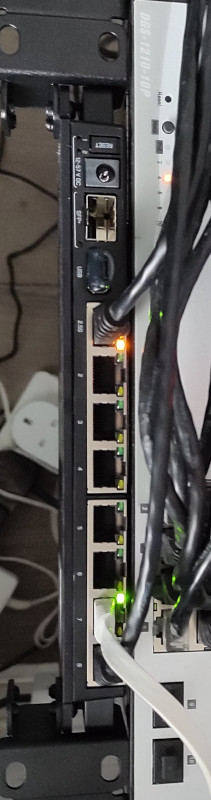 This has ended up longer than I expected. I ll write up posts about some of the individual steps with some more details at some point, but this is an overview of the yak shaving I engaged in. The TL;DR is:
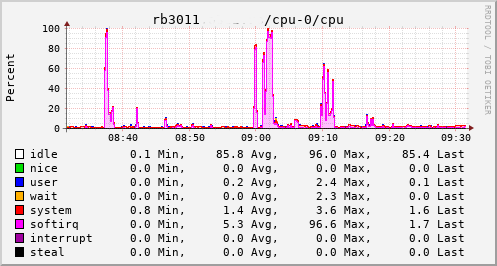 This provided an opportunity to see just what the RB3011 could actually manage. In the configuration I had it turned out to be not much more than the 80Mb/s speeds I had previously seen. The upload jumped from a solid 20Mb/s to 75Mb/s, so I knew the regrade had actually happened. Looking at CPU utilisation clearly showed the problem; softirqs were using almost 100% of a CPU core.
Now, the way the hardware is setup on the RB3011 is that there are two separate 5 port switches, each connected back to the CPU via a separate GigE interface. For various reasons I had everything on a single switch, which meant that all traffic was boomeranging in and out of the same CPU interface. The IPQ8064 has dual cores, so I thought I d try moving the external connection to the other switch. That puts it on its own GigE CPU interface, which then allows binding the interrupts to a different CPU core. That helps; throughput to the outside world hits 140Mb/s+. Still a long way from the expected max, but proof we just need more grunt.
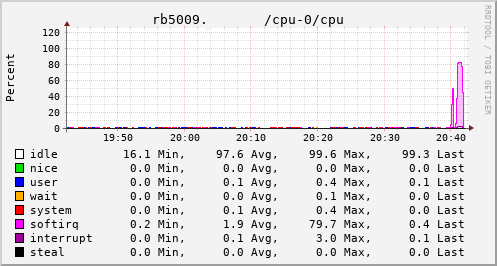 Which brings us to this past weekend, when, having worked out all the other bits, I tried the squashfs root image again on the RB3011. Success! The home automation bits connected to it, the link to the outside world came up, everything seemed happy. So I double checked my bootloader bits on the RB5009, brought it down to the comms room and plugged it in instead. And, modulo my failing to update the nftables config to allow it to do forwarding, it all came up ok. Some testing with iperf3 internally got a nice 912Mb/s sustained between subnets, and some less scientific testing with wget + speedtest-cli saw speeds of over 460Mb/s to the outside world.
Time from ordering the router until it was in service? Just under 8 weeks

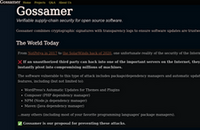




 After a hiatus of 6 years, it was nice to be back with the ThinkPad. This blog post briefly touches upon my impressions with the current generation ThinkPad T14 Gen2 AMD variant.








 I ve spent a bit of time playing with












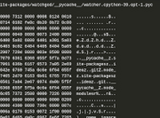


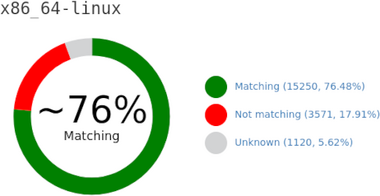




 A minor maintenance release of the new package