Search Results: "ressu"

28 December 2021

Russ Allbery: Review: Out of Office

Review: Out of Office, by Charlie Warzel & Anne Helen Petersen
Publisher: Alfred A. Knopf
Copyright: 2021
ISBN: 0-593-32010-7
Format: Kindle
Pages: 260
Out of Office opens with the provocative assertion that you were not working from home during the pandemic, even if you were among the 42% of Americans who were able to work remotely.
You were, quite literally, doing your job from home. But you weren't working from home. You were laboring in confinement and under duress. Others have described it as living at work. You were frantically tapping out an email while trying to make lunch and supervise distance learning. You were stuck alone in a cramped apartment for weeks, unable to see friends or family, exhausted, and managing a level of stress you didn't know was possible. Work became life, and life became work. You weren't thriving. You were surviving.
The stated goal of this book is to reclaim the concept of working from home, not only from the pandemic, but also from the boundary-destroying metastasis of work into non-work life. It does work towards that goal, but the description of what would be required for working from home to live up to its promise becomes a sweeping critique of the organization and conception of work, leaving it nearly as applicable to those who continue working from an office. Turns out that the main problem with working from home is the work part, not the "from home" part. This was a fascinating book to read in conjunction with A World Without Email. Warzel and Petersen do the the structural and political analysis that I sometimes wish Newport would do more of, but as a result offer less concrete advice. Both, however, have similar diagnoses of the core problems of the sort of modern office work that could be done from home: it's poorly organized, poorly managed, and desperately inefficient. Rather than attempting to fix those problems, which is difficult, structural, and requires thought and institutional cooperation, we're compensating by working more. This both doesn't work and isn't sustainable. Newport has a background in productivity books and a love of systems and protocols, so his focus in A World Without Email is on building better systems of communication and organization of work. Warzel and Petersen come from a background of reporting and cultural critique, so they put more focus on power imbalances and power-serving myths about the American dream. Where Newport sees an easy-to-deploy ad hoc work style that isn't fit for purpose, Warzel and Petersen are more willing to point out intentional exploitation of workers in the guise of flexibility. But they arrive at some similar conclusions. The way office work is organized is not leading to more productivity. Tools like Slack encourage the public performance of apparent productivity at the cost of the attention and focus required to do meaningful work. And the process is making us miserable. Out of Office is, in part, a discussion of what would be required to do better work with less stress, but it also shares a goal with Newport and some (but not most) corners of productivity writing: spend less time and energy on work. The goal of Out of Office is not to get more work done. It's to work more efficiently and sustainably and thus work less. To reclaim the promise of flexibility so that it benefits the employee and not the employer. To recognize, in the authors' words, that the office can be a bully, locking people in to commute schedules and unnatural work patterns, although it also provides valuable moments of spontaneous human connection. Out of Office tries to envision a style of work that includes the office sometimes, home sometimes, time during the day to attend to personal chores or simply to take a mental break from an unnatural eight hours (or more) of continuous focus, universal design, real worker-centric flexibility, and an end to the constant productivity ratchet where faster work simply means more work for the same pay. That's a lot of topics for a short book, and structurally this is a grab bag. Some sections will land and some won't. Loom's video messages sound like a nightmare to me, and I rolled my eyes heavily at the VR boosterism, reluctant as it may be. The section on DEI (diversity, equity, and inclusion) was a valiant effort that at least gestures towards the dismal track record of most such efforts, but still left me unconvinced that anyone knows how to improve diversity in an existing organization without far more brute-force approaches than anyone with power is usually willing to consider. But there's enough here, and the authors move through topics quickly enough, that a section that isn't working for you will soon be over. And some of the sections that do work are great. For example, the whole discussion of management.
Many of these companies view middle management as bloat, waste, what David Graeber would call a "bullshit job." But that's because bad management is a waste; you're paying someone more money to essentially annoy everyone around them. And the more people experience that sort of bad management, and think of it as "just the way it is," the less they're going to value management in general.
I admit to a lot of confirmation bias here, since I've been ranting about this for years, but management must be the most wide-spread professional job for which we ignore both training and capability and assume that anyone who can do any type of useful work can also manage people doing that work. It's simply not true, it creates workplaces full of horrible management, and that in turn creates a deep and unhelpful cynicism about all management. There is still a tendency on the left to frame this problem in terms of class struggle, on the reasonable grounds that for decades under "scientific management" of manufacturing that's what it was. Managers were there to overwork workers and extract more profits for the owners, and labor unions were there to fight back against managers. But while some of this does happen in the sort of office work this book is focused on, I think Warzel and Petersen correctly point to a different cause.
"The reason she was underpaid on the team was not because her boss was cackling in the corner. It was because nobody told the boss it was their responsibility to look at the fucking spreadsheet."
We don't train managers, we have no clear expectations for what managers should do, we don't meaningfully measure their performance, we accept a high-overhead and high-chaos workstyle based on ad hoc one-to-one communication that de-emphasizes management, and many managers have never seen good management and therefore have no idea what they're supposed to be doing. The management problem for many office workers is less malicious management than incompetent management, or simply no effective management at all apart from an occasional reorg and a complicated and mind-numbing annual review form. The last section of this book (apart from concluding letters to bosses and workers) is on community, and more specifically on extracting time and energy from work (via the roadmap in previous chapters) and instead investing it in the people around you. Much ink has been spilled about the collapse of American civic life, about how we went from a nation of joiners to a nation of isolated individual workers with weak and failing community institutions. Warzel and Petersen correctly lay some blame for this at the foot of work, and see the reorganization of work and an increase in work from home (and thus a decrease in commutes) as an opportunity to reverse that trend. David Brooks recently filled in for Ezra Klein on his podcast and talked with University of Chicago professor Leon Kass, which I listened to shortly after reading this book. In one segment, they talked about marriage and complained about the decline in marriage rates. They were looking for causes in people's moral upbringing, in their life priorities, in the lack of aspiration for permanence in kids these days, and in any other personal or moral failing that would allow them to be smugly judgmental. It was a truly remarkable thing to witness. Neither man at any point in the conversation mentioned either money or time. Back in the world most Americans live in, real wages have been stagnant for decades, student loan debt is skyrocketing as people desperately try to keep up with the ever-shifting requirements for a halfway-decent job, and work has expanded to fill all hours of the day, even for people who don't have to work multiple jobs to make ends meet. Employers have fully embraced a "flexible" workforce via layoffs, micro-optimizing work scheduling, eliminating benefits, relying on contract and gig labor, and embracing exceptional levels of employee turnover. The American worker has far less of money, time, and stability, three important foundations for marriage and family as well as participation in most other civic institutions. People like Brooks and Kass stubbornly cling to their feelings of moral superiority instead of seeing a resource crisis. Work has stolen the resources that people previously put into those other areas of their life. And it's not even using those resources effectively. That's, in a way, a restatement of the topic of this book. Our current way of organizing work is not sustainable, healthy, or wise. Working from home may be part of a strategy for changing it. The pandemic has already heavily disrupted work, and some of those changes, including increased working from home, seem likely to stick. That provides a narrow opportunity to renegotiate our arrangement with work and try to make those changes stick. I largely agree with the analysis, but I'm pessimistic. I think the authors are as well. We're very bad at social change, and there will be immense pressure for everything to go "back to normal." Those in the best bargaining position to renegotiate work for themselves are not in the habit of sharing that renegotiation with anyone else. But I'm somewhat heartened by how much public discussion there currently is about a more fundamental renegotiation of the rules of office work. I'm also reminded of a deceptively profound aphorism from economist Herbert Stein: "If something cannot go on forever, it will stop." This book is a bit uneven and is more of a collection of related thoughts than a cohesive argument, but if you are hungry for more worker-centric analyses of the dynamics of office work (inside or outside the office), I think it's worth reading. Rating: 7 out of 10

12 December 2021

Andrej Shadura: Coffee gear upgrade

Two weeks ago I decided to make myself a combined birthday and Christmas present and upgrade my coffee gear. I ve got my first espresso machine back in 2013, it was a cheap Saeco Philips Poemia, which made reasonably drinkable coffee, but not being able to make good coffee made me increasingly unhappy about it. However, since it worked, I wasn t motivated enough to change anything until it stopped working. One day the nut holding the shower screen broke, and I couldn t replace it. Having no coffee machine is arguably worse than having a mediocre one, so I started looking for a new one in the budget range. Having spent about two months reading reviews for all sorts of manual espresso machines, I realised the best thing I can probably do for the money I was willing to spend at the time was to buy a second-hand Gaggia Classic. Which is what I did: I paid 260 to a person who apparently decided they prefer to press a button to get their espresso rather than have to prepare it themselves. My first attempts at making espresso weren t very much successful, as my hand grinder couldn t produce the right grind for espresso (without using pressurised baskets), so I quickly upgraded it to the 50 De Longhi electric grinder, which was much better for espresso.
Gaggia Classic 2015 and De Longhi grinderGaggia Classic 2015 and De Longhi grinder
This setup has worked for me for nearly 4 years, but over the time the Gaggia started malfunctioning. See, this particular Gaggia Classic is the 2015 model, which resulted in the overhaul of the design after Gaggia was acquired by Philips. They replaced the boiler, changed the exterior design a bit, and importantly for me replaced the fully metal group head with the metal and plastic version typically found in cheap espresso machines like my old Poemia.
The Gaggia Classic 2015 group headThe Gaggia Classic 2015 group head
The trouble with this one is that the plastic bit (barely seen on the picture, but it s inserted into the notches on the sides of the group head) is that it gets damaged over the time, especially when the portafilter is inserted very tightly. The more damaged it gets, the tigher it is necessary to insert the portafilter to avoid leakage, the more damaged it gets and so on. At one point, the Gaggia was leaking water every time I was making coffee, affecting the quality of the brew and making a mess in the kitchen. I made a mistake and removed the plastic bit only to realise it cannot be purchased separately and nobody knows how to put it back once it s been removed; I ended up paying more than a hundred euro to replace the group head as a whole. Once I ve got the Gaggia back, I became too conscious of the potential damage I can make by overengaging the portafilter, I decided it s probably the time to get a new coffee machine.
Gaggia Classic 2015 vs 2019Gaggia Classic 2015 vs 2019
The makers of Gaggia listened to the critics and undid the 2015 changes to the Gaggia Classic design, reverting to the previous one and fixing it they basically merged the fixes many of the owners of the old Gaggia did themselves. The group head is now without any plastic, so I don t have to worry that much about damaging it accidentally. A friend pointed out that my grinder is probably not good enough and recommended a couple of models to me; I checked Kev s Coffee Blog and found a grinder, Sage Dose Control Pro, which was available on sale in my local shop for a reasonable price. I ve also got a portafilter holder to make tamping more comfortable I used to tamp against an edge of the sink:
The final setup:
Gaggia Classic 2019 and Sage BCG600 Dose Control ProGaggia Classic 2019 and Sage BCG600 Dose Control Pro
What I learnt from this is that the grinder does indeed make a huge difference. I am now able to consistently produce brews I would only occasionally get with the old De Longhi grinder. There is one downside to the new grinder. Grinder review at Alza.sk Happy with my new purchase, I went to read this review and thought to myself: lucky me, my grinder is absolutely quiet! And then I realised that the noise in my kitchen is not, in fact, produced by the fridge, but the grinder. Well, a cheap switched plug solved the issue completely (I wish sockets here each had a switch like they usually to in the UK!) Switched plug

11 December 2021

Neil Williams: Diversity and gender

As a follow on to a previous blog entry of mine, Free and Open, I feel it worthwhile to do my bit to dismantle the pseudo-science and over simplification in the idea that gender is binary at a biological level.
TL;DR: Science simply does not support binary sexes or binary genders. Truth is a bit more complicated.
There is certainty and there are binary answers in mathematics. Things get less definitive in physics, certainly as soon as quantum is broached. Processes become more of an equilibrium between states in chemistry, never wholly one or the other. Yes, there is the oddity of absolute zero but no experiment has yet achieved that fully. It is accurate to describe physics as a development of applied mathematics and to view chemistry as applied physics. Biology, at the biochemical level, is applied chemistry. The sciences build on each other, "on the shoulders of giants", but at each level, some certainty is lost, some amount of uncertainty is expanded and measurements become probabilities, proportions and percentages. Biology is dependent on biochemistry - chemistry is how a biological change results in a different organism. Physics is how that chemical change occurs - temperature, pressure and physical states are inherent to all chemical changes. Outside laboratory constraints, few chemical reactions, especially in organic chemistry, produce one and only one result from two or more known reagents. In biology, everyone is familiar with genetic mutations but a genetic mutation only happens because a biochemical reaction (hydrogen bonding of nucleobases) does not always produce the expected result. Every cell division, every viral infection, there is a finite probability that a change will occur. It might be a small number but it is never zero and can never be dismissed. This is obvious in the current Covid pandemic - genetic mutations result in new variants. Some variants are inviable, some variants produce no net change in the way that the viral particles infect adjacent cells. Sometimes, a mutation happens that changes everything. These mutations are not mistakes - these are simply changes with undetermined outcomes. Genetic changes are the foundation of biodiversity and variety is what allows lifeforms of all kinds to survive changes in environmental factors and/or changes in prevalent diseases. It is precisely the same in humans, particularly in one of the principle spheres of human life that involves replicating genetic material - the creation of gametes for sexual reproduction. Every single time any DNA is copied, there is a finite chance that a different base will be put in place compared to the original. Copying genetic material is therefore non-binary. Given precisely the same initial conditions, the result is not always predictable and the range of how the results vary from one to another increases with every iteration. Let me stress that - at the molecular level, no genetic operation in any biological lifeform has a truly binary result. Repeat that operation sufficiently often and an unexpected result WILL inevitably occur. It is a mathematical certainty that genetic changes will arise by attempting precisely the same genetic operation enough times. Genetic changes are fundamental to how lifeforms survive changing conditions. Life would likely have died out a long time ago on this planet if every genetic operation was perfect. Diversity is life. Similarity leads to extinction. Viral load is interesting at this point. Someone can be infected with a virus, including coronavirus, by encountering a small number of viral particles. Some viruses, it may be a few hundred, some viruses may need a few thousand particles to infect a vulnerable host. But here's the thing, for that host to be at risk of infecting another host, the virus needs the host to produce billions upon billions of copies of the virus by taking over the genetic machinery within a huge number of cells in the host. This, as is accepted with Covid, is before the virus has been copied enough times to produce symptoms in the host. Before those symptoms become serious, billions more copies will be made. The numbers become unimaginable - and that is within a single host, let alone the 265 million (and counting) hosts in the current Covid19 pandemic. It's also no wonder that viral infections cause tiredness, the infection is diverting huge resources to propagating itself - before even considering the activity of the immune system. It is idiocy of the highest order to expect all those copies to be identical. The rise of variants is inevitable - indeed essential - in all spheres of biology. A single viral particle is absolutely no threat of any kind - it must first get inside and then copy the genetic information in a host cell. This is where the complexity lies in the definition of life itself. A virus can be considered a lifeform but it is only able to reproduce using another, more complex, lifeform. In truth, a viral particle does not and cannot mutate. The infected host mutates the virus. The longer it takes that host to clear the infection, the more mutations that host will create and then potentially spread to others. Now apply this to the creation of gametes in humans. With seven billion humans, the amount of copying of genetic material is not as large as the pandemic but it is still easy for everyone to understand that children do not merely combine the DNA of both parents. Changes happen. Human sexual reproduction is not as simple as 1 + 1 = 2. Sometimes, the copying of the genetic material produces an unexpected result. Sexual reproduction itself is non-binary. Sexual reproduction is not easy or simple for lifeforms to adopt - the diversity which results from the non-binary operations are exactly why so many lifeforms invest so much energy in reproducing in this way. Whilst many genetic changes in humans will be benign or beneficial, I d like to take an example of a genetic disorder that results from the non-binary nature of sex. Humans can be born with the XY phenotype - i.e. at a genetic level, the individual has the same combination of chromosomes as another XY individual but there are changes within the genes in those chromosomes. We accept this, some children of blonde parents do not have blonde hair, etc. There are also genetic changes where an XY phenotype is not binary. Some people, who at a genetic level would be almost identical to another person who is genetically male, have a genetic mutation which makes it impossible for the cells of that individual to respond to androgens (testosterone). (See Androgen insensitivity syndrome). Genetically, that individual has an X and a Y chromosome, just like many other individuals. However, due to a change in how the genes on those chromosomes were copied, that individual is biologically incapable of constructing the secondary sexual characteristics of a male. At a genetic level, the individual has the XY phenotype of a male. At the physical level, the individual has all the sexual characteristics of a female and none of the sexual characteristics of a male. The gender of that individual is not binary. Treatment is centred on supporting the individual and minimising some risks from the inactive genes on the Y chromosome. Human sexual reproduction is non-binary. The results of any sexual reproduction in humans will not always produce the binary option of male or female. It is a lie to claim that human gender is binary. The science is in plain view and cannot be ignored. Identifying as non-binary is not a "cop out" - it can be a biological, genetic, scientific fact. Human sexuality and gender are malleable. Where genetic changes result in symptoms, these can be ameliorated by treatment with human sex hormones, like oestrogen and testosterone. There are valid medical uses for anabolic steroids and hormone replacement therapies to help individuals who, at a genetic level, have non-binary gender. These treatments can help align the physical outer signs with the personality and identity of the individual, whether with or without surgery. It is unacceptable to abandon such people to suffer life long discrimination and harassment by imposing a binary definition that has no basis in science. When a human being has an XY phenotype, that human being is not necessarily male. That individual will be on a spectrum from female (left unaffected by sex hormones in the womb, the foetus will be female, even with an X and a Y chromosome), to various degrees of male. So, at a genetic, biological level, it is a scientific fact that human beings do not have binary gender. There is no evidence that this is new to the modern era, there is no scientific basis for thinking that copying of genetic material was somehow perfectly reliable in earlier history, or that such mutations are specific to homo sapiens. Changes in genetic material provide the diversity to fight infections and adapt to changing environmental factors. Species have and will continue to go extinct if this diversity is absent. With that out of the way, it is no longer a stretch to encompass other aspects of human non-binary genders beyond the known genetic syndromes based on changes in the XY phenotype. Science has not uncovered all of the ways that genes affect personality, behaviour, or identity. How other, less studied, genetic changes affect the much more subtle human facets, especially anything to do with consciousness, identity, personality, sexuality and behaviour, is guesswork. All of these facets can and likely are being affected by genetic factors as well as environmental factors in an endless range of permutations. Personality traits are a beautiful and largely unknowable blend of genes and environment. Genetic information has a finite probability of changes at each and every iteration. Environmental factors are more akin to chaos theory. The idea that the results will fit into binary constructs is laughable. Human society puts huge emphasis on societal norms. Individuals who do not fit into those norms suffer discrimination. The norms themselves have evolved over time as a response to various influences on human civilisation but most are not based on science. It is up to all humans in that society to call out discrimination, to call for changes in the accepted norms and support those who are marginalised. It is a precarious balance, one that humans rarely get right, but it must be based on an acceptance that variation is the natural state. Artificial constraints, like binary genders, must be dismantled because human beings and human sexual reproduction are not binary. To those who think, "well it is for 99%", think again about Covid. 99% (or closer to 98%) of infected humans recover without notable after effects. That has still crippled the nations of the globe and humbled all those who tried to deny it. Five million human beings are dead because "most infected people recover". Just because something only affects a proportion of human beings does not invalidate the suffering of those humans and the discrimination that those humans will face. Societal norms are not necessarily correct. Religious and other influences typically obscure and ignore scientific fact and undermine human kindness. The scientific truth of life on this planet is that gender is not binary. The more complex the lifeform, the more factors will affect where on the spectrum any one individual will appear. Just because we do not yet fully understand how genes affect human personality and sexuality, does not invalidate the science that variation is the natural order. My previous blog about diversity is not just about male vs female, one nationality vs another, one ethnicity compared to another. Diversity is diverse. Diversity requires accepting that every facet of humanity is subject to variation. That leads to tension at times, it is inevitable. Tension against societal norms, tension against discrimination, tension around those individuals who would abuse the tolerance of others for their own gratification or from their own ignorance. None of us are perfect, none of us have any of this fully sorted and all of us will make mistakes. Personally, I try to respect those around me. I will use whatever pronouns and other conventions that the person requests, from their perspective and not mine. To do otherwise is to deny the natural order and to deny the science. Celebrate all diversity, it is the very stuff of life. The discussions around (typically female) bathroom facilities often miss the point. The concern is not about individuals who describe themselves as non-binary. The concern is about individuals who are fully certain of their own sexuality and who act as sexual predators for their own gratification. These people are acting out a lie for their own ends. The problem people are the predators, so stop blaming the victims who are just as at risk as anyone else who identifies as female. Maybe the best people to spot such predators are those who are non-binary, who have had to pretend to fit into societal norms. Just as travel can be a good antidote to racism, openness and discussion can be a tool to undermine the lies of sexual predators and reassure those who are justifiably fearful. There can never be a biological binary test of gender, there can never be any scientific justification for binary division of facilities. Humanity itself is not binary, even life itself has blurry borders around comas, suspended animation and locked-in syndrome. Legal definitions of human death vary around the world. The only common thread I have ever found is: Be kind to each other. If you find anything above objectionable, then I can only suggest that you reconsider the science and learn to be kind to your fellow humans. None of us are getting out of this alive. I Think You ll Find It s a Bit More Complicated Than That - Ben Goldacre ISBN 978-0-00-750514-2 https://www.amazon.co.uk/dp/B00HATQA8K/ https://en.wikipedia.org/wiki/Androgen_insensitivity_syndrome https://www.bbc.co.uk/news/world-51235105 https://en.wikipedia.org/wiki/Nucleobase My degree is in pharmaceutical sciences and I practised community and hospital pharmacy for 20 years before moving into programming. I have direct experience of supporting people who were prescribed hormones to transition their physical characteristics to match their personal identity. I had a Christian upbringing but my work showed me that those religious norms were incompatible with being kind to others, so I rejected religion and I now consider myself a secular humanist.

3 October 2021

Louis-Philippe V ronneau: ANC is not for me

Active noise cancellation (ANC) has been all the rage lately in the headphones and in-ear monitors market. It seems after Apple got heavily praised for their AirPods Pro, every somewhat serious electronics manufacturer released their own design incorporating this technology. The first headphones with ANC I remember trying on (in the early 2010s) were the Bose QuietComfort 15. Although the concept did work (they indeed cancelled some sounds), they weren't amazing and did a great job of convincing me ANC was some weird fad for people who flew often. The Sony WH-1000X M3 folded in their case As the years passed, chip size decreased, battery capacity improved and machine learning blossomed truly a perfect storm for the wireless ANC headphones market. I had mostly stayed a sceptic of this tech until recently a kind friend offered to let me try a pair of Sony WH-1000X M3. Having tested them thoroughly, I have to say I'm really tempted to buy them from him, as they truly are fantastic headphones1. They are very light, comfortable, work without a proprietary app and sound very good with the ANC on2 if a little bass-heavy for my taste3. The ANC itself is truly astounding and is leaps and bounds beyond what was available five years ago. It still isn't perfect and doesn't cancel ALL sounds, but transforms the low hum of the subway I find myself sitting in too often these days into a light *swoosh*. When you turn the ANC on, HVAC simply disappears. Most impressive to me is the way they completely cancel the dreaded sound of your footsteps resonating in your headphones when you walk with them. My old pair of Senheiser HD 280 Pro, with aftermarket sheepskin earpads I won't be keeping them though. Whilst I really like what Sony has achieved here, I've grown to understand ANC simply isn't for me. Some of the drawbacks of ANC somewhat bother me: the ear pressure it creates is tolerable, but is an additional energy drain over long periods of time and eventually gives me headaches. I've also found ANC accentuates the motion sickness I suffer from, probably because it messes up with some part of the inner ear balance system. Most of all, I found that it didn't provide noticeable improvements over good passive noise cancellation solutions, at least in terms of how high I have to turn the volume up to hear music or podcasts clearly. The human brain works in mysterious ways and it seems ANC cancelling a class of noises (low hums, constant noises, etc.) makes other noises so much more noticeable. People talking or bursty high pitched noises bothered me much more with ANC on than without. So for now, I'll keep using my trusty Senheiser HD 280 Pro4 at work and good in-ear monitors with Comply foam tips on the go.

  1. This blog post certainly doesn't aim to be a comprehensive review of these headphones. See Zeos' review if you want something more in-depth.
  2. As most ANC headphones, they don't sound as good when used passively through the 3.5mm port, but that's just a testament of how a great job Sony did of tuning the DSP.
  3. Easily fixed using an EQ.
  4. Retrofitted with aftermarket sheepskin earpads, they provide more than 32db of passive noise reduction.

2 August 2021

Colin Watson: Launchpad now runs on Python 3!

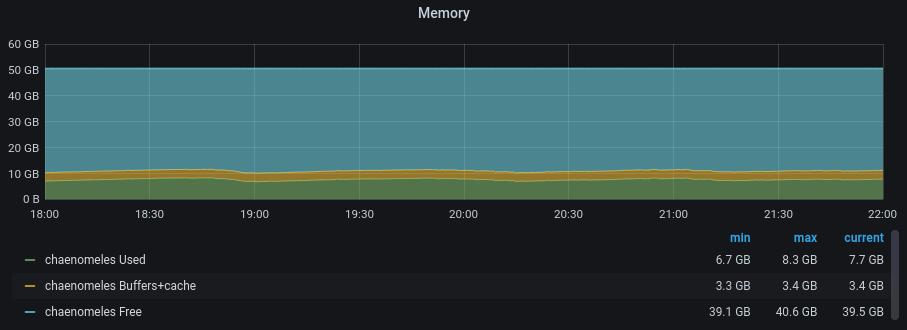
After a very long porting journey, Launchpad is finally running on Python 3 across all of our systems. I wanted to take a bit of time to reflect on why my emotional responses to this port differ so much from those of some others who ve done large ports, such as the Mercurial maintainers. It s hard to deny that we ve had to burn a lot of time on this, which I m sure has had an opportunity cost, and from one point of view it s essentially running to stand still: there is no single compelling feature that we get solely by porting to Python 3, although it s clearly a prerequisite for tidying up old compatibility code and being able to use modern language facilities in the future. And yet, on the whole, I found this a rewarding project and enjoyed doing it. Some of this may be because by inclination I m a maintenance programmer and actually enjoy this sort of thing. My default view tends to be that software version upgrades may be a pain but it s much better to get that pain over with as soon as you can rather than trying to hold back the tide; you can certainly get involved and try to shape where things end up, but rightly or wrongly I can t think of many cases when a righteously indignant user base managed to arrange for the old version to be maintained in perpetuity so that they never had to deal with the new thing (OK, maybe Perl 5 counts here). I think a more compelling difference between Launchpad and Mercurial, though, may be that very few other people really had a vested interest in what Python version Launchpad happened to be running, because it s all server-side code (aside from some client libraries such as launchpadlib, which were ported years ago). As such, we weren t trying to do this with the internet having Strong Opinions at us. We were doing this because it was obviously the only long-term-maintainable path forward, and in more recent times because some of our library dependencies were starting to drop support for Python 2 and so it was obviously going to become a practical problem for us sooner or later; but if we d just stayed on Python 2 forever then fundamentally hardly anyone else would really have cared directly, only maybe about some indirect consequences of that. I don t follow Mercurial development so I may be entirely off-base, but if other people were yelling at me about how late my project was to finish its port, that in itself would make me feel more negatively about the project even if I thought it was a good idea. Having most of the pressure come from ourselves rather than from outside meant that wasn t an issue for us. I m somewhat inclined to think of the process as an extreme version of paying down technical debt. Moving from Python 2.7 to 3.5, as we just did, means skipping over multiple language versions in one go, and if similar changes had been made more gradually it would probably have felt a lot more like the typical dependency update treadmill. I appreciate why not everyone might want to think of it this way: maybe this is just my own rationalization. Reflections on porting to Python 3 I m not going to defend the Python 3 migration process; it was pretty rough in a lot of ways. Nor am I going to spend much effort relitigating it here, as it s already been done to death elsewhere, and as I understand it the core Python developers have got the message loud and clear by now. At a bare minimum, a lot of valuable time was lost early in Python 3 s lifetime hanging on to flag-day-type porting strategies that were impractical for large projects, when it should have been providing for bilingual strategies (code that runs in both Python 2 and 3 for a transitional period) which is where most libraries and most large migrations ended up in practice. For instance, the early advice to library maintainers to maintain two parallel versions or perhaps translate dynamically with 2to3 was entirely impractical in most non-trivial cases and wasn t what most people ended up doing, and yet the idea that 2to3 is all you need still floats around Stack Overflow and the like as a result. (These days, I would probably point people towards something more like Eevee s porting FAQ as somewhere to start.) There are various fairly straightforward things that people often suggest could have been done to smooth the path, and I largely agree: not removing the u'' string prefix only to put it back in 3.3, fewer gratuitous compatibility breaks in the name of tidiness, and so on. But if I had a time machine, the number one thing I would ask to have been done differently would be introducing type annotations in Python 2 before Python 3 branched off. It s true that it s technically possible to do type annotations in Python 2, but the fact that it s a different syntax that would have to be fixed later is offputting, and in practice it wasn t widely used in Python 2 code. To make a significant difference to the ease of porting, annotations would need to have been introduced early enough that lots of Python 2 library code used them so that porting code didn t have to be quite so much of an exercise of manually figuring out the exact nature of string types from context. Launchpad is a complex piece of software that interacts with multiple domains: for example, it deals with a database, HTTP, web page rendering, Debian-format archive publishing, and multiple revision control systems, and there s often overlap between domains. Each of these tends to imply different kinds of string handling. Web page rendering is normally done mainly in Unicode, converting to bytes as late as possible; revision control systems normally want to spend most of their time working with bytes, although the exact details vary; HTTP is of course bytes on the wire, but Python s WSGI interface has some string type subtleties. In practice I found myself thinking about at least four string-like types (that is, things that in a language with a stricter type system I might well want to define as distinct types and restrict conversion between them): bytes, text, ordinary native strings (str in either language, encoded to UTF-8 in Python 2), and native strings with WSGI s encoding rules. Some of these are emergent properties of writing in the intersection of Python 2 and 3, which is effectively a specialized language of its own without coherent official documentation whose users must intuit its behaviour by comparing multiple sources of information, or by referring to unofficial porting guides: not a very satisfactory situation. Fortunately much of the complexity collapses once it becomes possible to write solely in Python 3. Some of the difficulties we ran into are not ones that are typically thought of as Python 2-to-3 porting issues, because they were changed later in Python 3 s development process. For instance, the email module was substantially improved in around the 3.2/3.3 timeframe to handle Python 3 s bytes/text model more correctly, and since Launchpad sends quite a few different kinds of email messages and has some quite picky tests for exactly what it emits, this entailed a lot of work in our email sending code and in our test suite to account for that. (It took me a while to work out whether we should be treating raw email messages as bytes or as text; bytes turned out to work best.) 3.4 made some tweaks to the implementation of quoted-printable encoding that broke a number of our tests in ways that took some effort to fix, because the tests needed to work on both 2.7 and 3.5. The list goes on. I got quite proficient at digging through Python s git history to figure out when and why some particular bit of behaviour had changed. One of the thorniest problems was parsing HTTP form data. We mainly rely on zope.publisher for this, which in turn relied on cgi.FieldStorage; but cgi.FieldStorage is badly broken in some situations on Python 3. Even if that bug were fixed in a more recent version of Python, we can t easily use anything newer than 3.5 for the first stage of our port due to the version of the base OS we re currently running, so it wouldn t help much. In the end I fixed some minor issues in the multipart module (and was kindly given co-maintenance of it) and converted zope.publisher to use it. Although this took a while to sort out, it seems to have gone very well. A couple of other interesting late-arriving issues were around pickle. For most things we normally prefer safer formats such as JSON, but there are a few cases where we use pickle, particularly for our session databases. One of my colleagues pointed out that I needed to remember to tell pickle to stick to protocol 2, so that we d be able to switch back and forward between Python 2 and 3 for a while; quite right, and we later ran into a similar problem with marshal too. A more surprising problem was that datetime.datetime objects pickled on Python 2 require special care when unpickling on Python 3; rather than the approach that ended up being implemented and documented for Python 3.6, though, I preferred a custom unpickler, both so that things would work on Python 3.5 and so that I wouldn t have to risk affecting the decoding of other pickled strings in the session database. General lessons Writing this over a year after Python 2 s end-of-life date, and certainly nowhere near the leading edge of Python 3 porting work, it s perhaps more useful to look at this in terms of the lessons it has for other large technical debt projects. I mentioned in my previous article that I used the approach of an enormous and frequently-rebased git branch as a working area for the port, committing often and sometimes combining and extracting commits for review once they seemed to be ready. A port of this scale would have been entirely intractable without a tool of similar power to git rebase, so I m very glad that we finished migrating to git in 2019. I relied on this right up to the end of the port, and it also allowed for quick assessments of how much more there was to land. git worktree was also helpful, in that I could easily maintain working trees built for each of Python 2 and 3 for comparison. As is usual for most multi-developer projects, all changes to Launchpad need to go through code review, although we sometimes make exceptions for very simple and obvious changes that can be self-reviewed. Since I knew from the outset that this was going to generate a lot of changes for review, I therefore structured my work from the outset to try to make it as easy as possible for my colleagues to review it. This generally involved keeping most changes to a somewhat manageable size of 800 lines or less (although this wasn t always possible), and arranging commits mainly according to the kind of change they made rather than their location. For example, when I needed to fix issues with / in Python 3 being true division rather than floor division, I did so in one commit across the various places where it mattered and took care not to mix it with other unrelated changes. This is good practice for nearly any kind of development, but it was especially important here since it allowed reviewers to consider a clear explanation of what I was doing in the commit message and then skim-read the rest of it much more quickly. It was vital to keep the codebase in a working state at all times, and deploy to production reasonably often: this way if something went wrong the amount of code we had to debug to figure out what had happened was always tractable. (Although I can t seem to find it now to link to it, I saw an account a while back of a company that had taken a flag-day approach instead with a large codebase. It seemed to work for them, but I m certain we couldn t have made it work for Launchpad.) I can t speak too highly of Launchpad s test suite, much of which originated before my time. Without a great deal of extensive coverage of all sorts of interesting edge cases at both the unit and functional level, and a corresponding culture of maintaining that test suite well when making new changes, it would have been impossible to be anything like as confident of the port as we were. As part of the porting work, we split out a couple of substantial chunks of the Launchpad codebase that could easily be decoupled from the core: its Mailman integration and its code import worker. Both of these had substantial dependencies with complex requirements for porting to Python 3, and arranging to be able to do these separately on their own schedule was absolutely worth it. Like disentangling balls of wool, any opportunity you can take to make things less tightly-coupled is probably going to make it easier to disentangle the rest. (I can see a tractable way forward to porting the code import worker, so we may well get that done soon. Our Mailman integration will need to be rewritten, though, since it currently depends on the Python-2-only Mailman 2, and Mailman 3 has a different architecture.) Python lessons Our database layer was already in pretty good shape for a port, since at least the modern bits of its table modelling interface were already strict about using Unicode for text columns. If you have any kind of pervasive low-level framework like this, then making it be pedantic at you in advance of a Python 3 port will probably incur much less swearing in the long run, as you won t be trying to deal with quite so many bytes/text issues at the same time as everything else. Early in our port, we established a standard set of __future__ imports and started incrementally converting files over to them, mainly because we weren t yet sure what else to do and it seemed likely to be helpful. absolute_import was definitely reasonable (and not often a problem in our code), and print_function was annoying but necessary. In hindsight I m not sure about unicode_literals, though. For files that only deal with bytes and text it was reasonable enough, but as I mentioned above there were also a number of cases where we needed literals of the language s native str type, i.e. bytes in Python 2 and text in Python 3: this was particularly noticeable in WSGI contexts, but also cropped up in some other surprising places. We generally either omitted unicode_literals or used six.ensure_str in such cases, but it was definitely a bit awkward and maybe I should have listened more to people telling me it might be a bad idea. A lot of Launchpad s early tests used doctest, mainly in the style where you have text files that interleave narrative commentary with examples. The development team later reached consensus that this was best avoided in most cases, but by then there were far too many doctests to conveniently rewrite in some other form. Porting doctests to Python 3 is really annoying. You run into all the little changes in how objects are represented as text (particularly u'...' versus '...', but plenty of other cases as well); you have next to no tools to do anything useful like skipping individual bits of a doctest that don t apply; using __future__ imports requires the rather obscure approach of adding the relevant names to the doctest s globals in the relevant DocFileSuite or DocTestSuite; dealing with many exception tracebacks requires something like zope.testing.renormalizing; and whatever code refactoring tools you re using probably don t work properly. Basically, don t have done that. It did all turn out to be tractable for us in the end, and I managed to avoid using much in the way of fragile doctest extensions aside from the aforementioned zope.testing.renormalizing, but it was not an enjoyable experience. Regressions I know of nine regressions that reached Launchpad s production systems as a result of this porting work; of course there were various other regressions caught by CI or in manual testing. (Considering the size of this project, I count it as a resounding success that there were only nine production issues, and that for the most part we were able to fix them quickly.) Equality testing of removed database objects One of the things we had to do while porting to Python 3 was to implement the __eq__, __ne__, and __hash__ special methods for all our database objects. This was quite conceptually fiddly, because doing this requires knowing each object s primary key, and that may not yet be available if we ve created an object in Python but not yet flushed the actual INSERT statement to the database (most of our primary keys are auto-incrementing sequences). We thus had to take care to flush pending SQL statements in such cases in order to ensure that we know the primary keys. However, it s possible to have a problem at the other end of the object lifecycle: that is, a Python object might still be reachable in memory even though the underlying row has been DELETEd from the database. In most cases we don t keep removed objects around for obvious reasons, but it can happen in caching code, and buildd-manager crashed as a result (in fact while it was still running on Python 2). We had to take extra care to avoid this problem. Debian imports crashed on non-UTF-8 filenames Python 2 has some unfortunate behaviour around passing bytes or Unicode strings (depending on the platform) to shutil.rmtree, and the combination of some porting work and a particular source package in Debian that contained a non-UTF-8 file name caused us to run into this. The fix was to ensure that the argument passed to shutil.rmtree is a str regardless of Python version. We d actually run into something similar before: it s a subtle porting gotcha, since it s quite easy to end up passing Unicode strings to shutil.rmtree if you re in the process of porting your code to Python 3, and you might easily not notice if the file names in your tests are all encoded using UTF-8. lazr.restful ETags We eventually got far enough along that we could switch one of our four appserver machines (we have quite a number of other machines too, but the appservers handle web and API requests) to Python 3 and see what happened. By this point our extensive test suite had shaken out the vast majority of the things that could go wrong, but there was always going to be room for some interesting edge cases. One of the Ubuntu kernel team reported that they were seeing an increase in 412 Precondition Failed errors in some of their scripts that use our webservice API. These can happen when you re trying to modify an existing resource: the underlying protocol involves sending an If-Match header with the ETag that the client thinks the resource has, and if this doesn t match the ETag that the server calculates for the resource then the client has to refresh its copy of the resource and try again. We initially thought that this might be legitimate since it can happen in normal operation if you collide with another client making changes to the same resource, but it soon became clear that something stranger was going on: we were getting inconsistent ETags for the same object even when it was unchanged. Since we d recently switched a quarter of our appservers to Python 3, that was a natural suspect. Our lazr.restful package provides the framework for our webservice API, and roughly speaking it generates ETags by serializing objects into some kind of canonical form and hashing the result. Unfortunately the serialization was dependent on the Python version in a few ways, and in particular it serialized lists of strings such as lists of bug tags differently: Python 2 used [u'foo', u'bar', u'baz'] where Python 3 used ['foo', 'bar', 'baz']. In lazr.restful 1.0.3 we switched to using JSON for this, removing the Python version dependency and ensuring consistent behaviour between appservers. Memory leaks This problem took the longest to solve. We noticed fairly quickly from our graphs that the appserver machine we d switched to Python 3 had a serious memory leak. Our appservers had always been a bit leaky, but now it wasn t so much a small hole that we can bail occasionally as the boat is sinking rapidly : A serious memory leak (Yes, this got in the way of working out what was going on with ETags for a while.) I spent ages messing around with various attempts to fix this. Since only a quarter of our appservers were affected, and we could get by on 75% capacity for a while, it wasn t urgent but it was definitely annoying. After spending some quality time with objgraph, for some time I thought traceback reference cycles might be at fault, and I sent a number of fixes to various upstream projects for those (e.g. zope.pagetemplate). Those didn t help the leaks much though, and after a while it became clear to me that this couldn t be the sole problem: Python has a cyclic garbage collector that will eventually collect reference cycles as long as there are no strong references to any objects in them, although it might not happen very quickly. Something else must be going on. Debugging reference leaks in any non-trivial and long-running Python program is extremely arduous, especially with ORMs that naturally tend to end up with lots of cycles and caches. After a while I formed a hypothesis that zope.server might be keeping a strong reference to something, although I never managed to nail it down more firmly than that. This was an attractive theory as we were already in the process of migrating to Gunicorn for other reasons anyway, and Gunicorn also has a convenient max_requests setting that s good at mitigating memory leaks. Getting this all in place took some time, but once we did we found that everything was much more stable: A rather flat memory graph This isn t completely satisfying as we never quite got to the bottom of the leak itself, and it s entirely possible that we ve only papered over it using max_requests: I expect we ll gradually back off on how frequently we restart workers over time to try to track this down. However, pragmatically, it s no longer an operational concern. Mirror prober HTTPS proxy handling After we switched our script servers to Python 3, we had several reports of mirror probing failures. (Launchpad keeps lists of Ubuntu archive and image mirrors, and probes them every so often to check that they re reasonably complete and up to date.) This only affected HTTPS mirrors when probed via a proxy server, support for which is a relatively recent feature in Launchpad and involved some code that we never managed to unit-test properly: of course this is exactly the code that went wrong. Sadly I wasn t able to sort out that gap, but at least the fix was simple. Non-MIME-encoded email headers As I mentioned above, there were substantial changes in the email package between Python 2 and 3, and indeed between minor versions of Python 3. Our test coverage here is pretty good, but it s an area where it s very easy to have gaps. We noticed that a script that processes incoming email was crashing on messages with headers that were non-ASCII but not MIME-encoded (and indeed then crashing again when it tried to send a notification of the crash!). The only examples of these I looked at were spam, but we still didn t want to crash on them. The fix involved being somewhat more careful about both the handling of headers returned by Python s email parser and the building of outgoing email notifications. This seems to be working well so far, although I wouldn t be surprised to find the odd other incorrect detail in this sort of area. Failure to handle non-ISO-8859-1 URL-encoded form input Remember how I said that parsing HTTP form data was thorny? After we finished upgrading all our appservers to Python 3, people started reporting that they couldn t post Unicode comments to bugs, which turned out to be only if the attempt was made using JavaScript, and was because I hadn t quite managed to get URL-encoded form data working properly with zope.publisher and multipart. The current standard describes the URL-encoded format for form data as in many ways an aberrant monstrosity , so this was no great surprise. Part of the problem was some very strange choices in zope.publisher dating back to 2004 or earlier, which I attempted to clean up and simplify. The rest was that Python 2 s urlparse.parse_qs unconditionally decodes percent-encoded sequences as ISO-8859-1 if they re passed in as part of a Unicode string, so multipart needs to work around this on Python 2. I m still not completely confident that this is correct in all situations, but at least now that we re on Python 3 everywhere the matrix of cases we need to care about is smaller. Inconsistent marshalling of Loggerhead s disk cache We use Loggerhead for providing web browsing of Bazaar branches. When we upgraded one of its two servers to Python 3, we immediately noticed that the one still on Python 2 was failing to read back its revision information cache, which it stores in a database on disk. (We noticed this because it caused a deployment to fail: when we tried to roll out new code to the instance still on Python 2, Nagios checks had already caused an incompatible cache to be written for one branch from the Python 3 instance.) This turned out to be a similar problem to the pickle issue mentioned above, except this one was with marshal, which I didn t think to look for because it s a relatively obscure module mostly used for internal purposes by Python itself; I m not sure that Loggerhead should really be using it in the first place. The fix was relatively straightforward, complicated mainly by now needing to cope with throwing away unreadable cache data. Ironically, if we d just gone ahead and taken the nominally riskier path of upgrading both servers at the same time, we might never have had a problem here. Intermittent bzr failures Finally, after we upgraded one of our two Bazaar codehosting servers to Python 3, we had a report of intermittent bzr branch hangs. After some digging I found this in our logs:
Traceback (most recent call last):
  ...
  File "/srv/bazaar.launchpad.net/production/codehosting1-rev-20124175fa98fcb4b43973265a1561174418f4bd/env/lib/python3.5/site-packages/twisted/conch/ssh/channel.py", line 136, in addWindowBytes
    self.startWriting()
  File "/srv/bazaar.launchpad.net/production/codehosting1-rev-20124175fa98fcb4b43973265a1561174418f4bd/env/lib/python3.5/site-packages/lazr/sshserver/session.py", line 88, in startWriting
    resumeProducing()
  File "/srv/bazaar.launchpad.net/production/codehosting1-rev-20124175fa98fcb4b43973265a1561174418f4bd/env/lib/python3.5/site-packages/twisted/internet/process.py", line 894, in resumeProducing
    for p in self.pipes.itervalues():
builtins.AttributeError: 'dict' object has no attribute 'itervalues'
I d seen this before in our git hosting service: it was a bug in Twisted s Python 3 port, fixed after 20.3.0 but unfortunately after the last release that supported Python 2, so we had to backport that patch. Using the same backport dealt with this. Onwards!

29 May 2021

Shirish Agarwal: Planes, Pandemic and Medical Devices I

The Great Electric Airplane Race It took me quite sometime to write as have been depressed about things. Then a few days back saw Nova s The Great Electric Airplane Race. While it was fabulous and a pleasure to see and know that there are more than 200 odd startups who are in the race of making an electric airplane which works and has FAA certification. I was disappointed though that there no coverage of any University projects. From what little I know, almost all advanced materials which U.S. had made has been first researched in mostly Universities and when it is close to fruition then either spin-off as a startup or give to some commercial organization/venture to make it scalable and profitable. If they had, I am sure more people could be convinced to join sciences and engineering in college. I actually do want to come to this as part of both general medicine and vaccine development in U.S. but will come later. The idea that industry works alone should be discouraged, but that perhaps may require another article to articulate why I believe so.

Medical Device Ventilators in India Before the pandemic, probably most didn t know what a ventilator is and was, at least I didn t, although I probably used it during my somewhat brief hospital stay a couple of years ago. It entered into the Indian twitter lexicon more so in the second wave as the number of people who got infected became more and more and the ventilators which were serving them became less and less just due to sheer mismatch of numbers and requirements. Rich countries donated/gifted ventilators to India on which GOI put GST of 28%. Apparently, they are a luxury item, just like my hearing aid. Last week Delhi High Court passed a judgement that imposition of GST should not be on a gift like ventilators or oxygenators. The order can be found here. Even without reading the judgement the shout from the right was judicial activism while after reading it is a good judgement which touches on several points. The first, in itself, stating the dichotomy that if a commercial organization wanted to import a ventilator or an oxygenator the IGST payable is nil while for an individual it is 12%. The State (here State refers to State Government in this case Gujarat Govt.) did reduce the IGST for state from 12% to NIL IGST for federal states but that to till only 30.06.2021. No relief to individuals on that account. The Court also made use of Mr. Arvind Datar, as Amicus Curiae or friend of court. The petitioner, an 85-year-old gentleman who has put it up has put broad assertions under Article 21 (right to live) and the court in its wisdom also added Article 14 which enshrines equality of everyone before law. The Amicus Curiae, as his duty, guided the court into how the IGST law works and shared a brief history of the law and the changes happening before and after it. During his submissions, he also shared the Mega Exemption Notification no. 50/2017 under which several items are there which are exempted from putting IGST. The Amicus Curiae did note that such exemptions were also there before Mega Exemption Notification had come into play. However, DGFT (Directorate General of Foreign Trade) on 30-04-2021 issued notification No. 4/2015-2020 through which oxygenators had been exempted from Custom Duty/BCD (Basic Customs Duty. In another notification on no. 30/2021 dated 01.05.2021 it reduced IGST from 28% to 12% for personal use. If however the oxygenator was procured by a canalizing agency (bodies such as State Trading Corporation of India (STC) or/and Metals and Minerals Corporation (MMTC) and such are defined as canalising agents) then it will be fully exempted from paying any sort of IGST, albeit subject to certain conditions. What the conditions are were not shared in the open court. The Amicus Curiae further observed that it is contrary to practice where both BCD and IGST has been exempted for canalising agents and others, some IGST has to be paid for personal use. To share within the narrow boundaries of the topic, he shared entry no. 607A of General Exemption no.190 where duty and IGST in case of life-saving drugs are zero provided the life-saving drugs imported have been provided by zero cost from an overseas supplier for personal use. He further shared that the oxygen generator would fall in the same entry of 607A as it fulfills all the criteria as shared for life-saving medicines and devices. He also used the help of Drugs and Cosmetics Act 1940 which provides such a relief. The Amicus Curiae further noted that GOI amended its foreign trade policy (2015-2020) via notification no.4/2015-2020, dated 30.04.2021, issued by DGFT where Rakhi and life-saving drugs for personal use has been exempted from BCD till 30-07-2021. No reason not to give the same exemption to oxygenators which fulfill the same thing. The Amicus Curiae, further observes that there are exceptional circumstances provisions as adverted to in sub-section (2) of Section 25 of the Customs Act, whereby Covid-19 which is known and labelled as a pandemic where the distinctions between the two classes of individuals or agencies do not make any sense. While he did make the observation that exemption from duty is not a right, in the light of the pandemic and Article 14, it does not make sense to have distinctions between the two classes of importers. He further shared from Circular no. 9/2014-Customs, dated 19.08.2014 by CBEC (Central Board of Excise and Customs) which gave broad exemptions under Section 25 (2) of the same act in respect of goods and services imported for safety and rehabilitation of people suffering and effected by natural disasters and epidemics. He further submits that the impugned notification is irrational as there is no intelligible differentia rule applied or observed in classifying the import of oxygen concentrators into two categories. One, by the State and its agencies; and the other, by an individual for personal use by way of gift. So there was an absence of adequate determining principle . To bolster his argument, he shared the judgements of

a) Union of India vs. N.S. Rathnam & Sons, (2015) 10 SCC 681 (N.S. Ratnams and Sons Case) b) Shayara Bano vs. Union of India, (2017) 9 SCC 1 (Shayara Bano Case) The Amicus Curiae also rightly observed that the right to life also encompasses within it, the right to health. You cannot have one without the other and within that is the right to have affordable treatment. He further stated that the state does not only have a duty but a positive obligation is cast upon it to ensure that the citizen s health is secured. He again cited Navtej Singh Johars vs Union of India (Navtej Singh Johar Case) in defence of right to life. Mr. Datar also shared that unlike in normal circumstances, it is and should be enough to show distinct and noticeable burdensomeness which is directly attributable to the impugned/questionable tax. The gentleman cited Indian Express Newspapers (Bombay) Private Limited vs. Union of India, (1985) 1 SCC 641 (Indian Express case) 1985 which shared both about Article 19 (1) (a) and Article 21. Bloggers note At this juncture, I should point out which I am sharing the judgement and I would be sharing only the Amicus Curiae POV and then the judge s final observations. While I was reading it, I was stuck by the fact that the Amicus Curiae had cited 4 cases till now, 3 of them are pretty well known both in the legal fraternity and even among public at large. Another 3 which have been shared below which are also of great significance. Hence, felt the need to share the whole judgement. The Amicus Curiae further observed that this tax would have to be disproportionately will have to be paid by the old and the infirm, and they might find it difficult to pay the amounts needed to pay the customs duty/IGST as well as find the agent to pay in this pandemic. Blogger Note The situation with the elderly is something like this. Now there are a few things to note, only Central Govt. employees and pensioners get pensions which has been freezed since last year. The rest of the elderly population does not. The rate of interest has fallen to record lows from 5-6% in savings interest rate to 2% and on Fixed Deposits at 4.9% while the nominal inflation rate has up by 6% while CPI and real inflation rates are and would be much more. And this is when there is absolutely no demand in the economy. To add to all this, RBI shared a couple of months ago that fraud of 5 trillion rupees has been committed between 2015 and 2019 in banks. And this is different from the number of record NPA s that have been both in Public and Private Sector banks. To get out of this, the banks have squeezed their customers and are squeezing as well as asking GOI for bailouts. How much GOI is responsible for the frauds as well as NPA s would probably require its own space. And even now, RBI and banks have made heavy provisions as lockdowns are still a facet and are supposed to remain a facet till the end of the year or even next year (all depending upon when we get the vaccine). The Amicus Curiae further argued that the ventilators which are available locally are of bad quality. The result of all this has resulted in a huge amount of unsurmountable pressure on hospitals which they are unable to overcome. Therefore, the levy of IGST on oxygenators has direct impact on health of the citizen. So the examination of the law should not be by what intention it was but how it is affecting citizen rights now. For this he shared R.C.Cooper vs Union of India (another famous case R.C. Cooper vs Union of India) especially paragraph 49 and Federation of Hotel & Restaurant Association of India vs. Union of India, (1989) at paragraph 46 (Federation of Hotel Case) Mr. Datar further shared the Supreme Court order dated 18.12.2020, passed in Suo Moto Writ Petition(Civil) No.7/2020, to buttress the plea that the right to health includes the right to affordable treatment. Blogger s Note For those, who don t know Suo Moto is when the Court, whether Supreme Court or the High Courts take up a matter for public good. It could be in anything, law and order, Banking, Finance, Public Health etc. etc. This was the norm before 2014. The excesses of the executive were curtailed by both the Higher and the lower Judiciary. That is and was the reason that Judiciary is and was known as the third pillar of Indian democracy. A good characterization of Suo Moto can be found here. Before ending his submission, the learned Amicus Curiae also shared Jeeja Ghosh vs. Union of India, (2016) (Jeeja Ghosh Case, an outstanding case as it deals with people with disabilities and their rights and the observations made by the Division Bench of Hon ble Mr. Justice A. K. Sikri as well as Hon ble Mr. Justice R. K. Agrawal.) After Amicus Curiae completed his submissions, it was the turn of Mr. Sudhir Nandrajog, and he adopted the arguments and submissions made by the Amicus Curiae. The gentleman reiterated the facts of the case and how the impugned notification was violative of both Article 14 and 21 of the Indian Constitution. Blogger s Note The High Court s judgement which shows all the above arguments by the Amicus Curiae and the petitioner s lawyer also shared the State s view. It is only on page 24, where the Delhi High Court starts to share its own observations on the arguments of both sides. Judgement continued The first observation that the Court makes is that while the petitioner demonstrated that the impugned tax imposition would have a distinct and noticeable burdensomeness while the State did not state or share in any way how much of a loss it would incur if such a tax were let go and how much additional work would have to be done in order to receive this specific tax. It didn t need to do something which is down the wire or mathematically precise, but it didn t even care to show even theoretically how many people will be affected by the above. The counter-affidavit by the State is silent on the whole issue. The Court also contended that the State failed to prove how collecting IGST from the concerned individuals would help in fighting coronavirus in any substantial manner for the public at large. The High Court shared observations from the Navtej Singh Johar case where it is observed that the State has both negative and positive obligations to ensure that its citizens are able to enjoy the right to health. The High Court further made the point that no respectable person does like to be turned into a charity case. If the State contends that those who obey the law should pay the taxes then it is also obligatory on the state s part to lessen exactions such as taxes at the very least in times of war, famine, floods, epidemics and pandemics. Such an approach would lead a person to live a life of dignity which is part of Article 21 of the Constitution. Another point that was made by the State that only the GST council is able to make any changes as regards to exemptions rather than the State were found to be false as the State had made some exemptions without going to the GST council using its own powers under Section 25 of the Customs Act. The Court also points out that it does send a discriminatory pattern when somebody like petitioner has to pay the tax for personal use while those who are buying it for commercial use do not have to pay the tax. The Court agreed of the view of the Amicus Curiae, Mr. Datar that oxygenator should be taxed at NIL rate at IGST as it is part of life-saving drugs and oxygenator fits the bill as medical equipment as it is used in the treatment, mitigation and prevention of spread of Coronavirus. Mr. Datar also did show that oxygenator is placed at the same level as other life-saving drugs. The Court felt further emboldened as the observations by Supreme Court in State of Andhra Pradesh vs. Linde India Limited, 2020 ( State of Andhra Pradesh vs Linde Ltd.) The Court further shared many subsequent notifications from the State and various press releases by the State itself which does make the Court s point that oxygenators indeed are drugs as defined in the court case above. The State should have it as part of notification 190. This would preserve the start of the notification date from 03.05.2021 and the state would not have to issue a new notification. The Court further went to postulate that any persons similar to the petitioner could avail of the same, if they furnish a letter of undertaking to an officer designated by the State that the medical equipment would not be put to commercial use. Till the state does not do that, in the interim the importer could give the same undertaking to Joint Secretary, Customs or their nominee can hand over the same to custom officer. The Court also shared that it does not disagree with the State s arguments but the challenges which have arisen are in a unique time period/circumstances, so they are basing their judgement based on how the situation is. The Court also mentioned an order given by Supreme Court Diary No. 10669/2020 passed on 20.03.2020 where SC has taken pains to understand the issues faced by the citizens. The court also mentioned the Small Scale Industrial Manufactures Association Case (both of these cases I don t know) . So in conclusion, the Court holds the imposition of IGST on oxygenator which are imported by individuals as gifts from their relatives as unconstitutional. They also shared that any taxes taken by GOI in above scenario have to be returned. The relief to the state is they will not have to pay interest cost on the same. To check misuse of the same, the petitioner or people who are in similar circumstances would have to give a letter of undertaking to an officer designated by the State within 7 days of the state notifying the patient or anybody authorized by him/her to act on their behalf to share the letter of undertaking with the State. And till the State doesn t provide an officer, the above will continue. Hence, both the writ petition and the pending application are disposed off. The Registry is directed to release any money deposited by the petitioner along with any interest occurred on it (if any) . At the end they record appreciation of Mr. Arvind Datar, Mr. Zoheb Hossain, Mr. Sudhir Nandrajog as well as Mr. Siddharth Bambha. It is only due to their assistance that the court could reach the conclusion it did. For Delhi High Court RAJIV SHAKDHER, J. TALWANT SINGH, J. May 21, 2020 Blogger s Observations Now, after the verdict GOI does have few choices, either accept the verdict or appeal in the SC. A third choice is to make a committee and come to the same conclusions via the committee. GOI has done something similar in the past. If that happens and the same conclusions are reached as before, then the aggrieved may have no choice but to appear in the highest court of law. And this will put the aggrieved at a much more vulnerable place than before as SC court fees, lawyer fees etc. are quite high compared to High Courts. So, there is a possibility that the petitioner may not even approach unless and until some non-profit (NGO) does decide to fight and put it up as common cause or something similar. There is another judgement that I will share, probably tomorrow. Thankfully, that one is pretty short compared to this one. So it should be far more easier to read. FWIW, I did learn about the whole freeenode stuff and many channels who have shifted from freenode to libera. I will share my own experience of the same but that probably will take a day or two.
Zeeshan of IYC (India Youth Congress) along with Salman Khan s non-profit Being Human getting oxygenators
The above picture of Zeeshan. There have been a whole team of Indian Youth Congress workers (main opposition party to the ruling party) who have doing lot of relief effort. They have been buying Oxygenators from abroad with help of Being Human Foundation started by Salman Khan, an actor who works in A-grade movies in Bollywood.

24 May 2021

Dirk Eddelbuettel: RcppArmadillo 0.10.5.0.0 on CRAN: New Upstream

armadillo image Armadillo is a powerful and expressive C++ template library for linear algebra aiming towards a good balance between speed and ease of use with a syntax deliberately close to a Matlab. RcppArmadillo integrates this library with the R environment and language and is widely used by (currently) 865 other packages on CRAN. This new release brings Armadillo 10.5.0 which was released early on Friday. We had done one full test in the 10.5 rc1 prerelease one week earlier, and did another test on 10.5.0 and this 0.10.5.0.0 RcppArmadillo release just for added rigour. The package was then uploaded to CRAN late Friday (my timezone). The automated process flagged one NOTE as a false positive (yet another instance of the well-known (yet dreaded) issue of Suggests != Depends by one these 865 packages). This lead to a need of an inspection by one of the CRAN maintainers, and the weekend being the weekend it was only processed just now. Upstream moves at a speed that is a little faster than the cadence CRAN likes. As we had released RcppArmadillo 0.10.4.0.0 on April 13 we did not want to follow-up too soon thereafter with 0.10.4.1.0 which was thusly only a GitHub and drat release (which can always be had easily too via install.packages("RcppArmadillo", repos="https://RcppCore.github.io/drat").) The full set of changes follows. We include the aforementioned interim release as well.

Changes in RcppArmadillo version 0.10.5.0 (2021-05-21)
  • Upgraded to Armadillo release 10.5 (Antipodean Fortress)
    • added .clamp() member function
    • expanded the standalone clamp() function to handle complex values
    • more efficient use of OpenMP
    • vector, matrix and cube constructors now initialise elements to zero by default; use the fill::none specifier, eg. mat X(4,5,fill::none), to disable element initialisation
  • Added codecov.yml to exclude Armadillo from coverage analysis

Changes in RcppArmadillo version 0.10.4.1.0 (2021-04-23)
  • Upgraded to Armadillo release 10.4.1 (Pressure Cooker)
  • GitHub-only release

Courtesy of my CRANberries, there is a diffstat report relative to previous release. More detailed information is on the RcppArmadillo page. Questions, comments etc should go to the rcpp-devel mailing list off the R-Forge page. If you like this or other open-source work I do, you can sponsor me at GitHub.

This post by Dirk Eddelbuettel originated on his Thinking inside the box blog. Please report excessive re-aggregation in third-party for-profit settings.

22 April 2021

Shirish Agarwal: The Great Train Robbery

I had a twitter fight few days back with a gentleman and the article is a result of that fight. Sadly, I do not know the name of the gentleman as he goes via a psuedo name and then again I ve not taken permission from him to quote him in either way. So I will just state the observations I was able to make from the conversations we had. As people who read this blog regularly would know, I am and have been against Railway Privatization which is happening in India. And will be sharing some of the case studies from other countries as to how it panned out for them.

UK Railways
How Privatization Fails : Railways
The Above video is by a gentleman called Shaun who basically shared that privatization as far as UK is concerned is nothing but monopolies and while there are complex reasons for the same, the design of the Railways is such that it will always be a monopoly structure. At the most what you can do is have several monopolies but that is all that can happen. The idea of competition just cannot happen. Even the idea that subsidies will be less or/and trains will run on time is far from fact. Both of these facts have been checked and found to be truthful by fullfact.org. It is and argued that UK is small and perhaps it doesn t have the right conditions. It is probably true but still we do deserve to have a glance at the UK railway map.
UK railway map with operatorsUK railway map with operators
The above map is copyrighted to Map Marketing where you could see it today . As can be seen above most companies had their own specified areas. Now if you had looked at the facts then you would have seen that UK fares have been higher. In fact, an oldish article from Metro (a UK publication) shares the same. In fact, UK nationalized its railways effectively as many large rail operators were running in red. Even Scotland is set to nationalised back in March 2022. Remember this is a country which hasn t seen inflation go upwards of 5% in nearly a decade. The only outlier was 2011 where they indeed breached the 5% mark. So from this, what we see is Private Gains and Private Gains Public Losses perhaps seem fit. But then maybe we didn t use the right example. Perhaps Japan would be better. They have bullet trains while UK is still thinking about it. (HS2).

Japanese Railway Below is the map of Japanese Railway
Railway map of Japan with private ownership courtesy Wikimedia commons
Japan started privatizing its railway in 1987 and to date it has not been fully privatized. And on top of it, amount as much as 24 trillion of the long-term JNR debt was shouldered by the government at the expense of taxpayers of Japan while also reducing almost 1/4th of it employees. To add to it, while some parts of Japanese Railways did make profits, many of them made profits by doing large-scale non-railway business mostly real estate of land adjacent to railway stations. In many cases, it seems this went all the way up to 60% of the revenue. The most profitable has been the Shinkansen though. And while it has been profitable, it has not been without safety scandals over the years, the biggest in recent years was the 2005 Amagasaki derailment. What was interesting to me was the Aftermath, while the Wikipedia page doesn t share much, I had read at the time and probably could be found how a lot of ordinary people stood up to the companies in a country where it is a known fact that most companies are owned by the Yakuza. And this is a country where people are loyal to their corporation or company no matter what. It is a strange culture to west and also here in India where people change jobs on drop of hat, although nowadays we have record unemployment. So perhaps Japan too does not meet our standard as it doesn t do competition with each other but each is a set monopoly in those regions. Also how much subsidy is there or not is not really transparent.

U.S. Railways Last, but not the least I share the U.S. Railway map. This is provided by A Mr. Tom Alison on reddit on channel maporn. As the thread itself is archived and I do not know the gentleman concerned, nor have taken permission for the map, hence sharing the compressed version


U.S. Railway lines with the different owners
Now the U.S. Railways is and has always been peculiar as unlike the above two the U.S. has always been more of a freight network. Probably, much of it has to do that in the 1960 s when oil was cheap, the U.S. made zillions of roadways and romanticized the road trip and has been doing it ever since. Also the creation of low-cost airlines definitely didn t help the railways to have more passenger services, in fact the opposite. There are and have been smaller services and attempts of privatization in both New Zealand and Australia and both have been failures. Please see papers in that regard. My simple point is this, as can be seen above, there have been various attempts at privatization of railways and most of them have been a mixed bag. The only one which comes close to what we think as good is Japanese but that also used a lot of public debt which we don t know what will happen on next. Also for higher-speed train services like a bullet train or whatever, you need to direct, no hair pen bends. In fact, a good talk on the topic is the TBD podcast which while it talks about hyperloop, the same questions is and would be asked if were to do in India. Another thing to be kept in mind is that the Japanese have been exceptional builders and this is because they have been forced to. They live in a seismically active zone which made Fukushima disaster a reality but at the same time, their buildings are earthquake-resistant. Standard Disclaimer The above is a simplified version of things. I could have added in financial accounts but that again has no set pattern. For e.g. some Railways use accrual, some use cash and some use hybrid. I could have also shared in either the guage or electrification but all have slightly different standards, although uniguage is something that all Railways aspire for and electrification is again something that all Railways want although in many cases it just isn t economically feasible.

Indian Railways Indian Railways itself recently made the move from Cash to Accrual couple of years back. In-between for a couple of years, it was hybrid. The sad part is and was you can now never measure against past performance in the old way because it is so different. Hence, whether the Railways will be making a loss or a profit, we would come to know only much later. Also, most accountants don t know the new system well, so it is gonna take more time, how much unknown. Sadly, what GOI did a few years back is merge the Railway budget into the Union Budget. Of course, the excuse they gave is too many pressures of new trains, while the truth is, by doing this, they decreased transparency about the whole thing. For e.g. for the last few years, the only state which had significant work being done is in U.P. (Uttar Pradesh) and a bit in Goa, although that is has been protested time and again. I being from the neighborly state of Maharashtra , and have been there several times. Now it does feels all like a dream, going to Goa :(.

Covid news Now before I jump on the news, I should share the movie Virus (2019) which was made by the talented Aashiq Abu. Even though, am not a Malayalee, I still have enjoyed many of his movies simply because he is a terrific director and Malayalam movies, at least most of them have English subtitles and lot of original content.. Interestingly, unlike the first couple of times when I saw it a couple of years back. The first time I saw it, I couldn t sleep a wink for a week. Even the next time, it was heavy. I had shared the movie with mum, and even she couldn t see it in one go. It is and was that powerful Now maybe because we are headlong in the pandemic, and the madness is all around us. There are two terms that helped me though understand a great deal of what is happening in the movie, the first term was altered sensorium which has been defined here. The other is saturation or to be more precise oxygen saturation . This term has also entered the Indian twitter lexicon quite a bit as India has started running out of oxygen. Just today Delhi High Court did an emergency hearing on the subject late at night. Although there is much to share about the mismanagement of the center, the best piece on the subject has been by Miss Priya Ramani. Yup, the same lady who has won against M.J. Akbar and this is when Mr. Akbar had 100 lawyers for this specific case. It would be interesting to see what happens ahead. There are however few things even she forgot in her piece, For e.g. reverse migration i.e. from urban to rural migration started again. Two articles from different entities sharing a similar outlook.Sadly, the right have no empathy or feeling for either the poor or the sick. Even the labor minister Santosh Gangwar s statement that around 1.04 crores were the only people who walked back home. While there is not much data, however some work/research has been done on migration to cites that the number could be easily 10 times as much. And this was in the lockdown of last year. This year, again the same issue has re-surfaced and migrants learning lessons started leaving cities. And I m ashamed to say I think they are doing the right thing. Most State Governments have not learned lessons nor have they done any work to earn the trust of migrants. This is true of almost all state Governments. Last year, just before the lockdown was announced, me and my friend spent almost 30k getting a cab all the way from Chennai to Pune, how much we paid for the cab, how much we bribed the various people just so we could cross the state borders to return home to our anxious families. Thankfully, unlike the migrants, we were better off although we did make a loss. I probably wouldn t be alive if I were in their situation as many didn t. That number is still in the air undocumented deaths  Vaccine issues Currently, though the issue has been the Vaccine and the pricing of the same. A good article to get a summation of the issues outlined has been shared on Economist. Another article that goes to the heart of the issue is at scroll. To buttress the argument, the SII chairman had shared this few weeks back
Adar Poonawala talking to Vishnu Som on Left, right center, 7th April 2021.
So, a licensee manufacturer wants to make super-profits during the pandemic. And now, as shared above they can very easily do it. Even the quotes given to nearby countries is smaller than the quotes given to Indian states

Prices of AstraZeneca among various states and countries.
The situation around beds, vaccines, oxygen, anything is so dire that people could go to any lengths to save their loved ones. Even if they know if a certain medicine doesn t work. For e.g. Remdesivir, 5 WHO trials have concluded that it doesn t increase mortality. Heck, even AIIMS chief said the same. But both doctors and relatives desperation to cling on hope has made Remdesivir as a black market drug with unoffical prices hovering anywhere between INR 14k/- to INR30k/- per vial. One of the executives of a top firm was also arrested in Gujarat. In Maharashtra, the opposition M.P. came to the rescue of the officials of Bruick pharms in Mumbai. Sadly, this strange affliction to the party in the center is also there in my extended family. At one end, they will heap praise on Mr. Modi, at the same time they can t get wait to get fast out of India. Many of them have settled in horrors of horror Dubai, as it is the best place to do business, get international schools for the young ones at decent prices, cheaper or maybe a tad more than what they paid in Delhi or elsewhere. Being an Agarwal or a Gupta makes it easier to compartmentalize both things. Ease of doing business, 5 days flat to get a business registered, up and running. And the paranoia is still there. They won t talk on the phone about him because they are afraid they may say something which comes back to bite them. As far as their decision to migrate, can t really blame them. If I were 20-25 yeas younger and my mum were in a better shape than she is, we probably would have migrated as well, although would have preferred Europe than anywhere else.

Internet Freedom and Aarogya Setu App.


Internet Freedom had shared the chilling effects of the Aarogya Setu App. This had also been shared by FSCI in the past, and recently had their handle being banned on Twitter. This was also apparent in a legal bail order which the high court judge gave. While I won t go into the merits and demerits of the bail order, it is astounding for the judge to say that the accused, even though he would be on bail install an app. so he can be surveilled. And this is a high court judge, such a sad state of affairs. We seem to be putting up new lows every day when it comes to judicial jurisprudence. One interesting aspect of the whole case was shared by Aishwarya Iyer. She shared a story that she and her team worked on quint which raises questions on the quality of the work done by Delhi Police. This is of course, up to Delhi Police to ascertain the truth of the matter because unless and until they are able to tie in the PMO s office in for a leak or POTUS s office it hardly seems possible. For e.g. the dates when two heads of state can meet each other would be decided by the secretaries of the two. Once the date is known, it would be shared with the press while at the same time some sort of security apparatus would kick in place. It is incumbent, especially on the host to take as much care as he can of the guest. We all remember that World War 1 (the war to end all wars) started due to the murder of Archduke Ferdinand.

As nobody wants that, the best way is to make sure that a political murder doesn t happen on your watch. Now while I won t comment on what it would be, it would be safe to assume that it would be z+ security along with higher readiness. Especially if it as somebody as important as POTUS. Now, it would be quite a reach for Delhi Police to connect the two dates. They either will have to get creative with the dates or some other way. Otherwise, with practically no knowledge in the public domain, they can t work in limbo. In either case, I do hope the case comes up for hearing soon and we see what the Delhi Police says and contends in the High Court about the same. At the very least, it would be irritating for them to talk of the dates unless they can contend some mass conspiracy which involves the PMO (and would bring into question the constant vetting done by the Intelligence dept. of all those who work in PMO). And this whole case is to kind of shelter to the Delhi riots which happened in which majorly the Muslims died but their deaths lay unaccounted till date

Conclusion In Conclusion, I would like to share a bit of humor because right now the atmosphere is humorless, both with authoritarian tendencies of the Central Govt. and the mass mismanagement of public health which they now have left to the state to do as they fit. The peice I am sharing is from arre, one of my goto sites whenever I feel low.

14 April 2021

Dirk Eddelbuettel: RcppArmadillo 0.10.4.0.0 on CRAN: New Upstream Plus

armadillo image Armadillo is a powerful and expressive C++ template library for linear algebra aiming towards a good balance between speed and ease of use with a syntax deliberately close to a Matlab. RcppArmadillo integrates this library with the R environment and language and is widely used by (currently) 852 other packages on CRAN. This new release brings us the just release Armadillo 10.4.0. Upstream moves at a speed that is a little faster than the cadence CRAN likes. We release RcppArmadillo 0.10.2.2.0 on March 9; and upstream 10.3.0 came out shortly thereafter. We aim to accomodate CRAN with (roughly) monthly (or less frequent) releases) so by the time we were ready 10.4.0 had just come out. As it turns, the full testing had a benefit. Among the (currently) 852 CRAN packages using RcppArmadillo, two were failing tests. This is due to a subtle, but important point. Early on we realized that it would be beneficial if the standard R control over random-number creation and seeding affected Armadillo too, which Conrad accomodated kindly with an optional RNG interface which RcppArmadillo supplies. With recent changes he made, the R side saw normally-distributed draws (via the Armadillo interface) changed, which lead to the two changes. All hail unit tests. So I mentioned this to Conrad, and with the usual Chicago-Brisbane time difference late my evening a fix was in my inbox. The CRAN upload was then halted as I had missed that due to other changes he had made random draws from a Gamma would now call std::rand() which CRAN flags. Another email to Brisbane, another late (one-line) fix back and all was good. We still encountered one package with an error but flagged this as internal to that package s setup, so Uwe let RcppArmadillo onto CRAN, I contacted that package s maintainer who was very receptive and a change should be forthcoming. So with all that we have 0.10.4.0.0 on CRAN giving us Armadillo 10.4.0. The full set of changes follows. As Armadillo 10.3.0 was not uploaded to CRAN, its changes are included too.

Changes in RcppArmadillo version 0.10.4.0.0 (2021-04-12)
  • Upgraded to Armadillo release 10.4.0 (Pressure Cooker)
    • faster handling of triangular matrices by log_det()
    • added log_det_sympd() for log determinant of symmetric positive matrices
    • added ARMA_WARN_LEVEL configuration option, to control the degree of emitted warning messages
    • reduced the default degree of warning messages, so that failed decompositions, failed saving/loading, etc, no longer emit warnings
  • Apply one upstream corrections for arma::randn draws when using alternative (here R) generator, and arma::randg.

Changes in RcppArmadillo version 0.10.3.0.0 (2021-03-10)
  • Upgraded to Armadillo release 10.3 (Sunrise Chaos)
    • faster handling of symmetric positive definite matrices by pinv()
    • expanded .save() / .load() for dense matrices to handle coord_ascii format
    • for out of bounds access, element accessors now throw the more nuanced std::out_of_range exception, instead of only std::logic_error
    • improved quality of random numbers

Courtesy of my CRANberries, there is a diffstat report relative to previous release. More detailed information is on the RcppArmadillo page. Questions, comments etc should go to the rcpp-devel mailing list off the R-Forge page. If you like this or other open-source work I do, you can sponsor me at GitHub.

This post by Dirk Eddelbuettel originated on his Thinking inside the box blog. Please report excessive re-aggregation in third-party for-profit settings.

9 April 2021

Michael Prokop: A Ceph war story

It all started with the big bang! We nearly lost 33 of 36 disks on a Proxmox/Ceph Cluster; this is the story of how we recovered them. At the end of 2020, we eventually had a long outstanding maintenance window for taking care of system upgrades at a customer. During this maintenance window, which involved reboots of server systems, the involved Ceph cluster unexpectedly went into a critical state. What was planned to be a few hours of checklist work in the early evening turned out to be an emergency case; let s call it a nightmare (not only because it included a big part of the night). Since we have learned a few things from our post mortem and RCA, it s worth sharing those with others. But first things first, let s step back and clarify what we had to deal with. The system and its upgrade One part of the upgrade included 3 Debian servers (we re calling them server1, server2 and server3 here), running on Proxmox v5 + Debian/stretch with 12 Ceph OSDs each (65.45TB in total), a so-called Proxmox Hyper-Converged Ceph Cluster. First, we went for upgrading the Proxmox v5/stretch system to Proxmox v6/buster, before updating Ceph Luminous v12.2.13 to the latest v14.2 release, supported by Proxmox v6/buster. The Proxmox upgrade included updating corosync from v2 to v3. As part of this upgrade, we had to apply some configuration changes, like adjust ring0 + ring1 address settings and add a mon_host configuration to the Ceph configuration. During the first two servers reboots, we noticed configuration glitches. After fixing those, we went for a reboot of the third server as well. Then we noticed that several Ceph OSDs were unexpectedly down. The NTP service wasn t working as expected after the upgrade. The underlying issue is a race condition of ntp with systemd-timesyncd (see #889290). As a result, we had clock skew problems with Ceph, indicating that the Ceph monitors clocks aren t running in sync (which is essential for proper Ceph operation). We initially assumed that our Ceph OSD failure derived from this clock skew problem, so we took care of it. After yet another round of reboots, to ensure the systems are running all with identical and sane configurations and services, we noticed lots of failing OSDs. This time all but three OSDs (19, 21 and 22) were down:
% sudo ceph osd tree
ID CLASS WEIGHT   TYPE NAME      STATUS REWEIGHT PRI-AFF
-1       65.44138 root default
-2       21.81310     host server1
 0   hdd  1.08989         osd.0    down  1.00000 1.00000
 1   hdd  1.08989         osd.1    down  1.00000 1.00000
 2   hdd  1.63539         osd.2    down  1.00000 1.00000
 3   hdd  1.63539         osd.3    down  1.00000 1.00000
 4   hdd  1.63539         osd.4    down  1.00000 1.00000
 5   hdd  1.63539         osd.5    down  1.00000 1.00000
18   hdd  2.18279         osd.18   down  1.00000 1.00000
20   hdd  2.18179         osd.20   down  1.00000 1.00000
28   hdd  2.18179         osd.28   down  1.00000 1.00000
29   hdd  2.18179         osd.29   down  1.00000 1.00000
30   hdd  2.18179         osd.30   down  1.00000 1.00000
31   hdd  2.18179         osd.31   down  1.00000 1.00000
-4       21.81409     host server2
 6   hdd  1.08989         osd.6    down  1.00000 1.00000
 7   hdd  1.08989         osd.7    down  1.00000 1.00000
 8   hdd  1.63539         osd.8    down  1.00000 1.00000
 9   hdd  1.63539         osd.9    down  1.00000 1.00000
10   hdd  1.63539         osd.10   down  1.00000 1.00000
11   hdd  1.63539         osd.11   down  1.00000 1.00000
19   hdd  2.18179         osd.19     up  1.00000 1.00000
21   hdd  2.18279         osd.21     up  1.00000 1.00000
22   hdd  2.18279         osd.22     up  1.00000 1.00000
32   hdd  2.18179         osd.32   down  1.00000 1.00000
33   hdd  2.18179         osd.33   down  1.00000 1.00000
34   hdd  2.18179         osd.34   down  1.00000 1.00000
-3       21.81419     host server3
12   hdd  1.08989         osd.12   down  1.00000 1.00000
13   hdd  1.08989         osd.13   down  1.00000 1.00000
14   hdd  1.63539         osd.14   down  1.00000 1.00000
15   hdd  1.63539         osd.15   down  1.00000 1.00000
16   hdd  1.63539         osd.16   down  1.00000 1.00000
17   hdd  1.63539         osd.17   down  1.00000 1.00000
23   hdd  2.18190         osd.23   down  1.00000 1.00000
24   hdd  2.18279         osd.24   down  1.00000 1.00000
25   hdd  2.18279         osd.25   down  1.00000 1.00000
35   hdd  2.18179         osd.35   down  1.00000 1.00000
36   hdd  2.18179         osd.36   down  1.00000 1.00000
37   hdd  2.18179         osd.37   down  1.00000 1.00000
Our blood pressure increased slightly! Did we just lose all of our cluster? What happened, and how can we get all the other OSDs back? We stumbled upon this beauty in our logs:
kernel: [   73.697957] XFS (sdl1): SB stripe unit sanity check failed
kernel: [   73.698002] XFS (sdl1): Metadata corruption detected at xfs_sb_read_verify+0x10e/0x180 [xfs], xfs_sb block 0xffffffffffffffff
kernel: [   73.698799] XFS (sdl1): Unmount and run xfs_repair
kernel: [   73.699199] XFS (sdl1): First 128 bytes of corrupted metadata buffer:
kernel: [   73.699677] 00000000: 58 46 53 42 00 00 10 00 00 00 00 00 00 00 62 00  XFSB..........b.
kernel: [   73.700205] 00000010: 00 00 00 00 00 00 00 00 00 00 00 00 00 00 00 00  ................
kernel: [   73.700836] 00000020: 62 44 2b c0 e6 22 40 d7 84 3d e1 cc 65 88 e9 d8  bD+.."@..=..e...
kernel: [   73.701347] 00000030: 00 00 00 00 00 00 40 08 00 00 00 00 00 00 01 00  ......@.........
kernel: [   73.701770] 00000040: 00 00 00 00 00 00 01 01 00 00 00 00 00 00 01 02  ................
ceph-disk[4240]: mount: /var/lib/ceph/tmp/mnt.jw367Y: mount(2) system call failed: Structure needs cleaning.
ceph-disk[4240]: ceph-disk: Mounting filesystem failed: Command '['/bin/mount', '-t', u'xfs', '-o', 'noatime,inode64', '--', '/dev/disk/by-parttypeuuid/4fbd7e29-9d25-41b8-afd0-062c0ceff05d.cdda39ed-5
ceph/tmp/mnt.jw367Y']' returned non-zero exit status 32
kernel: [   73.702162] 00000050: 00 00 00 01 00 00 18 80 00 00 00 04 00 00 00 00  ................
kernel: [   73.702550] 00000060: 00 00 06 48 bd a5 10 00 08 00 00 02 00 00 00 00  ...H............
kernel: [   73.702975] 00000070: 00 00 00 00 00 00 00 00 0c 0c 0b 01 0d 00 00 19  ................
kernel: [   73.703373] XFS (sdl1): SB validate failed with error -117.
The same issue was present for the other failing OSDs. We hoped, that the data itself was still there, and only the mounting of the XFS partitions failed. The Ceph cluster was initially installed in 2017 with Ceph jewel/10.2 with the OSDs on filestore (nowadays being a legacy approach to storing objects in Ceph). However, we migrated the disks to bluestore since then (with ceph-disk and not yet via ceph-volume what s being used nowadays). Using ceph-disk introduces these 100MB XFS partitions containing basic metadata for the OSD. Given that we had three working OSDs left, we decided to investigate how to rebuild the failing ones. Some folks on #ceph (thanks T1, ormandj + peetaur!) were kind enough to share how working XFS partitions looked like for them. After creating a backup (via dd), we tried to re-create such an XFS partition on server1. We noticed that even mounting a freshly created XFS partition failed:
synpromika@server1 ~ % sudo mkfs.xfs -f -i size=2048 -m uuid="4568c300-ad83-4288-963e-badcd99bf54f" /dev/sdc1
meta-data=/dev/sdc1              isize=2048   agcount=4, agsize=6272 blks
         =                       sectsz=4096  attr=2, projid32bit=1
         =                       crc=1        finobt=1, sparse=1, rmapbt=0
         =                       reflink=0
data     =                       bsize=4096   blocks=25088, imaxpct=25
         =                       sunit=128    swidth=64 blks
naming   =version 2              bsize=4096   ascii-ci=0, ftype=1
log      =internal log           bsize=4096   blocks=1608, version=2
         =                       sectsz=4096  sunit=1 blks, lazy-count=1
realtime =none                   extsz=4096   blocks=0, rtextents=0
synpromika@server1 ~ % sudo mount /dev/sdc1 /mnt/ceph-recovery
SB stripe unit sanity check failed
Metadata corruption detected at 0x433840, xfs_sb block 0x0/0x1000
libxfs_writebufr: write verifer failed on xfs_sb bno 0x0/0x1000
cache_node_purge: refcount was 1, not zero (node=0x1d3c400)
SB stripe unit sanity check failed
Metadata corruption detected at 0x433840, xfs_sb block 0x18800/0x1000
libxfs_writebufr: write verifer failed on xfs_sb bno 0x18800/0x1000
SB stripe unit sanity check failed
Metadata corruption detected at 0x433840, xfs_sb block 0x0/0x1000
libxfs_writebufr: write verifer failed on xfs_sb bno 0x0/0x1000
SB stripe unit sanity check failed
Metadata corruption detected at 0x433840, xfs_sb block 0x24c00/0x1000
libxfs_writebufr: write verifer failed on xfs_sb bno 0x24c00/0x1000
SB stripe unit sanity check failed
Metadata corruption detected at 0x433840, xfs_sb block 0xc400/0x1000
libxfs_writebufr: write verifer failed on xfs_sb bno 0xc400/0x1000
releasing dirty buffer (bulk) to free list!releasing dirty buffer (bulk) to free list!releasing dirty buffer (bulk) to free list!releasing dirty buffer (bulk) to free list!found dirty buffer (bulk) on free list!bad magic number
bad magic number
Metadata corruption detected at 0x433840, xfs_sb block 0x0/0x1000
libxfs_writebufr: write verifer failed on xfs_sb bno 0x0/0x1000
releasing dirty buffer (bulk) to free list!mount: /mnt/ceph-recovery: wrong fs type, bad option, bad superblock on /dev/sdc1, missing codepage or helper program, or other error.
Ouch. This very much looked related to the actual issue we re seeing. So we tried to execute mkfs.xfs with a bunch of different sunit/swidth settings. Using -d sunit=512 -d swidth=512 at least worked then, so we decided to force its usage in the creation of our OSD XFS partition. This brought us a working XFS partition. Please note, sunit must not be larger than swidth (more on that later!). Then we reconstructed how to restore all the metadata for the OSD (activate.monmap, active, block_uuid, bluefs, ceph_fsid, fsid, keyring, kv_backend, magic, mkfs_done, ready, require_osd_release, systemd, type, whoami). To identify the UUID, we can read the data from ceph --format json osd dump , like this for all our OSDs (Zsh syntax ftw!):
synpromika@server1 ~ % for f in  0..37  ; printf "osd-$f: %s\n" "$(sudo ceph --format json osd dump   jq -r ".osds[]   select(.osd==$f)   .uuid")"
osd-0: 4568c300-ad83-4288-963e-badcd99bf54f
osd-1: e573a17a-ccde-4719-bdf8-eef66903ca4f
osd-2: 0e1b2626-f248-4e7d-9950-f1a46644754e
osd-3: 1ac6a0a2-20ee-4ed8-9f76-d24e900c800c
[...]
Identifying the corresponding raw device for each OSD UUID is possible via:
synpromika@server1 ~ % UUID="4568c300-ad83-4288-963e-badcd99bf54f"
synpromika@server1 ~ % readlink -f /dev/disk/by-partuuid/"$ UUID "
/dev/sdc1
The OSD s key ID can be retrieved via:
synpromika@server1 ~ % OSD_ID=0
synpromika@server1 ~ % sudo ceph auth get osd."$ OSD_ID " -f json 2>/dev/null   jq -r '.[]   .key'
AQCKFpZdm0We[...]
Now we also need to identify the underlying block device:
synpromika@server1 ~ % OSD_ID=0
synpromika@server1 ~ % sudo ceph osd metadata osd."$ OSD_ID " -f json   jq -r '.bluestore_bdev_partition_path'    
/dev/sdc2
With all of this, we reconstructed the keyring, fsid, whoami, block + block_uuid files. All the other files inside the XFS metadata partition are identical on each OSD. So after placing and adjusting the corresponding metadata on the XFS partition for Ceph usage, we got a working OSD hurray! Since we had to fix yet another 32 OSDs, we decided to automate this XFS partitioning and metadata recovery procedure. We had a network share available on /srv/backup for storing backups of existing partition data. On each server, we tested the procedure with one single OSD before iterating over the list of remaining failing OSDs. We started with a shell script on server1, then adjusted the script for server2 and server3. This is the script, as we executed it on the 3rd server. Thanks to this, we managed to get the Ceph cluster up and running again. We didn t want to continue with the Ceph upgrade itself during the night though, as we wanted to know exactly what was going on and why the system behaved like that. Time for RCA! Root Cause Analysis So all but three OSDs on server2 failed, and the problem seems to be related to XFS. Therefore, our starting point for the RCA was, to identify what was different on server2, as compared to server1 + server3. My initial assumption was that this was related to some firmware issues with the involved controller (and as it turned out later, I was right!). The disks were attached as JBOD devices to a ServeRAID M5210 controller (with a stripe size of 512). Firmware state:
synpromika@server1 ~ % sudo storcli64 /c0 show all   grep '^Firmware'
Firmware Package Build = 24.16.0-0092
Firmware Version = 4.660.00-8156
synpromika@server2 ~ % sudo storcli64 /c0 show all   grep '^Firmware'
Firmware Package Build = 24.21.0-0112
Firmware Version = 4.680.00-8489
synpromika@server3 ~ % sudo storcli64 /c0 show all   grep '^Firmware'
Firmware Package Build = 24.16.0-0092
Firmware Version = 4.660.00-8156
This looked very promising, as server2 indeed runs with a different firmware version on the controller. But how so? Well, the motherboard of server2 got replaced by a Lenovo/IBM technician in January 2020, as we had a failing memory slot during a memory upgrade. As part of this procedure, the Lenovo/IBM technician installed the latest firmware versions. According to our documentation, some OSDs were rebuilt (due to the filestore->bluestore migration) in March and April 2020. It turned out that precisely those OSDs were the ones that survived the upgrade. So the surviving drives were created with a different firmware version running on the involved controller. All the other OSDs were created with an older controller firmware. But what difference does this make? Now let s check firmware changelogs. For the 24.21.0-0097 release we found this:
- Cannot create or mount xfs filesystem using xfsprogs 4.19.x kernel 4.20(SCGCQ02027889)
- xfs_info command run on an XFS file system created on a VD of strip size 1M shows sunit and swidth as 0(SCGCQ02056038)
Our XFS problem certainly was related to the controller s firmware. We also recalled that our monitoring system reported different sunit settings for the OSDs that were rebuilt in March and April. For example, OSD 21 was recreated and got different sunit settings:
WARN  server2.example.org  Mount options of /var/lib/ceph/osd/ceph-21      WARN - Missing: sunit=1024, Exceeding: sunit=512
We compared the new OSD 21 with an existing one (OSD 25 on server3):
synpromika@server2 ~ % systemctl show var-lib-ceph-osd-ceph\\x2d21.mount   grep sunit
Options=rw,noatime,attr2,inode64,sunit=512,swidth=512,noquota
synpromika@server3 ~ % systemctl show var-lib-ceph-osd-ceph\\x2d25.mount   grep sunit
Options=rw,noatime,attr2,inode64,sunit=1024,swidth=512,noquota
Thanks to our documentation, we could compare execution logs of their creation:
% diff -u ceph-disk-osd-25.log ceph-disk-osd-21.log
-synpromika@server2 ~ % sudo ceph-disk -v prepare --bluestore /dev/sdj --osd-id 25
+synpromika@server3 ~ % sudo ceph-disk -v prepare --bluestore /dev/sdi --osd-id 21
[...]
-command_check_call: Running command: /sbin/mkfs -t xfs -f -i size=2048 -- /dev/sdj1
-meta-data=/dev/sdj1              isize=2048   agcount=4, agsize=6272 blks
[...]
+command_check_call: Running command: /sbin/mkfs -t xfs -f -i size=2048 -- /dev/sdi1
+meta-data=/dev/sdi1              isize=2048   agcount=4, agsize=6336 blks
          =                       sectsz=4096  attr=2, projid32bit=1
          =                       crc=1        finobt=1, sparse=0, rmapbt=0, reflink=0
-data     =                       bsize=4096   blocks=25088, imaxpct=25
-         =                       sunit=128    swidth=64 blks
+data     =                       bsize=4096   blocks=25344, imaxpct=25
+         =                       sunit=64     swidth=64 blks
 naming   =version 2              bsize=4096   ascii-ci=0 ftype=1
 log      =internal log           bsize=4096   blocks=1608, version=2
          =                       sectsz=4096  sunit=1 blks, lazy-count=1
 realtime =none                   extsz=4096   blocks=0, rtextents=0
[...]
So back then, we even tried to track this down but couldn t make sense of it yet. But now this sounds very much like it is related to the problem we saw with this Ceph/XFS failure. We follow Occam s razor, assuming the simplest explanation is usually the right one, so let s check the disk properties and see what differs:
synpromika@server1 ~ % sudo blockdev --getsz --getsize64 --getss --getpbsz --getiomin --getioopt /dev/sdk
4685545472
2398999281664
512
4096
524288
262144
synpromika@server2 ~ % sudo blockdev --getsz --getsize64 --getss --getpbsz --getiomin --getioopt /dev/sdk
4685545472
2398999281664
512
4096
262144
262144
See the difference between server1 and server2 for identical disks? The getiomin option now reports something different for them:
synpromika@server1 ~ % sudo blockdev --getiomin /dev/sdk            
524288
synpromika@server1 ~ % cat /sys/block/sdk/queue/minimum_io_size
524288
synpromika@server2 ~ % sudo blockdev --getiomin /dev/sdk 
262144
synpromika@server2 ~ % cat /sys/block/sdk/queue/minimum_io_size
262144
It doesn t make sense that the minimum I/O size (iomin, AKA BLKIOMIN) is bigger than the optimal I/O size (ioopt, AKA BLKIOOPT). This leads us to Bug 202127 cannot mount or create xfs on a 597T device, which matches our findings here. But why did this XFS partition work in the past and fails now with the newer kernel version? The XFS behaviour change Now given that we have backups of all the XFS partition, we wanted to track down, a) when this XFS behaviour was introduced, and b) whether, and if so how it would be possible to reuse the XFS partition without having to rebuild it from scratch (e.g. if you would have no working Ceph OSD or backups left). Let s look at such a failing XFS partition with the Grml live system:
root@grml ~ # grml-version
grml64-full 2020.06 Release Codename Ausgehfuahangl [2020-06-24]
root@grml ~ # uname -a
Linux grml 5.6.0-2-amd64 #1 SMP Debian 5.6.14-2 (2020-06-09) x86_64 GNU/Linux
root@grml ~ # grml-hostname grml-2020-06
Setting hostname to grml-2020-06: done
root@grml ~ # exec zsh
root@grml-2020-06 ~ # dpkg -l xfsprogs util-linux
Desired=Unknown/Install/Remove/Purge/Hold
  Status=Not/Inst/Conf-files/Unpacked/halF-conf/Half-inst/trig-aWait/Trig-pend
 / Err?=(none)/Reinst-required (Status,Err: uppercase=bad)
 / Name           Version      Architecture Description
+++-==============-============-============-=========================================
ii  util-linux     2.35.2-4     amd64        miscellaneous system utilities
ii  xfsprogs       5.6.0-1+b2   amd64        Utilities for managing the XFS filesystem
There it s failing, no matter which mount option we try:
root@grml-2020-06 ~ # mount ./sdd1.dd /mnt
mount: /mnt: mount(2) system call failed: Structure needs cleaning.
root@grml-2020-06 ~ # dmesg   tail -30
[...]
[   64.788640] XFS (loop1): SB stripe unit sanity check failed
[   64.788671] XFS (loop1): Metadata corruption detected at xfs_sb_read_verify+0x102/0x170 [xfs], xfs_sb block 0xffffffffffffffff
[   64.788671] XFS (loop1): Unmount and run xfs_repair
[   64.788672] XFS (loop1): First 128 bytes of corrupted metadata buffer:
[   64.788673] 00000000: 58 46 53 42 00 00 10 00 00 00 00 00 00 00 62 00  XFSB..........b.
[   64.788674] 00000010: 00 00 00 00 00 00 00 00 00 00 00 00 00 00 00 00  ................
[   64.788675] 00000020: 32 b6 dc 35 53 b7 44 96 9d 63 30 ab b3 2b 68 36  2..5S.D..c0..+h6
[   64.788675] 00000030: 00 00 00 00 00 00 40 08 00 00 00 00 00 00 01 00  ......@.........
[   64.788675] 00000040: 00 00 00 00 00 00 01 01 00 00 00 00 00 00 01 02  ................
[   64.788676] 00000050: 00 00 00 01 00 00 18 80 00 00 00 04 00 00 00 00  ................
[   64.788677] 00000060: 00 00 06 48 bd a5 10 00 08 00 00 02 00 00 00 00  ...H............
[   64.788677] 00000070: 00 00 00 00 00 00 00 00 0c 0c 0b 01 0d 00 00 19  ................
[   64.788679] XFS (loop1): SB validate failed with error -117.
root@grml-2020-06 ~ # mount -t xfs -o rw,relatime,attr2,inode64,sunit=1024,swidth=512,noquota ./sdd1.dd /mnt/
mount: /mnt: wrong fs type, bad option, bad superblock on /dev/loop1, missing codepage or helper program, or other error.
32 root@grml-2020-06 ~ # dmesg   tail -1
[   66.342976] XFS (loop1): stripe width (512) must be a multiple of the stripe unit (1024)
root@grml-2020-06 ~ # mount -t xfs -o rw,relatime,attr2,inode64,sunit=512,swidth=512,noquota ./sdd1.dd /mnt/
mount: /mnt: mount(2) system call failed: Structure needs cleaning.
32 root@grml-2020-06 ~ # dmesg   tail -14
[   66.342976] XFS (loop1): stripe width (512) must be a multiple of the stripe unit (1024)
[   80.751277] XFS (loop1): SB stripe unit sanity check failed
[   80.751323] XFS (loop1): Metadata corruption detected at xfs_sb_read_verify+0x102/0x170 [xfs], xfs_sb block 0xffffffffffffffff 
[   80.751324] XFS (loop1): Unmount and run xfs_repair
[   80.751325] XFS (loop1): First 128 bytes of corrupted metadata buffer:
[   80.751327] 00000000: 58 46 53 42 00 00 10 00 00 00 00 00 00 00 62 00  XFSB..........b.
[   80.751328] 00000010: 00 00 00 00 00 00 00 00 00 00 00 00 00 00 00 00  ................
[   80.751330] 00000020: 32 b6 dc 35 53 b7 44 96 9d 63 30 ab b3 2b 68 36  2..5S.D..c0..+h6
[   80.751331] 00000030: 00 00 00 00 00 00 40 08 00 00 00 00 00 00 01 00  ......@.........
[   80.751331] 00000040: 00 00 00 00 00 00 01 01 00 00 00 00 00 00 01 02  ................
[   80.751332] 00000050: 00 00 00 01 00 00 18 80 00 00 00 04 00 00 00 00  ................
[   80.751333] 00000060: 00 00 06 48 bd a5 10 00 08 00 00 02 00 00 00 00  ...H............
[   80.751334] 00000070: 00 00 00 00 00 00 00 00 0c 0c 0b 01 0d 00 00 19  ................
[   80.751338] XFS (loop1): SB validate failed with error -117.
Also xfs_repair doesn t help either:
root@grml-2020-06 ~ # xfs_info ./sdd1.dd
meta-data=./sdd1.dd              isize=2048   agcount=4, agsize=6272 blks
         =                       sectsz=4096  attr=2, projid32bit=1
         =                       crc=1        finobt=1, sparse=0, rmapbt=0
         =                       reflink=0
data     =                       bsize=4096   blocks=25088, imaxpct=25
         =                       sunit=128    swidth=64 blks
naming   =version 2              bsize=4096   ascii-ci=0, ftype=1
log      =internal log           bsize=4096   blocks=1608, version=2
         =                       sectsz=4096  sunit=1 blks, lazy-count=1
realtime =none                   extsz=4096   blocks=0, rtextents=0
root@grml-2020-06 ~ # xfs_repair ./sdd1.dd
Phase 1 - find and verify superblock...
bad primary superblock - bad stripe width in superblock !!!
attempting to find secondary superblock...
..............................................................................................Sorry, could not find valid secondary superblock
Exiting now.
With the SB stripe unit sanity check failed message, we could easily track this down to the following commit fa4ca9c:
% git show fa4ca9c5574605d1e48b7e617705230a0640b6da   cat
commit fa4ca9c5574605d1e48b7e617705230a0640b6da
Author: Dave Chinner <dchinner@redhat.com>
Date:   Tue Jun 5 10:06:16 2018 -0700
    
    xfs: catch bad stripe alignment configurations
    
    When stripe alignments are invalid, data alignment algorithms in the
    allocator may not work correctly. Ensure we catch superblocks with
    invalid stripe alignment setups at mount time. These data alignment
    mismatches are now detected at mount time like this:
    
    XFS (loop0): SB stripe unit sanity check failed
    XFS (loop0): Metadata corruption detected at xfs_sb_read_verify+0xab/0x110, xfs_sb block 0xffffffffffffffff
    XFS (loop0): Unmount and run xfs_repair
    XFS (loop0): First 128 bytes of corrupted metadata buffer:
    0000000091c2de02: 58 46 53 42 00 00 10 00 00 00 00 00 00 00 10 00  XFSB............
    0000000023bff869: 00 00 00 00 00 00 00 00 00 00 00 00 00 00 00 00  ................
    00000000cdd8c893: 17 32 37 15 ff ca 46 3d 9a 17 d3 33 04 b5 f1 a2  .27...F=...3....
    000000009fd2844f: 00 00 00 00 00 00 00 04 00 00 00 00 00 00 06 d0  ................
    0000000088e9b0bb: 00 00 00 00 00 00 06 d1 00 00 00 00 00 00 06 d2  ................
    00000000ff233a20: 00 00 00 01 00 00 10 00 00 00 00 01 00 00 00 00  ................
    000000009db0ac8b: 00 00 03 60 e1 34 02 00 08 00 00 02 00 00 00 00  ... .4..........
    00000000f7022460: 00 00 00 00 00 00 00 00 0c 09 0b 01 0c 00 00 19  ................
    XFS (loop0): SB validate failed with error -117.
    
    And the mount fails.
    
    Signed-off-by: Dave Chinner <dchinner@redhat.com>
    Reviewed-by: Carlos Maiolino <cmaiolino@redhat.com>
    Reviewed-by: Darrick J. Wong <darrick.wong@oracle.com>
    Signed-off-by: Darrick J. Wong <darrick.wong@oracle.com>
diff --git fs/xfs/libxfs/xfs_sb.c fs/xfs/libxfs/xfs_sb.c
index b5dca3c8c84d..c06b6fc92966 100644
--- fs/xfs/libxfs/xfs_sb.c
+++ fs/xfs/libxfs/xfs_sb.c
@@ -278,6 +278,22 @@ xfs_mount_validate_sb(
                return -EFSCORRUPTED;
         
        
+       if (sbp->sb_unit)  
+               if (!xfs_sb_version_hasdalign(sbp)  
+                   sbp->sb_unit > sbp->sb_width  
+                   (sbp->sb_width % sbp->sb_unit) != 0)  
+                       xfs_notice(mp, "SB stripe unit sanity check failed");
+                       return -EFSCORRUPTED;
+                 
+         else if (xfs_sb_version_hasdalign(sbp))   
+               xfs_notice(mp, "SB stripe alignment sanity check failed");
+               return -EFSCORRUPTED;
+         else if (sbp->sb_width)  
+               xfs_notice(mp, "SB stripe width sanity check failed");
+               return -EFSCORRUPTED;
+        
+
+       
        if (xfs_sb_version_hascrc(&mp->m_sb) &&
            sbp->sb_blocksize < XFS_MIN_CRC_BLOCKSIZE)  
                xfs_notice(mp, "v5 SB sanity check failed");
This change is included in kernel versions 4.18-rc1 and newer:
% git describe --contains fa4ca9c5574605d1e48
v4.18-rc1~37^2~14
Now let s try with an older kernel version (4.9.0), using old Grml 2017.05 release:
root@grml ~ # grml-version
grml64-small 2017.05 Release Codename Freedatensuppe [2017-05-31]
root@grml ~ # uname -a
Linux grml 4.9.0-1-grml-amd64 #1 SMP Debian 4.9.29-1+grml.1 (2017-05-24) x86_64 GNU/Linux
root@grml ~ # lsb_release -a
No LSB modules are available.
Distributor ID: Debian
Description:    Debian GNU/Linux 9.0 (stretch)
Release:        9.0
Codename:       stretch
root@grml ~ # grml-hostname grml-2017-05
Setting hostname to grml-2017-05: done
root@grml ~ # exec zsh
root@grml-2017-05 ~ #
root@grml-2017-05 ~ # xfs_info ./sdd1.dd
xfs_info: ./sdd1.dd is not a mounted XFS filesystem
1 root@grml-2017-05 ~ # xfs_repair ./sdd1.dd
Phase 1 - find and verify superblock...
bad primary superblock - bad stripe width in superblock !!!
attempting to find secondary superblock...
..............................................................................................Sorry, could not find valid secondary superblock
Exiting now.
1 root@grml-2017-05 ~ # mount ./sdd1.dd /mnt
root@grml-2017-05 ~ # mount -t xfs
/root/sdd1.dd on /mnt type xfs (rw,relatime,attr2,inode64,sunit=1024,swidth=512,noquota)
root@grml-2017-05 ~ # ls /mnt
activate.monmap  active  block  block_uuid  bluefs  ceph_fsid  fsid  keyring  kv_backend  magic  mkfs_done  ready  require_osd_release  systemd  type  whoami
root@grml-2017-05 ~ # xfs_info /mnt
meta-data=/dev/loop1             isize=2048   agcount=4, agsize=6272 blks
         =                       sectsz=4096  attr=2, projid32bit=1
         =                       crc=1        finobt=1 spinodes=0 rmapbt=0
         =                       reflink=0
data     =                       bsize=4096   blocks=25088, imaxpct=25
         =                       sunit=128    swidth=64 blks
naming   =version 2              bsize=4096   ascii-ci=0 ftype=1
log      =internal               bsize=4096   blocks=1608, version=2
         =                       sectsz=4096  sunit=1 blks, lazy-count=1
realtime =none                   extsz=4096   blocks=0, rtextents=0
Mounting there indeed works! Now, if we mount the filesystem with new and proper sunit/swidth settings using the older kernel, it should rewrite them on disk:
root@grml-2017-05 ~ # mount -t xfs -o sunit=512,swidth=512 ./sdd1.dd /mnt/
root@grml-2017-05 ~ # umount /mnt/
And indeed, mounting this rewritten filesystem then also works with newer kernels:
root@grml-2020-06 ~ # mount ./sdd1.rewritten /mnt/
root@grml-2020-06 ~ # xfs_info /root/sdd1.rewritten
meta-data=/dev/loop1             isize=2048   agcount=4, agsize=6272 blks
         =                       sectsz=4096  attr=2, projid32bit=1
         =                       crc=1        finobt=1, sparse=0, rmapbt=0
         =                       reflink=0
data     =                       bsize=4096   blocks=25088, imaxpct=25
         =                       sunit=64    swidth=64 blks
naming   =version 2              bsize=4096   ascii-ci=0, ftype=1
log      =internal log           bsize=4096   blocks=1608, version=2
         =                       sectsz=4096  sunit=1 blks, lazy-count=1
realtime =none                   extsz=4096   blocks=0, rtextents=0
root@grml-2020-06 ~ # mount -t xfs                
/root/sdd1.rewritten on /mnt type xfs (rw,relatime,attr2,inode64,logbufs=8,logbsize=32k,sunit=512,swidth=512,noquota)
FTR: The sunit=512,swidth=512 from the xfs mount option is identical to xfs_info s output sunit=64,swidth=64 (because mount.xfs s sunit value is given in 512-byte block units, see man 5 xfs, and the xfs_info output reported here is in blocks with a block size (bsize) of 4096, so sunit = 512*512 := 64*4096 ). mkfs uses minimum and optimal sizes for stripe unit and stripe width; you can check this e.g. via (note that server2 with fixed firmware version reports proper values, whereas server3 with broken controller firmware reports non-sense):
synpromika@server2 ~ % for i in /sys/block/sd*/queue/ ; do printf "%s: %s %s\n" "$i" "$(cat "$i"/minimum_io_size)" "$(cat "$i"/optimal_io_size)" ; done
[...]
/sys/block/sdc/queue/: 262144 262144
/sys/block/sdd/queue/: 262144 262144
/sys/block/sde/queue/: 262144 262144
/sys/block/sdf/queue/: 262144 262144
/sys/block/sdg/queue/: 262144 262144
/sys/block/sdh/queue/: 262144 262144
/sys/block/sdi/queue/: 262144 262144
/sys/block/sdj/queue/: 262144 262144
/sys/block/sdk/queue/: 262144 262144
/sys/block/sdl/queue/: 262144 262144
/sys/block/sdm/queue/: 262144 262144
/sys/block/sdn/queue/: 262144 262144
[...]
synpromika@server3 ~ % for i in /sys/block/sd*/queue/ ; do printf "%s: %s %s\n" "$i" "$(cat "$i"/minimum_io_size)" "$(cat "$i"/optimal_io_size)" ; done
[...]
/sys/block/sdc/queue/: 524288 262144
/sys/block/sdd/queue/: 524288 262144
/sys/block/sde/queue/: 524288 262144
/sys/block/sdf/queue/: 524288 262144
/sys/block/sdg/queue/: 524288 262144
/sys/block/sdh/queue/: 524288 262144
/sys/block/sdi/queue/: 524288 262144
/sys/block/sdj/queue/: 524288 262144
/sys/block/sdk/queue/: 524288 262144
/sys/block/sdl/queue/: 524288 262144
/sys/block/sdm/queue/: 524288 262144
/sys/block/sdn/queue/: 524288 262144
[...]
This is the underlying reason why the initially created XFS partitions were created with incorrect sunit/swidth settings. The broken firmware of server1 and server3 was the cause of the incorrect settings they were ignored by old(er) xfs/kernel versions, but treated as an error by new ones. Make sure to also read the XFS FAQ regarding How to calculate the correct sunit,swidth values for optimal performance . We also stumbled upon two interesting reads in RedHat s knowledge base: 5075561 + 2150101 (requires an active subscription, though) and #1835947. Am I affected? How to work around it? To check whether your XFS mount points are affected by this issue, the following command line should be useful:
awk '$3 == "xfs" print $2 ' /proc/self/mounts   while read mount ; do echo -n "$mount " ; xfs_info $mount   awk '$0 ~ "swidth" gsub(/.*=/,"",$2); gsub(/.*=/,"",$3); print $2,$3 '   awk '  if ($1 > $2) print "impacted"; else print "OK" ' ; done
If you run into the above situation, the only known solution to get your original XFS partition working again, is to boot into an older kernel version again (4.17 or older), mount the XFS partition with correct sunit/swidth settings and then boot back into your new system (kernel version wise). Lessons learned Thanks: Darshaka Pathirana, Chris Hofstaedtler and Michael Hanscho. Looking for help with your IT infrastructure? Let us know!

26 March 2021

Benjamin Mako Hill: The Free Software Foundation and Richard Stallman

I served as a director and as a voting member of the Free Software Foundation for more than a decade. I left both positions over the last 18 months and currently have no formal authority in the organization. So although it is now just my personal opinion, I will publicly add my voice to the chorus of people who are expressing their strong opposition to Richard Stallman s return to leadership in the FSF and to his continued leadership in the free software movement. The current situation makes me unbelievably sad. I stuck around the FSF for a long time (maybe too long) and worked hard (I regret I didn t accomplish more) to try and make the FSF better because I believe that it is important to have voices advocating for social justice inside our movement s most important institutions. I believe this is especially true when one is unhappy with the existing state of affairs. I am frustrated and sad that I concluded that I could no longer be part of any process of organizational growth and transformation at FSF. I have nothing but compassion, empathy, and gratitude for those who are still at the FSF especially the staff who are continuing to work silently toward making the FSF better under intense public pressure. I still hope that the FSF will emerge from this as a better organization.

7 March 2021

Shirish Agarwal: Task-based menus for a file

XDG Just throwing this out for wider talk perhaps. I have been silently watching a list called xdg@lists.freedesktop.org. Now the list talks about freedesktop standards which basically is trying to have some sort of standards that all desktop environments can follow. One of the discussions on the specific list shared above is and was about New MimeType fields in .desktop . It is a fascinating thread with many people giving loads of interesting view points. If you are into desktops even casually, you would enjoy the discussions thoroughly. Seriously thinking, I shared the below on the list Hi all, I read quite a bit of the fascinating thread. As a user I have often had to fix the same at my end and at times had to re-fix it again. For me it s the mkv and related media file types. Now I have different applications which are for different things, For e.g. mpv is exclusively the player (followed at times by vlc) for playing the content. Mediainfo to have technical knowledge/bits about the content. ffmpeg for doing some basic stuff (extracting subtitles or adding subtitles etc.) to the content, re-encoding into smaller resolution etc etc. Sadly, none of the solutions as of date tell me if I hover or even go into properties of a mkv file which application does what. I do know this is perhaps a bit outside the discussion having, but does anybody have any ideas? At the very least, it should make the user more aware of what he can do with particular applications perhaps. One way is to perhaps have a database so if I ask in a way that the system understands which are the editors which can be used to manipulate or edit mkv files, it should give me a list available from debian database. I do know that apt, aptitude etc. do try to do something on those lines but it has many shortcomings. And as somebody else mentioned, don t think the solution would be done tomorrow but at least sometime in future. While I stopped at the above on the list, allow me to extrapolate or share a bit more where I am coming from. Somebody did share that this should be actually done by the desktop provider, and GNOME 1 did provide a solution in the early days, now then they have moved to being a more dumb desktop or in their words simplifying. In any case, while I haven t hadn t had the opportunity to see the new MAC desktop, Windows 10 desktop interface is nothing to write home about. All our DE s starting from GNOME, MATE, XFCE, could and should be giving us much more than it has, making users having richer and better experiences than they have today. And while I shared about .mkv (the Matroska Multimedia Container), the above applies and can apply to any file format which can be manipulated in different ways using different tools. I just shared the one I use most often as a use-case scenario. And this should be made easier now that we have processors have multiple cores (for e.g. Intel and AMD quad cores are now there at decent prices) . So would it be too much of an ask to have something which helps people be more productive. As of today, for anybody who is new to either Debian or any X desktop, there is still such a substantial learning curve and more so applications and how they fit in the puzzle and what can be done and what cannot be done. A much screwy thing to add to the mix is file format and which file format version can a particular app. read. The biggest and the most common culprit here is pdf. A good webpage which shares the versions and the comments which tell how people are still having issues with various versions of pdf. Most of the foss tools I use top out at pdf 1.4 which is quite an old format  . I am open to testing and debugging if somebody does try decoding the new versions. For me, this is also an issue as most I.T. notices and what not we get, at times I have to try and figure out things, at times go to MS and use an acrobat reader and that is dumb.

Banking There are also lot of banking stuff that we cannot do on free software, especially in India as lot of powerful proprietary interests are there which make sure that no public API s are available, or even if there is, it would be something half-done or after back and forth, they say, this is just for show, as had shared last year. I would probably add another section later to talk about it. From what little I know, in Europe the law mandates that there are public API s not only for banking but wherever public money (read taxpayer money) is involved. Again, not all countries, but some more than others. At least, that is what I had seen over the years. Till later.

6 March 2021

Shirish Agarwal: Making life difficult

Freedom house puts India in partly free Just couple of days ago, freedom house published its 2020 rankings for all countries including India. While freedom house shared how democracy in the world has weakened, India chose to take offense about it being called partly free .
India, leader in Internet shutdowns Access Now (copyright)
The above illustration is shared by accessnow . The next big ones who have Internet shutdowns are Yemen 6 and Ethiopia 4. Such internet shutdowns have and will have sad repercussions as would share in another story as well.

Color-coding journalists A story was broken by caravan magazine yesterday and which was followed by newslaundry which shows how the Govt. is looking to just drive some narrative, does not matter whether it s true or false, it should just show that the Govt. is right and others are all wrong. As can be seen, almost all reporters barring a few have kept silent rather than refuting statements attributed to them or happenings which didn t happen. And this goes to a much larger narrative and disinformation route taken by the Govt. which doesn t have any semblance to the truth or reality as people know it. I would illustrate couple of examples below which shares that. In all my young and even adult-life I hadn t seen a Govt. this much against its own people.

Omega Seiki puts a manufacturing plant in Bangladesh Now Omega Seiki is an Indian vendor who chose or had to go to manufacture their electric vehicles in Bangladesh. Now while this is a slightly old story this was broken on social media recently. Everybody starting blaming both the vendor and saying we should break FTA (Free Trade Agreement) with Bangladesh, not knowing that despite the FTA, India has put tariff barriers between India and Bangladesh. I had to share research from Brookings to show where India has been losing. Of course, those who don t want to see, wouldn t see anything wrong in the picture.

Teen raped, asked to marry the accused when she turns 18 Now you may see the above headlines and feel it is ridiculous, but the fact is that these orders were put or given by Madras High Court couple of months back. This was then reported by both Livelaw and BarandBench respectively. Now to be truthful, this news didn t make much noise as it should have, probably as I had shared previously that the Govt. wants to lower the marriageable age to 15 or even less. And this is despite all the medical evidence on the contrary, because it assuages this Govt s masculinity. There is also the very recent case where the SC CJI asked the rapist if he is willing to marry a girl who was underage when she reaches maturity. Another one in which it seems martial rape is not a crime according to the CJI. So it seems these are the state of things in which India finds itself today. There are judges like Vrinda Grover who do question CJI but they are few and there are costs to them who ask questions. Although, as shared this news was overtaken by other news and would have remained so, if not one of the leaders of the present Govt. , a Ramesh Jarkiholi, who hails from Belagavi region of north Karnataka was caught in a sex CD scandal basically asking sexual favors for a permanent Govt. job. He had made statements after the Madras High Court case applauding the judgement given by the judge. While, due to public pressure he had to resign, but not before stating that he had everybody blue films including the Chief Minister of the State. And sad to report that six Karnataka Ministers rushed today or rather yesterday to put a petition in the civil court to restrain media from airing/printing/publishing any defamatory content against them. The court has granted a media gag against 68 media houses for the same. Sadly, the recent happening only reinforce what has been happening in Karnataka since a decade. Update 07/03/2021 Seems yesterday another 10 odd ministers rushed to get the same order. Seems different laws apply to politicians vis-a-vis others. A recent example of Rhea Chakravarthy, an actress and girlfriend of Sushant Singh who was hounded in his suicide case and many accusations made on TV but no evidence till date. From what we know as facts, Sushant committed suicide as he was not getting work due to cronyism in Bollywood. In fact, those who were behind it have white-washed themselves, deleted their tweets etc. and while the public knows, no accountability on them. In fact, there is and was so much that I wanted to share as to what has been happening to women, sadly and thankfully arre did the needful for me. They wrote an entire article which tells what the situation for women in India today is. And if you are wondering why I said, that is because when a site which was made exclusively for people to laugh and have a good time and get relief, when they start writing serious articles, you can be sure that things have gone horribly wrong

Asking Tesla to come to India and at the same time ambivalent on battery Recently, Mr. Nitin Gadkari, a prominent minister of the present Govt. invited Tesla and gave all sorts of incentives to start a manufacturing plant here in India. And while it seems that Tesla has accepted, looking at the Vodafone case, hopefully Tesla does make such contracts where if something goes wrong and they need to sue the Govt. they can do it in States or elsewhere. The way the Govt. acted in the Vodafone case had been a dampener to any MNC investments so far. Although to be fair to both Tesla and GOI, the basic models even if they are manufactured in India will go to less than 1% of the population. The cheapest Tesla Model Y which retails in the U.S. for USD 40k would be around INR 30 lakh. And this is their cheapest car to date. I do know there are rumors of the 25k but that is probably 2-3 years away as shared by Tesla China President Tom Zhu in an interview shared on YT.

https://www.youtube.com/watch?v=aH5leMWFBxI There are couple of interesting comments being made. The fact that China is going to fully open its automobile market to western companies shows how confident China feels about their own vendors. And I m not much impressed about Tesla as I am about the tiny car revolution happening in China. India, if it wanted to, could learn many lessons from China. Even the electric buses they had started in 2010 itself where people in our auto industry thought it was all a fad. Sadly, we are missing most of the technology and if and by the time Tesla starts a production line, dunno where we could get our lithium. India hasn t been as aggressive as other countries when it comes to securing raw natural resources in other countries, as some other countries have.  Even besides that, it has been tough when you have so many people who still believe that ICE vehicles (Internal Combustion Engines) are better than EV s and even if they know they choose to believe the propaganda. Couple of months ago a young UK girl who had died due to asthma, an inquest found that air pollution was a factor. The girl s name was Ella Adoo-Kissi-Debrah. This is the first case where the doctor ruled air pollution as a chief factor in a person s death. Probably first of its kind of ruling anywhere in the world. I also shared TCO studies between BEV and ICE vehicles done by people who are considering an electric vehicle but those studies seem to fall on deaf ears.

Starlink This is another of Elon Musk s ventures and would be a money spinner for sure in around the globe. While Starlink has asked TRAI for permission, I don t think they will get it. There is also Bharti Global s Oneweb which probably has a better chance of getting permissions. The reason is censorship. As shared above, India is now a leader in Internet shutdowns and do see this trend only accelerate rather than go the other way around. For people who don t remember, remember how satellite phones were made illegal even though only businessmen could afford it. And this was just 5 years ago. As shared Oneweb would have better shot as they would accept all Government directives without a second thought. Unless Starlink gives a binding to the Govt. to be a willing partner when it wants to have internet shutdowns, it will not work. Now how Elon approaches that is to be seen and known. FWIW, you can t access Starlink webpage on BSNL broadband. My broadband provider gives at the most 300 kbps and sometimes, at late nights or early mornings, around 500 kbps.

Farmer Protests
Lastly, farmer protests have entered 100 days. In the interim, Vivek Kaul, an economist took stock of the Bihar APMC to see if things have really worked as the Govt. supporters were telling. The investigation and the results didn t inspire the confidence as the Govt. said. The sad part is though, that nowadays nobody, at least those in power as well as those who are supporters are keen to read, understand and even argue otherwise. They are all happy with whatsapp knowledge. Till date 200+ people have died in the farmer protests. All mainstream media houses have stopped talking about farmers in the hope that they will disappear. At the end of the day the Govt. wants that the corporates should win at whatever the cost.

14 February 2021

Chris Lamb: The Silence of the Lambs: 30 Years On

No doubt it was someone's idea of a joke to release Silence of the Lambs on Valentine's Day, thirty years ago today. Although it references Valentines at one point and hints at a deeper relationship between Starling and Lecter, it was clearly too tempting to jeopardise so many date nights. After all, how many couples were going to enjoy their ribeyes medium-rare after watching this? Given the muted success of Manhunter (1986), Silence of the Lambs was our first real introduction to Dr. Lecter. Indeed, many of the best scenes in this film are introductions: Starling's first encounter with Lecter is probably the best introduction in the whole of cinema, but our preceding introduction to the asylum's factotum carries a lot of cultural weight too, if only because the camera's measured pan around the environment before alighting on Barney has been emulated by so many first-person video games since.
We first see Buffalo Bill at the thirty-two minute mark. (Or, more tellingly, he sees us.) Delaying the viewer's introduction to the film's villain is the mark of a secure and confident screenplay, even if it was popularised by the budget-restricted Jaws (1975) which hides the eponymous shark for one hour and 21 minutes.
It is no mistake that the first thing we see of Starling do is, quite literally, pull herself up out of the unknown. With all of the focus on the Starling Lecter repartee, the viewer's first introduction to Starling is as underappreciated as she herself is to the FBI. Indeed, even before Starling tells Lecter her innermost dreams, we learn almost everything we need to about Starling in the first few minutes: we see her training on an obstacle course in the forest, the unused rope telling us that she is here entirely voluntarily. And we can surely guess why; the passing grade for a woman in the FBI is to top of the class, and Starling's not going to let an early February in Virginia get in the way of that. We need to wait a full three minutes before we get our first line of dialogue, and in just eight words ("Crawford wants to see you in his office...") we get our confirmation about the FBI too. With no other information other than he can send a messenger out into the cold, we can intuit that Crawford tends to get what Crawford wants. It's just plain "Crawford" too; everyone knows his actual title, his power, "his" office. The opening minutes also introduce us to the film's use of visual hierarchy. Our Hermes towers above Starling throughout the brief exchange (she must push herself even to stay within the camera's frame). Later, Starling always descends to meet her demons: to the asylum's basement to visit Lecter and down the stairs to meet Buffalo Bill. Conversely, she feels safe enough to reveal her innermost self to Lecter on the fifth floor of the courthouse. (Bong Joon-ho's Parasite (2019) uses elevation in an analogous way, although a little more subtly.)
The messenger turns to watch Starling run off to Crawford. Are his eyes involuntarily following the movement or he is impressed by Starling's gumption? Or, almost two decades after John Berger's male gaze, is he simply checking her out? The film, thankfully, leaves it to us.
Crawford is our next real introduction, and our glimpse into the film's sympathetic treatment of law enforcement. Note that the first thing that the head of the FBI's Behavioral Science Unit does is to lie to Starling about the reason to interview Lecter, despite it being coded as justified within the film's logic. We learn in the book that even Barney deceives Starling, recording her conversations with Lecter and selling her out to the press. (Buffalo Bill always lies to Starling, of course, but I think we can forgive him for that.) Crawford's quasi-compliment of "You grilled me pretty hard on the Bureau's civil rights record in the Hoover years..." then encourages the viewer to conclude that the FBI's has been a paragon of virtue since 1972... All this (as well as her stellar academic record, Crawford's wielding of Starling's fragile femininity at the funeral home and the cool reception she receives from a power-suited Senator Ruth Martin), Starling must be constantly asking herself what it must take for anyone to take her seriously. Indeed, it would be unsurprising if she takes unnecessary risks to make that happen.
The cold open of Hannibal (2001) makes for a worthy comparison. The audience remembers they loved the dialogue between Starling and Lecter, so it is clumsily mentioned. We remember Barney too, so he is shoehorned in as well. Lacking the confidence to introduce new signifiers to its universe, Red Dragon (2002) aside, the hollow, 'clip show' feel of Hannibal is a taste of the zero-calorie sequels to come in the next two decades.
The film is not perfect, and likely never was. Much has been written on the fairly transparent transphobia in Buffalo Bill's desire to wear a suit made out of women's skin, but the film then doubles down on its unflattering portrayal by trying to have it both ways. Starling tells the camera that "there's no correlation between transsexualism and violence," and Lecter (the film's psychoanalytic authority, remember) assures us that Buffalo Bill is "not a real transsexual" anyway. Yet despite those caveats, we are continually shown a TERFy cartoon of a man in a wig tucking his "precious" between his legs and an absurdly phallic gun. And, just we didn't quite get the message, a decent collection of Nazi memorabilia. The film's director repeated the novel's contention that Buffalo Bill is not actually transgender, but someone so damaged that they are seeking some kind of transformation. This, for a brief moment, almost sounds true, and the film's deranged depiction of what it might be like to be transgender combined with its ambivalence feels distinctly disingenuous to me, especially given that on an audience and Oscar-adjusted basis Silence of the Lambs may very well be the most transphobic film to come out of Hollywood. Still, I remain torn on the death of the author, especially when I discover that Jonathan Demme went on to direct Philadelphia (1993), likely the most positive film about homophobia and HIV.

Nevertheless, as an adaption of Thomas Harris' original novel, the movie is almost flawless. The screenplay excises red herrings and tuns down the volume on some secondary characters. Crucially for the format, it amplifies Lecter's genius by not revealing that he knew everything all along and cuts Buffalo Bill's origin story for good measure too good horror, after all, does not achieve its effect on the screen, but in the mind of the viewer. The added benefit of removing material from the original means that the film has time to slowly ratchet up the tension, and can remain patient and respectful of the viewer's intelligence throughout: it is, you could almost say, "Ready when you are, Sgt. Pembury". Otherwise, the film does not deviate too far from the original, taking the most liberty when it interleaves two narratives for the famous 'two doorbells' feint.
Dr. Lecter's upright stance when we meet him reminds me of the third act of Alfred Hitchcock's Notorious (1946), another picture freighted with meaningful stairs. Stanley Kubrick's The Killing (1956) began the now-shopworn trope of concealing a weapon in a flower box.

Two other points of deviation from the novel might be worthy of mention. In the book, a great deal is made of Dr. Lecter's penchant for Bach's Goldberg Variations, inducing a cultural resonance with other cinematic villains who have a taste for high art. It is also stressed in the book that it is the Canadian pianist Glenn Gould's recording too, although this is likely an attempt by Harris to demonstrate his own refined sensibilities Lecter would surely have prefered a more historically-informed performance on the harpsichord. Yet it is glaringly obvious that it isn't Gould playing in the film at all; Gould's hypercanonical 1955 recording is faster and focused, whilst his 1981 release is much slower and contemplative. No doubt tedious issues around rights prevented the use of either recording, but I like to imagine that Gould himself nixed the idea. The second change revolves around the film's most iconic quote. Deep underground, Dr. Lecter tries to spook Starling:
A census taker once tried to test me. I ate his liver with some fava beans and a nice Chianti.
The novel has this as "some fava beans and a big Amarone". No doubt the movie-going audience could not be trusted to know what an Amarone was, just as they were not to capable of recognising a philosopher. Nevertheless, substituting Chianti works better here as it cleverly foreshadows Tuscany (we discover that Lecter is living in Florence in the sequel), and it avoids the un-Lecterian tautology of 'big' Amarone's, I am reliably informed, are big-bodied wines. Like Buffalo Bill's victims. Yet that's not all. "The audience", according to TV Tropes:
... believe Lecter is merely confessing to one of his crimes. What most people would not know is that a common treatment for Lecter's "brand of crazy" is to use drugs of a class known as MAOIs (monoamine oxidase inhibitors). There are several things one must not eat when taking MAOIs, as they can case fatally low blood pressure, and as a physician and psychiatrist himself, Dr. Lecter would be well aware of this. These things include liver, fava beans, and red wine. In short, Lecter was telling Clarice that he was off his medication.
I could write more, but as they say, I'm having an old friend for dinner. The starling may be a common bird, but The Silence of the Lambs is that extremely rara avis indeed the film that's better than the book. Ta ta...

29 January 2021

Jonathan McDowell: Working better with an online whiteboard

LCD Writing Tablet One of the challenges I find about being fully remote is that one of the ways I think while I explain things is I draw diagrams. I m not artistic in any manner (my brothers got that skillset), but a set of boxes and lines and some text scribbled as I talk really helps. I do think even for myself, which is obviously as easy to replicate at home as in the office; I have plenty of paper and a whiteboard in my study. It s not so easy when having a design discussion with someone remotely. Doodling with a mouse doesn t quite work; my art skills are bad enough without then factoring in the fact it s not a pen-like device I m using to do it. I ve previously tried a proper graphics tablet, but there s a disconnect between where you are writing and where the output appears. That makes doing things like labelling within a diagram, or going back to draw an update, quite difficult. Or it does if you re me anyway. The modern solution is probably a laptop with a stylus capable touchscreen, but I ve shied away from such things because I don t want fingerprints all over my screen and don t want to pay extra for something I haven t previously thought I d use. An alternative is a tablet with a stylus capable screen, but those turn out to be premium models these days (remember when resistive was the cheap option because no one wanted to use the stylus?) and mine doesn t support it. You can get capacitive styli (styluses?) but then when you lean on the tablet it all gets confused. When I m due a technology refresh of my laptop or tablet I ll perhaps factor such things in, but what to do now, when I m not entirely sure how much usage I ll get out of such a device and thus can t justify a major expense on it? Buy a random thing from the internet, of course! It turns out there are a range of LCD writing tablets out there, which let you scribble on a screen and then erase it at the press of a button. An electronic etch-a-sketch, as it were. Most of them don t count as smart , with power only needed for the erase, but there appears to have been a device called the Boogie Board Sync in the past which offered some ability to save things. Searching around I found the NEWYES 10 Bluetooth Archive Writing Tablet from BangGood. Which looked like it had enough smarts to be able to send the images over bluetooth and therefore might be hackable in some manner. At 45 it seemed a reasonable punt, so I ordered one. It arrived within 2 weeks and I was surprised to find that when plugged in as a USB device it actually presented as a tablet. So much for a hackery requirement! It was detected by the kernel fine:
kernel dmesg output
usb 1-1.2: new full-speed USB device number 19 using xhci_hcd
usb 1-1.2: New USB device found, idVendor=6161, idProduct=4d15, bcdDevice=30.00
usb 1-1.2: New USB device strings: Mfr=5, Product=6, SerialNumber=0
usb 1-1.2: Product: LetSketch
usb 1-1.2: Manufacturer: LetSketch
hid-generic 0003:6161:4D15.0010: hiddev0,hidraw4: USB HID v1.11 Device [LetSketch LetSketch] on usb-0000:00:14.0-1.2/input0
input: LetSketch LetSketch as /devices/pci0000:00/0000:00:14.0/usb1/1-1/1-1.2/1-1.2:1.1/0003:6161:4D15.0011/input/input35
hid-generic 0003:6161:4D15.0011: input,hidraw5: USB HID v1.11 Device [LetSketch LetSketch] on usb-0000:00:14.0-1.2/input1
lsusb output
Bus 001 Device 016: ID 6161:4d15  
Device Descriptor:
  bLength                18
  bDescriptorType         1
  bcdUSB               1.00
  bDeviceClass            0 
  bDeviceSubClass         0 
  bDeviceProtocol         0 
  bMaxPacketSize0        64
  idVendor           0x6161 
  idProduct          0x4d15 
  bcdDevice           30.00
  iManufacturer           5 LetSketch
  iProduct                6 LetSketch
  iSerial                 0 
  bNumConfigurations      1
  Configuration Descriptor:
    bLength                 9
    bDescriptorType         2
    wTotalLength       0x003b
    bNumInterfaces          2
    bConfigurationValue     1
    iConfiguration          0 
    bmAttributes         0xa0
      (Bus Powered)
      Remote Wakeup
    MaxPower              480mA
    Interface Descriptor:
      bLength                 9
      bDescriptorType         4
      bInterfaceNumber        0
      bAlternateSetting       0
      bNumEndpoints           1
      bInterfaceClass         3 Human Interface Device
      bInterfaceSubClass      1 Boot Interface Subclass
      bInterfaceProtocol      2 Mouse
      iInterface              0 
        HID Device Descriptor:
          bLength                 9
          bDescriptorType        33
          bcdHID               1.11
          bCountryCode            0 Not supported
          bNumDescriptors         1
          bDescriptorType        34 Report
          wDescriptorLength      18
         Report Descriptors: 
           ** UNAVAILABLE **
      Endpoint Descriptor:
        bLength                 7
        bDescriptorType         5
        bEndpointAddress     0x81  EP 1 IN
        bmAttributes            3
          Transfer Type            Interrupt
          Synch Type               None
          Usage Type               Data
        wMaxPacketSize     0x0010  1x 16 bytes
        bInterval               2
    Interface Descriptor:
      bLength                 9
      bDescriptorType         4
      bInterfaceNumber        1
      bAlternateSetting       0
      bNumEndpoints           1
      bInterfaceClass         3 Human Interface Device
      bInterfaceSubClass      1 Boot Interface Subclass
      bInterfaceProtocol      2 Mouse
      iInterface              0 
        HID Device Descriptor:
          bLength                 9
          bDescriptorType        33
          bcdHID               1.11
          bCountryCode            0 Not supported
          bNumDescriptors         1
          bDescriptorType        34 Report
          wDescriptorLength      83
         Report Descriptors: 
           ** UNAVAILABLE **
      Endpoint Descriptor:
        bLength                 7
        bDescriptorType         5
        bEndpointAddress     0x82  EP 2 IN
        bmAttributes            3
          Transfer Type            Interrupt
          Synch Type               None
          Usage Type               Data
        wMaxPacketSize     0x0010  1x 16 bytes
        bInterval               2
Device Status:     0x0003
  Self Powered
  Remote Wakeup Enabled
Nice. X wasn t happy though:
non-working Xorg log
(II) config/udev: Adding input device LetSketch LetSketch (/dev/input/event8)
(**) LetSketch LetSketch: Applying InputClass "libinput tablet catchall"
(II) Using input driver 'libinput' for 'LetSketch LetSketch'
(II) systemd-logind: got fd for /dev/input/event8 13:72 fd 34 paused 0
(**) LetSketch LetSketch: always reports core events
(**) Option "Device" "/dev/input/event8"
(**) Option "_source" "server/udev"
(II) event8  - LetSketch LetSketch: is tagged by udev as: Tablet
(EE) event8  - LetSketch LetSketch: libinput bug: missing tablet capabilities: resolution. Ignoring this device.
(II) event8  - LetSketch LetSketch: device is a tablet
(II) event8  - failed to create input device '/dev/input/event8'.
(EE) libinput: LetSketch LetSketch: Failed to create a device for /dev/input/event8
(EE) PreInit returned 2 for "LetSketch LetSketch"
(II) UnloadModule: "libinput"
I ended up digging into the libinput source to figure out what was going on here, and it turned out to be the fact there was no report of the physical size of the tablet, so no indication of what the resolution was. That s solvable with an entry in the udev hwdb for evdev devices, so I sent a patch upstream and with that applied (or just dropped into /etc/udev/hwdb.d/61-evdev-local.hwdb and then running systemd-hwdb update and replugging the device) everything looks much happier:
working Xorg log
(II) config/udev: Adding input device LetSketch LetSketch (/dev/input/event8)
(**) LetSketch LetSketch: Applying InputClass "libinput tablet catchall"
(II) Using input driver 'libinput' for 'LetSketch LetSketch'
(II) systemd-logind: got fd for /dev/input/event8 13:72 fd 86 paused 0
(**) LetSketch LetSketch: always reports core events
(**) Option "Device" "/dev/input/event8"
(**) Option "_source" "server/udev"
(II) event8  - LetSketch LetSketch: is tagged by udev as: Tablet
(II) event8  - LetSketch LetSketch: tablet 'LetSketch LetSketch' unknown to libwacom
(II) event8  - LetSketch LetSketch: device is a tablet
(II) event8  - LetSketch LetSketch: device removed
(**) Option "config_info" "udev:/sys/devices/pci0000:00/0000:00:08.1/0000:04:00.3/usb1/1-1/1-1.2/1-1.2:1.1/0003:6161:4D15.000A/input/input24/event8"
(II) XINPUT: Adding extended input device "LetSketch LetSketch" (type: TABLET, id 20)
(II) event8  - LetSketch LetSketch: is tagged by udev as: Tablet
(II) event8  - LetSketch LetSketch: tablet 'LetSketch LetSketch' unknown to libwacom
(II) event8  - LetSketch LetSketch: device is a tablet
(II) libinput: LetSketch LetSketch: needs a virtual subdevice
(**) LetSketch LetSketch Pen (0): Applying InputClass "libinput tablet catchall"
(II) Using input driver 'libinput' for 'LetSketch LetSketch Pen (0)'
(II) systemd-logind: returning pre-existing fd for /dev/input/event8 13:72
(**) LetSketch LetSketch Pen (0): always reports core events
(**) Option "Device" "/dev/input/event8"
(**) Option "_source" "_driver/libinput"
(II) libinput: LetSketch LetSketch Pen (0): is a virtual subdevice
(**) Option "config_info" "udev:/sys/devices/pci0000:00/0000:00:08.1/0000:04:00.3/usb1/1-1/1-1.2/1-1.2:1.1/0003:6161:4D15.000A/input/input24/event8"
(II) XINPUT: Adding extended input device "LetSketch LetSketch Pen (0)" (type: STYLUS, id 21)
(**) Option "AccelerationScheme" "none"
(**) LetSketch LetSketch Pen (0): (accel) selected scheme none/0
(**) LetSketch LetSketch Pen (0): (accel) acceleration factor: 2.000
(**) LetSketch LetSketch Pen (0): (accel) acceleration threshold: 4
The only additional piece I ve done is tie the tablet to a single screen, so I can then full screen whichever whiteboard system I m using on that screen and have it map to the tablet - haven t worked out how to tie it to just the application window yet, but the fullscreen approach works fine, using my smaller laptop screen. To do that I use xinput list to figure out the ID of the tablet and then xinput map-to-output 23 eDP-1 to map it to the eDP-1 output (the internal laptop screen), assuming the ID that comes out of the list is 23. But is it any good? Well, the quality of the screen isn t fantastic - no fine art or anything here - but the tablet part seems fine (complete with some pressure sensitivity) and the fact I can see what I ve drawn where I m trying to draw something new makes it a lot more useful for me. I ve had a play with just screen sharing the GIMP and doodling in that, but equally work has an O365 subscription and the Microsoft Whiteboard turns out to be pretty good without anyone I m sharing with needing to install anything. Of course my artistic skills are still dreadful, but I have actually managed to use it for drawing out a couple of things while discussing them, so I m considering that a win. Saved Tablet image

25 January 2021

Russ Allbery: Review: Laziness Does Not Exist

Review: Laziness Does Not Exist, by Devon Price
Publisher: Atria Books
Copyright: January 2021
ISBN: 1-9821-4013-5
Format: Kindle
Pages: 216
The premise of Laziness Does Not Exist is in the title: Laziness as a moral failing does not exist. It is a misunderstanding of other problems with physical or psychological causes, a belief system that is used to extract unsustainable amounts of labor, an excuse to withdraw our empathy, and a justification for not solving social problems. Price refers to this as the Laziness Lie, which they define with three main tenets:
  1. Your worth is your productivity.
  2. You cannot trust your own feelings and limits.
  3. There is always more you could be doing.
This book (an expansion of a Medium article) makes the case against all three tenets using the author's own burnout-caused health problems as the starting argument. They then apply that analysis to work, achievements, information overload, relationships, and social pressure. In each case, Price's argument is to prioritize comfort and relaxation, listen to your body and your limits, and learn who you are rather than who the Laziness Lie is trying to push you to be. The reader reaction to a book like this will depend on where the reader is in thinking about the problem. That makes reviewing a challenge, since it's hard to simulate a reader with a different perspective. For myself, I found the content unobjectionable, but largely repetitive of other things I've read. The section on relationships in particular will be very familiar to Captain Awkward readers, just not as pointed. Similarly, the chapter on information overload is ground already covered by Digital Minimalism, among other books. That doesn't make this a bad book, but it's more of a survey, so if you're already well-read on this topic you may not get much out of it. The core assertion is aggressive in part to get the reader to argue with it and thus pay attention, but I still came away convinced that laziness is not a useful word. The symptoms that cause us to call ourselves lazy procrastination, burnout, depression, or executive function problems, for example are better understood without the weight of moral reproach that laziness carries. I do think there is another meaning of laziness that Price doesn't cover, since they are aiming this book exclusively at people who are feeling guilty about possibly being lazy, and we need some term for people who use their social power to get other people to do all their work for them. But given how much the concept of laziness is used to attack and belittle the hard-working or exhausted, I'm happy to replace "laziness" with "exploitation" when talking about that behavior. This is a profoundly kind and gentle book. Price's goal is to help people be less hard on themselves and to take opportunities to relax without guilt. But that also means that it stays in the frame of psychological analysis and self-help, and only rarely strays into political or economic commentary. That means it's more useful for taking apart internalized social programming, but less useful for thinking about the broader political motives of those who try to convince us to work endlessly and treat all problems as personal responsibilities rather than political failures. For that, I think Anne Helen Peterson's Can't Even is the more effective book. Price also doesn't delve much into history, and I now want to read a book on the origin of a work ethic as a defining moral trait. One truly lovely thing about this book is that it's quietly comfortable with human variety of gender and sexuality in a way that's never belabored but that's obvious from the examples that Price uses. Laziness Does Not Exist felt more inclusive in that way, and to some extent on economic class, than Can't Even. I was in the mood for a book that takes apart the political, social, and economic motivations behind convincing people that they have to constantly strive to not be lazy, so the survey nature of this book and its focus on self-help made it not the book for me. It also felt a bit repetitive despite its slim length, and the chapter structure didn't click for me. But it's not a bad book, and I suspect it will be the book that someone else needs to read. Rating: 6 out of 10

12 January 2021

Russell Coker: PSI and Cgroup2

In the comments on my post about Load Average Monitoring [1] an anonymous person recommended that I investigate PSI. As an aside, why do I get so many great comments anonymously? Don t people want to get credit for having good ideas and learning about new technology before others? PSI is the Pressure Stall Information subsystem for Linux that is included in kernels 4.20 and above, if you want to use it in Debian then you need a kernel from Testing or Unstable (Bullseye has kernel 4.19). The place to start reading about PSI is the main Facebook page about it, it was originally developed at Facebook [2]. I am a little confused by the actual numbers I get out of PSI, while for the load average I can often see where they come from (EG have 2 processes each taking 100% of a core and the load average will be about 2) it s difficult to work out where the PSI numbers come from. For my own use I decided to treat them as unscaled numbers that just indicate problems, higher number is worse and not worry too much about what the number really means. With the cgroup2 interface which is supported by the version of systemd in Testing (and which has been included in Debian backports for Buster) you get PSI files for each cgroup. I ve just uploaded version 1.3.5-2 of etbemon (package mon) to Debian/Unstable which displays the cgroups with PSI numbers greater than 0.5% when the load average test fails.
System CPU Pressure: avg10=0.87 avg60=0.99 avg300=1.00 total=20556310510
/system.slice avg10=0.86 avg60=0.92 avg300=0.97 total=18238772699
/system.slice/system-tor.slice avg10=0.85 avg60=0.69 avg300=0.60 total=11996599996
/system.slice/system-tor.slice/tor@default.service avg10=0.83 avg60=0.69 avg300=0.59 total=5358485146
System IO Pressure: avg10=18.30 avg60=35.85 avg300=42.85 total=310383148314
 full avg10=13.95 avg60=27.72 avg300=33.60 total=216001337513
/system.slice avg10=2.78 avg60=3.86 avg300=5.74 total=51574347007
/system.slice full avg10=1.87 avg60=2.87 avg300=4.36 total=35513103577
/system.slice/mariadb.service avg10=1.33 avg60=3.07 avg300=3.68 total=2559016514
/system.slice/mariadb.service full avg10=1.29 avg60=3.01 avg300=3.61 total=2508485595
/system.slice/matrix-synapse.service avg10=2.74 avg60=3.92 avg300=4.95 total=20466738903
/system.slice/matrix-synapse.service full avg10=2.74 avg60=3.92 avg300=4.95 total=20435187166
Above is an extract from the output of the loadaverage check. It shows that tor is a major user of CPU time (the VM runs a ToR relay node and has close to 100% of one core devoted to that task). It also shows that Mariadb and Matrix are the main users of disk IO. When I installed Matrix the Debian package told me that using SQLite would give lower performance than MySQL, but that didn t seem like a big deal as the server only has a few users. Maybe I should move Matrix to the Mariadb instance. to improve overall system performance. So far I have not written any code to display the memory PSI files. I don t have a lack of RAM on systems I run at the moment and don t have a good test case for this. I welcome patches from people who have the ability to test this and get some benefit from it. We are probably about 6 months away from a new release of Debian and this is probably the last thing I need to do to make etbemon ready for that.

25 November 2020

Shirish Agarwal: Women state in India and proposal for corporates in Indian banking

Gradle and Kotlin in Debian Few months back, I was looking at where Gradle and Kotlin were in Debian. They still seem to be a work in progress. I found the Android-tools salsa repo which tells me the state of things. While there has been movement on both, a bit more on Kotlin, it still seems it would take a while. For kotlin, the wiki page is most helpful as well as the android-tool salsa kotlin board page . Ironically, some of the more important info. is shared in a blog post which ideally should also have been reflected in kotlin board page . I did see some of the bugs so know it s pretty much dependency hell. I can only congratulate and encourage Samyak Jain and Raman Sarda. I also played a bit with the google-android-emulator-installer which is basically a hook which downloads the binary from google. I do not know what the plans are, but perhaps in the future they also might be build locally, who knows. Just sharing/stating here so it s part of my notes whenever I wanna see what s happening

Women in India I am sure some of you might remember my blog post from last year. It is almost close to a year 2020 now and the question to be asked is, has much changed ? After a lot or hue and cry the Government of India shared the NCRB data of crimes against women and caste crimes. The report shared that crimes against women had risen by 7.3% in a year, similarly crimes against lower castes also went by similar percentage . With the 2020 pandemic, I am sure the number has gone up more. And there is a possibility that just like last year, next year the Government would cite the pandemic and say no data. This year they have done it for migrant deaths during lockdown , for job losses due to the pandemic and so on and so forth. So, it will be no surprise if the Govt. says about NCRB data next year as well. Although media has been showing some in spite of the regular threats to the journalists as shared in the last blog post. There is also data that shows that women participation in labor force has fallen sharply especially in the last few years and the Government seems to have no neither idea nor do they seem to care for the same. There aren t any concrete plans to bring back the balance even a little bit.

Few Court judgements But all hope is not lost. There have been a couple of good judgements, one from the CIC (Chief Information Commissioner) wherein in specific cases a wife can know salary details of her husband, especially if there is some kind of maintenance due from the husband. There was so much of hue and cry against this order that it was taken down from the livelaw RTI corner. Luckily, I had downloaded it, hence could upload and share it. Another one was a case/suit about a legally matured women who had decided to marry without parental consent. In this case, the Delhi High Court had taken women s side and stated she can marry whom she wants. Interestingly, about a week back Uttar Pradesh (most notorious about crime against women) had made laws called Love Jihad and 2 -3 states have followed them. The idea being to create an atmosphere of hate against Muslims and women have no autonomy about what they want. This is when in a separate suit/case against Sudharshan TV (a far-right leaning channel promoting hate against Muslims) , the Government of India itself put an affidavit stating that Tablighis (a sect of Muslims who came from Malaysia to India for religious discourse and assembly) were not responsible for dissemination of the virus and some media has correctly portrayed the same. Of course, those who are on the side of the Govt. on this topic think a traitor has written. They also thought that the Govt. had taken a wrong approach but couldn t tell of a better approach to the matter. There are too many matters in the Supreme Court of women asking for justice to tell all here but two instances share how the SC has been buckling under the stress of late, one is a webinar which was chaired by Justice Subramaniam where he shared how the executive is using judicial appointments to do what it wants. The gulf between the executive and the SC has been since Indira Gandhi days, especially the judicial orders which declared that the Emergency is valid by large, it has fallen much more recently and the executive has been muscling in which have resulted in more regressive decisions than progressive.

This observation is also in tune with another study which came to the same result although using data. The raw data from the study could give so much more than what has been shared. For e.g. as an idea for the study, of the ones cited, how many have been in civil law, personal law, criminal or constitutional law. This would give a better understanding of things. Also what is shocking is none of our court orders have been cited in the west in the recent past, when there used to be a time when the west used to take guidance from Indian jurisprudence sometimes and cite the orders to reach similar conclusion or if not conclusion at least be used as a precedent. I guess those days are over.

Government giving Corporate ownership to Private Sector Banks There was an Internal Working Group report to review extant ownership guidelines and Corporate Structure for Indian Private Sector Banks. This is the actual title of the report. Now there were and are concerns about the move which were put forth by Dr. Raghuram Rajan and Viral Acharya. While Dr. Rajan had been the 23rd Governor of RBI from 4th September 2013 to 4th September 2016. His most commendable work which largely is unknown to most people was the report A hundred small steps which you buy from sage publications. Viral Acharya was the deputy governor from 23rd January 2017 23rd July 2019. Mr. Acharya just recently published his book Quest for Restoring Financial Stability in India which can be bought from the same publication house as well. They also wrote a three page article stating that does India need corporates in banking? More interestingly, he shares two points from history both world war 1 and world war 2. In both cases, the allies had to cut down the businesses who had owned banks. In Germany, it was the same and in Japan, the zaibatsu s dissolution, both of which were needed to make the world safe again. Now, if we don t learn lessons from history it is our fault, not history s. What was also shared that this idea was taken up in 2013 but was put into cold-storage. He also commented on the pressure on RBI as all co-operative banks have come under its ambit in the last few months. RBI has had a patchy record, especially in the last couple of years, with big scams like ILFS, Yes Bank, PMC Bank, Laxmi Vilas Bank among others. The LVB Bank being the most recent one. If new banking licenses have to be given they can be given to good NBFC s who have been in the market for a long time and have shown maturity while dealing with public money. What is the hurry for giving it to Corporate/business houses ? There are many other good points in the report with which both Mr. Rajan and Mr. Acharya are in agreement and do hope the other points/suggestions/proposals are implemented. There was and is an interesting report by Reserve Bank of India called financial sector legislative reforms commission report volume 1 . If and when it gets deleted from RBI, I have put up a copy at my WordPress account, so we shall always have one. Interestingly, while looking through the people who were part of the committee was a somewhat familiar name Murmu . This is perhaps the first time you see people from a sort of political background being in what should be a cut and dry review which have people normally from careers in finance or Accounts. It also turns out that only one person was in favor of banks going to corporates, all the rest were against. It seems that the specific person hadn t heard the terms self-lending , connected-lending and conflict of interest. One of the more interesting comments in the report is if a corporate has a bank, then why would he go to Switzerland, he would just wash the money in his own bank. And if banks were to become to big to fail like it happened in the United States, it would be again private gains, public losses. There was also a Washington Post article which shares some of the reasons that Indian banks fail. I think we need to remind ourselves once again, how things can become
https://www.youtube.com/watch?v=2gK3s5j7PgA

Positive News at end At the end I do not want to end on a sour notes, hence sharing a YouTube channel of Films Division India where you can see of the very classic works and interviews of some of the greats in Indian art cinema.

https://www.youtube.com/user/FilmsDivision/videos Also sharing a bit of funny story I came to know about youtube-dl, apparently it was taken off from github but thanks to efforts from EFF, Hackernews and others, it is now back in action.

23 November 2020

Shirish Agarwal: White Hat Senior and Education

I had been thinking of doing a blog post on RCEP which China signed with 14 countries a week and a day back but this new story has broken and is being viraled a bit on the interwebs, especially twitter and is pretty much in our domain so thought would be better to do a blog post about it. Also, there is quite a lot packed so quite a bit of unpacking to do.

Whitehat, Greyhat and Blackhat For those of you who may not, there are actually three terms especially in computer science that one comes across. Those are white hats, grey hats and black hats. Now clinically white hats are like the fiery angels or the good guys who basically take permissions to try and find out weakness in an application, program, website, organization and so on and so forth. A somewhat dated reference to hacker could be Sandra Bullock (The Net 1995) , Sneakers (1992), Live Free or Die Hard (2007) . Of the three one could argue that Sandra was actually into viruses which are part of computer security but still she showed some bad-ass skills, but then that is what actors are paid to do  Sneakers was much more interesting for me because in that you got the best key which can unlock any lock, something like quantum computing is supposed to do. One could equate both the first movies in either as a White hat or a Grey hat . A Grey hat is more flexible in his/her moral values, and they are plenty of such people. For e.g. Julius Assange could be described as a Grey hat, but as you can see and understand those are moral issues.

A black hat on the other hand is one who does things for profit even if it harms the others. The easiest fictitious examples are all Die Hard series, all of them except the 4th one, all had bad guys or black hats. The 4th also had but is the odd one out as it had Matthew Farell (Justin Long) as a Grey hat hacker. In real life Kevin Mitnick, Kevin Poulsen, Robert Tappan Morris, George Hotz, Gary McKinnon are some examples of hackers, most of whom were black hats, most of them reformed into white hats and security specialists. There are many other groups and names but that perhaps is best for another day altogether. Now why am I sharing this. Because in all of the above, the people who are using and working with the systems have better than average understanding of systems and they arguably would be better than most people at securing their networks, systems etc. but as we shall see in this case there has been lots of issues in the company.

WhiteHat Jr. and 300 Million Dollars Before I start this, I would like to share that for me this suit in many ways seems to be similar to the suit filed against Krishnaraj Rao . Although the difference is that Krishnaraj Rao s case/suit is that it was in real estate while this one is in education although many things are similar to those cases but also differ in some obvious ways. For e.g. in the suit against Krishnaraj Rao, the plaintiff s first approached the High Court and then the Supreme Court. Of course Krishnaraj Rao won in the High Court and then in the SC plaintiff s agreed to Krishnaraj Rao s demands as they knew they could not win in SC. In that case, a compromise was reached by the plaintiff just before judgement was to be delivered. In this case, the plaintiff have directly approached the Delhi High Court. The charges against Mr. Poonia (the defendant in this case) are very much similar to those which were made in Krishnaraj Rao s suit hence won t be going into those details. They have claimed defamation and filed a 20 crore suit. The idea is basically to silence any whistle-blowers.

Fictional Character Wolf Gupta The first issue in this case or perhaps one of the most famous or infamous character is an unknown. While he has been reportedly hired by Google India, BJYU, Chandigarh. This has been reported by Yahoo News. I did a cursory search on LinkedIn to see if there indeed is a wolf gupta but wasn t able to find any person with such a name. I am not even talking the amount of money/salary the fictitious gentleman is supposed to have got and the various variations on the salary figures at different times and the different ads.

If I wanted to, I could have asked few of the kind souls whom I know are working in Google to see if they can find such a person using their own credentials but it probably would have been a waste of time. When you show a LinkedIn profile in your social media, it should come up in the results, in this case it doesn t. I also tried to find out if somehow BJYU was a partner to Google and came up empty there as well. There is another story done by Kan India but as I m not a subscriber, I don t know what they have written but the beginning of the story itself does not bode well. While I can understand marketing, there is a line between marketing something and being misleading. At least to me, all of the references shared seems misleading at least to me.

Taking down dissent One of the big no-nos at least from what I perceive, you cannot and should not take down dissent or critique. Indians, like most people elsewhere around the world, critique and criticize day and night. Social media like twitter, mastodon and many others would not exist in the place if criticisms are not there. In fact, one could argue that Twitter and most social media is used to drive engagements to a person, brand etc. It is even an official policy in Twitter. Now you can t drive engagements without also being open to critique and this is true of all the web, including of WordPress and me  . What has been happening is that whitehatjr with help of bjyu have been taking out content of people citing copyright violation which seems laughable. When citizens critique anything, we are obviously going to take the name of the product otherwise people would have to start using new names similar to how Tom Riddle was known as Dark Lord , Voldemort and He who shall not be named . There have been quite a few takedowns, I just provide one for reference, the rest of the takedowns would probably come in the ongoing suit/case.
Whitehat Jr. ad showing investors fighting

Now a brief synopsis of what the ad. is about. The ad is about a kid named Chintu who makes an app. The app. Is so good that investors come to his house and right in the lawn and start fighting each other. The parents are enjoying looking at the fight and to add to the whole thing there is also a nosy neighbor who has his own observations. Simply speaking, it is a juvenile ad but it works as most parents in India, as elsewhere are insecure.
Jihan critiquing the whitehatjr ad
Before starting, let me assure that I asked Jihan s parents if it s ok to share his ad on my blog and they agreed. What he has done is broken down the ad and showed how juvenile the ad is and using logic and humor as a template for the same. He does make sure to state that he does not know how the product is as he hasn t used it. His critique was about the ad and not the product as he hasn t used that.

The Website If you look at the website, sadly, most of the site only talks about itself rather than giving examples that people can look in detail. For e.g. they say they have few apps. on Google play-store but no link to confirm the same. The same is true of quite a few other things. In another ad a Paralympic star says don t get into sports and get into coding. Which athlete in their right mind would say that? And it isn t that we (India) are brimming with athletes at the international level. In the last outing which was had in 2016, India sent a stunning 117 athletes but that was an exception as we had the women s hockey squad which was of 16 women, and even then they were overshadowed in numbers by the bureaucratic and support staff. There was criticism about the staff bit but that is probably a story for another date. Most of the site doesn t really give much value and the point seems to be driving sales to their courses. This is pressurizing small kids as well as teenagers and better who are in the second and third year science-engineering whose parents don t get that it is advertising and it is fake and think that their kids are incompetent. So this pressurizes both small kids as well as those who are learning, doing in whatever college or educational institution . The teenagers more often than not are unable to tell/share with them that this is advertising and fake. Also most of us have been on a a good diet of ads. Fair and lovely still sells even though we know it doesn t work. This does remind me of a similar fake academy which used very much similar symptoms and now nobody remembers them today. There used to be an academy called Wings Academy or some similar name. They used to advertise that you come to us and we will make you into a pilot or an airhostess and it was only much later that it was found out that most kids were doing laundry work in hotels and other such work. Many had taken loans, went bankrupt and even committed suicide because they were unable to pay off the loans due to the dreams given by the company and the harsh realities that awaited them. They were sued in court but dunno what happened but soon they were off the radar so we never came to know what happened to those million of kids whose life dreams were shattered.

Security Now comes the security part. They have alleged that Mr. Poonia broke into their systems. While this may be true, what I find funny is that with the name Whitehat, how can they justify it? If you are saying you are white hat you are supposed to be much better than this. And while I have not tried to penetrate their systems, I did find it laughable that the site is using an expired https:// certificate. I could have tried further to figure out the systems but I chose not to. How they could not have an automated script to get the certificate fixed is beyond me, this is known as certificate outage and is very well understood in the industry. There are tools like Let s Encrypt and Certbot (both EFF) and many others. But that is their concern, not mine.

Comparison A similar offering would be unacademy but as can be seen they neither try to push you in any way and nor do they make any ridiculous claims. In fact how genuine unacademy is can be gauged from the fact that many of its learning resources are available to people to see on YT and if they have tools they can also download it. Now, does this mean that every educational website should have their content for free, of course not. But when a channel has 80% 90% of it YT content as ads and testimonials then they surely should give a reason to pause both for parents and students alike. But if parents had done that much research, then things would not be where they are now.

Allegations Just to complete, there are allegations by Mr. Poonia with some screenshots which show the company has been doing a lot of bad things. For e.g. they were harassing an employee at night 2 a.m. who was frustrated and working in the company at the time. Many of the company staff routinely made sexist and offensive, sexual abusive remarks privately between themselves for prospective women who came to interview via webcam (due to the pandemic). There also seems to be a bit of porn on the web/mobile server of the company as well. There also have been allegations that while the company says refund is done next day, many parents who have demanded those refunds have not got it. Now while Mr. Poonia has shared some quotations of the staff while hiding the identities of both the victims and the perpetrators, the language being used in itself tells a lot. I am in two minds whether to share those photos or not hence atm choosing not to. Poonia has also contended that all teachers do not know programming, and they are given scripts to share. There have been some people who did share that experience with him
Suruchi Sethi
From the company s side they are alleging he has hacked the company servers and would probably be using the Fruit of the poisonous tree argument which we have seen have been used in many arguments.

Conclusion Now that lies in the eyes of the Court whether the single bench chooses the literal meaning or use the spirit of the law or the genuine concerns of the people concerned. While in today s hearing while the company asked for a complete sweeping injunction they were unable to get it. Whatever may happen, we may hope to see some fireworks in the second hearing which is slated to be on 6.01.2021 where all of this plays out. Till later.

6 October 2020

Iustin Pop: Late report for Nationalpark Bike Marathon 2020

I don t have to mention that 2020 is a special year, so all the normal race plan was out the window, and I was very happy and fortunate to be able to do even one race. And only delayed 3 weeks to write this race report :/ So, here s the story

Preparing for the race Because it was a special year, and everything was crazy, I actually managed to do more sports than usual, at least up to end of July. So my fitness, and even body weight, was relatively fine, so I subscribed to the mid-distance race (official numbers: 78km distance, 1570 meters altitude), and then off it went to a proper summer vacation in a hotel, even. And while I did do some bike rides during that vacation, from then on my training regime went just off? I did train, I did ride, I did get significant PRs, but it didn t click anymore. Plus, due to well, actually not sure what, work or coffee or something my sleep regime also got completely ruined On top of that, I didn t think about the fact that the race was going to be mid-September, and that high up in the mountains, the weather could have be bad enough (I mean, in 2018 the weather was really bad even in August ) such that I d need to seriously think about clothing.

Race week I arrive in Scuol two days before the race, very tired (I think I got only 6 hours of sleep the night before), and definitely not in a good shape. I was feeling bad enough that I was not quite sure I was going to race. At least weather was OK, such that normal summer clothing would suffice. But the race info was mentioning dangerous segments, to be very careful, etc. etc. so I was quite anxious. Note 1: my wife says, this was not the first time, and likely not the last time that two days before the race I feel like quitting. And as I m currently on-and-off reading the interesting The Brave Athlete: Calm the Fuck Down and Rise to the Occasion book (by Lesley Paterson and Simon Marshall; it s an interesting book, not sure if I recommend it or not), I am beginning to think that this is my reaction to races where I have overshot my usual distance. Or, in general, races where I fear the altitude gain. Not quite sure, but I think it is indeed the actual cause. So I spend Thursday evening feeling unwell, and thinking I ll see how Friday goes. Friday comes, and having slept reasonably well entire night, I pick up my race number, then I take another nap in the afternoon - in total, I ve slept around 13 hours that day. So I felt much better, and was looking forward to the race. Saturday morning comes, I manage to wake up early, and get ready in time; almost didn t panic at all that I m going to be late. Note 2: my wife also says that this is the usual way I behave. Hence, it must be most of it a mental issue, rather than real physical one

Race I reach the train station in time, I get on the train, and by the time the train reached Zernez, I fully calm down. There was am entire hour wait though before the race, and it was quite chilly. Of course I didn t bring anything beside what I was wearing, relying on temperature getting better later in the day. During the wait, there were two interesting things happening. First, we actually got there (in Zernez) before the first people from the long distance passed by, both men and women. Seeing them pass by was cool, thinking they already had ~1 200m altitude in just 30-ish kilometres. The second thing was, as this was the middle and not the shortest distance, the people in the group looked differently than in previous years. More precisely, they were looking very fit, and I was feeling fat. Well, I am overweight, so it was expected, but I was feeling it even more than usual. I think only one or two in ten people were looking as fit as me or less And of course, the pictures post-race show me even less fit-looking than I thought. Ah, self-deception is a sweet thing And yes, we all had to wear masks, up until the last minute. It was interesting, but not actually annoying - and small enough price for being able to race! Then the race starts, and as opposed to many other years, it starts slow. I didn t feel that rush of people starting fast, it was reasonable?

First part of the race (good) Thus started the first part of the race, on a new route that I was unfamiliar with. There was not too much climbing, to be honest, and there was some tricky single-trail through the woods, with lots of the roots. I actually had to get off the bike and push it, since it was too difficult to pedal uphill on that path. Other than that, I was managing so far to adjust my efforts well enough that my usual problems related to climbing (lower back pain) didn t yet appear, even as the overall climbed meters were increasing. I was quite happy at that, and had lots of reserves. To my (pleasant) surprise, two positive things happened:
  • I was never alone, a sign that I wasn t too far back.
  • I was passing/being passed by people, both on climbs but also on descents! It s rare, but I did overtake a few people on a difficult trail downhill.
With all the back and forth, a few people became familiar (or at least their kit), and it was fun seeing who is better uphill vs. downhill.

And second part (not so good) I finally get to (around) S-chanf, on a very nice but small descent, and on flat roads, and start the normal route for the short race. Something was off though - I knew from past years that these last ~47km have around 700-800m altitude, but I had already done around 1000m. So the promised 1571m were likely to be off, by at least 100-150m. I set myself a new target of 1700m, and adjust my efforts based on that. And then, like clockwork on the 3:00:00 mark, the route exited the forest, the sun got out of the clouds, and the temperature started to increase from 16-17 C to 26 +, with peaks of 31 C. I m not joking: at 2:58:43, temp was 16 , at 3:00:00, it was 18 , at 3:05:45, it was 26 . Heat and climbing are my two nemeses, and after having a pretty good race for the first 3 hours and almost exactly 1200m of climbing, I started feeling quite miserable. Well, it was not all bad. There were some nice stretches of flat, where I knew I can pedal strongly and keep up with other people, until my chain dropped, so I had to stop, re-set it, and lose 2 minutes. Sigh. But, at least, I was familiar with this race, or so I thought. I completely mis-remembered the last ~20km as a two-punch climb, Guarda and Ftan, whereas it is actually a three-punch one: Guarda, Ardez, and only then Ftan. Doesn t help that Ardez has the nice ruins that I was remembering and which threw me off. The saddest part of the day was here, on one of the last climbs - not sure if to Guarda or to Arddez, where a guy overtakes me, and tells me he s glad he finally caught up with me, he almost got me five or six times (!), but I always managed to break off. Always, until now. Now, this was sad (I was huffing and puffing like a steam locomotive now), but also positive, as I never had that before. One good, one bad? And of course, it was more than 1 700m altitude, it was 1 816m. And the descent to Scuol shorter and it didn t end as usual with the small but sharp climb which I just love, due to Covid changes. But, I finished, and without any actual issues, and no dangerous segments as far as I saw. I was anxious for no good reason

Conclusion (or confusion?) So this race was interesting: three hours (to the minute) in which I went 43.5km, climbed 1200m, felt great, and was able to push and push. And then the second part, only ~32km, climbed only 600m, but which felt quite miserable. I don t know if it was mainly heat, mainly my body giving up after that much climbing (or time?), or both. But it s clear that I can t reliably race for more than around these numbers: 3 hours, ~1000+m altitude, in >20 C temperature. One thing that I managed to achieve though: except due to the technically complex trail at the beginning where I pushed the bike, I did not ever stop and push the bike uphill because I was too tired. Instead, I managed (badly) to do the switch sitting/standing as much as I could motivate myself, and thus continue pushing uphill. This is an achievement for me, since mentally it s oh so easy to stop and push the bike, so I was quite glad. As to the race results, they were quite atrocious:
  • age category (men), 38 out of 52 finishers, 4h54m, with first finisher doing 3h09m, so 50% slower (!)
  • overall (men), 138 out of 173 finishers, with first finisher 2h53m.
These results clearly don t align with my feeling of a good first half of the race, so either it was purely subjective, or maybe in this special year, only really strong people registered for the race, or something else One positive aspect though, compared to most other years, was the consistency of my placement (age and overall):
  • Zuoz: 38 / 141
  • S-Chanf: 39 / 141
  • Zernez: 39 / 141
  • Guarda: 38 / 138
  • Ftan: 38 / 138
  • ( next - whatever this is): 38 / 138
  • Finish: 38 / 138
So despite all my ranting above, and all the stats I m pulling out of my own race, it looks like my position in the race was fully settled in the really first part, and I didn t gain nor lose practically anything afterwards. I did dip one place but then gained it back (on the climb to Guarda, even). The split times (per-segment rankings) are a bit more variable, and show that I was actually fast on the climbs but losing speed on the descents, which I really don t understand anymore:
  • Zernez-Zuoz (unclear type): 38 / 141
  • Zuoz-S-Chanf (unclear type): 40 / 141
  • S-Chanf-Zernez (mostly downhill): 39 / 143
  • Zernez-Guarda (mostly uphill): 37 / 136
  • Guarda-Ftan (mostly uphill): 37 / 131
  • Ftan-Scuol (mostly downhill): 43 / 156
The difference at the end is striking. I m visually matching the map positions to km and then use VeloViewer for computing the altitude gain, but Zernez to Guarda is 420m altitude, and Guarda to Ftan is 200m altitude gain, and yet on both, I was faster than my final place, and by quite a few places on overall, only to lose that on the descent (Ftan-Scuol), and by a large margin. So, amongst all the confusion here, I think the story overall is:
  • indeed I was quite fit for me, so the climbs were better than my place in the race (if that makes sense).
  • however, I m not actually good at climbing nor fit (watts/kg), so I m still way back in the pack (oops!).
  • and I do suck at descending, both me (skills) and possible my bike setup as well (too high tyre pressure, etc.) so I lose even more time here
As usual, the final take-away points are: lose the extra weight that is not needed, get better skills, get better core to be better at climbing. I ll finish here with one pic, taken in Guarda (4 hours into the race, more or less):
Climbing in Guarda Climbing in Guarda
Until next year!

Next.

Previous.