Search Results: "rak"

10 January 2022

Louis-Philippe V ronneau: Grading using the Wacom Intuos S

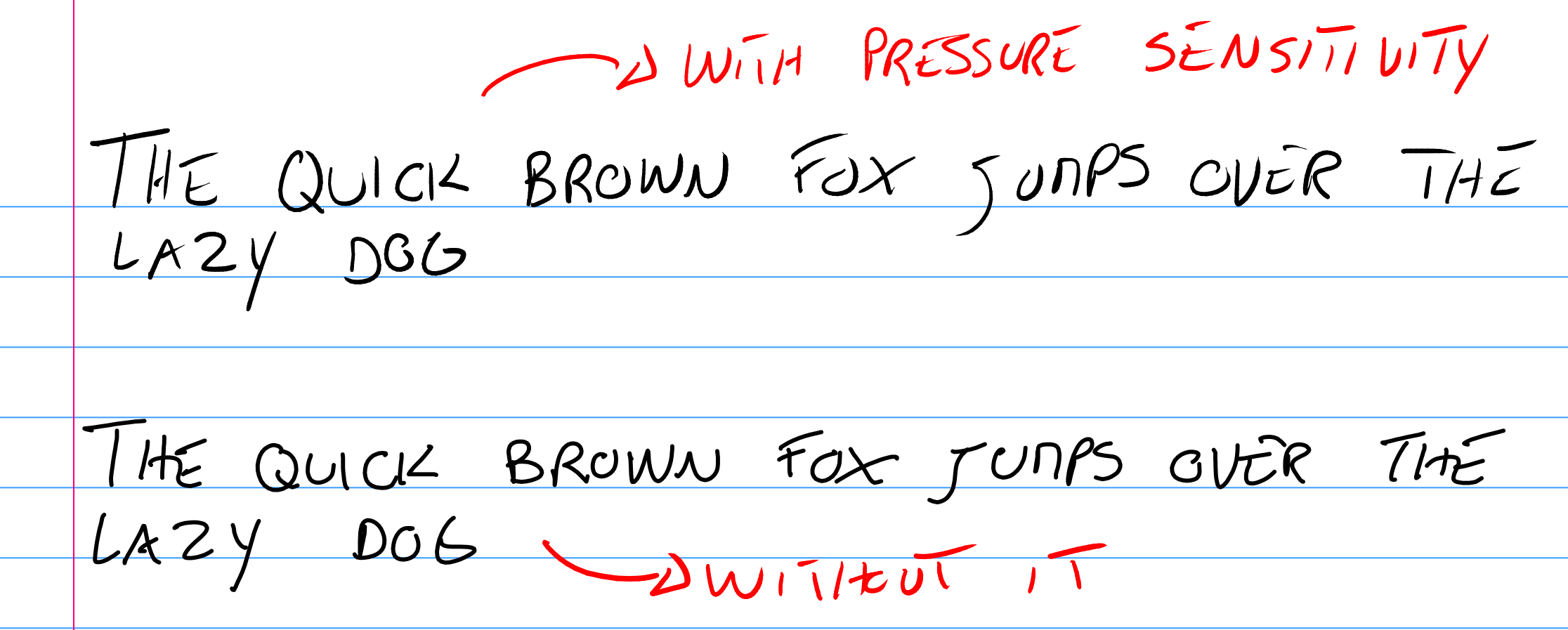
I've been teaching economics for a few semesters already and, slowly but surely, I'm starting to get the hang of it. Having to deal with teaching remotely hasn't been easy though and I'm really hoping the winter semester will be in-person again. Although I worked way too much last semester1, I somehow managed to transition to using a graphics tablet. I bought a Wacom Intuos S tablet (model CTL-4100) in late August 2021 and overall, I have been very happy with it. Wacom Canada offers a small discount for teachers and I ended up paying 115 CAD (~90 USD) for the tablet, an overall very reasonable price. Unsurprisingly, the Wacom support on Linux is very good and my tablet worked out of the box. The only real problem I had was by default, the tablet sometimes boots up in Android mode, making it unusable. This is easily solved by pressing down on the pad's first and last buttons for a few seconds, until the LED turns white. The included stylus came with hard plastic nibs, but I find them too slippery. I eventually purchased hard felt nibs, which increase the friction and makes for a more paper-like experience. They are a little less durable, but I wrote quite a fair bit and still haven't gone through a single one yet. Learning curve Learning how to use a graphical tablet took me at least a few weeks! When writing on a sheet of paper, the eyes see what the hand writes directly. This is not the case when using a graphical tablet: you are writing on a surface and see the result on your screen, a completely different surface. This dissociation takes a bit of practise to master, but after going through more than 300 pages of notes, it now feels perfectly normal. Here is a side-by-side comparison of my very average hand-writing2:
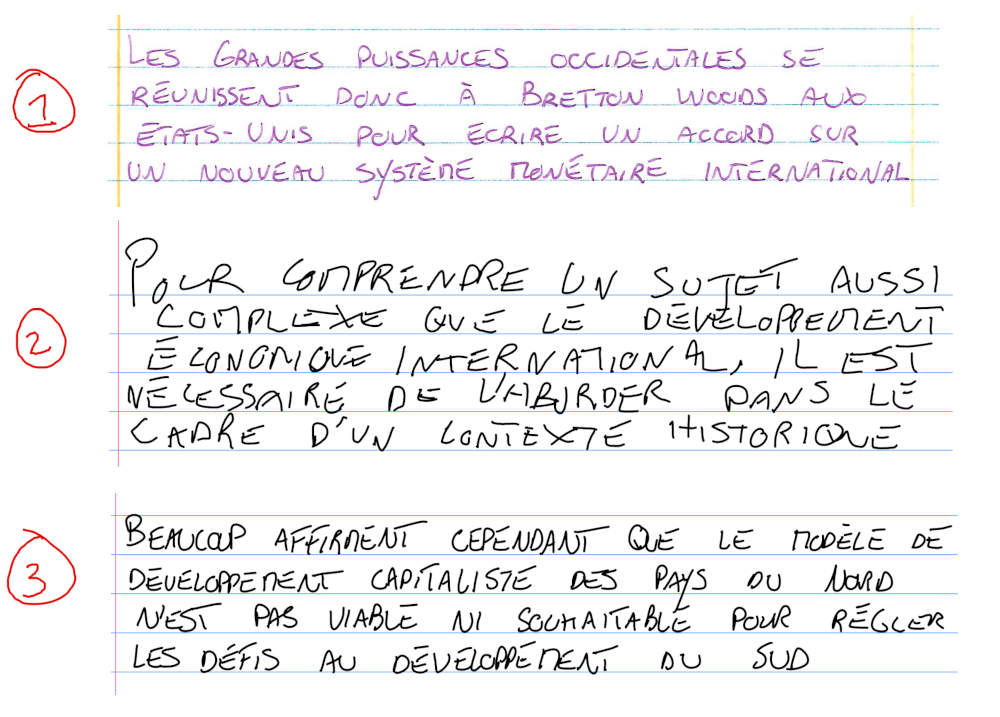
  1. on paper
  2. using the tablet, the first week
  3. using the tablet, after a couple of months
Comparison of my writing, on paper, using the tablet and using the tablet after a few weeks I still prefer the result of writing on paper, but I think this is mostly due to me not using the pressure sensitivity feature. The support in xournal wasn't great, but now that I've tried it in xournalpp (more on this below), I think I will be enabling it in the future. The result on paper is also more consistent, but I trust my skills will improve over time. Pressure sensitivity on vs off Use case The first use case I have for the tablet is grading papers. I've been asking my students to submit their papers via Moodle for a few semesters already, but until now, I was grading them using PDF comments. The experience wasn't great3 and was rather slow compared to grading physical copies. I'm also a somewhat old-school teacher: I refuse to teach using slides. Death by PowerPoint is real. I write on the blackboard a lot4 and I find it much easier to prepare my notes by hand than by typing them, as the end result is closer to what I actually end up writing down on the board. Writing notes by hand on sheets of paper is a chore too, especially when you revisit the same materiel regularly. Being able to handwrite digital notes gives me a lot more flexibility and it's been great. So far, I have been using xournal to write notes and grade papers, and although it is OK, it has a bunch of quirks I dislike. I was waiting for xournalpp to be packaged in Debian, and it now is5! I'm looking forward to using it next semester. Towards a better computer monitor I have also been feeling the age of my current computer monitor. I am currently using an old 32" 1080p TV from LG and up until now, I had been able to deal with the drawbacks. The colors are pretty bad and 1080p for such a large display isn't great, but I got used to it. What I really noticed when I started using my graphics tablet was the input lag. It's bad enough that there's a clear jello effect when writing and it eventually gives me a headache. It's so bad I usually prefer to work on my laptop, which has a nicer but noticeably smaller panel. I'm currently looking to replace this aging TV6 by something more modern. I have been waiting out since I would like to buy something that will last me another 10 years if possible. Sadly, 32" high refresh rate 4K monitors aren't exactly there yet and I haven't found anything matching my criteria. I would probably also need a new GPU, something that is not easy to come by these days.

  1. I worked at two colleges at the same time, teaching 2 different classes (one of which I was giving for the first time...) to 6 groups in total. I averaged more than 60h per week for sure.
  2. Yes, I only write in small caps. Students love it, as it's much easier to read on the blackboard.
  3. Although most PDF readers support displaying comments, some of my more clueless students still had trouble seeing them and I had to play tech support more than I wanted.
  4. Unsurprisingly, my students also love it. One of the most common feedback I get at the end of the semester is they hate slides too and are very happy I'm one of the few teachers who writes on the board.
  5. Many thanks to Barak A. Pearlmutter for maintaining this package.
  6. It dates back from 2010, when my mom replaced our old CRT by a flat screen. FullHD TVs were getting affordable and I wasn't sad to see our tiny 20-something inches TV go. I eventually ended up with the LG flatscreen a few years later when I moved out in my first apartment and my mom got something better.

7 December 2021

Evgeni Golov: The Mocking will continue, until CI improves

One might think, this blog is exclusively about weird language behavior and yelling at computers Well, welcome to another episode of Jackass! Today's opponent is Ruby, or maybe minitest , or maybe Mocha. I'm not exactly sure, but it was a rather amusing exercise and I like to share my nightmares ;) It all started with the classical "you're using old and unmaintained software, please switch to something new". The first attempt was to switch from the ci_reporter_minitest plugin to the minitest-ci plugin. While the change worked great for Foreman itself, it broke the reporting in Katello - the tests would run but no junit.xml was generated and Jenkins rightfully complained that it got no test results. While investigating what the hell was wrong, we realized that Katello was already using a minitest reporting plugin: minitest-reporters. Loading two different reporting plugins seemed like a good source for problems, so I tried using the same plugin for Foreman too. Guess what? After a bit of massaging (mostly to disable the second minitest-reporters initialization in Katello) reporting of test results from Katello started to work like a charm. But now the Foreman tests started to fail. Not fail to report, fail to actually run. WTH The failure was quite interesting too:
test/unit/parameter_filter_test.rb:5:in  block in <class:ParameterFilterTest>':
  Mocha methods cannot be used outside the context of a test (Mocha::NotInitializedError)
Yes, this is a single test file failing, all others were fine. The failing code doesn't look problematic on first glance:
require 'test_helper'
class ParameterFilterTest < ActiveSupport::TestCase
  let(:klass) do
    mock('Example').tap do  k 
      k.stubs(:name).returns('Example')
    end
  end
  test 'something' do
    something
  end
end
The failing line (5) is mock('Example').tap and for some reason Mocha thinks it's not initialized here. This certainly has something to do with how the various reporting plugins inject themselves, but I really didn't want to debug how to run two reporting plugins in parallel (which, as you remember, didn't expose this behavior). So the only real path forward was to debug what's happening here. Calling the test on its own, with one of the working reporter was the first step:
$ bundle exec rake test TEST=test/unit/parameter_filter_test.rb TESTOPTS=-v
 
#<Mocha::Mock:0x0000557bf1f22e30>#test_0001_permits plugin-added attribute = 0.04 s = .
#<Mocha::Mock:0x0000557bf12cf750>#test_0002_permits plugin-added attributes from blocks = 0.49 s = .
 
Wait, what? #<Mocha::Mock: >? Shouldn't this read more like ParameterFilterTest:: as it happens for every single other test in our test suite? It definitely should! That's actually great, as it tells us that there is really something wrong with the test and the change of the reporting plugin just makes it worse. What comes next is sheer luck. Well, that, and years of experience in yelling at computers. We use let(:klass) to define an object called klass and this object is a Mocha::Mock that we'll use in our tests later. Now klass is a very common term in Ruby when talking about classes and needing to store them mostly because one can't use class which is a keyword. Is something else in the stack using klass and our let is overriding that, making this whole thing explode? It was! The moment we replaced klass with klass1 (silly, I know, but there also was a klass2 in that code, so it did fit), things started to work nicely. I really liked Tomer's comment in the PR: "no idea why, but I am not going to dig into mocha to figure that out." Turns out, I couldn't let (HAH!) the code rest and really wanted to understand what happened there. What I didn't want to do is to debug the whole Foreman test stack, because it is massive. So I started to write a minimal reproducer for the issue. All starts with a Gemfile, as we need a few dependencies:
gem 'rake'
gem 'mocha'
gem 'minitest', '~> 5.1', '< 5.11'
Then a Rakefile:
require 'rake/testtask'
Rake::TestTask.new(:test) do  t 
  t.libs << 'test'
  t.test_files = FileList["test/**/*_test.rb"]
end
task :default => :test
And a test! I took the liberty to replace ActiveSupport::TestCase with Minitest::Test, as the test won't be using any Rails features and I wanted to keep my environment minimal.
require 'minitest/autorun'
require 'minitest/spec'
require 'mocha/minitest'
class ParameterFilterTest < Minitest::Test
  extend Minitest::Spec::DSL
  let(:klass) do
    mock('Example').tap do  k 
      k.stubs(:name).returns('Example')
    end
  end
  def test_lol
    assert klass
  end
end
Well, damn, this passed! Is it Rails after all that breaks stuff? Let's add it to the Gemfile!
$ vim Gemfile
$ bundle install
$ bundle exec rake test TESTOPTS=-v
 
#<Mocha::Mock:0x0000564bbfe17e98>#test_lol = 0.00 s = .
Wait, I didn't change anything and it's already failing?! Fuck! I mean, cool! But the test isn't minimal yet. What can we reduce? let is just a fancy, lazy def, right? So instead of let(:klass) we should be able to write def class and achieve a similar outcome and drop that Minitest::Spec.
require 'minitest/autorun'
require 'mocha/minitest'
class ParameterFilterTest < Minitest::Test
  def klass
    mock
  end
  def test_lol
    assert klass
  end
end
$ bundle exec rake test TESTOPTS=-v
 
/home/evgeni/Devel/minitest-wtf/test/parameter_filter_test.rb:5:in  klass': Mocha methods cannot be used outside the context of a test (Mocha::NotInitializedError)
    from /home/evgeni/Devel/minitest-wtf/vendor/bundle/ruby/3.0.0/gems/railties-6.1.4.1/lib/rails/test_unit/reporter.rb:68:in  format_line'
    from /home/evgeni/Devel/minitest-wtf/vendor/bundle/ruby/3.0.0/gems/railties-6.1.4.1/lib/rails/test_unit/reporter.rb:15:in  record'
    from /home/evgeni/Devel/minitest-wtf/vendor/bundle/ruby/3.0.0/gems/minitest-5.10.3/lib/minitest.rb:682:in  block in record'
    from /home/evgeni/Devel/minitest-wtf/vendor/bundle/ruby/3.0.0/gems/minitest-5.10.3/lib/minitest.rb:681:in  each'
    from /home/evgeni/Devel/minitest-wtf/vendor/bundle/ruby/3.0.0/gems/minitest-5.10.3/lib/minitest.rb:681:in  record'
    from /home/evgeni/Devel/minitest-wtf/vendor/bundle/ruby/3.0.0/gems/minitest-5.10.3/lib/minitest.rb:324:in  run_one_method'
    from /home/evgeni/Devel/minitest-wtf/vendor/bundle/ruby/3.0.0/gems/minitest-5.10.3/lib/minitest.rb:311:in  block (2 levels) in run'
    from /home/evgeni/Devel/minitest-wtf/vendor/bundle/ruby/3.0.0/gems/minitest-5.10.3/lib/minitest.rb:310:in  each'
    from /home/evgeni/Devel/minitest-wtf/vendor/bundle/ruby/3.0.0/gems/minitest-5.10.3/lib/minitest.rb:310:in  block in run'
    from /home/evgeni/Devel/minitest-wtf/vendor/bundle/ruby/3.0.0/gems/minitest-5.10.3/lib/minitest.rb:350:in  on_signal'
    from /home/evgeni/Devel/minitest-wtf/vendor/bundle/ruby/3.0.0/gems/minitest-5.10.3/lib/minitest.rb:337:in  with_info_handler'
    from /home/evgeni/Devel/minitest-wtf/vendor/bundle/ruby/3.0.0/gems/minitest-5.10.3/lib/minitest.rb:309:in  run'
    from /home/evgeni/Devel/minitest-wtf/vendor/bundle/ruby/3.0.0/gems/minitest-5.10.3/lib/minitest.rb:159:in  block in __run'
    from /home/evgeni/Devel/minitest-wtf/vendor/bundle/ruby/3.0.0/gems/minitest-5.10.3/lib/minitest.rb:159:in  map'
    from /home/evgeni/Devel/minitest-wtf/vendor/bundle/ruby/3.0.0/gems/minitest-5.10.3/lib/minitest.rb:159:in  __run'
    from /home/evgeni/Devel/minitest-wtf/vendor/bundle/ruby/3.0.0/gems/minitest-5.10.3/lib/minitest.rb:136:in  run'
    from /home/evgeni/Devel/minitest-wtf/vendor/bundle/ruby/3.0.0/gems/minitest-5.10.3/lib/minitest.rb:63:in  block in autorun'
rake aborted!
Oh nice, this is even better! Instead of the mangled class name, we now get the very same error the Foreman tests aborted with, plus a nice stack trace! But wait, why is it pointing at railties? We're not loading that! Anyways, lets look at railties-6.1.4.1/lib/rails/test_unit/reporter.rb, line 68
def format_line(result)
  klass = result.respond_to?(:klass) ? result.klass : result.class
  "%s#%s = %.2f s = %s" % [klass, result.name, result.time, result.result_code]
end
Heh, this is touching result.klass, which we just messed up. Nice! But quickly back to railties What if we only add that to the Gemfile, not full blown Rails?
gem 'railties'
gem 'rake'
gem 'mocha'
gem 'minitest', '~> 5.1', '< 5.11'
Yepp, same failure. Also happens with require => false added to the line, so it seems railties somehow injects itself into rake even if nothing is using it?! "Cool"! By the way, why are we still pinning minitest to < 5.11? Oh right, this was the original reason to look into that whole topic. And, uh, it's pointing at klass there already! 4 years ago! So lets remove that boundary and funny enough, now tests are passing again, even if we use klass! Minitest 5.11 changed how Minitest::Test is structured, and seems not to rely on klass at that point anymore. And I guess Rails also changed a bit since the original pin was put in place four years ago. I didn't want to go another rabbit hole, finding out what changed in Rails, but I did try with 5.0 (well, 5.0.7.2) to be precise, and the output with newer (>= 5.11) Minitest was interesting:
$ bundle exec rake test TESTOPTS=-v
 
Minitest::Result#test_lol = 0.00 s = .
It's leaking Minitest::Result as klass now, instead of Mocha::Mock. So probably something along these lines was broken 4 years ago and triggered this pin. What do we learn from that?
  • klass is cursed and shouldn't be used in places where inheritance and tooling might decide to use it for some reason
  • inheritance is cursed - why the heck are implementation details of Minitest leaking inside my tests?!
  • tooling is cursed - why is railties injecting stuff when I didn't ask it to?!
  • dependency pinning is cursed - at least if you pin to avoid an issue and then forget about said issue for four years
  • I like cursed things!

14 November 2021

Ruby Team: Ruby transition and packaging hints #2 - Gemfile.lock created by bundler/setup with Ruby 2.7 preventing successful test with Ruby 3.0

We currently face an issue in all packages requiring bunlder/setup and trying to run the tests for Ruby 2.7 and 3.0. The problem is that the first tests will create Gemfile.lock (or gemfile/gemfile-*.lock) using Ruby 2.7 and the next run for Ruby 3 will report e.g.:
Failure/Error: require 'bundler/setup' # Set up gems listed in the Gemfile.
Bundler::GemNotFound:
  Could not find racc-1.4.16 in any of the sources
or
/usr/share/rubygems-integration/all/gems/bundler-2.2.27/lib/bundler/definition.rb:496:in  materialize':
  Could not find rexml-3.2.3.1 in any of the sources (Bundler::GemNotFound)
Both bugs #996207 and #996302 are incarnations of this issue. The fix is as easy as making sure that the .lock files are removed before each run. This can be done in e.g. debian/ruby-tests.rake as very first task:
File.delete("Gemfile.lock") if File.exist?("Gemfile.lock")
In another case the .lock file is created by the tests in gemfiles/. While the first examples could actually be solved by gem2deb removing Gemfile.lock on its own, I m not quite sure how to handle the last case using packaging tools. The interesting part is that we will unlikely be confronted with this issue anytime soon again. It seems very specific to the Ruby 3.0 transition.

Update After talking to Antonio he added some code to gem2deb-test-runner to moving Gemfile.lock files out of the way. The tool already did this in an autopkgtest environment. In the upcoming 1.7 release it will do it in general and this will fix some more FTBFSes, e.g. #998497 and #996141 - originally reported against ruby-voight-kampff and ruby-bootsnap.

6 November 2021

Jaldhar Vyas: Sal Mubarak 2078!

Diwali Fireworks Wishing everyone in Debian good health and prosperity in the Gujarati New Year Vikram Samvat 2078 called Pramadi.

16 August 2021

Russ Allbery: Review: The Galaxy, and the Ground Within

Review: The Galaxy, and the Ground Within, by Becky Chambers
Series: Wayfarers #4
Publisher: Harper Voyager
Copyright: April 2021
ISBN: 0-06-293605-0
Format: Kindle
Pages: 325
The name of the planet Gora is the Hanto word for useless. It's a bone-dry, resource-poor planet with nothing to recommend it except that it happened to be conveniently located between five other busy systems and had well-established interspacial tunnels. Gora is therefore a transit hub: a place lots of people visit for about half a day while waiting for a departure time, but where very few people stay. It is the interstellar equivalent of an airport. Ouloo is a Laru, a species physically somewhat similar to a giant dog. She is the owner of the Five-Hop One-Stop in a habitat dome on Gora, where she lives with her child (who is not yet old enough to choose a gender). On the day when this novel begins, she's expecting three ships to dock: one Aeluon, one Quelin, and, to Ouloo's significant surprise and moderate discomfort, an Akarak. But apart from that, it's a normal day. A normal day, that is, until maintenance work on the solar satellite array leads to a Kessler syndrome collision cascade that destroys most of the communication satellites and makes it unsafe to leave the surface of the planet. Ouloo and her guests are stuck with each other for longer than they expected. In a typical SF novel, you would expect the characters to have to fix the satellite cascade, or for it to be a sign of something more nefarious. That is not the case here; the problem is handled by the Goran authorities, the characters have no special expertise, and there is no larger significance to the accident. Instead, the accident functions as storm in a very old story-telling frame: three travelers and their host and her child, trapped together by circumstance and forced to entertain each other until they can go on their way. Breaking from the formula, they do not do that primarily by telling stories to each other, although the close third-person narration that moves between the characters reveals their backgrounds over the course of the book. Instead, a lot of this book is conversation, sometimes prompted by Ouloo's kid Tupo (who I thought was a wonderfully-written tween, complete with swings between curiosity and shyness, random interests, occasionally poor impulse control, and intense but unpredictable learning interest). That leads to some conflict (and some emergencies), but, similar to Record of a Spaceborn Few, this is more of a character study book than a things-happen book. An interesting question, then, is why is this story science fiction? A similar story could be written (and has been, many times) with human travelers in a mundane inn or boarding house in a storm. None of the aliens are all that alien; despite having different body shapes and senses, you could get more variation from a group of university students. And even more than with Chambers's other books, the advanced technology is not the point and is described only enough to provide some background color and a bit of characterization. The answer, for me, is that the cognitive estrangement of non-human characters relieves my brain of the baggage that I bring to human characters and makes it easier for me to empathize with the characters as individuals rather than representatives of human archetypes. With human characters, I would be fitting them into my knowledge of history and politics, and my reaction to each decision the characters make would be influenced by the assumptions prompted by that background. I enjoy the distraction of invented worlds and invented histories in part because they're simplified compared to human histories and therefore feel more knowable and less subtle. I'm not trying to understand the political angle from which the author is writing or wondering if I'm missing a reference that's important to the story. In other words, the science fiction setting gives the narrator more power. The story tells me the important details of the background; there isn't some true history lurking beneath that I'm trying to ferret out. When that's combined with interesting physical differences, I find myself imagining what it would be like to be the various aliens, trying to insert myself into their worlds, rather than placing them in a historical or political context. That puts me in a curious and empathetic mindset, and that, in turn, is the best perspective from which to enjoy Chambers's stories. The characters in this story don't solve any large-scale problems. They do make life decisions, some quite significant, but only on a personal scale. They also don't resolve all of their suspicions and disagreements. This won't be to everyone's taste, but it's one of the things I most enjoyed about the book: it shows a small part of the lives of a collection of average individuals, none of whom are close to the levers of power and none of whom are responsible for fixing their species or galactic politics. They are responsible for their own choices, and for how their lives touch the lives of others. They can make the people they encounter happier or sadder, they can chose how to be true to their own principles, and they can make hard choices without right answers. When I describe a mainstream fiction book that way, I often find it depressing, but I came away from The Galaxy, and the Ground Within feeling better about the world and more open-hearted towards other people. I'm not sure what Chambers does to produce that reaction, so I'm not sure if it will have the same effect on other people. Perhaps part of it is that while there is some drama, her characters do not seek drama for its own sake, none of the characters are villains, and she has a way of writing sincerity that clicks with my brain. There is a scene, about two-thirds of the way through the book, where the characters get into a heated argument about politics, and for me this is the moment where you will either love this book or it will not work for you. The argument doesn't resolve anything, and yet it's one of the most perceptive, accurate, and satisfying portrayals of a political argument among normal people that I've seen in fiction. It's the sort of air-clearing conversation in which every character is blunt with both their opinion and their emotions rather than shading them for politeness. Those positions are not necessarily sophisticated or deeply philosophical, but they are deeply honest.
"And you know what? I truly don't care which of them is right so long as it fixes everything. I don't have an... an ideology. I don't know the right terms to discuss these things. I don't know the science behind any of it. I'm sure I sound silly right now. But I just want everyone to get along, and to be well taken care of. That's it. I want everybody to be happy and I do not care how we get there." She exhaled, her broad nostrils flaring. "That's how I feel about it."
I am not Ouloo, but I think she represents far more people than fiction normally realizes, and I found something deeply satisfying and revealing in seeing that position presented so clearly in the midst of a heated argument. If you like what Chambers does, I think you will like this book. If it's not for you, this is probably not the book that will change your mind, although there is a bit less hand-wavy technology to distract the people whom that distracts. The Galaxy, and the Ground Within didn't have the emotional resonance that Record of a Spaceborn Few had for me, or the emotional gut punch of A Closed and Common Orbit. But I loved every moment of reading it. This will apparently be the last novel in the Wayfarers universe, at least for the time being. Chambers will be moving on to other settings (starting with A Psalm for the Wild-Built). Rating: 8 out of 10

18 July 2021

Shirish Agarwal: BBI Kenyan Supreme Court, U.P. Population Bill, South Africa, Suli Deals , IT rules 2021, Sedition Law and Danish Siddiqui s death.

BBI Kenya and live Supreme Court streaming on YT The last few weeks have been unrelenting as all sorts of news have been coming in, mostly about the downturn in the Economy, Islamophobia in India on the rise, Covid, and electioneering. However, in the last few days, Kenya surpassed India in live-streaming proceeds in a Court of Appeals about BBI or Building Bridges Initiative. A background filler article on the topic can be found in BBC. The live-streaming was done via YT and if wants to they can start from

https://www.youtube.com/watch?v=JIQzpmVKvro One can also subscribe to K24TV which took the initiative of sharing the proceedings with people worldwide. If K24TV continues to share SC proceedings of Kenya, that would add to the soft power of Kenya. I will not go into the details of the case as Gautam Bhatia who has been following the goings-on in Kenya is a far better authority on the subject. In fact, just recently he shared about another Kenyan judgment from a trial which can be seen here. He has shared the proceedings and some hot takes on the Twitter thread started by him. Probably after a couple of weeks or more when he has processed what all has happened there, he may also share some nuances although many of his thoughts would probably go to his book on Comparative Constitutional Law which he hopes to publish maybe in 2021/2022 or whenever he can. Such televised proceedings are sure to alleviate the standing of Kenya internationally. There has been a proposal to do similar broadcasts by India but with surveillance built-in, so they know who is watching. The problems with the architecture and the surveillance built-in have been shared by Srinivas Kodali or DigitalDutta quite a few times, but that probably is a story for another day.

Uttar Pradesh Population Control Bill
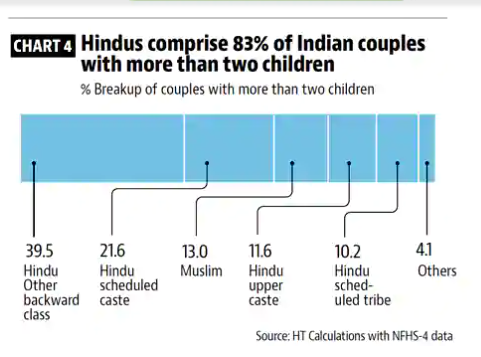
Hindus comprise 83% of Indian couples with more than two child children
The U.P. Population Bill came and it came with lot of prejudices. One of the prejudices is the idea that Muslims create or procreate to have the most children. Even with data is presented as shared above from NFHS National Family Health Survey which is supposed to carry our surveys every few years did the last one around 4 years back. The analysis from it has been instrumental not only in preparing graphs as above but also sharing about what sort of death toll must have been in rural India. And as somebody who have had the opportunity in the past, can vouch that you need to be extremely lucky if something happens to you when you are in a rural area. Even in places like Bodh Gaya (have been there) where millions of tourists come as it is one of the places not to be missed on the Buddhism tourist circuit, the medical facilities are pretty underwhelming. I am not citing it simply because there are too many such newspaper reports from even before the pandemic, and both the State and the Central Govt. response has been dismal. Just a few months back, they were recalled. There were reports of votes being bought at INR 1000/- (around $14) and a bottle or two of liquor. There used to be a time when election monitoring whether national or state used to be a thing, and you had LTO s (Long-time Observers) and STO s (Short-Term Observers) to make sure that the election has been neutral. This has been on the decline in this regime, but that probably is for another time altogether. Although, have to point out the article which I had shared a few months ago on the private healthcare model is flawed especially for rural areas. Instead of going for cheap, telemedicine centers that run some version of a Linux distro. And can provide a variety of services, I know Kerala and Tamil Nadu from South India have experimented in past but such engagements need to be scaled up. This probably will come to know when the next time I visit those places (sadly due to the virus, not anytime soonish.:( ) . Going back to the original topic, though, I had shared Hans Rosling s famous Ted talk on population growth which shows that even countries which we would not normally associate with family planning for e.g. the middle-east and Africa have also been falling quite rapidly. Of course, when people have deeply held prejudices, then it is difficult. Even when sharing China as to how they had to let go of their old policy in 2016 as they had the thing for leftover men . I also shared the powerful movie So Long my Son. I even shared how in Haryana women were and are trafficked and have been an issue for centuries but as neither suits the RW propaganda, they simply refuse to engage. They are more repulsed by people who publish this news rather than those who are actually practicing it, as that is culture . There is also teenage pregnancy, female infanticide, sex-selective abortion, etc., etc. It is just all too horrible to contemplate. Personal anecdote I know a couple, or they used to be a couple, where the gentleman wanted to have a male child. It was only after they got an autistic child, they got their DNA tested and came to know that the gentleman had a genetic problem. He again forced and had another child, and that too turned out to be autistic. Finally, he left the wife and the children, divorced them and lived with another woman. Almost a decade of the wife s life was ruined. The wife before marriage was a gifted programmer employed at IBM. This was an arranged marriage. After this, if you are thinking of marrying, apart from doing astrology charts, also look up DNA compatibility charts. Far better than ruining yours or the women s life. Both the children whom I loved are now in heaven, god bless them  If one wants to, one can read a bit more about the Uttar Pradesh Population bill here. The sad part is that the systems which need fixing, nobody wants to fix. The reason being simple. If you get good health service by public sector, who will go to the private sector. In Europe, AFAIK they have the best medical bang for the money. Even the U.S. looks at Europe and hopes it had the systems that Europe has but that again is probably for another day.
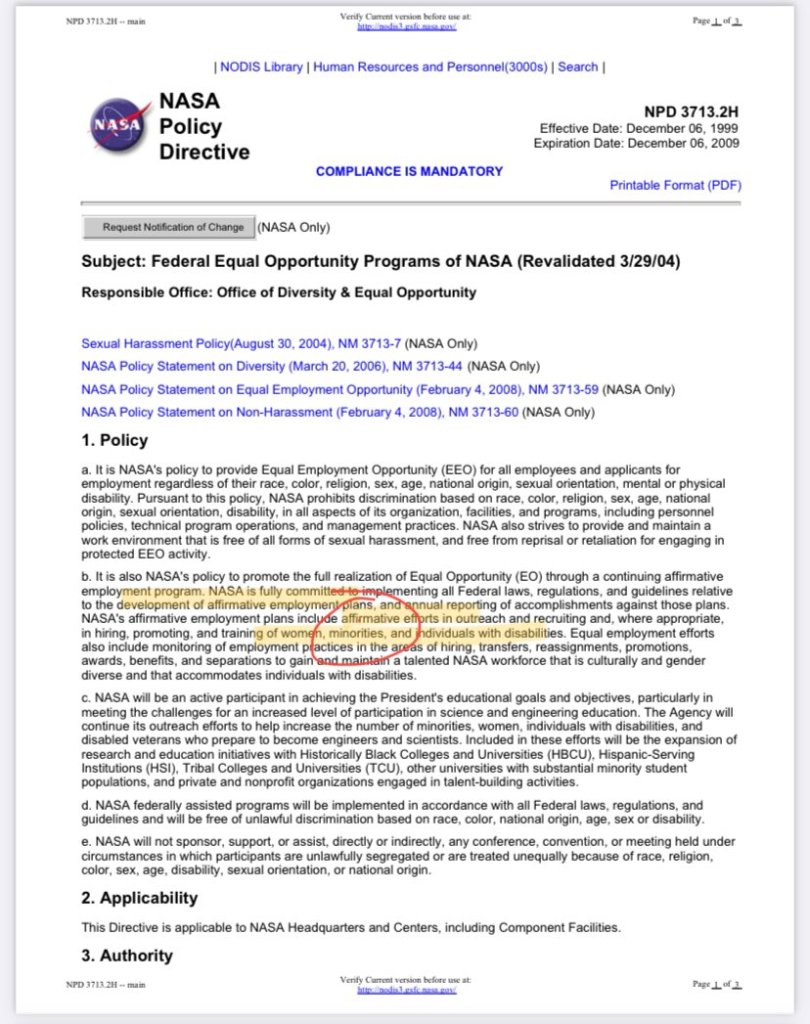
South Africa and India long-lost brothers. As had shared before, after the 2016 South African Debconf convention, I had been following South Africa. I was happy when FeesMustFall worked and in 2017 the then ANC president Zuma declared it in late 2017. I am sure that people who have been regular visitors to this blog know how my position is on student loans. They also must be knowing that even in U.S. till the 1970s it had free education all the way to be a lawyer and getting a lawyer license. It is only when people like Thurgood Marshall, Martin Luther King Jr., and others from the civil rights movement came out as a major force that the capitalists started imposing fees. They wanted people who could be sold to corporate slavery, and they won. Just last week, Biden took some steps and canceled student loans and is working on steps towards broad debt forgiveness. Interestingly, NASA has an affirmative diversity program for people from diverse backgrounds, where a couple of UC (Upper Caste) women got the job. While they got the job, the RW (Right-Wing) was overjoyed as they got jobs on merit . Later, it was found that both the women were the third or fourth generation of immigrants in U.S.
NASA Federal Equal Opportunity Policy Directive NPD 3713 2H
Going back to the original question and topic, while there has been a concerning spate of violence, some calling it the worst sort of violence not witnessed since 1994. The problem, as ascertained in that article, is the same as here in India or elsewhere. Those, again, who have been on my blog know that merit 90% of the time is a function of privilege and there is a vast amount of academic literature which supports that. If, for a moment, you look at the data that is shared in the graph above which shows that 83% of Hindus and 13% of Muslims have more than 2 children, what does it show, it shows that 83+13 = 96% of the population is living in insecurity. The 5% are the ones who have actually consolidated more power during this regime rule in India. Similarly, from what I understood living in Cape Town for about a month, it is the Dutch Afrikaans as they like to call themselves and the immigrants who come from abroad who have enjoyed the fruits of tourism and money and power while the rest of the country is dying due to poverty. It is the same there, it is the same here. Corruption is also rampant in both countries, and the judiciary is virtually absent from both communities in India and SA. Interestingly, South Africa and India have been at loggerheads, but I suspect that is more due to the money and lobbying power by the Dutch. Usually, those who have money power, do get laws and even press on their side, and it is usually the ruling party in power. I cannot help but share about the Gupta brothers and their corruption as I came to know about it in 2016. And as have shared that I m related to Gupta s on my mother s side, not those specific ones but Gupta as a clan. The history of the Gupta dynasty does go back to the 3rd-4th century. Equally interesting have been Sonali Ranade s series of articles which she wrote in National Herald, the latest on exports which is actually the key to taking India out of poverty rather than anything else. While in other countries Exporters are given all sort of subsidies, here it is being worked as how to give them less. This was in Economic times hardly a week back
Export incentive schemes being reduced
I can t imagine the incredible stupidity done by the Finance Minister. And then in an attempt to prove that, they will attempt to present a rosy picture with numbers that have nothing to do with reality. Interestingly enough, India at one time was a major exporter of apples, especially from Kashmir. Now instead of exporting, we are importing them from Afghanistan as well as Belgium and now even from the UK. Those who might not want to use the Twitter link could use this article. Of course, what India got out of this trade deal is not known. One can see that the UK got the better deal from this. Instead of investing in our own capacity expansion, we are investing in increasing the capacity of others. This is at the time when due to fuel price hike (Central taxes 66%) demand is completely flat. And this is when our own CEA (Chief Economic Adviser) tells us that growth will be at the most 6-7% and that too in 2023-2024 while currently, the inflation rate is around 12%. Is it then any wonder that almost 70% are living on Govt. ration and people in the streets of Kolkata, Assam, and other places have to sell kidneys to make sure they have some money for their kids for tomorrow. Now I have nothing against the UK but trade negotiation is an art. Sadly, this has been going on for the last few years. The politicians in India fool the public by always telling of future trade deals. Sadly, as any businessman knows, once you have compromised, you always have to compromise. And the more you compromise, the more you weaken the hand for any future trade deals.
IIT pupil tries to sell kidney to repay loan, but no takers for Dalit organ.
The above was from yesterday s Times of India. Just goes to show how much people are suffering. There have been reports in vernacular papers of quite a few people from across regions and communities are doing this so they can live without pain a bit. Almost all the time, the politicians are saved as only few understand international trade, the diplomacy and the surrounding geopolitics around it. And this sadly, is as much to do with basic education as much as it is to any other factor

Suli Deals About a month back on the holy day of Ramzan or Ramadan as it is known in the west, which is beloved by Muslims, a couple of Muslim women were targeted and virtually auctioned. Soon, there was a flood and a GitHub repository was created where hundreds of Muslim women, especially those who have a voice and fearlessly talk about their understanding about issues and things, were being virtually auctioned. One week after the FIR was put up, to date none of the people mentioned in the FIR have been arrested. In fact, just yesterday, there was an open letter which was published by livelaw. I have saved a copy on WordPress just in case something does go wrong. Other than the disgust we feel, can t say much as no action being taken by GOI and police.

IT Rules 2021 and Big Media After almost a year of sleeping when most activists were screaming hoarsely about how the new IT rules are dangerous for one and all, big media finally woke up a few weeks back and listed a writ petition in Madras High Court of the same. Although to be frank, the real writ petition was filed In February 2021, classical singer, performer T.M. Krishna in Madras High Court. Again, a copy of the writ petition, I have hosted on WordPress. On 23rd June 2021, a group of 13 media outlets and a journalist have challenged the IT Rules, 2021. The Contention came from Digital News Publishers Association which is made up of the following news companies: ABP Network Private Limited, Amar Ujala Limited, DB Corp Limited, Express Network Pvt Ltd, HT Digital Streams Limited, IE Online Media Services Pvt Ltd, Jagran Prakashan Limited, Lokmat Media Private Limited, NDTV Convergence Limited, TV Today Network Limited, The Malayala Manorama Co (P) Ltd, Times Internet Limited, and Ushodaya Enterprises Private Limited. All the above are heavyweights in the markets where they operate. The reason being simple, when these media organizations came into being, the idea was to have self-regulation, which by and large has worked. Now, the present Govt. wants each news item to be okayed by them before publication. This is nothing but blatant misuse of power and an attempt at censorship. In fact, the Tamil Nadu BJP president himself made a promise of the same. And of course, what is true and what is a lie, only GOI knows and will decide for the rest of the country. If somebody remembers Joseph Goebbels at this stage, it is merely a coincidence. Anyways, 3 days ago Supreme Court on 14th July the Honorable Supreme Court asked the Madras High Court to transfer all the petitions to SC. This, the Madras High Court denied as cited/shared by Meera Emmanuel, a reporter who works with barandbench. The Court says nothing doing, let this happen and then the SC can entertain the motion of doing it that level. At the same time, they would have the benefit of Madras High Court opinion as well. It gave the center two weeks to file a reply. So, either of end-week of July or latest by August first week, we might be able to read the Center s reply on the same. The SC could do a forceful intervention, but it would lead to similar outrage as has been witnessed in the past when a judge commented that if the SC has to do it all, then why do we need the High Courts, district courts etc. let all the solutions come from SC itself. This was, admittedly, frustration on the part of the judge, but due in part to the needless intervention of SC time and time again. But the concerns had been felt around all the different courts in the country.

Sedition Law A couple of days ago, the Supreme Court under the guidance of Honorable CJI NV Ramanna, entertained the PIL filed by Maj Gen S G Vombatkere (Retd.) which asked simply that the sedition law which was used in the colonial times by the British to quell dissent by Mahatma Gandhi and Bal Gangadhar Tilak during the Indian freedom struggle. A good background filler article can be found on MSN which tells about some recent cases but more importantly how historically the sedition law was used to quell dissent during India s Independence. Another article on MSN actually elaborates on the PIL filed by Maj Gen S. G. Vombatkere. Another article on MSN tells how sedition law has been challenged and changed in 10 odd countries. I find it equally sad and equally hilarious that the Indian media whose job is to share news and opinion on this topic is being instead of being shared more by MSN. Although, I would be bereft of my duty if I did not share the editorial on the same topic by the Hindu and Deccan Chronicle. Also, an interesting question to ask is, are there only 10 countries in the world that have sedition laws? AFAIK, there are roughly 200 odd countries as recognized by WTO. If 190 odd countries do not have sedition laws, it also tells a lot about them and a lot about the remaining 10. Also, it came to light that police are still filing laws under sec66A which was declared null and void a few years ago. It was replaced with section 124A if memory serves right and it has more checks and balances.

Danish Siddiqui, Pulitzer award-winning and death in Afghanistan Before I start with Danish Siddiqui, let me share an anecdote that I think I have shared on the blog years ago about how photojournalists are. Again, those who know me and those who follow me know how much I am mad both about trains and planes (civil aviation). A few months back, I had shared a blog post about some of the biggest railway systems in the world which shows that privatization of Railways doesn t necessarily lead to up-gradation of services but definitely leads to an increase in tariff/fares. Just had a conversation couple of days ago on Twitter and realized that need to also put a blog post about civil aviation in India and the problems it faces, but I digress. This was about a gentleman who wanted to take a photo of a particular train coming out of a valley at a certain tunnel at two different heights, one from below and one from above the train. This was several years ago, and while I did share that award-winning photograph then, it probably would take me quite a bit of time and effort to again look it up on my blog and share. The logistics though were far more interesting and intricate than I had first even thought of. We came around a couple of days before the train was supposed to pass that tunnel and the valley. More than half a dozen or maybe more shots were taken throughout the day by the cameras. The idea was to see how much light was being captured by the cameras and how much exposure was to be given so that the picture isn t whitened out or is too black. Weather is the strangest of foes for a photojournalist or even photographers, and the more you are in nature, the more unpredictable it is and can be. We were also at a certain height, so care had to be taken in case light rainfall happens or dew falls, both not good for digital cameras. And dew is something which will happen regardless of what you want. So while the two days our gentleman cameraman fiddled with the settings to figure out correct exposure settings, we had one other gentleman who was supposed to take the train from an earlier station and apprise us if the train was late or not. The most ideal time would be at 0600 hrs. When the train would enter the tunnel and come out and the mixture of early morning sun rays, dew, the flowers in the valley, and the train would give a beautiful effect. We could stretch it to maybe 0700 hrs. Anything after that would just be useless, as it wouldn t have the same effect. And of all this depended on nature. If the skies were to remain too dark, nothing we could do about it, if the dewdrops didn t fall it would all be over. On the day of the shoot, we were told by our compatriot that the train was late by half an hour. We sank a little on hearing that news. Although Photoshop and others can do touch-ups, most professionals like to take as authentic a snap as possible. Everything had been set up to perfection. The wide-angle lenses on both the cameras with protections were set up. The tension you could cut with a knife. While we had a light breakfast, I took a bit more and went in the woods to shit and basically not be there. This was too tensed up for me. Returned an hour to find everybody in a good mood. Apparently, the shoot went well. One of the two captured it for good enough. Now, this is and was in a benign environment where the only foe was the environment. A bad shot would have meant another week in the valley, something which I was not looking forward to. Those who have lived with photographers and photojournalists know how self-involved they can be in their craft, while how grumpy they can be if they had a bad shoot. For those, who don t know, it is challenging to be friends with such people for a long time. I wish they would scream more at nature and let out the frustrations they have after a bad shoot. But again, this is in a very safe environment. Now let s cut to Danish Siddiqui and the kind of photojournalism he followed. He followed a much more riskier sort of photojournalism than the one described above. Krittivas Mukherjee in his Twitter thread shared how reporters in most advanced countries are trained in multiple areas, from risk assessment to how to behave in case you are kidnapped, are in riots, hostage situations, etc. They are also trained in all sorts of medical training from treating gunshot wounds, CPR, and other survival methods. They are supposed to carry medical equipment along with their photography equipment. Sadly, these concepts are unknown in India. And even then they get killed. Sadly, he attributes his death to the thrill of taking an exclusive photograph. And the gentleman s bio reads that he is a diplomat. Talk about tone-deafness  On another completely different level was Karen Hao who was full of empathy as she shared the humility, grace, warmth and kinship she describes in her interaction with the photojournalist. His body of work can be seen via his ted talk in 2020 where he shared a brief collage of his works. Latest, though in a turnaround, the Taliban have claimed no involvement in the death of photojournalist Danish Siddiqui. This could be in part to show the Taliban in a more favorable light as they do and would want to be showcased as progressive, even though they are forcing that all women within a certain age become concubines or marry the fighters and killing the minority Hazaras or doing vile deeds with them. Meanwhile, statements made by Hillary Clinton almost a decade, 12 years ago have come back into circulation which stated how the U.S. itself created the Taliban to thwart the Soviet Union and once that job was finished, forgot all about it. And then in 2001, it landed back in Afghanistan while the real terrorists were Saudi. To date, not all documents of 9/11 are in the public domain. One can find more information of the same here. This is gonna take probably another few years before Saudi Arabia s whole role in the September 11 attacks will be known. Last but not the least, came to know about the Pegasus spyware and how many prominent people in some nations were targeted, including in mine India. Will not talk more as it s already a big blog post and Pegasus revelations need an article on its own.

29 June 2021

Ritesh Raj Sarraf: Plant Territorial Behavior

This blog post is about my observations of some of the plants in my home garden. While still a n00b on the subject, these notes are my observations and experiences over days, weeks and months. Thankfully, with the capability to take frequent pictures, it has been easy to do an assessment and generate a report of some of these amazing behaviors of plants, in an easy timeline order; all thanks to the EXIF data embedded. This has very helpfully allowed me to record my, otherwise minor observations, into great detail; and make some sense out of it by correlating the data over time. It is an emotional experience. You see, plants are amazing. When I sow a sapling, water it, feed it, watch it grow, prune it, medicate it, and what not; I build up affection towards it. Though, at the same time, to me it is a strict relationship, not too attached; as in it doesn t hurt to uproot a plant if there is a good reason. But still, I find some sort of association to it. With plants around, it feels I have a lot of lives around me. All prospering, communicating, sharing. And communicate they do. What is needed is just the right language to observe and absorb their signals and decipher what they are trying to say.
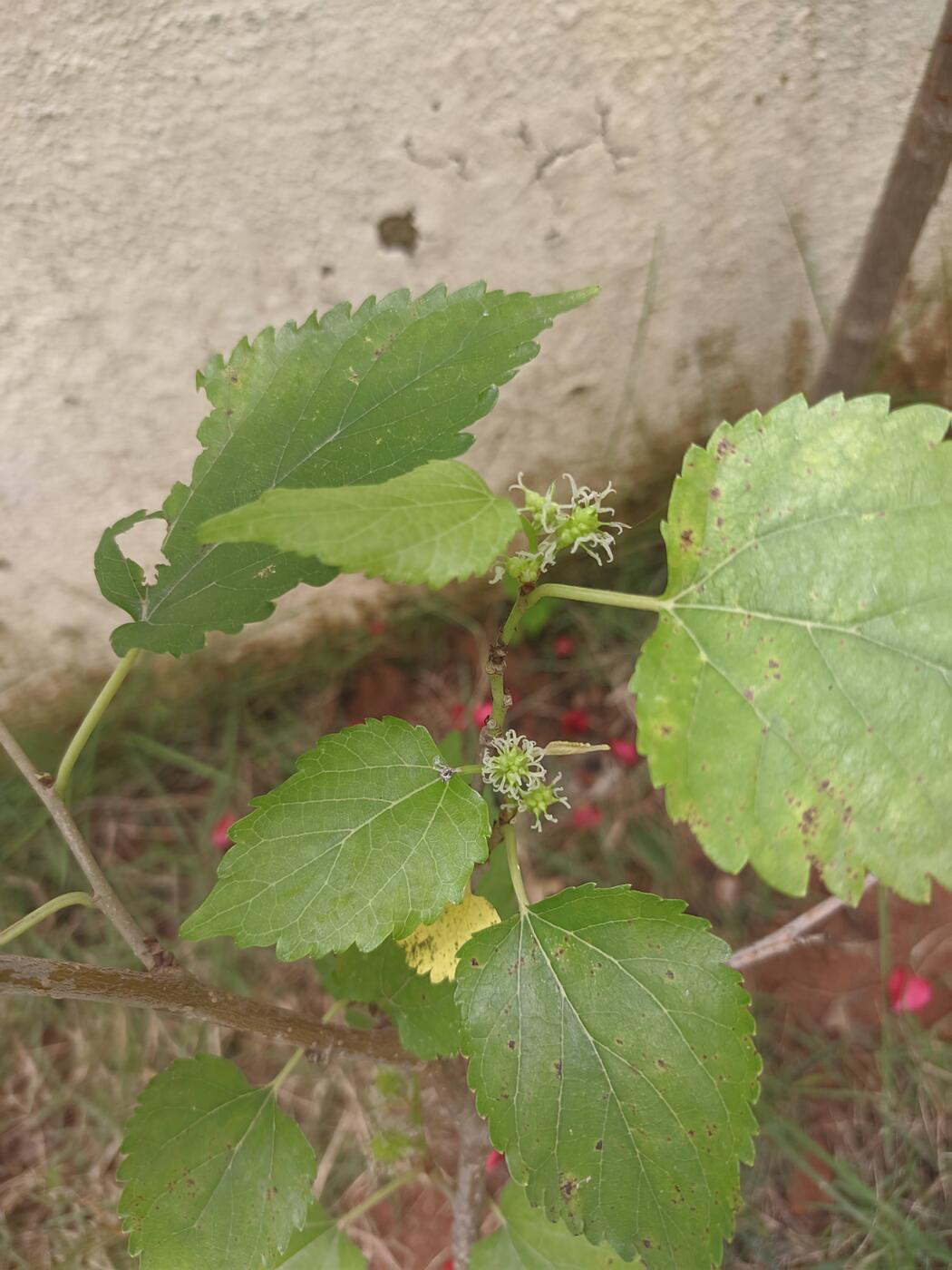
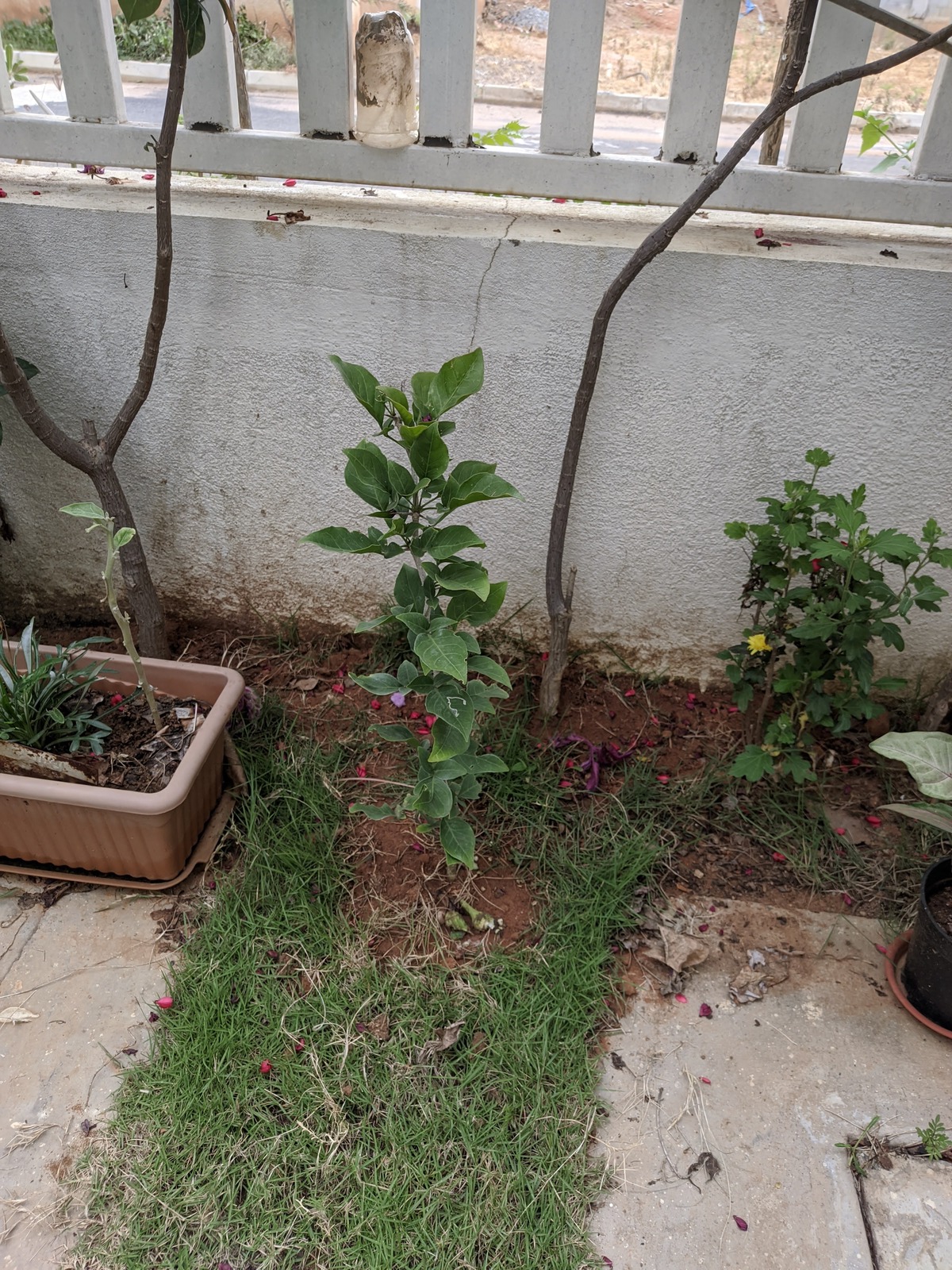
Devastation How in this world, when you are caring for your plants, can it transform:

From This
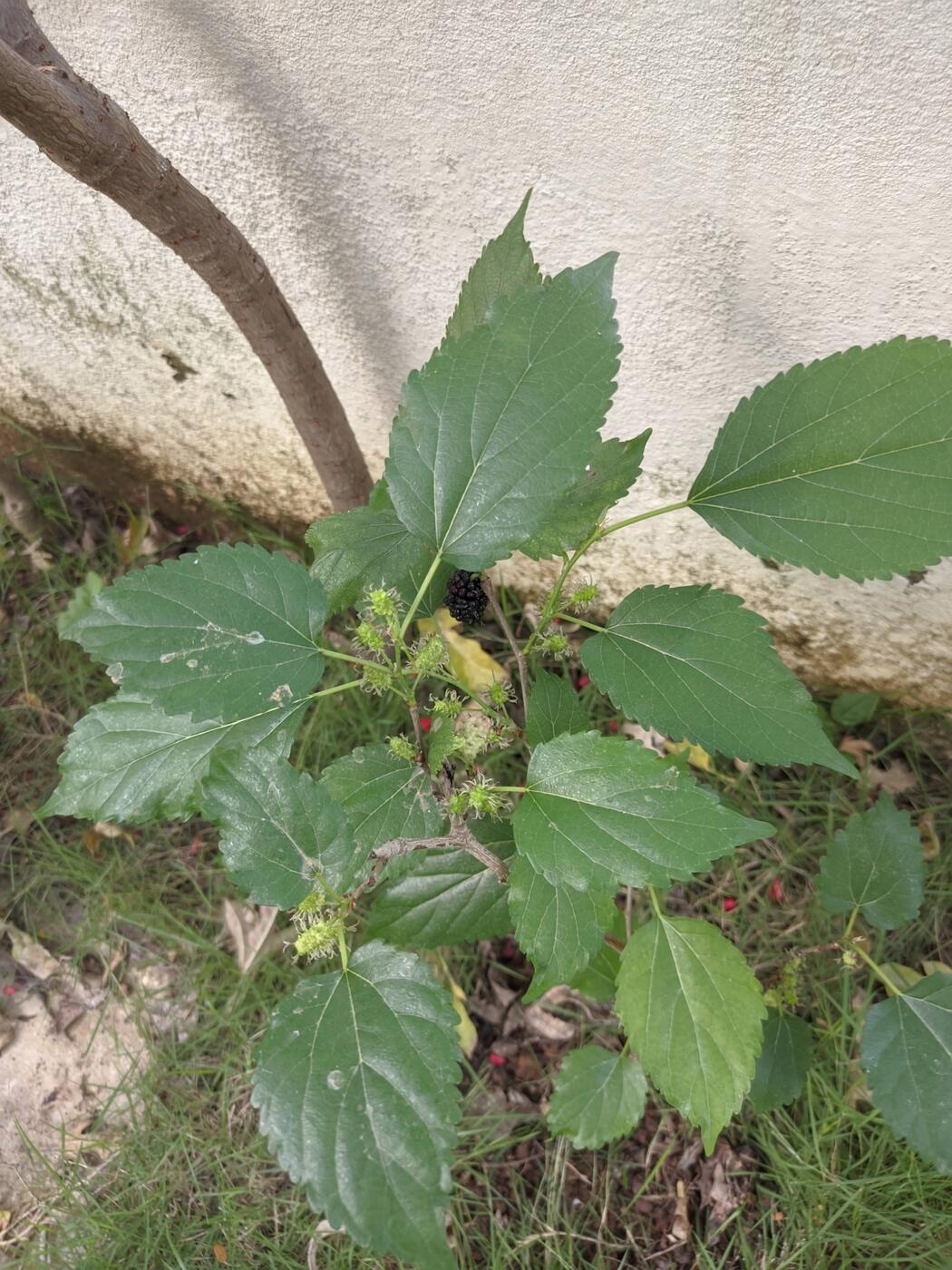
Healthy Mulberry Plant
Healthy Bael Plant
Healthy Bael Plant

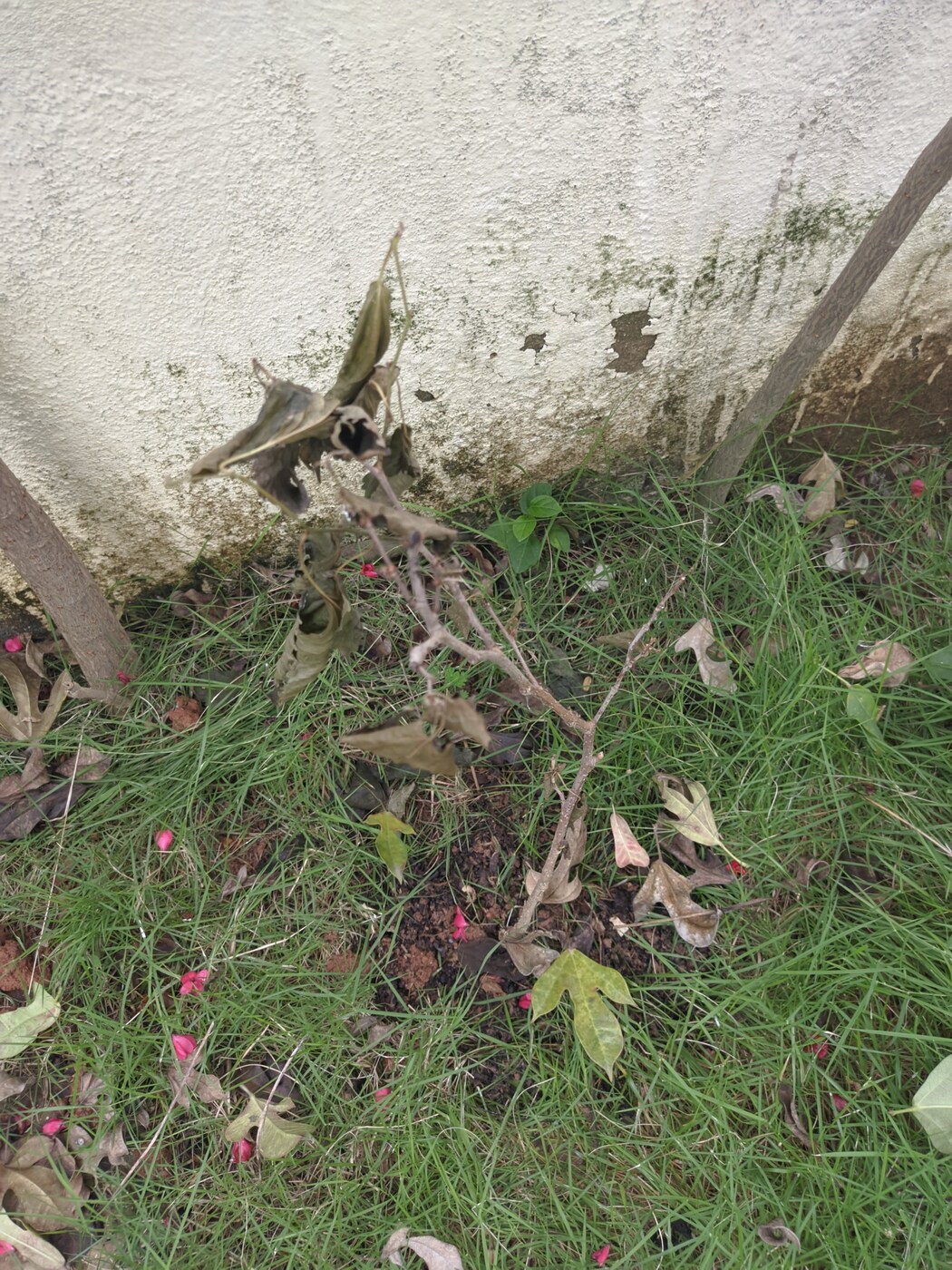
To This
Dead Mulberry Plant
Dead Mulberry Plant
Very Sick Bael Plant
With emotions involved, this can be an unpleasant experience. Bael is a dear plant to me. The plant as a whole has religious values (Shiva). As well, its fruits have lots of health benefits, especially for the intestines. Its leaves have a lot of medicinal properties. When I planted the Bael, there were a lot of emotions that went along. On the other hand, the Mulberry is something I put in with a lot of enthusiasm. Mulberries are now rare to find, especially in urban locations. For one, they have a very short shelf life; But more than that, the way lifestyles are heading towards, I was always worried if my children would ever have a day to see and taste these fruits. The mulberry that I planted, yielded twice; once very soon when I had planted and second, before it died. Infact, it died while during its second yield phase. It was quite saddening to see that happen. It made me wonder why it happened. I had been caring for the plants fairly well. Watering them timely, feeding them the right amount of nutrients. They were getting a good amount of sun. But still their health was deteriorating. And then the demise of the Mulberry. Many thoughts hit my mind. I consulted the claimed experts in the domain, the maali, the gardener. I got a very vague answer; there must be termites in the soil. It didn t make much sense to me. I mean if there are termites they d hit day one. They won t sleep for months and just wake up one fine day and start attacking the roots of particular plants; not all. I wasn t convinced with the termite theory; But still, give the expert the blind hand, I went with his word. When my mulberry was dead, I dug its roots. Looking for proof, to see if there were any termites, I uprooted it. But I couldn t find any trace of termites. And the plant next to it was perfectly healthy and blossoming. So I was convinced that it wasn t the termite but something else. But else what ? I still didn t have an answer to that.

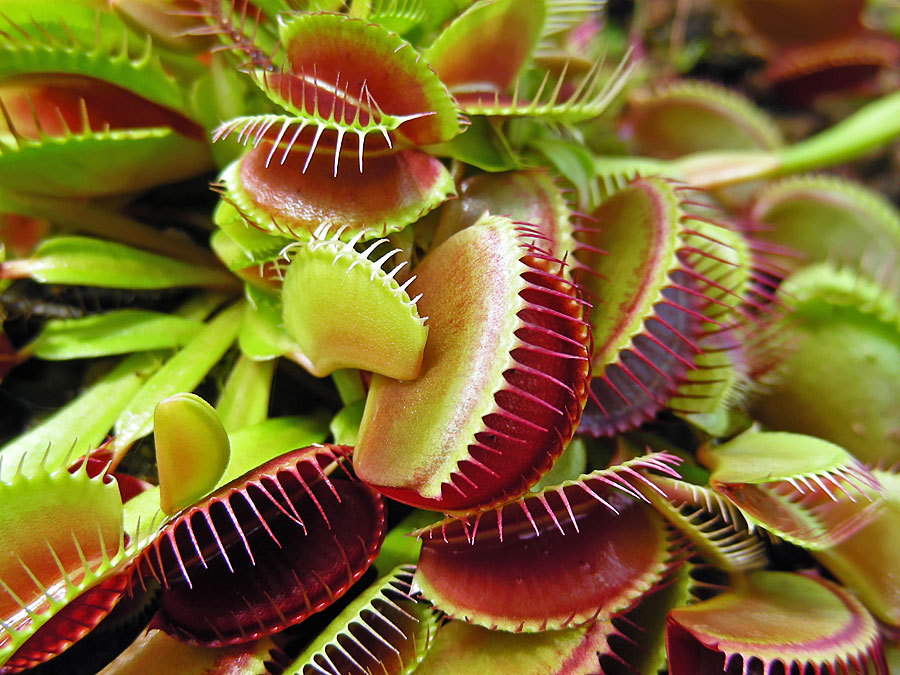
Thinking The Corona pandemic had embraced and there was a lot to worry, and worry not any, if you change the perspective. With plants around in my home, and our close engagement with them, and the helplessness that I felt after seeking help from the experts, it was time again; to build up some knowledge on the subject. But how ? How do you go about a subject you have not much clue about ? A subject which has always been around in the surrounding but very seldom have I dedicated focused thought to it. To be honest, the initial thought of diving on the subject made me clueless. I had no idea where to begin with. But, so, as has been my past history, I chose to take it as a curiosity. I gathered some books, skimmed through a couple of pages. Majority of the books I got hold of were about DIYs and How to do Home Gardening types. It was a decent introduction to a novice but my topic of curiosity was different. Thankfully, with the Internet, and YouTube in particular, a lot of good stuff is available as documentary videos. While going through some, I came across a video which mentioned about carnivore plants. Like, for example, this one.
Carnivore Plant
Carnivore Plant
This got me thinking that there could be a possibility of something similar, that did the fate to my Mulberry plant. But who did it ? And how to dive further on this suspicion ? And most of all, if that thought of possibility was actually the reality. Or was I just hitting in the dark ?

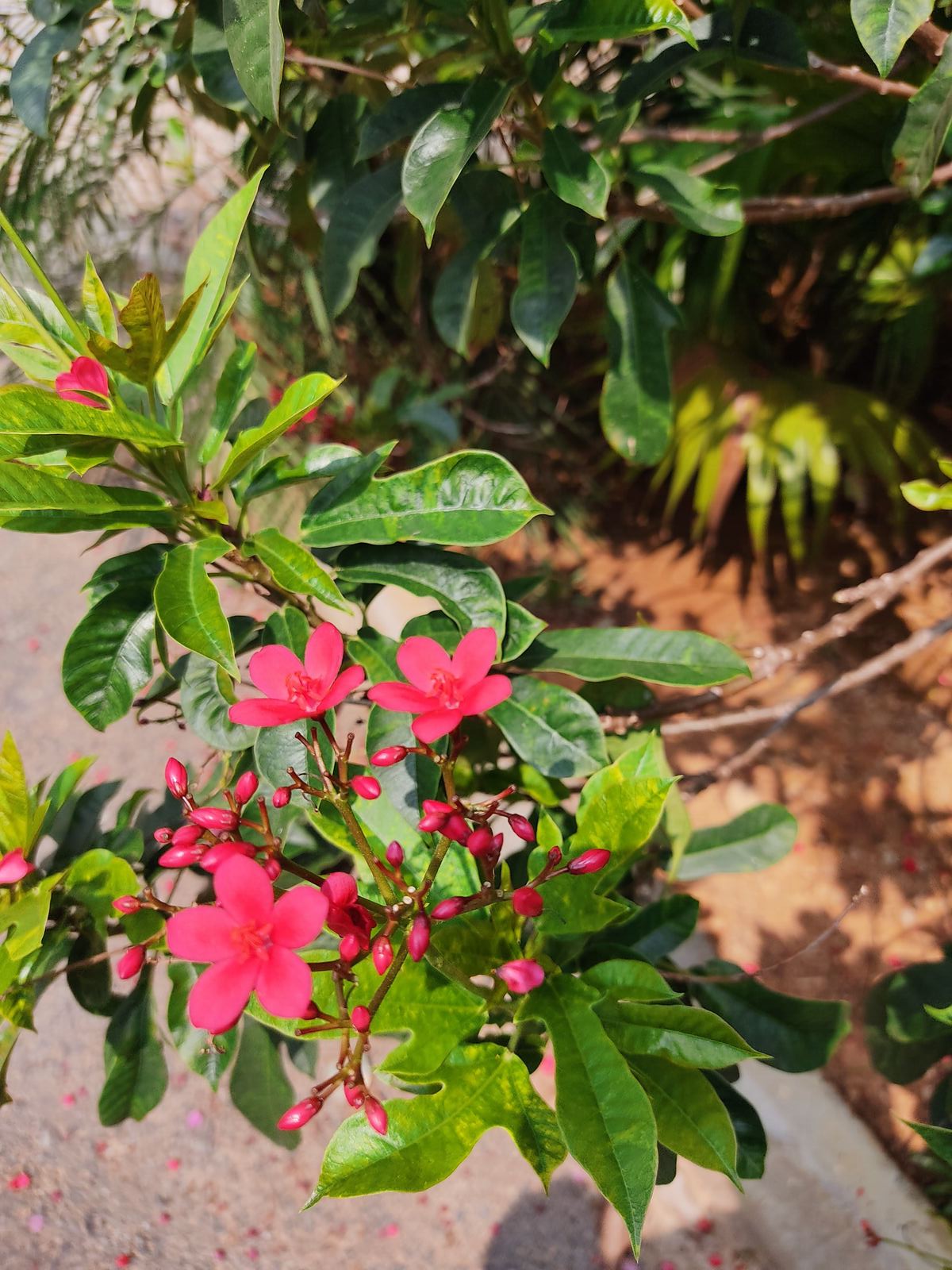
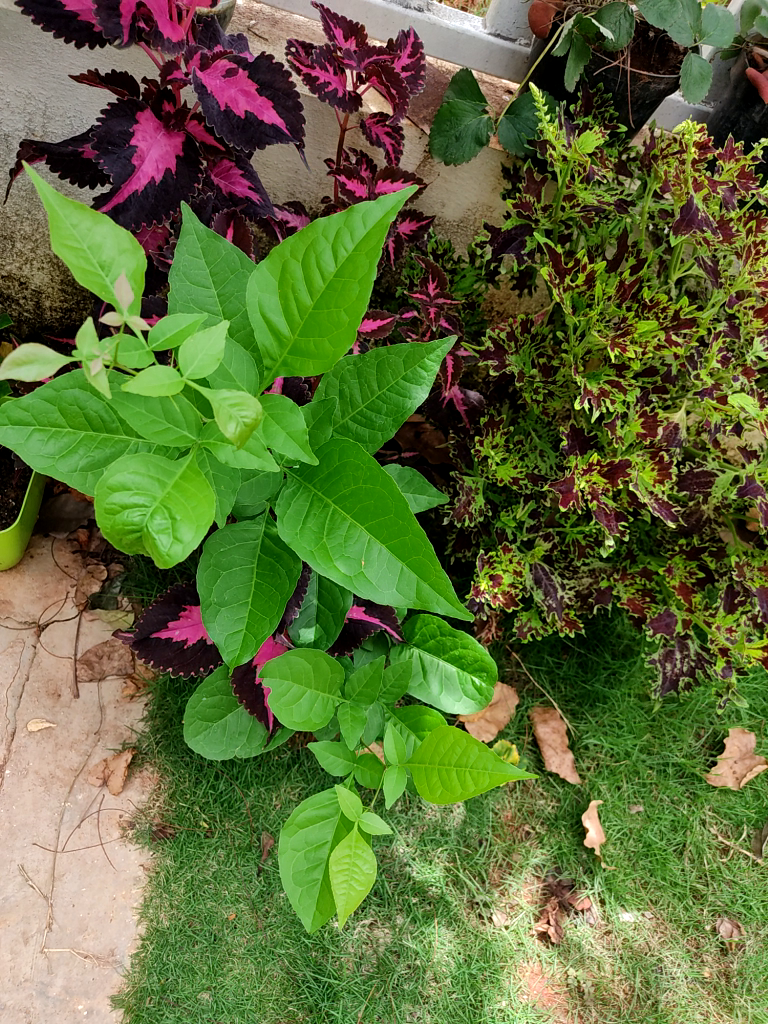
Beginning To put some perspective, here s how it started. When we moved into our home, the gardener put in a couple of plants stock, as part of the property handover. Now, I don t exactly recollect the name of the plants that came in stock, neither English nor Hindi; But at my neighbor s place, the plant is still there. Here are some of the pictures of this beauty. But don t just go by the looks as looks can be deceiving
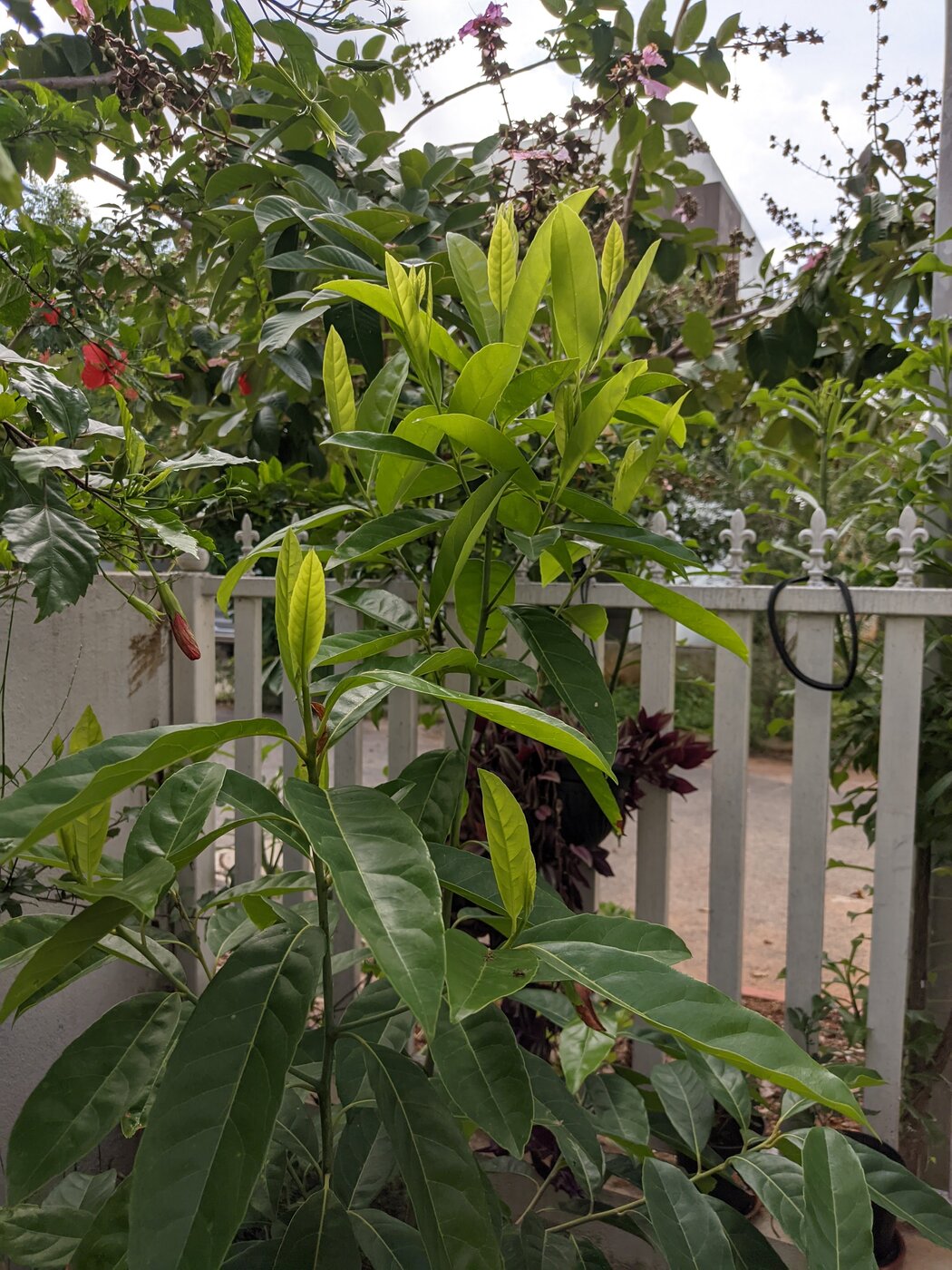
Dominating Plant
Dominating Plant
Dominating Plant
Dominating Plant
Dominating Plant
Dominating Plant
We hadn t put any serious thought about the plants we were offered by the gardener. After all, we never had ever thought of any mishap either.

Plants we planted Apart from what was offered by the builder/gardener as part of the property handover, in over the next 6 months of we moving in, I planted 3 tree type plants.
  1. Mulberry
  2. Bael
  3. Rudraksha
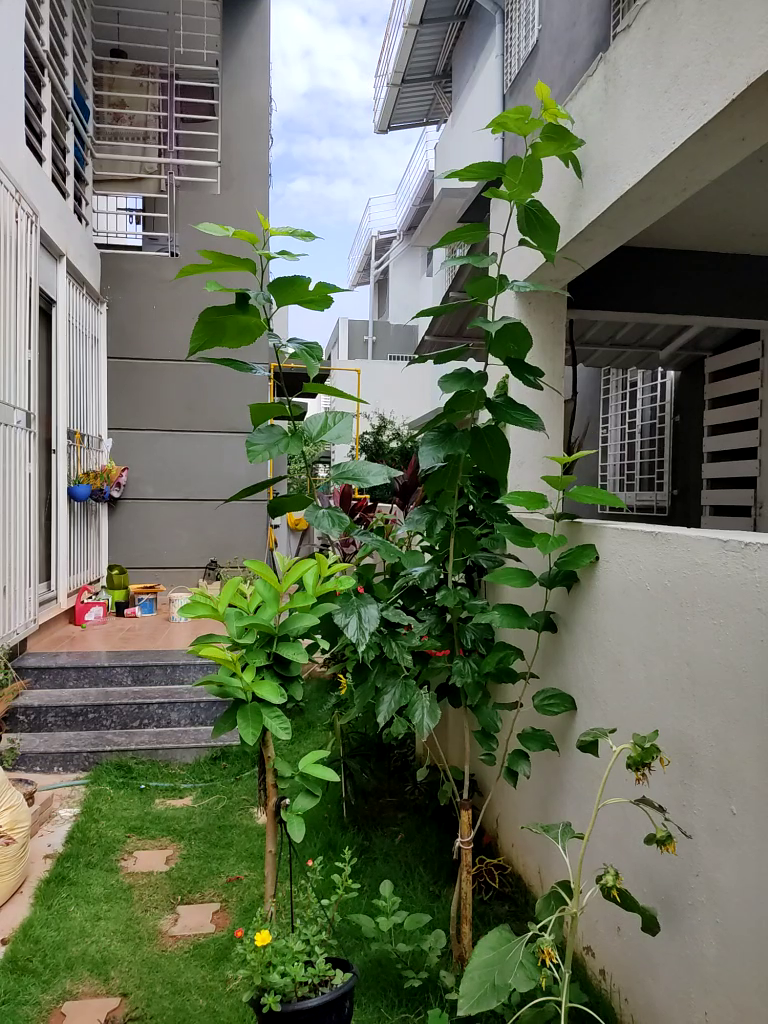
The Mulberry, as I have described so far, died a tragic death. Bael, on the other hand, fought hard. But very little did we know that the plant was struggling the fight. Our impression was that we must have been given a bad breed of the plant. Or maybe the termite theory had some truth. For the Rudraksha plant, the growth was slow. This was the very first time I had seen a Rudraksha plant, so I had no clue of what its growth rate could be, and what to expect out of it. I wasn t sure if the local climate suited the plant. A quick search showed no objections to the plant in the local climate, but that was it. So my theory has been to put in the plant, and observe. Here s what my Rudraksha plant looked like during the initial days/weeks of its settlement
Rudraksha Plant
Rudraksha Plant

The Hint Days passed and so on. Not much had progressed in gathering information. The plant s health was usual; deteriorating at a slow pace. On day, thinking of the documentaries I had been watching, it hit my mind about the plant behavior.
  • Plants can be Carnivores.
  • Plants can be Aggressive.
  • Plants can be Invaders.
  • Plants can be Territorial.
There are many plants where their aggression can be witnessed with bare human eyes. Like creepers. Some of them are good at spreading tentacles, grabbing onto other plants' stems and branches and spread above it. This was my hint from the documentaries. That s one of the many ways plants set their dominance. That is what hit my mind that if plants are aggressive on the out, underneath the soil, they should be having similar behavior. I mean, what we see as humans is just a part of the actual plant. More than half of the actual plant is usually underneath the soil, in most plants. So there s a high chance to get more information out, if you dig the soil and look the roots.

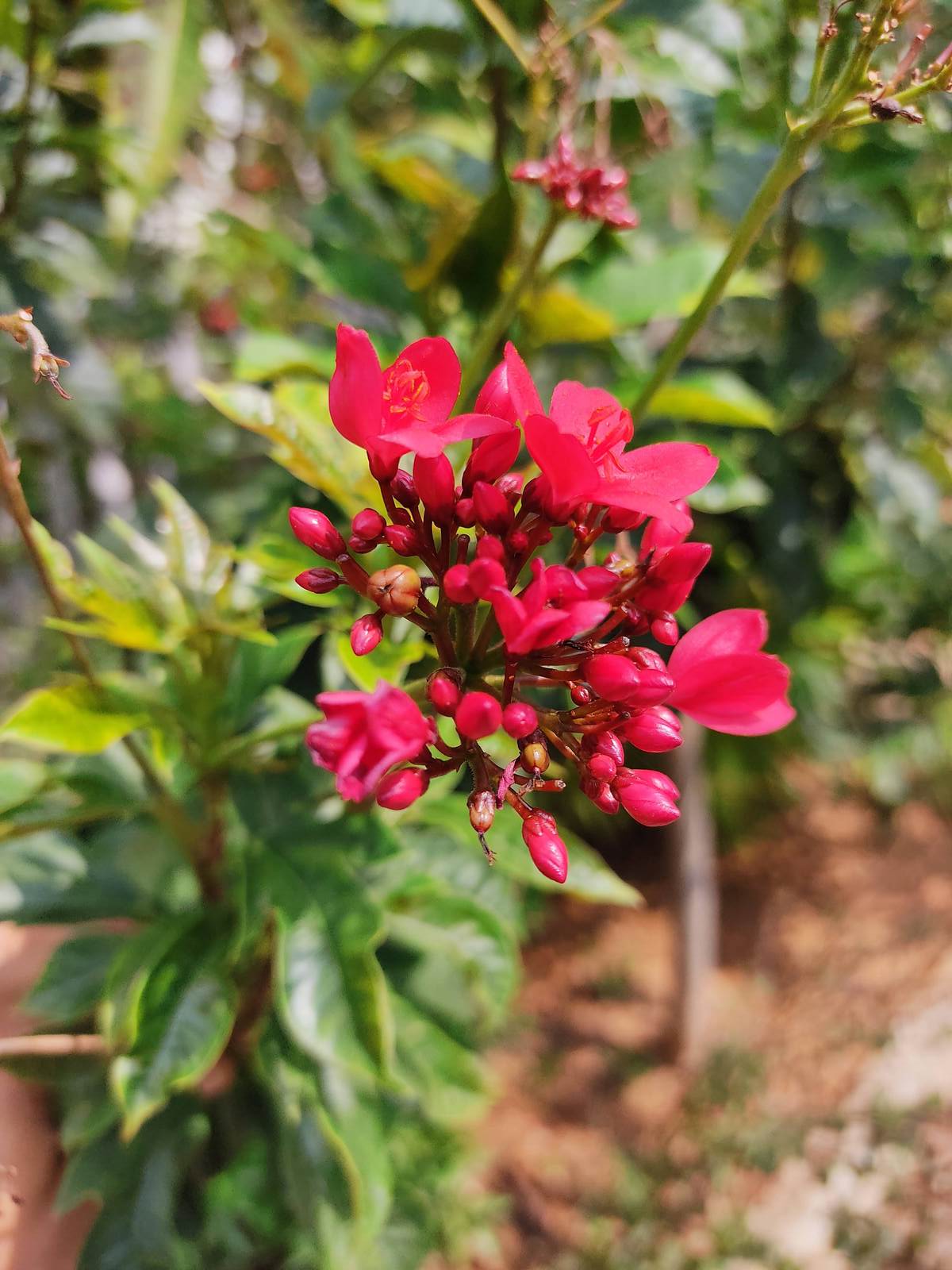
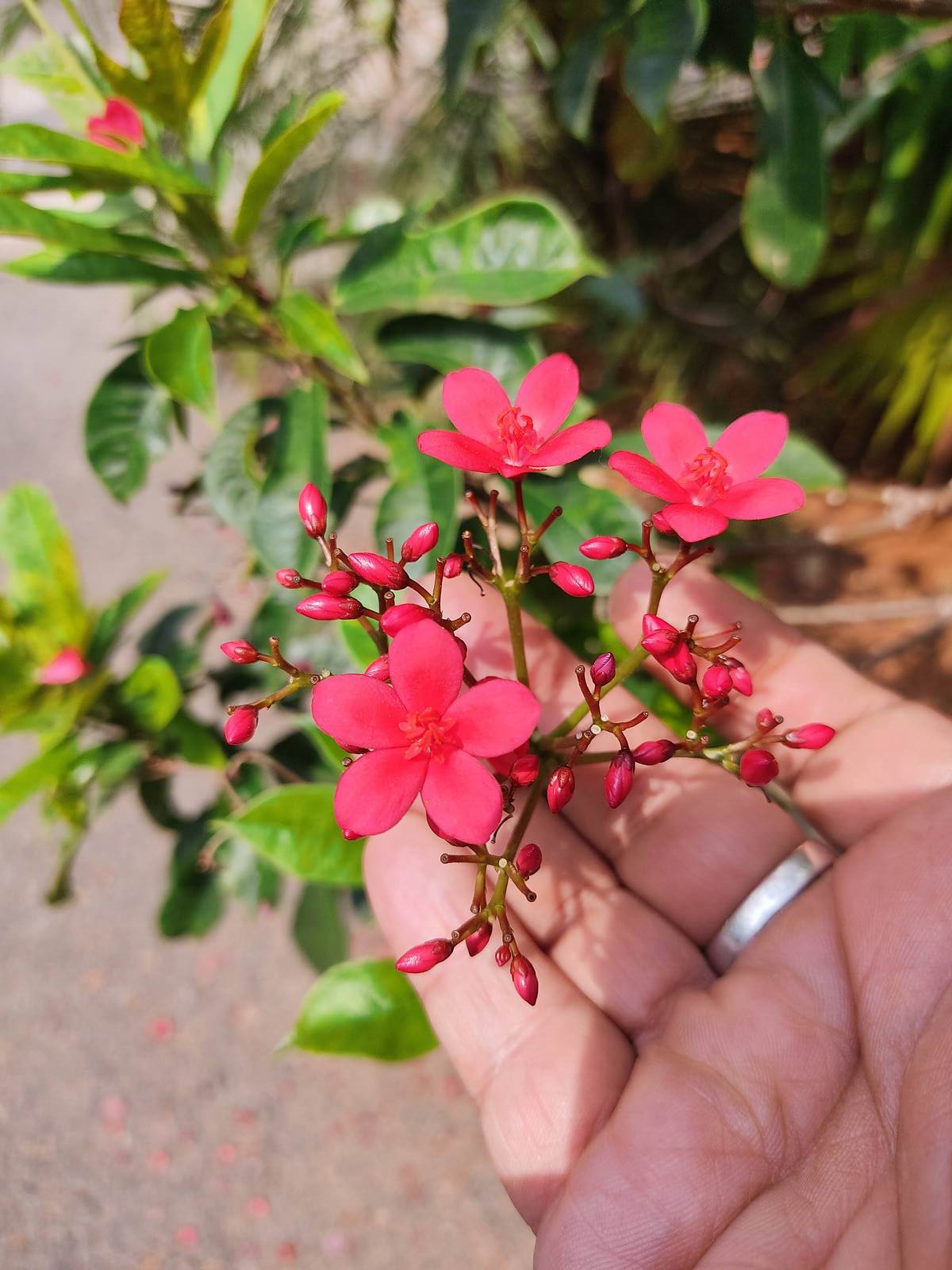
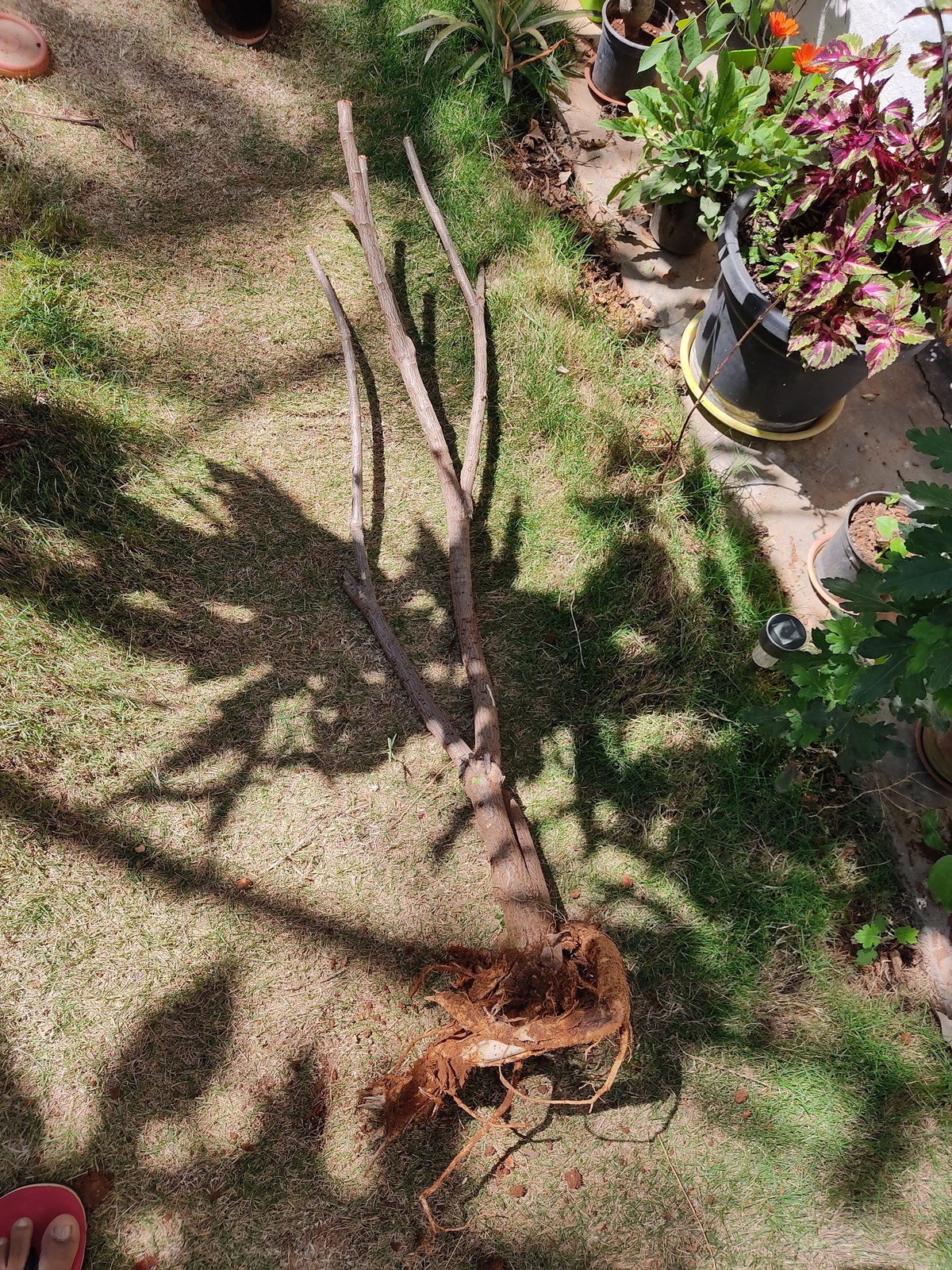
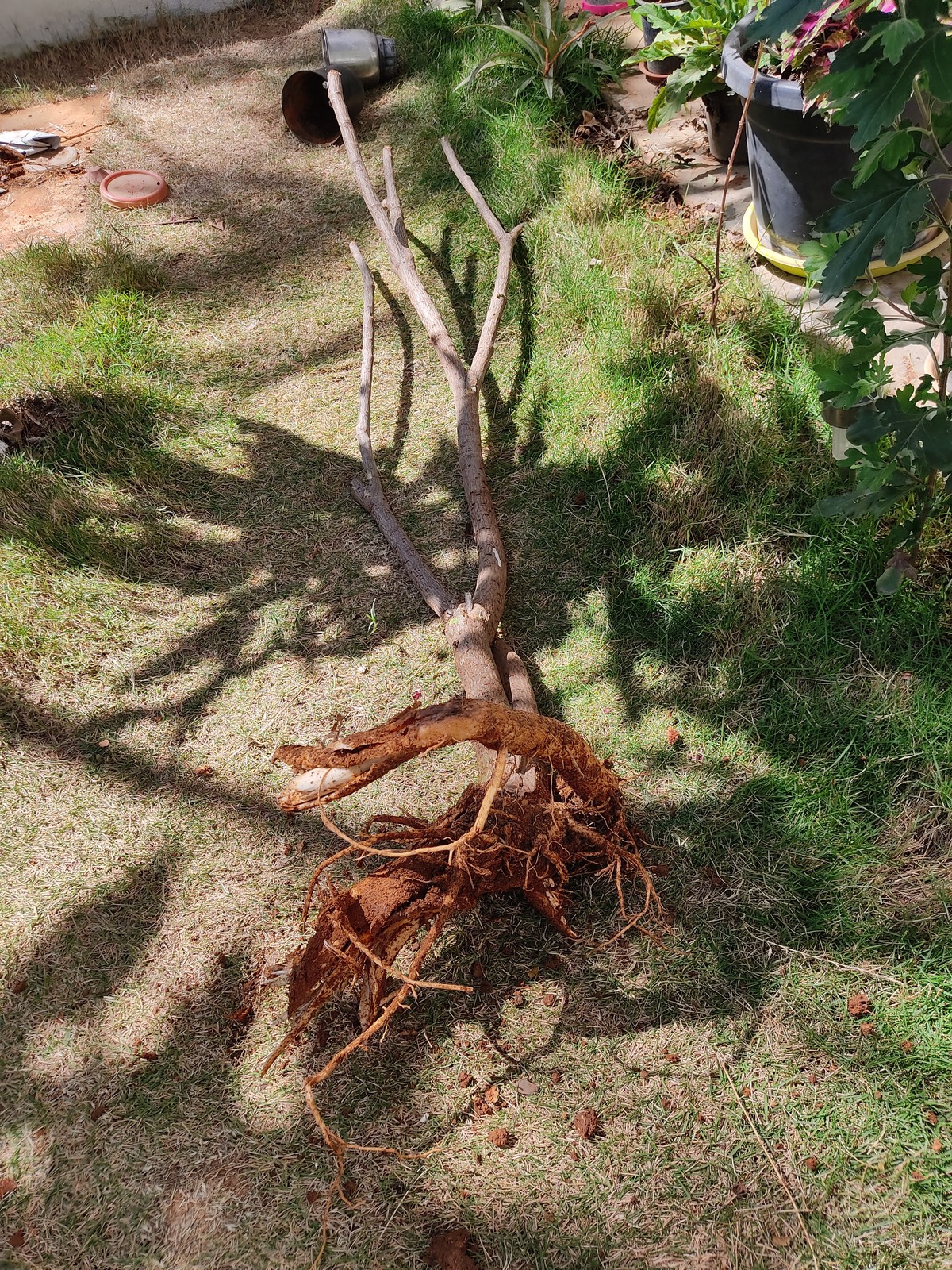
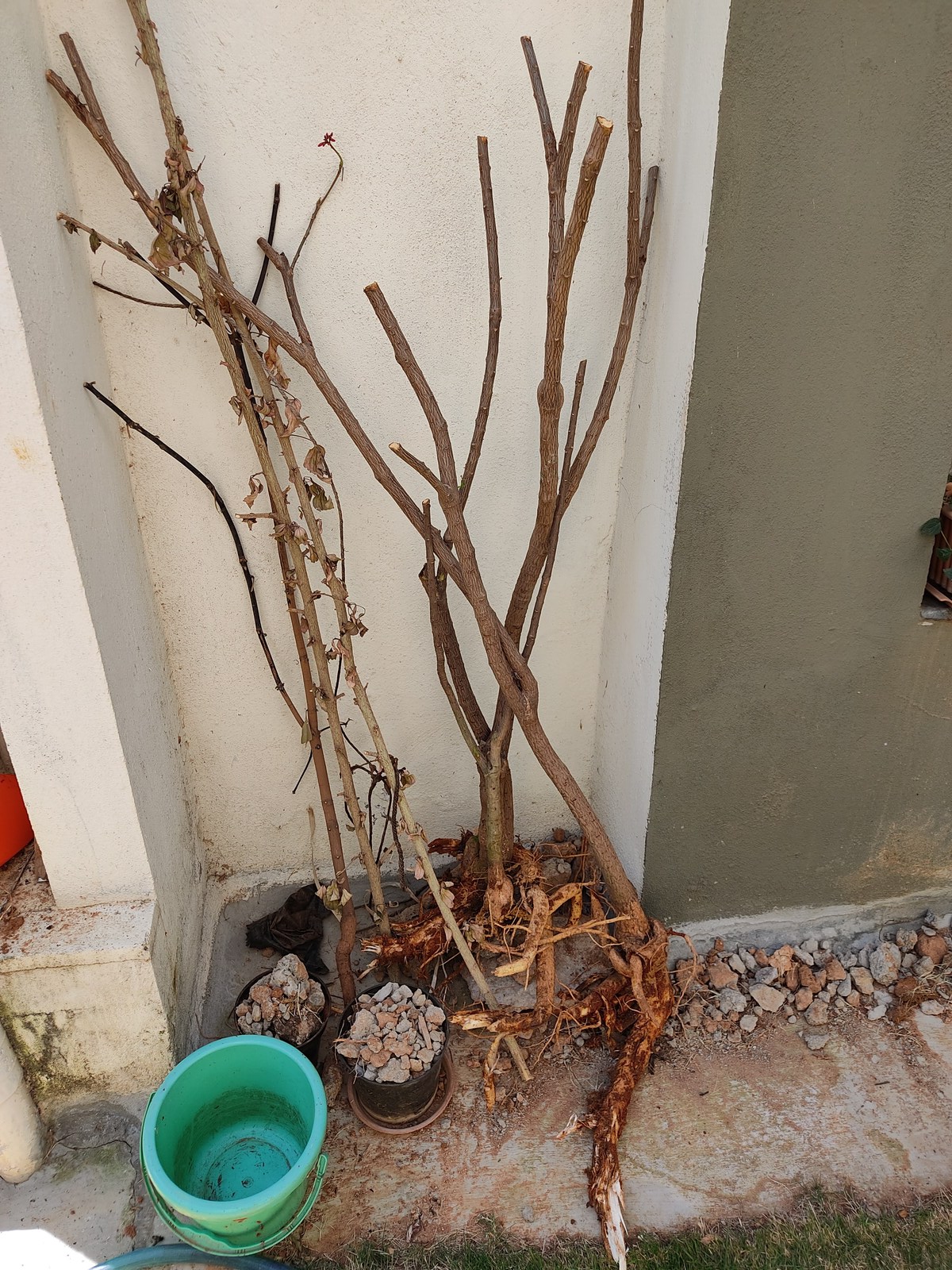
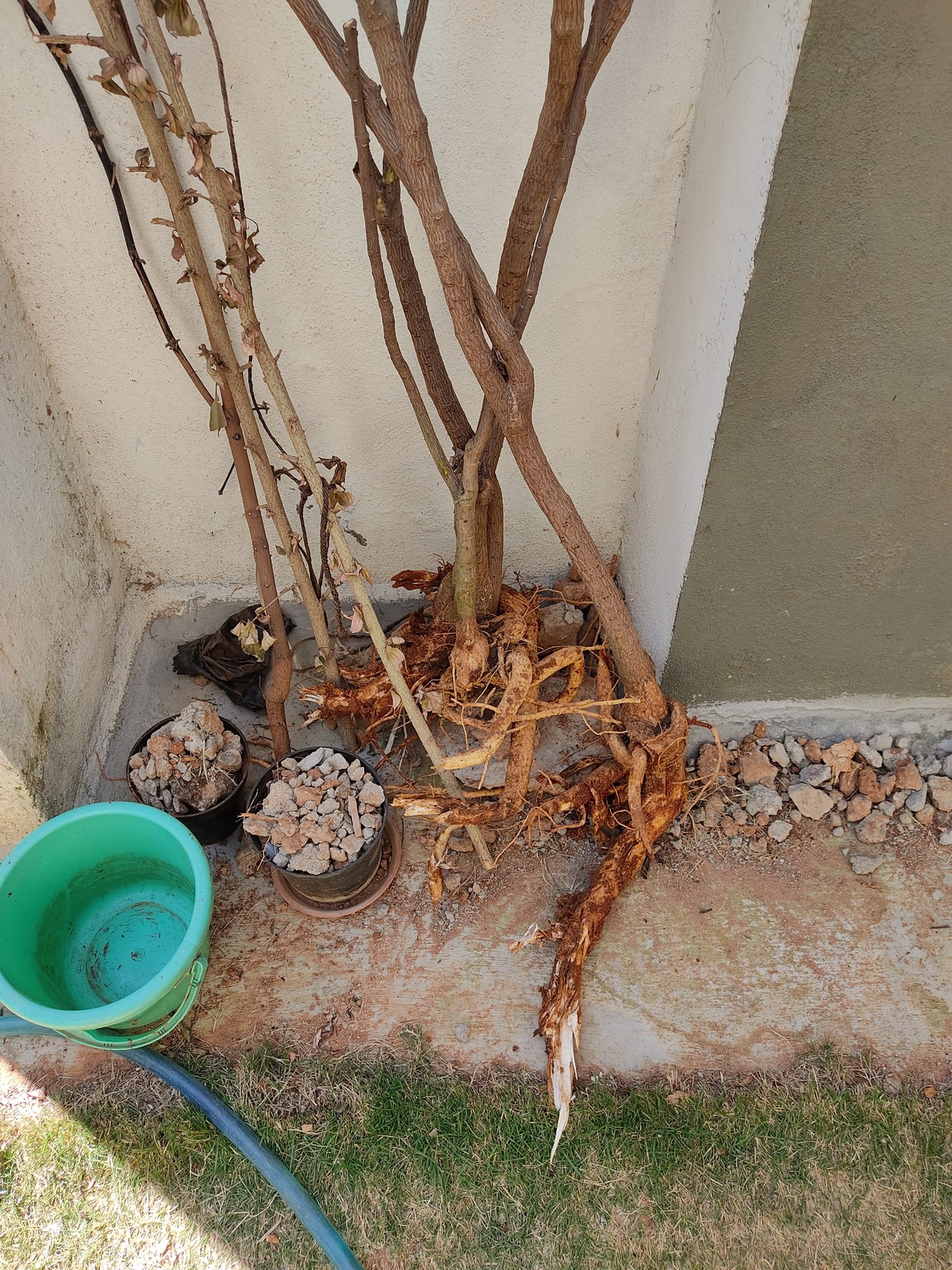
The Digging As I mentioned earlier, I do establish bindings, emotions and attachments. But not much usually comes in the way to curiosity. To dig further on the theory that the problem was elsewhere, with within the plants ecosystem, we needed to pick on another subject - the plant. And the plant we chose was the plant which was planted in the initial offering to us, when we moved into our home. It was the same plant breed which was neighboring all our newly planted trees: Rudraksha, Mulberry and Bael. If you look closely into the pictures above of these plants, you ll notice the stem of another plant, the Territorial Dominator, is close-by to these 3 plants. That s because the gardener put in a good number of them to get his action item complete. So we chose to dig and uproot one of those plant to start with. Now, while they may look gentle on the outside, with nice red colored tiny flowers, these plants were giants underneath. Their roots were huge. It took some sweat shredding to single-handedly remove them.
Dominating Plant Uprooted

Today is brighter

Bael I ll let the pictures do the initial talking today.
Healthy Bael
Healthy Bael
Healthy Bael
Healthy Bael
Healthy Bael
Healthy Bael
Healthy Bael
Healthy Bael
Healthy Bael
Healthy Bael
The above ones are pictures of the same Bael plant, which had struggled to live, for almost 14 months. Back then, this plant was starved of its resources. It was dying a slow death out of starvation. After we uprooted the other dominant species, the Bael has recovered and has regained its charm. In the pictures above of the Bael plant, you can clearly mark out the difference in its stem. The dark colored one is from its months of struggle, while the bright green is from now where it is well nourished and regained its health.

Mulberry As for the Mulberry, I couldn t save it. But I later managed to get another one. But it turns out I didn t take good, full length pictures of the new mulberry when I planted. The only picture I have is this:
Second Mulberry Plant
I recollect when I brought it home, it was around 1 - 1.5 feet in length. This is where I have it today: Majestically standing, 12 feet and counting
Second Mulberry Plant 7 feet tall

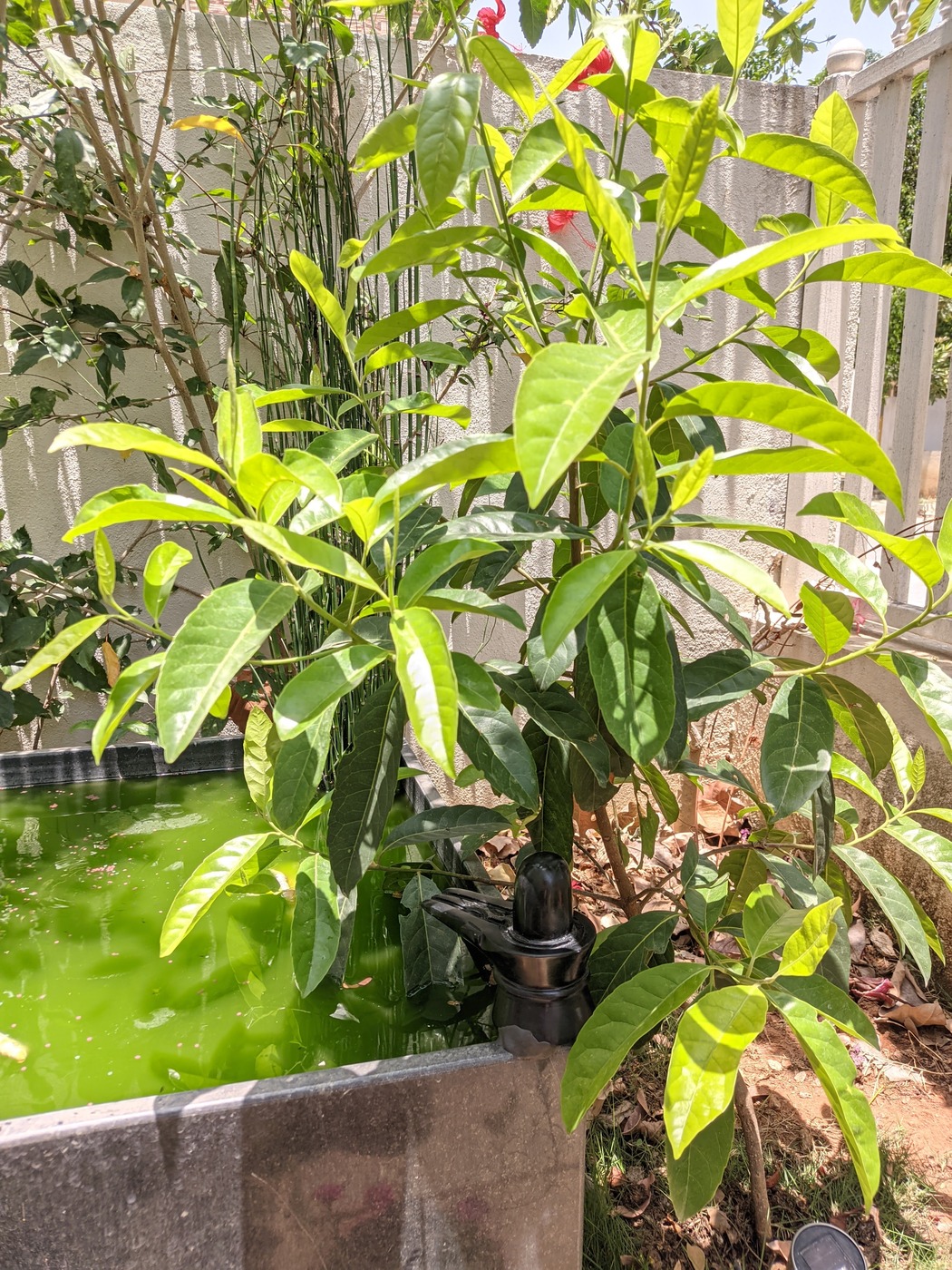
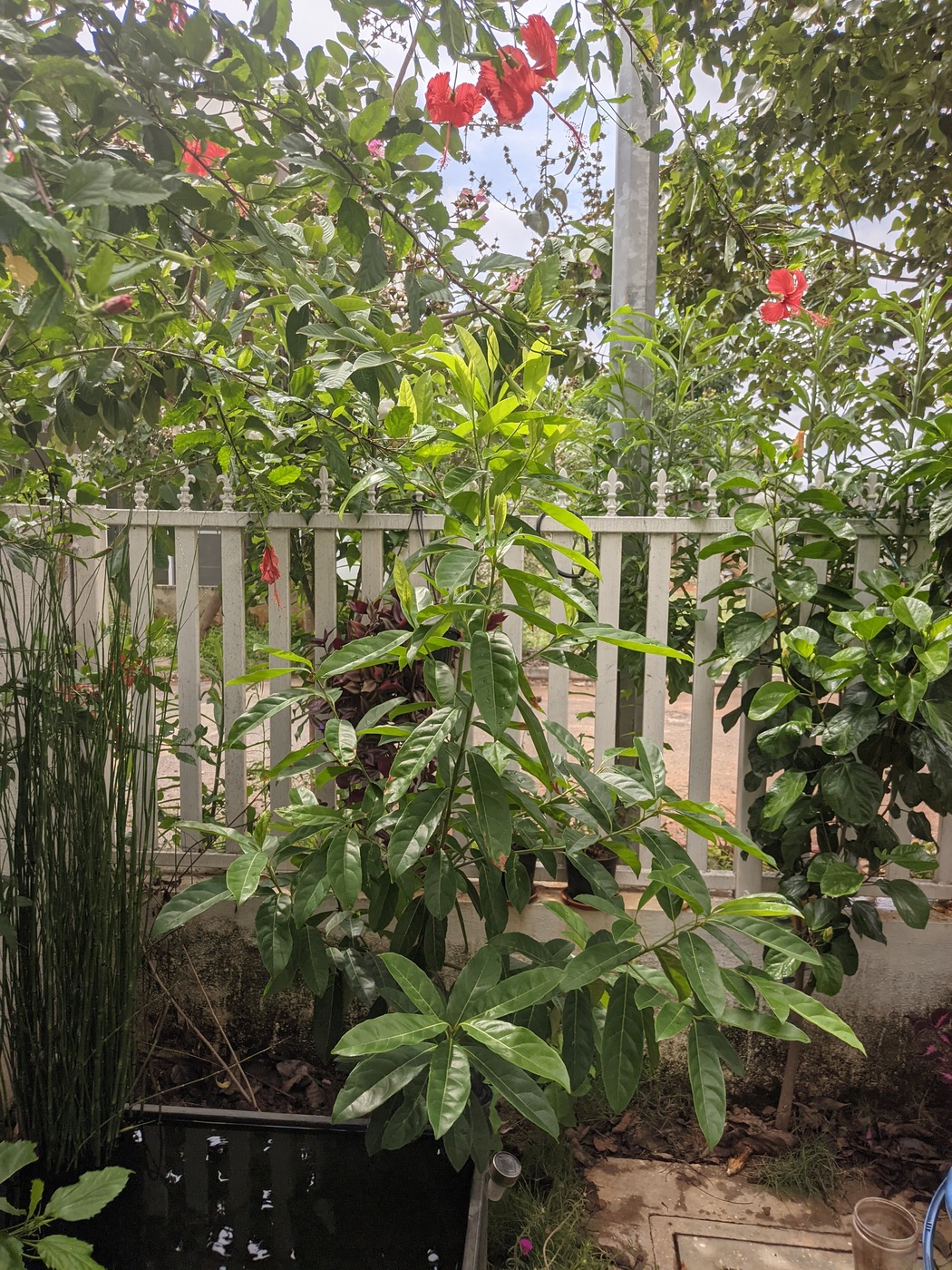
Rudraksha Then:
Rudraksha Plant
Rudraksha Plant
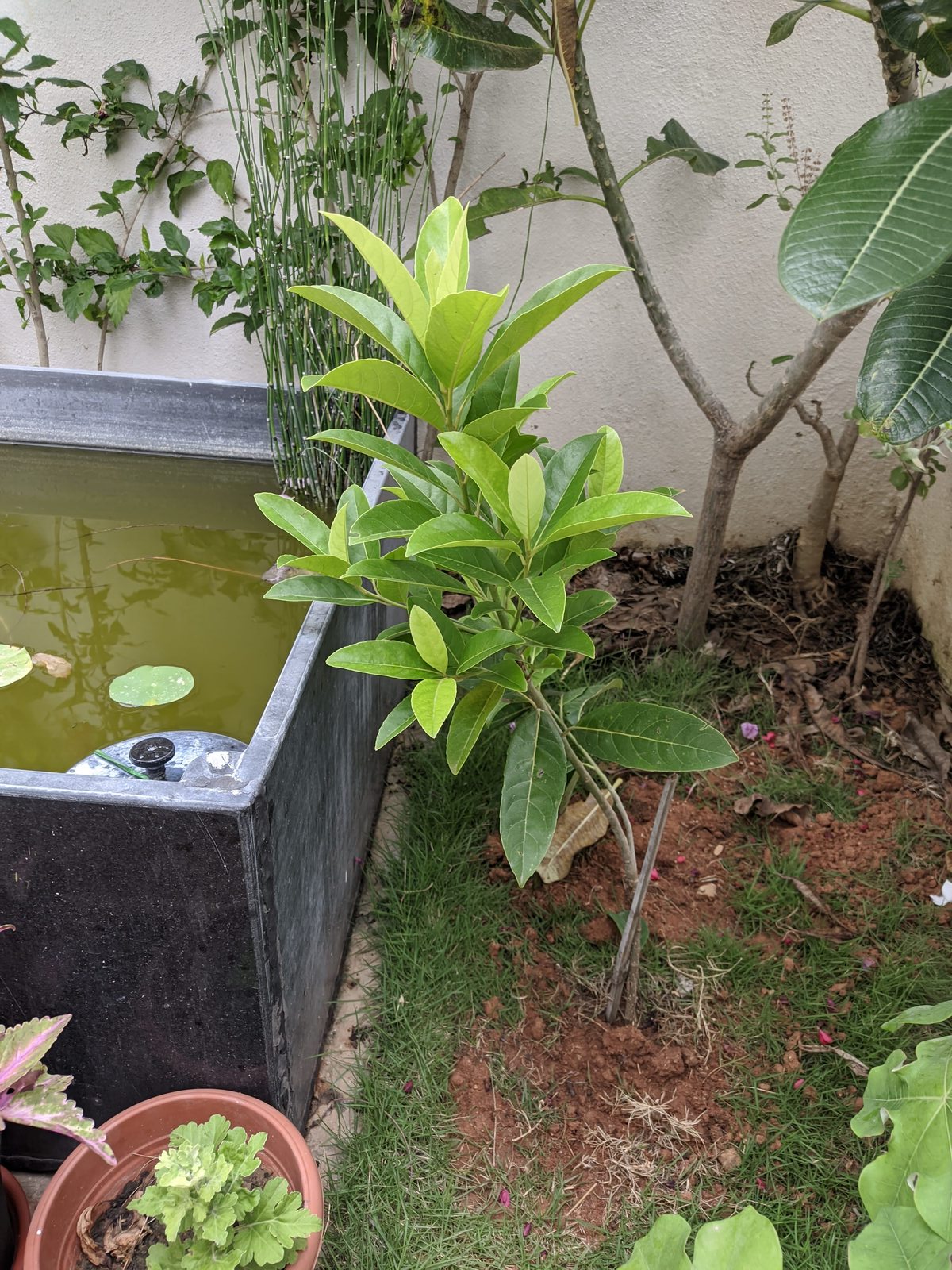
And now: I feel quite happy about
Rudraksha Plant
Rudraksha Plant
Rudraksha Plant
Rudraksha Plant
Rudraksha Plant
Rudraksha Plant
All these plants are on the very same soil with the very same care taker. What has changed is my experience and learning.

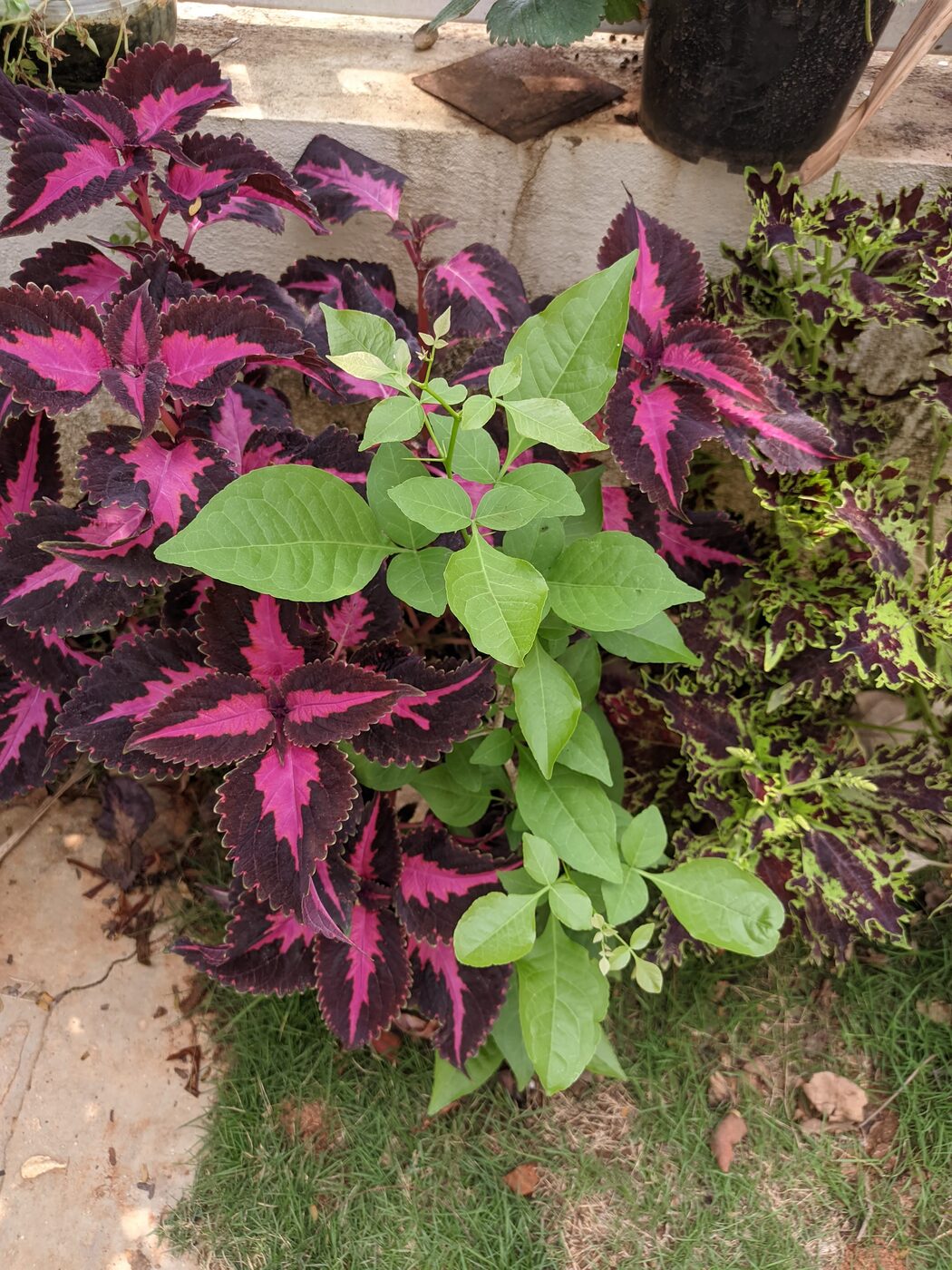
Plant Co-Existence Plant co-existence is a difficult topic. My knowledge on plants is very limited in general, and co-existence is something tricky, unexplored, at times invisible (when underneath the soil). So it is a difficult topic. So far, what I ve learnt is purely observations, experiences and hints from the documentaries. There surely are many many plants that co-exist very well. A good example is my Bael plant itself, which is healthily co-sharing its space with 2 other Croton plants. Same goes for the Rudraksha, which has a close-by neighbor in an Adenium and an Allamanda. The plant world is mesmerizing. How they behave, communicate and many many more signs. There s so much to observe, learn, explore and document. I hope to have more such observations and experiences to share

28 June 2021

Shirish Agarwal: Indian Capital Markets, BSE, NSE

I had been meaning to write on the above topic for almost a couple of months now but just kept procrastinating about it. That push came to a shove when Sucheta Dalal and Debasis Basu shared their understanding, wisdom, and all in the new book called Absolute Power Inside story of the National Stock Exchange s amazing success, leading to hubris, regulatory capture and algo scam . Now while I will go into the details of the new book as currently, I have not bought it but even if I had bought it and shared some of the revelations from it, it wouldn t have done justice to either the book or what is sharing before knowing some of the background before it.

Before I jump ahead, I would suggest people to read my sort of introductory blog post on banking history so they know where I m coming from. I m going to deviate a bit from Banking as this is about trade and capital markets, although Banking would come in later on. And I will also be sharing some cultural insights along with history so people are aware of why things happened the way they did. Calicut, Calcutta, Kolkata, one-time major depot around the world Now, one cannot start any topic about trade without talking about Kolkata. While today, it seems like a bastion of communism, at one time it was one of the major trade depots around the world. Both William Dalrymple and the Chinese have many times mentioned Kolkata as being one of the major centers of trade. This was between the 13th and the late 19th century. A cursory look throws up this article which talks about Kolkata or Calicut as it was known as a major trade depot. There are of course many, many articles and even books which do tell about how Kolkata was a major trade depot. Now between the 13th and 19th century, a lot of changes happened which made Kolkata poorer and shifted trade to Mumbai/Bombay which in those times was nothing but just a port city like many others.

The Rise of the Zamindar Around the 15th century when Babur Invaded Hindustan, he realized that Hindustan is too big a country to be governed alone. And Hindustan was much broader than independent India today. So he created the title of Zamindars. Interestingly, if you look at the Mughal period, they were much more in tune with Hindustani practices than the British who came later. They used the caste divisions and hierarchy wisely making sure that the status quo was maintained as far as castes/creed were concerned. While in-fighting with various rulers continued, it was more or less about land and power other than anything else. When the Britishers came they co-opted the same arrangement with a minor adjustment. While in the before system, the zamindars didn t have powers to be landowners. The Britishers gave them land ownerships. A huge percentage of thess zamindars especially in Bengal were from my own caste Banias or Baniyas. The problem and the solution for the Britishers had been this was a large land to control and exploit and the number of British officers and nobles were very less. So they gave virtually a lot of powers to the Banias. The only thing the British insisted on were very high rents from the newly minted Zamindars. The Zamindar in turn used the powers of personal fiefdom to give loans at very high interest rates when the poor were unable to pay the interest rate, they would take the land while at the same time slavery was forced on both men and women, many a time rapes and affairs. While there have been many records shedding light on it, don t think it could be any more powerful as enacted and shared by Shabana Azmi in Ankur:the Seedling. Another prominent grouping was formed around the same time was the Bhadralok. Now as shared Bhadralok while having all the amenities of belonging to the community, turned a blind eye to the excesses being done by the Zamindars. How much they played a hand in the decimation of Bengal has been a matter of debate, but they did have a hand, that much is not contested.

The Rise of Stock Exchanges Sadly and interestingly, many people believe and continue to believe that stock exchanges is recent phenomena. The first stock exchange though was the Calcutta Stock Exchange rather than the Bombay Stock Exchange. How valuable was Calcutta to the Britishers in its early years can be gauged from the fact that at one time it was made the capital of India in 1772 . In fact, after the Grand Trunk Road (on which there had been even Train names in both countries) x number of books have been written of the trade between Calcutta and Peshawar (Now in Pakistan). And it was not just limited to trade but also cultural give-and-take between the two centers. Even today, if you look at YT (Youtube) and look up some interviews of old people, you find many interesting anecdotes of people sharing both culture and trade.

The problem of the 60 s and rise of BSE
After India became independent and the Constitutional debates happened, the new elites understood that there cannot be two power centers that could govern India. On one hand, were the politicians who had come to power on the back of the popular vote, the other was the Zamindars, who more often than not had abused their powers which resulted in widespread poverty. The Britishers are to blame, but so do the middlemen as they became willing enablers to the same system of oppression. Hence, you had the 1951 amendment to the Constitution and the 1956 Zamindari Abolition Act. In fact, you can find much more of an in-depth article both about Zamindars and their final abolition here. Now once Zamindari was gone, there was nothing to replace it with. The Zamindars ousted of their old roles turned and tried to become Industrialists. The problem was that the poor and the downtrodden had already had experiences with the Zamindars. Also, some Industrialists from North and West also came to Bengal but they had no understanding of either the language or the cultural understanding of what had happened in Bengal. And notice that I have not talked about both the famines and the floods that wrecked Bengal since time immemorial and some of the ones which got etched on soul of Bengal and has marks even today  The psyche of the Bengali and the Bhadralok has gone through enormous shifts. I have met quite a few and do see the guilt they feel. If one wonders as to how socialist parties are able to hold power in Bengal, look no further than Tarikh which tells and shares with you that even today how many Bengalis still feel somewhat lost.

The Rise of BSE Now, while Kolkata Stock Exchange had been going down, for multiple reasons other than listed above. From the 1950s onwards Jawaharlal Nehru had this idea of 5-year plans, borrowed from socialist countries such as Russia, China etc. His vision and ambition for the newly minted Indian state were huge, while at the same time he understood we were poor. The loot by East India Company and the Britishers and on top of that the division of wealth with Pakistan even though the majority of Muslims chose and remained with India. Travel on Indian Railways was a risky affair. My grandfather had shared numerous tales where he used to fill money in socks and put the socks on in boots when going between either Delhi Kolkata or Pune Kolkata. Also, as the Capital became Delhi, it unofficially was for many years, the transparency from Kolkata-based firms became less. So many Kolkata firms either mismanaged and shut down while Maharashtra, my own state, saw a huge boon in Industrialization as well as farming. From the 1960s to the 1990s there were many booms and busts in the stock exchanges but most were manageable.

While the 60s began on a good note as Goa was finally freed from the Portuguese army and influence, the 1962 war with the Chinese made many a soul question where we went wrong. Jawaharlal Nehru went all over the world to ask for help but had to return home empty-handed. Bollywood showed a world of bell-bottoms and cars and whatnot, while the majority were still trying to figure out how to put two square meals on the table. India suffered one of the worst famines in those times. People had to ration food. Families made do with either one meal or just roti (flatbread) rather than rice. In Bengal, things were much more severe. There were huge milk shortages, so Bengalis were told to cut down on sweets. This enraged the Bangalis as nothing else could. Note If one wants to read how bad Indians felt at that time, all one has to read is V.S. Naipaul s An Area of darkness . This was also the time when quite a few Indians took their first step out of India. While Air India had just started, the fares were prohibitive. Those who were not well off, either worked on ships or went via passenger or cargo ships to Dubai/Qatar middle-east. Some went to Russia and some even to States. While today s migr s want to settle in the west forever and have their children and grandchildren grow up in the West, in the 1960s and 70s the idea was far different. The main purpose for a vast majority was to get jobs and whatnot, save maximum money and send it back to India as a remittance. The idea was to make enough money in 3-5-10 years, come back to India, and then lead a comfortable life. Sadly, there has hardly been any academic work done in India, at least to my knowledge to document the sacrifices done by Indians in search of jobs, life, purpose, etc. in the 1960s and 1970s. The 1970s was also when alternative cinema started its journey with people like Smita Patil, Naseeruddin Shah who portrayed people s struggles on-screen. Most of them didn t have commercial success because the movies and the stories were bleak. While the acting was superb, most Indians loved to be captured by fights, car-chases, and whatnot rather than the deary existence which they had. And the alt cinema forced them to look into the mirror, which was frowned upon both by the masses and the classes. So cinema which could have been a wake-up call for a lot of Indians failed. One of the most notable works of that decade, at least to me, was Manthan. 1961 was also marked by the launch of Economic Times and Financial Express which tells that there was some appetite for financial news and understanding. The 1970s was also a very turbulent time in the corporate sector and stock exchanges. Again, the companies which were listed were run by the very well-off and many of them had been abroad. At the same time, you had fly-by-night operators. One of the happenings which started in this decade is you had corporate wars and hostile takeovers, quite a few of them of which could well have a Web series or two of their own. This was also a decade marked by huge labor unrest, which again changed the face of Bombay/Mumbai. From the 1950s till the 1970s, Bombay was known for its mills. So large migrant communities from all over India came to Bombay to become the next Bollywood star and if that didn t happen, they would get jobs in the mills. Bombay/Mumbai has/had this unique feature that somehow you will make money to make ends meet. Of course, with the pandemic, even that has gone for a toss. Labor unrest was a defining character of that decade. Three movies, Kaala Patthar, Kalyug, and Ankush give a broad outlook of what happened in that decade. One thing which is present and omnipresent then and now is how time and time again we lost our demographic dividend. Again there was an exodus of young people who ventured out to seek fortunes elsewhere. The 1970s and 80s were also famous for the license Raj which they bought in. Just like the Soviets, there were waiting periods for everything. A telephone line meant waiting for things anywhere from 4 to 8 years. In 1987, when we applied and got a phone within 2-3 months, most of my relatives both from my mother and father s side could not believe we paid 0 to get a telephone line. We did pay the telephone guy INR 10/- which was a somewhat princely sum when he was installing it, even then they could not believe it as in Northern India, you couldn t get a phone line even if your number had come. You had to pay anywhere from INR 500/1000 or more to get a line. This was BSNL and to reiterate there were no alternatives at that time.

The 1990s and the Harshad Mehta Scam The 90s was when I was a teenager. You do all the stupid things for love, lust, whatever. That is also the time you are introduced really to the world of money. During my time, there were only three choices, Sciences, Commerce, and Arts. If History were your favorite subject then you would take Arts and if it was not, and you were not studious, then you would up commerce. This is how careers were chosen. So I enrolled in Commerce. Due to my grandfather and family on my mother s side interested in stocks both as a saving and compounding tool, I was able to see Pune Stock Exchange in action one day. The only thing I remember that day is people shouting loudly with various chits. I had no idea that deals of maybe thousands or even lakhs. The Pune Stock Exchange had been newly minted. I also participated in a couple of mock stock exchanges and came to understand that one has to be aggressive in order to win. You had to be really loud to be heard over others, you could not afford to be shy. Also, spread your risks. Sadly, nothing about the stock markets was there in the syllabus. 1991 was also when we saw the Iraq war, the balance of payments crisis in India, and didn t know that the Harshad Mehta scam was around the corner. Most of the scams in India have been caught because the person who was doing it was flashy. And this was the reason that even he was caught as Ms. Sucheta Dalal, a young beat reporter from Indian Express who had been covering Indian stock market. Many of her articles were thought-provoking. Now, a brief understanding is required to know before we actually get to the scam. Because of the 1991 balance of payments crisis, IMF rescued India on the condition that India throws its market open. In the 1980s itself, Rajeev Gandhi had wanted to partially make India open but both politicians and Industrialists advised him not to do the same, we are/were not ready. On 21st May 1991, Rajeev Gandhi was assassinated by the LTTE. A month later, due to the sympathy vote, the Narsimha Rao Govt. took power. While for most new Governments there is usually a honeymoon period lasting 6 months or so till they get settled in their roles before people start asking tough questions. It was not to be for this Govt. Immediately, The problem had been building for a few years. Although, in many ways, our economy was better than it is today. The only thing India didn t do well at that time was managing foreign exchange. As only a few Indians had both the money and the opportunity to go abroad and need for electronics was limited. One of the biggest imports of the time then and still today is Energy, Oil. While today it is Oil/Gas and electronics, at that time it was only OIl. The Oil import bill was ballooning while exports were more or less stagnant and mostly comprised of raw materials rather than finished products. Even today, it is largely this, one of the biggest Industrialists in India Ambani exports gas/oil while Adani exports coal. Anyways, the deficit was large enough to trigger a payment crisis. And Narsimha Rao had to throw open the Indian market almost overnight. Some changes became quickly apparent, while others took a long time to come.

Satellite Television and Entry of Foreign Banks Almost overnight, from 1 channel we became multi-channel. Star TV (Rupert Murdoch) bought us Bold and Beautiful, while CNN broadcasted the Iraq War. It was unbelievable for us that we were getting reports of what had happened 24-48 hours earlier. Fortunately or unfortunately, I was still very much a teenager to understand the import of what was happening. Even in my college, except for one or two-person, it wasn t a topic for debate or talk or even the economy. We were basically somehow cocooned in our own little world. But this was not the case for the rest of India and especially banks. The entry of foreign banks was a rude shock to Indian banks. The foreign banks were bringing both technology and sophistication in their offerings, and Indian Banks needed and wanted fast money to show hefty profits. Demand for credit wasn t much, at least nowhere the level it today is. At the same time, default on credit was nowhere high as today is. But that will require its own space and article. To quench the thirst for hefty profits by banks, Enter Harshad Mehta. At that point in time, banks were not permitted at all to invest in the securities/share market. They could only buy Government securities or bonds which had a coupon rate of say 8-10% which was nowhere enough to satisfy the need for hefty profits as desired by Indian banks. On top of it, that cash was blocked for a long time. Most of these Government bonds had anywhere between 10-20 year maturity date and some even longer. Now, one loophole in that was that the banks themselves could not buy these securities. They had to approach a registered broker of the share market who will do these transactions on their behalf. Here is where Mr. Mehta played his game. He shared both legal and illegal ways in which both the bank and he would prosper. While banking at one time was thought to be conservative and somewhat cautious, either because they were too afraid that Western private banks will take that pie or whatever their reasons might be, they agreed to his antics. To play the game, Harshad Mehta needed lots of cash, which the banks provided him in the guise of buying securities that were never bought, but the amounts were transferred to his account. He actively traded stocks, at the same time made a group, and also made the rumor mill work to his benefit. The share market is largely a reactionary market. It operates on patience, news, and rumor-mill. The effect of his shenanigans was that the price of a stock that was trending at say INR 200 reached the stratospheric height of INR 9000/- without any change in the fundamentals or outlook of the stock. His thirst didn t remain restricted to stocks but also ventured into the unglamorous world of Govt. securities where he started trading even in them in large quantities. In order to attract new clients, he coveted a fancy lifestyle. The fancy lifestyle was what caught the eye of Sucheta Dalal, and she started investigating the deals he was doing. Being a reporter, she had the advantage of getting many doors to open and get information that otherwise would be under lock and key. On 23rd April 1992, Sucheta Dalal broke the scam.

The Impact The impact was almost like a shock to the markets. Even today, it can be counted as one of the biggest scams in the Indian market if you adjust it for inflation. I haven t revealed much of the scam and what happened, simply because Sucheta Dalal and Debasis Basu wrote The Scam for that purpose. How do I shorten a story and experience which has been roughly written in 300 odd pages in one or two paragraphs, it is simply impossible. The impact though was severe. The Indian stock market became a bear market for two years. Sucheta Dalal was kicked out/made to resign out of Indian Express. The thing is simple, all newspapers survive on readership and advertisements with advertisements. Companies who were having a golden run, whether justified or not, on the bourses/Stock Exchange. For many companies, having a good number on the stock exchange was better than the company fundamentals. There was supposed to be a speedy fast-track court setup for Financial crimes, but it worked only for the Harshad Mehta case and still took over 5 years. It led to the creation of NSE (National Stock Exchange). It also led to the creation of SEBI, perhaps one of the most powerful regulators, giving it a wide range of powers and remit but on the ground more often that proved to be no more than a glorified postman. And the few times it used, it used on the wrong people and people had to go to courts to get justice. But then this is not about SEBI nor is this blog post about NSE. I have anyways shared about Absolute power above, so will not repeat the link here. The Anecdotal impact was widespread. Our own family broker took the extreme step. For my grandfather on the mother s side, he was like the second son. The news of his suicide devastated my grandfather quite a bit, which we realized much later when he was diagnosed with Alzheimer s. Our family stockbroker had been punting, taking lots of cash from the market at very high rates, betting on stocks wildly as the stock market was reaching for the stars when the market crashed, he was insolvent. How the family survived is a tale in itself. They had just got married just a few years ago and had a cute boy and girl soon after. While today, both are grown-up, at that time what the wife faced only she knows. There were also quite a few shareholders who also took the extreme step. The stock markets in those days were largely based on trust and even today is unless you are into day-trading. So there was always some money left on the table for the share/stockbroker which would be squared off in the next deal/transaction where again you will leave something. My grandfather once thought of going over and meeting them, and we went to the lane where their house is, seeing the line of people who had come for recovery of loans, we turned back with a heavy heart. There was another taboo that kinda got broken that day. The taboo was that the stock market is open to scams. From 1992 to 2021 has been a cycle of scams. Even now, today, the stock market is at unnatural highs. We know for sure that a lot of hot money is rolling around, a lot of American pension funds etc. Till it will work, it will work, some news something and that money will be moved out. Who will be left handing the can, the Indian investors? A Few days back, Ambani writes about Adani. Now while the facts shared are correct, is Adani the only one, the only company to have a small free float in the market. There probably are more than 1/4th or 1/3rd of well-respected companies who may have a similar configuration, the only problem is it is difficult to know who the proxies are. Now if I were to reflect and compare this either with the 1960s or even the 1990s I don t find much difference apart from the fact that the proxy is sitting in Mauritius. At the same time, today you can speculate on almost anything. Whether it is stocks, commodities, derivatives, foreign exchange, cricket matches etc. the list is endless. Since 2014, the rise in speculation rather than investment has been dramatic, almost stratospheric. Sadly, there are no studies or even attempts made to document this. How much official and unofficial speculation is there in the market nobody knows. Money markets have become both fluid and non-transparent. In theory, you have all sorts of regulators, but it is still very much like the Wild West. One thing to note that even Income tax had to change and bring it provisions to account for speculative income.So, starting from being totally illegitimate, it has become kind of legal and is part of Income Tax. And if speculation is not wrong, why not make Indian cricket officially a speculative event, that will be honest and GOI will get part of the proceeds.

Conclusion I wish there was some positive conclusion I could drive, but sadly there is not. Just today read two articles about the ongoing environmental issues in Himachal Pradesh. As I had shared even earlier, the last time I visited those places in 2011, and even at that time I was devastated to see the kind of construction going on. Jogiwara Road which they showed used to be flat single ground/first floor dwellings, most of which were restaurants and whatnot. I had seen the water issues both in Himachal and UT (Uttarakhand) back then and this is when they made huge dams. In U.S. they are removing dams and here we want more dams

21 June 2021

Russ Allbery: Review: Demon Lord of Karanda

Review: Demon Lord of Karanda, by David Eddings
Series: The Malloreon #3
Publisher: Del Rey
Copyright: September 1988
Printing: February 1991
ISBN: 0-345-36331-0
Format: Mass market
Pages: 404
This is the third book of the Malloreon, which in turn is a sequel trilogy to The Belgariad. Eddings, unlike most series authors, does a great job of reminding you what's happening with prologues in each book, but you definitely do not want to start reading here. When we last left our heroes, they had been captured. (This is arguably a spoiler for King of the Murgos, but it's not much of one, nor one that really matters.) This turns out to be an opportunity to meet the Emperor of Mallorea, the empire from which their adversary Zandramas (and, from the earlier trilogy, the god Torak) comes. This goes much better than one might expect, continuing the trend in this series of showing the leaders of the enemy countries as substantially similar to the leaders of the supposedly good countries. This sounds like open-mindedness on Eddings's part, and I suppose it partly is. It's at least a change from the first series, in which the bad guys were treated more like orcs. But the deeper I read into this series, the more obvious how invested Eddings is in a weird sort of classism. Garion and the others get along with Zakath in part because they're all royalty, or at least run in those circles. They just disagree about how to be a good ruler (and not as much as one might think, or hope). The general population of any of the countries is rarely of much significance. Zakath is a bit more cynical than Garion and company and has his own agenda, but he's not able to overcome the strong conviction of this series that the Prophecy and the fight between the Child of Light and the Child of Dark is the only thing of importance that's going on, and other people matter only to the extent that they're involved in that story. When I first read these books as a teenager, I was one of the few who liked the second series and didn't mind that its plot was partly a rehash of the first. I found, and still find, the blatantness with which Eddings manipulates the plot by making prophecy a character in the novel amusing. What I had forgotten, however, was how much of a slog the middle of this series is. It takes about three quarters of this book before there are any significant plot developments, and that time isn't packed with interesting diversions. It's mostly the heroes having conversations with each other or with Zakath, being weirdly sexist, rehashing their personality quirks, or shrugging about horrific events that don't matter to them personally. The last is a reference to the plague that appears in this book, and which I had completely forgotten. To be fair to my memory, that's partly because none of the characters seem to care much about it either. They're cooling their heels in a huge city, a plague starts killing people, they give Zakath amazingly brutal and bloodthirsty advice to essentially set fire to all the parts of the city with infected people, and then they blatantly ignore all the restrictions on movement because, well, they're important unlike all those other people and have places to go. It's rather stunningly unempathetic under the best of circumstances and seems even more vile in a 2021 re-read. Eddings also manages to make Ce'Nedra even more obnoxious than she has been by turning her into a walking zombie with weird fits where she's obsessed with her child, and adding further problems (which would be a spoiler) on top of that. I have never been a Ce'Nedra fan (that Garion's marriage ever works at all appears to be by authorial decree), but in this book she's both useless and irritating while supposedly being a tragic figure. You might be able to tell that I'm running sufficiently low on patience for Eddings's character quirks that I'm losing my enthusiasm for re-reading this bit of teenage nostalgia. This is the third book of a five-book series, so while there's a climax of sorts just like there was in the third book of the Belgariad, it's a false climax. One of the secondary characters is removed, but nothing is truly resolved; the state of the plot isn't much different at the end of this book than it was at the start. And to get there, one has to put up with Garion being an idiot, Ce'Nedra being a basket case, the supposed heroes being incredibly vicious about a plague, and one character pretending to have an absolutely dreadful Irish accent for pages upon pages upon pages. (His identity is supposedly a mystery, but was completely obvious a hundred pages before Garion figured it out. Garion isn't the sharpest knife in the drawer.) The one redeeming merit to this series is the dry voice in Garion's head and the absurd sight of the prophecy telling all the characters what to do, and we barely get any of that in this book. When it wasn't irritating or offensive, it was just a waste of time. The worst book of the series so far. Followed by Sorceress of Darshiva. Rating: 3 out of 10

29 May 2021

Shirish Agarwal: Planes, Pandemic and Medical Devices I

The Great Electric Airplane Race It took me quite sometime to write as have been depressed about things. Then a few days back saw Nova s The Great Electric Airplane Race. While it was fabulous and a pleasure to see and know that there are more than 200 odd startups who are in the race of making an electric airplane which works and has FAA certification. I was disappointed though that there no coverage of any University projects. From what little I know, almost all advanced materials which U.S. had made has been first researched in mostly Universities and when it is close to fruition then either spin-off as a startup or give to some commercial organization/venture to make it scalable and profitable. If they had, I am sure more people could be convinced to join sciences and engineering in college. I actually do want to come to this as part of both general medicine and vaccine development in U.S. but will come later. The idea that industry works alone should be discouraged, but that perhaps may require another article to articulate why I believe so.

Medical Device Ventilators in India Before the pandemic, probably most didn t know what a ventilator is and was, at least I didn t, although I probably used it during my somewhat brief hospital stay a couple of years ago. It entered into the Indian twitter lexicon more so in the second wave as the number of people who got infected became more and more and the ventilators which were serving them became less and less just due to sheer mismatch of numbers and requirements. Rich countries donated/gifted ventilators to India on which GOI put GST of 28%. Apparently, they are a luxury item, just like my hearing aid. Last week Delhi High Court passed a judgement that imposition of GST should not be on a gift like ventilators or oxygenators. The order can be found here. Even without reading the judgement the shout from the right was judicial activism while after reading it is a good judgement which touches on several points. The first, in itself, stating the dichotomy that if a commercial organization wanted to import a ventilator or an oxygenator the IGST payable is nil while for an individual it is 12%. The State (here State refers to State Government in this case Gujarat Govt.) did reduce the IGST for state from 12% to NIL IGST for federal states but that to till only 30.06.2021. No relief to individuals on that account. The Court also made use of Mr. Arvind Datar, as Amicus Curiae or friend of court. The petitioner, an 85-year-old gentleman who has put it up has put broad assertions under Article 21 (right to live) and the court in its wisdom also added Article 14 which enshrines equality of everyone before law. The Amicus Curiae, as his duty, guided the court into how the IGST law works and shared a brief history of the law and the changes happening before and after it. During his submissions, he also shared the Mega Exemption Notification no. 50/2017 under which several items are there which are exempted from putting IGST. The Amicus Curiae did note that such exemptions were also there before Mega Exemption Notification had come into play. However, DGFT (Directorate General of Foreign Trade) on 30-04-2021 issued notification No. 4/2015-2020 through which oxygenators had been exempted from Custom Duty/BCD (Basic Customs Duty. In another notification on no. 30/2021 dated 01.05.2021 it reduced IGST from 28% to 12% for personal use. If however the oxygenator was procured by a canalizing agency (bodies such as State Trading Corporation of India (STC) or/and Metals and Minerals Corporation (MMTC) and such are defined as canalising agents) then it will be fully exempted from paying any sort of IGST, albeit subject to certain conditions. What the conditions are were not shared in the open court. The Amicus Curiae further observed that it is contrary to practice where both BCD and IGST has been exempted for canalising agents and others, some IGST has to be paid for personal use. To share within the narrow boundaries of the topic, he shared entry no. 607A of General Exemption no.190 where duty and IGST in case of life-saving drugs are zero provided the life-saving drugs imported have been provided by zero cost from an overseas supplier for personal use. He further shared that the oxygen generator would fall in the same entry of 607A as it fulfills all the criteria as shared for life-saving medicines and devices. He also used the help of Drugs and Cosmetics Act 1940 which provides such a relief. The Amicus Curiae further noted that GOI amended its foreign trade policy (2015-2020) via notification no.4/2015-2020, dated 30.04.2021, issued by DGFT where Rakhi and life-saving drugs for personal use has been exempted from BCD till 30-07-2021. No reason not to give the same exemption to oxygenators which fulfill the same thing. The Amicus Curiae, further observes that there are exceptional circumstances provisions as adverted to in sub-section (2) of Section 25 of the Customs Act, whereby Covid-19 which is known and labelled as a pandemic where the distinctions between the two classes of individuals or agencies do not make any sense. While he did make the observation that exemption from duty is not a right, in the light of the pandemic and Article 14, it does not make sense to have distinctions between the two classes of importers. He further shared from Circular no. 9/2014-Customs, dated 19.08.2014 by CBEC (Central Board of Excise and Customs) which gave broad exemptions under Section 25 (2) of the same act in respect of goods and services imported for safety and rehabilitation of people suffering and effected by natural disasters and epidemics. He further submits that the impugned notification is irrational as there is no intelligible differentia rule applied or observed in classifying the import of oxygen concentrators into two categories. One, by the State and its agencies; and the other, by an individual for personal use by way of gift. So there was an absence of adequate determining principle . To bolster his argument, he shared the judgements of

a) Union of India vs. N.S. Rathnam & Sons, (2015) 10 SCC 681 (N.S. Ratnams and Sons Case) b) Shayara Bano vs. Union of India, (2017) 9 SCC 1 (Shayara Bano Case) The Amicus Curiae also rightly observed that the right to life also encompasses within it, the right to health. You cannot have one without the other and within that is the right to have affordable treatment. He further stated that the state does not only have a duty but a positive obligation is cast upon it to ensure that the citizen s health is secured. He again cited Navtej Singh Johars vs Union of India (Navtej Singh Johar Case) in defence of right to life. Mr. Datar also shared that unlike in normal circumstances, it is and should be enough to show distinct and noticeable burdensomeness which is directly attributable to the impugned/questionable tax. The gentleman cited Indian Express Newspapers (Bombay) Private Limited vs. Union of India, (1985) 1 SCC 641 (Indian Express case) 1985 which shared both about Article 19 (1) (a) and Article 21. Bloggers note At this juncture, I should point out which I am sharing the judgement and I would be sharing only the Amicus Curiae POV and then the judge s final observations. While I was reading it, I was stuck by the fact that the Amicus Curiae had cited 4 cases till now, 3 of them are pretty well known both in the legal fraternity and even among public at large. Another 3 which have been shared below which are also of great significance. Hence, felt the need to share the whole judgement. The Amicus Curiae further observed that this tax would have to be disproportionately will have to be paid by the old and the infirm, and they might find it difficult to pay the amounts needed to pay the customs duty/IGST as well as find the agent to pay in this pandemic. Blogger Note The situation with the elderly is something like this. Now there are a few things to note, only Central Govt. employees and pensioners get pensions which has been freezed since last year. The rest of the elderly population does not. The rate of interest has fallen to record lows from 5-6% in savings interest rate to 2% and on Fixed Deposits at 4.9% while the nominal inflation rate has up by 6% while CPI and real inflation rates are and would be much more. And this is when there is absolutely no demand in the economy. To add to all this, RBI shared a couple of months ago that fraud of 5 trillion rupees has been committed between 2015 and 2019 in banks. And this is different from the number of record NPA s that have been both in Public and Private Sector banks. To get out of this, the banks have squeezed their customers and are squeezing as well as asking GOI for bailouts. How much GOI is responsible for the frauds as well as NPA s would probably require its own space. And even now, RBI and banks have made heavy provisions as lockdowns are still a facet and are supposed to remain a facet till the end of the year or even next year (all depending upon when we get the vaccine). The Amicus Curiae further argued that the ventilators which are available locally are of bad quality. The result of all this has resulted in a huge amount of unsurmountable pressure on hospitals which they are unable to overcome. Therefore, the levy of IGST on oxygenators has direct impact on health of the citizen. So the examination of the law should not be by what intention it was but how it is affecting citizen rights now. For this he shared R.C.Cooper vs Union of India (another famous case R.C. Cooper vs Union of India) especially paragraph 49 and Federation of Hotel & Restaurant Association of India vs. Union of India, (1989) at paragraph 46 (Federation of Hotel Case) Mr. Datar further shared the Supreme Court order dated 18.12.2020, passed in Suo Moto Writ Petition(Civil) No.7/2020, to buttress the plea that the right to health includes the right to affordable treatment. Blogger s Note For those, who don t know Suo Moto is when the Court, whether Supreme Court or the High Courts take up a matter for public good. It could be in anything, law and order, Banking, Finance, Public Health etc. etc. This was the norm before 2014. The excesses of the executive were curtailed by both the Higher and the lower Judiciary. That is and was the reason that Judiciary is and was known as the third pillar of Indian democracy. A good characterization of Suo Moto can be found here. Before ending his submission, the learned Amicus Curiae also shared Jeeja Ghosh vs. Union of India, (2016) (Jeeja Ghosh Case, an outstanding case as it deals with people with disabilities and their rights and the observations made by the Division Bench of Hon ble Mr. Justice A. K. Sikri as well as Hon ble Mr. Justice R. K. Agrawal.) After Amicus Curiae completed his submissions, it was the turn of Mr. Sudhir Nandrajog, and he adopted the arguments and submissions made by the Amicus Curiae. The gentleman reiterated the facts of the case and how the impugned notification was violative of both Article 14 and 21 of the Indian Constitution. Blogger s Note The High Court s judgement which shows all the above arguments by the Amicus Curiae and the petitioner s lawyer also shared the State s view. It is only on page 24, where the Delhi High Court starts to share its own observations on the arguments of both sides. Judgement continued The first observation that the Court makes is that while the petitioner demonstrated that the impugned tax imposition would have a distinct and noticeable burdensomeness while the State did not state or share in any way how much of a loss it would incur if such a tax were let go and how much additional work would have to be done in order to receive this specific tax. It didn t need to do something which is down the wire or mathematically precise, but it didn t even care to show even theoretically how many people will be affected by the above. The counter-affidavit by the State is silent on the whole issue. The Court also contended that the State failed to prove how collecting IGST from the concerned individuals would help in fighting coronavirus in any substantial manner for the public at large. The High Court shared observations from the Navtej Singh Johar case where it is observed that the State has both negative and positive obligations to ensure that its citizens are able to enjoy the right to health. The High Court further made the point that no respectable person does like to be turned into a charity case. If the State contends that those who obey the law should pay the taxes then it is also obligatory on the state s part to lessen exactions such as taxes at the very least in times of war, famine, floods, epidemics and pandemics. Such an approach would lead a person to live a life of dignity which is part of Article 21 of the Constitution. Another point that was made by the State that only the GST council is able to make any changes as regards to exemptions rather than the State were found to be false as the State had made some exemptions without going to the GST council using its own powers under Section 25 of the Customs Act. The Court also points out that it does send a discriminatory pattern when somebody like petitioner has to pay the tax for personal use while those who are buying it for commercial use do not have to pay the tax. The Court agreed of the view of the Amicus Curiae, Mr. Datar that oxygenator should be taxed at NIL rate at IGST as it is part of life-saving drugs and oxygenator fits the bill as medical equipment as it is used in the treatment, mitigation and prevention of spread of Coronavirus. Mr. Datar also did show that oxygenator is placed at the same level as other life-saving drugs. The Court felt further emboldened as the observations by Supreme Court in State of Andhra Pradesh vs. Linde India Limited, 2020 ( State of Andhra Pradesh vs Linde Ltd.) The Court further shared many subsequent notifications from the State and various press releases by the State itself which does make the Court s point that oxygenators indeed are drugs as defined in the court case above. The State should have it as part of notification 190. This would preserve the start of the notification date from 03.05.2021 and the state would not have to issue a new notification. The Court further went to postulate that any persons similar to the petitioner could avail of the same, if they furnish a letter of undertaking to an officer designated by the State that the medical equipment would not be put to commercial use. Till the state does not do that, in the interim the importer could give the same undertaking to Joint Secretary, Customs or their nominee can hand over the same to custom officer. The Court also shared that it does not disagree with the State s arguments but the challenges which have arisen are in a unique time period/circumstances, so they are basing their judgement based on how the situation is. The Court also mentioned an order given by Supreme Court Diary No. 10669/2020 passed on 20.03.2020 where SC has taken pains to understand the issues faced by the citizens. The court also mentioned the Small Scale Industrial Manufactures Association Case (both of these cases I don t know) . So in conclusion, the Court holds the imposition of IGST on oxygenator which are imported by individuals as gifts from their relatives as unconstitutional. They also shared that any taxes taken by GOI in above scenario have to be returned. The relief to the state is they will not have to pay interest cost on the same. To check misuse of the same, the petitioner or people who are in similar circumstances would have to give a letter of undertaking to an officer designated by the State within 7 days of the state notifying the patient or anybody authorized by him/her to act on their behalf to share the letter of undertaking with the State. And till the State doesn t provide an officer, the above will continue. Hence, both the writ petition and the pending application are disposed off. The Registry is directed to release any money deposited by the petitioner along with any interest occurred on it (if any) . At the end they record appreciation of Mr. Arvind Datar, Mr. Zoheb Hossain, Mr. Sudhir Nandrajog as well as Mr. Siddharth Bambha. It is only due to their assistance that the court could reach the conclusion it did. For Delhi High Court RAJIV SHAKDHER, J. TALWANT SINGH, J. May 21, 2020 Blogger s Observations Now, after the verdict GOI does have few choices, either accept the verdict or appeal in the SC. A third choice is to make a committee and come to the same conclusions via the committee. GOI has done something similar in the past. If that happens and the same conclusions are reached as before, then the aggrieved may have no choice but to appear in the highest court of law. And this will put the aggrieved at a much more vulnerable place than before as SC court fees, lawyer fees etc. are quite high compared to High Courts. So, there is a possibility that the petitioner may not even approach unless and until some non-profit (NGO) does decide to fight and put it up as common cause or something similar. There is another judgement that I will share, probably tomorrow. Thankfully, that one is pretty short compared to this one. So it should be far more easier to read. FWIW, I did learn about the whole freeenode stuff and many channels who have shifted from freenode to libera. I will share my own experience of the same but that probably will take a day or two.
Zeeshan of IYC (India Youth Congress) along with Salman Khan s non-profit Being Human getting oxygenators
The above picture of Zeeshan. There have been a whole team of Indian Youth Congress workers (main opposition party to the ruling party) who have doing lot of relief effort. They have been buying Oxygenators from abroad with help of Being Human Foundation started by Salman Khan, an actor who works in A-grade movies in Bollywood.

25 May 2021

Vincent Bernat: Jerikan+Ansible: a configuration management system for network

There are many resources for network automation with Ansible. Most of them only expose the first steps or limit themselves to a narrow scope. They give no clue on how to expand from that. Real network environments may be large, versatile, heterogeneous, and filled with exceptions. The lack of real-world examples for Ansible deployments, unlike Puppet and SaltStack, leads many teams to build brittle and incomplete automation solutions. We have released under an open-source license our attempt to tackle this problem: Here is a quick demo to configure a new peering:
This work is the collective effort of C dric Hasco t, Jean-Christophe Legatte, Lo c Pailhas, S bastien Hurtel, Tchadel Icard, and Vincent Bernat. We are the network team of Blade, a French company operating Shadow, a cloud-computing product. In May 2021, our company was bought by Octave Klaba and the infrastructure is being transferred to OVHcloud, saving Shadow as a product, but making our team redundant. Our network was around 800 devices, spanning over 10 datacenters with more than 2.5 Tbps of available egress bandwidth. The released material is therefore a substantial example of managing a medium-scale network using Ansible. We have left out the handling of our legacy datacenters to make the final result more readable while keeping enough material to not turn it into a trivial example.

Jerikan The first component is Jerikan. As input, it takes a list of devices, configuration data, templates, and validation scripts. It generates a set of configuration files for each device. Ansible could cover this task, but it has the following limitations:
  • it is slow;
  • errors are difficult to debug;1 and
  • the hierarchy to look up a variable is rigid.
Jerikan inputs and outputs
If you want to follow the examples, you only need to have Docker and Docker Compose installed. Clone the repository and you are ready!

Source of truth We use YAML files, versioned with Git, as the single source of truth instead of using a database, like NetBox, or a mix of a database and text files. This provides many advantages:
  • anyone can use their preferred text editor;
  • the team prepares changes in branches;
  • the team reviews changes using merge requests;
  • the merge requests expose the changes to the generated configuration files;
  • rollback to a previous state is easy; and
  • it is fast.
The first file is devices.yaml. It contains the device list. The second file is classifier.yaml. It defines a scope for each device. A scope is a set of keys and values. It is used in templates and to look up data associated with a device.
$ ./run-jerikan scope to1-p1.sk1.blade-group.net
continent: apac
environment: prod
groups:
- tor
- tor-bgp
- tor-bgp-compute
host: to1-p1.sk1
location: sk1
member: '1'
model: dell-s4048
os: cumulus
pod: '1'
shorthost: to1-p1
The device name is matched against a list of regular expressions and the scope is extended by the result of each match. For to1-p1.sk1.blade-group.net, the following subset of classifier.yaml defines its scope:
matchers:
  - '^(([^.]*)\..*)\.blade-group\.net':
      environment: prod
      host: '\1'
      shorthost: '\2'
  - '\.(sk1)\.':
      location: '\1'
      continent: apac
  - '^to([12])-[as]?p(\d+)\.':
      member: '\1'
      pod: '\2'
  - '^to[12]-p\d+\.':
      groups:
        - tor
        - tor-bgp
        - tor-bgp-compute
  - '^to[12]-(p ap)\d+\.sk1\.':
      os: cumulus
      model: dell-s4048
The third file is searchpaths.py. It describes which directories to search for a variable. A Python function provides a list of paths to look up in data/ for a given scope. Here is a simplified version:2
def searchpaths(scope):
    paths = [
        "host/ scope[location] / scope[shorthost] ",
        "location/ scope[location] ",
        "os/ scope[os] - scope[model] ",
        "os/ scope[os] ",
        'common'
    ]
    for idx in range(len(paths)):
        try:
            paths[idx] = paths[idx].format(scope=scope)
        except KeyError:
            paths[idx] = None
    return [path for path in paths if path]
With this definition, the data for to1-p1.sk1.blade-group.net is looked up in the following paths:
$ ./run-jerikan scope to1-p1.sk1.blade-group.net
[ ]
Search paths:
  host/sk1/to1-p1
  location/sk1
  os/cumulus-dell-s4048
  os/cumulus
  common
Variables are scoped using a namespace that should be specified when doing a lookup. We use the following ones:
  • system for accounts, DNS, syslog servers,
  • topology for ports, interfaces, IP addresses, subnets,
  • bgp for BGP configuration
  • build for templates and validation scripts
  • apps for application variables
When looking up for a variable in a given namespace, Jerikan looks for a YAML file named after the namespace in each directory in the search paths. For example, if we look up a variable for to1-p1.sk1.blade-group.net in the bgp namespace, the following YAML files are processed: host/sk1/to1-p1/bgp.yaml, location/sk1/bgp.yaml, os/cumulus-dell-s4048/bgp.yaml, os/cumulus/bgp.yaml, and common/bgp.yaml. The search stops at the first match. The schema.yaml file allows us to override this behavior by asking to merge dictionaries and arrays across all matching files. Here is an excerpt of this file for the topology namespace:
system:
  users:
    merge: hash
  sampling:
    merge: hash
  ansible-vars:
    merge: hash
  netbox:
    merge: hash
The last feature of the source of truth is the ability to use Jinja2 templates for keys and values by prefixing them with ~ :
# In data/os/junos/system.yaml
netbox:
  manufacturer: Juniper
  model: "~  model upper  "
# In data/groups/tor-bgp-compute/system.yaml
netbox:
  role: net_tor_gpu_switch
Looking up for netbox in the system namespace for to1-p2.ussfo03.blade-group.net yields the following result:
$ ./run-jerikan scope to1-p2.ussfo03.blade-group.net
continent: us
environment: prod
groups:
- tor
- tor-bgp
- tor-bgp-compute
host: to1-p2.ussfo03
location: ussfo03
member: '1'
model: qfx5110-48s
os: junos
pod: '2'
shorthost: to1-p2
[ ]
Search paths:
[ ]
  groups/tor-bgp-compute
[ ]
  os/junos
  common
$ ./run-jerikan lookup to1-p2.ussfo03.blade-group.net system netbox
manufacturer: Juniper
model: QFX5110-48S
role: net_tor_gpu_switch
This also works for structured data:
# In groups/adm-gateway/topology.yaml
interface-rescue:
  address: "~  lookup('topology', 'addresses').rescue  "
  up:
    - "~ip route add default via   lookup('topology', 'addresses').rescue ipaddr('first_usable')   table rescue"
    - "~ip rule add from   lookup('topology', 'addresses').rescue ipaddr('address')   table rescue priority 10"
# In groups/adm-gateway-sk1/topology.yaml
interfaces:
  ens1f0: "~  lookup('topology', 'interface-rescue')  "
This yields the following result:
$ ./run-jerikan lookup gateway1.sk1.blade-group.net topology interfaces
[ ]
ens1f0:
  address: 121.78.242.10/29
  up:
  - ip route add default via 121.78.242.9 table rescue
  - ip rule add from 121.78.242.10 table rescue priority 10
When putting data in the source of truth, we use the following rules:
  1. Don t repeat yourself.
  2. Put the data in the most specific place without breaking the first rule.
  3. Use templates with parsimony, mostly to help with the previous rules.
  4. Restrict the data model to what is needed for your use case.
The first rule is important. For example, when specifying IP addresses for a point-to-point link, only specify one side and deduce the other value in the templates. The last rule means you do not need to mimic a BGP YANG model to specify BGP peers and policies:
peers:
  transit:
    cogent:
      asn: 174
      remote:
        - 38.140.30.233
        - 2001:550:2:B::1F9:1
      specific-import:
        - name: ATT-US
          as-path: ".*7018$"
          lp-delta: 50
  ix-sfmix:
    rs-sfmix:
      monitored: true
      asn: 63055
      remote:
        - 206.197.187.253
        - 206.197.187.254
        - 2001:504:30::ba06:3055:1
        - 2001:504:30::ba06:3055:2
    blizzard:
      asn: 57976
      remote:
        - 206.197.187.42
        - 2001:504:30::ba05:7976:1
      irr: AS-BLIZZARD

Templates The list of templates to compile for each device is stored in the source of truth, under the build namespace:
$ ./run-jerikan lookup edge1.ussfo03.blade-group.net build templates
data.yaml: data.j2
config.txt: junos/main.j2
config-base.txt: junos/base.j2
config-irr.txt: junos/irr.j2
$ ./run-jerikan lookup to1-p1.ussfo03.blade-group.net build templates
data.yaml: data.j2
config.txt: cumulus/main.j2
frr.conf: cumulus/frr.j2
interfaces.conf: cumulus/interfaces.j2
ports.conf: cumulus/ports.j2
dhcpd.conf: cumulus/dhcp.j2
default-isc-dhcp: cumulus/default-isc-dhcp.j2
authorized_keys: cumulus/authorized-keys.j2
motd: linux/motd.j2
acl.rules: cumulus/acl.j2
rsyslog.conf: cumulus/rsyslog.conf.j2
Templates are using Jinja2. This is the same engine used in Ansible. Jerikan ships some custom filters but also reuse some of the useful filters from Ansible, notably ipaddr. Here is an excerpt of templates/junos/base.j2 to configure DNS and NTP servers on Juniper devices:
system  
  ntp  
 % for ntp in lookup("system", "ntp") % 
    server   ntp  ;
 % endfor % 
   
  name-server  
 % for dns in lookup("system", "dns") % 
      dns  ;
 % endfor % 
   
 
The equivalent template for Cisco IOS-XR is:
 % for dns in lookup('system', 'dns') % 
domain vrf VRF-MANAGEMENT name-server   dns  
 % endfor % 
!
 % for syslog in lookup('system', 'syslog') % 
logging   syslog   vrf VRF-MANAGEMENT
 % endfor % 
!
There are three helper functions provided:
  • devices() returns the list of devices matching a set of conditions on the scope. For example, devices("location==ussfo03", "groups==tor-bgp") returns the list of devices in San Francisco in the tor-bgp group. You can also omit the operator if you want the specified value to be equal to the one in the local scope. For example, devices("location") returns devices in the current location.
  • lookup() does a key lookup. It takes the namespace, the key, and optionally, a device name. If not provided, the current device is assumed.
  • scope() returns the scope of the provided device.
Here is how you would define iBGP sessions between edge devices in the same location:
 % for neighbor in devices("location", "groups==edge") if neighbor != device % 
   % for address in lookup("topology", "addresses", neighbor).loopback tolist % 
protocols bgp group IPV  address ipv  -EDGES-IBGP  
  neighbor   address    
    description "IPv  address ipv  : iBGP to   neighbor  ";
   
 
   % endfor % 
 % endfor % 
We also have a global key-value store to save information to be reused in another template or device. This is quite useful to automatically build DNS records. First, capture the IP address inserted into a template with store() as a filter:
interface Loopback0
 description 'Loopback:'
  % for address in lookup('topology', 'addresses').loopback tolist % 
 ipv  address ipv   address   address store('addresses', 'Loopback0') ipaddr('cidr')  
  % endfor % 
!
Then, reuse it later to build DNS records by iterating over store():4
 % for device, ip, interface in store('addresses') % 
   % set interface = interface replace('/', '-') replace('.', '-') replace(':', '-') % 
   % set name = ' . '.format(interface lower, device) % 
  name  . IN   'A' if ip ipv4 else 'AAAA'     ip ipaddr('address')  
 % endfor % 
Templates are compiled locally with ./run-jerikan build. The --limit argument restricts the devices to generate configuration files for. Build is not done in parallel because a template may depend on the data collected by another template. Currently, it takes 1 minute to compile around 3000 files spanning over 800 devices.
Jerikan outputs when building templates
Output of Jerikan after building configuration files for six devices
When an error occurs, a detailed traceback is displayed, including the template name, the line number and the value of all visible variables. This is a major time-saver compared to Ansible!
templates/opengear/config.j2:15: in top-level template code
    config.interfaces.  interface  .netmask   adddress   ipaddr("netmask")  
        continent  = 'us'
        device     = 'con1-ag2.ussfo03.blade-group.net'
        environment = 'prod'
        host       = 'con1-ag2.ussfo03'
        infos      =  'address': '172.30.24.19/21' 
        interface  = 'wan'
        location   = 'ussfo03'
        loop       = <LoopContext 1/2>
        member     = '2'
        model      = 'cm7132-2-dac'
        os         = 'opengear'
        shorthost  = 'con1-ag2'
_ _ _ _ _ _ _ _ _ _ _ _ _ _ _ _ _ _ _ _ _ _ _ _ _ _ _ _ _ _ _ _ _ _ _
value = JerkianUndefined, query = 'netmask', version = False, alias = 'ipaddr'
[ ]
        # Check if value is a list and parse each element
        if isinstance(value, (list, tuple, types.GeneratorType)):
            _ret = [ipaddr(element, str(query), version) for element in value]
            return [item for item in _ret if item]
>       elif not value or value is True:
E       jinja2.exceptions.UndefinedError: 'dict object' has no attribute 'adddress'
We don t have general-purpose rules when writing templates. Like for the source of truth, there is no need to create generic templates able to produce any BGP configuration. There is a balance to be found between readability and avoiding duplication. Templates can become scary and complex: sometimes, it s better to write a filter or a function in jerikan/jinja.py. Mastering Jinja2 is a good investment. Take time to browse through our templates as some of them show interesting features.

Checks Optionally, each configuration file can be validated by a script in the checks/ directory. Jerikan looks up the key checks in the build namespace to know which checks to run:
$ ./run-jerikan lookup edge1.ussfo03.blade-group.net build checks
- description: Juniper configuration file syntax check
  script: checks/junoser
  cache:
    input: config.txt
    output: config-set.txt
- description: check YAML data
  script: checks/data.yaml
  cache: data.yaml
In the above example, checks/junoser is executed if there is a change to the generated config.txt file. It also outputs a transformed version of the configuration file which is easier to understand when using diff. Junoser checks a Junos configuration file using Juniper s XML schema definition for Netconf.5 On error, Jerikan displays:
jerikan/build.py:127: RuntimeError
-------------- Captured syntax check with Junoser call --------------
P: checks/junoser edge2.ussfo03.blade-group.net
C: /app/jerikan
O:
E: Invalid syntax:  set system syslog archive size 10m files 10 word-readable
S: 1

Integration into GitLab CI The next step is to compile the templates using a CI. As we are using GitLab, Jerikan ships with a .gitlab-ci.yml file. When we need to make a change, we create a dedicated branch and a merge request. GitLab compiles the templates using the same environment we use on our laptops and store them as an artifact.
Merge requests in GitLab for a change
Merge request to add a new port in USSFO03. The templates were compiled successfully but approval from another team member is still required to merge.
Before approving the merge request, another team member looks at the changes in data and templates but also the differences for the generated configuration files:
Differences for generated configuration files
The change configures a port on the Juniper device, adds records to DNS, and updates NetBox with the new IP addresses (not shown).

Ansible After Jerikan has built the configuration files, Ansible takes over. It is also packaged as a Docker image to avoid the trouble to maintain the right Python virtual environment and ensure everyone is using the same versions.

Inventory Jerikan has generated an inventory file. It contains all the managed devices, the variables defined for each of them and the groups converted to Ansible groups:
ob1-n1.sk1.blade-group.net ansible_host=172.29.15.12 ansible_user=blade ansible_connection=network_cli ansible_network_os=ios
ob2-n1.sk1.blade-group.net ansible_host=172.29.15.13 ansible_user=blade ansible_connection=network_cli ansible_network_os=ios
ob1-n1.ussfo03.blade-group.net ansible_host=172.29.15.12 ansible_user=blade ansible_connection=network_cli ansible_network_os=ios
none ansible_connection=local
[oob]
ob1-n1.sk1.blade-group.net
ob2-n1.sk1.blade-group.net
ob1-n1.ussfo03.blade-group.net
[os-ios]
ob1-n1.sk1.blade-group.net
ob2-n1.sk1.blade-group.net
ob1-n1.ussfo03.blade-group.net
[model-c2960s]
ob1-n1.sk1.blade-group.net
ob2-n1.sk1.blade-group.net
ob1-n1.ussfo03.blade-group.net
[location-sk1]
ob1-n1.sk1.blade-group.net
ob2-n1.sk1.blade-group.net
[location-ussfo03]
ob1-n1.ussfo03.blade-group.net
[in-sync]
ob1-n1.sk1.blade-group.net
ob2-n1.sk1.blade-group.net
ob1-n1.ussfo03.blade-group.net
none
in-sync is a special group for devices which configuration should match the golden configuration. Daily and unattended, Ansible should be able to push configurations to this group. The mid-term goal is to cover all devices. none is a special device for tasks not related to a specific host. This includes synchronizing NetBox, IRR objects, and the DNS, updating the RPKI, and building the geofeed files.

Playbook We use a single playbook for all devices. It is described in the ansible/playbooks/site.yaml file. Here is a shortened version:
- hosts: adm-gateway:!done
  strategy: mitogen_linear
  roles:
    - blade.linux
    - blade.adm-gateway
    - done
- hosts: os-linux:!done
  strategy: mitogen_linear
  roles:
    - blade.linux
    - done
- hosts: os-junos:!done
  gather_facts: false
  roles:
    - blade.junos
    - done
- hosts: os-opengear:!done
  gather_facts: false
  roles:
    - blade.opengear
    - done
- hosts: none:!done
  gather_facts: false
  roles:
    - blade.none
    - done
A host executes only one of the play. For example, a Junos device executes the blade.junos role. Once a play has been executed, the device is added to the done group and the other plays are skipped. The playbook can be executed with the configuration files generated by the GitLab CI using the ./run-ansible-gitlab command. This is a wrapper around Docker and the ansible-playbook command and it accepts the same arguments. To deploy the configuration on the edge devices for the SK1 datacenter in check mode, we use:
$ ./run-ansible-gitlab playbooks/site.yaml --limit='edge:&location-sk1' --diff --check
[ ]
PLAY RECAP *************************************************************
edge1.sk1.blade-group.net  : ok=6    changed=0    unreachable=0    failed=0    skipped=3    rescued=0    ignored=0
edge2.sk1.blade-group.net  : ok=5    changed=0    unreachable=0    failed=0    skipped=1    rescued=0    ignored=0
We have some rules when writing roles:
  • --check must detect if a change is needed;
  • --diff must provide a visualization of the planned changes;
  • --check and --diff must not display anything if there is nothing to change;
  • writing a custom module tailored to our needs is a valid solution;
  • the whole device configuration is managed;6
  • secrets must be stored in Vault;
  • templates should be avoided as we have Jerikan for that; and
  • avoid duplication and reuse tasks.7
We avoid using collections from Ansible Galaxy, the exception being collections to connect and interact with vendor devices, like cisco.iosxr collection. The quality of Ansible Galaxy collections is quite random and it is an additional maintenance burden. It seems better to write roles tailored to our needs. The collections we use are in ci/ansible/ansible-galaxy.yaml. We use Mitogen to get a 10 speedup on Ansible executions on Linux hosts. We also have a few playbooks for operational purpose: upgrading the OS version, isolate an edge router, etc. We were also planning on how to add operational checks in roles: are all the BGP sessions up? They could have been used to validate a deployment and rollback if there is an issue. Currently, our playbooks are run from our laptops. To keep tabs, we are using ARA. A weekly dry-run on devices in the in-sync group also provides a dashboard on which devices we need to run Ansible on.

Configuration data and templates Jerikan ships with pre-populated data and templates matching the configuration of our USSFO03 and SK1 datacenters. They do not exist anymore but, we promise, all this was used in production back in the days!
Network architecture for Blade datacenter
The latest iteration of our network infrastructure for SK1, USSFO03, and future data centers. The production network is using BGPttH using a spine-leaf fabric. The out-of-band network is using a simple L2 design, using the spanning tree protocol, as well as a set of console servers.
Notably, you can find the configuration for:
our edge routers
Some are running on Junos, like edge2.ussfo03, the others on IOS-XR, like edge1.sk1. The implemented functionalities are similar in both cases and we could swap one for the other. It includes the BGP configuration for transits, peerings, and IX as well as the associated BGP policies. PeeringDB is queried to get the maximum number of prefixes to accept for peerings. bgpq3 and a containerized IRRd help to filter received routes. A firewall is added to protect the routing engine. Both IPv4 and IPv6 are configured.
our BGP-based fabric
BGP is used inside the datacenter8 and is extended on bare-metal hosts. The configuration is automatically derived from the device location and the port number.9 Top-of-the-rack devices are using passive BGP sessions for ports towards servers. They are also serving a provisioning network to let them boot using DHCP and PXE. They also act as a DHCP server. The design is multivendor. Some devices are running Cumulus Linux, like to1-p1.ussfo03, while some others are running Junos, like to1-p2.ussfo03.
our out-of-band fabric
We are using Cisco Catalyst 2960 switches to build an L2 out-of-band network. To provide redundancy and saving a few bucks on wiring, we build small loops and run the spanning-tree protocol. See ob1-p1.ussfo03. It is redundantly connected to our gateway servers. We also use OpenGear devices for console access. See con1-n1.ussfo03
our administrative gateways
These Linux servers have multiple purposes: SSH jump boxes, rescue connection, direct access to the out-of-band network, zero-touch provisioning of network devices,10 Internet access for management flows, centralization of the console servers using Conserver, and API for autoconfiguration of BGP sessions for bare-metal servers. They are the first servers installed in a new datacenter and are used to provision everything else. Check both the generated files and the associated Ansible tasks.

  1. Ansible does not even provide a line number when there is an error in a template. You may need to find the problem by bisecting.
    $ ansible --version
    ansible 2.10.8
    [ ]
    $ cat test.j2
    Hello   name  !
    $ ansible all -i localhost, \
    >  --connection=local \
    >  -m template \
    >  -a "src=test.j2 dest=test.txt"
    localhost   FAILED! =>  
        "changed": false,
        "msg": "AnsibleUndefinedVariable: 'name' is undefined"
     
    
  2. You may recognize the same concepts as in Hiera, the hierarchical key-value store from Puppet. At first, we were using Jerakia, a similar independent store exposing an HTTP REST interface. However, the lookup overhead is too large for our use. Jerikan implements the same functionality within a Python function.
  3. The list of available filters is mangled inside jerikan/jinja.py. This is a remain of the fact we do not maintain Jerikan as a standalone software.
  4. This is a bit confusing: we have a store() filter and a store() function. With Jinja2, filters and functions live in two different namespaces.
  5. We are using a fork with some modifications to be able to validate our configurations and exposing an HTTP service to reduce the time spent on each configuration check.
  6. There is a trend in network automation to automate a configuration subset, for example by having a playbook to create a new BGP session. We believe this is wrong: with time, your configuration will get out-of-sync with its expected state, notably hand-made changes will be left undetected.
  7. See ansible/roles/blade.linux/tasks/firewall.yaml and ansible/roles/blade.linux/tasks/interfaces.yaml. They are meant to be called when needed, using import_role.
  8. We also have some datacenters using BGP EVPN VXLAN at medium-scale using Juniper devices. As they are still in production today, we didn t include this feature but we may publish it in the future.
  9. In retrospect, this may not be a good idea unless you are pretty sure everything is uniform (number of switches for each layer, number of ports). This was not our case. We now think it is a better idea to assign a prefix to each device and write it in the source of truth.
  10. Non-linux based devices are upgraded and configured unattended. Cumulus Linux devices are automatically upgraded on install but the final configuration has to be pushed using Ansible: we didn t want to duplicate the configuration process using another tool.

17 April 2021

Chris Lamb: Tour d'Orwell: Wallington

Previously in George Orwell travel posts: Sutton Courtenay, Marrakesh, Hampstead, Paris, Southwold & The River Orwell. Wallington is a small village in Hertfordshire, approximately fifty miles north of London and twenty-five miles from the outskirts of Cambridge. George Orwell lived at No. 2 Kits Lane, better known as 'The Stores', on a mostly-permanent basis from 1936 to 1940, but he would continue to journey up from London on occasional weekends until 1947. His first reference to The Stores can be found in early 1936, where Orwell wrote from Lancashire during research for The Road to Wigan Pier to lament that he would very much like "to do some work again impossible, of course, in the [current] surroundings":
I am arranging to take a cottage at Wallington near Baldock in Herts, rather a pig in a poke because I have never seen it, but I am trusting the friends who have chosen it for me, and it is very cheap, only 7s. 6d. a week [ 20 in 2021].
For those not steeped in English colloquialisms, "a pig in a poke" is an item bought without seeing it in advance. In fact, one general insight that may be drawn from reading Orwell's extant correspondence is just how much he relied on a close network of friends, belying the lazy and hagiographical picture of an independent and solitary figure. (Still, even Orwell cultivated this image at times, such as in a patently autobiographical essay he wrote in 1946. But note the off-hand reference to varicose veins here, for they would shortly re-appear as a symbol of Winston's repressed humanity in Nineteen Eighty-Four.) Nevertheless, the porcine reference in Orwell's idiom is particularly apt, given that he wrote the bulk of Animal Farm at The Stores his 1945 novella, of course, portraying a revolution betrayed by allegorical pigs. Orwell even drew inspiration for his 'fairy story' from Wallington itself, principally by naming the novel's farm 'Manor Farm', just as it is in the village. But the allusion to the purchase of goods is just as appropriate, as Orwell returned The Stores to its former status as the village shop, even going so far as to drill peepholes in a door to keep an Orwellian eye on the jars of sweets. (Unfortunately, we cannot complete a tidy circle of references, as whilst it is certainly Napoleon Animal Farm's substitute for Stalin who is quoted as describing Britain as "a nation of shopkeepers", it was actually the maraisard Bertrand Bar re who first used the phrase). "It isn't what you might call luxurious", he wrote in typical British understatement, but Orwell did warmly emote on his animals. He kept hens in Wallington (perhaps even inspiring the opening line of Animal Farm: "Mr Jones, of the Manor Farm, had locked the hen-houses for the night, but was too drunk to remember to shut the pop-holes.") and a photograph even survives of Orwell feeding his pet goat, Muriel. Orwell's goat was the eponymous inspiration for the white goat in Animal Farm, a decidedly under-analysed character who, to me, serves to represent an intelligentsia that is highly perceptive of the declining political climate but, seemingly content with merely observing it, does not offer any meaningful opposition. Muriel's aesthetic of resistance, particularly in her reporting on the changes made to the Seven Commandments of the farm, thus rehearses the well-meaning (yet functionally ineffective) affinity for 'fact checking' which proliferates today. But I digress. There is a tendency to "read Orwell backwards", so I must point out that Orwell wrote several other works whilst at The Stores as well. This includes his Homage to Catalonia, his aforementioned The Road to Wigan Pier, not to mention countless indispensable reviews and essays as well. Indeed, another result of focusing exclusively on Orwell's last works is that we only encounter his ideas in their highly-refined forms, whilst in reality, it often took many years for concepts to fully mature we first see, for instance, the now-infamous idea of "2 + 2 = 5" in an essay written in 1939. This is important to understand for two reasons. Although the ostentatiously austere Barnhill might have housed the physical labour of its writing, it is refreshing to reflect that the philosophical heavy-lifting of Nineteen Eighty-Four may have been performed in a relatively undistinguished North Hertfordshire village. But perhaps more importantly, it emphasises that Orwell was just a man, and that any of us is fully capable of equally significant insight, with to quote Christopher Hitchens "little except a battered typewriter and a certain resilience."
The red commemorative plaque not only limits Orwell's tenure to the time he was permanently in the village, it omits all reference to his first wife, Eileen O'Shaughnessy, whom he married in the village church in 1936.
Wallington's Manor Farm, the inspiration for the farm in Animal Farm. The lower sign enjoins the public to inform the police "if you see anyone on the [church] roof acting suspiciously". Non-UK-residents may be surprised to learn about the systematic theft of lead.
11 April 2021

Vishal Gupta: Sikkim 101 for Backpackers

Host to Kanchenjunga, the world s third-highest mountain peak and the endangered Red Panda, Sikkim is a state in northeastern India. Nestled between Nepal, Tibet (China), Bhutan and West Bengal (India), the state offers a smorgasbord of cultures and cuisines. That said, it s hardly surprising that the old spice route meanders through western Sikkim, connecting Lhasa with the ports of Bengal. Although the latter could also be attributed to cardamom (kali elaichi), a perennial herb native to Sikkim, which the state is the second-largest producer of, globally. Lastly, having been to and lived in India, all my life, I can confidently say Sikkim is one of the cleanest & safest regions in India, making it ideal for first-time backpackers.

Brief History
  • 17th century: The Kingdom of Sikkim is founded by the Namgyal dynasty and ruled by Buddhist priest-kings known as the Chogyal.
  • 1890: Sikkim becomes a princely state of British India.
  • 1947: Sikkim continues its protectorate status with the Union of India, post-Indian-independence.
  • 1973: Anti-royalist riots take place in front of the Chogyal's palace, by Nepalis seeking greater representation.
  • 1975: Referendum leads to the deposition of the monarchy and Sikkim joins India as its 22nd state.
Languages
  • Official: English, Nepali, Sikkimese/Bhotia and Lepcha
  • Though Hindi and Nepali share the same script (Devanagari), they are not mutually intelligible. Yet, most people in Sikkim can understand and speak Hindi.
Ethnicity
  • Nepalis: Migrated in large numbers (from Nepal) and soon became the dominant community
  • Bhutias: People of Tibetan origin. Major inhabitants in Northern Sikkim.
  • Lepchas: Original inhabitants of Sikkim

Food
  • Tibetan/Nepali dishes (mostly consumed during winter)
    • Thukpa: Noodle soup, rich in spices and vegetables. Usually contains some form of meat. Common variations: Thenthuk and Gyathuk
    • Momos: Steamed or fried dumplings, usually with a meat filling.
    • Saadheko: Spicy marinated chicken salad.
    • Gundruk Soup: A soup made from Gundruk, a fermented leafy green vegetable.
    • Sinki : A fermented radish tap-root product, traditionally consumed as a base for soup and as a pickle. Eerily similar to Kimchi.
  • While pork and beef are pretty common, finding vegetarian dishes is equally easy.
  • Staple: Dal-Bhat with Subzi. Rice is a lot more common than wheat (rice) possibly due to greater carb content and proximity to West Bengal, India s largest producer of Rice.
  • Good places to eat in Gangtok
    • Hamro Bhansa Ghar, Nimtho (Nepali)
    • Taste of Tibet
    • Dragon Wok (Chinese & Japanese)

Buddhism in Sikkim
  • Bayul Demojong (Sikkim), is the most sacred Land in the Himalayas as per the belief of the Northern Buddhists and various religious texts.
  • Sikkim was blessed by Guru Padmasambhava, the great Buddhist saint who visited Sikkim in the 8th century and consecrated the land.
  • However, Buddhism is said to have reached Sikkim only in the 17th century with the arrival of three Tibetan monks viz. Rigdzin Goedki Demthruchen, Mon Kathok Sonam Gyaltshen & Rigdzin Legden Je at Yuksom. Together, they established a Buddhist monastery.
  • In 1642 they crowned Phuntsog Namgyal as the first monarch of Sikkim and gave him the title of Chogyal, or Dharma Raja.
  • The faith became popular through its royal patronage and soon many villages had their own monastery.
  • Today Sikkim has over 200 monasteries.

Major monasteries
  • Rumtek Monastery, 20Km from Gangtok
  • Lingdum/Ranka Monastery, 17Km from Gangtok
  • Phodong Monastery, 28Km from Gangtok
  • Ralang Monastery, 10Km from Ravangla
  • Tsuklakhang Monastery, Royal Palace, Gangtok
  • Enchey Monastery, Gangtok
  • Tashiding Monastery, 35Km from Ravangla


Reaching Sikkim
  • Gangtok, being the capital, is easiest to reach amongst other regions, by public transport and shared cabs.
  • By Air:
    • Pakyong (PYG) :
      • Nearest airport from Gangtok (about 1 hour away)
      • Tabletop airport
      • Reserved cabs cost around INR 1200.
      • As of Apr 2021, the only flights to PYG are from IGI (Delhi) and CCU (Kolkata).
    • Bagdogra (IXB) :
      • About 20 minutes from Siliguri and 4 hours from Gangtok.
      • Larger airport with flights to most major Indian cities.
      • Reserved cabs cost about INR 3000. Shared cabs cost about INR 350.
  • By Train:
    • New Jalpaiguri (NJP) :
      • About 20 minutes from Siliguri and 4 hours from Gangtok.
      • Reserved cabs cost about INR 3000. Shared cabs from INR 350.
  • By Road:
    • NH10 connects Siliguri to Gangtok
    • If you can t find buses plying to Gangtok directly, reach Siliguri and then take a cab to Gangtok.
  • Sikkim Nationalised Transport Div. also runs hourly buses between Siliguri and Gangtok and daily buses on other common routes. They re cheaper than shared cabs.
  • Wizzride also operates shared cabs between Siliguri/Bagdogra/NJP, Gangtok and Darjeeling. They cost about the same as shared cabs but pack in half as many people in luxury cars (Innova, Xylo, etc.) and are hence more comfortable.

Gangtok
  • Time needed: 1D/1N
  • Places to visit:
    • Hanuman Tok
    • Ganesh Tok
    • Tashi View Point [6,800ft]
    • MG Marg
    • Sikkim Zoo
    • Gangtok Ropeway
    • Enchey Monastery
    • Tsuklakhang Palace & Monastery
  • Hostels: Tagalong Backpackers (would strongly recommend), Zostel Gangtok
  • Places to chill: Travel Cafe, Caf Live & Loud and Gangtok Groove
  • Places to shop: Lal Market and MG Marg

Getting Around
  • Taxis operate on a reserved or shared basis. In case of the latter, you can pool with other commuters your taxis will pick up and drop en-route.
  • Naturally shared taxis only operate on popular routes. The easiest way to get around Gangtok is to catch a shared cab from MG Marg.
  • Reserved taxis for Gangtok sightseeing cost around INR 1000-1500, depending upon the spots you d like to see
  • Key taxi/bus stands :
    • Deorali stand: For Darjeeling, Siliguri, Kalimpong
    • Vajra stand: For North & East Sikkim (Tsomgo Lake & Nathula)
    • Rumtek taxi: For Ravangla, Pelling, Namchi, Geyzing, Jorethang and Singtam.
Exploring Gangtok on an MTB

North Sikkim
  • The easiest & most economical way to explore North Sikkim is the 3D/2N package offered by shared-cab drivers.
  • This includes food, permits, cab rides and accommodation (1N in Lachen and 1N in Lachung)
  • The accommodation on both nights are at homestays with bare necessities, so keep your hopes low.
  • In the spirit of sustainable tourism, you ll be asked to discard single-use plastic bottles, so please carry a bottle that you can refill along the way.
  • Zero Point and Gurdongmer Lake are snow-capped throughout the year
3D/2N Shared-cab Package Itinerary
  • Day 1
    • Gangtok (10am) - Chungthang - Lachung (stay)
  • Day 2
    • Pre-lunch : Lachung (6am) - Yumthang Valley [12,139ft] - Zero Point - Lachung [15,300ft]
    • Post-lunch : Lachung - Chungthang - Lachen (stay)
  • Day 3
    • Pre-lunch : Lachen (5am) - Kala Patthar - Gurdongmer Lake [16,910ft] - Lachen
    • Post-lunch : Lachen - Chungthang - Gangtok (7pm)
  • This itinerary is idealistic and depends on the level of snowfall.
  • Some drivers might switch up Day 2 and 3 itineraries by visiting Lachen and then Lachung, depending upon the weather.
  • Areas beyond Lachen & Lachung are heavily militarized since the Indo-China border is only a few miles away.

East Sikkim

Zuluk and Silk Route
  • Time needed: 2D/1N
  • Zuluk [9,400ft] is a small hamlet with an excellent view of the eastern Himalayan range including the Kanchenjunga.
  • Was once a transit point to the historic Silk Route from Tibet (Lhasa) to India (West Bengal).
  • The drive from Gangtok to Zuluk takes at least four hours. Hence, it makes sense to spend the night at a homestay and space out your trip to Zuluk

Tsomgo Lake and Nathula
  • Time Needed : 1D
  • A Protected Area Permit is required to visit these places, due to their proximity to the Chinese border
  • Tsomgo/Chhangu Lake [12,313ft]
    • Glacial lake, 40 km from Gangtok.
    • Remains frozen during the winter season.
    • You can also ride on the back of a Yak for INR 300
  • Baba Mandir
    • An old temple dedicated to Baba Harbhajan Singh, a Sepoy in the 23rd Regiment, who died in 1962 near the Nathu La during Indo China war.
  • Nathula Pass [14,450ft]
    • Located on the Indo-Tibetan border crossing of the Old Silk Route, it is one of the three open trading posts between India and China.
    • Plays a key role in the Sino-Indian Trade and also serves as an official Border Personnel Meeting(BPM) Point.
    • May get cordoned off by the Indian Army in event of heavy snowfall or for other security reasons.


West Sikkim
  • Time needed: 3N/1N
  • Hostels at Pelling : Mochilerro Ostillo

Itinerary

Day 1: Gangtok - Ravangla - Pelling
  • Leave Gangtok early, for Ravangla through the Temi Tea Estate route.
  • Spend some time at the tea garden and then visit Buddha Park at Ravangla
  • Head to Pelling from Ravangla

Day 2: Pelling sightseeing
  • Hire a cab and visit Skywalk, Pemayangtse Monastery, Rabdentse Ruins, Kecheopalri Lake, Kanchenjunga Falls.

Day 3: Pelling - Gangtok/Siliguri
  • Wake up early to catch a glimpse of Kanchenjunga at the Pelling Helipad around sunrise
  • Head back to Gangtok on a shared-cab
  • You could take a bus/taxi back to Siliguri if Pelling is your last stop.

Darjeeling
  • In my opinion, Darjeeling is lovely for a two-day detour on your way back to Bagdogra/Siliguri and not any longer (unless you re a Bengali couple on a honeymoon)
  • Once a part of Sikkim, Darjeeling was ceded to the East India Company after a series of wars, with Sikkim briefly receiving a grant from EIC for gifting Darjeeling to the latter
  • Post-independence, Darjeeling was merged with the state of West Bengal.

Itinerary

Day 1 :
  • Take a cab from Gangtok to Darjeeling (shared-cabs cost INR 300 per seat)
  • Reach Darjeeling by noon and check in to your Hostel. I stayed at Hideout.
  • Spend the evening visiting either a monastery (or the Batasia Loop), Nehru Road and Mall Road.
  • Grab dinner at Glenary whilst listening to live music.

Day 2:
  • Wake up early to catch the sunrise and a glimpse of Kanchenjunga at Tiger Hill. Since Tiger Hill is 10km from Darjeeling and requires a permit, book your taxi in advance.
  • Alternatively, if you don t want to get up at 4am or shell out INR1500 on the cab to Tiger Hill, walk to the Kanchenjunga View Point down Mall Road
  • Next, queue up outside Keventers for breakfast with a view in a century-old cafe
  • Get a cab at Gandhi Road and visit a tea garden (Happy Valley is the closest) and the Ropeway. I was lucky to meet 6 other backpackers at my hostel and we ended up pooling the cab at INR 200 per person, with INR 1400 being on the expensive side, but you could bargain.
  • Get lunch, buy some tea at Golden Tips, pack your bags and hop on a shared-cab back to Siliguri. It took us about 4hrs to reach Siliguri, with an hour to spare before my train.
  • If you ve still got time on your hands, then check out the Peace Pagoda and the Darjeeling Himalayan Railway (Toy Train). At INR 1500, I found the latter to be too expensive and skipped it.


Tips and hacks
  • Download offline maps, especially when you re exploring Northern Sikkim.
  • Food and booze are the cheapest in Gangtok. Stash up before heading to other regions.
  • Keep your Aadhar/Passport handy since you need permits to travel to North & East Sikkim.
  • In rural areas and some cafes, you may get to try Rhododendron Wine, made from Rhododendron arboreum a.k.a Gurans. Its production is a little hush-hush since the flower is considered holy and is also the National Flower of Nepal.
  • If you don t want to invest in a new jacket, boots or a pair of gloves, you can always rent them at nominal rates from your hotel or little stores around tourist sites.
  • Check the weather of a region before heading there. Low visibility and precipitation can quite literally dampen your experience.
  • Keep your itinerary flexible to accommodate for rest and impromptu plans.
  • Shops and restaurants close by 8pm in Sikkim and Darjeeling. Plan for the same.

Carry
  • a couple of extra pairs of socks (woollen, if possible)
  • a pair of slippers to wear indoors
  • a reusable water bottle
  • an umbrella
  • a power bank
  • a couple of tablets of Diamox. Helps deal with altitude sickness
  • extra clothes and wet bags since you may not get a chance to wash/dry your clothes
  • a few passport size photographs

Shared-cab hacks
  • Intercity rides can be exhausting. If you can afford it, pay for an additional seat.
  • Call shotgun on the drives beyond Lachen and Lachung. The views are breathtaking.
  • Return cabs tend to be cheaper (WB cabs travelling from SK and vice-versa)

Cost
  • My median daily expenditure (back when I went to Sikkim in early March 2021) was INR 1350.
  • This includes stay (bunk bed), food, wine and transit (shared cabs)
  • In my defence, I splurged on food, wine and extra seats in shared cabs, but if you re on a budget, you could easily get by on INR 1 - 1.2k per day.
  • For a 9-day trip, I ended up shelling out nearly INR 15k, including 2AC trains to & from Kolkata
  • Note : Summer (March to May) and Autumn (October to December) are peak seasons, and thereby more expensive to travel around.

Souvenirs and things you should buy

Buddhist souvenirs :
  • Colourful Prayer Flags (great for tying on bikes or behind car windshields)
  • Miniature Prayer/Mani Wheels
  • Lucky Charms, Pendants and Key Chains
  • Cham Dance masks and robes
  • Singing Bowls
  • Common symbols: Om mani padme hum, Ashtamangala, Zodiac signs

Handicrafts & Handlooms
  • Tibetan Yak Wool shawls, scarfs and carpets
  • Sikkimese Ceramic cups
  • Thangka Paintings

Edibles
  • Darjeeling Tea (usually brewed and not boiled)
  • Wine (Arucha Peach & Rhododendron)
  • Dalle Khursani (Chilli) Paste and Pickle

Header Icon made by Freepik from www.flaticon.com is licensed by CC 3.0 BY

8 April 2021

Ryan Kavanagh: Writing BASIC-8 on the TSS/8

I recently discovered SDF s PiDP-8. You can access it over SSH and watch the blinkenlights over its twitch stream. It runs TSS/8, a time-sharing operating system written in 1967 by Adrian van de Goor while a grad student here at CMU. I ve been having fun tinkering with it, and I just wrote my first BASIC program1 since high school. It plots the graph of some user-specified univariate function. I don t claim that it s elegant or well-engineered, but it works!
10  DEF FNC(X) = 19 * COS(X/2)
20  FOR Y = 20 TO -20 STEP -1
30     FOR X = -25 TO 24
40     LET V = FNC(X)
50     GOSUB 90
60  NEXT X
70  PRINT ""
80  NEXT Y
85  STOP
90  REM SUBROUTINE PRINTS AXES AND PLOT
100 IF X = 0 THEN 150
110 IF Y = 0 THEN 150
120 REM X != 0 AND Y != 0 SO IN QUADRANT
130 GOSUB 290
140 RETURN
150 GOSUB 170
160 RETURN
170 REM SUBROUTINE PRINTS AXES (X = 0 OR Y = 0)
180 IF X + Y = 0 THEN 230
190 IF X = 0 THEN 250
200 IF Y = 0 THEN 270
210 PRINT "AXES INVARIANT VIOLATED"
220 STOP
230 PRINT "+";
240 GOTO 280
250 PRINT "I";
260 GOTO 280
270 PRINT "-";
280 RETURN
290 REM SUBROUTINE PRINTS FUNCTION GRAPH (X != 0 AND Y != 0)
300 IF 0 <= Y THEN 350
310 REM Y < 0
320 IF V <= Y THEN 410
330 REM Y < 0 AND Y < V SO OUTSIDE OF PLOT AREA
340 GOTO 390
350 REM 0 <= Y
360 IF Y <= V THEN 410
370 REM 0 <= Y  AND V < Y SO OUTSIDE OF PLOT AREA
380 GOTO 390
390 PRINT " ";
400 RETURN
410 PRINT "*";
420 RETURN
430 REM COPYRIGHT 2021 RYAN KAVANAGH RAK AT RAK.AC
440 END
It produces the following output:
                         I
                         I
*           **           I           **
**          **          *I*          **          *
**         ***          *I*          ***         *
**         ****         *I*         ****         *
**         ****        **I**        ****         *
***        ****        **I**        ****        **
***       *****        **I**        *****       **
***       ******       **I**       ******       **
***       ******      ***I***      ******       **
-------------------------+------------------------
    ******      ******   I   ******      ******
    ******      ******   I   ******      ******
    *****       ******   I   ******       *****
    *****       ******   I   ******       *****
    *****        *****   I   *****        *****
    *****        *****   I   *****        *****
    *****        *****   I   *****        *****
    *****        ****    I    ****        *****
    *****        ****    I    ****        *****
     ****        ****    I    ****        ****
     ****        ****    I    ****        ****
     ***         ****    I    ****         ***
     ***          ***    I    ***          ***
     ***          ***    I    ***          ***
     ***          ***    I    ***          ***
      **          **     I     **          **
      **          **     I     **          **
      *            *     I     *            *
                         I
                         I
Next up, I am going to try my hand at writing some FORTRAN or some FOCAL69. If you like tinkering with old systems, then you should give the TSS/8 a try.

  1. It s written in the BASIC-8 dialect.

12 March 2021

Ryan Kavanagh: Static Comments in Hugo

I switched from Jekyll to Hugo last week for a variety of reasons. One thing that was missing was a port of the jekyll-static-comments plugin that I used to use. I liked it because it saved readers from being tracked by Disqus or other comments solutions, and it required no javascript. To comment, users would email me their comment following a template attached to the bottom of each post. I then piped their email through a script to add it to the right post. As an added benefit, I could delegate comment spam detection to my mail server. I ve managed to reimplement this setup using Hugo. For those who are interested in a similar setup, here is what you need to do.

Pages with comments Instead of being single files, pages need to be leaf bundles. For example, this means that your blog post must be located at /content/blog/2021-03-12-static-comments-in-hugo/index.md instead of /content/blog/2021-03-12-static-comments-in-hugo.md. This lets you store the comments as page resources in the subdirectory /content/blog/2021-03-12-static-comments-in-hugo/comments/.

Partials You should create a comments.html partial and include it in the layout for the pages which should get comments:
<div class="post-comments">
  <p class="comment-notice"><b>Comments</b>: To comment on this post,
	send me an email following the template below. Your email address
	will not be posted, unless you choose to include it in
	the <span style="font-family: monospace;">link:</span> field.</p>
  <pre class="comment-notice">
To: Your Name &lt;your.email<span>@</span>example.org&gt;
Subject: [blog-comment]   .Page.RelPermalink  
post_id:   .Page.RelPermalink  
author: [How should you be identified? Usually your name or "Anonymous"]
link: [optional link to your website]
Your comments here. Markdown syntax accepted.</pre>
    $scratch := newScratch  
    $scratch.Set "comments" (.Resources.Match "comments/*yml")  
    if eq 1 (len ($scratch.Get "comments"))  
  <h2>1 Comment</h2>
    else  
  <h2>  len ($scratch.Get "comments")   Comments</h2>
    end  
    range ($scratch.Get "comments")  
  <div class="post-comment  % cycle 'odd', 'even' % ">
	  $comment := (.Content   transform.Unmarshal)  
	<span class="post-meta">
		 - $comment.date   dateFormat "Jan 2, 2006 at 15:04" - 
	</span>
	<h3 class="comment-header">
	    if $comment.link  
	  <a href="  $comment.link  ">  $comment.author  </a>
	    else  
	    $comment.author  
	    end  
	  <br />
	</h3>
	  $comment.comment   markdownify  
  </div>
    end  
</div>

Comments To associate comments received by email to posts, I pipe them from mutt (using the keybinding) to the following (admittedly janky) shell script. It takes the comment, reformats it appropriately, and puts it in the post s comments subdirectory. Note that it determines which filename to use based on the email s contents, so make sure to check that the email doesn t contain anything nefarious before you pipe it into the script!
#!/bin/sh
# Copyright (C) 2016-2021 Ryan Kavanagh <rak@rak.ac>
# Distributed under the ISC license
BLOG_BASE="/media/t/work/blog"
MESSAGE=$(cat)
EMAIL=$(echo "$ MESSAGE "   grep "From:"   sed -e 's/From[^<]*<\?\([^>]*\)>\?.*/\1/g;s/@/-at-/g')
DATE=$(echo "$ MESSAGE "   grep "Date:"   sed -e 's/Date:\s*//g'   xargs -0 date -Iseconds -u -d)
POST_ID=$(echo "$ MESSAGE "   grep "post_id:"   sed -e 's/post_id: //g')
COMMENTS_DIR="$ BLOG_BASE /content/$ POST_ID /comments/"
COMMENT_FILE="$ COMMENTS_DIR /$ DATE _$ EMAIL .yml"
# Strip out the email headers and whitespace until the start of the comment
COMMENT_WHOLE=$(echo "$ MESSAGE "   sed -e '/^\s*$/,$!d;/^[^\s]/,$!d')
# Indent everything after the comment header
COMMENT_INDENTED=$(echo "$ COMMENT_WHOLE "   sed -e '/^\s*$/,$ s/.*/  &/g ')
# And add the comment header
COMMENT_PREFIXED=$(echo "$ COMMENT_INDENTED "   sed -e '0,/^\s*$/ s/^\s*$/comment:  / ')
[ -d "$ COMMENTS_DIR " ]   mkdir -p "$ COMMENTS_DIR "
echo "Saving the comment to $ COMMENT_FILE "
echo "date: $ DATE "   tee "$ COMMENT_FILE "
echo "$ COMMENT_PREFIXED "   tee -a "$ COMMENT_FILE "
For example, the following comment in an email body:
post_id: /blog/2021-03-12-static-comments-in-hugo/
author: Ryan Kavanagh
link: https://rak.ac/
Dear self,
Here is a test comment for your blog post.
It supports *markdown* **syntax** and  stuff .
Best,
Yourself
results in a file content/blog/2021-03-12-static-comments-in-hugo/comments/2021-03-12T18:47:25+00:00_rak-at-example.org.yml containing:
date: 2021-03-12T18:47:25+00:00
post_id: /blog/2021-03-12-static-comments-in-hugo/
author: Ryan Kavanagh
link: https://rak.ac/
comment:  
  Dear self,

  Here is a test comment for your blog post.
  It supports *markdown* **syntax** and  stuff .

  Best,
  Yourself  
You can see the rendered output at the bottom of this page.

27 February 2021

Petter Reinholdtsen: Updated Valutakrambod, now also with information from NBX

I have neglected the Valutakrambod library for a while, but decided this weekend to give it a face lift. I fixed a few minor glitches in several of the service drivers, where the API had changed since I last looked at the code. I also added support for fetching the order book from the newcomer Norwegian Bitcoin Exchange. I alsod decided to migrate the project from github to gitlab in the process. If you want a python library for talking to various currency exchanges, check out code for valutakrambod. This is what the output from 'bin/btc-rates-curses -c' looked like a few minutes ago:
           Name Pair           Bid         Ask Spread Ftcd    Age   Freq
       Bitfinex BTCEUR  39229.0000  39246.0000   0.0%   44     44    nan
        Bitmynt BTCEUR  39071.0000  41048.9000   4.8%   43     74    nan
         Bitpay BTCEUR  39326.7000         nan   nan%   39    nan    nan
       Bitstamp BTCEUR  39398.7900  39417.3200   0.0%    0      0      1
           Bl3p BTCEUR  39158.7800  39581.9000   1.1%    0    nan      3
       Coinbase BTCEUR  39197.3100  39621.9300   1.1%   38    nan    nan
         Kraken+BTCEUR  39432.9000  39433.0000   0.0%    0      0      0
        Paymium BTCEUR  39437.2100  39499.9300   0.2%    0   2264    nan
        Bitmynt BTCNOK 409750.9600 420516.8500   2.6%   43     74    nan
         Bitpay BTCNOK 410332.4000         nan   nan%   39    nan    nan
       Coinbase BTCNOK 408675.7300 412813.7900   1.0%   38    nan    nan
        MiraiEx BTCNOK 412174.1800 418396.1500   1.5%   34    nan    nan
            NBX BTCNOK 405835.9000 408921.4300   0.8%   33    nan    nan
       Bitfinex BTCUSD  47341.0000  47355.0000   0.0%   44     53    nan
         Bitpay BTCUSD  47388.5100         nan   nan%   39    nan    nan
       Coinbase BTCUSD  47153.6500  47651.3700   1.0%   37    nan    nan
         Gemini BTCUSD  47416.0900  47439.0500   0.0%   36    336    nan
         Hitbtc BTCUSD  47429.9900  47386.7400  -0.1%    0      0      0
         Kraken+BTCUSD  47401.7000  47401.8000   0.0%    0      0      0
  Exchangerates EURNOK     10.4012     10.4012   0.0%   38  76236    nan
     Norgesbank EURNOK     10.4012     10.4012   0.0%   31  76236    nan
       Bitstamp EURUSD      1.2030      1.2045   0.1%    2      2      1
  Exchangerates EURUSD      1.2121      1.2121   0.0%   38  76236    nan
     Norgesbank USDNOK      8.5811      8.5811   0.0%   31  76236    nan
Yes, I notice the negative spread on Hitbtc. Either I fail to understand their Websocket API or they are sending bogus data. I've seen the same with Kraken, and suspect there is something wrong with the data they send. As usual, if you use Bitcoin and want to show your support of my activities, please send Bitcoin donations to my address 15oWEoG9dUPovwmUL9KWAnYRtNJEkP1u1b.

1 February 2021

Utkarsh Gupta: FOSS Activites in January 2021

Here s my (sixteenth) monthly update about the activities I ve done in the F/L/OSS world.

Debian
This was my 25th month of contributing to Debian. I became a DM in late March 2019 and a DD on Christmas 19! \o/ This month was bat-shit crazy. Why? We ll come to it later, probably 15th of this month?
Anyway, besides being crazy, hectic, adventerous, and the first of 2021, this month I was super-insanely busy. With what? Hm, more about this later this month! ^_^ However, I still did some Debian stuff here and there. Here are the following things I worked on:

Uploads and bug fixes:

Other $things:
  • Attended the Debian Ruby team meeting.
  • Mentoring for newcomers.
  • Moderation of -project mailing list.
  • Sponsored golang-github-gorilla-css for Fedrico.

Debian (E)LTS
Debian Long Term Support (LTS) is a project to extend the lifetime of all Debian stable releases to (at least) 5 years. Debian LTS is not handled by the Debian security team, but by a separate group of volunteers and companies interested in making it a success. And Debian Extended LTS (ELTS) is its sister project, extending support to the Jessie release (+2 years after LTS support). This was my sixteenth month as a Debian LTS and seventh month as a Debian ELTS paid contributor.
I was assigned 26.00 hours for LTS and 36.75 hours for ELTS and worked on the following things:
(however, I worked extra for 9 hours for LTS and 9 hours for ELTS this month, which I intend to balance from the next month!)

LTS CVE Fixes and Announcements:

ELTS CVE Fixes and Announcements:

Other (E)LTS Work:
  • Front-desk duty from 28-12 until 03-01 and from 25-01 until 31-01 for both LTS and ELTS.
  • Triaged dropbear, gst-plugins-bad1.0, phpmyadmin, qemu, firefox-esr, thunderbird, openldap, libdatetime-timezone-perl, tzdata, jasper, ckeditor, liblivemedia, wavpack, and ruby-redcarpet.
  • Marked CVE-2019-12953/dropbear as postponed for jessie.
  • Marked CVE-2019-12953/dropbear as postponed for stretch.
  • Marked CVE-2018-19841/wavpack as not-affected for jessie.
  • Marked CVE-2019-1010315/wavpack as not-affected for jessie.
  • Marked CVE-2019-1010317/wavpack as not-affected for jessie.
  • Marked CVE-2021-21252/phpmyadmin as no-dsa for stretch.
  • Marked CVE-2021-20196/qemu as postponed for stretch.
  • Marked CVE-2021-21252/phpmyadmin as no-dsa for jessie.
  • Marked CVE-2021-20196/qemu as postponed for jessie.
  • Marked CVE-2020-11947/qemu as postponed for jessie.
  • Marked CVE-2021-3326/glibc as no-dsa for jessie.
  • Marked CVE-2021-3326/glibc as no-dsa for stretch.
  • Marked CVE-2020-35517/qemu as not-affected instead of postponed for jessie.
  • Marked CVE-2021-2627 1,2 /ckeditor as postponed for jessie.
  • Marked CVE-2020-24027/liblivemedia as no-dsa for stretch.
  • Marked CVE-2021-2627 1,2 /ckeditor as postponed for stretch.
  • Auto EOL ed csync2, firefox-esr, linux, thunderbird, collabtive, activemq, and xen for jessie.
  • Got my first ever CVE assigned - CVE-2021-3181 for mutt. Weeeehooooo! \o/
  • Attended the monthly LTS meeting. Logs here.
  • General discussion on LTS private and public mailing list.

Interesting Bits!
  • This January, on 23rd and 24th, we had Mini DebConf India 2021 online.
    I had a talk as well, titled, Why Point Releases are important and how you can help prepare them?". It was a fun and a very short talk, where I just list out the reasons and ways to help in the preparation of point releases . I did some experimentation with this talk, figuring out what works for the audience and what doesn t and where can I improve for the next time I talk about this topic! \o/
    You can listen to the talk here and let me know if you have any feedback! Anyway, the conference lasted for 2 days and I also did some volunteering (talk director, talk miester) in Hindi and English, both! It was all so fun and new. Anyway, here s the picture we took:
  • In another exciting news, I got my first CVE assigned!!! \o/
    No, it is not something that I found, it was discovered by Tavis Ormandy. I just assigned this a CVE ID, CVE-2021-3181.
    This is my first, so I am very excited about this! ^_^
  • Besides, there s something more that is in the pipelines. Can t talk about it now, shh. But hopefully very sooooooon!

Other $things! \o/ This month was tiresome, with most of the time being spent on the Debian stuff, I did very little work outside it, really. The issues and patches that I sent are:
  • Issue #700 for redcarpet, asking for a reproducer for CVE-2020-26298 and some additional patch related queries.
  • Issue #7 for in-parallel, asking them to not use relative paths for tests.
  • Issue #8 for in-parallel, reporting a test failure for the library.
  • Issue #2 for rake-ant, asking them to bump their dependencies to a newer version.
  • PR #3 for rake-ant, bumping the dependencies to a newer version, fixing the above issue, heh.
  • Issue #4 for rake-ant, requesting to drop git from their gemspec.
  • PR #5 for rake-ant, dropping git from gemspec, fixing the above issue, heh.
  • Issue #95 for WavPack, asking for a review of past security vulnerabilites wrt v4.70.0.
  • Reviewed PR #128 for ruby-openid, addressing the past regression with CVE fix merge.
  • Reviewed PR #63 for cocoapods-acknowledgements, updating redcarpet to v3.5.1, as a safety measure due to recently discovered vulnerability.
  • Issue #1331 for bottle, asking for relevant commits for CVE-2020-28473 and clarifying other things.
  • Issue #5 for em-redis, reporting test failures on IPv6-only build machines.
  • Issue #939 for eventmachine, reporting test failures for em-redis on IPv6-only build machines.

Until next time.
:wq for today.

9 January 2021

Louis-Philippe V ronneau: puppetserver 6: a Debian packaging post-mortem

I have been a Puppet user for a couple of years now, first at work, and eventually for my personal servers and computers. Although it can have a steep learning curve, I find Puppet both nimble and very powerful. I also prefer it to Ansible for its speed and the agent-server model it uses. Sadly, Puppet Labs hasn't been the most supportive upstream and tends to move pretty fast. Major versions rarely last for a whole Debian Stable release and the upstream .deb packages are full of vendored libraries.1 Since 2017, Apollon Oikonomopoulos has been the one doing most of the work on Puppet in Debian. Sadly, he's had less time for that lately and with Puppet 5 being deprecated in January 2021, Thomas Goirand, Utkarsh Gupta and I have been trying to package Puppet 6 in Debian for the last 6 months. With Puppet 6, the old ruby Puppet server using Passenger is not supported anymore and has been replaced by puppetserver, written in Clojure and running on the JVM. That's quite a large change and although puppetserver does reuse some of the Clojure libraries puppetdb (already in Debian) uses, packaging it meant quite a lot of work. Work in the Clojure team As part of my efforts to package puppetserver, I had the pleasure to join the Clojure team and learn a lot about the Clojure ecosystem. As I mentioned earlier, a lot of the Clojure dependencies needed for puppetserver were already in the archive. Unfortunately, when Apollon Oikonomopoulos packaged them, the leiningen build tool hadn't been packaged yet. This meant I had to rebuild a lot of packages, on top of packaging some new ones. Since then, thanks to the efforts of Elana Hashman, leiningen has been packaged and lets us run the upstream testsuites and create .jar artifacts closer to those upstream releases. During my work on puppetserver, I worked on the following packages:
List of packages
  • backport9
  • bidi-clojure
  • clj-digest-clojure
  • clj-helper
  • clj-time-clojure
  • clj-yaml-clojure
  • cljx-clojure
  • core-async-clojure
  • core-cache-clojure
  • core-match-clojure
  • cpath-clojure
  • crypto-equality-clojure
  • crypto-random-clojure
  • data-csv-clojure
  • data-json-clojure
  • data-priority-map-clojure
  • java-classpath-clojure
  • jnr-constants
  • jnr-enxio
  • jruby
  • jruby-utils-clojure
  • kitchensink-clojure
  • lazymap-clojure
  • liberator-clojure
  • ordered-clojure
  • pathetic-clojure
  • potemkin-clojure
  • prismatic-plumbing-clojure
  • prismatic-schema-clojure
  • puppetlabs-http-client-clojure
  • puppetlabs-i18n-clojure
  • puppetlabs-ring-middleware-clojure
  • puppetserver
  • raynes-fs-clojure
  • riddley-clojure
  • ring-basic-authentication-clojure
  • ring-clojure
  • ring-codec-clojure
  • shell-utils-clojure
  • ssl-utils-clojure
  • test-check-clojure
  • tools-analyzer-clojure
  • tools-analyzer-jvm-clojure
  • tools-cli-clojure
  • tools-reader-clojure
  • trapperkeeper-authorization-clojure
  • trapperkeeper-clojure
  • trapperkeeper-filesystem-watcher-clojure
  • trapperkeeper-metrics-clojure
  • trapperkeeper-scheduler-clojure
  • trapperkeeper-webserver-jetty9-clojure
  • url-clojure
  • useful-clojure
  • watchtower-clojure
If you want to learn more about packaging Clojure libraries and applications, I rewrote the Debian Clojure packaging tutorial and added a section about the quirks of using leiningen without a dedicated dh_lein tool. Work left to get puppetserver 6 in the archive Unfortunately, I was not able to finish the puppetserver 6 packaging work. It is thus unlikely it will make it in Debian Bullseye. If the issues described below are fixed, it would be possible to to package puppetserver in bullseye-backports though. So what's left? jruby Although I tried my best (kudos to Utkarsh Gupta and Thomas Goirand for the help), jruby in Debian is still broken. It does build properly, but the testsuite fails with multiple errors: jruby testsuite failures aside, I have not been able to use the jruby.deb the package currently builds in jruby-utils-clojure (testsuite failure). I had the same exact failure with the (more broken) jruby version that is currently in the archive, which leads me to think this is a LOAD_PATH issue in jruby-utils-clojure. More on that below. To try to bypass these issues, I tried to vendor jruby into jruby-utils-clojure. At first I understood vendoring meant including upstream pre-built artifacts (jruby-complete.jar) and shipping them directly. After talking with people on the #debian-mentors and #debian-ftp IRC channels, I now understand why this isn't a good idea (and why it's not permitted in Debian). Many thanks to the people who were patient and kind enough to discuss this with me and give me alternatives. As far as I now understand it, vendoring in Debian means "to have an embedded copy of the source code in another package". Code shipped that way still needs to be built from source. This means we need to build jruby ourselves, one way or another. Vendoring jruby in another package thus isn't terribly helpful. If fixing jruby the proper way isn't possible, I would suggest trying to build the package using embedded code copies of the external libraries jruby needs to build, instead of trying to use the Debian libraries.2 This should make it easier to replicate what upstream does and to have a final .jar that can be used. jruby-utils-clojure This package is a first-level dependency for puppetserver and is the glue between jruby and puppetserver. It builds fine, but the testsuite fails when using the Debian jruby package. I think the problem is caused by a jruby LOAD_PATH issue. The Debian jruby package plays with the LOAD_PATH a little to try use Debian packages instead of downloading gems from the web, as upstream jruby does. This seems to clash with the gem-home, gem-path, and jruby-load-path variables in the jruby-utils-clojure package. The testsuite plays around with these variables and some Ruby libraries can't be found. I tried to fix this, but failed. Using the upstream jruby-complete.jar instead of the Debian jruby package, the testsuite passes fine. This package could clearly be uploaded to NEW right now by ignoring the testsuite failures (we're just packaging static .clj source files in the proper location in a .jar). puppetserver jruby issues aside, packaging puppetserver itself is 80% done. Using the upstream jruby-complete.jar artifact, the testsuite fails with a weird Clojure error I'm not sure I understand, but I haven't debugged it for very long. Upstream uses git submodules to vendor puppet (agent), hiera (3), facter and puppet-resource-api for the testsuite to run properly. I haven't touched that, but I believe we can either: Without the testsuite actually running, it's hard to know what files are needed in those packages. What now Puppet 5 is now deprecated. If you or your organisation cares about Puppet in Debian,3 puppetserver really isn't far away from making it in the archive. Very talented Debian Developers are always eager to work on these issues and can be contracted for very reasonable rates. If you're interested in contracting someone to help iron out the last issues, don't hesitate to reach out via one of the following: As for I, I'm happy to say I got a new contract and will go back to teaching Economics for the Winter 2021 session. I might help out with some general Debian packaging work from time to time, but it'll be as a hobby instead of a job. Thanks The work I did during the last 6 weeks would be not have been possible without the support of the Wikimedia Foundation, who were gracious enough to contract me. My particular thanks to Faidon Liambotis, Moritz M hlenhoff and John Bond. Many, many thanks to Rob Browning, Thomas Goirand, Elana Hashman, Utkarsh Gupta and Apollon Oikonomopoulos for their direct and indirect help, without which all of this wouldn't have been possible.

  1. For example, the upstream package for the Puppet Agent vendors OpenSSL.
  2. One of the problems of using Ruby libraries already packaged in Debian is that jruby currently only supports Ruby 2.5. Ruby libraries in Debian are currently expected to work with Ruby 2.7, with the transition to Ruby 3.0 planned after the Bullseye release.
  3. If you run Puppet, you clearly should care: the .deb packages upstream publishes really aren't great and I would not recommend using them.

17 November 2020

Jaldhar Vyas: Sal Mubarak 2077!

[Celebrating Diwali wearing a mask] Best wishes to the entire Debian world for a happy, prosperous and safe Gujarati new year, Vikram Samvat 2077 named Paridhawi.

11 November 2020

Reproducible Builds: Reproducible Builds in October 2020

Welcome to the October 2020 report from the Reproducible Builds project. In our monthly reports, we outline the major things that we have been up to over the past month. As a brief reminder, the motivation behind the Reproducible Builds effort is to ensure flaws have not been introduced in the binaries we install on our systems. If you are interested in contributing to the project, please visit our main website.

General On Saturday 10th October, Morten Linderud gave a talk at Arch Conf Online 2020 on The State of Reproducible Builds in Arch. The video should be available later this month, but as a teaser:
The previous year has seen great progress in Arch Linux to get reproducible builds in the hands of the users and developers. In this talk we will explore the current tooling that allows users to reproduce packages, the rebuilder software that has been written to check packages and the current issues in this space.
During the Reproducible Builds summit in Marrakesh in 2019, developers from the GNU Guix, NixOS and Debian distributions were able to produce a bit-for-bit identical GNU Mes binary despite using three different versions of GCC. Since this summit, additional work resulted in a bit-for-bit identical Mes binary using tcc, and last month a fuller update was posted to this effect by the individuals involved. This month, however, David Wheeler updated his extensive page on Fully Countering Trusting Trust through Diverse Double-Compiling, remarking that:
GNU Mes rebuild is definitely an application of [Diverse Double-Compiling]. [..] This is an awesome application of DDC, and I believe it s the first publicly acknowledged use of DDC on a binary
There was a small, followup discussion on our mailing list. In openSUSE, Bernhard M. Wiedemann published his monthly Reproducible Builds status update. This month, the Reproducible Builds project restarted our IRC meetings, managing to convene twice: the first time on October 12th (summary & logs), and later on the 26th (logs). As mentioned in previous reports, due to the unprecedented events throughout 2020, there will be no in-person summit event this year. On our mailing list this month El as Alejandro posted a request for help with a local configuration

Software development This month, we tried to fix a large number of currently-unreproducible packages, including: Bernhard M. Wiedemann also reported three issues against bison, ibus and postgresql12.

Tools diffoscope is our in-depth and content-aware diff utility. Not only could you locate and diagnose reproducibility issues, it provides human-readable diffs of all kinds too. This month, Chris Lamb uploaded version 161 to Debian (later backported by Mattia Rizzolo), as well as made the following changes:
  • Move test_ocaml to the assert_diff helper. [ ]
  • Update tests to support OCaml version 4.11.1. Thanks to Sebastian Ramacher for the report. (#972518)
  • Bump minimum version of the Black source code formatter to 20.8b1. (#972518)
In addition, Jean-Romain Garnier temporarily updated the dependency on radare2 to ensure our test pipelines continue to work [ ], and for the GNU Guix distribution Vagrant Cascadian diffoscope to version 161 [ ]. In related development, trydiffoscope is the web-based version of diffoscope. This month, Chris Lamb made the following changes:
  • Mark a --help-only test as being a superficial test. (#971506)
  • Add a real, albeit flaky, test that interacts with the try.diffoscope.org service. [ ]
  • Bump debhelper compatibility level to 13 [ ] and bump Standards-Version to 4.5.0 [ ].
Lastly, disorderfs version 0.5.10-2 was uploaded to Debian unstable by Holger Levsen, which enabled security hardening via DEB_BUILD_MAINT_OPTIONS [ ] and dropped debian/disorderfs.lintian-overrides [ ].

Website and documentation This month, a number of updates to the main Reproducible Builds website and related documentation were made by Chris Lamb:
  • Add a citation link to the academic article regarding dettrace [ ], and added yet another supply-chain security attack publication [ ].
  • Reformatted the Jekyll s Liquid templating language and CSS formatting to be consistent [ ] as well as expand a number of tab characters [ ].
  • Used relative_url to fix missing translation icon on various pages. [ ]
  • Published two announcement blog posts regarding the restarting of our IRC meetings. [ ][ ]
  • Added an explicit note regarding the lack of an in-person summit in 2020 to our events page. [ ]

Testing framework The Reproducible Builds project operates a Jenkins-based testing framework that powers tests.reproducible-builds.org. This month, Holger Levsen made the following changes:
  • Debian-related changes:
    • Refactor and improve the Debian dashboard. [ ][ ][ ]
    • Track bugs which are usertagged as filesystem , fixfilepath , etc.. [ ][ ][ ]
    • Make a number of changes to package index pages. [ ][ ][ ]
  • System health checks:
    • Relax disk space warning levels. [ ]
    • Specifically detect build failures reported by dpkg-buildpackage. [ ]
    • Fix a regular expression to detect outdated package sets. [ ]
    • Detect Lintian issues in diffoscope. [ ]
  • Misc:
    • Make a number of updates to reflect that our sponsor Profitbricks has renamed itself to IONOS. [ ][ ][ ][ ]
    • Run a F-Droid maintenance routine twice a month to utilise its cleanup features. [ ]
    • Fix the target name in OpenWrt builds to ath79 from ath97. [ ]
    • Add a missing Postfix configuration for a node. [ ]
    • Temporarily disable Arch Linux builds until a core node is back. [ ]
    • Make a number of changes to our thanks page. [ ][ ][ ]
Build node maintenance was performed by both Holger Levsen [ ][ ] and Vagrant Cascadian [ ][ ][ ], Vagrant Cascadian also updated the page listing the variations made when testing to reflect changes for in build paths [ ] and Hans-Christoph Steiner made a number of changes for F-Droid, the free software app repository for Android devices, including:
  • Do not fail reproducibility jobs when their cleanup tasks fail. [ ]
  • Skip libvirt-related sudo command if we are not actually running libvirt. [ ]
  • Use direct URLs in order to eliminate a useless HTTP redirect. [ ]

If you are interested in contributing to the Reproducible Builds project, please visit the Contribute page on our website. However, you can also get in touch with us via:

Next.

Previous.