Search Results: "Jonathan Carter"

17 November 2017

Jonathan Carter: I am now a Debian Developer

It finally happened On the 6th of April 2017, I finally took the plunge and applied for Debian Developer status. On 1 August, during DebConf in Montr al, my application was approved. If you re paying attention to the dates you might notice that that was nearly 4 months ago already. I was trying to write a story about how it came to be, but it ended up long. Really long (current draft is around 20 times longer than this entire post). So I decided I d rather do a proper bio page one day and just do a super short version for now so that someone might end up actually reading it. How it started In 1999 no wait, I can t start there, as much as I want to, this is a short post, so In 2003, I started doing some contract work for the Shuttleworth Foundation. I was interested in collaborating with them on tuXlabs, a project to get Linux computers into schools. For the few months before that, I was mostly using SuSE Linux. The open source team at the Shuttleworth Foundation all used Debian though, which seemed like a bizarre choice to me since everything in Debian was really old and its boot-floppies installer program kept crashing on my very vanilla computers.

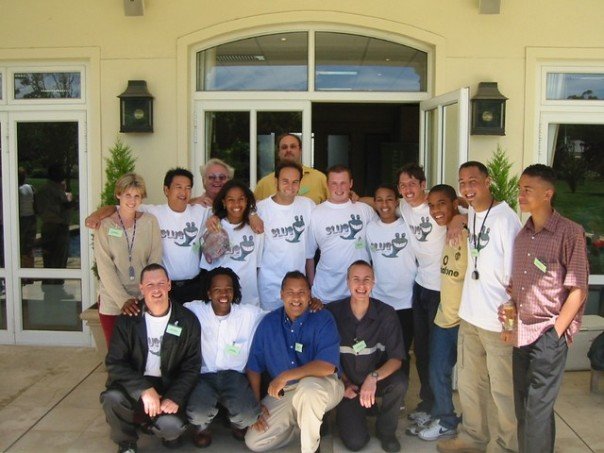
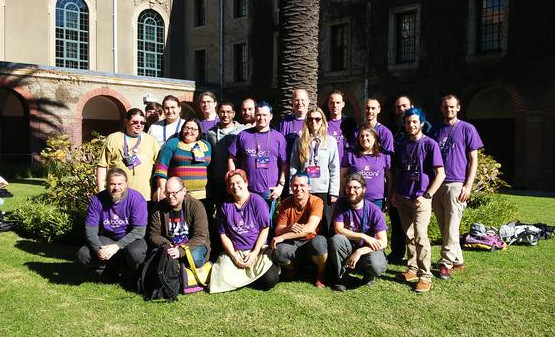
SLUG (Schools Linux Users Group) group photo. SLUG was founded to support the tuXlab schools that ran Linux.

My contract work then later turned into a full-time job there. This was a big deal for me, because I didn t want to support Windows ever again, and I didn t ever think that it would even be possible for me to get a job where I could work on free software full time. Since everyone in my team used Debian, I thought that I should probably give it another try. I did, and I hated it. One morning I went to talk to my manager, Thomas Black, and told him that I just don t get it and I need some help. Thomas was a big mentor to me during this phase. He told me that I should try upgrading to testing, which I did, and somehow I ended up on unstable, and I loved it. Before that I used to subscribe to a website called freshmeat that listed new releases of upstream software and then, I would download and compile it myself so that I always had the newest versions of everything. Debian unstable made that whole process obsolete, and I became a huge fan of it. Early on I also hit a problem where two packages tried to install the same file, and I was delighted to find how easily I could find package state and maintainer scripts and fix them to get my system going again. Thomas told me that anyone could become a Debian Developer and maintain packages in Debian and that I should check it out and joked that maybe I could eventually snap up highvoltage@debian.org . I just laughed because back then you might as well have told me that I could run for president of the United States, it really felt like something rather far-fetched and unobtainable at that point, but the seed was planted :) Ubuntu and beyond

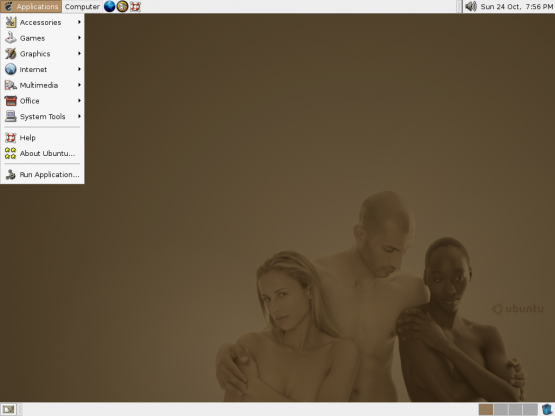
Ubuntu 4.10 default desktop Image from distrowatch

One day, Thomas told me that Mark is planning to provide official support for Debian unstable. The details were sparse, but this was still exciting news. A few months later Thomas gave me a CD with just warty written on it and said that I should install it on a server so that we can try it out. It was great, it used the new debian-installer and installed fine everywhere I tried it, and the software was nice and fresh. Later Thomas told me that this system is going to be called Ubuntu and the desktop edition has naked people on it. I wasn t sure what he meant and was kind of dumbfounded so I just laughed and said something like Uh ok . At least it made a lot more sense when I finally saw the desktop pre-release version and when it got the byline Linux for Human Beings . Fun fact, one of my first jobs at the foundation was to register the ubuntu.com domain name. Unfortunately I found it was already owned by a domain squatter and it was eventually handled by legal. Closer to Ubuntu s first release, Mark brought over a whole bunch of Debian developers that was working on Ubuntu over to the foundation and they were around for a few days getting some sun. Thomas kept saying Go talk to them! Go talk to them! , but I felt so intimidated by them that I couldn t even bring myself to walk up and say hello. In the interest of keeping this short, I m leaving out a lot of history but later on, I read through the Debian packaging policy and really started getting into packaging and also discovered Daniel Holbach s packaging tutorials on YouTube. These helped me tremendously. Some day (hopefully soon), I d like to do a similar video series that might help a new generation of packagers. I ve also been following DebConf online since DebConf 7, which was incredibly educational for me. Little did I know that just 5 years later I would even attend one, and another 5 years after that I d end up being on the DebConf Committee and have also already been on a local team for one.

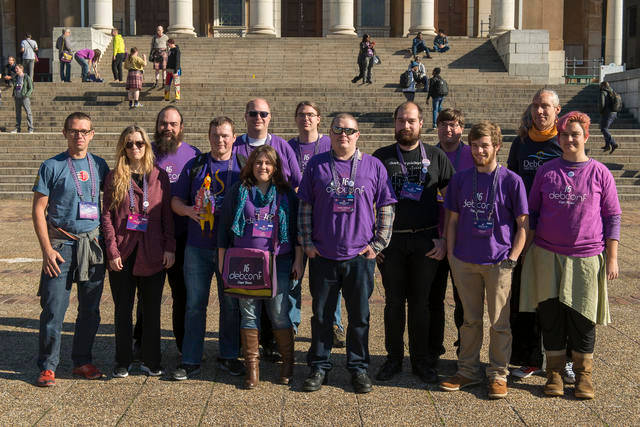
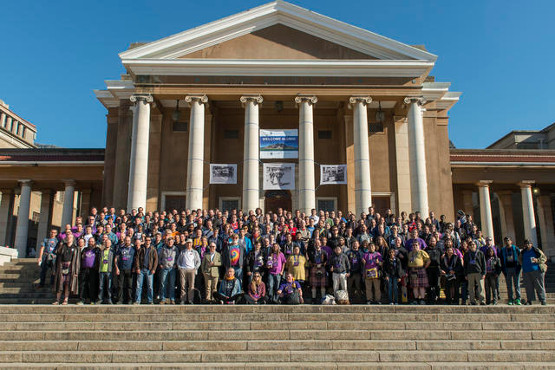
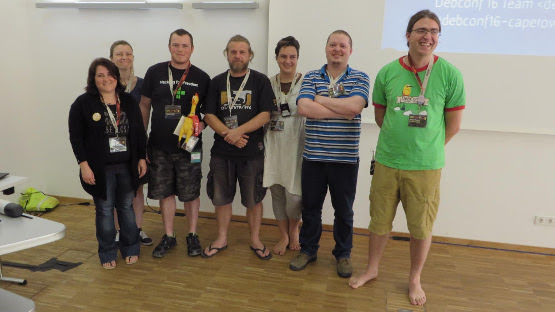
DebConf16 Organisers, Photo by Jurie Senekal.

It s been a long journey for me and I would like to help anyone who is also interested in becoming a Debian maintainer or developer. If you ever need help with your package, upload it to https://mentors.debian.net and if I have some spare time I ll certainly help you out and sponsor an upload. Thanks to everyone who have helped me along the way, I really appreciate it!

14 October 2017

Lior Kaplan: Debian Installer git repository

While dealing with d-i s translation last month in FOSScamp, I was kinda surprised it s still on SVN. While reviewing PO files from others, I couldn t select specific parts to commit. Debian does have a git server, and many DDs (Debian Developers) use it for their Debian work, but it s not as public as I wish it to be. Meaning I lack the pull / merge request abilities as well as the review process. Recently I got a reminder that the D-I s Hebrew translation needs some love. I asked my local community for help. Receiving a PO file by mail, reminded me of the SVN annoyance. So this time I decided to convert it to git and ask people to send me pull requests. Another benefit would be making the process more transparent as others could see these PRs (and hopefully comment if needed). For this experiment, I opened a repository on GitHub at https://github.com/kaplanlior/debian-installer I know they aren t open source as GitLab, but they are a popular choice which is a good start for my experiment. If and when it succeeds, we can discuss the platform.
debian-9

Debian 9

(featured image by Jonathan Carter)
Filed under: Debian GNU/Linux

24 July 2017

Jonathan Carter: Plans for DebCamp17

In a few days, I ll be attending DebCamp17 in Montr al, Canada. Here are a few things I plan to pay attention to:

18 June 2017

Jonathan Carter: AIMS Desktop 2017.1 is available!

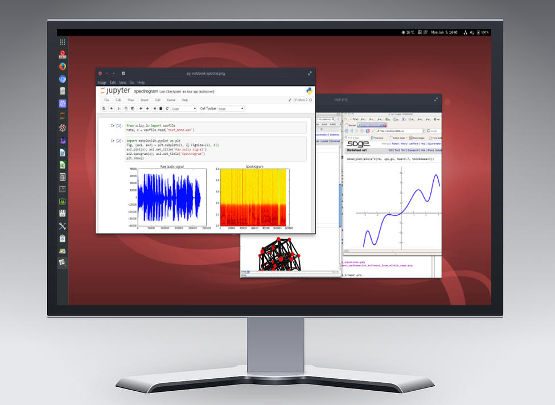
Back at DebConf 15 in Germany, I gave a talk on on AIMS Desktop (which was then based on Ubuntu), and our intentions and rationale for wanting to move it over to being Debian based. Today, alongside the Debian 9 release, we release AIMS Desktop 2017.1, the first AIMS Desktop released based on Debian. For Debian 10, we d like to get the last remaining AIMS Desktop packages into Debian so that it could be a Debian pure blend.

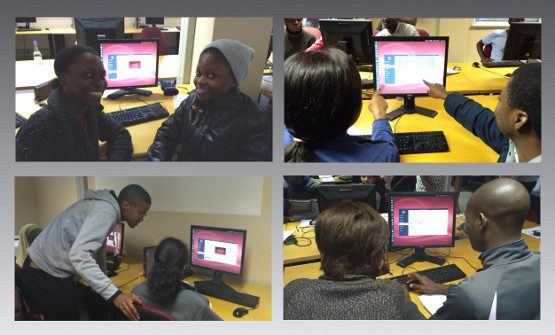
Students trying out a release candidate at AIMS South Africa

It s tailored to the needs of students, lecturers and researchers at the African Institute for Mathemetical Sciences, we re releasing it to the public in the hope that it could be useful for other tertiary education users with an interest in maths and science software. If you run a mirror at your university, it would also be great if you could host a copy. we added an rsync location on the downloads page which you could use to keep it up to date.

Jonathan Carter: Debian 9 is available!

Congratulations to everyone who has played a part in the creation of Debian GNU/Linux 9.0! It s a great release, I ve installed the pre-release versions for friends, family and colleagues and so far the feedback has been very positive. This release is dedicated to Ian Murdock, who founded the Debian project in 1993, and sadly passed away on 28 December 2015. On the Debian ISO files a dedication statement is available on /doc/dedication/dedication-9.0.txt Here s a copy of the dedication text:
Dedicated to Ian Murdock
------------------------
Ian Murdock, the founder of the Debian project, passed away
on 28th December 2015 at his home in San Francisco. He was 42.
It is difficult to exaggerate Ian's contribution to Free
Software. He led the Debian Project from its inception in
1993 to 1996, wrote the Debian manifesto in January 1994 and
nurtured the fledgling project throughout his studies at
Purdue University.
Ian went on to be founding director of Linux International,
CTO of the Free Standards Group and later the Linux
Foundation, and leader of Project Indiana at Sun
Microsystems, which he described as "taking the lesson
that Linux has brought to the operating system and providing
that for Solaris".
Debian's success is testament to Ian's vision. He inspired
countless people around the world to contribute their own free
time and skills. More than 350 distributions are known to be
derived from Debian.
We therefore dedicate Debian 9 "stretch" to Ian.
-- The Debian Developers
During this development cycle, the amount of source packages in Debian grew from around 21 000 to around 25 000 packages, which means that there s a whole bunch of new things Debian can make your computer do. If you find something new in this release that you like, post about it on your favourite social networks, using the hashtag #newinstretch or look it up to see what others have discovered!

17 June 2017

Jonathan Carter: AIMS Desktop 2017.1 is available!

Back at DebConf 15 in Germany, I gave a talk on on AIMS Desktop (which was then based on Ubuntu), and our intentions and rationale for wanting to move it over to being Debian based. Today, alongside the Debian 9 release, we release AIMS Desktop 2017.1, the first AIMS Desktop released based on Debian. For Debian 10, we d like to get the last remaining AIMS Desktop packages into Debian so that it could be a Debian pure blend.

Students trying out a release candidate at AIMS South Africa

It s tailored to the needs of students, lecturers and researchers at the African Institute for Mathemetical Sciences, we re releasing it to the public in the hope that it could be useful for other tertiary education users with an interest in maths and science software. If you run a mirror at your university, it would also be great if you could host a copy. we added an rsync location on the downloads page which you could use to keep it up to date.

Jonathan Carter: Debian 9 is available!

Congratulations to everyone who has played a part in the creation of Debian GNU/Linux 9.0! It s a great release, I ve installed the pre-release versions for friends, family and colleagues and so far the feedback has been very positive. This release is dedicated to Ian Murdock, who founded the Debian project in 1993, and sadly passed away on 28 December 2015. On the Debian ISO files a dedication statement is available on /doc/dedication/dedication-9.0.txt Here s a copy of the dedication text:
Dedicated to Ian Murdock
------------------------
Ian Murdock, the founder of the Debian project, passed away
on 28th December 2015 at his home in San Francisco. He was 42.
It is difficult to exaggerate Ian's contribution to Free
Software. He led the Debian Project from its inception in
1993 to 1996, wrote the Debian manifesto in January 1994 and
nurtured the fledgling project throughout his studies at
Purdue University.
Ian went on to be founding director of Linux International,
CTO of the Free Standards Group and later the Linux
Foundation, and leader of Project Indiana at Sun
Microsystems, which he described as "taking the lesson
that Linux has brought to the operating system and providing
that for Solaris".
Debian's success is testament to Ian's vision. He inspired
countless people around the world to contribute their own free
time and skills. More than 350 distributions are known to be
derived from Debian.
We therefore dedicate Debian 9 "stretch" to Ian.
-- The Debian Developers
During this development cycle, the amount of source packages in Debian grew from around 21 000 to around 25 000 packages, which means that there s a whole bunch of new things Debian can make your computer do. If you find something new in this release that you like, post about it on your favourite social networks, using the hashtag #newinstretch or look it up to see what others have discovered!

5 April 2017

Jonathan Carter: GNOME Shell Extensions in Debian 9.0

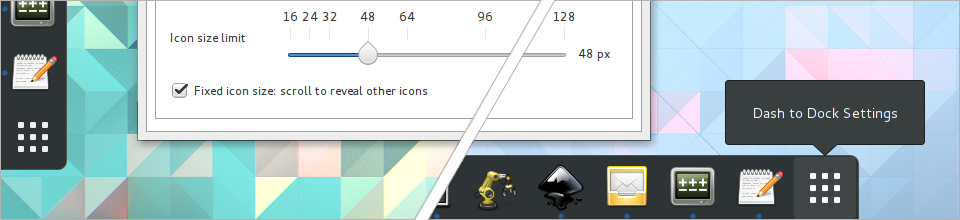
About GNOME 3 introduced an extensions framework that allows its users to extend the desktop shell by writing extensions using JavaScript and CSS. It works quite well and dozens of extensions have already been uploaded to the extensions site. Some of these solve some annoyances that users typically share with GNOME, while others add useful functionality. During DebCamp last year, I started packaging some of these for Debian. That s been going really well. Now that Ubuntu is finally dropping Unity in favour of GNOME, it helps to serve as a nudge to get this blog post out that s been stuck in drafts. These extensions also make their way into Ubuntu and other Debian/Ubuntu derivatives. Here are some extensions I ve been packaging that s already in the archive: gnome-shell-extension-dashtodock Provides a multitude of options for the shell dock. Not only really useful but also well maintained by upstream, see their website for more info. This is a great extension if you support previous Unity users, since you can set your panel to look and behave very similarly to Unity. I think the app launcher is slightly better in Gnome because apps are easier to discover. gnome-shell-extension-hide-activities Simple extension that hides the Activities button from the top left corner. gnome-shell-extension-impatience Speeds up shell animations. Animations can make the system more usable, but it can also be either distracting or cause some slight delays while waiting for the animation to complete. This gives you a sliding scale that lets you choose how much you d like to speed it up. gnome-shell-extension-move-clock Simple extension that moves the clock from the center of the panel to the right. gnome-shell-extension-refreshwifi In gnome-shell, network manager doesn t automatically refresh the list of available network, which can be quite annoying. Currently a user has to turn wifi off and back on in order to see a refreshed list. This has been fixed upstream and will be in the next version of GNOME. In the meantime, this extension fixes that. Update: Refreshing wifi in the background has been fixed in Gnome 3.22.2, which is now in stretch. This extension will be removed from the archives. gnome-shell-extension-remove-dropdown-arrows Items in the top panel contain dropdown arrows, which are useful for new users who might not be aware that they expand into more entries. For more experience users, the arrows tend to result in extra clutter in the panel, this extension hides those arrows. gnome-shell-extension-better-volume This allows you to hover over the volume control indicator and scroll up and down to increase/decrease the volume. Probably another extension that should really just be integrated into gnome-shell by default. gnome-shell-extension-hard-disk-led Many new laptops either don t have a hard disk L.E.D. anymore, or they hide it so that it s not really all that visible. This extension shows you hard disk activity in your panel. There s also work being done to make it report reads and writes separately. I ll be looking at backporting that when it s available. gnome-shell-extension-disconnect-wifi Allows you to disconnect from the current network without having to turn off wi-fi entirely. gnome-shell-extension-pixelsaver Title bars can be incredibly pixel-hungry, which isn t great on small displays. This extension hides the title bar when a window is maximised, and adds control buttons for that window to the top panel. gnome-shell-extension-system-monitor gnome-shell-extension-trash Displays a trash icon to the top panel when there are items in trash. From there you can view or delete the trash contents. gnome-shell-extension-multi-monitors This extension adds some tweaks for users of multiple monitors. It s most useful feature is that you can have desktop overviews on both displays and easily move apps between them. More extensions Here are some more extensions packaged in Debian that others have packaged: Didn t make it this time Both Debian and Ubuntu are in feature freeze right now, and the following didn t make it in the archives in time, but should be in the following releases (they re still installable via the extensions site in the meantime): Next steps Consider auto-enable Currently, when you install these debian packages, (most of) the extensions won t be enabled by default. Users have to use the gnome-tweak-tool to enable them after installation. The rationale behind this is that a system administrator of a network of computers might only want to enable certain extensions for certain users. After some more consideration, I think such administrators will probably already have a system (like a configuration management system) in place to manage this. So, to make it easier for the typical user, I think it s worth considering enabling these by default with installation. Feedback welcome :) Debian team The list of packaged extensions are growing fast, and it would be nice to have these team-maintained. It might be a good idea to start a team for this or use an existing team under the Debian gnome team namespace. Packaging guide I ve packaged enough Gnome extensions to be aware of the typical gotchas and things that need fixing. They re overall easy to package and a good place to start for someone who wants to get into packaging. I want to put together a good short guide on how to properly package gnome-shell extensions. Anything else? Any other extensions you d like to see packaged? Let me know. Even better, package it yourself and help test my extension package guide (once it exists) so that we can improve that too.

5 December 2016

Shirish Agarwal: The Anti-Pollito squad arrest and confession

Disclaimer This is an attempt at humor and hence entirely fictional in nature. While some incidents depicted are true, the context and the story woven around them are by yours truly. None of the Mascots of Debian were hurt during the blog post . I also disavow any responsibility for any hurt (real or imagined) to any past, current and future mascots. The attempt should not be looked upon as demeaning people who are accused of false crimes, tortured and confessions eked out of them as this happens quite a lot (In India for sure, but guess it s the same world over in various degrees). The idea is loosely inspired by Chocolate:Deep Dark Secrets. (2005) On a more positive note, let s start Being a Sunday morning woke up late to find incessant knocking on the door, incidentally mum was not at home. Opening the door, found two official looking gentleman. They asked my name, asked my credentials, tortured and arrested me for Group conspiracy of Malicious Mischief in second and third degrees . The torture was done by means of making me forcefully watch endless reruns of Norbit . While I do love Eddie Murphy, this was one of his movies he could have done without . I guess for many people watching it once was torture enough. I *think* they were nominated for razzie awards dunno if they won it or not, but this is beside the point. Unlike the 20 years it takes for a typical case to reach to its conclusion even in the smallest court in India, due to the torture, I was made to confess (due to endless torture) and was given summary judgement. The judgement was/is as follows a. Do 100 hours of Community service in Debian in 2017. This could be done via blog posts, raising tickets in the Debian BTS or in whichever way I could be helpful to Debian. b. Write a confessional with some photographic evidence sharing/detailing some of the other members who were part of the conspiracy in view of the reduced sentence. So now, have been forced to write this confession As you all know, I won a bursary this year for debconf16. What is not known by most people is that I also got an innocuous looking e-mail titled Pollito for DPL . While I can t name all the names as investigation is still ongoing about how far-reaching the conspiracy is . The email was purportedly written by members of cabal within cabal which are in Debian. I looked at the email header to see if this was genuine and I could trace the origin but was left none the wiser, as obviously these people are far more technically advanced than to fall in simple tricks like this Anyways, secretly happy that I have been invited to be part of these elites, I did the visa thing, packed my bags and came to Debconf16. At this point in juncture, I had no idea whether it was real or I had imagined the whole thing. Then to my surprise saw this evidence of conspiracy to have Pollito as DPL, Wifi Password Just like the Illuminati the conspiracy was for all to see those who knew about it. Most people were thinking of it as a joke, but those like me who had got e-mails knew better. I knew that the thing is real, now I only needed to bide my time and knew that the opportunity would present itself. And few days later, sure enough, there was a trip planned for Table Mountain, Cape Town . Few people planned to hike to the mountain, while few chose to take the cable car till up the mountain. First glance of the cable car with table mountain as background Quite a few people came along with us and bought tickets for the to and fro to the mountain and back. Ticket for CPT Table mountain car cable Incidentally, I was thinking if the South African Govt. were getting the tax or not. If you look at the ticket, there is just a bar-code. In India as well as the U.S. there is TIN Tax Identification Number TIN displayed on an invoice from channeltimes.com Few links to share what it is all about . While these should be on all invoices, need to specially check when taking high-value items. In India as shared in the article the awareness, knowledge leaves a bit to be desired. While I m drifting from the incident, it would be nice if somebody from SA could share how things work there. Moving on, we boarded the cable car. It was quite spacious cable car with I guess around 30-40 people or some more who were able to see everything along with the controller. from inside the table mountain cable car 360 degrees It was a pleasant cacophony of almost two dozen or more nationalities on this 360 degrees moving chamber. I was a little worried though as it essentially is a bucket and there is always a possibility that a severe wind could damage it. Later somebody did share that some frightful incidents had occurred not too long ago on the cable car. It took about 20-25 odd minutes to get to the top of table mountain and we were presented with views such as below View from Table Mountain cable car looking down The picture I am sharing is actually when we were going down as all the pictures of going up via the cable car were over-exposed. Also, it was pretty crowded on the way up then on the way down so handling the mobile camera was not so comfortable. Once we reached up, the wind was blowing at incredible speeds. Even with my jacket and everything I was feeling cold. Most of the group around 10-12 people looked around if we could find a place to have some refreshments and get some of the energy in the body. So we all ventured to a place and placed our orders the bleh... Irish coffee at top of Table Mountain I was introduced to Irish Coffee few years back and have had some incredible Irish Coffees in Pune and elsewhere. I do hope to be able to make Irish Coffee at home if and when I have my own house. This is hotter than brandy and is perfect if you are suffering from cold etc if done right, really needs some skills. This is the only drink which I wanted in SA which I never got right . As South Africa was freezing for me, this would have been the perfect antidote but the one there as well as elsewhere were all bleh. What was interesting though, was the coffee caller besides it. It looked like a simple circuit mounted on a PCB board with lights, vibrations and RFID and it worked exactly like that. I am guessing as and when the order is ready, there is an interrupt signal sent via radio waves which causes the buzzer to light and vibrate. Here s the back panel if somebody wants to take inspiration and try it as a fun project backpanel of the buzz caller Once we were somewhat strengthened by the snacks, chai, coffee etc. we made our move to seeing the mountain. The only way to describe it is that it s similar to Raigad Fort but the plateau seemed to be bigger. The wikipedia page of Table Mountain attempts to share but I guess it s more clearly envisioned by one of the pictures shared therein. table mountain panaromic image I have to say while Table Mountain is beautiful and haunting as it has scenes like these Some of the oldest rocks known to wo/man. There is something there which pulls you, which reminds you of a long lost past. I could have simply sat there for hours together but as was part of the group had to keep with them. Not that I minded. The moment I was watching this, I was transported to some memories of the Himalayas about 20 odd years or so. In that previous life, I had the opportunity to be with some of the most beautiful women and also been in the most happening places, the Himalayas. I had shared years before some of my experiences I had in the Himalayas. I discontinued it as I didn t have a decent camera at that point in time. While I don t wanna digress, I would challenge anybody to experience the Himalayas and then compare. It is just something inexplicable. The beauty and the rawness that Himalayas shows makes you feel insignificant and yet part of the whole cosmos. What Paulo Cohello expressed in The Valkyries is something that could be felt in the Himalayas. Leh, Ladakh, Himachal , Garwhal, Kumaon. The list will go on forever as there are so many places, each more beautiful than the other. Most places are also extremely backpacker-friendly so if you ask around you can get some awesome deals if you want to spend more than a few days in one place. Moving on, while making small talk @olasd or Nicolas Dandrimont , the headmaster of our trip made small talk to each of us and eked out from all of us that we wanted to have Pollito as our DPL (Debian Project Leader) for 2017. Few pictures being shared below as supporting evidence as well The Pollito as DPL cabal in action members of the Pollito as DPL where am I or more precisely how far am I from India. While I do not know who further up than Nicolas was on the coup which would take place. The idea was this If the current DPL steps down, we would take all and any necessary actions to make Pollito our DPL. Pollito going to SA - photo taken by Jonathan Carter This has been taken from Pollito s adventure Being a responsible journalist, I also enquired about Pollito s true history as it would not have been complete without one. This is the e-mail I got from Gunnar Wolf, a friend and DD from Mexico
Turns out, Valessio has just spent a week staying at my house And
in any case, if somebody in Debian knows about Pollito s
childhood That is me. Pollito came to our lives when we went to Congreso Internacional de
Software Libre (CISOL) in Zacatecas city. I was strolling around the
very beautiful city with my wife Regina and our friend Alejandro
Miranda, and at a shop at either Ram n L pez Velarde or Vicente
Guerrero, we found a flock of pollitos. http://www.openstreetmap.org/#map=17/22.77111/-102.57145 Even if this was comparable to a slave market, we bought one from
them, and adopted it as our own. Back then, we were a young couple Well, we were not that young
anymore. I mean, we didn t have children. Anyway, we took Pollito with
us on several road trips, such as the only time I have crossed an
international border driving: We went to Encuentro Centroamericano de
Software Libre at Guatemala city in 2012 (again with Alejandro), and
you can see several Pollito pics at: http://gwolf.org/album/road-trip-ecsl-2012-guatemala-0 Pollito likes travelling. Of course, when we were to Nicaragua for
DebConf, Pollito tagged along. It was his first flight as a passenger
(we never asked about his previous life in slavery; remember, Pollito
trust no one). Pollito felt much welcome with the DebConf crowd. Of course, as
Pollito is a free spirit, we never even thought about forcing him to
come back with us. Pollito went to Switzerland, and we agreed to meet
again every year or two. It s always nice to have a chat with him. Hugs!
So with that backdrop I would urge fellow Debianities to take up the slogans LONG LIVE THE DPL ! LONG LIVE POLLITO ! LONG LIVE POLLITO THE DPL ! The first step to make Pollito the DPL is to ensure he has a @debian.org (pollito@debian.org) We also need him to be made a DD because only then can he become a DPL. In solidarity and in peace
Filed under: Miscellenous Tagged: #caller, #confession, #Debconf16, #debian, #Fiction, #history, #Pollito, #Pollito as DPL, #Table Mountain, Cabal, memories, south africa

8 November 2016

Jonathan Carter: A few impressions of DebConf 16 in Cape Town

DebConf16 Group Photo

DebConf16 Group Photo by Jurie Senekal.

DebConf16 Firstly, thanks to everyone who came out and added their own uniqueness and expertise to the pool. The feedback received so far has been very positive and I feel that the few problems we did experience was dealt with very efficiently. Having a DebConf in your hometown is a great experience, consider a bid for hosting a DebConf in your city! DebConf16 Open Festival (5 August) The Open Festival (usually Debian Open Day) turned out pretty good. It was a collection of talks, a job fair, and some demos of what can be done with Debian. I particularly liked Hetzner s stand. I got to show off some 20 year old+ Super Mario skills and they had some fun brain teasers as well. It s really great to see a job stand that s so interactive and I think many companies can learn from them. The demo that probably drew the most attention was from my friend Georg who demoed some LulzBot Mini 3D Printers. They really seem to love Debian which is great! DebConf (6 August to 12 August) If I try to write up all my thoughts and feeling about DC16, I ll never get this post finished. Instead, here as some tweets from DebConf that other have written:


Day Trip We had 3 day trips: Brought to you by
orga

DebConf16 Orga Team.

See you in Montr al! DebConf17 dates: The DC17 sponsorship brochure contains a good deal of information, please share it with anyone who might be interested in sponsoring DebConf! Media

2 July 2016

Jonathan Carter: So, that was DebCamp16!

Picture: Adrian Frith

University of Cape Town, host location to DebConf 16. Picture: Adrian Frith

What an amazingly quick week that was Our bid to host DebConf in Cape Town was accepted nearly 15 months ago. And before that, the bid itself was a big collective effort from our team. So it s almost surreal that the first half of the two weeks of DebCamp/DebConf is now over. Things have been going really well. The few problems we ve had so far were too small to even mention. It s a few degrees colder than it usually is this time of the year and there s already snow on the mountains, so Cape Town is currently quite chilly.
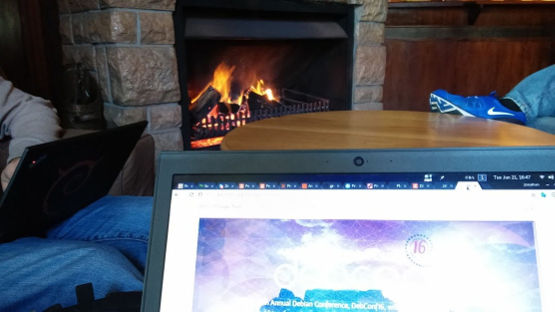
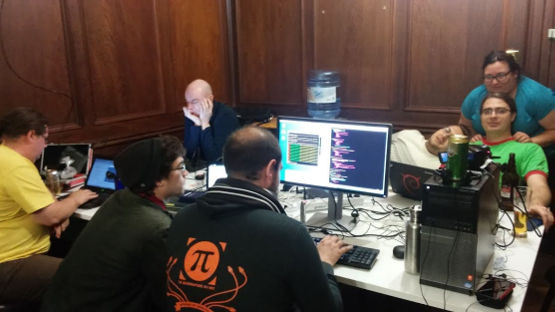
Hacking by the fire at the sports club

Gathering some heat by the fire at the sports club while catching up to the world the day before it all started.

All Kinds of Quality Time I really enjoyed working with the video team last year, but this year there was just 0 time for that. Working on the orga team means dealing with a constant torrent of small tasks, which is good in its own way because you get to deal with a wide variety of Debian people you might not usually get to interact with, but video team problems are more fun and interesting. Next year I hope to do a lot more video work again. If you re at DebConf over the next week, I can highly recommend that you get involved!
Video team hacking away at problems

Video team members hacking away at problems late at night during DebCamp

The first time I met Debian folk was early in 2004. I worked at the Shuttleworth Foundation as Open Source Technical Co-ordinator at the time, and Mark Shuttleworth had them over for one of the early Ubuntu sprints in Canonical s early days. I was so intimidated by them back then that I could hardly even manage to speak to them. I was already a big free software fan before working there, but little did I even dream to think that I would one day be involved in a project like Ubuntu or Debian. My manager back then encouraged me to go talk to them and get involved and become a Debian Developer and joked that I should become highvoltage@debian.org. I guess that was when the initial seeds got planted and since then I ve met many great people all over the world who have even became friends during UDS, DebConf, BTS and other hackfests where Debianites hang out. It gave me a really nice warm feeling to have all these amazing, talented and really friendly people from all over coming together in this little corner of the world to work together on projects that I think are really important.
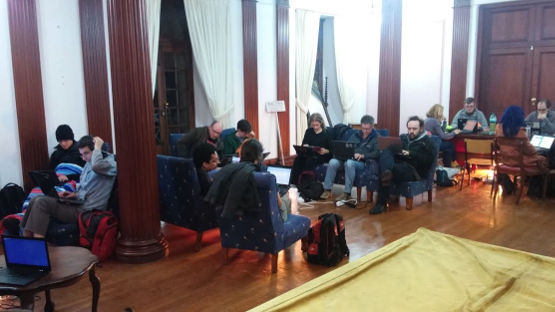
Finding a warm space to work in the Happy Feet hack lab

Finding a warm space to work in the Happy Feet hack lab

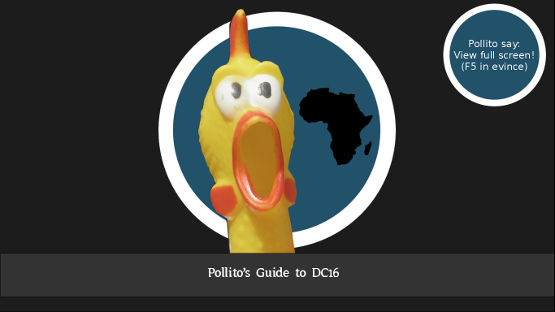
Oh the Chicken Back at DebConf12, someone (I don t remember the exact history) brought a rubber chicken to DebConf who was simply called Pollito ( chicken in Spanish). Since then the chicken has grown into somewhat of a mascot for DebConf. Back in 2012 I already imagined that if we would ever host a DebConf, I d make a little of picture book story about Pollito. Last year after DC15, when bringing Pollito over, I created a little story called Pollito s first trip to Africa . I was recovering from flu while putting that together and didn t spend much time on it, but it turned out to be somewhat of a hit. I was surprised to see it in the #debconf topic ever since I posted it :) We gave a tour of the campus on the first and second days and it was quite time consuming and there was no way we could do it every day for the rest of DebCamp, so on the 2nd day I smacked together a new rush job called Pollito s Guide to DC16 . The idea was that newcommers could use it as a visual guide and rely on others who have been there for a while if they get stuck. I wish I had the time to make it a lot nicer, but I think the general idea is good and next year we can have a much nicer one that might not be quite as Pollito focused.
Pollito's Guide to DC16

Pollito s Guide to DC16

Debian Maintainer After all these years, I finally sat down and applied to become a Debian Maintainer, and the application was successful (approved yesterday \o/). Now just for the wait until my key is uploaded to the keyring. I haven t yet had time to properly process this but I think once the DebConf dust settles and I had some time to recover, I will be ecstatic. Some actual DebCampy work Everywhere I go, I see people installing a bunch of GNOME extensions on their Debian GNOME desktops shortly after installation using http://extensions.gnome.org/ (I noticed this even at DebCamp!). A few months ago I thought that it s really about time someone package up some of the really popular ones. So I started to put together some basic packaging for AIMS Desktop around a month ago. During the last few days of DebCamp, things were going well enough with the organisational tasks that I had some time to do some actual packaging work and improve these so that they re ready for upload to the Debian archives. The little DebCamp time I had ended up being my very own little extension fest :) I worked on the following packages which are ready for upload: I worked on the following packages which still need minor work, might be able to get them in uploadable state by the end of DebConf: The actual packaging of GNOME extensions is actually pretty trivial. It s mostly source-only JavaScript with some CSS and translations and maybe some gsettings schemas and dialogs. Or at least, it would be pretty trivial, but many extensions are without licenses, contain embedded code (often JavaScript) from other projects, or have no usable form of upstream tarball, to name a few of the problems. So I ve been contacting the upstream authors of these packages where there have been problems, and for the most part they ve been friendly and pretty quick to address the problems. So that s it, for now. I couldn t possibly sum up the last week and everything that lead up to it in a single blog post. All I can really say is thank you for letting me be a part of this very special project!

25 March 2016

Jonathan Carter: DebConf 16 Updates

debconf16-blogRegistration now open DebConf 16 is taking place in Cape Town, South Africa. For more information read the registration opening announcement. Quick summary Call for talk proposals open If you have a proposal for a session at DC16, please read the full call for proposals announcement. Quick info Video team If you re on the video team, or are planning to get involved then you might want to join the video team mailing list and #debconf-video IRC channel on oftc. Meetings are kicking off soon, if you re planning to join an IRC meeting, you can mark your availability on Framadate. Sponsoring DebConf 16 We have some great sponsors for DebConf 16 already, but sadly we don t have any local sponsors yet. Sponsorship is open to all, but if you know of a South African company in particular who might be interested, then feel free to send them a copy of the DebConf 16 Sponsorship Brochure which contains all the options and how to get in touch with the sponsorship team. Sponsoring DebConf has never been more accessible to South African companies so if you d like to get your company name on the Debian map and get some great exposure, then this is the perfect opportunity!

4 October 2015

Jonathan Carter: Long Overdue Debconf 15 Post

Debconf 15 In August (that was 2 months ago, really!?) I attended DebCamp and DebConf in Heidelberg, Germany. This blog post is somewhat belated due to the debbug (flu obtained during DebConf) and all the catching up I had to do since then. Debcamp Debcamp was great, I got to hack on some of my Python related packages that were in need of love for a long time and also got to spend a lot of time tinkering with VLC for the Video Team. Even better than that, I caught up with a lot of great people I haven t seen in ages (and met new ones) and stayed up waaaaay too late drinking beer, playing Mao and watching meteor showers. Debconf At Debconf, I gave a short talk about AIMS Desktop (slides) but also expanded on the licensing problems we ve had with Ubuntu on that project. Not all was bleak on the Ubuntu front though, some Ubuntu/Canonical folk were present at DebConf and said that they d gladly get involved with porting Ubiquity (the Ubuntu installer, a front-end to d-i) to Debian. That would certainly be useful to many derivatives including potentiall AIMS Desktop if it were to move over to Debian. AIMS Desktop talk slides: We re hosting DebConf in Cape Town next year and did an introduction during a plenary (slides). It was interesting spending some time with the DC15 team and learning how they work, it s amazing all the detail they have to care about and how easy they made it look from the outside, I hope the DC16 team will pull that off as well. Debconf 16 Slides: DC16 at DC15 talk DebConf 16 team members present at DebConf16 during DC16 presentation: I uploaded my photos to DebConf Gallery, Facebook and Google, take your pick ;-), many sessions were recorded, catch them on video.debian.net. If I had to summarize everything that I found interesting I d have to delay posting this entry even further, topics that were particularly interesting were: Pollito s First Trip to Africa In my state of flu with complete lack of concentration for anything work related, I went ahead and made a little short story documenting Pollito s (the DebConf mascot chicken) first trip to Africa. It s silly but it was fun to make and some people enjoyed it ^_^ Well, what else can I say? DebConf 15 was a blast! Hope to see you at Debconf 16!

27 May 2015

Jonathan Carter: Of course I support Jonathan

riddel-support-banner-300x82 Spending yesterday mostly away from the computer screen, I was shocked this morning when I read about the Ubuntu Community Council s request for Jonathan Ridell to step down from the Kubuntu Council. I knew that things have been rough lately and honestly there were some situations that Jonathan could have handled better, but I didn t expect anything as drastic and sudden as this without seeing any warning signs. Looking at the mails that Scott Kitterman posted sent by the Kubuntu Council, it seems like it s been a surprise to KC as well. I m disappointed in the way the Ubuntu Community Council has handled this and I think the way they treated Jonathan is appalling, even taking into account that he could ve communicated his grievances better. I m also unconvinced that the Ubuntu Community Council is as beneficial to the Ubuntu community in its current form as it could be. The way it is structured and reports to the SABDFL makes that it will always favour Canonical when there s a conflict of interest. I brought this up with two different CC members last year who both provided shruggy answers in the vein of Sorry, but we have a framework that s set up on how we can work in here and there s just so much we can do about it. they seem to fear the leadership too much to question it, and it s a pity, because everyone makes mistakes. This request to step down is probably going to sour the Ubuntu project s relationship with Jonathan Ridell even more, which is especially sad because he s one of the really good community guys left that keeps both the CoC and the original Ubuntu manifesto ethos in high regard while striving for technical excellence. On top of that, it seems like it may result in at least another such person leaving. I hope that the CC also takes this opportunity to take a step back and re-avaluate it s structure and purpose, instead of just shrugging it off with a corporate-sounding statement. I d also urge them to retract their statement to Jonathan Ridell and attempt to find a more amicable solution.

6 April 2015

Jonathan Carter: Squashfs Performance Testing

Experiments Last week I discovered The Fan Club s Experiments page. It reminds me of the Debian Experiments community on Google+. I like the concept of trying out all kinds of different things and reporting back to the community on how it works. I ve been meaning to do more of that myself so this is me jumping in and reporting back on something I ve been poking at this weekend. Introducing Squashfs Squashfs is a read-only compressed filesystem commonly used on embedded devices, Linux installation media and remote file systems (as is done in LTSP). Typically, a system like tmpfs, unionfs or aufs is mounted over this read-only system to make it usable as a root filesystem. It has plenty of other use cases too but for the purposes of this entry we ll stick with those use cases in mind. It supports gzip, lzo and xz(lzma) as compression back-ends. It also supports block sizes from 4K up to 1M. Compression technique as well as block size can have major effects on both performance and file size. In most cases the defaults will probably be sufficient, but if you want to find a good balance between performance and space saving, then you ll need some more insight. My Experiment: Test effects of squashfs compression methods and block sizes I m not the first person to have done some tests on squashfs performance and reported on it. Bernhard Wiedemann and the Squashfs LZMA project have posted some results before, and while very useful I want more information (especially compress/uncompress times). I was surprised to not find a more complete table elsewhere either. Even if such a table existed, I probably wouldn t be satisfied with it. Each squashfs is different and it makes a big difference whether it contains already compressed information or largely uncompressed information like clear text. I d rather be able to gather compression ratio/times for a specific image rather than for one that was used for testing purposes once-off. So, I put together a quick script that takes a squashfs image, extracts it to tmpfs, and then re-compressing it using it all the specified compression techniques and block sizes and then uncompressing those same images for their read speeds. My Testing Environment For this post, I will try out my script on the Ubuntu Desktop 14.04.2 LTS squashfs image. It s a complex image that contains a large mix of different kinds of files. I m extracting it to RAM since I want to avoid having disk performance as a significant factor. I m compressing the data back to SSD and extracting from there for read speed tests. The SSD seems fast enough not to have any significant effect on the tests. If you have a slow storage, the results of the larger images (with smaller block sizes) may be skewed unfavourably. As Bernhard mentioned on his post, testing the speed of your memory can also be useful, especially when testing on different kinds of systems and comparing the results:
# dd if=/dev/zero of=/dev/null bs=1M count=100000
104857600000 bytes (105 GB) copied, 4.90059 s, 21.4 GB/s
CPU is likely to be your biggest bottleneck by far when compressing. mksquashfs is SMP aware and will use all available cores by default. I m testing this on a dual core Core i7 laptop with hyper-threading (so squashfs will use 4 threads) and with 16GB RAM apparently transferring around 21GB/s. The results of the squashfs testing script will differ greatly based on the CPU cores, core speed, memory speed and storage speed of the computer you re running it on, so it shouldn t come as a surprise if you get different results than I did. If you don t have any significant bottleneck (like slow disks, slow CPU, running out of RAM, etc) then your results should more or less correspond in scale to mine for the same image. How to Run It Create a directory and place the filesystem you d like to test as filesystem.squashfs, then:
$ apt-get install squashfs-tools 
$ wget https://raw.githubusercontent.com/highvoltage/squashfs-experiments/master/test-mksquashfs.sh
$ bash test-mksquashfs.sh
With the default values in that file, you ll end up with 18 squashfs images taking up about 18GB of disk space. I keep all the results for inspection, but I ll probably adapt/fix the script to be more friendly to disk space usage some time. You should see output that look something like this, with all the resulting data in the ./results directory.
* Setting up...
- Testing gzip
  * Running a squashfs using compression gzip, blocksize 4096
  * Running a squashfs using compression gzip, blocksize 8192
  * Running a squashfs using compression gzip, blocksize 16384
  ...
- Testing lzo
  * Running a squashfs using compression lzo, blocksize 4096
  * Running a squashfs using compression lzo, blocksize 8192
  * Running a squashfs using compression lzo, blocksize 16384
  ...
- Testing xz
  * Running a squashfs using compression xz, blocksize 4096
  * Running a squashfs using compression xz, blocksize 8192
  * Running a squashfs using compression xz, blocksize 16384
  ...
* Testing uncompressing times...
  * Reading results/squashfs-gzip-131072.squashfs...
  * Reading results/squashfs-gzip-16384.squashfs...
  * Reading results/squashfs-gzip-32768.squashfs...
  ...
* Cleaning up...
On to the Results The report script will output the results into CSV. Here s the table with my results. Ratio is percentage of the size of the original uncompressed data, CTIME and UTIME is compression time and uncompress time for the entire image.
Filename Size Ratio CTIME UTIME
squashfs-gzip-4096.squashfs 1137016 39.66% 0m46.167s 0m37.220s
squashfs-gzip-8192.squashfs 1079596 37.67% 0m53.155s 0m35.508s
squashfs-gzip-16384.squashfs 1039076 36.27% 1m9.558s 0m26.988s
squashfs-gzip-32768.squashfs 1008268 35.20% 1m30.056s 0m30.599s
squashfs-gzip-65536.squashfs 987024 34.46% 1m51.281s 0m35.223s
squashfs-gzip-131072.squashfs 975708 34.07% 1m59.663s 0m22.878s
squashfs-gzip-262144.squashfs 970280 33.88% 2m13.246s 0m23.321s
squashfs-gzip-524288.squashfs 967704 33.79% 2m11.515s 0m24.865s
squashfs-gzip-1048576.squashfs 966580 33.75% 2m14.558s 0m28.029s
squashfs-lzo-4096.squashfs 1286776 44.88% 1m36.025s 0m22.179s
squashfs-lzo-8192.squashfs 1221920 42.64% 1m49.862s 0m21.690s
squashfs-lzo-16384.squashfs 1170636 40.86% 2m5.008s 0m20.831s
squashfs-lzo-32768.squashfs 1127432 39.36% 2m23.616s 0m20.597s
squashfs-lzo-65536.squashfs 1092788 38.15% 2m48.817s 0m21.164s
squashfs-lzo-131072.squashfs 1072208 37.43% 3m4.990s 0m20.563s
squashfs-lzo-262144.squashfs 1062544 37.10% 3m26.816s 0m15.708s
squashfs-lzo-524288.squashfs 1057780 36.93% 3m32.189s 0m16.166s
squashfs-lzo-1048576.squashfs 1055532 36.85% 3m42.566s 0m17.507s
squashfs-xz-4096.squashfs 1094880 38.19% 5m28.104s 2m21.373s
squashfs-xz-8192.squashfs 1002876 34.99% 5m15.148s 2m1.780s
squashfs-xz-16384.squashfs 937748 32.73% 5m11.683s 1m47.878s
squashfs-xz-32768.squashfs 888908 31.03% 5m17.207s 1m43.399s
squashfs-xz-65536.squashfs 852048 29.75% 5m27.819s 1m38.211s
squashfs-xz-131072.squashfs 823216 28.74% 5m42.993s 1m29.708s
squashfs-xz-262144.squashfs 799336 27.91% 6m30.575s 1m16.502s
squashfs-xz-524288.squashfs 778140 27.17% 6m58.455s 1m20.234s
squashfs-xz-1048576.squashfs 759244 26.51% 7m19.205s 1m28.721s
Some notes:

13 February 2015

Jonathan Carter: Debconf 2016 to be hosted in Cape Town

Table Mountain, an icon of Cape Town Long story short, we put in a bid to host Debconf 16 in Cape Town, and we got it! Back at Debconf 12 (Nicaragua), many people asked me when we re hosting a Debconf in South Africa. I just laughed and said Who knows, maybe some day . During the conference I talked to Stefano Rivera (tumbleweed) who said that many people asked him too. We came to the conclusion that we d both really really want to do it but just didn t have enough time at that stage. I wanted to get to a point where I could take 6 months off for it and suggested that we prepare a bid for 2019. Stefano thought that this was quite funny, I think at some point we managed to get that estimate down to 2017-2018. That date crept back even more with great people like Allison Randal and Bernelle Verster joining our team, along with other locals Graham Inggs, Raoul Snyman, Adrianna Pi ska, Nigel Kukard, Simon Cross, Marc Welz, Neill Muller, Jan Groenewald, and our international mentors such as Nattie Mayer-Hutchings, Martin Krafft and Hannes von Haugwitz. Now, we re having that Debconf next year. It s almost hard to believe, not sure how I ll sleep tonight, we ve waited so long for this and we ve got a mountain of work ahead of us, but we ve got a strong team and I think Debconf 2016 attendees are in for a treat! Since I happened to live close to Montr al back in 2012, I supported the idea of a Debconf bid for Montr al first, and then for Cape Town afterwards. Little did I know then that the two cities would be the only two cities bidding against each other 3 years later. I think both cities are superb locations to host a Debconf, and I m supporting Montr al s bid for 2017. Want to get involved? We have a mailing list and IRC channel: #debconf16-capetown on oftc. Thanks again for all the great support from everyone involved so far!

11 June 2014

Jonathan Carter: I m going to Debconf 14!

going-to-debconf14-sm Everything is set! The Debconf committee approved my accommodation sponsorship, my leave is confirmed and my airline tickets are booked, I m going to Debconf 14! It s going to be a 30 hour trip from Cape Town to Portland (I could shave off around 6 hours if I pay 120% more, doesn t seem worth it) and I ll be there for the full 9 days from 23 August to 31 August. I last attended Debconf 12 in Managua, Nicaragua and it was fun, educational and productive. I m really excited to see the Debian folk in person again and it will also be my first time in Portland. See you there!

5 January 2014

Jonathan Carter: Happy 2014!

So, it s 2014 and I still haven t migrated away from WordPress to using something fancy written in Python. But who cares? Life is great and I ve made good progress in lots of other areas :) I m getting fitter by the day, last year I joined a running club and I now play squash too, which is working so much better than just going to the gym. Also finally making progress with learning how to play guitar, another ancient goal of mine that had slow progress for a while. It helps that I now live on my own and can make noise whenever I want to. I m also going for lessons every Wednesday and have some plans to convert my spare room in to a music room. I ve also gotten into beer brewing. I attended Beerschool via Beerlab, my first batch of American Pale Ale is just about ready for bottling and I ll probably do that next weekend. What else? Well, this year I definitely want to be more focused in my free software contributions than in 2013. I want to get my Debian contributions flowing well again with the aim of becoming a Debian Maintainer. Also planning to go to Debconf in Portland, Oregon in August. Then there s LTSP which is working towards LTSP 6, which will see a huge shift in proper support for local processing and less on thin client support. Not sure how far my involvement will stretch there but I m certainly very interested and will do my best to make the LTSP hackfest later in the year. The next 2-3 months will need the most focus on Edubuntu. The 14.04 LTS release will be a big release and the single-sign-on directory infrastructure that will be released along with it will mark a big milestone for the project. Well, to anyone still reading my blog, have a great 2014!

25 August 2013

Jonathan Carter: Still Alive

I ve been really quiet on the blogging front the last few months. There s been a lot happening in my life. In short, I moved back to South Africa and started working for another company. I have around 10 blog drafts that I will probably never finish, so I m just declaring post bankruptcy and starting from scratch (who wants read my old notes from Ubuntu VUDS from March anyway?) For what it s worth, I m still alive and doing very well, possibly better than ever. Over the next few months I want to focus my free software time on the Edubuntu project, my Debian ITPs (which I ve neglected so badly they ve been turned into RFPs) and Flashback. Once I ve caught up there s plenty of other projects where I d like to focus some energy as well (LTSP, Debian-Edu, just to name a few). Thanks for reading! More updates coming soon.

12 June 2013

Petter Reinholdtsen: Debian Edu interview: Jonathan Carter

There is a certain cross-over between the Debian Edu / Skolelinux project and the Edubuntu project, and for example the LTSP packages in Debian are a joint effort between the projects. One person with a foot in both camps is Jonathan Carter, which I am now happy to present to you. Who are you, and how do you spend your days? I'm a South-African free software geek who lives in Cape Town. My days vary quite a bit since I'm involved in too many things. As I'm getting older I'm learning how to focus a bit more :) I'm also an Edubuntu contributor and I love when there are opportunities for the Edubuntu and Debian Edu projects to benefit from each other. How did you get in contact with the Skolelinux / Debian Edu project? I've been somewhat familiar with the project before, but I think my first direct exposure to the project was when I met Petter [Reinholdtsen] and Knut [Yrvin] at the Edubuntu summit in 2005 in London. They provided great feedback that helped the bootstrapping of Edubuntu. Back then Edubuntu (and even Ubuntu) was still very new and it was great getting input from people who have been around longer. I was also still very excitable and said yes to everything and to this day I have a big todo list backlog that I'm catching up with. I think over the years the relationship between Edubuntu and Debian-Edu has been gradually improving, although I think there's a lot that we could still improve on in terms of working together on packages. I'm sure we'll get there one day. What do you see as the advantages of Skolelinux / Debian Edu? Debian itself already has so many advantages. I could go on about it for pages, but in essence I love that it's a very honest project that puts its users first with no hidden agendas and also produces very high quality work. I think the advantage of Debian Edu is that it makes many common set-up tasks simpler so that administrators can get up and running with a lot less effort and frustration. At the same time I think it helps to standardise installations in schools so that it's easier for community members and commercial suppliers to support. What do you see as the disadvantages of Skolelinux / Debian Edu? I had to re-type this one a few times because I'm trying to separate "disadvantages" from "areas that need improvement" (which is what I originally rambled on about) The biggest disadvantage I can think of is lack of manpower. The project could do so much more if there were more good contributors. I think some of the problems are external too. Free software and free content in education is a no-brainer but it takes some time to catch on. When you've been working with the same proprietary eco-system for years and have gotten used to it, it can be hard to adjust to some concepts in the free software world. It would be nice if there were more Debian Edu consultants across the world. I'd love to be one myself but I'm already so over-committed that it's just not possible currently. I think the best short-term solution to that large-scale problem is for schools to be pro-active and share their experiences and grow their skills in-house. I'm often saddened to see how much money educational institutions spend on 3rd party solutions that they don't have access to after the service has ended and they could've gotten so much more value otherwise by being more self-sustainable and autonomous. Which free software do you use daily? My main laptop dual-boots between Debian and Windows 7. I was Windows free for years but started dual-booting again last year for some games which help me focus and relax (Starcraft II in particular). Gaming support on Linux is improving in leaps and bounds so I suppose I'll soon be able to regain that disk space :) Besides that I rely on Icedove, Chromium, Terminator, Byobu, irssi, git, Tomboy, KVM, VLC and LibreOffice. Recently I've been torn on which desktop environment I like and I'm taking some refuge in Xfce while I figure that out. I like tools that keep things simple. I enjoy Python and shell scripting. I went to an Arduino workshop recently and it was awesome seeing how easy and simple the IDE software was to get up and running in Debian compared to the users running Windows and OS X. I also use mc which some people frown upon slightly. I got used to using Norton Commander in the early 90's and it stuck (I think the people who sneer at it is just jealous that they don't know how to use it :p) Which strategy do you believe is the right one to use to get schools to use free software? I think trying to force it is unproductive. I also think that in many cases it's appropriate for schools to use non-free systems and I don't think that there's any particular moral or ethical problem with that. I do think though that free software can already solve so so many problems in educational institutions and it's just a shame not taking advantage of that. I also think that some curricula need serious review. For example, some areas of the world rely heavily on very specific versions of MS Office, teaching students to parrot menu items instead of learning the general concepts. I think that's very unproductive because firstly, MS Office's interface changes drastically every few years and on top of that it also locks in a generation to a product that might not be the best solution for them. To answer your question, I believe that the right strategy is to educate and inform, giving someone the information they require to make a decision that would work for them.

Next.

Previous.