
Migrating a Debian installation between architectures has always been difficult. The recommended way to
crossgrade an i386 Debian to amd64 Debian was to reinstall the system, move over data and configuration.
For the more brave, in-place crossgrades usually involved chroots, rescue CDs, a lot of ar p tar xf - data.tar.gz and
luck.
I have never been brave when it comes to system administration, have done a lot of architecture migrations with
reinstallation, and have always taken the opportunity to clear out the contamination that accumulates itself when a
system is running for a long time. I would even recommend doing this to most people even now. However, I have a few very
ugly systems in place that are still on i386 because I didn t dare going the reinstallation path.
Doing in-place crossgrades has become a lot easier since wheezy s release, since once now can have both i386 and
amd64 libraries installed in parallel, which allows to replace foo:i386 with foo:amd64 without influencing the other
parts of the system. The process is still full of pitfalls:
- apt removes a package before it reinstalls its new counterpart. This results in apt calling dpkg to remove dpkg, and
then calling dpkg again to install dpkg. Guess which operation fails and the state of the system after this failure.
Same applies to coreutils, which leaves the system without rm, which in turn dpkg of either architecture doesn t
like. Using apt-get --download-only install to resolve dependencies and downloading the debs, followed by a traditional
dpkg --install solves this issue since multiarch dpkg will replace a package with another one without deinstalling the
first one first.
- At least for the process, you need a kernel that can run both 32bit and 64bit binaries for the i386 architecture.
AFAIR, setting CONFIG_64BIT, CONFIG_X86_64 and CONFIG_IA32_EMULATION in the kernel configuration takes care of
this.
- During the process, apt wants to remove the better part of your system. It is important to not let it do this, as it
wants to deinstall essential packages as well.
- It looks like the process is not always exactly reproducible. During the first tries, I found myself without an
initrd at all, with an initrd that lacked the ext[234].ko kernel modules, without working e2fstools and in a number of
other undesireable states of the system.
I have only tried this yet with a freshly installed minimal wheezy server system. I do not, however, expect surprises
when it comes to using this process with real life systems. I will document other pitfalls I have fallen
into here at a later time. My minimal wheezy system was running in a KVM VM with its virtual disk as a LVM LV in the
host system. I took a snapshot before beginning and used lvconvert --merge numerous time to return my LV to the original
state. Be aware that lvconvert --merge removes the snapshot after merging it, so you ll need to re-create the
snapshot before trying again.
During the process, I discussed things with Paul Tagliamonte, who has done this before, but on a live system and with a
slightly more invasive approach. He has blogged about
this. Thank
you very much, your hints were very helpful.
Here is a commented typescript of what I have done. Be warned: This was a lab setting with a rather minimal system. If
you re going to try this with a production system, have a backup, or, if you re on snapshottable
infrastructure, take snapshots and be prepared to roll back if anything goes wrong.
First let s see what we have and save a list of installed packages.
mh@swivel:~$ ssh wheezyarch.zugschlus.de
$ uname -a
Linux wheezyarch 3.9.4-zgsrv2008064 #2 SMP PREEMPT Wed Jun 5 12:57:51 UTC 2013 x86_64 GNU/Linux
$ dpkg --print-architecture
i386
$ dpkg --print-foreign-architectures
$ dpkg --list   grep i386   wc -l
175
$ dpkg --list   grep amd64   wc -l
0
$ sudo dpkg --get-selections   grep install   awk  print $1    sed  s/:.*//;s/$/:amd64
install/;  > get-selections.pre
So we have an i386 system running an x86_64 kernel.
Next, we add amd64 as an additional architecture which allows us to install amd64 packages. We download the amd64
packages files. Note that dpkg still considers this an i386 system with amd64 as a foreign arch.
$ sudo dpkg --add-architecture amd64
$ sudo apt-get update
Get:1 http://security.debian.org wheezy/updates Release.gpg [836 B]
( )
Fetched 6.155 kB in 4s (1.400 kB/s)
Reading package lists... Done
$ dpkg --print-architecture
i386
$ dpkg --print-foreign-architectures
amd64
$ dpkg --list   grep i386   wc -l
175
$ dpkg --list   grep amd64   wc -l
0
Next, download everything that is necessary to migrate dpkg and apt from i386 and amd64. We cannot directly apt things
as the remove-install cycle used by apt will leave us without working dpkg. One could work around this by un-aring the
dpkg.deb and directly forcing the amd64 files upon the system, but I think this approach is much cleaner. apt-get
download will not resolve dependices while apt-get --download install does. After the download, dpkg --install the
packages. dpkg is not particularly smart about installation order, so Pre-Depends may fail or not. If they fail, dpkg
will give a list of deb files that were affected, which is an easy help to finish their installation. One could also
choose the easy way (which I did here) and repeat the dpkg --install *.deb command. Since the Pre-Depends will already
be installed, the second install run will succeed.
$ sudo apt-get --download-only install dpkg:amd64 apt:amd64
Reading package lists... Done
Building dependency tree
Reading state information... Done
The following extra packages will be installed:
  gcc-4.7-base:amd64 libapt-pkg4.12:amd64 libbz2-1.0:amd64 libc6:amd64
  libgcc1:amd64 liblzma5:amd64 libselinux1:amd64 libstdc++6:amd64
  zlib1g:amd64
Suggested packages:
  aptitude:amd64 synaptic:amd64 wajig:amd64 dpkg-dev:amd64 apt-doc:amd64
  python-apt:amd64 glibc-doc:amd64 locales:amd64
The following packages will be REMOVED:
  apt cron-apt dpkg
The following NEW packages will be installed:
  apt:amd64 dpkg:amd64 gcc-4.7-base:amd64 libapt-pkg4.12:amd64
  libbz2-1.0:amd64 libc6:amd64 libgcc1:amd64 liblzma5:amd64 libselinux1:amd64
  libstdc++6:amd64 zlib1g:amd64
0 upgraded, 11 newly installed, 3 to remove and 0 not upgraded.
Need to get 10,0 MB of archives.
After this operation, 14,9 MB of additional disk space will be used.
Do you want to continue [Y/n]?
Get:1 http://debian.debian.zugschlus.de/debian/ wheezy/main gcc-4.7-base amd64 4.7.2-5 [144 kB]
( )
Fetched 10,0 MB in 2s (3.535 kB/s)
Download complete and in download only mode
$ sudo dpkg --install /var/cache/apt/archives/*.deb
(Reading database ... 16586 files and directories currently installed.)
Preparing to replace apt 0.9.7.8 (using .../archives/apt_0.9.7.8_amd64.deb) ...
Unpacking replacement apt ...
dpkg: regarding .../dpkg_1.16.10_amd64.deb containing dpkg, pre-dependency problem:
 dpkg pre-depends on libbz2-1.0
dpkg: error processing /var/cache/apt/archives/dpkg_1.16.10_amd64.deb (--install):
 pre-dependency problem - not installing dpkg
Selecting previously unselected package gcc-4.7-base:amd64.
( )
Errors were encountered while processing:
 /var/cache/apt/archives/dpkg_1.16.10_amd64.deb
$ sudo dpkg --install /var/cache/apt/archives/*.deb
(Reading database ... 16905 files and directories currently installed.)
Preparing to replace apt 0.9.7.8 (using .../archives/apt_0.9.7.8_amd64.deb) ...
Unpacking replacement apt ...
( )
$
From dpkg s point of view, the system is now already amd64, with i386 being a foreign arch. However, the majory of
packages is still i386.
$ dpkg --print-architecture
amd64
$ dpkg --print-foreign-architectures
i386
$ dpkg --list   grep i386   wc -l
173
$ dpkg --list   grep amd64   wc -l
11
$
The apt resolver is currently in a very bad broken state since the system is missing most essential packages in its
native architecture. This is not easily solved by apt-get -f install, as this would zap most of the existing system . We
let apt-get --download-only -f install download the packages that it wants to replace with its amd64 counterparts and
their dependencies, and, again, use dpkg --install *.deb to install them.
$ sudo apt-get --download-only -f install
Reading package lists... Done
Building dependency tree
Reading state information... Done
Correcting dependencies... Done
The following packages were automatically installed and are no longer required:
  cpio gettext-base:i386 klibc-utils libapt-inst1.5 libasprintf0c2:i386
  libcurl3-gnutls:i386 libfreetype6:i386 libfuse2:i386 libklibc
  libreadline5:i386
Use  apt-get autoremove  to remove them.
The following extra packages will be installed:
  acpid aide bsd-mailx cpio cron curl daemon dctrl-tools exim4-base
  exim4-daemon-light initscripts insserv kbd klibc-utils less libbsd0
  libcomerr2 libcurl3 libdb5.1 libexpat1 libgcrypt11 libgdbm3 libgnutls26
  libgpg-error0 libgssapi-krb5-2 libidn11 libk5crypto3 libkeyutils1 libklibc
  libkmod2 libkrb5-3 libkrb5support0 libldap-2.4-2 liblockfile1 libncursesw5
  libnewt0.52 libp11-kit0 libpam-modules libpam0g libpcre3 libpopt0
  libreadline6 librtmp0 libsasl2-2 libslang2 libsqlite3-0 libssh2-1
  libssl1.0.0 libtasn1-3 libterm-readkey-perl libtinfo5 openssl perl
  perl-base python2.7 python2.7-minimal sysvinit-utils whiptail
Suggested packages:
  libarchive1 anacron logrotate checksecurity debtags mail-reader eximon4
  exim4-doc-html exim4-doc-info spf-tools-perl swaks bootchart2 rng-tools
  krb5-doc krb5-user libpam-doc perl-doc make python2.7-doc binutils
  binfmt-support bootlogd sash
Recommended packages:
  exim4 postfix mail-transport-agent psmisc mailx ca-certificates
  krb5-locales libgpm2 libfribidi0 libsasl2-modules libpng12-0
The following packages will be REMOVED:
  acpid:i386 aide:i386 aptitude:i386 bsd-mailx:i386 cpio:i386 cron:i386
  curl:i386 daemon:i386 dctrl-tools:i386 debsecan dmsetup:i386 e2fsprogs:i386
  exim4-base:i386 exim4-daemon-light:i386 git:i386 grub-common:i386
  grub-pc:i386 grub-pc-bin:i386 grub2-common:i386 ifupdown:i386
  initramfs-tools initscripts:i386 insserv:i386 ippl:i386 jed:i386 kbd:i386
  klibc-utils:i386 less:i386 libdevmapper-event1.02.1:i386
  libdevmapper1.02.1:i386 libklibc:i386 libnewt0.52:i386
  libparted0debian1:i386 libterm-readkey-perl:i386 lsof:i386 lvm2:i386
  molly-guard ntp:i386 openssh-server:i386 openssl:i386 parted:i386 perl:i386
  perl-base:i386 procps:i386 python-apt:i386 python2.7:i386
  python2.7-minimal:i386 rsyslog:i386 sysvinit:i386 sysvinit-utils:i386
  udev:i386 util-linux:i386 whiptail:i386
The following NEW packages will be installed:
  acpid aide bsd-mailx cpio cron curl daemon dctrl-tools exim4-base
  exim4-daemon-light initscripts insserv kbd klibc-utils less libbsd0
  libcomerr2 libcurl3 libdb5.1 libexpat1 libgcrypt11 libgdbm3 libgnutls26
  libgpg-error0 libgssapi-krb5-2 libidn11 libk5crypto3 libkeyutils1 libklibc
  libkmod2 libkrb5-3 libkrb5support0 libldap-2.4-2 liblockfile1 libncursesw5
  libnewt0.52 libp11-kit0 libpam-modules libpam0g libpcre3 libpopt0
  libreadline6 librtmp0 libsasl2-2 libslang2 libsqlite3-0 libssh2-1
  libssl1.0.0 libtasn1-3 libterm-readkey-perl libtinfo5 openssl perl
  perl-base python2.7 python2.7-minimal sysvinit-utils whiptail
0 upgraded, 58 newly installed, 53 to remove and 0 not upgraded.
Need to get 23,4 MB of archives.
After this operation, 17,5 MB disk space will be freed.
Do you want to continue [Y/n]? Y
Get:1 http://security.debian.org/debian-security/ wheezy/updates/main libgnutls26 amd64 2.12.20-7 [619 kB]
( )
Fetched 23,4 MB in 11s (2.038 kB/s)
Download complete and in download only mode
$ sudo dpkg --install /var/cache/apt/archives/*.deb
(Reading database ... 16905 files and directories currently installed.)
Preparing to replace acpid 1:2.0.16-1+deb7u1 (using .../acpid_1%3a2.0.16-1+deb7u1_amd64.deb) ...
( )
Selecting previously unselected package libpam-modules:amd64.
dpkg: regarding .../libpam-modules_1.1.3-7.1_amd64.deb containing libpam-modules:amd64, pre-dependency problem:
 libpam-modules pre-depends on libdb5.1
  libdb5.1:amd64 is unpacked, but has never been configured.
dpkg: error processing /var/cache/apt/archives/libpam-modules_1.1.3-7.1_amd64.deb (--install):
 pre-dependency problem - not installing libpam-modules:amd64
Selecting previously unselected package libpcre3:amd64.
Unpacking libpcre3:amd64 (from .../libpcre3_1%3a8.30-5_amd64.deb) ...
( )
Errors were encountered while processing:
 /var/cache/apt/archives/libpam-modules_1.1.3-7.1_amd64.deb
$ sudo dpkg --install /var/cache/apt/archives/libpam-modules_1.1.3-7.1_amd64.deb
(Reading database ... 17007 files and directories currently installed.)
Unpacking libpam-modules:amd64 (from .../libpam-modules_1.1.3-7.1_amd64.deb) ...
Setting up libpam-modules:amd64 (1.1.3-7.1) ...
$ sudo apt-get clean
$ dpkg --print-architecture
amd64
$ dpkg --print-foreign-architectures
i386
$ dpkg --list   grep i386   wc -l
151
$ dpkg --list   grep amd64   wc -l
66
$
The concluding apt-get clean prevents packages from being reinstalled again in the next dpkg --install *.deb run.
Now, the apt resolver is kind of fixed, but apt will still want to remove most of the system. I haven t found a
way to get out of this mess short of allowing apt to de-install those packages and to manually install their amd64
counterparts later. First, we see what apt wants to do, and paste the The following packages will be
removed part of apt-get s output into a sed expression which fixes the architecture strings for us so that
we can use the resulting file as input for the following installation procedure. After that, we let apt-get do what
itself considers a bad thing and requires us to type a consent sentence. The key is that this deinstallation of
essential packages breaks the system, but not apt and dpkg, which allows us to un-break the system afterwards.
$ sudo apt-get -f install
Reading package lists... Done
Building dependency tree
Reading state information... Done
Correcting dependencies... Done
The following packages were automatically installed and are no longer required:
  gettext-base:i386 libapt-inst1.5 libasprintf0c2:i386 libcurl3-gnutls:i386
  libfreetype6:i386 libfuse2:i386 libreadline5:i386
Use  apt-get autoremove  to remove them.
The following extra packages will be installed:
  sysvinit-utils:i386
Suggested packages:
  bootlogd:i386 sash:i386
The following packages will be REMOVED:
  adduser aide-common aptitude:i386 bsd-mailx console-common console-data
  console-log cron curl debian-goodies debsecan dmsetup:i386 e2fsprogs:i386
  exim4-base exim4-config exim4-daemon-light git:i386 grub-common:i386
  grub-pc:i386 grub-pc-bin:i386 grub2-common:i386 ifupdown:i386
  initramfs-tools initscripts ippl:i386 jed:i386 libcurl3
  libdevmapper-event1.02.1:i386 libdevmapper1.02.1:i386 liberror-perl
  libfile-find-rule-perl libnumber-compare-perl libparted0debian1:i386
  libswitch-perl libterm-readkey-perl libterm-readline-perl-perl
  libtext-glob-perl libtimedate-perl locales lsof:i386 lvm2:i386 molly-guard
  ntp:i386 openssh-client:i386 openssh-server:i386 openssl openssl-blacklist
  openssl-blacklist-extra parted:i386 perl perl-modules procps:i386
  python-apt:i386 rsyslog:i386 stow sysv-rc sysvinit:i386 sysvinit-utils
  tzdata ucf udev:i386 util-linux:i386
The following NEW packages will be installed:
  sysvinit-utils:i386
WARNING: The following essential packages will be removed.
This should NOT be done unless you know exactly what you are doing!
  e2fsprogs:i386 util-linux:i386 (due to e2fsprogs:i386) sysvinit:i386
  sysvinit-utils tzdata (due to util-linux:i386)
0 upgraded, 1 newly installed, 62 to remove and 0 not upgraded.
Need to get 97,1 kB of archives.
After this operation, 131 MB disk space will be freed.
You are about to do something potentially harmful.
To continue type in the phrase  Yes, do as I say!  ? (abort with Ctrl-C)
$ sed  s/:i386//g  > removedpkg (paste  The following packages will be REMOVED:  stanza here and
type Ctrl-D afterwards)
  adduser aide-common aptitude:i386 bsd-mailx console-common console-data
  console-log cron curl debian-goodies debsecan dmsetup:i386 e2fsprogs:i386
  exim4-base exim4-config exim4-daemon-light git:i386 grub-common:i386
  grub-pc:i386 grub-pc-bin:i386 grub2-common:i386 ifupdown:i386
  initramfs-tools initscripts ippl:i386 jed:i386 libcurl3
  libdevmapper-event1.02.1:i386 libdevmapper1.02.1:i386 liberror-perl
  libfile-find-rule-perl libnumber-compare-perl libparted0debian1:i386
  libswitch-perl libterm-readkey-perl libterm-readline-perl-perl
  libtext-glob-perl libtimedate-perl locales lsof:i386 lvm2:i386 molly-guard
  ntp:i386 openssh-client:i386 openssh-server:i386 openssl openssl-blacklist
  openssl-blacklist-extra parted:i386 perl perl-modules procps:i386
  python-apt:i386 rsyslog:i386 stow sysv-rc sysvinit:i386 sysvinit-utils
  tzdata ucf udev:i386 util-linux:i386
$ cat removedpkg
  adduser aide-common aptitude bsd-mailx console-common console-data
  console-log cron curl debian-goodies debsecan dmsetup e2fsprogs
  exim4-base exim4-config exim4-daemon-light git grub-common
  grub-pc grub-pc-bin grub2-common ifupdown
  initramfs-tools initscripts ippl jed libcurl3
  libdevmapper-event1.02.1 libdevmapper1.02.1 liberror-perl
  libfile-find-rule-perl libnumber-compare-perl libparted0debian1
  libswitch-perl libterm-readkey-perl libterm-readline-perl-perl
  libtext-glob-perl libtimedate-perl locales lsof lvm2 molly-guard
  ntp openssh-client openssh-server openssl openssl-blacklist
  openssl-blacklist-extra parted perl perl-modules procps
  python-apt rsyslog stow sysv-rc sysvinit sysvinit-utils
  tzdata ucf udev util-linux
$ sudo apt-get -f install
Reading package lists... Done
Building dependency tree
Reading state information... Done
Correcting dependencies... Done
The following packages were automatically installed and are no longer required:
  gettext-base:i386 libapt-inst1.5 libasprintf0c2:i386 libcurl3-gnutls:i386
  libfreetype6:i386 libfuse2:i386 libreadline5:i386
Use  apt-get autoremove  to remove them.
The following extra packages will be installed:
  sysvinit-utils:i386
Suggested packages:
  bootlogd:i386 sash:i386
The following packages will be REMOVED:
  adduser aide-common aptitude:i386 bsd-mailx console-common console-data
  console-log cron curl debian-goodies debsecan dmsetup:i386 e2fsprogs:i386
  exim4-base exim4-config exim4-daemon-light git:i386 grub-common:i386
  grub-pc:i386 grub-pc-bin:i386 grub2-common:i386 ifupdown:i386
  initramfs-tools initscripts ippl:i386 jed:i386 libcurl3
  libdevmapper-event1.02.1:i386 libdevmapper1.02.1:i386 liberror-perl
  libfile-find-rule-perl libnumber-compare-perl libparted0debian1:i386
  libswitch-perl libterm-readkey-perl libterm-readline-perl-perl
  libtext-glob-perl libtimedate-perl locales lsof:i386 lvm2:i386 molly-guard
  ntp:i386 openssh-client:i386 openssh-server:i386 openssl openssl-blacklist
  openssl-blacklist-extra parted:i386 perl perl-modules procps:i386
  python-apt:i386 rsyslog:i386 stow sysv-rc sysvinit:i386 sysvinit-utils
  tzdata ucf udev:i386 util-linux:i386
The following NEW packages will be installed:
  sysvinit-utils:i386
WARNING: The following essential packages will be removed.
This should NOT be done unless you know exactly what you are doing!
  e2fsprogs:i386 util-linux:i386 (due to e2fsprogs:i386) sysvinit:i386
  sysvinit-utils tzdata (due to util-linux:i386)
0 upgraded, 1 newly installed, 62 to remove and 0 not upgraded.
Need to get 97,1 kB of archives.
After this operation, 131 MB disk space will be freed.
You are about to do something potentially harmful.
To continue type in the phrase  Yes, do as I say!
 ?] Yes, do as I say! (actually type this!)
Get:1 http://debian.debian.zugschlus.de/debian/ wheezy/main sysvinit-utils i386 2.88dsf-41 [97,1 kB]
Fetched 97,1 kB in 0s (687 kB/s)
(Reading database ... 17050 files and directories currently installed.)
Removing aide-common ...
( )
dpkg: warning: overriding problem because --force enabled:
 This is an essential package - it should not be removed.
Removing e2fsprogs ...
Removing sysv-rc ...
dpkg: warning: overriding problem because --force enabled:
 This is an essential package - it should not be removed.
Removing sysvinit ...
dpkg: warning: overriding problem because --force enabled:
 This is an essential package - it should not be removed.
Removing sysvinit-utils ...
dpkg: warning: overriding problem because --force enabled:
 This is an essential package - it should not be removed.
Removing ucf ...
dpkg: warning: overriding problem because --force enabled:
 This is an essential package - it should not be removed.
dpkg: warning: overriding problem because --force enabled:
 This is an essential package - it should not be removed.
dpkg: warning: overriding problem because --force enabled:
 This is an essential package - it should not be removed.
dpkg: warning: overriding problem because --force enabled:
 This is an essential package - it should not be removed.
dpkg: warning: overriding problem because --force enabled:
 This is an essential package - it should not be removed.
Removing libdevmapper1.02.1:i386 ...
Removing libswitch-perl ...
Removing perl ...
dpkg: warning: overriding problem because --force enabled:
 This is an essential package - it should not be removed.
Removing dmsetup ...
Removing perl-modules ...
dpkg: warning: overriding problem because --force enabled:
 This is an essential package - it should not be removed.
Removing util-linux ...
Removing tzdata ...
Processing triggers for mime-support ...
Selecting previously unselected package sysvinit-utils.
(Reading database ... 9802 files and directories currently installed.)
Unpacking sysvinit-utils (from .../sysvinit-utils_2.88dsf-41_i386.deb) ...
Setting up sysvinit-utils (2.88dsf-41) ...
$ sudo apt-get install $(cat removedpkg)
Reading package lists... Done
Building dependency tree
Reading state information... Done
The following packages were automatically installed and are no longer required:
  libasprintf0c2:i386 libcurl3-gnutls:i386 libfreetype6:i386 libfuse2:i386
  libreadline5:i386
Use  apt-get autoremove  to remove them.
The following extra packages will be installed:
  e2fslibs gettext-base libapt-inst1.5 libasprintf0c2 libattr1 libblkid1
  libboost-iostreams1.49.0 libcap2 libcurl3-gnutls libcwidget3 libedit2
  libept1.4.12 libfreetype6 libfuse2 libgpm2 libncurses5 libopts25 libprocps0
  libreadline5 libsepol1 libsigc++-2.0-0c2a libss2 libudev0 libuuid1 libwrap0
  libxapian22 logrotate
Suggested packages:
  liblocale-gettext-perl tasksel debtags unicode-data anacron checksecurity
  popularity-contest xdg-utils zenity gpart e2fsck-static mail-reader eximon4
  exim4-doc-html exim4-doc-info spf-tools-perl swaks git-daemon-run
  git-daemon-sysvinit git-doc git-el git-arch git-cvs git-svn git-email
  git-gui gitk gitweb multiboot-doc grub-emu xorriso desktop-base
  isc-dhcp-client dhcp-client ppp rdnssd net-tools gpm libcwidget-dev fuse
  libparted0-dev libparted0-i18n xapian-tools ntp-doc ssh-askpass libpam-ssh
  keychain monkeysphere rssh ufw parted-doc perl-doc make libpod-plainer-perl
  python-apt-dbg python-gtk2 python-vte python-apt-doc rsyslog-mysql
  rsyslog-pgsql rsyslog-doc rsyslog-gnutls rsyslog-gssapi rsyslog-relp
  doc-base sysv-rc-conf bum bootlogd sash util-linux-locales dosfstools
Recommended packages:
  aptitude-doc-en aptitude-doc apt-xapian-index libparse-debianchangelog-perl
  exim4 postfix mail-transport-agent psmisc mailx patch rsync ssh-client
  os-prober busybox busybox-initramfs busybox-static ca-certificates
  uuid-runtime xauth ncurses-term iso-codes usbutils
The following packages will be REMOVED:
  gettext-base:i386 libboost-iostreams1.49.0:i386 libcwidget3:i386
  libept1.4.12:i386 libopts25:i386 libxapian22:i386 logrotate:i386
  sysvinit-utils:i386
The following NEW packages will be installed:
  adduser aide-common aptitude bsd-mailx console-common console-data
  console-log cron curl debian-goodies debsecan dmsetup e2fslibs e2fsprogs
  exim4-base exim4-config exim4-daemon-light gettext-base git grub-common
  grub-pc grub-pc-bin grub2-common ifupdown initramfs-tools initscripts ippl
  jed libapt-inst1.5 libasprintf0c2 libattr1 libblkid1
  libboost-iostreams1.49.0 libcap2 libcurl3 libcurl3-gnutls libcwidget3
  libdevmapper-event1.02.1 libdevmapper1.02.1 libedit2 libept1.4.12
  liberror-perl libfile-find-rule-perl libfreetype6 libfuse2 libgpm2
  libncurses5 libnumber-compare-perl libopts25 libparted0debian1 libprocps0
  libreadline5 libsepol1 libsigc++-2.0-0c2a libss2 libswitch-perl
  libterm-readkey-perl libterm-readline-perl-perl libtext-glob-perl
  libtimedate-perl libudev0 libuuid1 libwrap0 libxapian22 locales logrotate
  lsof lvm2 molly-guard ntp openssh-client openssh-server openssl
  openssl-blacklist openssl-blacklist-extra parted perl perl-modules procps
  python-apt rsyslog stow sysv-rc sysvinit sysvinit-utils tzdata ucf udev
  util-linux
WARNING: The following essential packages will be removed.
This should NOT be done unless you know exactly what you are doing!
  sysvinit-utils:i386
0 upgraded, 89 newly installed, 8 to remove and 0 not upgraded.
Need to get 55.3 MB of archives.
After this operation, 134 MB of additional disk space will be used.
You are about to do something potentially harmful.
To continue type in the phrase  Yes, do as I say!
 ?] Yes, do as I say! (actually type this!)
Get:1 http://debian.debian.zugschlus.de/debian/ wheezy/main e2fslibs amd64 1.42.5-1.1 [197 kB]
( )
Fetched 55.3 MB in 20s (2648 kB/s)
perl: warning: Setting locale failed.
( )
This process may re-ask some debconf questions that you have already answered during initial system setup. I find it
comforting to actually see that my answers were preserved, but you can always export DEBIAN_FRONTEND=noninteractive if
you want installation to be silent. If you know how this step can be done more elegantly, please comment.
We now, finally, have the resolver in a consistent state.
$ sudo apt-get -f install
Reading package lists... Done
Building dependency tree
Reading state information... Done
The following packages were automatically installed and are no longer required:
  libasprintf0c2:i386 libcurl3-gnutls:i386 libfreetype6:i386 libfuse2:i386
  libreadline5:i386
Use  apt-get autoremove  to remove them.
0 upgraded, 0 newly installed, 0 to remove and 0 not upgraded.
$ dpkg --print-architecture
amd64
$ dpkg --print-foreign-architectures
i386
$ dpkg --list   grep i386   wc -l
121
$ dpkg --list   grep amd64   wc -l
119
$
Now we can force-crossgrade all i386 packages that are still left on the system. Again, we use the apt-get --download
install, dpkg --install stunt as coreutils gets crossgraded at this step and dpkg is less than happy if it finds itself
without /bin/rm. Remember, with --download, nothing is actually removed during this step even if apt-get claims to
remove things. Apt will also complain that many of these packages are already installed. Those are libs that were pulled
in previously. The first dpkg --install run in this step will complain about gazillions of dependency problems, which
will all be resolved in concluding apt-get -f install after the second dpkg --install run, this time a
manual one.
$ sudo apt-get --download-only install $(dpkg --list   awk  if( $1 ==  ii  && $4 ==
 i386  )   print $2     sed  s/:i386// )
Reading package lists... Done
Building dependency tree
Reading state information... Done
( )
The following packages were automatically installed and are no longer required:
  libasprintf0c2:i386 libcurl3-gnutls:i386 libfreetype6:i386 libfuse2:i386
  libreadline5:i386
Use  apt-get autoremove  to remove them.
Suggested packages:
  powermgmt-base bash-doc bzip2-doc diffutils-doc wdiff mlocate locate
  gnupg-doc xloadimage imagemagick eog libpcsclite1 iproute-doc resolvconf
  avahi-autoipd nfs-common ncompress indent
Recommended packages:
  bsdmainutils gnupg-curl libatm1
The following packages will be REMOVED:
  anacron:i386 apt-utils:i386 base-files:i386 base-passwd:i386 bash:i386
( )
The following NEW packages will be installed:
  anacron apt-utils base-files base-passwd bash bsdutils busybox bzip2
( )
0 upgraded, 56 newly installed, 49 to remove and 0 not upgraded.
Need to get 24,1 MB of archives.
After this operation, 2.030 kB of additional disk space will be used.
Do you want to continue [Y/n]? y
Get:1 http://debian.debian.zugschlus.de/debian/ wheezy/main kmod amd64 9-3 [60,5 kB]
( )
Fetched 24,1 MB in 11s (2.120 kB/s)
Download complete and in download only mode
$ sudo dpkg --install /var/cache/apt/archives/*.deb
(Reading database ... 17098 files and directories currently installed.)
Preparing to replace adduser 3.113+nmu3 (using .../adduser_3.113+nmu3_all.deb) ...
Unpacking replacement adduser ...
( )
Errors were encountered while processing:
 /var/cache/apt/archives/bash_4.2+dfsg-0.1_amd64.deb
 /var/cache/apt/archives/coreutils_8.13-3.5_amd64.deb
 initscripts
 lvm2
 procps
 rsyslog
 sysvinit
 sysv-rc
 udev
 util-linux
 aide-common
 dmsetup
 e2fsprogs
 ifupdown
 initramfs-tools
 libdevmapper1.02.1:amd64
 libdevmapper-event1.02.1:amd64
 libparted0debian1:amd64
 molly-guard
 openssh-server
 parted
 grub-common
 grub-pc
 grub-pc-bin
 grub2-common
$ sudo dpkg --install /var/cache/apt/archives/bash_4.2+dfsg-0.1_amd64.deb
/var/cache/apt/archives/coreutils_8.13-3.5_amd64.deb
(Reading database ... 17129 files and directories currently installed.)
Preparing to replace bash 4.2+dfsg-0.1 (using .../bash_4.2+dfsg-0.1_amd64.deb) ...
Unpacking replacement bash ...
Preparing to replace coreutils 8.13-3.5 (using .../coreutils_8.13-3.5_amd64.deb) ...
Unpacking replacement coreutils ...
Setting up bash (4.2+dfsg-0.1) ...
update-alternatives: using /usr/share/man/man7/bash-builtins.7.gz to provide /usr/share/man/man7/builtins.7.gz
(builtins.7.gz) in auto mode
Setting up coreutils (8.13-3.5) ...
$ sudo apt-get -f install
Reading package lists... Done
Building dependency tree
Reading state information... Done
Correcting dependencies... Done
The following packages were automatically installed and are no longer required:
  libasprintf0c2:i386 libcurl3-gnutls:i386 libfreetype6:i386 libfuse2:i386
  libreadline5:i386
Use  apt-get autoremove  to remove them.
The following extra packages will be installed:
  sysvinit-utils
Suggested packages:
  bootlogd sash
The following packages will be REMOVED:
  libslang2-modules:i386 sysvinit-utils:i386
The following NEW packages will be installed:
  sysvinit-utils
WARNING: The following essential packages will be removed.
This should NOT be done unless you know exactly what you are doing!
  sysvinit-utils:i386
0 upgraded, 1 newly installed, 2 to remove and 0 not upgraded.
23 not fully installed or removed.
Need to get 0 B/99,5 kB of archives.
After this operation, 328 kB disk space will be freed.
You are about to do something potentially harmful.
To continue type in the phrase  Yes, do as I say!
 ?] Yes, do as I say! (actually type this!)
dpkg: warning: overriding problem because --force enabled:
 This is an essential package - it should not be removed.
(Reading database ... 17129 files and directories currently installed.)
Removing sysvinit-utils ...
Selecting previously unselected package sysvinit-utils.
(Reading database ... 17105 files and directories currently installed.)
Unpacking sysvinit-utils (from .../sysvinit-utils_2.88dsf-41_amd64.deb) ...
Setting up sysvinit-utils (2.88dsf-41) ...
Setting up sysv-rc (2.88dsf-41) ...
Setting up initscripts (2.88dsf-41) ...
Setting up util-linux (2.20.1-5.3) ...
Setting up e2fsprogs (1.42.5-1.1) ...
Setting up sysvinit (2.88dsf-41) ...
sysvinit: restarting... done.
(Reading database ... 17129 files and directories currently installed.)
Removing libslang2-modules:i386 ...
Setting up ifupdown (0.7.8) ...
Setting up procps (1:3.3.3-3) ...
[ ok ] Setting kernel variables ... /etc/sysctl.conf...done.
Setting up udev (175-7.2) ...
[ ok ] Stopping the hotplug events dispatcher: udevd.
[ ok ] Starting the hotplug events dispatcher: udevd.
update-initramfs: deferring update (trigger activated)
Setting up rsyslog (5.8.11-3) ...
[ ok ] Stopping enhanced syslogd: rsyslogd.
[ ok ] Starting enhanced syslogd: rsyslogd.
Setting up aide-common (0.15.1-8) ...
Setting up initramfs-tools (0.109.1) ...
update-initramfs: deferring update (trigger activated)
Setting up openssh-server (1:6.0p1-4) ...
[ ok ] Restarting OpenBSD Secure Shell server: sshd.
Setting up molly-guard (0.4.5-1) ...
Setting up libdevmapper1.02.1:amd64 (2:1.02.74-7) ...
Setting up libdevmapper-event1.02.1:amd64 (2:1.02.74-7) ...
Setting up libparted0debian1:amd64 (2.3-12) ...
Setting up grub-common (1.99-27+deb7u1) ...
Setting up grub2-common (1.99-27+deb7u1) ...
Setting up grub-pc-bin (1.99-27+deb7u1) ...
Setting up grub-pc (1.99-27+deb7u1) ...
Installation finished. No error reported.
Generating grub.cfg ...
Found linux image: /boot/vmlinuz-3.9.4-zgsrv2008064
Found initrd image: /boot/initrd.img-3.9.4-zgsrv2008064
done
Setting up parted (2.3-12) ...
Setting up dmsetup (2:1.02.74-7) ...
update-initramfs: deferring update (trigger activated)
Setting up lvm2 (2.02.95-7) ...
[ ok ] Setting up LVM Volume Groups...done.
update-initramfs: deferring update (trigger activated)
Processing triggers for initramfs-tools ...
update-initramfs: Generating /boot/initrd.img-3.9.4-zgsrv2008064
Found 12 processes using old versions of upgraded files
( )
$ sudo apt-get -f install
Reading package lists... Done
Building dependency tree
Reading state information... Done
The following packages were automatically installed and are no longer required:
  libasprintf0c2:i386 libcurl3-gnutls:i386 libfreetype6:i386 libfuse2:i386
  libreadline5:i386
Use  apt-get autoremove  to remove them.
0 upgraded, 0 newly installed, 0 to remove and 0 not upgraded.
$ dpkg --print-architecture
amd64
$ dpkg --print-foreign-architectures
i386
$ dpkg --list   grep i386   wc -l
72
$ dpkg --list   grep amd64   wc -l
175
$
We have completed the actual crossgrade. All non-multiarch packages are now amd64. The resolver is now fine as well.
At this current state, all i386 packages that are still installed should be unneeded libs. We can safely nuke them.
Careful minds may inspect the list of packages to be removed for important or non-lib items. After completion of the
command, a second call of the same command verifies that we were successful.
$ sudo apt-get remove $(dpkg --list   awk  if( $1 ==  ii  && $4 ==  i386  )   print $2
  )
Reading package lists... Done
Building dependency tree
Reading state information... Done
The following packages will be REMOVED:
  e2fslibs:i386 gcc-4.7-base:i386 libacl1:i386 libapt-inst1.5:i386
  libapt-pkg4.12:i386 libasprintf0c2:i386 libattr1:i386 libblkid1:i386
  libbsd0:i386 libbz2-1.0:i386 libc6:i386 libcap2:i386 libcomerr2:i386
  libcurl3:i386 libcurl3-gnutls:i386 libdb5.1:i386 libedit2:i386
  libexpat1:i386 libfreetype6:i386 libfuse2:i386 libgcc1:i386
  libgcrypt11:i386 libgdbm3:i386 libgnutls26:i386 libgpg-error0:i386
  libgpm2:i386 libgssapi-krb5-2:i386 libidn11:i386 libk5crypto3:i386
  libkeyutils1:i386 libkmod2:i386 libkrb5-3:i386 libkrb5support0:i386
  libldap-2.4-2:i386 liblockfile1:i386 liblzma5:i386 libmagic1:i386
  libncurses5:i386 libncursesw5:i386 libp11-kit0:i386 libpam-modules:i386
  libpam0g:i386 libpci3:i386 libpcre3:i386 libpng12-0:i386 libpopt0:i386
  libprocps0:i386 libreadline5:i386 libreadline6:i386 librtmp0:i386
  libsasl2-2:i386 libselinux1:i386 libsemanage1:i386 libsepol1:i386
  libsigc++-2.0-0c2a:i386 libslang2:i386 libsqlite3-0:i386 libss2:i386
  libssh2-1:i386 libssl1.0.0:i386 libstdc++6:i386 libtasn1-3:i386
  libtinfo5:i386 libudev0:i386 libusb-0.1-4:i386 libustr-1.0-1:i386
  libuuid1:i386 libwrap0:i386 linux-image-3.9.4-zgsrv2008064:i386 zlib1g:i386
0 upgraded, 0 newly installed, 70 to remove and 0 not upgraded.
After this operation, 67,5 MB disk space will be freed.
Do you want to continue [Y/n]? y
(Reading database ... 17111 files and directories currently installed.)
Removing e2fslibs:i386 ...
( )
$ sudo apt-get remove $(dpkg --list   awk  if( $1 ==  ii  && $4 ==  i386  )   print $2
  )
Reading package lists... Done
Building dependency tree
Reading state information... Done
0 upgraded, 0 newly installed, 0 to remove and 0 not upgraded.
$ dpkg --print-architecture
amd64
$ dpkg --print-foreign-architectures
i386
$ dpkg --list   grep i386   wc -l
70
$ dpkg --list   grep amd64   wc -l
175
$
To finally make the packages really vanish from the system, we purge all packages that dpkg --list still reports in
state rc , which means removed, configuration still present . Thankfully, dpkg seems to handle
the case where a dpkg-conffile belongs to a transitioned package gracefully.
$ sudo dpkg --purge $(dpkg --list   awk  if ($1 ==  rc )   print $2  )
(Reading database ... 15868 files and directories currently installed.)
Removing e2fslibs:i386 ...
Purging configuration files for e2fslibs:i386 ...
( )
$ dpkg --print-architecture
amd64
$ dpkg --print-foreign-architectures
i386
$ dpkg --list   grep i386   wc -l
0
$ dpkg --list   grep amd64   wc -l
175
$
We now verify that all packages we have are either arch all or arch amd64.
$ dpkg --list   grep -v  \(amd64 all\)
Desired=Unknown/Install/Remove/Purge/Hold
  Status=Not/Inst/Conf-files/Unpacked/halF-conf/Half-inst/trig-aWait/Trig-pend
 / Err?=(none)/Reinst-required (Status,Err: uppercase=bad)
 / Name                            Version                   Architecture Description
+++-===============================-=========================-============-========================================================================
As I found myself suddenly without e2fsprogs during one of my experiments, I check for e2fsprogs being present. If this
package is missing, you ll only find out after rebooting.
$ dpkg --list e2fsprogs
Desired=Unknown/Install/Remove/Purge/Hold
  Status=Not/Inst/Conf-files/Unpacked/halF-conf/Half-inst/trig-aWait/Trig-pend
 / Err?=(none)/Reinst-required (Status,Err: uppercase=bad)
 / Name           Version      Architecture Description
+++-==============-============-============-=================================
ii  e2fsprogs      1.42.5-1.1   amd64        ext2/ext3/ext4 file system utilit
My locally built amd64 kernel with 32 bit support was an arch i386 package as well, so it got zapped in the migration
process. Replace it with a real amd64 kernel. This step will vary if you use Debian kernels. Do not forget
the firmwares.
$ sudo apt-get -t wheezy-zg-experimental install kernel-image-zgserver linux-firmware-image
Reading package lists... Done
Building dependency tree
Reading state information... Done
The following extra packages will be installed:
  cpio initramfs-tools kernel-image-zgsrv20080 klibc-utils libklibc
  linux-image-3.9.4-zgsrv20080
Suggested packages:
  libarchive1
The following NEW packages will be installed:
  cpio initramfs-tools kernel-image-zgserver kernel-image-zgsrv20080
  klibc-utils libklibc linux-firmware-image linux-image-3.9.4-zgsrv20080
0 upgraded, 8 newly installed, 0 to remove and 0 not upgraded.
Need to get 11,2 MB of archives.
After this operation, 30,5 MB of additional disk space will be used.
Do you want to continue [Y/n]?
Get:1 http://zg20110.debian.zugschlus.de/ wheezy-zg-experimental/main linux-image-3.9.4-zgsrv20080 amd64
3.9.4.20130605.0 [10,4 MB]
( )
I now make sure that the initrd I have built contains all file system modules and is of the right architecture:
$ cd /tmp
$ < /boot/initrd.img-3.9.4-zgsrv20080 gunzip   cpio -i
32053 blocks
$ find . -name  *ext*.ko
./lib/modules/3.9.4-zgsrv20080/kernel/fs/ext3/ext3.ko
./lib/modules/3.9.4-zgsrv20080/kernel/fs/ext2/ext2.ko
./lib/modules/3.9.4-zgsrv20080/kernel/fs/ext4/ext4.ko
$ file ./lib/modules/3.9.4-zgsrv20080/kernel/fs/ext4/ext4.ko
./lib/modules/3.9.4-zgsrv20080/kernel/fs/ext4/ext4.ko: ELF 64-bit LSB relocatable, x86-64, version 1 (SYSV),
BuildID[sha1]=0x259a642448805c9597932ee25c62c8e6a00a32ad, not stripped
$ cd
As the last step, remove i386 as an architecture and reboot into the newly migrated system. We verify that the system
considers itself amd64 with no foreign architectures.
$ sudo dpkg --remove-architecture i386
$ dpkg --print-architecture
amd64
$
$ dpkg --print-foreign-architectures
$ dpkg --list   grep i386   wc -l
0
$ dpkg --list   grep amd64   wc -l
181
$ sudo shutdown -r now
Broadcast message from root@wheezyarch (pts/0) (Wed Jun 12 16:09:24 2013):
The system is going down for reboot NOW!
$ Connection to wheezyarch.zugschlus.de closed by remote host.
Connection to wheezyarch.zugschlus.de closed.
$ ssh wheezyarch.zugschlus.de
Linux wheezyarch 3.9.4-zgsrv20080 #2 SMP PREEMPT Wed Jun 5 13:12:04 UTC 2013 x86_64
$ dpkg --print-architecture
amd64
$
We now check whether we have lost any packages in this process:
$ sudo dpkg --get-selections   grep install   awk  print $1    sed  s/:.*//;s/$/:amd64
install/;  > get-selections.post
$ wc -l get-selections.*
  234 get-selections.post
  226 get-selections.pre
$ diff --unified=0 get-selections.pre get-selections.post
--- get-selections.pre  2013-06-12 19:47:40.278176000 +0200
+++ get-selections.post 2013-06-12 20:28:51.389874000 +0200
@@ -22,0 +23 @@
+cpio:amd64 install
@@ -58,0 +60 @@
+initramfs-tools:amd64 install
@@ -68,0 +71,3 @@
+kernel-image-zgserver:amd64 install
+kernel-image-zgsrv20080:amd64 install
+klibc-utils:amd64 install
@@ -108,0 +114 @@
+libklibc:amd64 install
@@ -163,0 +170,2 @@
+linux-firmware-image:amd64 install
+linux-image-3.9.4-zgsrv20080:amd64 install
So we have not actually lost things, but we have gained the pure amd64 kernel and the packages that are needed to build
a proper initrd. These were missing from the initial install of the i386 test VM.
The downside of the process is that we have lost most of the automatically installed markers in aptitude
which make sure to remove a library once nothing depends on it any more. If you make a point in having those markers
correctly set, as I do, this is tedious work to set it on every package in the aptitude curses interface, making
aptitude suggest removing the entire system, and then again remove it from the packages you actually intend to keep.
This should not result in anything being removed, otherwise you have goofed previously.
All Done! I am now off perfecting my upgrade process so that the i386 lenny and squeeze machines can first be moved to
wheezy and then to amd64.

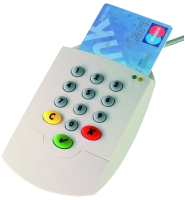 In fact, the "risk" of using only 2048 rather than 4096 bits in the smartcard may well be far outweighed by the benefits of hardware security (especially if a smartcard reader with pin-pad is used)
My own conclusion is that 2048 is not a dead duck and using this key length remains a valid decision and is very likely to remain so for the next 5 years at least. The US NIST makes a similar recommendation and suggests it will be safe until 2030, although it is the minimum key length they have recommended.
My feeling is that the Debian preference for 4096 bit PGP keys is not based solely on security, rather, it is also influenced by the fact that Debian is a project run by volunteers. Given this background, there is a perception that if everybody migrates from 1024 to 2048, then there would be another big migration effort to move all users from 2048 to 4096 and that those two migrations could be combined into a single effort going directly from 1024 to 4096, reducing the future workload of the volunteers who maintain the keyrings. This is a completely rational decision for administrative reasons, but it is not a decision that questions the security of using 2048 bit keys today. Therefore, people should not see Debian's preference to use 4096 bit keys as a hint that 2048 bit keys are fundamentally flawed.
Unlike the Debian keys (which are user keys), the CACert.org roots and Fedora archive signing keys are centrally managed keys with a long lifetime and none of the benefits of using 2048 bit keys is a compelling factor in those use cases.
Practical issues to consider when choosing key-length
Therefore, the choice of using 2048 or 4096 is not pre-determined, and it can be balanced with a range of other decisions:
 When the
 The purpose of a backup is to allow you to recover from a disaster with
reasonable cost and effort. If you delete a file you shouldn't have,
or make changes that you shouldn't have, backups are meant to save you
from having to re-create the file, or undo a large amount of steps.
Speaking very broadly, any copy of your live data is a backup, but this
is a uselessly broad definition. For example, if you use an automatic
synchronisation system such as Dropbox or git-annex, to keep your live
data in sync between two computers, you could pretend they're backups
of each other. However, unless the synchronisation also allows you to
keep a history of file versions, it's not a very good backup. If you
delete your precious file on one computer, and it gets then deleted on
the other computer as well, automatically, perhaps in seconds, then the
backup is not of much use.
Another common assumption is that a RAID array works as a backup. RAID
is an excellent technology that allows you to combine several hard disks
so that they protect you against loss of data in case of disk failure.
If one disk fails, the others have enough data to re-create the data on
the failed disk, using either full copies (RAID-1) or error correction
codes (RAID-5, RAID-6). This is not a backup. It doesn't protect you
against accidental file deletions. There is also no backup history.
A version control system is very much like a backup. It stores copies
of many of the versions of your project. However, in most version
control systems it's fairly easy to make changes that lose history. Ask
anyone who has used
 With the PRISM scandal, there has been some talk about encrypted
communication systems. For instance,
 I found the following news item; if you can read Spanish, you will most probably prefer

 One of my own contributions to the project has been the creation of
 Interesting times.. While the big disasters are ongoing, little ones have
been spicing up my life lately.
A pleasant week by the beach ended with a tropical storm passing over the
beach house. I've never experienced this before, and though Andrea was
diminished by passing over land, it was still more wind than I've ever
seen. I love wind, and this was thrilling, right on the edge of
danger but not quite there. At least, if you have sense to stay out of the
water. Leaving the beach, I heard of someone who tried to go surfing that
day, and drowned.
The night before last, I was startled to find nearly an inch of water
seeping up from underneath the tile floor of the kitchen. Probably it has
something to do with the pressure tank pumping system, which was repaired
while I was away, and means I actually have indoor running water here.
(Overrated.) This saw me scrambling to close every water valve, and out
with a flashlight at 2 am closing the cutoff at the 1000 gallon water
reservoir before it all drained into the house. While sopping up dozens of
gallons of water from the floor at 3 am probably doesn't sound like fun, I
found myself going through the motions elatedly.. Because this means I
finally am coming to understand the source of the damp that infests the
most earth-sheltered corner of this house. It's not condensation. It's bad
plumbing!
Then yesterday, I went out to try a dip in the river, stopped by the
neighborhood eatery and bait shop, and ended up sitting out on the back
deck eating ribs and listening to a band with "possum playboys" in their
name (which makes the full name fairly irrelevant), while looking out over
the river and the old-timey green metal bridge. Which was unexpected fun,
and the kind of thing you have to take in when it happens, but getting
stuck in a newly installed hole in my driveway was not. My car was
spinning, and I gave up and called it a night.
Here's the thing. I could feel my brain working on this stupid
"underpowered car is stuck in a small rut" issue all night long. Same
mental pathways activating that chew over bugs and design issues. Got up
this morning with a set of plans and contingency plans all ready to go. The
first one, of jacking it up and putting something under the tire was
stymied; it seems I am missing a jack. But the second, of digging out all
around the tire, and then filling in with gravel and cat litter (a tip from
some offroading website I blearily surfed last night), and then riding the
gas while releasing the bake, worked great.
All of which is to say, bring em on! But I still prefer my disasters in the
form of software bugs.
 Hi folks,
I used to work at F5, and I pulled a bunch of equipment out of the recycle bin while I was there in order to help me populate the customer end premesis device inventory for a carrier network / ISP I am setting up. They decided to terminate my employment at the end of August last year, and I ve been wondering what to do with all of this equipment. I figured that it s been long enough that I can give them a call, so I did. I asked them whether I should consider buying BIG-IP hardware off of e-Bay if it said that it did not come with a license. The customer service agent told me that I should probably not consider doing any such thing, since I would have to pay a hefty fee to F5 before they would even provide a license.
It looks like I d have to shell out fifty thousand dollars to get a proper F5 Networks Inc. license for these many surplus BIG-IP devices I have. I guess I ll just have to go with an improper (or maybe I mean not for profit) operating system like Debian. I wonder if I can get the current linux kernel to pick up these broadcom 10GE chips or whether I ll have to wait for someone to release Free as in speech firmware for them that I can make use of.
Do any of you DDs want a shell on a linux box with a 10-port 10GE switch attached by PCI-e? I bet I could get a Debian chroot environment running in the system s stock rescue firmware. I bet I could then determine why the watchdog timer keeps tripping when I boot with other kernels
If you decide to accept the offer of a shell on this box, please try to avoid rebooting it. It tends to pop my breakers and I have to run to the shop before the UPSs run out of juice.
 Nonetheless, the existence of this app may well be an even bigger problem for the NSA right now than it is for single women. US Government officials in damage control mode over the
 In one of the most remarkable cases, the
 Jessa is moving to Boston. Why is Jessa moving to Boston? To work for
Microsoft. What will she be doing for Microsoft? Studying how drag
queens use Facebook.
 Normally Skype isn't mentioned by name on this blog, but today I'm making an exception.
When a new scandal broke out in the Australian Army today, one of the first questions asked was how does it compare to the
 While the Skype scandal involved cadets behaving much like college kids elsewhere, this latest scandal involves the officer corp, the most senior officer implicated is allegedly a Lieutenant Colonel. Senior ranking officers like this have given many years of dedicated service to the country. They are widely respected and the vast majority of officers in these positions are unlikely to ever be implicated in such a scandal.
Officers are in leadership roles, it should be no surprise if they have top secret security clearances.
After the revelation that
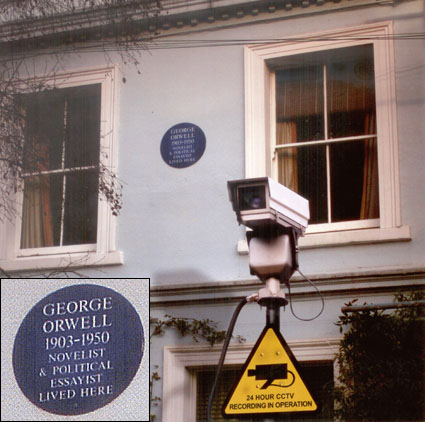 My hunch has just been exposed rather dramatically today:
 As an Australian, my own rights and those of my family are more heavily protected and respected living in Europe than if I lived in my country of birth. Australia does not have a
 Where did all the data go?
As the music industry has found out the hard way, digital data can be copied at will with the originator having no control.
The revelations that Britain and Australia are in on the PRISM shenanigans only confirms that this data is seen as a new form of currency for exchange in geo-political posturing. While used weapons take decades to work their way down the chain, data can spread at the speed of light.

 An upcoming release of
