Search Results: "mak"

19 January 2014

Matthias Klumpp: Tanglu Beta2 now available!

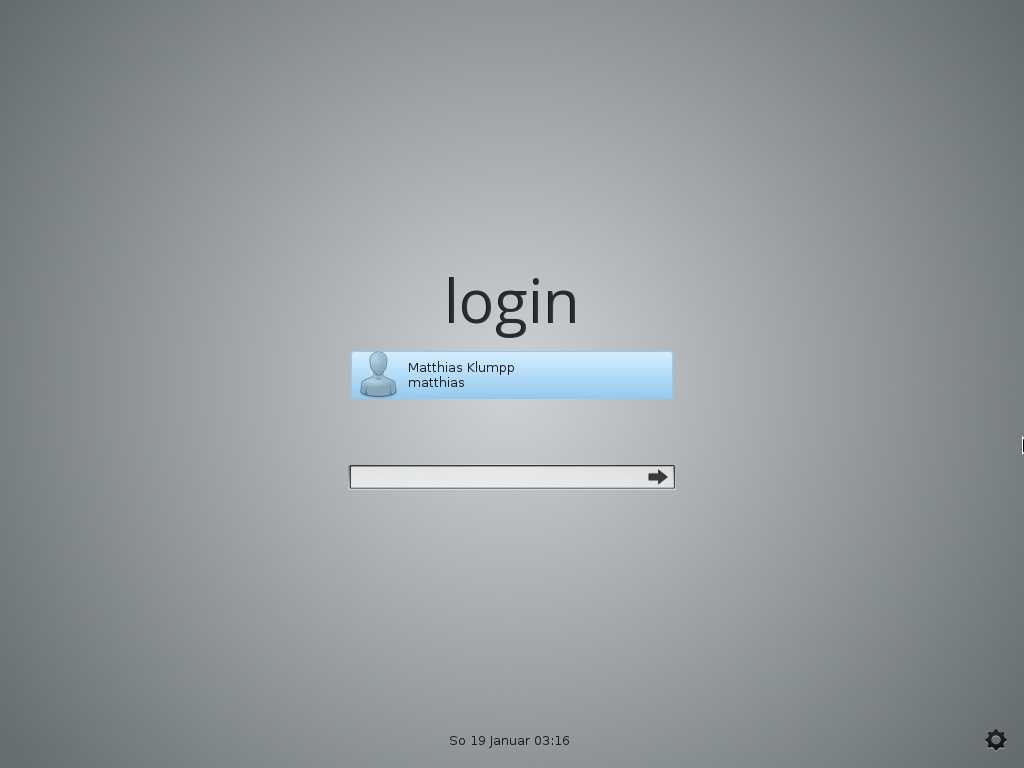
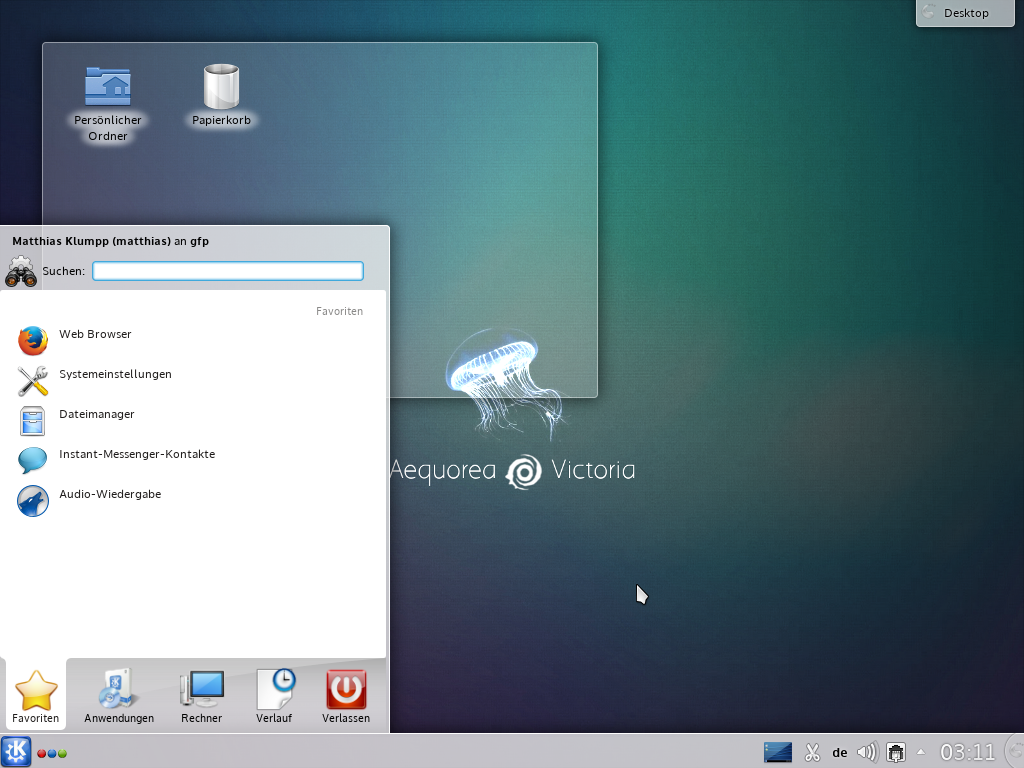
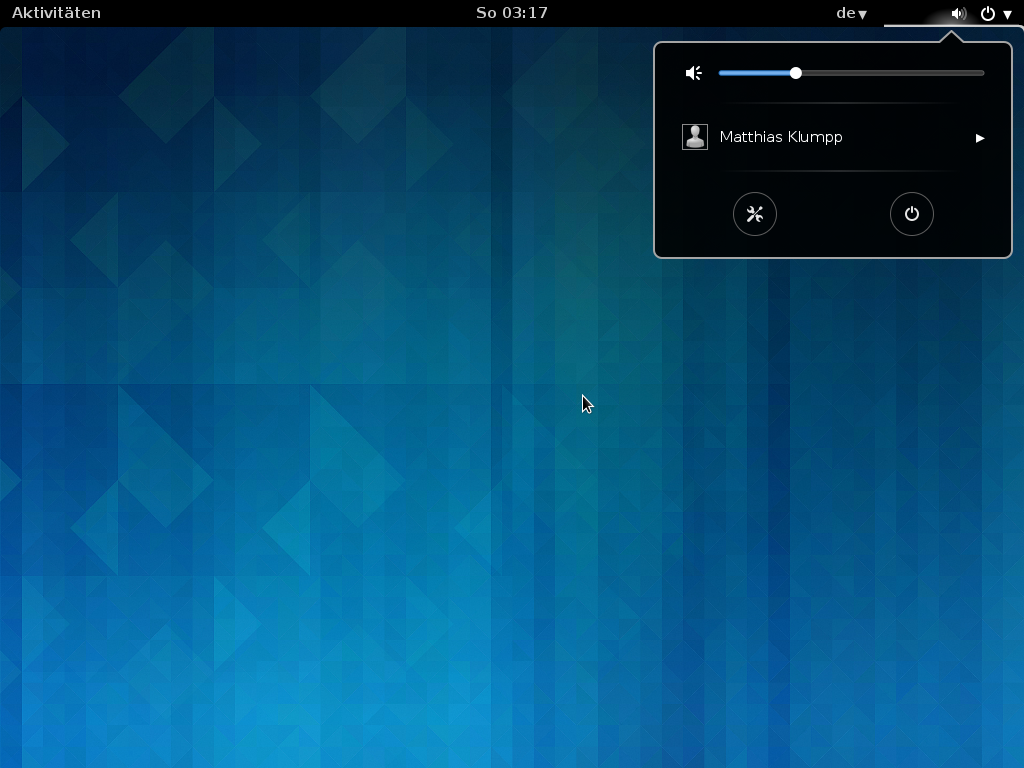
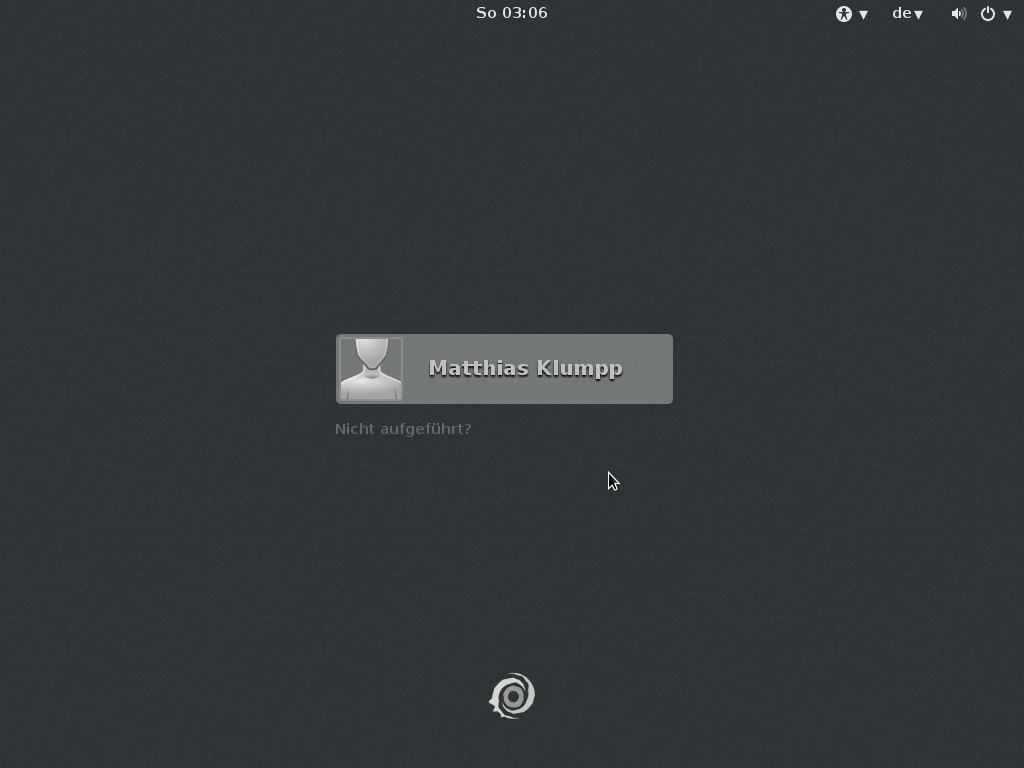
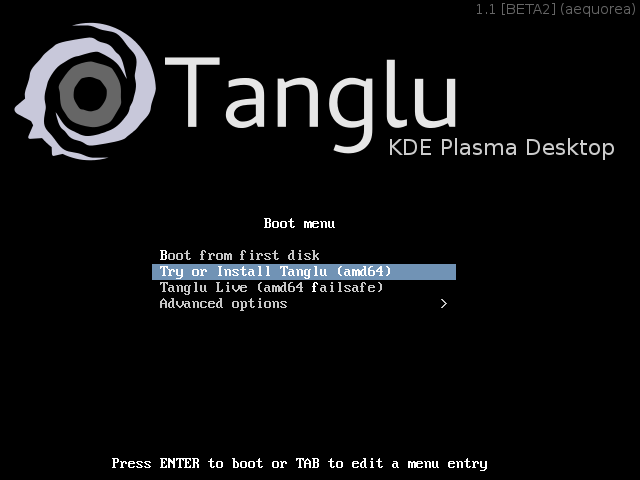
While writing this post, I recognize that we might need a news-blog for tanglu logo pureTanglu :-) Since yesterday, we have an (installable!) Beta2 release of Tanglu! Compared to the previous snapshot, it comes with a huge amount of improvements and bugfixes: Known issues: You can download the release from one of these mirrors: Mirror1 Mirror2 Mirror3 Additionally, there is now a release schedule for Tanglu Aequorea, and we will do a vote on the name for the next release soon (proposed names). As a note to Debian: systemd is working pretty well for Tanglu so far ;-) I am pretty happy with this Beta2 release, because Tanglu is shaping out to be the distribution we imagined in the beginning. Have fun! And as bonus, here are some images from Beta2: tanglu-beta2-kde0 tanglu-beta2-kde1 tanglu-beta2-kde2 tanglu-beta2-gnome2tanglu-beta2-gnome1

18 January 2014

Miriam Ruiz: L ve is a changing project


I have just uploaded a newer version of L ve to Debian, 0.9.0. As usual, this version breaks compatibility with the API of previous versions. Literally: L VE 0.9.0 breaks compatibility with nearly every 0.8.0 game . It s a hard to fix situation from a package maintainer s point of view, at least until they agree on a stable API, hopefully in a 1.0 version sometime. L ve has been in Debian official repositories since 2008. As major changes, we can see that it s using SDL2 and LuaJIT now. Depending on where the bottlenecks were in some of the demos and games, the performance might have improved a lot. The improvements have been a lot, and the structure of the API is more consistent and clean. Congratulations to everyone that has made it possible. On the bitter part, well, most of the previous games and demos will most likely not work any more without some changes in the code. As we don t have any reverse dependencies in the archive (yet), this won t cause any severe problems. But, of course, Debian is not an isolated island, and people might need to execute some old code without being able to migrate it. I have prepared some packages for older versions of L ve that might make the situation more bearable for some, until code is migrated to the new API. These versions can be co-installed with the latest version in the archive (0.9.0). I m not sure if it will be needed, but if it was, I might consider putting previous 0.8 version in the official repositories. I would prefer not to do it, though, as that would make me the de facto maintainer of the upstream code, as L ve community is moving forwards with newer versions.

Daniel Pocock: Debian.org enabled for SIP federation, who will be next?

The Debian community has announced the availability of SIP for all of approximately 1,000 Debian Developers who comprise the membership of the organisation. Benefits for the wider free software community This means packages providing SIP (and soon XMPP/Jabber) will hopefully be under much more scrutiny from developers in the lead up to the next major Debian release, codename jessie, expected early 2015. Although the user guide provides setup details for several packages and softphones, including Jitsi and Lumicall, the developers of the core SIP server have not indicated that any specific package should be preferred and it is up to each user to choose the client that best suits their needs. Who will be next? Discussion has already started about replicating this technology for the Fedora community. Users of the Lumicall softphone on Android are already able to make federated SIP calls, so just dialing username@debian.org from Lumicall is sufficient to make a call to a Debian Developer and see federated SIP working. People who want to try SIP federation for their workplace or any other organisation are encouraged to see the Real-time Communications (RTC) Quick start guide

Steve Kemp: Some software releases to change the topic.

Now it is time for me to go silent for a while, and not talk about jobs, unemployment, or puppies. This past week has also been full of software releases. Some of the public ones include:

Lumail - My console mail client, with integrated lua scripting
After three months of slow work I've issued a new release today. This release features several bugfixes for dealing with malformed MIME messages, and similar fun. The core set of lua primitives hasn't changed very much for a good six months now, which means I guess rightly what kind of things would be useful.
Templer - My perl-based static-site generator.
This was recently updated to add two new plugins to the core:
  • A redis plugin to allow you to set variables to values retrieved from redis.
  • An RSS plugin to allow you to inline (remote) RSS feeds into your static HTML. Useful for building news-pages, etc.
Although there are a million static-site generators I still think mine has value, and I am consistently using it.
Months ago when I said "I'm writing a mail-client", all I need to do is handle three cases: Then some new things like "Compose", "Reply", "Forward", I remember somebody commented along the lines of "Yeah, but MIME will make you hate your life" I laughed. Now I know better. Still it works, it works well, and I'm glad I did it.

Jonathan McDowell: Fixing my parents' ADSL

I was back at my parents' over Christmas, like usual. Before I got back my Dad had mentioned they'd been having ADSL stability issues. Previously I'd noticed some issues with keeping a connection up for more than a couple of days, but it had got so bad he was noticing problems during the day. The eventual resolution isn't going to surprise anyone who's dealt with these things before, but I went through a number of steps to try and improve things. Firstly, I arranged for a new router to be delivered before I got back. My old Netgear DG834G was still in use and while it didn't seem to have been the problem I'd been meaning to get something with 802.11n instead of the 802.11g it supports for a while. I ended up with a TP-Link TD-W8980, which has dual band wifi, ADSL2+, GigE switch and looked to have some basic OpenWRT support in case I want to play with that in the future. Switching over was relatively simple and as part of that procedure I also switched the ADSL microfilter in use (I've seen these fail before with no apparent cause). Once the new router was up I looked at trying to get some line statistics from it. Unfortunately although it supports SNMP I found it didn't provide the ADSL MIB, meaning I ended up doing some web scraping to get the upstream/downstream sync rates/SNR/attenuation details. Examination of these over the first day indicated an excessive amount of noise on the line. The ISP offer the ability in their web interface to change the target SNR for the line. I increased this from 6db to 9db in the hope of some extra stability. This resulted in a 2Mb/s drop in the sync speed for the line, but as this brought it down to 18Mb/s I wasn't too worried about that. Watching the stats for a further few days indicated that there were still regular periods of excessive noise, so I removed the faceplate from the NTE5 master BT socket, removing all extensions from the line. This resulted in regaining the 2Mb/s that had been lost from increasing the SNR target, and after watching the line for a few days confirmed that it had significantly decreased the noise levels. It turned out that the old external ringer that was already present on the line when my parents' moved in was still connected, although it had stopped working some time previously. Also there was an unused and much spliced extension in place. Removed both of these and replacing the NTE5 faceplate led to a line that was still stable. At the time of writing the connection has been up since before the new year, significantly longer than it had managed for some time. As I said at the start I doubt this comes as a surprise to anyone who's dealt with this sort of line issue before. It wasn't particularly surprising to me (other than the level of the noise present), but I went through each of the steps to try and be sure that I had isolated the root cause and could be sure things were actually better. It turned out that doing the screen scraping and graphing the results was a good way to verify this. Observe: adsl-noise.png The blue/red lines indicate the SNR for the upstream and downstream links - the initial lower area is when this was set to a 6db target, then later is a 9db target. Green are the forward error correction errors divided by 100 (to make everything fit better on the same graph). These are correctable, but still indicate issues. Yellow are CRC errors, indicating something that actually caused a problem. They can be clearly seen to correlate with the FEC errors, which makes sense. Notice the huge difference removing the extensions makes to both of these numbers. Also notice just how clear graphing the data makes things - it was easy to show my parents' the graph and indicate how things had been improved and should thus be better.

James Bromberger: Linux.conf.au 2014: LCA TV

The radio silence here on my blog has been not from lack of activity, but the inverse. Linux.conf.au chewed up the few remaining spare cycles I have had recently (after family and work), but not from organising the conference (been there, got the T-Shirt and the bag). So, let s do a run through of what has happened LCA2014 Perth has come and gone in pretty smooth fashion. A remarkable effort from the likes of the Perth crew of Luke, Paul, Euan, Leon, Jason, Michael, and a slew of volunteers who stepped up not to mention our interstate firends of Steve and Erin, Matthew, James I, Tim the Streaming guy and others, and our pro organisers at Manhattan Events. It was a reasonably smooth ride: the UWA campus was beautiful, the leacture theatres were workable, and the Octogon Theatre was at its best when filled with just shy of 500 like minded people and an accomplished person gracing the stage. What was impressive (to me, at least) was the effort of the AV team (which I was on the extreme edges of); videos of keynotes hit the Linux Australia mirror within hours of the event. Recording and live streaming of all keynotes and sessions happend almost flawlessly. Leon had built a reasonably robust video capture management system (eventstreamer on github) to ensure that people fresh to DVswitch had nothing break so bad it didn t automatically fix itself and all of this was monitored from the Operations Room (called the TAVNOC, which would have been the AV NOC, but somehow a loose reference to the UWA Tavern the Tav crept in there). Some 167 videos were made and uploaded most of this was also mirrored on campus before th end of the conference so attendees could load up their laptops with plenty of content for the return trip home. Euan s quick Blender work meant there was a nice intro and outro graphic, and Leon s scripting ensured that Zookeepr, the LCA conference manegment software, was the source of truth in getting all videos processed and tagged correctly. I was scheduled (and did give) a presentation at LCA 2014 about Debian on Amazon Web Services (on Thursday), and attended as many of the sessions as possible, but my good friend Michael Davies (LCA 2004 chair, and chair of the LCA Papers Committee for a good many years) had another role for this year. We wanted to capture some of the hallway track of Linux.conf.au that is missed in all the videos of presentations. And thus was born LCA TV. LCA TV consisted of the video equipment for an additional stream mixer host, cameras, cables and switches, hooking into the same streaming framework as the rest of the sessions. We took over a corner of the registration room (UWA Undercroft), brought in a few stage lights, a couch, coffee table, seat, some extra mics, and aimed to fill the session gaps with informal chats with some of the people at Linux.conf.au speakers, attendees, volunteers alike. And come they did. One or two interviews didn t succeed (this was an experiment), but in the end, we ve got over 20 interviews with some interesting people. These streamed out live to the people watching LCA from afar; those unable to make it to Perth in early January; but they were recorded too and we can start to watch them (see below) I was also lucky enough to mix the video for the three keynotes as well as the opening and closing, with very capable crew around the Octogon Theatre. As the curtain came down, and the 2014 crew took to the stage to be congratulated by the attendees, I couldn t help but feel a little bit proud and a touch nostalgic memories from 11 years earlier when LCA 2003 came to a close in the very same venue. So, before we head into the viewing season for LCA TV, let me thank all the volunteers who organised, the AV volunteers, the Registration volunteers, the UWA team who helped with Octogon, Networking, awesome CB Radios hooked up to the UWA repeated that worked all the way to the airport. Thanks to the Speakers who submitted proposals. The Speakers who were accepted, made the journey and took to the stage. The people who attended. The sponsors who help make this happen. All of the above helps share the knowledge, and ultimately, move the community forward. But my thanks to Luke and Paul for agreeing to stand there in the middle of all this madness and hive of semi structured activity that just worked. Please remember this was experimental; the noise was the buzz of the conference going on around us. There was pretty much only one person on the AV kit my thanks to Andrew Cooks who I ll dub as our sound editor, vision director, floor manager, and anything else. So who did we interview? One or two talks did not work, so appologies to those that are missing. Here s the playlist to start you off! Enjoy.
17 January 2014

Michael Stapelberg: debmirror 6x speed-up, or how to fill a 1 GBps Rackspace link

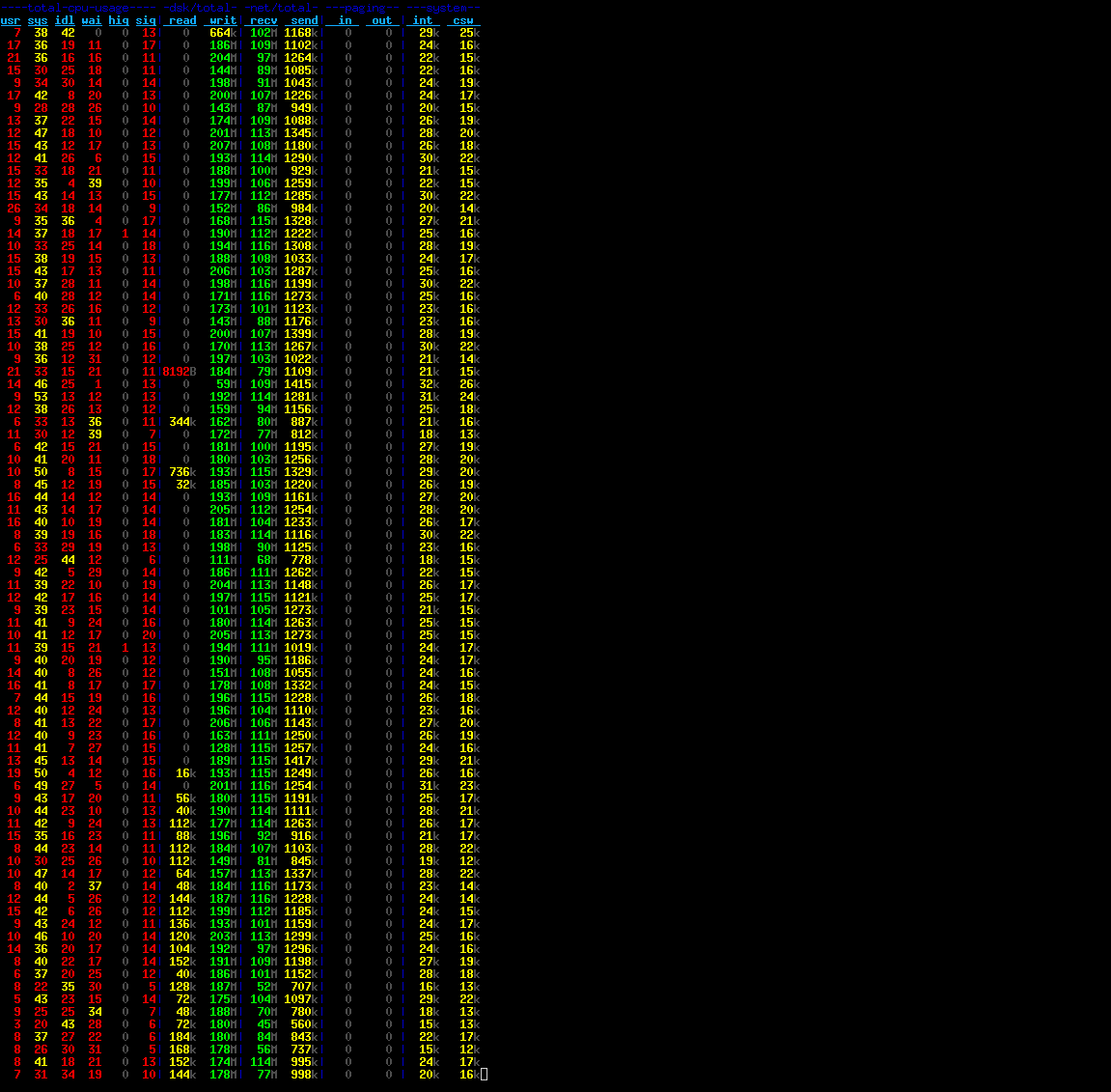
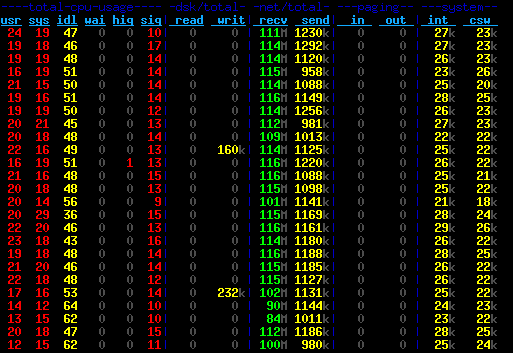
As explained in more detail in my my last blog post, Rackspace is providing hosting for Debian Code Search. For those of you who don t know, Rackspace is a cloud company that provides (among other services) a public cloud based on OpenStack. That means you can easily (and programmatically, if you want) bring up virtual servers, block storage volumes, configure the network between them, etc. As part of my initial performance experiments, I was running debmirror to clone a full Debian source mirror, and I noticed this took about one hour. Given that the peak network and storage write rates I have observed in my benchmarks are much higher, I wondered why it took so long. About 43 GB (that s how big the Debian sid sources are) in 60 minutes means 12 MB/s download rate, which is a bit more than a sustained 100 MBit/s connection. Luckily, at least the Rackspace servers I looked at are connected with 1 GBit/s to the internet, so more should be possible. Note that these are the old Rackspace servers. There is a new generation of servers, which I have not yet tried, that apparently offer even higher performance. After a brief look at the debmirror source code, I concluded that it can only use a single mirror and downloads files sequentially. There is some obvious potential for improvement here, and the fact that I could come up with a proof of concept written in Go to determine the files to download in a couple of minutes encouraged me to spend my saturday on this problem :-). About 7 hours later, my prototype had gone through various iterations and the code could sustain about 115 MB/s incoming bandwidth for most of the time. Here is a screenshot of dstat measuring the performance: Another 3 hours later, the most obvious bugs were weeded out and the code successfully cloned an entire mirror for the first time. I verified the correctness by running debmirror afterwards, and no files were downloaded that had not actually arrived on the mirror in the meantime. Features

  1. Parallel downloading from multiple mirrors.
    Of course, it is not guaranteed that the mirrors are consistent, but that is a solvable problem: whenever a non-200 HTTP response is encountered, the file is put back into the queue and gets rescheduled onto any mirror. Eventually, it will be rescheduled onto the mirror from which the sources.gz was downloaded, and that mirror has to have it.
  2. HTTP keep-alive and pipelining.
    debmirror also does HTTP keep-alive (I read that in the source, did not verify it), but it downloads files sequentially, i.e. it downloads one file, then sends the request for the next file. This means that after one file was received, no data is being received until another round-trip finished. For a lot of small files (think of .dsc and .debian.tar.gz files or small orig tarballs) that really adds up.
    Therefore, I use HTTP pipelining: I send 99 requests and then just receive all the responses at full speed. The magic number 99 comes from the fact that this is the smallest common denominator that all mirrors I have tested allow. nginx by default allows 100 requests.
  3. Request ordering.
    Instead of sending requests at random, I sort the download queue by size and make sure that the first request on each connection is for a big file. The intention is that TCP will adapt to that quickly and use a bigger window size as soon as possible instead of ramping up slower later on. Note that I have not actually measured the window sizes, so this is just a hunch.
    Another nice side-effect of the ordering is that the amount of data that is being sent through each connection is roughly equal. This means we don t waste TCP connections by sending 99 requests for small files only.
  4. (Goroutines).
    I m a bit hesitant to even write about it, so let s make it quick: Perl (and thus debmirror) is typically single-threaded, whereas Goroutines scale nicely on multi-core systems. I don t think it makes a big difference on the machines I am running this on as they have only two cores and are not maxed out on CPU usage at all. But maybe this will be more important for saturating 10 GBit/s? :-)
  5. (Mirror selection).
    It s not a feature of the code, but certainly relevant: of course I selected mirrors that are connected to the internet with at least a Gigabit link, serve files reasonably fast and have low latency to Rackspace s Chicago presence.
    Interestingly, while I used to think that universities have access to big uplinks and beefy machines, none of the mirrors that I use are located at a university. In fact, every mirror ending in .edu that I tried was really slow most of them providing something like 2-4 MB/s.
Results With the latest iteration of the code, I can clone an entire Debian source mirror with 43 GB of data in about 11.5 minutes, which corresponds to a 63 MB/s download rate:
GOMAXPROCS=20 ./dcs-debmirror -num_workers=20
68,24s user 384,90s system 66% cpu 11:25,97 total
It should be noted that the download rate is very low in the first couple of seconds since the sources.gz file is downloaded from a single mirror, then unpacked and analyzed. The peak download rate is about 115 MB/s (= 920 MBit/s) which is reasonably close at what you can achieve with a Gigabit link, I think. If the entire uplink was available to me at all time, the Rackspace hardware would be able to saturate that easily, both in terms of reading from the network and in terms of writing to block storage. I tested this on an SSD volume, but I see about 113 MB/s throughput with the internal hard disk, so I think that should work, too. There is another dstat screenshot of the final version (writing to disk). Perhaps even more interesting to some readers is the time for an incremental update:
GOMAXPROCS=20 ./dcs-debmirror -tcp_conns=20
2013/10/13 11:09:55 Downloading 307 files (447 MB total)
 
2013/10/13 11:10:04 All 307 files downloaded in 9.105605931s. Download rate is 49.186567 MB/s
4,91s user 3,99s system 67% cpu 13,205 total
The wall clock time is higher than the time reported by the code because the code does not count the time for downloading and parsing the sources.gz file. The entire program is about 400 lines (not SLOC) of Go code. It s part of the Debian Code Search source. If you re interested, you can read dcs-debmirror.go in your browser. Conclusions The outcome of this experiment is that I now know (and have shown!) that there are significantly more efficient ways of cloning a Debian mirror than what debmirror does. Furthermore, I have a good grasp on what kind of performance the Rackspace cloud offers and I am fairly happy with the numbers :-). My code is useful to me in context of Debian Code Search, but unless you need a sid-only source-only mirror, it will not be useful to you directly. Of course you can take the ideas that I implemented and implement them elsewhere personally, I don t plan to do that. If you have hardware, bandwidth and a use-case for 10 GBit/s+ mirroring, I d like to hear about it! :-)

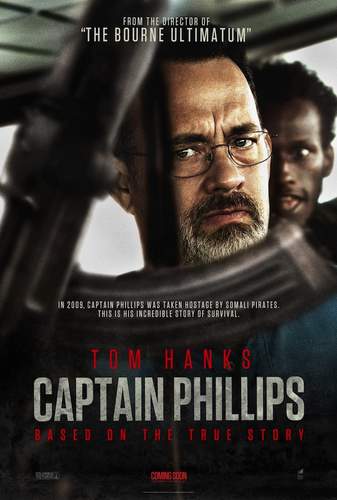
Chris Lamb: Captain Phillips: Pontius Pirate

https://chris-lamb.co.uk/wp-content/2014/phillips_b.jpg Somalia's chief exports appear to be morally-ambiguous Salon articles about piracy and sophomoric evidence against libertarianism. However, it is the former topic that Captain Phillips concerns itself with, inspired by the hijacking of the Maersk Alabama container ship in 2009. What is truth? In the end, Captain Phillips does not rise above Pontius Pilate in providing an answer, but it certainly tries using more refined instruments than irony or leaden sarcasm. This motif pervades the film. Obviously, it is based on a "true story" and brings aboard that baggage, but it also permeates the plot in a much deeper sense. For example, Phillips and the US Navy lie almost compulsively to the pirates, whilst the pirates only really lie once (where they put Phillips in greater danger). Notice further that Phillips only starts to tell the truth when he thinks all hope is lost. These telling observations become even more fascinating when you realise that they must be based on the testimony of the, well, liars. Clearly, deception is a weapon to be monopolised and there are few limits on what good guys can or should lie about if they believe they can save lives.

https://chris-lamb.co.uk/wp-content/2014/phillips_c.jpg

Even Phillip's nickname ("Irish") is a falsehood he straight-up admits he is an American citizen.

Futhermore, there is an utterly disarming epilogue where Phillips is being treated for shock by clinical efficient medical staff. Not only will this scuttle any "blanket around the shoulders" clich but is probably a highly accurate portrayal of what actually happens post-trauma. This echoes the kind of truth Werner Herzog aims for in his filmmaking as well his guilt-inducing duality between uncomfortable lingering and compulsive viewing. Lastly, a starter for a meta-discussion: can a film based on real-world events even be "spoilered"? Hearing headlines on the radio before you read your newspaper hardly robs you of a literary journey... Captain Phillips does have some quotidian problems. Firstly, the only tool for ratcheting up tension is for the Somalians to launch verbal broadsides at the Americans, with each compromise somehow escalating the situation. This technique is effective but well before the climatic rescue scene where it is really needed it has been subject to the most extreme diminishing returns. (I cannot be the first to notice the "Africans festooned with guns shouting incomphensively" trope I hope it is based on a Babel-esque mechanism of disorientation from miscommunication rather than anything more unsavoury.)
https://chris-lamb.co.uk/wp-content/2014/phillips_a.jpg

The racist idea that Africans prefer an AK-47 rotated about the Z-axis is socially constructed.

Secondly, the US Navy acts like a teacher with an Ofsted inspector observing quietly from the corner of the classroom; far too well-behaved it suspends belief, with no post-kill gloating or even the tiniest of post-arrest congratulations. Whilst nobody wants to see the Navy overreact badly to other military branches getting all the glory, nobody wants to see a suspiciously bland recruitment vehicle either. Paradoxically, this hermetic treatment made me unduly fascinated by them as if they were part of some military "uncanny valley". Two quick observations:
https://chris-lamb.co.uk/wp-content/2014/phillips_d.jpg

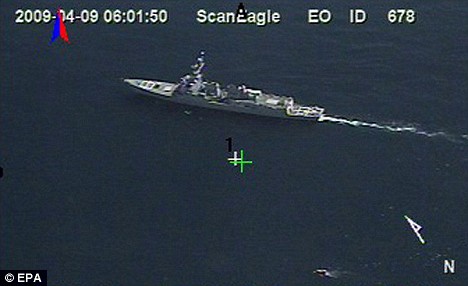
The drone footage: I'd love to write an essay about how Call of Duty might have influenced (or even be) cinema.

Finally, despite the title, the film is actually about two captains; the skillful liar Phillips and ... well, that's the real problem. Whilst Captain Muse is certainly no caricatured Hook, we are offered little depth beyond a "You're not just a fisherman" faux-revelation that leads nowhere. I was left inventing reasons for his akrasia so that he made any sense whatsoever. One could charitably argue that the film attempts to stay objective on Muse, but the inability for the film to take any obvious ethical stance actually seems to confuse and then compromise the narrative. What deeper truth is actually being revealed? Is this film or documentary? Worse still, the moral vacuum is invariably filled by the viewer's existing political outlook: are Somali pirates victims of circumstance who are forced into (alas, regrettable) swashbuckling adventures to pacify plank-threatening warlords? Or are they violent and dangerous criminals who habour an irrational resentment against the West, flimsily represented by material goods in shipping containers? Your improvised answer to this Rorschach test will always sit more haphazardly in the film than any pre-constructed treatment ever could. 6/10

Chris Lamb: Review: Captain Phillips (2013)

https://chris-lamb.co.uk/wp-content/2014/phillips_b.jpg Somalia's chief exports appear to be morally-ambiguous Salon articles about piracy and sophomoric evidence against libertarianism. However, it is the former topic that Captain Phillips concerns itself with, inspired by the hijacking of the Maersk Alabama container ship in 2009. What is truth? In the end, Captain Phillips does not rise above Pontius Pilate in providing an answer, but it certainly tries using more refined instruments than irony or leaden sarcasm. This motif pervades the film. Obviously, it is based on a "true story" and brings aboard all that well-travelled baggage, but it also permeates the plot in a much deeper sense. For example, Phillips and the US Navy lie almost compulsively to the pirates, whilst the pirates only really lie once where they put Phillips in greater danger. Notice further that Phillips only starts to tell the truth when he thinks all hope is lost. These telling observations become even more fascinating when you realise that they must be based on the testimony of the, well, liars. Clearly, deception is a weapon to be monopolised and there are few limits on what good guys can or should lie about if they believe they can save lives.

https://chris-lamb.co.uk/wp-content/2014/phillips_c.jpg

Even Phillip's nickname ("Irish") is a falsehood he straight-up admits he is an American citizen.

Lastly, there is an utterly disarming epilogue where Phillips is being treated for shock by clinical efficient medical staff. Not only will it scuttle any "blanket around the shoulders" clich but is probably a highly accurate portrayal of what actually happens post-trauma. This echoes the kind of truth Werner Herzog often aims for in his filmmaking as well his guilt-inducing duality between uncomfortable lingering and compulsive viewing. Another angle worthy of discussion: can a film based on real-world events even be "spoilered"? Hearing headlines on the before you read the newspaper hardly robs you of a literary journey... Captain Phillips does have some quotidian problems. Firstly, the only tool for ratcheting up tension is for the Somalians to launch verbal broadsides at the Americans, with each compromise somehow escalating the situation further. This technique is genuinely effective but well before the climatic rescue scene where it is really needed it has been subject to the most extreme diminishing returns. (I cannot be the first to notice the "Africans festooned with guns shouting incomphensively" trope I hope it is based on a Babel-esque mechanism of disorientation and miscommunication rather than anything, frankly, unsavoury.)
https://chris-lamb.co.uk/wp-content/2014/phillips_a.jpg

The racist idea that Africans prefer a AK-47 rotated about the Z-axis is socially constructed.

Secondly, the US Navy acts like a teacher with an Ofsted inspector observing quietly from the corner of the classroom; far too well-behaved it suspends belief, with no post-kill gloating or even the tiniest of post-arrest congratulations. Whilst nobody wants to see the Navy overreact badly to other military branches getting all the glory, nobody wants to see a suspiciously bland recruitment vehicle either. Paradoxically, this hermetic treatment made me unduly fascinated by them, as if they were part of some military "uncanny valley". Two quick observations:
https://chris-lamb.co.uk/wp-content/2014/phillips_d.jpg

The drone footage: I'd love to read (or write) an essay about how Call of Duty might have influenced cinema.

Finally, despite the title, the film is actually about two captains; the skillful liar Phillips and ... well, that's the real problem. Whilst Captain Muse is certainly no caricatured Hook, we are offered little depth beyond a "You're not just a fisherman" faux-revelation that leads nowhere. I was left inventing reasons for his akrasia so that he made any sense whatsoever. One could charitably argue that the film attempts to stay objective on Muse, but the inability for the film to take any obvious ethical stance actually seems to confuse and then compromise the narrative. What deeper truth is actually being revealed? Is this film or documentary? Worse still, the moral vacuum is invariably filled by the viewer's existing political outlook: are Somali pirates victims of circumstance who are forced into (alas, regrettable) swashbuckling adventures to pacify plank-threatening warlords? Or are they violent and dangerous criminals who habour an irrational resentment against the West, flimsily represented by material goods in shipping containers? Your improvised answer to this Rorschach test will always sit more haphazardly in the film than any pre-constructed treatment ever could. 6/10

16 January 2014

Andrew Pollock: [life] And now for something completely different...

After 8 years, February 6 will be my last day with Google. The hardest pill to swallow with the end of my marriage was the reduction in my time with Zoe. It was one thing to lose my wife, but to lose 50% of my daughter as well has been, and will continue to be, a struggle for me. 2014 is the last year before Zoe starts in Prep (Queensland's school grade before "one"). This is my last opportunity to be able to have a big chunk of time with her before she gets swallowed up by the school system. It's ridiculous to be sticking her in full-time long day care if I have an alternative. And I do have an alternative. I'm in the fortunate financial position of not having a mortgage, or any debt to speak of, and a modest amount of savings. I shall be Daddy Day Care. It had always been my career goal in life to be a stay at home Dad. I'd wanted to have another child and be the one to stay at home and look after the kids, and allow Sarah to resume her career. Obviously none of that worked out, but there's no reason why I can't be a stay at home Dad for at least this year. Zoe's at a wonderful age now. We can have a lot of fun together this year. She's going to be in a 5 day a fortnight Kindergarten program (Monday, Tuesday and every other Wednesday) between 8:20am to 2:30pm, so I'm planning on using one of those days for Debian contributions, one of those days for exploring some of the crazy startup ideas I have rattling around in my head, and every second Wednesday to keep the home tidy. It's going to be a fun, different year for Zoe and I, and I'm so looking forward to it. I'm planning on doing lots of activities from Play at Home Mom, doing lots of baking and we'll be doing Science Friday's. If anyone knows where I can get a toddler-sized lab coat, drop me a line. I'm hoping I can make time to write up our activities for posterity as well.

15 January 2014

Russ Allbery: kadmin-remctl 3.6

Another minor tweak to the remctl backend for Kerberos administrative functions that we use at Stanford. This still isn't the long-awaited rewrite that might make this more generally useful outside of Stanford's specific requirements. This release adds support for setting a password expiration on newly-created accounts via a configuration setting in the local configuration file. The password expiration period can be configured per-instance. (Eventually, this should be handled via policy support instead, but this was easier for my immediate purposes.) This release also maps password quality error messages on create or reset_passwd to generic messages in the Heimdal backend. This is only of interest to sites such as ours that have patched Heimdal to do password quality checks for administrative actions as well as user-initiated password changes. The kadmin protocol unfortunately doesn't have a way to pass back the verbose password quality error. You can get the latest version from the kadmin-remctl distribution page.

Bits from Debian: Call for Proposals for the MiniDebConf 2014 Barcelona

Debian Women will hold a MiniDebConf in Barcelona on March 15-16, 2014. Everyone is invited to both talks and social events, but the speakers will all be people who identify themselves as female. This is not a conference about women in Free Software, or women in Debian, rather a usual Debian Mini-DebConf where all the speakers are women. Debian Women invites submissions of proposals for papers, presentations, discussion sessions and tutorials for the event. Submissions are not limited to traditional talks: you could propose a performance, an art installation, a debate or anything else. All talks are welcome, whether newbie or very advanced level. Please, forward this call to potential speakers and help us make this event a great success! Please send your proposals to proposals@bcn2014.mini.debconf.org. Don't forget to include in your message: your name or nick the title of the event, description, language, and any other information that might be useful. Please submit your proposal(s) as soon as possible. For more information, visit the website of the event: http://bcn2014.mini.debconf.org We hope to see you in Barcelona!

Sylvestre Ledru: Some thoughts concerning LLVM & Clang and their evolutions: Release of LLVM & Clang 3.4

We just released LLVM & Clang 3.4 (already available in Debian Jessie and Ubuntu Trusty). The clang new release introduces some more warning and error detections. The point of the blog post is not to detail the changes (LLVM / Clang) but more to take a step back on the LLVM and Clang toolchains, usages and dissemination. For the last couple years, I have been presenting our work on the Debian side to make Clang part of the Debian infrastructure. I add the chance to speak at many events (Debconf 12 & 13, FOSDEM 2013, Linux Plumbers 2013, Distro recipes, etc). I even had Linus Torvalds attending to one of these talks (and proposing new approach). I had many feedback from the Debian/Ubuntu communities but also from other communities.
More and more projects are using Clang as part of their workflows, in term of development, production and QA. For example, some of them are running continuous integration using clang instead of gcc, others are running scan-build (Wireshark or LLVM itself) or Address Sanitizer (asan) (Firefox for example), etc.
More and more actors are moving from gcc to clang for their developments (Sony with their PS4, Chrome under Mac OS X, Apple, the Linux Kernel with the LLVMLinux project, FreeBSD, etc).
I stopped counting the number of times when people answered me "Yeh, I am now using Clang" when I said I am involved upstream. In parallel, more and more projects are using LLVM as a backend or computing engine and, in the meantime, getting more and more attraction (not because they are based on LLVM but just because they are great projects). For example, Mesa (llvmpipe), Julia, Rust, Emscripten or Native Client (NaCL) are excellent examples of this. The two last are excellent proofs that LLVM based technologies have an impact which goes further than geek-tools and will be used on a daily basis by millions of users. I also saw an interesting and growing number of new projects using libclang and libTooling. My feeling is that the lack of plugin capabilities in gcc for a long time and, now, its current complexity limited the innovation in term of compilation capabilities, analysis and fun tools. The features and the quality of this library are enabling new developments and I am sure we will see more and more excellent tools based on this library during 2014.
For example, the LLVM toolchain ships Clang modernize and clang format and some cool projects like include-what-you-use, DXR, OCLint or creduce are emerging. Thanks to this great competition, gcc is also improving (ASAN, JIT, better warnings, etc), remaining still relevant as before. No doubt that 2014 will be a great year for compilers.

Wouter Verhelst: Buildbot

I'd set up buildbot at a customer last monday. Since that resulted in me understanding the thing, I also set up an instance for nbd. The need for this had become apparent after the last upload to unstable failed on a disconcertingly large number of architectures. Apart from the fact that it uses python (and wants me to write python in its config file, grrr), it's a fairly nice system; pretty lightweight (it runs on barbershop, which is a QNAP TS419U, for crying out loud), yet still flexible enough that I don't have to jump through hoops to do normal things which the developer hadn't thought about. I also just noticed that if you push multiple commits to a git repository at once (put otherwise, if buildbots notices multiple new revisions when it checks), it will make sure that all revisions get built at least once. Of course it would have been nice if it would pick the fastest machines to do the "older" revisions rather than "whoever happens to be first", but that doesn't really matter all that much. Meanwhile, the bug that makes building 3.6 impossible on some architectures has been fixed. It turned out to be an LFS-issue, which is specific to 32-bit machines; and as my own machine runs amd64, well...

14 January 2014

Carl Chenet: My Debian contributions in January 2014

Follow me on Identi.ca or Twitter One of my resolutions for 2014 is to keep trying harder to talk about my Debian contributions. So here it is, on a monthly basis this time I hope, quite short this month because I m leaving for holidays at the end of the week and I think I won t have time to contribute more this month. Debian packages Below are some packages I updated recently: 1. Brebis, the fully automated backup checker I successively packaged Brebis, the fully automated backup checker, versions 0.6 to 0.9 (the latter is today in Debian Sid and Jessie) since my last Debian activities blog posts (in french).
brebis-brown-big-logo

Anisette, the mascot of the Brebis Project

2. Pycallgraph, a Python library that creates call graphs for Python programs Pycallgraph is one of the first Debian packages I have been maintaining. So when I noticed it was upgraded after so much time I was really eager to package the new version 1.0.1. Now available in Debian Sid! Just belown an example of the generated graph for the application Belier, a sysadmin tool. pycallgraph 3. Belier, the SSH connection generation tool Nothing really new for Belier, the SSH connection generation tool but I updated the package in order to update the configuration of the Debian package and get rid of some warning messages. Kind of maintenance job I kept avoiding and avoiding, until now. Bug report I d like to take a few seconds to talk about an interesting bug report about the need for a nagios3-dev package I created asking for a new nagios3-dev or nagios3-headers package to offer a simple access to the headers of Nagios for the developers of Nagios external modules. In Nagios, some headers are generated after the ./configure, meaning it may be platform dependent. I (and not only me, the same request was active already by someone other Nagios module developers) thought it was simple to ask the Nagios3 Debian package maintainer to offer these files in a dedicated package. It seems until now people just add the missing files in tarball of their app or in their Debian packages, even if these Nagios headers are not really part of this application. In my opinion, that s why Build-Depends packages are for, don t you think? nagios It seems it is not so simple. I could not understand why it was more important to prevent Debian users who need these files to access these files in a convenient way than letting them to put theses files in there own source tarball/repository. The maintainer told me it could break things. Sure. But we all know an external module of any app often relies on a really specific version of this app. That s nothing new, thats how external modules work. That s not every apps in the world which could provide a stable API to ease the development of external modules. But at least they give access to their dev files or headers when they are FOSS. But feel free to explain to me. After all, the bug reports are still not tagged as "won t fix" ;) Your turn now :) I d be delighted to have your opinions in the comments of this blog post.

Keith Packard: gl-and-bitmaps

X bitmaps vs OpenGL Of course, you all know that X started life as a monochrome window system for the VS100. Back then, bitmaps and rasterops were cool; you could do all kinds of things simple bit operations. Things changed, and eventually X bitmaps became useful only off-screen for clip masks, text and stipples. These days, you ll rarely see anyone using a bitmap everything we used to use bitmaps for has gone all alpha-values on us. In OpenGL, there aren t any bitmaps. About the most bitmap-like object you ll find is an A8 texture, holding 8 bits of alpha value for each pixel. There s no way to draw to or texture from anything where each pixel is represented as a single bit. So, as Eric goes about improving Glamor, he got a bit stuck with bitmaps. We could either: I thought the latter choice would be the best plan directly share the same object between CPU and GPU rendering, avoiding all reformatting as things move around in the server. Why is this non-trivial? Usually, you can flip formats around with reckless abandon in X, it has separate bits-per-pixel and depth values everywhere. That s how we do things like 32 bits-per-pixel RGB surfaces; we just report them as depth 24 and everyone is happy. Bitmaps are special though. The X protocol has separate (and overly complicated) image formats for single bit images, and those have to be packed 1 bit per pixel. Within the server, bitmaps are used for drawing core text, stippling and creating clip masks. They re the lingua franca of image formats, allowing you to translate between depths by pulling a single plane out of a source image and painting it into a destination of arbitrary depth. As such, the frame buffer rendering code in the server assumes that bitmaps are always 1 bit per pixel. Given that it must deal with 1bpp images on the wire, and given the history of X, it certainly made sense at the time to simplify the code with this assumption. A blast from the past I d actually looked into doing this before. As part of the DECstation line, DEC built the MX monochrome frame buffer board, and to save money, they actually created it by populating a single bit in each byte rather than packed into 8 pixels per byte. I have this vague memory that they were able to use only 4 memory chips this way. The original X driver for this exposed a depth-8 static color format because of the assumptions made by the (then current) CFB code about bitmap formats. Jim Gettys wandered over to MIT while the MX frame buffer was in design and asked how hard it would be to support it as a monochrome device instead of the depth-8 static color format. At the time, fixing CFB would have been a huge effort, and there wasn t any infrastructure for separating the wire image format from the internal pixmap format. So, we gave up and left things looking weird to applications. Hacking FB These days, the amount of frame buffer code in the X server is dramatically less; CFB and MFB have been replaced with the smaller (and more general) FB code. It turns out that the number of places which need to deal with individual bits in a bitmap are now limited to a few stippling and CopyPlane functions. And, in those functions, the number of individual read operations from the bitmap are few in number. Each of those fetches looked like:
bits = READ(src++)
All I needed to do was make this operation return 32 bits by pulling one bit from each of 8 separate 32-bit chunks and merge them together. The first thing to do was to pad the pixmap out to a 32 byte boundary, rather than a 32 bit boundary. This ensured that I would always be able to fetch data from the bitmap in 8 32-bit chunks. Next, I simply replaced the READ macro call with:
    bits = fb_stip_read(src, srcBpp);
    src += srcBpp;
The new fb_stip_read function checks srcBpp and packs things together for 8bpp images:
/*
 * Given a depth 1, 8bpp stipple, pull out
 * a full FbStip worth of packed bits
 */
static inline FbStip
fb_pack_stip_8_1(FbStip *bits)  
    FbStip      r = 0;
    int         i;
    for (i = 0; i < 8; i++)  
        FbStip  b;
        uint8_t p;
        b = FB_READ(bits++);
#if BITMAP_BIT_ORDER == LSBFirst
        p = (b & 1)   ((b >> 7) & 2)   ((b >> 14) & 4)   ((b >> 21) & 8);
        r  = p << (i << 2);
#else
        p = (b & 0x80000000)   ((b << 7) & 0x40000000)  
            ((b << 14) & 0x20000000)   ((b << 21) & 0x10000000);
        r  = p >> (i << 2);
#endif
     
    return r;
 
/*
 * Return packed stipple bits from src
 */
static inline FbStip
fb_stip_read(FbStip *bits, int bpp)
 
    switch (bpp)  
    default:
        return FB_READ(bits);
    case 8:
        return fb_pack_stip_8_1(bits);
     
 
It turns into a fairly hefty amount of code, but the number of places this ends up being used is pretty small, so it shouldn t increase the size of the server by much. Of course, I ve only tested the LSBFirst case, but I think the MSBFirst code is correct. I ve sent the patches to do this to the xorg-devel mailing list, and they re also on the depth1 branch in my repository
git://people.freedesktop.org/~keithp/xserver.git
Testing Eric also hacked up the test suite to be runnable by piglit, and I ve run it in that mode against these changes. I had made a few mistakes, and the test suite caught them nicely. Let s hope this adventure helps Eric out as he continues to improve Glamor.

13 January 2014

Daniel Pocock: PostFinance, where is my money?

Update: my money has been returned by PostFinance very soon after this blog appeared There's no better way to get the year off to a good start than finding money has gone missing from your bank account. Where I live in Switzerland, it is mandatory for everybody to make a monthly payment for health insurance (as it is mandatory, it is basically a tax, like the monthly council tax in England). Just like British council tax, the premiums go up each year and every person in the country has to log into their bank's web site and change their standing order. A few days after doing just that, I went back in to the web site to make another payment and noticed that the first health insurance payment for 2014 had been duplicated on two consecutive days, the 30th and 31st of December: I immediately sent them an email to alert them to the fault and ask for the duplicate transaction to be corrected. Normally, when a company makes a mistake, it would be fixed within a couple of days and certainly never reach my blog. Instead of getting a helpful reply, I was astonished to receive this:
There has been a misunderstanding when you have set up your standing order.
You selected "First execution" December 30, 2013 and then "monthly execution" 31. The system has followed your instruction and it results a double execution December 30 and 31.
Unfortunately, we are not able to return you the amount.
Great, apparently it is all my own fault. I thought "monthly" would mean one payment in each one month but apparently not everybody uses the same definition of monthly. (Actually, banks do have systems such as the 360 day calendar but that is another story). So let's look at these faulty instructions I supposedly gave. I immediately went back to the standing order page to take a screenshot. I even compared the page in English (my default language, which they are kind enough to let me use) and French (one of the four official languages of the Swiss Confederation) and I found they say much the same thing: Note: exact amounts and account numbers concealed The form is relatively clear: I authorised a monthly payment (Periodicite: mensuel) with the first (Premiere) payment on 30.12.2013 and then, or so I believed (and still do) a following payment (ensuite) on the 31st of each month, with the last payment at the end of November, for 12 payments in total. Simple, right? Where it says ensuite le 31, I sincerely believe that means the second payment is on 31 January, but Postfinance seem to be arguing that I meant the 31 December: just one day, rather than one month, after the first payment. Delaying tactics I replied to their email, telling them explicitly that I had authorized a monthly payment only and demanding the immediate return of the duplicate payment. When I got their next reply, I didn't know what to think:

We are pleased to do the necessary to revoke the transfer to SWICA. This will take at least two weeks.
On the one hand, it appears they are now starting to accept they may have made a blunder. But two more weeks? This was already 10 days after the money went missing. Do they even know what is wrong with their system? It doesn't give me confidence. I wrote back again and insisted that this is their error and that an immediate correction is required. Pass the buck, take three Today, another reply came back. After almost 14 days, I've now got three fob-off excuse mails and none of my money returned:
We did the request at SWICA to send back the money on your account on the 8th January 2014. The decision will be taken by them if they agree to send back this amount.
Unfortunately, we cannot do more except waiting their answer. You can call them and explain them the situation. With your call, maybe the reimbursement could be faster.
Why is it in the hands of the health insurance company? It is not their fault that Postfinance has a problem processing standing orders. Why do I have to waste my time chasing people, will I get compensation for that? Am I the only victim? With many people configuring their new health insurance payments at this time of the year, I can imagine that there may be other victims of this fault too. Are they all being fobbed off with these excuses? Some may not even realize if they don't check their account closely. What next? Sure, maybe I can just cancel the next health insurance payment: but why should I have that inconvenience? What exactly was I supposed to put on that form to not make this mistake they suggest I made? If I cancel the next payment like they suggest and then set up the payment again from March, how can I be sure the same duplication won't happen again? Using customers as unpaid QA testers Many leading financial organisations have experienced teams of developers, QA testers, and comprehensive regime of simulation/testing with paid participants to ensure their systems are reliable and as friendly and accurate as possible. Here, it feels like PostFinance has skipped all that, deploying a form that is ambiguous at best and they are using real customers like me to test the system and report the bugs. Normally organisations pay me for doing that very same task as part of my job as a software engineer. Not only have Postfinance taken almost 200 CHF of my money, but they have wasted my time with their strategy of fobbing me off and at the same time they are probably sending my feedback to their developers instead of paying a QA tester to check their systems. You be the judge What is your opinion?
  • Daniel can't use a web form, it is definitely Daniel's mistake, nobody else would make a mistake like that
  • The Postfinance form is ambiguous and so it is probably their fault and they should give back the money, it is likely these are cut and paste emails they send to all the customers who are duped by the form
  • Postfinance is completely wrong. Monthly means one payment each month.

12 January 2014

Enrico Zini: liberation-vs-expectations

Liberation vs expectations I feel like I found a key struggle: liberation vs expectations. Many ideas liberate me, like poliamory, atheism, anarchism, nonviolent communication, sexual liberation, discordianism, free software, nonjudgemental environments, E-prime, sillyness, love, pataphysics, dada, constructivism, rolling naked in the mud, fantasy, bdsm exploration, pansexuality, this very idea that i'm trying to describe, crying, laughing, mindfulness, what have you. Sometimes however they become an end rather than a mean, they give me expectations and judgements, and take some other freedom away. I feel like I found where to draw a line: It's the point inbetween freeing myself of my limits and making myself some new ones. It's one of those epiphany moments. Weeeeeee!

11 January 2014

Steve Kemp: Some productive work

Having decided to take a fortnight off, between looking for a new job, I assumed I'd spend a while coding. Happily my wife, who is a (medical) doctor, has been home recently so we've got to spend time together instead. I'm currently pondering projects which will be small enough to be complete in a week, but large enough to be useful. Thus far I've just reimplemented RSS -> chat which I liked a lot at Bytemark. I have my own chat-server setup, which doesn't have any users but myself. Instead it has a bunch of rooms setup, and different rooms get different messages. I've now created a new "RSS" room, and a bunch of RSS feeds get announced there when new posts appear. It's a useful thing if you like following feeds, and happen to have a chat-room setup. I use Prosody as my chat-server, and I use my http2xmpp code to implement a simple HTTP-POST to XMPP broadcast mechanism. The new script is included as examples/rss-announcer and just polls RSS feeds - URLs which haven't been broadcast previously are posted to the HTTP-server, and thus get injected into the chatroom. A little convoluted, but simple to understand. This time round I'm using Redis to keep track of which URLs have been seen already. Beyond that I've been doing a bit of work for friends, and have recently setup an nginx server which will handle 3000+ simultaneous connections. Not too bad, but I'm sure we can make it do better - another server running on BigV which is nice to see :) I'll be handling a few Squeeze -> Wheezy upgrades in the next week too, setting up backups, and doing some other related "consultation". If I thought there was a big enough market locally I might consider doing that full-time, but I suspect that relying upon random work wouldn't work long-term.

David Moreno: i3 respect

Hey Michael Stapelberg, thanks for creating i3 and making me believe again that people have a clue and things can be done just right (specially when it comes to something easily done crappy like window managers). Thanks for just getting it all right, and not only from the software point of view, but also for the community, the style around it, etc. Kudos.

Next.

Previous.