Jonathan Carter: Free Software Activities for 2020-03

DPL Campaign 2020 On the 12th of March, I posted my self-nomination for the Debian Project Leader election. This is the second time I m running for DPL, and you can read my platform here. The campaign period covered the second half of the month, where I answered a bunch of questions on the debian-vote list. The voting period is currently open and ends on 18 April.
Debian Social

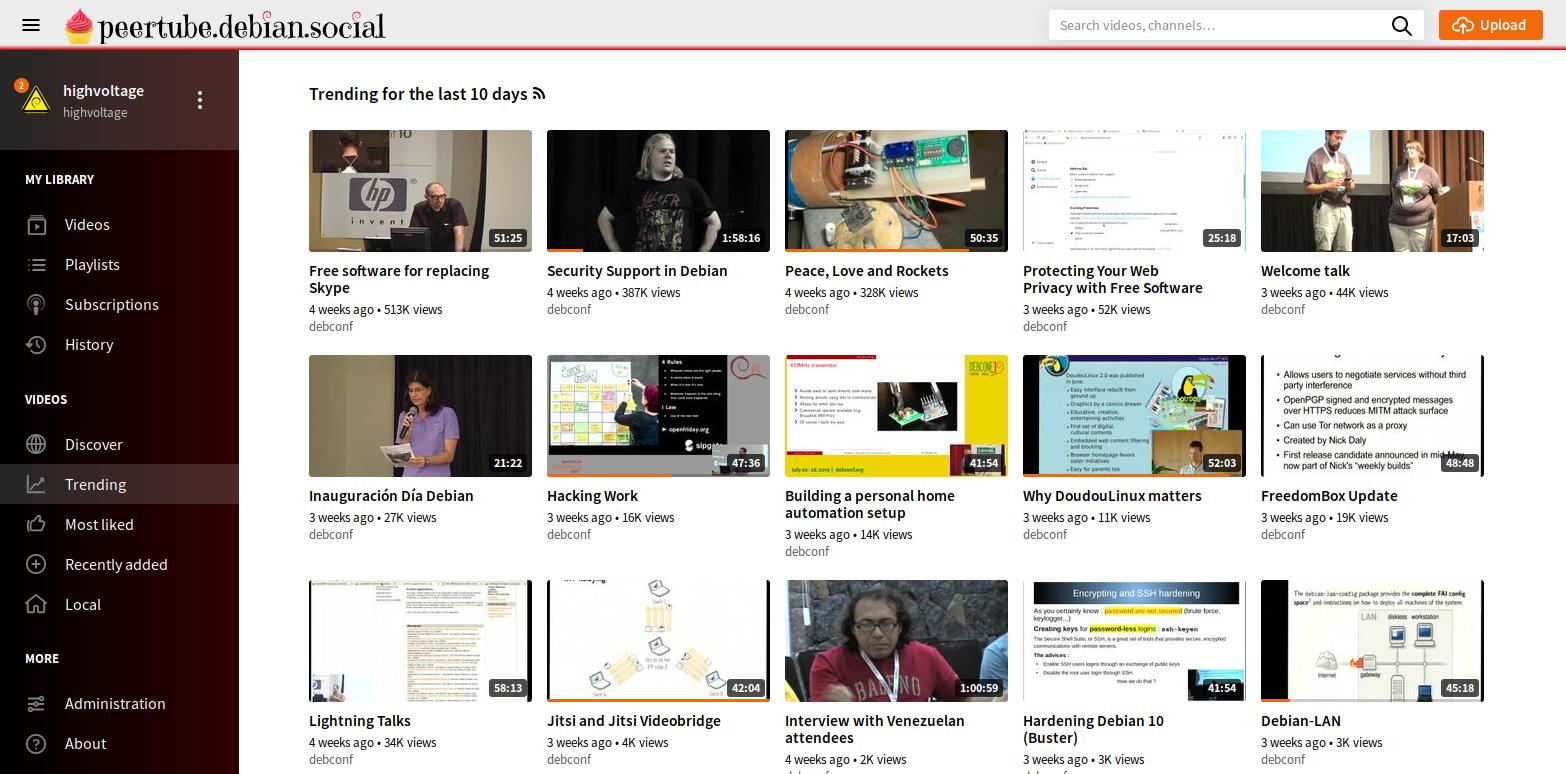
- Team accounts. Some Debian teams already have accounts on a myriad of other platforms. For example, the Debian Med team has a blog on blogspot and the Debian Publicity team has an account on framapiaf.org. I d really like to make our Debian Social platforms (like our WordPress multisite instance and Pleroma) a place where Debian teams can trust to host their updates on. It would also be nice to have more teams use these that don t have a particularly big online presence right now, like Debian women or a DPL team account.
- Developer demos. I enjoy the videos that the GNOME project makes that demos the new features in every release, as they ve done for the 3.36 release. I think it would be great if people in Debian could make some small videos to demo the things that they ve been working on. It doesn t have to be as flashy or elaborate as the GNOME video I ve linked to, but sometimes just a minute long demo can be really useful to convey a new idea or feature or to show progress that has been made.
- User participation. YouTube is full of videos that review Debian or demo how to customise it. It would be great if we could get users to post such videos to PeerTube. For Pixelfed, I d like to try out projects like users posting pictures of their computers with freshly installed Debian systems with a hashtag like #WeInstallDebian, then at the end of the year we could build a nice big mosaic that contains these images. Might make a cool poster for events too.
- DebConf and other Debian events. We used to use a Gallery instance to host DebConf photos, but it s always been a bit cumbersome managing photos there and Gallery hasn t updated it s UI much over the years causing it to fall a bit out of favour with attendees at these events. As a result, photos end up getting lost in WhatsApp/Telegram/Signal groups, Twitter, Facebook, etc. I hope that we could get enough users signed up on the Pixelfed instance that it could become the de facto standard for posting Debian event photos to. Having a known central place to post these make them easier to find as well.
Debian packaging I had the sense that there were fewer upstream releases this month. I suspect that everyone was busy figuring out how to cope during Covid-19 lockdowns taking place all over the world. 2020-03-02: Upload package calamares (3.2.10-1) to Debian unstable. 2020-03-10: Upload package gnome-shell-extension-dash-to-panel (29-1) to Debian unstable. 2020-03-10: Upload package gnome-shell-extension-draw-on-your-screen (5.1-1) to Debian unstable. 2020-03-28: Upload package gnome-shell-extension-dash-to-panel (31-1) to Debian unstable. 2020-03-28: Upload package gnome-shell-extension-draw-on-your-screen (6-1) to Debian unstable. 2020-03-28: Update package python3-flask-autoindexing packaging, not releasing due to licensing change that needs further clarification. (GitHub issue #55). 2020-03-28: Upload package gamemode (1.5.1-1) to Debian unstable. 2020-03-28: Upload package calamares (3.2.21-1) to Debian unstable.
Debian mentoring 2020-03-03: Sponsor package python-jaraco.functools (3.0.0-1) (Python team request). 2020-03-03: Review python-ftputil (3.4-1) (Needs some more work) (Python team request). 2020-03-04: Sponsor package pythonmagick (0.9.19-6) for Debian unstable (Python team request). 2020-03-23: Sponsor package bitwise (0.41-1) for Debian unstable (Email request). 2020-03-23: Sponsor package gpxpy (1.4.0-1) for Debian unstable (Python team request). 2020-03-28: Sponsor package gpxpy (1.4.0-2) for Debian unstable (Python team request). 2020-03-28: Sponsor package celery (4.4.2-1) for Debian unstable (Python team request). 2020-03-28: Sponsor package buildbot (2.7.0-1) for Debian unstable (Python team request).
 I released version 2.1 of

 This waterfall is beside my yard. When it's running, I know my
 Before uploading stuff to Debian, I build in a clean chroot, and then
run piuparts, autopkgtest and lintian. For some of my packages this
can take around an hour on my laptop, which is fairly old. Normally I
don t mind waiting, but sometimes I want to put my laptop away, and
then it would be good for things to be faster. It occurred to me that
I could make use of my


 A new (upstream)
 I have written before about getting updated packages for
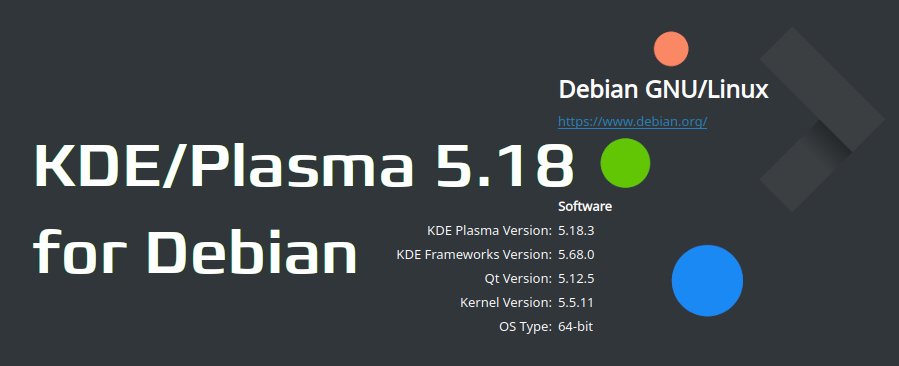 For those in hurry: new binary packages that can be used on both Debian/testing and Debian/sid can be obtained for both i386 and amd64 archs here:
Debian/testing:
 Now I'm not sure if someone enocountered the same issue, or people just registered
random domains just because they could. I found registrations for
 Sometimes, in our day-to-day-interactions, communication becomes disruptive,
resembling a chain of reactions to reactions to reactions. Sometimes we lose the
capacity to express our ideas and feelings. Sometimes communication just gets stuck,
maybe conflict breaks out. When we see these same patterns over and over again, this
might be due to the ever same roles that we adopt and play. Learnt in
childhood, these roles are deeply ingrained in our adult selves, and acted out
as unconscious scripts. Until we notice and work on them.
This is a post inspired by contents from my mediation training.
In the 1960s, Stephen Karpman has thought of a model of human communication
that maps the destructive interactions which occur between people. This map is known as the
 This post is an open question to the wide range of GNU/Linux site admins out there. Possibly some of you have the joy of maintaining GNU/Linux also on user endpoint devices (i.e. user workstations, user notebooks, etc.), not only on corporate servers.
TL;DR; In the context of a customer project, I am researching ways of mimicking (or inventing anew) a feature well known (and sometimes also well hated) from the MS Windows world: Roaming User Profiles. If anyone does have any input on that, please contact me (OFTC/Freenode IRC, Telegram, email). I am curious what your solution may be.
The Use Case Scenario
In my use case, all user machines shall be mobile (notebooks, convertibles, etc). The machines maybe on-site most of the time, but they need offline capabilities so that the users can transparently move off-site and continue their work. At the same time, a copy of the home directory (or the home directory itself) shall be stored on some backend fileservers (for central backups as well as for providing the possibility to the user to login to another machine and be up-and-running +/- out-of-the-box).
The Vision
Initial Login
Ideally, I'd like to have a low level file system feature for this that handles it all. On corporate user logon (which must take place on-site and uses some LDAP database as backend), the user credentials get cached locally (and get re-mapped and re-cached with every on-site login later on), and the home directory gets mounted from a remote server at first.
Shortly after having logged in everything in the user's home gets sync'ed to a local cache in the background without the user noticing. At the end of the sync a GUI user notification would be nice, e.g. like "All user data has been cached locally, you are good to go and leave off-site now with this machine."
Moving Off-Site
A day later, the user may be travelling or such, the user logs into the machine again, the machine senses being offline or on some alien (not corporate) network, but the user can just continue their work, all in local cache.
Several days later, the same user with the same machine returns back to office, logs into the machine again, and immediately after login, all cached data gets synced back to the user's server filespace.
Possible Conflict Policies
Now there might be cases where the user has been working locally for a while and all the profile data received slight changes. The user might have had the possibility to log into other corporate servers from the alien network he*she is on and with that login, some user profile files probably will have gotten changed.
Regarding client-server sync policies, one could now enforce a client-always-wins policy that leads to changes being dropped server-side once the user's mobile workstation returns back on-site. One could also set up a bi-directional sync policy for normal data files, but a client-always-wins policy for configuration files (.files and .folders). Etc.pp.
Request for Feedback and Comments
I could go on further and further with making up edges and corner cases of all this. We had a little discussion on this some days ago on the #debian-devel IRC channel already. Thanks to all contributors to that discussion.
And again, if you have solved the above riddle on your site and are corporate-wise allowed to share the concept, I'd be happy about your feedback.
Plese get in touch!
light+love
 I was assigned 20 hours of work by Freexian's Debian LTS initiative,
and carried over 0.75 hours from February. I only worked 12.25
hours this month, so I will carry over 8.5 hours to April.
I issued
 Vitaly Bragilevsky,
