Search Results: "nic"

6 January 2012

Matthew Garrett: Firmware bugs considered enraging

Part of our work to make it possible to use UEFI Secure Boot on Linux has been to improve our EFI variable support code. Right now this has a hardcoded assumption that variables are 1024 bytes or smaller, which was true in pre-1.0 versions of the EFI spec. Modern implementations allow the maximum variable size to be determined by the hardware, and with implementations using large key sizes and hashes 1024 bytes isn't really going to cut it. My first attempt at this was a little ugly but also fell foul of the fact that sysfs only allows writes of up to the size of a page - so 4KB on most of the platforms we're caring about. So I've now reimplemented it as a filesystem[1], which is trickier but avoids this problem nicely.

Things were almost working fine - I could read variables of arbitrary sizes, and I could write to existing variables. I was just finishing hooking up new variable creation, but in the process accidentally set the contents of the Boot0002 variable to 0xffffffff 0xffffffff 0x00000000. Boot* variables provide the UEFI firmware with the different configured boot devices on the system - they can point either at a raw device or at a bootloader on a device, and they can do so using various different namespaces. They have a defined format, as documented in chapter 9 of the UEFI spec. At boot time the boot manager reads the variables and attempts to boot from them in a configured order as found in the BootOrder variable.

Now, obviously, 0xffffffff 0x00000000 is unlikely to conform to the specification. And when I rebooted the machine, it gave me a flashing cursor and did nothing. Fair enough - I should be able to choose another boot path from the boot manager. Except the boot manager behaves identically, and I get a flashing cursor and nothing else.

I reported this to the EDK2 development list, and Andrew Fish (who invented EFI back in the 90s) pointed me at the code that's probably responsible. It's in the BDS (Boot Device Selection) library that's part of the UEFI reference implementation from Intel, and you can find it here. The relevant function is BdsLibVariableToOption, which is as follows (with irrelevant bits elided):
BdsLibVariableToOption (
  IN OUT LIST_ENTRY                   *BdsCommonOptionList,
  IN  CHAR16                          *VariableName
  )
 
  UINT16                    FilePathSize;
  UINT8                     *Variable;
  UINT8                     *TempPtr;
  UINTN                     VariableSize;
  VOID                      *LoadOptions;
  UINT32                    LoadOptionsSize;
  CHAR16                    *Description;
  //
  // Read the variable. We will never free this data.
  //
  Variable = BdsLibGetVariableAndSize (
              VariableName,
              &gEfiGlobalVariableGuid,
              &VariableSize
              );
  if (Variable == NULL)  
    return NULL;
   
So so far so good - we read the variable from flash and put it in Variable, Variable is now 0xffffffff 0xffffffff 0x00000000. If it hadn't existed we'd have skipped over and continued. VariableSize is 12.
  //
  // Get the option attribute
  //
  TempPtr   =  Variable;
  Attribute =  *(UINT32 *) Variable;
  TempPtr   += sizeof (UINT32);
Attribute is now 0xffffffff and TempPtr points to Variable + 4.
  //
  // Get the option's device path size
  //
  FilePathSize =  *(UINT16 *) TempPtr;
  TempPtr      += sizeof (UINT16);
FilePathSize is 0xffff, TempPtr points to Variable + 6.
  //
  // Get the option's description string size
  //
  TempPtr     += StrSize ((CHAR16 *) TempPtr);
TempPtr points to 0xffff 0x0000, so StrSize (which is basically strlen) will be 4. TempPtr now points to Variable + 10.
  //
  // Get the option's device path
  //
  DevicePath =  (EFI_DEVICE_PATH_PROTOCOL *) TempPtr;
  TempPtr    += FilePathSize;
TempPtr now points to Variable + 65545 (FilePathSize is 0xffff).
  LoadOptions     = TempPtr;
  LoadOptionsSize = (UINT32) (VariableSize - (UINTN) (TempPtr - Variable));
LoadOptionsSize is now 12 - (Variable + 65545 - Variable), or 12 - 65545, or -65533. But it's cast to an unsigned 32 bit integer, so it's actually 4294901763.
  Option->LoadOptions = AllocateZeroPool (LoadOptionsSize);
  ASSERT(Option->LoadOptions != NULL);
We attempt to allocate just under 4GB of RAM. This probably fails - if it does the boot manager exits. This probably means game over. But if it somehow succeeds:
CopyMem (Option->LoadOptions, LoadOptions, LoadOptionsSize);
we then proceed to read almost 4GB of content from uninitialised addresses, and since Variable was probably allocated below 4GB that almost certainly includes all of your PCI space (which is typically still below 4GB) and bits of your hardware probably generate very unhappy signals on the bus and you lose anyway.

So now I have a machine that won't boot, and the clear CMOS jumper doesn't clear the flash contents so I have no idea how to recover from it. And because this code is present in the Intel reference implementation, doing the same thing on most other UEFI machines would probably have the same outcome. Thankfully, it's not something people are likely to do by accident - using any of the standard interfaces will always generate a valid entry, so you could only trigger this when modifying variables by hand. But now I need to set up another test machine.

[1] All code in Linux will evolve until the point where it's implemented as a filesystem.

comment count unavailable comments

Mirco Bauer: Smuxi 0.8.9 "One Giant Leap" Release

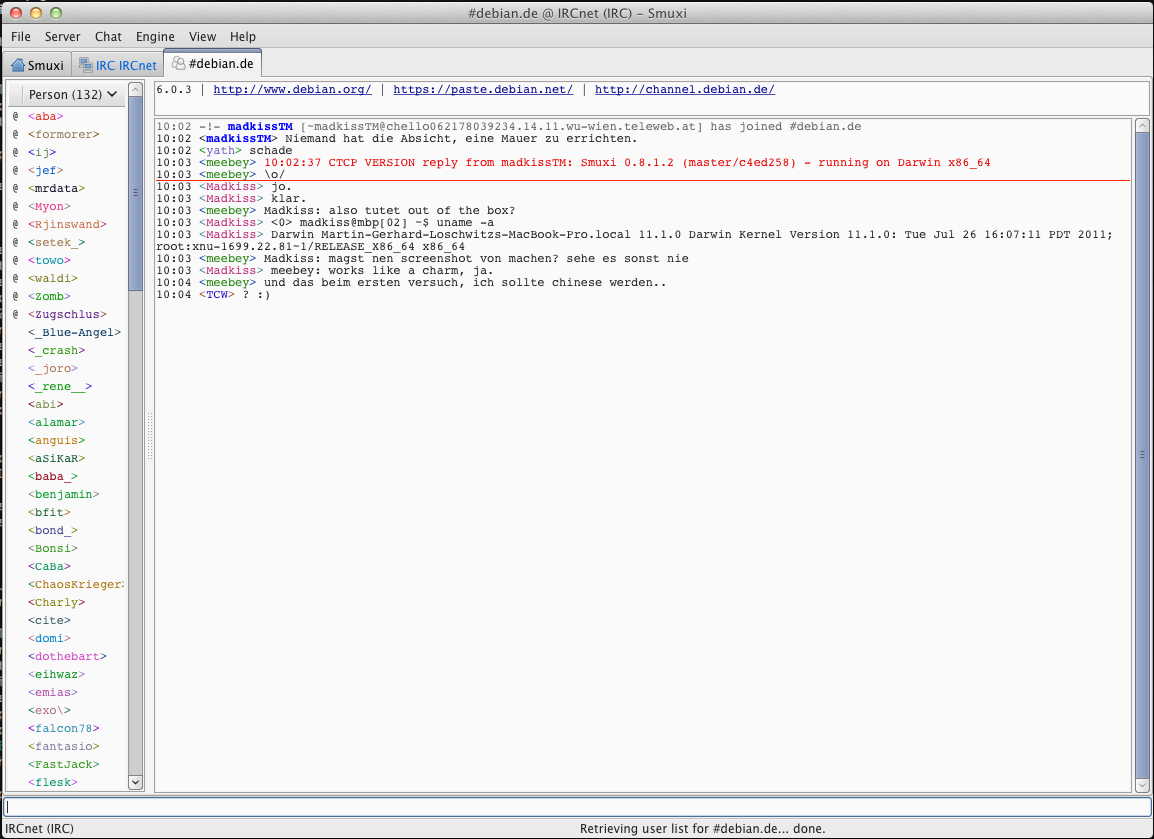
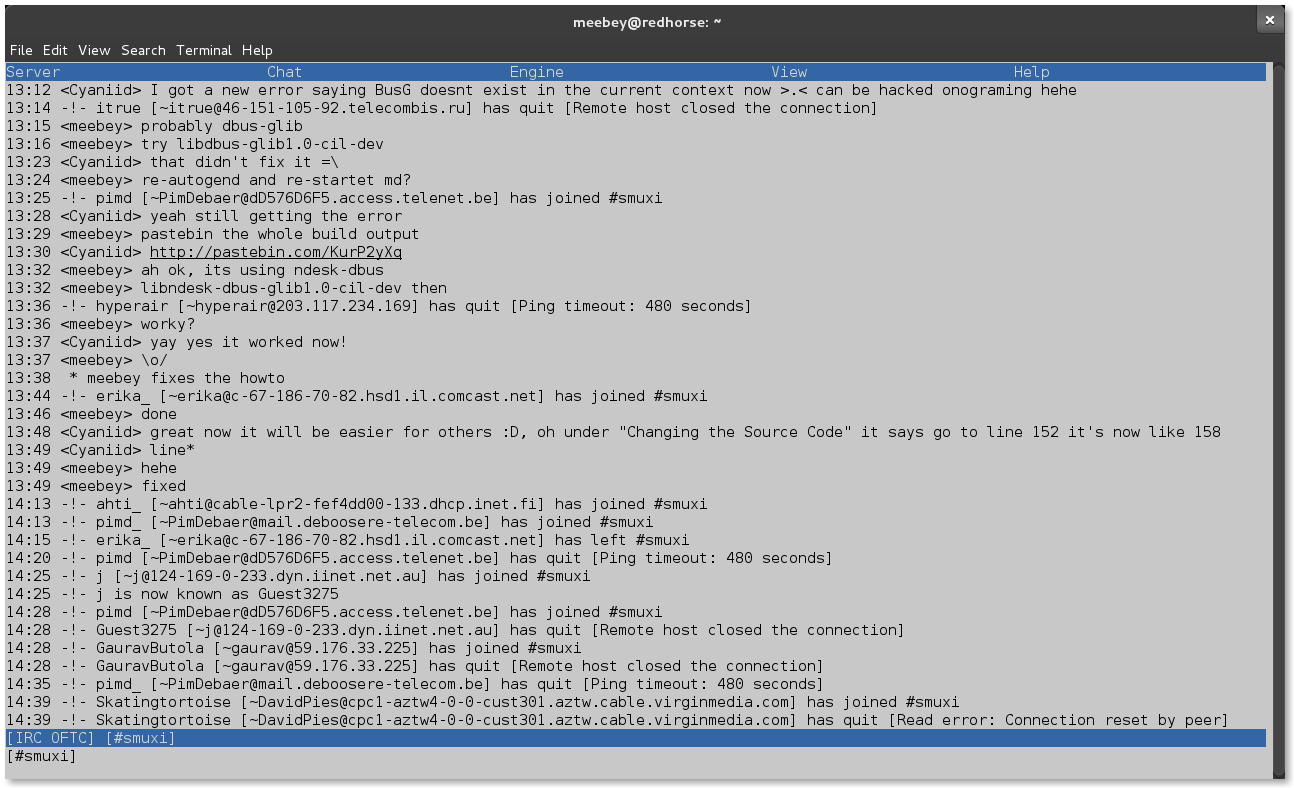
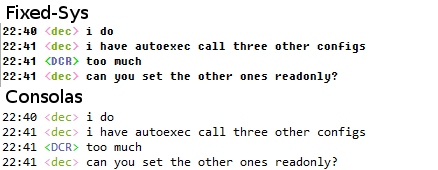
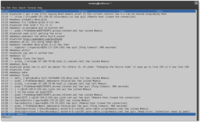
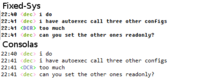
Just in time for 2012 I am very pleased to announce Smuxi 0.8.9 codenamed "One Giant Leap". During the development 56 bug reports and 33 feature requests in 593 commits were worked on making this release a major milestone of the Smuxi project. At the Chaos Communication Congress (28C3) in Berlin I was doing the final development sprint to get 0.8.9 done, which was a very intensive and refreshing experience. Here are the highlights of this release: Development Builds / Rolling Releases After the 0.8 release it became clear that a continious and short development -> test cycle is important to keep the project going quickly. At some point I have received requests if the project is dead while it was more active than ever. The lack of new releases (for about 15 months) lead to this wrong impression. Thus Smuxi can be obtained from development builds now. This includes daily builds for Debian (Squeeze, Wheezy, Sid), Ubuntu (Lucid, Maverick, Natty, Oneiric, Precise) and Windows. Thanks goes to Hannes Tismer for providing the Windows autobuilder and to Canonical for the PPA autobuilder. We invite everyone to use these daily builds to keep track of the latest development of Smuxi. Issues and regressions are fixed in a very short period (usually the same day). Thanks to our users who ran development builds and reported issues which led to many bug fixes prior to this release. On the other hand one of my New Year's resolutions are to "release early, release often" So there should be no nerd left behind... Screenshot of Smuxi 0.8.9 on Mac OS X Mac OS X support With the help of Steven McGrath (Steve[cug]) who created the initial Mac OS X installer for Smuxi we now have official support for Mac OS X. The download page contains the instructions how to obtain and install Smuxi on Mac OS X. This makes the 4th platform where Smuxi can be used on besides Windows, Linux and *BSD. For now Smuxi 0.8.9 doesn't feel as native as it could as it relies on the GTK+ port. We are looking into enhancing the experience though, just stay tuned. Chat History on Disk (Beta) The most exciting feature in this release I think are the "persistent message buffers". With this feature I could solve one of the biggest drawbacks IRC ever had: IRC does not retain any messages you have sent or received. All messages are only relayed to all users. The issue is that if you close your IRC client or even just leave a channel, all your received messages are gone. One workaround in most clients was to create text log files which then contains the chat history, but it is annoying and not user-friendly to open some text file somewhere from your disk to read the history outside of your IRC client. Now with Smuxi 0.8.9 you no longer have this issue, all chat history gets automatically written and read to a message database when you start Smuxi, join channels or open queries! As this feature is not fully stable yet it is not enabled by default. If you want to try it go to: File -> Preferences -> Interface and change "Persistency Type" from "Volatile" to "Persistent", hit OK and restart Smuxi. Now all messages are saved into the database and will automatically be shown. Click here for a screencast of this feature Jabber / XMPP Support (Beta) You probably have friends not on IRC and Twitter, say on Jabber, gTalk or Facebook? This is where the new XMPP engine of Smuxi comes into play. You can send and receive messages to/from them now! The implementation is far from complete, though. It has no buddy list for example and needs only to be treated as a technical preview of what will be coming in future Smuxi releases. Click here for a screencast of this feature Screenshot of Smuxi's Text Interface Text Interface (Alpha) This is the first release that contains a text frontend based on the STFL library. STFL is a library that uses ncurses to draw text based user interface using a markup language (like Glade for GTK+). This frontend is in early alpha state and lacks a lot of interface features and likes to crash. It is still included to attract potential developers who want to enhance this frontend. The frontend can be enabled by passing --enable-frontend-stfl to the configure script and then by executing smuxi-frontend-stfl. NetworkManager Support Everyone with a laptop knows how annoying it can be to suspend and resume when network based applications suddenly go crazy because they have lost the connection and either spew errors or take forever to get back in shape. Smuxi will now detect the network state right away with the help of the new Network Manager support. It automatically reconnects when needed right away for you. Next Generation Internet Support You can now connect to IRC servers using the IPv6 protocol Enhanced Find Group Chat Support Users had real issues to find out how to search for channels, thus Bianca Mix added a neat feature. The /list command will now simply open the Find Group Chat dialog for you. This way everyone used to IRC will find it in no time. Searching for channels on freenode wasn't working correctly, this is now fixed. Smuxi also supports the SAFELIST feature of the IRC protocol now which allows to retrieve a full channel list and do client side search which makes consecutive searches much faster. Enhanced Windows Experience For a long time you could not use Smuxi with the latest GTK# version of 2.12.10 on Windows. The issue was that Smuxi relied on SVG support which 2.12.10 no longer had. Smuxi is no longer using SVG instead it uses pre-scaled PNG images thus it works just fine with GTK# 2.12.10 on Windows now. At the same time the issue that the maximized state of the main window was left when restoring from task bar is fixed with GTK# 2.12.10. Screenshot of Fixed-Sys vs Consolas font Smuxi used by default the FixedSys font on Windows to give it the typical IRC look most people are used to. Since Windows Vista there is a better console-like font available called Consolas. Smuxi will now use the Consolas font instead on Windows Vista or later. Another important enhancement is that Smuxi no longer has issues with multiple GTK+ installs on the same computer, which was getting more common with more popular ported GTK+ applications such as GIMP or Pidgin. SSL for IRC fixed IRC with SSL was only working with the default port of 6697. Thanks to Jo Shields now any port can be used with SSL. Crash Related Issues Desktop notifications could crash Smuxi in case of errors related to the notification system or an absent notification daemon. There was a chance that the crash dialog simply disappeared which made reporting bugs more difficult no longer happens. Rapid use of ctrl+w, /window close (Jimmie Elvenmark) and opening the Find Group Chat dialog on the Smuxi tab do no longer crash. Also number-only network names, /network switch freenode and GTK+ install without SVG support no longer lead into a crash. Enhanced Notice Handling Notices will no longer open query tabs for you instead it will show them on tabs you share with the person who sent it with the server tab as fallback. This also avoids ChanServ, NickServ and spammy IRCop tabs. Twitter fixes Twitter made some changes to their API which broke the Twitter support of Smuxi 0.8. This was taken care of and also a few other issues were solved allowing Smuxi 0.8.9 to work smoothly with Twitter again. Extended Keybindings Smuxi allows now to use the ctrl+tab / ctrl+shift+tab and ctrl+n / ctrl+p keys to switch tabs. The keybindings still work even with a hidden menu bar now. Smuxi Server specific highlights More interactive and much faster synchronization When connecting to a smuxi-server you had to wait till Smuxi finished the synchronization before you could use the interface. Also you could not tell how far the synchronization was and just had to wait till it was completed. With Smuxi 0.8.9 the connect just takes a few seconds and all chats are synchronized in the background with a progress bar so you can use the interface from the first moment on and know how far it is. The speed how much it takes to synchronize all chats also reduced drastictly by 400%! Click here for a screencast of this feature More background communication When using a smuxi-server the interface sometimes had load times like when opening the preferences or when using the nickname completion (Andrew Kannan). These operations are done in the background and no longer blocks the interface. Also when the communication is lost to the smuxi-server the frontend will now automatically reconnect to it in the background. Low Bandwidth Mode When it comes to mobile internet connectivity such as UMTS/HSDPA, Edge and GRPS it can be a real pain to connect to the smuxi-server as it has to transfer all the messages over that. If you just want to ask someone you know then you don't need any old messages to do that. With the "Low Bandwidth Mode" you can now connect to the smuxi-server without loading old messages which makes the connect very quick. You find this option in the engine connect dialog. Stable Protocol Initially I didn't plan to make the protocol of Smuxi stable before the 0.9 release, but as it turned out the 0.8 protocol was good enough to still use it and for that reason Smuxi 0.8.9 is still compatible with 0.8. The 0.8 protocol will see no breakages, instead the next protocol will be on-top or opt-in of the current one. This means future Smuxi versions stay compatible with it. Shutdown Command You can now shutdown the smuxi-server if you like using the /shutdown command. It it safe to use the command, it will do a clean shutdown sequence for you. For example it makes sure all messages are written to disk in the case of enabled persistent message buffers. If you have your smuxi-server daemon monitored (e.g. with runit) it can also automatically be restarted and upgraded this way. Built-in SSH Keyfile Support It is no longer needed to fiddle with the .ssh/config file or pagent to get SSH key authorization working. You can now simply tell Smuxi which SSH keyfile you want to use to connect to your smuxi-server. Updated Translations
  • Catalan (Siegfried-Angel Gevatter Pujals)
  • Danish (Joe Hansen)
  • Finnish (Kalle Kaitala)
  • French (Cl ment Bourgeois)
  • German (Bianca Mix)
  • Italian (Vincenzo Campanella)
  • Portuguese (Americo Monteiro)
  • Spanish (Castilian) (Ricardo A. Hermosilla Carrillo)
New Translations
  • Chinese Simp (Dean Lee)
  • Slovak (Tom Vadina)
  • Swedish (Jimmie Elvenmark)
  • partially Russian (Aleksandr P)
  • partially Turkish (Umut Albayrak)
  • partially Urdu (makki)
Contributors Contributors to this release are the following people:
  • Mirco Bauer (497 commits)
  • Tuukka Hastrup (10 commits)
  • Bianca Mix (10 commits, translations)
  • Cl ment Bourgeois (8 commits, translations)
  • Andrius Bentkus (5 commits)
  • Carlos Mart n Nieto (3 commits)
  • Jimmie Elvenmark (3 commits, translations)
  • Hannes Tismer (1 commit)
  • Jonathan Pryor (1 commit)
  • Jo Shields (1 commit)
  • Siegfried-Angel Gevatter Pujals (translations)
  • Dean Lee (translations)
  • Aleksandr P (translations)
  • Americo Monteiro (translations)
  • Andrew Kannan (translations)
  • Joe Hansen (translations)
  • Kalle Kaitala (translations)
  • makki (translations)
  • Ricardo A. Hermosilla Carrillo (translations)
  • Tom Vadina (translations)
  • Umut Albayrak (translations)
  • Vincenzo Campanella (translations)
Thank you very much for your contributions to Smuxi! After reading this whole pile of text, head over here and grab this smexy stuff!

Posted Sun Jan 1 22:58:29 2012

Kai Wasserb ch: Skanlite 0.8 in Debian's experimental suite

In case you haven't heard of Skanlite let me give you a quick overview: Skanlite is a really simple scanning application for KDE 4 (if you used Kooka with KDE 3 you'll probably be happy with Skanlite too). It doesn't offer too much options besides preview and real scans except some basic colour corrections, a selection whether you want colour scans or not and whatever options the SANE driver for your scanner offers. But then it doesn't offer too much options, finds your scanners automatically (if SANE can find them) and suffices most needs. With the basic "what does it do" question out of the way, I'd like to point out, that version 0.8 just entered Debian's experimental suite. The reason for the upload to experimental instead of Sid is, that 0.8 needs a method in KSaneWidget, that was added in the 4.7 branch. Sid has only the 4.6 branch. As soon as KDE 4.7 becomes available in Sid, I'll upload a version of Skanlite to unstable. If you want to give Skanlite 0.8 a try, you need to upgrade most parts of your KDE installation to the 4.7 versions in experimental. So be careful not to break anything (on the other hand 4.7 has been working quite nicely for me so far), maybe try it out in a virtual machine or something similar.

5 January 2012

Ryan Kavanagh: mutt-fetchbug: fetch BTS bug reports from mutt

I've been a longtime mutt user, but have gotten somewhat annoyed of having to open a new terminal when I want to read or reply to a Debian bug with mutt (using 'bts show 123456'). How nice it would be to be able to fetch a bug report from within mutt! And so, ladies and gentlemen, I present to you mutt-fetchbug. It's extensively based on Zack's mutt-notmuch script (a nice interface between mutt and notmuch for searching mail, I highly recommend it). By adding a line like the following to your ~/.muttrc, you can simply press "F7" and enter a bug number from your mutt index in order to fetch and display a bug report's mbox file:
    macro index <f7> \
        "<enter-command>unset wait_key<enter><shell-escape>~/bin/mutt-fetchbug --prompt search<enter><change-folder-readonly>~/.cache/mutt_btsresults<enter><enter-command>set wait_key<enter>" \
        "fetch bug(s) (using bts show)"
The above presupposes you've downloaded mutt-fetchbug and placed it with executable permissions in ~/bin. Those interested in making improvements or extending mutt-fetchbug are more than welcome to do so, it's licensed under the GPLv3+. It can be fetched from my git branch. Update: Fixed the broken link to mutt-fetchbug, thanks Christian for the heads up.

Sune Vuorela: Vote verifications

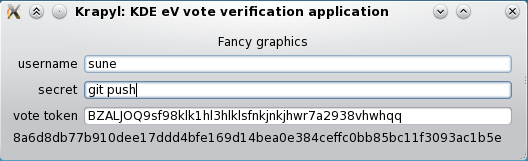
In KDE e.V. (which is to KDE</kde> what SPI is to Debian, Jenkins and others) there is some times a need to vote. For example about accepting new members. Mostly about accepting new members. With the new vote system (ballot.kde.org), voters need to do a bit more to check their votes afterwards. basically and sha256 it in the right order with the right separator chars and so on. All sha256 sums are published together with where the vote was, so voters can verify that they are counted correctly. After failing to construct a couple of times on the command line, I decided to write a small GUI app to help me instead. There it is. Nice. Simple. Effective. Sources available. http://quickgit.kde.org/?p=scratch%2Fsune%2Fkrapyl.git&a=summary have fun, and remember to verify your votes.

Patrick Schoenfeld: Bringing GVFS to a good use

One of the GNOME features I really liked since the beginning of my GNOME usage is the ability to mount various network file system by a few clicks and keystrokes. It enables me to quickly access NFS shares or files via SFTP. But so far these mounts weren't actually mounts in a classical sense, so they were only rudimentary useful.

As a user who often works with terminals I was always halfway happy with that feature and halfway not:

- Applications have to be aware and enabled to make use of that feature, so its often neccessary to workaround problems (e.g. movie players not able to open a file on a share)
- No shell access to files

Previously this GNOME feature was realised with an abstraction layer called GNOME VFS, which all applications needed to use if they wanted to provide access to the "virtual mounts". It did no efforts to actually re-use common mechanisms of Un*x-like systems, like mount points. So it were doomed to fail at certain degrees.

Today GNOME uses a new mechanism, called GVFS. Its realized by a shared library and daemon components communicating over DBUS. At first glance it does not seem to change anything, so I was rather disappointed. But then I heard rumors, that Ubuntu was actually making these mounts available in a special mount point in ~/.gvfs.
My Debian GNOME installation were not.

So I investigated a bit and found evidence about a daemon called gvfs-fuse-daemon, which eventually is handling that. After that I figured this daemon to be in a package called gvfs-fuse and learned that installing it and restarting my GNOME session is actually all needed to do.
Now getting shell access to my GNOME "Connect to server" mounts is actually possible, which makes these mounts really useful after all. Only thing to find out is, if e.g. the video player example now works from Nautilus. But if it doesn't I'm still able to use it via a shell.

The solution is quiet obvious, on the one side. But totally non-obvious on the other.

A common user eventually will not find that solutin without aid. After all the package name does not really suggest what the package is used for, since its referring to technologies instead of the problem it solves. Which is understandable. What I don't understand is, why this package is not a dependency of the gnome meta package. But I haven't yet asked the maintainer, so I cannot really blame anybody.

However: Now GVFS is actually useful.

Jaldhar Vyas: Jeopardy!: The Post-Mortem

By now hopefully you got a chance to see my Jeopardy! episode so it won't be much of a spoiler to mention that I didn't win. It went like this. I flew into LA on the night of October 31st. The taping was to take place on the next two days. Jeopardy! tapes two weeks of shows, two days a week for a total of 10 episodes. Contestants are randomly chosen for one of those 10 episodes but you don't find out which one you will be on until the last minute. Randomness and secrecy have become become a big part of the production process in games since the quiz show scandals of the 1950s. (Interesting fact: it is a Federal felony to tamper with a TV game show.) There were a group of just under 20 0f us altogether waiting to go on. All very nice people. Here in the New York area one tends to equate very intelligent people with "Type A" personalities but we got on well together. Interspersed between the tapings, we had short practice sessions to familiarize ourselves with the studio setup and this is where I first started getting a little apprehensive. Jeopardy! is not just about general knowledge, there is a physical element too in that you have to buzz in by pressing a button on a stick which is wired up to some producers console. You can't buzz in before Alex has finished reading the question and obviously you can't buzz in if someone is already answering the question. If you buzz at the wrong time, your buzzer locks for 0.75 seconds so just jamming your finger on the button. I didn't even get that far as on the entire first day I failed to buzz in at all despite changing hands, changing grip different ways and other strategies. I was pretty despondent by the second day but then miraculously I managed to get the hang of it. So when I was finally selected (for the 3rd game of that day.) I was back to my usual cool self. I was up against Dave Leach and Nicholas Campiz who were returning after having tied in the previous game. And the game did start well enough. Oh one thing you may notice is that Alex mispronounces my name Jaldhal. I knew he did that once or twice and even mentioned it to a producer but it was only viewing the episode right now that I see he does it consistently. I assumed such things would be fixed up in post-editting but I guess not. Oh well, after living in this country for so many years I've learned to be happy whenever two consonants are more or less in the right place. This particular mispronunciation is actually fairly common, even Indian people have been known to make it. The alternative theory is that Alex couldn't read my horrible handwriting which is also plausible. Anyway, I digress. I started off fairly well. My first mistake was in a category about alcoholic drinks. I answered vermouth when the correct response was gin. In my defense I'm a strict teetoler so none of these words mean anything to me. I also earned the disapproval of my superhero fan son by mistaking Dr. Strange for Dr. Doom. I did get the one about Spiderman villain Dr. Octopus so that mollified him somewhat. The highlight of my evening was strangely enough in a category about books of the Bible. I got a Daily Double. It was a risky move but I have always wanted to make a "true" daily double so I threw caution to the winds and wagered everything I had. To my surprise as much as anyones, got the answer right doubling my score. I was in a pretty good position for the Double Jeopardy but thats when Dave started dominating. If you haven't been watching previous games, Dave Leach is arguably the best player this season. Not only is he smart but he is almost supernaturally fast on the buzzer. You can't see because I kept my hands behind the podium but I again and again I would desperately try to ring in on a question I knew the answer to only to be beaten to the punch by Dave. This caused me to start getting a bit reckless and answering questions where I was less than certain which cost me dearly. One particularly dumb mistake was in a category where all the answers were supposed to start with the letter g. I said compass when I should said gyrocompass but actually I should have left that category alone entirely. By the time Final Jeopardy came around winning was no longer an option as Dave was too far in the lead. I was slightly ahead of Nicholas in 2nd place. This is where I again made a strategic error. My original plan to bet nothing in Final Jeopardy but the category was "1930s Novels" and I liked my chances. The clue was read out and it involved an anti-war novel whose author was blacklisted. I was elated. It had to be "All Quiet on the Western Front" right? The blacklist bit gave me pause as the author Erich Maria Remarque was German and this was obviously a reference to the anti-Communist blacklist in the 1950s USA. But somehow I remembered that he had spent the end of his life in Hollywood or maybe I just convinced myself that it was plausible. Evidently my thought process wasn't too crazy because all three of us came up with the same answer. All three of us were wrong. The correct answer was "Johnny Got His Gun" by Daltan Trumbo. In hindsight I knew this but it illustrates the strange ways the mind works. I knew because the video for Metallicas song "One" from "...And Justice for All" is based on the film adaptation of this book. However in a previous orientation session the lady who is the contestant coordinator for Jeopardy! had mentioned AQOTHWF as anexample of something and this got stuck in my brain crowding out the previously known fact. So when all was said and done I ended up in 3rd place. (I bet big whereas Nicholas was more conservative.) Oh well. Despite not winning I had a blast. I fulfilled my dream of appearing on Jeopardy! I met Alex Trebek. (And I should be receiving an autographed picture of us together soon.) My witty banter was sufficiently witty. I made enough money to cover my travel expenses and still have a nice amount left. And I got to meet lots of interesting and wonderful people. So I'm satisfied.

4 January 2012

Kartik Mistry: Wikipedia takes Ahmedabad

* This post is almost translation of my this post on Gujarati blog (with some corrections and additions etc). If you re not interested in Wikipedia, move on. So, as I mentioned here and here, Wikipedians in Ahmedabad planned event: Wikipedia Takes Ahmedabad. We gathered at Gandhi Ashram. Met Noopur again and some volunteers were already there at 8 AM. I never been to Ashram since long time. This place has something, you know it, folks! People started coming around 8.30 and we quickly divided them based upon their interests on 4 routes we already decided. Most of people went to old city s route 1 and our route 2 had odd 6 (and 2 coordinaters) people only. Good. Less is always good. Noopur and Anirudh gave introduction to wikipedia, creative commons license and some basic rules and todo. We then left for Swaminarayan Temple at Sahibaug. We asked for permission to take photographs and we got it after meeting main swamiji there along with nice sweets and he promised to send professional picture for wikipedia to use. We then left for Delhi Darwaja. Ahmedabad has numbers of old fort gates. We covered some of them and moved to Kalupur Railway Station. Palak and Chirag were caught by traffic police and we should take care of following rules from next time. Point noted for next photowalk. We then left for Zulta Minar. This is well known for its carving and some myths associated with it. We discussed some points regarding uploading pictures, categories and left for Raipur Darwaja. This place is famous for Bhajiyas. We didn t taste it but had again fun taking pictures, talking to police and had smile before we leave for home. Only bad thing I ve got in this walk is that due to some or other reason my phone s touch screen seems stopped working :( That s another topic, but I couldn t call Noopur/Anirudh for lunch etc due to that :) You can view all uploaded pictures at: Categories: Ahmedabad 1 Most of Ahmedabad is covered due to event. Time to write articles?

3 January 2012

Rapha&#235;l Hertzog: My Debian Activities in December 2011

This is my monthly summary of my Debian related activities. If you re among the people who made a donation to support my work (364.18 , thanks everybody!), then you can learn how I spent your money. Otherwise it s just an interesting status update on my various projects. Dpkg and Multiarch I had some hope to have a multiarch-enabled dpkg in sid for Christmas as Guillem told me that it was realistic. Alas Guillem got sick. We re in January and we re still not there. While some of Guillem s commits in December were related to multi-arch, the size of his pu/multiarch/master branch did not really shrink. We still have 36 commits to merge most of the work he did was refactoring some parts of the code that were already merged. And he initiated some discussion on interface changes. I participated to those discussions hoping to bring them to a quick resolution. I m still maintaining my own pu/multiarch/full branch, it is based on Guillem s branch but with further fixes that I developed and that he has not yet merged and with a change reverted (Guillem s branch allows crossgrading packages between different architectures while dpkg does not manage this correctly yet). I can only hope that January will be the last month of this never-ending saga. It s been one year since I started working on this project. :- Misc dpkg work I reviewed (and later merged) a patch of Kees Cook to enhance dpkg-buildflags so that it can report which hardening features are enabled. This feature might then be used by tools like lintian to detect missing hardening features. I mentored Gianluca Ciccarelli who is trying to enhance dpkg-maintscript-helper to take care of replacing a directory by a symlink and vice-versa. I took care of #651993 so that dpkg-mergechangelogs doesn t fail when it encounters an invalid version in the changelog, and of #652414 so that dpkg-source --commit accepts a relative filename when a patch file is explicitly given. Guillem also merged a fix I developed for LP#369898. Packaging work WordPress 3.3 came out so I immediately packaged it. Despite my upstream bug report, they did not update their GPL compliance page which offers the corresponding sources for what s bundled in the tarball. So I hunted for the required sources myself, and bundled them in the debian.tar.xz of the Debian source package. It s a rather crude solution but this allowed me to close the release critical bug #646729 and to reintroduce the Flash files that were dropped in the past which is great since the Flash-based file uploader is nicer than the one using the browser s file field. Quilt 0.50 came out after 2 years of (slow) development. The Debian package has many patches and several of them had to be updated to cope with the new upstream release. Fortunately some of them were also merged upstream. It still took an entire morning to complete this update. I also converted the packaging from CDBS to dh with a short rules file. Zim 0.54 came out and I immediately updated the package since it fixed a bug that was annoying me. Review of the ledgersmb packaging As the sql-ledger maintainer (and a user of this software for my accounting), I have been hoping to get ledgersmb packaged as a possible replacement for it. I have been following the various efforts initiated over time but none of them resulted in a real package in Debian. This is a real pity so I tried to fix this by offering to sponsor package uploads. That s why I did a first review of the packaging. It took several hours because you have to explain everything that s not good enough. I also filed a wishlist bug against lintian (#652963) to suggest that lintian should detect improper usage of dpkg-statoverride (this is a mistake that was present in the package that I reviewed). nautilus-dropbox work I wanted to polish the package in time for the Ubuntu LTS release and since Debian Import Freeze is in January, I implemented some of the important fixes that I wanted. The Debian package diverges from upstream in that the non-free binaries are installed in /var/lib/dropbox/ instead of $HOME.


Due to a bug, the files were not properly root-owned so I first fixed this (unpacking the tarball as root lead to reuse of the embedded user & group information, and those information changed recently on the Dropbox side apparently). Then we recently identified other problems related to proxy handling (see #651065). I fixed this too because it s relatively frequent that the initial download triggered during the package configuration fails and in that case it s the user that will re-trigger a package download after having given the appropriate credentials through PackageKit. Without my fix, usage of pkexec would imply the loss of the http_proxy environment variable and thus it would not be possible for a user to download through a proxy. Last but not least I reorganized the Debian specific patches to better separate what can and should be merged upstream, from the changes that upstream doesn t want. Unfortunately Dropbox insists on being able to auto-update their non-free binaries, they are, thus, against the installation under /var/lib/dropbox and the corresponding changes. Book update We re making decent progress in the translation of the Debian Administrator s Handbook, about 6 chapters are already translated (not yet reviewed though). The liberation campaign is also (slowly) going forward. We re at 67% now (thanks to 90 new supporters!) while we were only at 60% at the start of December. Thanks See you next month for a new summary of my activities.

No comment Liked this article? Click here. My blog is Flattr-enabled.

2 January 2012

Thomas Koch: Perils of not switching to Git

Somebody probably already recommended you to switch to Git, because it's the best VCS. I'd like to go a step further now and talk about the risk you're taking if you won't switch soon.
By still using SVN (if you're using CVS you're doomed anyway), you communicate the following:
Be aware that good developers today will not consider working with or for you if you're still using SVN. - And that's the risk.
Until recently I thought that Mercurial would be an acceptable alternative to Git. Until I used mercurial for some time. It is not.

Update: The comments are not too approving, to say the least. Lets see what time will tell. In the meanwhile I'll attach links to this blogpost:

1 January 2012

Joey Hess: a resolution that stuck

Last year, my new year's resolution was to write in my journal every day. That actually stuck, I wrote 262 journal entries in 2011. While I've been keeping a journal intermittently since 1998, last year I doubled the number of entries in it. And wrote a novel's worth of entries -- 53 thousand words! Most of it is of course banal and mundane stuff. Not good compared with Lars, who does something with his journal where he goes into some detail about code he's working on, and other work. The excerpts I've seen are quite nice. But after I've written code, written a commit message, documentation, perhaps bug reports etc, I often can't find much to say about it in my journal, beyond the bare bones that I worked on $foo today or faced a particularly hard bug. I also worry that the journal, and my reluctance to repeat myself, often tips the balance away from me blogging, if I write down something in the journal first.
Here's my journal for today:
Compare what jokes are funny now with those in 1982. The 1982 ones from net.jokes on olduse.net seem juvenile. Now compare what Unix joke man pages are funny now with those I'm reading from 1982. They seem basically the same. What would Biella make of this? Liw noticed ikiwiki OOM on pell. Tracked down to a perl markdown bug with long lines. Had quite enough of perl markdown; ikiwiki will be moving to a different engine. Added discount support to it today, still needs Debian package tho. [censored] Really gorgeous sunset, with a high wind, moon, puffy low, fast moving clouds. Enjoyed it ecstaticly. It's going to get cold soon. Very rainy early, but then got intermittently sunny; power is holding out ok. Was going to roast a chicken today, but got distracted and had a large lunch besides. Need to find some quick food for supper. I need to start a new book, should it be the River Cottage book about meat that I stole from Anna, or some SF? Blogged about journaling, and put this journal entry in it, so also journaled about blogging. Wrote it somewhat self-conciously.

The benefits for me have ranged from being able to go back and work out dates of events, to forwarding the odd excerpts to others. The best thing though is certianly having a regular time of introspection, to look back over my the day. If you've not got a new year's resolution yet, I recommend this one. (Learning Haskell would be another good one, if you haven't yet.) Just write something, anything, down in your journal every day.

Gunnar Wolf: A happy and disconnected new year

I came to Argentina with my girlfriend to visit her family and friends, and to spend here some disconnected days during my winter^Wsummer vacations. And so it was, we had some very nice, relaxing days, with everything running smooth and with infrequent but enough sessions of mail access to withstand the disconnection without pain. Of course, I didn't anticipate that the Network Operations Center of my university would break my institute's connectivity while performing their planned maintenance on December 23. After some days, I was able to talk with one person in the university, but connectivity was not restored. Nobody with knowledge to look at the firewall's screen is available. So, as of today (happy new year 2012!), I have been mail-less for over a week. I will be back in my office soon now, so I'll get mail connectivity within the upcoming week. Meanwhile, everybody who mailed me for any reason (job, Debian, holiday greetings, whatever)... Well, I'm sad to tell you that the mails were lost. But worry not, I will act as if nothing like that happened and I received all of your best wishes.

Junichi Uekawa: Hello 2012.

Hello 2012.

31 December 2011

Iain Lane: Beer bread bakin'

I got a beer bread kit from Mum for Christmas this year. enticing It seems pretty easy, so for a pre-new-year treat, I gave it a go. simple to make ready to go Of course, for the beer I'm using one of my first batch of home brewed beer that I made just before the holidays. :-) professionally crown capped a nice colour, and not too cloudy too Chuck it in slop Mix it for around 30 seconds. bash it about, and this comes out Discover there is no bread tin here, so use cake tins instead. baz it in the oven Flatter than it should be, but otherwise YUM YUM YUM hells yeahs

Joey Hess: solar year

I've been at the cabin, on solar power, for a year now. I have a year of data! Everything went pretty well until last month. There was an April rainy spell where power felt slightly tight. Then over the summer, plenty of power, no need to conserve. The last month though had what seemed like weeks of continual grey clouds, where I never saw the sun.
high noon today
Of course, even on a sunny day in winter, it does not get far above the hills, and the peak production window is only a few hours. This bad combination had my battery power dipping below the 10 volts that I consider low, down to 9, and even to 8 volts. I use kerosine lamps in the winter. (I prefer the light anway.) I've also started unplugging my Thecus server at night to conserve power, meaning no internet late or early. For four or so nights, I had no power to run even my laptop after sunset. On one notable day, there was no power even in the daytime. Even when it turned sunny again, I found that the batteries would seem to charge to 12 volts during the day, but then precipitously drop to 10 and 9 volts at night. I think the problem was not damaged batteries, but that these Nicads charge most efficiently above 12 volts (14 volts is best), and there was never enough power saved up to get them full enough that they could charge really efficiently. So, I reluctantly spent three days away this week, to let the batteries soak up sun and recover. It seems to have worked; they've been holding a 12 volt charge overnight again.

Russell Coker: Sociological Images

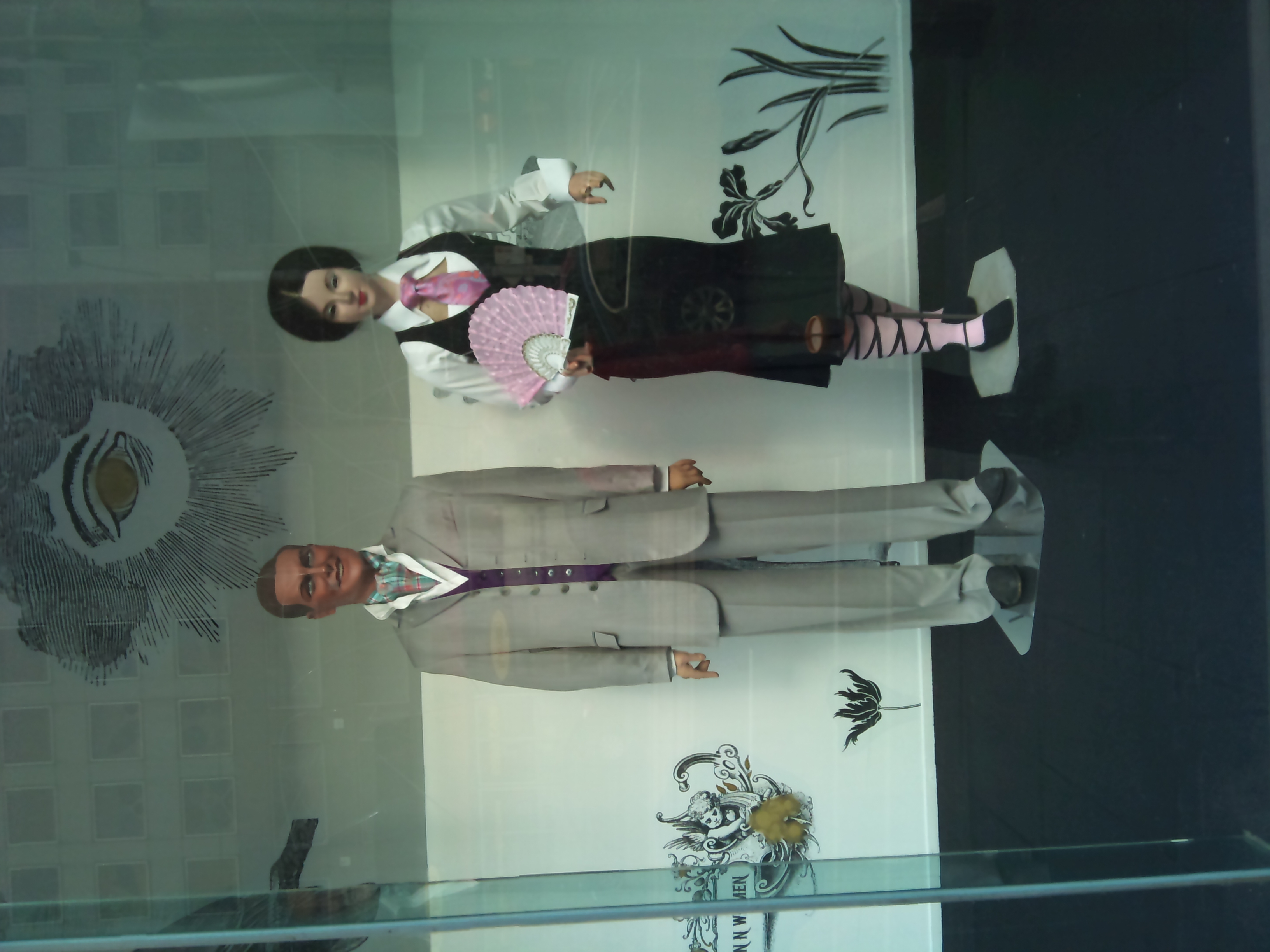
I ve recently been reading the Sociological Images blog [1]. That site has lots of pictures and videos that are relevant to the study of Sociology (most of which have a major WTF factor) and it s run by people who have Ph.Ds in Sociology so the commentary is insightful. Since reading that I ve started photographing relevant things. woman in straight-jacket advertising energy prices I can t work out the logic behind the above advert for Energy Watch which was on a billboard near Ringwood Station in Melbourne, Australia. The only thing that it clear is that it spreads bad ideas about mental illness and psychiatric treatment. It doesn t make me want to do business with them. Antons full display The above picture is a shop-front for the Antons clothing store (I m not sure if they are a tailor or if they sell ready to wear). It was taken on Lonsdale St, Melbourne where the store apparently used to be, now they are in Melbourne Central. Antons left display, African and Southern EuropeanAntons right display, Northern European and Japanese The above pictures show more detail. Unfortunately the combination of lighting and my camera (Xperia X10 phone camera) wasn t adequate to show the apparent ethnic differences between the two men. It seems that the most likely Australian interpretation of the ethnic groups that are represented are African (maybe Afro-American), Southern-European or maybe American Hispanic, North-Western European, and Japanese. It s good to have mannequins representing the fact that not everyone in Australia is white, but different facial expressions for different races seems a strange choice (admittedly it might be a choice made by mannequin manufacturers). Also the Japanese woman with fan idea is rather outdated. I ve just started reading You May Ask Yourself: An Introduction to Thinking Like a Sociologist (Second Edition) by Dalton Conley. I ve only read the first chapter, but that was good enough that the entire book has to be good enough to recommend.

28 December 2011

Bernhard R. Link: symbol files: With great power comes great responsibility

Symbol files are a nice little feature to reduce dependencies of packages. Before there were symbol files libraries in Debian just had shlibs files (both to be found in /var/lib/dpkg/info/. A shlibs file says for each library which packages to depend on when using this library. When a package is created, the build scripts will usually call dpkg-shlibdeps, which then looks which libraries the programs in the library use and then calculate the needed dependencies. This means the maintainers of most packages do not have to care what libraries to depend on, as it is automatically calculated. And as compiling and linking against a newer version of a library can cause the program to no longer work with an older library, it also means those dependencies are correct regardless of which version of a library is compiled against. As shlibs files only have one dependency information per soname, that also means they are quite strict: If there is any possible program that would not work with an older version of a library, then the shlibs file must pull in a dependency for the newer version, so everything needing that library ends up depending on the newer version. As most libraries added new stuff most of the time, most library packages (except some notable extremely API stable packages like for example some X libs) just chose to automatically put the latest package version in the shlibs file. This of course caused library packages to be quite strict: Almost every package depended on the latest version of all libraries, including libc, so practically no package from unstable or testing could be used in stable. To fix this problems, symbols files were introduced. A symbols file is a file (also finally installed in /var/lib/dpkg/info/ alongside the shlibs file) to give a minimum version for each symbol found in the library. The idea is that different programs use different parts of a library. Thus if new functionality is introduced, it would be nice to differentiate which functionality is used and give dependencies depending on that. As the only thing programmatically extractable from a binary file is the list of dynamic symbols used, this is the information used for that. But this only means the maintainer of the library package has now not only one question to answer ("What is the minimal version of this library a program compiled against the current version will need?"), but many questions: "What is the minimal version of this library a program compiled against the current version and referencing this symbol name will need?". Given a symbols file of the last version of a library package and the libraries in the new version of the package, there is one way to catch obvious mistakes: If a symbol was not in the old list but is not in the current library, one needs at least the current version of the library. So if dpkg-gensymbols finds a missing symbol, it will add it with the current version. While this will never create dependencies too strict, it sadly can have the opposite effect of producing dependencies that are not strict enough: Consider for example some library exporting the following header file:
enum foo_action   foo_START, foo_STOP ;
void do_foo_action(enum foo_action);
Which in the next version looks like that:
enum foo_action   foo_START, foo_STOP, foo_RESTART ;
void do_foo_action(enum foo_action);
As the new enum value was added at the end, the numbers of the old constants did not change, so the API and ABI did not change incompatibly, so a program compiled against the old version still works with the new one. (that means: upstream did their job properly). But the maintainer of the Debian package faces a challenge: There was no new symbol added, dpkg-gensymbols will not see that anything changed (as the symbols are the same). So if the maintainer forgets to manually increase the version required by the do_foo_action symbol, it will still be recorded in the symbols file as needing the old version. Thus dpkg will not complain if one tries to install the package containing the program together with the old version of the library. But if that program is called and calls do_foo_action with argument 2 (foo_RESTART), it will not behave properly. To recap:

Russell Coker: Secure Boot and Protecting Against Root

There has been a lot of discussion recently about the recent Microsoft ideas regarding secure boot, in case you have missed it Michael Casadevall has written a good summary of the issue [1]. Recently I ve seen a couple of people advocate the concept of secure boot with the stated idea that root should be unable to damage the system, as Microsoft Software is something that doesn t matter to me I ll restrict my comments to how this might work on Linux. Restricting the root account is something that is technically possible, for much of the past 9 years I have been running SE Linux Play Machines which have UID 0 (root) restricted by SE Linux such that they can t damage the system [2] there are other ways of achieving similar goals. But having an account with UID 0 that can t change anything on the system doesn t really match what most people think of as root , I just do it as a way of demonstrating that SE Linux controls all access such that cracking a daemon which runs as root won t result in immediately controlling the entire system. As an aside my Play Machine is not online at the moment, I hope to have it running again soon. Root Can t Damage the System One specific claim was that root should be unable to damage the system. While a secure boot system can theoretically result in a boot to single user mode without any compromise that doesn t apply to fully operational systems. For a file owned by root to be replaced the system security has to be compromised in some way. The same compromise will usually work every time until the bug is fixed and the software is upgraded. So the process of cracking root that might be used to install hostile files can also be used at runtime to exploit running processes via ptrace and do other bad stuff. Even if the attacker is forced to compromise the system at every boot this isn t a great win for the case of servers with months of uptime or for the case of workstations that have confidential data that can be rapidly copied over the Internet. There are also many workstations that are live on the Internet for months nowadays. Also the general claim doesn t really make sense on it s own. root usually means the account that is used for configuring the system. If a system can be configured then the account which is used to configure it will be able to do unwanted things. It is theoretically possible to run workstations without external root access (EG have them automatically update to the latest security fixes). Such a workstation configuration MIGHT be able to survive a compromise by having a reboot trigger an automatic update. But a workstation that is used in such a manner could be just re-imaged as it would probably be used in an environment where data-less operation makes sense. An Android phone could be considered as an example of a Linux system for which the root user can t damage the system if you consider root to mean person accessing the GUI configuration system . But then it wouldn t be difficult to create a configuration program for a regular Linux system that allows the user to change some parts of the system configuration while making others unavailable. Besides there are many ways in which the Android configuration GUI permits the user to make the system mostly unusable (EG by disabling data access) or extremely expensive to operate (EG by forcing data roaming). So I don t think that Android is a good example of root being prevented from doing damage. Signing All Files Another idea that I saw advocated was to have the secure boot concept extended to all files. So you have a boot loader that loads a signed kernel which then loads only signed executables and then every interpreter (Perl, Python, etc) will also check for signatures on files that they run. This would be tricky with interpreters that are designed to run from standard input (most notably /bin/sh but also many other interpreters). Doing this would require changing many programs, I guess you would even have to change mount to check the signature on /etc/fstab etc. This would be an unreasonably large amount of work. Another possibility would be to change the kernel such that it checks file signatures and has restrictions on system calls such as open() and the exec() family of calls. In concept it would be possible to extend SE Linux or any other access control system to include access checks on which files need to be signed (some types such as etc_t and bin_t would need to be signed but others such as var_t wouldn t). Of course this would mean that no sysadmin work could be performed locally as all file changes would have to come from the signing system. I can imagine all sorts of theoretically interesting but practically useless ways of implementing this such as having the signing system disconnected from the Internet with USB flash devices used for one-way file transfer because you can t have the signing system available to the same attacks as the host system. The requirement to sign all files would reduce the use of such a system to a tiny fraction of the user-base. Which would then raise the question of why anyone would spend the effort on that task when there are so many other ways of improving security that involve less work and can be used by more people. Encrypted Root Filesystem One real benefit of a secure boot system is for systems using encrypted filesystems. It would be good to know that a hostile party hasn t replaced the kernel and initrd when you are asked for the password to unlock the root filesystem. This would be good for the case where a laptop is left in a hotel room or other place where a hostile party could access it. Another way of addressing the same problem is to boot from a USB device so that you can keep a small USB boot device with you when it s inconvenient to carry a large laptop (which works for me). Of course it s theoretically possible for the system BIOS to be replaced with something that trojans the boot process (EG runs the kernel in a virtual machine). But I expect that if someone who is capable of doing that gets access to my laptop then I m going to lose anyway. Conclusion The secure boot concept does seem to have some useful potential when the aim is to reboot the system and have it automatically apply security fixes in the early stages of the boot process. This could be used for Netbooks and phones. Of course such a process would have to reset some configuration settings to safe defaults, this means replacing files in /etc and some configuration files in the user s home directory. So such a reboot and upgrade procedure would either leave the possibility that files in /etc were still compromised or it would remove some configuration work and thus give the user an incentive to avoid applying the patch. Any system that tries to extend signature checks all the way would either be vulnerable to valid but hostile changes to system configuration (such as authenticating to a server run by a hostile party) or have extreme ease of use issues due to signing everything. Also a secure boot will only protect a vulnerable system between the time it is rebooted and the time it returns to full operation after the reboot. If the security flaw hasn t been fixed (which could be due to a 0-day exploit or an exploit for which the patch hasn t been applied) then the system could be cracked again. I don t think that a secure boot process offers real benefits to many users.

27 December 2011

David Welton: 2011 in Books

Since I got my Kindle a bit more than a year ago, I have finally been able to slake my thirst for reading materials, something that was prohibitively expensive when ordering English language books via Amazon.co.uk, and took lots of time to boot. Here are some of the interesting books I've happened on in the past year: The big one was "Start Small, Stay Small": which has tons of ideas on how to do small, niche startups, "for the rest of us". Those of us who aren't in Silicon Valley, who aren't seeking millions in VC funding, those who don't want to aim for "astronomically rich", but just a comfortable lifestyle with more control over our own destiny. This book gets special mention for being a big inspiration for LiberWriter. Here is a list of the others. And for fun, a variety of Sci fi and Western books, but nothing particularly noteworthy. Neal Stephenson's REAMDE was fun, but I'm not sure I'd read it more than once, like some of his other books. Here are my Amazon wishlists of things I'm considering reading at some point in the future. Comments welcome on the value of the books listed. "Regular" books: http://amzn.com/w/20I0Y1YGD1FUB and random fun books and movies. Business books: http://amzn.com/w/5B2JQOP8VZEW - although some of them are not strictly business books. Yes, if you're curious, the book links do have referral codes in them, to help sustain my reading habit.

Next.

Previous.