Search Results: "mak"

30 January 2014

Andrew Pollock: [life] Day 3, Playgroup

Today was our first expedition to the local Playgroup at the Bulimba Senior Citizen's Centre, an easy 5 minute bike ride from our place. I told Zoe we were going to Playgroup when Sarah dropped her around this morning, and she got very excited and jumped up and down. When Sarah asked her if she knew what Playgroup was, she said "no!" while continuing to jump up and down excitedly. We all laughed. I must have put this on my calendar when I was in Sydney last week, because I had it down for 8:30am, and we rocked up and there wasn't anyone there. A lady arrived to set up for a music class, and she said that the Playgroup didn't usually start until much later, so I figured I'd had a timezone fail and we went for a little bike ride around Bulimba while we waited. The lady who was running the Playgroup arrived at about 9:15am, and so we helped with the set up. Basically lots of toys, a couple of slides and some basic craft stuff. Heaps of the little IKEA round plastic stools. Parents (almost exclusively mothers) started trickling in from 9:30am. I've got a total name overload. We need name tags. Most of the girls seemed to be about 2 and a half, and a lot of the mothers had very young second children. Apparently a mother's group had joined en masse because they all had second children who were crawling, and so meeting in a park wasn't practical any more. Structurally, the first hour or so was just a free for all, and the last half an hour was some songs, a story and some playing under and on a parachute. All in all it was a good morning's activity, and at $20 for the term, nice and cheap. Apparently you're supposed to join Playgroup Queensland as well, for $40, but that takes care of liability insurance and whatnot. If only their website used SSL. Zoe mostly just wanted to play with me. We did a lot of role playing with some dolls, and she checked out the various toys. She loved that there was a stage, and took it upon herself to give an impromptu dance performance for a bit. We also did a little craft activity. She seemed more interested in helping flap the parachute than going under it, but enjoyed having a ride on it when the time came. I've just finished reading How Not to F*** Them Up by Oliver James. It was quite an interesting read, although not particularly applicable for my situation, as it more dealt with the first three years. It was interesting observing a whole bunch of different mothering techniques in action, both in dealing with their toddler children, and how they responded to their second infants. After Playgroup, we biked over to the local toy shop around the corner from home, and grabbed some birthday presents for the birthday party on Saturday and came home for lunch. Chicken quesadillas and some mango (I hadn't realised how much I've missed Queensland mangoes until we moved back, and I'm glad Zoe loves them as well). I got her down for a nap earlier today, and after she woke up, I asked Zoe if she wanted to write on the birthday cards we'd bought for the twins' birthday presents. She said she didn't know how to write her name (which isn't true) and wanted to paint them instead, so we compromised and used some sponge letters to stamp "Z O E" on the cards in paint. Zoe said that Eva's favourite colour was purple and Layla's was pink (or it may have been the other way around), so we stamped one with purple paint and mixed red and white to make something that looked more orange than pink and stamped the other one. Then Zoe wanted to glue the two paper plates together that we'd been using to hold the paint, so we did that, and then she wanted to "hand paint" a cardboard tube, which seemed to involve me directly squirting various colours into her hands and then her "painting" the tube with what was in her hands. The tube quickly ended up a brown/grey colour. All in all, it was a fabulous mess, and fortunately no walls or doors copped any paint on the way to the bathroom to clean up. After that, we cleaned up Zoe's room a bit, which resulted in her going off and playing with her Magna Doodle with Smudge for a bit, and then we played Doctor with her doctor set and then we did some baking. It was a good afternoon, and she only asked to watch TV once, when she first woke up from her nap, and we managed to successfully divert to other much more fun stuff.

Russell Coker: The Movie Experience

Phandroid has one of many articles about a man being detained for wearing Google Glass in a cinema [1]. The article states as a fact that it s probably not smart to bring a recording device into a movie theater which is totally bogus. I ve visited a government office where recording devices were prohibited, they provided a locker for me to store everything that could be used for electronic storage outside their main security zone, that s what you do when you ban recording devices. Any place that doesn t have such facilities really isn t banning recording. The Gadgeteer has the original story with more detail with an update showing that the Department of Homeland Security were responsible for detaining the victim [2]. There are lots of issues here with DHS continuing to do nothing good and more bad things than most people suspect and with the music and film industry organisations attacking innocent people. But one thing that seems to be ignored is that movies are a recreational activity, so it s an experience that they are selling not just a movie. Any organisation that wants to make money out of movies really should be trying to make movies fun. The movie experience has always involved queuing, paying a lot of money for tickets ($20 per seat seems common), buying expensive drinks/snacks, and having to waste time on anti-piracy adverts. Now they are adding the risk of assault, false-arrest, and harassment under color of law to the down-sides of watching a movie. Downloading a movie via Bittorrent takes between 20 minutes and a few hours (depending on size and internet connectivity). Sometimes it can be quicker to download a movie than to drive to a cinema and if you are organising a group to watch a movie it will definitely be easier to download it. When you watch a movie at home you can pause it for a toilet break and consume alcoholic drinks while watching (I miss the Dutch cinemas where an intermission and a bar were standard features). It s just a better experience to download a movie via Bittorrent. I ve previously written about the way that downloading movies is better than buying a DVD [3], now they are making the cinema a worse experience too. I sometimes wonder if groups like the MPAA are actually trying to make money from movies or whether they just want to oppress their audiences for fun or psychological research. I could imagine someone like the young Phillip Zimbardo working for the MPAA and doing experiments to determine how badly movie industry employees can treat their customers before the customers revolt. Anyone who watches a Jack Ryan movie (or any movie with a Marty-Stu/Gary-Stu character) obviously doesn t even want to experience the stress of an unhappy ending to a movie. It seems obvious that such people won t want the stress of potentially being assaulted in the cinema. In terms of economics it seems a bad idea to do anything about recording in the cinema. When I was 11 I was offered the opportunity to watch a movie that had been recorded by a video camera in the US before it was released in Australia, I wasn t interested because watching a low quality recording wouldn t be fun. It seems to me that if The Pirate Bay (the main site for Bittorrent downloads of movies) [4] was filled with awful camera recordings of movies then it would discourage people from using it. A quick search shows some camera recordings on The Pirate Bay, it seems that if you want to download a movie of reasonable quality then you have to read the Wikipedia page about Pirated Movie Release Types [5] to make sure that you get a good quality download. But if you buy a DVD in a store or visit a cinema then you are assured of image and sound quality. If the movie industry were smarter they would start uploading camera recordings of movies described as Blue-Ray rips to mess with Bittorrent users and put newbies off downloading movies.

29 January 2014

Benjamin Mako Hill: Aaron Swartz A Year Later

My friend Aaron Swartz died a little more than a year ago. This time last year, I was spending much of my time speaking with journalists and reading what they were writing about Aaron. Since the anniversary of his death, I have tried to take time to remember Aaron. I ve returned to the things I wrote and the things I said including this short article published last year in Red Pepper that SJ Klein and I wrote together but that I forgot to mention on my blog. I m also excited to see that a documentary film about Aaron premiered at the Sundance Film Festival last week. I was interviewed for the film but am not in it. As I said last year at a memorial for Aaron, I think about Aaron frequently and often think about my own decisions in terms of what Aaron would have done. I continued to be optimistic about the potential for Aaron-inspired action.

Daniel Pocock: Lumicall: giving you choice when you dial

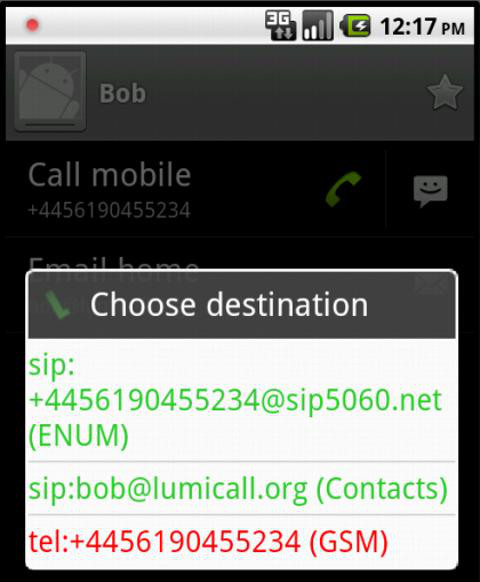
One of the distinguishing features of Lumicall, the free and open SIP/VoIP app for Android, is the unique dialing experience. In fact, even regular softphones for the desktop/laptop don't currently offer the same power when you want to make a call. In my previous blog, I looked at the ENUM technology that underpins part of this compelling new user experience. Here we can step back and look at the bigger picture. Choice is important, sneak preview of Sunday's talk at FOSDEM The fundamental reason for the dialing popup is to give the user choice. Choice is important. With that in mind, one of the key revelations that I will discuss during my talk about Lumicall this Sunday at FOSDEM is that I would like to give users the opportunity to use the Lumicall dialer with other VoIP apps, including Jitsi for Android and CSipSimple. To facilitate this, I hope to separate the dialing logic from the app and make it available as a standalone app or library module that can be used in any free communications software. Users expect convenience, Lumicall tries to deliver Have you noticed how many people will pick up their mobile phone to make a call even when they have a regular phone within reach? Have you found yourself calling your friends' mobile numbers even though you have their home and office numbers in your address book too? These mobile network calls are often at least ten times more expensive than landline calls and by definition they are infinitely more expensive than free calls made over the Internet. So why do people behave this way? The answer is simple: convenience. The caller does not want to make multiple efforts to dial, nor does he want to lose one or two minutes speaking to a secretary, colleague or spouse of the person he is trying to call. Dialing from the address book in his own mobile phone and calling the mobile number of the person he wants to speak with is the shortest path to success. It is efficient, it is compelling and it is what users expect. Free software products wanting to make an impact need to carefully align themselves with these user expectations and that is exactly what Lumicall tries to do. Choose your own adventure: dial the digits, use the address book or surf your call history Any of these everyday dialing practices triggers the Lumicall dialer. In this example, the user is trying to call Bob from the address book: While the user may have simply pressed the "call" button, Lumicall alerts them to several ways that they may proceed:
  • The first choice is a SIP address found in the ENUM directory, sip:+4456190455234@sip5060.net. Lumicall will take all the phone numbers associated with Bob in the address book and report any ENUM results associated with them. Here, just a single ENUM result is display.
  • The second choice is a SIP address constructed from Bob's email address. Lumicall found the email address in the address book entry and discovered that Bob's domain, lumicall.org, has a NAPTR record for SIP. Based on this discovery, Lumicall feels there is a good probability the email address is also a SIP address. If multiple email addresses are in the address book, they will all be checked for NAPTR.
  • (Not shown in the picture) if Lumicall has been configured to use a SIP-to-PSTN gateway account, it will display the option to call Bob's number through the gateway in blue
  • Finally, at the bottom of the list, Lumicall offers the option to call Bob's number in the normal manner, through the GSM network. This option is colour-coded in red to emphasize that it is usually the most expensive.
The tip of the iceberg This experience is a big improvement over the experience of the old rotary dial but it could also be taken even further. People don't always respond to their SIP address, especially if they live in a country where mobile data is not yet the norm. These are areas where Lumicall could be improved. For example, we could use SIP presence to make sure that Bob really is online before displaying the SIP option. This would reduce frustration and boost confidence in SIP. We could even go beyond that: Bob could use the SIP presence mechanism to advertise whether or not he is on a slow mobile data network or a fast network like 4G or wifi. You may choose to defer your call to Bob until he enters wifi coverage where the call quality is likely to be better and maybe video will be possible. This latter opportunity also has privacy implications: Bob may only choose to share that live insight into his network coverage with contacts he trusts. Try it at FOSDEM I will spend some time around the real-time lounge at FOSDEM and would be delighted to get feedback from users who are trying Lumicall, FreePhoneBox.net, JSCommunicator, DruCall or the new Debian SIP service.

Emanuele Rocca: Antifeatures and Antibugs

Software Engineering distinguishes between software features and software bugs. It is usually understood that features are positive, expected characteristics of a computer program. Features make users happy by allowing them to do something useful, interesting, or fun. Something good, anyways. Bugs are instead undesirable and annoying. You're sitting there at your computer writing a long email and the software crashes right before your email is sent. Bad stuff. Features are generally implemented by programmers on purpose, whereas bugs are purely unintentional. They are mistakes. You don't make a mistake on purpose. We might at this point be inclined to think that: i) what is good for users is done on purpose by software manufacturers; ii) what is bad for users was not meant to be. It happened by mistake. Here is a handy table to visualize this idea:
On purpose By mistake
Good Feature
Bad Bug
It seems to make a lot of sense. But you might have noticed that two cells of the table are empty. Right! In a great talk titled When Free Software isn't better, Benjamin Mako Hill mentions the concept of antifeatures, and how they relate to Free Software. Antifeatures are features that make the software do something users will hate. Something they will hate so much they would pay to have those features removed, if that's an option. Microsoft Windows 7 is used in the talk to provide some examples of software antifeatures: the Starter Edition does not allow users to change their background image. Also, it limits the amount of usable memory on the computer to 2GBs, regardless of how much memory the system actually has. Two antifeatures engineered to afflict users to the point that they will purchase a more expensive version of the software, if they have the means to do that. I have another nice example. The Spotify music streaming service plays advertisements between songs every now and then. To make sure users are annoyed as much as possible, Spotify automatically pauses an advertisement if it detects that the volume is being lowered. A poor Spotify user even tried to report the bug on The Spotify Community forum, only to find out that what she naively considered as a software error was "intentional behavior". A spectacular antifeature indeed. Whenever a piece of technology does something you most definitely do not want it to do, such as allowing the NSA to take complete control of your Apple iPhone, including turning on its microphone and camera against your will, that's an antifeature.
On purpose By mistake
Good Feature
Bad Antifeature Bug
Both bugs and antifeatures are bad for users. The difference between them is that antifeatures are engineered. Time and money are spent to make sure the goal is reached. A testing methodology is followed. "Are we really sure customers cannot change their wallpaper even if they try very very hard?" Engineering processes, of course, can fail. If the poor devils at Microsoft who implemented those harassments would have made a mistake that allows users to somehow change their wallpaper on Windows Starter... Well, I would call that a glorious antibug.
On purpose By mistake
Good Feature Antibug
Bad Antifeature Bug
There is no place for antifeatures in Free and Open Source Software. Free Software gives users control over what their software does. Imagine Mozilla adding a feature to Firefox that sets your speakers volume to 11 and starts playing a random song from the black metal artist Burzum every time you add a bookmark, unless you pay for Mozilla Firefox Premium Edition. The source code for Firefox is available under a free license. People who are not into Burzum's music would immediately remove this neat antifeature. I have spent many years of my life advocating Free and Open Source Software, perhaps using the wrong arguments. Mako's talk made me think about all this (thanks mate!). All these years I've been preaching about the technical superiority of Free Software, despite evidence of thousands of bugs and usability issues in the very programs I am using, and contributing to develop. Free Software is not better than Proprietary Software per se. Sometimes it is, sometimes it's not. But it gives you control, and freedom. When it annoys you, when it doesn't do what you expect and want, you can be sure it's not on purpose. And we can fix it together.

Enrico Zini: correctness

On political correctness I am reading "Four ways to forgiveness" by Ursula Le Guin. This is how the book begins:
On the planet 0 there has not been a war for five thousand years, she read, and on Gethen there has never been a war. She stopped reading, to rest her eyes and because she was trying to train herself to read slowly, not gobble words down in chunks the way Tikuli gulped his food. There has never been a war : in her mind the words stood clear and bright, surrounded by and sinking into an infinite, dark, soft incredulity. What would that world be, a world without war? It would be the real world Peace was the true life, the life of working and learning and bringing up children to work and learn. War, which devoured work, learning, and children, was the denial of reality. But my people, she thought, know only how to deny. Born in the dark shadow of power misused, we set peace outside our world, a guiding and unattainable light. All we know to do is fight. Any peace one of us can make in our life is only a denial that the war is going on, a shadow of the shadow, a doubled unbelief.
That made me realise that several times I perceived political correctness as "only a denial that the war is going on". Last night I watched this video, which I felt was very relevant to this. Indeed, I have more respect for someone who listens to me and makes a good effort to understand what I said, then rudely disagrees, than for someone who is very politely ignoring everything I am trying to say. This is how I feel like this experience can be distilled into an actionable item:
Replying to an email is probably going to be useless, unless I am willing to make an effort to understand what the other person is trying to say, from their own point of view.

Russ Allbery: remctl 3.8

remctl is the middleware system that we use everywhere at Stanford. It's a very simple way to run commands, constrained by ACLs, over a GSS-API-authenticated with good encryption. This release doesn't have a lot of obvious user-visible changes. Rather, it's an internal refactoring and cleanup release that will make further changes easier. The major change is that the process event loop, which runs the command and sends its output back over the wire to the client, now uses libevent. This makes the code cleaner and fixes various problems previously caused by portability, such as the lack of proper handling of SIGCHLD forcing a short poll interval to see if the child had exited. While working on that, I also found and cleaned up several other minor issues: the maximum output per remctl token now matches the protocol maximum, rather than the arbitrary and strange choice of 65,000 octets, and I fixed a few minor memory leaks in the server and client that no one probably would have noticed. The server also now writes its PID file atomically. You can get the latest release from the remctl distribution page.

Russ Allbery: rra-c-util 5.2

Another release of my general collection of utility libraries, Autoconf probes, general test cases, and similar things. The major change in this release is the addition of Autoconf probes and portability wrappers for libevent. Now included are Autoconf macros to probe for libevent (mandatory or optional) either via pkg-config or not, following the pattern of other probes in rra-c-util. Also included is a portability wrapper, probes, and some additional glue code that allows programs to be written against the libevent 2.x API and work (mostly) with the libevent 1.4 API, albeit with some missing functionality. This release fixes the systemd unit directory probe to not produce shell errors if pkg-config isn't available on the local system. It also fixes a syntax error when building portable/krb5.h with a C++ compiler. There are multiple improvements to the Kerberos and process TAP add-ons: memory is properly freed in all processes, making exhaustive memory allocation analysis easier; process output is flushed after stopping the process instead of before; the method used to stop processes is cleaner; a memory leak when running via fakeroot has been fixed; and full use is made of the new test_cleanup_register API in C TAP Harness. This release also adds a new message_handlers_reset function that restores all message handlers to their defaults and frees any memory allocated to set different handlers. This again is mostly useful when doing exhaustive memory allocation testing. You can get the latest release from the rra-c-util distribution page.

28 January 2014

Bits from Debian: Debian.org enabled for SIP federation and WebRTC, XMPP/Jabber to follow

Debian System Administrators working in conjunction with pkg-voip team member Daniel Pocock have set up a SIP proxy and TURN server for debian.org. Specifically, the SIP proxy provides a way for Debian Developers to use their Debian email ID as a SIP address for making calls to other project members and exchanging calls with any other domain that is enabled for SIP. The repro SIP proxy from reSIProcate has been chosen for this project. The TURN server provides a mechanism for users of SIP or XMPP (Jabber) to relay audio and video streams through a public IP address when necessary, eliminating many of the quality issues that arise when NAT devices block the media streams in one or both directions. The service allows the users to connect directly with the SIP device or softphone of their choosing, including many of those packaged in Debian such as Jitsi and Empathy or third party solutions like Lumicall or CSipSimple on Android. The SIP proxy also includes a WebRTC interface, allowing Debian Developers to immediately try WebRTC voice and video calls without installing or configuring any software of their own other than a web browser. A second stage of the project involves providing an XMPP (Jabber) server with similar capabilities for federated communications between debian.org users and other domains. Further details will be announced in the weeks ahead. It is a significant feature of the Debian Project philosophy that we can operate the entire project using free software, specifically, using software available in Debian packages running on our own infrastructure and without a dependency on third party cloud solutions.These new services for project members fulfill those expectations. It is particularly relevant for situations where real-time communication (voice or video) collaboration takes place with third parties such as applicants for Google Summer of Code, Outreach Program for Women, sponsors, media and other free software projects. Project specific details and a user guide are available now on the Debian Wiki at http://wiki.debian.org/UnifiedCommunications/DebianDevelopers

Andrea Colangelo: The (brand new) Debian 3D-Printing Team is hiring!

The 3D-printing technology has gained quite a big momentum in recent times. Its use is spreading widely even among hobbyists and many sources report daily several (sometimes weird) examples of its usage. The thing I like most, as a Free Software activist, is that several 3D-printing-related free and open source software are already available and quite good, and some printers are even released as free hardware. Unfortunately, Debian is quite lagged behind with regard to the availability of such software in our archive, especially compared to other distributions who already ship much of it. Hopefully this situation will change drastically thanks to the brand new Debian 3D-Printing team, whose purpose is to make Debian a rocking platform to do some serious 3D-printing. The team is bootstrapping right now, and we are looking for volunteers who are willing to help us. Packagers are greatly welcomed, but also triagers, users and passionate people with some experience in the field are extremely valuable. People willing to join the team can take a look at our (in-progress) wiki page and apply on the team page on Alioth. As with any good packaging team, a mailing list is available to share ideas, feel free to subscribe it, and feel free to join #debian-3dprinting on OFTC if you want to hang out with other team members.

Andrew Pollock: [life] Day 1, first day of Kindergarten

Yesterday was the first day of my new routine, except I haven't really established the new routine yet. I think that's going to take a few weeks. It was, however, the first day of Zoe's new routine, she started Kindergarten. "Kindergarten" is a bit of an ambiguous term, even within Australia, it seems. Back when I went to school, there was "pre-school", which was, as best I can determine, what "Kindergarten" is now, except a year later. It was optional, half a week, and the year preceding the start of primary ("elementary") school. I think every other state was already doing an extra year of school (which I think they called "Kindergarten", "Kinder", or something starting with "K") so Queensland blew up "pre-school", created "Prep" and now that's the first year of primary school. Zoe will start "Prep" next year. Then the Queensland education boffins realised that kids were missing out on the stuff that "pre-school" used to offer, so they reintroduced it in the form of "Kindergarten" (by Queensland standards). It's supposed to be play-based, and isn't really "long day care". Zoe does Monday, Tuesday and every other Wednesday, from 8:30am until 2:20pm. I'd only heard about C&K from a friend after moving back to Brisbane, so we were very fortunate to secure a place without having camped out on a waiting list from birth. We got very lucky, and ended up getting multiple offers, but we're pretty thrilled with the one that Zoe got into. It's a relatively new facility, right next to a state school and some bushland. They take the kids on excursions into the bushland, and up to the state school where there's some chickens. The Kindergarten facility itself is really lovely. Anyway, yesterday was Zoe's first day. I biked there yesterday morning (without Zoe) and it took me about 11 minutes. It took me more like 15 minutes to pick her up with the bike trailer. It's uphill on the way there, but not too much of a slog. It's been really great that Zoe's BFF from day care, Megan, also scored a place in the same Kindergarten, as I think this will help the transition for both girls greatly. I was able to stay for an extended period of time to help settle Zoe in, and I was able to leave without her being particularly distressed. I then biked home, running a few errands along the way. I then got stuck into a woodworking project (I'm trying to make a little wooden clothesline for Zoe). It turns out trying to cut a halved joint with a hand saw and chisel is a lot of work. I've managed to aggravate an old rotator cuff injury and the two pieces are a tad too tight, so I'm thinking I'll redo it and cut the joint out with an electric router instead. I probably spent at least a couple of hours faffing around with that. So I banged away with a hammer and chisel for a bit, got a haircut, had a late lunch and next thing I knew it was 2pm and time to head back on the bike to pick up Zoe. She was still asleep on her stretcher when I arrived to pick her up, which wasn't that surprising, since she tends to sleep later and longer at day care. I got a good opportunity to chat with her teacher about her first day and then gently woke her up with a kiss, and we headed home. I introduced Zoe to one of our new neighbours, and after a snack, we drove into Fortitude Valley where I had to pick up some mail from my post office box. When we got back home, I started on dinner while Zoe watched a little bit of TV. I spontaneously invited my cousin over to join us for dinner, and we walked down to the Hawthorne Garage for a babyccino after dinner. It was a good day. I realised that I'm going to have to be super regimented with my time on the days Zoe is in Kindergarten, because 2pm is going to roll around very quickly. "Scarcity brings clarity", as Sergey says...

Dirk Eddelbuettel: RQuantLib 0.3.11

A new minor / maintenance release RQuantLib 0.3.11 is now on CRAN and in Debian. Like the RcppClassic upload two days ago and the RcppZiggurat and RcppEigen uploads yesterday, this release was motivated at least in part by an upcoming Rcpp release about which I should have more to day soon. A few things got polished and updated, and we added a plugin which should make use via Rcpp Attribute easier. RQuantLib combines (some of) the quantitative analytics of QuantLib with the R statistical computing environment and language. Thanks to CRANberries, there is also a diff to the previous release 0.3.10. Full changelog details, examples and more details about this package are at my RQuantLib page.

This post by Dirk Eddelbuettel originated on his Thinking inside the box blog. Please report excessive re-aggregation in third-party for-profit settings.

27 January 2014

DebConf team: Call for sponsorship for DebConf14 (Posted by Steve Langasek)

With DebConf13 behind us, the team is looking forward to DebConf14 this August in Portland, Oregon, USA. As a community-oriented conference, DebConf relies on its network of generous sponsors for funding. Please help us make DebConf14 a success - Become a sponsor today!

Richard Hartmann: Conference proceedings

Seems I had exactly the same idea two years ago, down to choosing exactly the same name and directory structure... In case anyone finds it useful, there's Conference proceedings: a public git-annex repository which contains videos from various conferences. As of right now, it contains only FOSDEM up to 2008 and last year's Chaos Communication Congress, 30c3. I expect to add more and more conferences over time and patches are always welcome. Just try and make sure you don't include location data about your own repository in said commits. But there's already something in the works to fix that problem.

Richard Hartmann: You at FOSDEM?

Behind the scenes, all the pieces are falling together to make this FOSDEM the best ever. As every year ;) Part of making things even more awesome is a great effort: To tape ALL the things. As in, literally, every single talk, discussion, and lightning talk; devrooms included. We have the extra equipment, we have the extra storage space, but we don't have all the extra manpower, yet. Why not sign up as a volunteer? There's a self-checkout system where you simply sign up for tasks. Heralding and video-taping are especially simple to do if you plan to attend the respective track/devroom, anyway. If you prefer talking over listening, cloak room and infodesk are available asa well; they are a lot more social and people always tell us it's great fun. Finally, if your schedule is full to the brim, you can help us with build-up and teardown. As an aside, there's a little experiment with IPv6 in the works.

Daniel Pocock: A quick look at ENUM mapping telephone numbers to DNS

With my talk about Lumicall at FOSDEM coming this Sunday, I'm going to have a quick look at some of the technologies used in Lumicall over this week. The first is ENUM Introduction to ENUM ENUM, as defined by the IETF, is a convenient and powerful way to map telephone numbers to the latest communications technologies such as SIP, XMPP (Jabber) and web sites. ENUM resolution operates much like reverse DNS lookup:
  • Take the number you want to call and normalize it into E.164 format - in other words, by removing any leading zero and punctuation and adding the country code. For example, for a British number "020 7123 4567", the country code is 44 and so the normalized form of the number is +442071234567
  • Remove the leading plus symbol, reverse the digits and insert a dot between each digit. For our sample number +442071234567, it becomes 7.6.5.4.3.2.1.7.0.2.4.4
  • Choose the ENUM suffix. The official ENUM tree defined by the IETF uses the e164.arpa ENUM suffix. There are several third-party suffixes as well, such as e164.org and for the sip5060.net service, use the suffix e164-addr.sip5060.net. For our example, the full string, with suffix, is 7.6.5.4.3.2.1.7.0.2.4.4.e164.arpa
  • Perform a DNS lookup, typically looking for NAPTR records
Here is an example using dig. The subject number we are looking up is 01865 332244 from the Nominet contact page:
$ dig -t naptr 4.4.2.2.3.3.5.6.8.1.4.4.e164.arpa ; > DiG 9.8.4-rpz2+rl005.12-P1 > -t naptr 4.4.2.2.3.3.5.6.8.1.4.4.e164.arpa
;; global options: +cmd
;; Got answer:
;; ->>HEADER ;; flags: qr rd ra; QUERY: 1, ANSWER: 2, AUTHORITY: 3, ADDITIONAL: 4 ;; QUESTION SECTION:
;4.4.2.2.3.3.5.6.8.1.4.4.e164.arpa. IN NAPTR ;; ANSWER SECTION:
4.4.2.2.3.3.5.6.8.1.4.4.e164.arpa. 86400 IN NAPTR 100 20 "u" "E2U+pstn:tel" "!^(.*)$!tel:\\1!" .
4.4.2.2.3.3.5.6.8.1.4.4.e164.arpa. 86400 IN NAPTR 100 10 "u" "E2U+sip" "!^\\+441865332(.*)$!sip:\\1@nominet.org.uk!" . Ready to use today dlz-ldap-enum is a plugin for bind9 nameservers that can read telephone numbers from LDAP and make them available in real time for DNS lookup Most SIP proxies and related products like Asterisk also support ENUM lookups during the process of routing a call. ENUM dialing from Lumicall When dialing any number from your address book on Android, Lumicall can perform an ENUM lookup against the public ENUM tree and any private ENUM trees you configure. This blog is based on a page I published at sip5060.net

Jo Shields: Dear Debian Developers, lrn2gpg

For some strange reason, I ve been receiving a lot of GPG-signed mail from Debian Developers and Maintainers lately. In response to each of these mails, I need to send a GPG-encrypted reply. The rate at which I m able to send replies has been significantly hampered by the poor state in which many DD/DM s maintain their GPG keys. Here are a few common mistakes, so you can consider correcting them. Ensure you have a UID for the email address(es) you use When I send an encrypted mail, I need to be sure that the recipient is legit. This means any decent mail client should refuse to send an encrypted message to foo@bar.com unless that email address is known somehow to GPG. In many cases, someone with a valid key for foo@bar.com would send their signed mail from foobar@gmail.com without that being a valid UID. In some cases, foo@bar.com isn t even a valid email address anymore (i.e. the bar.com mail server says no such mailbox). You should have a UID for each address you use. Signatures are per-UID You may well have a valid UID for foo@debian.org, foo@bar.com, and foobar@gmail.com but the PGP trust model doesn t automatically trust every UID as much as its peers. Each individual UID needs to be trusted (i.e. signed/uploaded) by others. What if you added billg@microsoft.com as a UID should that automatically be trusted? Clearly not. Just because you have foo@debian.org doesn t mean it s trusted for encryption without some signatures. Make sure you actually have an encrypting subkey GPG sucks, and as a result, it reports Skipping unusable pubkey when the issue is a lack of valid encrypting subkeys. If you have revoked all encrypting subkeys, or allowed them to expire, then I cannot send you encrypted mail. Exact naming matters Bob Bobbertson <foo@bar.com> and B b B bb rts n <foo@bar.com> are different people. Check your mail client s From: setting, to ensure it matches your UID. If not, fix one of them. Check your webmail plugin isn t shit Some people use third party plugins to integrate GPG into their webmail client (e.g. Hotmail or GMail). Make sure this actually works. Don t use Enigmail Enigmail is a popular plugin to integrate GPG into Mozilla Thunderbird. It doesn t work, in most cases. Almost every single BADSIG in my inbox is due to Enigmail. Thunderbird will insert spurious line wraps and escape characters into your mail after signing, resulting in invalid signatures. It s mostly okay if you never quote mail, and restrict messages to about 70 characters. I know plenty of Debian Developers don t care about GPG other than for package signing but please, for the sanity of the rest of us, take an occasional moment to care a little. I should note that the worst offenders for keys which don t just work were Developers with 1024D keys the best behaved were Maintainers of all stripes.

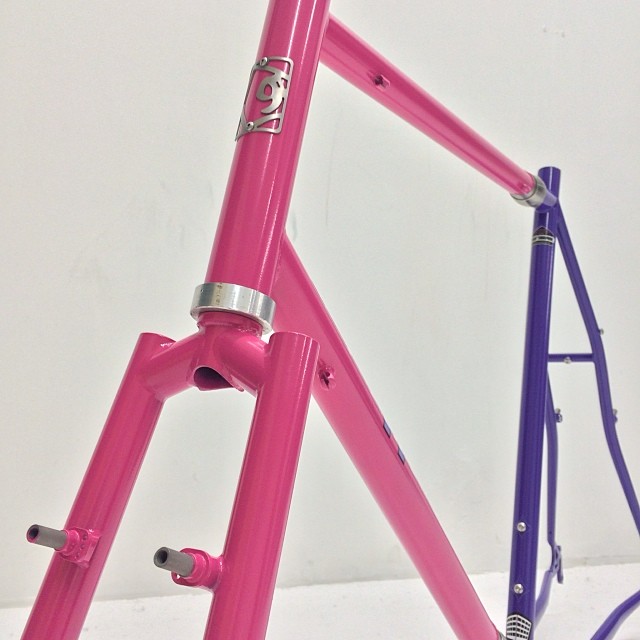
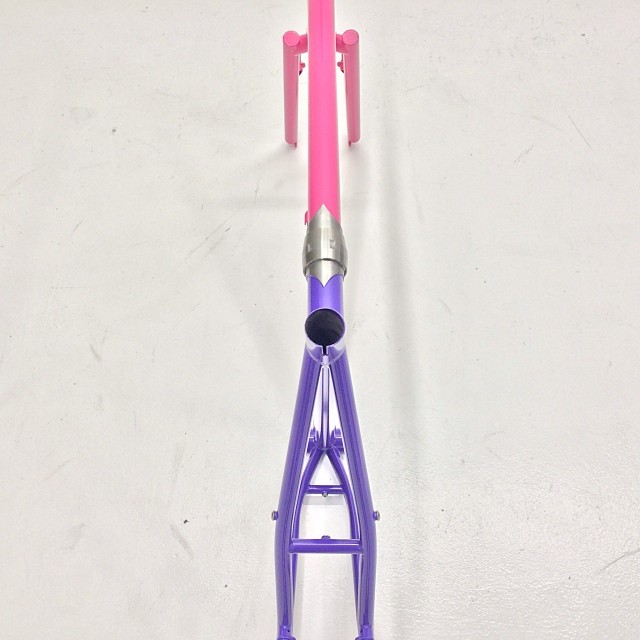
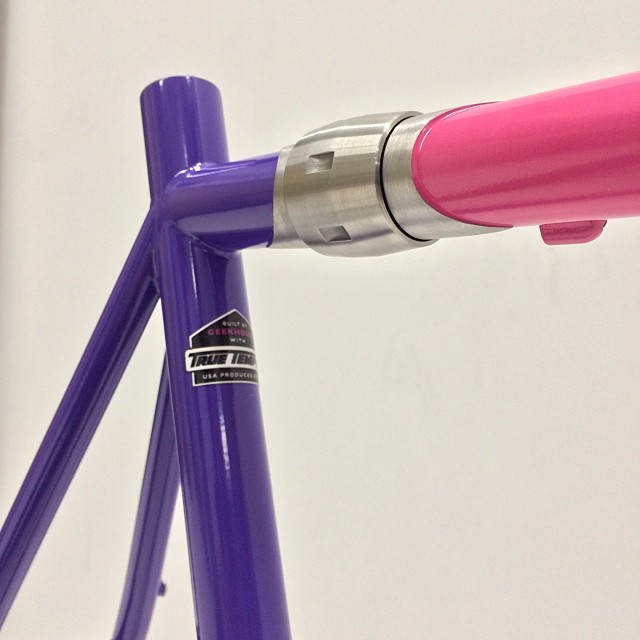
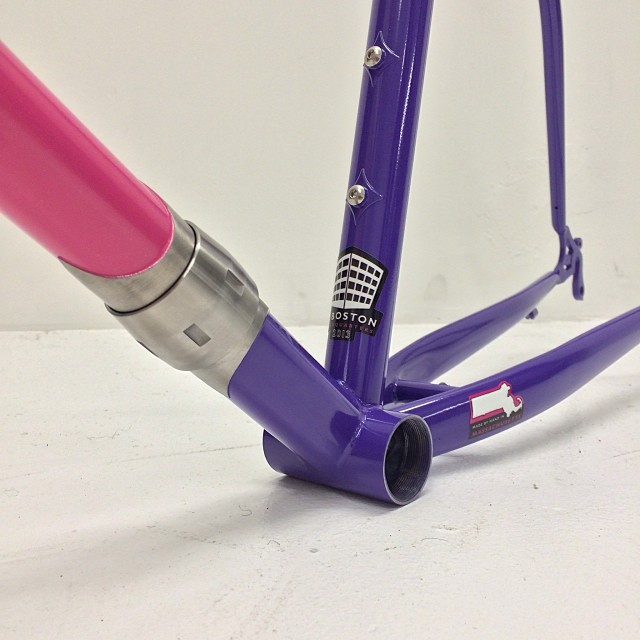
Benjamin Mako Hill: My Geekhouse Bike Frame

In 2011, Mika and I bought in big at the Boston Red Bones party s charity raffle supporting MassBike and NEMBA and came out huge. I won $500 off a custom frame at Geekouse Bikes. For years, Mika and I have been planning to do the Tour d Afrique route (Capetown to Cairo), unsupported, on bike. People that do this type of ride sometimes use an expedition touring frame. I worked with Marty Walsh at Geekhouse to design a bike based on this idea. The concept was a rugged steel touring frame, built for my body and comfortable over long distances, with two quirks:
  1. It s designed for 26 inch mountain bike wheels and mountain bike components to ensure that the bike is repairable with parts from the kinds of cheap mountain bikes that can be found almost everywhere in the world.
  2. It includes S&S torque couplers that let me split the frame in half to travel with the bike as standard luggage.
As our pan-Africa trip kept getting pushed back, so did the need for the bike. Last week, I finally picked up the finished bike from Marty s shop in Boston. It is gorgeous. I absolutely love it. Picture of Geekhouse frame (1)Picture of Geekhouse frame (2)Picture of Geekhouse frame (4) Picture of Geekhouse frame (3) I m looking forward to building up the bicycle over the next couple months and I ll post more pictures when it s finished. I am blown away by Marty s craftsmanship and attention to detail. I am psyched that his donation made this bike possible and that I was able to get the frame while helping cycling in Massachusetts!

Jonathan McCrohan: Thanks Valve!

Just a quick post to say thanks to Valve Corporation for generously offering free Valve game subscriptions to Debian Developers. Also thanks to Neil, Jo and everyone else at Collabora for making this happen. Much appreciated.

26 January 2014

Neil Williams: Home server rack

The uses of this particular rack I ll cover in future entries this is about how I made the rack itself, with help from friends (Steve McIntyre & Andy Simpkins). A common theme is making allowances for using dev kit boards ready-to-rack ARM servers are not here yet. My aim was to have 4, possibly 6 ARM dev kit boards running services from home, so there was no need for a standard 42U rack, a 9U rack is enough. Hence:
Wall Mounted 9U 450mm deep 19 inch rack enclosure glass door To run various other services around the house (firewall, file server etc.), a microserver was also necessary:
HP 704941-421 ProLiant Micro Server (AMD Turion II Neo N54L 2.2GHz, 2GB RAM, 250GB HDD, 2 Core, 7th Generation) I chose to mount that on a bookcase beneath the wall mounted rack as it kept all the cables at the bottom of the rack itself. The microserver needed a second gigabit network card fitted to cope with being a firewall as well, if you do the same, ensure you find a suitable card with a low profile bracket. Some are described as being low profile but do not package the low profile bracket, only a low profile card and a full height bracket.
Intel EXPI9301CTBLK PRO1000 Network Card note the low profile bracket in the pack. The first of the dev kit requirements is the lack of boards which can be racked, so shelves are going to be needed, leading on to something to stop the boards wandering across the shelf when the cables are adjusted velcro pads in my case. Second requirement is that dev kit boards are notorious for not rebooting cleanly. Nothing to do with the image being run, the board just doesn t cut power or doesn t come back after cutting power. Sometimes this is down to early revisions of the board, sometimes the board pulls enough power through the USB serial converter to remain alive, whatever the cause, it won t reboot without user involvement. So a PDU becomes necessary remotely controllable. New units tend to be expensive and/or only suitable for larger racks, I managed to find an older 8 port APC unit, something like: (Don t be surprised if that becomes a dead link search for APC Smart Slot Master Switch Power Distribution Unit). Talking of power, I m looking to use SATA drives with these boards and the boards themselves come with a variety of wall wart plugs or USB cables, so a number of IEC sockets are needed not the usual plugs:
Power cable IEC C14 plug 13A socket 25 cm or, for devices which genuinely need 2A to boot (use the 1A for attached SATA or leave empty):

Black Universal 3.1A 15W 5V Dual USB Rapid Mains Charger Plug Check the power output rating of the USB plugs used to connect to the mains as well many are 1A or less. Keep the right plug for the right board.
Power is going to also be a problem if, like me, you want to run SATA drives off boards which support SATA. The lack of a standard case means that ATX power is awkward, so check out some cheap SATA enclosures to get a SATA connector with USB power. I am using these enclosures (prices seem to have risen since I obtained them):

Startech 2.5 inch eSATA USB External Hard Drive Enclosure for SATA HDD Along with these:
eSATA to SATA Serial External Shielded Cable 1m because the iMx53 boards have SATA connectors but the enclosure exports eSATA. Whilst this might seem awkward, the merit of having both eSATA and simple USB power on one enclosure is not to be under-estimated. (Avoid the stiffer black cables space will get tight inside the rack.) Naturally, a 2.5 inch SATA drive is going to be needed for each enclosure, I m using HDD but SSD is also an option. Also, consider simple 2 or 3 way fused adaptors so that the board and the SATA drive can be powered from a single PDU port, this makes rebooting much simpler if the board needs a power supply with integrated plug instead of over USB. Now to the networking (2 x 8 port was cheaper than 1 x 16):
Netgear GS108 8-port Gigabit Ethernet Unmanaged Switch Don t forget the cat5 cables too you ll want lots of short cables, 1m or shorter inside the rack and a few longer ones going to the microserver and wall socket. I used 8x1m. Naturally, on the floor below your rack you are going to put a UPS, so the PDU power then needs to be converted to draw from the UPS via IEC plugs instead of standard mains. I decided to use a 6 gang extension 1m cable with an IEC plug it was the only bit of wiring I had to do and even those are available ready-made if you want to do it that way. Depending on the board, you may need your own serial to USB converters, you ll certainly need some powered USB hubs. I m using a wall mounted 9U rack, so I also needed a masonry drill and 4 heavy duty masonry M8 bolts. The rack comes with a mounting plate which needs to be bolted to the wall but nothing else is included. This step is much easier with someone else to take the weight of the rack as it is guided into the brackets on the mounting plate the bracket may need a little persuasion to allow for the bolt heads to not get in the way during mounting. Once mounted, the holes in the back of the rack allow for plenty of room, it s just getting to that point. The rack has side panels which latch out easily, providing easy maintenance. The glass door can be easily reversed to open from the opposite side. However, the key in the glass door is largely useless. The expectation is that the units in the rack are attached at the front but the dev boards on shelves are not going to be protected by a key in the front door. The key therefore ends up being little more than a handle for the glass door. OK. If you ve got this far, it s a case of putting things together:
Economy Cage Nut Tool 19 inch racking for cagenut extraction Yes, you really do want one. Fine, do without the premium one, but the economy one will save you a lot of (physical) pain. At this stage, it becomes clear that the normal 19 inch server rack shelves don t leave a lot of room at the back of the rack for the cables and there are a lot of cables. Each board has power, USB serial connection and network. The SATA has power too. The PDU has a power lead and you ll need network switches too. The network switches need power and an uplink cable. I positioned the supports in the rack as far forward as possible and attached the shelves to give enough room for the PDU on the base of the rack, the network switches resting on top and the extension bar (with the heavier, stiffer cables) at the back. (I need to bring my shelves another 1 or 2 positions further forward as there is barely enough room for one cable between the shelf and the back of the rack and that makes moving boards around harder than it needs to be.) The PDU defaults to enabling all ports at startup, so connect to it over telnet and turn off the ports before connecting things and sorting out the network interface to what the rest of the lab needs. (I m using a 10. range and the PDU was originally set to use 192.168.1.) That s about it as far as the hardware setup is concerned. Just time to label up each board, note down which PDU port does which device, which serial to USB converter is on which device on the microserver and check the power my initial problem with one board was traced to the inability of the board to power SATA off the on-board USB port even when using the provided 2A power supply. That meant adding a standard mains adaptor to feed both the SATA power and the board power off the one PDU port there is little point powering off the board but not the SATA, or vice versa. I haven t totalled up the expenditure but the biggest expenses were the microserver and the wall mounted rack but don t underestimate how much it will cost to buy 6 IEC plugs, various USB serial converters and how much you may spend on peripheral items. There is quite a lot of room on the 2 shelves for more boards, what will limit the deployment in this rack is space for the cables, especially power. The shorter the power cables, the easier it will be to maintain the devices in the rack. It might be worth looking at a 12U rack, if only to give plenty of space for cables. Once I ve got the software working, I ll describe what this rack will be doing it s got something to do with Debian, ARM, Linux and tests but you ve probably already guessed that much

Next.

Previous.