Search Results: "ina"

10 September 2014

Steve Kemp: kvm-hosting will be ceasing, soon.

Seven years ago I wanted to move on from the small virtual machine I had to a larger one. Looking at the the options available it seemed the best approach was to rent a big host, and divide it up into virtual machines myself. Renting a machine with 8Gb of RAM and 500Gb of disk-space, then dividing that into eights would give a decent spec and assuming that I found enough users to pay for the other slots/shares it would be economically viable too. After a few weeks I took the plunge, advertised here, and found users. I had six users: There were some niggles, one user seemed to suffer from connectivity problems more than the others, but on the whole the experiment worked out well. These days, thanks to BigV, Digital Ocean, and all the new-comers there is less need for this kind of thing so last December I announced that the service would cease - and gave all current users 1 year of free service to give them time to migrate away. The service was due to terminate in December, but triggered by some upcoming downtime where our host would have been moved, in the back of a van, from Manchester to York, I've taken the decision to stop it early. It was a fun experiment, it provided me with low cost hosting (subsidized by the other paying users), and provided some other people with hosting of their own that was setup nicely. The only outstanding question is what to do with the domain-names? I could let them expire, I could try to sell them, or I could donate them to other people running hosting setups. If anybody reading this has a use for kvm-hosting.org, kvm-hosting.net, or kvm-hosting.com, then do feel free to get in touch. No promises, obviously, but it'd be a shame for them to end up hosting adverts in a year or twos time..

9 September 2014

Holger Levsen: 20140909-lts-august-2014

Debian LTS - feedback about the feedback from my LTS talk at DebConf14 So, I'm more or less back from dc14 and today, five days later, I think I might have mostly overcome jetlag. Probably... So, at DebConf14 I gave a talk about LTS and while I'm sorry that I was that tired, I'm more or less happy how the talk went. Thankfully at least I was calm and relaxed... There are a couple of things I learned from the talk: a.) LTS has been really really perceived well b.) it fits a demand c.) people already take it for granted (eg plan for Wheezy LTS) d.) people expect the same non-intrusive changes as currently done for security updates. To explain the last point: when I explained the - so far - rather theoretical problem that ''squeeze-lts'' has no gatekeeper mechanisms whatsoever (eg no ''proposed-updates'', no NEW queue..) the reaction in the audience was basically "something like this should exist, else how can we deploy this in large scale / on important setup?!". Also currently there is no, well-documented, easily to be found policy for what kind of updates are acceptable. I said that we basically follow the same rules as there are for debian-security updates, but this should really be documented properly. This doesn't seem very hard to fix, just like many things it "just" needs someone to do the work. IOW: we explain how to use LTS, we explain how to contribute to LTS (through uploads or financially) but we lack a simple explaination what LTS is and what kind of updates to expect. It's kinda self evident, but only kinda. So since giving the talk I changed one thing in my personal usage of LTS: I don't use my personal LTS repo anymore, where I made sure only good packages got in. This is for two reasons: a.) I had too add new packages too often and b.) if it really is a problem that LTS has no gatekeeping mechanism (which I'm not sure anymore it is, after all, the updates are prepared by reasonable people with a common goal...) then I want to suffer this first hand, so I can build solutions which benefit everyone, not just me. That personal LTS repo only helped me. On the technical side I prepared five DLAs, for lzo2, libwpd, squid3, lua5.1 and bind9. Not much to see here, they all were very smooth. I still enjoyed the challenge of digging in unknown sourcecode, as described in my previous post. Then more interestingly, and with the help of Raphael Geissert and Salvatore Bonaccorso I fixed the security-tracker to also know about oldstable, after waiting for more than 8 weeks to someone else doing it. I'm very glad that this is done now, as without it was really tedious to check which issues were applying to oldstable. Oh, and another afterthought from giving the talk: currently at least parts of the security-tracker codebase assume that there won't ever be support for oldoldstable, but once jessie has been released this won't be true anymore. Then we will support stable, oldstable and oldoldstable. And oldstable will be wheezy, not squeeze. We have something like 6 months to fix this, hopefully we won't have much more time... ;-) Oh, and surely there are other places than just the security-tracker which will need to be taught about this.

Holger Levsen: 20140819-lts-august-2014

Debian LTS - feedback about the feedback from my LTS talk at DebConf14 So, I'm more or less back from dc14 and today, five days later, I think I might have mostly overcome jetlag. Probably... So, at DebConf14 I gave a talk about LTS and while I'm sorry that I was that tired, I'm more or less happy how the talk went. Thankfully at least I was calm and relaxed. There are a couple of things I learned from the talk: a.) LTS has been really really perceived well b.) it fits a demand c.) people already take it for granted (eg plan for Wheezy LTS) d.) people expect the same non-intrusive changes as currently done for security updates. To explain the last point: when I explained the - so far - rather theoretical problem that ''squeeze-lts'' has no gatekeeper mechanisms whatsoever (eg no ''proposed-updates'', no NEW queue..) the reaction in the audience was basically "something like this should exist, else how can we deploy this in large scale / on important setup?!". Also currently there is no, well-documented, easily to be found policy for what kind of updates are acceptable. I said that we basically follow the same rules as there are for debian-security updates, but this should really be documented properly. This doesn't seem very hard to fix, just like many things it "just" needs someone to do the work. IOW: we explain how to use LTS, we explain how to contribute to LTS (through uploads or financially) but we lack a simple explaination what LTS is and what kind of updates to expect. It's kinda self evident, but only kinda. So since giving the talk I changed one thing in my personal usage of LTS: I don't use my personal LTS repo anymore, where I made sure only good packages got in. This is for two reasons: a.) I had too add new packages too often and b.) if it really is a problem that LTS has no gatekeeping mechanism (which I'm not sure anymore it is, after all, the updates are prepared by reasonable people with a common goal...) then I want to suffer this first hand, so I can build solutions which benefit everyone, not just me. That personal LTS repo only helped me. On the technical side I prepared five DLAs, for lzo2, libwpd, squid3, lua5.1 and bind9. Not much to see here, they all were very smooth. I still enjoyed the challenge of digging in unknown sourcecode, as described in my previous post. Then more interestingly, and with the help of Raphael Geissert and Salvatore Bonaccorso I fixed the security-tracker to also know about oldstable, after waiting for more than 8 weeks to someone else doing it. I'm very glad that this is done now, as without it was really tedious to check which issues were applying to oldstable. Oh, and another afterthought from giving the talk: currently at least parts of the security-tracker codebase assume that there won't ever be support for oldoldstable, but once jessie has been released this won't be true anymore. Then we will support stable, oldstable and oldoldstable. And oldstable will be wheezy, not squeeze. We have something like 6 months to fix this, hopefully we won't have much more time... ;-) Oh, and surely there are other places than just the security-tracker which will need to be taught about this.

8 September 2014

Jaldhar Vyas: Debconf 14 - Days 1 and 2

Unfortunately I was not able to attend debconf this year but thanks to the awesome video team the all the talks are available for your viewing pleasure. In order to recreate an authentic Portland experience, I took my laptop into the shower along with a vegan donut and had my children stand outside yelling excerpts from salon.com in whiny Canadianesque accents. Here are some notes I took as I watched the talks. Welcome Talk
Debian in the Dark Ages of Free software - Stefan Zacchiroli Weapons of the Geek - Gabriella Coleman bugs.debian.org -- Database Ho! - Don Armstrong Grub Ancient and Modern - Colin and Watson One year of fedmsg in Debian - Nicolas Dandrimont Coming of Age: My Life with Debian - Christine Spang Status report of the Debian Printing Team - Didier Raboud

7 September 2014

Craig Small: How not to get Galaxy Tab into Safe Mode

For weeks my Galaxy Tab 10.1 has reasonably consistently gone into safe mode. Not booting into it but I d use it fine then put it away and next time I looked at it, Safe Mode was there. It wasn t every time, but averaged to be about every second time. So the first thing was a bit of googling to see what this Safe Mode was. Most of the suggestions were around how to put it into safe mode during the boot process but my problem was opposite; it wasn t during booting and I wanted something to stop safe mode, not put the device into it. The closest I got to it was there was some misbehaving program that kicked the thing into safe mode. The problem was, I checked several times and there were no running programs. I really did start to worry I had a hardware fault or something wrong deep within the OS. When you have problems in IT, you re usually asked What s new? What s changed? . The answer is generally Nothing which gets a switch No really, what did change . The only answer I could come up with was a hardware keyboard. This slim aluminum uses bluetooth to communicate to the tablet and clips onto the front screen to protect it when not in use. Could this be the change I was looking for? The clue was that sometimes when you boot Android, if you hold down some keys it boots into safemode. It seems that holding down some combination of keys (volume up/down, power) puts into safe mode. The keyboard can clip onto the tablet in two ways, one long edge has some raised edges while one doesn t. If the raised edge was connected to the same side as the buttons, I d get safe mode sometimes as the edge pushed some of those buttons. More importantly, putting the raised edge on the side with no buttons meant no more safe mode. Not really a software or electrical fault, more one of just mechanics.

6 September 2014

Joachim Breitner: ICFP 2014

Another on-my-the-journey-back blog post; this time from the Frankfurt Airport Train Station my flight was delayed (if I knew that I could have watched the remaining Lightning Talks), and so was my train, but despite 5min of running through the Airport just not enough. And now that the free 30 Minutes of Railway Station Internet are used up, I have nothing else to do but blog... Last week I was attending ICFP 2014 in Gothenburg, followed by the Haskell Symposium and the Haskell Implementors Workshop. The justification to attend was the paper on Safe Coercions (joint work with Richard Eisenberg, Simon Peyton Jones and Stephanie Weirich), although Richard got to hold the talk, and did so quite well. So I got to leisurely attend the talks, while fighting the jet-lag that I brought from Portland. There were as expected quite a few interesting talks. Among them the first keynote, Kathleen Fisher on the need for formal methods in cars and toy-quadcopters and unmanned battle helicopters, which made me conclude that my Isabelle skills might eventually become relevant in practical applications. And did you know that if someone gains access to your car s electronics, they can make the seat belt pull you back hard? Stefanie Weirich s keynote (and the subsequent related talks by Jan Stolarek and Richard Eisenberg) on what a dependently typed Haskell would look like and what we could use it for was mouth-watering. I am a bit worried that Haskell will be become a bit obscure for newcomers and people that simply don t want to think about types too much, on the other hand it seems that Haskell as we know it will always stay there, just as a subset of the language. Similarly interesting were refinement types for Haskell (talks by Niki Vazou and by Eric Seidel), in the form of LiquidTypes, something that I have not paid attention to yet. It seems to be a good way for more high assurance in Haskell code. Finally, the Haskell Implementors Workshop had a truckload of exciting developments in and around Haskell: More on GHCJS, Partial type signatures, interactive type-driven development like we know it from Agda, the new Haskell module system and amazing user-defined error messages the latter unfortunately only in Helium, at least for now. But it s not the case that I only sat and listened. During the Haskell Implementors Workshop I held a talk Contributing to GHC with a live demo of me fixing a (tiny) bug in GHC, with the aim of getting more people to hack on GHC (slides, video). The main message here is that it is not that big of deal. And despite me not actually saying much interesting in the talk, I got good feedback afterwards. So if it now actually motivates someone to contribute to GHC, I m even more happier. And then there is of course the Hallway Track. I discussed the issues with fusing a left fold (unfortunately, without a great solution). In order to tackle this problem more systematically, John Wiegley and I created the beginning of a List Fusion Lab , i.e. a bunch of list benchmark and the possibility to compare various implementations (e.g. with different RULES) and various compilers. With that we can hopefully better assess the effect of a change to the list functions. PS: The next train is now also delayed, so I ll likely miss my tram and arrive home even later... PPS: I really have to update my 10 year old picture on my homepage (or redesign it completely). Quite a few people knew my name, but expected someone with shoulder-long hair... PPPS: Haskell is really becoming mainstream: I just talked to a randomly chosen person (the boy sitting next to me in the train), and he is a Haskell enthusiast, building a structured editor for Haskell together with his brother. And all that as a 12th-grader...

Jonathan McDowell: Breaking up with America

Back in January I changed jobs. This took me longer to decide to do than it should have. My US visa (an L-1B) was tied to the old job, and not transferable, so leaving the old job also meant leaving the US. That was hard to do; I'd had a mostly fun 3 and a half years in the SF Bay Area. The new job had an office in Belfast, and HQ in the Bay Area. I went to work in Belfast, and got sent out to the US to meet coworkers and generally get up to speed. During that visit the company applied for an H-1B visa for me. This would have let me return to the US in October 2014 and start working in the US office; up until that point I'd have continued to work from Belfast. Unfortunately there were 172,500 applications for 85,000 available visas and mine was not selected for processing. I'm disappointed by this. I've enjoyed my time in the US. I had a green card application in process, but after nearly 2 years it still hadn't completed the initial hurdle of the labor certification stage (a combination of a number of factors, human, organizational and governmental). However the effort of returning to live here seems too great for the benefits gained. I can work for a US company with a non-US office and return on an L-1B after a year. And once again have to leave should I grow out of the job, or the job change in some way that doesn't suit me, or the company hit problems and have to lay me off. Or I can try again for an H-1B next year, aiming for an October 2015 return, and hope that this time my application gets selected for processing. Neither really appeals. Both involve putting things on hold in the hope longer terms pans out as I hope. And to be honest I'm bored of that. I've loved living in America, but I ended up spending at least 6 months longer in the job I left in January than I'd have done if I'd been freely able to change employer without having to change continent. So it seems the time has come to accept that America and I must part ways, sad as that is. Which is why I'm currently sitting in SFO waiting for a flight back to Belfast and for the first time in 5 years not having any idea when I might be back in the US.

Thomas Goirand: Debconf 14 activity

Before I start a short listing of (some of) the stuff I did during Debconf 14, I d like to say how much I enjoyed everyone there. You guys (all of you, really!) are just awesome, and it s always a real pleasure to see you all, each time. Anyway, here s a bits of the stuff I did. 1/ packaging of Google Cloud Engine client tools. Thanks to the presence of Eric and Jimmy, I was able to finish the work I started at Debconf 13 last year. All python modules are packaged and uploaded. Only the final client (the gcloud command line utility) isn t uploaded, even though it s already packaged. The reason is that this client downloads stuff from internet, so I need to get the full, bundled, version of it, to avoid this. Eric gave me the link, I just didn t have time to finish it yet. Though the (unfinished) package is already in the Git in Alioth. 2/ Tasksel talks We discussed improvements in Tasksel both during the conference, and later (in front of beers ). I was able to add a custom task on a modified version of the Tasksel package for my own use. I volunteered myself for adding a more task option in Tasksel for Jessie+1 because I really would like to see this feature, and nobody raised hand, but honestly, I have no idea how to do it, and therefore, I m not sure I ll be able to do so. We ll see Anyway, before this happen, we must make sure that we know what kind of tasks we want in this more tasks screen, otherwise it d be useless work for nothing. Therefore, I have setup a wiki page. Please edit the page and drop your ideas there. I ve already added entries for desktops and Debian blends, but I m sure there s more that we could add. 3/ Custom Debian CD I started experimentation on building my own Debian Wheezy CD image (well, DVD, since the resulting image is nearly 2GB). This was fun, but I am still having the issue that the installer fails to install Dash, so the CD is still unusable. I ll try to debug it. Oh I nearly forgot of course , the ISO image aims at including all OpenStack Icehouce packages backported to Wheezy, and the goal was to include the above custom Tasksel task, with an OpenStack proxy node task, and a OpenStack compute task. Let s hope I can figure out what the issue is, and finally release it. 4/ OpenStack talk Nothing special to say, just watch the video. I hope my talk was interesting enough. Of course, after watching myself, I hate everything I see, and would like to correct so many mistakes, but that s the usual, I guess. 5/ Some RC fixing Thanks to the nice work of our DPL rebuilding all the archive, I had to fix a couple of FTBFS issues on my own packages. 3 of them have been easy to fix (2 missing build-dependencies which I missed because my automated build environment has them by default, and a unit test failure), I still don t understand what s going on with Ceilometer. I also NMU-ed transmission (switching from 2.82 to 2.84, as upstream had the bugfix, and current maintainer was not responsive) which was the last blocker for the miniupnpc transition to Jessie. After the 5 days delay of the upload, it went in Sid, then migrated to Jessie, together with the miniupnpc library. I also fixed a trivial RC bug with python3-webob. 6/ Python team meeting It was nice to see everyone, and hopefully, we ll soon implement what we discussed. I hope to start migrating some of my OpenStack dependencies to the team once we move to Git (though please don t expect this to happen before the Juno release, which keeps me very busy these days). There s probably more stuff which I did during Debconf 14 (hacking or otherwise), but either it s not worth sharing, or I can t remember :)

Russ Allbery: Accumulated hauls

I haven't made one of these in a long time, so I have some catching from random purchases to do, which includes a (repurposed) nice parting gift from my previous employer and a trip to Powell's since I was in the area for DebConf14. This also includes the contents of the Hugo voter's packet, which contained a wide variety of random stuff even if some of the novels were represented only by excerpts. John Joseph Adams (ed.) The Mad Scientist's Guide to World Domination (sff anthology)
Roger McBride Allen The Ring of Charon (sff)
Roger McBride Allen The Shattered Sphere (sff)
Iain M. Banks The Hydrogen Sonata (sff)
Julian Barnes The Sense of an Ending (mainstream)
M. David Blake (ed.) 2014 Campbellian Anthology (sff anthology)
Algis Budrys Benchmarks Continued (non-fiction)
Algis Budrys Benchmarks Revisited (non-fiction)
Algis Budrys Benchmarks Concluded (non-fiction)
Edgar Rice Burroughs Carson of Venus (sff)
Wesley Chu The Lives of Tao (sff)
Ernest Cline Ready Player One (sff)
Larry Correia Hard Magic (sff)
Larry Correia Spellbound (sff)
Larry Correia Warbound (sff)
Sigrid Ellis & Michael Damien Thomas (ed.) Queer Chicks Dig Time Lords (non-fiction)
Neil Gaiman The Ocean at the End of the Lane (sff)
Max Gladstone Three Parts Dead (sff)
Max Gladstone Two Serpents Rise (sff)
S.L. Huang Zero Sum Game (sff)
Robert Jordan & Brandon Sanderson The Wheel of Time (sff)
Drew Karpyshyn Mass Effect: Revelation (sff)
Justin Landon & Jared Shurin (ed.) Speculative Fiction 2012 (non-fiction)
John J. Lumpkin Through Struggle, the Stars (sff)
L. David Marquet Turn the Ship Around! (non-fiction)
George R.R. Martin & Raya Golden Meathouse Man (graphic novel)
Ramez Naam Nexus (sff)
Eiichiro Oda One Piece Volume 1 (manga)
Eiichiro Oda One Piece Volume 2 (manga)
Eiichiro Oda One Piece Volume 3 (manga)
Eiichiro Oda One Piece Volume 4 (manga)
Alexei Panshin New Celebrations (sff)
K.J. Parker Devices and Desires (sff)
K.J. Parker Evil for Evil (sff)
Sofia Samatar A Stranger in Olondria (sff)
John Scalzi The Human Division (sff)
Jonathan Straham (ed.) Fearsome Journeys (sff anthology)
Vernor Vinge The Children of the Sky (sff)
Brian Wood & Becky Cloonan Demo (graphic novel)
Charles Yu How to Live Safely in a Science Fictional Universe (sff) A whole bunch of this is from the Hugo voter's packet, and since the Hugos are over, much of that probably won't get prioritized. (I was very happy with the results of the voting, though.) Other than that, it's a very random collection of stuff, including a few things that I picked up based on James Nicoll's reviews. Now that I have a daily train commute, I should pick up the pace of reading, and as long as I can find enough time in my schedule to also write reviews, hopefully there will be more content in this blog shortly.

4 September 2014

Junichi Uekawa: Bluetooth network error.

Bluetooth network error. I think it's a network-manager feature to be able to use bluetooth tethering. I think it's a network-manager bug that when bluetooth tethering fails due to some error, and does not report that error. Yesterday I finally figured out what was going wrong after staring at hcidump. It was obvious after I did. I've reset my tablet so bluetooth PIN was wrong. If only the GUI told me that.

Adnan Hodzic: Debian PPA Utility

Debian remains to be my favorite distribution, however there s one thing that s missing, that thing is called PPA. There were numerous discussions on this topic inside of Debian, but AFAIK without any visible movement. Thus, I decided to publish a utility I ve been using for some time now. PPA s Since its introduction, PPA s are exclusively connected to Ubuntu and its derivatives (Mint, Elementary, etc ). But over time, a number of interesting projects appeared whose whole development is happening inside of PPA s. To name few, I m talking about TLP, Geary, Oracle Java Installer, Elementary OS and etc Some of these projects are in WNPP without much happening for a long time, i.e: TLP One option was to repackage these packages and then have them uploaded to Debian, or just go rogue and install them directly from its PPA s. Title of this post might hint which path I took. In theory, adding Ubuntu packages on your Debian system is a bad idea, and adding its PPA s is probably even worse. But, I ve been using couple (TLP, Geary, couple of custom icon sets) of these PPA s on my personal/work boxes, and to be honest, never had a single problem. Also, setting Pinning priority to low for the PPA you added is never a bad idea. Most of the PPA s I use, are usually fairly simple packages with single binary and dependencies which are found in Debian itself. Of course, I don t recommend adding PPA s on production boxes, or even PPA s such as GNOME3 Team PPA s, but rather add Apt Pinning on your system and fetch those packages directly from Debian. Debian PPA Utility Is a very simple utility, which adds add-apt-repository binary script that allows you to add PPA s on Debian. Code is available on GitHub, it s licensed as GPLv3, so feel free to fork it, improve it, use it and abuse it. How to use it? Download/Build package You can download my signed package (source and changes file are in same directory) Or you can build your own by running "dpkg-buildpackage -uc -us" inside of the debian-ppa source directory. Install/Add PPA s After you install the package, you re able to run add-apt-repository and add PPA s. i,e: sudo add-apt-repository ppa:linrunner/tlp debian ppa utility Currently, Debian PPA Utility only works on >= Wheezy. At this point I have no plans to try pushing this utility into Debian, as I m sure even this blog post will be labelled as heresy by many. Update! It was just pointed to me that add-apt-repository is available in software-properties-common package. However, PPA s added by add-apt-repository binary present in this package instead of adding Ubuntu codename s to your list file, will add Debian codenames which without change will make whole PPA entry useless. I believe codename handling is better in Debian PPA Utility . I admit, my only mistake is, instead of fixing things in software-properties-common package, I made a completely new utility which aims to do the same thing. Added: conflicts/replaces: software-properties-common to debian/control file. Anyway, enjoy!

Russell Coker: Inteltech/Clicksend SMS Script

USER=username
API_KEY=1234ABC
OUTPUTDIR=/var/spool/sms
LOG_SERVICE=local1 I ve just written the below script to send SMS via the inteltech.com/clicksend.com service. It takes the above configuration in /etc/sms-pass.cfg where the username is assigned with the clicksend web page and the API key is a long hex string that clicksend provides as a password. The LOG_SERVICE is which syslog service to use for the log messages, on systems that are expected to send many messages I use the service local1 and I use user for development systems. I hope this is useful to someone, and if you have any ideas for improvement then please let me know. #!/bin/sh
# $1 is destination number
# text is on standard input
# standard output gives message ID on success, and 0 is returned
# standard error gives error from server on failure, and 1 is returned . /etc/sms-pass.cfg
OUTPUT=$OUTPUTDIR/out.$$
TEXT= tr "[:space:]" + cut -c 1-159 logger -t sms -p $LOG_SERVICE.info "sending message to $1"
wget -O $OUTPUT "https://api.clicksend.com/http/v2/send.php?method=http&username=$USER&key=$API_KEY&to=$1&message=$TEXT" > /dev/null 2> /dev/null if [ "$?" != "0" ]; then
echo "Error running wget" >&2
logger -t sms -p $LOG_SERVICE.err "failed to send message \"$TEXT\" to $1 wget error"
exit 1
fi if ! grep -q ^.errortext.Success $OUTPUT ; then
cat $OUTPUT >&2
echo >&2
ERR=$(grep ^.errortext $OUTPUT sed -e s/^.errortext.// -e s/..errortext.$//)
logger -t sms -p $LOG_SERVICE.err "failed to send message \"$TEXT\" to $1 $ERR"
rm $OUTPUT
exit 1
fi ID=$(grep ^.messageid $OUTPUT sed -e s/^.messageid.// -e s/..messageid.$//)
rm $OUTPUT logger -t sms -p $LOG_SERVICE.info "sent message to $1 with ID $ID"
exit 0

3 September 2014

Stefano Zacchiroli: interview for the gnu linux setup

my setup, take #1 Among the various things I've catched up with during the summer, I've finally managed to set aside some time to answer a pending interview request for The [GNU/]Linux Setup: a blog run by Steven Ovadia that collects interviews about how people use GNU/Linux-based desktops. In the interview I discuss my day to day work-flow, from GNOME Shell to Mutt, from Emacs to Notmuch, and the various glue code tools I've written for integrating them. Enjoy! Feedback is most welcome.

Dirk Eddelbuettel: littler is faster at doing nothing!

With yesterday's announcement of littler 0.2.0, I kept thinking about a few not-so-frequently-asked but recurring questions about littler. And an obvious one if of course the relationship to Rscript. As we have pointed out before, littler preceded Rscript. Now, with Rscript being present in every R installation, it is of course by now more widely known. But there is one important aspect which I stressed once or twice in the past and which bears repeating. Due to the lean and mean way in which littler is designed and set-up, it actually starts a lot faster than either Rscript or R. How, you ask? Well we actually query the environement at build time and hardcode a number of settings which R and Rscript re-acquire and learn each time they start. Which is more flexible. But slower. So consider the following, really simple example. In it, we create a simple worker function f which launches the given (and simplest possible) R command of just quitting 250 times (by launching a shell command which loops). We then let littler, Rscript and R (in its just execute this expression mode) run this, and time it via one of the common benchmarking packages.
R> library(rbenchmark)
R> f <- function(cmd)   system(paste0("bash -c \"for i in \\$(seq 1 250); do ", cmd, " -e 'q()'; done\""));  
R> res <- benchmark(f("r"), f("Rscript"), f("R --slave"), replications=5, order="relative")
R> res
            test replications elapsed relative user.self sys.self user.child sys.child
1         f("r")            5  32.256    1.000     0.001    0.004     26.538     5.706
2   f("Rscript")            5 180.154    5.585     0.001    0.004    152.751    28.522
3 f("R --slave")            5 302.714    9.385     0.001    0.004    270.569    33.098
R> 
So there: littler does "nothing" about five times as fast as Rscript, and about nine times as fast as R. Not that this matters greatly -- but when you design something for repeated (unsupervised) execution, say in a cronjob, it might as well be lightweight.

This post by Dirk Eddelbuettel originated on his Thinking inside the box blog. Please report excessive re-aggregation in third-party for-profit settings.

1 September 2014

Dirk Eddelbuettel: littler 0.2.0

We are happy to announce a new release of littler. A few minor things have changes since the last release: max-heap image Full details are provided at the ChangeLog The code is available via the GitHub repo, from tarballs off my littler page and the local directory here. A fresh package will got to Debian's incoming queue shortly as well. Comments and suggestions are welcome via the mailing list or issue tracker at the GitHub repo.

This post by Dirk Eddelbuettel originated on his Thinking inside the box blog. Please report excessive re-aggregation in third-party for-profit settings.

Juliana Louback: Debconf 2014 and How I Became a Debian Contributor

Part 1 - Debconf 2014 This year I went to my first Debconf, which took place in Portland, OR during the last week of August 2014. All in all I have to rate my experience as very enlightening and in the end quite fun. First of all, it was a little daunting to go to a conference in 1 - A city I d never been to before; 2 - A conference with 300+ people, only 3 of which I knew and even then I only knew them virtually. Not to mention I was in the presence of some extremely brilliant and known contirbutors in the Debian community which was somewhat intimidating. Just to give you an idea, Linus Torvalds showed up for a Q&A session last Friday morning! Jealous? Actually I missed that too. It was kind of a last minute thing, booked for coincidentally the exact time I d be flying out of Portland. I found out about it much too late. But luckily for me and maybe you, the session was filmed and can be seen here. Isn t that a treat? Point made, there are lots of really talented people there, both techies and non-techies. It s easy to feel you re out of league, at least I did. But I d highly encourage you to ignore such feelings if you re ever in the same situation. Debian has been built on for a long time now, but although a lot has been done, a lot still needs to be done. The Debian community is very welcoming of new contributors and users, regardless of the level of expertise. So far I haven t been snubbed by anyone. To the contrary, all my interactions with the Debian community members has been extremely positive. So go ahead and attend the meetings and presentations, even if you think it s not your area of expertise. Debconf was organized (or at least this one was) as a series of talks, meet ups and ad hoc sessions, some of which occured simultaneously. The sessions were all about different components of the Debian universe, from presenting new features to overviews of accomplishments to discussing issues and how to fix them. A schedule with the location and description of each session was posted on the Debconf wiki. Sometimes none of the sessions at a certain time was on a topic I knew very much about. But I d sit in anyways. There s no rule to attending the sessions, no minimum qualifications required. You ll likely learn something new and you just might find out there is something you can do to contribute. There are also hackathons that are quite the thing or so I heard. Or you could walk about and meet new people, do some networking. I have to say networking was the highlight of the Debconf for me. Remember I said I knew about 3 people who were at the conference? Well, I had actually just corresponded with those people. I didn t really know them. So on my first day I spent quite some time shyly peeking at people s name tags, trying to recognize someone I had met over email or IRC. But with 300 or so people at the conference, I was unsuccessful. So I finally gave up on that strategy and walked up to a random person, stuck out my hand and said, Hi. My name is Juliana. This is my first Debconf. What s your name and what do you do for Debian? This may not be according to protocol, but it worked for me. I got to meet lots of people that way, met some Debian contributos from my home country (Brazil), some from my current city (NYC), and yet others that had similar interests as I do who I might work with in the near future. For example, I love Machine Learning, I m currently beginning my graduate studies on that track. Several Debian contributors offered to introduce me to a well known Machine Learning researcher and Debian contributor who is in NYC. Others had tried out JSCommunicator and had lots of suggestions for new features and fixes, or wanted to know more about the project and WebRTC in general. Also, not everyone there is a super experienced Debian contributor or user. There are a lot of newbies like me. I got to do a quick 20-min presentation and demo of the work I had done on JSCommunicator during GSoC 2014. Oh my goodness that was nerve-wracking, but not half as painful as I expected. My mentor (Daniel Pocock) wisely suggested that when confronted with a question I didn t know how to answer, to redirect the question to to the audience. Chances are, there is someone there that knows the answer. If not, it will at least spark a good discussion. When meeting new people at Debian, a question almost everyone asked is How did you start working with/for Debian? . So I thought it would be a good topic to post about. Part 2 - How I Became a Debian Contributor Sometime in late October of 2013 (I think) I received an email from one of my professors at UNIRIO forwarding a description of the Outreach Program for Women. OPW is a program organized by the GNOME which endeavors to get more women involved in FOSS. OPW is similar to Google Summer of Code; you work remotely from home, guided by an assigned mentor. Debian was one of the 8 participating organizations that year. There was a list of project proposals which I perused, a few of them caught my eye and these projects were all Debian. I d already been a fan of FOSS before. I had used the Ubuntu and Debian OS, I d migrated to GIMP from Photoshop and to Open Office from Microsoft Office, for example. I d strongly advocated the use of some of my prefered open source apps and programs to my friends and family. But I hadn t ever contributed to a FOSS project. There s no time like the present, so I reached out the the mentor responsible for one of the projects I was interested in, Daniel Pocock. Daniel guided me through making a small contribution to a FOSS project, which serves as a token demonstration of my abilities and is part of the application process. I added a small feature to JMXetric and suggested a fix for an issue in the xTuple project. Actually, I had forgotten about this. Recently I made another contribution to xTuple, it s funny to see things come full circle. I also had to write a profile-ish description of my experience and how I intended on contributing during OPW on the Debian wiki, if you d like you can check it out here. I wouldn t follow my example to a T, because in the end I didn t make the OPW selection. Actually, I take that back. The fact I wasn t chosen for OPW that year doesn t mean I was incompetent or incapable of making a valuable contribution. OPW and GSoC do not have unlimited resources; they can t include everyone they d like to. They receive thousands of proposals from very talented engineers and not everyone can participate at a given moment. But even though I wasn t selected, like I said, I could still pitch in. It s good to keep in mind that people usually aren t paid to contribute to FOSS. It s usually volunteer based, which I think is one of the beauties of the FOSS community and in my opinion one of the causes of it s success and great quality. People contribute because they want to, not because they have to. I will say I was a little disappointed at not being chosen. But after being reassured that this rejection wasn t due to any lack on my part, I decided to continue contributing to the Debian project I d applied to. I was begining the final semester of my undergraduate studies which included writing a thesis. To be able to focus on my thesis and graduate on time, I d stopped working temporarily and was studying full time. But I didn t want to lose practice and contributing to a FOSS project is a great way to stay in coding shape while doing something useful. So continue contributing I did. It paid off. I gained experience, added value to a FOSS project and I think my previous contributions added weight to the application I later made for GSoC 2014. I passed this time. To be honest, I really wasn t counting on it. Actually, I was certain I wouldn t pass for some reason - insecure much? But with GSoC I wasn t too anxious about it as I was with the OPW application because by then, I was already hooked . I d learned about all the benefits of becoming a FOSS contributor and I wasn t stopping anytime soon. I had every intention of still working on my FOSS project with or without GSoC. GSoC 2014 ended a week ago (August 18th 2014). There s a list of things I still want to do with JSCommunicator and you can be sure I ll keep working on them. P.S. This is not to say that programs like OPW and GSoC aren t amazing programs. Try it out if you can, it s really a great experience.

31 August 2014

Steve Kemp: A diversion - The National Health Service

Today we have a little diversion to talk about the National Health Service. The NHS is the publicly funded healthcare system in the UK.
Actually there are four such services in the UK, only one of which has this name:
  • The national health service (England)
  • Health and Social Care in Northern Ireland.
  • NHS Scotland.
  • NHS Wales.
In theory this doesn't matter, if you're in the UK and you break your leg you get carried to a hospital and you get treated. There are differences in policies because different rules apply, but the basic stuff "free health care" applies to all locations. (Differences? In Scotland you get eye-tests for free, in England you pay.)
My wife works as an accident & emergency doctor, and has recently changed jobs. Hearing her talk about her work is fascinating. The hospitals she's worked in (Dundee, Perth, Kirkcaldy, Edinburgh, Livingstone) are interesting places. During the week things are usually reasonably quiet, and during the weekend things get significantly more busy. (This might mean there are 20 doctors to hand, versus three at quieter times.) Weekends are busy largely because people fall down hills, get drunk and fight, and are at home rather than at work - where 90% of accidents occur. Of course even a "quiet" week can be busy, because folk will have heart-attacks round the clock, and somebody somewhere will always be playing with a power tool, a ladder, or both! So what was the point of this post? Well she's recently transferred to working for a childrens hospital (still in A&E) and the patiences are so very different. I expected the injuries/patients she'd see to differ. Few 10 year olds will arrive drunk (though it does happen), and few adults fall out of trees, or eat washing machine detergent, but talking to her about her day when she returns home is fascinating how many things are completely different from how I expected. Adults come to hospital mostly because they're sick, injured, or drunk. Children come to hospital mostly because their parents are paranoid. A child has a rash? Doctors are closed? Lets go to the emergency ward! A child has fallen out of a tree and has a bruise, a lump, or complains of pain? Doctors are closed? Lets go to the emergency ward! I've not kept statistics, though I wish I could, but it seems that she can go 3-5 days between seeing an actually injured or chronicly-sick child. It's the first-time-parents who bring kids in when they don't need to. Understandable, completely understandable, but at the same time I'm sure it is more than a little frustrating for all involved. Finally one thing I've learned, which seems completely stupid, is the NHS-Scotland approach to recruitment. You apply for a role, such as "A&E doctor" and after an interview, etc, you get told "You've been accepted - you will now work in Glasgow". In short you apply for a post, and then get told where it will be based afterward. There's no ability to say "I'd like to be a Doctor in city X - where I live", you apply, and get told where it is post-acceptance. If it is 100+ miles away you either choose to commute, or decline and go through the process again. This has lead to Kirsi working in hospitals with a radius of about 100km from the city we live in, and has meant she's had to turn down several posts. And that is all I have to say about the NHS for the moment, except for the implicit pity for people who have to pay (inflated and life-changing) prices for things in other countries.

Lucas Nussbaum: Debian trivia

After an intensive evening of brainstorming by the 5th floor cabal, I am happy to release the very first version of the Debian Trivia, modeled after the famous TCP/IP Drinking Game. Only the questions are listed here maybe they should go (with the answers) into a package? Anyone willing to co-maintain? Any suggestions for additional questions?

30 August 2014

Francois Marier: Outsourcing your webapp maintenance to Debian

Modern web applications are much more complicated than the simple Perl CGI scripts or PHP pages of the past. They usually start with a framework and include lots of external components both on the front-end and on the back-end. Here's an example from the Node.js back-end of a real application:
$ npm list   wc -l
256
What if one of these 256 external components has a security vulnerability? How would you know and what would you do if of your direct dependencies had a hard-coded dependency on the vulnerable version? It's a real problem and of course one way to avoid this is to write everything yourself. But that's neither realistic nor desirable. However, it's not a new problem. It was solved years ago by Linux distributions for C and C++ applications. For some reason though, this learning has not propagated to the web where the standard approach seems to be to "statically link everything". What if we could build on the work done by Debian maintainers and the security team?

Case study - the Libravatar project As a way of discussing a different approach to the problem of dependency management in web applications, let me describe the decisions made by the Libravatar project.

Description Libravatar is a federated and free software alternative to the Gravatar profile photo hosting site. From a developer point of view, it's a fairly simple stack: The service is split between the master node, where you create an account and upload your avatar, and a few mirrors, which serve the photos to third-party sites. Like with Gravatar, sites wanting to display images don't have to worry about a complicated protocol. In a nutshell, all that a site needs to do is hash the user's email and add that hash to a base URL. Where the federation kicks in is that every email domain is able to specify a different base URL via an SRV record in DNS. For example, francois@debian.org hashes to 7cc352a2907216992f0f16d2af50b070 and so the full URL is:
http://cdn.libravatar.org/avatar/7cc352a2907216992f0f16d2af50b070
whereas francois@fmarier.org hashes to 0110e86fdb31486c22dd381326d99de9 and the full URL is:
http://fmarier.org/avatar/0110e86fdb31486c22dd381326d99de9
due to the presence of an SRV record on fmarier.org.

Ground rules The main rules that the project follows is to:
  1. only use Python libraries that are in Debian
  2. use the versions present in the latest stable release (including backports)

Deployment using packages In addition to these rules around dependencies, we decided to treat the application as if it were going to be uploaded to Debian:
  • It includes an "upstream" Makefile which minifies CSS and JavaScript, gzips them, and compiles PO files (i.e. a "build" step).
  • The Makefile includes a test target which runs the unit tests and some lint checks (pylint, pyflakes and pep8).
  • Debian packages are produced to encode the dependencies in the standard way as well as to run various setup commands in maintainer scripts and install cron jobs.
  • The project runs its own package repository using reprepro to easily distribute these custom packages.
  • In order to update the repository and the packages installed on servers that we control, we use fabric, which is basically a fancy way to run commands over ssh.
  • Mirrors can simply add our repository to their apt sources.list and upgrade Libravatar packages at the same time as their system packages.

Results Overall, this approach has been quite successful and Libravatar has been a very low-maintenance service to run. The ground rules have however limited our choice of libraries. For example, to talk to our queuing system, we had to use the raw Python bindings to the C Gearman library instead of being able to use a nice pythonic library which wasn't in Debian squeeze at the time. There is of course always the possibility of packaging a missing library for Debian and maintaining a backport of it until the next Debian release. This wouldn't be a lot of work considering the fact that responsible bundling of a library would normally force you to follow its releases closely and keep any dependencies up to date, so you may as well share the result of that effort. But in the end, it turns out that there is a lot of Python stuff already in Debian and we haven't had to package anything new yet. Another thing that was somewhat scary, due to the number of packages that were going to get bumped to a new major version, was the upgrade from squeeze to wheezy. It turned out however that it was surprisingly easy to upgrade to wheezy's version of Django, Apache and Postgres. It may be a problem next time, but all that means is that you have to set a day aside every 2 years to bring everything up to date.

Problems The main problem we ran into is that we optimized for sysadmins and unfortunately made it harder for new developers to setup their environment. That's not very good from the point of view of welcoming new contributors as there is quite a bit of friction in preparing and testing your first patch. That's why we're looking at encoding our setup instructions into a Vagrant script so that new contributors can get started quickly. Another problem we faced is that because we use the Debian version of jQuery and minify our own JavaScript files in the build step of the Makefile, we were affected by the removal from that package of the minified version of jQuery. In our setup, there is no way to minify JavaScript files that are provided by other packages and so the only way to fix this would be to fork the package in our repository or (preferably) to work with the Debian maintainer and get it fixed globally in Debian. One thing worth noting is that while the Django project is very good at issuing backwards-compatible fixes for security issues, sometimes there is no way around disabling broken features. In practice, this means that we cannot run unattended-upgrades on our main server in case something breaks. Instead, we make use of apticron to automatically receive email reminders for any outstanding package updates. On that topic, it can occasionally take a while for security updates to be released in Debian, but this usually falls into one of two cases:
  1. You either notice because you're already tracking releases pretty well and therefore could help Debian with backporting of fixes and/or testing;
  2. or you don't notice because it has slipped through the cracks or there simply are too many potential things to keep track of, in which case the fact that it eventually gets fixed without your intervention is a huge improvement.
Finally, relying too much on Debian packaging does prevent Fedora users (a project that also makes use of Libravatar) from easily contributing mirrors. Though if we had a concrete offer, we would certainly look into creating the appropriate RPMs.

Is it realistic? It turns out that I'm not the only one who thought about this approach, which has been named "debops". The same day that my talk was announced on the DebConf website, someone emailed me saying that he had instituted the exact same rules at his company, which operates a large Django-based web application in the US and Russia. It was pretty impressive to read about a real business coming to the same conclusions and using the same approach (i.e. system libraries, deployment packages) as Libravatar. Regardless of this though, I think there is a class of applications that are particularly well-suited for the approach we've just described. If a web application is not your full-time job and you want to minimize the amount of work required to keep it running, then it's a good investment to restrict your options and leverage the work of the Debian community to simplify your maintenance burden. The second criterion I would look at is framework maturity. Given the 2-3 year release cycle of stable distributions, this approach is more likely to work with a mature framework like Django. After all, you probably wouldn't compile Apache from source, but until recently building Node.js from source was the preferred option as it was changing so quickly. While it goes against conventional wisdom, relying on system libraries is a sustainable approach you should at least consider in your next project. After all, there is a real cost in bundling and keeping up with external dependencies. This blog post is based on a talk I gave at DebConf 14: slides, video.

John Goerzen: 2AM to Seattle

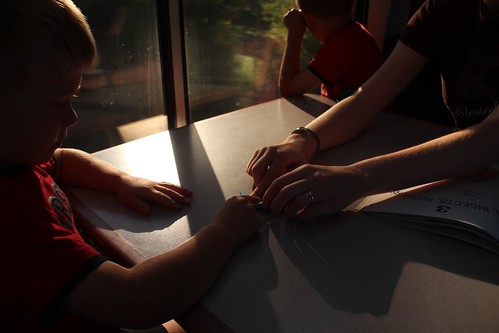
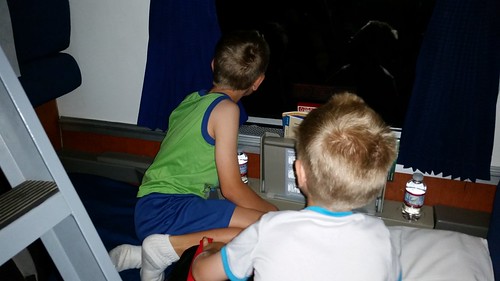
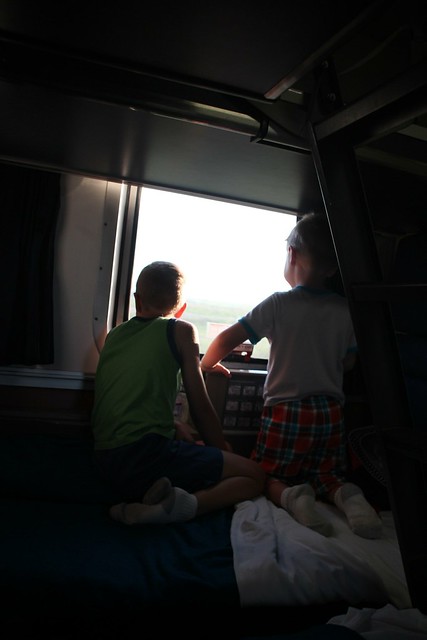
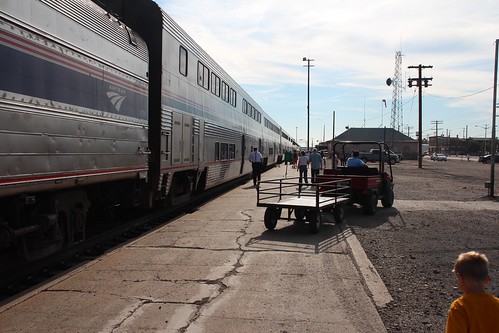
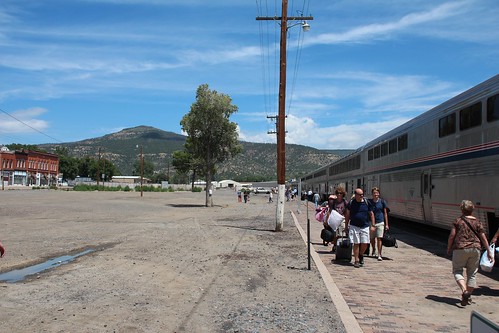
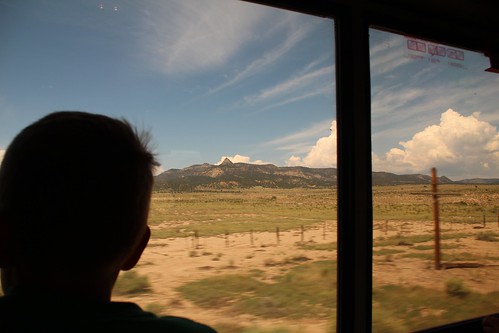
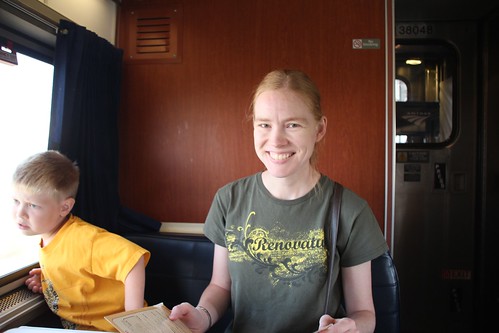
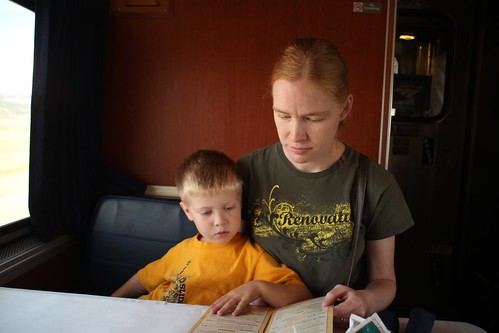
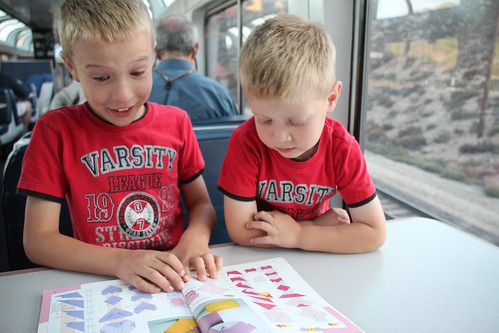
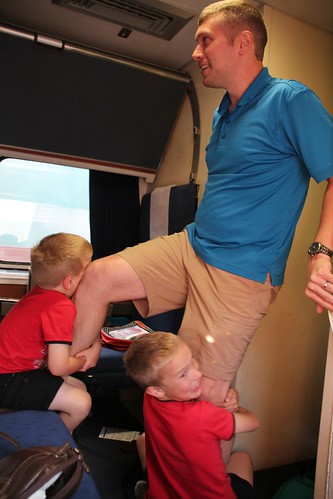
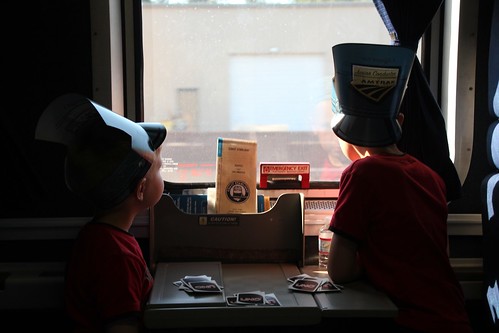
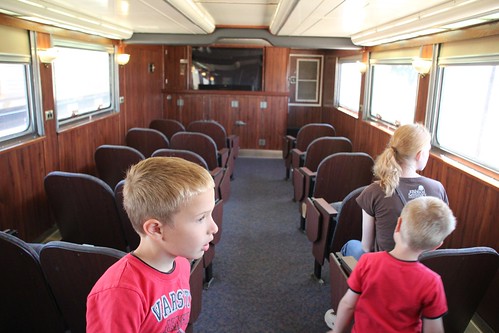
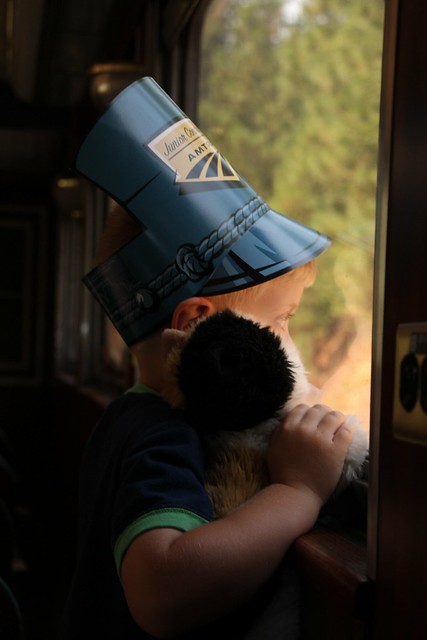
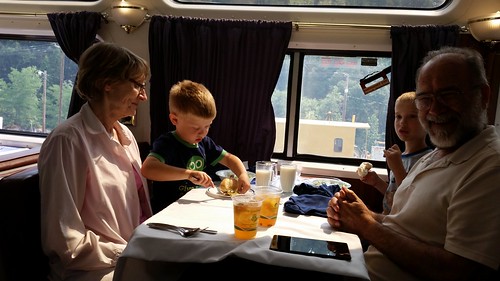
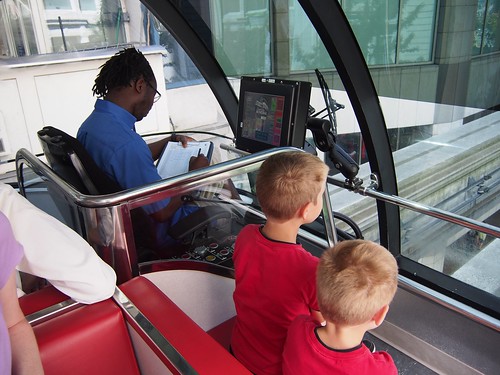
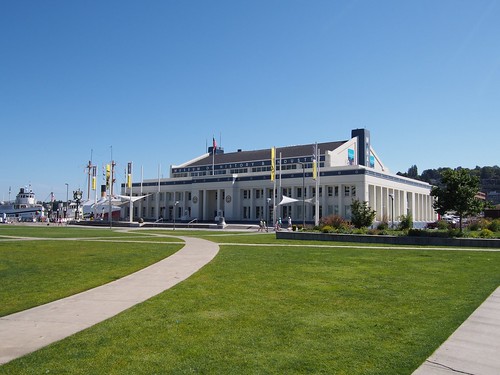
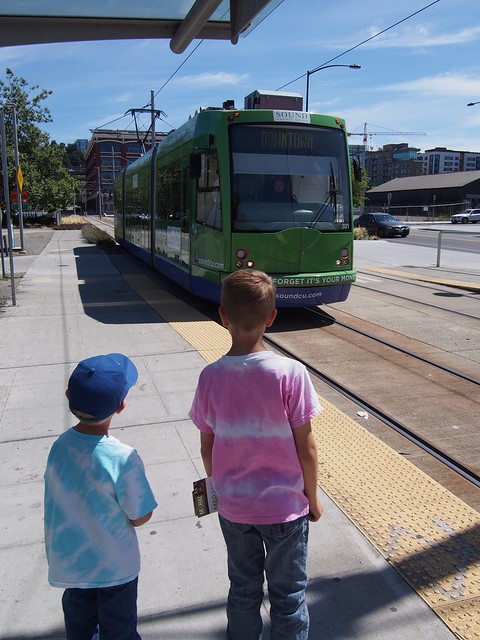
Monday morning, 1:45AM. Laura and I walk into the boys room. We turn on the light. Nothing happens. (They re sound sleepers.) Boys, it s time to get up to go get on the train! Four eyes pop open. Yay! Oh I m so excited! And then, Meow! (They enjoy playing with their stuffed cats that Laura got them for Christmas.) Before long, it was out the door to the train station. We even had time to stop at a donut shop along the way. We climbed into our family bedroom (a sleeping car room on Amtrak specifically designed for families of four), and as the train started to move, the excitement of what was going on crept in. Yes, it s 2:42AM, but these are two happy boys: 2014-08-04 02 Jacob and Oliver love trains, and this was the beginning of a 3-day train trip from Newton to Seattle that would take us through Kansas, Colorado, the Rocky Mountains of New Mexico, Arizona, Los Angeles, up the California coast, through the Cascades, and on to Seattle. Whew! Here we are later that morning before breakfast: IMG_3776 Here s our train at a station stop in La Junta, CO: IMG_3791 And at the beautiful small mountain town of Raton, NM: IMG_3805 Some of the passing scenery in New Mexico: IMG_3828 Through it all, we found many things to pass the time. I don t think anybody was bored. I took the boys exploring the train several times we d walk from one end to the other and see what all was there. There was always the dining car for our meals, the lounge car for watching the passing scenery, and on the Coast Starlight, the Pacific Parlor Car. Here we are getting ready for breakfast one morning. IMG_3830 Getting to select meals and order in the train restaurant was a big deal for the boys. IMG_3832 Laura brought one of her origami books, which even managed to pull the boys away from the passing scenery in the lounge car for quite some time. IMG_3848 Origami is serious business: IMG_3869 They had some fun wrapping themselves around my feet and challenging me to move. And were delighted when I could move even though they were trying to weight me down! IMG_3880 Several games of Uno were played, but even those sometimes couldn t compete with the passing scenery: IMG_3898 The Coast Starlight features the Pacific Parlor Car, which was built over 50 years ago for the Santa Fe Hi-Level trains. They ve been updated; the upper level is a lounge and small restaurant, and the lower level has been turned into a small theater. They show movies in there twice a day, but most of the time, the place is empty. A great place to go with little boys to run around and play games. IMG_3896 The boys and I sort of invented a new game: roadrunner and coyote, loosely based on the old Looney Tunes cartoons. Jacob and Oliver would be roadrunners, running around and yelling MEEP MEEP! Meanwhile, I was the coyote, who would try to catch them even briefly succeeding sometimes but ultimately fail in some hilarious way. It burned a lot of energy. And, of course, the parlor car was good for scenery-watching too: IMG_3908 We were right along the Pacific Ocean for several hours sometimes there would be a highway or a town between us and the beach, but usually there was nothing at all between us and the coast. It was beautiful to watch the jagged coastline go by, to gaze out onto the ocean, watching the birds apparently so beautiful that I didn t even think to take some photos. Laura s parents live in California, and took a connecting train. I had arranged for them to have a sleeping car room near ours, so for the last day of the trip, we had a group of 6. Here are the boys with their grandparents at lunch Wednesday: 2014-08-06 11 We stepped off the train in Seattle into beautiful King Street Station. P8100197 Our first day in Seattle was a quiet day of not too much. Laura s relatives live near Lake Washington, so we went out there to play. The boys enjoyed gathering black rocks along the shore. IMG_3956 We went blackberry picking after that filled up buckets for a cobbler. The next day, we rode the Seattle Monorail. The boys have been talking about this for months a kind of train they ve never been on. That was the biggest thing in their minds that they were waiting for. They got to ride in the very front, by the operator. P8080073 Nice view from up there. P8080078 We walked through the Pike Market I hadn t been in such a large and crowded place like that since I was in Guadalajara: P8080019 At the Seattle Aquarium, we all had a great time checking out all the exhibits. The please touch one was a particular hit. P8080038 Walking underneath the salmon tank was fun too. We spent a couple of days doing things closer to downtown. Laura s cousin works at MOHAI, the Museum of History and Industry, so we spent a morning there. The boys particularly enjoyed the old periscope mounted to the top of the building, and the exhibit on chocolate (of course!) P8100146 They love any kind of transportation, so of course we had to get a ride on the Seattle Streetcar that comes by MOHAI. P8090094 All weekend long, we had been noticing the seaplanes taking off from Lake Washington and Lake Union (near MOHAI). So finally I decided to investigate, and one morning while Laura was doing things with her cousin, the boys and I took a short seaplane ride from one lake to another, and then rode every method of transportation we could except for ferries (we did that the next day). Here is our Kenmore Air plane: P8100100 The view of Lake Washington from 1000 feet was beautiful: P8100109 I think we got a better view than the Space Needle, and it probably cost about the same anyhow. P8100117 After splashdown, we took the streetcar to a place where we could eat lunch right by the monorail tracks. Then we rode the monorail again. Then we caught a train (it went underground a bit so it was a subway to them!) and rode it a few blocks. There is even scenery underground, it seems. P8100151 We rode a bus back, and saved one last adventure for the next day: a ferry to Bainbridge Island. 2014-08-11 14 2014-08-11 16 Laura and I even got some time to ourselves to go have lunch at an amazing Greek restaurant to celebrate a year since we got engaged. It s amazing to think that, by now, it s only a few months until our wedding anniversary too! There are many special memories of the weekend I could mention visiting with Laura s family, watching the boys play with her uncle s pipe organ (it s in his house!), watching the boys play with their grandparents, having all six of us on the train for a day, flying paper airplanes off the balcony, enjoying the cool breeze on the ferry and the beautiful mountains behind the lake. One of my favorites is waking up to high-pitched Meow? Meow meow meow! Wake up, brother! sorts of sounds. There was so much cat-play on the trip, and it was cute to hear. I have the feeling we won t hear things like that much more. So many times on the trip I heard, Oh dad, I am so excited! I never get tired of hearing that. And, of course, I was excited, too.










Next.

Previous.