Ulrike Uhlig: Deconstructing the term control freak
 Control freaks. You may have called people like this. Or you may have been called one
yourself. Maybe you got angry. Or, on the contrary, you felt like being a
control freak is a feature, because who would notice all these little details
that are not exactly perfect if not you? This post is an attempt to deconstruct
the term.
Etymological considerations
Control - from latin contra- rotulus - refers to the
copy of an account register as a means of verification of the original
register. So control is about keeping track, not making mistakes, i.e. it's
about doing a perfect calculation. The meaning of control in our society is
linked to authority, or to policing like in crowd control. What English
calls an inspector, is a Kontrolleur in German or
contr leur in French. The word is also linked to manufacturing, as in
quality control. We also talk about being in control, which
is linked to the desire of being autonomous, to be able to act on one's own
account. Being in control can also designate a need to preserve one's own
integrity: if I have integrity (in the sense of feeling whole), I can
self-determine, which is the most fundamental requirement for having one's own
identity.
Freak - refers to someone who does not fit the norm. Calling someone a
freak is per se problematic, because it blames a person for being
atypical, abnormal. Freak is a word that, while pointing a finger at
difference, at the same time denies people the right to be different and
diverse. People can reappropriate such words to make it clear that not fitting
the norm is a wanted expression of their diversity we can see that if
we follow the history of the word queer for an example.
Types of control freaking
To me, being a control freak is mostly a feature, if it's about controlling
my own life and my own effectiveness. Control freaking becomes troublesome when
it's about controlling other people's effectiveness. And it becomes highly
problematic when it's about controlling other people's lives.
Controlling one's own life
Having control over one's own life is a basic human need. In particular
people who are part of minorities, people who face discrimination and
oppression every day have an increased need for self-determination, and the
need to see their existence and their identity acknowledged and accepted by the
rest of the world. Too often do we experience that other people (generally the
ones with privilege, or not facing the same oppression) try to own the
narrative over our lives (1)(2). Calling this control freakish is missing the
point, and is probably a sign of looking at it from a perspective of
privilege.
Controlling one's own effectiveness
People produce things. People write code, make ceramics, or write texts, for
example. People have a need to control their own effectiveness: they set up
routines, product tests, documentation. This type of control is a feature, and
can help to release better software, better texts, or perfectly burnt
clay pots ultimately controlling one's own effectiveness helps to
learn from one's mistakes and to improve routines over time.
The grey zone
The grey zone describes the zone in between wanting to control one's own
effectiveness and wanting to control other people's effectiveness. Here we could situate the type
of control freak who does not delegate tasks to others for fear of seeing them
done differently then they had expected them to be done. This can be harmful
particularly to the person who does not delegate: they can get overworked or
burnt out. This type of control freakism might be linked to perfectionism.
Controlling other people's effectiveness
When we work with other people, our own effectiveness might get in the way
of other people's effectiveness, or vice versa. Indeed, it happens - not only
in work contexts - that people find themselves in setups in which mutual
responsibilities and autonomies conflict with one another because one person is
dependent on the other for making decisions or moving things forward as they
see fit. (There is generally a relation of dependency between two conflicting
parties that is worth looking at (3).) Add to this the fact that, when delegating a
task, some people have a hard time also delegating the responsibility and autonomy
needed to resolve the task. They lack trust that another person can also do the
work, or want that person to do the work exactly in the same way they would do
it. (In some cases this can be related to Founder's Syndrome and can result in organizations staying
stuck with one or a small group of founders holding knowledge and power, and preventing the
organization from growing. Page 11 in the booklet "Working with conflict in our groups" describes how such an informal hierarchy can come into being in grassroot groups.)
The (perfectly valid) need behind this type of control freaking could be to
make sure that a group of people builds a successful product, releases a
fact-checked documentary, or creates a publication without mistakes. But
controlling other people's effectiveness as a strategy to satisfy this need can
create a non-cooperative climate in which people do not meet each other on eye
level, but are dependent on each other, experience a lack autonomy, a break of
boundaries, or sometimes feel authority to be overexerted.
Acknowledging the
need to build a good product, it is possible to create the appropriate
strategies to guarantee that the involved people can meet each other on eye
level: for example by clearly defining and documenting role-responsibility-accountability along with appropriate decision making processes, or by distributing leadership ( you should totally click on that link!), by looking at inclusive leadership models, by learning from past mistakes, by instating feedback cycles, by making boundaries between the direction of an organization and the day-to-day work clear.
An organization I work with has the rule that people can make decisions for
themselves if the decision only affects their work, while decisions that affect
a team should be made with the team, and decisions that affect the organization
as a whole need to be made at the organizational level. They call that a
no-brainer, but in organizations with traditional hierarchies, or in
grown grassroot environments that have never clearly defined and assigned
responsibilities and accountabilities (aka "functional roles") this is not so obvious at all.
Controlling someone else's life
This type of control freak does not only desire to control their own life
but for a reason or another wants to know and control what other people do,
think (especially about the control freak), decide, or how they live. In some cases, this type of control freak might even want to force upon others things they should do as a way to be accepted by the control freak. It's what
we call narcissism, harassment, abuse. It is unacceptable.
Conclusion
In summary, the distinctions I came up with in this post describe the boundaries along which control freakism takes hold of someone else's effectiveness or life and ultimately prevents them from self-determining. In German we have the word bergriffig which describes that someone is infringing someone else's boundaries they are over - grabbing, seizing, grasping, taking hold of.
Which type of control freak are you, if any?
(1) Like when a West-Berliner in a round of 15 East Germans arrogantly talks about the time when the wall came down and tells the story that he could not go shopping between Thursdays and Sundays because the East Germans bought too many products in the supermarkets while this event marked an unimaginable rift in the biographies of 17 million East Germans, 15 of whom are sitting right in front of him. Thirty years after 1989, many of us are finally starting to question this publicly ( links in German language).
(2) Women experience it similary regularly, see Men Explain Things to me, a book by Rebecca Solnit.
(3) By the way, rather than having "recruited the wrong person" conflict may intrinsically arise as part of certain work relationships, simply due to the inter-dependencies of roles or workers, like in a delivery chain.

 A new version of

 It has been close to a year now that I've incorporated my new company,

 Example of rule matching returned in GitHub checks
 Some people like to make bots talk to each other.

 GitHub service status is not always green.


 If you have to choose one year when you won't fly, this year, 2020, is the one to choose. Why? Because CORSIA. What the heck is CORSIA?
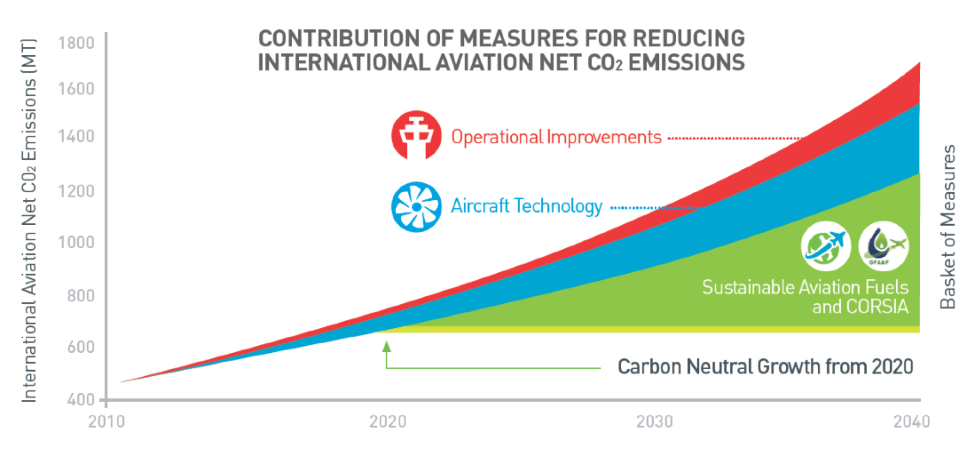 What does it have to do with *this* Year? The first phase of CORSIA will start next year, so the emissions are frozen to year 2020 levels. Due to certain recent events, lots of flights have already been cancelled - which means the reference year aviation emissions are already a lot less than the aviation industry was expecting. By avoiding flying this year, the aviation emissions are going to be frozen at an even lower level. This will increase cost of co2 offsetting for airlines, and the joke is going to be on them. So consider skipping business travel and taking your holiday trip this year with something else than a plane. Wouldn't recommend a cruise ship, tho...

 Just like we did for Debian 7 Wheezy, some of the
 I was slow to start using twitter, but found it a lot of fun. Often it
would be useful at times when websites were slow; I'd hop to the website
and search "edinburgh network", "github down", or "helsinki outage" and
find live updates as people disclosed problems before the appropriate
companies updated their status pages.
I've found a lot of useful information, in near real-time, over the past
few years. For example I remember hearing a loud explosion a few years
back and had no idea what it was. Turns out it was an electrical
substation catching fire nearby.
Anyway recently I've been getting a lot of fake notifications, things
that aren't real:
 I have a
 Welcome to gambaru.de. Here is my monthly report (+ the first week in March) that covers what I have been doing for Debian. If you re interested in Java, Games and LTS topics, this might be interesting for you.
Debian Games
 Liberation Mono
 Fira Mono