Search Results: "ads"

4 January 2016

Alessio Treglia: Enterprise Innovation in a Transformative Society

Recent article by professors Karim Lakhani and Marco Iansiti on the Harvard Business Review, Digital Ubiquity: How Connection, Sensors and Data are Revolutionizing Business , gave me the opportunity for interesting insights and considerations.

Digital technology evolution and the development of modern Internet of Things devices are introducing huge transformative effects within social inter-relationships and its business models. These effects can not be ignored if we want to perceive with the right clarity and meaning the innovation process that inevitably comes with it.

The three fundamental properties of digital technology

<Read More >

Lunar: Reproducible builds: week 36 in Stretch cycle

What happened in the reproducible builds effort between December 27th and January 2nd: Infrastructure dak now silently accepts and discards .buildinfo files (commit 1, 2), thanks to Niels Thykier and Ansgar Burchardt. This was later confirmed as working by Mattia Rizzolo. Packages fixed The following packages have become reproducible due to changes in their build dependencies: banshee-community-extensions, javamail, mono-debugger-libs, python-avro. The following packages became reproducible after getting fixed: Some uploads fixed some reproducibility issues, but not all of them: Untested changes: reproducible.debian.net The testing distribution (the upcoming stretch) is now tested on armhf. (h01ger) Four new armhf build nodes provided by Vagrant Cascandian were integrated in the infrastructer. This allowed for 9 new armhf builder jobs. (h01ger) The RPM-based build system, koji, is now in unstable and testing. (Marek Marczykowski-G recki, Ximin Luo). Package reviews 131 reviews have been removed, 71 added and 53 updated in the previous week. 58 new FTBFS reports were made by Chris Lamb and Chris West. New issues identified this week: nondeterminstic_ordering_in_gsettings_glib_enums_xml, nondeterminstic_output_in_warnings_generated_by_breathe, qt_translate_noop_nondeterminstic_ordering. Misc. Steven Chamberlain explained in length why reproducible cross-building across architectures mattered, and posted results of his tests comparing a stage1 debootstrapped chroot of linux-i386 once done from official Debian packages, the others cross-built from kfreebsd-amd64.

Mike Gabriel: MATE 1.12 landed in Debian unstable

Yesterday, I did a bundle upload of all MATE 1.12 related packages to Debian unstable. Packages are currently building for the 22 architectures supported by Debian, build status can be viewed on the DDPO page of the Debian MATE Packaging Team [1] Again a big thanks to the packaging team. Martin Wimpress amongst others did a fabulous job in bumping all packages towards the 1.12 release series before the Christmas holidays. Over the holidays, I was able to review his work (99% perfect) and upload all binary packages to a staging repository. @Martin Wimpress: It is really time that we make a DM (Debian Maintainer) out of you!!! After testing all MATE 1.12 packages on a Debian unstable system, I decided to do a bundle upload yesterday. Lessons learned about bundling Debian uploads It absolutely makes sense to hold back package uploads of a project like the MATE desktop until all relevant packages are reviewed, pre-built and tested. When releasing MATE packages via the team's packaging Git [2], there are normally two actions to be taken on a package release: When reviewing so many Git projects, it is always problematic that people commit something else during the review phase. Especially, if the review work involves many packages (i.e., Git packaging repos) and requires several days or even weeks to get finished. read more

Benjamin Mako Hill: The Boy Who Could Change the World: The Writings of Aaron Swartz

The New Press has published a new collection of Aaron Swartz s writing called The Boy Who Could Change the World: The Writings of Aaron Swartz. I worked with Seth Schoen to introduce and help edit the opening section of book that includes Aaron s writings on free culture, access to information and knowledge, and copyright. Seth and I have put our introduction online under an appropriately free license (CC BY-SA). aaronsw_book_coverOver the last week, I ve read the whole book again. I think the book really is a wonderful snapshot of Aaron s thought and personality. It s got bits that make me roll my eyes, bits that make me want to shout in support, and bits that continue to challenge me. It all makes me miss Aaron terribly. I strongly recommend the book. Because the publication is post-humous, it s meant that folks like me are doing media work for the book. In honor of naming the book their progressive pick of the week, Truthout has also published an interview with me about Aaron and the book. Other folks who introduced and/or edited topical sections in the book are David Auerbach (Computers), David Segal (Politics), Cory Doctorow (Media), James Grimmelmann (Books and Culture), and Astra Taylor (Unschool). The book is introduced by Larry Lessig.

John Goerzen: Hiking a mountain with Ian Murdock

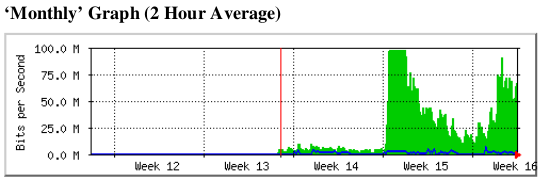
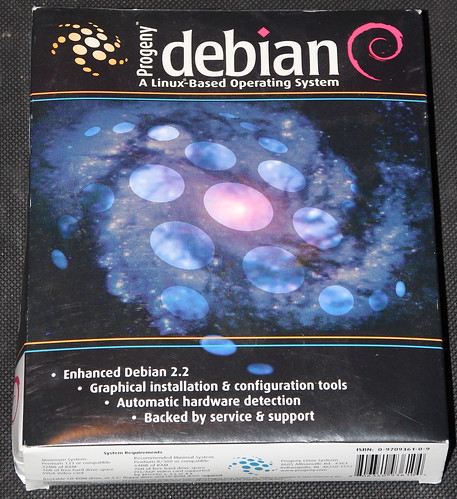
Would you like to hike a mountain? That question caught me by surprise. It was early in 2000, and I had flown to Tucson for a job interview. Ian Murdock was starting a new company, Progeny, and I was being interviewed for their first hire. Well, I thought, hiking will be fun. So we rode a bus or something to the top of the mountain and then hiked down. Our hike was full of well, everything. Ian talked about Tucson and the mountains, about his time as the Debian project leader, about his college days. I asked about the plants and such we were walking past. We talked about the plans for Progeny, my background, how I might fit in. It was part interview, part hike, part two geeks chatting. Ian had no HR telling him you can t go hiking down a mountain with a job candidate, as I m sure HR would have. And I am glad of it, because even 16 years later, that is still by far the best time I ever had at a job interview, despite the fact that it ruined the only pair of shoes I had brought along I had foolishly brought dress shoes for a, well, job interview. I guess it worked, too, because I was hired. Ian wanted to start up the company in Indianapolis, so over the next little while there was the busy work of moving myself and setting up an office. I remember those early days Ian and I went computer shopping at a local shop more than once to get the first workstations and servers for the company. Somehow he had found a deal on some office space in a high-rent office building. I still remember the puzzlement on the faces of accountants and lawyers dressed up in suits riding in the elevators with us in our shorts and sandals, or tie-die, next to them. Progeny s story was to be a complicated one. We set out to rock the world. We didn t. We didn t set out to make lasting friendships, but we often did. We set out to accomplish great things, and we did some of that, too. We experienced a full range of emotions there elation when we got hardware auto-detection working well or when our downloads looked very popular, despair when our funding didn t come through as we had hoped, being lost when our strategy had to change multiple times. And, as is the case everywhere, none of us were perfect. I still remember the excitement after we published our first release on the Internet. Our little server that could got pegged at 100Mb of outbound bandwidth (that was something for a small company in those days.) The moment must have meant something, because I still have the mrtg chart from that day on my computer, 15 years later. Progeny's Bandwidth Chart We made a good Linux distribution, an excellent Debian derivative, but commercial success did not flow from it. In the succeeding months, Ian and the company tried hard to find a strategy that would stick and make our big break. But that never happened. We had several rounds of layoffs when hoped-for funding never materialized. Ian eventually lost control of the company, and despite a few years of Itanium contract work after I left, closed for good. Looking back, Progeny was life compressed. During the good times, we had joy, sense of accomplishment, a sense of purpose at doing something well that was worth doing. I had what was my dream job back then: working on Debian as I loved to do, making the world a better place through Free Software, and getting paid to do it. And during the bad times, different people at Progeny experienced anger, cynicism, apathy, sorrow for the loss of our friends or plans, or simply a feeling to soldier on. All of the emotions, good or bad, were warranted in their own way. Bruce Byfield, one of my co-workers at Progeny, recently wrote a wonderful memoriam of Ian. He wrote, More than anything, he wanted to repeat his accomplishment with Debian, and, naturally he wondered if he could live up to his own expectations of himself. That, I think, was Ian s personal tragedy that he had succeeded early in life, and nothing else he did with his life could quite measure up to his expectations and memories. Ian was not the only one to have some guilt over Progeny. I, for years, wondered if I should have done more for the company, could have saved things by doing something more, or different. But I always came back to the conclusion I had at the time: that there was nothing I could do a terribly sad realization. In the years since, I watched Ubuntu take the mantle of easy-to-install Debian derivative. I saw them reprise some of the ideas we had, and even some of our mistakes. But by that time, Progeny was so thoroughly forgotten that I doubt they even realized they were doing it. I had long looked at our work at Progeny as a failure. Our main goal was never accomplished, our big product never sold many copies, our company eventually shuttered, our rock-the-world plan crumpled and forgotten. And by those traditional measurements, you could say it was a failure. But I have come to learn in the years since that success is a lot more that those things. Success is also about finding meaning and purpose through our work. As a programmer, success is nailing that algorithm that lets the application scale 10x more than before, or solving that difficult problem. As a manager, success is helping team members thrive, watching pieces come together on projects that no one person could ever do themselves. And as a person, success comes from learning from our experiences, and especially our mistakes. As J. Michael Straczynski wrote in a Babylon 5 episode, loosely paraphrased: Maybe this experience will be a good lesson. Too bad it was so painful, but there ain t no other kind. The thing about Progeny is this Ian built a group of people that wanted to change the world for the better. We gave it our all. And there s nothing wrong with that. Progeny did change the world. As us Progeny alumni have scattered around the country, we benefit from the lessons we learned there. And many of us were different , sort of out of place before Progeny, and there we found others that loved C compilers, bootloaders, and GPL licenses just as much as we did. We belonged, not just online but in life, and we went on to pull confidence and skill out of our experience at Progeny and use them in all sorts of ways over the years. And so did Ian. Who could have imagined the founder of Debian and Progeny would one day lead the cause of an old-guard Unix turning Open Source? I run ZFS on my Debian system today, and Ian is partly responsible for that and his time at Progeny is too. So I can remember Ian, and Progeny, as a success. And I leave you with a photo of my best memento from the time there: an original unopened boxed copy of Progeny Linux. IMG_6197_v1

3 January 2016

Gregor Herrmann: RC bugs 2015/53

& another round of RC bug fixes, still related to the perl 5.22 transition (& yay, 5.22 is in testing since some days!):

Lunar: Reproducible builds: week 35 in Stretch cycle

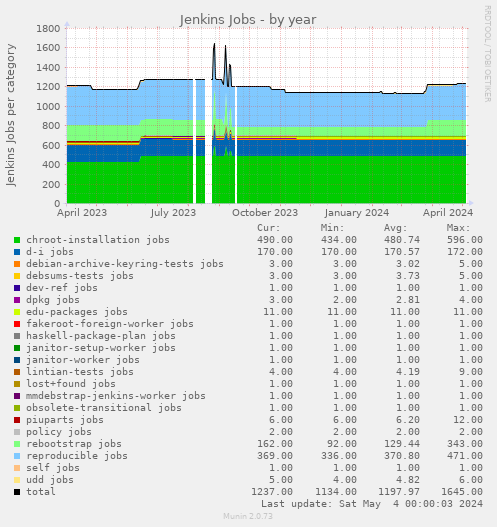
What happened in the reproducible builds effort between December 20th to December 26th: Toolchain fixes Mattia Rizzolo rebased our experimental versions of debhelper (twice!) and dpkg on top of the latest releases. Reiner Herrmann submited a patch for mozilla-devscripts to sort the file list in generated preferences.js files. To be able to lift the restriction that packages must be built in the same path, translation support for the __FILE__ C pre-processor macro would also be required. Joerg Sonnenberger submitted a patch back in 2010 that would still be useful today. Chris Lamb started work on providing a deterministic mode for debootstrap. Packages fixed The following packages have become reproducible due to changes in their build dependencies: bouncycastle, cairo-dock-plug-ins, darktable, gshare, libgpod, pafy, ruby-redis-namespace, ruby-rouge, sparkleshare. The following packages became reproducible after getting fixed: Some uploads fixed some reproducibility issues, but not all of them: Patches submitted which have not made their way to the archive yet: reproducible.debian.net Statistics for package sets are now visible for the armhf architecture. (h01ger) The second build now has a longer timeout (18 hours) than the first build (12 hours). This should prevent wasting resources when a machine is loaded. (h01ger) Builds of Arch Linux packages are now done using a tmpfs. (h01ger) 200 GiB have been added to jenkins.debian.net (thanks to ProfitBricks!) to make room for new jobs. The current count is at 962 and growing! diffoscope development Aside from some minor bugs that have been fixed, a one-line change made huge memory (and time) savings as the output of transformation tool is now streamed line by line instead of loaded entirely in memory at once. disorderfs development Andrew Ayer released disorderfs version 0.4.2-1 on December 22th. It fixes a memory corruption error when processing command line arguments that could cause command line options to be ignored. Documentation update Many small improvements for the documentation on reproducible-builds.org sent by Georg Koppen were merged. Package reviews 666 (!) reviews have been removed, 189 added and 162 updated in the previous week. 151 new fail to build from source reports have been made by Chris West, Chris Lamb, Mattia Rizzolo, and Niko Tyni. New issues identified: unsorted_filelist_in_xul_ext_preferences, nondeterminstic_output_generated_by_moarvm. Misc. Steven Chamberlain drew our attention to one analysis of the Juniper ScreenOS Authentication Backdoor: Whilst this may have been added in source code, it was well-disguised in the disassembly and just 7 instructions long. I thought this was a good example of the current state-of-the-art, and why we'd like our binaries and eventually, installer and VM images reproducible IMHO. Joanna Rutkowska has mentioned possible ways for Qubes to become reproducible on their development mailing-list.

Amaya Rodrigo: If we have seen further

If we have seen further it is by standing on the shoulders of giants.
You are very dearly missed, Ian. You were one of those giants.

Benjamin Mako Hill: Access Without Empowerment (LibrePlanet 2015 Keynote)

At LibrePlanet 2015 (the FSF s annual conference), I gave a talk called Access Without Empowerment as one of the conference keynote addresses. As I did for my 2013 LibrePlanet talk, I ve edited together a version that includes the slides and I ve posted it online in WebM and on YouTube.
Here s the summary written up in the LibrePlanet program:
The free software movement has twin goals: promoting access to software through users freedom to share, and empowering users by giving them control over their technology. For all our movement s success, we have been much more successful at the former. I will use data from free software and from several related movements to explain why promoting empowerment is systematically more difficult than promoting access and I will explore how our movement might address the second challenge in the future.
In related news, registration is open for LibrePlanet 2016 and that it s free for FSF members. If you re not an FSF member, the FSF annual fundraiser is currently going on so now would be a great time to join.

2 January 2016

Daniel Pocock: The great life of Ian Murdock and police brutality in context

Tributes: (You can Follow or Tweet about this blog on Twitter) Over the last week, people have been saying a lot about the wonderful life of Ian Murdock and his contributions to Debian and the world of free software. According to one news site, a San Francisco police officer, Grace Gatpandan, has been doing the opposite, starting a PR spin operation, leaking snippets of information about what may have happened during Ian's final 24 hours. Sadly, these things are now starting to be regurgitated without proper scrutiny by the mainstream press (note the erroneous reference to SFGate with link to SFBay.ca, this is British tabloid media at its best). The report talks about somebody (no suggestion that it was even Ian) "trying to break into a residence". Let's translate that from the spin-doctor-speak back to English: it is the silly season, when many people have a couple of extra drinks and do silly things like losing their keys. "a residence", or just their own home perhaps? Maybe some AirBNB guest arriving late to the irritation of annoyed neighbours? Doesn't the choice of words make the motive sound so much more sinister? Nobody knows the full story and nobody knows if this was Ian, so snippets of information like this are inappropriate, especially when somebody is deceased. Did they really mean to leave people with the impression that one of the greatest visionaries of the Linux world was also a cat burglar? That somebody who spent his life giving selflessly and generously for the benefit of the whole world (his legacy is far greater than Steve Jobs, as Debian comes with no strings attached) spends the Christmas weekend taking things from other people's houses in the dark of the night? The report doesn't mention any evidence of a break-in or any charges for breaking-in. If having a few drinks and losing your keys in December is such a sorry state to be in, many of us could potentially be framed in the same terms at some point in our lives. That is one of the reasons I feel so compelled to write this: somebody else could be going through exactly the same experience at the moment you are reading this. Any of us could end up facing an assault as unpleasant as the tweets imply at some point in the future. At least I can console myself that as a privileged white male, the risk to myself is much lower than for those with mental illness, the homeless, transgender, Muslim or black people but as the tweets suggest, it could be any of us. The story reports that officers didn't actually come across Ian breaking in to anything, they encountered him at a nearby street corner. If he had weapons or drugs or he was known to police that would have almost certainly been emphasized. Is it right to rush in and deprive somebody of their liberties without first giving them an opportunity to identify themselves and possibly confirm if they had a reason to be there? The report goes on, "he was belligerent", "he became violent", "banging his head" all by himself. How often do you see intelligent and successful people like Ian Murdock spontaneously harming themselves in that way? Can you find anything like that in any of the 4,390 Ian Murdock videos on YouTube? How much more frequently do you see reports that somebody "banged their head", all by themselves of course, during some encounter with law enforcement? Do police never make mistakes like other human beings? If any person was genuinely trying to spontaneously inflict a head injury on himself, as the police have suggested, why wouldn't the police leave them in the hospital or other suitable care? Do they really think that when people are displaying signs of self-harm, rounding them up and taking them to jail will be in their best interests? Now, I'm not suggesting this started out with some sort of conspiracy. Police may have been at the end of a long shift (and it is a disgrace that many US police are not paid for their overtime) or just had a rough experience with somebody far more sinister. On the other hand, there may have been a mistake, gaps in police training or an inappropriate use of a procedure that is not always justified, like a strip search, that causes profound suffering for many victims. A select number of US police forces have been shamed around the world for a series of incidents of extreme violence in recent times, including the death of Michael Brown in Ferguson, shooting Walter Scott in the back, death of Freddie Gray in Baltimore and the attempts of Chicago's police to run an on-shore version of Guantanamo Bay. Beyond those highly violent incidents, the world has also seen the abuse of Ahmed Mohamed, the Muslim schoolboy arrested for his interest in electronics and in 2013, the suicide of Aaron Swartz which appears to be a direct consequence of the "Justice" department's obsession with him. What have the police learned from all this bad publicity? Are they changing their methods, or just hiring more spin doctors? If that is their response, then doesn't it leave them with a cruel advantage over those people who were deceased? Isn't it standard practice for some police to simply round up anybody who is a bit lost and write up a charge sheet for resisting arrest or assaulting an officer as insurance against questions about their own excessive use of force? When British police executed Jean Charles de Menezes on a crowded tube train and realized they had just done something incredibly outrageous, their PR office went to great lengths to try and protect their image, even photoshopping images of Menezes to make him look more like some other suspect in a wanted poster. To this day, they continue to refer to Menezes as a victim of the terrorists, could they be any more arrogant? While nobody believes the police woke up that morning thinking "let's kill some random guy on the tube", it is clear they made a mistake and like many people (not just police), they immediately prioritized protecting their reputation over protecting the truth. Nobody else knows exactly what Ian was doing and exactly what the police did to him. We may never know. However, any disparaging or irrelevant comments from the police should be viewed with some caution. The horrors of incarceration It would be hard for any of us to understand everything that an innocent person goes through when detained by the police. The recently released movie about The Stanford Prison Experiment may be an interesting place to start, a German version produced in 2001, Das Experiment, is also very highly respected. The United States has the largest prison population in the world and the second-highest per-capita incarceration rate. Many, including some on death row, are actually innocent, in the wrong place at the wrong time, without the funds to hire an attorney. The system, and the police and prison officers who operate it, treat these people as packages on a conveyor belt, without even the most basic human dignity. Whether their encounter lasts for just a few hours or decades, is it any surprise that something dies inside them when they discover this cruel side of American society? Worldwide, there is an increasing trend to make incarceration as degrading as possible. People may be innocent until proven guilty, but this hasn't stopped police in the UK from locking up and strip-searching over 4,500 children in a five year period, would these children go away feeling any different than if they had an encounter with Jimmy Saville or Rolf Harris? One can only wonder what they do to adults. What all this boils down to is that people shouldn't really be incarcerated unless it is clear the danger they pose to society is greater than the danger they may face in a prison. What can people do for Ian and for justice? Now that these unfortunate smears have appeared, it would be great to try and fill the Internet with stories of the great things Ian has done for the world. Write whatever you feel about Ian's work and your own experience of Debian. While the circumstances of the final tweets from his Twitter account are confusing, the tweets appear to be consistent with many other complaints about US law enforcement. Are there positive things that people can do in their community to help reduce the harm? Sending books to prisoners (the UK tried to ban this) can make a difference. Treat them like humans, even if the system doesn't. Recording incidents of police activities can also make a huge difference, such as the video of the shooting of Walter Scott or the UK police making a brutal unprovoked attack on a newspaper vendor. Don't just walk past a situation and assume everything is under control. People making recordings may find themselves in danger, it is recommended to use software that automatically duplicates each recording, preferably to the cloud, so that if the police ask you to delete such evidence, you can let them watch you delete it and still have a copy. Can anybody think of awards that Ian Murdock should be nominated for, either in free software, computing or engineering in general? Some, like the prestigious Queen Elizabeth Prize for Engineering can't be awarded posthumously but others may be within reach. Come and share your ideas on the debian-project mailing list, there are already some here. Best of all, Ian didn't just build software, he built an organization, Debian. Debian's principles have helped to unite many people from otherwise different backgrounds and carry on those principles even when Ian is no longer among us. Find out more, install it on your computer or even look for ways to participate in the project.

Lunar: Reproducible builds: week 33 in Stretch cycle

What happened in the reproducible builds effort between December 6th and December 12th: Toolchain fixes Reiner Herrmann rebased our experimental version of doxygen on version 1.8.9.1-6. Chris Lamb submitted a patch to make the manpages generated by ruby-ronn reproducible by using the locale-agnostic %Y-%m-%d for the dates. Daniel Kahn Gillmor took another shot at the issue of source path captured in DWARF symbols. A patch has been sent for review by GCC upstream to add the ability to read an environment variable with -fdebug-prefix-map. Packages fixed The following 24 packages have become reproducible due to changes in their build dependencies: gkeyfile-sharp, gprbuild, graphmonkey, gthumb, haskell-yi-language, ion, jackson-databind, jackson-dataformat-smile, jackson-dataformat-xml, jnr-ffi, libcommons-net-java, libproxy, maven-shared-utils, monodevelop-database, mydumper, ndesk-dbus, nini, notify-sharp, pixz, protozero, python-rtslib-fb, slurm-llnl, taglib-sharp, tomboy-latex. The following packages became reproducible after getting fixed: Some uploads fixed some reproducibility issues, but not all of them: These uploads might have fixed reproducibility issues but could not be tested yet: Patches submitted which have not made their way to the archive yet: reproducible.debian.net Files created with diffoscope now have diffoscope in their name instead debbindiff. (h01ger) Hostnames of first and second build node are now recorded and shown in the build history. (Mattia Rizzolo) Exchanges have started with F-Droid developers to better understand what would be required to test F-Droid applications. (h01ger) A first small set of Fedora 23 packages is now also being tested while development on a new framework for testing RPMs in general has begun. A new Jenkins job has been added to set up to mock, the build system used by Fedora. Another new job takes care of testing RPMs from Fedora 23 on x86_64. So far only 151 packages from the buildsys-build group are tested (currently all unreproducible), but the plan is to build all 17,000 source packages in Fedora 23 and rawhide. The page presenting the results should also soon be improved. (h01ger, Dhiru Kholia) For Arch Linux, all 2223 packages from the extra repository will also be tested from now on. Packages in extra" are tested every four weeks, while those from core every week. Statistics are now displayed alongside the results. (h01ger) jenkins.debian.net has been updated to jenkins-job-builder version 1.3.0. Many job configurations have been simplified and refactored using features of the new version. This was another milestone for the jenkins.debian.org migration. (Phil Hands, h01ger) diffoscope development Chris Lamb announced try.diffoscope.org: an online service that runs diffoscope on user provided files. Screenshot of try.diffoscope.org Improvements are welcome. The application is licensed under the AGPLv3. On diffoscope itself, most pending patches have now been merged. Expect a release soon! Most of the code implementing parallel processing has been polished. Sadly, unpacking archive is CPU-bound in most cases, so the current thread-only implementation does not offer much gain on big packages. More work is still require to also add concurrent processes. Documentation update Ximin Luo has started to write a specification for buildinfo files that could become a larger platform than the limited set of features that were thought so far for Debian .buildinfo. Package reviews 113 reviews have been removed, 111 added and 56 updated in the previous week. 42 new FTBFS bugs were opened by Chris Lamb and Niko Tyni. New issues identified this week: timestamps_in_documentation_generated_by_docbook_dbtimestamp, timestamps_in_sym_l_files_generated_by_malaga, timestamps_in_edj_files_generated_by_edje_cc. Misc. Chris Lamb presented reproducible builds at skroutz.gr.

Niels Thykier: dput change-all-of-debian.changes

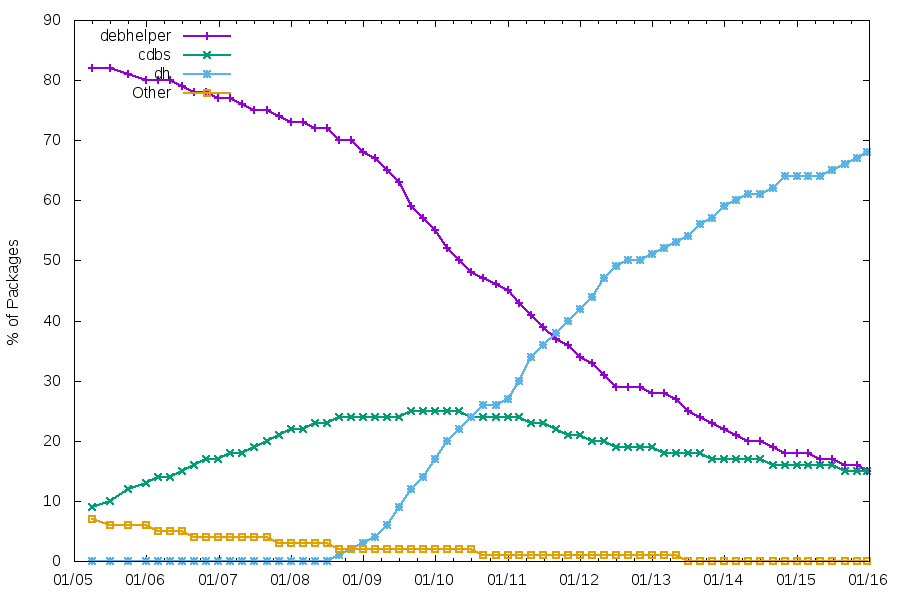
Lucas Nussbaum recently did a blog post called Debian is still changing . I found it a very welcome continuation of his previous blog post on the same topic. I find the graphs very interesting and was very happy to learn that he included relative graphs this time. Now I can with relatively ease say that 69% of all Debian packages are using a dh-style build (source). We have another 15% using classic debhelper, which means that at least 84% of all packages uses debhelper directly. Assuming all CDBS based packages rely on the debhelper class , we are at 99%! The latter is certainly an assumption, although I suspect it is probably pretty accurate[1]. Now, it is very cute to have world dominance , but that is not my primary interest in these numbers. Instead, we can use these numbers to determine that: Such as automatic dbgsym packages, indexable build-id from dbg(sym) packages via Packages files[2], and replacing maintscripts with ldconfig triggers. All of these changes happen to be changes that could be trivially deployed with very little risk and very high efficiency[3]. Notably, none of them required a compat bump (or a new debhelper tool). Of course, I do not intend to say that every change can (or should) be deployed via debhelper and much less into an existing dh_cmd -tool. Notably, dh_strip is reaching its breaking point for content. And if we were to require a compat bump for your change, we can now at least see the adoption rate via lintian. :) Nevertheless, it is nice to know that (politics aside) there is some agility in the Debian build system! :) [1] I would very much love to see numbers to (dis)prove my assumption about CDBS + debhelper. In fact, an absolute number of packages not using debhelper (indirectly) in Debian would be very intriguing. [2] New fields by default end up the Packages file. See e.g. the Packages.xz file on the debug mirror or your apt-cache via:
apt-cache show mscgen-dbgsym   grep ^Build-Ids
The latter assumes that you have the debug mirror in your sources list. [3] Efficiency here being features people rarely override/disable.
Filed under: Debhelper, Debian

Iain R. Learmonth: Adventures at London Luton

Continuing on my journey home, once again I was asked to step into the full-body scanner. This time I was certain that I didn't want to use it, I was so angry last time that I had been forced into it that I actually threw up. It wasn't until I was in tears and asking them to take my bags off the plane, planning to take the train instead, that they gave me the manual pat-down. "Voluntary" apparently has a different meaning to the one I'm familiar with here.

Steve Kemp: Restoring my system .. worked

A while back I wrote about some issues with converting a two-disk RAID system to a one-disk system, but just to recap: In the end we bought a small form-factor PC, with only a single drive and I moved one of the two drives from the old machine into it. Then converted it to run happily with only a single drive, and not email every day to say "device missing". So there things stood, we had a desktop with a single drive, and I ensured that I took full daily backup via attic. Over Chrismas the two-year old drive failed. To the extent I couldn't even get it to be recognized by the BIOS, and thus couldn't pull data off it. Time to test my backups in anger! I bought a new drive, installed a minimal installation of the Jessie release of Debian onto the system, and then ran:
 cd /
 .. restore latest backup ..
Two days later I'd pulled 1.3Tb over the network, and once I fixed up grub, /etc/fstab, and a couple of niggles it all just worked. Rebooted to make sure the temporary.home hostname, etc, was all gone and life was good. Restored backup! No errors! No data-loss! Perfect! The backup-script I use every day was very very good at making sure nothing was missed:
attic create --stats --checkpoint-interval=7200 attic@$ remote :/attic/storage::$ host -$(date +%Y-%m-%d-%H)
  --exclude=/proc      \
  --exclude=/sys       \
  --exclude=/run       \
  --exclude=/dev       \
  --exclude=/tmp       \
  --exclude=/var/tmp   \
  --exclude=/var/log   \
  /
In other news I published my module for controlling the new smart lights I've bought

Iain R. Learmonth: Fun in Hamburg Airport

Today I'm travelling home from 32c3, back to Aberdeen via London from Hamburg Airport. My experience passing through security to get to the gates this morning has angered me to the point that I had to vent. They have full-body scanners installed, which in my opinion are a massive invasion of my personal privacy. As I approached the security checkpoint, I noticed a sign where it stated that use of the scanner was not mandatory and that a manual screening process was available. Once I'd loaded my bags into the trays, I asked the security officer how to opt for the manual screening at which point I was told it was not available due to a lack of staff. I was forced to allow for an intimate scan to take place or miss my flight. I'm not really in a position to be making alternative arrangements for travel and so I had to submit but it has left me outraged. Privacy is about the ability to choose what I share and who I share it with. This was meant to be a right protected by the ECHR, but I guess human rights are outdated now we're entering 2016. Bring on the dystopian future!

Junichi Uekawa: 2015 added a new family member.

2015 added a new family member. That meant that I needed a new approach to working and my personal life. What awaits 2016?

1 January 2016

Mehdi Dogguy: In memoriam: Ian Murdock

It is with great sadness that I learned of the passing of Ian Murdock. I have never had the chance to meet him. Several persons testify for his kindness and talent. We will always remember him. His legacy influences our lives everyday!

Looking at his latest blog posts, he seemed a bit nostalgic about Debian and still very proud of it.

Later, he wrote about how he came to find Linux and the importance of telling the story of hackers of his generation. In his memory, I'll reread Stephen Levy s Hackers for the nth time too.

When (if?) his webserver will shut down, you will still be able to read his past blog posts using the archived version of his website or a static mirror that has been set up.

RIP Ian.

Bdale Garbee: Term Limited

I woke up this morning and realized that for the first time since 17 April 2001, I am no longer a member of the Debian Technical Committee. My departure from the committee is a consequence of the Debian General Resolution "limiting the term of the technical committee members" that was passed amending the Debian Constitution nearly a year ago. As the two longest-serving members, both over the term limit, Steve Langasek and I completed our service yesterday. In early March 2015, I stepped down from the role of chairman after serving in that role for the better part of a decade, to help ensure a smooth transition. Don Armstrong is now serving admirably in that role, I have the utmost respect for the remaining members of the TC, and the process of nominating replacements for the two now-vacant seats is already well underway. So, for the Debian project as a whole, today is really a non-event... which is exactly as it should be! Debian has been a part of my life since 1994, and I sincerely hope to be able to remain involved for many years to come!

Russ Allbery: Review: One Salt Sea

Review: One Salt Sea, by Seanan McGuire
Series: October Daye #5
Publisher: DAW
Copyright: September 2011
ISBN: 1-101-54760-X
Format: Kindle
Pages: 368
This is the fifth book of the October Daye series. It's the best book of the series to date, at least in my opinion, but this is a series with a substantial cast and political complications. You could probably start here and work out things on the fly, since each story is largely self-contained, but much of the emotional resonance would be lost. As expected for this series, Toby's life doesn't have much time to stabilize after the events of Late Eclipses. This time, though, the initial threat is less personal and more political. The children of the rulers of the Duchy of Saltmist have been kidnapped, and war between Saltmist and the Kingdom of the Mists (Toby's home) is very near. All that stands in the way of horrible casualties, of fae that can scarce afford more death, is Toby's desperate detective work. Toby's confidence and belief in her own abilities has been growing steadily throughout this series. One of my favorite themes in fiction is someone who doesn't really believe in themselves but tries anyway, because they couldn't live with themselves if they didn't, and discovers they're more capable than they thought. In this series, I think that works best when Toby is less scared and more angry, which is very true in One Salt Sea. That's one reason why I liked this book better than either An Artificial Night or Late Eclipses. Another is that I love the politics and the depth of world-building and lore that McGuire brings to this series, and One Salt Sea is a showcase of both. We get the Undersea Duchy of Saltmist, which comes from both different traditions and different fae than the series so far. We get a plot that combines political maneuvering with a more traditional detective story than the last few books. We get more hidden traditions, past alliances and enmity that Toby didn't know about, and further development of Toby's own abilities. She has to tug hard on some threads, move between levels of the fae world, and draw on her network for uniquely fae forms of forensic analysis. I thoroughly enjoyed it, particularly the rocks. (You'll know what I mean when you get to that part.) But the best thing about this book, by far, is the Luidaeg. I've mentioned in reviews of previous books that the Luidaeg is my favorite character of the series. One Salt Sea just cements that. This is the deepest that the Luidaeg has been involved in a story: she gives Toby her mission at the start, substantial help along the way, and is deeply involved in the ending. We even learn some of her own background, and some of her own worries and pain. (And foreshadowing that there's more of this to come, which I'm eagerly looking forward to.) She's moved from a strange ally through a cautious friend to some combination of aunt and mother to Toby, while always staying her irascible and occasionally painful self. The bits with her in this book are the best so far, and there are a lot of them. It's a delightful reading experience. McGuire also uses this story to clear up a plot element that's been lingering since the first book of the series, but that never worked emotionally for me. (I'm talking about this indirectly since it's a significant spoiler.) It's a great resolution, one with heft and emotion and hard choices and pain, and largely makes up for the showing rather than telling that we've gotten in the previous books, while also (at least I suspect) graciously shuffling that plot out of the way in future books. It's a good bit of series work and personal growth for Toby, and I think frees the series to focus on the bits I enjoy the most. The ending of One Salt Sea hurts, but it's a good hurt, full of hard choices made well, bravery, and sacrifice. The best moments of this series have always had that, but I think this book is the most successful delivery of the whole package to date. This has always been a solid urban fantasy series, but I think it's getting better as it goes along. One major reason is that McGuire doesn't seem to be running out of world-building oomph. In a lot of urban fantasy, particularly the werewolf and vampire sort, I feel like the lore gets thinner, more rehashed, and more mundane as the series ages. But McGuire is still introducing new elements, showing existing elements from new directions and in new light, and has been slowly building major puzzles around Toby's life and abilities that intrigue me. And, even more rare, the eventual revelations usually live up to the preceding tension. It's certainly a recipe to keep me reading. Followed by Ashes of Honor. Rating: 9 out of 10

Norbert Preining: Best Wishes for 2016

Happy New Year 2016. I wish all the readers of this blog, and everyone else, a good start into 2016, may some of your wishes and hopes become true! nengajo2015-web

Next.

Previous.