John Goerzen: Roundup of remote encrypted deduplicated backups in Linux
Since I wrote last about Linux backup tools, back in a 2008 article about BackupPC and similar toools and a 2011 article about dedpulicating filesystems, I ve revisited my personal backup strategy a bit.
I still use ZFS, with my tool simplesnap that I wrote about in 2014 to perform local backups to USB drives, which get rotated offsite periodically. This has the advantage of being very fast and very secure, but I also wanted offsite backups over the Internet. I began compiling criteria, which ran like this:
- Remote end must not need any special software installed. Storage across rsync, sftp, S3, WebDAV, etc. should all be good candidates. The remote end should not need to support hard links or symlinks, etc.
- Cross-host deduplication at at least the file level is required, so if I move a 4GB video file from one machine to another, my puny DSL wouldn t have to re-upload it.
- All data that is stored remotely must be 100% encrypted 100% of the time. I must not need to have any trust at all in the remote end.
- Each backup after the first must send only an incremental s worth of data across the line. No periodic re-uploading of the entire data set can be done.
- The repository format must be well-documented and stable.
- BackupPC requires software on the remote end and does not do encryption.
- None of the rsync hardlink tree-based tools are suitable here.
- rdiff-backup requires software on the remote end and does not do encryption or dedup.
- duplicity requires a periodic re-upload of a full backup, or incremental chains become quite long and storage-inefficient. It also does not support dedup, although it does have an impressive list of dumb storage backends.
- ZFS, if used to do backups the efficient way, would require software to be installed on the remote end. If simple zfs send images are used, the same limitations as with duplicity apply.
- The tools must preserve POSIX attributes like uid/gid, permission bits, symbolic links, hard links, etc. Support for xattrs is also desireable but not required.
- bup and zbackup are both interesting deduplicators, but do not yet have support for removing old data, so are impractical for this purpose.
- burp requires software on the server side.
 My LTS May
With regrets I have had to realize that I'm currently to overloaded to work on Debian LTS, so we planned that I'll do 7h in May and then I would take a three months break from doing LTS work. And then I didn't even manage that, I've only managed to finally fix

 Long ago, in days of yore, we assumed that any software worth having would be
packaged by the operating system we used. Debian with its enormous pile of
software (over 20,000 sources last time I looked) looked to basically contain
every piece of free software ever. However as more and more people have come
to Linux-based and BSD-based systems, and the proliferation of *NIX-based
systems has become even more diverse, it has become harder and harder to ensure
that everyone has access to all of the software they might choose to use.
Couple that with the rapid development of new projects, who clearly want to get
users involved well before the next release cycle of a Linux-based distribution
such as Debian, and you end up with this recommendation to bypass the operating
system's packaging system and simply
 Last weekend







 Let us start with recalling the different actions that have to be taken when TeX packages are installed, removed, or updated.
Required actions for TeX packages
Filename database
The simplest case are packages that only include files ment to be loaded while running TeX or Metafont or similar programs. In this case the file name database of TeX (and the one of ConTeXt) needs to be updated. Usually this is done by calling mktexlsr on the changed trees, plus, if ConTeXt is installed, running mtxrun --generate.
Font map activation
More complicated are font packages that provide PostScript fonts. These packages need to ship a so called map file which maps TeX font names to PostScript fonts names. Examples are lm.map which defines this mapping for the Latin Modern fonts. All these map files have to be collected in one or more updmap.cfg files, and then a call to updmap(-sys) is necessary to generate configuration files for dvips, pdftex, and some other programs.
Format and hyphenation definitions
Even more complicated is the case of additional hyphenation patterns and additional format definitions. At the moment, hyphenation patterns are only shipped from the TeX Live packages itself, but additional format definitions are already provided by other packages than the TeX Live ones. Again, in both cases all the different format and hyphenation pattern definitions must be combined, into configuration files fmtutil.cnf and several language.* files, respectively. After this some incantation of fmtutil(-sys) is necessary to update the format dumps of TeX.
Status up to Debian/TeX Live 2014
Up to now most of these actions are done in the postinstall script of the providing packages, generated by dh_installtex. The
 Anyway, I hope to hear some feedback and installation reports.
Conclusion
While packaging has become easier for maintainers, and there is less clutter in /etc/texmf/, we now are depending on dpkg to call the tex-common triggers. Thus, if this happens rather often, then especially fmtutil-sys --all will be called several times. This is a slight regression from the previous setup, but paid off (IMNSHO) by the arguments given in the beginning.
That said, there will be of course a certain time of transition until the new setup has proven its merits, and bugs are ironed out. But having bugs that need to be mostly fixed only in one package, namely tex-common, seems like an easier task to me.
Enjoy.
 What happened about the
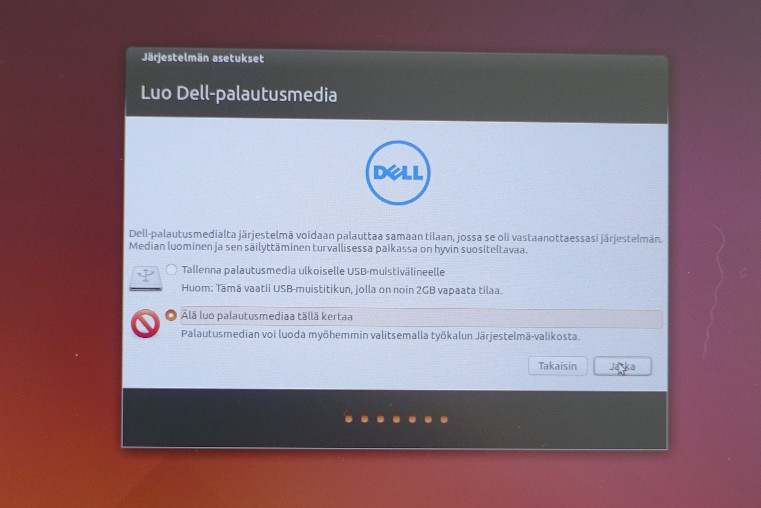
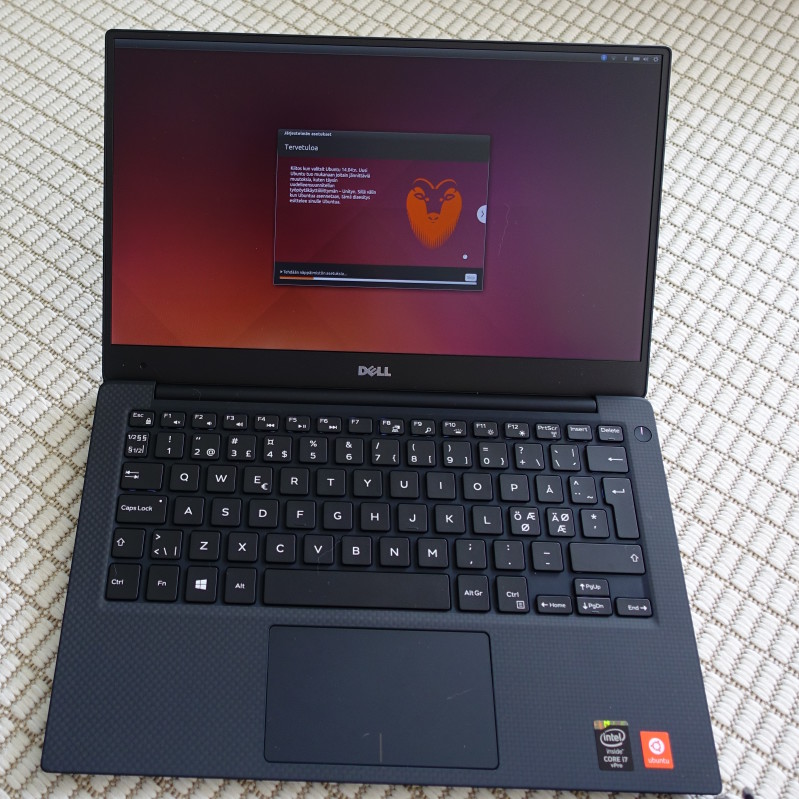
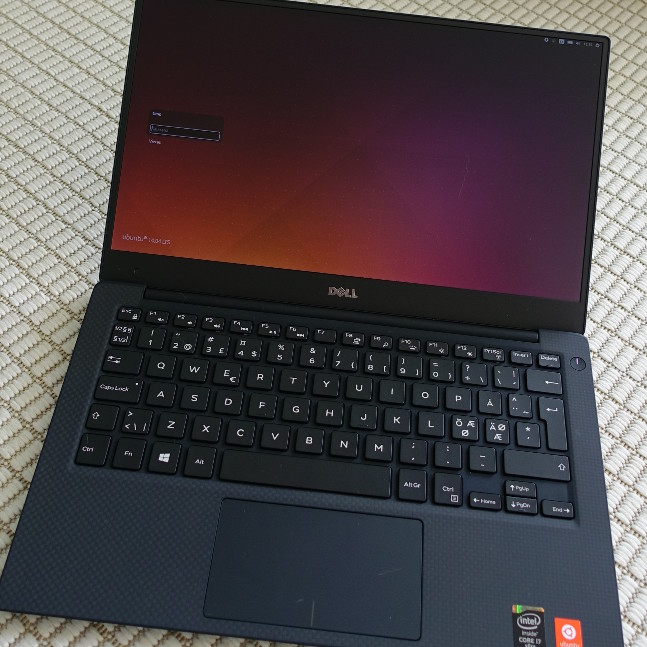
 I recently obtained the newest Dell's Ubuntu developer offering, XPS 13 (2015, model 9343). I opted in for FullHD non-touch display, mostly because of better battery life, the actual no need for higher resolution, and matte screen which is great outside. Touch would have been "nice-to-have", but in my work I don't really need it.





 There s a lot of things I d like to blog about. The last version of OpenStack, the OpenStack Liberty design summit, Kilo in the official jessie-backports repositories, etc. Maybe the most interesting part of this blog post is the last bit at the end, about a major change in the packaging workflow for OpenStack in Debian. Please read on
OpenStack release names reminder


 I've recently found myself explaining

 My monthly report covers a large part of what I have been doing in the free software world. I write it for
 The latest stable release of Mono has happened, the first bugfix update to our 4.0 branch. Here are the release highlights, and some other goodies.
Stable Packages
This release covers Mono 4.0.1, and MonoDevelop 5.9. As promised last time, this includes builds for RPM-based x64 systems (CentOS 7 minimum), Debian-based x64, i386, ARMv5 Soft Float, and ARMv7 Hard Float systems (Debian 7/Ubuntu 12.04 minimum).
Version numbering
From now on, we re going to be clearer with our version numbering scheme. Historically, we ve shipped, say, 4.0.0 to the public internally, there have been a lot of builds on this target branch, all of which get an internal revision number. 4.0.0 as-shipped was in fact 4.0.0.143 internally that was the first 4.0.0 branch release approved of for stable release.
This release is the first service release on the 4.0.0 branch, numbered 4.0.1.44 it ll be officially referred to as 4.0.1 in some places, but isn t the same as 4.0.1.0, which already released on Linux/Windows a while back, to include an emergency bugfix for those platforms.
That was sorta a screwup really. Using the 4-part version removes the ambiguity, rather than having 44 different 4.0.1 s in existence. And we ll aim to be clearer in future about what is alpha, what is beta, and what is final (and what is a random emergency snapshot).
Alpha Linux packages
Want to see things earlier? We ve now got the structure in place to provide Linux packages (and source releases) to mirror what we do on Mac. When we upload a prospective package to our Mac customers, we will automatically trigger builds for Linux too. See http://www.mono-project.com/download/alpha/
Beta Linux packages
See above. s/alpha/beta/.
Weekly git Master snapshots
We already have packages in place for every git commit, which parallel-install Mono into /opt. This is different.
Weekly (or, right now, when I manually run the requisite Jenkins job), the latest Mac build of Mono git master from our internal CI system will be copied to a public location just for you, a source tarball generated, and packages built. See
 I don't often write about tools I use when for my daily software development
tasks. I recently realized that I really should start to share more often my
workflows and weapons of choice.
One thing that I have a hard time enduring while doing Python code reviews, is
people writing utility code that is not directly tied to the core of their
business. This looks to me as wasted time maintaining code that should be
reused from elsewhere.
So today I'd like to start with


 This was my sixth month working on Debian LTS. I was assigned 10.5
hours
by